250-438 Practice Exam - Administration of Symantec Data Loss Prevention 15
Reliable Study Materials & Testing Engine for 250-438 Exam Success!
Exam Code: 250-438
Exam Name: Administration of Symantec Data Loss Prevention 15
Certification Provider: Symantec
Corresponding Certifications: Data Loss Prevention , Symantec Other Certification


Free Updates PDF & Test Engine
Verified By IT Certified Experts
Guaranteed To Have Actual Exam Questions
Up-To-Date Exam Study Material
99.5% High Success Pass Rate
100% Accurate Answers
100% Money Back Guarantee
Instant Downloads
Free Fast Exam Updates
Exam Questions And Answers PDF
Best Value Available in Market
Try Demo Before You Buy
Secure Shopping Experience
250-438: Administration of Symantec Data Loss Prevention 15 Study Material and Test Engine
Last Update Check: Mar 18, 2026
Latest 70 Questions & Answers
45-75% OFF
Hurry up! offer ends in 00 Days 00h 00m 00s
*Download the Test Player for FREE
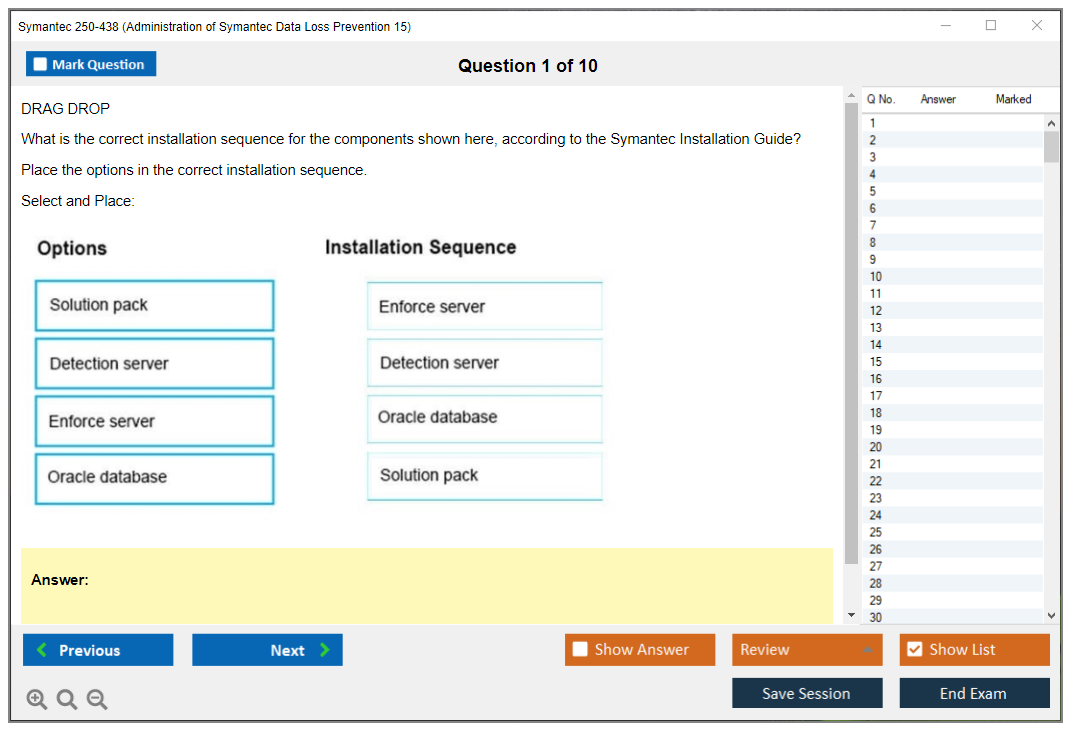
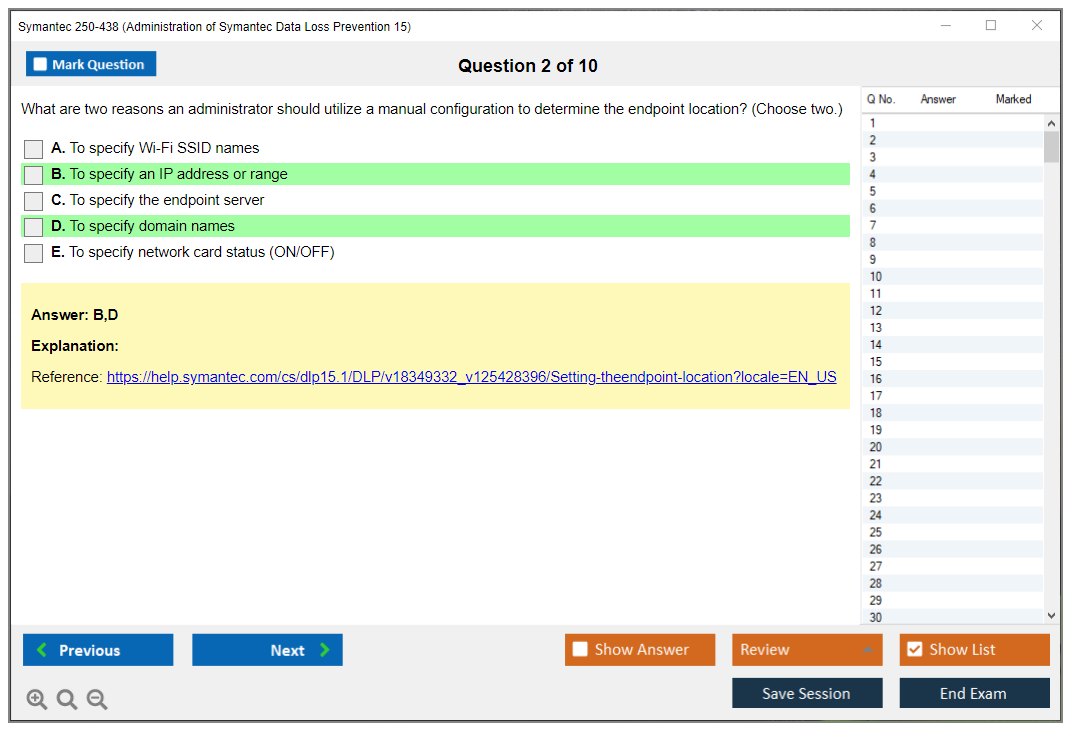
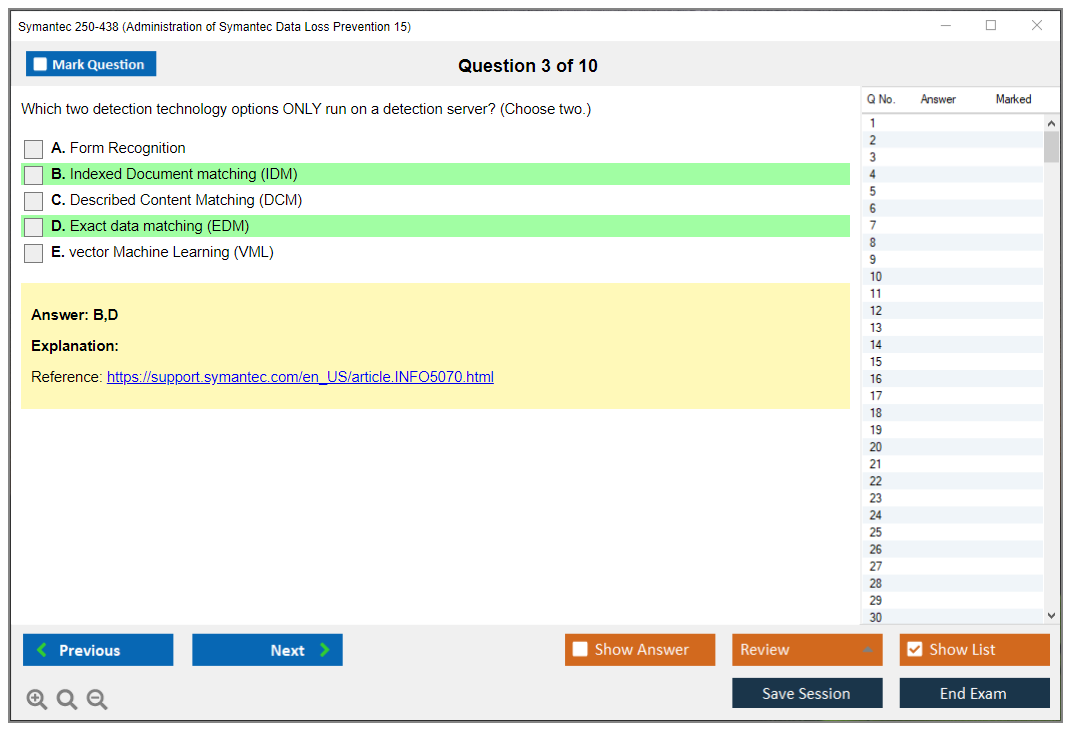
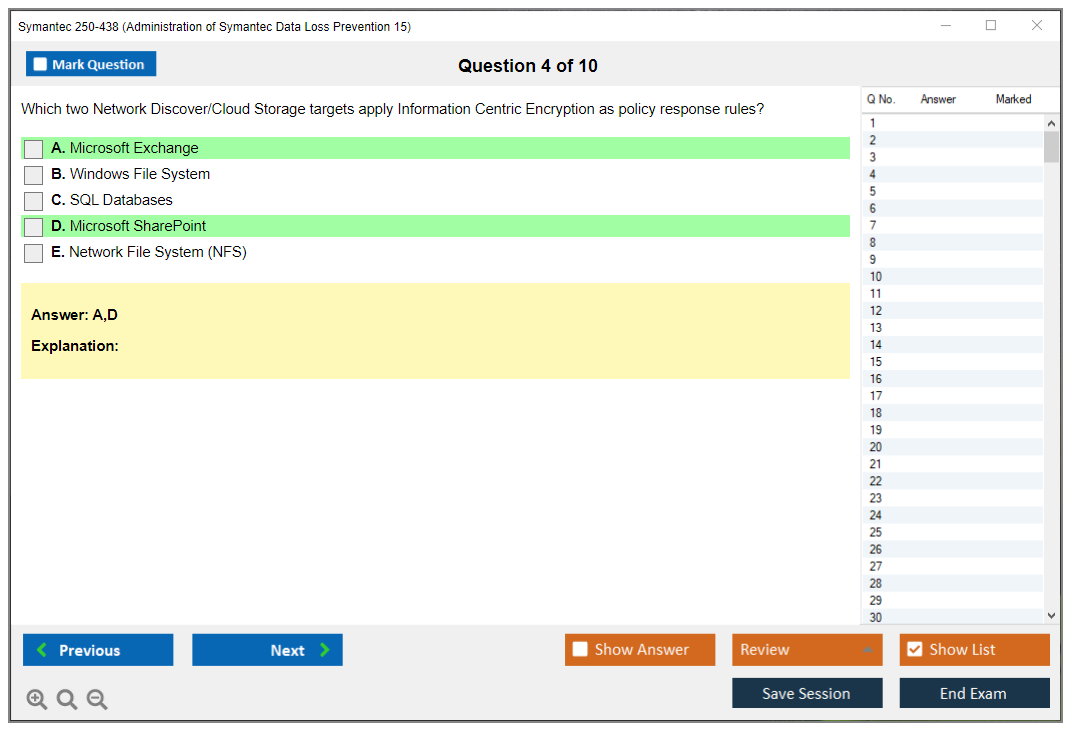
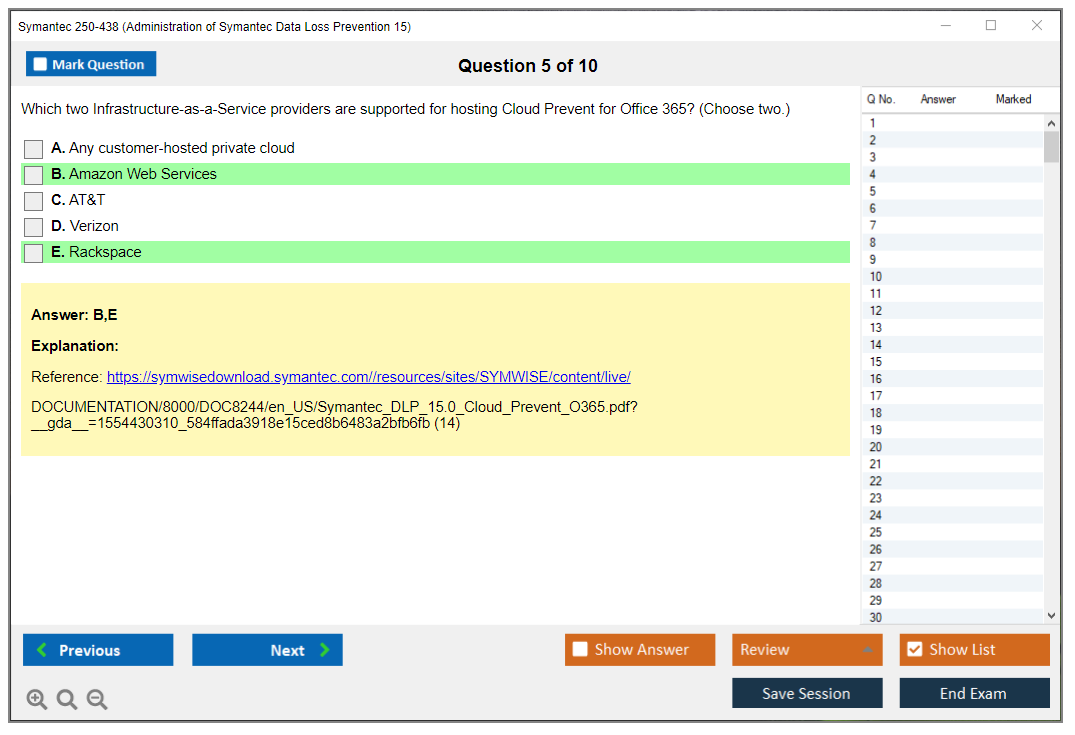
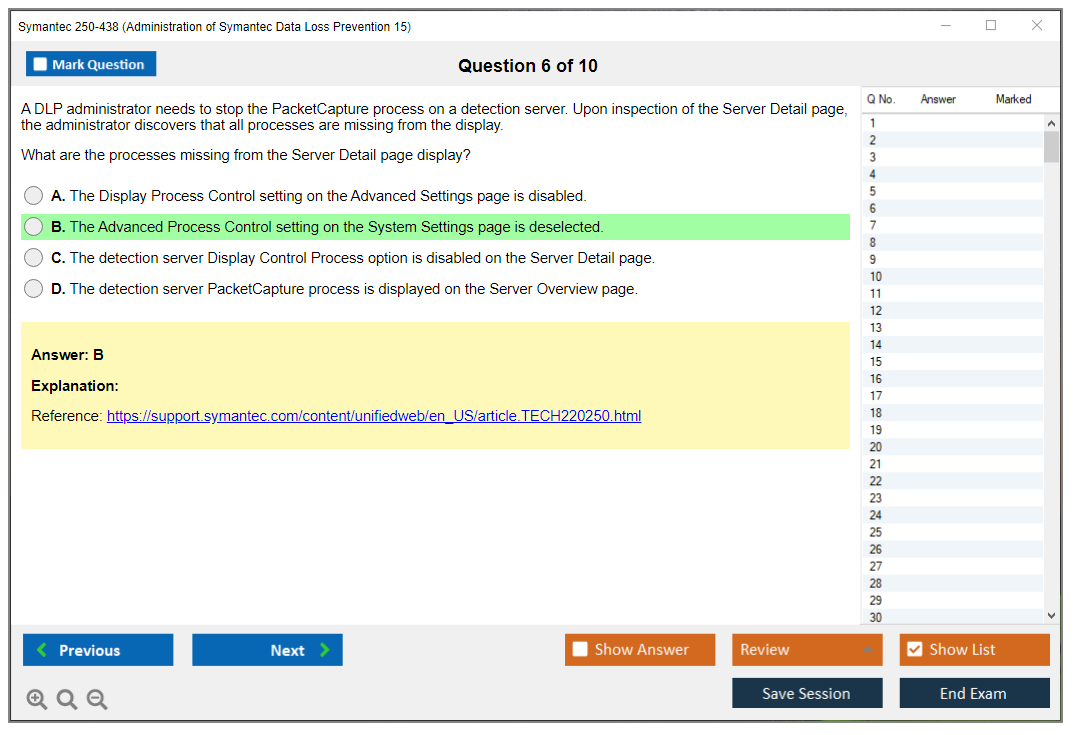
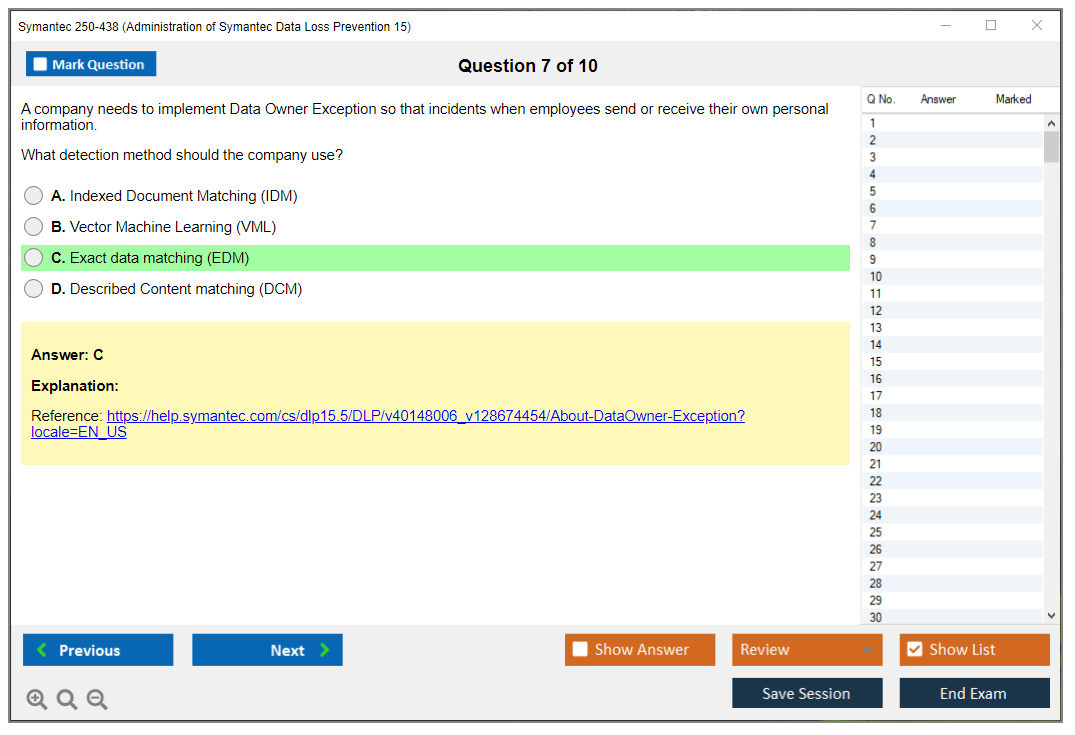
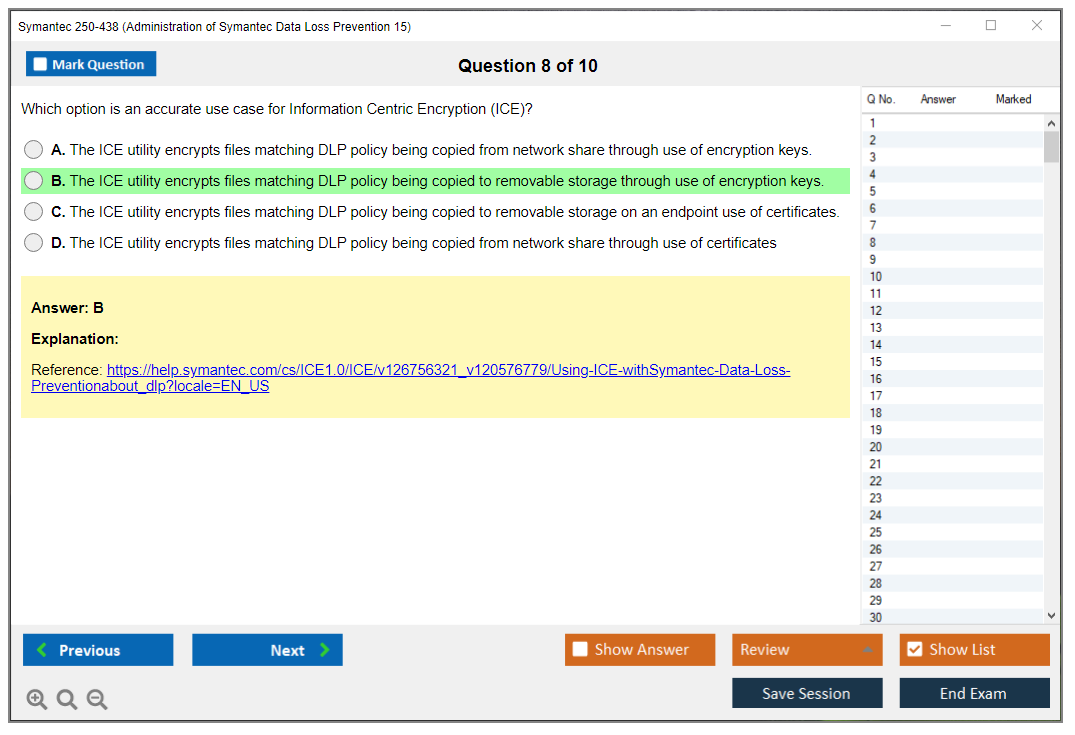
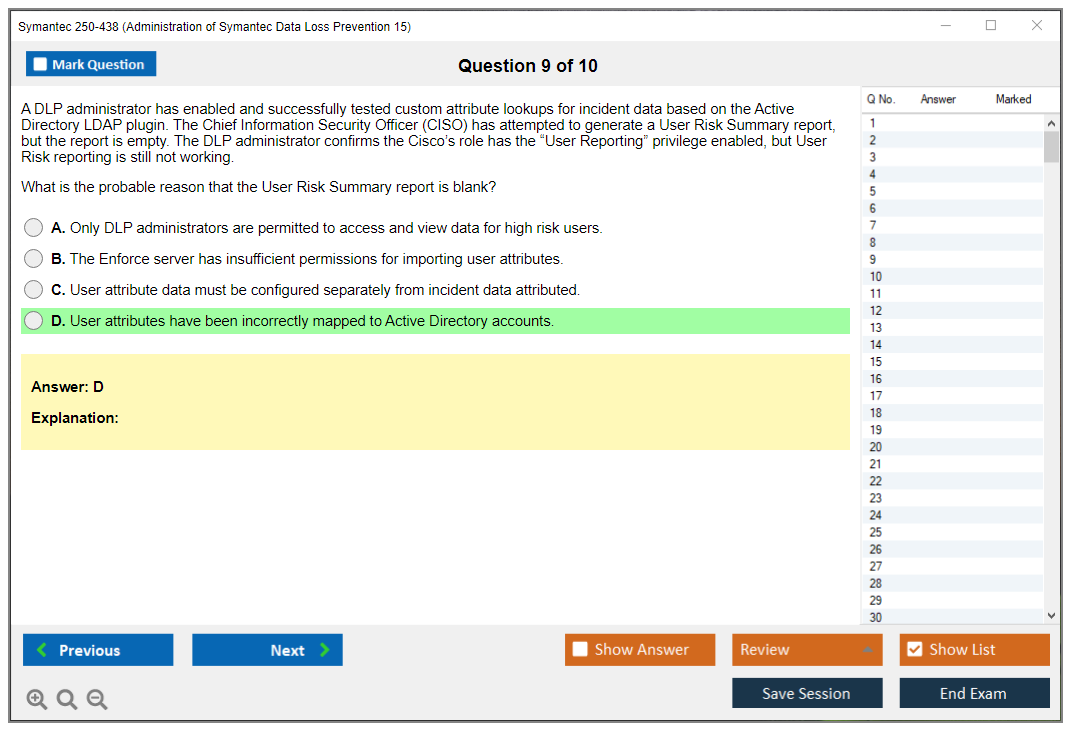
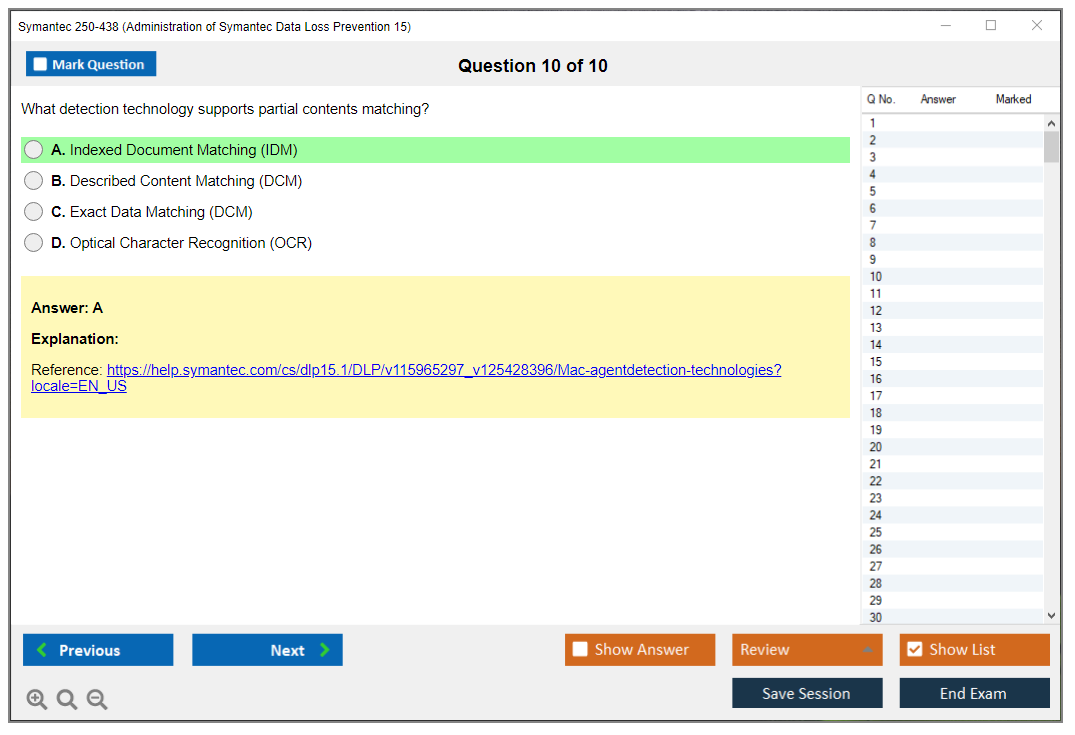
Dumpsarena Symantec Administration of Symantec Data Loss Prevention 15 (250-438) Free Practice Exam Simulator Test Engine Exam preparation with its cutting-edge combination of authentic test simulation, dynamic adaptability, and intuitive design. Recognized as the industry-leading practice platform, it empowers candidates to master their certification journey through these standout features.
What is in the Premium File?
Satisfaction Policy – Dumpsarena.co
At DumpsArena.co, your success is our top priority. Our dedicated technical team works tirelessly day and night to deliver high-quality, up-to-date Practice Exam and study resources. We carefully craft our content to ensure it’s accurate, relevant, and aligned with the latest exam guidelines. Your satisfaction matters to us, and we are always working to provide you with the best possible learning experience. If you’re ever unsatisfied with our material, don’t hesitate to reach out—we’re here to support you. With DumpsArena.co, you can study with confidence, backed by a team you can trust.
Symantec 250-438 Exam FAQs
Introduction of Symantec 250-438 Exam!
The Symantec 250-438 exam is an assessment of an individual's knowledge and skills related to the Administration of Symantec Data Loss Prevention 15.5. The exam covers topics such as installation, configuration, policy management, reporting, and troubleshooting.
What is the Duration of Symantec 250-438 Exam?
The duration of the Symantec 250-438 exam is 90 minutes.
What are the Number of Questions Asked in Symantec 250-438 Exam?
There are approximately 60 questions on the Symantec 250-438 exam.
What is the Passing Score for Symantec 250-438 Exam?
The passing score for the Symantec 250-438 exam is 70%.
What is the Competency Level required for Symantec 250-438 Exam?
The Symantec 250-438 exam is designed to test the knowledge and skills of IT professionals who are responsible for the installation, configuration, and management of Symantec Endpoint Protection. The exam is intended for individuals who have at least one year of experience working with Symantec Endpoint Protection. The exam is designed to assess the candidate’s ability to configure, deploy, and manage the product. The exam is also designed to assess the candidate’s ability to troubleshoot and resolve issues related to the product. The exam is intended for individuals who have a basic understanding of networking and security concepts.
What is the Question Format of Symantec 250-438 Exam?
The Symantec 250-438 exam consists of multiple-choice and scenario-based questions.
How Can You Take Symantec 250-438 Exam?
The Symantec 250-438 exam can be taken either online or in a testing center. For the online exam, you will need to register and pay for the exam at the Symantec website. Once registered, you will be given an access code which will allow you to access the exam. For the exam in a testing center, you will need to register and pay for your exam at the testing center. You will then be given an appointment time and a proctor will be assigned to administer the exam.
What Language Symantec 250-438 Exam is Offered?
The Symantec 250-438 exam is offered in English.
What is the Cost of Symantec 250-438 Exam?
The cost of the Symantec 250-438 exam is $250 USD.
What is the Target Audience of Symantec 250-438 Exam?
The target audience for the Symantec 250-438 exam are IT professionals who are looking to become certified in Symantec's Data Loss Prevention (DLP) technology. Candidates should have at least one year of experience with DLP and be familiar with security best practices. Candidates should also have a basic understanding of networking, Windows operating systems, and system administration.
What is the Average Salary of Symantec 250-438 Certified in the Market?
The average salary after obtaining a Symantec 250-438 exam certification varies depending on the individual's experience and the company they work for. Generally, individuals with higher certifications and more experience tend to be offered higher salaries. According to PayScale, the average salary for a Symantec Certified Professional is $93,904 per year.
Who are the Testing Providers of Symantec 250-438 Exam?
Exam-Labs is an online platform that provides access to study materials and practice tests for the Symantec 250-438 exam. They provide a 100% passing guarantee on their practice tests, as well as a money-back guarantee. They also offer a free demo version of their practice tests.
What is the Recommended Experience for Symantec 250-438 Exam?
For the Symantec 250-438 exam, it is recommended that you have at least 1 year of experience working with Symantec products and technologies. It is also recommended that you have a working knowledge of security technologies, such as malware protection, intrusion prevention, and data loss prevention. Additionally, you should have a basic understanding of networking, such as TCP/IP, DNS, and LDAP.
What are the Prerequisites of Symantec 250-438 Exam?
The prerequisite for the Symantec 250-438 exam is a working knowledge of data protection and storage, including backup and recovery, and the ability to install, configure, and maintain the Symantec Data Protection suite of products.
What is the Expected Retirement Date of Symantec 250-438 Exam?
The official website for Symantec 250-438 exam does not have any information about the expected retirement date. You can contact Symantec directly to get more information about the exam and its retirement date. The contact information can be found on the Symantec website.
What is the Difficulty Level of Symantec 250-438 Exam?
The difficulty level of the Symantec 250-438 exam is considered to be medium to difficult.
What is the Roadmap / Track of Symantec 250-438 Exam?
The Symantec 250-438 exam is part of the Symantec Certified Specialist (SCS) Program. It is a certification exam that tests a candidate's knowledge and skills in the areas of installation, configuration, and troubleshooting of Symantec Data Loss Prevention (DLP) solutions. It is a prerequisite for the Symantec Certified Professional (SCP) certification. The exam is designed to assess a candidate's ability to install, configure, and troubleshoot Symantec DLP solutions. It covers topics such as product architecture, installation and configuration, policy creation, policy enforcement, and troubleshooting.
What are the Topics Symantec 250-438 Exam Covers?
The topics covered in the Symantec 250-438 exam include:
1. Network Security: This topic covers the fundamentals of network security, including authentication, authorization, and encryption. It also covers topics such as firewalls, intrusion detection and prevention systems, and network access control.
2. Data Protection: This topic covers the fundamentals of data protection, including data encryption, data loss prevention, and data integrity.
3. Endpoint Security: This topic covers the fundamentals of endpoint security, including antivirus, antimalware, and endpoint security management.
4. Security Management: This topic covers the fundamentals of security management, including security policy and compliance, security monitoring and auditing, and security incident response.
5. Cloud Security: This topic covers the fundamentals of cloud security, including cloud security architecture, cloud security controls, and cloud security monitoring.
What are the Sample Questions of Symantec 250-438 Exam?
1. What is the purpose of the Symantec Endpoint Protection Manager console?
2. How does Symantec Endpoint Protection use signature-based detection to protect against threats?
3. What are the steps for configuring Symantec Endpoint Protection Manager to deploy client software?
4. How does Symantec Endpoint Protection use heuristics to detect and block malicious activity?
5. What are the benefits of using Symantec Endpoint Protection to protect a network?
6. How can administrators use the Symantec Endpoint Protection Manager console to monitor the health of their network?
7. What are the best practices for maintaining a secure environment with Symantec Endpoint Protection?
8. What are the differences between Symantec Endpoint Protection and Symantec Network Access Control?
9. What are the features of the Symantec Endpoint Protection Manager console?
10. How can administrators use Symantec End
Symantec 250-438 Exam Overview (Administration of Symantec Data Loss Prevention 15) Look, if you're serious about becoming a DLP admin or you're already managing data protection infrastructure, the Symantec 250-438 exam should be on your radar. This certification validates you actually know how to deploy, configure, and troubleshoot Symantec Data Loss Prevention 15 in real production environments. Not gonna lie, this is not one of those fluffy certifications you cram for over a weekend. It tests hands-on competency with Enforce Server administration, detection server management, endpoint agent deployment, and the whole DLP ecosystem. Why this certification matters in 2024 and beyond Data breaches cost fortunes. Like, millions of dollars and your company's reputation expensive. Organizations need people who can prevent sensitive information from walking out the door, whether through email, USB drives, or cloud uploads. The Symantec 250-438 exam proves you can handle that responsibility.... Read More
Symantec 250-438 Exam Overview (Administration of Symantec Data Loss Prevention 15)
Look, if you're serious about becoming a DLP admin or you're already managing data protection infrastructure, the Symantec 250-438 exam should be on your radar. This certification validates you actually know how to deploy, configure, and troubleshoot Symantec Data Loss Prevention 15 in real production environments. Not gonna lie, this is not one of those fluffy certifications you cram for over a weekend. It tests hands-on competency with Enforce Server administration, detection server management, endpoint agent deployment, and the whole DLP ecosystem.
Why this certification matters in 2024 and beyond
Data breaches cost fortunes. Like, millions of dollars and your company's reputation expensive. Organizations need people who can prevent sensitive information from walking out the door, whether through email, USB drives, or cloud uploads. The Symantec 250-438 exam proves you can handle that responsibility. You're not just learning theory. You're demonstrating you can manage DLP policies and incident management workflows that actually protect corporate assets and customer data.
Regulatory compliance alone drives massive demand for DLP specialists. GDPR fines can reach 4% of global revenue. That's absolutely insane when you think about it. HIPAA violations cost healthcare organizations millions annually. PCI-DSS requirements are non-negotiable if you process credit cards. Companies need certified professionals who understand how to configure detection servers and endpoint agents to catch policy violations before they become compliance nightmares or front-page news.
Who actually needs this certification
DLP administrators are obvious candidates. But honestly, the target audience is broader than you might think. Security engineers who oversee data protection infrastructure benefit hugely. Information security analysts investigating incidents need to understand how the platform works. Compliance officers who verify controls are functioning properly should know the system inside out. IT professionals responsible for deploying and maintaining DLP components across enterprise networks? Yeah, this exam speaks directly to your daily work.
If you're managing Enforce Server configuration, deploying Network Monitor and Network Prevent components, or handling EDM/IDM fingerprinting and data classification projects, you're doing 250-438 exam content every single day. The certification just formalizes that expertise. Career-wise, it distinguishes you from the dozens of other candidates who claim "DLP experience" on their resumes but can't explain how to tune a policy or troubleshoot a false positive storm.
Real-world application versus checkbox certification
Here's what I appreciate about this exam: it focuses on practical administrative scenarios over purely conceptual knowledge. You need to understand policy creation and tuning because that's literally what you'll spend hours doing weekly. Incident workflow management comes up constantly. The exam covers deployment and configuration across Network, Endpoint, and Discover components because that's infrastructure you'll be maintaining. Data identification methods like EDM, IDM, and fingerprinting are not theoretical exercises. They're techniques you'll implement to catch actual data exfiltration attempts.
System monitoring matters. Reporting matters. When an executive complains their legitimate email got blocked, you need to investigate quickly. Very quickly. I once had a VP standing over my desk at 7 AM demanding to know why his contract couldn't go out. That kind of pressure teaches you things no study guide covers. When compliance asks for a report showing all attempted credit card transmissions last quarter, you need to generate that accurately. The 250-438 exam tests whether you can handle these scenarios competently, not whether you memorized definitions from a glossary.
Administration tasks like managing roles and permissions, planning upgrades, and performing routine maintenance might sound boring. They're critical. A misconfigured role can expose sensitive incident data to unauthorized users. A botched upgrade can take your entire DLP infrastructure offline. This certification confirms you understand the operational realities, not just the marketing slide deck.
Career advantages and salary implications
The thing is, certified DLP professionals command higher salaries than their uncertified peers. The gap varies by region and industry, but we're talking meaningful differences, often $10,000 to $20,000 annually or more for senior roles. That adds up fast over a career. Job postings increasingly list DLP certification as preferred or required, especially in financial services, healthcare, and government sectors. The certification demonstrates commitment to data security specialization in a field where generalists struggle to compete.
Professional credibility matters too. When you're explaining to management why they need to invest in additional detection servers or upgrade their deployment, that certification backing your recommendation carries weight. It signals you're not just winging it based on a vendor demo you saw once. Technical networking opportunities through certification programs connect you with other DLP professionals facing similar challenges, which can be invaluable when you're troubleshooting a weird edge case at 2 AM.
Career progression opportunities expand considerably. You might start as a DLP analyst, move into administration, then advance to security architect roles designing enterprise-wide data protection strategies. The 250-438 certification positions you for those moves. It integrates well with broader cybersecurity career frameworks and works alongside other security certifications like those covering endpoint protection or advanced threat protection.
Understanding the Broadcom acquisition context
Symantec Enterprise Security got acquired by Broadcom, which matters for certification continuity. The 250-438 exam and certification program transitioned under Broadcom's management. For candidates, this means verifying current exam availability status is key. Vendor acquisitions sometimes lead to exam retirements or transitions to newer versions. Check Broadcom's official certification pages for the latest status before you invest significant study time.
The acquisition does not diminish certification value. DLP 15 remains deployed across thousands of enterprises globally. Organizations don't just rip out and replace data protection infrastructure because of vendor ownership changes. Your skills administering Symantec DLP 15 stay relevant regardless of corporate logos. If anything, Broadcom's focus on enterprise infrastructure suggests long-term product support and certification program stability.
Relationship to other certifications in the pathway
The Symantec 250-438 exam fits within a broader ecosystem of security certifications. If you're coming from DLP 12 certification, you'll recognize many concepts but need to learn the new features and architectural changes in version 15. Broadcom may release certifications for newer DLP versions like 15.5, so staying current matters.
Other certifications strengthen your profile. Understanding endpoint security helps because DLP agents run on endpoints. Knowledge of cloud security controls becomes relevant as organizations deploy hybrid DLP architectures. The point is, 250-438 does not exist in isolation. It's part of a full security skill set.
Skills validation scope and depth
Enforce Server administration forms core content. You need to know configuration, policy management, incident investigation workflows, reporting capabilities, and system maintenance procedures inside and out. Detection servers form another major domain. Understanding how to deploy, configure, and troubleshoot these components across network segments is necessary.
Endpoint agent deployment sounds straightforward until you're managing 10,000 endpoints across multiple operating systems, remote locations, and varying network conditions. Then it gets complicated fast. The exam tests whether you understand agent configuration, policy distribution, local caching, offline operation, and troubleshooting common deployment issues. Network monitoring through Network Monitor and Network Prevent components requires understanding packet capture, protocol analysis, policy application, and performance optimization.
Data discovery operations let you find sensitive information sitting in file shares, databases, and repositories before it becomes a problem. The exam covers discovery server deployment, scan configuration, fingerprinting techniques, and remediation workflows. it's about finding data. It's about classifying it correctly and taking appropriate protective actions.
Certification maintenance and staying current
Verify current policies. Certification validity periods and renewal requirements vary, so check official Broadcom channels for specifics. Generally, continuing education expectations exist. Technology doesn't stand still, and neither should your knowledge. Product updates introduce new features. Threat landscapes evolve. Best practices change based on real-world deployment experiences.
Recertification paths might involve retaking updated exams, completing training courses, or demonstrating ongoing professional development. Budget time and resources for maintaining your certification if you want it to retain value long-term. The investment pays off through sustained career advantages and current technical knowledge that makes you more effective at your job.
Honestly, even without formal recertification requirements, staying current with DLP 15 updates matters professionally. Subscribe to product update notifications. Participate in user communities. Test new features in lab environments. Your certification proves baseline competency, but continuous learning separates adequate admins from exceptional ones who become go-to experts in their organizations.
Symantec 250-438 Exam Cost and Registration Details
The Symantec 250-438 exam is the admin-focused test for 250-438 Administration of Symantec Data Loss Prevention 15, and honestly, it's aimed at folks who actually run DLP day-to-day, not those who just attended a webinar once. This is the Symantec DLP 15 certification exam you tackle when your daily grind includes Symantec Data Loss Prevention 15 administration, wrestling with policies, incidents, detection servers, and whatever decides to break during on-call rotations.
Hard truth.
DLP is never "set and forget."
What the 250-438 exam validates
Look, the exam's basically checking whether you can operate the platform end to end. Think Enforce Server configuration, standing up and maintaining Detection servers and endpoint agents, plus understanding what's actually happening with Network Monitor and Network Prevent. You'll also get dragged into the weeds on DLP policies and incident management, plus content detection methods like EDM/IDM fingerprinting and data classification where tons of admins stumble their first attempt because the tuning is ridiculously picky and data owners always demand exceptions yesterday.
Who should take the Symantec DLP 15 administration exam
If you're already an admin, security engineer, or operations person who owns DLP alerts, connectors, and workflows, you're the target audience. If you're trying to become the "DLP person" on a SOC team, this can help your resume, honestly, because hiring managers like seeing a vendor exam that maps to real consoles and real pain. Brand new to security? You can still do it, but expect a steeper ramp since DLP is half tech, half politics.
Symantec 250-438 exam cost and registration
Money talk.
It matters.
Exam cost (what to expect)
The 250-438 exam cost usually lands somewhere in a typical pro exam price band, often around USD $200 to $400, but don't treat that like gospel because Broadcom/Symantec pricing can vary by region, currency, and testing partner. Some areas see slightly lower local pricing, others get hammered after currency conversion and local taxes tack on. Also, sometimes the voucher price and the "pay at checkout" price aren't identical, which is annoying but real.
One thing: always verify the exact current price on the official Broadcom/Symantec certification portal before you budget or submit reimbursement paperwork.
Regional pricing variations
North America often tracks closest to the plain USD list price through Pearson VUE style delivery, while Europe can swing higher once VAT's included and exchange rates move. Asia-Pacific varies a lot by country and testing network, and sometimes you'll see more frequent promo activity through training partners, but that's not guaranteed. Other regions can be a mixed bag, mostly based on local market pricing models, taxes, and whether the exam's offered widely at centers or pushed toward online delivery.
Here's what I've seen folks forget: your finance team cares about the converted total, not the base price.
Discount opportunities
Discounts exist, but they're not always public. Corporate training accounts are the big one, where a company's got a relationship with Broadcom education or an authorized partner and buys credits or vouchers in batches. Bulk purchases can reduce per-exam cost when an org's certifying a whole team, and partner program benefits sometimes include exam vouchers bundled with training or "seat" purchases.
Promotional periods happen too, usually tied to training campaigns or partner pushes, but they're sporadic. Paying out of pocket? Worth checking with authorized training partners even if you don't want the class, because sometimes they can sell an exam voucher at a better rate than the direct channel, depending on region and agreement.
Retake policies and associated costs
Retakes are where budgets quietly die. Most vendor exams treat each attempt as a paid attempt, so your second try's typically the same price as your first unless you bought a retake bundle or a promo voucher that includes it. Waiting periods can apply between attempts, and while the exact rule can change, you should assume there's at least a short cooldown so people can't brute force it.
Strategy to dodge retake costs: don't "wing it." Use a 250-438 study guide, do targeted labs for the weak areas, and take a 250-438 practice test that feels like the real blueprint, not random brain-dump trivia.
Bundled training packages
Bundled packages can be a decent deal if you actually need the class. Some official or partner offerings combine Symantec DLP administrator training with an exam voucher, and the math can come out cheaper than buying training and the voucher separately, especially for organizations that already planned training spend. Not always, though. I've seen bundles priced like a convenience product, not a discount product.
Registration steps and exam delivery options
Registration's usually straightforward but slightly different depending on whether you're paying directly or using a voucher.
1) Create an account with the testing provider (commonly Pearson VUE) using your legal name. Match your ID, not close, exact. 2) Find the Symantec DLP 15 certification exam listing for Symantec 250-438 exam in the catalog. 3) Choose delivery: testing center or online proctoring, if offered in your region. 4) Pick a date and time, confirm your time zone, then pay or enter a voucher code. 5) You'll get a confirmation email. Save it, screenshot it, because people lose these and then panic.
Online proctoring's convenient, but it comes with technical requirements like a clean desk, stable internet, compatible OS/browser, webcam/mic, and the willingness to deal with check-in rules. Testing centers are less flexible, but the environment's controlled and you don't risk your home Wi-Fi deciding to reboot.
Exam voucher procurement
Vouchers usually come from the Broadcom education portal, authorized training partners, or sometimes through direct testing center offerings depending on region. If your employer's paying, they often prefer vouchers because it's easier for internal billing and tracking. Paying yourself? Direct checkout's simpler, but vouchers can be cheaper during promos.
Corporate sponsorship considerations
If your employer reimburses, make it easy for them to say yes. Tie the certification to reduced incident response time, fewer false positives, better policy tuning, and smoother audits. DLP's one of those tools where bad config creates noise, and noise creates burnout, and burnout creates turnover, so there's a real business case beyond "I want a cert."
Training budget allocation matters too. Some companies will pay for the exam only after you pass, others will prepay training but require a retention period, and a few will only cover the cost if it's tied to a role requirement.
Payment methods accepted
Most candidates pay by credit card at checkout. Organizations may use purchase orders, training credits, or centralized billing arrangements through Broadcom education or partners. If you're in a big enterprise, ask whether your company already's got a training portal or a preferred vendor, because going outside that process can slow reimbursement to a crawl.
Scheduling flexibility
Testing windows depend on your local centers and proctor availability. Peak times tend to be weekday mornings and lunch hours, plus end-of-quarter when everyone suddenly remembers goals. Off-peak can be easier to grab, like mid-afternoon or weekends, depending on your region.
Recommended booking timeline's 2 to 4 weeks in advance. Two weeks is fine if you've got flexibility. Four weeks is safer if you need a specific day, need accommodations, or you live somewhere with limited testing centers.
Rescheduling and cancellation policies
Most providers require 24 to 48 hours notice to reschedule without fees, but the exact cutoff varies. Miss the window and you can lose the fee entirely, which is brutal. Refund eligibility's usually tied to canceling within policy and the payment method used, and voucher purchases can have their own expiration rules. Read the fine print before you click confirm, because "I didn't know" doesn't work with testing vendors.
Testing center vs online proctoring options
Testing centers usually cost the same as online, but not always, depending on regional fees. Online can be great if you're remote, but you need a quiet room and a machine that passes the system test. If you share space, have kids at home, or your laptop's locked down by corporate endpoint controls, a testing center can be less stressful.
One fragment here.
Choose the least risky setup.
Additional cost considerations
The exam fee's only part of it. You might also pay for official courseware, lab access, or third-party training. A home lab for DLP isn't always trivial either, because you're dealing with server components and agents, and you may need time and infrastructure more than you need another PDF. I once tried spinning up a full Enforce environment on a single VM with 8GB RAM. That went about as well as you'd expect, which is to say it didn't, and I ended up begging for temporary cloud credits from a friend who worked at a partner.
Practice resources can add up too, especially if you're buying premium question banks. Some are decent, many are junk. If a 250-438 practice test looks like it was scraped from a forum and the explanations are nonsense, skip it.
Cost-benefit analysis
ROI depends on your role. If you're already administering DLP, passing can help with promotion packets or lateral moves into security engineering, and it gives you a clean way to signal competence. If you're trying to break into security from sysadmin work, the value's more about credibility and getting interviews, not instant salary magic.
Not gonna lie: the biggest payoff's often confidence and fewer "I hope this works" changes in production.
Passing score and exam format
Passing score (how it's set and where to confirm)
The 250-438 passing score can change, and vendors don't always keep it static across versions. Confirm it on the official exam page or candidate handbook for your delivery channel. Can't find it? Don't guess, ask support or your training partner.
Number of questions, time limit, and question types
Expect the usual vendor format: timed exam, multiple-choice and scenario-style questions, with wording that tests whether you understand operational impact. The exact counts and timing should be verified on the official listing because those details can shift.
Symantec 250-438 difficulty and expected study time
Difficulty level (beginner/intermediate/advanced)
Intermediate for folks who've actually administered DLP.
Advanced if you've only read docs and never touched Enforce or tuned incidents.
Common challenges candidates face
Policy tuning trips people up. Incident workflow details too. Also, knowing where settings live across consoles and components, because DLP's a suite, not a single box.
Recommended study plan by experience level
If you're experienced, give yourself 2 to 4 weeks of targeted review and labs. If you're newer, plan 6 to 10 weeks, and spend time doing real admin tasks: deploying agents, reviewing incidents, tuning policies, and troubleshooting why something didn't detect.
Symantec 250-438 objectives (what to study)
DLP architecture and core components (Enforce, detection servers, agents)
Focus on what each component does, how they communicate, and what breaks when certificates, ports, or services are wrong. Know Enforce Server configuration basics and where to verify health.
Policy creation, tuning, and incident workflow
Study DLP policies and incident management like you'll be on call, because you will be. Understand severity, notifications, remediation actions, and how exceptions should be documented.
Deployment and configuration (Network/Endpoint/Discover)
Know the roles of endpoint vs network controls, plus how Network Monitor and Network Prevent differ operationally. Discover scanning concepts show up too, especially around data at rest.
Data identification methods (EDM/IDM, fingerprinting, classification)
Spend real time here. EDM/IDM fingerprinting and data classification are powerful, but easy to misconfigure, and exam questions love edge cases.
Monitoring, reporting, and troubleshooting
Know what reports exist, where logs live, and what you check first when detections drop off. Basic triage thinking matters.
Administration tasks (roles, permissions, upgrades, maintenance)
RBAC, maintenance windows, backups, upgrades. The boring stuff that keeps the suite alive.
Prerequisites and recommended experience
Required prerequisites (if any)
Usually no hard prereq, but check the official listing because vendor policies can change.
Recommended hands-on experience (labs, admin tasks, deployments)
Hands-on beats reading. Build familiarity with incident queues, policy changes, agent deployment, and troubleshooting detection gaps.
Best study materials for Symantec 250-438
Official Symantec/Broadcom documentation and admin guides
Start with official docs and admin guides. They map closest to what the exam expects.
Training courses (official and third-party)
Official training's worth it when you need structure or your org's paying. Third-party can be fine, but vet the instructor credibility.
Labs and hands-on practice environment checklist
Enforce access, a test endpoint with agent, at least one detection server conceptually, sample policies, sample incidents, reporting access. Add a safe dataset for EDM/IDM practice.
Exam-focused notes: commands, consoles, workflows, and reports
Write down where tasks are done. Console paths, workflow steps, common reports. That's what you forget under time pressure.
Symantec 250-438 practice tests and exam prep resources
Practice test options (what to use and what to avoid)
Use practice tests with explanations and references.
Avoid dumps. They waste time and can get you banned.
How to validate practice questions for accuracy
Cross-check against docs and your lab behavior. If the "right answer" contradicts reality, the practice set's trash.
Final-week readiness checklist and mock exam strategy
Do one timed mock. Review every miss. Rebuild the topic in your lab, then sleep.
Renewal, validity, and recertification
Certification renewal policy (where to verify)
Renewal rules change. Verify on Broadcom's certification site for the track tied to this exam.
Recertification paths and staying current with DLP 15 updates
Watch release notes, keep up with agent changes and detection updates, and retest when the vendor shifts objectives.
FAQs about the Symantec 250-438 exam
Is Symantec 250-438 still available and active?
It can depend on the certification program cycle and region. Check the current status on the official Broadcom certification portal.
What score do I need to pass 250-438?
The 250-438 passing score is posted on the official exam page or candidate handbook when available. Confirm there before you schedule.
How much does the 250-438 exam cost?
Typical 250-438 exam cost falls around $200 to $400 USD depending on region and provider, plus taxes where applicable. Verify the current amount on the official Broadcom/Symantec exam listing because pricing changes.
What are the best study materials and practice tests?
Official docs, a solid 250-438 study guide, and hands-on labs. For a 250-438 practice test, pick one with detailed explanations and dodge anything that looks like a dump.
How hard is the Symantec DLP 15 admin exam?
If you've run DLP in production, it's very doable. If you haven't, expect it to feel harder than you want, because the exam expects admin judgment, not memorization.
Final note for accuracy: exam cost, delivery options, passing score, and renewal policies can change by region and provider, so check the official Broadcom/Symantec certification page right before you register and pay.
Passing Score Requirements and Exam Format Specifications
Understanding how Symantec reports your results
No simple percentages here. Symantec (now under Broadcom) uses scaled scoring for the 250-438 exam, a 100 to 1000 range, with most certifications requiring around 750 to pass. The scaled approach ensures fairness across different exam versions. Someone taking version A isn't at an advantage or disadvantage compared to someone hitting version B six months down the road.
Your raw score (literally how many questions you got right) gets converted through a statistical process that accounts for question difficulty. It's confusing at first. You might answer 70% correctly but end up with a scaled score of 680, which seems harsh until you realize the questions you missed were foundational concepts. The kind of stuff an actual DLP 15 administrator absolutely needs to know in production environments. Conversely, someone else might hit 72% but score 780 because they nailed the critical administrative tasks while missing some edge-case scenarios that rarely pop up in real deployments.
When you complete the Symantec 250-438 exam, you'll see preliminary results immediately on screen. That instant feedback tells you pass or fail. Both a relief and terrifying depending on how you did. The official score report arrives within 24-48 hours via email and shows up in your candidate portal, breaking down your performance by domain like policy creation versus incident management versus Enforce Server configuration. You know exactly where you struggled if retaking becomes necessary.
What your score actually tells you about job readiness
Passing with 750? You've demonstrated minimum competency to administer DLP 15 environments. You're not gonna be the senior architect on day one, but you can handle routine administrative tasks, create policies, manage incidents, and troubleshoot common issues without constantly calling support. Scores in the 850-900 range suggest you've got solid hands-on experience and really understand the platform's architecture and details. The kind of knowledge that only comes from actually managing production systems.
If you fail, the domain-level feedback becomes key. Maybe you scored 82% on detection servers and endpoint agents but only 54% on EDM/IDM fingerprinting and data classification. That tells you exactly where to focus your study efforts. The 250-438 practice test offerings we provide mirror this domain structure, giving you targeted practice on weak areas before scheduling a retake.
Breaking down the exam format specifications
The 250-438 Administration of Symantec Data Loss Prevention 15 exam typically contains 65-85 questions. Symantec hasn't always been super transparent about the exact count, and it can vary slightly between exam versions. Kinda annoying when you're trying to plan. You'll have 90-120 minutes to complete it, which sounds like plenty of time until you hit those multi-part scenario questions requiring careful analysis.
Time management matters here. If you've got 90 minutes and 75 questions, that's 72 seconds per question on average. Simple multiple-choice questions might take 30 seconds, but those performance-based simulations where you're configuring detection servers or creating DLP policies in a simulated console? Those can eat up 5-7 minutes easily. I remember taking a vendor exam years ago where I spent so much time on one simulation that I had to rush through the last fifteen questions. Learned my lesson about pacing the hard way.
Question types include:
Multiple-choice single answer (the classic format), these test straightforward knowledge like "Which component stores incident data?" or "What port does the Engage Server use by default?"
Multiple-choice multiple answers where you might need to select three correct configuration steps out of six options
Drag-and-drop matching exercises connecting components to their functions
Scenario-based simulations that present an administrative situation and ask you to analyze it
Performance-based questions where you interact with simulated DLP 15 interfaces
How scenario and performance questions actually work
The scenario-based questions on the Symantec DLP 15 certification exam aren't just theoretical fluff. They'll describe a situation like "Your organization needs to prevent credit card numbers from leaving via email and USB devices, but the marketing department needs to send promotional materials containing sample card formats to vendors." Then hit you with multi-part questions asking which policy type to create, how to configure exceptions, what detection method to use, and how to handle false positives.
Performance-based items take this further. You might see a simulated Enforce Server console where you need to create a new Network Monitor policy, configure response rules, or troubleshoot why incidents aren't appearing in the incident dashboard. These aren't full virtual labs, they're simplified simulations focusing on specific administrative tasks, but they test whether you actually know how to work through the interface and complete real administrative work.
I've heard from candidates who got tripped up because they'd only studied theory without actually logging into a DLP 15 environment. Makes sense. Reading about how to configure endpoint agents is completely different from actually doing it, like night and day difference. That's why hands-on practice matters so much, and why resources like the 250-513 (Administration of Symantec Data Loss Prevention 12) and 251-553 (Administration of Symantec Data Loss Prevention 15.5) materials can help you understand the progression of the platform if you're coming from an earlier version.
Question weighting and what happens if you skip items
Symantec hasn't officially disclosed whether all questions carry equal weight on the 250-438, but industry standard suggests that complex scenario-based and performance-based questions likely contribute more to your final score than simple recall questions. Makes sense, right? Demonstrating you can troubleshoot a policy conflict or configure detection servers properly shows deeper competency than memorizing default port numbers.
No penalty for guessing. If you're running out of time, answer everything even if you're uncertain. A blank answer is guaranteed zero points, but an educated guess gives you at least a chance. The exam interface lets you flag questions for review and jump around, so a smart strategy is answering the easy questions first, flagging the tough ones, then circling back with whatever time remains.
Working through the exam interface and confidentiality requirements
The Pearson VUE interface (which delivers most Symantec exams) includes a timer showing time remaining, a question navigator showing which items you've answered versus flagged, and a review screen before final submission. You can't go back once you submit, so use that review functionality. Seriously, use it.
Before you even see the first question, you'll accept a non-disclosure agreement. This isn't just legal boilerplate they toss in for show, it's enforced. You can't discuss specific questions, share exam content, or describe scenarios in detail online. Violating this can result in score invalidation, certification revocation, and being banned from future Symantec exams. Not worth risking your career to share a few questions on a forum for internet points.
Language availability and accessibility accommodations
Exam's primarily offered in English. Makes sense given that most DLP 15 documentation and the actual product interface are in English. Some international markets might have translations available, but verify this directly with Broadcom before scheduling if you need a non-English version. Don't just assume it'll be there.
If you have a disability requiring accommodations, extra time, screen readers, separate testing room, whatever you need, you can request these through Pearson VUE when registering. You'll typically need documentation from a medical professional, and the process takes a few weeks, so don't wait until the last minute or you'll be scrambling.
How Symantec keeps the exam current and relevant
Symantec periodically updates the 250-438 to align with DLP 15 platform changes, new features, and evolving security practices. When they refresh exam content, you'll usually get notification if you're already scheduled, and existing score reports remain valid. Beta exam opportunities occasionally appear for new versions. These offer discounted pricing (sometimes 50% off the 250-438 exam cost) in exchange for delayed score reporting while Symantec validates question performance.
The passing score threshold's remained relatively stable around 750 for years, but Symantec reserves the right to adjust it based on psychometric analysis. In practice, this rarely happens dramatically, maybe a 25-point shift over several years, but it's theoretically possible.
What passing actually means for your career
Passing the Symantec Data Loss Prevention 15 administration exam? That demonstrates you can handle real-world administrative tasks. You understand DLP architecture including Enforce Server, detection servers, Network Monitor, Network Prevent, Endpoint Prevent, and Discover components. You can create and tune policies, manage incident workflows, configure EDM and IDM fingerprinting, troubleshoot common issues, and perform routine maintenance.
That said, the exam tests knowledge and basic skills, not mastery. Becoming truly proficient requires months of hands-on experience managing production DLP deployments, handling complex policy exceptions, optimizing performance, and dealing with the inevitable weird edge cases that pop up in enterprise environments. The stuff they can't really test in a standardized exam format.
If you're preparing seriously, the 250-438 Practice Exam Questions Pack at $36.99 provides realistic question formats and scenarios mirroring the actual exam structure. Combined with official documentation, hands-on lab practice, and understanding related technologies like endpoint security (check out 250-428 for Endpoint Protection 14 or 250-561 for Endpoint Security Complete), you'll be positioned to not just pass the exam but actually succeed as a DLP administrator.
Bottom line? The scaled scoring system ensures fairness, the exam format tests both knowledge and practical skills, and passing means you've demonstrated competency at administering DLP 15 environments. Just make sure you verify current passing scores and exam specifications on the official Broadcom certification page since these details can shift over time. Don't rely on outdated information.
Symantec 250-438 Difficulty Assessment and Study Time Recommendations
What this exam actually validates
The Symantec 250-438 exam tests admin skills for 250-438 Administration of Symantec Data Loss Prevention 15, and honestly, it's way less about security theory and way more about whether you can actually run a real Symantec DLP environment without breaking everything.
Day-two operations. That's what you're facing. Console clicks, sure. But also what happens when detection servers get noisy, when incidents don't route correctly, when an endpoint agent refuses to talk, and the thing is, when a policy that "should work" absolutely does not.
This is intermediate to advanced. It expects substantial hands-on Symantec Data Loss Prevention 15 administration, not just reading a PDF and crossing your fingers.
Who should take it (and who probably shouldn't yet)
If you're already doing Enforce Server configuration, managing Detection servers and endpoint agents, touching Network Monitor and Network Prevent, and you've had to explain to someone why a false positive isn't "the tool being dumb", then yeah, the Symantec DLP 15 certification exam fits.
Junior admin? One to two years in, mostly watching someone else do upgrades, policy tuning, or endpoint troubleshooting? The exam's still doable. Just won't feel friendly. Your biggest enemy will be not having enough "I've seen this in prod" memories to pull from when the questions get scenario-heavy.
The 250-438 exam cost varies. Provider, region, currency, promos. All that stuff changes.
Some people want an exact number, and I get it, but you should verify it on the official Broadcom/Symantec exam page right before you budget it. Pricing changes and old blog posts lie by accident.
Registration's the usual vendor exam flow. Create your testing account, find the exam by code, schedule it, pay, show up with the right ID, don't be late.
One sentence matters. Confirm whether delivery's online-proctored or test-center in your region before you plan your week, because online proctor rules can be weird about monitors, rooms, and even notebooks.
People ask about the 250-438 passing score constantly. Of course you do. It's the anxiety number.
Here's the catch. Vendors sometimes publish it, sometimes they don't, and sometimes it's scaled, so treat any number you hear as "maybe" until you confirm it on the official Broadcom/Symantec exam listing for the Symantec 250-438 exam.
Expect standard certification exam structure. Mostly multiple choice, scenario questions, and "what would you do next" style items.
The practical vibe's strong. This exam leans toward applied admin tasks, not theoretical security philosophy, so memorizing definitions without knowing where they show up in the Enforce console is, honestly, a rough plan.
Overall difficulty rating: intermediate to advanced. And not because the ideas are academically hard, but because Symantec DLP's got lots of moving parts and the exam likes details.
Compared to other certs? CompTIA Security+ is broader and more conceptual, so it's "easier" if you're good at study guides and general security terms, but it won't prepare you for DLP console reality at all. CISSP's mentally heavier and wider, but it's also not testing whether you can tune a detection server or troubleshoot an endpoint agent that won't update. Vendor certs like Cisco, Palo Alto, or Microsoft vary by track, but they often reward strong networking or platform instincts, while this one rewards deep product familiarity and operational judgment inside DLP.
Not gonna lie, if you walk in expecting "generic security exam", you'll feel slapped.
Policy logic's the first trap. DLP policies and incident management sounds straightforward until you're dealing with detection rules, response rules, exceptions, thresholds, and channel-specific behavior where the same identifier performs differently across email versus endpoint versus web.
Incident workflow customization's another. States, routing, remediation options, automated responses, and integrations with ticketing systems can get complicated fast, especially when you're asked to pick the "best" workflow change without breaking auditability or drowning analysts in junk.
Then there's tuning. Detection servers can get chatty, endpoint agents can get moody, and multi-component integration scenarios like AD groups, SMTP, ICAP, proxies, and third-party tools create those questions where every option sounds plausible until you remember one tiny configuration dependency buried in the product's architecture.
Complex scenario navigation shows up too. Multi-step troubleshooting questions're harder than they look because you have to choose the next diagnostic step, validate assumptions, and avoid jumping straight to "reinstall everything" like it's 2009.
Beginners with limited DLP exposure should plan eight to twelve weeks, ten to fifteen hours a week. That sounds like a lot. It is. But without time in the console and time breaking things in a lab, your brain won't build the mental map of where settings live and how components talk.
Intermediate candidates, like folks with general security background but limited Symantec DLP time, usually land well with six to eight weeks. Mix documentation review, targeted lab reps, and at least one solid 250-438 practice test cycle so you can spot weak areas early, not two days before the exam.
Experienced administrators? Daily Symantec DLP 15 responsibilities and two-plus years hands-on? Often four to six weeks. You're not "learning DLP" at that point. You're aligning what you already do with exam objectives, filling a few blind spots like reporting edge cases or specific utilities you rarely touch.
Quick tangent: if you're the kind of person who skips labs because "I learn by reading", you'll regret it here. DLP isn't like memorizing port numbers. The console layout matters. Where buttons hide matters. Hands-on's the multiplier.
DLP architecture and core components you can't fake
You need architectural understanding, not just names. Enforce, detection servers, endpoint agents, the database, communication flows, certificates where applicable, and what breaks when one component can't resolve DNS or can't write to the DB.
This is where juniors struggle and seniors shrug. A senior's already lived through a failed service restart at 2 a.m. and knows which logs and services matter first, while a junior might still be building the mental picture of why the Enforce console can be "up" while incident processing's quietly stuck downstream.
Policy creation, tuning, and incident workflow details
Policy creation isn't one topic. It's five. Detection rules, response rules, data identifiers, exception handling, and how those behave across channels.
Spend real time on EDM/IDM fingerprinting and data classification because it's exam-friendly and also super real-world. I'd lab this twice: once where it works cleanly, and once where it fails because the data source changed, the schema shifted, or the matching threshold's wrong, because those're the moments that teach you what settings actually matter.
Monitoring, reporting, and troubleshooting (the "where do I click" tax)
Reporting trips people up because there're multiple ways to get "a report", and the exam'll happily ask you about custom reports, scheduling, and interpreting incident data in ways that feel petty until you realize that's what managers ask for every week.
Do reps in the Enforce console. Build a report. Schedule it. Modify it. Break it. Fix it. That muscle memory saves time under exam pressure.
Administration tasks that show up unexpectedly
Roles and permissions. Maintenance basics. Upgrade awareness. Service health. Log locations. Command-line utilities. Some database interaction concepts, not DBA-level, but enough to understand what's stored where and what connectivity issues look like.
If you don't have Windows and Linux admin fundamentals, you'll feel that gap. Same for networking. Same for basic database concepts. This exam punishes weak prerequisites because DLP's glued together with all of them.
Labs are not optional (minimum hours)
Documentation-only study's the fastest way to overestimate yourself. A lab dramatically reduces perceived difficulty because it turns "I read about it" into "I fixed it."
Minimum recommendation? Forty to sixty hours of practical exercises. Build policies, generate test incidents, tune false positives, simulate endpoint agent issues, practice component restarts, and test integrations like Active Directory groups or SMTP routing. Boring. Effective.
Daily study versus weekend blocks (what actually works)
Daily sessions of one to two hours win for retention. You keep the console layout and terminology fresh, and your brain doesn't spend thirty minutes reloading context every time.
Weekend blocks of six to eight hours can work if you're busy, but fatigue's real, and you start making shallow notes. If weekends're your only option, split the day. Lab first while you're sharp, reading later when you're tired.
Practice tests and what to use (and what to avoid)
A good 250-438 practice test is for diagnosis, not fortune telling. Use it to find weak domains like reporting, workflow, or endpoint troubleshooting, then go back to the admin guide and your lab to close the gap.
If you want a focused option, the 250-438 Practice Exam Questions Pack is $36.99 and can be useful for pacing and coverage checks. I'd treat it like a mirror, not a crutch, and pair it with your own notes and lab reps. Same link again when you're ready to do timed runs: 250-438 Practice Exam Questions Pack.
Avoid random question dumps with obviously wrong wording or answers that don't match product behavior. Those train you to fail.
Time pressure, burnout, and anxiety stuff that actually matters
Time pressure's manageable if you stop trying to "win" every question instantly. First pass: answer what you know cold. Second pass: scenario questions. Final pass: the two that make you sweat.
Burnout happens in the eight to twelve week plan. Build milestones. Week two: architecture map. Week four: policies and identifiers. Week six: incident workflow and reporting. Also schedule breaks on purpose, because grinding every day turns your brain into soup.
Exam anxiety's mostly unfamiliarity. Do at least one timed mock. Get used to the interface style through practice tools. And the night before? Stop. Sleep beats cramming.
Final notes on renewals and keeping info accurate
Renewal and validity rules change, and Broadcom's adjusted certification programs over time, so verify renewal policy, the current 250-438 exam cost, and the official 250-438 passing score on the Broadcom/Symantec exam page before you publish numbers internally or commit budget.
One last thing. If you want confidence fast, do progressive practice sets, track weak objectives, and keep your lab close. And if you're shopping for question-style reps, the 250-438 Practice Exam Questions Pack can help you rehearse timing and coverage, as long as you keep your hands on the product while you study.
Full Exam Objectives and Domain Breakdown for Symantec 250-438
Okay, real talk. I've been watching Symantec DLP certifications for years, and the 250-438 exam is honestly one of those tests that shows whether you can actually administer a DLP deployment or just talk about it. Not gonna lie, this isn't an entry-level cert. If you're thinking about tackling Administration of Symantec Data Loss Prevention 15, you need to understand what you're getting into before dropping cash on exam fees and study materials.
The exam breaks down into six major domains, and each one tests different aspects of running a DLP environment in production. Some areas get more weight than others. Let me walk through what actually matters.
DLP architecture and why it's the foundation
About 20% of exam questions focus on architecture and core components, which makes sense because if you don't understand how Enforce Server, Detection Servers, and endpoint agents communicate, you're gonna struggle with everything else. The Enforce Server is basically mission control. Wait, let me clarify. It handles policy creation, stores incidents in the database (SQL Server or Oracle, your choice), and coordinates all the other components. I mean, every DLP deployment starts here.
Detection Servers? They do the heavy lifting. Content analysis. Policy evaluation. They inspect network traffic, communicate with endpoint agents, and run all those detection rules you've configured. You need to know how they scale, how they handle high-volume environments, and what happens when one goes offline. it's theoretical stuff.
Endpoint agents are interesting because they operate sort of autonomously when they need to. Windows and Mac agents can detect policy violations even when disconnected from the network, then sync when they reconnect. The exam loves asking about offline operation scenarios and how agents handle local caching. This trips up a lot of candidates, honestly.
Network Monitor deployment involves passive traffic analysis using SPAN ports or network taps. You're capturing HTTP, SMTP, FTP, and other protocols without impacting traffic flow. Network Prevent is the active cousin. It actually blocks violations inline by integrating with mail transfer agents or acting as an ICAP server for web traffic. Big difference there. I once saw someone confuse the two during an implementation and the ensuing email chaos was.. memorable.
Discover Server scans file repositories. SharePoint sites. Databases and cloud storage looking for sensitive data at rest. Database architecture questions come up frequently, especially around sizing and performance tuning for large-scale deployments.
Policy creation is where most admins spend their time
This domain carries 25% of the exam weight, and honestly, it should. Creating workable DLP policies without drowning in false positives is an art form. The thing is, policy structure includes detection rules (what you're looking for), response rules (what happens when you find it), where clauses (scope limitations), and exceptions. Because executives always need special treatment, right?
Data identifiers come in several flavors. Predefined patterns catch credit cards, Social Security numbers, healthcare identifiers. Standard compliance stuff. Custom patterns use regular expressions, and you better know regex syntax for Symantec DLP specifically because it's not identical to standard regex. That's a gotcha.
Exact Data Matching (EDM) is huge on this exam. You're fingerprinting structured data from databases, creating indexed profiles, and tuning match accuracy. The exam tests whether you understand column mapping, hashing algorithms, and when to use primary versus secondary columns. EDM implementation questions are detailed. Scenario-based. They'll throw complex situations at you.
Indexed Document Matching (IDM) handles unstructured content by fingerprinting entire documents. You set similarity thresholds, manage indexing parameters, and deal with performance considerations when scanning millions of files. Questions about optimizing IDM accuracy while maintaining acceptable performance come up regularly. It's a balancing act.
Policy severity levels (high, medium, low) affect incident prioritization. Workflow routing. Channel-specific policies behave differently depending on whether you're monitoring network traffic, endpoints, or cloud applications. The exam wants you to know when to use which detection method and why, not just what they do.
Smart response rules automate remediation. User notifications, manager escalation, encryption enforcement, quarantine actions. Testing methodologies matter too. You should know how to deploy policies in test mode, roll them out incrementally, and analyze false positive patterns before going into enforcement mode. Skip this step and you'll regret it.
Deployment across detection channels gets technical
This 20% domain focuses on practical implementation. Network Monitor deployment involves hardware sizing. Deciding between network taps and SPAN configurations. Optimizing traffic capture for your protocol mix. Network Prevent integration with MTAs for SMTP blocking or ICAP servers for web traffic requires understanding inline prevention workflows and the performance impact. You can't just wing this stuff.
Endpoint agent deployment strategies vary by organization. Group Policy works great in Windows-heavy environments. SCCM handles enterprise-scale rollouts, and cloud-managed endpoints need different approaches entirely. Configuration profiles control detection settings, user notification preferences, application file access monitoring, and device control policies. Lots of variables here.
Discover Server deployment is all about scheduling scans, managing credentials for target repositories, and deciding between incremental and full scans. I've seen admins schedule full scans during business hours and wonder why users complain about performance. The exam tests whether you understand operational impact. Common sense, but still tested.
Cloud detection configuration connects to SaaS applications like Office 365, Google Workspace, Box, and Salesforce through API-based connectors. You need to know authentication methods. How cloud policies differ from on-premises detection. Mixed feelings about how complex cloud integration's become, but that's where everything's headed anyway.
Removable media control questions cover USB blocking, device whitelisting, and encryption enforcement. Email DLP configuration includes Exchange integration. Office 365 connectors. SMTP gateway setup. Web traffic monitoring involves SSL/TLS inspection, which gets complicated with modern encrypted traffic, and that's putting it mildly.
Data identification methods determine detection accuracy
About 15% of exam content dives deep into how DLP actually identifies sensitive content. EDM implementation details matter. Source data preparation. Delimiter handling. Case sensitivity. Update scheduling. You create profiles by mapping database columns, setting match thresholds, and generating indexes that detection servers use for comparisons. Precision counts.
IDM configuration covers document ingestion, indexing parameters, and tuning match percentages. The exam asks about handling document variations. Version control. Partial matches. File type detection uses extension-based checks, magic number analysis, and compound document inspection. You've gotta know all three methods.
OCR for image content is tested because users love screenshotting sensitive data. You turn on OCR processing, configure language support, set accuracy thresholds, and understand the performance hit. Vector Machine Learning classification involves training classifiers. Defining categories. Sampling documents. Classification confidence scores determine whether content gets flagged. It's probabilistic, not absolute.
Custom pattern creation requires solid regex skills. The exam provides scenarios where predefined patterns don't work and expects you to construct appropriate regular expressions. Compound document handling (extracting content from ZIP archives, nested attachments, container formats) comes up in scenario questions. Get comfortable with layered content.
Incident management workflow determines operational efficiency
Only 10% of exam content, but critical for daily operations. Incident lifecycle states (new, assigned, in-progress, resolved, dismissed) and custom workflow states get tested. Automatic assignment rules route incidents based on severity. Content type. User department. Workflow design matters more than people think.
Remediation options? Delete. Quarantine. Encrypt. Block, allow, and custom actions. User notification workflows involve automated emails, self-service portals, and manager approval processes. The exam wants you to understand when to use each approach. Context is everything.
Bulk incident processing saves hours in high-volume environments. Filtering, grouping, and batch remediation actions matter when you're dealing with thousands of incidents daily. False positive handling involves identifying patterns. Creating exceptions. Tuning policies without weakening security. That's the tricky part, maintaining security posture while reducing noise.
Integration with SIEM systems and ticketing platforms uses syslog forwarding or API-based connections. Compliance reporting generates audit trails for PCI-DSS, HIPAA, GDPR, and other regulations. Documentation's tedious but necessary.
Administration and troubleshooting keep systems running
The final 10% covers day-to-day admin tasks. User roles and permissions implement least-privilege access through custom role creation and granular permission assignment. System health monitoring uses component status dashboards. Resource utilization tracking. Alerting. Standard admin stuff.
Log file analysis is critical for troubleshooting. Enforce Server logs, detection server logs, endpoint agent logs. You need to know where to look and what normal versus problematic patterns look like. Performance tuning involves database optimization. Detection server capacity planning. Endpoint agent resource management. There's always optimization work.
Backup and recovery procedures protect your DLP configuration and incident database. The exam tests backup schedules, configuration export/import, and disaster recovery validation. Software updates require planning. Testing in non-production environments. Understanding rollback procedures. Never test in production, folks.
Certificate management for SSL/TLS connections, Active Directory integration for user synchronization, network connectivity troubleshooting. These operational topics appear throughout the exam. They're scattered across domains.
The 250-438 exam tests real-world administration skills, not just theoretical knowledge. If you're also looking at other Symantec certifications, the 250-513 exam covers DLP 12 administration, which shares some concepts but uses an older version. For broader security coverage, check out the 250-441 Advanced Threat Protection exam or the 250-428 Endpoint Protection 14 certification.
Conclusion
Wrapping up your 250-438 prep path
Okay, here's the deal.
The Symantec 250-438 exam? It's not some weekend cram situation where you just hope everything magically clicks. I mean, you could try that approach, but honestly you're basically setting yourself up for a pretty miserable experience and probably wasting money on a retake you definitely don't want to pay for.
This certification validates real-world skills in Symantec Data Loss Prevention 15 administration. The kind of stuff you actually need when troubleshooting Enforce Server issues at 2 AM. Or explaining to management why your DLP policies and incident management workflows need tuning.
The exam cost and passing score requirements? They are what they are. But what really determines success is your approach to the material. Network Monitor and Network Prevent configurations, detection servers and endpoint agents deployment, EDM/IDM fingerprinting setups. These aren't just exam topics. They're the daily bread of a DLP administrator, and you need to understand how data classification actually works in production environments, not just memorize definitions from some 250-438 study guide like a robot.
Here's what I've noticed after years in IT certifications, and this might sound obvious but people ignore it constantly: candidates who pass the Symantec DLP 15 certification exam on their first try usually have two things going for them. Actual hands-on experience with the platform and solid practice with realistic exam questions that mirror what they'll face.
The Symantec DLP administrator training materials? Sure, they give you theory. But theory only gets you halfway.
Not gonna lie, some candidates underestimate how detailed this exam gets about policy creation workflows and incident remediation processes. The thing is, Symantec really digs into the weeds on this stuff. Others spend too much time buried in documentation and not enough on practice scenarios. My cousin spent three months reading every PDF Symantec published and still bombed the exam because he'd never actually configured a detection server under pressure. The sweet spot's balancing both, understanding the architecture deeply while also testing yourself under exam-like conditions with quality practice materials that don't sugarcoat the difficulty.
If you're serious about passing the Administration of Symantec Data Loss Prevention 15 exam without multiple attempts, you need practice questions that mirror the actual test format and difficulty. Because honestly who wants to pay that exam fee twice or explain to their boss why they need another shot? That's where a resource like the 250-438 Practice Exam Questions Pack becomes really useful. It gives you that realistic testing experience. It identifies your weak spots before exam day does, which is the whole point.
Get your hands dirty with the platform. Understand the why behind Enforce Server configuration decisions. Test yourself relentlessly with quality practice materials.
That's your path to passing.
Show less info
Hot Exams
Related Exams
Palo Alto Networks Systems Engineer (PSE) - Strata Associate
Nokia 5G Packet Core Architecture
Architecting Composite Applications and Services with TIBCO
Salesforce Certified B2C Solution Architect
Graduate Management Admission Test (2022)
Salesforce Certified Integration Architect
Salesforce Certified Service Cloud Consultant
Designing Cisco Data Center Infrastructure (DCID)
Endpoint Security Complete - Administration R1
Administration of Symantec Endpoint Protection 14
Administration of Symantec Data Loss Prevention 15
Administration of Symantec Email Security.cloud - v1
Administration of Symantec Advanced Threat Protection 3.0
Administration of Symantec Client Management Suite 8.5
Symantec Messaging Gateway 10.5 Technical Assessment
Administration of Symantec ProxySG 6.7
How to Open Test Engine .dumpsarena Files
Use FREE DumpsArena Test Engine player to open .dumpsarena files


DumpsArena.co has a remarkable success record. We're confident of our products and provide a no hassle refund policy.

Your purchase with DumpsArena.co is safe and fast.
The DumpsArena.co website is protected by 256-bit SSL from Cloudflare, the leader in online security.