

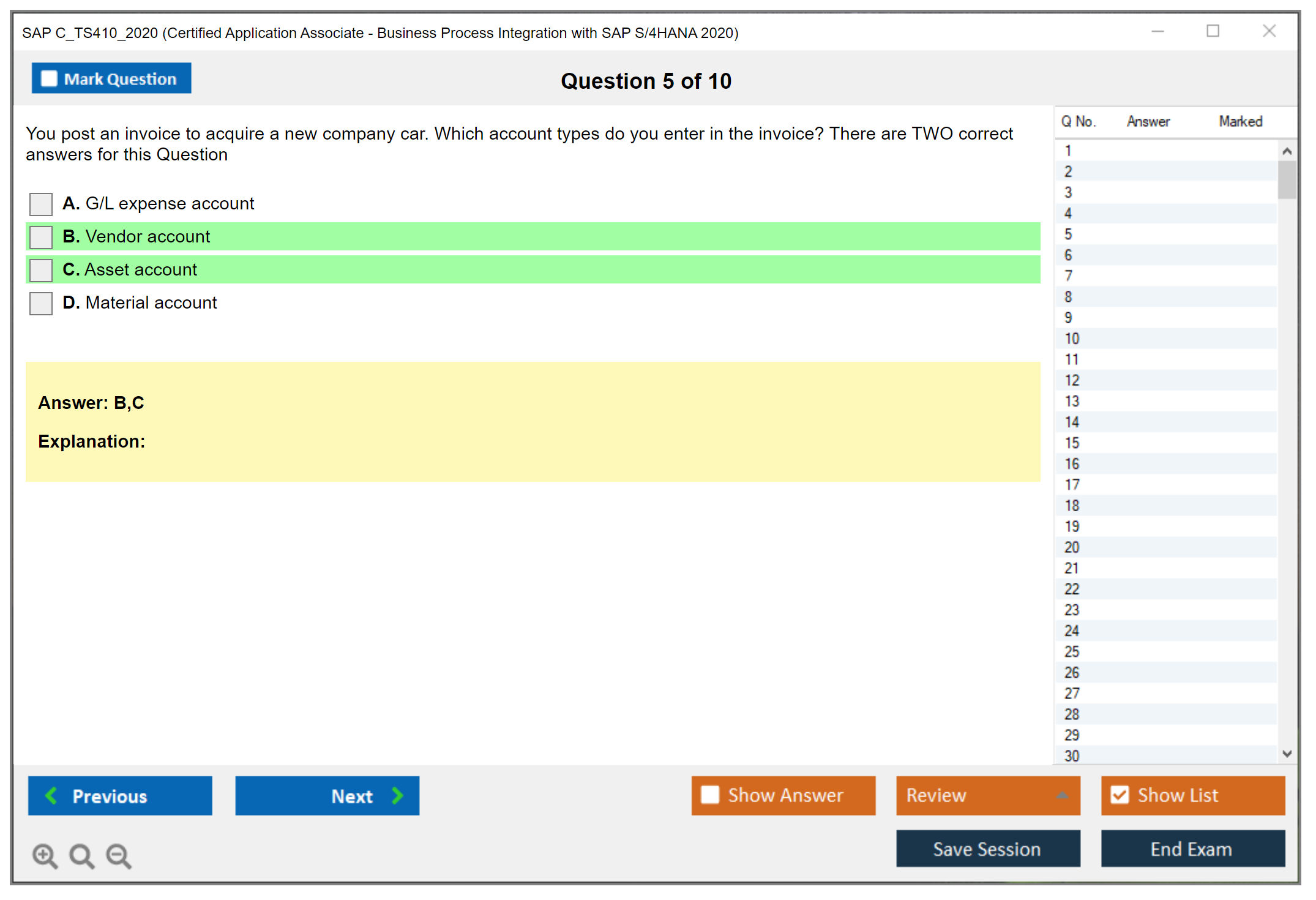
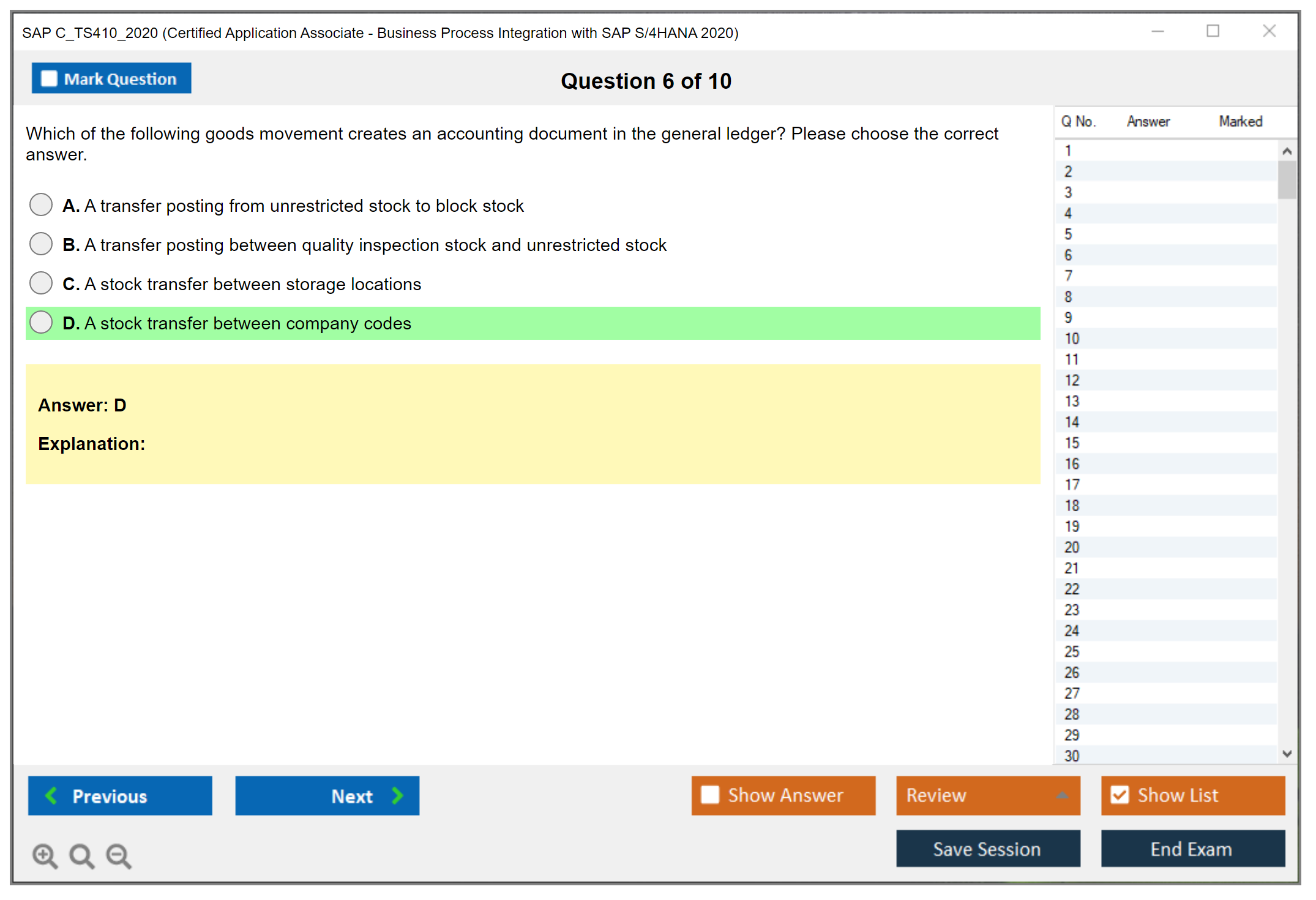
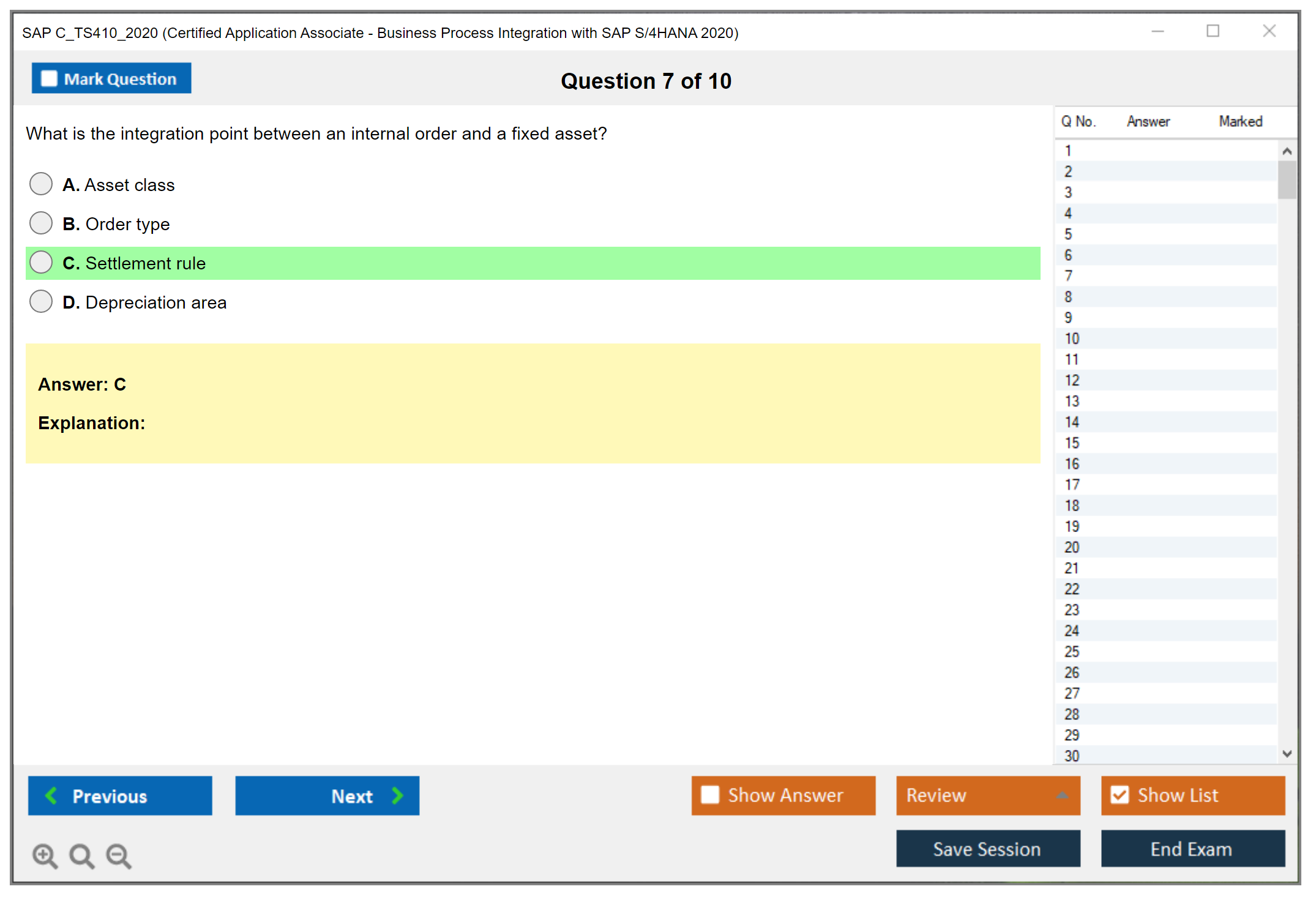
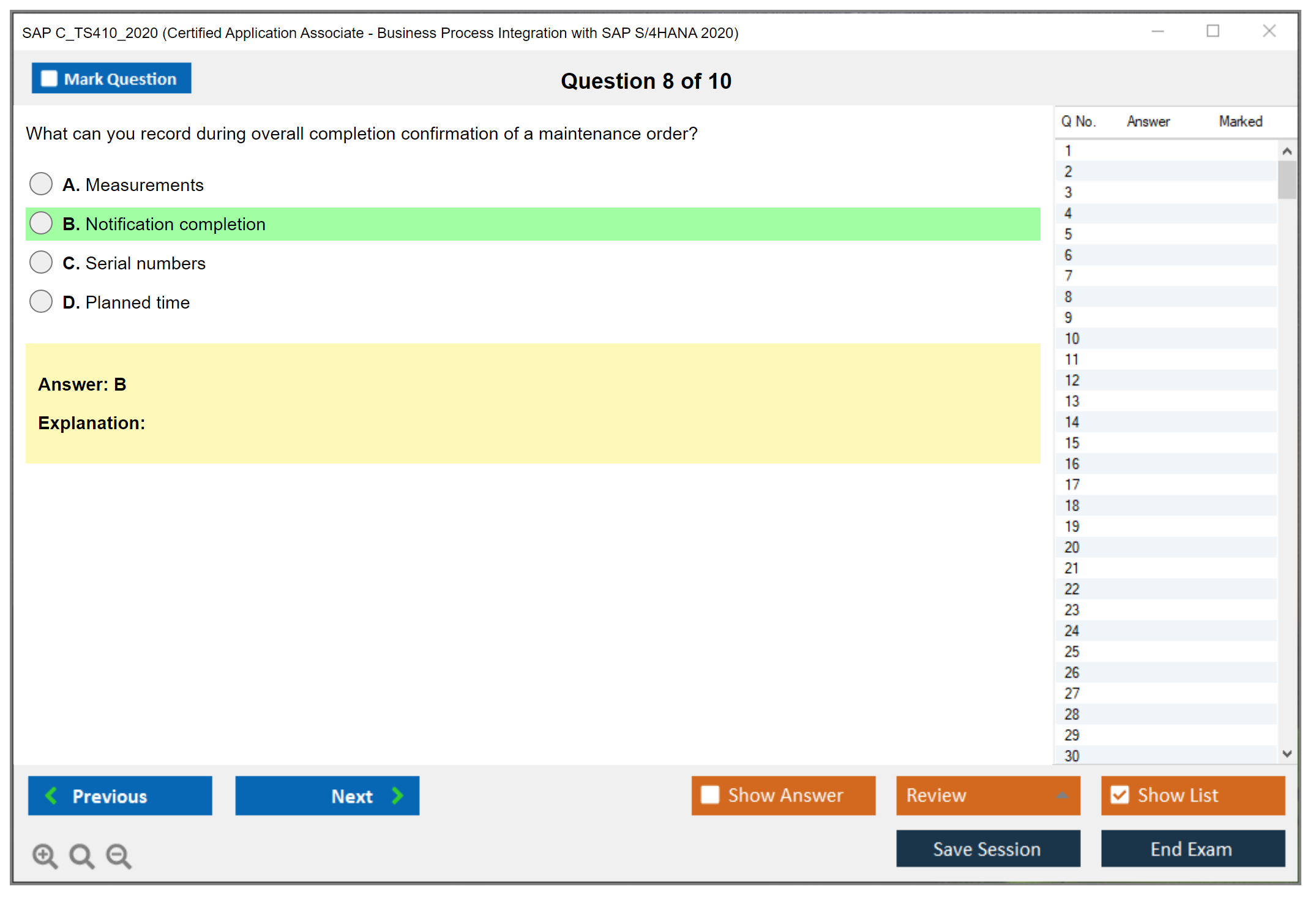
SAP C_TS410_2020 (SAP Certified Associate - Business Process Integration with SAP S/4HANA 2020)
SAP C_TS410_2020 Certification Overview and Introduction
What exactly is SAP C_TS410_2020 certification?
So, SAP C_TS410_2020. Officially?
SAP Certified Associate - Business Process Integration with SAP S/4HANA 2020. And honestly, it's one of those certs that really makes sense if you're trying to break into S/4HANA consulting. Unlike those module-specific certifications drilling deep into FI or MM configuration, this one validates how everything connects, you know? The end-to-end flows that actually matter when a business runs on SAP.
It focuses on integrated business processes rather than technical config in any single area. Look, the thing is, you're learning how Sales and Distribution talks to Materials Management, how Production Planning feeds into Financials, how master data dependencies ripple across modules. That's the real value. I mean, any consultant can memorize transaction codes, but understanding why a sales order creates a delivery document that triggers a goods issue that updates inventory valuation in FI? That's where this cert lives.
The scope covers organizational structures. Company codes, plants, sales organizations, purchasing organizations, and how they relate to each other. You'll need to understand master data dependencies: how a material master connects to vendor masters, customer masters, and pricing conditions. Cross-module transaction flows? Huge here. Document flow is probably the single most tested concept, honestly. I once saw someone fail this exam three times because they kept trying to memorize config steps instead of understanding how data moves between documents. Waste of time and money.
This is an associate-level certification designed for consultants, business analysts, and process owners working with S/4HANA implementations. It confirms your ability to map business requirements to SAP S/4HANA end-to-end business processes, which is exactly what clients pay for during discovery and blueprint phases. It represents an entry point for professionals seeking to establish credibility in SAP S/4HANA business process consulting without committing to a single module specialty right away.
Who should actually pursue C_TS410_2020?
Here's the deal.
If you're an SAP functional consultant transitioning from ECC to S/4HANA, this cert's basically mandatory. The simplified data model and new Fiori apps mean you can't just assume your ECC knowledge translates directly. Same goes if you're new to the SAP ecosystem entirely. This gives you the cross-functional foundation that makes specialization easier later.
Business process analysts responsible for requirements gathering and process design in S/4HANA projects should definitely consider it. You're the ones translating what the business actually does into SAP terms, so knowing how order-to-cash and procure-to-pay integrate saves everyone headaches during UAT, trust me.
Project managers overseeing S/4HANA implementations who need full process understanding find this valuable too, even if they're not hands-on in config. Being able to speak intelligently about integration points when you're coordinating workstreams is worth its weight in gold.
Solution architects requiring foundational knowledge of integrated business processes before specialization? Yeah, this is your starting point. You can't design an architecture if you don't understand how processes flow.
Key users and super users in organizations implementing or running SAP S/4HANA 2020 get real benefit here. Not gonna lie, being certified gives you use internally when you're advocating for process changes or pushing back on unrealistic customization requests.
Recent graduates or career changers entering SAP consulting with S/4HANA focus use this as proof they're serious, since you can't exactly show up with five years of hands-on experience when you're just starting.
Team leads coordinating across multiple functional workstreams in S/4HANA programs need this perspective to avoid the classic silo problem where SD and MM teams build solutions that don't talk to each other properly. If you've ever been on a project where cutover failed because nobody understood the master data dependencies, you know exactly why this cert matters.
Skills and competencies this certification actually validates
The core? Understanding the order-to-cash process flow from sales order creation through billing and revenue recognition. That means inquiry to quotation to sales order to delivery to goods issue to billing document to accounting document. Every step. Every integration point. Every place data gets copied or referenced.
Knowledge of the procure-to-pay cycle is equally weighted. Purchase requisitions, purchase orders, goods receipt, invoice verification, and payment. You need to understand three-way matching, GR/IR clearing accounts, and how material valuation methods affect what hits the balance sheet.
Comprehension of plan-to-produce processes covering demand management, production planning, and manufacturing execution comes up in scenario questions. You don't need to know every PP transaction code, but you do need to understand how MRP runs, what a production order does, and how backflushing works when goods are confirmed.
Familiarity with record-to-report financial processes including general ledger, asset accounting, and financial closing ties everything together. Honestly, the integration between logistics and financials is where most candidates struggle. Automatic account determination, material valuation, revenue recognition.. these aren't intuitive if you've only worked in one module.
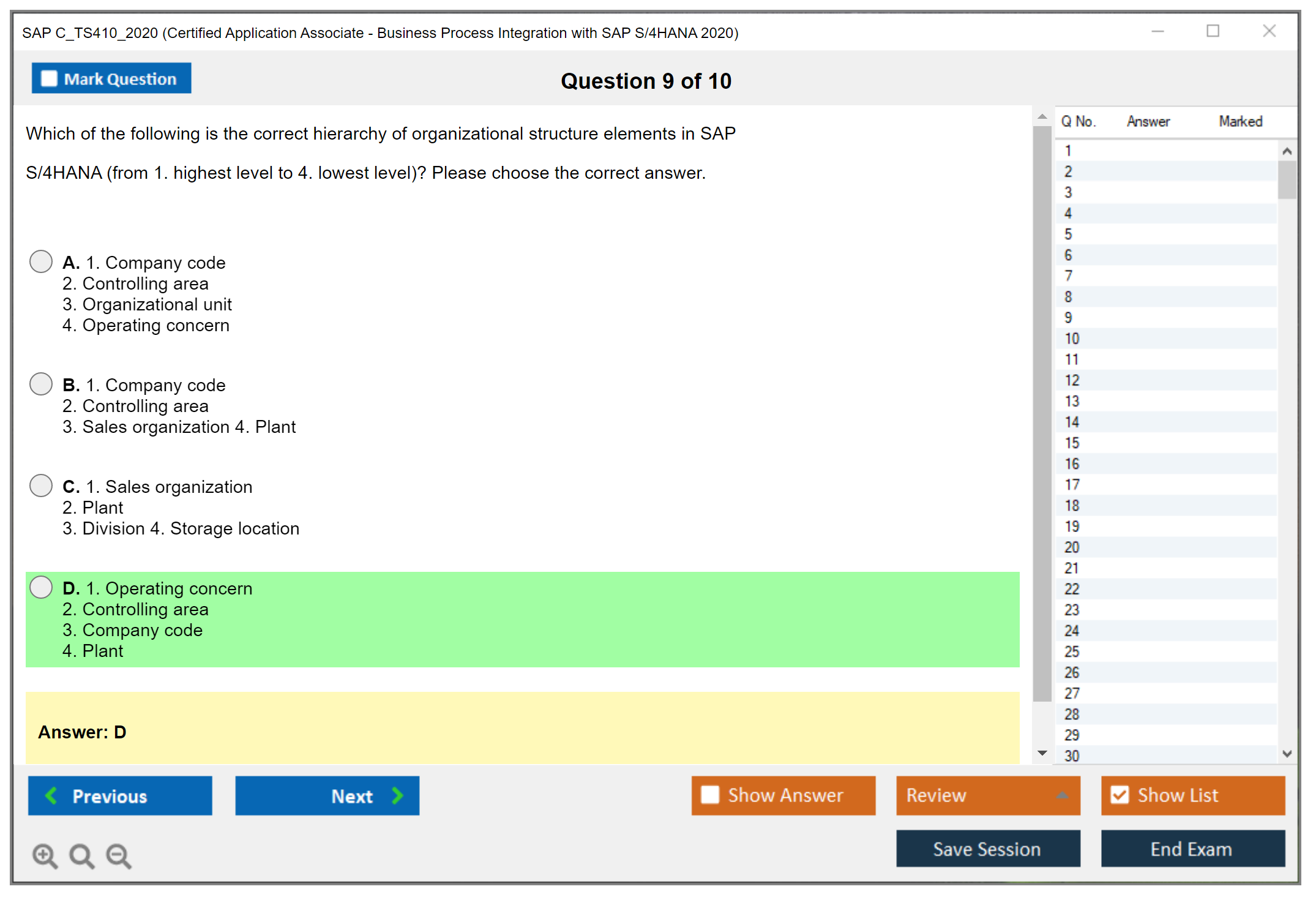
The ability to identify organizational structure dependencies across modules is tested constantly. Which org elements are assigned to which? Can you have multiple plants under one company code? How does the sales organization relate to the distribution channel and division? These relationships dictate what transactions are even possible.
Recognition of master data relationships and their impact on transactional processing is another big one. Material master views, which module owns which data. Customer-material info records, vendor master purchasing data, source lists.
Understanding document flow and information handoffs between functional areas means knowing which fields get copied where and when data becomes immutable.
Knowledge of integration points between logistics and financials can't be overstated. Material ledger, split valuation, parallel accounting. S/4HANA has specific innovations here compared to ECC that you need to know.
Awareness of S/4HANA-specific simplifications and innovations is actually tested explicitly. The universal journal, embedded analytics, new asset accounting. These aren't just buzzwords.
Capability to analyze business scenarios and determine appropriate process configuration approaches is the ultimate test. They'll give you a scenario and ask which process variant makes sense, which organizational structure supports it, what master data you need.
Strategic value this cert brings to your career
Let's be real.
This positions you well in a growing market. Organizations are still migrating from ECC to S/4HANA, and that migration wave isn't slowing down despite what some people think. The demand for consultants who understand integrated processes in S/4HANA is real, and the compensation reflects it.
It provides competitive differentiation in a job market where actual S/4HANA skills command premium rates over generic ECC experience. I've seen junior consultants with this cert get interview callbacks that more experienced ECC people didn't, simply because companies want that S/4HANA validation upfront.
It establishes a foundation for pursuing specialized certifications in specific modules later. You can branch into SAP S/4HANA 2021 for Financial Accounting or SAP S/4HANA Sales with better context than if you jumped straight to module-specific training.
The integrated knowledge makes module specialization easier because you understand the upstream and downstream impacts of configuration decisions, which honestly saves so much time when you're troubleshooting cross-module issues.
Demonstrates commitment to professional development and continuous learning. The thing is, this matters more than people admit when consulting firms are deciding who to hire or promote.
It enhances credibility when engaging with clients, stakeholders, and project teams on S/4HANA initiatives. Nobody questions whether you 'get' S/4HANA when you've passed this exam.
Opens pathways to consulting opportunities with SAP partners, implementation firms, and end-user organizations. A lot of partners require or strongly prefer this cert for anyone billing to S/4HANA projects.
Validates ability to contribute meaningfully to S/4HANA transformation projects from day one rather than needing six months of shadowing before you're useful.
Supports career progression toward senior consultant, solution architect, and practice lead roles. You're not going to become a practice lead with just this cert, obviously, but it's a prerequisite for that path in most organizations.
How C_TS410_2020 fits in the broader certification space
This is associate-level prerequisite knowledge for professional-level certifications in specific modules. If you want to pursue SAP Activate Project Manager or specialized technical tracks, having business process foundation helps.
It complements technical certifications like ABAP development, SAP Fiori, SAP Commerce Cloud by providing business process context that makes you more than just a code monkey.
It's part of SAP's S/4HANA certification portfolio alongside specialized functional and technical tracks. SAP restructured their cert program to emphasize integrated business processes rather than siloed module expertise, and this cert is basically the poster child for that philosophy.
It fits with how modern implementations actually work. Cross-functional teams need common vocabulary and understanding, and this provides exactly that foundation.
Recognized globally by SAP partners, customers, and the broader enterprise software community means it travels well if you're looking at international opportunities.
Can be combined with industry-specific knowledge for specialized consulting niches in retail, manufacturing, utilities, or oil and gas. Honestly, business process integration plus industry expertise is a really strong combination that opens doors to specialized high-value projects.
If you're comparing this to something like System Administration with SAP HANA or System Security Architect, those are technical tracks. This is the business side. Different audiences entirely.
But if you're doing solution architecture, you'll eventually want both business process and technical knowledge. Same if you're looking at SAP Billing and Revenue Innovation Management or SAP S/4HANA Sourcing and Procurement. This gives you the integration context that makes module-specific knowledge more valuable.
The real power? This cert validates the connective tissue between modules that most training courses skip over because they're focused on one area. That connective tissue is where implementations succeed or fail.
C_TS410_2020 Exam Details: Cost, Format, Duration, and Passing Score
SAP C_TS410_2020 certification overview
SAP C_TS410_2020 certification is the associate badge for "Business Process Integration with SAP S/4HANA 2020", and yeah, it's basically SAP saying you can follow how the big end-to-end processes hang together across modules, not just click around one screen in one area. Not a niche config exam. It's the integration exam. Cross-functional thinking wins here.
What is SAP Certified Associate, Business Process Integration with SAP S/4HANA 2020?
This is the SAP TS410 exam in certification form, tied to S/4HANA 2020, and the thing is, you're demonstrating how order-to-cash and procure-to-pay in S/4HANA actually connect, what master data gets shared across touchpoints, what organizational structures drive the whole machine, and what happens when a document flows from one step to the next. Realistic scenarios show up constantly. Some questions are straight recall. Many aren't.
Also, SAP likes terms being "SAP-correct". Field names matter. Doc types matter. Org units matter. Annoying sometimes, honestly. Still fair, I guess.
Who should take C_TS410_2020?
Functional consultants early on. Business analysts moving into SAP. Power users who got tired of being "the Excel person" at every planning meeting. Technical folks who keep getting pulled into process arguments will benefit too, because you'll finally understand why the finance lead keeps asking about account determination while sales is yelling about delivery blocks. It's like watching two people speak different languages in the same room, except nobody brought a translator and the meeting's already gone twenty minutes over.
New to SAP? Possible, sure. But you'll work for it. The exam expects that you can read a scenario and pick the right process approach, not just memorize definitions from some dusty slide deck.
Skills validated (end-to-end process integration)
Integration is everything here. You're proving you understand SAP S/4HANA end-to-end business processes across the big chains like order-to-cash, procure-to-pay, plan-to-produce, and record-to-report, plus you know where master data, organizational structure, and document flow create dependencies that'll break if someone configures one piece wrong.
Short sentences help. Learn the flow. Learn the touchpoints. Know what triggers what and when it posts.
C_TS410_2020 exam details (cost, format, duration, and passing score)
This section is the stuff people actually Google at 1 a.m. when they can't sleep before booking. Cost. Format. Time. Score. The mechanics.
Exam cost
C_TS410_2020 exam cost is usually in the $500 to $600 USD range, but it depends on region, local currency, and SAP's country pricing policies that nobody really understands except maybe three people in Walldorf. Look, SAP changes pricing sometimes and doesn't ask permission, so treat any blog post (including mine, honestly) as "ballpark", then verify in the portal right before you buy, because surprises are fun except when they involve your credit card.
You purchase through SAP Certification Hub, which replaced the old SAP Training and Certification Shop experience. The hub is also where you'll see your SAP Certification Hub exam attempts, voucher status, and scheduling links that drop you into Pearson VUE. One place. Mostly works.
Payment options are pretty standard: credit card for individuals, purchase order for corporate buyers, or SAP account billing if your company has that set up. Corporate SAP Education Agreements can bring volume discounts if a team is buying multiple attempts, but don't assume you personally get a cheaper retake. Retake fees are generally the same as the initial exam price. There's typically no discount for a second or third attempt either. Not gonna lie, that part stings hard.
A few purchasing wrinkles that matter. Some official SAP training courses bundle an exam voucher in the package price, which can be a better deal if you needed the course anyway, but it's not automatically cheaper if you only wanted the exam and already know the content cold. Exam vouchers are commonly valid for 90 to 180 days from purchase, so check the expiration date before you schedule your "future me will handle it" plan, because future you is lazy too.
No refunds for unused attempts is a thing, and if you don't reschedule at least 24 to 48 hours before your appointment (depends on the policy shown at booking time), you can lose the attempt entirely. It's very "computer says no." Educational institutions and SAP University Alliances sometimes have academic pricing, so if you're a student or staff, ask before paying retail like a chump.
Passing score
C_TS410_2020 passing score is typically around 63 to 65%, which works out to roughly 50 to 52 correct answers out of 80 questions. SAP can adjust the exact cut score by exam version, because they use psychometric methods to set that threshold. Translation: don't argue with the number, just clear it.
Results for online or remote delivery are usually immediate. You finish, you click submit, you get a pass/fail screen and an overall percentage score. Then you can breathe again or cry quietly depending.
Two grading details that trip people up. Multi-select questions usually have no partial credit whatsoever. If it says "choose 2", you need both correct and no incorrect selections, or you get zero points. Close doesn't count. Most questions are equally weighted unless SAP says otherwise, so one "hard" scenario question doesn't save you if you miss a bunch of basic org structure stuff that you skipped because it felt boring.
Afterward, you'll get a score report broken down by objective area, which is actually useful if you failed and need to target weak spots without re-studying the entire universe. If you pass, your digital certificate and badge typically appear in SAP Certification Hub within about 1 to 2 weeks, with your certification ID, exam code, and achievement date.
Exam format
The format is multiple-choice with single-select and multi-select questions. Typically 80 questions total. Scenario-heavy, I mean really scenario-heavy. You'll see realistic business situations, sometimes a process flow diagram, sometimes a configuration example, sometimes just text describing a company's requirement and you choose the right process answer from options that all sound plausible if you squint.
No penalty for wrong answers, so answer everything. Always. Guessing is mathematically better than leaving blanks, and SAP isn't doing trick negative marking here like some evil standardized test from high school.
The exam UI lets you flag questions for review and move freely between questions, which matters because some items will click later once you've seen a related question that jogs your memory. Questions come randomized from a larger pool, so two exam sessions aren't identical. That's why your coworker's "definitely memorize question 47" advice is useless. Also, no access to an SAP system, no SAP Help Portal, no notes, no external resources. Closed book means closed book.
Exam duration and time management
Standard duration is 180 minutes for those roughly 80 questions. That's about 2.25 minutes per question, and honestly that's plenty if you prepared properly. You'll have a bunch of "quick wins" that take 20 seconds, and then a handful of scenario monsters that eat five minutes if you let them spiral while you second-guess yourself into oblivion.
No breaks allowed. Plan accordingly. Water. Bathroom. Comfort. Because if you're doing online proctoring and you stand up without permission, you can get warned or terminated depending on the proctor and the rules, and that is a brutal way to lose $500 and your entire afternoon.
My preferred pacing is simple: first pass, answer what you know fast, flag anything that feels like a coin flip, then do a second pass for flagged items with the clock in mind. Actually, I also do a final skim for dumb mistakes because I've clicked the wrong radio button more times than I'll admit. Multi-select questions deserve extra time because you have to evaluate each option carefully and avoid "almost right" answers that SAP loves to plant. Practice this using a timed C_TS410_2020 practice test or at least timed question sets, because knowing content is one skill and executing under a timer without panicking is another skill entirely.
You can submit early if you're done. There's no bonus for sitting there sweating for the final 12 minutes pretending you'll catch something new.
Exam delivery methods and scheduling
You can take it online proctored or at a Pearson VUE test center. Scheduling happens through SAP Certification Hub, and it integrates into Pearson VUE's scheduling system behind the scenes. Same pipeline, different seat location.
Online proctoring is convenient, but it's picky as hell. You'll need a stable internet connection, a webcam, a quiet private room, and you'll run a system check ahead of time that'll tell you if your setup is acceptable or a disaster. Windows or Mac is typical, with specific browser requirements that change randomly, so don't assume your work laptop is allowed if it has aggressive security controls that block everything.
Test centers are boring in a good way, honestly. Controlled environment. On-site proctor. Less chance of "your webcam driver updated overnight and now nothing works and support is closed". You search locations by city or postal code on Pearson VUE, and you should schedule early if you're in a smaller market where seats fill up weeks out.
Either way, you need a government-issued photo ID that matches your registration name exactly. Show up early for test centers, usually 15 minutes. Online check-in also takes time, because you'll do ID verification and room scan before the timer starts, so budget for that.
C_TS410_2020 exam objectives (what to study)
C_TS410_2020 exam objectives are published by SAP and include topic areas with weightings, and you should treat that as your study map, not as "nice to know background reading". SAP can update the objectives between versions, so always cross-check the official listing before you build your plan or complain that your study guide from 2019 doesn't match.
Core areas tend to revolve around SAP S/4HANA end-to-end business processes across sales, procurement, manufacturing, and finance. Organizational structures and how they drive documents and reporting hierarchies. Master data concepts (customer, supplier, material, BP, etc.) and where they're used and why they matter. Integration points, like when a goods issue hits accounting automatically, or when billing impacts revenue recognition basics, or how procurement postings flow through to GL.
If you're trying to brute-memorize definitions, you'll feel fine until the scenario questions show up, because those require you to apply the process logic in context, not just repeat vocabulary like a parrot.
Prerequisites and recommended experience
SAP usually lists recommended knowledge, not strict C_TS410_2020 prerequisites, so you don't have to "unlock" the exam like some video game achievement. But you should have basic SAP navigation down and a working understanding of cross-functional processes before you even think about booking.
Hands-on helps immensely. Even light exposure to S/4HANA screens, document flow, and typical transaction patterns makes scenario questions feel normal instead of alien hieroglyphics.
Difficulty level and what makes the exam challenging
Is the SAP C_TS410_2020 exam difficult? It's associate-level, but it's wide, and that's the catch. You're not going deep into one module's config like a specialist exam, but you are expected to understand the sequencing and integration touchpoints across modules, and that breadth is what surprises people who thought "I know SD, so I'm good."
Common pain points: terminology and organizational structure concepts that sound similar but behave differently (company code vs. sales organization, anyone?). Process flow sequencing, where one wrong assumption breaks the whole scenario logic. And multi-select questions where two options feel right, but only one fits the exact process requirement described in the scenario text that you should've read more carefully, honestly.
Best study materials for SAP C_TS410_2020
C_TS410_2020 study materials are best when they match SAP's objective list and include scenario practice, not just definition lists.
SAP official training is the cleanest path if you have budget or your employer pays. The TS410-aligned courseware tends to mirror the exam style, and it pushes you to think in end-to-end terms rather than module silos, which is the whole point. SAP Learning Hub TS410 resources can also be worth it if you want structured content, learning rooms, and access to official digital materials, but subscription value depends on how much time you'll actually spend in there versus how much you'll pay per day of procrastination.
Documentation matters too. SAP Help Portal is great for clarifying definitions and process steps, but don't treat it like exam prep by itself, because reading help docs doesn't teach you to answer scenario questions under pressure. And if you can get any hands-on practice system time, even guided exercises, do it immediately, because it turns abstract process descriptions into something you can visualize quickly under exam pressure.
Practice tests and exam preparation strategy
A C_TS410_2020 practice test is useful if you use it correctly. Timed sets, review wrong answers by objective area, and write down why your wrong option was wrong, not just why the right option was right. That's where the learning happens. Ugly but effective.
If you want a simple 2 to 4 week outline that doesn't require quitting your job, here's what works for most busy people: map objectives to days, do one end-to-end process chain per block (order-to-cash, procure-to-pay, and so on), then do mixed question sets every few days so your brain practices switching contexts like the exam forces you to do without warning.
Renewal and staying current
SAP C_TS410_2020 renewal is the part people ignore until they can't download a badge for a client project and suddenly it's urgent. SAP's program has shifted over time toward "stay current" assessments for some tracks and versions, and policies can change without much fanfare, so check your status in the certification portal inside SAP Certification Hub rather than trusting old rules from 2020 that your buddy mentioned once.
If maintenance is required for your certification track, you typically keep it active by completing periodic update assessments by deadlines shown in your SAP profile. Put reminders on your calendar now. Seriously, this is one of those boring admin tasks that can quietly cost you credibility later when you realize your cert lapsed two years ago.
FAQs (cost, passing score, difficulty, materials, practice tests)
How much does the SAP C_TS410_2020 exam cost?
Usually $500 to $600 USD depending on region and currency conversion rates. Buy through SAP Certification Hub and confirm the current price there, because SAP adjusts fees periodically without warning.
What is the passing score for C_TS410_2020?
Typically around 63 to 65%, roughly 50 to 52 correct out of 80 questions, but SAP can vary the threshold slightly by version using their scoring magic.
Is the SAP C_TS410_2020 exam difficult?
It's manageable if you study right, but broad. The hard part is cross-module integration and scenario questions, not weird trick trivia that nobody uses in real life.
What are the best study materials for the TS410 exam?
Official TS410-aligned training and SAP Learning Hub TS410 resources are the most aligned to what you'll actually see. Add objective-based notes and timed question practice for exam execution skills.
Are there reliable practice tests for C_TS410_2020?
Timed question sets aligned to the official objectives are the best indicator of readiness. Treat practice tests as diagnosis tools, not as a memorization dump to regurgitate blindly.
Final tips to pass SAP C_TS410_2020
Focus on integration over memorization alone. Do objective-by-objective revision systematically. Practice scenario questions under time pressure until it feels normal. And look, if you only remember one thing, remember document flow and what posts to finance when, because that's where a lot of "I thought it was just SD" confidence goes to die a painful death.
C_TS410_2020 Exam Objectives and Content Domains
Official exam topic areas and weighting
SAP publishes detailed exam content outlines for C_TS410_2020 on their official certification page, which should be your absolute first stop before diving into any serious study plan. The topic weighting reveals what percentage of questions come from each content domain, and this matters way more than most people realize when they're cramming the night before.
Here's the typical distribution. Order-to-Cash sits around 20-25%, Procure-to-Pay also 20-25%, Plan-to-Produce somewhere between 15-20%, Record-to-Report 15-20%, and cross-functional topics filling out whatever's left, usually 15-20%. These percentages should guide how you allocate your study time. If O2C is 25% of the exam, you really shouldn't spend 60% of your prep time on it while completely ignoring production processes, right?
Weighting helps prioritization. If you've only got three weeks to prepare, you need to be strategic about where you're investing your hours. The official weighting basically hands you that roadmap on a silver platter.
SAP updates this stuff periodically, so always reference the current official version from their certification site rather than relying on some outdated forum posts or blog articles from 2019. After you take the exam (whether you pass or not), your score report shows performance by topic area, which is helpful for targeted retake prep if you need it. Hopefully you won't.
Some topics appear across multiple domains because business processes in S/4HANA are integrated by design. You'll see automatic account determination mentioned in O2C, P2P, and manufacturing sections since they all touch financial postings.
Order-to-Cash process integration
Sales order processing starts with inquiry and quotation, moving through order creation and confirmation. You've gotta understand how customer requirements translate into sales orders and how availability checking happens in real time, not some batch process from the 1990s.
Delivery processing includes picking, packing, goods issue, and shipment creation. Everything that physically moves product from your warehouse to the customer's loading dock. The exam tests whether you know the sequence and the integration points with inventory management, which trips up more people than you'd think.
Billing processes come in different flavors: order-related billing, delivery-related billing, and milestone billing for projects. Each has different triggers and timing. Different business purposes. Integration between Sales and Distribution (SD) and Financial Accounting (FI) is huge here. When you create a billing document, the system automatically posts revenue and accounts receivable entries in the financial books without anyone manually intervening.
Revenue recognition matters. Automatic account determination for billing documents matters because S/4HANA needs to know which G/L accounts to hit when you bill a customer. Customer master data structure includes organizational assignments like sales organization, distribution channel, and division. Get these relationships straight or you'll struggle with scenario questions, trust me.
Pricing determination covers condition types, pricing procedures, and condition records. Availability checking (ATP) integrates with Materials Management and Production Planning to confirm whether you can actually deliver what you promised to that demanding customer. Credit management checks credit limits during sales order processing to protect the company from bad debt situations.
Document flow traces the path from pre-sales documents through billing and accounting documents. It's all connected. Returns processing and credit memo creation handle the reverse flow when customers send stuff back because it's defective or they just changed their minds. Third-party order processing involves special procurement types where you never physically touch the inventory. It ships directly from vendor to customer.
Organizational structures trip people up constantly: sales organization, distribution channel, division, sales office, sales group all interact in ways that seem overly complicated until you map them to real business units in an actual company. I spent a whole weekend once trying to explain to my roommate why a single customer could have different pricing in different sales areas. He still didn't get it, but at least I understood it better by the end. If you're preparing for this section, definitely check out the C_TS410_2020 Practice Exam Questions Pack to see how these concepts appear in actual exam scenarios.
Procure-to-Pay process flow
Purchase requisition creation happens manually, automatically via MRP, or from sales orders in special cases like third-party processing where everything gets more complicated than normal.
Purchase order processing involves vendor selection, pricing negotiation, and release procedures if you've got approval workflows configured. Goods receipt processing happens with reference to the purchase order and immediately updates inventory management. No delays, no batch jobs. Invoice verification (Logistics Invoice Verification, or LIV) implements the three-way match concept, comparing purchase order, goods receipt, and vendor invoice to catch discrepancies before you actually pay anyone.
Vendor master data structure mirrors customer master but on the procurement side, with organizational assignments to purchasing organization and company code. Automatic account determination routes procurement transactions to the correct G/L accounts: inventory accounts, GR/IR clearing, freight, all that stuff.
Integration between Materials Management (MM) and Financial Accounting (FI/CO) happens in real time in S/4HANA, unlike the old ECC days where material ledger was optional and half the companies didn't even bother implementing it properly. Inventory management and valuation includes moving average price and standard price methods, each with different implications for your cost accounting that can make or break your financial statements.
Stock types matter here. Unrestricted use, quality inspection, and blocked stock serve different business purposes. Different scenarios. Special stocks like consignment and subcontracting have unique procurement flows that don't follow the standard pattern. Service procurement differs from material procurement because you're dealing with service entry sheets instead of goods receipts.
Organizational structures here are purchasing organization, purchasing group, plant, and storage location. Material master data views relevant to procurement include Purchasing view, MRP view, and Accounting view. The exam loves asking which view contains which specific fields.
Plan-to-Produce manufacturing processes
Demand management and sales and operations planning (S&OP) provide high-level capacity and volume planning before you get into the weeds of daily production.
Material Requirements Planning (MRP) execution generates planning run results that tell you what to make or buy and when. Production order processing handles discrete manufacturing, think widgets coming off an assembly line. Process orders cover process industries like chemicals or food where you're mixing ingredients rather than assembling individual parts.
Goods issue for production orders consumes raw materials, and backflushing automatically posts these consumption transactions when you confirm operations. Saves tons of manual work. Confirmation of production operations captures actual costs and progress as things move through your factory. Goods receipt from production brings finished goods into inventory, completing the cycle.
Integration between Production Planning (PP) and Materials Management (MM) keeps everything synchronized across planning, execution, and inventory. Product costing and cost component structure basics matter because production orders accumulate costs that eventually settle somewhere in your financial books.
Work center master data defines where production actually happens on the shop floor, and routing or recipe definitions specify how. Bill of Materials (BOM) structure lists what goes into each finished product. Every screw, every component, every ingredient.
Capacity planning and scheduling help you figure out whether you can actually produce what sales has enthusiastically promised to customers. Production order settlement posts costs to cost centers or profitability segments at period-end.
Record-to-Report financial processes
General Ledger accounting in S/4HANA uses the Universal Journal concept, which consolidates what used to be like five or six separate tables back in ECC. Accounts Payable and Accounts Receivable processing handle vendor and customer transactions. Asset Accounting covers acquisitions, depreciation, and retirements of fixed assets.
Cost Center Accounting and internal order management track where you're spending money internally across departments. Profitability Analysis (CO-PA) integrates with sales and production to show which products and customers are actually profitable versus which ones are draining resources. Financial closing activities and period-end processing include tasks like depreciation posting, accruals, and balance sheet reconciliation.
Integration points happen automatically between logistics modules and Financial Accounting. Everything flows in real time. No more batch jobs to post FI documents from MM or SD like in the old days. Document splitting and real-time integration in S/4HANA mean your balance sheet is always current, always accurate.
Organizational structures include company code, business area, segment, and profit center. Master data covers G/L accounts, cost centers, profit centers, and cost elements. There's a lot of master data to keep track of. Automatic account determination configuration ties everything together, routing operational transactions to the right financial accounts without manual intervention.
Parallel accounting exists. Multiple ledgers in S/4HANA let you maintain different accounting principles (local GAAP, IFRS, group reporting) at the same time in one system instead of maintaining separate systems. Similar integration concepts appear in related certifications like SAP S/4HANA 2021 for Financial Accounting.
Cross-functional integration topics
Organizational structure relationships across modules can get messy. Company code connects to plant, plant connects to sales organization, but these relationships aren't always one-to-one. The exam tests your understanding of valid combinations versus impossible ones.
Master data dependencies span modules in ways that aren't always obvious. The material master serves procurement, sales, production, and accounting all at once. Business partner master data replaced separate customer and vendor masters in S/4HANA, simplifying some things while complicating others. Document flow and information handoff between functional areas show how a sales order triggers procurement, production, delivery, billing, and financial postings in sequence. It's all connected.
Automatic account determination appears everywhere. Sales billing, goods movements, invoice verification, production order settlement. Everywhere you look, there's automatic account determination happening behind the scenes. Inventory valuation and material price determination directly impact financial results in ways that aren't always transparent to end users.
Authorization concepts matter. Organizational level assignments control who can do what in which organizational units, preventing chaos and fraud.
S/4HANA simplifications compared to ERP ECC include mandatory material ledger, reorganized asset accounting tables, and the Universal Journal replacing separate ledgers that used to require reconciliation. SAP Fiori apps provide role-based, simplified UIs for end-to-end process execution. You need awareness-level knowledge of how Fiori fits in, not deep technical expertise. Embedded analytics and reporting capabilities in S/4HANA replace many custom reports from ECC that companies spent millions developing.
Migration considerations matter. Data transition considerations matter for S/4HANA implementations coming from legacy systems. If you're coming from a technical background, you might also want to look at SAP Fiori System Administration or SAP Activate Project Manager certifications to broaden your S/4HANA expertise beyond just business processes.
Study approach for exam objectives
Map study materials to each official objective area. Create a spreadsheet if you're into that sort of thing. Some people love spreadsheets, others hate them. An objective-by-objective checklist helps you track preparation progress and identify gaps before exam day arrives.
Focus on process flows. Integration points matter more than detailed configuration settings. This is an associate-level business process certification, not a consultant certification, so you need breadth over depth across all functional areas. Understand why each process step exists, not just what happens mechanically. The exam includes scenario-based questions where you need to reason through business requirements and select the best approach.
Practice explaining processes end-to-end as if teaching someone else who knows nothing about SAP. If you can't articulate how a third-party sales order flows through procurement, delivery, billing, and financials without constantly checking your notes, you're not ready yet. Use official SAP documentation to clarify ambiguous concepts. The help portal is actually pretty good once you learn how to work through it, though it takes some getting used to.
Relate exam objectives to real-world scenarios for better retention. Connect procurement processes to how your company actually buys office supplies or manufacturing components. Dry theoretical knowledge fades fast, but if you ground it in real business contexts, it sticks way better in your memory.
For hands-on practice with realistic exam questions, the C_TS410_2020 Practice Exam Questions Pack offers targeted preparation for $36.99 with questions mapped directly to the official objectives.
Some people prepare for related certifications at the same time. SAP S/4HANA Sourcing and Procurement or SAP S/4HANA Asset Management dive deeper into specific functional areas if you want to specialize after passing C_TS410_2020. Might be worth considering depending on your career goals.
Prerequisites, Recommended Experience, and Preparation Requirements
SAP C_TS410_2020 certification overview
Look, SAP C_TS410_2020 certification is the associate badge tons of people grab when they're trying to show they actually get SAP S/4HANA end-to-end business processes. Not just some isolated module. It's all about integration. Flow, you know? The "okay, what's next" across Sales, Procurement, Manufacturing, and Finance.
This isn't a beginner exam. Not "memorize some screens". Definitely not a pure config test.
What they're really testing is can you follow, explain, and troubleshoot process chains like order-to-cash and procure-to-pay in S/4HANA, plus do you understand where master data and org structures fit into those chains. Honestly, folks who think it's "just an SD exam" or "just an MM exam" usually get a rude awakening fast. The SAP TS410 exam keeps throwing you between modules and asking you to connect dots you didn't even realize were there.
What is SAP Certified Associate, Business Process Integration with SAP S/4HANA 2020?
This one targets S/4HANA 2020 specifically, and the whole emphasis is business process integration, which means you've gotta know the lifecycle of transactions and documents, how they impact inventory and accounting, and how choices you make upstream (like org structure, master data, pricing, account determination) create ripples downstream.
You won't write ABAP. You won't build Fiori apps. You will read scenarios.
Most questions are basically: "Given this process, what's the right next step, where's the document going, what data's required, what happens to finance." If you can't picture the process mentally, you're just guessing.
Who should take C_TS410_2020?
If functional consulting's your goal, business analyst work around ERP, or you're stuck in a support role and want credibility beyond your current ticket queue, this is a solid move. Students or career switchers can still make it work, but you'll need way more prep time and way more hands-on practice than you think.
I mean, I'm not trying to gatekeep here. But if you've never touched an SAP system, never looked at master data, and don't know what a goods receipt actually is in the real world, you're making this harder than it needs to be.
Skills validated (end-to-end process integration)
You're proving you understand SAP S/4HANA end-to-end business processes across multiple lines. Sales and distribution touches materials. Procurement touches FI. Production planning touches literally everything if you let it. That cross-functional "document flow mindset" is what gets validated, and it's also what makes the exam challenging, honestly.
C_TS410_2020 exam details (cost, format, passing score)
Exam cost
People keep asking about C_TS410_2020 exam cost because SAP isn't like CompTIA where you just buy one voucher and you're done. Usually you're buying access through SAP Certification Hub exam attempts (often via SAP Certification (Cloud)), or maybe your employer already has some subscription arrangement, and pricing shifts depending on region and the exact package you're buying.
So yeah, the number changes. A lot. Check before you budget. Don't trust random blogs.
If you're paying out of pocket, also remember training's separate and can absolutely dwarf the exam fee, especially if you do instructor-led.
Passing score
C_TS410_2020 passing score is published on the official exam listing, and SAP can tweak policies or details over time, so you want the current percentage from the source. Not from some screenshot in a forum thread from 2021. Same deal with the number of questions and time limit. Verify it on the exam page right before you schedule.
Exam format
Delivery options have shifted over the years, and you might see remote proctoring, test center delivery, or program-specific rules depending on your region and account. Question types are mostly multiple choice and multiple response, and the tricky part is the "select all that apply" style where one missed option turns a "pretty sure" into a wrong answer. Not gonna lie, that format punishes shallow study hard.
C_TS410_2020 exam objectives (what to study)
Official objectives and topic weighting
C_TS410_2020 exam objectives are listed by SAP with topic areas and weightings. Use that list like a checklist, because it's the closest thing you get to an exam blueprint that actually matters. The thing is, you can watch YouTube summaries all day, but if you're not mapping your study to the objectives, you're just hoping the question pool matches your favorite videos.
Also, the objectives are written in SAP language. Sometimes that's code for "you need to know the document types and key steps," and sometimes it's code for "you need to know integration points that show up in real projects."
Core process areas to cover
Expect heavy focus on SAP S/4HANA end-to-end business processes across the classic chains, as reflected in the official objectives: order-to-cash and procure-to-pay in S/4HANA, plus plan-to-produce and record-to-report. If you only learn each area in isolation, you'll miss the handoffs. Those handoffs are where the exam lives.
Prerequisites and recommended experience
Formal prerequisites
Here's the part that confuses people: C_TS410_2020 prerequisites are basically.. not a hard gate.
SAP doesn't mandate strict prerequisites for associate-level certifications. No rule says you must hold another SAP certification first. There's no mandatory training course you must complete before exam registration. You can register based on self-assessment of readiness, pay for your attempt through the certification system, and schedule.
That's it. No paperwork. No gatekeeping.
But (and it's a massive but) lack of prerequisites doesn't mean the exam's suitable for complete SAP beginners. SAP's stance is more like "we won't stop you," not "this is designed for someone who learned ERP last weekend." The official exam page lists recommended knowledge areas and prep activities, and you should treat those as the real bar even if they're not enforced by the registration flow.
Self-study candidates especially need to be brutally honest here. If you don't know what organizational structure elements do, can't explain the difference between master data and transactional data, or you've never traced document flow from a sales order through delivery and billing, you're not "underprepared." You're basically starting from zero in a test that assumes you already speak the language.
SAP's recommended preparation and training
SAP strongly recommends completing TS410 instructor-led training course or equivalent. That "or equivalent" matters because plenty of people pass without sitting in a classroom, but they still cover the same scope, just through different C_TS410_2020 study materials.
TS410's typically a 10-day (around 80 hours) course that covers the objective areas thoroughly. Structured. Paced. It's designed to walk you through integrated scenarios instead of teaching random features. You'll usually see lectures, demonstrations, hands-on exercises, and case studies where you follow a process from start to finish and see what gets created in the system and why.
It's offered as classroom training, virtual classroom, or self-paced learning via SAP Learning Hub TS410 resources, depending on what SAP's offering in your region and what subscription you've got. The uncomfortable part is cost: the course fee's separate from the exam cost, and it's commonly in the $4,000 to $6,000 USD range depending on delivery format. Sometimes more. Sometimes your employer covers it. Sometimes you swallow hard and go self-paced.
I've seen candidates pass using only a SAP Learning Hub subscription plus disciplined self-study, and honestly that's the route I'd pick if you already have ERP experience and you can keep yourself accountable. Actually, wait. If you need structure, the official training's the cleanest path because it lines up tightly with the objectives, and it usually includes access to practice systems where you can actually execute the flows instead of just reading about them.
Hands-on matters. Screens matter. Mistakes matter.
Reading about a goods movement isn't the same as posting it, realizing your master data's wrong, fixing it, and seeing how it changes downstream documents. That kind of muscle memory is what reduces exam stress. My first time posting an invoice, I forgot to maintain the vendor payment terms and couldn't figure out why the system kept rejecting my entry. Turns out there's a bunch of little data points you don't appreciate until they bite you in a live scenario.
Recommended professional experience
The "ideal" background is 1 to 2 years working with SAP S/4HANA or SAP ERP in a business process context. That can be as a junior consultant, key user, business analyst, or even a support role where you touch process issues rather than only technical plumbing.
Exposure to at least 2 to 3 functional areas is a big advantage. SD, MM, PP, FI/CO. Pick your mix, but you want enough range that cross-module questions feel normal. Experience with end-to-end process scenarios is the biggest differentiator, because the exam keeps circling back to integrated flows like order fulfillment, procurement, and basic production execution steps. If you've participated in an S/4HANA implementation, migration, or support project, that's gold, because you've seen how messy real process data gets and how SAP expects you to think when something doesn't reconcile.
Configuration experience is helpful but not required. The exam focuses more on process knowledge than on customizing screens, so you don't need to be a full-time config person to pass, but you do need to understand why certain settings exist and what they affect. Also, you should be comfortable with org structure concepts and master data management, because a surprising number of "process" questions are really "did you set up the enterprise structure and data correctly" questions in disguise.
Knowledge prerequisites and foundational skills
You need basic ERP concepts and terminology. If "posting," "clearing," "goods issue," "invoice," "valuation," "account determination," or "MRP" are fuzzy terms for you, fix that first. Familiarity with business process modeling helps too, even informal stuff like being able to sketch a process flow and label where documents are created and where they post to finance.
General business acumen matters more than people admit. Sales, procurement, manufacturing, finance. You don't have to be an accountant, but you should understand what the business is trying to accomplish, because SAP questions often describe business intent and ask you what the system outcome is.
Difficulty level and what makes the exam challenging
The exam's associate-level, but the challenge is cross-module integration and scenario-based wording. The hardest questions are the ones where every option looks "kind of right" unless you know the exact sequencing or the exact object involved.
Common pain points: org structure terms that sound similar, master data dependencies, integration touchpoints between logistics and FI, and process sequencing where one missing prerequisite breaks the chain.
practice tests and preparation strategy
A C_TS410_2020 practice test can help, but only if it's aligned with the objectives and you review mistakes by topic area. Timed sets are useful because pacing matters, and you should practice reading carefully, since SAP likes to pack conditions into the scenario text.
If you want a simple plan, do 2 to 4 weeks mapped directly to objectives: first pass to learn flows, second pass to drill integration points, final pass to do timed question practice and labs. Keep it messy. Take notes on what you got wrong and why.
Renewal and staying current
SAP C_TS410_2020 renewal is one of those things people ignore until it bites them. SAP's program may require "stay current" assessments for some certification tracks or versions, and policies can change, so you should verify your status inside SAP's certification portal rather than assuming a 2020 badge stays active forever without any maintenance. Track deadlines in your SAP profile. Don't rely on memory.
FAQs (cost, passing score, difficulty, materials, practice tests)
How much does the SAP C_TS410_2020 exam cost?
It varies based on whether you're buying individual exam attempts through SAP Certification Hub exam attempts or using a subscription package, plus region and account type. Check SAP's current pricing page or your organization's agreement.
What is the passing score for C_TS410_2020?
SAP publishes the current passing percentage on the official exam listing. Confirm it there because it can be updated.
Is C_TS410_2020 hard for beginners?
Yes. Not impossible, but it's rough if you're brand new to SAP and ERP concepts because the questions assume you can follow integrated process chains without stopping to learn vocabulary.
What are the best study materials for the TS410 exam?
Start with official TS410 courseware (instructor-led or self-paced via SAP Learning Hub), then add SAP Help Portal reading and as much hands-on practice as you can get in an S/4HANA system. Third-party notes can help, but only after you've anchored yourself in the official objectives.
Are there reliable practice tests for C_TS410_2020?
Use official sample questions or learning checks when available, and be cautious with random dumps. If a practice set doesn't map to the objectives or explain why answers are correct, it's not helping you build the process thinking the exam expects.
Conclusion
Wrapping up your C_TS410_2020 path
Here's the deal. The SAP C_TS410_2020 certification? You can't just cram it last-minute and expect miracles. It tests whether you actually understand how business processes communicate within S/4HANA, and that's exactly why companies value it. Organizations need folks who see the bigger picture. People who grasp that creating a sales order doesn't exist in isolation but triggers this whole domino effect cascading through delivery, billing, inventory management, and accounting entries. Cross-module thinking is what this exam really validates.
Sure, the C_TS410_2020 exam cost and passing score matter. But what separates passing candidates from failing ones? How deeply you understand those end-to-end business processes. I mean, you could memorize literally every transaction code that exists and still completely tank the integration scenarios. Get comfortable with order-to-cash and procure-to-pay flows. Know them intimately. That's where most candidates hit the wall. The exam loves throwing curveballs with organizational structure questions and process touchpoints that force you to mentally walk through entire sequences, not just remember disconnected steps.
Your C_TS410_2020 study materials need to include official SAP training whenever possible. Budget permitting, obviously. SAP Learning Hub resources deliver solid value when you've got access, and the documentation over on SAP Help Portal fills knowledge gaps effectively. But here's the thing. Just reading won't cut it. You need hands-on exposure to watch these processes actually execute in the system, even if that means guided walkthroughs or simulation environments rather than live systems. I once watched someone ace the theoretical parts but struggle for weeks because they'd never seen the actual interface. Strange how that happens.
Don't skip practice tests
Not gonna sugarcoat this. Tons of people stumble here. Badly. They'll study content religiously but never actually test themselves under real exam conditions. A quality C_TS410_2020 practice test reveals exactly where your knowledge has blind spots, builds your answer speed, and gets you accustomed to SAP's particular way of phrasing scenario-based questions. Time pressure changes everything. You might know the material backwards and forwards but then completely freeze when that clock's ticking down.
For serious practice mirroring the actual exam format while covering all the C_TS410_2020 exam objectives, check out the C_TS410_2020 Practice Exam Questions Pack. It's built for this certification and includes detailed explanations, so you're actually learning from mistakes instead of just staring at some score.
Real talk?
The SAP S/4HANA 2020 business process integration certification opens doors. Invest the effort, focus on integration scenarios over mindless memorization, and practice until those process flows become second nature. You've got this.
