MB-330 Practice Exam - Microsoft Dynamics 365 Supply Chain Management
Reliable Study Materials & Testing Engine for MB-330 Exam Success!
Exam Code: MB-330
Exam Name: Microsoft Dynamics 365 Supply Chain Management
Certification Provider: Microsoft
Corresponding Certifications: Supply Chain Management Functional Consultant Associate , Microsoft Other Certification


Free Updates PDF & Test Engine
Verified By IT Certified Experts
Guaranteed To Have Actual Exam Questions
Up-To-Date Exam Study Material
99.5% High Success Pass Rate
100% Accurate Answers
100% Money Back Guarantee
Instant Downloads
Free Fast Exam Updates
Exam Questions And Answers PDF
Best Value Available in Market
Try Demo Before You Buy
Secure Shopping Experience
MB-330: Microsoft Dynamics 365 Supply Chain Management Study Material and Test Engine
Last Update Check: Mar 16, 2026
Latest 437 Questions & Answers
45-75% OFF
Hurry up! offer ends in 00 Days 00h 00m 00s
*Download the Test Player for FREE
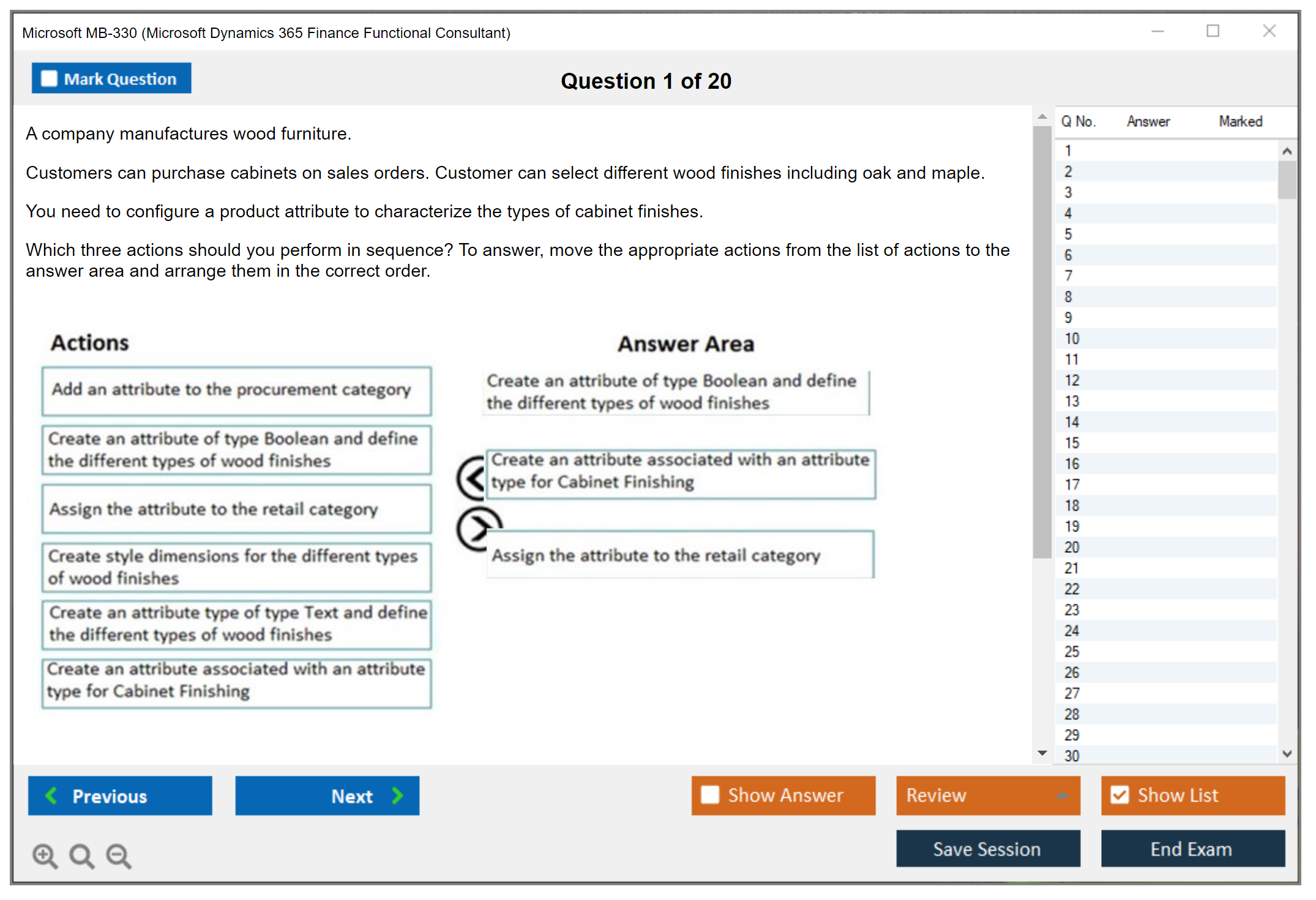
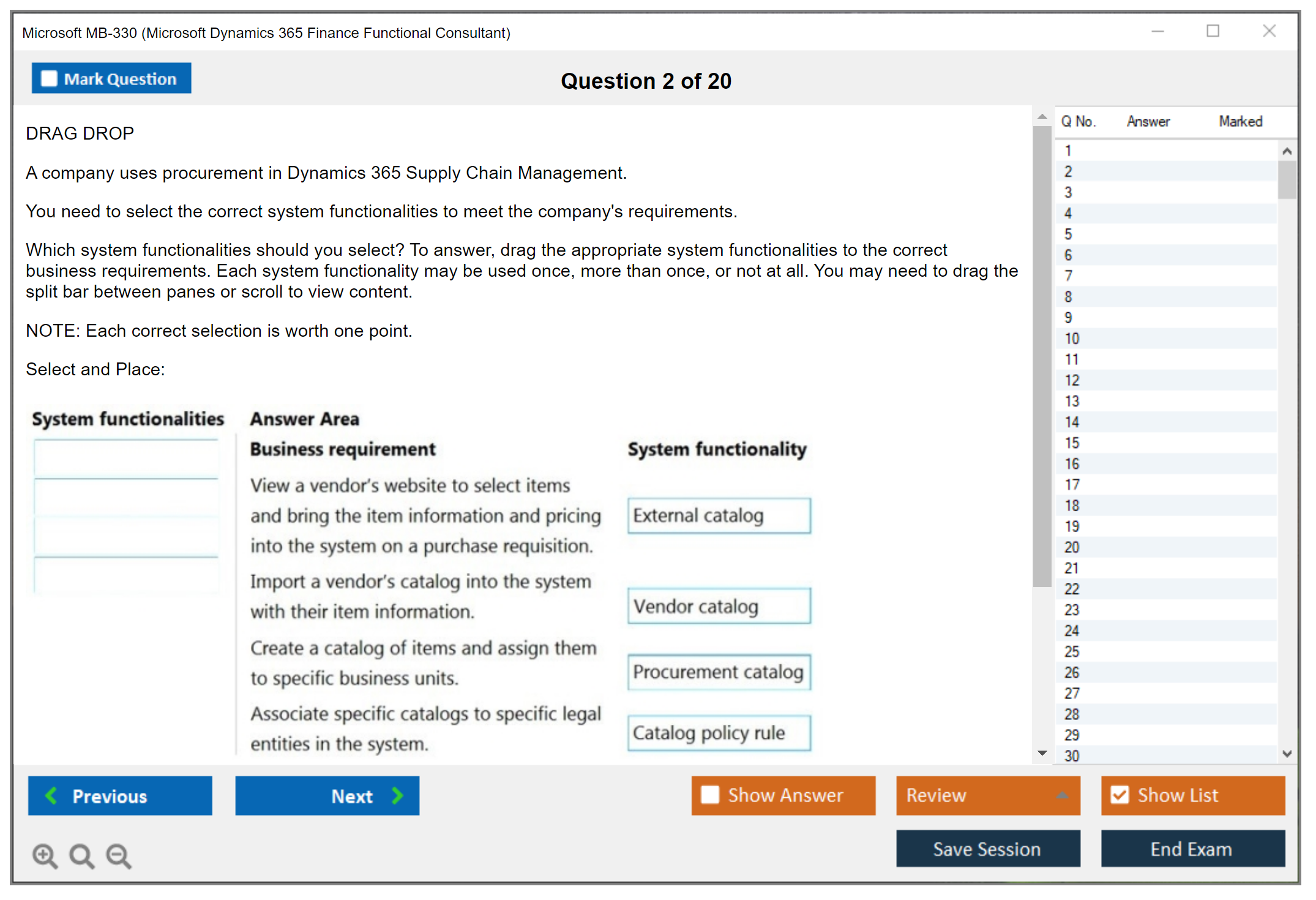
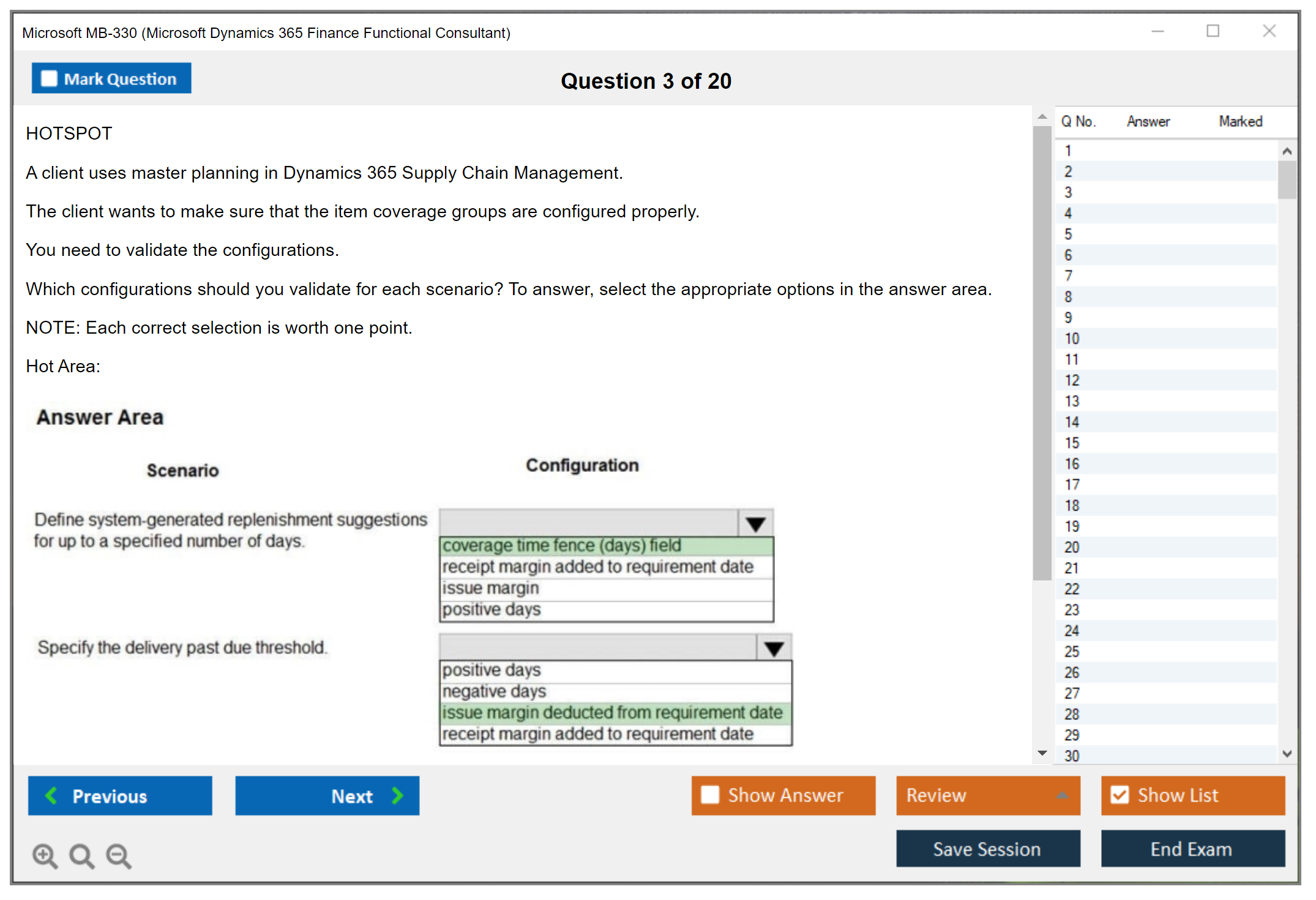
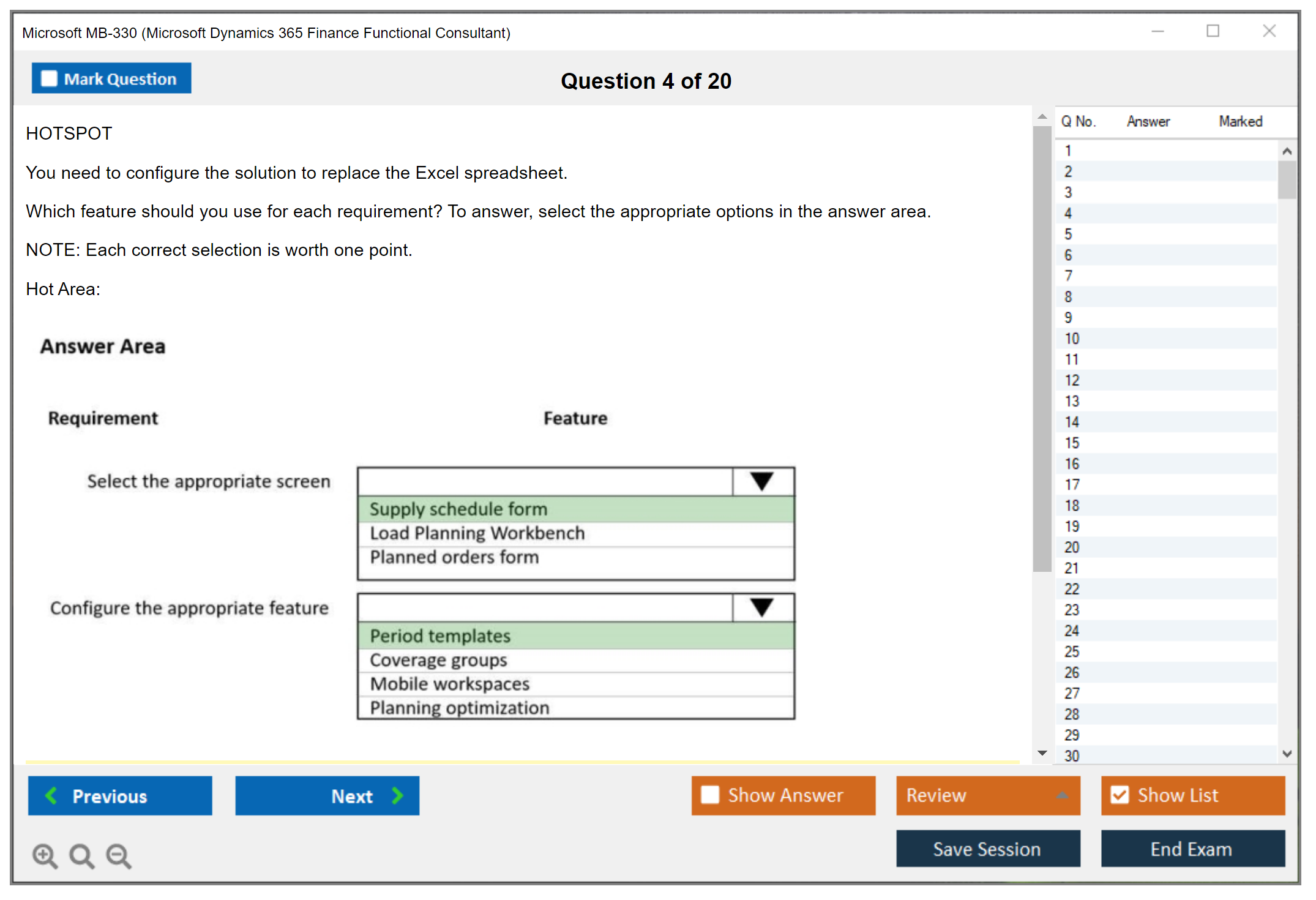
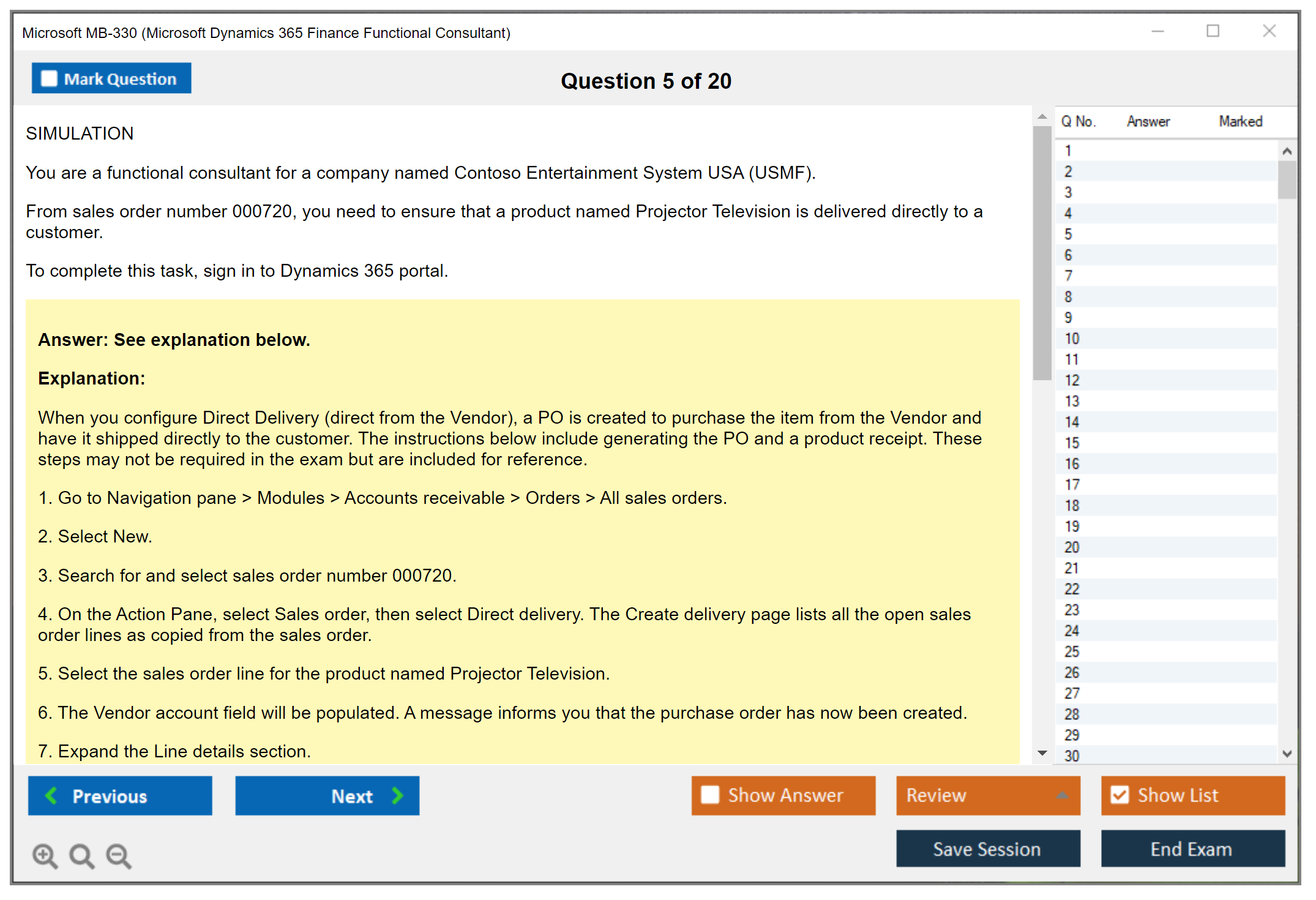
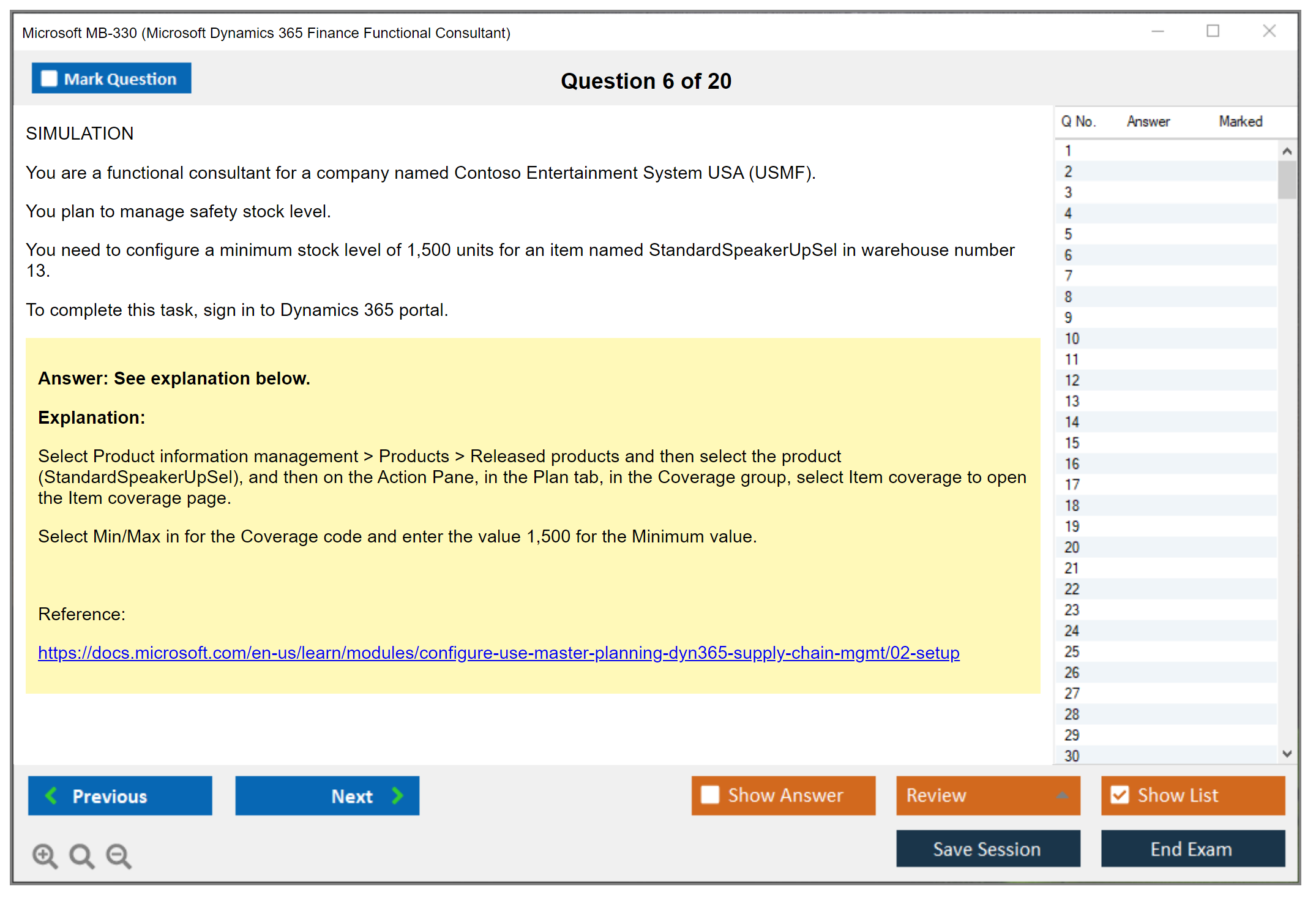
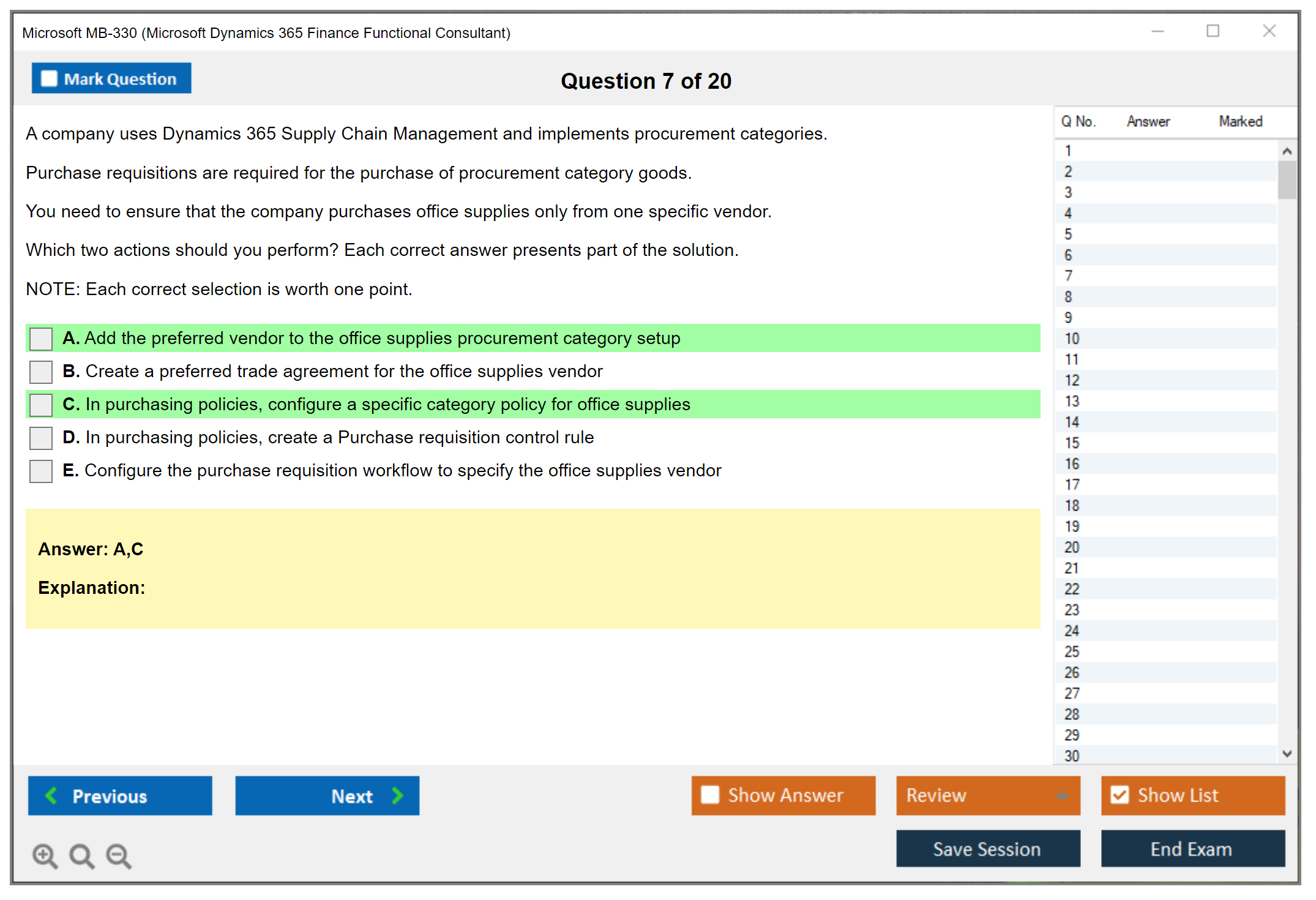
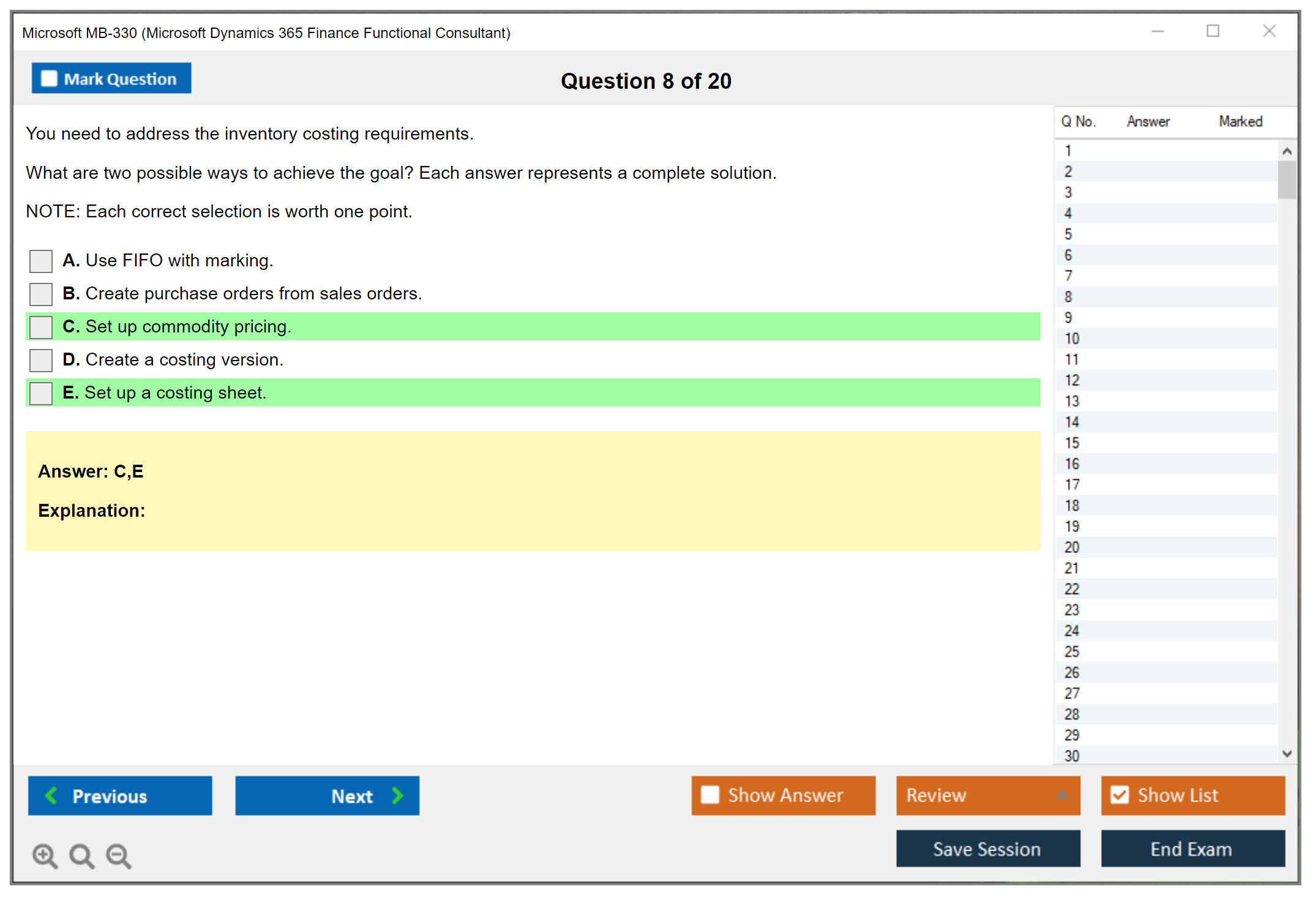
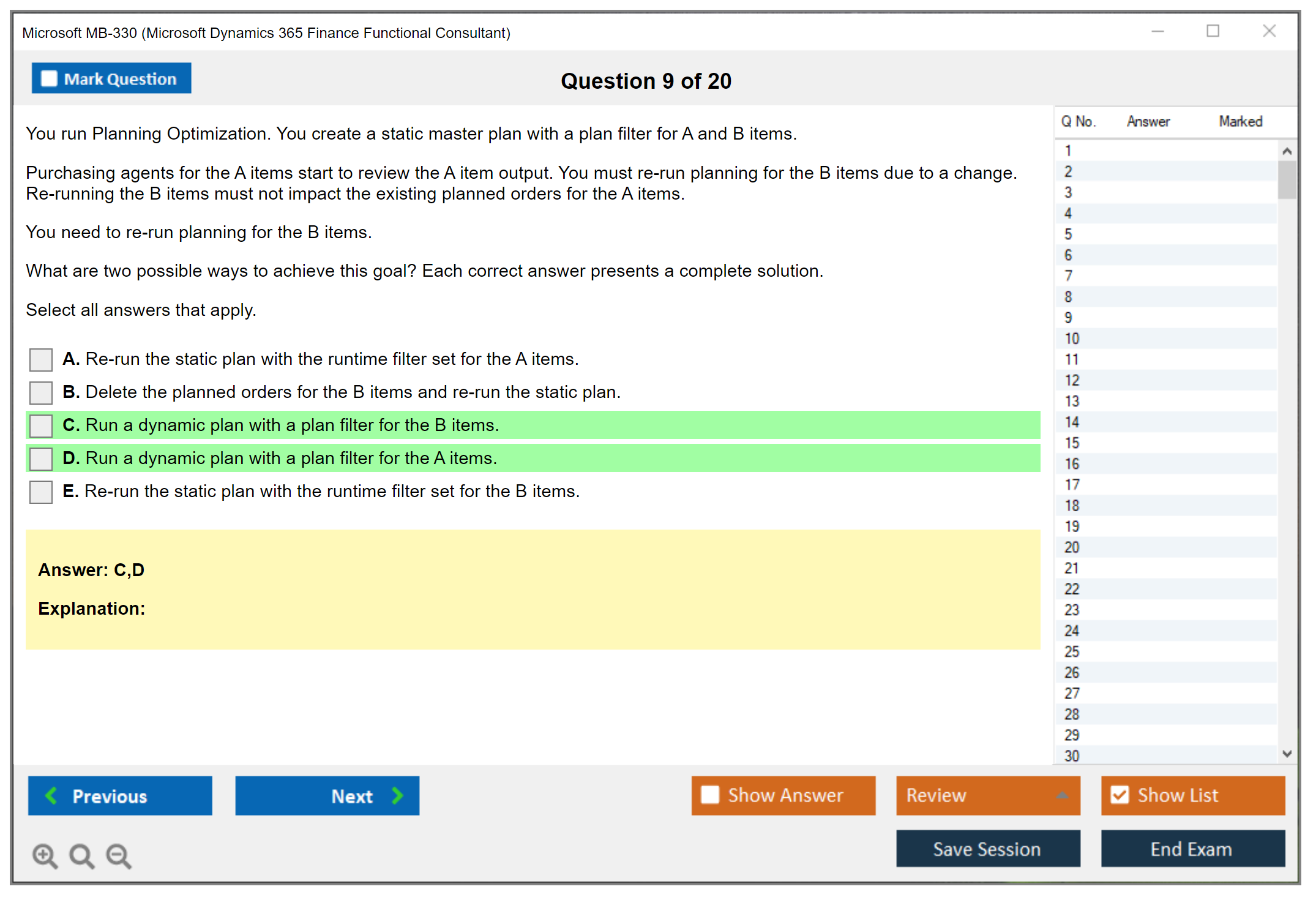
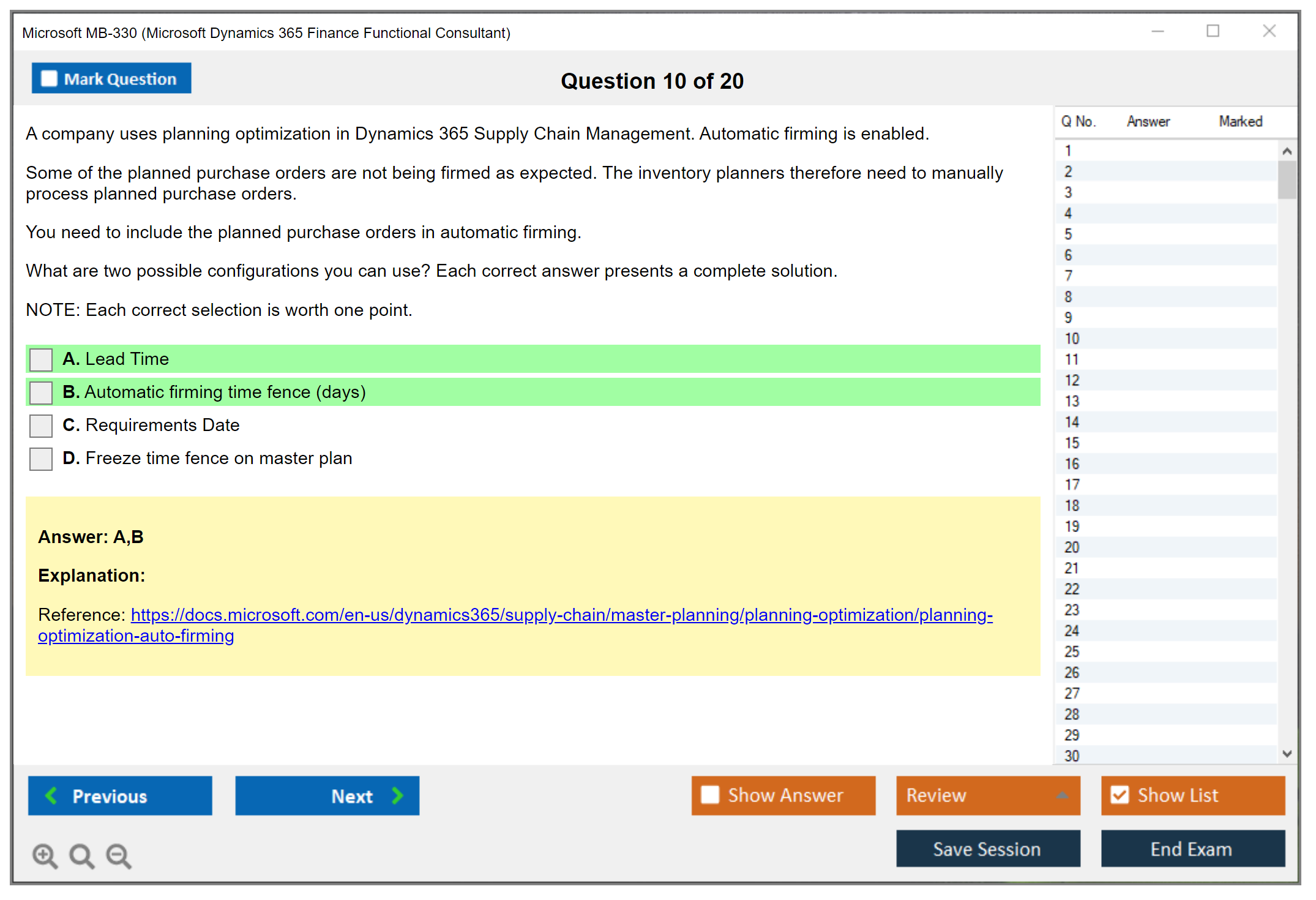
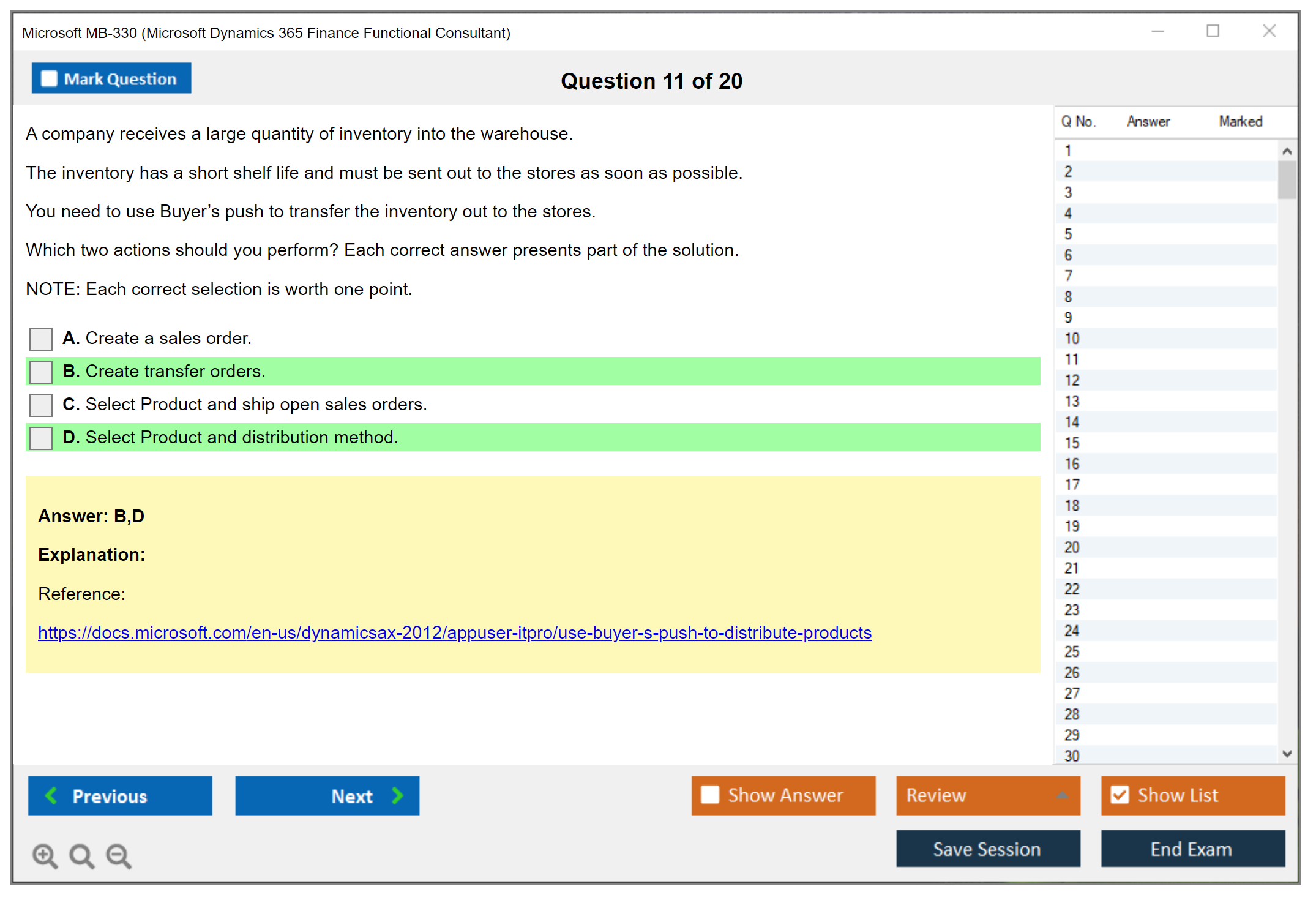
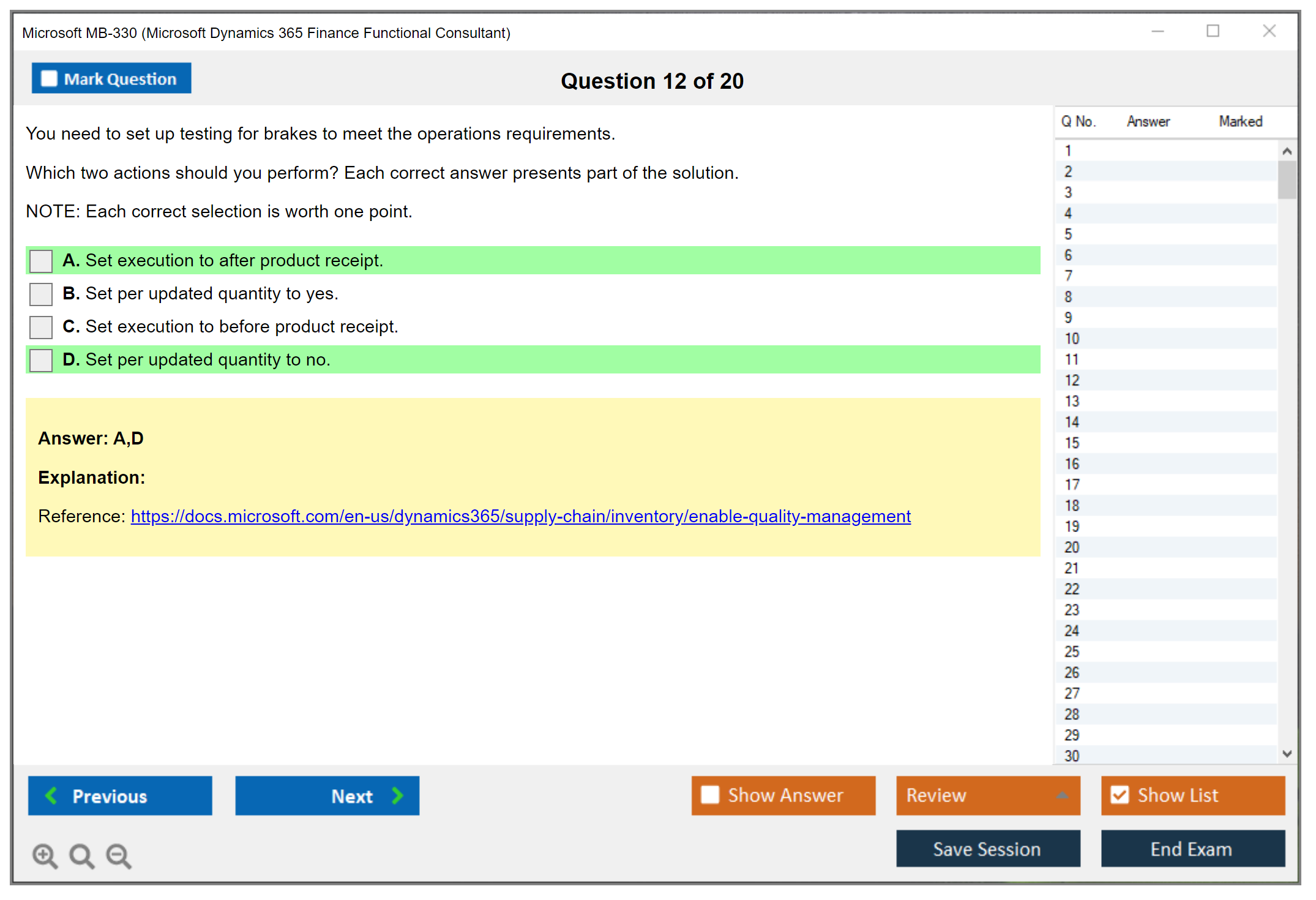
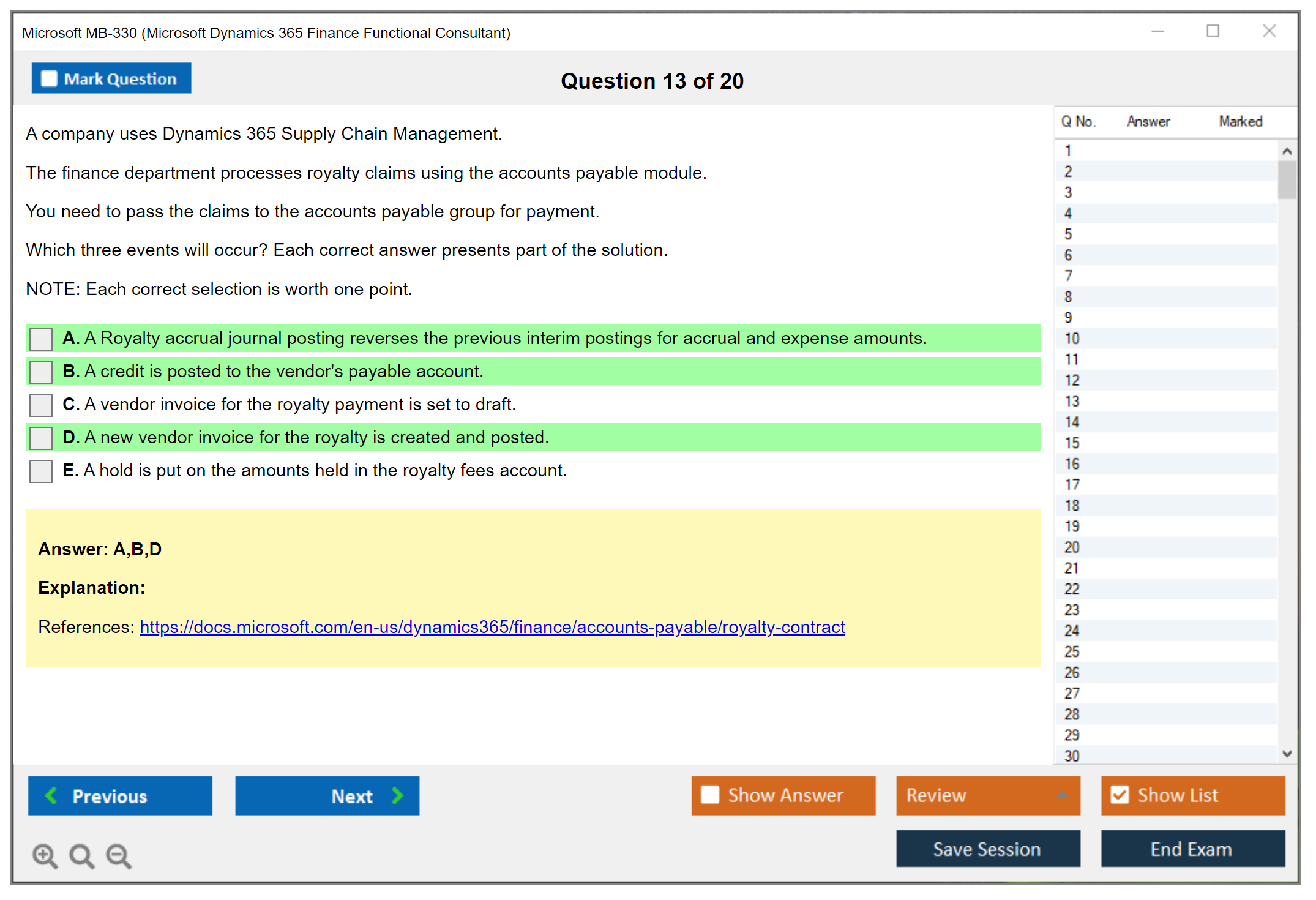
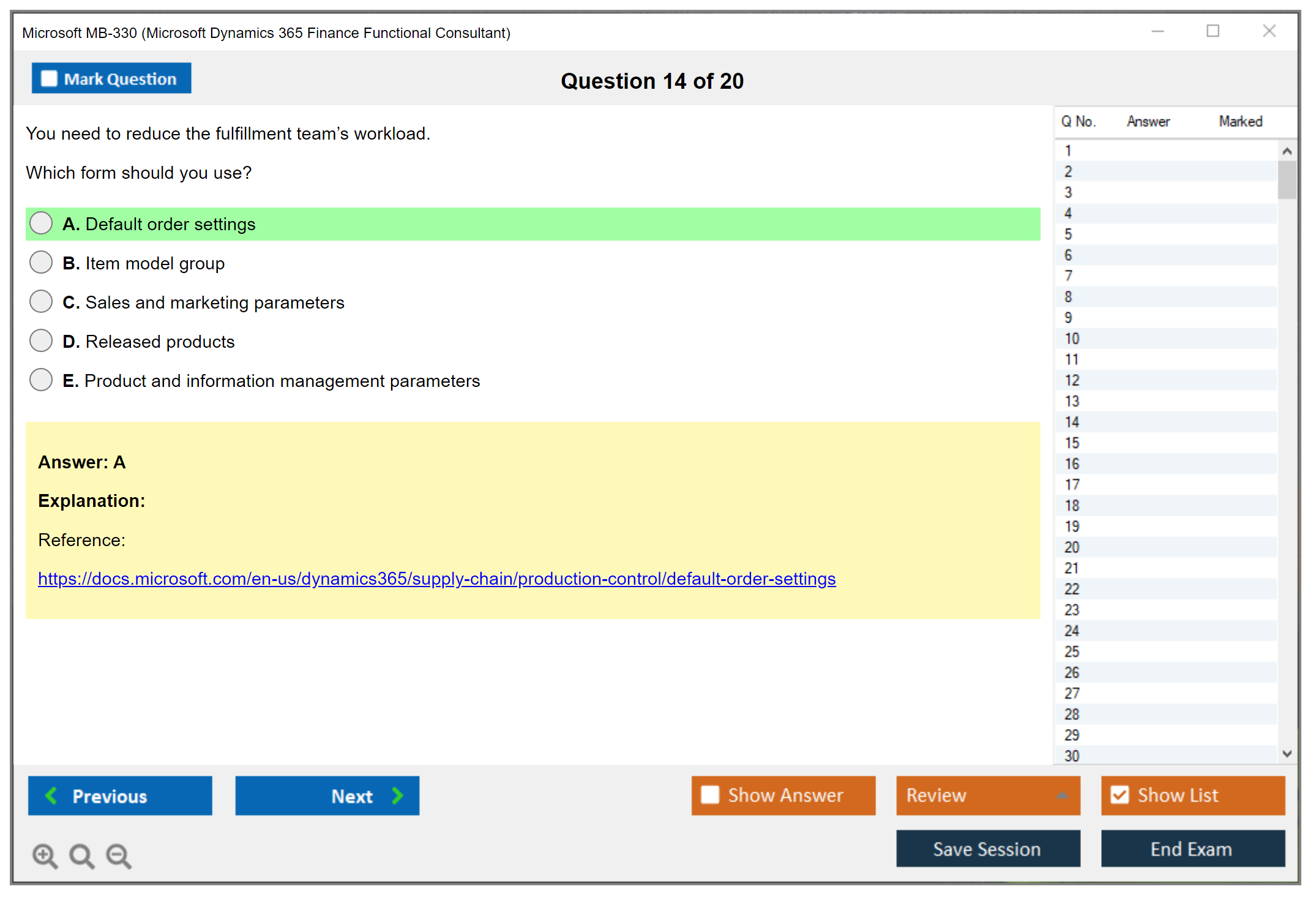
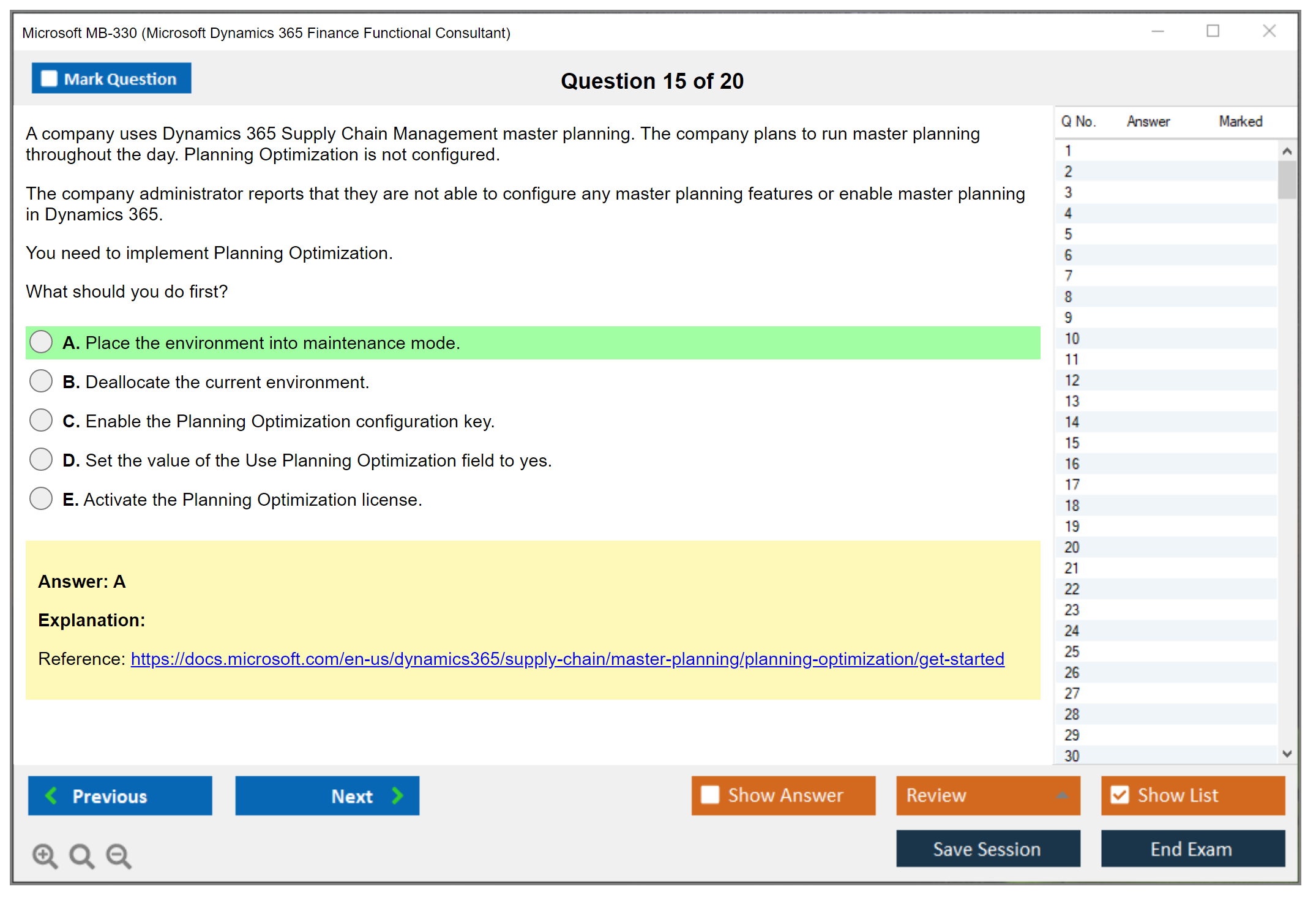
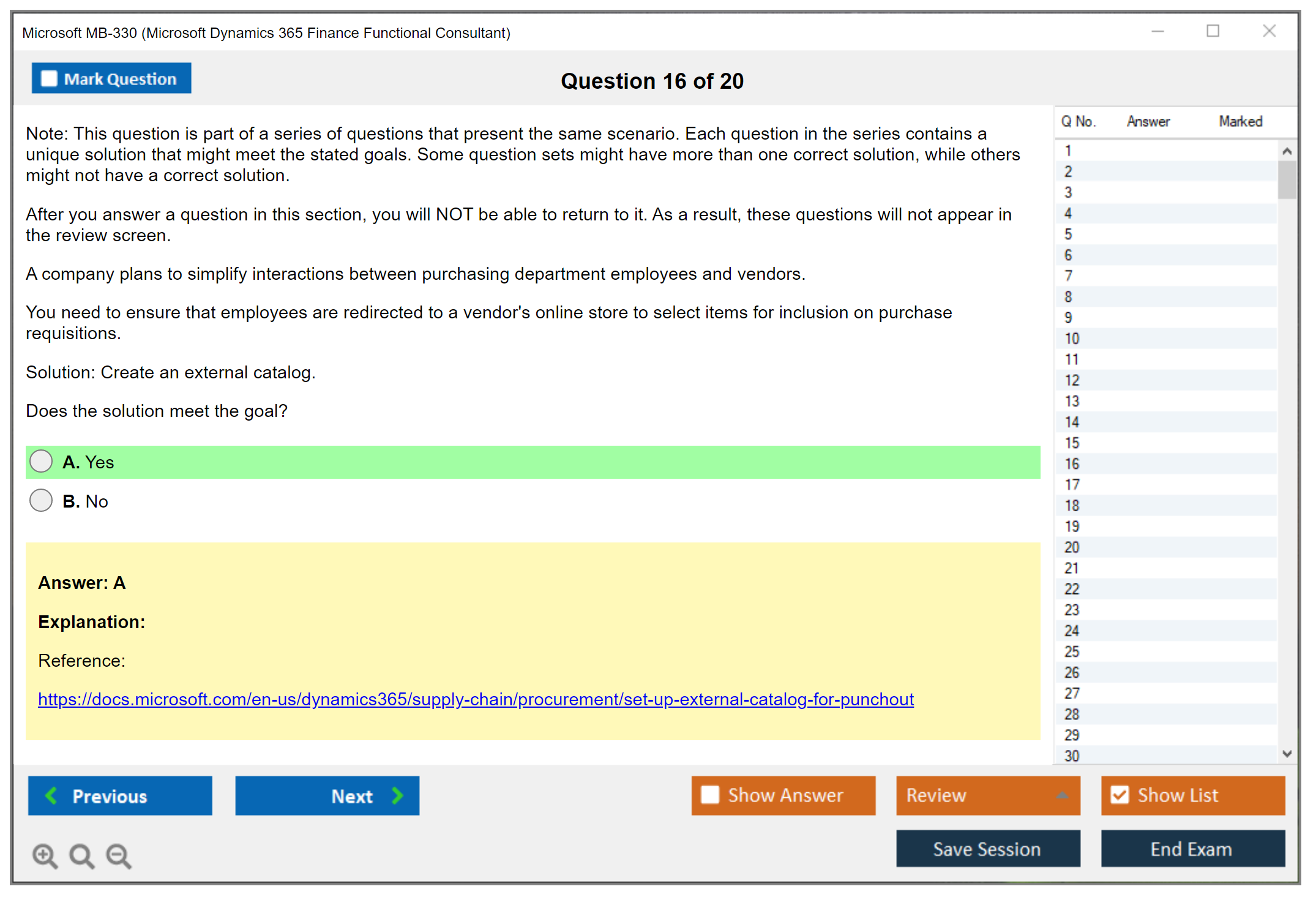
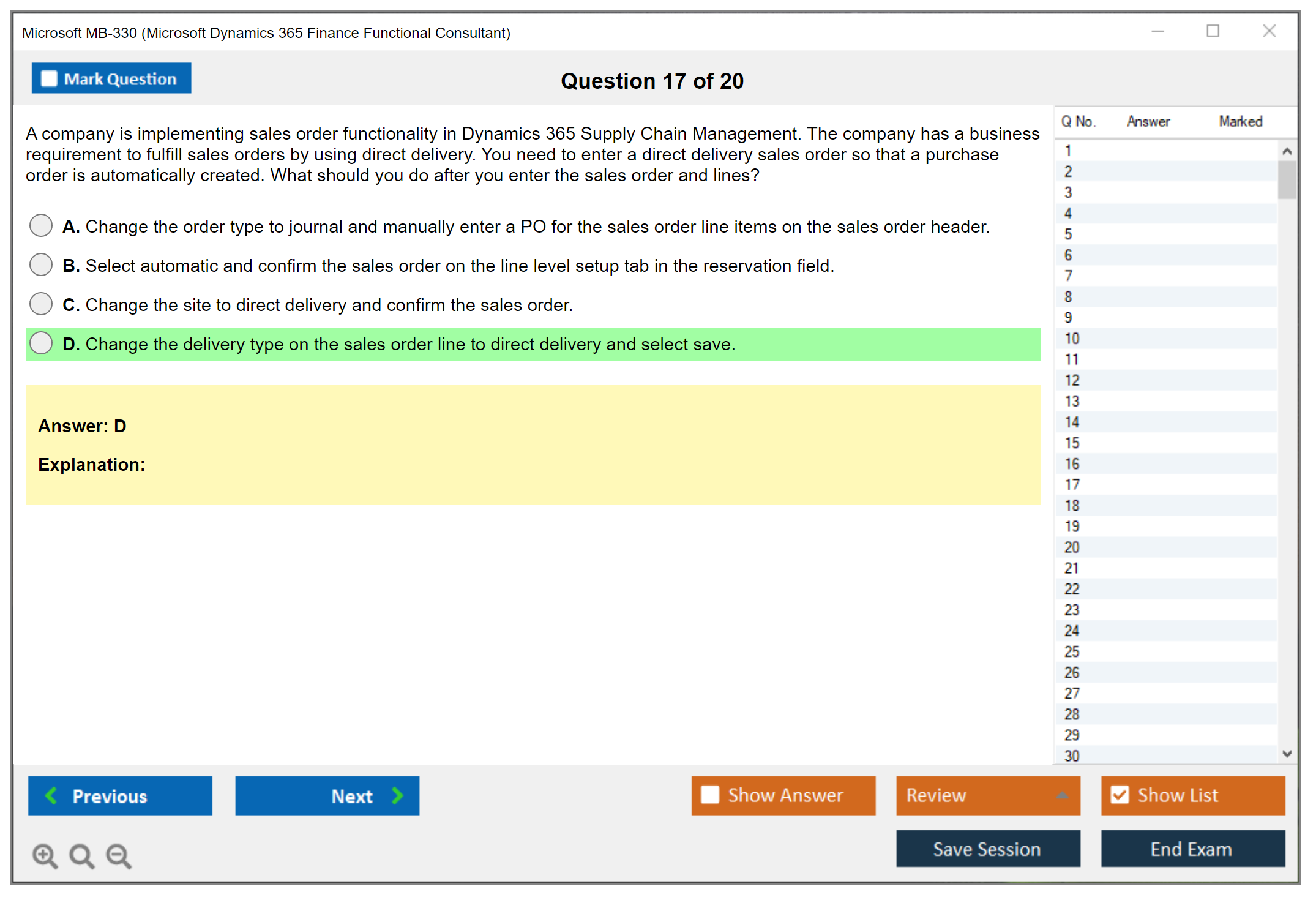
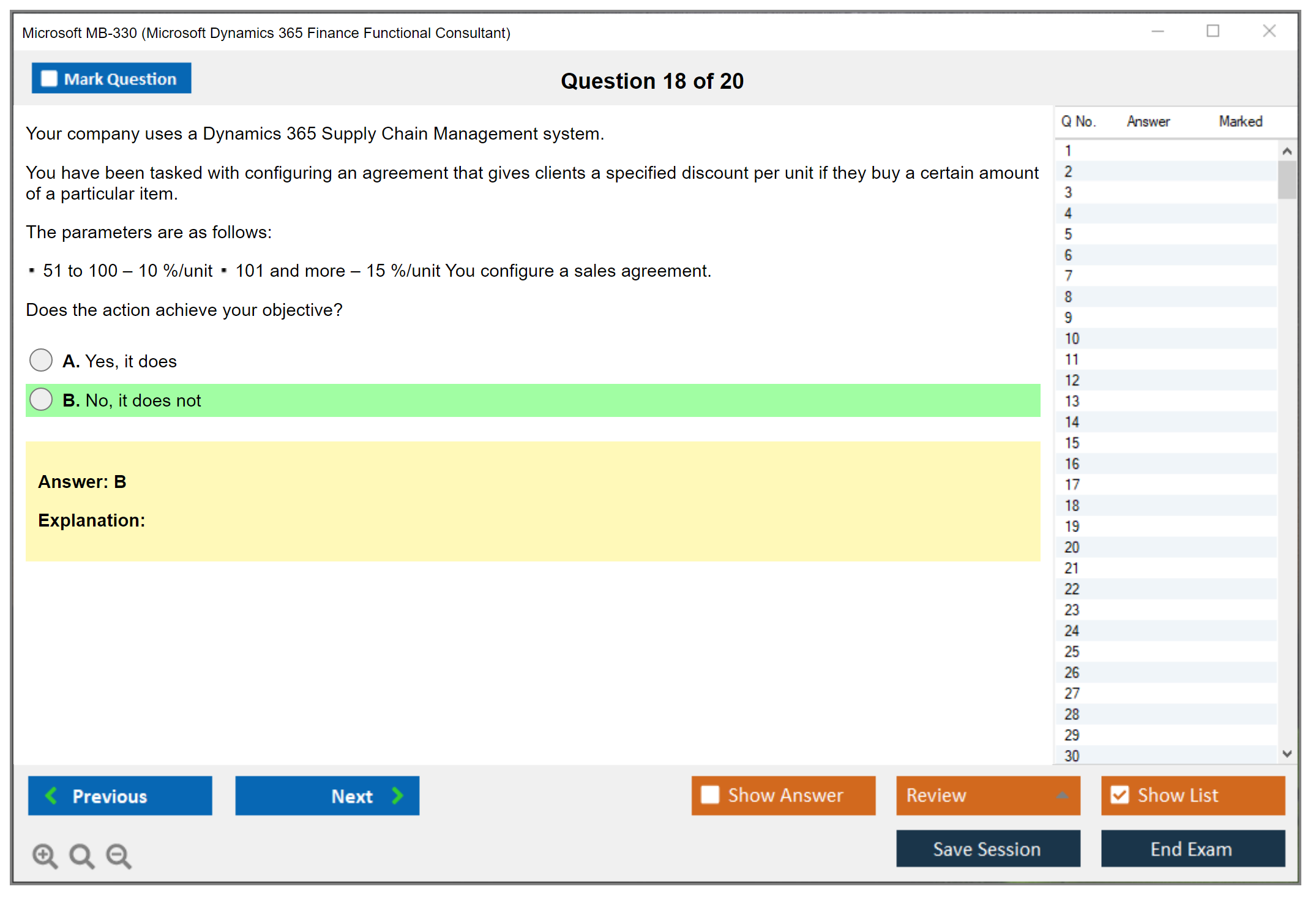
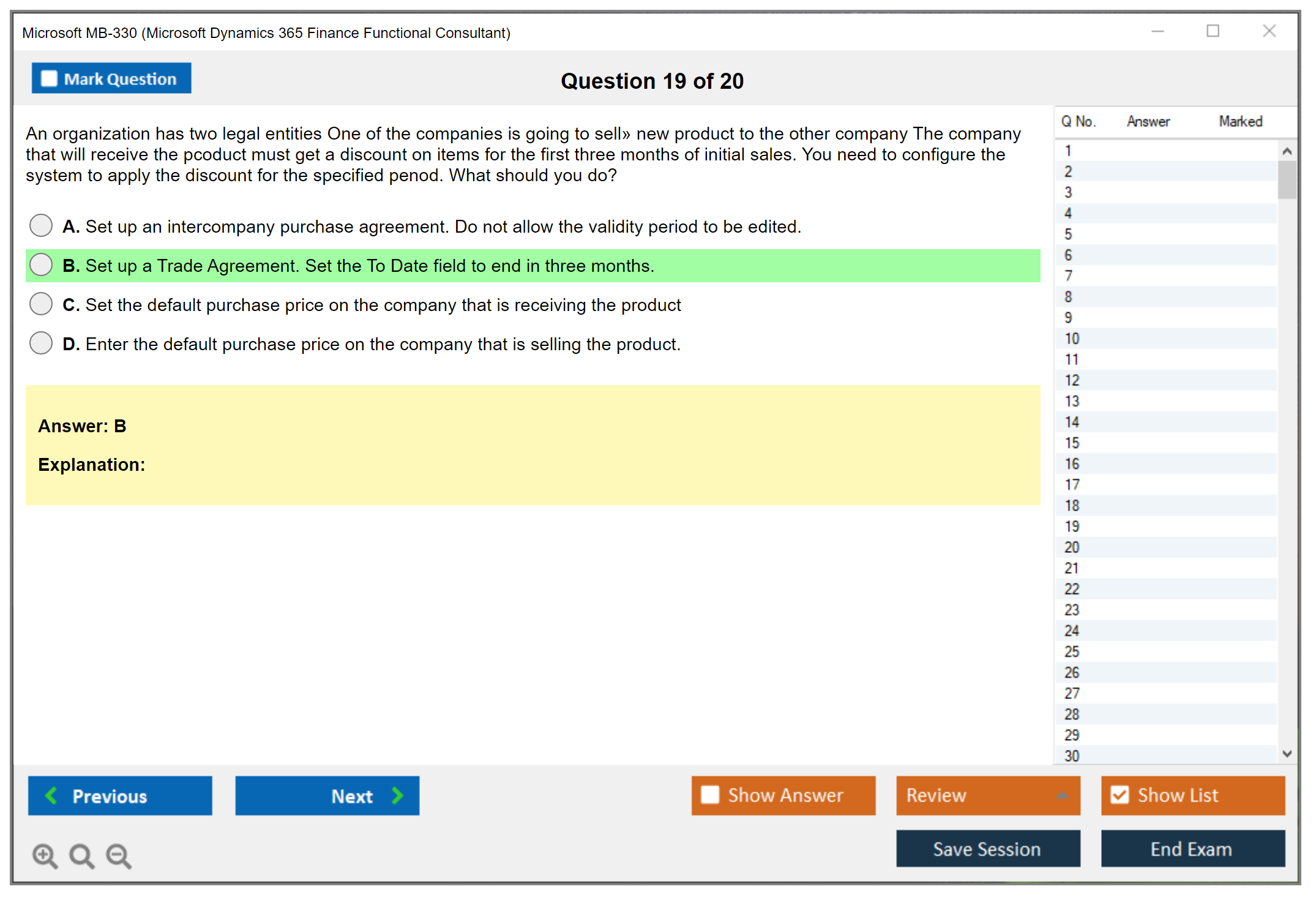
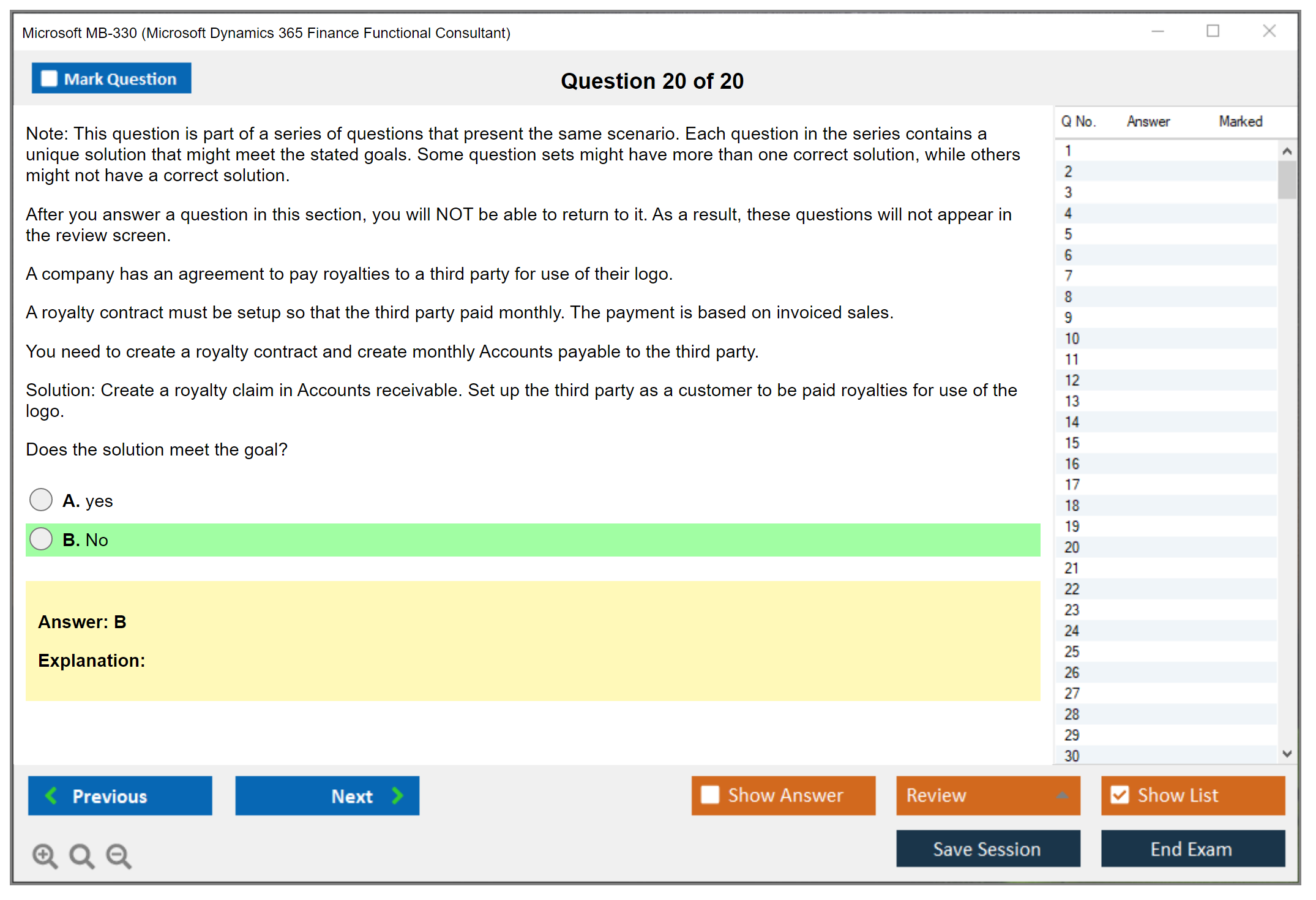
Dumpsarena Microsoft Microsoft Dynamics 365 Supply Chain Management (MB-330) Free Practice Exam Simulator Test Engine Exam preparation with its cutting-edge combination of authentic test simulation, dynamic adaptability, and intuitive design. Recognized as the industry-leading practice platform, it empowers candidates to master their certification journey through these standout features.
What is in the Premium File?
Satisfaction Policy – Dumpsarena.co
At DumpsArena.co, your success is our top priority. Our dedicated technical team works tirelessly day and night to deliver high-quality, up-to-date Practice Exam and study resources. We carefully craft our content to ensure it’s accurate, relevant, and aligned with the latest exam guidelines. Your satisfaction matters to us, and we are always working to provide you with the best possible learning experience. If you’re ever unsatisfied with our material, don’t hesitate to reach out—we’re here to support you. With DumpsArena.co, you can study with confidence, backed by a team you can trust.
Microsoft MB-330 Exam FAQs
Introduction of Microsoft MB-330 Exam!
The Microsoft MB-330 exam is an assessment for the Microsoft Dynamics 365 for Finance and Operations, Supply Chain Management. It is designed for individuals who have a fundamental understanding of the core financial and operations capabilities of Dynamics 365 for Finance and Operations, Supply Chain Management, and the configuration and customization of the solution. The exam focuses on the ability to configure, customize, and manage the Supply Chain Management features of Dynamics 365 for Finance and Operations.
What is the Duration of Microsoft MB-330 Exam?
The Microsoft MB-330 exam is a one-hour exam consisting of 40-60 multiple-choice and case study questions.
What are the Number of Questions Asked in Microsoft MB-330 Exam?
There are 80 questions in the Microsoft MB-330 exam.
What is the Passing Score for Microsoft MB-330 Exam?
The passing score required in the Microsoft MB-330 exam is 700 out of 1000.
What is the Competency Level required for Microsoft MB-330 Exam?
The competency level required for Microsoft MB-330 exam is Intermediate. This exam is designed for Dynamics 365 professionals who have an understanding of the features, functionality, and configuration of Dynamics 365 Supply Chain Management.
What is the Question Format of Microsoft MB-330 Exam?
The Microsoft MB-330 exam consists of multiple-choice, drag-and-drop, and build list questions.
How Can You Take Microsoft MB-330 Exam?
Microsoft MB-330 exam can be taken either online or in a testing center. Online exams are taken using the Microsoft Exam Replay service, which allows you to take the exam from the comfort of your own home. Testing center exams are taken at a Pearson VUE testing center. You will need to register for the exam online and then visit a Pearson VUE testing center to take the exam.
What Language Microsoft MB-330 Exam is Offered?
The Microsoft MB-330 exam is offered in English.
What is the Cost of Microsoft MB-330 Exam?
The Microsoft MB-330 exam costs $165 USD.
What is the Target Audience of Microsoft MB-330 Exam?
The target audience of the Microsoft MB-330 exam is IT professionals who have experience in implementing and managing Microsoft Dynamics 365 Supply Chain Management. This includes individuals who are responsible for the configuration, implementation, and maintenance of Dynamics 365 Supply Chain Management.
What is the Average Salary of Microsoft MB-330 Certified in the Market?
The average salary for a Microsoft MB-330 certified professional is approximately $95,000 per year. However, the exact salary can vary depending on the job role, experience, and location.
Who are the Testing Providers of Microsoft MB-330 Exam?
Microsoft offers official practice tests and study materials for the MB-330 exam through its Microsoft Learning platform. Additionally, there are a number of third-party providers that offer practice tests, study guides, and other resources to help you prepare for the MB-330 exam.
What is the Recommended Experience for Microsoft MB-330 Exam?
The recommended experience for the Microsoft MB-330 exam is at least one year of experience in configuring, managing, and troubleshooting Microsoft Dynamics 365 Supply Chain Management. This includes experience with supply chain processes, such as inventory management, warehouse management, and order fulfillment. Additionally, experience with the Microsoft Power Platform, including Power Apps, Power Automate, and Power BI, is also recommended.
What are the Prerequisites of Microsoft MB-330 Exam?
The Microsoft MB-330 exam is a Microsoft Dynamics 365 for Finance and Operations, Supply Chain Management certification exam. The prerequisites for this exam include having experience with Microsoft Dynamics 365 for Finance and Operations, Supply Chain Management and basic understanding of supply chain management concepts. Additionally, it is recommended that you have experience with Microsoft Dynamics 365 for Finance and Operations, Supply Chain Management, and basic understanding of supply chain management concepts.
What is the Expected Retirement Date of Microsoft MB-330 Exam?
The official website to check the expected retirement date of Microsoft MB-330 exam is: https://www.microsoft.com/en-us/learning/exam-list.aspx.
What is the Difficulty Level of Microsoft MB-330 Exam?
The difficulty level of the Microsoft MB-330 exam is considered to be moderate. It is designed to test a candidate's knowledge of Microsoft Dynamics 365 Supply Chain Management, including topics such as inventory management, procurement and sourcing, supply chain analytics, and more.
What is the Roadmap / Track of Microsoft MB-330 Exam?
The certification roadmap for Microsoft MB-330 Exam is as follows:
1. Complete the Microsoft Dynamics 365 for Finance and Operations Core Setup course.
2. Pass the MB-330 exam.
3. Earn the Microsoft Certified: Dynamics 365 for Finance and Operations Core Setup Specialist certification.
4. Take the MB-330: Microsoft Dynamics 365 for Finance and Operations Core Setup course.
5. Pass the MB-330 exam.
6. Earn the Microsoft Certified: Dynamics 365 for Finance and Operations Core Setup Expert certification.
7. Take the MB-330: Microsoft Dynamics 365 for Finance and Operations Core Setup Advanced course.
8. Pass the MB-330 exam.
9. Earn the Microsoft Certified: Dynamics 365 for Finance and Operations Core Setup Master certification.
What are the Topics Microsoft MB-330 Exam Covers?
The Microsoft MB-330 exam covers the following topics:
1. Manage Dynamics 365 Security: This section covers the security features of Dynamics 365, including roles, security groups, and data access levels. It also covers how to set up and manage security policies.
2. Configure Dynamics 365 Solutions: This section covers how to configure Dynamics 365 solutions, including setting up entities, fields, and forms. It also covers how to set up business process flows and configure automation.
3. Manage Dynamics 365 Data: This section covers how to manage data in Dynamics 365, including import and export, data cleansing, and data archiving. It also covers how to manage data integration and data replication.
4. Develop Customizations for Dynamics 365: This section covers how to develop customizations for Dynamics 365, including customizing entities, fields, and forms. It also covers how to develop custom workflows and custom code.
5. Manage Dynamics 365
What are the Sample Questions of Microsoft MB-330 Exam?
1. What are the different types of Dynamics 365 licenses available?
2. How can you configure security in Dynamics 365?
3. What are the different ways to customize Dynamics 365?
4. What is the difference between Dynamics 365 Business Central and Dynamics 365 Finance and Operations?
5. How can you leverage Dynamics 365 for customer relationship management?
6. What features are available in Dynamics 365 for marketing automation?
7. What are the benefits of using Microsoft Power Automate with Dynamics 365?
8. How can you use Power BI to visualize Dynamics 365 data?
9. What are the different types of data integrations available with Dynamics 365?
10. What are the best practices for managing Dynamics 365 deployments?
Microsoft MB-330 (Microsoft Dynamics 365 Supply Chain Management) Microsoft MB-330 Exam Overview and Introduction What the MB-330 exam actually tests The Microsoft MB-330 exam validates functional consultant expertise in configuring and implementing Dynamics 365 Supply Chain Management solutions for enterprise organizations. This is not just resume padding. It's a serious deep dive into how modern companies manage everything from raw materials to finished goods, covering the entire operational lifecycle that determines whether businesses actually make money or hemorrhage cash through inefficiencies. The official exam title is Microsoft Dynamics 365 Supply Chain Management Functional Consultant, which is pretty straightforward about what you're getting into. I mean, this exam measures whether you can actually walk into an organization and configure their supply chain processes, not just talk about them. You'll need to demonstrate hands-on skills in inventory management and warehouse... Read More
Microsoft MB-330 (Microsoft Dynamics 365 Supply Chain Management)
Microsoft MB-330 Exam Overview and Introduction
What the MB-330 exam actually tests
The Microsoft MB-330 exam validates functional consultant expertise in configuring and implementing Dynamics 365 Supply Chain Management solutions for enterprise organizations. This is not just resume padding. It's a serious deep dive into how modern companies manage everything from raw materials to finished goods, covering the entire operational lifecycle that determines whether businesses actually make money or hemorrhage cash through inefficiencies. The official exam title is Microsoft Dynamics 365 Supply Chain Management Functional Consultant, which is pretty straightforward about what you're getting into.
I mean, this exam measures whether you can actually walk into an organization and configure their supply chain processes, not just talk about them. You'll need to demonstrate hands-on skills in inventory management and warehouse management Dynamics 365, production control Dynamics 365 Supply Chain, master planning and procurement Dynamics 365, and transportation management Dynamics 365. That's a lot of ground to cover. Honestly, more than most people realize when they first register.
Who should consider MB-330
The target audience for this certification includes supply chain consultants, ERP implementation specialists, business analysts, and Dynamics 365 professionals who configure supply chain processes. Not gonna lie, if you're currently managing warehouse operations, working as a supply chain analyst, or implementing ERP systems, this certification makes sense. Real sense. But if you've never touched Dynamics 365 or don't understand basic supply chain concepts like lead times and safety stock, you'll struggle hard.
This is a role-based certification path. MB-330 leads to the Microsoft Certified: Dynamics 365 Supply Chain Management Functional Consultant Associate credential, which fits into the broader Dynamics 365 ecosystem. It complements certifications like MB-300 (Core Finance and Operations), MB-335 (Forecasting and Planning), and MB-340 (Field Service), so if you're building a career in Dynamics 365, these all connect in ways that actually matter for your career trajectory.
Why bother with MB-330 certification
Honestly, the career impact is significant.
This certification opens opportunities as Microsoft Dynamics 365 SCM functional consultant, supply chain solution architect, ERP implementation lead, and business process consultant. Organizations pay well for these roles because supply chain management directly affects their bottom line. Inefficient inventory ties up cash, production delays lose customers, and poor procurement increases costs in ways that executives actually notice during quarterly reviews.
The business value is real. Organizations seek MB-330 certified professionals to optimize inventory costs, simplify production workflows, and implement end-to-end supply chain visibility. When you can demonstrate verified skills in these areas, you become more than just an IT person. You're someone who understands how business operations actually work, which is surprisingly rare.
What's covered in 2026 and beyond
The exam relevance in 2026 reflects latest Dynamics 365 Supply Chain Management features including AI-driven planning, warehouse automation, IoT integration, and sustainability tracking. Microsoft keeps updating this exam to match what's happening in the real world. The thing is, supply chains are not static. They're adopting robotics, predictive analytics, and environmental tracking at speeds that would've seemed impossible five years ago. The MB-330 exam evolves with these changes, sometimes frustratingly fast for people mid-preparation.
The skills measured overview breaks down into five primary functional areas: supply chain process configuration, inventory and warehouse management, manufacturing and production, master planning, and procurement and sourcing. Each area gets weighted differently. Microsoft adjusts these weights when they update the exam. Check the official skills measured document because those percentages matter when you're planning your study time. Don't waste effort on low-weight sections.
Exam logistics you need to know
Sure, basic stuff matters.
The exam code and version is MB-330 with periodic updates to reflect platform enhancements and new capabilities. Microsoft does not completely overhaul this exam every year, but they do refresh it every 6-12 months. Sometimes it's minor tweaks, other times they add entire sections for new features that suddenly become testable material.
Certification validity works differently than you might expect. Microsoft role-based certifications typically require annual renewal through online assessments. You don't retake the full exam. Instead, you complete a renewal assessment that covers what's changed in the platform. It's less stressful but you still need to stay current or you'll lose the credential.
The exam has global recognition. It's accepted worldwide as proof of Dynamics 365 Supply Chain Management implementation expertise. Whether you're in North America, Europe, Asia, or anywhere else, organizations understand what this certification represents without needing additional explanation.
Taking the exam
Exam language availability is pretty extensive. Offered in English, Japanese, Chinese (Simplified), Korean, German, French, Spanish, Portuguese (Brazil), Arabic, Russian, and Indonesian. That said, some translations lag behind the English version when Microsoft updates content, so keep that in mind if you're not testing in English.
For accessibility accommodations, Microsoft provides special arrangements for candidates requiring extra time, screen readers, or other accessibility support. You request these through Pearson VUE when scheduling, and they're generally accommodating if you provide proper documentation ahead of your exam date.
Exam delivery options include both Pearson VUE test centers globally and online proctoring for remote examination. I've done both. Test centers remove home distractions but require travel and scheduling around their availability. Online proctoring is convenient but you need a quiet space, reliable internet, and a webcam that doesn't make you look like a hostage video. Your choice depends on your situation.
Prerequisites and preparation
Here's the thing about prerequisites. While no formal prerequisites exist, practical experience with Dynamics 365 Supply Chain Management is strongly recommended. You can technically schedule the exam right now, but you'd be wasting money and setting yourself up for disappointment. This exam assumes you've actually configured supply chain processes, not just read about them in documentation that makes everything sound easier than it actually is.
The relationship to other Dynamics 365 certifications matters for career planning. If you're also working with financial modules, DP-300 (Administering Relational Databases on Microsoft Azure) provides database knowledge that helps when troubleshooting performance issues or understanding data structures. Understanding how data flows between Supply Chain, Finance, and other modules makes you more valuable to employers who need someone seeing the bigger picture.
I spent three weeks once trying to figure out why inventory transactions were duplicating in a test environment, only to discover it was a simple batch job timing issue. Would've saved myself the headache if I'd understood the database layer better from the start.
Technical vs functional focus explained
MB-330 focuses on functional configuration and business process implementation rather than development or customization. You won't write much code. Instead, you'll configure workflows, set up warehouse processes, define production routes, and establish procurement policies through the interface. If you're looking for a developer-focused exam where you're writing X++ and customizing forms, check out MB-500 (Finance and Operations Apps Developer) instead.
Integration scenarios tested include questions on integrating Supply Chain Management with Finance, Sales, Commerce, and third-party logistics systems. Real implementations always involve multiple systems talking to each other. Wait, actually having to make data flow correctly between platforms that were not really designed to work together perfectly. The exam reflects that reality.
Industry applications and cloud focus
Skills apply across manufacturing, distribution, retail, wholesale, and process industries. Whether you're managing discrete manufacturing (like electronics assembly) or process manufacturing (like chemical production), the concepts translate with some industry-specific adjustments. The exam covers both scenarios because Microsoft wants certified consultants who can work across verticals.
The cloud-first approach is important to understand. This exam focuses exclusively on cloud-based Dynamics 365 Supply Chain Management, not on-premises AX versions. If you're still working with Dynamics AX 2012, the concepts overlap but the interface and some features differ significantly. Like, enough that you'll get confused during the exam.
Hands-on vs theoretical knowledge
Approximately 70% of exam content requires practical configuration experience versus conceptual understanding. You cannot just memorize definitions from study guides and expect to pass. The exam shows you screenshots and asks what happens when you click specific options or how to achieve particular outcomes. That only makes sense if you've actually done it, failed once or twice, and learned why certain configurations work.
Exam preparation timeline and success factors
Most candidates require 40-80 hours of study depending on prior Dynamics 365 experience. If you're already implementing Supply Chain Management daily, you might need less. If you're coming from a different ERP system or have limited hands-on experience, budget more time. Maybe significantly more if you're honest with yourself about knowledge gaps.
Success factors combine hands-on practice in trial environments, structured learning paths, and understanding of supply chain business processes. Microsoft Learn provides free training modules that align with exam objectives. Pair those with a trial environment where you can actually configure settings, run processes, and see results. Not just read about theoretical configurations. Reading alone will not cut it for this exam. I mean, not even close.
Similar: /microsoft-dumps/mb-300/ Similar: /microsoft-dumps/mb-335/ Similar: /microsoft-dumps/mb-340/
MB-330 Exam Cost, Scheduling, and Registration Details
Microsoft MB-330 exam overview (Dynamics 365 Supply Chain Management)
The MB-330 exam is Microsoft's role-based test for the Dynamics 365 SCM functional consultant skillset. It's basically the "can you actually configure and run Supply Chain Management without just guessing" verification, and yeah, it expects you know where all the bodies are buried in setup, parameters, and process flows across inventory, warehousing, planning, procurement, production, and transportation.
Not magic. Still serious stuff.
What MB-330 validates is genuine project work: how you set up core supply chain processes, how you troubleshoot when planning suggestions look completely wrong, and how you keep warehouse and inventory behavior from spiraling into absolute chaos. If your day-to-day involves inventory management and warehouse management Dynamics 365, master planning and procurement Dynamics 365, production control Dynamics 365 Supply Chain, or transportation management Dynamics 365, this exam maps to that reality pretty closely.
What MB-330 validates (role and skills)
A passing score means you can translate business requirements into actual configuration, not just recite terminology. Look, Microsoft MB-330 certification questions tend to push hard on "what would you do next" and "where do you configure that," so knowing menus, feature behavior, and dependencies matters. A lot.
You also get tested on decision points. Like when to use certain replenishment approaches, what happens when you change reservation behavior, or how warehouse work templates and locations actually impact daily operations. Can get pretty nuanced if you haven't seen it break in production, honestly.
Who should take MB-330
Functional consultants, power users, analysts, and anyone supporting Dynamics 365 Supply Chain Management exam implementations should consider it. If you're a developer who only touches X++ occasionally, you can still pass, but honestly you'll need way more functional exposure than you think.
New to D365?
Possible. Not fun.
MB-330 exam cost and scheduling
MB-330 exam price (by region) and taxes
The standard MB-330 exam cost is USD $165 in most regions as of 2026, and that lines up with other Microsoft associate-level role-based exams. Regional pricing fluctuates though, so you'll see rough equivalents like €165 in Europe, £140 in the UK, ₹4,800 in India, and AUD $240 in Australia.
Taxes can sneak up on you. Depending on where you're registering from, extra VAT or sales tax may apply, and you'll typically see it during checkout when you schedule through Pearson VUE or the Microsoft certification flow. So if your finance team wants an exact number, don't guess from a blog post. Go far enough into registration to see the final total.
Discounts exist. Worth checking before you pay full price. Microsoft commonly offers 50% exam discounts for full-time students, educators, Microsoft Certified Trainers, and Microsoft Partner Network members, but eligibility and verification vary, so plan a little time for that admin work.
Vouchers come from a few places. You can buy through Pearson VUE, through Microsoft Learn flows, or through authorized training partners who sometimes bundle vouchers with instructor-led training. Corporate volume licensing is also a thing, where organizations buy vouchers in bulk at negotiated rates for employee programs. If you're at a partner or large enterprise, ask internally before you pay out of pocket 'cause somebody may already have a process.
Where to schedule (online vs test center) and retake policy
Registration is officially through Pearson VUE. Either the Pearson VUE site directly, the Microsoft certification dashboard (which kicks you over to Pearson VUE), or authorized test center partners. First step is creating a Microsoft certification profile, because that's what links your results to your Microsoft Learn profile and transcript. Name mismatches are where people lose hours.
Retakes are strict. And expensive. First retake is allowed after a 24-hour waiting period, the second retake requires a 14-day wait, and each retake costs the full exam fee again. Not gonna lie, that policy alone is why I tell people to budget for one retake mentally but try hard not to need it.
Pearson VUE also sells "exam replay" style insurance packages in some regions. Basically a bundle of the initial attempt plus one retake at a discounted combined price. If you're nervous or your employer's paying, it can be a decent risk hedge.
I spent three hours once walking someone through a retake registration because they'd changed their middle name format between attempts and the system couldn't match their profile. Three hours. So check your legal name spelling now, not the morning of your exam.
MB-330 passing score and exam format
Passing score for MB-330
People ask about the MB-330 passing score all the time. Microsoft exams are typically scored on a 1000-point scale, with 700 as the common passing mark, and MB-330 follows that general model. The exact scoring mechanics aren't something you can reverse engineer easily, so treat 700 as the target and focus on coverage across the MB-330 exam objectives.
Question types, time limit, and exam experience
Expect scenario questions, multiple choice, multi-select, drag-and-drop style items, and case-study blocks where you'll get a business context and have to pick the right configuration or next step. Sometimes the exam flow locks case study sections so you can't go back, which is why time management matters even if you know the content.
No notes allowed.
MB-330 difficulty level (What to expect)
How hard is MB-330 for beginners vs experienced consultants
Is the MB-330 exam difficult? For beginners, yeah, because it's wide. For experienced consultants, it's very doable, but it still catches people who only worked in one module and ignored everything else. Warehouse folks get humbled by planning and sourcing. Planning folks get humbled by warehouse work and mobile device flows. That's the pattern.
Thing is, the exam is less about tricks and more about coverage plus accuracy under time pressure. If you haven't touched the product hands-on recently, you'll second-guess yourself on little parameter behaviors.
Common challenging areas (planning, warehousing, production, procurement)
The usual pain points are master planning and procurement Dynamics 365 rules, warehouse management configuration depth, and production control end-to-end flow. Transportation management Dynamics 365 can also be annoying if you've never configured loads, rate routes, or shipping processes in a real environment.
Some people struggle with inventory model behavior too. Reservations. Dimensions. Closing and adjustments. All the stuff that looks simple until it breaks.
Tips to reduce exam-day risk
Do a full system check early if you're taking it online. Read questions like you're debugging a production issue. And if you're using an MB-330 study guide, cross-check it against the current MB-330 exam objectives page because Microsoft updates skills measured more often than people expect.
MB-330 exam objectives (Skills measured)
Microsoft updates weightings, so align to the latest "Skills measured" page, but the buckets you should expect look like this.
Set up and manage supply chain processes. This is the glue, and the exam loves dependencies between features and parameters, so don't skip it.
Implement inventory management and warehouse management. Deep configuration, mobile scanning concepts, location directives and work templates type thinking.
Implement manufacturing and production control. BOMs, routes, production orders, reporting, and the operational consequences of setup.
Implement master planning. Coverage groups, planning parameters, planned orders, and why your suggestions look wrong.
Implement procurement and sourcing. Vendor setup, purchasing policies, workflows, and matching the process to controls.
Implement transportation management. Loads, shipping, freight logic, and operational setup.
MB-330 prerequisites and recommended experience
Recommended background (Dynamics 365, supply chain fundamentals)
There aren't hard prerequisites you must pass first, but MB-330 prerequisites in the real world are experience and context. If you understand supply chain basics and have spent time configuring or supporting Dynamics 365 Supply Chain Management, you're in good shape.
Helpful prerequisite knowledge (data, security roles, process mapping)
Know how security roles affect what users can do, understand basic data concepts (entities, imports, how setup data moves), and be able to map a process from purchase to receipt to put-away to pick/pack/ship. That process thinking is honestly half the exam.
Related exams/certifications (role-based path)
MB-330 is commonly paired in role paths with other Dynamics 365 functional consultant exams depending on your role, but don't stack exams back-to-back without hands-on time. That's where paper certs come from.
Best MB-330 study materials (Official + practical)
Microsoft Learn learning paths for MB-330
Start with Microsoft Learn because it tracks the exam outline most closely. Then validate everything in a sandbox, because reading about warehouse work isn't the same as configuring it and watching it fail.
Instructor-led training and courseware options
Training partners sometimes include vouchers, and that can offset cost if you were going to take a class anyway. If you learn better with someone forcing structure, go instructor-led. If you're self-driven, spend that money on time in a practice environment.
Documentation to prioritize (modules, feature areas, setup guides)
Prioritize docs around inventory and warehouse setup, master planning configuration, procurement policies and workflows, and production control flows. Skim release notes too, because behavior changes show up on exams faster than you'd like.
Hands-on practice environment (trial/VM/sandbox strategy)
Get a sandbox. A trial. Anything. Click the menus, set parameters, run a process end-to-end, and break it on purpose so you understand what "wrong" looks like.
MB-330 practice tests and exam prep strategy
How to choose quality practice tests (avoid dumps)
Use an MB-330 practice test only if it teaches. If it looks like a stolen question bank, skip it. Dumps waste your time and can get your score canceled.
Practice exam plan (diagnostic → targeted review → timed sets)
Start with a diagnostic set to find weak areas, then do targeted study, then do timed sets to build pacing. Write down why you missed questions. Seriously. One sentence each. It works.
Sample study plan (2 weeks / 4 weeks / 8 weeks)
Two weeks is for experienced consultants doing refresh and filling gaps. Four weeks is normal if you're solid in two or three modules but weak elsewhere. Eight weeks is realistic if you're new and building actual understanding, not just memorizing an MB-330 study guide.
MB-330 renewal and certification maintenance
Does MB-330 require renewal?
Microsoft role-based certifications typically require periodic renewal via a free online assessment on Microsoft Learn, and the renewal cadence can change. Check your certification dashboard for the exact timeline tied to the Microsoft MB-330 certification you earn.
How Microsoft certification renewal works (assessment cadence, reminders)
You'll get reminders, usually via email and in the dashboard, and the renewal assessment is taken online. No Pearson VUE appointment for that part.
What to study for renewal (what changes most often)
Focus on new features, behavior changes, and updated recommended practices. Warehousing, planning, and integrations tend to evolve, so keep an eye there.
FAQs (Quick answers)
MB-330 cost, passing score, and difficulty (summary)
How much does the MB-330 exam cost? Usually $165 USD, with regional equivalents like €165, £140, ₹4,800, or AUD $240, plus tax where applicable. What is the passing score for MB-330? Commonly 700 on a 1000-point scale. Is MB-330 difficult and how long should I study? Wide exam, fair difficulty, and most people need 2 to 8 weeks depending on hands-on experience.
Best last-minute revision resources
Microsoft Learn modules, the official skills measured list, and your own notes from missed practice questions. That's the stuff that moves your score quickly.
What to do if you fail (retake timing and improvement plan)
Wait 24 hours for the first retake, 14 days for the next, and expect to pay full price each time unless you bought an exam replay bundle. I mean, review your weak objective areas, then go hands-on in a sandbox and re-test yourself with timed questions.
MB-330 Passing Score, Exam Format, and Question Types
Understanding the MB-330 passing score
Microsoft doesn't clarify this upfront. The MB-330 passing score is 700 out of 1000. Weird system, honestly. Not a percentage, just 700 points.
This isn't like your college exam where 70% means you got exactly 70 questions right out of 100. Microsoft uses what they call "scaled scoring." Your raw score (how many you actually answered correctly) gets converted through some algorithm that accounts for question difficulty. So you might answer 60% correctly and still pass if you nailed the harder questions. Or you could get 75% right and fail if you bombed the tough ones and only got easy stuff correct.
The 700 threshold represents competency. Microsoft determined that scoring 700 or above means you can actually do the job of a Dynamics 365 Supply Chain Management functional consultant. It's consistent across all Microsoft role-based certifications, which is nice because once you understand it for one exam, you know what to expect for others.
What happens after you finish
Done? Immediate results.
The moment you complete the exam, you'll see your result on screen. Pass or fail, right there. No waiting weeks like some vendors make you do.
Within 24 hours, you can log into your Microsoft certification dashboard and grab a detailed score report. This breakdown shows how you performed in each major skill area. Stuff like inventory management, production control, master planning, warehouse management. Each section gets marked as "above expectation," "at expectation," or "below expectation."
No partial credit exists on this exam. Each question's either right or wrong. If it's a multiple-choice question asking for two correct answers and you only pick one, you get zero points for that question. Harsh but consistent with how Microsoft scores things.
If you're curious about the MB-330 Practice Exam Questions Pack, it mimics this exact scoring approach so you can get used to the all-or-nothing nature before test day. Costs $36.99 and honestly helps you understand what "700 points" actually feels like in practice.
Exam format basics
You get 120 minutes to complete the MB-330 exam. That's two hours, which sounds like a lot until you're actually sitting there. Non-native English speakers can request an ESL accommodation that adds 30 minutes. Worth doing if English isn't your first language.
Question count varies. 40 to 60 questions depending on which exam form you get. Microsoft rotates different versions to maintain security and prevent people from just memorizing dumps. Each form's supposedly equivalent in difficulty, but I've heard people swear one version felt way harder than another.
Time management matters here. If you've got 50 questions and 120 minutes, that's roughly 2 minutes per question. But you should reserve 15 minutes at the end to review anything you flagged. The exam lets you mark questions for review, which is clutch when you're unsure about something but don't want to burn five minutes staring at it.
My cousin took this exam last year and told me he spent 20 minutes on one case study alone. Came back to it twice. Still wasn't sure. Passed anyway with an 810, so maybe overthinking isn't always fatal.
Question types you'll encounter
Microsoft throws multiple formats at you.
Multiple-choice with one answer's the most common. Pick the right option, move on.
Then there's multiple-choice with multiple answers. The question tells you how many to select. Usually something like "choose two" or "select all that apply." Remember, no partial credit. Get all the right answers or get nothing.
Drag-and-drop questions make you sequence things. Maybe you're ordering configuration steps or matching features to scenarios. Hot area questions show you a screenshot and you click the correct region. Build list questions are similar to drag-and-drop but you're constructing an ordered list from available options.
Case studies are brutal. You'll get 2-4 scenarios presenting full business situations, like a manufacturing company implementing Dynamics 365 Supply Chain Management. Each case study has 3-5 related questions. You can't skip the case study intro and jump to questions because you need that context. These test applied knowledge, not just memorized facts.
Some exam forms include lab-based questions. These are interactive simulations where you actually perform configuration tasks in a Dynamics 365 interface. You might need to set up a warehouse location or configure a production order. These take longer than regular questions, so budget time accordingly.
Adaptive testing and section lockouts
Not all MB-330 exams are the same format. Some candidates get adaptive testing, where the difficulty adjusts based on your previous answers. Answer correctly and the next question gets harder. Miss a few and it backs off. The algorithm's trying to pinpoint your competency level efficiently.
Other exam forms use section lockouts. Once you finish a section and move forward, you can't go back. This is anxiety-inducing if you're someone who likes to skip around. Always read carefully before clicking "next section" because there's no undo.
The exam includes 5-10 unscored questions mixed in with the real ones. These are being tested for future exams. They don't count toward your 700 points, but you can't tell which ones they are, so you have to treat every question like it counts. Kind of annoying but that's how Microsoft validates new content.
Tools and restrictions during the exam
Calculator's provided on-screen.
You get an on-screen calculator for questions requiring math. No bringing your own calculator or scratch paper if you're testing online. They provide a digital whiteboard instead.
No reference materials allowed. Everything you need's in the question. Microsoft writes questions using actual Dynamics 365 Supply Chain Management terminology, menu paths, and field names, so you better know the system's language. If you've only studied theory without touching the actual software, you're gonna struggle.
Screenshots, recordings, or attempting to memorize questions violates the NDA you accept before starting. I've seen people lose certifications permanently for this. The proctors take it seriously, especially in online testing where they're watching your webcam.
The actual testing experience flow
When you start, there's an optional 5-minute tutorial explaining how to work through the exam interface. Take it if this is your first Microsoft exam. Skip it if you've done this before and want to save time.
Then you dive into questions. Work through everything, flag what you're unsure about, manage your time. At the end, there's an optional survey asking about your preparation methods. This doesn't affect your score. Then boom, pass or fail shows up on screen.
Official certificate generates within 24-48 hours and appears in your Microsoft Learn profile. You can share it on LinkedIn, download a PDF, whatever you need.
What your score report actually tells you
The detailed report breaks down performance by skill measured area. Maybe you crushed inventory management but tanked on master planning. This matters for two reasons.
One, if you fail, you know exactly where to focus for your retake. Two, even if you pass, you can see weak spots that might bite you in real consulting work. Passing with "below expectation" in production control means you should study that before taking a manufacturing implementation project.
Retake policies if things go wrong
First failure? You can retake after 24 hours. That's it, just one day. Second failure and beyond require a 14-day wait. There's no limit on total attempts, but honestly, if you're failing repeatedly, you need to rethink your study approach.
Can't retake just to improve your score if you already passed. Once you hit 700, that's your score until the certification expires. Microsoft doesn't want people grinding for perfect scores. They just want to verify competency.
How questions test real-world scenarios
Microsoft writes questions based on actual consultant experiences. You'll see scenarios about configuring warehouse management for a distribution company or setting up production control for a manufacturer. The questions test whether you know which out-of-box features to use, not whether you can write custom code.
Best practice emphasis is huge. Sometimes a question presents multiple technically correct answers, but only one follows Microsoft's recommended approach. You need to know not just what's possible but what Microsoft considers the right way to configure things.
Troubleshooting scenarios pop up too. Here's an error message, what caused it and how do you fix it? Or, production orders aren't releasing correctly. Walk through the configuration to identify the problem. These test practical knowledge you'd need on actual implementations.
Setup sequence questions verify you understand dependencies. You can't configure certain warehouse features before setting up others, and Microsoft wants to know you grasp that order.
Integration questions appear because Supply Chain Management doesn't exist in isolation. You'll see scenarios involving data entities, Power Platform connections, or workflows spanning multiple Dynamics 365 modules. If you've only studied supply chain in a vacuum, you'll miss these.
The MB-330 Practice Exam Questions Pack includes these scenario types, which helps you get comfortable with the question style before dropping $165 on the real exam. At $36.99, it's cheaper than a retake fee.
Score validity and certification maintenance
Your passing score stays valid for that specific exam version even if Microsoft updates the exam later. But the actual certification expires. You'll need to complete a renewal assessment before expiration to keep your credential active.
Renewal assessments are free. Taken online. They test updated content and new features added since you originally certified. Microsoft sends reminders as your expiration date approaches, so you won't forget.
If you're pursuing multiple Microsoft certifications, understanding this 700-point scaled scoring system across exams helps. The format stays consistent whether you're taking MB-330, DP-300, or AZ-104. Once you've conquered one Microsoft exam, you know what to expect from others.
What 700 points actually means
Look, the scaled scoring confuses people. You can't just study 70% of the material and expect to pass. Microsoft adjusts for question difficulty, which means the minimum number of correct answers varies.
Focus on understanding concepts deeply rather than memorizing facts. The exam tests application, not recall. Know when to use each feature, what problems each solves, and how pieces fit together in real implementations.
Time yourself during practice. Two minutes per question sounds generous until you're reading a three-paragraph case study and five related questions. Building speed without sacrificing accuracy is critical.
The MB-330 exam isn't trying to trick you. It's validating that you can actually function as a Dynamics 365 Supply Chain Management consultant. Hit that 700 threshold and you've proven you can do the job.
MB-330 Difficulty Level and What to Expect
Microsoft MB-330 exam overview (Dynamics 365 Supply Chain Management)
The MB-330 exam tests functional consultants on Microsoft Dynamics 365 Supply Chain Management. It's for folks who bridge the gap, talking process with operations people, then configuring the system so it actually does what the business needs. You know, including those "wait, why'd it allocate inventory there?" moments that only pop up after you've spent real time in the product.
This exam isn't memorization theater. It's about understanding supply chain flows from beginning to end, plus all those configuration dependencies that make flows work beautifully, crash spectacularly, or get emergency-fixed at 4:45pm on a Friday when everyone's mentally checked out. You need intermediate to advanced knowledge. No way around it.
What MB-330 validates (role and skills)
You're tested as a Microsoft Dynamics 365 SCM functional consultant who configures inventory, warehousing, production, planning, procurement, and transportation. You've gotta understand ripple effects into finance, intercompany setups, and reporting too.
Scenario questions dominate. Some are straightforward. Many? Not so much.
Who should take MB-330
If you're working Supply Chain Management on actual projects, the Microsoft MB-330 certification is your obvious credential. Finance-only people usually start with MB-300 as the "core" foundation, then MB-330 becomes the specialization once you can read a process map without your eyes glazing over.
Beginners can attempt it. But it's gonna be rough. I mean, really rough.
MB-330 exam cost and scheduling
MB-330 exam price (by region) and taxes
The MB-330 exam cost typically runs USD $165 in the US, though pricing shifts by country and region. Checkout sometimes adds taxes you didn't expect because of local rules. You'll see the actual number when you schedule. Sometimes it's higher than the quoted price and you just kinda have to roll with it.
Where to schedule (online vs test center) and retake policy
You schedule through Microsoft's certification portal, usually delivered by Pearson VUE. Pick either online proctored or a physical test center. Retakes follow Microsoft's standard policy, which honestly changes periodically, so check current rules when booking. Also, don't do online proctoring on sketchy Wi-Fi. Just don't. Trust me on this one.
MB-330 passing score and exam format
Passing score for MB-330
The MB-330 passing score sits at 700 out of 1000. Chasing perfection is a trap. You need "enough." Keep that perspective when you hit a brutal master planning scenario and feel yourself starting to panic-spiral.
Question types, time limit, and exam experience (case studies, labs if applicable)
Expect mostly multiple choice, multiple response, ordering tasks, and case study style items that feel like reading a mini consulting engagement brief. Except you've got maybe two minutes to solve it and move on. Creates this constant time pressure that's pretty stressful if you're not used to standardized testing under the gun. No hands-on lab like the old certification days. The vibe is: read a scenario, decide the best configuration or next step, click your answer, and keep moving.
Actually reminds me of my first implementation project where the client kept changing requirements mid-sprint and we'd scramble to reconfigure everything before the next demo. That same rushed decision-making energy, except now it counts toward your certification.
MB-330 difficulty level (what to expect)
Overall difficulty rating: intermediate to advanced. That's the honest assessment, because the Dynamics 365 Supply Chain Management exam mixes terminology precision with real configuration logic. It absolutely punishes anyone who only studied slide decks without wrestling with parameters, number sequences, work templates, or planning setups in an actual environment.
Comparison-wise, it's similar difficulty to MB-300 (Core Finance and Operations) but way more specialized and "process heavy" around supply chain. Less technical than MB-500 developer stuff, where you're thinking code, X++, and extensions. But MB-330 can still feel harder if you've never built warehousing flows or debugged why planning created fifteen unexpected purchase orders overnight.
Pass rate estimates floating around industry circles usually land around 60-70% first attempt for people who prepared properly and have practical experience. That sounds about right. People who wing it? They get cooked.
How hard is MB-330 for beginners vs experienced consultants
For beginners with zero hands-on Dynamics 365 experience, the MB-330 exam is extremely challenging. Borderline brutal, actually. Theoretical study alone won't cut it. The exam loves those "what would you configure first" and "which parameter causes this behavior" questions, and you can't fake real system knowledge unless you've clicked through setup pages and watched downstream transaction impacts.
For experienced consultants with 6+ months actively implementing Supply Chain Management, difficulty drops to moderate. Not easy. Moderate. You'll still get clipped by version-specific features and edge cases, but your instincts carry you through messy scenario questions, especially ones that intentionally omit details and force reasonable assumptions based on standard business practice.
AX professionals usually find the transition moderate too. You know concepts, you know the data model vibe, but cloud-specific features, updated interfaces, Planning Optimization changes, and newer warehousing patterns can absolutely trip you up if you keep answering like it's 2012 AX.
Common challenging areas (planning, warehousing, production, procurement)
The most consistently challenging domain? Master planning and procurement Dynamics 365. The algorithms and interdependencies are complex by design. Questions often stack conditions like coverage groups, lead times, safety stock, vendor calendars, then ask for the "best" setup, not just a technically possible one. That distinction is where people miss points.
Warehouse is the other big pain point. Advanced inventory management and warehouse management Dynamics 365 features like wave processing, mobile device menu items, location directives, work creation, and directed putaway require a deep mental model. One wrong checkbox in parameters or one missing directive condition makes the whole flow behave differently than expected. Tiny details. Big consequences.
Production control can be sneaky hard. Manufacturing execution, formula management, batch balancing questions don't care that you read a blog post once. They want practical configuration experience from someone who's set it up, tested it, watched it fail, then figured out why it failed. Also, costing methodologies (standard cost vs FIFO vs weighted average) show up more than people expect, so understand what each implies for process and reporting.
Transportation management is specialized. Lots of candidates simply haven't touched it. TMS configuration, rate shopping, freight reconciliation are common "I've never seen this" gaps. If TMS isn't part of your day job, you need targeted study time, not just vibes and hoping.
Integration scenario complexity is real too. Cross-module workflows like Sales to Inventory to Finance, intercompany trading setups, dimension sets (financial/product/tracking), reservation hierarchies, catch weight handling, quality management processes, vendor collaboration portal scenarios, batch processing and scheduling, data entity familiarity, security role implications, and reporting/workspaces with Power BI all show up as "glue questions" testing whether you understand system behavior holistically.
Why people fail this exam
Common failure reasons are predictable: insufficient hands-on practice, relying on exam dumps, lack of real implementation experience, and bad time management. Dumps are a dead end. They train you to recognize a sentence, not solve a scenario, and the MB-330 exam objectives shift as features ship, so you're memorizing old answers for new questions. Completely counterproductive.
The conceptual vs practical balance feels like 30% conceptual, 70% scenario-based applied knowledge. Tricky questions often have multiple answers that are technically "true," but one is best practice or optimal given scenario constraints. Microsoft loves using exact menu paths, field names, and feature names with similar-sounding distractors to see if you actually know what screen you'd be on, not just the general idea.
MB-330 exam objectives (skills measured)
The MB-330 exam objectives map to the Skills measured page. Microsoft does change weights periodically, so align your study plan to the latest version, not outdated forum posts from three years ago.
Set up and manage supply chain processes
Think end-to-end processes, parameters, policies, number sequence setup (yes, comes up constantly), and troubleshooting multi-step issues.
Implement inventory management and warehouse management
Reservation hierarchies, dimensions, quality orders, work policies, mobile device configuration, wave processing, location directives, and setup dependencies that make or break directed putaway. This section is dense.
Implement manufacturing and production control
BOMs and routes, formula and batch, manufacturing execution concepts, and configuration driving consumption and reporting outcomes in production control Dynamics 365 Supply Chain.
Implement master planning
Planning Optimization vs older planning behavior, coverage, lead times, and the fun "why'd it create this planned order" diagnostics that make you question your career choices.
Implement procurement and sourcing
Vendor setup, procurement categories, approvals/workflows, vendor collaboration, and procurement behavior connecting into inventory and finance. Pretty straightforward compared to planning, honestly.
Implement transportation management
Rate engines, carriers, route planning concepts, freight reconciliation, and where TMS touches warehouse and sales. Niche but testable.
MB-330 prerequisites and recommended experience
Recommended background (Dynamics 365, supply chain fundamentals)
The MB-330 prerequisites aren't a hard gate. Anyone can register. But the practical prerequisite is real: you should understand actual supply chain processes, not just software clicks. Purchasing, inventory, warehousing, manufacturing, planning. The business side matters as much as the system side.
Helpful prerequisite knowledge (data, security roles, process mapping)
Know your data entities for import/export, at least at a "which entity would I use" level. Understand security roles enough to pick the right access pattern for a user scenario. I mean, you don't need to architect enterprise security, but you should know role basics. Be comfortable reading a process flow and spotting dependencies.
Related exams/certifications (role-based path)
Many people do MB-300 first, then MB-330. That sequence makes sense if you want broader Finance and Operations baseline before specializing. Not required, but it helps.
Best MB-330 study materials (official + practical)
Microsoft Learn learning paths for MB-330
Start with Microsoft Learn because it maps reasonably well to Skills measured and stays current when features change. Free. Official. No-brainer starting point.
Documentation to prioritize (modules, feature areas, setup guides)
Prioritize docs for master planning, warehouse management, production control, and TMS. Also read parameter pages. Boring as hell, but necessary. Those parameters are where exam questions hide.
Hands-on practice environment (trial/VM/sandbox strategy)
Hands-on practice is your difficulty reducer. Use a trial environment or sandbox if you have access, and actually build flows: receive against a PO, create work, run waves, pick/pack/ship, run planning, release to warehouse, post journals, then troubleshoot when something doesn't reserve properly. That's where exam scenarios are born.
MB-330 practice tests and exam prep strategy
How to choose quality practice tests (avoid dumps)
Use a legit MB-330 practice test that explains why answers are right or wrong. The explanations matter more than the questions themselves. Avoid anything advertising "100% real questions" because it's usually stale or shady, and it teaches pattern matching instead of problem-solving.
If you want a focused paid option, I've seen people use the MB-330 Practice Exam Questions Pack as a way to drill weak areas, but treat it like a feedback tool, not a substitute for building configurations in a sandbox. You need both. Same link if you need it later: MB-330 Practice Exam Questions Pack at $36.99.
Practice exam plan (diagnostic → targeted review → timed sets)
Do one diagnostic set early to identify gaps. Then review by objective, not by score. Who cares if you got 65% if you don't know which 35% you missed? Finish with timed sets so you stop bleeding minutes on every scenario mentioning five modules and three business units.
Sample study plan (2 weeks / 4 weeks / 8 weeks)
Two weeks is possible only if you're already working in SCM daily and just need exam-format practice. Four weeks is realistic for many consultants balancing work. Eight weeks is comfortable if you're juggling a job and need time to build hands-on reps, especially in master planning and advanced warehousing, which are honestly the two areas that trip people up most.
Tips to reduce exam-day risk
Arrive rested. Seriously, sleep matters more than last-minute cramming. Read questions twice before answering. Eliminate obviously wrong answers, then pick best fit and move on. Don't second-guess your first instinct unless you catch a specific detail you missed, because changing answers out of anxiety is a classic fail pattern I've seen too many times.
Expect unfamiliar questions. That's normal and intentional. When stress hits, anchor on what you do know: prerequisites, dependencies, standard process logic. Also keep scoring in mind. 700/1000 is the target, not perfection. You can miss questions and still pass comfortably.
If you want one more drill resource close to exam day, the MB-330 Practice Exam Questions Pack is a decent way to simulate pressure, but again, the real unlock is hands-on time with the product. Can't fake that.
MB-330 renewal and certification maintenance
Does MB-330 require renewal?
Microsoft role-based certifications typically require renewal via free online assessments on a cadence Microsoft sets, and that cadence can change, so don't assume it's annual or biennial forever. Check your certification dashboard after you pass.
What to study for renewal (what changes most often)
New features. Planning engine updates. Warehouse enhancements. UI changes affecting menu paths and terminology. Version-specific stuff is where experienced AX folks get caught. They know the old way cold, but the new way.. not so much.
FAQs (quick answers)
How much does the MB-330 exam cost?
Usually around $165 USD in the US, with regional pricing and tax differences that vary.
What is the passing score for MB-330?
700 out of 1000. Straightforward cutoff.
Is MB-330 difficult and how long should I study?
Intermediate to advanced difficulty. If you're new, plan longer and prioritize hands-on practice over reading. If you've got 6+ months implementing, 3-6 weeks of focused review plus a solid MB-330 study guide style checklist is often enough, but don't shortcut the practice environment work.
What are the MB-330 exam objectives and skills measured?
Supply chain setup, inventory and warehouse, production, master planning, procurement, and transportation, with lots of cross-module scenarios that test complete understanding, not just isolated feature knowledge.
How do I renew the MB-330 certification (if applicable)?
Through Microsoft's renewal assessment process in your certification profile. You'll want to review recent feature releases before taking it. Renewal assessments assume you've kept current, which is fair but requires intentional effort.
MB-330 Exam Objectives and Skills Measured
What Microsoft actually publishes about MB-330
Microsoft releases an official "Skills Measured" PDF that breaks down exactly what you need to know for the MB-330 exam. This is not some vague outline. It is the actual blueprint they use to write exam questions, and most people do not even realize how valuable this document is until they are halfway through their prep and suddenly everything clicks. The document lists every exam objective with percentage weights showing how many questions come from each domain. These weights matter. They tell you where to spend your study time.
The MB-330 exam objectives get updated every 6-12 months. Microsoft reviews the exam regularly to reflect new features and changes in Dynamics 365 Supply Chain Management. That means you need to verify you are studying the current version of the skills measured document from the official Microsoft Learn MB-330 exam page. I have seen people study outdated materials and then get blindsided by questions on features that were not even in their study guide. Sometimes they realize this the morning of the test, which is about the worst time to figure out your materials are from two versions ago.
Understanding functional domain weights
The percentage weights next to each domain are not decoration. They directly indicate how many questions you will see from that area. If a domain is weighted 25-30%, roughly a quarter to a third of your exam questions will come from that section. This is the most practical piece of information Microsoft gives you for exam prep planning.
For example, inventory management and warehouse management typically carries the highest weight at 25-30% of the exam. That is your biggest section. Meanwhile, the foundation-level supply chain configuration might only be 10-15%. You should allocate your study hours proportionally. Spend more time on warehouse management than on basic system setup if you want to maximize your score.
Domain 1: Configure and use supply chain management processes (10-15%)
Foundation-level setup territory here.
This domain covers the foundation-level setup that affects all Supply Chain Management modules. You will need to know how to configure and manage the product information management module. Product masters, product variants, and category hierarchies all show up. Product configuration models for complex configurable products are tested too.
Number sequences are a big deal in Dynamics 365. You need to understand how to set them up for automatic numbering of transactions and master records across the system. Organizational hierarchies and operating units matter for multi-entity implementations. How you structure legal entities, business units, and teams affects everything downstream.
Workflow configurations appear throughout the exam. You should know how to implement approval processes across procurement, inventory, and production modules. Batch processing for scheduled jobs gets tested. Automated tasks come up. Security roles, duties, and privileges for supply chain users are tested regularly because proper access control is critical in enterprise systems.
System parameters affecting multiple modules matter more than you would think. Global settings cascade through the entire application. Data entities for integration and data migration scenarios are tested because real implementations always involve moving data around. I once worked with a consultant who ignored data entities during prep and struggled through three questions that were basically gimmes if you understand how entities map to tables. Workspaces for role-specific user experiences round out this domain.
Domain 2: Implement inventory management and warehouse management (25-30%)
Heaviest weighted section here.
This is where the exam gets serious. Inventory dimensions including site, warehouse, location, and tracking dimensions form the foundation of how Dynamics 365 tracks products. You need to understand not just what these dimensions are but how they interact and affect reservation, picking, and posting.
Item model groups define inventory valuation methods and posting behavior. This is where a lot of candidates struggle because valuation methods like FIFO, LIFO, weighted average, and standard cost each behave differently. The exam will test whether you know which method to use in different business scenarios, not just whether you have memorized definitions.
Reservation hierarchies control dimension-based inventory reservation rules. Advanced stuff. You are essentially defining which dimensions must be specified at which point in the order-to-cash process. Inventory journals for adjustments, transfers, counting, and movements come up constantly. You should be able to create and post different journal types without thinking about it.
Inventory blocking for quality holds and restricted inventory is practical knowledge. Cycle counting plans show up. Inventory aging reports appear. On-hand inventory inquiries are tested. Warehouse management gets deep. You need to understand warehouse configuration, work classes, work templates, location directives, and mobile device menu items. Wave processing, load building, and containerization are advanced warehouse topics that typically appear in a few questions.
Domain 3: Implement master planning
Master planning typically weighs 15-20% of the exam. You will need to configure master plans, coverage groups, and item coverage settings. The planning engine generates planned orders based on supply and demand. You need to understand how to set this up correctly. Forecasting models appear here. Forecast plans get tested. Demand forecasting scenarios come up too.
Action messages tell planners what to do with existing orders. Firming planned orders converts them into actual purchase orders, production orders, or transfer orders. Intercompany planning for multi-company scenarios gets tested because enterprise implementations often involve multiple legal entities trading with each other.
Domain 4: Implement procurement and sourcing
Procurement usually represents 15-20% of exam questions. You need to know how to configure procurement categories. Vendor catalogs matter. Purchase agreements show up. Purchase requisitions, purchase orders, and the procurement workflow are fundamental processes. Request for quotation (RFQ) processes and vendor collaboration are more advanced topics.
Trade agreements matter a lot.
Trade agreements for purchase prices and discounts get tested because pricing in Dynamics 365 can get complex. All the layers of trade agreements, discounts, and price hierarchies can override each other in ways that trip people up. Purchase order policies, posting profiles, and charges setup all appear on the exam. Understanding how Administering Microsoft SQL Server 2012/2014 Databases relates to backend data structures can help with troubleshooting, though that is more relevant for technical roles.
Domain 5: Implement manufacturing and production control
Production control typically weighs 15-20%. You need to configure production types. Discrete manufacturing shows up. Process manufacturing gets tested. Lean manufacturing appears too. Bills of materials (BOMs), routes, and resource groups define how products are manufactured. Production orders, batch orders, and kanban jobs represent different manufacturing approaches.
Production scheduling gets tested. Capacity planning appears. Job scheduling scenarios come up. Costing for production, including cost calculation and cost estimation, appears regularly. Lean manufacturing concepts like kanbans, production flows, and takt time show up if you are in a lean environment.
Domain 6: Implement transportation management
Transportation management is usually 10-15% of the exam. You need to configure carriers, shipping carriers, transportation modes, and carrier services. Rate masters for freight rating matter. Route planning gets tested. Load building appears. Freight reconciliation and accessorial charges round out this domain.
Understanding how different domains connect matters. Warehouse management integrates with transportation management for outbound loads. Procurement feeds into inventory, which feeds into production or sales. The Microsoft Dynamics 365 Supply Chain Management exam tests your ability to see these connections, not just isolated module knowledge.
Study the official skills measured document first. Then map your experience against each objective. Focus your study time on the highest-weighted domains where you have got the least experience. That is how you pass efficiently.
Conclusion
Wrapping up your MB-330 path
Okay, real talk here.
The Microsoft MB-330 certification isn't something you'll breeze through in a weekend study session. I mean, the sheer amount of material you're expected to know spans inventory management and warehouse management Dynamics 365, production control Dynamics 365 Supply Chain, transportation management Dynamics 365, and it just keeps going. But here's what I've noticed: if you're really committed to working as a Microsoft Dynamics 365 SCM functional consultant, this credential unlocks career opportunities that'd otherwise remain completely inaccessible to you.
The MB-330 passing score is 700. Sounds kinda random, right? Until you're actually sitting there, heart pounding, watching that progress bar inch forward. The exam cost fluctuates depending on your region but budget roughly $165 USD. That retake fee stings way worse when you walk in unprepared. What derails most candidates isn't some giant knowledge void. It's the tiny specifics scattered throughout master planning and procurement Dynamics 365, those warehouse setup quirks, the production workflow logic you assume you've mastered but haven't really configured in an actual live environment.
Hands-on practice? Big deal.
You could memorize MB-330 exam objectives endlessly, devour every MB-330 study guide multiple times, but until you've actually struggled through configuring a warehouse location directive or debugged a master plan run that stubbornly won't release planned orders, those concepts just don't stick the same way. The Dynamics 365 Supply Chain Management exam evaluates applied knowledge, not mere theory recognition. I've watched professionals with decades of ERP background stumble because they understood their company's particular implementation inside-out but never ventured beyond exploring the platform's complete capabilities. My old coworker James? Fifteen years in supply chain, failed twice before he finally got serious about testing features he'd never touched in his day job.
Your MB-330 practice test strategy? More important than you'd think. One diagnostic attempt reveals your standing. Focused review patches those gaps. Timed practice sessions develop your stamina and decision-making speed because 100 minutes evaporates frighteningly fast when you're analyzing case studies and weighing scenario-based questions.
If you're after a resource mirroring the authentic exam experience minus the cookie-cutter nonsense, definitely explore the MB-330 Practice Exam Questions Pack. It's designed specifically for the current Microsoft MB-330 certification blueprint, featuring explanations that really teach the "why" underlying each answer instead of just feeding you memorization material.
You've already poured time into learning the platform. Don't let subpar exam prep become the reason you don't pass on your first attempt.
Show less info
Hot Exams
Related Exams
Designing and Implementing Cloud-Native Applications Using Microsoft Azure Cosmos DB
Microsoft 365 Administrator Exam
Microsoft Dynamics 365: Finance and Operations Apps Solution Architect
Microsoft Dynamics 365 Commerce Functional Consultant
Microsoft Dynamics 365: Finance and Operations Apps Developer
Excel 2016: Core Data Analysis, Manipulation, and Presentation
Excel 2013 Expert Part One
Configuring Windows Server Hybrid Advanced Services
Microsoft Information Protection Administrator
Data Engineering on Microsoft Azure
Microsoft Dynamics 365 Customer Insights (Journeys) Functional Consultant
Microsoft Dynamics 365 Fundamentals Finance and Operations Apps (ERP)
Configuring and Operating Windows Virtual Desktop on Microsoft Azure
Microsoft Azure AI Fundamentals
Introduction to Programming Using JavaScript
Microsoft Dynamics 365 Supply Chain Management
How to Open Test Engine .dumpsarena Files
Use FREE DumpsArena Test Engine player to open .dumpsarena files


DumpsArena.co has a remarkable success record. We're confident of our products and provide a no hassle refund policy.

Your purchase with DumpsArena.co is safe and fast.
The DumpsArena.co website is protected by 256-bit SSL from Cloudflare, the leader in online security.