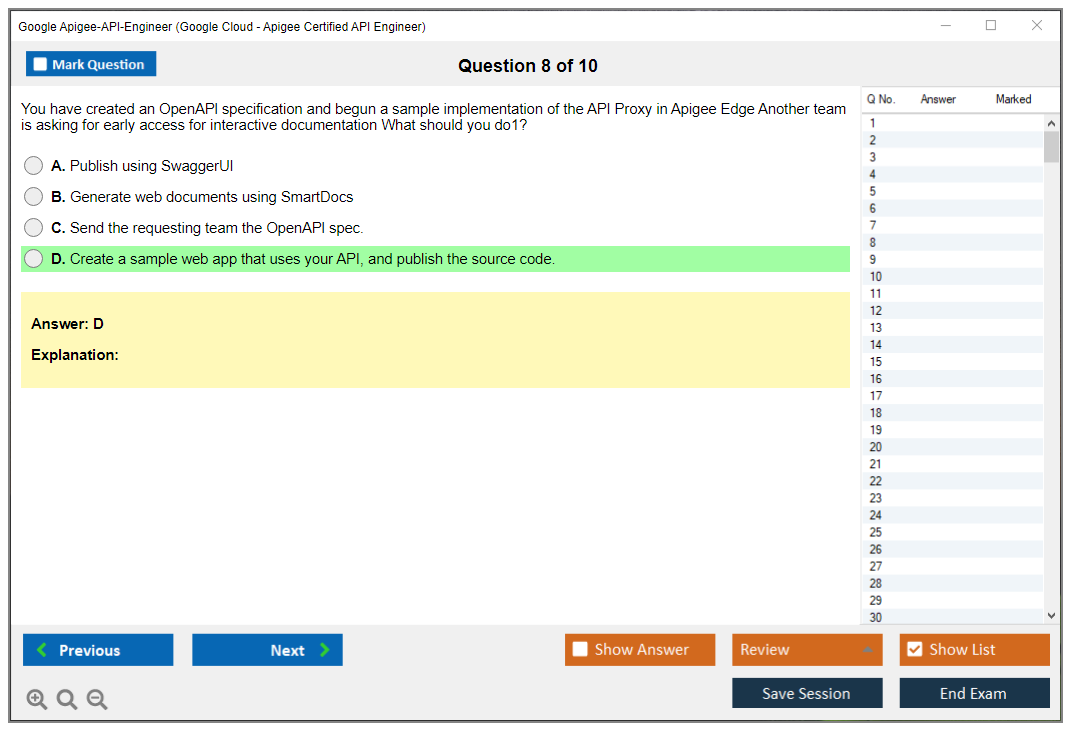
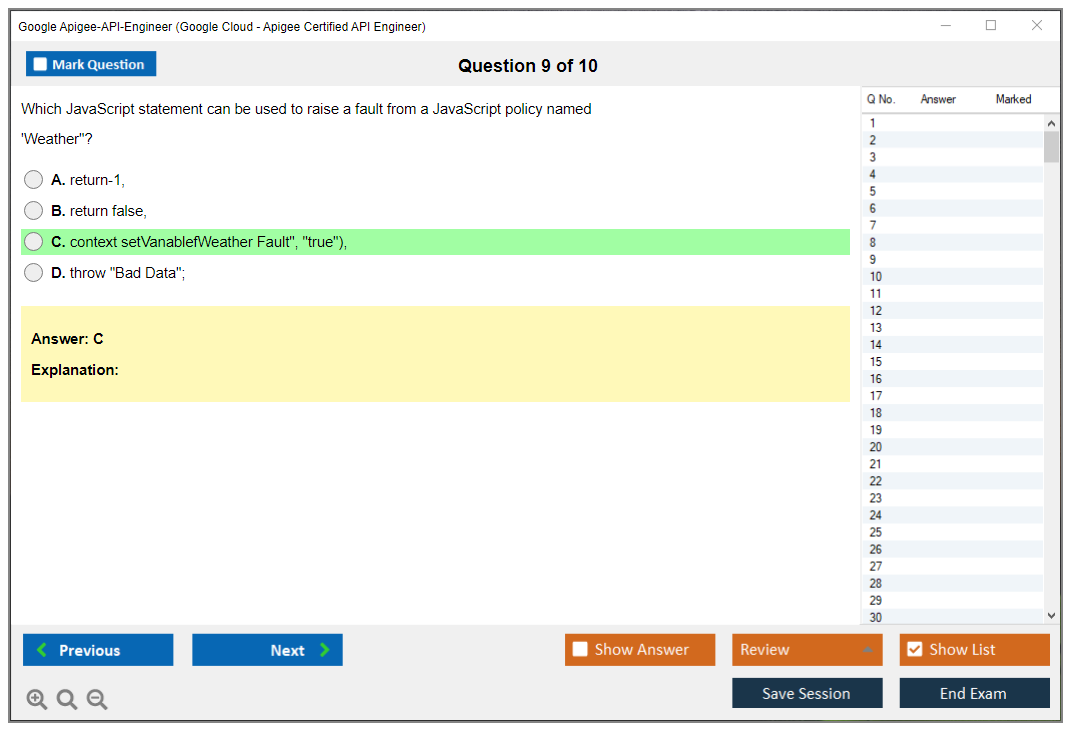
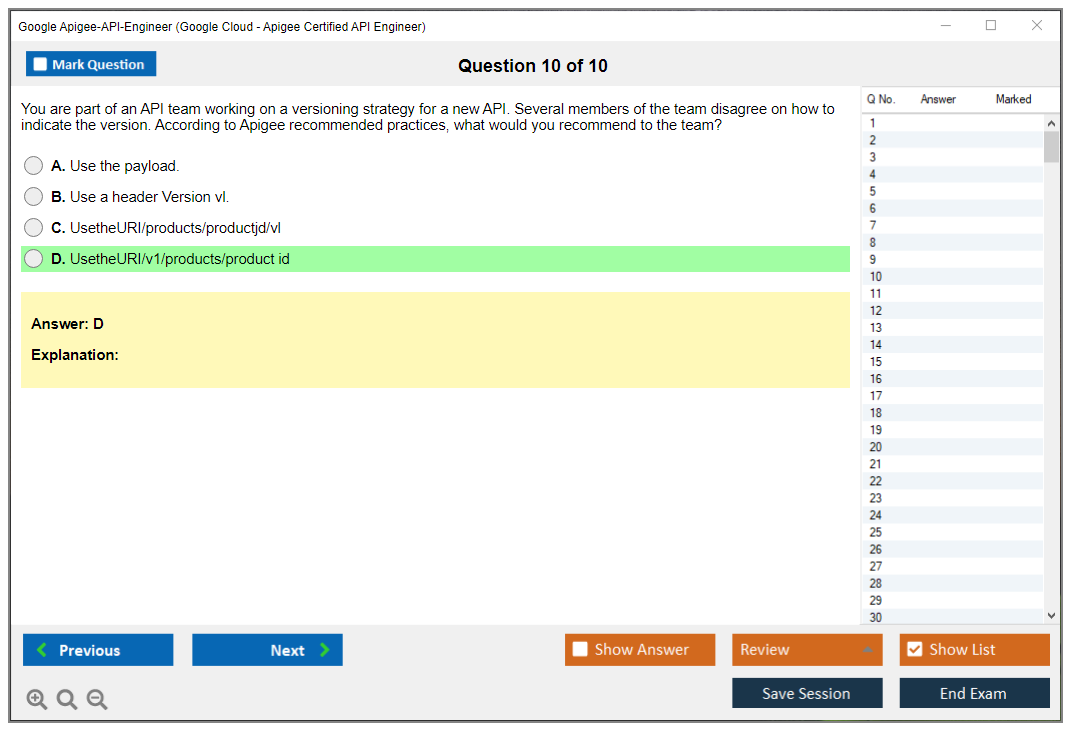
Google Cloud Apigee Certified API Engineer (Apigee-API-Engineer) Overview
So here's the deal. If you're working with APIs at any serious scale, you've probably heard whispers about Apigee in the hallways. Maybe your company's already running it, maybe they're considering it, or maybe you're trying to figure out what credential actually proves you know your stuff beyond "yeah I can click around the console." The Google Cloud Apigee Certified API Engineer certification is Google's way of saying you're not just fumbling through policy configurations. You actually understand how to build, secure, and manage API proxies that won't fall apart the moment traffic spikes or someone tries something sketchy.
What this credential actually proves
Professional-level certification. Not entry-level. It validates that you can design and implement API proxies meeting real business requirements, not just toy examples from a tutorial. I mean, anyone can copy-paste a Spike Arrest policy, but can you architect a solution that handles OAuth 2.0 flows, implements proper JWT validation, manages traffic across multiple backend services, and doesn't leak sensitive data? That's what Google wants to see.
The exam digs into your ability to apply Apigee policies for mediation, security, traffic management, and extension scenarios. You need to know when to use a Quota policy versus rate limiting. How to chain policies together without creating a maintenance nightmare. How to debug things when (not if) they break. Trace sessions become your best friend. You'll also need to demonstrate you understand deployment strategies across environments, revision management, and how to avoid pushing broken code to production at 4 PM on a Friday.
Error handling is huge. Fault tolerance too. The stuff separating a fragile API layer from one that actually survives real-world conditions. And honestly, the lifecycle management piece (from initial design through eventual retirement) shows you're thinking beyond just "make it work today." I once saw a team spend three months untangling a proxy architecture because nobody planned for versioning from the start. Don't be that team.
Who's actually taking this thing
API developers are the obvious audience, especially if you're building and maintaining proxies day-to-day in Apigee environments, but I've seen integration engineers go after this too. Particularly those responsible for connecting a mess of backend services through a coherent API layer. Solutions architects designing API strategies for enterprise organizations definitely benefit. It gives you credibility when you're in the room proposing an Apigee-based approach.
DevOps engineers managing deployment pipelines find value here, especially if you're dealing with CI/CD for API proxies. Platform engineers maintaining the infrastructure and developer portals need this knowledge. Technical leads overseeing API programs use it to validate their expertise. And cloud engineers integrating Apigee with other Google Cloud services or third-party systems? Yeah, you're in the target demographic.
Not gonna lie, if you're just starting out with APIs in general, this might be jumping in the deep end. You'll want some HTTP fundamentals, REST concepts, OAuth2 understanding, and basic JSON manipulation under your belt first. Maybe check out the Associate Cloud Engineer path if you're newer to Google Cloud entirely.
Why bother getting certified
The job market for API management specialists is competitive but also growing like crazy. Every company with a digital strategy is talking about "API-first" approaches now (some actually mean it). Having this certification separates you from the crowd of people who just list "API development" on their resume with zero proof.
Consulting roles? If you're eyeing consulting roles with Google Cloud partners, this credential carries weight. It's also a foundation for more advanced Google Cloud certifications. Pairs really well with the Professional Cloud Architect if you want to go broader, or the Professional Cloud Developer if you're staying in the development track. Earning potential tends to be higher for certified professionals, though your mileage varies depending on location and company size.
You get access to Google's certification community and exclusive resources, which sounds marketing-y but is actually useful when you're trying to solve weird edge cases. And look, employers actively seek proven Apigee expertise because training someone from scratch on enterprise API management is expensive and time-consuming.
The market reality for API skills right now
Digital transformation isn't slowing down. Every company wants microservices. Every microservices architecture needs an API gateway, and Apigee is positioned as one of the leading enterprise platforms in this space, which means this certification's relevance isn't going anywhere soon.
Integration with the broader Google Cloud ecosystem creates tons of opportunities, especially in cloud migration projects where companies are moving from on-prem API management to cloud-native solutions. Hybrid and multi-cloud deployments are everywhere now. Apigee's hybrid runtime model fits right into that complexity. Companies need people who can actually implement and manage that stuff.
The shift toward API-first strategies means organizations are treating their APIs as products, not just technical plumbing. That requires governance, lifecycle management, analytics, monetization strategies. All things Apigee handles and this certification validates you understand.
How this fits with other Google credentials
If you've already got the Professional Cloud Security Engineer certification, adding Apigee skills creates a nice security-focused specialization, while the Professional Cloud Network Engineer cert pairs well too since API gateways sit at critical network boundaries.
Focused API expertise. That's what this certification provides. General cloud credentials don't cover it in depth. You could absolutely pass the Professional Cloud Architect exam without knowing much about Apigee specifically, but combining both makes you dangerous in the good way. Same with the Google Professional Cloud DevOps Engineer track. API deployment pipelines and operational practices overlap heavily.
What's changing in the exam
Google keeps updating this certification to reflect the latest Apigee X features and hybrid deployment models. New policy types get added, integration patterns evolve, and the exam scenarios increasingly reflect modern API security threats (not just the basics, but stuff like API abuse prevention, bot detection, and advanced threat protection).
There's more emphasis on cloud-native approaches now, SRE principles applied to API operations, and observability beyond just basic monitoring. The thing is, the test reflects that APIs are critical infrastructure, not side projects. Alignment with evolving Google Cloud services means you need to know how Apigee integrates with Cloud Armor, Cloud Logging, Cloud Monitoring, and other platform services.
Honestly, the 2026 updates will probably lean harder into AI/ML integration for API analytics and threat detection because that's where the industry's heading. If you're studying now, keep an eye on those features even if they're not heavily tested yet. They will be.
Exam Details: Format, Cost, and Registration
Exam cost (pricing and what's included)
Money first.
Because honestly, that's where most people disappear. Someone says they want the Google Cloud Apigee Certified API Engineer badge, then procurement sends a quote request, and suddenly they're "still thinking about it."
The standard Apigee Certified API Engineer exam registration fee sits at $200 USD, with that familiar "subject to regional variations" disclaimer nobody actually reads until checkout. Look, Google Cloud exams stay pretty consistent here, which is the point: the Apigee certification cost matches other Google Cloud professional-level exams, so you're not getting slapped with some weird premium just because Apigee sounds niche or "enterprise-y." One fee, one attempt, zero hidden "platform access" garbage that makes you squint at the invoice.
No sneaky extras for scheduling your first attempt, which matters way more than people realize because some vendors absolutely sneak in admin costs depending on delivery method or time slot. Here, your first scheduling's basically rolled into registration. Retakes? Straightforward. If you don't pass, the retake fee matches the initial registration cost, so budget another $200 if you're doing round two.
Zero subscription or recurring fees required to maintain active status during validity. I mean, thank god. Paying for an exam's fine, but I absolutely hate that "pay yearly to keep your credential alive" pattern that feels like ransomware for your resume. With this one, once you pass, you're solid until expiration, then you deal with Apigee certification renewal when that clock runs out.
Cost realities people ignore? Taxes show up. Depending on your jurisdiction and payment method, you might see VAT, GST, or other taxes tacked on at checkout, and that can shift the final number enough to irritate you if you budgeted exactly $200 and literally nothing else. Also, the thing is, watch for occasional promotional discounts during Google Cloud events, partner programs, or training pushes. They're not guaranteed, but they happen.
Mid-size or big company? Ask about internal training programs. Some orgs buy vouchers in bulk or roll exam vouchers into an Apigee API engineer training package, and that can drop your out-of-pocket cost to zero. Not always, but worth asking instead of just assuming you're paying.
Quick mentions that still matter. Payment's typically card or voucher. Refund rules vary. Currency conversion fees? That's on you.
My brother works in finance and tried to expense one of these through three different budget codes before giving up and using his personal card. The reimbursement took two months. Sometimes the bureaucracy costs more than the exam itself, at least in terms of your time and patience.
Exam format (delivery method, question types, time)
Format's what you'd expect from a modern Google Cloud cert, but the details absolutely matter if you're trying to build a study plan that actually maps to what happens on exam day for the Google Apigee API Engineer certification.
You're looking at multiple-choice and multiple-select questions. Approximately 50 to 60 questions total, and yeah, the exact number shifts slightly depending on the version. Time limit's 120 minutes. Two hours sounds generous until you hit this brutal string of scenario questions that all feel like "pick the least bad option" and suddenly you're rereading every word like it's a prenup written by someone who hates you.
The exam leans hard into scenario-based questions, which is the core vibe here. It's less "what's the definition of X" and way more "given this requirement and this existing proxy behavior, which Apigee feature or configuration change actually fixes it without breaking other stuff." So you need applied knowledge of things like API proxy development in Apigee, when to use shared flows, how deployments and revisions work, and what a good security posture looks like when someone's actually trying to exploit your endpoints.
Questions are weighted. Not all items are equal. Google doesn't publish exact weighting, but you can feel it during the exam: some domains show up repeatedly, and the complex scenarios carry more importance than trivia. There's no penalty for incorrect answers, so you should absolutely guess when you're stuck. Honestly, leaving blanks is the only truly stupid move you can make.
Expect this weird mix of theory and practical application where one question might test conceptual API security decisions, and the next drops you into Apigee policies (OAuth, Spike Arrest, Quota) tradeoffs, like which policy you'd apply for traffic shaping versus abuse prevention, and where it belongs in the flow so you don't accidentally throttle your own internal calls and then spend Tuesday morning explaining to engineering why their service mesh is timing out.
If you're studying, don't just memorize policy names like flashcards. Learn when you'd apply them, what could go catastrophically wrong, and how you'd verify the result using trace and analytics, because Apigee troubleshooting and analytics shows up indirectly in tons of scenarios even when the question doesn't explicitly say "debug this dumpster fire."
Also: you won't get a public "official" Apigee practice test from Google in the same way some other vendors do, so your prep needs to be hands-on and scenario-heavy. That's a format issue as much as it's a study issue, which is annoying but also kinda forces you to actually learn instead of pattern-match.
Exam delivery options (online vs test center)
Two choices. Online with remote proctoring. Or test center. Both delivered through Kryterion's Webassessor platform, and online proctored testing's available globally in most places where you can meet technical requirements.
Online proctoring needs stable internet, and the common minimum you'll see is around 1 Mbps upload and 1 Mbps download, though faster's obviously better if you want fewer "reconnecting" surprises mid-exam. Webcam and microphone required, and you'll install a secure browser before the exam starts. That secure browser step's where people lose time, so do not wait until five minutes before your scheduled start, because then you're panicking, your machine wants seventeen permissions, and the proctor's waiting while you're sweating through your shirt.
Test centers are simpler in a completely different way. No home network weirdness. No roommate walking in asking if you've seen the remote. No laptop deciding today's the day it needs updates. You show up, they handle the controlled environment, you take the exam. If you're prone to tech anxiety, test center delivery's really underrated.
Online's flexible, though. More slots. More times. Less commuting.
If you're working full-time and squeezing certification time between meetings, that flexibility's the whole game.
Registration and scheduling (what actually happens)
Registration's basically a checklist, but you still want to do it carefully because tiny mistakes can absolutely cost you money and sanity.
You create or sign into your Kryterion Webassessor account, then find Google Cloud Apigee Certified API Engineer in the catalog. From there you choose delivery method, online proctored or test center. Then you pay by credit card, debit card, or voucher code. After payment clears, you schedule your date and time based on availability, and online scheduling usually offers way more slots than test centers, especially if you're in a smaller market.
You'll get a confirmation email with exam appointment details and prep instructions. Read it. Not skimming while you're also scrolling Twitter. Actually read it, because it tells you the rules that can get your session terminated and your fee forfeited, which would be a spectacularly expensive way to ruin a Tuesday.
Rescheduling's typically allowed up to 72 hours before your scheduled time without penalty. Inside that window, late cancellations usually forfeit the fee. Not gonna lie, that 72-hour rule's brutal if your work blows up unexpectedly, so don't schedule during a release week, a migration weekend, or the same week you're on call unless you enjoy gambling with $200 and your stress levels.
Schedule smart. Book when you're sharp. Avoid late-night slots if you're not a night person.
Test-day requirements and environment
ID's non-negotiable. You need valid government-issued photo ID, and the name has to match your registration exactly. If your account says "Mike" and your ID says "Michael," fix it early. Don't gamble on a proctor being flexible, because they won't be, and you'll be out $200 and a time slot.
Online proctoring means you need a quiet private room and a clear desk. No papers, no books, no phone "face down but I swear I'm not using it," no extra monitor, no smartwatch. Proctors take this seriously, and honestly they should, because otherwise the credential becomes meaningless and we're all just collecting participation trophies.
You usually get a whiteboard option, which is clutch for visual thinkers. In test centers, that's often a physical whiteboard and marker. Online, it's typically a digital whiteboard. If you rely on scribbling flow logic to think through scenarios, practice with the digital tool ahead of time, because it feels way slower and less natural than real markers.
No scheduled breaks during the two-hour exam, though bathroom breaks are allowed in many cases, but the clock continues, and if you disappear too long, you can trigger a review or incident report. Plan your caffeine accordingly. I mean it.
Test center candidates should check in about 15 minutes early. Online candidates should do the system check about 30 minutes prior. That buffer's your safety margin for the secure browser, permissions, camera framing, and any last-minute "your microphone isn't detected" drama that always seems to happen at the worst possible time.
Language availability and what I'd pick
Primary exam language is English, full stop. Some additional languages may be available depending on region and demand, and you'll see those options during registration in Kryterion if they exist for your location.
Translation quality can vary, which isn't an insult, it's just reality with technical wording where precision matters. If you're comfortable in English, I'd really recommend taking the English version because it aligns best with official documentation and the way Apigee concepts are phrased in practice, especially around API security and traffic management where one mistranslated term can completely change what an answer "means" and suddenly you're picking the wrong option for linguistic reasons instead of technical ones.
Accessibility accommodations
If you need accommodations, they exist, but you have to request them properly through official channels. Extended time's available for documented needs, and there can be screen reader compatibility for visually impaired test-takers. You'll request accommodations during registration and provide supporting documentation.
Give advance notice. Typically 2 to 4 weeks. Sometimes more.
If you wait until the last minute, you're basically choosing stress and uncertainty, which isn't ideal when you're already preparing for a technical exam that costs $200.
If you're unsure what's available, contact Kryterion support and ask about your specific situation instead of guessing. Keep screenshots and emails. Paper trails matter when things go sideways.
Prep timeline after you register (don't trap yourself)
If you've got moderate hands-on Apigee experience, 6 to 8 weeks is a reasonable prep window that gives you time to fill gaps without dragging it out. If you're new to Apigee or API management concepts, plan 12+ weeks, because you'll need time to build instinct around flows, policies, deployments, and debugging. Not just read Apigee exam objectives and hope for pattern recognition to save you.
The best timing advice I can give is boring but real: schedule the exam after you've completed most of your study plan, while the details are still fresh in working memory, because dragging it out turns into procrastination disguised as "more prep" and suddenly it's six months later and you've forgotten everything. Also avoid peak work periods. Seriously, if you're heading into a big cutover or major release, don't schedule your exam the same month and then wonder how to pass Apigee certification while your pager's going off every four hours.
You want momentum. You want sleep. You want reps with trace.
And if you're trying to future-proof your result instead of just barely passing, spend real time on deployment lifecycle stuff like Apigee deployment environments and revisions, because those questions are rarely hard individually, but they stack up fast across scenarios where one wrong assumption about how revisions propagate breaks the entire answer and costs you points you can't afford to lose.
Passing Score and Results
What you're actually up against with the score
Okay, real talk. The Google Cloud Apigee Certified API Engineer exam uses scaled scoring (200 to 1000 points total) and you'll need roughly 700-750 to pass. Google won't publish the exact cutoff, which honestly? Drives everyone absolutely bonkers, but that's the range candidates consistently report. The thing is, scaled scoring accounts for difficulty variations across different exam versions, so if you randomly get a tougher question set, the threshold adjusts to keep things fair.
Your raw score gets converted through psychometric wizardry into that scaled number. Not all questions count the same either. They're weighted by domain importance and complexity, so crushing a difficult question about OAuth token validation or debugging some gnarly proxy chain counts way more than answering basic recall stuff correctly.
Multiple-select questions trip people up constantly. Zero partial credit. You've gotta select every correct answer to score points on that question. Miss one correct option out of three? You get nothing. I mean, this is where practice materials become essential, helping you develop that skill of identifying all correct answers instead of just the obvious one.
How they actually calculate your result
The process uses criterion-referenced standards instead of norm-referenced ones. Translation? You're not competing against other test-takers at all. Your performance gets measured against an absolute competency standard that subject matter experts established for each domain, so whether 100 or 10,000 people take the exam that month doesn't affect your pass/fail outcome.
Google employs an equating process to adjust for question pool difficulty variations. This is standard for professional certifications, but worth understanding. One exam version might have more API proxy development questions and fewer troubleshooting ones, and the algorithm accounts for that. Subject matter experts periodically review passing standards based on job task analysis, keeping the certification aligned with what actual API engineers need for real-world Apigee implementations.
The psychometric analysis is sophisticated. Each question undergoes validation testing before appearing on live exams, and performance data from thousands of candidates establishes baseline difficulty ratings. Curious how this compares to other Google Cloud certs? The Professional Cloud Architect and Associate Cloud Engineer exams use similar scaled scoring approaches.
Random tangent, but I once spent three hours debugging an Apigee proxy only to realize I'd fat-fingered a single character in an XML namespace. That kind of attention to detail? That's what separates people who pass from people who don't.
Getting your results and what they tell you
Immediately after submitting your exam, you'll see a preliminary pass/fail result on screen. That instant feedback? Both relieving and gut-wrenching depending on the outcome, not gonna lie. Your official score report arrives via email within 7-10 business days and includes your scaled score plus domain-by-domain performance breakdown.
The domain feedback shows whether you performed "above target," "near target," or "below target" in each section. This breakdown actually proves useful for retakes because it pinpoints exactly where to focus study efforts. Did you crush API proxy design but struggle with security policies? That performance indicator guides your next preparation round.
You won't get specific question feedback. Google locks that down tight for exam security. Makes sense from their perspective, even though candidates always crave more detail. For passing candidates, the electronic certificate gets issued within 2-3 weeks, plus you'll receive a digital badge through Credly that you can slap on LinkedIn, your email signature, wherever you want to showcase your achievement.
The Credly badge integration is slick, and employers actually look for these when vetting candidates for Apigee roles.
What happens if things don't go your way
Failed? First, breathe deeply. Many successful API engineers didn't pass their first attempt. It happens. The retake policy is structured but reasonable. After your first failed attempt, you've got a 14-day waiting period before retaking. Fail twice? That extends to 60 days. Third failure means you're waiting a full year before attempt four.
Each retake requires paying the full exam fee again (around $200 per attempt, though pricing varies regionally) which adds up fast. This is where investing in quality study materials upfront makes financial sense. The Apigee-API-Engineer Practice Exam Questions Pack costs $36.99 and helps identify knowledge gaps before you're sitting in the actual exam, potentially saving hundreds in retake fees.
Use that score report strategically. Below target in "API security and traffic management"? Spend serious time working with OAuth policies, JWT validation, and API key management in an actual Apigee environment. Hands-on practice matters more than just reading documentation. Spin up proxies, implement Spike Arrest and Quota policies, test different authentication scenarios. The troubleshooting and analytics domain trips up tons of people too, so getting comfortable with the Trace tool and understanding how to read analytics data is something you need to actually do, not just read about.
Score validity and verification
Your exam score remains valid for the entire certification period, typically two years for Google Cloud certifications. There's no separate score expiration. When your certification expires, your score status becomes historical but still shows in your Webassessor account transcript.
Employers can verify your certification through Google Cloud's public directory, though you control whether your certification appears there. Some folks prefer keeping it private and sharing their Credly badge selectively instead. The official transcript through your Webassessor account provides the most detailed record of your certification history. Exam date, score, and expiration date all included.
If you're building a portfolio of Google Cloud credentials, the Apigee cert pairs well with other API and integration-focused certifications. The Professional Cloud Developer covers application development aspects that complement Apigee API management skills, while the Professional Cloud Security Engineer dives deeper into security concepts applicable to API protection strategies.
Real talk about preparation and scoring
Here's something I wish more people understood upfront: the scaled scoring system actually works in your favor when you're well-prepared. Yeah, you might need 700-750 points, but that's typically around 70-75% of questions answered correctly before scaling adjustments kick in. You can miss a quarter of the questions and still pass comfortably, which is reassuring when you're sweating through the exam and encounter a few questions that make you second-guess everything you've ever learned about API management.
The catch? Knowing which questions you can afford to miss. High-value questions weighted toward complex scenarios or critical job tasks matter more. This is where the Apigee-API-Engineer Practice Exam Questions Pack becomes valuable. It helps you identify question patterns and understand what "Apigee complexity" actually looks like in exam format. You start recognizing the difference between surface-level recall questions and deep application questions carrying more weight.
Don't make the mistake of thinking you need to memorize every policy parameter or API call. The exam tests your ability to design solutions, troubleshoot problems, and make architecture decisions. Understanding when to use a JavaScript policy versus a Python script, or how to structure shared flows for reusability? That's the thinking level you need.
Difficulty: How Hard Is the Apigee API Engineer Exam?
What this cert actually proves
The Google Cloud Apigee Certified API Engineer credential is basically Google saying you can build and run real API proxies in Apigee without melting production. Not theory. Not "I watched a video once." Actual proxy design, policy work, security, traffic management, deployments, and troubleshooting.
Look, it's a niche exam.
If you like general cloud architecture diagrams, this one can feel oddly specific. You're expected to know how Apigee behaves when policies execute, when variables get set, how OAuth tokens get minted or rejected, and how a bad TargetEndpoint config can absolutely ruin your day in ways you didn't see coming. It's honestly kind of refreshing after broader certs that let you get by with surface knowledge. Also, there's something about knowing exactly where a fault happens that just feels different than picking services from a menu.
Who should take it (and who shouldn't)
If your job touches API proxy development in Apigee, shared flows, security policies, or you babysit API platforms, you're the target. API engineers. Integration folks. Platform engineers who got handed Apigee.
Never opened Trace? Pause. Go do that first.
People who only did "hello world" proxies and a key validation policy tend to underestimate this exam, then wonder why every question feels like two answers are "kinda right" and the clock is suddenly loud.
Exam details that affect difficulty
Cost is usually in the same ballpark as other Google Cloud pro exams, and Apigee certification cost can vary by region and delivery, so always check the registration page for your locale. Online proctoring's common, and you're doing multiple choice and multiple select, with a 120 minute window.
Time matters. Not scary. But real.
You don't get to pull up docs. No searching policy syntax, no quick check on whether Spike Arrest supports that exact configuration option. The exam assumes you've been living in the product long enough that the behavior feels familiar, not like something you're desperately trying to remember from slides.
Passing score and what you'll actually see
Google doesn't publish a neat "you need 78%" type number for most of these. So if you're asking what is the passing score for the Apigee API Engineer certification, the annoying answer is: you won't know a fixed target, and the scoring's scaled.
You get a pass or fail plus a domain breakdown. That's it. If you fail, you'll know roughly where you were weak, but you won't get a question review. Retakes follow Google's standard rules, meaning you can't just spam attempts back to back.
So.. how hard is it, really?
The overall difficulty of the Apigee Certified API Engineer exam is moderate to challenging compared to other Google Cloud certs. I mean that in the "you need to actually know the product" sense. It's more specialized than generalist cloud certifications, so it demands deeper Apigee knowledge and more "platform operator brain" than something like a broad architecture exam.
Pass rates aren't publicly disclosed. Still, you'll hear estimates floating around 60 to 70% for first-time takers, and that feels believable based on the kind of candidates who usually attempt it and the number of "I was surprised by the scenarios" comments I see in forums.
Difficulty-wise, it's comparable to other professional-level Google Cloud exams, but the vibe's different. You're not selecting high-level services, you're deciding what policy goes where, what order it runs in, why the token request fails, and what the trace is telling you when variables don't look like you expected. That's exactly where people get tripped up because memorization stops helping when the question's basically a mini incident report.
Time pressure's manageable if you're prepared, but tight if you're underprepared. Scenario questions take longer to parse and they love giving you answer choices that are each "technically plausible" if you ignore one detail in the prompt.
The topics that punch people in the face
Here's what test-takers complain about the most, and yeah, I agree with the list.
OAuth 2.0 implementation and troubleshooting shows up everywhere. Flow types, token lifetimes, refresh behavior, error cases. This is the big one. If you can't look at a failing token request and quickly reason about policy config, grant type mismatch, client credentials, scopes, or where the flow's attached, you'll bleed time. OAuth questions tend to mix security with execution order, so one wrong assumption and every option looks wrong.
Policy selection and sequencing trips people up constantly. They know policies exist, but the exam asks "which one here and why now." You need a mental model of request vs response, ProxyEndpoint vs TargetEndpoint, preflow vs conditional flows, and how variables get populated. Misplacing a message validation or raising faults too late's the kind of thing the exam loves.
Trace analysis and debugging is practical Apigee work. Interpreting trace session data, spotting where a fault happened, recognizing a target timeout vs a policy failure vs a bad conditional. If you don't debug in real life, this section feels like reading logs in a language you barely speak.
Shared flows vs flow hooks confuses people. When to centralize logic, when to attach at specific points, when reuse becomes a coupling nightmare. Lots of folks "sorta know," but the exam wants the clean answer for a given scenario.
Quota and spike arrest configuration gets mixed up all the time. Values, distributed behavior, and what each one's actually protecting. Quota's a budget. Spike Arrest's a rate smoother. Mix them up and the scenario won't make sense.
Other stuff that shows up: target server configuration, load balancing, TLS, connection pooling. Custom analytics and stats collection, advanced reporting needs, custom dimensions. Deployment and environment management, revisions, promotions, routing traffic. Error handling patterns, fault rules, RaiseFault, default fault handling. Performance optimization, finding bottlenecks, knowing whether it's policy overhead, target latency, bad caching strategy, or just too much doing-the-most in the proxy.
What makes the exam challenging (the real reasons)
Questions test practical application rather than "do you recognize this feature." That's the core difficulty. You're not getting easy wins from vocabulary.
Multiple answers can seem partially correct, and you've gotta catch the one detail that makes an option wrong. Like the wrong attachment point, a mismatch between flow condition and variable availability, or selecting a policy that technically works but doesn't meet the stated requirement for security or reliability.
Scenarios combine concepts. Security plus traffic management. Analytics plus shared flows. Debugging plus deployment. That integrated stuff's what real Apigee work looks like, so it's fair, but it kills cram-style prep.
Apigee evolves too. New features and policies show up, and the exam content can shift. If you learned Apigee three years ago and never looked again, you might feel out of date.
Experience level that makes this exam feel "reasonable"
Minimum 6 to 12 months of hands-on Apigee's strongly recommended. That's the difference between "challenging but fine" and "why is everything ambiguous."
You want exposure to at least 2 to 3 real proxy projects. Not just one proxy that validates an API key, but real projects where you did mediation, security, traffic controls, and some kind of deployment promotion. You should've used multiple policy types in production-ish scenarios, and you should be comfortable debugging with Trace when something breaks at 2pm on a Tuesday.
Background matters too. Basic HTTP, REST, JSON, XML, TLS. Comfort with OAuth 2.0, JWT, and API security and traffic management generally. If those concepts are fuzzy, Apigee configuration questions become guesswork.
Comparing it to other certs
It's more focused than Professional Cloud Architect. Narrower scope, deeper detail. Similar difficulty to Professional Cloud Developer in the sense that both reward hands-on skill, but this one's more product-specific and less about general app patterns.
It's also more practical than many vendor-neutral API management certs, because the Apigee exam objectives expect you to know exactly how Apigee does things, not just what API management is "as a concept." Less infrastructure-heavy than networking or security certs that go hard on routing, IAM sprawl, or threat modeling.
What makes it easier (yes, you can lower the difficulty)
Hands-on practice's the cheat code. Use a trial, a sandbox, or your employer's org. Build proxies. Break them. Fix them. Do Trace until it's boring.
A systematic study plan helps too, because the exam covers a broad spread across domains, so focused cramming tends to leave weird gaps. Practice tests matter, mainly to learn the question style and pacing. If you want a targeted resource, the Apigee-API-Engineer Practice Exam Questions Pack is one option I've seen people use when they're trying to simulate exam pressure without hunting random low-quality questions.
Community forums're underrated. People post real troubleshooting patterns and gotchas, and that maps directly to the exam's scenario vibe. Official docs still matter, but you should read them with a builder mindset, not like a textbook.
How to manage the difficulty on purpose
Focus on "why" behind configurations, not just "how." That sounds cheesy, but it's the only way to survive scenario questions where three options are almost correct.
Build a mental model of policy execution flow. Like, actually know what runs first and where variables come from. Practice troubleshooting with Trace sessions until you can spot the root cause fast. That skill directly translates to exam success.
Make quick comparison charts for similar constructs. Quota vs Spike Arrest. Shared flows vs flow hooks. OAuth policy vs JWT verification patterns. That stuff reduces second-guessing.
If you're shopping for an Apigee practice test, vet it by whether it uses scenarios and multi-step reasoning, not just "what does this policy do." The Apigee-API-Engineer Practice Exam Questions Pack is priced at $36.99 and can be useful if you treat it like a diagnostic tool, not a magic answer key. Same for any Apigee API engineer training you pick. Pick one that makes you build and debug, because reading slides won't teach you Trace.
Quick FAQ people always ask
How much does the Google Apigee Certified API Engineer exam cost? It depends on region and delivery, so check current pricing when you schedule, and keep an eye on taxes and currency conversion.
How hard's the Apigee Certified API Engineer exam? Moderate to challenging, mainly because it's scenario-heavy and product-specific, and it expects real experience.
What're the exam objectives for the Apigee API Engineer certification? Proxy design, policies and shared flows, authentication and authorization, debugging and analytics, deployments and revisions, and ops best practices.
How do I renew the Google Cloud Apigee Certified API Engineer certification? Google typically uses a validity period with a recert option, so plan on periodic renewal and review the current Apigee certification renewal rules when you're nearing expiration.
If your goal's how to pass Apigee certification, the honest path is: build proxies, debug real failures, learn OAuth deeply, and practice exam pacing. If you want a structured set of questions to pressure-test yourself, the Apigee-API-Engineer Practice Exam Questions Pack is a straightforward add-on.
Apigee Exam Objectives (What You Need to Know)
Understanding API proxy fundamentals and structure
Here's the deal. If you're serious about the Google Cloud Apigee Certified API Engineer exam, you need to get comfortable with how API proxies actually work. Not just the glossy overview stuff. The proxy endpoint is where client requests come in, and understanding how to configure base paths and resource paths with proper routing matters because that's how you control which backend services get hit based on the incoming request path. Mess this up and you're directing traffic to the wrong destinations all day long.
Conditional flows? You can't skip these.
These let you route requests based on things like HTTP verbs, headers, or query parameters. The exam will definitely test whether you can design these flows efficiently without creating a tangled mess. Managing proxy configuration files means understanding the XML structure (yeah, it's XML, not JSON) and knowing which elements go where in the bundle structure. Designing proxy bundles with appropriate organization isn't just about making things look neat. It's about being able to troubleshoot when things break at 2 AM.
Conditional flows show up constantly.
RESTful design and backend abstraction strategies
API proxy design patterns are huge on this exam. You need to know RESTful API design principles beyond just the basics everyone talks about. The actual practices that matter in production environments, the stuff that keeps systems running smoothly when you've got thousands of requests per second hammering your endpoints. Backend service abstraction and decoupling strategies come up repeatedly because that's the whole point of using Apigee in the first place. You're creating a facade that shields your clients from backend complexity.
Versioning strategies will trip you up. Path-based versioning (like /v1/users versus /v2/users), header-based versioning, and query parameter approaches all have different trade-offs. The exam expects you to know when to use which one. I've seen people who know Apigee pretty well still struggle with questions about implementing facade patterns to simplify complex backends. It requires thinking about architecture rather than just knowing which button to click. Actually, now that I think about it, the facade pattern questions remind me of those terrible architecture interviews where everyone draws boxes and arrows but nobody talks about what happens when the database goes down, which is the only scenario that matters anyway.
Manipulating requests and responses effectively
Request and response handling is where you'll spend a ton of exam time. Extracting and manipulating request data (headers, query parameters, body content) requires knowing which policies to use and in what order. The order matters way more than most people realize. A policy executed too early won't have access to variables set by earlier policies. Too late means you've already sent something to the backend that should've been transformed first. The exam loves scenarios where you need to transform response formats, like converting JSON to XML or the other way around, and you better know the JSONToXML and XMLToJSON policies cold.
Setting headers dynamically?
That's AssignMessage policy territory. You'll see questions about implementing request validation and sanitization, which ties directly into security policies like RegularExpressionProtection and the threat protection policies. Managing content types and Accept headers might seem simple, but the exam will give you edge cases where a client sends weird Accept headers and you need to handle it gracefully.
Virtual hosts and SSL termination details
Virtual hosts configuration is one of those topics that seems straightforward until the exam hits you with questions about TLS termination at the virtual host level. Then suddenly you're wondering if you actually understood how traffic flows through the platform at all. You need to understand how virtual hosts work across different environments (development, test, production) and how to configure custom domains with proper routing rules.
Multiple base paths within a single proxy? Tricky stuff. Setting this up requires knowing how base path precedence works, which catches a lot of people off guard. The relationship between virtual hosts and environments is tested more than you'd think, particularly around how TLS certificates get managed and terminated.
Target server configuration and load balancing
Defining target servers and endpoints is basic, sure. But implementing load balancing across multiple backend servers with proper health monitoring and failover? That's where the exam separates people who've actually built production APIs from those who've just read the docs over coffee one weekend. You need to know how to set connection pooling parameters, configure timeout values that make sense (not just the defaults), and manage TLS configuration for backend connections that might have different security requirements than your public-facing endpoints.
Health checks matter.
Failover behavior comes up in scenario-based questions where a backend goes down and you need to know what happens to in-flight requests.
Traffic management policies that protect backends
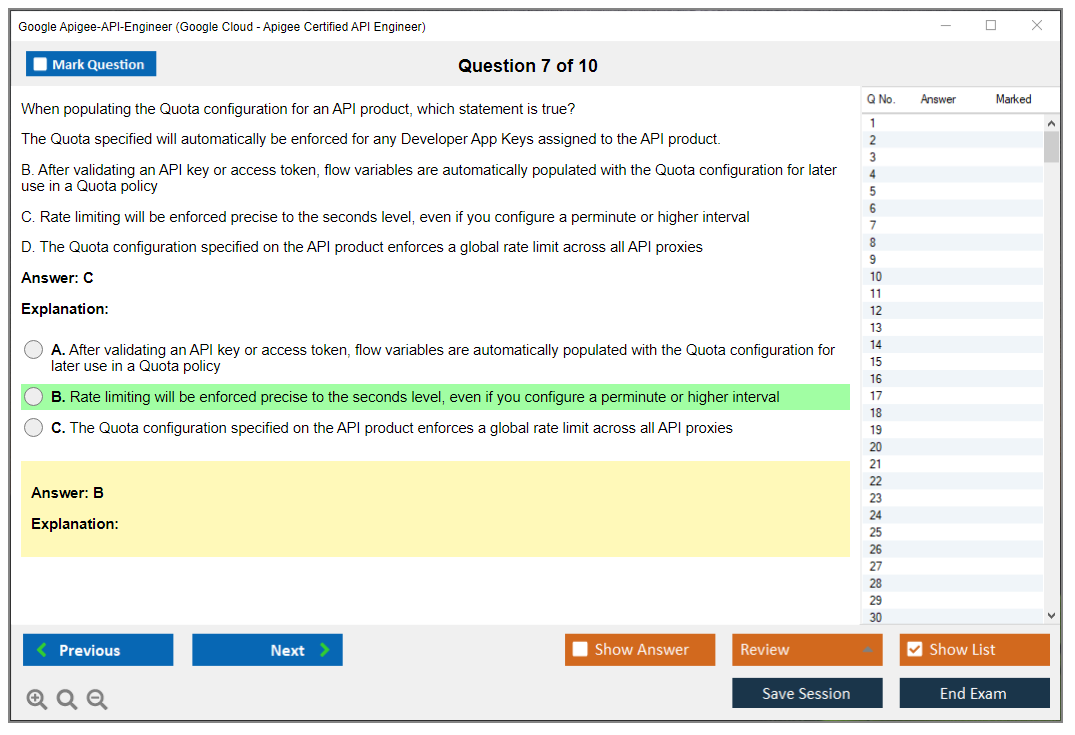
Spike Arrest and Quota policies are tested extensively. You must understand the difference between them, no question about it. Spike Arrest protects backends from traffic surges by smoothing out request rates. You configure it per second or per minute, and it prevents sudden spikes even if the client is within their quota. Quota implements usage limits per developer or app over longer time windows like daily or monthly limits, which serves a completely different purpose even though people constantly confuse the two.
Understanding distributed versus synchronous quota matters because it affects performance and accuracy in ways that aren't immediately obvious. Concurrent Rate Limit manages simultaneous connection limits, which is different from both spike arrest and quota. The exam will give you scenarios where you need to pick the right policy for the situation. Policy placement matters hugely for performance. Put a quota policy too late in the flow and you've already wasted backend resources on a request that should've been rejected immediately.
Mediation policies for transformation and logic
AssignMessage policy is your Swiss Army knife. It creates, modifies, and deletes messages, and you'll use it constantly. ExtractVariables lets you parse data from requests and responses using JSONPath, XPath, or regex patterns. The exam loves testing your ability to write correct extraction expressions that actually grab the data you need without breaking when the input format varies slightly.
JavaScript and Python policies handle custom logic for complex transformations. The exam doesn't usually make you write full scripts, but you need to know when to use JavaScript versus Python and what their limitations are. JavaScript for lighter transformations, Python when you need heavier processing or specific libraries. RaiseFault creates custom error responses, which ties into error handling flows that definitely appear on the exam.
Security policies from API keys to OAuth flows
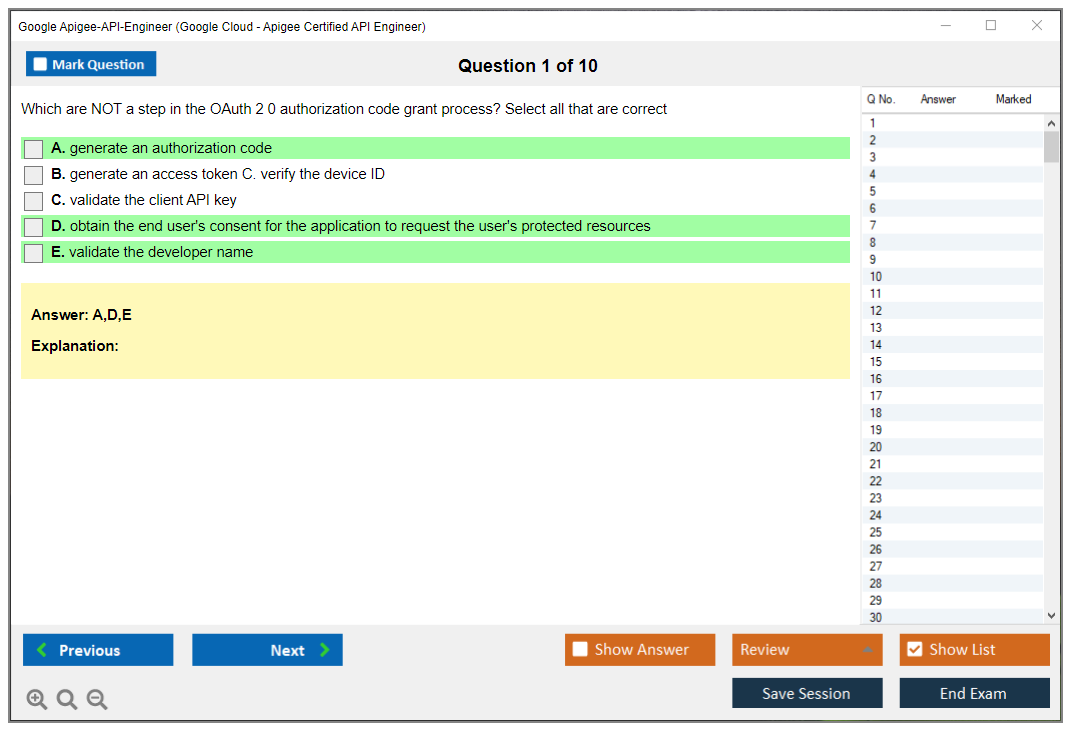
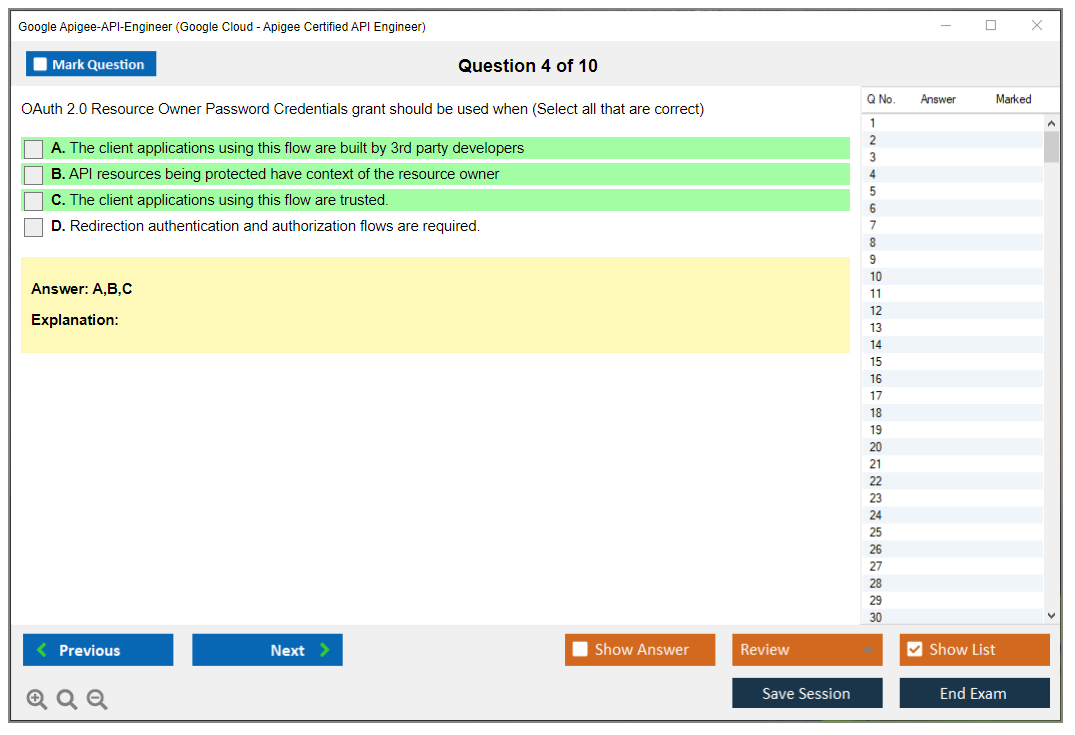
VerifyAPIKey is the simplest authentication mechanism, but don't skip studying it just because it seems basic. OAuth v2.0 is massive. You need to understand generating and validating tokens, and knowing the grant types (authorization code, client credentials, password, implicit) with their appropriate use cases is required. I've seen entire question sets focused on OAuth flow selection based on client type and security requirements. People who haven't worked with OAuth in production struggle hard with the details of when to use authorization code versus client credentials.
VerifyJWT and GenerateJWT policies work with JSON Web Tokens. You need to know claims, signatures, and expiration handling. SAML Assertion policy implements SAML-based authentication, which is less common but still tested because plenty of enterprise environments rely on it. BasicAuthentication encoding and decoding credentials is straightforward, but the exam will test you on when it's appropriate versus when you should use something stronger.
RegularExpressionProtection prevents injection attacks.
JSONThreatProtection and XMLThreatProtection defend against malicious payloads with deeply nested structures or huge element counts that could cause denial of service.
Extension policies for advanced scenarios
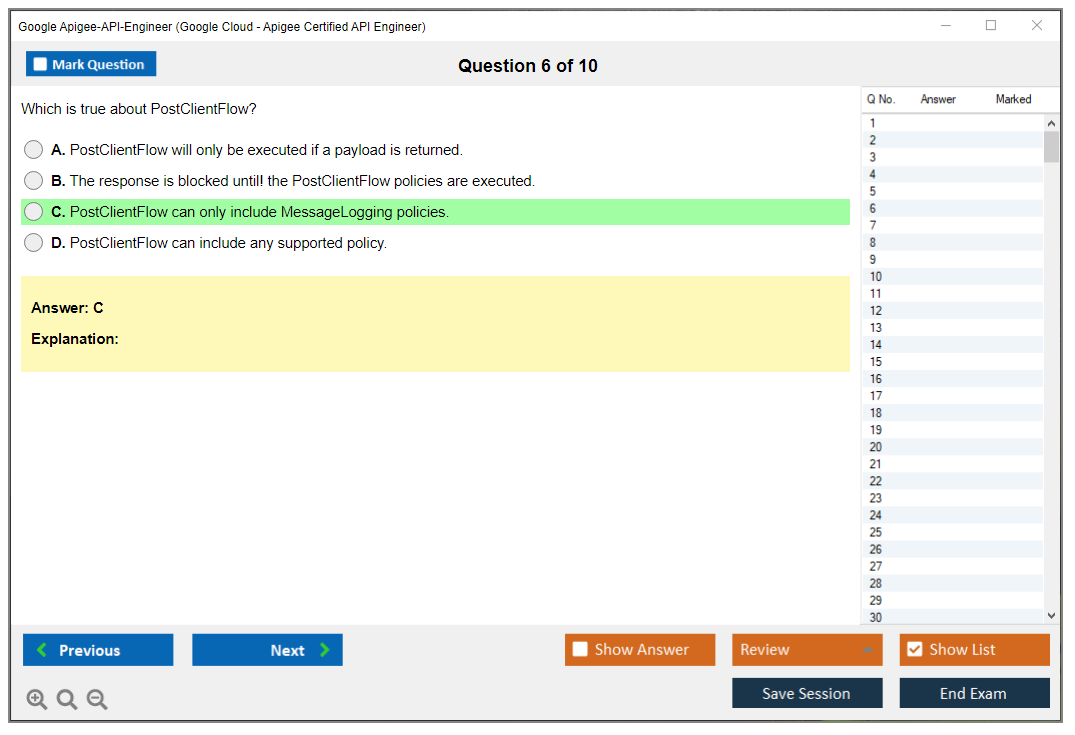
ServiceCallout makes backend service calls from within the proxy flow, which is useful for enrichment scenarios where you need to call a second service to augment the response before sending it back to the client. MessageLogging sends data to external logging systems like Splunk or custom syslog endpoints for compliance or debugging purposes. StatisticsCollector captures custom analytics data that goes beyond what Apigee tracks automatically, letting you measure business metrics alongside technical ones.
AccessEntity retrieves entity data. Things like app details, developer information, or API product configurations, which you might need for dynamic policy behavior based on who's calling the API.
Shared flows and flow hooks let you reuse common policy sequences across multiple proxies. Understanding when to extract logic into a shared flow versus keeping it inline is the kind of decision the exam tests. it's about functionality but about maintainability and consistency across your API program. Similar to how the Professional Cloud Architect certification tests design patterns across GCP services, the Apigee exam wants to see you think about reusability and maintainability at scale.
If you're also pursuing other Google Cloud certifications like the Associate Cloud Engineer, you'll notice some overlap in concepts around environments, deployments, and configuration management, though Apigee applies these specifically to API management contexts.
Conclusion
Wrapping up your Apigee certification path
Okay, so here's the deal. The Google Cloud Apigee Certified API Engineer certification? Not something you casually wing.
It validates your skills in API proxy development, security configurations, and those nightmarish troubleshooting scenarios that hit right when everyone's staring at you during an outage waiting for answers. The thing is, this exam really tests whether you understand how policies interact with each other, how OAuth flows actually function in real-world situations (not just theory), and whether you've got the nerve to debug a broken API proxy when the pressure's cranked up to eleven.
The Apigee certification cost is pretty reasonable, honestly, compared to what you're gaining in credibility and job prospects. But here's what people miss: just memorizing the Apigee exam objectives won't cut it. You need hands-on time. Real time. Build proxies, break them, fix them again. Deploy across different environments, mess around with revisions, implement Spike Arrest and Quota policies until you actually understand why one works better than the other depending on the scenario. I spent two weeks once just testing rate limiting combinations because the documentation made it sound simpler than it was, and honestly, those two weeks taught me more than a month of reading ever could.
Most folks asking how to pass Apigee certification want shortcuts. Not gonna lie, there aren't many worth taking. You've gotta understand API security and traffic management at a really deep level. Work through actual troubleshooting exercises using trace sessions. Know your way around analytics dashboards without getting lost.
The Apigee practice test materials? They help, sure. But only if you're treating wrong answers as learning opportunities instead of just memorizing which bubble to fill in next time.
with Apigee API engineer training, mix the official documentation with hands-on labs. The documentation's dense (really dense), but it's where you'll discover those details about policy execution order and deployment best practices that separate passing scores from embarrassing failures.
Here's what actually moves the needle: quality practice questions mirroring real exam scenarios. Not some sketchy dump site with outdated questions from 2019. You want properly maintained materials reflecting current Apigee exam objectives and the actual difficulty level you'll encounter. The Apigee-API-Engineer Practice Exam Questions Pack gives you that realistic prep experience with explanations teaching you why answers work, not just what they are.
The Google Apigee API Engineer certification proves you can architect, secure, and maintain production API infrastructure. Get the hands-on experience. Study smart with quality resources. You'll join certified engineers who actually know their stuff. Your future self managing critical API infrastructure? Yeah, they'll thank you.