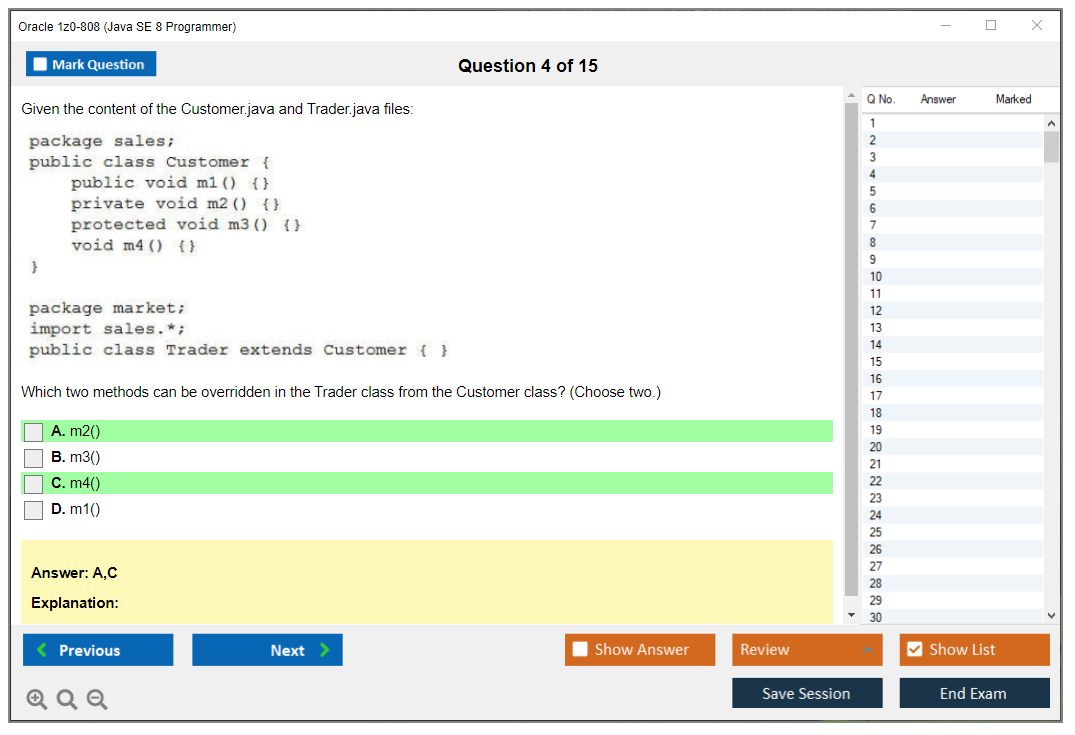
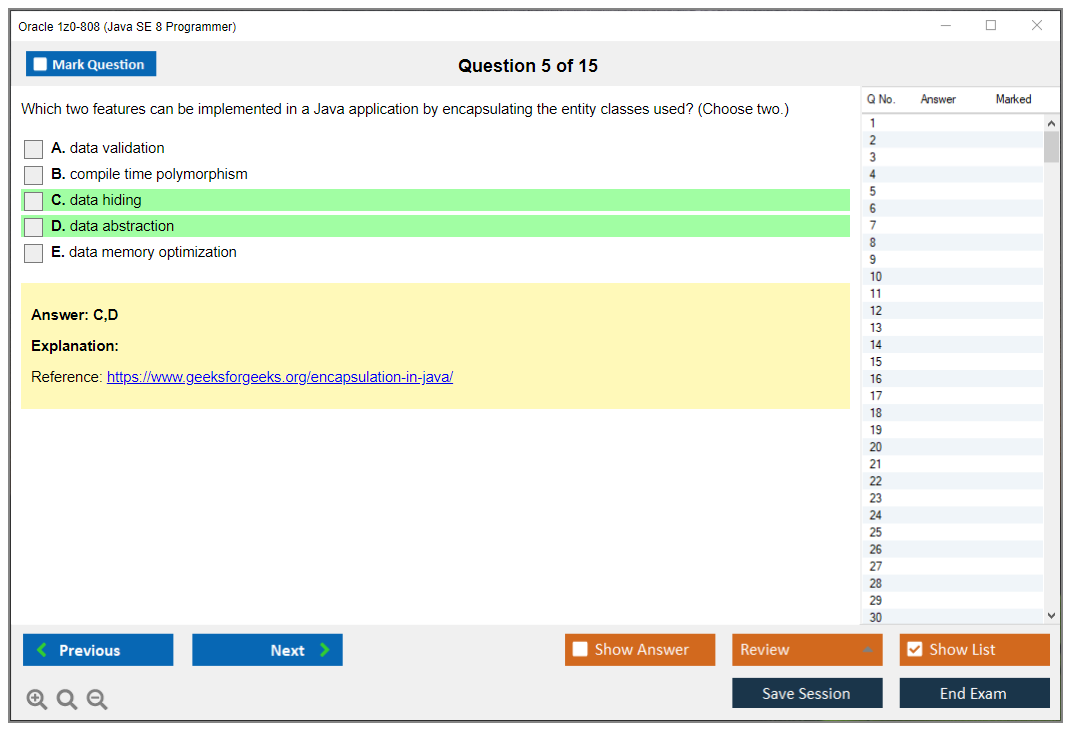
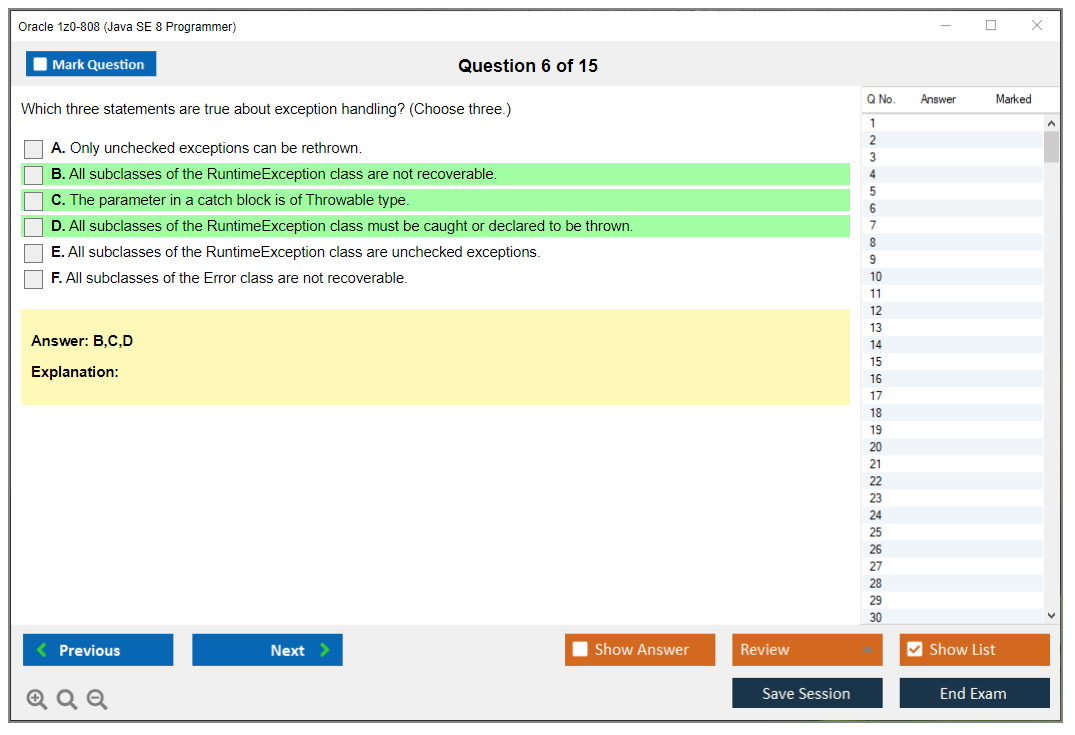
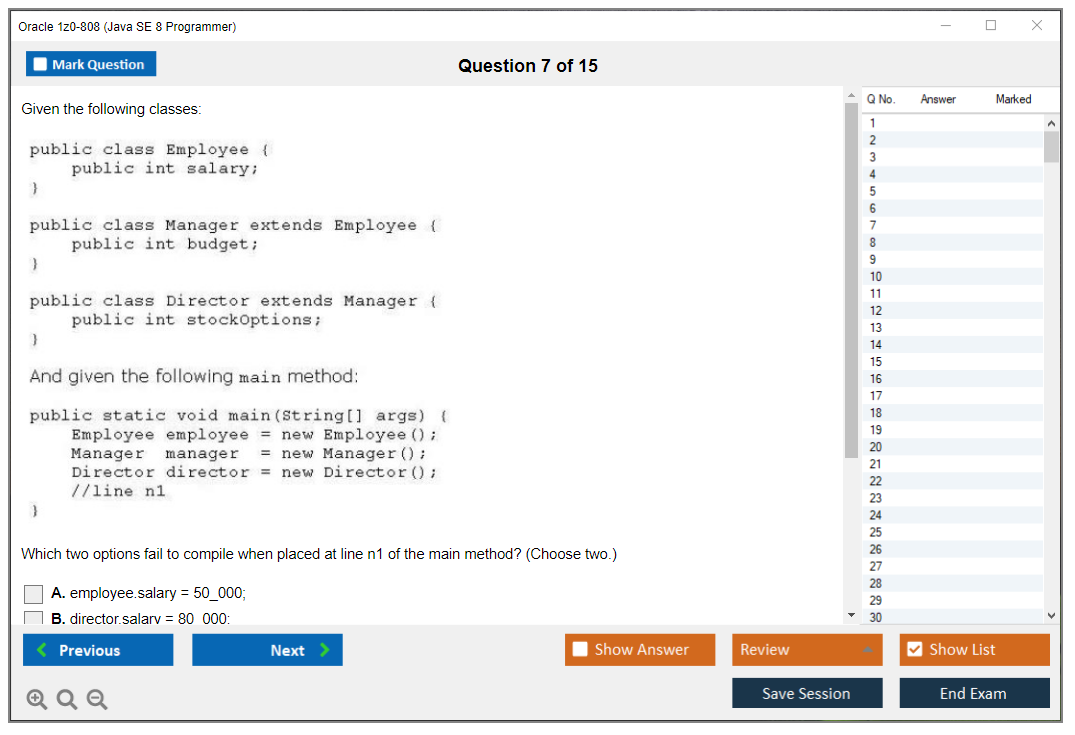
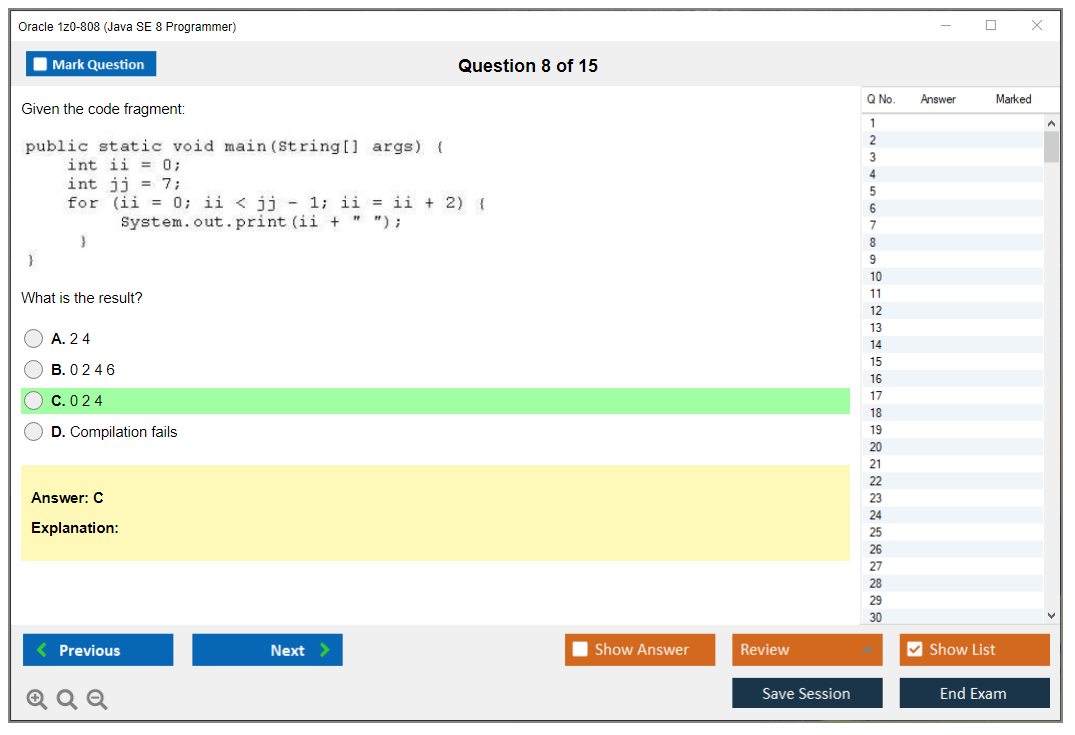
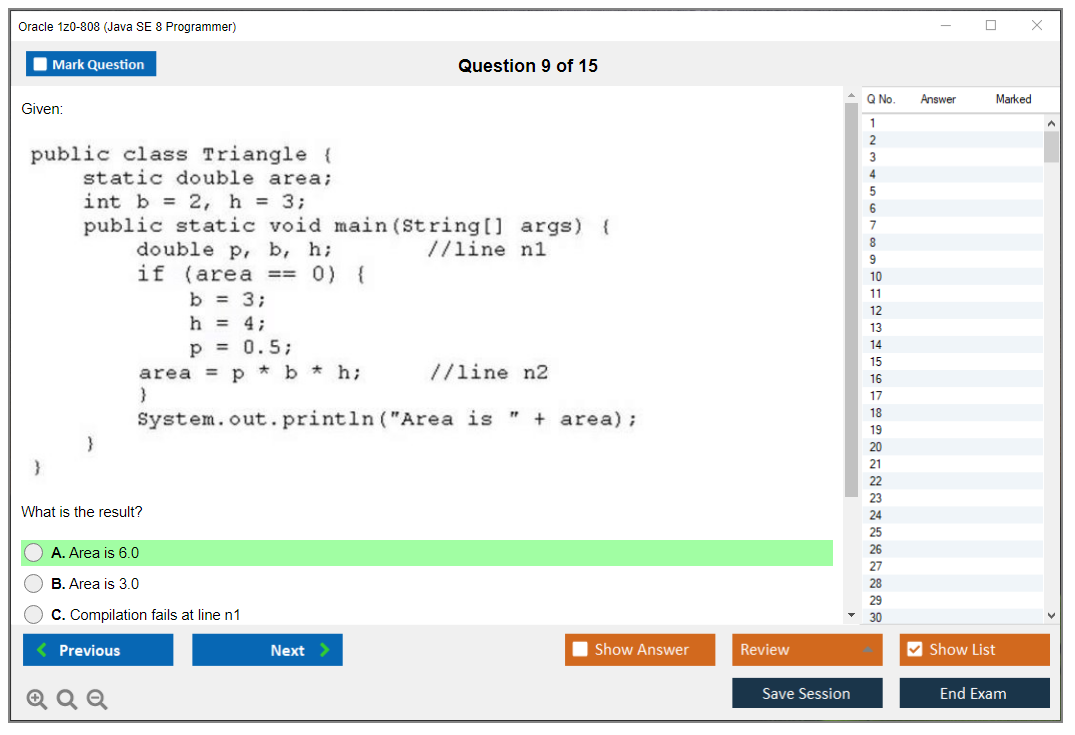
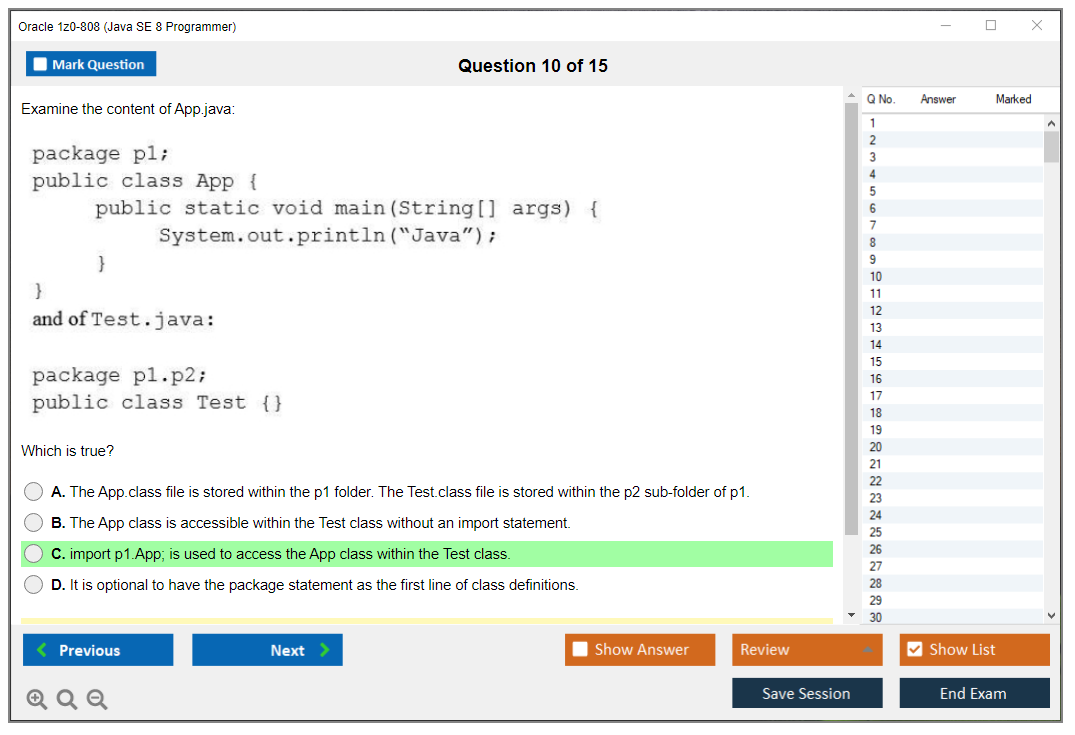
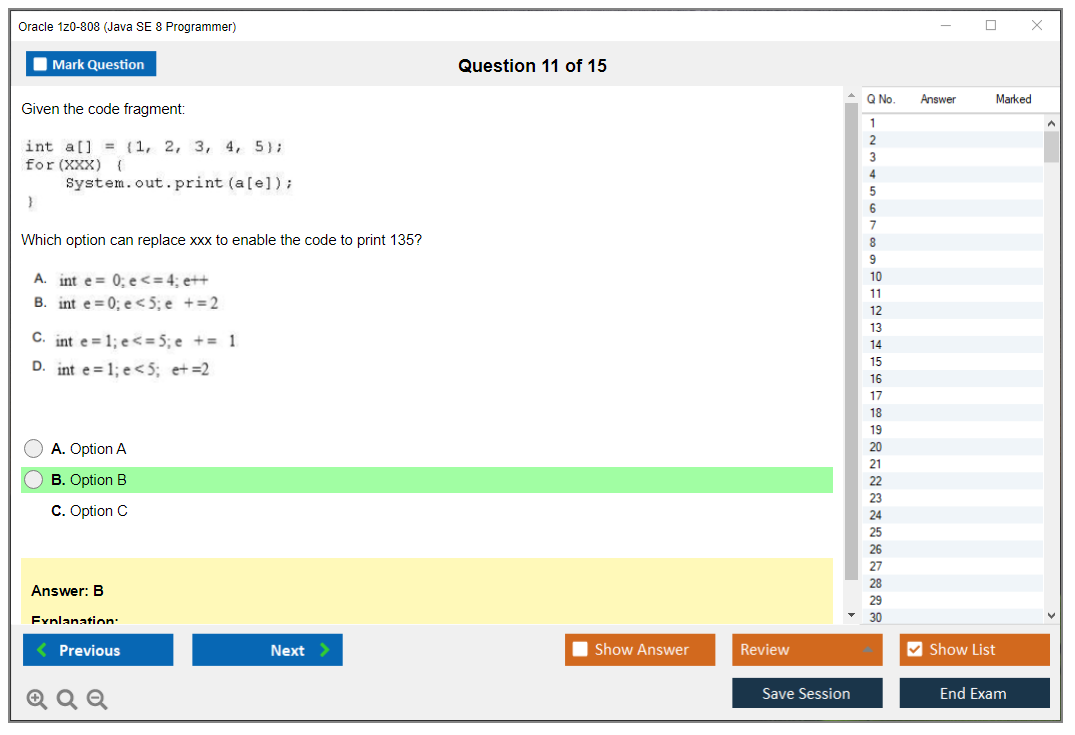
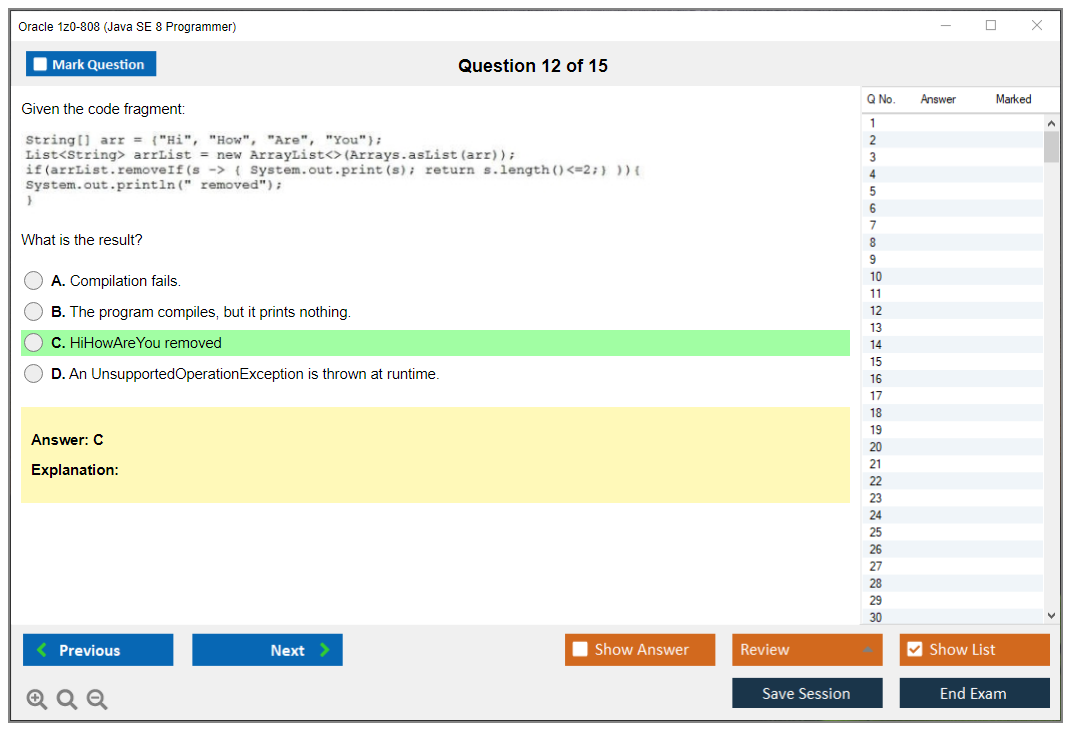
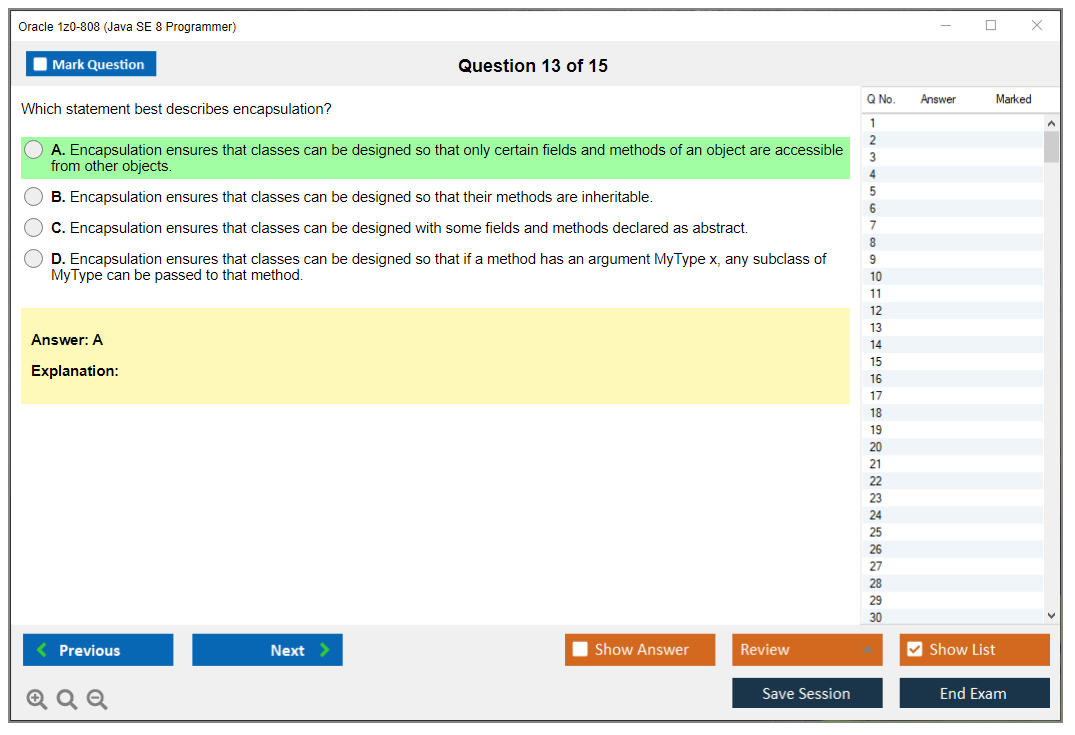
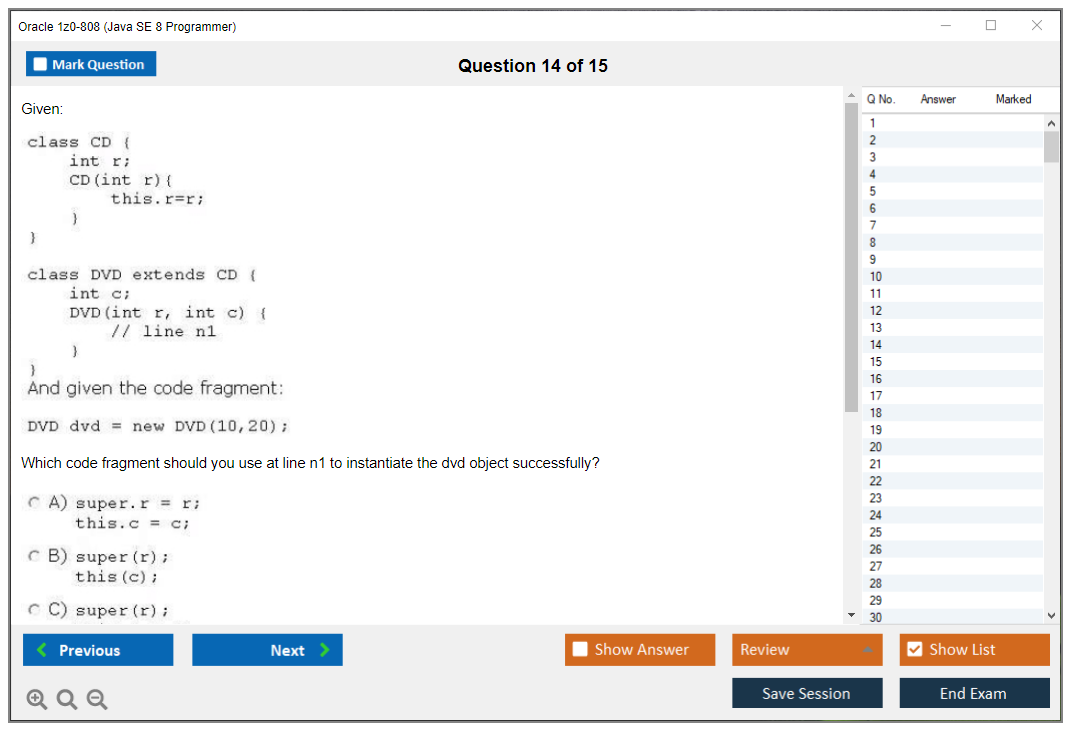
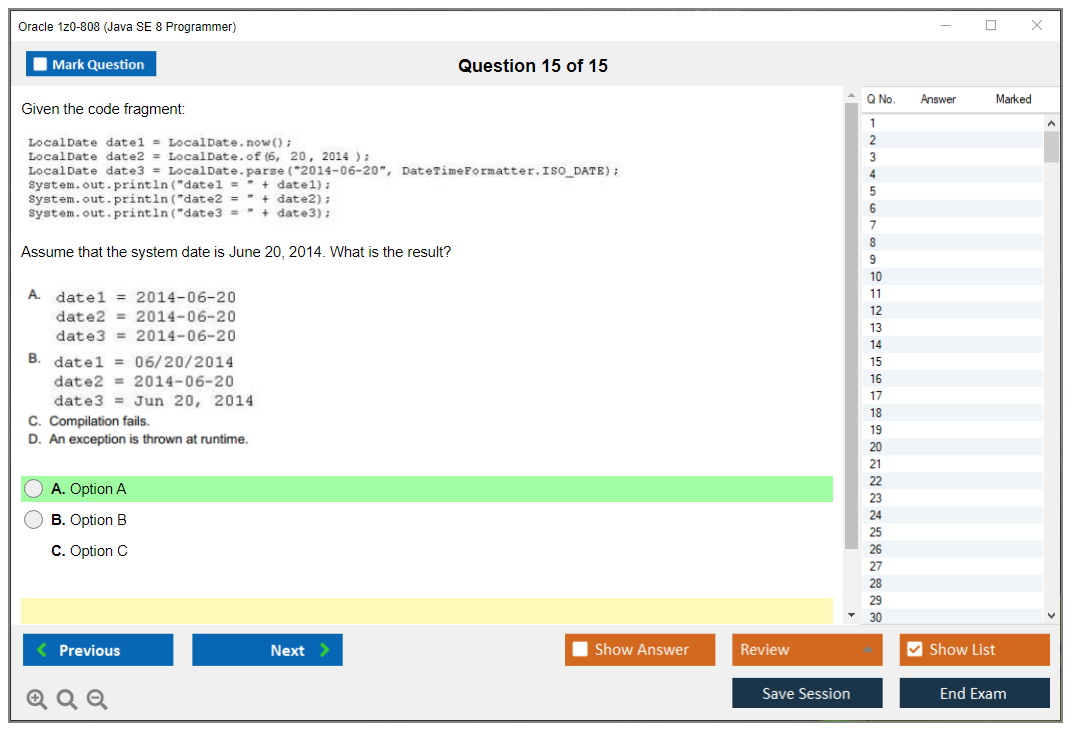
Oracle 1z0-808 (Java SE 8 Programmer I)
Oracle 1Z0-808 (Java SE 8 Programmer I) Exam Overview
What is the Oracle 1Z0-808 certification and why it matters
Your entry ticket here.
The Oracle 1Z0-808 exam validates you actually know Java SE 8 fundamentals. it's some random test. Employers see Oracle Certified Associate Java SE 8 Programmer on your resume and they know you can handle object-oriented programming concepts and write actual working code. This certification carries weight globally because Oracle owns Java, so it's basically the gold standard. The exam tests core language features specific to SE 8, which is still massively deployed in production environments today despite newer versions being available.
This certification's your foundation. You can't jump to Oracle 1Z0-809 (Java SE 8 Programmer II) without this one, making it a required stepping stone for advanced Oracle Java certifications. It proves you understand Java syntax, can compile and debug applications, and know how to work with SE 8 features like lambda expressions and the Stream API.
Who should take the Java SE 8 Programmer I certification
Computer science students? Prime candidates.
You've been writing Java code in class, now prove it with something employers recognize. Self-taught programmers benefit here because nobody believes you without credentials when you're teaching yourself. Career changers need this even more since you're competing against people with CS degrees, so formal recognition helps level that playing field.
IT professionals looking to add Java to their toolkit should consider this. Maybe you're working with databases or infrastructure but want to move into development. Recent bootcamp graduates often take this to strengthen their credentials because a three-month bootcamp certificate doesn't always convince hiring managers. Entry-level programmers pursuing structured career advancement find this useful. Developers working with other languages who need Java certification for a specific project or job requirement also take this exam frequently. Honestly, I've seen COBOL programmers get pushed into taking this when their companies started modernizing legacy systems, which creates some interesting study group dynamics.
Exam format and structure details
70 multiple-choice questions coming at you.
You get 150 minutes to complete it. Sounds like plenty until you're actually analyzing code snippets under pressure. Pearson VUE testing centers worldwide deliver this exam, or you can take it online with remote proctoring if you prefer testing at home. It's closed-book format, no reference materials allowed. The computer-based testing gives you immediate preliminary results, which is both great and nerve-wracking depending on how you did.
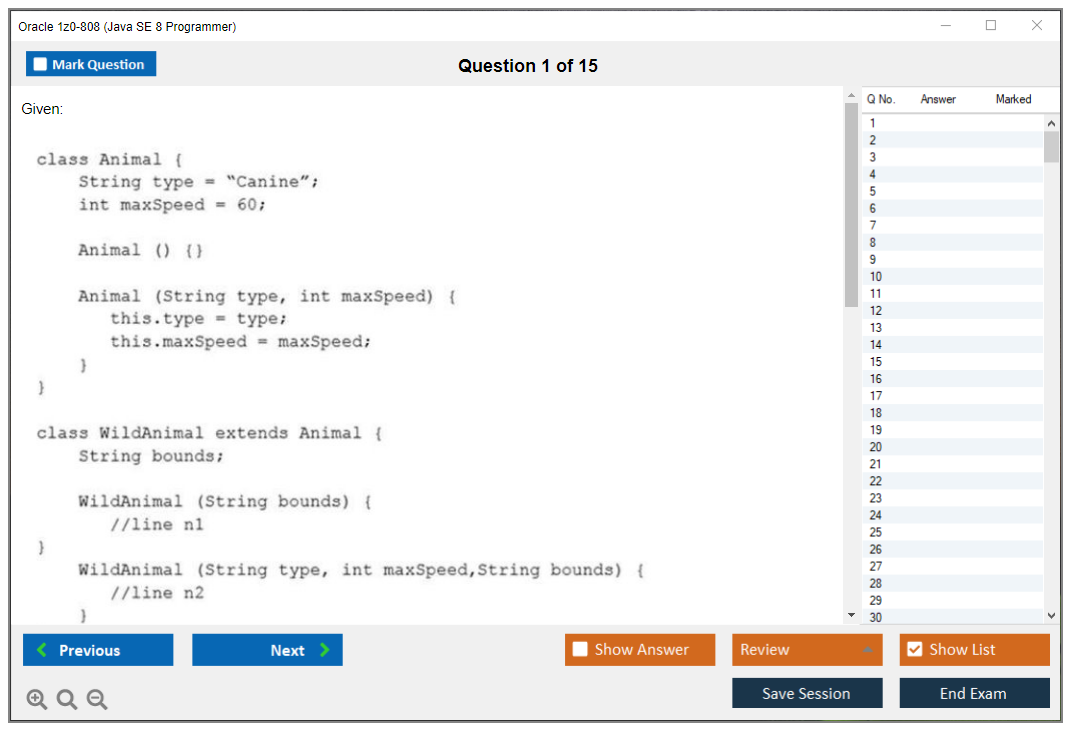
Questions test practical coding knowledge and theoretical understanding. Some include code snippets requiring careful analysis. You'll see questions asking what output certain code produces. Others test whether code compiles or throws runtime errors. Scenario-based questions apply concepts to real situations. No partial credit exists for multiple-choice selections, so either you pick all the correct answers or you get it wrong.
Understanding the exam question types
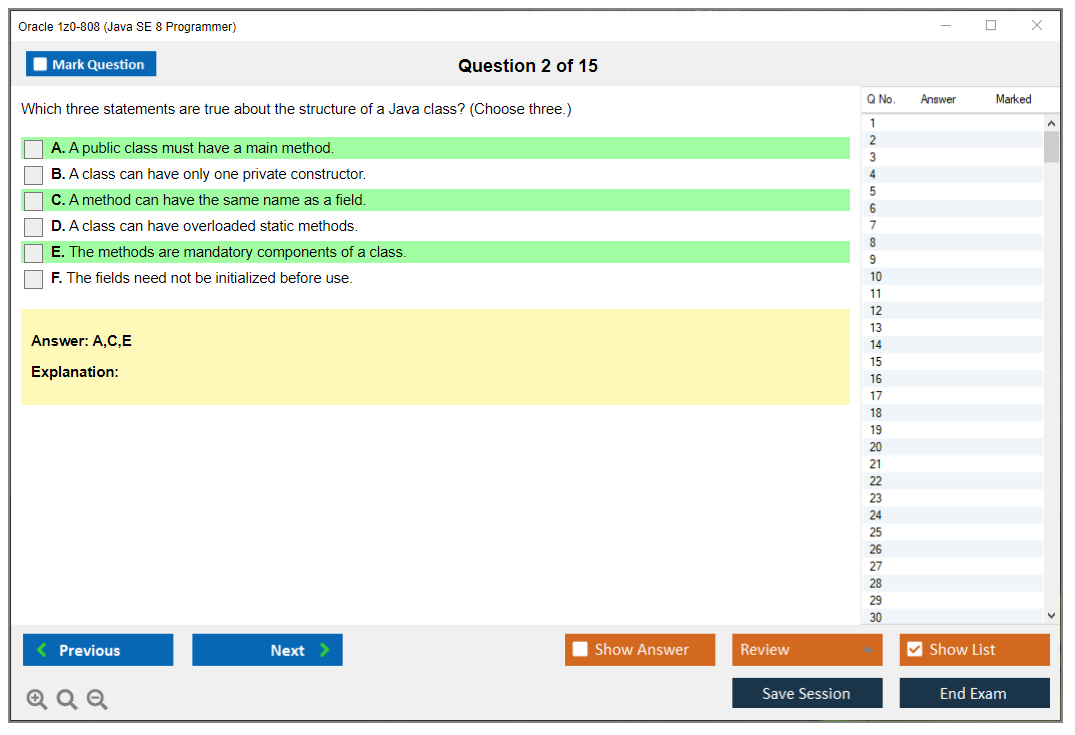
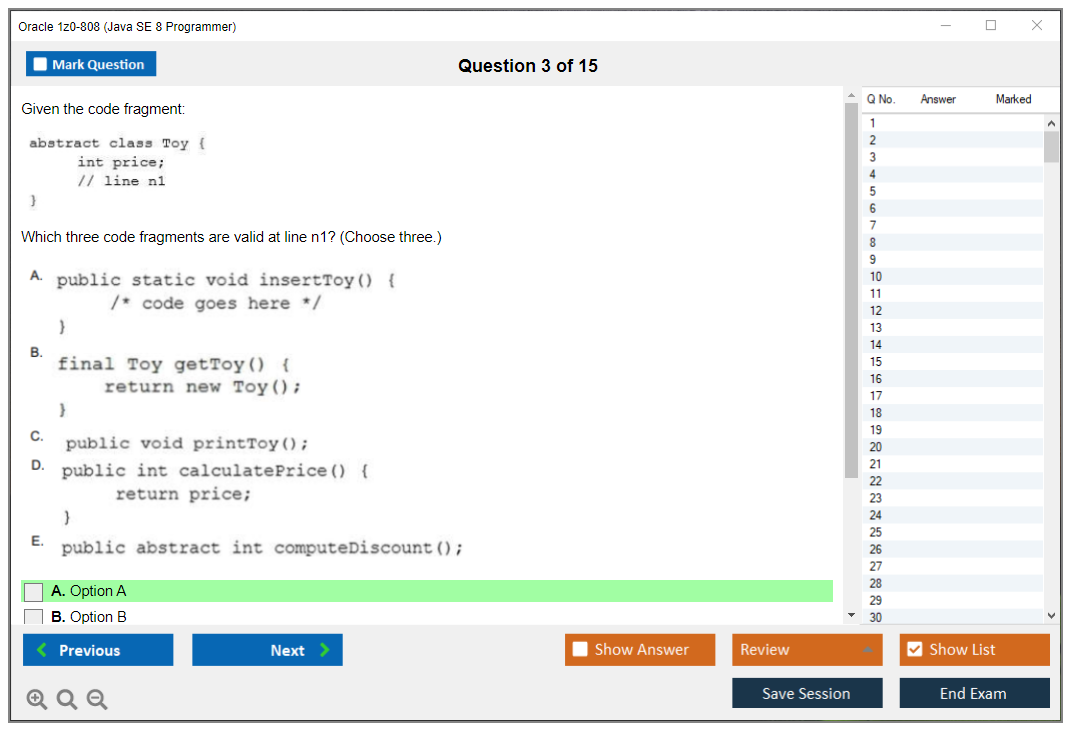
Standard multiple-choice questions have one correct answer. Multiple-select questions require choosing all correct options, which trips people up because you might know three correct answers but miss the fourth. Code analysis questions show you a block of code and ask what happens when it runs.
Error identification questions test whether you can spot compilation versus runtime issues. Concept application questions require actual problem-solving, not just memorization.
Depth of understanding matters here. Oracle doesn't want people who memorized answers. They want developers who actually comprehend Java fundamentals.
Exam language options and accessibility
Available in English, Japanese, Chinese, Korean, and Portuguese.
Accommodations are available for candidates with disabilities through Pearson VUE's request process. Extended time options exist for qualifying candidates. Language assistance can be requested, though the process requires advance planning.
Historical context and relevance in 2026
Java SE 8 dropped in March 2014 with significant language enhancements. Lambda expressions and the Stream API were major additions that changed how developers write Java code. Despite Oracle 1Z0-819 (Java SE 11 Developer) and newer versions existing, SE 8 remains widely deployed in enterprise environments. Many organizations maintain legacy systems requiring Java 8 expertise. Companies move slowly with upgrading critical infrastructure.
This certification demonstrates understanding of fundamental concepts applicable to newer versions. The core principles don't change drastically between versions. The 1Z0-808 is a stepping stone to more advanced certifications like Oracle 1Z0-816 (Java SE 11 Programmer II). The exam content remains relevant for understanding Java core principles, even as the language continues changing. If you're considering older certifications like Oracle 1Z0-803 (Java SE 7 Programmer I), you're better off taking the SE 8 exam since it covers more modern features while still being widely recognized.
Prerequisites and Recommended Experience for 1Z0-808
Official prerequisites (if any)
Oracle keeps the Oracle 1Z0-808 exam refreshingly simple on prerequisites. No formal prerequisites required. None whatsoever. You don't need a degree, you don't need prior Oracle certs, and Oracle doesn't mandate training courses before you book a slot. This is one of the reasons the Java SE 8 Programmer I certification became a popular "first serious cert" for people trying to prove they can code.
Oracle also doesn't ask you to "prove" readiness, which I find interesting because some other vendors really make you jump through hoops before they'll even let you schedule anything. Self-declaration of readiness is the only requirement. You decide when you're ready and you live with the result. Candidates can schedule the exam immediately upon registration, typically through the Pearson VUE Oracle Java exam flow after you line up your Oracle account details. Fast. No gatekeeping whatsoever. No paperwork either.
That said, no prerequisites doesn't mean no expectations. The exam's still picky. The 1Z0-808 exam objectives assume you can read Java code quickly, spot tiny rules, and keep track of scope, types, and control flow without getting lost. That's where people get burned most often.
Recommended Java knowledge before taking 1Z0-808
If you ask me what "ready" looks like for the OCA Java 8 exam, I usually say 6 to 12 months of hands-on Java programming experience. Not "I watched a course" experience, but real typing, real compiling, real errors, real fixing. You can compress that time if you're disciplined, but you can't fake the muscle memory of writing Java every day. I've seen plenty of people try.
Solid understanding of object-oriented programming principles? Absolutely necessary. Classes and objects should feel normal, not mystical or intimidating. Encapsulation should make sense, inheritance shouldn't confuse you, and polymorphism should be something you can spot in code without pausing for five minutes to think through it. Constructors. Access modifiers. Fragments everywhere.
Also, be comfortable with Java syntax, data types, and control structures because the Java 8 fundamentals exam vibe is a lot of "what does this code print" and "will this compile." If you hesitate on 'switch', loop variations, '==' vs '.equals()', or numeric promotion rules, your score will bleed out slowly question by question. I had a friend who thought he knew loops backward and forward until he saw nested 'for' loops with weird increment operators. Spent three days just practicing loop variations after that.
Command line experience matters. More than people think. You should have experience writing, compiling, and running Java programs from the command line, plus a basic understanding of JDK installation and configuration, like knowing what 'javac' is actually doing and why a PATH issue breaks everything. IDEs are great, I mean, you should have practical experience with Eclipse, IntelliJ IDEA, or NetBeans, but the test doesn't care that your IDE auto-imports stuff. The test cares that you know what imports actually do.
Debugging's another quiet prerequisite. Exposure to debugging techniques and error resolution helps because the exam is a controlled debugging session in your head, and the "bugs" are language rules: scope errors, unreachable code, wrong overload selection, missing 'break', wrong array index, wrong exception type. One more thing that pays off: basic understanding of how to work through Java API documentation. People who've used the docs before tend to recognize classes and methods faster, especially inside the "selected API classes" section.
Programming fundamentals required as foundation
Before any 1Z0-808 study guide helps, the foundation has to be there. Period.
Variables and data types are non-negotiable, including type conversion concepts like widening vs narrowing, casting, what happens when you mix 'int' and 'double'. Operators too, and not just arithmetic ones. You need relational, logical, and assignment operators, and you need to read expressions without guessing what they'll result in.
Control flow statements are the bread and butter: 'if-else', 'switch', loops in all their variations. Methods, parameters, and return values. Arrays and some collections basics, even though 808 is lighter on collections than later exams, which is a relief for beginners. Input/output operations show up in small ways, but don't worry too much about file I/O because it's not heavily tested here. Problem-solving and algorithmic thinking skills matter because even "simple" code questions punish sloppy thinking hard.
A lot of candidates focus on memorizing trivia like the Java 8 certification passing score or the exact Oracle Java 8 certification cost. Sure, that's useful for planning your budget and timeline, but it won't save you when you're staring at a nested loop with a tricky increment and you can't track the final value through three iterations.
Ideal learning path (Java basics to OCA topics)
Start with Java syntax fundamentals. Basic programming concepts first. Then progress to object-oriented programming principles: classes, objects, encapsulation, the foundational stuff. After that, master inheritance, polymorphism, and abstraction concepts, because the exam loves asking what a reference type can access versus what an object type really is at runtime. That's where beginners panic and start guessing wildly.
Next, learn exception handling mechanisms and best practices because this topic appears everywhere in the exam. Checked vs unchecked. 'try/catch/finally'. What happens when you throw from a method. Then study Java API classes commonly used in development, the ones that appear inside the objectives, because Oracle isn't testing your ability to remember the entire JDK. It's testing whether you can use the common stuff correctly without second-guessing yourself.
Practice with increasingly complex coding exercises that mirror exam-style questions. Take 1Z0-808 practice tests to identify knowledge gaps, but treat them like diagnostics, not like a magic trick that'll pass you automatically. Review weak areas through targeted study, then complete a timed Java SE 8 OCA mock exam under test conditions. Time pressure changes everything, especially when questions are wordy and the code is dense with distractions. This is how to pass 1Z0-808 without relying on luck or hoping the questions are easy.
Educational background and time investment expectations
A computer science degree gives you a strong base, but it's not required at all. Bootcamp grads often need extra self-study on language rules because bootcamps lean framework-heavy and sometimes skip the nitty-gritty details. Self-taught programmers can absolutely pass, I've seen it plenty, but you must cover the objectives fully. Gaps hide in "small" topics like numeric literals, 'switch' rules, and method overloading that seem trivial until they're not.
Time-wise? Complete beginners usually need 4 to 6 months of dedicated study if they're starting from scratch. Programmers coming from another language can often do 2 to 3 months because the logic transfers, just not the syntax. Java developers with practical experience can sometimes do 4 to 6 weeks of focused review, though that depends on how much enterprise Java they've actually written. Daily study of 1 to 2 hours works better than cramming because Java rules stick when you see them repeatedly in code, not when you highlight them once and hope your brain keeps them filed away somewhere. That's the real prerequisite here. Consistency, not some certificate or degree.
Oracle 1Z0-808 Cost, Registration, and Exam Policies
What you'll actually pay for the Oracle 1Z0-808 exam
The Oracle 1Z0-808 exam costs $245 USD. That's the standard price you'll see listed. Before you lock that number into your budget, understand that pricing shifts depending on where you're located and how currency conversion works when you register. Some countries pay more after conversion. Others pay less. It depends.
You pay Pearson VUE directly when scheduling. Credit card works. Debit card too. Got a voucher from a training program or your employer? Use that. The $245 covers one attempt plus a score report. Fail, and you're paying another $245 for the retake.
Oracle doesn't offer student discounts for this certification. No volume breaks for individuals either. Corporate training programs might bundle vouchers at different rates, but solo candidates pay full price every time.
I've seen people hunt around for discounts that just don't exist for this exam, burning time they could've spent studying instead.
Registering through Pearson VUE (the only way to do this)
Registration happens exclusively through Pearson VUE. Not Oracle directly. Not some third-party site. Pearson VUE, period.
First step is creating an Oracle account at certview.oracle.com if you don't have one. Then you link that Oracle account to your Pearson VUE profile. This part trips people up sometimes because the systems don't sync automatically. You have to connect them yourself.
Once that's sorted, search for exam code 1Z0-808 in the Pearson VUE catalog. You'll see available test centers near you or the option to test online from home. Pick your date. Pick your time. Confirm payment. Done. Confirmation email arrives with all the details: appointment time, test center address if you chose in-person, or system requirements if you're testing remote.
Need to reschedule? You can do that through Pearson VUE as long as you're more than 24 hours out from your appointment. Miss that window and you forfeit the entire fee.
Test center or online proctored: what's the difference really
Test centers give you a controlled environment. You show up, check in, sit down at a workstation, and take the exam under supervision. Some people prefer this because the tech's reliable and there's no risk of internet problems or webcam failures wrecking your attempt.
Online proctored exams let you test from home or your office. You need a webcam, microphone, stable internet connection. Pearson VUE requires a system check 24 hours before the exam to verify your setup works. You also need a private, quiet room. No roommates wandering through. No background noise. Nothing on the walls behind you that could raise flags with the proctor.
Exam content's identical either way. Scoring works the same too. But if your home setup's questionable or you live in a noisy apartment, just go to a test center. Not worth the stress of dealing with technical issues mid-exam.
Retake policies and what happens when you fail
Failed? You wait 14 days before retaking. That's Oracle's policy. The waiting period exists to push you toward actually studying more rather than throwing money at repeated attempts hoping to pass by luck.
Each retake costs the full $245. No carryover credit from your previous attempt. No score transfer. Every attempt gets scored independently. There's no limit on total retakes. You can keep trying as long as you're willing to pay and wait between attempts.
When you get your score report, use it strategically. It shows which exam objectives you struggled with. If you bombed the sections on methods and encapsulation, spend the next two weeks drilling those topics before scheduling another attempt. Don't just retake blind hoping for better questions.
Vouchers, bundles, and whether you can save money
Sometimes Oracle University training courses include exam vouchers as part of the package. If you're taking an official Oracle training class, check if a voucher comes with it. Third-party training providers occasionally offer discounted vouchers too, though you need to verify they're legit and haven't expired.
Corporate training programs might provide vouchers to employees pursuing certifications. If your employer's sponsoring your cert, ask if they've got vouchers available rather than paying out of pocket.
For individual candidates buying on their own? You're probably paying full price. Significant discount vouchers aren't commonly available for the 1Z0-808 like they are for some vendor exams. Don't waste time hunting for coupon codes that don't exist.
Cancellation rules you need to know
Cancel or reschedule at least 24 hours before your scheduled appointment and you won't lose money. Do it within that 24-hour window? You forfeit the entire $245. No-shows get treated the same way. Full fee forfeiture.
Emergency situations might qualify for a fee waiver if you can provide documentation, but don't count on it. Pearson VUE policies can be strict. Better to reschedule early if you realize you're not ready than to gamble and lose the fee.
Important details before you register
Your name on the registration must exactly match your government-issued ID. Middle initials matter. Spelling matters. Mismatches at check-in can get you turned away without a refund, which is brutal.
Arrive 15 minutes early. You need two forms of ID, one government-issued with a photo. No personal items allowed in the testing room. That means no phones, no notes, no bags. Test centers provide lockers.
Once you're certified, look at advancing to the next level with the Java SE 8 Programmer II (1Z0-809) exam or exploring related paths like Java SE 11 Developer (1Z0-819).
1Z0-808 Passing Score and Scoring System Explained
Oracle 1Z0-808 (Java SE 8 Programmer I) exam overview
The Oracle 1Z0-808 exam is the classic entry point for the Java SE 8 Programmer I certification, also known as the OCA Java 8 exam. Hiring managers still recognize it because it maps to real Java 8 fundamentals exam skills, not framework trivia. Short version? Java basics. Lots of traps.
Who should take it? New Java devs, QA folks moving into automation, and anyone who keeps saying "I know Java" but hasn't actually been tested on operators, scope, inheritance rules, and the weird corners of the Java language spec. If you can write small programs but still get surprised by overload resolution or "==" vs "equals()", this exam will call you out.
Exam format's straightforward. 70 questions. You've got 150 minutes, delivered through the Pearson VUE Oracle Java exam system (test center or online depending on your region and Oracle's current rules), mostly multiple choice with some multiple select where missing one checkbox means you get zero. No partial credit, which is brutal. I remember sitting for a different cert once and spending way too long on a multi-select about polymorphism, trying to talk myself into which boxes were "definitely" right versus "probably" right. Anyway, that kind of question design punishes hesitation.
Oracle 1Z0-808 cost and registration
People constantly ask "How much does the Oracle 1Z0-808 exam cost?" and the annoying answer is: it varies by country and currency, and Oracle changes pricing without much warning. Expect something in the general range of a pro cert exam, plus taxes, and yes, the Oracle Java 8 certification cost is paid again if you retake. No discounts just because you were close.
Registration goes Oracle account first, then scheduling through Pearson VUE. Create your Oracle CertView profile early, because that's where your results and transcript show up, and waiting until exam day to sort out logins is a self-inflicted wound. Do it now.
Retake policy: if you fail, there's a 14-day wait before another attempt, and you pay the full fee again. No limit on total retakes, though. Your previous attempt doesn't "count against" your future scoring. New attempt, new score, same passing rule.
Passing score and scoring details
1Z0-808 passing score
What is the passing score for the Oracle 1Z0-808 exam? It's 65%, which works out to 46 correct answers out of 70 questions for the Java 8 certification passing score. That threshold has stayed consistent across testing periods, so you're not dealing with "this year it's higher" drama, even though Oracle may refresh question pools and forms whenever they feel like it.
Also? There's no curve. Not in the "everyone did bad so you pass" sense, anyway. Your result is based on an absolute performance standard, and Oracle sets that passing threshold based on difficulty analysis when they build and validate exam forms.
How Oracle scoring works (percent-based)
Oracle reports a percent score, and under the hood the basic model is simple: each question is weighted equally in standard scoring, so your raw score is basically "number correct divided by 70," converted into a percentage for pass/fail determination. Incorrect answers don't subtract points, which is nice. Unanswered questions count as incorrect. So yeah, guessing is recommended, because leaving it blank is literally the same as being wrong.
Multiple-select questions are where people get salty. No partial credit is awarded. You must select all required answers and avoid wrong ones to get credit. One checkbox off? Zero points. That's why 1Z0-808 practice tests matter, because they train you to read for "choose two" wording and not panic-click.
Now the extra layer: Oracle uses a scaled scoring system across exam versions to keep things fair if one form is slightly tougher than another, which happens more often than you'd think. That doesn't mean a curve, and it doesn't mean your score is "relative to other people." It means the scoring algorithm accounts for exam form difficulty variations while still keeping the same pass standard, so a harder form doesn't randomly punish you.
Score report and results timeline
You get an immediate preliminary pass/fail on screen when you finish. Then the official score report usually shows up in CertView within 30 minutes, sometimes up to 2 hours. Digital certificate availability is typically within 24 hours for passing candidates, and your transcript updates in the Oracle certification database. Physical certificates? Nope. Digital credentials only, plus an Oracle badge option depending on current program rules.
The score report shows your percentage and pass/fail status, plus a performance breakdown by exam objective section. It will not tell you which specific questions you missed. That's intentional. Don't expect a post-game replay.
Score report interpretation for exam improvement
The section breakdown is your best friend if you fail. It tells you where you're weak across the 1Z0-808 exam objectives, so you can stop "studying everything" and start fixing what actually broke, like exception flow, inheritance edge cases, or Java API classes like "ArrayList" and "StringBuilder".
Compare section performance to objective weightings and you'll usually spot a pattern: sometimes it's syntax mistakes (scope, initialization, operators), other times it's concept gaps (polymorphism rules, overriding vs overloading). Build a personalized plan from that report, then validate with a Java SE 8 OCA mock exam or two. Be ruthless.
1Z0-808 difficulty: how hard is the exam?
Is the 1Z0-808 exam hard? For beginners, yes. For people who code Java daily but never think about the rules, also yes. The difficulty is "easy topics asked in annoying ways," with distractors that look right if you skim, and multiple-select questions that punish half-knowledge.
Common pain points: operators and precedence, switch rules, arrays, method overloading, inheritance, and exceptions. Time pressure is real, too, because reading carefully takes longer than you think, and you can't rely on "I'll just run it" like you do at work. Wait, you also can't use an IDE for syntax checks during the exam, which throws people off more than they expect.
1Z0-808 exam objectives (Java SE 8 Programmer I)
Oracle's objectives cover: Java basics and data types, operators and decision constructs, arrays, loop constructs, methods and encapsulation, inheritance, handling exceptions, and working with selected Java API classes. That's the core of how to pass 1Z0-808. Not magic. Reps.
If you want a tighter map, grab a solid 1Z0-808 study guide, then pair it with targeted drills. I'm a fan of doing small code snippets by hand, because you need to predict compiler errors and runtime output without an IDE saving you.
Prerequisites and recommended experience
There are no formal Java certification prerequisites for 1Z0-808, but don't confuse that with "you can wing it." Recommended experience is basic Java syntax comfort, writing small console apps, and understanding OOP fundamentals. If you're coming from another language, plan extra time for Java-specific rules.
Best study materials for Oracle 1Z0-808
Official Oracle training exists, but most people pass with a good book, the official objectives list, and lots of hands-on coding. Free resources help too: Oracle docs, tutorials, and GitHub labs with small exercises.
For practice questions, mix sources, but make sure you're learning why you missed things. If you want a focused question pack, the 1z0-808 Practice Exam Questions Pack is $36.99 and is useful when you're past basics and want exam-style wording that matches the traps you'll see.
1Z0-808 practice tests and mock exams
What to look for in a good practice test? Explanations that reference rules, not vibes. Questions that include multi-select. Timed mode. And coverage that maps back to objectives instead of random trivia. Take at least two full practice exams, then rework every miss, and if you keep missing the same objective, stop and do a mini lesson on that topic before you take another.
If you need a single place to grind questions, the 1z0-808 Practice Exam Questions Pack is a decent option to rotate in alongside your book and your own code drills.
Study plan to pass 1Z0-808 (step-by-step)
Two-week crash plan: only do this if you already code Java. Daily objective review, then nightly timed sets, then fix weak sections. Four to six weeks is more sane for most people, especially if you're new to OOP rules. Final week: timed exams, review objective bullets, and drill multiple-select questions until your accuracy is boring.
Also, don't ignore your score report if you fail. Use it. Then come back stronger, and when you're ready to retake, hit targeted practice again with something like the 1z0-808 Practice Exam Questions Pack, not another round of random reading.
Renewal, validity, and exam retirement
Does 1Z0-808 require renewal? Oracle policies change over time, but older Java certs generally don't "expire" the way some cloud certs do, even if the market moves on. The bigger issue is exam retirement and newer Java tracks, so keep an eye on Oracle's current certification pages if you're planning a longer-term path.
FAQs
Can I take 1Z0-808 online or only at a test center?
Depends on Pearson VUE delivery options in your region and Oracle's current rules. Check when scheduling.
What score do I need to pass 1Z0-808?
65%, which is 46/70.
How long should I study for the OCA Java 8 exam?
If you're new, think 4 to 6 weeks. If you already code Java, 2 to 3 weeks can work with heavy practice.
Are practice tests enough to pass?
Not alone. Practice tests show gaps. You still need to code and learn the rules behind the misses.
What's the difference between 1Z0-808 and other Java exams?
1Z0-808 is entry-level OCA focused on core language and basic API. Later exams go deeper and cover more advanced topics.
1Z0-808 Exam Difficulty: How Hard Is the Java SE 8 Programmer I Test
Overall difficulty level for the Oracle 1Z0-808 exam
The Oracle 1Z0-808 sits weird, honestly. Sure, it's labeled entry-level. Technically the first certification in Java SE 8's track. But "easy"? Nah, that'd be misleading. Most beginners find it really challenging, and I've watched people absolutely breeze through college Java courses only to bomb this exam because it demands a completely different mindset where you're not just cobbling together code that happens to work but actually understanding what'll compile, what throws exceptions at you, and what produces specific output from these intentionally tricky code snippets they throw at you.
Solid foundational knowledge? Required. We're talking proper Java syntax understanding, not just surface-level "yeah, I've seen that before" familiarity. It's tougher than basic programming courses because those usually let you run code and debug iteratively until something works. Here? You're analyzing code without an IDE helping you out. No compiler warnings popping up. No Stack Overflow tab open. Just you, the question, and 4-5 answer choices that often look annoyingly similar.
Compared to professional-level Oracle certifications like the 1Z0-809 (Java SE 8 Programmer II), the 1Z0-808's definitely easier. But harder than vendor-neutral programming certifications focusing on concepts rather than language-specific syntax? Absolutely. The practical coding emphasis separates it from pure memorization-based tests.
Is the 1Z0-808 exam hard compared to other certifications
I'd rate it intermediate difficulty.
It's easier than the 1Z0-809 for sure, but that doesn't mean you can waltz in unprepared and expect miracles. The OCA Java 8 exam requires deeper understanding than those multiple-choice theory exams where you're just recognizing definitions, and you'll encounter code analysis questions where syntax precision matters enormously. Miss one semicolon or misunderstand operator precedence, and you've picked the wrong answer before you even realized what happened.
Time pressure adds complexity even though you get adequate time allocation technically. You've got 150 minutes for 70 questions. That's roughly 2 minutes per question, which sounds generous until you're staring at a 15-line code snippet trying to determine if it compiles or what it prints or.. I mean, some questions are quick, yeah, but others require careful analysis that eats up time fast.
Compared to other associate-level IT certifications? Roughly comparable. Maybe slightly harder than basic networking certifications but easier than AWS Solutions Architect Associate. The depth exceeds basic programming tutorials you'd find on YouTube or Udemy. Actually, funny thing is I once met a developer who'd been coding Java for six months professionally and still failed this exam twice because he'd never bothered learning why certain code patterns work, just that they did work when he copied them from his senior developer. That's the trap here.
Common challenging topics that trip up candidates
Operator precedence gets people constantly.
You see a question with 'x++ + ++x' and suddenly your brain's scrambling trying to remember evaluation order. Most real-world code doesn't write expressions like that, but the exam absolutely loves testing whether you truly understand how operators evaluate in Java's specific hierarchy.
Array declaration and initialization syntax variations confuse many candidates because Java has multiple ways to declare arrays, and the exam tests all of them without mercy. Access modifier rules and scope visibility complexities trip up people who've only worked on small personal projects where everything's public anyway. Understanding when variables are accessible and when they're not requires systematic knowledge you don't build casually.
Exception handling hierarchy causes problems regularly. Checked versus unchecked exceptions, what extends what, when you must handle exceptions versus when it's optional. It's a lot to track. Method overloading versus overriding distinctions seem simple until you encounter edge cases where the answer isn't obvious. Inheritance and polymorphism practical applications require more than memorizing textbook definitions.
Loop control flow with break, continue, and nested structures generates confusion, especially when they're combined in unexpected ways. String immutability and StringBuilder/StringBuffer differences matter more than you'd think for exam purposes. Wrapper classes and autoboxing/unboxing behaviors have subtle rules that catch people off-guard. The trickiest questions? Those involve code snippets with compilation versus runtime errors where you need to identify not just that something fails, but precisely when and why it fails.
Why candidates fail the 1Z0-808 exam
Insufficient hands-on coding practice kills people's chances. You can't just read about Java and expect results. You need to write thousands of lines of code before attempting this exam, getting your hands dirty with actual implementation. I've seen candidates rely solely on practice tests without understanding underlying concepts, which works until you encounter a question worded differently than your practice materials presented it.
Underestimating exam difficulty happens constantly. People think "entry-level" automatically means "easy." It doesn't. Weak foundation in object-oriented programming principles creates cascading problems throughout the exam where later questions assume knowledge you don't have. Not reading questions carefully and missing key details causes avoidable mistakes that hurt when you're near the pass/fail boundary. Time management issues leave questions unanswered, which guarantees failure regardless of how well you knew the material.
Gaps in coverage of all exam objectives hurt badly. The exam tests everything listed in the objectives. You can't skip topics you find boring and hope they don't appear. Memorization approach instead of genuine understanding fails spectacularly when questions test application rather than recall. Lack of experience with Java API documentation leaves you guessing on questions about String methods or wrapper class behavior instead of reasoning through answers.
Typical preparation time required for different experience levels
Complete beginners should plan 200-300 hours spread over 4-6 months. That's if you're starting from absolute zero programming knowledge without understanding variables or loops yet. Programmers with other language background can manage with 80-120 hours over 2-3 months because you already understand programming logic, control structures, and general concepts. You just need Java-specific syntax and quirks.
Java developers with work experience need 40-60 hours over 4-6 weeks typically. You know Java from daily use, but the exam tests corners you might not encounter in normal development work. Self-taught programmers typically need 100-150 hours over 2-4 months because self-teaching often leaves knowledge gaps in areas you didn't realize were important. Bootcamp graduates need 60-80 hours supplemental study over 6-8 weeks to fill in certification-specific topics that bootcamps skip for time constraints.
Daily consistent study beats weekend cramming every single time. Not gonna lie, cramming doesn't work here. The material requires time to sink in, connect concepts, and build the mental models you need for code analysis questions.
Things that improve passing probability
Hands-on coding practice with every concept learned is absolutely non-negotiable. Taking multiple full-length practice exams under timed conditions prepares you for the actual experience better than anything else. The 1Z0-808 practice exam questions pack at $36.99 gives you realistic question formats to work with that mirror actual exam style. Reviewing incorrect answers to understand reasoning teaches you far more than just memorizing which answer was correct.
Reading official Oracle documentation for API classes builds familiarity with how Oracle explains things in their particular style. Writing code examples for each exam objective solidifies understanding through active practice rather than passive reading. Joining study groups or online forums for peer support helps when you're stuck on concepts that aren't clicking. Using multiple study resources covers gaps that single resources miss because no one resource covers everything perfectly.
Schedule your exam only after consistently scoring 80% or higher on practice tests from different sources. If you're hitting that mark repeatedly across varied question sets? You're ready. Below that? You're gambling with your money and time.
Realistic expectations for first-time test takers
Pass rates vary widely, but adequate preparation yields high results. That part's proven. Your first attempt may reveal knowledge gaps despite preparation, and honestly, that's okay and completely normal. Treating the exam as a learning experience reduces anxiety that can sabotage your performance. A retake option exists for those who need additional study after identifying weak areas.
Most well-prepared candidates pass on first or second attempt statistically. If you're serious about Java SE 8 Programmer I certification, put in the actual time required, use quality resources that match exam style, and trust the process works when you work it. The difficulty's manageable with proper preparation. Challenging but not impossible.
Complete 1Z0-808 Exam Objectives Breakdown (Java SE 8 Programmer I)
Oracle 1Z0-808 (Java SE 8 Programmer I) exam overview
The Oracle 1Z0-808 exam is the classic entry point for the Oracle Certified Associate Java SE 8 Programmer credential, also marketed as the Java SE 8 Programmer I certification and commonly called the OCA Java 8 exam.
Here's the thing. This test isn't really about "can you build an app." It's more like "do you actually understand what the compiler and JVM will do with this exact code," including weird little corner cases that feel petty until they save you in a real code review. Lots of short questions. Tricky wording. You'll stare at 'String' comparisons and wonder why your life turned out like this.
What is the 1Z0-808 certification?
Vendor cert. Proves Java 8 fundamentals.
It's entry level, still respected, and it's also a decent gatekeeper for internships and junior roles when your resume's light. It gives employers something concrete to filter on, even if the job itself uses newer Java versions or frameworks that barely resemble what you studied. I've seen people land interviews purely because they had it listed, which tells you something about how HR departments think.
Who should take Java SE 8 Programmer I?
New devs, QA folks moving into automation, IT support people trying to pivot, students who want a structured target. Basically anyone starting out. If you already write Java daily, you might still take it, but mostly for HR checkboxes or internal promotion requirements. Mixed feelings on that.
Exam format (questions, time, delivery)
Expect multiple-choice and "choose two/three" style questions, timed, delivered through Pearson VUE Oracle Java exam options depending on your region. The exact counts shift over time, so don't memorize a number. Practice under time pressure anyway.
Oracle 1Z0-808 cost and registration
Exam cost (voucher/pricing)
People always ask about Oracle Java 8 certification cost. Pricing changes by country, tax, promos, so check Oracle's exam page for your region. Budget extra for a retake because it happens more often than anyone wants to admit, especially if you're rushing or relying on dumps instead of actually understanding scope rules.
Where to register (Oracle + Pearson VUE)
You typically start with Oracle's certification portal, then schedule through Pearson VUE. Make sure your name matches your ID. Not "close enough." Exact match. They're picky about this, and you don't want to show up and get turned away.
Retake policy and fees (what to expect)
Retakes usually require paying again. There may be a waiting period. Read the current policy before you click purchase, because rules can change and you don't want surprises when you're already annoyed and out a couple hundred bucks.
Passing score and scoring details
1Z0-808 passing score
The Java 8 certification passing score is published by Oracle and is percent-based. Verify the current number on the official exam page, since it's one of those details people quote wrong on forums all the time.
How Oracle scoring works (percent-based)
You get a percentage. Not "points."
Some questions are harder than they look, so don't assume you're safe because you "know most of it." You need breadth, not just depth in your favorite topics. A friend of mine scored 63% and was absolutely convinced he'd passed until he saw the threshold was 65. Brutal.
Score report and results timeline
Usually you get a preliminary result quickly, then the official report lands in your Oracle cert account later. Sometimes it's fast. Sometimes it's not. Kinda random.
1Z0-808 difficulty: how hard is the exam?
Difficulty level (beginner/intermediate)
Beginner-to-intermediate, but with traps. The traps are the whole personality of this exam. It's like they sat down and thought, "How can we make someone second-guess the simplest operation?"
Common challenging topics
Switch rules, operator precedence, String immutability, wrapper equality, scope. Wait, also arrays. People think arrays are easy until they miss one bracket and the whole question flips on them. Then there's that moment of panic.
Typical prep time and success factors
Two to six weeks is normal if you're consistent. The success factor is coding small snippets daily and explaining what happens at compile time versus runtime, because the exam absolutely loves that split and will punish you if you confuse the two.
1Z0-808 exam objectives (Java SE 8 Programmer I)
This is the heart of any 1Z0-808 study guide. The official 1Z0-808 exam objectives cover more than the bullets below, but these are the big clusters that show up constantly, including on any decent Java SE 8 OCA mock exam.
Java basics and data types
Scope is everywhere. Absolutely everywhere.
Local variables exist inside a method block and must be definitely assigned before use. The compiler won't let you slide on that one. Instance variables live with the object and get default values. Static variables live with the class. That's the "define scope of variables throughout a Java application" part, and it blends into lifecycle and memory allocation because stack versus heap is always implied, even when they don't say the words out loud in the question stem.
Class structure matters too. Package declaration at the top. Imports next. One public class per file with the same name as the file. No exceptions, no creativity allowed. Main has to be exact enough to run, like 'public static void main(String[] args)'. Java syntax rules are picky, and the compilation process turns your .java into bytecode .class, which the JVM loads and executes. The JVM's role is not "runs Java magically." It loads classes, verifies bytecode, manages memory, executes instructions. Real work.
Data types show up nonstop. You need the eight primitives, their ranges at least roughly, literal rules like '10L' for long, and that 'char' uses single quotes while 'String' uses double. Know default values too. Int instance field defaults to zero, boolean defaults to false, object references default to null, but local variables have no default whatsoever. Casting is split between implicit widening and explicit narrowing, and the exam will absolutely ask you what compiles versus what runs or throws an exception at runtime.
Wrapper classes matter. Integer, Double, Boolean, Character, plus autoboxing and unboxing. Watch out for NullPointerException when unboxing a null. Classic trap. And String is immutable, which means 's.concat("x")' does not change s unless you assign it back, which trips up so many people it's almost sad.
Operators and decision constructs
Arithmetic, relational, logical. Precedence and associativity.
You need to know what happens when '++' is prefix versus postfix, because the value used in the expression changes even though the variable ends up incremented either way. Subtle but tested constantly. Compound assignments can hide casts too, like 'byte b = 1. B += 1;' compiles while 'b = b + 1;' doesn't without a cast, which feels inconsistent until you understand what the compiler's doing under the hood.
Decision constructs include if, if-else, ternary, and switch. Switch in Java 8 works with primitives like int, char, wrappers in some cases, enums, and String. Case labels must be compile-time constants, and missing break is either a bug or the entire point of the question. They love that ambiguity.
Object comparison is a classic trap. '==' compares references for objects. 'equals()' compares content if overridden properly. String comparison best practice is 's.equals("literal")' or '"literal".equals(s)' to avoid null problems, which is defensive coding 101 but somehow still catches people.
Arrays
You need one-dimensional arrays cold. No exceptions.
Declaring like 'int[] a;' or 'int a[];' works, but mixing styles gets ugly fast and looks unprofessional in real code. Instantiating like 'new int[3]' gives you default values. Arrays know their length via 'a.length', no parentheses, which is weird compared to 'String.length()'. Indexing starts at zero. Out of bounds is runtime, not compile time, which means the compiler won't save you. Declaring and initializing in one line, like 'int[] b = {1,2,3};', is common in questions and real code alike.
Other objective groups exist too, and you'll see them in practice exams. Loop constructs, methods and encapsulation, inheritance, handling exceptions, and selected API classes like StringBuilder, ArrayList, and LocalDate. Mentioned casually here, but don't ignore them. They show up enough to fail you if you skip them.
Prerequisites and recommended experience
Official prerequisites (if any)
Usually none. Check Java certification prerequisites on Oracle's site if you want the official stance, though it's pretty open.
Recommended Java knowledge before taking 1Z0-808
You should be comfortable writing small console programs without Googling syntax every minute. Variables, methods, loops, arrays, basic OOP. If that sounds shaky, do more coding first.
Ideal learning path (Java basics to OCA topics)
Start with Java basics, then drill exam-style questions. If you can explain why something compiles or doesn't, you're on the right track. If you can't, you're guessing.
Best study materials for Oracle 1Z0-808
Official Oracle training options
Oracle has training courses, but they're pricey. Good if your employer pays, otherwise maybe skip unless you learn best in formal settings.
Recommended books (OCA Java 8)
Grab a dedicated OCA Java 8 book that includes quizzes and explains the "why," not just answers. The "why" is what saves you when question wording shifts slightly.
Free resources (docs, tutorials, GitHub labs)
Oracle Java docs, small GitHub kata repos, simple exercises. Keep it practical. You don't need anything fancy. Just code that compiles and runs, then tweak it until it breaks.
Hands-on practice plan (coding exercises)
Write tiny files. Compile them. Run them. Change one token. Repeat endlessly.
That's how you learn the exam's style, because reading about scope isn't the same as seeing the compiler yell at you when you violate it.
1Z0-808 practice tests and mock exams
What to look for in a good practice test
Explanations. Not just a score.
You want to see why the wrong options are wrong, otherwise you're just memorizing answers without understanding, and slight rewording will wreck you on exam day.
How many practice exams to take
Two or three full sets, plus targeted quizzes. Any more and you start memorizing question patterns instead of learning concepts, which is a trap.
Review strategy (missed questions to weak objectives)
Map every miss back to an objective line. That's how to pass 1Z0-808 without spinning your wheels on stuff you already know while ignoring gaps.
Study plan to pass 1Z0-808 (step-by-step)
2-week crash plan
Only if you already code Java regularly. Daily timed blocks, heavy practice tests, fix weak areas fast. Intense but doable.
4 to 6 week standard plan
Read objectives, code examples, then test yourself every few days. Steady pace wins. Less stressful, better retention, and you actually understand what you're doing instead of cramming syntax.
Final week checklist (timed exams + objective review)
Timed exams, review operator precedence, switch, strings, wrappers, arrays, exceptions. All the tricky stuff. Sleep too, because showing up exhausted kills your score.
Renewal, validity, and exam retirement
Does 1Z0-808 require renewal?
Oracle policies change. Some certs don't "expire" but become dated, which is kinda the same thing in practical terms.
Certification validity and Oracle policy considerations
Check Oracle's current program rules. Don't trust old blog posts from 2016. Policies shift, exams retire, and you don't want to study for something that's gone.
Upgrade paths (newer Java certifications)
If Java 8 feels old, and it is, you can target newer Oracle Java certs after, but the fundamentals still carry, so it's not wasted effort.
FAQs
How much does the Oracle 1Z0-808 exam cost?
Depends on region and tax. Check Oracle's listing for current Oracle Java 8 certification cost. It's not cheap.
What is the passing score for 1Z0-808?
Oracle publishes the current Java 8 certification passing score as a percentage. Look it up fresh.
Is the 1Z0-808 exam hard?
Fair but picky. If you rely on intuition instead of actual knowledge, it bites. Hard.
What are the objectives for Java SE 8 Programmer I (1Z0-808)?
They cover Java basics, data types, operators, arrays, loops, OOP basics, exceptions, core APIs. All foundational stuff. Use the official 1Z0-808 exam objectives as your checklist, not some random forum post.
What are the best practice tests and study materials for 1Z0-808?
A solid book, hands-on coding, and 1Z0-808 practice tests with explanations. That combo is usually how people pass. Skip one piece and you're gambling.
Conclusion
Wrapping this up
Look, passing Oracle 1Z0-808? Not impossible. But it's definitely not something you'll breeze through without actual prep. The Java SE 8 Programmer I certification tests whether you understand foundational Java concepts at their core, not just whether you've got syntax memorized like some robot. You'll need real hands-on coding practice mixed with solid study materials that cover every single 1Z0-808 exam objective. No shortcuts here.
Here's the thing. The OCA Java 8 exam rewards people who've actually written Java code and debugged their own stupid mistakes at 2 AM. Reading a 1Z0-808 study guide? Helpful, absolutely. But if you're not opening an IDE and testing concepts yourself, those tricky scenario-based questions will wreck you. Practice writing methods using inheritance. Handle exceptions the right way. Work with arrays and loops in different combinations until it becomes automatic. The Oracle Java 8 certification cost isn't exactly pocket change, so you want to pass on your first shot.
1Z0-808 practice tests? That's where most people figure out what they actually know versus what they think they know. The gap's usually embarrassing. Take multiple mock exams under timed conditions that simulate real pressure. When you miss a question, don't just check the answer and move on. Dig into why that answer's correct. Review the related exam objective until it clicks. The Java 8 certification passing score sits at 65%, which sounds manageable on paper, but these questions test deep understanding, not surface-level recognition.
I once spent three hours debugging a simple inheritance problem because I kept confusing method overriding with overloading. Felt like an idiot, but that's exactly the kind of confusion the exam exploits.
Best move right now? Get access to quality practice questions that mirror the real exam format and difficulty level. The 1z0-808 Practice Exam Questions Pack gives you realistic preparation with detailed explanations for each answer, so you're actually learning as you practice instead of just memorizing patterns.
Start today. Set a target exam date. Build your study plan around the Oracle Certified Associate Java SE 8 Programmer objectives and stick to it. You've got this, but you need consistent work over several weeks rather than cramming everything last minute like some college freshman.