

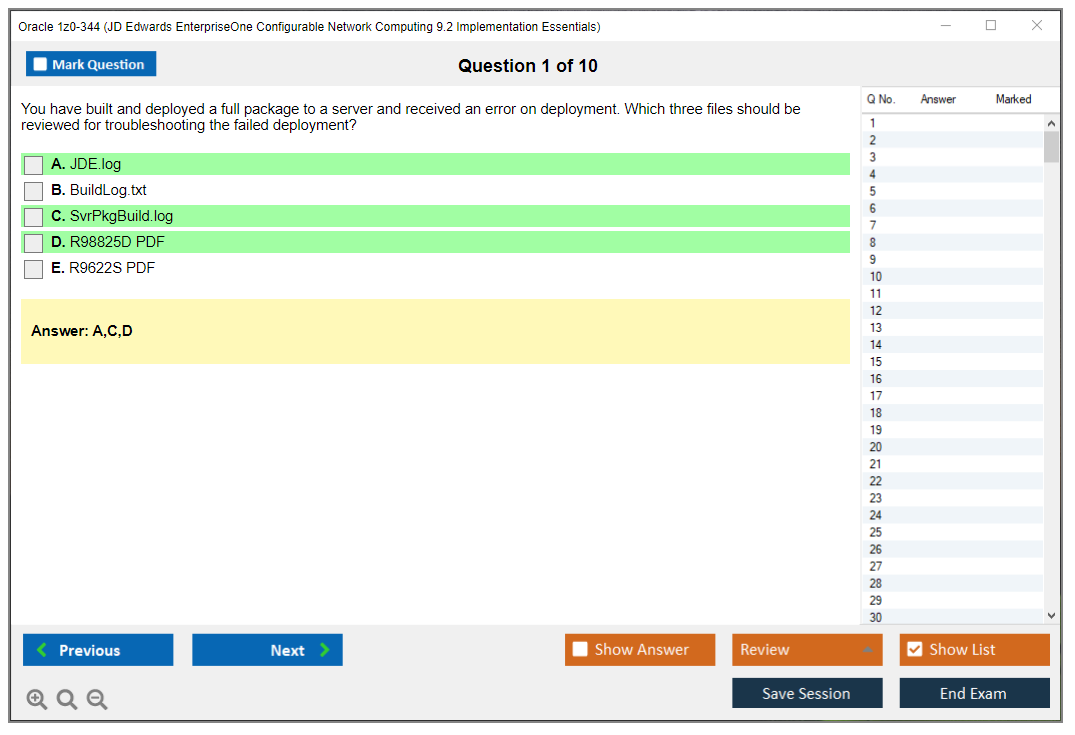
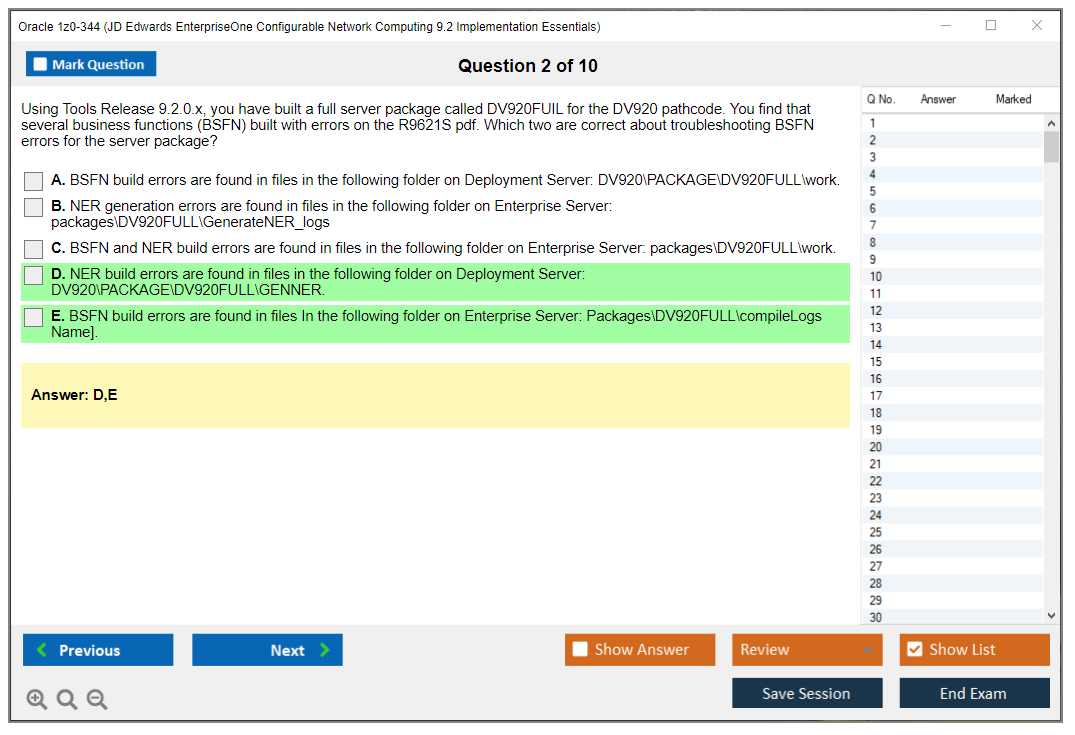
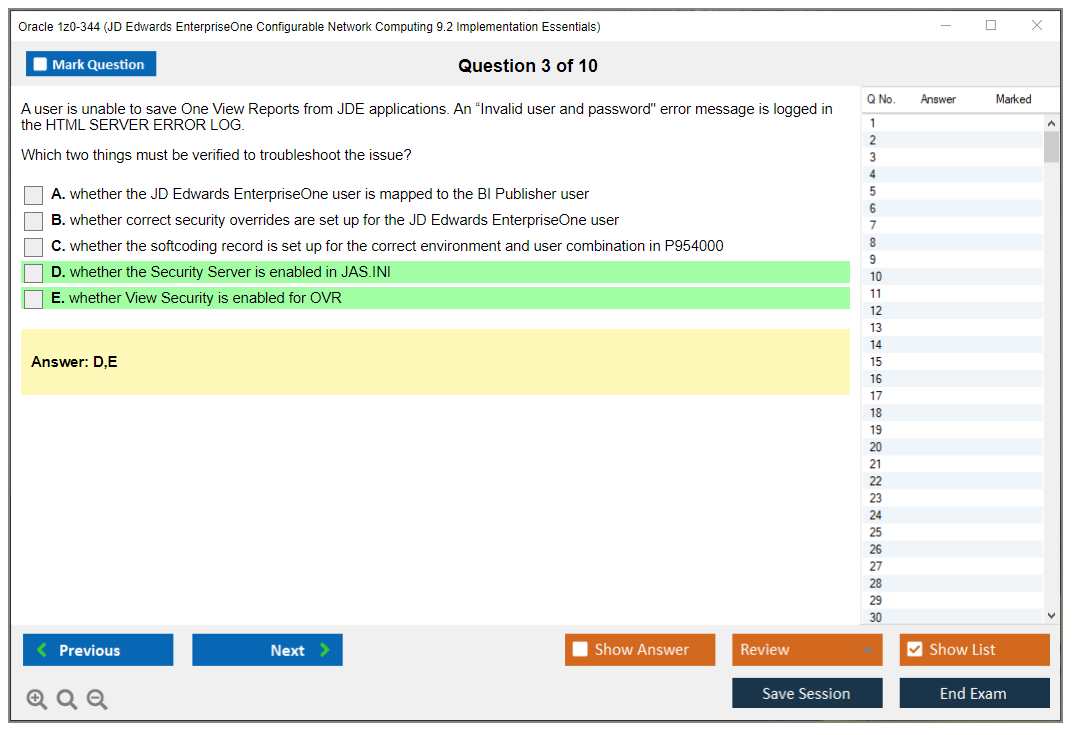
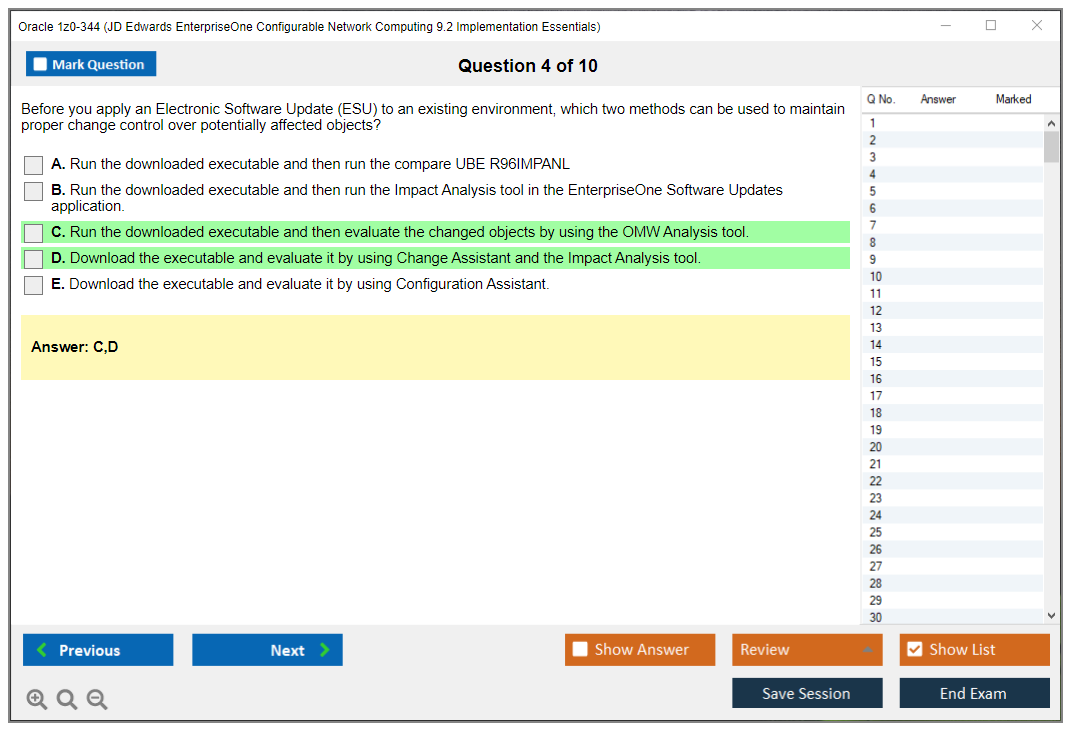
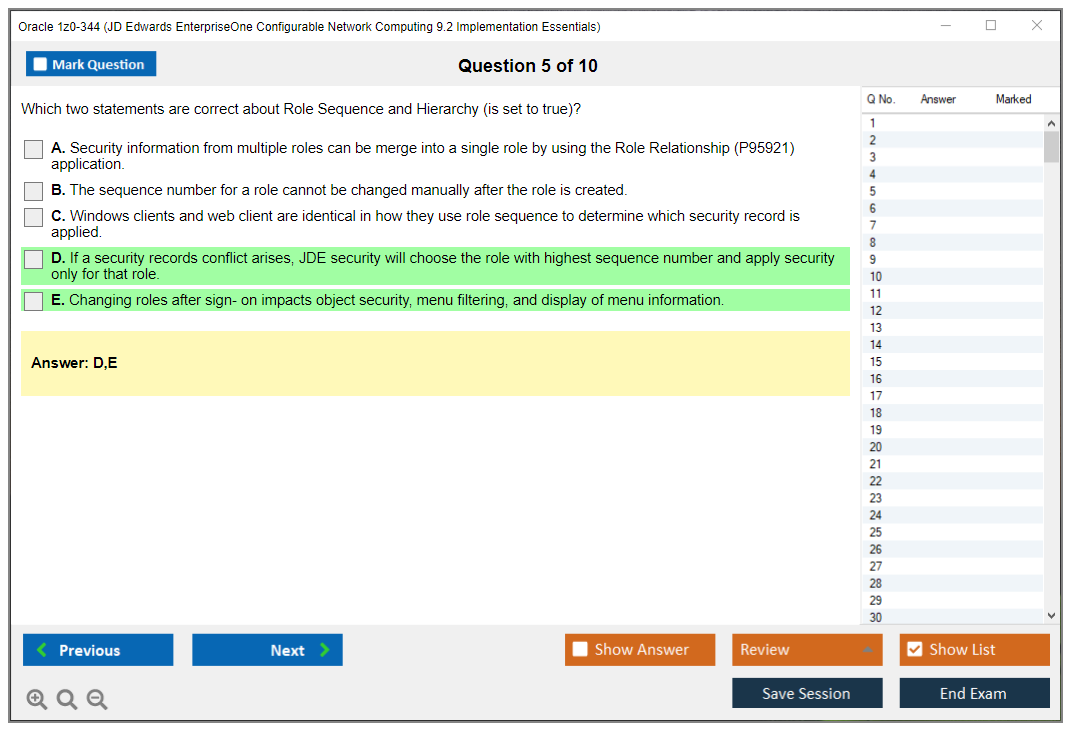
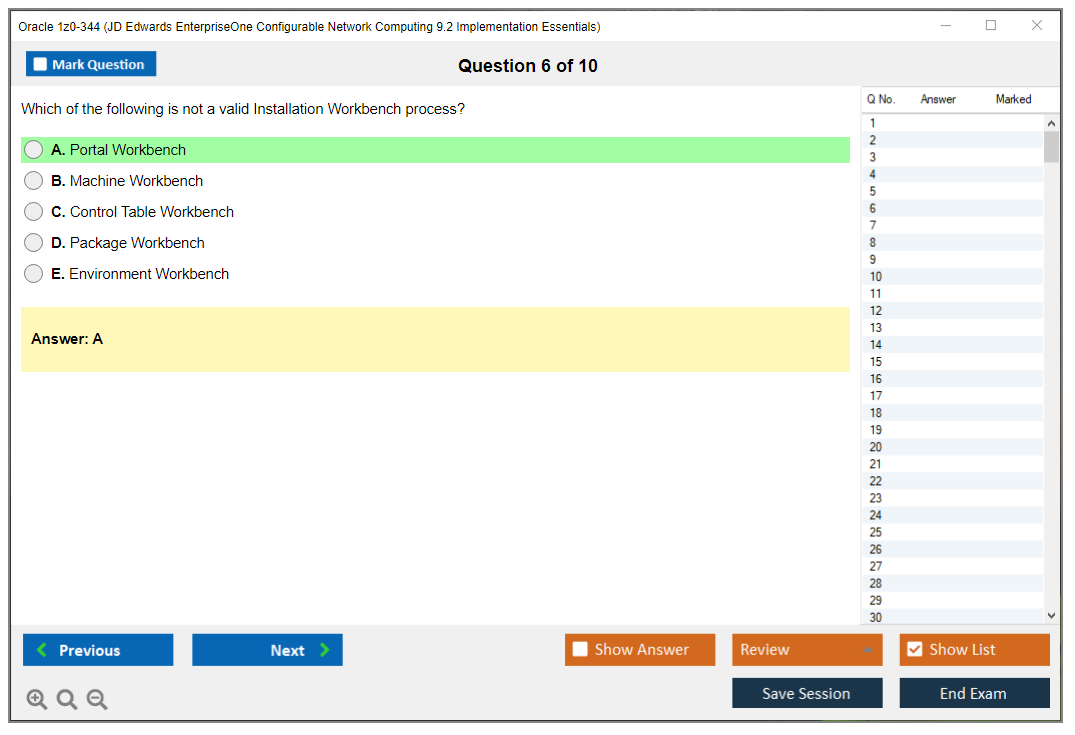
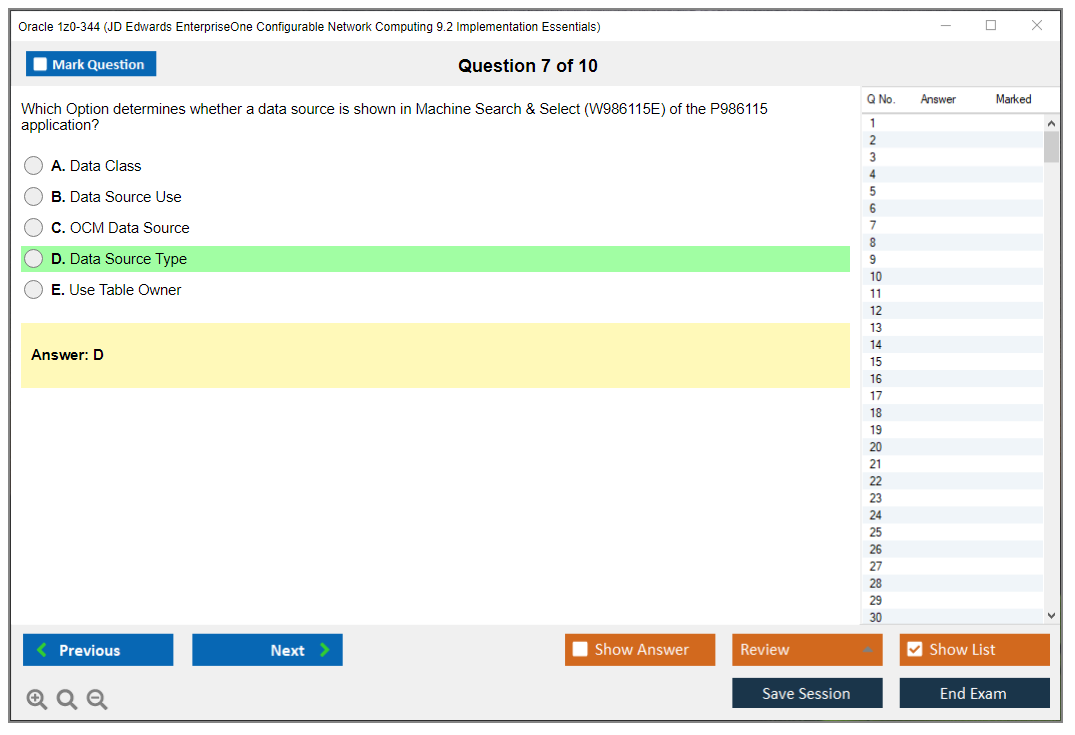
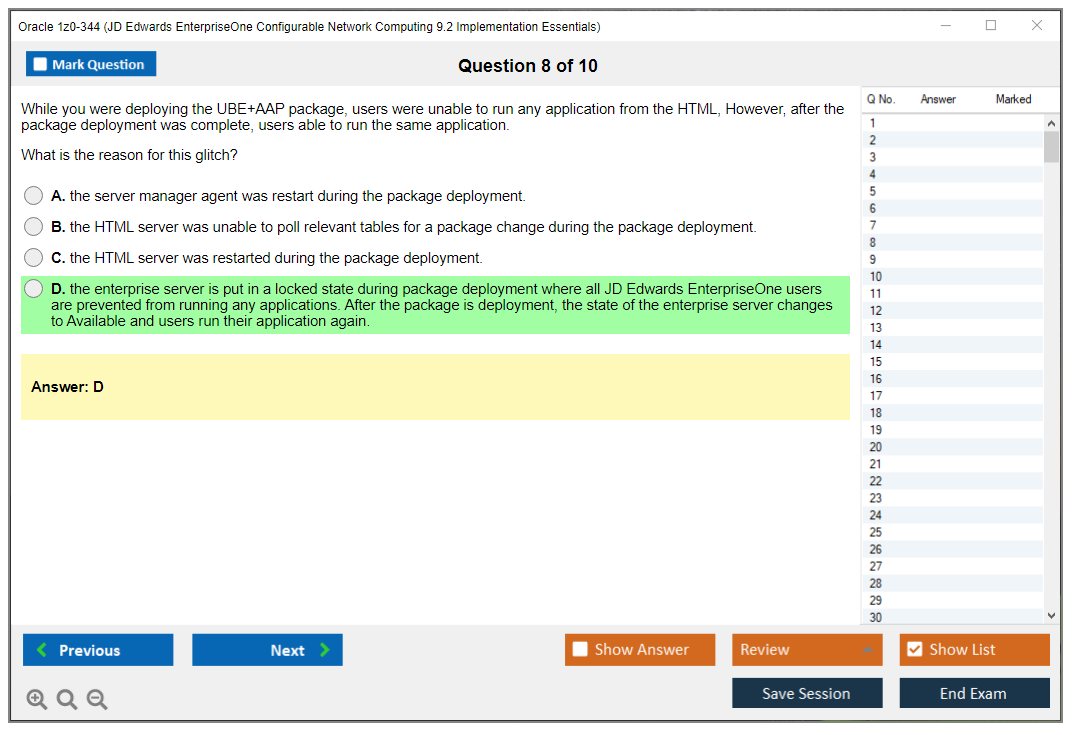
Oracle 1z0-344 Exam Overview: JD Edwards EnterpriseOne CNC 9.2 Implementation Essentials
The Oracle 1z0-344 exam tests your ability to actually deploy and manage JD Edwards EnterpriseOne systems using the Configurable Network Computing architecture. This is not some theoretical certification where you memorize definitions and call it done. It validates hands-on competency in installation, environment management, security administration, and troubleshooting of EnterpriseOne 9.2 environments. These are skills that organizations running JD Edwards desperately need because finding qualified CNC administrators? Harder than you would think.
Who needs this credential?
If you work as a JD Edwards administrator, implementation consultant, or technical specialist responsible for keeping EnterpriseOne environments running, this certification directly fits with what you do every day. IT professionals who configure and maintain these systems will find the JD Edwards EnterpriseOne CNC 9.2 certification validates the exact technical capabilities employers want. Job postings specifically require this cert because it proves you understand the three-tier architecture separating presentation, application, and data layers. Not just conceptually, but operationally. Companies implementing or upgrading to Tools Release 9.2 need people who can handle the architectural improvements and new capabilities without breaking production systems.
The market reality is pretty straightforward. Organizations invested in JD Edwards need administrators who understand Server Manager, environment workbenches, security workbenches, and the entire configuration framework. This credential demonstrates you can do that work competently, which translates to better job prospects in a relatively specialized field. Higher salary expectations too.
What CNC architecture actually means for your daily work
Configurable Network Computing is JD Edwards' three-tier model that separates where things happen. Presentation layer. Application logic layer. Data layer. This separation creates scalability and flexibility, but it also means you need to understand how these tiers communicate, how to configure them properly, and what breaks when they stop talking correctly.
The 1z0-344 certification validates your ability to manage this architecture in production environments: installing components, configuring environments, managing security through users and roles, troubleshooting when things go sideways, and tuning performance when executives complain the system feels slow. You need to know environment management inside and out because you are constantly creating development environments, cloning production for testing, or spinning up new pathcode levels for upgrades.
I have seen shops where environment management becomes almost a full-time job during busy quarters. You might clone production three times in a week just to test different scenarios, and each clone needs proper configuration or you risk screwing up testing results completely.
Tools Release 9.2 improvements you cannot ignore
The evolution from previous JD Edwards versions to 9.2 includes architectural changes that impact how you administer systems. Enhanced mobile capabilities, improved One View reporting integration, better orchestration features. These are not just marketing buzzwords. They are components you will configure and troubleshoot. The exam tests whether you understand these enhancements and can implement them correctly, not just recognize them from a feature list.
Real-world applications? We are talking system deployments where you install EnterpriseOne from scratch. Applying patches without breaking customizations. Upgrading from older versions while maintaining business continuity. Handling daily operational tasks like managing batch jobs, monitoring server resources, and resolving user access issues. Similar to how Oracle Database Administration I covers foundational database management, the 1z0-344 focuses on the middleware and application administration layer that sits on top.
How this fits in Oracle's ecosystem
JD Edwards EnterpriseOne represents Oracle's mid-market ERP solution, positioned differently than E-Business Suite or Cloud Applications. If you work with other Oracle technologies, maybe you have tackled Oracle Database Administration II or explored Oracle WebLogic Server administration, you will recognize some concepts around application servers and database connectivity. But JD Edwards has its own unique architecture and toolset. The 1z0-344 exam specifically tests JD Edwards-specific implementations of these broader enterprise concepts.
The certification path includes other JD Edwards specializations like JD Edwards EnterpriseOne Financial Management for functional consultants, but the CNC certification focuses purely on technical administration. Some professionals pursue both technical and functional credentials to position themselves as full-stack JD Edwards experts.
Typical candidates and their backgrounds
Successful exam takers usually have six months to two years of hands-on JD Edwards administration experience. They have basic operating system concepts down, Windows Server or Linux. Database fundamentals, often Oracle Database or SQL Server. They grasp networking basics because CNC relies heavily on proper network configuration between tiers.
The certification holds validity within Oracle's partner ecosystem and with employers who rely on JD Edwards. Consulting firms specifically seek certified professionals because it provides client confidence during implementations. Oracle develops exam content through subject matter experts actively working with EnterpriseOne systems, ensuring questions reflect real implementation requirements rather than outdated theoretical scenarios.
Market demand reality check
Organizations that invested in JD Edwards are not abandoning it anytime soon. These are long-term ERP commitments. That creates sustained demand for administrators who can manage upgrades, patches, and daily operations. Salary ranges vary by region and experience, but certified CNC administrators typically command higher compensation than non-certified counterparts because the certification validates specific technical competencies that directly impact system stability and performance.
The Oracle 1z0-344 exam is not the easiest certification you will encounter, but it accurately measures whether you can handle production JD Edwards environments. That practical focus makes it valuable.
1z0-344 Exam Details: Registration, Cost, Format, and Passing Requirements
Quick exam overview for CNC 9.2 folks
The Oracle 1z0-344 exam tests JD Edwards EnterpriseOne Configurable Network Computing 9.2 Implementation Essentials, and it's built for people actually doing EnterpriseOne administration and configuration work. Installing stuff. Configuring environments. Managing servers, services, tools. The whole CNC ecosystem. Not a casual read-through situation.
Chasing the JD Edwards EnterpriseOne CNC 9.2 certification? This is your gate. Oracle expects you've actually worked with JD Edwards tools release 9.2 hands-on, not just passively consumed training videos, because they'll hit you with terminology and workflows that only click after you've been elbow-deep in Server Manager at ungodly hours troubleshooting production issues while users melt down in your inbox.
Who should take it and what you'll walk away knowing
New CNC admins. Consultants who got roped in. The poor soul "volunteered" to manage the environment.
You'll gain practical understanding of CNC architecture and deployment, handle server manager and environment management tasks confidently, pick up security fundamentals. Learn where systems typically fail. The thing is, once you've spent three hours debugging why HTML Server won't start and it turns out someone fat-fingered a port number in the configuration, you remember that port configuration section forever. Book knowledge doesn't stick the same way.
1z0-344 exam cost (what to expect)
The 1z0-344 exam cost runs $245 USD typically. That's the standard number during registration, but Oracle pricing fluctuates by country because of taxes, currency conversions, regional pricing policies. Your final checkout total might surprise you a bit depending on location.
What that fee covers: one scheduled attempt through Pearson VUE (testing center or online proctored), scoring, result delivery to your Oracle certification profile. It doesn't cover training materials, any 1z0-344 study guide, or 1z0-344 practice test subscriptions. Not gonna sugarcoat it. Reschedule too close to your appointment and you're risking fees or losing that attempt entirely based on policy windows, so treat that $245 carefully.
How to register through CertView and Pearson VUE
Registration's mostly straightforward clicks, though first-timers often stumble because Oracle handles identity through CertView while Pearson VUE manages actual scheduling.
Normal flow goes like this: create or log into your Oracle account, access Oracle CertView, verify your profile matches your government-issued ID exactly. Select Pearson VUE as your testing provider. Pick your time slot based on what's available locally or online. Pay the fee. Wait for the confirmation email containing appointment details and check-in requirements.
Critical details people miss: your name must match your ID perfectly. Your email needs to be accessible exam day. Minor mismatch? Major problem. Fix it upfront.
Exam format, timing, and objective coverage
The Oracle 1z0-344 exam contains 60 to 75 questions across 120 minutes. Question types lean toward multiple-choice and multiple-select formats, distributed according to Oracle JD Edwards CNC exam objectives rather than evenly balanced, meaning weak spots in service management or environment configuration will absolutely surface.
Expect this rhythm: pure recall items (terminology, component locations, architectural details), operational "what's your next step" questions, scenario prompts presenting configuration, deployment, or troubleshooting situations requiring best-answer selection. Quick factoid check. Dense situational problem. Back to definitions. Repeat.
Question types you'll actually see
Single-answer multiple choice. Multiple-answer multiple choice. Scenario-based items reading like real production support tickets.
Multiple-select questions drain points because Oracle crafts options that seem plausible, and you need the complete correct combination. Partial credit doesn't exist. Scenario questions heavily target JD Edwards CNC 9.2 implementation essentials like environment management, service behaviors, basic security configurations, particularly around security, users, and roles in JDE.
Passing score and how Oracle scores it
The 1z0-344 passing score typically falls between 70 to 75%, though Oracle rarely publishes exact fixed thresholds publicly for every exam version. Scores use percentage-based calculation, and they'll adjust requirements when refreshing questions, rotating forms, or rebalancing objectives.
Scoring mechanics: correct responses earn credit, incorrect ones don't, and multiple-select items generally require exact correct combinations. Oracle deliberately withholds granular scoring details to prevent test reverse-engineering. If you're focused on how to pass Oracle 1z0-344, treat every objective like it could dominate your question distribution.
Delivery options: testing center vs online proctoring
You've got two paths: Pearson VUE test center or online proctored. Testing centers simplify things for most people since the environment's controlled. You're not wrestling your laptop, your Wi-Fi connection, and ambient neighborhood noise.
Online proctoring offers convenience for remote locations or scheduling flexibility. But stricter rules. More potential blockers.
Online proctored exam requirements (don't ignore this)
You need a computer passing Pearson VUE system tests, reliable internet, functioning webcam, microphone, and a completely clear room. No second monitors. No random papers scattered around. No phone visible. Identity verification involves photographing your government ID plus room scans typically, and proctors can demand camera repositioning or item removal.
Prepare for technical friction: VPNs, corporate endpoint security, aggressive firewalls. All can torpedo check-in. Personal machine works better. Quiet, private space. Closed door.
What the testing center experience is like
Arrive early. Check in. Present ID. They'll search pockets, store your belongings in lockers. Palm vein scan or photo depending on the facility. Testing room's usually quiet, often uncomfortably cold, with workstations locked to the exam application exclusively.
Standard security protocols apply. Zero notes allowed. No talking. Break availability depends on exam settings and center policies. Follow instructions and you're golden.
Languages, rescheduling, results, and what you receive after passing
Language options primarily include English, and Oracle occasionally provides localized versions depending on region and exam form availability, so verify exact options during scheduling, especially if you're non-native and want your strongest language for confidence.
Rescheduling and cancellation require action before provider deadlines. Miss them and you'll forfeit your fee as a no-show. Computer-based exam results typically display immediately after completion as preliminary score reports, then post officially to CertView after processing.
Pass and your certification records in CertView. You'll receive a digital badge through Credly (Acclaim) if Oracle issues one for this track, shareable on LinkedIn, and you can download the certificate PDF once available.
Retakes, accommodations, and the NDA reality
Retake policy enforces a 14-day wait between attempts. No shortcuts exist, so use downtime strategically targeting weak objectives with quality 1z0-344 study guide resources and carefully selected 1z0-344 practice test materials.
Disability accommodations go through Pearson VUE's formal process requiring advance requests with documentation. Not something to handle exam week. And yes, you'll sign an NDA. Discussing general topics like Oracle JD Edwards CNC exam objectives and study strategies is fine, but sharing actual questions, answers, or screenshots? That violates terms and risks losing your score, certification, or facing bans. Not remotely worth it.
Understanding 1z0-344 Difficulty: What Makes the JD Edwards CNC 9.2 Exam Challenging
Let me be straight with you. The Oracle 1z0-344 exam? It's really difficult. Not the kind where you breeze through after watching a few YouTube videos, but the kind that'll humble you even if you've been running JD Edwards environments professionally for a couple years. Coming from other Oracle certifications, you'll notice this one operates in a completely different universe because JD Edwards EnterpriseOne has its own weird ecosystem of terminology, architectural thinking, and operational workflows that simply don't map onto what you learned in database or middleware paths.
Where this exam ranks among Oracle credentials
Honestly?
The 1z0-344 lands somewhere in that upper-middle difficulty zone. It won't destroy you quite like those nightmare-level advanced database administration exams where you're diagnosing RAC cluster failures at ungodly hours, but it's way tougher than beginner-friendly stuff like 1z0-071 or 1z0-808. I'd put it closer to specialized implementation exams like 1z0-342 (JD Edwards Financial Management) or middleware certifications like 1z0-133 where you need both theoretical understanding and practical application ability.
What about pass rates? Oracle keeps those numbers locked down tight, but from what I've gathered talking to other JDE professionals and lurking in forums, first-attempt pass rates sit around 60-65% for candidates who've actually worked with the systems. For people attempting it purely from book learning without touching the actual software? Maybe 40% if they're lucky. That massive gap tells you exactly what kind of knowledge this exam actually measures.
Why hands-on experience matters way more than you think
Here's the thing. JD Edwards CNC 9.2 implementation isn't something you can just memorize your way through. Sure, you can drill flashcards about definitions until your eyes bleed, but if you've never actually configured a pathcode in a real environment, troubleshot an enterprise server that's mysteriously failing, or spent an afternoon fighting with the Object Configuration Manager, you're walking into that testing center unprepared. The exam doesn't politely ask "What is a pathcode?" Instead, it throws scenarios at you: "Given these specific symptoms and this particular environment configuration, what's the most probable cause of the middleware server choking during package deployment?"
I mean, you've gotta be able to visualize how that multi-tier CNC architecture actually functions when it's running live production workloads, not just as pretty diagrams in a manual. Knowing that the HTML server communicates with the enterprise server which then connects to the database server? That's baseline knowledge. The exam wants you to diagnose what happens when those communication channels break down, which log files deserve your attention first, and how to make sense of the cryptic nonsense you'll find buried in jdedebug.log.
The architectural complexity that trips people up
The CNC architecture isn't some simple "memorize these seven components and you're golden" situation. You're constructing mental frameworks of how different server roles interact with each other, how the security kernel processes incoming requests through multiple validation layers, and how logical environment structures map onto physical infrastructure components. A surprising number of candidates underestimate this conceptual depth. They'll think "okay, I understand what an enterprise server does" but then completely freeze when asked to explain why you'd configure multiple enterprise servers with different parameters for the identical environment or how the system actually handles load balancing between them.
Path codes alone? They confuse the absolute hell out of people. I've personally witnessed administrators with extensive practical experience still get murky on the precise relationship between path codes, object librarians, and those OCM mapping tables. The exam definitely distinguishes between people who really understand these concepts versus those who just memorized the button-clicking sequence in Server Manager Console. Kind of reminds me of learning stick shift by only driving in parking lots, then someone throws you onto the highway in rush hour traffic.
Environment management: where theory meets ugly reality
The environment management section will wreck you if you haven't participated in actual implementations from start to finish. Questions covering deployment servers, package builds, and environment cloning scenarios require understanding workflows that consume hours in real-world situations, not minutes. You can't just memorize some linear "Step 1, Step 2, Step 3" checklist. You need to internalize WHY each step exists and what catastrophically breaks if you skip one or execute them out of sequence.
Server Manager administration? It goes deep. Way beyond "where do you click to start a service" into understanding the monitoring metrics that actually matter, knowing which services have dependencies on others, and recognizing configuration problems from log output patterns. The exam loves constructing scenarios like "Server Manager displays this particular status, what's your first troubleshooting action?" where three of the four answers seem plausible.
Security layers and how they compound difficulty
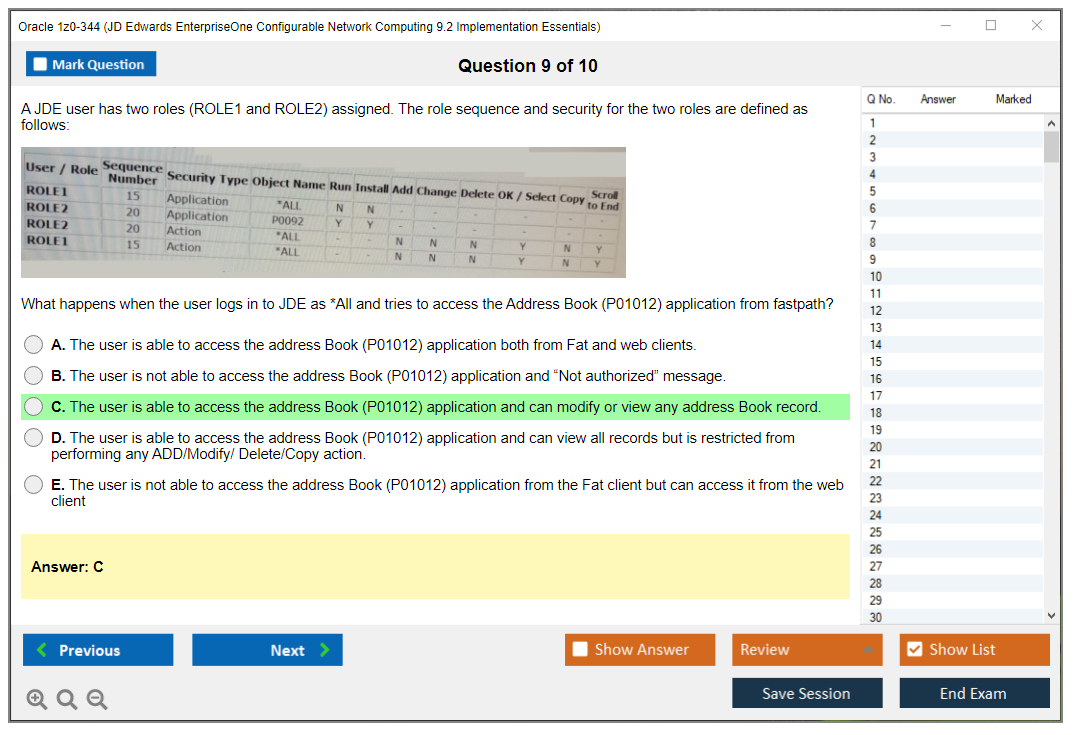
The security framework in JD Edwards is legitimately complex. I'm not exaggerating. You're dealing with action security, application security, row security, and user/role administration all interacting at once. The exam tests whether you can mentally trace how a specific user's access gets evaluated through all these overlapping layers. You'll get questions where you need to diagnose why a user CAN'T perform an action even though they superficially appear to have the appropriate role assigned and all the checkboxes look correct.
This isn't remotely like simpler security models in 1z0-082 where database permissions follow relatively straightforward hierarchies. JDE security has inheritance rules, override mechanisms, and special cases that demand careful analytical thinking.
Scenario-based questions that eat your time
Expect multi-paragraph scenarios. Long ones. They'll describe a complex situation, provide log snippets or configuration details, and then ask you to diagnose the root problem or recommend the correct solution from several plausible-sounding options. These questions aren't difficult because they're testing obscure advanced concepts. They're difficult because you need to read carefully without skimming, identify and eliminate red herrings, and apply systematic troubleshooting methodology while that exam timer counts down.
Time management becomes critical. You've got limited minutes and certain questions demand serious analytical work. Rush through carelessly and you'll misread critical details buried in paragraph three. Overthink every option and you'll run out of time before reaching easier questions waiting later in the exam.
Version-specific gotchas and terminology precision
Tools Release 9.2 introduced meaningful changes from earlier versions, and the exam absolutely tests whether you know what's new functionality versus what's legacy approach. You can't coast on experience with 9.0 or 9.1 without deliberately updating your knowledge about what changed.
The terminology precision requirement? It drives people absolutely crazy. JD Edwards uses terms like "business function," "data source," and "pathcode" in highly specific technical ways that don't mean what you'd intuitively guess from general IT experience. Confuse "environment" when you actually mean "pathcode" and you're getting that question marked wrong, period.
Study material scarcity makes prep tougher
Unlike mainstream popular certifications where you've got twenty different study guides, multiple video course options, and practice exam platforms, JD Edwards CNC resources are frustratingly limited. You're primarily working with Oracle's official documentation (which is full but dry), maybe some expensive training courses if your employer's willing to pay, and whatever useful information you can extract from Oracle support articles. This scarcity makes independent self-study significantly harder compared to 1z0-819 or other high-volume certification tracks.
Bottom line?
The 1z0-344 demands genuine hands-on experience, detailed technical knowledge across multiple domains, and strong analytical troubleshooting skills. It's definitely passable, but you need to respect the difficulty level and prepare accordingly. Not just skim materials the week before.
Oracle 1z0-344 Exam Objectives: Complete Domain Breakdown
Quick take on what Oracle actually tests
The Oracle 1z0-344 exam is basically Oracle's way of asking, "Can you set up and run JD Edwards like someone who has to answer the phone at 2 a.m.?" The official objectives read like a checklist, but they map pretty cleanly to real JD Edwards CNC 9.2 implementation work: standing up environments, wiring servers together, getting clients online, locking security down, then troubleshooting the mess when one port or mapping is off. Not glamorous, though very employable.
Treat the published Oracle JD Edwards CNC exam objectives as your scope statement. If you can do the tasks behind each bullet without guessing, you're close to "how to pass Oracle 1z0-344" territory before you even touch a 1z0-344 study guide.
Cost, format, and passing score reality check
People always ask logistics first. Fair enough.
- How much does the Oracle 1z0-344 exam cost? Oracle pricing changes by country and delivery, so check Oracle's exam page, but expect typical Oracle proctored exam pricing. Also budget retake money, honestly.
- What's the passing score for 1z0-344? Oracle doesn't always make scoring feel transparent, and the 1z0-344 passing score can vary by version. Assume you need to be solid across domains, not perfect in one and weak in three.
- Format? Standard multiple choice style, heavy on "what would you configure" and "what component does what," with just enough trick wording to punish memorization.
Approximate domain weighting (useful even if Oracle won't publish it)
Oracle rarely gives clean percentages. Here's a practical weighting I'd use to prioritize study for the Oracle 1z0-344 exam:
- Architecture and CNC fundamentals: around 20%
- Installation, configuration, environments, data sources, OCM: roughly 25%
- Server Manager and service management (kernels, logs, monitoring): about 20%
- Security (users, roles, workbench, row/action/app security): close to 20%
- Troubleshooting and operations (perf, connectivity, patching, backup): maybe 15%
Not equal. Not forgiving. If you're hunting a JD Edwards EnterpriseOne CNC 9.2 certification, the middle three buckets are where most candidates bleed points.
The three-tier CNC architecture you actually need to picture
CNC architecture and deployment is three-tier, but don't treat it like a diagram you saw once. You need to visualize traffic and responsibilities, the way data actually moves when someone clicks "submit" on a purchase order at 4 p.m. on Friday and everything decides to break.
Presentation layer is client workstations and browsers. Fat client on Windows runs the installed client, web client is the browser hitting JAS, and mobile clients are their own thing with more constraints and fewer "it just works" assumptions. Users live here. Short version.
Application layer's where work happens: enterprise server for business logic and batch, HTML server (JAS) for web requests, plus the supporting services like JDENET and CallObject. This tier is where misconfigurations turn into random crashes, stuck UBEs, and login loops that make you question your career choices. I once spent four hours on a Friday night tracking down what turned out to be a single typo in a host name field, and the only thing that kept me sane was knowing I'd bill for every minute of it.
Data layer is database servers. Oracle Database, SQL Server, IBM Db2 show up a lot, and the exam expects you to know what's system data versus business data, plus how data sources connect via ODBC or JDBC depending on component and platform.
Server types and what they're for
Enterprise server's the muscle. Runs kernels, business functions, UBEs, and talks JDENET. It also tends to be where you'll validate JDE.INI settings, kernel initialization, and database connectivity when things go sideways.
HTML server's the web front door. JAS runs inside an app server like WebLogic or WebSphere, and you'll be expected to know URL configuration basics, how JAS points to the enterprise server, and where to look when browser users can't launch apps but fat clients can. That split matters.
Deployment server's the distribution point. Packages, specs, client installs, and the stuff that makes workstation rollouts possible without you remoting into 200 laptops. Gets mentioned constantly, tested enough.
Core system components that show up everywhere
OCM, JAS, and Server Manager are the trio you keep coming back to in EnterpriseOne administration and configuration.
OCM decides where requests go. It maps objects and data sources, and if your mappings are wrong you'll chase "missing spec" and "can't find object" errors forever. Specifications tables matter here too, because CNC's really about making sure the right spec is in the right place at the right time.
Server Manager's your control plane. Console navigation, monitoring dashboards, service views, security, auto-start, configuration parameters, log access. If you can't operate Server Manager confidently, the JD Edwards tools release 9.2 world's going to feel hostile.
JAS is the web runtime. Depends on the app server, configuration files, and connectivity to enterprise and database resources. Interdependencies pile up constantly.
Clients, protocols, and ports (where most "random" issues start)
Client types and capabilities are straightforward: fat client has richer tooling and local config (hello JDE.INI), web client's easier to deploy but depends heavily on JAS health, mobile is use-case-specific and often limited.
Protocols and ports are where candidates hand-wave. Don't do that. JDENET handles a lot of client to enterprise server communication, JDBC is common for Java-side database access, HTTP or HTTPS runs browser to JAS, and HTTPS configuration can break things in ways that look like application errors but are really cert or proxy problems. Data flows between tiers isn't trivia. It's the job.
Objects, packages, prerequisites, and planning
Object librarian concepts: central objects versus replicated objects, and how objects and specs get stored and moved. This connects directly to package deployment fundamentals, because full packages versus update packages change what gets pushed and what stays stale.
Installation prerequisites are the boring points you get for free if you've done this once: OS support, database compatibility, hardware sizing, network requirements. Installation planning and preparation goes deeper, though. Capacity planning, topology decisions, pre-install checklists. One bad assumption here and you'll re-install. Not gonna lie, I've seen it happen.
Operations: services, logs, performance, troubleshooting
Service management operations include start, stop, restart, dependencies, and configuration impact. Kernel processes like JDENET, CallObject, Security show up in questions because they map directly to symptoms.
Log file management's high-yield: JDEDEBUG.LOG, JAS logs, and knowing how to adjust log levels without making the server melt. Performance monitoring via Server Manager's also fair game, along with database connection management and connection pool exhaustion.
Troubleshooting methodology's usually implied: gather info, isolate tier, validate mappings, check ports, confirm data source, then validate specs and caches. The thing is, cache management matters more than people admit. Spec caching and OCM caching especially when you've just changed something and nothing "took."
Security and admin topics you can't ignore
User management fundamentals, role-based security model, application security, action security, row security, exclusive application security, public and private concepts, user overrides. Security workbench (P98OWSEC) is the tool you're expected to recognize and reason about. Principle of least privilege applies. Audit regularly. Document changes. Boring stuff, but this's what keeps you employed.
Practice tests and study resources that don't waste your time
A 1z0-344 practice test is useful only if it forces you to explain why an answer's right, not just spot keywords. Actually, it's more nuanced than that. If you want a targeted drill set, the 1z0-344 Practice Exam Questions Pack is $36.99 and it's the kind of thing I'd use after reading docs, not before, because guessing your way through questions teaches bad habits.
Same link again when you're in review week: 1z0-344 Practice Exam Questions Pack. Use it to find weak domains, then go back to Server Manager screens, OCM mappings, and environment settings until you can explain them out loud. That's the difference between "read it" and "can run it."
Prerequisites and Recommended Experience for Oracle 1z0-344 Success
What Oracle officially requires (spoiler: not much)
Here's the deal. Oracle doesn't list formal prerequisites for the 1z0-344 exam. No mandatory certifications or required courses you need to check off first. You won't find some official checklist. That said, waltzing in unprepared isn't smart. The exam assumes you've got real-world exposure to JD Edwards EnterpriseOne environments, particularly around the Configurable Network Computing architecture.
Technically, you could register and sit for it without any experience, but that's just burning $245 and setting yourself up to feel pretty terrible afterward.
What Oracle does recommend is hands-on experience with JD Edwards EnterpriseOne administration and implementation work. They're weirdly vague about timeframes, but from conversations I've had with folks who passed, six to twelve months of practical work seems like the sweet spot. Not just watching someone else configure environments or skimming documentation. Actually doing the work yourself. Getting your hands dirty.
The hands-on experience that actually matters
Real talk here.
If you haven't spent time in a JD Edwards environment doing actual configuration and administration tasks, this exam's gonna be brutal. You need exposure to tasks like setting up environments, managing Server Manager, configuring security roles, and troubleshooting issues when things inevitably break (because they absolutely will).
I'm talking about production or training environments where you've dealt with real problems. Scenarios that don't have neat, textbook answers. Maybe you've configured OCM mappings, set up web server instances, or worked through user access issues that made no sense at first. The exam tests practical knowledge, scenarios where you need to know how to fix something, not just what the component is called or what acronym it uses.
If you're working in a shop that uses JD Edwards, try to get involved in upgrade projects or environment refreshes. Those experiences expose you to the full lifecycle of CNC administration. Ask to shadow the senior admins. Break things in a test environment and figure out how to fix them. Some of my best learning came from royally messing up a dev environment and having to unfuck it before anyone noticed.
JD Edwards basics you need before diving deeper
Before you even think about CNC architecture, you should be comfortable just using JD Edwards EnterpriseOne as an end user. Work through the menus. Understand what an application is versus a batch process. Get familiar with basic ERP concepts: how financial data flows, what manufacturing operations look like, how distribution works.
This foundational knowledge matters because CNC sits underneath all of that. When you're configuring environments and managing servers, you need to understand what the business users are actually doing with the system. If someone tells you "the purchase order inquiry is timing out," you should have at least a rough idea of what they're talking about. Context matters.
Spend time clicking around the system. Run some reports. Process a few transactions in a training environment. The exam won't directly test you on how to enter a journal entry, but it will test you on how to troubleshoot performance issues affecting users who need to enter journal entries. See the connection? Actually, I once spent three hours tracking down what turned out to be a simple network latency issue that was making form loads unbearable. Would've helped if I'd understood the business process first instead of diving straight into server logs.
Operating system knowledge you can't skip
JD Edwards runs on servers. Shocking, I know. This means you need working knowledge of the operating systems hosting those servers. Windows Server is common, but plenty of shops run on Linux or Unix variants.
You should know how to work through file systems, start and stop services, check logs, and perform basic troubleshooting. When Server Manager isn't starting, can you check if the service is running? Do you know where to look for log files? Can you verify network connectivity between servers? These aren't theoretical questions. They're Tuesday morning at 8 AM when users can't log in.
I mean, I'm not saying you need to be a hardcore sysadmin. But if terms like "environment variables" or "service dependencies" are completely foreign to you, you're gonna struggle. The exam includes scenarios where you need to understand what's happening at the OS level, not just within the JD Edwards tools.
Database fundamentals that show up everywhere
JD Edwards stores all its data in a relational database: Oracle Database, SQL Server, or IBM Db2 depending on your environment. You need basic database literacy. Understand tables, indexes, primary keys. Be comfortable with simple SQL queries. SELECT statements, basic WHERE clauses, maybe some JOINs.
Know basic database administration concepts like tablespaces, schemas, and user permissions. You don't need to be a DBA. When the exam asks about data source configuration or troubleshooting connectivity issues, you need to understand what's happening behind the scenes. Similar to how the 1z0-071 Oracle Database SQL certification covers foundational database concepts, having that SQL grounding helps tremendously with JD Edwards administration tasks. Everything connects to the database eventually.
Networking basics matter more than you think
CNC is literally "Configurable Network Computing," so yeah, networking knowledge is kinda important. You need to understand TCP/IP fundamentals, how DNS works, what ports are and why they matter, and basic client-server communication.
When you're configuring web server instances or troubleshooting why users can't connect to an environment, you're dealing with network issues. Can you use ping and traceroute? Do you understand the difference between HTTP and HTTPS? Can you verify that a specific port is open and listening?
The exam includes questions about architecture and communication between different CNC components: Enterprise Server, HTML Server, Application Interface Services. If you don't understand how these pieces talk to each other over the network, you'll be lost. For folks coming from other Oracle infrastructure backgrounds, the networking concepts in 1z0-133 WebLogic Server Administration overlap somewhat with JD Edwards architecture.
Web technologies you should understand
Since EnterpriseOne has web-based clients, you need basic awareness of how web applications work. Understand what a web server does versus an application server. Know the basics of HTTP/HTTPS protocols. Browser-server communication. How session management works.
You don't need to be a web developer. But when the exam asks about configuring HTML Server instances or troubleshooting browser-based client issues, this background helps. Know what cookies are. Understand basic authentication concepts. Be familiar with common web server issues. Users complaining about slow load times? That's a web technology problem you need to diagnose.
Training courses worth considering
Oracle University offers specific courses for JD Edwards CNC 9.2 implementation and administration. These aren't cheap. Not even close. But if your employer's paying (or you're really serious about the certification), they provide structured learning that aligns directly with exam objectives.
The official training includes hands-on labs, which are incredibly valuable. You get to actually configure environments, set up Server Manager, and work through real scenarios in a safe learning environment. If you can't swing the official training, look for third-party JD Edwards training providers. Some offer more affordable options, though quality varies wildly.
Building background knowledge without direct experience
Look, not everyone has access to a JD Edwards environment at work. If that's you, your prep's gonna be harder, but it's not impossible. Start with Oracle's documentation. It's dense as hell, but full. Read through the installation guides, administration guides, and technical overviews. Yeah, they're boring. Push through anyway.
Try to get access to practice environments. Some employers will let you use training or development systems for learning. Oracle occasionally offers trial systems or cloud instances (though availability varies). You might also find consultancies or training providers that offer lab access as part of their courses.
Build related skills that transfer. If you can't touch JD Edwards directly, get really solid on Oracle Database administration fundamentals or Linux system administration. These skills directly apply to JD Edwards environments and will make your eventual hands-on time more productive. Everything you learn compounds.
How much time you actually need
For someone with 6-12 months of solid JD Edwards administration experience, expect to invest 100-150 hours of focused study time. That includes reviewing documentation, working through practice scenarios, and using resources like the 1z0-344 practice exam questions pack to identify weak areas. Not just reading time. Active learning time.
If you're newer to JD Edwards or coming from a different ERP system, budget 200+ hours. You're not just learning exam material. You're building foundational understanding of how the entire system works. That takes time. Don't rush it. I've seen people try to cram this in three weeks, and it doesn't end well.
The 1z0-344 practice test materials at $36.99 are honestly one of the better investments you can make, because they help you gauge where you actually stand versus where you think you stand. I've seen too many people confidently schedule their exam after reading through documentation, only to get demolished by the practical scenarios. Don't be that person.
Best Study Materials and Resources for 1z0-344 Exam Preparation
Quick snapshot of what this test covers
The Oracle 1z0-344 exam is tied to the JD Edwards EnterpriseOne CNC 9.2 certification, and honestly, it's Oracle basically asking, "Can you actually run EnterpriseOne like a grown-up?" Not just clicking around. I mean, we're talking real operational stuff here that keeps systems breathing.
CNC is the plumbing. The plumbing matters.
Who should take the 1z0-344 certification?
If you're doing EnterpriseOne administration and configuration work, supporting Tools 9.2, building environments, or you're the person everyone keeps pinging when Server Manager decides to throw a tantrum at 3 a.m., you're definitely the target audience. New CNC admins can pass too. You'll feel the pain if you've never actually installed, configured, or troubleshot a JDE stack in the real world, though, because the exam keeps drifting back to how things actually behave when deployed. Not how they look all polished in a slide deck presentation.
Consultants? Yep. Internal admins. People moving from apps to infrastructure. Also anyone getting pushed into "owning" server manager and environment management because the last CNC person left and nobody else wanted the job.
What you'll learn (CNC 9.2 implementation essentials)
You're expected to understand JD Edwards tools release 9.2, what components live where, and how to keep environments healthy without everything catching fire. That includes CNC architecture and deployment, service management, security basics, and a bunch of operational tasks like log reading and troubleshooting when things break. Not glamorous work, I'll give you that. Very employable, though.
I knew someone who spent three months learning CNC purely through breakage recovery. Every time something went sideways in prod, he'd document the hell out of it. Eventually he had this giant troubleshooting manual that was worth more than any textbook. When he sat for his cert, half the questions felt like Tuesday afternoons. Sometimes the messy path teaches better.
What you'll pay and how it's delivered
People ask two things right away: 1z0-344 exam cost and 1z0-344 passing score. Cost can vary by region and whatever discounts Oracle's running, so treat Oracle's exam page as the actual source of truth, but expect the usual Oracle pro cert pricing tier. Annoying? Yeah. Still cheaper than failing twice and having to pay again.
Passing score's set by Oracle and can change. Sometimes Oracle doesn't put it front and center in the marketing copy for reasons nobody really understands. If you see different numbers floating around forums, that's why. The practical takeaway is simpler: don't prep to "barely pass" at some magic number. Prep to absolutely crush the objectives, because the question pool will find whatever you tried to skim or skip.
Delivery's typically via Pearson VUE (test center or online proctoring depending on availability). Question types are standard Oracle multiple choice and multi-select. Read carefully, seriously. Multi-select is where confidence goes to die.
Why it feels hard (and what trips people up)
"How hard is the JD Edwards EnterpriseOne CNC 9.2 exam?" Harder than people expect if they've only done one narrow slice of CNC work in their career. If you've lived in Server Manager but never touched deployment architecture concepts, you'll feel it hit you. If you've done installs but never had to debug real environment issues at 2 a.m. with management breathing down your neck, same deal. Gap city.
Common pitfalls show up around Tools concepts, what runs on which server (people mix this up constantly), and environment management details that seem minor until they're not. Also security. People hand-wave security, users, and roles in JDE until exam day, then suddenly the granular details matter way more than they thought.
Official objectives you should map everything to
If you want the Oracle JD Edwards CNC exam objectives to drive your prep strategy, think in buckets:
- EnterpriseOne architecture and CNC fundamentals
- Installation, configuration, plus environment setup workflows
- Server Manager operations and service management
- Security administration, roles, users (the whole identity stack)
- Troubleshooting and operational tasks when things break
That's the core of JD Edwards CNC 9.2 implementation essentials. Everything you study should land cleanly in one of those buckets, or it's probably trivia that won't show up.
Best study materials for Oracle 1z0-344
Oracle University training (paid, but straight to the point)
Oracle University official training is the closest thing you'll get to a structured 1z0-344 study guide that follows what Oracle thinks you should know, which matters since they write the exam. There are usually instructor-led options (great if you need accountability and live Q&A with someone who's been there) and self-paced courses (better if you're juggling a job and can only study at weird hours between meetings).
Here's my opinion, honestly. If your employer pays, take the official track and don't overthink it. Just go. The courses tend to cover architecture, Tools concepts, Server Manager workflows, and the "why" behind configuration choices. That "why" is what really helps on scenario questions where two answers both look plausible and you're second-guessing yourself.
If you're self-funding? You can still pass without Oracle University, but you'll need to be more deliberate with labs and documentation, because you won't have the course guiding the sequence and catching gaps.
Oracle Learning Library (free, underrated)
The Oracle Learning Library is where you grab free tutorials, product demos, and supporting documentation without jumping through too many hoops or paywalls. Look, it's not a full replacement for structured training, but it's perfect for topping up weak areas like Tools components, admin screens, and process flows that you don't touch every single day. When people ask "What study materials and practice tests are best for 1z0-344?" this is one of the first places I point them, because free and official is a really nice combo.
Also? It helps you learn Oracle's wording patterns. That matters more than it should, trust me.
My Oracle Support (MOS) (where real-world CNC knowledge lives)
MOS is paid access, so yeah, you need support credentials, but if you have it through work you should be in there constantly. Knowledge base articles, troubleshooting guides, white papers, and community threads are basically the day job of CNC distilled. The exam pulls from that operational reality. When you're studying troubleshooting, performance symptoms, and operational tasks, MOS is absolute gold because it shows patterns, common misconfigurations, and what Oracle actually recommends when things break spectacularly.
Random tip? Build a personal index of MOS notes organized by objective bucket. You'll thank yourself later, I promise.
A simple 2 to 6 week study plan
Two weeks if you already do CNC daily and breathe it. Six weeks if you're new or rusty and haven't touched it in months.
Week 1 or 2: architecture, Tools 9.2 concepts, environment structure, basic security foundations. Short sessions work better. Lots of repetition until it sticks. Week 3 or 4: Server Manager operations, deployments, service control, logs. Get your hands dirty here, don't just read about it. Week 5 or 6: troubleshooting drills, review objectives with brutal honesty, practice tests where you're really honest about weak spots instead of lying to yourself.
Hands-on labs you should actually practice
Don't just read. Do.
Practice starting and stopping services in Server Manager. Check logs for errors. Validate environment configs. Walk through typical admin workflows from start to finish. Touch security screens, actually touch them. Create users, assign roles, confirm what changes where and what doesn't. Spin up a small sandbox if you can, even if it's limited or slow, because CNC is muscle memory plus pattern recognition developed over time.
Practice tests and question strategy
A good 1z0-344 practice test is one that explains why the right answer is right, not just "A is correct" with zero context. If you're using a paid pack, treat it like a diagnostics tool that finds gaps, not a cheat code to memorize.
For targeted drilling? I've seen people pair their objective checklist with a question pack like the 1z0-344 Practice Exam Questions Pack to find gaps fast, then go back to docs and labs to fill them. Same link again if you want it handy: 1z0-344 Practice Exam Questions Pack. Use it to pressure-test your understanding, not to memorize answers blindly.
Timing strategy: do one timed run first, then switch to review mode and write down why you missed each one in fragments. "Confused server roles." "Mixed up Tools vs app layers." "Didn't read multi-select carefully."
How to pass Oracle 1z0-344 (last-week checklist)
If you're asking how to pass Oracle 1z0-344, the last week is about tightening screws and closing gaps. Re-read the objectives carefully. Re-do the labs that felt shaky or where you hesitated. Hit security basics again because people always underestimate this. Do one final pass with a practice pack, like the 1z0-344 Practice Exam Questions Pack, and focus only on misses and maybes. Don't waste time on what you already know cold.
Day-of? Slow down on wording, especially on multi-select questions where they're trying to trick you. Eliminate wrong answers first systematically. Don't argue with the question in your head. Answer the question that's actually asked, not the one you wish they'd asked.
FAQ
How much does the Oracle 1z0-344 exam cost?
It varies by region and Oracle pricing updates, so confirm on Oracle's exam listing page, but plan for standard Oracle professional exam pricing tier.
What is the passing score for 1z0-344?
Oracle sets it and can change it periodically. Focus on mastering the objectives instead of chasing a minimum number that might shift.
Is 1z0-344 hard?
If you've only done one part of CNC? Yes, definitely. If you've done real admin plus troubleshooting across the stack, it's fair.
What are the objectives for the Oracle 1z0-344 exam?
Architecture, install/config/environment setup, Server Manager ops, security/admin, and troubleshooting. Those five buckets.
What prerequisites do I need?
Hands-on exposure helps a lot: Tools 9.2 experience, environment management, basic OS and networking knowledge, and comfort reading logs when something breaks.
Conclusion
Look, here's the thing.
We've covered a lot. I mean, honestly, when you think about all these strategies and approaches (from the foundational concepts right through to implementation tactics that'll really move the needle for your business) it's kind of overwhelming, right?
But it works.
The results speak. They really do.
Now, I've got mixed feelings about oversimplifying this stuff because, well.. the thing is (wait, let me rethink that) what I'm trying to say is you can't just cherry-pick one technique and expect magic overnight. It's the combination that matters.
Short-term wins? Sure, they're exciting. Sustainable growth? That's where the real shift happens, and honestly, that takes commitment to the entire process. Not just the flashy parts that sound good in theory.
You've got the roadmap now.
The question isn't whether these methods work anymore. They do. The question's whether you'll actually use them consistently, track what's working, and change course when something isn't clicking the way you'd expected.
Take action today. Not tomorrow or next week when things "calm down." They won't, by the way. They never do. Start small if you need to, but start somewhere. Incremental progress beats perfect plans that never leave the drawing board.
Actually, I saw this with a client last year who kept waiting for the "right moment" to launch their content strategy. Six months went by. Nothing happened. Then they just started posting twice a week, rough drafts and all, and within three months their traffic doubled. Sometimes you just need to get moving.
Your move.
Wrapping up your 1z0-344 prep path
Real talk here. The Oracle 1z0-344 exam? It's not gonna spoon-feed you success. This thing tests whether you can actually configure and manage EnterpriseOne CNC 9.2 environments, not whether you've crammed a bunch of glossary terms the night before. You've gotta understand server manager operations, environment management, security configurations, and troubleshooting workflows. Basically the stuff you'd be doing day-to-day on the job. The passing score sits somewhere around 68-70% (Oracle stopped publishing exact numbers anymore, which honestly is super annoying), but that percentage doesn't paint the full picture. Certain questions carry more weight than others, if you know what I mean.
Exam cost? About $245 USD, though pricing shifts slightly depending on your region. Not exactly pocket change. So you really wanna nail it on your first attempt. Your preparation strategy matters way more than just logging hours.
Here's what actually works: hands-on practice beats everything. Seriously. Set up a demo environment if your company's got one available. Play around with different installation scenarios, break things intentionally and then fix them because that's honestly how concepts stick in your brain. The official Oracle documentation's dense as hell but accurate, so treat it like your reference guide when you're drilling into specific objectives. CNC architecture fundamentals, role-based security implementation, all that. I'd budget 3-4 weeks minimum if you're already working with JDE daily. Maybe 6-8 weeks if this territory's newer for you.
Practice tests validate readiness. They identify weak spots before exam day. Not gonna lie, quality varies wildly out there. You want questions mirroring the actual exam format and covering all objectives proportionally. EnterpriseOne administration and configuration, deployment scenarios, tools release 9.2 specifics, the whole range. The thing is, drilling weak areas in your last week? Makes a huge difference. I remember back when I was prepping for a different Oracle cert, I wasted two days on some outdated dump site that had questions from like three versions ago. Total waste of time.
If you're serious about passing the JD Edwards EnterpriseOne CNC 9.2 certification on your first try, check out the 1z0-344 Practice Exam Questions Pack at /oracle-dumps/1z0-344/. It's built specifically around current exam objectives with realistic question patterns and detailed explanations that actually help you understand why answers are right or wrong, not just what's correct. Practice smart, pass confident, and add that credential to your resume.
