CEH-v11 Practice Exam - Certified Ethical Hacker CEH v11
Reliable Study Materials & Testing Engine for CEH-v11 Exam Success!
Exam Code: CEH-v11
Exam Name: Certified Ethical Hacker CEH v11
Certification Provider: ECCouncil
Certification Exam Name: ECCouncil Other Certification


Free Updates PDF & Test Engine
Verified By IT Certified Experts
Guaranteed To Have Actual Exam Questions
Up-To-Date Exam Study Material
99.5% High Success Pass Rate
100% Accurate Answers
100% Money Back Guarantee
Instant Downloads
Free Fast Exam Updates
Exam Questions And Answers PDF
Best Value Available in Market
Try Demo Before You Buy
Secure Shopping Experience
CEH-v11: Certified Ethical Hacker CEH v11 Study Material and Test Engine
Last Update Check: Mar 19, 2026
Latest 528 Questions & Answers
45-75% OFF
Hurry up! offer ends in 00 Days 00h 00m 00s
*Download the Test Player for FREE
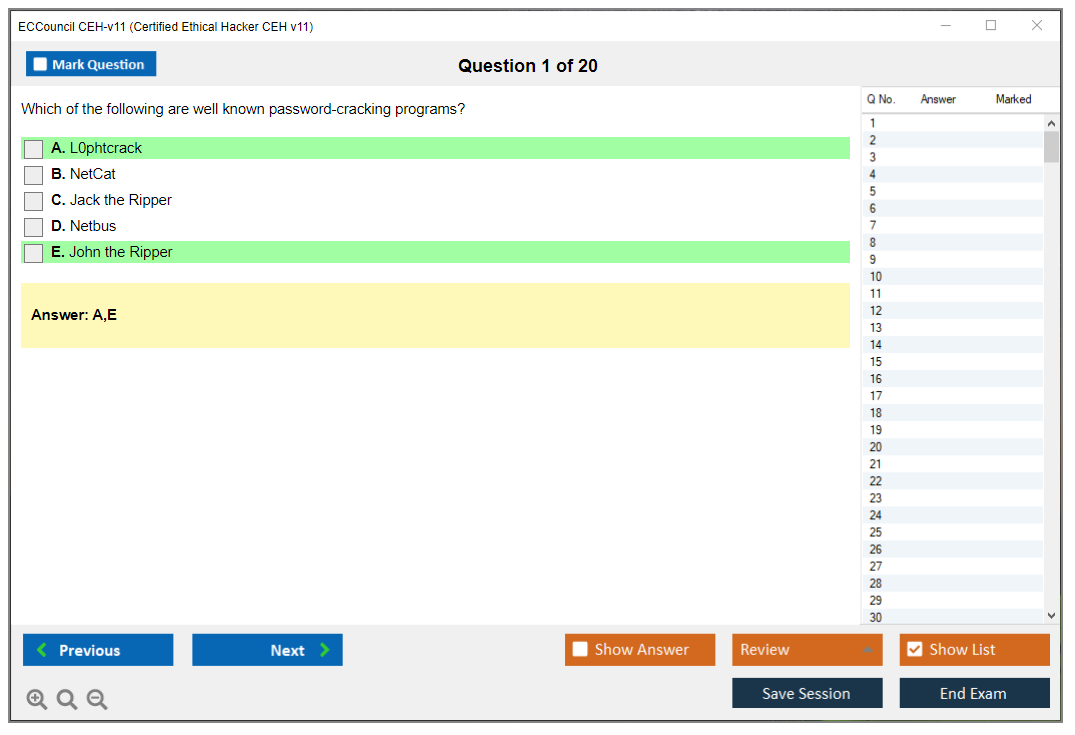
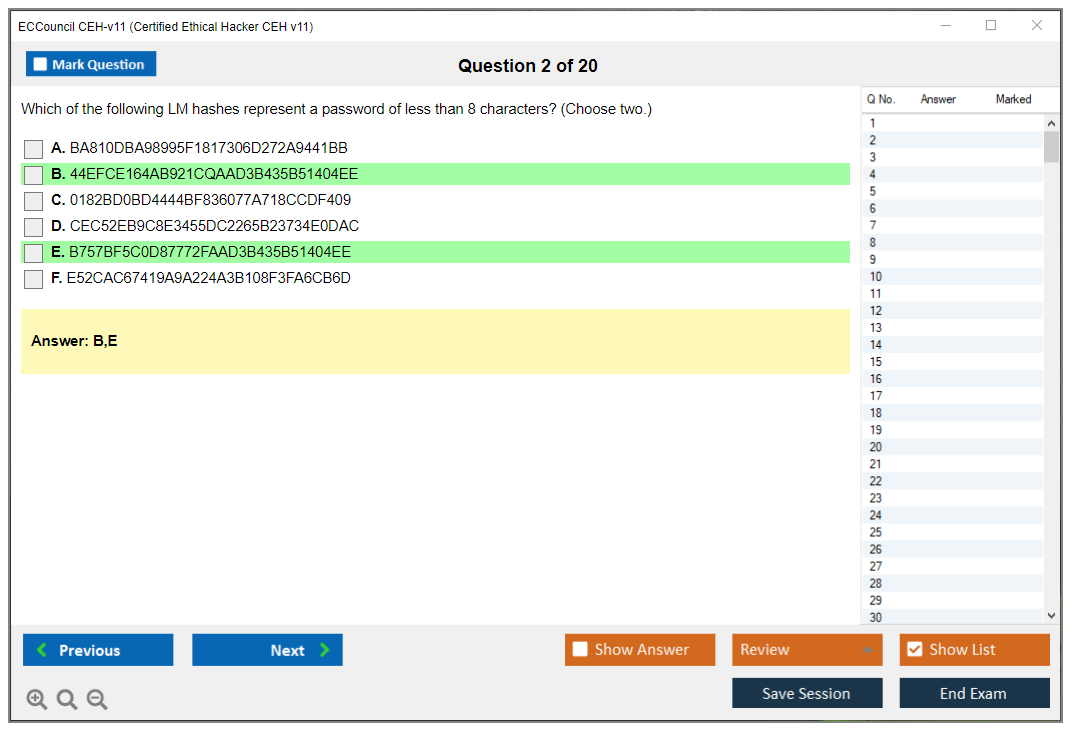
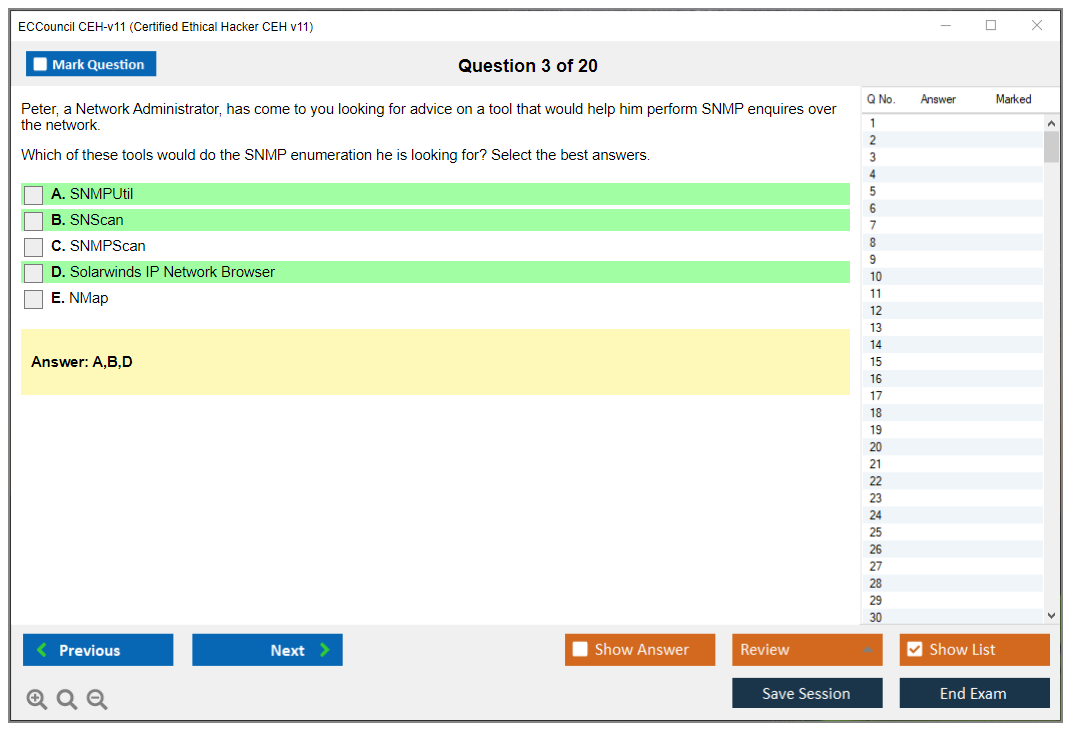
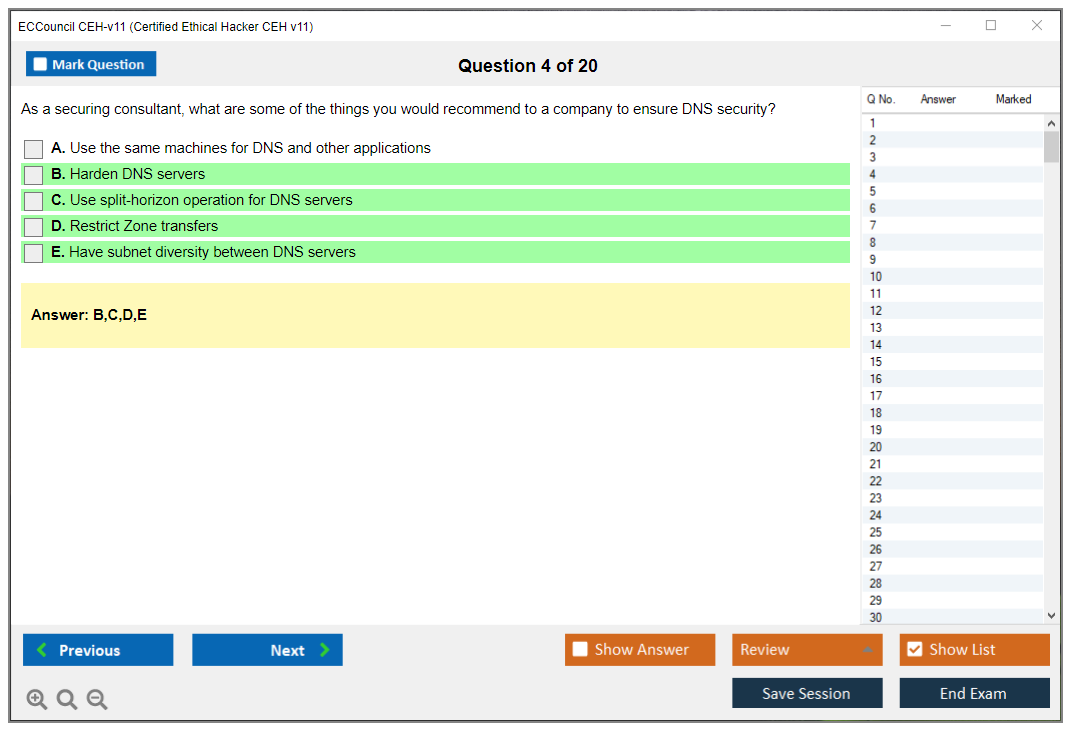
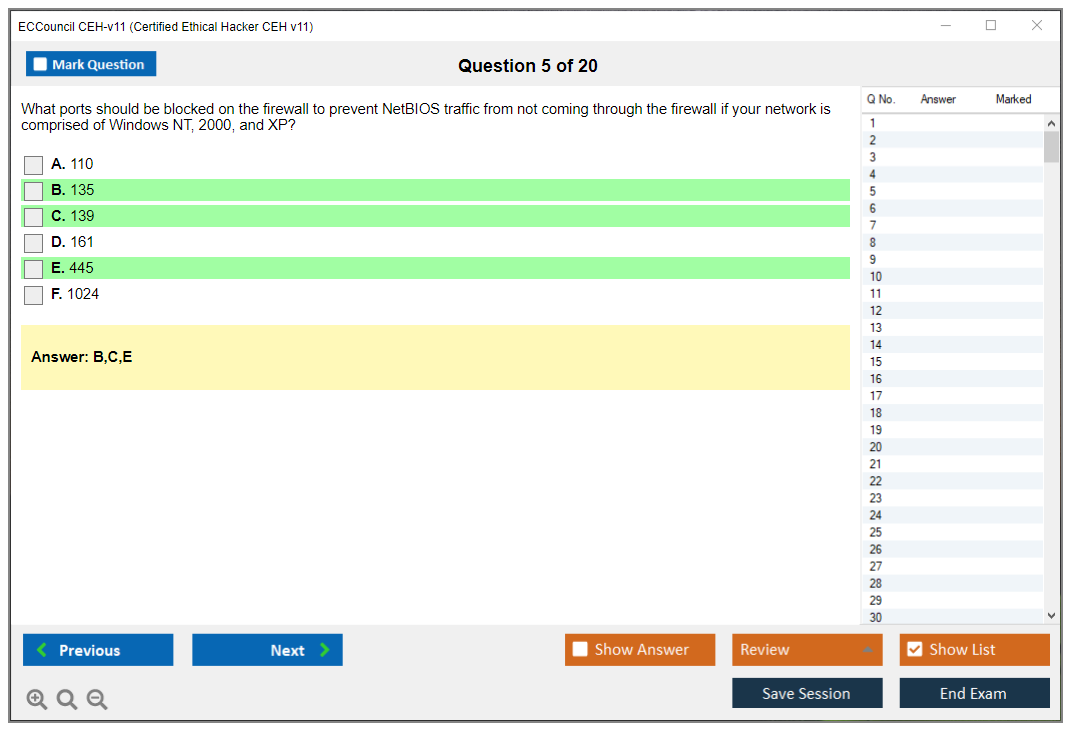
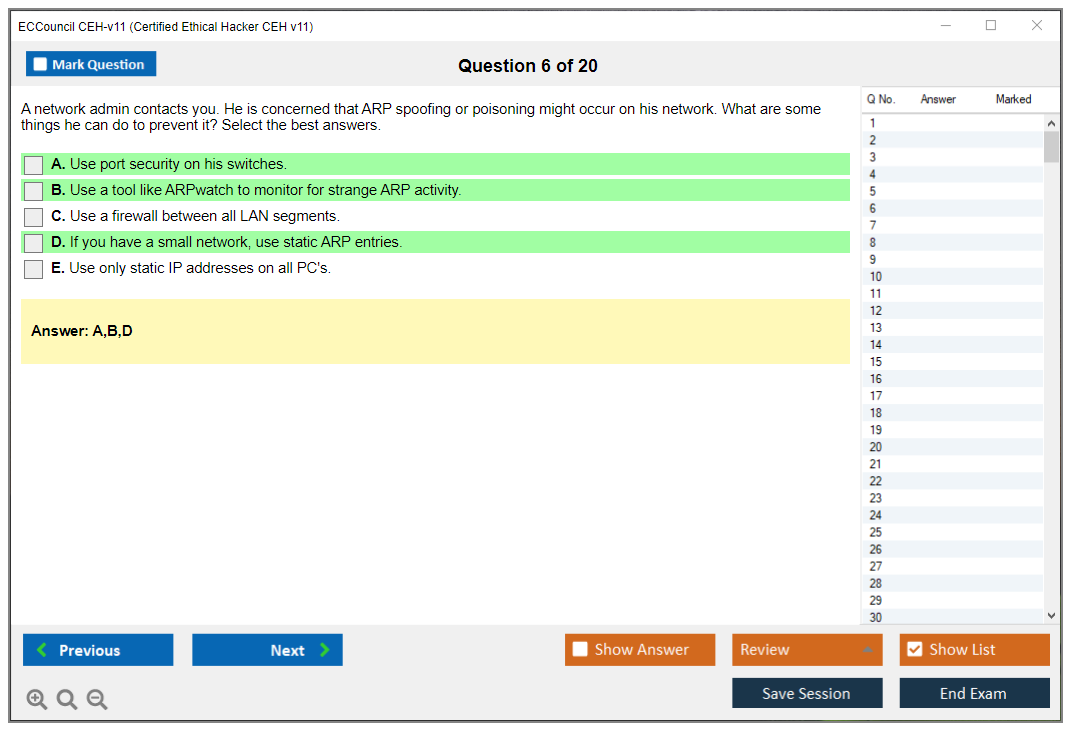
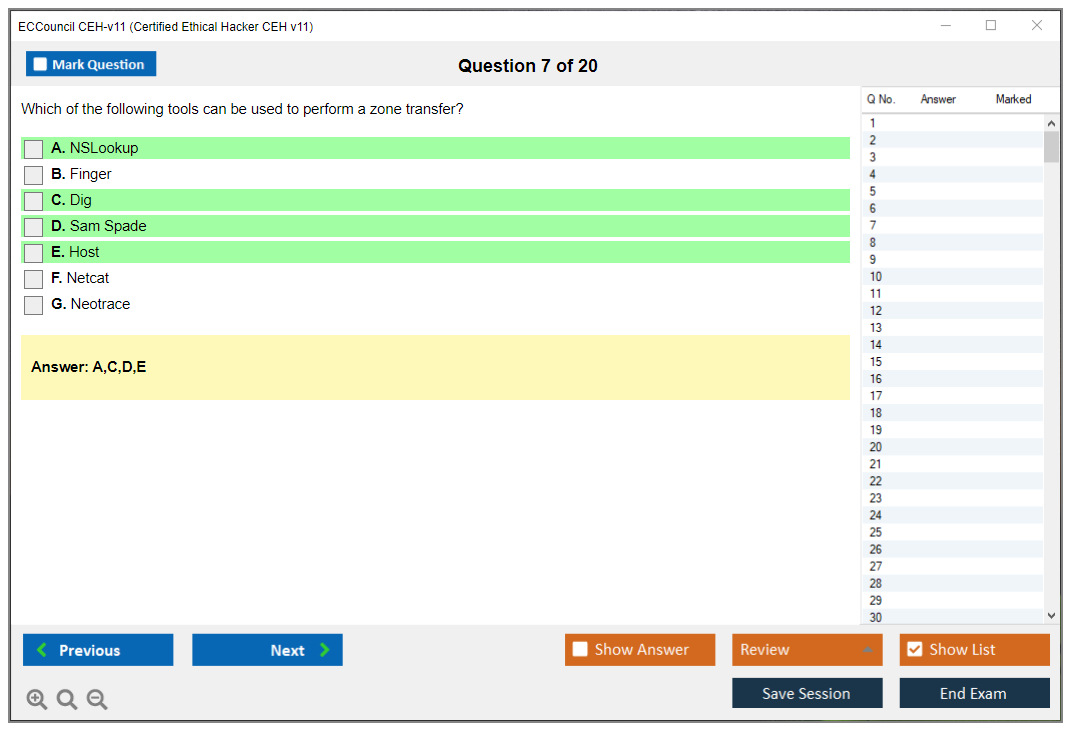
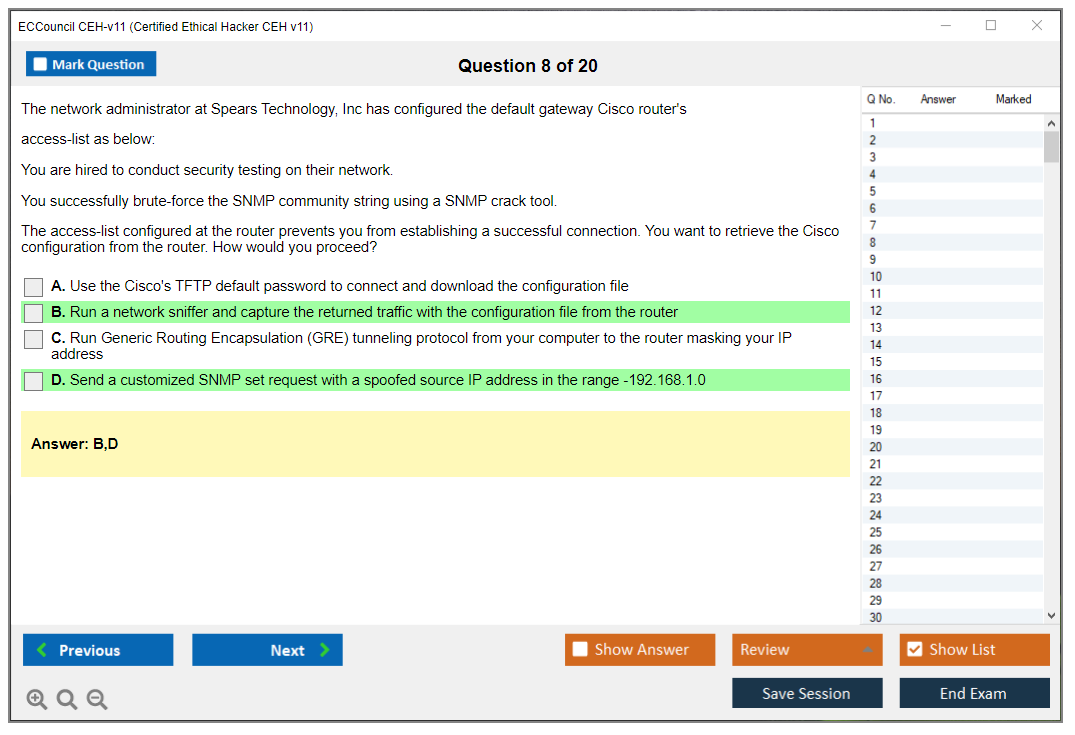
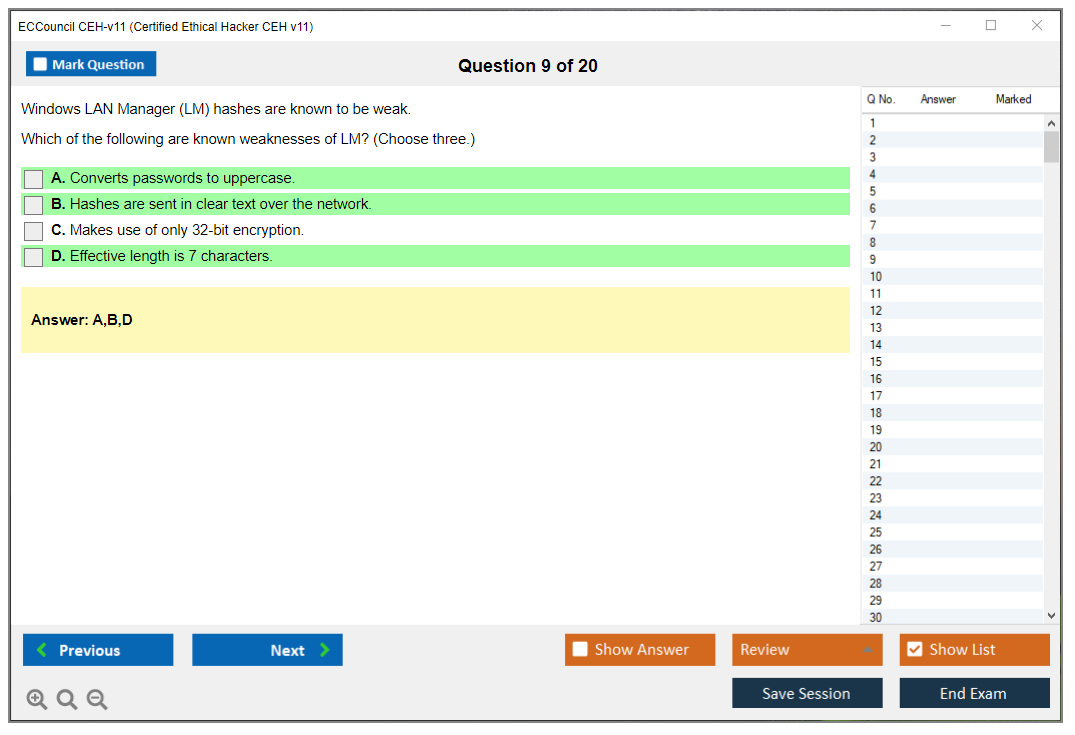
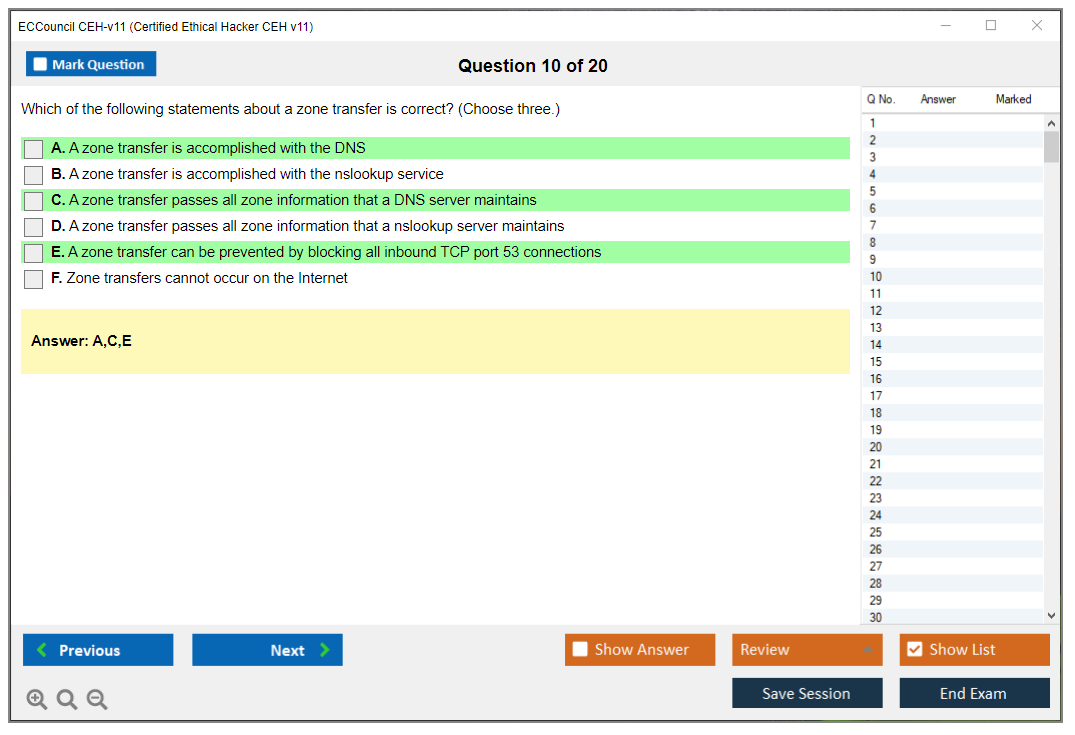
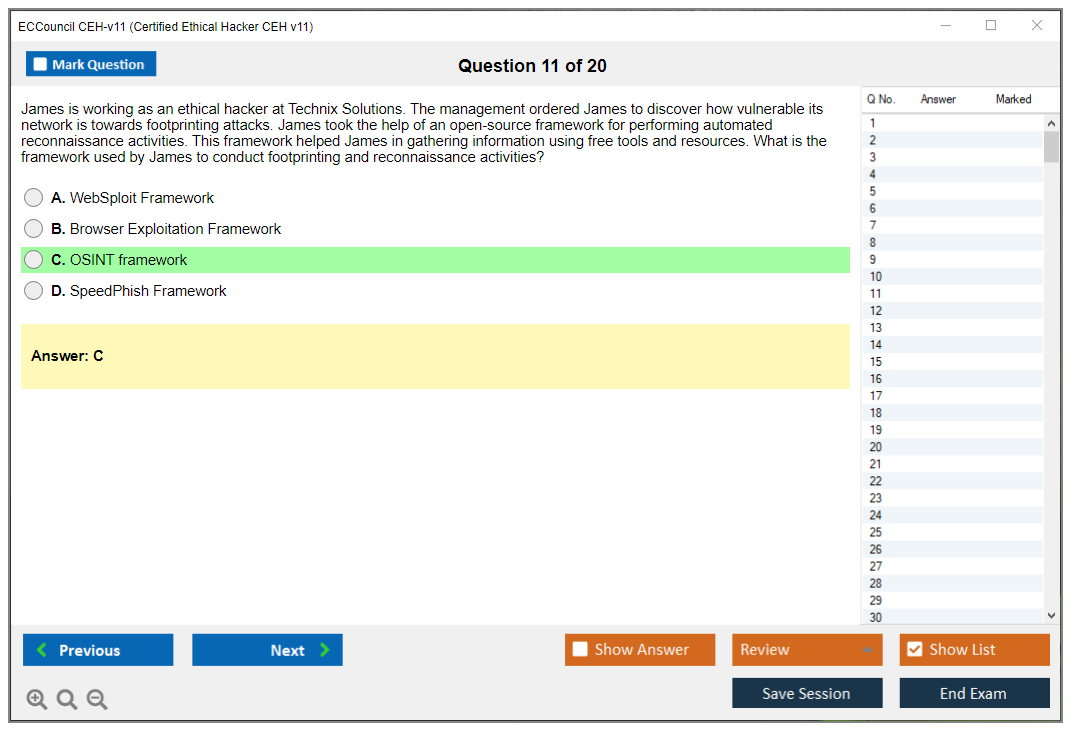
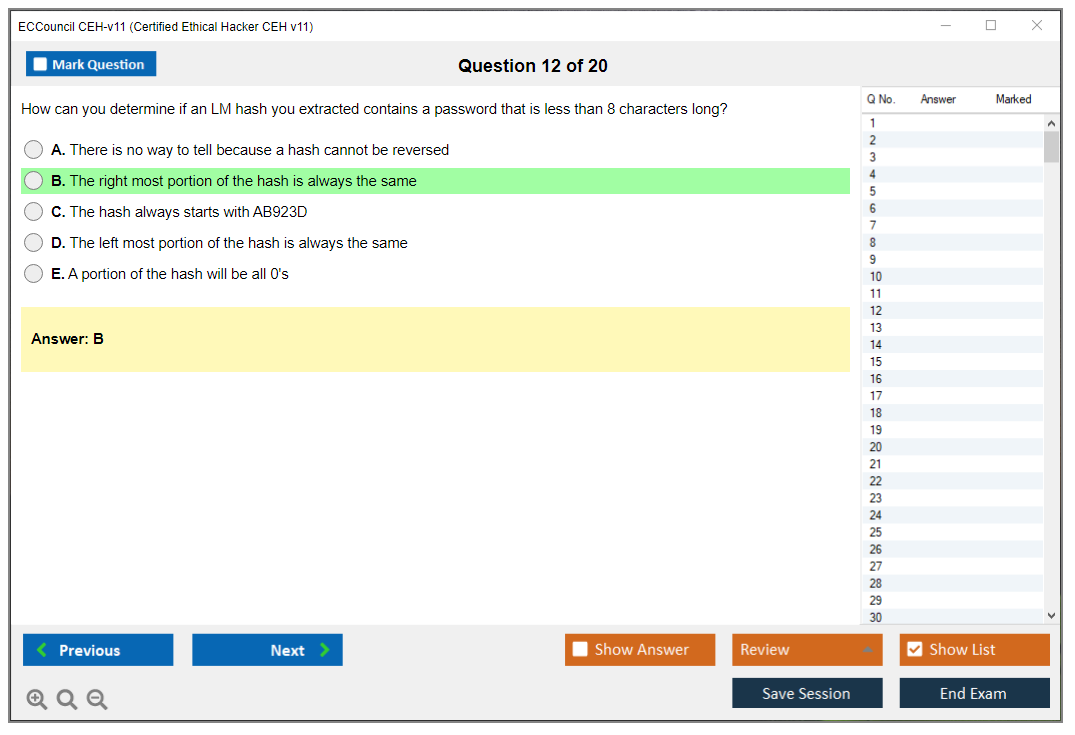
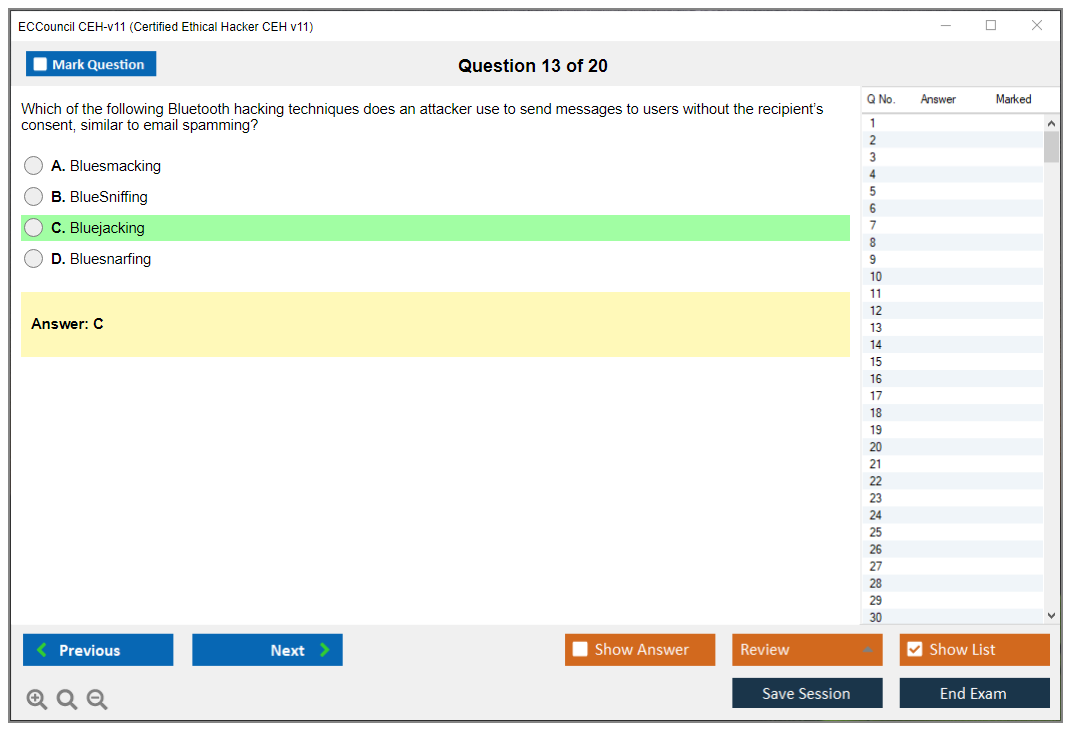
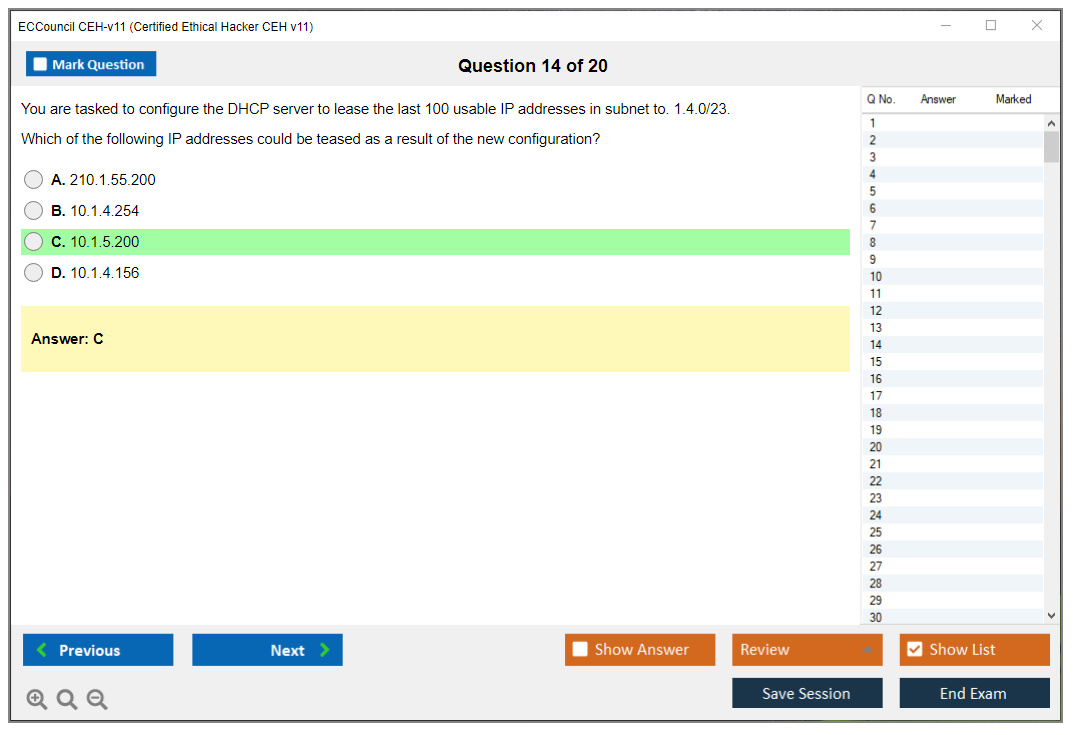
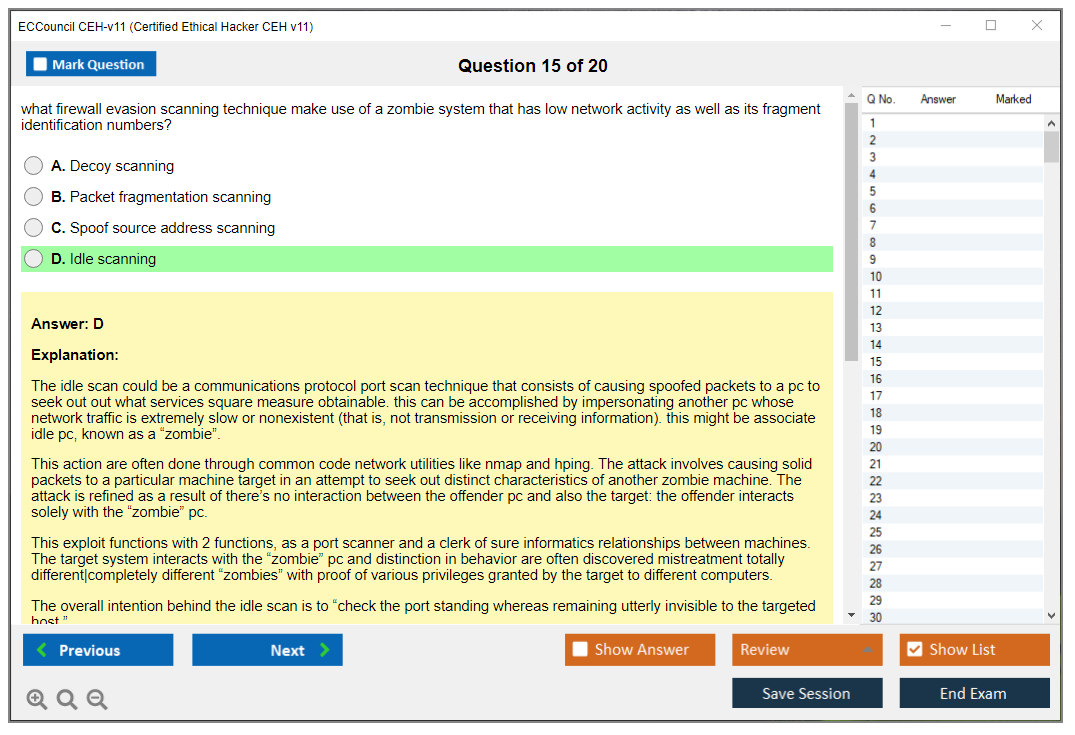
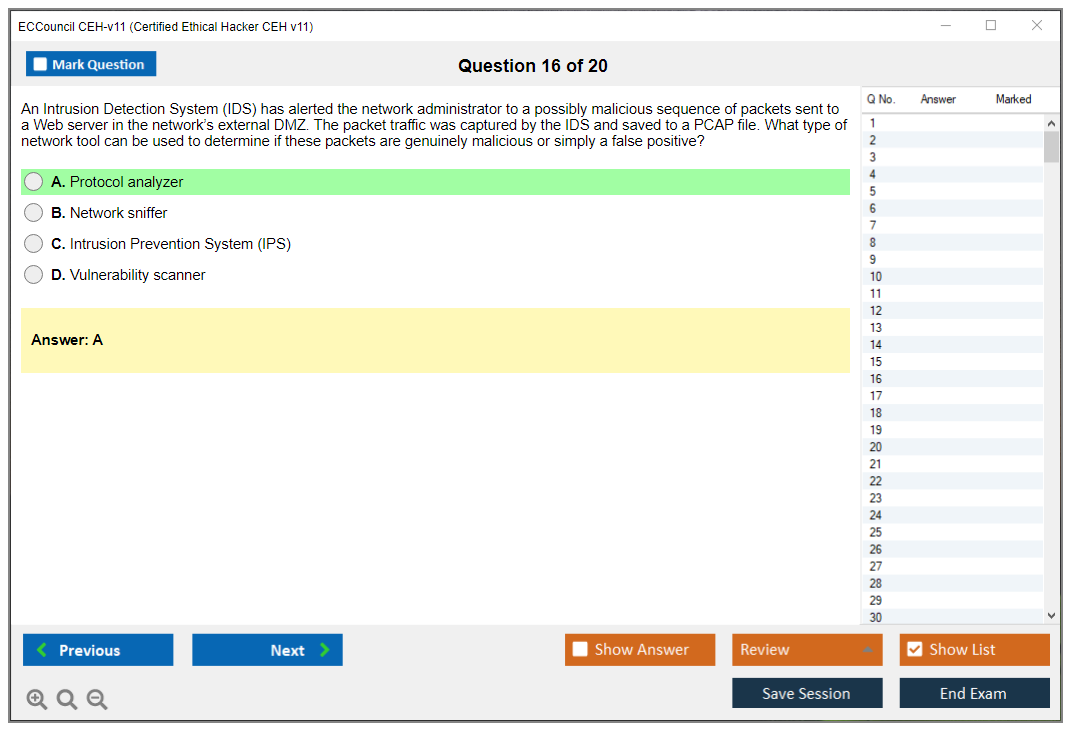
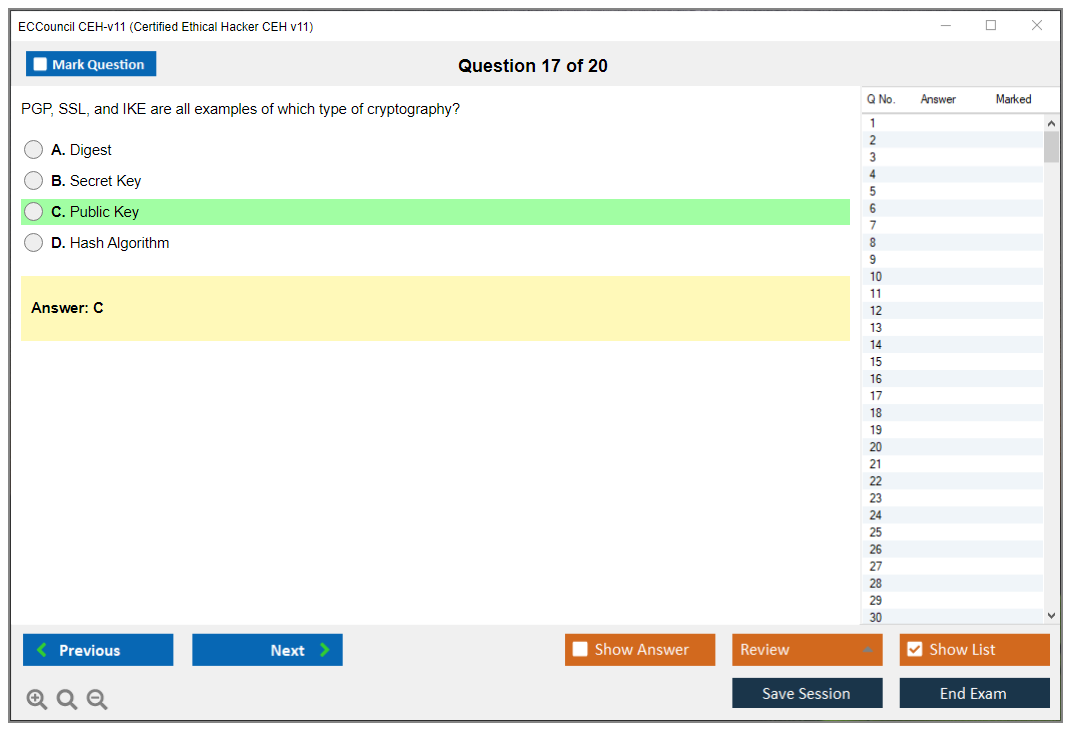
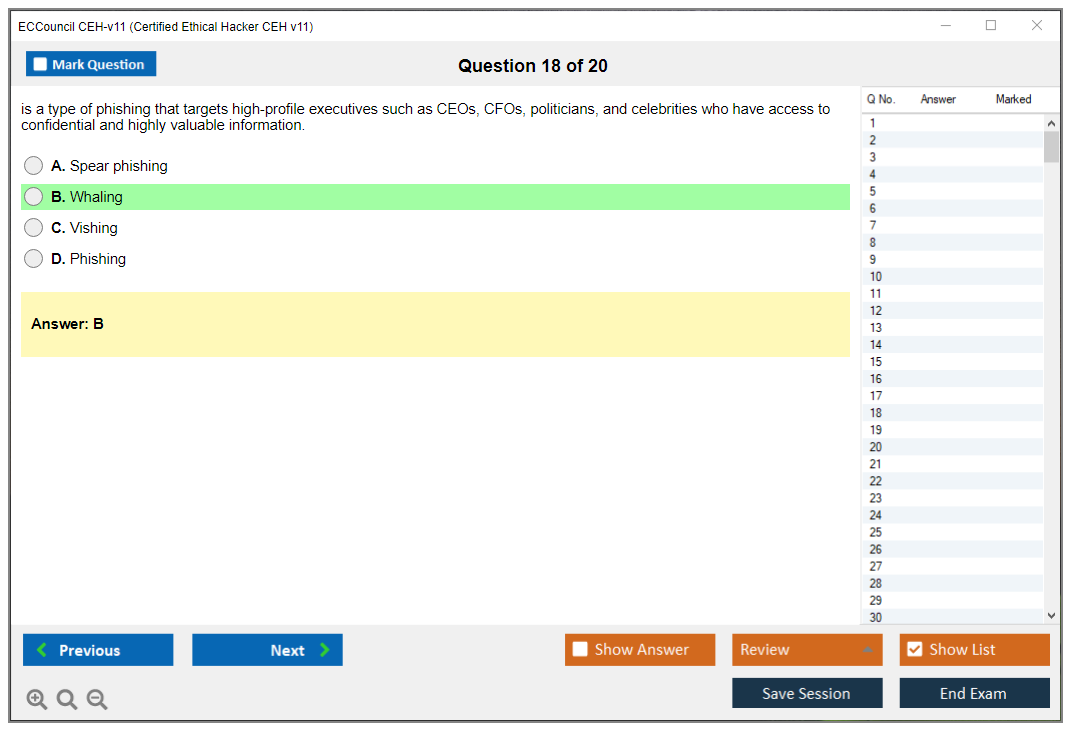
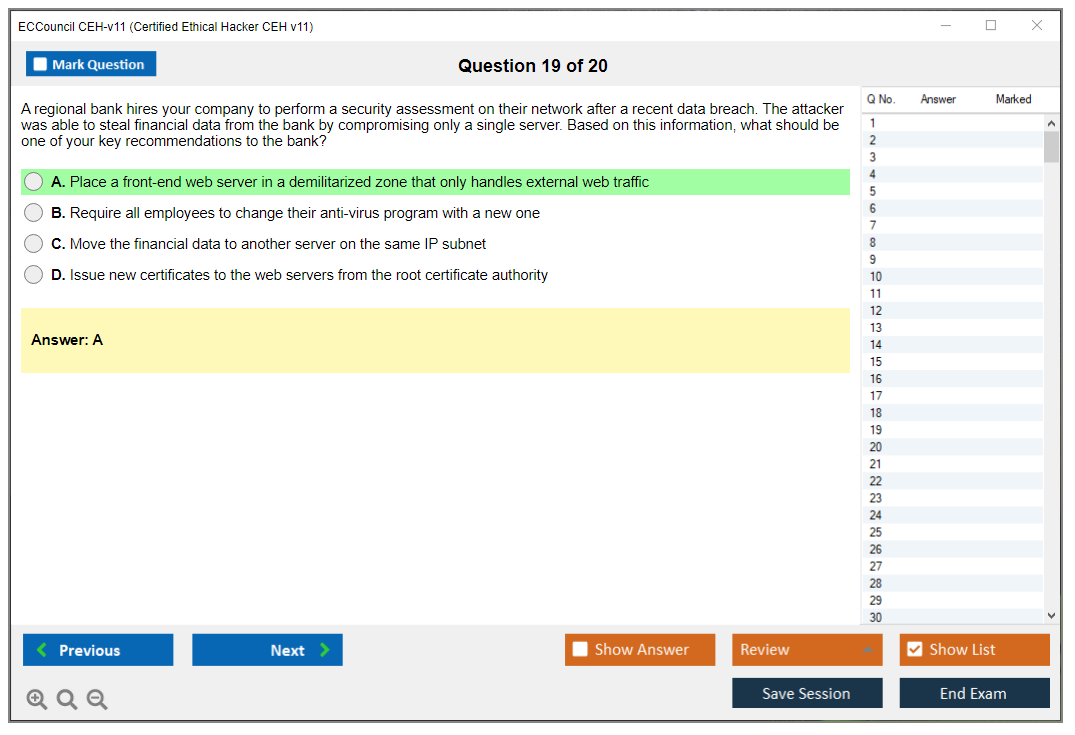
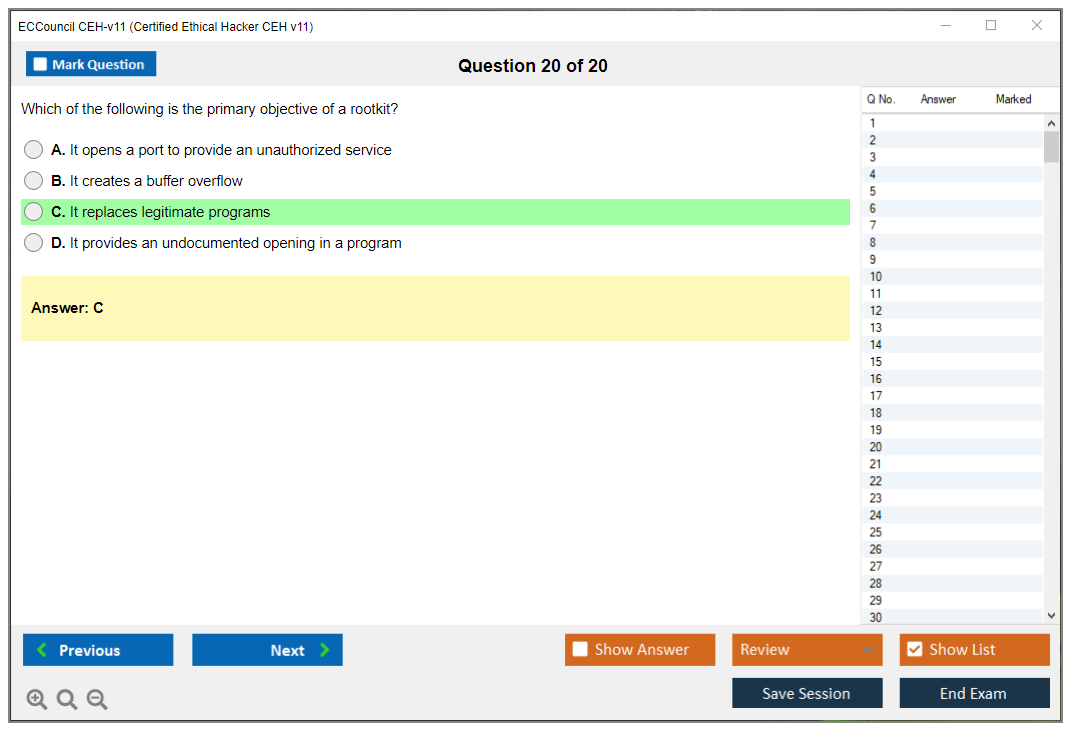
Dumpsarena ECCouncil Certified Ethical Hacker CEH v11 (CEH-v11) Free Practice Exam Simulator Test Engine Exam preparation with its cutting-edge combination of authentic test simulation, dynamic adaptability, and intuitive design. Recognized as the industry-leading practice platform, it empowers candidates to master their certification journey through these standout features.
What is in the Premium File?
Satisfaction Policy – Dumpsarena.co
At DumpsArena.co, your success is our top priority. Our dedicated technical team works tirelessly day and night to deliver high-quality, up-to-date Practice Exam and study resources. We carefully craft our content to ensure it’s accurate, relevant, and aligned with the latest exam guidelines. Your satisfaction matters to us, and we are always working to provide you with the best possible learning experience. If you’re ever unsatisfied with our material, don’t hesitate to reach out—we’re here to support you. With DumpsArena.co, you can study with confidence, backed by a team you can trust.
ECCouncil CEH-v11 Exam FAQs
Introduction of ECCouncil CEH-v11 Exam!
The EC-Council Certified Ethical Hacker (CEH v11) exam is a comprehensive exam that tests a candidate's knowledge and skills in ethical hacking and network security. The exam covers topics such as network scanning, system hacking, malware threats, cryptography, and more. Candidates must demonstrate their ability to assess the security posture of an organization by identifying vulnerabilities in the network and system infrastructure. The exam also tests a candidate's knowledge of countermeasures and best practices for mitigating security threats.
What is the Duration of ECCouncil CEH-v11 Exam?
The duration of the ECCouncil CEH-v11 exam is 4 hours.
What are the Number of Questions Asked in ECCouncil CEH-v11 Exam?
The ECCouncil CEH-v11 exam consists of 125 multiple-choice questions.
What is the Passing Score for ECCouncil CEH-v11 Exam?
The passing score required in the ECCouncil CEH-v11 exam is 70%.
What is the Competency Level required for ECCouncil CEH-v11 Exam?
The required competency level for the ECCouncil CEH-v11 exam is an individual who has an intermediate level of knowledge in IT security.
What is the Question Format of ECCouncil CEH-v11 Exam?
The ECCouncil CEH-v11 exam consists of multiple-choice questions and performance-based questions.
How Can You Take ECCouncil CEH-v11 Exam?
The EC-Council Certified Ethical Hacker (CEH-v11) exam can be taken online or at a testing center. To take the exam online, you must register and pay the exam fee through the EC-Council website. You will then be provided with a link to the online exam platform. Once you have completed the exam, you will receive your score and a certificate of completion. To take the exam at a testing center, you must register and pay the exam fee through the EC-Council website. You will then be provided with a voucher code and instructions on how to schedule your exam at a testing center near you. Once you have completed the exam, you will receive your score and a certificate of completion.
What Language ECCouncil CEH-v11 Exam is Offered?
ECCouncil CEH-v11 exam is offered in the English language.
What is the Cost of ECCouncil CEH-v11 Exam?
The cost of the ECCouncil CEH-v11 exam is $950 USD.
What is the Target Audience of ECCouncil CEH-v11 Exam?
The target audience for the ECCouncil CEH-v11 Exam are security professionals who are looking to become certified ethical hackers. They should have at least two years of experience in the field of information security and a strong technical background.
What is the Average Salary of ECCouncil CEH-v11 Certified in the Market?
The average salary of a CEH-v11 certified professional is around $90,000 per year. However, this figure can vary significantly depending on the individual's experience, job title, and location.
Who are the Testing Providers of ECCouncil CEH-v11 Exam?
The ECCouncil CEH-v11 exam is administered by the ECCouncil. The ECCouncil is the only organization authorized to provide testing for the CEH-v11 exam.
What is the Recommended Experience for ECCouncil CEH-v11 Exam?
The recommended experience for the ECCouncil CEH-v11 Exam is a minimum of two (2) years of hands-on information security experience.
What are the Prerequisites of ECCouncil CEH-v11 Exam?
The prerequisite for the ECCouncil CEH-v11 exam is that candidates must have a minimum of two years of information security related experience. Additionally, candidates must have a working knowledge of network security and ethical hacking concepts.
What is the Expected Retirement Date of ECCouncil CEH-v11 Exam?
The official website for the ECCouncil CEH-v11 exam is https://www.eccouncil.org/programs/certified-ethical-hacker-ceh/. You can find the retirement date for the exam on this page.
What is the Difficulty Level of ECCouncil CEH-v11 Exam?
The difficulty level of the ECCouncil CEH-v11 exam is considered to be moderate to difficult. It requires a good understanding of the material and the ability to apply the knowledge in the exam.
What is the Roadmap / Track of ECCouncil CEH-v11 Exam?
The EC-Council CEH-v11 certification track/roadmap is a series of exams designed to help IT professionals gain expertise in the field of ethical hacking and information security. The CEH-v11 certification track consists of four exams: Certified Ethical Hacker (CEH-v11), Certified Security Analyst (ECSA-v11), Licensed Penetration Tester (LPT-v11), and Certified Chief Information Security Officer (CCISO-v11). The CEH-v11 exam is the first step in the certification track and is designed to assess a candidate’s knowledge of the core concepts of ethical hacking, including network security, cryptography, and web application security. The ECSA-v11 exam is the second step in the certification track and is designed to assess a candidate’s ability to analyze and interpret the results of a penetration test. The LPT-v11 exam is the third step in the certification track and is designed to assess a
What are the Topics ECCouncil CEH-v11 Exam Covers?
The ECCouncil CEH-v11 exam covers the following topics:
1. Network Security: This topic covers the fundamentals of network security, including security policies, firewalls, intrusion detection systems, and network traffic analysis.
2. System Security: This topic covers the fundamentals of system security, including system hardening, system security policies, and system monitoring.
3. Cryptography: This topic covers the fundamentals of cryptography, including encryption algorithms, hashing algorithms, and digital signatures.
4. Malware: This topic covers the fundamentals of malware, including types of malware, malware analysis, and malware prevention.
5. Web Application Security: This topic covers the fundamentals of web application security, including web application vulnerabilities, web application firewalls, and secure coding practices.
6. Mobile Security: This topic covers the fundamentals of mobile security, including mobile device security, mobile application security, and mobile security best practices.
What are the Sample Questions of ECCouncil CEH-v11 Exam?
1. What is the purpose of a Footprinting phase in the ethical hacking process?
2. What type of attack is used to gain access to a system by guessing the passwords?
3. What is the term used to describe the process of exploiting a vulnerability in a system to gain control of it?
4. What is the purpose of a Vulnerability Assessment?
5. What is the most common type of encryption used in wireless networks?
6. What is the name of the tool used to scan and identify potential vulnerabilities in a network?
7. What is the name of the tool used to perform a Denial of Service attack?
8. What is the most common type of attack used to gain access to a network?
9. What is the difference between a white-box and a black-box penetration test?
10. What is the purpose of a Social Engineering attack?
ECCouncil CEH-v11 (Certified Ethical Hacker CEH v11) EC-Council CEH v11 (Certified Ethical Hacker) Overview EC-Council CEH v11 (Certified Ethical Hacker) Overview The CEH v11 certification is EC-Council's flagship ethical hacking credential, and it's been around long enough that tons of security pros have this one on their resume. Validates foundational skills. It covers the offensive security capabilities you'd need when attempting to think like an attacker while working for the good guys. The whole approach involves understanding how hackers operate so you can actually defend against them. Sounds kinda obvious, but it really does require this weird mindset shift that not everyone can pull off. The EC-Council CEH v11 certification confirms you're proficient in identifying vulnerabilities, conducting penetration tests, and understanding attacker methodologies from a defensive perspective. You're not just learning to break stuff randomly. You're absorbing the systematic approach that... Read More
ECCouncil CEH-v11 (Certified Ethical Hacker CEH v11)
EC-Council CEH v11 (Certified Ethical Hacker) Overview
EC-Council CEH v11 (Certified Ethical Hacker) Overview
The CEH v11 certification is EC-Council's flagship ethical hacking credential, and it's been around long enough that tons of security pros have this one on their resume. Validates foundational skills. It covers the offensive security capabilities you'd need when attempting to think like an attacker while working for the good guys. The whole approach involves understanding how hackers operate so you can actually defend against them. Sounds kinda obvious, but it really does require this weird mindset shift that not everyone can pull off.
The EC-Council CEH v11 certification confirms you're proficient in identifying vulnerabilities, conducting penetration tests, and understanding attacker methodologies from a defensive perspective. You're not just learning to break stuff randomly. You're absorbing the systematic approach that actual threat actors use, then flipping that knowledge to shore up defenses. It's built around real-world hacking scenarios, which means the Certified Ethical Hacker v11 exam doesn't just ask theoretical questions. You need demonstrable knowledge of tools, techniques, and procedures used by malicious actors in actual attacks that happen every single day.
CEH v11 validates skills across a pretty wide spectrum: reconnaissance, scanning, enumeration, system hacking, web application attacks, wireless security, cryptography, social engineering, incident response. Covers a lot of ground. Some people complain it's a mile wide and an inch deep, but look, for an intermediate cert that's kinda the point, right? You get exposure to everything, then specialize later if you want. My buddy Dave used to joke that CEH stands for "Can Eventually Hack" because it gives you just enough knowledge to be dangerous but not enough to actually land a six-figure pentest gig right away.
What job roles does this thing actually open up?
Target roles include penetration tester, security analyst, security consultant, vulnerability assessment specialist, SOC analyst, and network security engineer. Not gonna lie, having CEH on your resume definitely gets past HR filters for these positions, especially in larger organizations that use cert requirements as screening criteria. Government contractors absolutely love it because it meets DoD 8570/8140 baseline requirements for information assurance roles. If you want defense contracts or military positions, CEH is basically table stakes.
The ethical hacking certification provides a vendor-neutral foundation that complements platform-specific credentials. You're not locked into Microsoft or Cisco ecosystems, which appeals to employers seeking standardized security knowledge that translates across different environments. I've seen job postings that specifically call out CEH alongside Security+ or CISSP, treating it as proof you understand offensive security concepts regardless of whatever tech stack they're running.
CEH v11 versus the newer versions, what's the deal?
CEH v11 differs from CEH v12 primarily in tool coverage, cloud security depth, and emerging threat modules. Version 11 represents a slightly older curriculum snapshot. But honestly? Not dramatically different. V12 added more cloud stuff, updated some tool versions, expanded IoT and OT coverage a bit. The core methodology remains pretty much the same five phases of ethical hacking: reconnaissance, scanning, gaining access, maintaining access, and covering tracks.
CEH v11 remains relevant for candidates who began training before v12 launch or who have access to v11 study materials and practice environments. If you've already invested in v11 resources or your employer is paying for v11 training, there's zero reason to panic about not having the absolute latest version. Security fundamentals don't change that fast.
What makes CEH v11 actually useful?
The certification demonstrates commitment to ethical standards through EC-Council's code of ethics, emphasizing legal boundaries and responsible disclosure practices. You're signing an agreement that you'll use these skills responsibly. Sounds cheesy but matters when you're explaining to management why they should trust you with production systems that could literally break the entire company if mishandled. Penetration testing fundamentals covered in CEH v11 give you a structured framework rather than just random hacking knowledge.
CEH v11 covers hands-on tool familiarity with Nmap, Metasploit, Wireshark, Burp Suite, John the Ripper, Hashcat, and dozens of other industry-standard utilities. Won't make you an expert in any single one. You'll know what each one does and when to reach for it, though. The curriculum fits with NICE framework competencies for offensive security roles, which helps if you're trying to map your skills to government or enterprise security frameworks.
The certification is a stepping stone toward advanced EC-Council credentials like CEH Practical, ECSA (EC-Council Certified Security Analyst), and LPT (Licensed Penetration Tester). Think of it as the foundation. You prove you understand concepts with CEH v11, then move to ECSA if you want deeper penetration testing methodology, or grab CEH Practical if you need to prove hands-on skills in a lab environment.
Is this a beginner cert or what?
Cybersecurity certification for beginners seekers often choose CEH after foundational certs like CompTIA Security+ or Network+, though direct entry is possible with proper preparation. I've seen people with zero IT background try jumping straight into CEH. Some make it, most struggle pretty hard. You really need basic networking concepts, understanding of operating systems (Windows and Linux), and general security awareness before CEH makes sense. Otherwise you're drowning in acronyms and protocol specifications you've never heard of.
Exam preparation typically requires 40-80 hours of study depending on prior experience. If you're already working as a sysadmin or network engineer, you might breeze through in a month. Plan on two to three months minimum if you're a complete beginner, with focus on both theoretical concepts and practical tool usage.
CEH v11 holders gain access to EC-Council's member resources, including continuing education opportunities, webinars, and the Aspen security intelligence platform. The certification's global recognition spans industries like finance, healthcare, technology, government, and consulting, with particular strength in North America, Europe, and Asia-Pacific markets.
The bottom line? CEH v11 provides a structured learning path that builds knowledge from information gathering through post-exploitation, creating a solid offensive security foundation. Not perfect. Not the absolute latest version. But it's still widely recognized and really useful for breaking into security roles.
CEH v11 Exam Details
EC-Council CEH v11 (Certified Ethical Hacker) overview
The CEH v11 certification is EC-Council's best-known ethical hacking cert. It's aimed at proving you understand attack phases, common tools, defensive countermeasures without pretending you're suddenly a full-time red teamer on day one, which would be ridiculous because nobody's that good right out the gate. Honestly, most junior roles want you to know enough to not break production while you're learning the actual tradecraft through real incident response, threat hunting, or whatever your team does day-to-day. It maps well to junior security roles: SOC analyst, security analyst, "I got voluntold to run vulnerability scans." That kind of job.
Look, it's also an HR checkbox. Not always fair. But real.
For context, EC-Council CEH v11 is the v11 blueprint and objectives set even though newer versions exist now. If your employer, training provider, or voucher says v11 you're dealing with the 312-50 content and the CEH exam objectives v11 list.
CEH v11 exam details (312-50)
The CEH 312-50 exam is the assessment instrument for the Certified Ethical Hacker v11 exam. It's multiple-choice focused, testing both theory and practical application by asking what you'd do, what tool fits, what a given output implies.
125 questions.
Four hours total.
That means 240 minutes or about 1.9 minutes per question, which sounds roomy until you hit a couple wordy scenarios where you're reading logs, thinking through the attack chain, second-guessing whether the exam writer wanted the "best" answer or the "first" answer. I mean those distinctions matter more than you'd think. And honestly? Some of the scenario questions feel like they were written by someone who just discovered how many subordinate clauses you can pack into a single stem before people start rereading from the top.
EC-Council pulls those 125 multiple-choice questions from a large question bank so each candidate gets a different mix but it's supposed to be equivalent difficulty. Some questions are straight recall. Port 443, TLS stuff, hashing versus encryption, basic vocab. Others are multi-step scenario items where you've gotta reason through reconnaissance, scanning, exploitation approach, then pick the most appropriate tool or countermeasure. Fragments too. "Which of the following is BEST.." and suddenly you're arguing with yourself.
Passing score for CEH v11 (how scoring works)
The CEH v11 passing score isn't a single fixed number for every form, which trips people up constantly. It's generally set somewhere around 60% to 85% depending on the difficulty of the specific exam form. EC-Council often targets about 70% as a common threshold.
Honestly? The part that confuses people is scaled scoring. Your raw score gets adjusted based on question difficulty so that one candidate doesn't get punished for drawing a harder set from the bank while another gets a softer set and cruises. Wait, and that's also how they avoid score inflation across versions. You'll still experience it as pass or fail on the spot but the scaling's why people compare notes afterward and feel like the math is inconsistent.
Exam objectives (domains) and topic weighting
The EC-Council exam blueprint splits CEH v11 into 20 domains and they're weighted but not perfectly evenly represented or anything. Some areas just show up more because they're foundational or because they're easier to test in MCQ form.
Here's the domain breakdown and approximate weight:
- Domain 1 Introduction to Ethical Hacking (4-6%): fundamentals, security controls, legal and regulatory frameworks
- Domain 2 Footprinting and Reconnaissance (6-8%): passive versus active recon, OSINT, countermeasures
- Domain 3 Scanning Networks (6-8%): discovery, port scanning, vulnerability scanning, evasion techniques
- Domain 4 Enumeration (5-7%): services, SNMP, NetBIOS, countermeasures
- Domain 5 Vulnerability Analysis (4-6%): VA concepts, types, lifecycle management
- Domain 6 System Hacking (10-12%): password attacks, privilege escalation, hiding files, covering tracks
- Domain 7 Malware Threats (5-7%): malware types, APT concepts, Trojan analysis, countermeasures
- Domain 8 Sniffing (4-6%): packet sniffing, MAC flooding, ARP poisoning, defenses
- Domain 9 Social Engineering (5-7%): phishing, identity theft, techniques, defenses
- Domain 10 Denial-of-Service (4-6%): DoS and DDoS types, botnets, countermeasures
- Domain 11 Session Hijacking (3-5%): concepts, app-level hijacking, defenses
- Domain 12 Evading IDS, Firewalls, and Honeypots (4-6%): evasion, bypassing, honeypot detection
- Domain 13 Hacking Web Servers (5-7%): server vulns, attack methods, hardening
- Domain 14 Hacking Web Applications (8-10%): OWASP Top 10, XSS, CSRF, SQLi basics, web security
- Domain 15 SQL Injection (4-6%): deeper SQLi types, tools, evasion
- Domain 16 Hacking Wireless Networks (5-7%): encryption, attacks, security
- Domain 17 Hacking Mobile Platforms (4-6%): mobile vulns, vectors, security
- Domain 18 IoT and OT Hacking (3-5%): architecture, threats, security
- Domain 19 Cloud Computing (4-6%): models, threats, security
- Domain 20 Cryptography (6-8%): algorithms, PKI, cryptanalysis, tools
If you want my opinion? Domain 6 and Domain 14 are where people bleed points because they combine vocabulary with sequencing. You're not just naming "privilege escalation," you're deciding when it makes sense, what you'd look for, what's noisy versus stealthy. And the exam loves those distinctions.
Where to take the exam (Pearson VUE/remote options)
Delivery's either Pearson VUE test centers worldwide or remote proctoring via EC-Council's online testing platform.
Test center's boring but predictable.
Remote's convenient but picky. Remote proctoring requirements are the usual: webcam, stable internet, clean workspace, government-issued ID for identity verification. No second monitor, no notes, no "my phone's face down, it's fine" because they will call it out.
You get immediate pass or fail when you finish. Detailed score reports typically show up in the EC-Council portal within 24 to 48 hours.
Quick answers people ask anyway
How much does the CEH v11 exam cost? The CEH v11 cost depends on voucher source and bundles but expect a few hundred dollars for an exam voucher and a lot more if you're buying official training packages.
Is CEH v11 hard for beginners? As a cybersecurity certification for beginners it's doable but only if you've already got penetration testing fundamentals like networking, ports, HTTP basics, Linux commands, security terminology down.
What about CEH v11 study materials and practice tests? Get one primary book or course, then add labs for tool familiarity, then finish with CEH v11 practice tests that explain why answers are right, not just the letter.
CEH v11 renewal requirements? CEH renews on a cycle with continuing education (ECE) credits and fees through EC-Council. The thing is check your portal for your exact dates and submission steps because missing the window's a headache.
CEH v11 Cost and Fees
CEH v11 exam voucher price (typical ranges)
The CEH v11 exam voucher price typically falls between $950 and $1,199 USD when you purchase directly through EC-Council or their authorized training centers. This pricing varies way more than you'd think based on your geographic location and the specific route you choose. If you go the exam-only route (meaning you skip official training entirely) you're looking at around $950 USD for the voucher itself. But here's the thing: you can't just walk up and buy that voucher without proving you've got the chops.
You need to submit an eligibility application showing at least two years of verifiable information security work experience. That application costs $100 USD, and it's non-refundable whether EC-Council approves your application or not. So realistically, the exam-only path costs you $1,050 USD minimum before you even sit for the Certified Ethical Hacker Exam.
For folks who don't meet the work experience requirement, or honestly just want structured learning, EC-Council bundles the exam voucher with official training. These packages range from $2,499 to $3,499 USD depending on delivery format and what extras you get. The self-paced online training with six months of iLabs access and an exam voucher runs $2,499 USD through EC-Council's official learning platform. That iLabs access is pretty valuable because you get hands-on practice with the tools and techniques covered in the CEH 312-50 exam without needing to build your own lab environment from scratch. I mean, that alone saves you hours of frustration and setup headaches that'd make you question your career choices. Plus, troubleshooting virtualization issues at 2 AM when you've got the exam in three days? Nobody needs that stress.
Training bundles and official course costs
Instructor-led training pushes the price higher. We're talking $2,999 to $3,999 USD depending on which training provider you choose, whether it's live online or in-person, and what extra materials they throw in. The premium pricing makes more sense when you consider what's usually included: practice exams, study guides, extended lab access beyond the basic six months, and sometimes even retake vouchers if you don't pass on the first attempt.
Do the training bundles justify their cost? Maybe, but you've gotta decide if that's worth it for your learning style. Some people thrive in instructor-led environments where they can ask questions in real-time and interact with other students. Others find the self-paced route works better with their schedule and budget constraints.
Third-party training providers offer CEH v11 preparation courses ranging from $299 to $1,499 USD, which sounds like a steal compared to official pricing. Here's the catch though: these courses don't satisfy EC-Council's official training requirements for exam eligibility. You can use them for supplemental study if you're taking the exam-only route with the eligibility application, but they won't get you around that two-year experience requirement. Companies like Udemy, Cybrary, and various other platforms offer solid content at these lower price points. Just understand what you're buying.
Corporate training contracts can reduce per-seat costs when organizations train multiple employees at once, sometimes dropping individual pricing by 30-40% compared to what you'd pay solo. If your employer is sending five or ten people through CEH v11 training, they might negotiate volume pricing that brings the individual cost down substantially. Government and military personnel often access reduced pricing through DoD or agency-specific training contracts that aren't available to the general public.
Students currently enrolled in college or university programs can usually snag a 20-30% discount on exam vouchers with valid academic identification. That brings the exam-only voucher down to somewhere around $665-$760 USD, which makes a big difference if you're studying on a tight budget while finishing your degree. Just make sure your student ID is current because EC-Council verifies that stuff.
Retake fees and rescheduling considerations
If you don't pass on your first attempt, retake fees add $350 to $500 USD per additional exam attempt. This is exactly why thorough preparation matters from a cost management perspective. Failing once or twice can easily double or triple your total certification investment. The CEH v11 passing score requirements mean you need to really know the material, not just memorize dumps or practice questions.
Exam rescheduling gets expensive if you wait until the last minute. Within 24-48 hours of your scheduled time, you're looking at $70 to $100 USD in change fees. Earlier rescheduling (usually more than 48 hours out) might be free or incur minimal charges depending on EC-Council's current policy. No-show appointments are brutal. You forfeit the full exam fee with zero refund or transfer options. Miss your appointment and you're out the entire voucher cost. Gone.
Some employers reimburse certification costs upon completion, making CEH v11 certification free for employees at security-focused organizations. It's worth checking your company's professional development or training reimbursement policies before paying out of pocket. Many cybersecurity companies recognize that CEH adds value to their service offerings and will cover the full cost. Sometimes even including study time as paid work hours, which is a sweet deal if you can get it.
Hidden costs add up beyond the obvious exam and training fees. Building a home lab for safe practice (even basic virtualization hardware) can run $200 to $500 USD. Practice exam subscriptions, additional study materials beyond what's included in training bundles, and continuing education for eventual renewal all represent indirect expenses that budget-conscious candidates need to factor in.
Total first-time certification cost ranges from $1,050 USD at the absolute minimum (exam-only with eligibility application) to $4,000+ USD for premium instructor-led training bundles. Most people fall somewhere in the middle, spending $2,500 to $3,000 USD for self-paced training with adequate preparation resources. That's not cheap, but compared to other advanced cybersecurity certifications like Certified Security Analyst or CISSP, it's positioned as an intermediate-level investment.
CEH v11 Prerequisites and Eligibility
CEH v11 prerequisites and eligibility (what EC-Council actually cares about)
EC-Council enforces eligibility requirements for the CEH v11 certification for one reason: they don't want the CEH 312-50 exam to be someone's first real exposure to security concepts. The exam's multiple choice, but it still expects you've actually worked with networks, operating systems, and basic defensive controls. Not just watched a YouTube tutorial.
No formal degree needed. High school's fine. Age matters, though.
You need to be at least 18 when you register for the exam and when the certification gets issued. If you're an international candidate, your government-issued ID has to match your exam registration name exactly. Sounds obvious until you're the person whose passport lists names in a different order or uses non-Latin characters and suddenly you're hunting for translation documents to keep Pearson VUE from blocking you.
Work experience requirements (EC-Council eligibility application)
If you're going the exam-only route without official training, EC-Council's big gatekeeper is the work experience requirement: two years of verifiable information security-related work experience. Not "I'm really into hacking." Not "I spun up a Kali VM once." Two years. Verified. The thing is, acceptable experience is actually broader than most people realize. Network security roles count. System administration counts if security responsibilities are real and routine (patching, hardening, access controls, log review, vuln remediation). SOC work counts. Penetration testing, vulnerability assessment, incident response. Even if your title's boring, your duties can still qualify, as long as you can describe the security-specific work you performed without making it sound like a student project.
Part-time, internships, and contracting can count too, but it's prorated. So if you did 20 hours a week doing security analyst intern tasks for a year, don't try to sell it as "one year equals one year." EC-Council converts it to full-time equivalent time, and you should do that math yourself before you apply so you're not wasting days waiting on a predictable rejection.
I've seen candidates lose weeks because they listed a contract gig from 2019 but couldn't remember their manager's full name or the company got acquired and changed names. Documentation decay is real.
The eligibility application process (what you'll be asked to prove)
The eligibility application isn't a vibe check. It's paperwork. Lots of it. You'll need detailed employment verification including supervisor contact info, your job responsibilities, and specifically what security duties you performed. Names, dates, org details. Expect to be clear about scope, tools, and outcomes. Like "reviewed firewall rules weekly" or "triaged alerts in SIEM and escalated incidents," not "helped with cybersecurity."
EC-Council typically reviews eligibility applications within 5-7 business days, then they either approve you or request more documentation. That approval gets you exam voucher eligibility for the Certified Ethical Hacker v11 exam. The waiting part's annoying, because you're usually trying to line up an exam date, study plan, and maybe employer reimbursement, and one missing supervisor phone number can stall the whole thing.
If you're planning to self-study, this is the moment to be brutally honest with yourself about your history and your documentation. "I did security stuff at a startup" is great until the startup's gone and nobody can verify it.
Official training path vs self-study route (the decision that changes everything)
Here's the fork: official training path vs self-study route.
If you complete EC-Council's official CEH v11 training (self-paced or instructor-led), you bypass the eligibility application entirely and get immediate access to the exam voucher. That's the cleanest path administratively, and it's why some people pay for official training even when they could learn the content on their own. Less friction, less back-and-forth, more predictable scheduling.
Self-study's still doable, but then you're stuck with either proving the two years of work experience through the eligibility application or giving in and enrolling in the official course anyway. Self-study folks should budget for practice because the questions can be oddly phrased and very "EC-Council-ish," which is why I'm a fan of drilling targeted practice sets like this CEH-v11 Practice Exam Questions Pack when you're closing gaps and learning how the exam actually asks things.
Recommended prior knowledge (what makes prep not miserable)
EC-Council doesn't list a long academic prerequisite chain, but the EC-Council exam blueprint and the CEH exam objectives v11 assume you already speak basic IT.
You should understand networking fundamentals: TCP/IP, the OSI model, subnetting basics, and common services like DNS, DHCP, HTTP/HTTPS, SMTP, and SMB. If those acronyms blur together, you're gonna spend half your CEH time just translating the question before you can even answer it. Familiarity with Windows and Linux at an intermediate level helps a lot, because CEH content constantly references permissions, processes, logs, and common admin concepts.
Command line matters. You'll use it. A lot.
Basic command-line proficiency in Windows (CMD and PowerShell) and Linux (Bash) is required to follow tool usage and attack techniques, even if you never run a real exploit. Foundational security concepts like the CIA triad, defense-in-depth, least privilege, and security policy basics give you the context to understand why an attack phase exists and what control should stop it. That's a big part of many ethical hacking certification exams.
Network+ or Security+ level knowledge is a solid foundation. Not required, but it maps well to the "penetration testing fundamentals" you'll see in CEH. Add a little scripting literacy (Python or Bash or PowerShell) and suddenly exploit and automation topics stop feeling like magic tricks and start feeling like basic string handling and process execution.
Virtualization's your friend too. VirtualBox, VMware, Hyper-V, whatever, because you need a home lab to practice safely, and labs are where beginners stop guessing and start understanding. Web basics help as well: HTTP/HTTPS, HTML, JavaScript, and SQL databases, because web modules are way easier when you can read a request and know what "normal" looks like.
Quick realities: cost, difficulty, and timing
People always ask about CEH v11 cost, and yeah, it can get expensive fast once you factor vouchers, training bundles, and retakes. Same with CEH v11 passing score questions. Scoring varies by exam form, so don't cling to one magic number you saw on a forum. Focus on readiness.
Is CEH v11 hard for beginners? It can be, if you're missing fundamentals and trying to brute force memorization. If you're motivated and you build a routine around labs plus CEH v11 study materials and CEH v11 practice tests, it becomes manageable. Plan 2-6 months depending on your background. Complete beginners should expect the longer end because you're learning IT basics and security thinking at the same time.
Before you commit to an exam date or drop money on training, compare your current skills against the CEH exam objectives v11 and do a reality check with timed practice. The CEH-v11 Practice Exam Questions Pack is a cheap way to pressure-test your weak spots before you find out the hard way on exam day, and it's useful during the final two weeks when you want repetition without rereading the whole book.
A note on accommodations and renewals
If you have a disability, you can request testing accommodations through Pearson VUE's process, but you'll need documentation and you'll want to start early because approvals take time. And no, you don't need prior certs. CEH can be a cybersecurity certification for beginners if you've already built the underlying IT foundation.
Renewal's its own topic, but yes, CEH v11 renewal requirements exist, and you'll want to understand the cycle, fees, and continuing education credits before you treat the cert like a one-and-done purchase. If you're cost-sensitive, planning matters, because recert costs sneak up on people more than the initial exam does.
CEH v11 Difficulty. How Hard Is It?
Who finds CEH v11 easier versus harder
Look, is CEH v11 hard for beginners? Honestly, it depends massively on what you're bringing to the table. If you've got 2+ years working in actual IT roles (helpdesk, sysadmin, network tech) you'll probably find CEH v11 moderately challenging but totally doable with 60-80 hours of focused study. You already speak the language.
Subnetting isn't mystical.
And you've probably troubleshot enough weird network issues that scanning and enumeration make intuitive sense, though there's still plenty of memorization ahead. EC-Council loves testing specific tool syntax and attack phase terminology that might not match how you've been doing things in your actual job.
But complete beginners without any networking or system administration background? Not gonna lie, you're looking at a steeper climb. We're talking 120-160 hours of prep time. That includes building foundational skills the exam just assumes you have. You can't memorize your way through Nmap scan types if you don't understand what ports actually do or why TCP handshakes matter in the first place.
Difficulty? It's the breadth.
Twenty domains covering everything from reconnaissance to cryptography to IoT security. A mile-wide, inch-deep knowledge test. You need to recognize tools, understand attack methods, distinguish between similar techniques, and recall specific syntax across dozens of security tools. That's a lot of surface area to cover, and if you're studying while working full-time, it adds up fast.
Common challenge areas that trip people up
Tools and commands represent probably the biggest memorization burden. I mean, you're expected to recognize the purpose, syntax, and typical output of 100+ security tools. Nmap scan types alone confuse the hell out of candidates who haven't practiced extensively. TCP Connect versus SYN versus ACK versus UDP versus Xmas versus Null versus FIN scans. Each has specific use cases. The exam loves asking which scan type you'd use in particular scenarios.
Metasploit framework components? Hands-on familiarity required.
Understanding msfconsole, how exploits relate to payloads, what encoders do, when to use auxiliary modules. These aren't things you can just read about. You need to actually run through exploitation workflows in a lab environment. I've seen experienced IT folks who can troubleshoot Active Directory all day struggle with Metasploit because they never touched it before.
Attack phases and their correct sequencing challenge candidates who focus on tools without understanding underlying methodology. EC-Council has a specific way of conceptualizing the attack lifecycle, and you need to think in those terms during the exam. Reconnaissance, scanning, enumeration, maintaining access, clearing tracks. These aren't just buzzwords. They're how questions are structured, though honestly some of the phase definitions feel a bit arbitrary when you compare them to how real penetration tests actually flow in practice. My buddy once spent three days arguing with an instructor about whether credential harvesting belonged in enumeration or exploitation. Turned out the answer was "whatever EC-Council says on the test."
Cryptography concepts consistently rank among most difficult topics. Algorithm types, key lengths, distinguishing hashing from encryption, understanding PKI components and certificate chains. This stuff is abstract, and if math isn't your thing, wrapping your head around symmetric versus asymmetric encryption and why you'd use one over the other takes serious effort.
Wireless security protocols (WEP, WPA, WPA2, WPA3) and their specific vulnerabilities require careful distinction. The exam will absolutely ask you which attack works against which protocol. Mixing up WPA versus WPA2 weaknesses costs you points.
SQL injection variations? Tricky.
In-band, blind, and out-of-band demand both theoretical and practical understanding. Same with web application attacks based on the OWASP Top 10. You need to recognize vulnerability indicators and know appropriate testing methods, not just memorize definitions.
If you're serious about preparation, using resources like the CEH-v11 Practice Exam Questions Pack can help identify these knowledge gaps before exam day. Practice questions reveal which domains need more attention.
How to actually assess readiness before booking
Here's my take on readiness indicators. You should be consistently scoring 80%+ on practice exams covering all domains with minimal reference material consultation. Not just one practice test. Multiple, from different sources.
60s or 70s? Not ready.
Period. I mean, some folks argue that 75% is "good enough" but from what I've seen, people scoring below 80% on quality practice tests usually struggle on the real thing. Exam anxiety and weird question phrasing knock another 5-10% off your performance.
Can you comfortably explain attack concepts to someone else? Like, could you walk a coworker through how SQL injection works or why session hijacking succeeds? If you're stumbling over explanations, you don't understand it well enough yet. The ability to demonstrate tools in lab environments without constantly consulting documentation is huge. When you can fire up Wireshark or Burp Suite and actually accomplish something specific without Googling every step, that's when you know you're getting there.
Readiness also means designing attack chains, selecting appropriate tools for specific scenarios and identifying countermeasures for various threats. The exam presents scenarios, not just isolated facts. You need strategic thinking, not just recall.
Time management and the practical realities
Time management during the 125-question, 240-minute exam presents its own challenge. That's roughly 2 minutes per question, but complex scenario questions might eat 3-4 minutes of careful analysis. This means you need to fly through straightforward recall questions to bank time for the tougher ones.
Experienced penetration testers? Sometimes struggle.
The exam emphasizes EC-Council's specific terminology and methodology over real-world practices. If you've been doing actual pentests using whatever tools work, you might find the "EC-Council way" annoyingly prescriptive. The certification tests that mile-wide, inch-deep knowledge rather than expert-level depth. Frustrating when you know the deeper answer but have to pick the "textbook" response instead.
Candidates who build home labs consistently report higher confidence and better exam performance than those relying solely on reading materials. Hands-on practice with VirtualBox or VMware running Kali Linux against intentionally vulnerable machines makes concepts stick. Reading about Metasploit versus actually exploiting a vulnerable service? Night and day difference.
Multiple-choice format eliminates partial credit.
So you need precise answer selection even when multiple options seem partially correct. Question ambiguity occasionally frustrates candidates because some questions permit multiple defensible answers. You're selecting the "most correct" option based on EC-Council's perspective, which doesn't always align with real-world best practices.
For additional preparation across the EC-Council ecosystem, check out resources for related certifications like Certified Ethical Hacker Exam (CEH v11) or explore foundational options like the Certified Cybersecurity Technician (CCT) if you're still building core knowledge. The CEH-v11 Practice Exam Questions Pack at $36.99 offers solid value for testing readiness across all exam domains before you drop several hundred dollars on the actual exam voucher.
Best CEH v11 Study Materials (Official + Third-Party)
EC-Council CEH v11 (Certified Ethical Hacker) overview
The CEH v11 certification is that classic "ethical hacking certification" HR keeps recognizing, even when the hiring manager cares way more about whether you can actually break into a system and write a coherent finding. It validates broad penetration testing fundamentals across recon, scanning, exploitation concepts, web attacks, wireless, cloud basics, and all that security process stuff like reporting and incident response. Honestly, the paperwork nobody talks about until you're knee-deep in a real engagement.
Roles it maps to. SOC analyst, junior pentester, security analyst, even help desk folks trying to move up. The thing is, it's also a decent cybersecurity certification for beginners if you already speak basic networking and Linux. Otherwise you're gonna hit a terminology wall that's real. CEH's wide, not deep.
CEH v11 vs newer CEH versions (what to know)
Look, EC-Council CEH v11 isn't the newest version, but the Certified Ethical Hacker v11 exam still gets widely referenced. Tons of training catalogs plus corporate programs are built around it. Main thing? Version alignment. If you're studying v11, stick to CEH exam objectives v11 and the matching blueprint. Mixing in newer content can waste time or, worse, skew your practice questions toward stuff that won't even appear.
CEH v11 exam details (312-50)
Multiple choice. Timed. The exam code you'll see is the CEH 312-50 exam. You'll get a pile of questions that test tool recognition, attack phases, and "what should you do next" logic. Basically decision trees disguised as scenarios.
Format varies by delivery and form, but plan around 4 hours and roughly 125 questions. Remote proctoring exists. Pearson VUE testing centers exist. Your choice mostly comes down to whether you trust your home internet and whether you're cool being watched by a webcam for hours. Weird vibe, I mean. Effective, though.
Passing score for CEH v11 (how scoring works)
The CEH v11 passing score isn't a single fixed number published forever, which, yeah, it's annoying. It can vary by exam form. Expect something in the general "mid-60s to mid-80s percent" zone depending on the version you get. Treat any exact number you see online as "maybe true for that person's attempt."
Exam objectives (domains) and where they come from
CEH v11 covers 20 domains, and this is where the EC-Council exam blueprint matters. It's your table of contents. If a study resource doesn't map cleanly to the blueprint, it might still be good, but it's risky when you're trying to pass a very blueprint-driven test that loves asking you which phase comes before which other phase.
I've watched people waste weeks on advanced penetration stuff that looks cool on YouTube but isn't even close to what the exam cares about. Happens more than you'd think.
CEH v11 cost and fees
Money talk. Let's get real, because the CEH v11 cost is where people get blindsided. Exam vouchers commonly land in the hundreds to over a thousand USD depending on region, discounts, and whether you're buying training bundles or going solo. Training bundles can jump a lot higher fast, especially if you add labs and official practice. Sometimes you're looking at multiple thousands for the full package.
Retakes cost. Rescheduling can cost. Read the voucher terms before you click buy, because nothing's more irritating than paying a fee because you moved the exam by a day.
CEH v11 prerequisites and eligibility
EC-Council has an eligibility process if you don't take official training, usually tied to work experience. If you go the official training route, that path can bypass some of the paperwork. Either way, you want comfort with TCP/IP, common ports, basic Windows and Linux commands, and the ability to read logs without your eyes glazing over or feeling like you're deciphering ancient hieroglyphics.
CEH v11 difficulty (how hard is it)
For beginners, CEH v11 feels hard because it throws a ton of tools and terms at you all at once. For experienced folks, it's more like "do I remember the EC-Council phrasing and which option is most correct according to their methodology." Common pain points: recon vs scanning vs enumeration definitions, web app attack names that all sound similar, and security controls terminology that changes depending on who's talking.
Book your date after you can hit consistent practice scores. Not after you "finish the videos." Finishing videos isn't a skill.
Best CEH v11 study materials (official + third-party)
The CEH v11 study materials ecosystem is bigger than people think: official EC-Council courseware, third-party books, video courses, practice labs, and a whole lot of community-created notes and flashcards that range from gold to garbage. I mean, you can pass with different combos, but the closer you get to the exam's style, the less you gamble with your voucher money.
Official EC-Council CEH v11 courseware and iLabs
The official EC-Council CEH v11 courseware is the most exam-aligned option out there, covering all 20 domains with detailed explanations and examples that track the blueprint closely like they're reading from the same script. You typically get printed study guides, PDF versions, video lectures, lab exercises, and practice questions that match the exam's tone better than random question banks do. Honestly, that tone matching matters more than people admit.
Now the part I actually like: Official iLabs. It's a browser-accessible lab environment with 140+ hands-on exercises in virtual machines. Means you're not spending your whole Saturday fighting VirtualBox networking and ISO downloads just to practice a scan. Less setup drama. More reps. Not gonna lie, that convenience matters when you're studying after work and your brain's already cooked from whatever fire you put out that day.
Recommended books and guides for CEH v11
If you want a book, pick one that mirrors the 312-50 objectives and doesn't wander off into random advanced topics. I'm not naming a single "magic" title because editions get messy and publishers update randomly, but here's what works: an exam guide that maps to the 20 domains, plus a basic web security book that explains OWASP concepts like you're human, not a packet.
Also useful, casually: quick Linux command references, networking refreshers, and a small cryptography primer. Only if you're shaky on those foundations.
Video courses and labs (what to prioritize)
Video courses are great for momentum. Bad for mastery. Choose a course that explicitly says it targets CEH 312-50 exam objectives, then pair it with labs immediately. Watching someone run Nmap isn't the same as interpreting output when the flags change and the host behaves weird or doesn't respond like the demo.
If you want extra questions, use CEH v11 practice tests that explain why answers are wrong. That "why" is where you learn the exam's logic and how EC-Council thinks about scenarios.
Building a home lab for CEH v11 (safe practice setup)
Keep it boring and safe. A Linux VM, a Windows VM, and a deliberately vulnerable target VM on a host-only network. Snapshot everything before you break it. Don't scan your apartment complex. Yes, people do that. No, it's not "learning." It's illegal and dumb.
CEH v11 practice tests and exam prep strategy
Good practice tests look like the exam: scenario-ish questions, tool output snippets, and terminology traps designed to catch you if you're just memorizing without understanding context. Do questions in blocks, review every miss, and write one-line notes that map back to the domain you're weak in so you can target review sessions.
If you want a focused add-on, the CEH-v11 Practice Exam Questions Pack is $36.99 and can be a decent way to push volume after you've done your core learning. I'd treat the CEH-v11 Practice Exam Questions Pack like a pressure test, not your first teacher.
Timelines. 2 weeks: only if you already work in security. 4 weeks: doable with nightly study. 8 weeks: realistic for most career switchers.
Last week, stop adding new resources. Tighten weak domains, redo labs, and grind review notes until the concepts feel automatic.
CEH v11 renewal and recertification
CEH v11 renewal requirements run on a continuing education model with ECE credits and fees on a cycle that EC-Council manages. The details can change, so verify on EC-Council's site before you plan your next two years, but the basic idea is you report qualifying training, events, teaching, or similar activities, then pay the renewal fees when due. Don't let it lapse or you're retesting.
CEH v11 FAQ
How much does the CEH v11 exam cost? It varies a lot by voucher and bundle, so treat any single price as "today's deal," not a promise. What is the passing score for CEH 312-50 (v11)? Variable by form, so aim for high practice consistency instead of hunting for a magic number. Is CEH v11 hard for beginners? It's broad and vocabulary-heavy, so yes, unless you prep with labs and don't just watch videos. What are the CEH v11 exam objectives and domains? Use the official blueprint and map every study block to it. No wandering. How do I renew my CEH certification and how often? Track ECE credits and fees on EC-Council's renewal cycle, and don't wait until the deadline or you'll stress yourself out.
Conclusion
So is CEH v11 still worth it?
Not gonna sugarcoat it.
CEH v11 isn't the latest version anymore, but it's definitely not obsolete either. Tons of people still take the CEH 312-50 exam because their company requires it or they'd already committed to study materials before v12 launched. If you've already invested time and money into EC-Council CEH v11 prep or your employer specifically lists it in job requirements, then yeah, finishing what you started absolutely makes sense. Just don't procrastinate for another year because EC-Council won't keep this version available indefinitely.
The cert itself?
Pretty solid ethical hacking certification for breaking into security analyst positions or entry-level pentest gigs. Sure, critics argue it leans too theoretical or that the exam feels dated compared to hands-on certifications like OSCP. But most HR systems and government contracts still recognize CEH by name, which actually matters when you're fighting through automated resume filters. I've seen people with way more technical skill get filtered out just because they didn't have the right acronyms on their resume. Weird how that works.
Getting across the finish line
The biggest mistake people make is approaching the Certified Ethical Hacker v11 exam like some memorization marathon. You can't just cram Nmap command flags and OWASP Top 10 lists and expect to dominate. The CEH v11 passing score hovers around 60-85% depending on adaptive difficulty, and question phrasing can be deceptively tricky as hell. You need to really understand attack methodology phases, contextual tool selection, and why specific enumeration techniques apply in particular scenarios.
Practice changes everything.
Working through several hundred quality questions delivers more results than re-reading study notes endlessly. You need CEH v11 practice tests that authentically replicate the exam's format and complexity, not recycled brain dumps that train pattern recognition without building actual comprehension. The EC-Council exam blueprint spans twenty modules, and you need working knowledge across all of them since questions draw from the entire syllabus.
If you're still searching for quality prep resources, the CEH-v11 Practice Exam Questions Pack delivers scenario-driven questions that actually assess understanding instead of rote recall. It's one of the stronger options for pinpointing weak knowledge domains before test day, especially for self-study candidates without instructor feedback.
Bottom line?
CEH v11 cost ranges from $950 to $1,200+ depending on training packages, so take this investment seriously. Schedule your exam only when you're consistently hitting 85%+ on practice assessments, not just when you "feel prepared." And after you pass, don't forget those CEH v11 renewal requirements. 120 ECE credits every three years or you're starting over from scratch.
Show less info
Hot Exams
Related Exams
Computer Hacking Forensic Investigator (CHFI-v10)
Certified Ethical Hacker Exam (CEH v11)
Certified Ethical Hacker Exam (CEHv13)
Computer Hacking Forensic Investigator
Ethical Hacking and Countermeasures V8
EC-Council Certified Security Analyst (ECSA)
EC-Council Certified Security Analyst (ECSA) v10 : Penetration Testing
EC-Council Certified Security Analyst (ECSA)
Certified Threat Intelligence Analyst (CTIA)
Computer Hacking Forensic Investigator (v9)
Certified Ethical Hacker Exam
EC Council Certified Incident Handler (ECIH v3)
EC-Council Certified Security Specialist (ECSS) v10
Certified Cybersecurity Technician (CCT)
EC-Council Certified Encryption Specialist (ECES)
ECCouncil Computer Hacking Forensic Investigator
How to Open Test Engine .dumpsarena Files
Use FREE DumpsArena Test Engine player to open .dumpsarena files


DumpsArena.co has a remarkable success record. We're confident of our products and provide a no hassle refund policy.

Your purchase with DumpsArena.co is safe and fast.
The DumpsArena.co website is protected by 256-bit SSL from Cloudflare, the leader in online security.