Sitecore-10-NET-Developer Practice Exam - Sitecore 10 .NET Developer Exam
Reliable Study Materials & Testing Engine for Sitecore-10-NET-Developer Exam Success!
Exam Code: Sitecore-10-NET-Developer
Exam Name: Sitecore 10 .NET Developer Exam
Certification Provider: Sitecore
Certification Exam Name: Sitecore Engagement Cloud


Free Updates PDF & Test Engine
Verified By IT Certified Experts
Guaranteed To Have Actual Exam Questions
Up-To-Date Exam Study Material
99.5% High Success Pass Rate
100% Accurate Answers
100% Money Back Guarantee
Instant Downloads
Free Fast Exam Updates
Exam Questions And Answers PDF
Best Value Available in Market
Try Demo Before You Buy
Secure Shopping Experience
Sitecore-10-NET-Developer: Sitecore 10 .NET Developer Exam Study Material and Test Engine
Last Update Check: Mar 18, 2026
Latest 50 Questions & Answers
45-75% OFF
Hurry up! offer ends in 00 Days 00h 00m 00s
*Download the Test Player for FREE
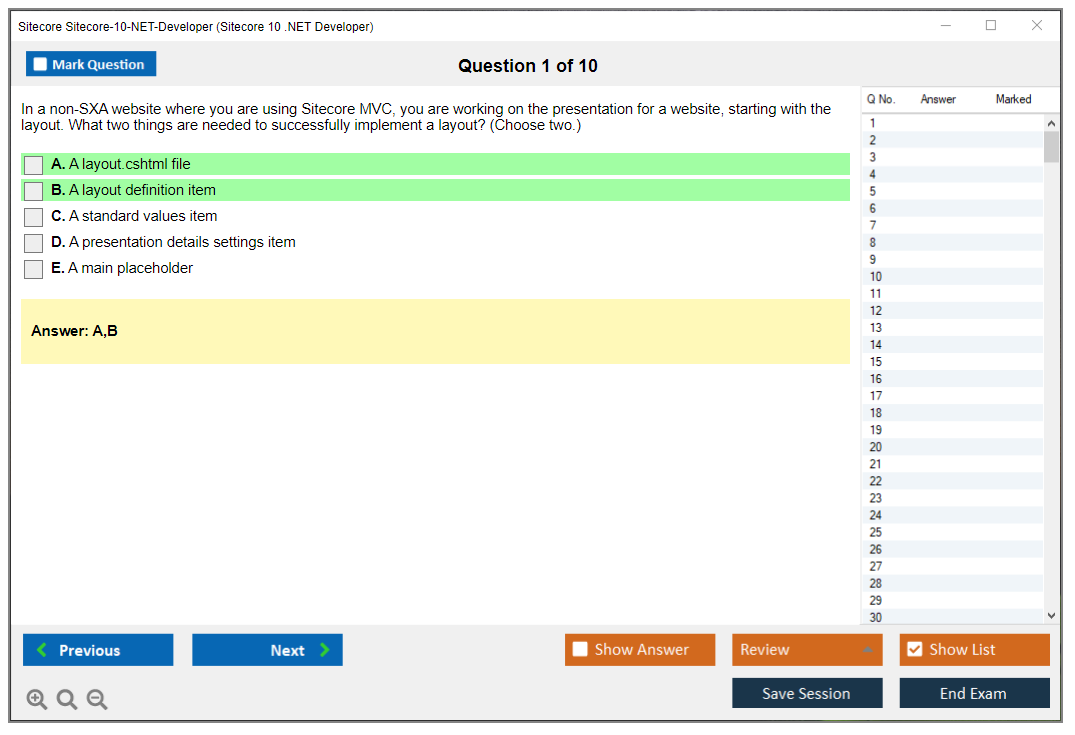
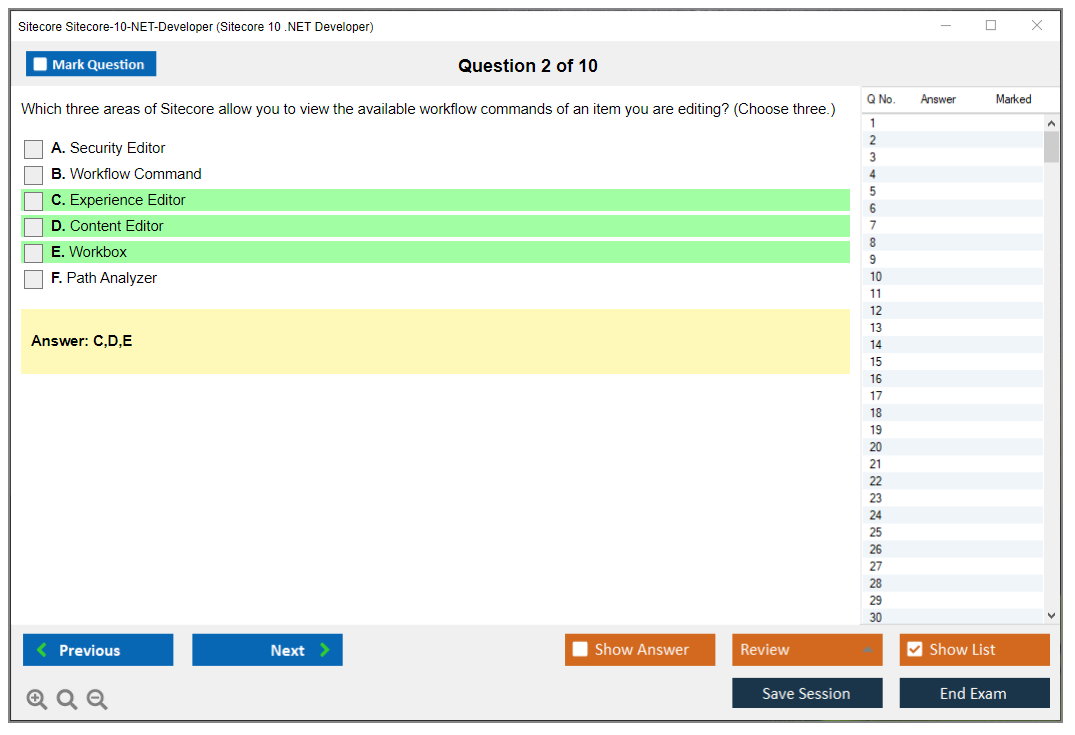
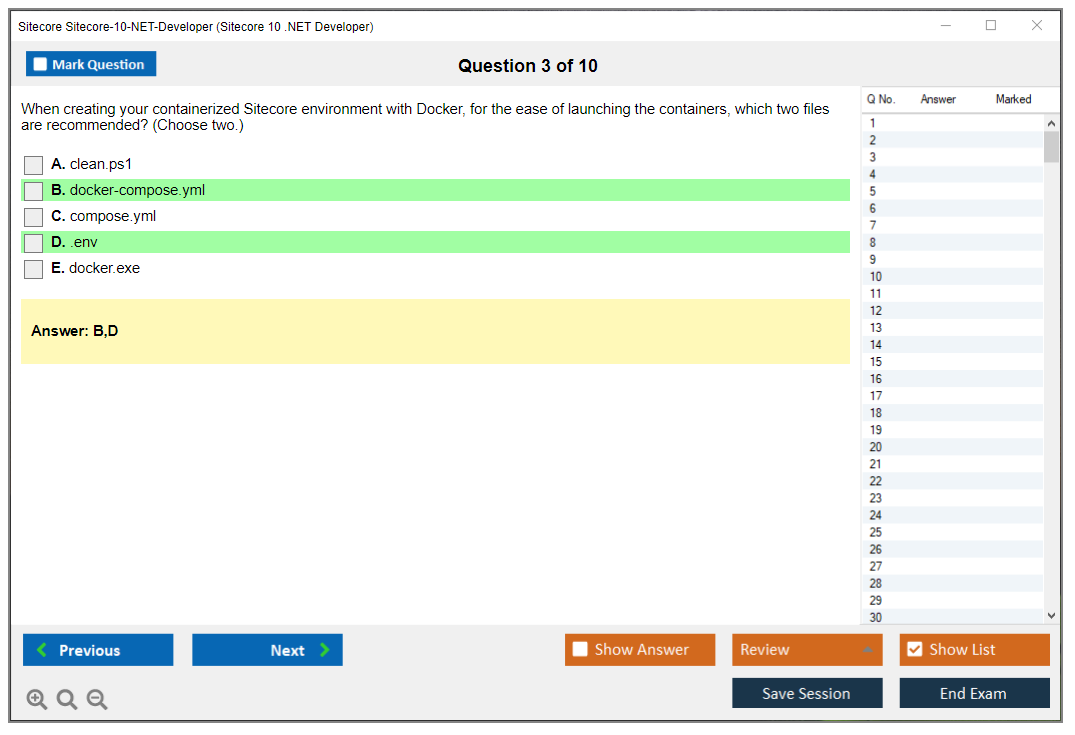
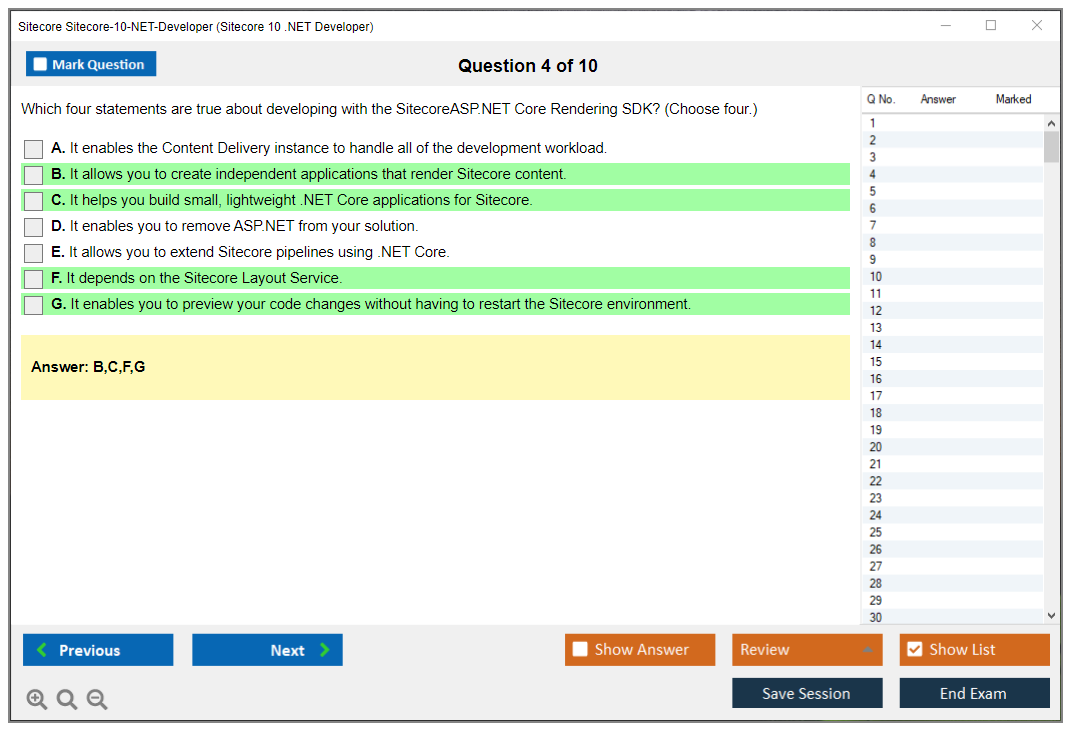
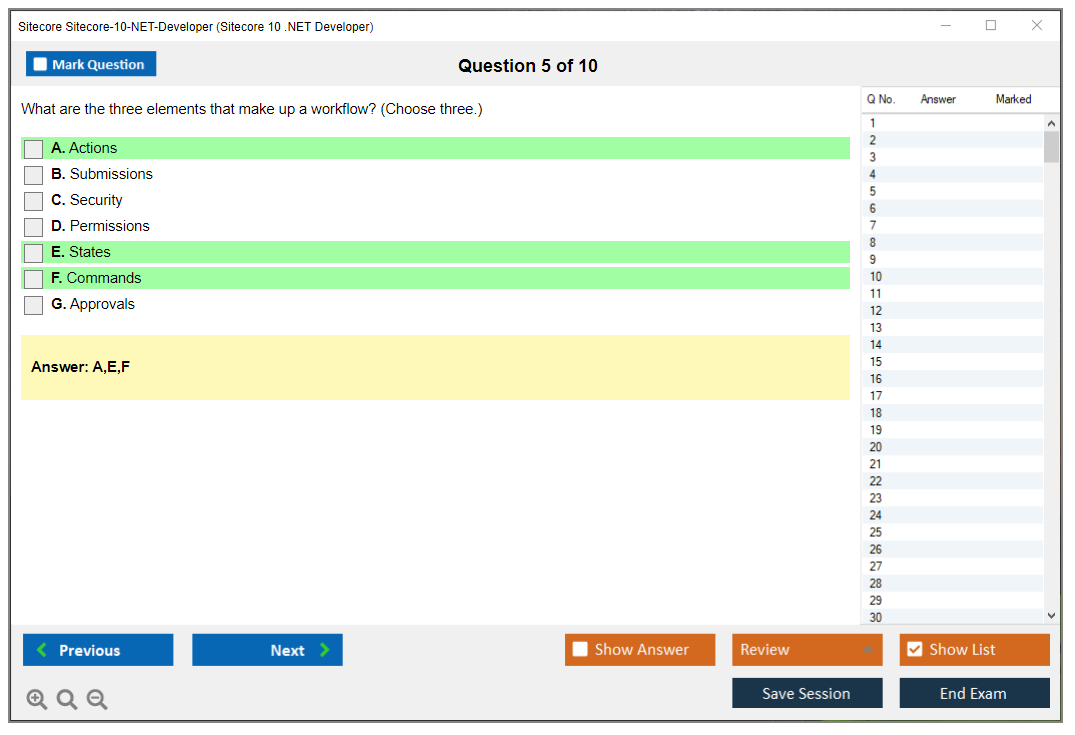
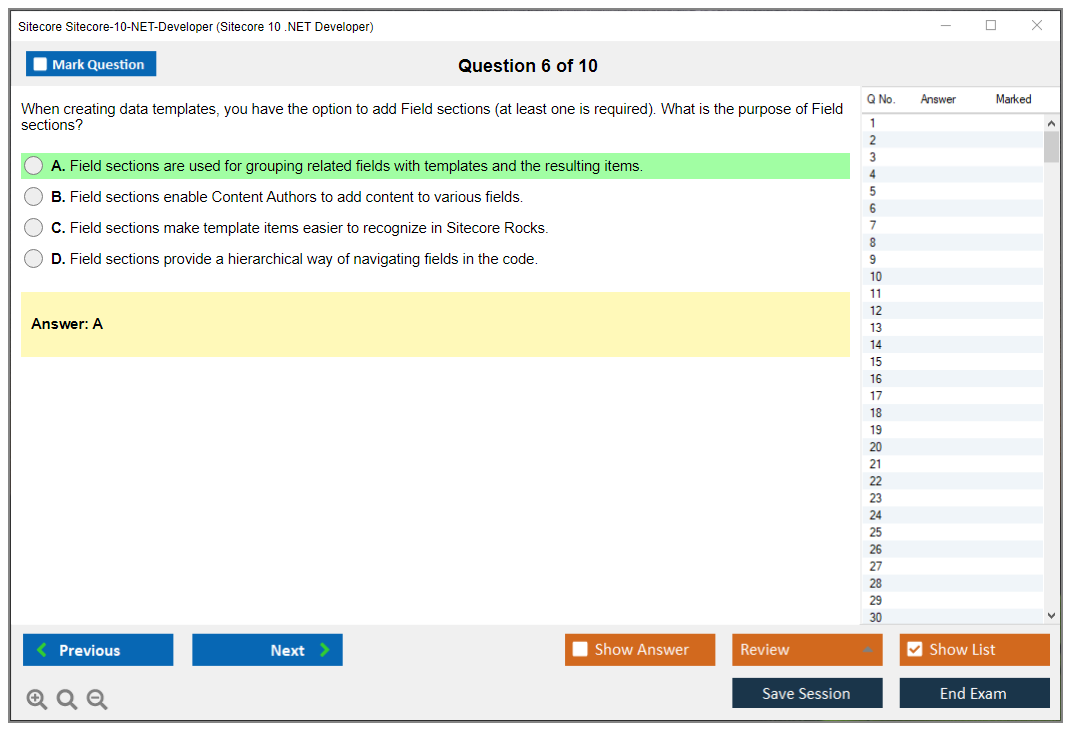
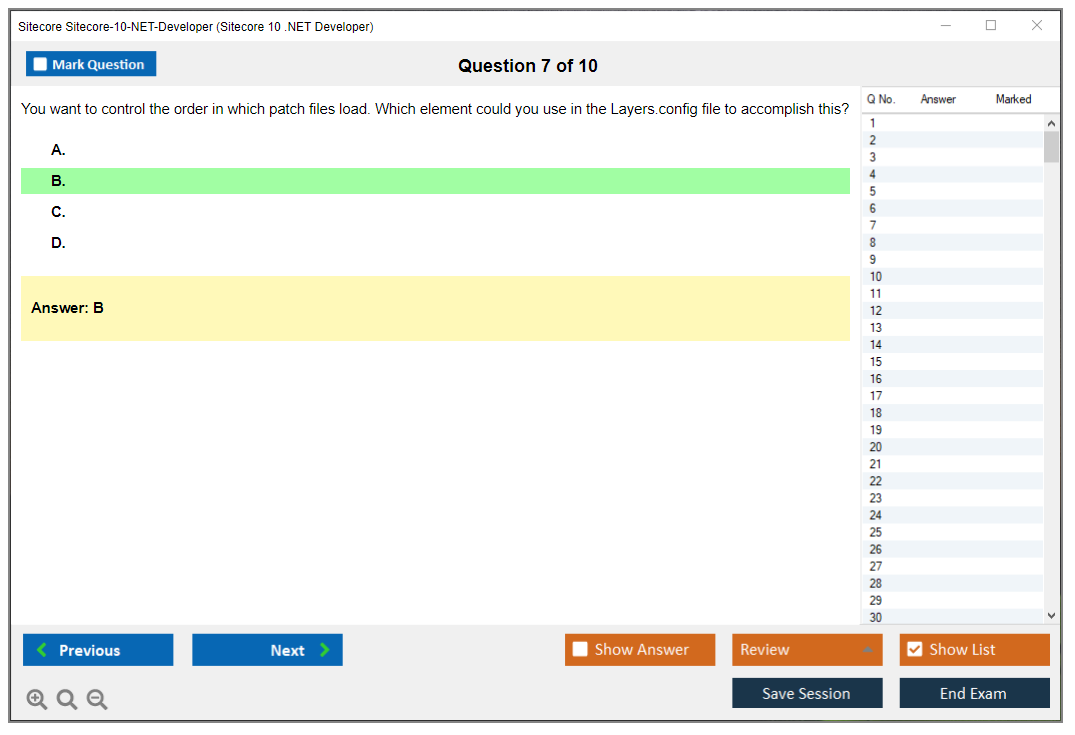
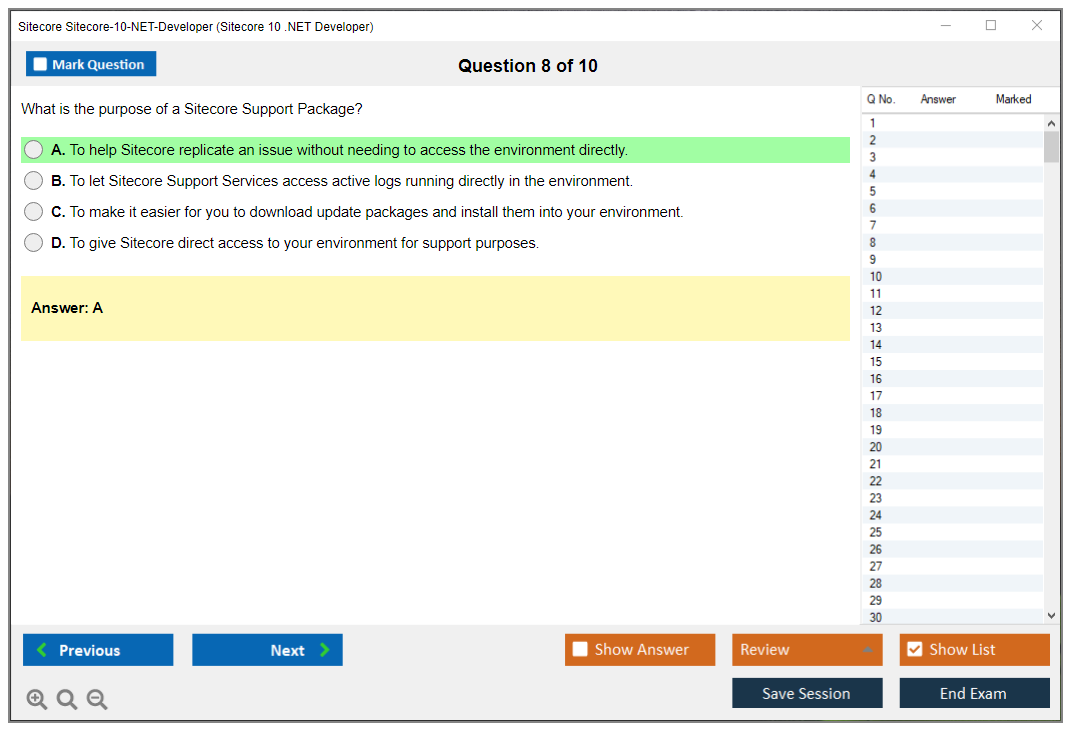
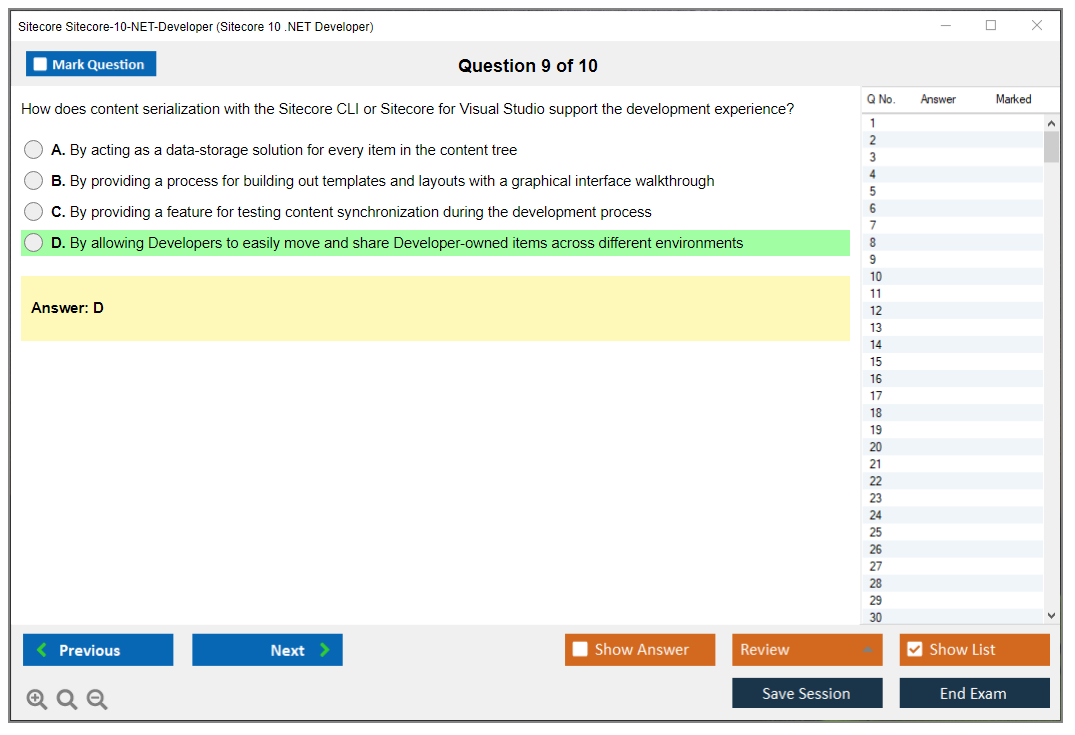
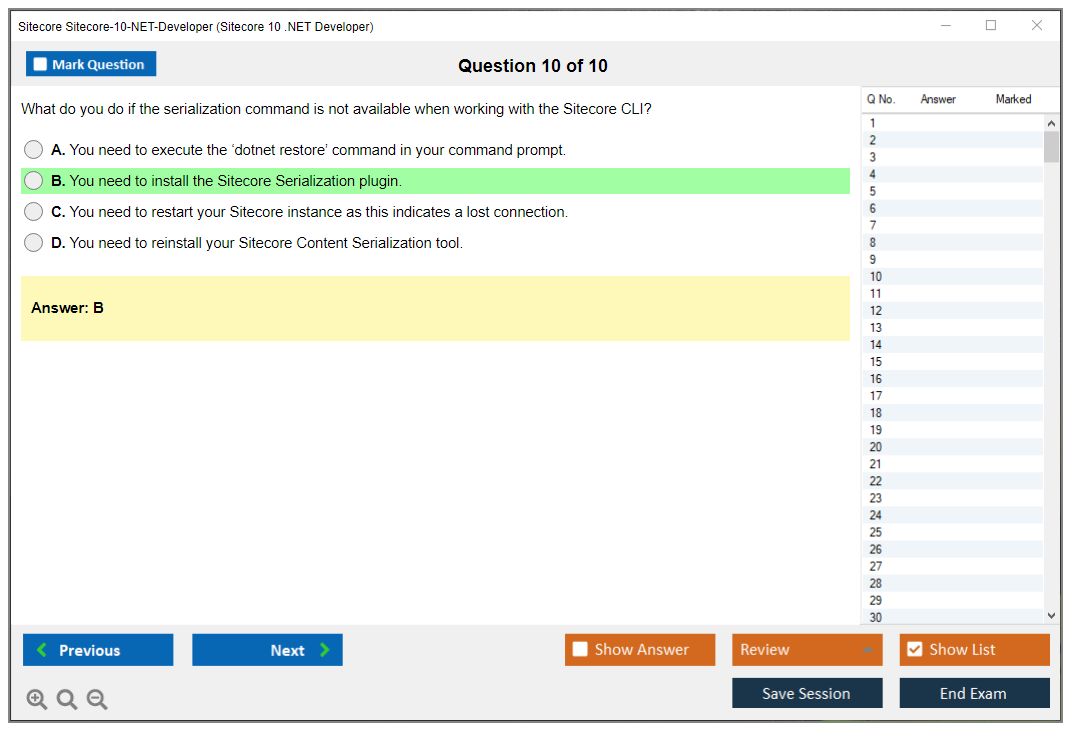
Dumpsarena Sitecore Sitecore 10 .NET Developer Exam (Sitecore-10-NET-Developer) Free Practice Exam Simulator Test Engine Exam preparation with its cutting-edge combination of authentic test simulation, dynamic adaptability, and intuitive design. Recognized as the industry-leading practice platform, it empowers candidates to master their certification journey through these standout features.
What is in the Premium File?
Satisfaction Policy – Dumpsarena.co
At DumpsArena.co, your success is our top priority. Our dedicated technical team works tirelessly day and night to deliver high-quality, up-to-date Practice Exam and study resources. We carefully craft our content to ensure it’s accurate, relevant, and aligned with the latest exam guidelines. Your satisfaction matters to us, and we are always working to provide you with the best possible learning experience. If you’re ever unsatisfied with our material, don’t hesitate to reach out—we’re here to support you. With DumpsArena.co, you can study with confidence, backed by a team you can trust.
Sitecore Sitecore-10-NET-Developer Exam FAQs
Introduction of Sitecore Sitecore-10-NET-Developer Exam!
The Sitecore 10 .NET Developer exam is a certification exam developed by Sitecore for professionals who have expertise in building and deploying solutions using the Sitecore platform. The exam covers topics such as developing and deploying applications using Sitecore APIs and services, developing customizations for the Sitecore Experience Platform, and using Sitecore analytics to measure and report on user engagement.
What is the Duration of Sitecore Sitecore-10-NET-Developer Exam?
The duration of the Sitecore 10 .NET Developer exam is 2 hours.
What are the Number of Questions Asked in Sitecore Sitecore-10-NET-Developer Exam?
The exact number of questions on the Sitecore 10 Net Developer Exam is not publicly available.
What is the Passing Score for Sitecore Sitecore-10-NET-Developer Exam?
The passing score required for the Sitecore 10 .NET Developer exam is 70%.
What is the Competency Level required for Sitecore Sitecore-10-NET-Developer Exam?
The Competency Level required for the Sitecore 10 .NET Developer exam is “Advanced.”
What is the Question Format of Sitecore Sitecore-10-NET-Developer Exam?
The Sitecore 10 .NET Developer Exam consists of multiple-choice and drag-and-drop questions.
How Can You Take Sitecore Sitecore-10-NET-Developer Exam?
The Sitecore 10 .NET Developer exam can be taken online or at a testing center. To take the exam online, you will need to register for an account on the Sitecore Certification website and then purchase the exam. Once you have purchased the exam, you will be provided with a link to the online exam. To take the exam at a testing center, you will need to register for an account on the Sitecore Certification website and then purchase the exam. Once you have purchased the exam, you will be provided with a voucher code that you can use to book an exam at a testing center.
What Language Sitecore Sitecore-10-NET-Developer Exam is Offered?
The Sitecore 10 .NET Developer Exam is offered in English.
What is the Cost of Sitecore Sitecore-10-NET-Developer Exam?
The cost of the Sitecore 10 .NET Developer Exam is $150 USD.
What is the Target Audience of Sitecore Sitecore-10-NET-Developer Exam?
The target audience for the Sitecore 10 .NET Developer Exam is experienced .NET developers who have experience working with Sitecore and developing applications with the Sitecore platform.
What is the Average Salary of Sitecore Sitecore-10-NET-Developer Certified in the Market?
The average salary for a Sitecore 10 .NET Developer is $90,000 per year. However, this figure can vary depending on experience, location, and other factors.
Who are the Testing Providers of Sitecore Sitecore-10-NET-Developer Exam?
The Sitecore 10 .NET Developer exam can be taken through the Pearson VUE testing center. Pearson VUE is an authorized testing provider for Sitecore.
What is the Recommended Experience for Sitecore Sitecore-10-NET-Developer Exam?
The recommended experience for the Sitecore-10-NET-Developer exam is:
• At least two years of experience developing .NET applications
• At least one year of experience developing with the Sitecore platform
• Knowledge of Sitecore architecture, data models, and APIs
• Experience with ASP.NET MVC, HTML, CSS, JavaScript, and AJAX
• Experience with the Sitecore Experience Platform and its tools
• Knowledge of web development best practices and design patterns
• Experience with source control systems and continuous integration
• Knowledge of the .NET framework and related technologies
What are the Prerequisites of Sitecore Sitecore-10-NET-Developer Exam?
The Sitecore 10 .NET Developer exam requires that you have at least two years of experience in developing, deploying, and maintaining Sitecore solutions. You should also have a good understanding of .NET development, object-oriented programming, and web technologies. Additionally, you should have a good understanding of the Sitecore platform and its features, including the Experience Editor, Content Editor, and Experience Platform.
What is the Expected Retirement Date of Sitecore Sitecore-10-NET-Developer Exam?
The official website to check the expected retirement date of Sitecore Sitecore-10-NET-Developer exam is https://www.sitecore.com/en-us/learning/exams.
What is the Difficulty Level of Sitecore Sitecore-10-NET-Developer Exam?
The difficulty level of the Sitecore 10 .NET Developer exam is not officially stated by Sitecore. However, based on feedback from individuals who have taken the exam, it is generally considered to be of medium difficulty.
What is the Roadmap / Track of Sitecore Sitecore-10-NET-Developer Exam?
The Sitecore-10-NET-Developer exam is designed to assess a candidate’s knowledge and skills in developing and managing Sitecore 10 applications using the .NET Framework. The certification roadmap for this exam consists of the following steps:
1. Complete the Sitecore 10 Developer Course
2. Become familiar with the Sitecore 10 platform
3. Learn the basics of .NET development
4. Complete the Sitecore 10 Developer Exam
5. Become certified as a Sitecore 10 .NET Developer
The Sitecore 10 Developer Course is available online and covers the topics needed to pass the exam. It is recommended that candidates complete the course and practice the skills they have learned before taking the exam. Additionally, candidates should review the Sitecore 10 documentation and become familiar with the platform before attempting the exam.
What are the Topics Sitecore Sitecore-10-NET-Developer Exam Covers?
The Sitecore 10 .NET Developer exam covers the following topics:
1. Sitecore Configuration: This section covers topics related to Sitecore configuration, such as the Sitecore architecture, configuration files, and the web.config file.
2. Sitecore Development: This section covers topics related to Sitecore development, such as the Sitecore API, data models, and the Sitecore Content Editor.
3. Sitecore Security: This section covers topics related to Sitecore security, such as user and role management, authentication, and authorization.
4. Sitecore Performance: This section covers topics related to Sitecore performance, such as caching, indexing, and optimization.
5. Sitecore Deployment: This section covers topics related to Sitecore deployment, such as the Sitecore Installation Framework and the Sitecore Package Deployer.
What are the Sample Questions of Sitecore Sitecore-10-NET-Developer Exam?
1. What is the purpose of the Sitecore Layout Service?
2. How do you use the Sitecore Experience Platform to personalize content?
3. Describe the process of creating a custom rendering in Sitecore.
4. How can you use Sitecore Powershell Extensions to automate tasks?
5. What is the difference between a Sitecore item and a Sitecore template?
6. Describe the process of creating a custom workflow in Sitecore.
7. How can you use the Sitecore Experience Database to store and analyze customer data?
8. Describe the process of creating and managing roles and permissions in Sitecore.
9. How do you use the Sitecore Content Editor to create and manage content?
10. Describe the process of creating and deploying a Sitecore package.
Sitecore Sitecore-10-NET-Developer Certification Overview What this certification actually proves about your Sitecore skills The Sitecore 10 .NET Developer Exam isn't one of those fluffy certifications where you memorize terminology and call it a day. This thing validates that you can actually build production Sitecore solutions using modern .NET patterns on version 10 of the platform, which honestly represents a pretty significant shift from how we did things in 8.x and even early 9.x implementations, though the transition wasn't always smooth for everyone involved. It demonstrates your proficiency across the entire development lifecycle. You're expected to know how to architect modular solutions following Helix principles, work with Sitecore's extensive API surface, implement custom components using ASP.NET MVC patterns, and handle the containerized deployment workflows that Sitecore 10 introduced. If you pass this exam? You're telling potential employers that you understand both the... Read More
Sitecore Sitecore-10-NET-Developer Certification Overview
What this certification actually proves about your Sitecore skills
The Sitecore 10 .NET Developer Exam isn't one of those fluffy certifications where you memorize terminology and call it a day. This thing validates that you can actually build production Sitecore solutions using modern .NET patterns on version 10 of the platform, which honestly represents a pretty significant shift from how we did things in 8.x and even early 9.x implementations, though the transition wasn't always smooth for everyone involved.
It demonstrates your proficiency across the entire development lifecycle. You're expected to know how to architect modular solutions following Helix principles, work with Sitecore's extensive API surface, implement custom components using ASP.NET MVC patterns, and handle the containerized deployment workflows that Sitecore 10 introduced. If you pass this exam? You're telling potential employers that you understand both the foundational content management concepts and the technical development patterns that enterprise Sitecore implementations demand.
What makes this different from just claiming "I've worked with Sitecore"? The exam forces you to understand the why behind architectural decisions, not just the how of copying code from Stack Overflow. You'll need to know when to extend a pipeline versus create a custom processor, how to properly implement dependency injection using Sitecore's service configurator, and which caching strategy makes sense for different content patterns. These decisions affect performance in ways that aren't always obvious until you're three months into production.
Where this fits in the Sitecore certification space
Sitecore maintains several certification tracks. But the Sitecore-10-NET-Developer certification sits squarely in the technical developer path. It's not for marketers or content authors. This is the certification that proves you can write code, not just click through the Experience Editor, though honestly I've met content editors who understood the platform better than some developers.
Within the broader ecosystem, this certification positions you above entry-level CMS work but doesn't require you to be a solution architect. It's the sweet spot for developers who spend their days building features, extending functionality, and implementing business requirements in code. If you're looking at career progression, this certification typically comes after you've shipped a couple Sitecore projects but before you move into pure architecture or technical leadership roles.
The certification also acknowledges that Sitecore 10 brought substantial changes to the development experience. Improved serialization with Sitecore Content Serialization (SCS), better support for containers and modern DevOps practices, and a cleaner separation between XM and XP topologies. Previous certifications like the Sitecore Experience Solution 9 Developer covered earlier architectural patterns, but this version 10 exam reflects how we're actually building Sitecore solutions in 2026.
Hands-on skills over theory every time
Here's what I appreciate about this certification: it focuses on practical development scenarios you'll encounter on real projects. The exam doesn't waste time asking you to recite marketing definitions or memorize product feature lists. Instead, it tests whether you can solve actual implementation challenges that'll come up during any reasonably complex build.
Can you build a custom rendering that respects datasource locations and personalization rules? Do you understand how to properly implement Glass Mapper or Synthesis for strongly-typed item access? Can you troubleshoot why a particular item isn't appearing in search results? These are the questions that matter when you're three weeks from go-live and the client just changed half the requirements.
Honestly, the exam assumes you've worked with Sitecore in a development capacity. Not just read documentation. You'll need to have dealt with the quirks of template inheritance, debugged pipeline execution order issues, and probably cursed at Solr configuration at least once. I mean, if you haven't wrestled with Solr, did you even really do Sitecore development?
Sitecore 10's architectural evolution and what it means for you
If you're coming from Sitecore 8.x or early 9.x, version 10 feels like a different platform in some ways. The introduction of Docker container support changed how we approach local development and deployment strategies. No more spending two days setting up a development environment with fourteen different installers and hoping nothing breaks.
Sitecore Content Serialization replaced TDS and Unicorn as the officially supported serialization approach, which means you'll need to understand YAML-based item definitions and how to structure your serialization configuration. Not gonna lie, the transition annoyed some developers who'd invested heavily in TDS, but SCS actually makes a lot of sense once you work with it on a real project.
The platform also modernized its approach to dependency injection and service configuration, moving closer to standard .NET Core patterns. If you've worked with ASP.NET Core, a lot of Sitecore 10's service registration will feel familiar. This alignment with mainstream .NET practices makes the platform more accessible to developers who haven't spent years exclusively in the Sitecore ecosystem. Though I've seen plenty of traditional Sitecore folks struggle with the shift at first because they were so used to the old ways.
How this differs from earlier Sitecore developer certifications
Previous developer certifications covered fundamentals that remain relevant. But the Sitecore 10 exam incorporates several version-specific topics that didn't exist in earlier exams. Container-based deployment workflows, headless development patterns with Layout Service, and the updated serialization architecture all feature prominently.
The exam also reflects Sitecore's strategic direction toward composable DXP architecture. You'll need to understand the distinction between XM-only implementations and full XP deployments, including which features require which topology. This wasn't as critical in version 8.x when most implementations included everything by default, though some of us questioned whether clients actually needed all that functionality.
Another difference? The emphasis on modern development practices. The exam expects familiarity with dependency injection patterns, SOLID principles applied to Sitecore development, and proper separation of concerns in solution architecture. Earlier certifications assumed you knew .NET but didn't dive as deep into architectural patterns.
Industry recognition and employer value
Honestly, the Sitecore developer certification market is smaller than something like AWS or Azure certifications, but within the Sitecore ecosystem, this certification carries weight. Digital agencies that specialize in Sitecore implementations often prefer or require certified developers on their teams. Enterprise organizations with large Sitecore installations value the certification because it reduces the risk of hiring someone who claims Sitecore experience but actually just edited content once.
The certification signals to employers that you understand Sitecore-specific concepts that aren't transferable from generic .NET development. Any competent .NET developer can learn MVC patterns, but understanding Sitecore's pipeline architecture, template inheritance model, and publishing workflows requires platform-specific knowledge that takes time to develop. You can't just pick this stuff up in a weekend tutorial.
For contractors and consultants? The certification opens doors. Many clients specifically request certified resources when staffing projects. I've seen rate differences of $20-30/hour between certified and non-certified Sitecore developers in competitive markets, though your mileage will vary based on experience and location.
Real-world alignment with enterprise implementation needs
The exam's content maps closely to what you'll actually do on enterprise Sitecore projects. Building custom components, extending pipelines, implementing search functionality, configuring caching strategies. These aren't academic exercises, they're tasks you'll perform regularly on any non-trivial Sitecore implementation.
What I find valuable? The exam's focus on best practices and architectural patterns. It's not enough to know how to hook into a pipeline. You'll need to understand when it's appropriate and what the performance implications are. The exam tests decision-making skills alongside technical knowledge.
The certification also covers troubleshooting and diagnostic techniques. Which honestly might be the most valuable skill set for real projects. Being able to interpret Sitecore log files, use the debugging tools effectively, and diagnose performance issues separates junior developers from mid-level contributors who can work independently.
Core technical domains you'll need to master
The exam covers a broad technical surface area. It spans Sitecore-specific concepts and general .NET development patterns. Architecture and platform fundamentals form the foundation. You'll need to understand the difference between XM and XP deployments, how Sitecore's layered architecture works, and where different types of customizations fit within the platform.
Development patterns include working with Sitecore templates, items, and the various APIs for content manipulation. You'll need proficiency with both the traditional Item API and modern approaches using Glass Mapper or similar frameworks for strongly-typed access. Rendering patterns, including both MVC-based development and headless scenarios using Layout Service, represent a significant portion of the exam content.
Sitecore's extensibility model requires deep understanding. Pipelines, events, processors, and custom implementations all factor in. You can't just memorize pipeline names. You'll need to know when to extend versus replace, how to control execution order, and what the performance implications are of various customization approaches. Dependency injection and service configuration tie into this, since modern Sitecore development relies heavily on IoC container patterns.
Security implementation appears throughout the exam. Including user roles, access rights, and security policies. You'll need to understand how Sitecore's security model works at both the content level and the API level. I mean, this stuff gets complicated fast when you're dealing with workflow states and publishing restrictions. Search and indexing architecture, particularly Solr integration but also Azure Search for cloud deployments, requires hands-on experience beyond just reading documentation.
What the exam format looks like
The Sitecore 10 .NET Developer Exam typically includes multiple-choice questions, scenario-based questions, and possibly some questions that require you to identify correct code implementations. You won't be writing code during the exam, but you'll definitely need to read and evaluate code samples to determine which implementation correctly solves a given requirement.
Time management matters. The exam covers a lot of ground. You can't afford to get stuck on difficult questions. Skip them, mark for review, and circle back if time permits. The exam delivery method and proctoring requirements vary, but most Sitecore certifications offer online proctored options alongside traditional testing center delivery.
Typical candidates who pursue this certification
Most people attempting the Sitecore-10-NET-Developer certification have one to three years of hands-on Sitecore development experience. You're probably working on your second or third Sitecore implementation, comfortable with the basics, and ready to validate your skills formally.
Software engineers on Sitecore implementation teams? They represent a large portion of candidates. These developers work daily with the platform, building features, fixing bugs, and extending functionality. The certification helps them stand out during performance reviews and positions them for senior developer roles.
Full-stack developers transitioning into Sitecore specialization also pursue this certification. Maybe you've been doing general .NET web development and your company just won a large Sitecore contract. Honestly, that's a pretty common scenario. The certification provides a structured learning path and validates that you've successfully made the transition from generic web development to Sitecore-specific expertise.
Technical consultants who architect solutions across multiple client projects find value in the certification because it demonstrates depth of platform knowledge. When you're making architectural recommendations that affect project timelines and budgets, having the certification adds credibility to your technical opinions.
Development team leads use it too. To establish their authority when setting coding standards and best practices. If you're responsible for code reviews and technical mentorship, the certification backs up your recommendations with formal validation of your expertise.
Certification's relevance in 2026 and beyond
Even though Sitecore 10 isn't the newest version anymore, it remains highly relevant in 2026 because enterprise software moves slowly. Organizations with substantial Sitecore investments don't upgrade on release day. They wait for stability, test thoroughly, and plan migrations carefully. Plenty of companies are still running Sitecore 10 in production and will continue to do so for years.
The certification also provides foundational knowledge that transfers to newer Sitecore versions. Core concepts like Helix architecture, pipeline customization, and content modeling remain consistent across versions. If you understand Sitecore 10 deeply? You can adapt to Sitecore 11 or even transition to Sitecore XM Cloud with additional learning but a solid foundation.
Organizations maintaining Sitecore 10 implementations need certified developers for ongoing support, feature development, and optimization work. The certification demonstrates you can maintain and extend existing implementations, not just build greenfield projects.
Why Sitecore developer certification matters in the DXP space
Sitecore competes in the Digital Experience Platform market against vendors like Adobe, Optimizely, and Acquia. These platforms are complex, expensive, and require specialized expertise to implement successfully. Unlike simpler CMS platforms where general web development skills suffice, DXP implementations demand platform-specific knowledge.
Certification provides a standardized way to assess developer capabilities across different organizations and geographies. When a global enterprise needs to staff a Sitecore project with developers from multiple vendors and regions, certification offers a baseline competency indicator that transcends individual company training programs.
The complexity of modern Sitecore implementations means generalist developers struggle without formal platform training. Spanning content management, personalization, analytics, marketing automation, and headless delivery. The certification validates that you've invested time learning Sitecore's specific approaches to these capabilities rather than trying to apply patterns from other platforms that may not translate well.
Look, certification isn't everything. I've worked with brilliant Sitecore developers who never bothered getting certified because they were constantly shipping successful projects. But in a competitive job market or when bidding on consulting projects, the certification removes doubt about your capabilities. It's proof that you've invested in platform expertise beyond just accumulating years of experience that might be shallow or narrowly focused.
The Sitecore 10 .NET Developer Exam represents a significant professional milestone for developers specializing in the platform. It's challenging enough to be meaningful but achievable for developers with solid .NET fundamentals and practical Sitecore experience. Whether you're looking to validate existing skills, differentiate yourself in the job market, or meet client requirements for certified resources, this certification delivers tangible value in the Sitecore ecosystem.
Exam Details: Format, Cost, and Passing Score
What this exam actually proves
The Sitecore 10 .NET Developer Exam is basically Sitecore's way of checking whether you can build and ship real features on XM/XP without turning the solution into a spaghetti mess. Not theory-only. Not "I watched a video once." More like: do you understand how Sitecore 10 XM and XP development works end to end, from templates and renderings to pipelines, security, and deployment patterns that won't make the next developer hate you?
And yeah. It's also a hiring signal.
Who this is for (and who it isn't)
This exam fits working developers who already built at least one or two Sitecore implementations. People doing MVC renderings, Layout Service basics, some Sitecore dependency injection and services work, and dealing with Sitecore serialization (items and templates) in a real repo.
Not ideal? If you've never touched a content tree.
Some folks try to brute-force it with docs and flashcards, and honestly that's where they get wrecked by scenario questions. The exam loves "what would you do next" style prompts that assume you've been burned by pipelines, indexing, or publish quirks before.
How Sitecore structures certification exams
Sitecore certification exams tend to be computer-based, timed, and blueprint-driven. There's an internal map of domains (objectives) and weightings, and question distribution follows that map even if the exact question pool rotates.
Look, Sitecore doesn't treat these like open-book workshop quizzes. The delivery's formal, proctored (usually), and the experience feels closer to other enterprise vendor exams than to the casual "end-of-course" tests you might remember from training portals. That matters because you need to plan around ID rules, room rules, and the fact that the timer won't care that your laptop decided to update.
Registration: what you do before you schedule
The registration flow can vary depending on the current provider Sitecore's using for that exam cycle, but the shape's pretty consistent. You start from Sitecore's certification/training portal, authenticate with your Sitecore account, pick the Sitecore Sitecore-10-NET-Developer certification, then get redirected to the exam delivery platform to choose online proctoring or a test center if both're available in your region.
Do this first. Verify legal name matches ID.
Also prep your "admin stuff" early: billing method (personal card vs company purchase), your testing location preference, and whether you need accommodations. If you're doing online proctoring, run the system test before you pay, not after. I mean, it's a miserable feeling to buy an exam attempt and then learn your corporate laptop blocks the proctoring browser plugin.
Delivery options: online proctored vs test center
Depending on region and provider availability, the Sitecore 10 .NET Developer Exam's commonly offered as online proctored, and sometimes also through in-person testing centers. Some countries get both. Some get only remote. This changes over time, so you check at scheduling.
Online proctoring's convenient. It's also picky. You'll be recorded, you'll show your desk, and you'll be told to remove stuff that feels harmless like sticky notes, a notebook, extra monitors, even a phone sitting face down.
Test center's simpler mentally. You show up, they handle the rules, and the environment's predictable. But you're stuck with their calendar, commute, and sometimes limited seat availability around end-of-quarter when everyone suddenly decides they want a cert.
Format and duration (what the session feels like)
Plan for roughly 60 to 75 questions, computer-based, with a 90 to 120 minute time limit, depending on the current published configuration for your exam version. That range's normal for this track. The platform enforces the clock.
Short advice? Don't overthink pacing. Flag and move.
Question types're usually a mix:
- multiple-choice (single answer)
- multiple-response (select all that apply)
- scenario-based questions (mini stories about a dev situation)
Scenario-based items're where they sneak in practical judgment. You'll get something like a rendering works on CM but not CD, or serialization isn't bringing templates over correctly, or a search result set changes after publish, and you have to pick the best next step based on how Sitecore actually behaves. That's also where Helix comes up indirectly, because "where should this code live" and "how should dependencies flow" is exam catnip.
No, it's typically not a hands-on lab. This isn't you writing code in an editor. It's still knowledge and decision-making, just grounded in real dev life, including Sitecore headless development (JSS/ASP.NET) concepts that show up more in modern Sitecore projects.
The exam interface and navigation
Most providers use a standard exam UI: one question per screen (sometimes with scroll), next/back buttons, a question list panel, and a timer that stays visible. You can usually mark questions for review and return later, which matters because multiple-response questions can eat time if you let them.
The platform typically won't let you open other apps. If you're online proctored, leaving the exam window or looking away too much can trigger warnings. Not gonna lie, it feels strict even when you're doing nothing wrong.
Expect features like flag/mark for review, jump to unanswered/flagged, review screen before final submit. On-screen calculator's usually irrelevant here, but the UI may include generic tools.
One sentence? Read the whole question.
Allowed vs prohibited materials
This exam's generally closed-book. No docs. No personal notes. No second screen with Sitecore documentation open. No phone. No printed Helix cheat sheet taped to the monitor. If you're thinking "but I just want to check a namespace," yeah, that's not happening.
What you might be allowed depends on delivery mode:
- Test center: sometimes scratch paper or a whiteboard substitute provided by the center
- Online proctoring: sometimes an on-screen whiteboard tool, sometimes nothing physical allowed at all
Prohibited items commonly include extra monitors, headphones (unless explicitly permitted), smart watches, and any reference materials. Workspace must be clean. Desk must be bare. Background noise can end your session if it's disruptive.
Online proctoring technical requirements (the stuff people ignore)
If you go remote, you need a stable setup. A real webcam, a working microphone, a browser that the proctoring system supports, and internet that won't drop for 20 seconds every time someone starts streaming in the next room.
Typical requirements (varies by provider, but this's the usual pattern):
- Windows or macOS supported versions
- Chrome/Edge or a provider-specific secure browser
- webcam 720p+ recommended
- microphone enabled (yes, even if you hate it)
- stable connection (think 5 to 10 Mbps+ and low jitter)
- ability to install a small app or extension
- single monitor only, unless provider explicitly allows more (most don't)
Here's the thing about remote proctoring that nobody mentions until you're sitting there at 8am in your pajamas holding your laptop up to show the underside of your desk. The whole setup feels invasive. You're gonna do a room scan where you slowly pan the webcam around your entire workspace like you're filming a sad reality show about minimalist desk setups. Then you'll probably get asked to show under your keyboard, behind your monitor, inside any drawers within arm's reach. If you wear glasses, be ready to take them off and show they're not smart glasses. If you have a second monitor that you "just haven't unplugged yet," unplug it now or they'll make you do it during check-in while the timer's ticking. And God help you if your cat walks across the desk mid-exam, because that'll trigger a warning flag and you'll spend three minutes explaining to a proctor in a chat window that no, Mr. Whiskers does not know the answer to question 47 about pipeline processors. The absurdity peaks when you realize they're watching for people who tape notes under their desk or behind their monitor, which apparently happens enough to justify making everyone else suffer through the paranoid setup routine, but honestly once you accept that this is just how enterprise certification works now, you stop fighting it and just play along, because the alternative is driving to a test center and dealing with someone else's broken air conditioning and flickering fluorescent lights.
Check-in, ID verification, and room scan
Check-in's basically a mini security process. You'll show a government-issued photo ID. You might take a selfie. You'll scan the room with your webcam, including under the desk and behind your monitor.
Then you wait. Sometimes five minutes. Sometimes twenty.
If the proctor asks you to remove items, do it fast and don't argue. They're following a checklist. And if you have special requirements, you want that approved ahead of time, not negotiated in the moment while the timer threatens to start.
What happens if something breaks mid-exam
If your internet drops or the exam app crashes, you contact support through the proctor chat or the provider's hotline. Most systems log the session, and proctors can often relaunch you where you left off, but there's no guarantee if the outage's long or the system thinks integrity was compromised.
Short sentence? Take screenshots if allowed.
Also keep your confirmation email handy before you start, because it includes candidate ID and support links. Once you're in the secure browser, you may not be able to access anything else.
Exam cost (and what you'll actually pay in 2026)
As of 2026, the Sitecore 10 .NET Developer exam cost typically lands in the $200 to $300 USD range. That's the normal band people see for vendor developer certs in this tier, and it lines up with what candidates report paying once taxes and regional adjustments kick in.
But? Your country matters.
Regional pricing differences show up in a few ways:
- VAT/GST added at checkout in many regions
- local currency conversion rates (sometimes with provider FX fees)
- test center surcharges in certain cities
- occasional regional price tables set by the vendor/provider
If you're in the US, you might see a cleaner number. If you're in parts of Europe, the tax line item can make it feel like the price jumped overnight.
Vouchers, partner discounts, and corporate bulk deals
Retakes're usually not included by default. Some promo periods might bundle a retake voucher, but don't assume it. Most of the time, a retake's another paid attempt, and the retake price's often the same as the first attempt unless a special offer's running.
If you work for a Sitecore partner, ask internally about vouchers. Partner programs sometimes include discounted certification paths or exam credits tied to partner status, and those perks're very real, but they're not always advertised loudly on the public pages.
For companies certifying multiple developers, there can be volume discounts or training bundles, especially if you're buying official training seats at the same time. That's more "talk to your Sitecore account rep" territory than a self-serve checkout toggle.
Payment methods vary by channel. Expect credit/debit card support. Some orgs can pay by invoice or purchase order through corporate training arrangements. Training credits may apply if your company already bought a package.
Refunds, rescheduling, and the fine print
Most exam providers allow rescheduling up to a cutoff window, commonly 24 to 48 hours before the appointment. Cancel too late and you can lose the fee. Miss the appointment and you almost always lose the fee. Harsh, but standard.
Refund policies depend on whether you cancel in time and whether you bought through a corporate program. If you're unsure, read the provider's policy page during scheduling, not after you panic the night before because your kid got sick or your build pipeline exploded.
One sentence? Don't wait to reschedule.
Do you get practice tests with the fee?
Usually no. Exam fees typically cover the attempt only. Practice tests and Sitecore 10 .NET Developer study materials are separate, whether they're official courses, third-party question banks, or internal company prep guides.
If you want a targeted prep option, I've seen people pair their study with a dedicated question pack like the Sitecore-10-NET-Developer Practice Exam Questions Pack because it forces recall under time pressure, which's the closest thing to the actual exam vibe without sitting the real attempt. Same link again later, because you'll forget it.
Promotions and special offers
Promos happen, but they're inconsistent. Sometimes tied to events, partner pushes, training campaigns, or end-of-year budget cycles. If you're paying out of pocket, it's worth checking for voucher codes through Sitecore training announcements or your partner manager, but don't stall forever waiting for a sale that may never come.
Cost compared to other enterprise CMS/DXP certs
In the enterprise CMS/DXP world, $200 to $300's pretty normal. Adobe and Salesforce ecosystems can run higher once you stack multiple exams. Microsoft certs can be cheaper per attempt, but you often take more of them. Sitecore's pricing feels like "enterprise vendor normal," not bargain, not outrageous.
Passing score: what we know and what Sitecore doesn't publish
The Sitecore 10 .NET Developer passing score's typically not publicly disclosed as a simple "you need 42/60." That's common with vendor exams because question pools rotate and they don't want people reverse-engineering the bank.
Most candidates and trainers assume the threshold often lands around 65% to 75% depending on the version and scaling. That range's a practical expectation, not an official promise.
Pass/fail's what you should plan around.
Raw vs scaled scoring (and why it matters)
Some exam programs use scaled scoring. Some use raw scoring. Many use a scaled model where your raw correct count's converted to a scale, and the pass point's set through psychometric methods. They test questions, measure difficulty, and calibrate.
You can answer the same number of questions correctly on two different days and still see different scaled outcomes if the form difficulty differs and the scoring model adjusts. The vendor's trying to keep "pass" consistent across versions, not keep "number correct" consistent across versions. That's why you obsess over understanding rather than gaming the math. Sounds like vendor double-talk until you realize they're protecting against the scenario where Version A happens to draw easier questions than Version B and suddenly everyone who tested on Tuesday has an unfair advantage over everyone who tested on Wednesday.
Multiple-response questions and partial credit
On many vendor platforms, multiple-response items can be all-or-nothing, but some programs award partial credit depending on the scoring rules. Sitecore doesn't always spell this out publicly for every exam, so you should assume conservative scoring: pick only what you're confident's correct, because incorrect selections can hurt you more than leaving an option unselected.
How many correct answers do you need?
If the exam's around 60 to 75 questions and the practical pass range's around 65 to 75%, you're thinking roughly:
- 60 questions: maybe 39 to 45 correct
- 75 questions: maybe 49 to 56 correct
Those're planning numbers. Not gospel.
Also, some exams include a few unscored "experimental" questions used to validate future items. You won't know which ones. Treat every question like it counts.
Blueprint and domain weighting (why your study plan can't be random)
The Sitecore 10 .NET Developer exam objectives are what drive distribution. You won't get 30 questions on templates and zero on security unless the blueprint's broken. Expect coverage across architecture, APIs, renderings, serialization, search, and solution structure.
Weighting shifts over time, but the big buckets usually map to topics like:
- Sitecore architecture and platform fundamentals (XM/XP)
- content modeling with templates and items
- rendering patterns and Layout Service basics
- APIs, pipelines, events, customization points
- Sitecore dependency injection and services
- security model basics
- search and indexing behavior
- Sitecore serialization (items and templates), packaging, deployment
- performance, caching, troubleshooting
- Sitecore Helix guidelines and solution structure
Study the blueprint like it's a checklist. If your prep ignores search because "our project used Coveo," the exam won't care. It'll still ask you about index rebuilds and query behavior.
Version updates and keeping the exam relevant
Sitecore refreshes exams when the platform shifts enough to make old questions misleading. That might be tied to major releases, changes in recommended tooling (serialization approaches, container workflows), or common patterns in Sitecore headless development (JSS/ASP.NET) that become normal in the field.
When a new version of the exam drops, it can change:
- question pool
- objective emphasis
- wording to match current docs
- deprecation cleanup (removing outdated features)
Passing score might remain "conceptually consistent," but the actual scaled threshold can be recalibrated per version if the psychometric data says the new form's harder or easier.
Accessibility accommodations
If you need accommodations, you request them during registration, not on exam day. Common accommodations include extra time, additional breaks, screen reader compatibility, or specific testing center arrangements.
This takes approval time. Plan ahead.
Language options
Most Sitecore developer exams're primarily offered in English. Some providers offer
Sitecore 10 .NET Developer Exam Objectives: What to Study
Look, if you're eyeing the Sitecore 10 .NET Developer Exam, you're probably already neck-deep in Sitecore projects and want to validate your skills. Or maybe you need that certification to land a better role. Either way, this exam isn't a casual weekend study session. It covers everything from content modeling to dependency injection, serialization to search indexing. I'm gonna walk you through what you actually need to study, not just regurgitate the official objectives.
What Sitecore expects you to master
The Sitecore-10-NET-Developer certification validates that you can build production-grade Sitecore solutions. We're talking about implementing templates, creating custom renderings, working with pipelines, securing content, and deploying code without breaking things. The exam maps pretty closely to what you'd do day-to-day as a Sitecore developer, which is honestly refreshing. No abstract theory questions about stuff you'll never use.
Sitecore structures these objectives around the full development lifecycle. You'll need to understand architecture decisions upfront, then data modeling, component development, API integration, deployment strategies, and ongoing maintenance. It's full. The exam weighs different domains differently, though Sitecore doesn't publish exact percentages. From what I've seen, templating and rendering get heavy emphasis because they're foundational. Search and serialization also come up frequently because they trip people up in real projects.
Breaking down the major knowledge domains
The exam objectives interconnect in ways that make sense once you've built a few Sitecore sites. You can't really master rendering without understanding templates. You can't optimize search without knowing how indexing ties into your content model. Everything builds on architecture fundamentals, so if you skip understanding the CM/CD split or database roles, you'll struggle with deployment questions later.
Most objectives require implementation-level proficiency. Not just awareness. Knowing that Sitecore has a Master database isn't enough. You need to understand why certain operations must happen against Master versus Web, and what happens during publishing. The exam tests practical application scenarios. You might get a question about troubleshooting why content isn't appearing on CD servers, which requires knowing publishing targets, cache clearing, and database replication.
Architecture and platform fundamentals you can't skip
Sitecore's layered architecture is the base here. Content Management (CM) servers handle authoring and administration. Content Delivery (CD) servers handle public traffic. Processing servers run background jobs and indexing. If you're working with Sitecore Experience Platform (XP), you've also got xConnect and the Experience Database (xDB) for analytics and personalization. XM is the simpler license without those marketing features, and you need to know which features require XP versus XM.
Database architecture trips people up.
Master holds all content versions and unpublished items. Web contains published content that CD servers read. Core stores system settings, user profiles, and the Content Editor interface itself. You need to know why you'd query Master programmatically versus Web, and what goes wrong if you point your code at the wrong database.
Sitecore 10 introduced better containerization support with Docker and Kubernetes. Not gonna lie, if you've only ever deployed to IIS, the containerized deployment questions might catch you off guard. Understand the basic topology options: single-server dev environments, scaled CM/CD separation, and multi-region setups.
The configuration system uses patch files layered in a specific order. Sitecore defaults, then modules, then your custom configs. You need to know how to write patch files that insert, replace, or delete configuration nodes without breaking things. I mean, misconfigured patch files are a classic way to take down a Sitecore instance, so this matters.
I once spent three hours debugging a staging environment that wouldn't start, only to find a stray comma in a patch file. Good times.
Data templates and content modeling patterns
Templates define your content structure, and honestly this is probably the most heavily tested area. You create templates with fields of specific types: Single-Line Text, Rich Text, Droplink, Multilist, Image, and dozens more. Each field type has a purpose and field source configuration. Shared fields have one value across all versions, unversioned fields vary by language but not version, and standard fields are unique per language and version.
Template inheritance is huge.
Base templates let you compose reusable field sets. Think metadata templates, SEO templates, social sharing templates. Your content templates inherit from these. Standard values cascade to new items, setting default field values and workflow states. If you don't understand standard values, you'll waste time manually configuring every item.
Branch templates create pre-configured content structures. Instead of manually creating a landing page with three child components every time, a branch template does it in one click. Insert options control what content types authors can create where, which is critical for maintaining content tree organization.
For multilingual and multi-site implementations, you need to understand versioning, language fallback strategies, and site definitions. The thing is, the exam will test whether you know when to use shared versus unversioned fields for different scenarios. Like product SKUs (shared) versus product descriptions (versioned).
Rendering, components, and the presentation layer
Sitecore's MVC implementation uses controller renderings and view renderings. Controller renderings give you full control with a controller action, model, and view. View renderings are simpler, just a Razor view that inherits from the context item. You need to know when each is appropriate. View renderings for simple display logic, controller renderings when you need data transformation or external API calls.
Rendering parameters make components configurable without changing code. You create a template for the parameters, then content authors can tweak things like number of items displayed, CSS classes, or display options. Datasource items and datasource templates separate component content from page content, which is a best practice for reusable components.
Dynamic placeholders solve the problem of nested components with the same placeholder key. If you have a multi-column layout where each column has a "main" placeholder, you need dynamic placeholders to avoid key collisions. The exam will test whether you understand the syntax and when they're necessary.
Experience Editor integration is important.
Your renderings need to work in edit mode, preview mode, and normal mode. You'll use field helpers like '@Html.Sitecore().Field("Title")' to make content editable in-place. Rendering variants let authors choose different display styles for the same component without developer involvement.
Sitecore Forms is its own beast for building web forms. You need to know how to implement custom form elements, validation, and submit actions. The Layout Service enables headless implementations, serving content as JSON for JavaScript frameworks. Wait, this is increasingly important and definitely exam-relevant for Sitecore 10.
APIs, pipelines, and extensibility points
The Item API is your primary tool for programmatic content access. You'll use it to create items, update fields, move items, delete items. All the CRUD operations. The Template API works with template definitions. The Link API generates URLs and manages internal links, handling things like language and version context. The Media API handles media library items, image resizing, and media serving.
Sitecore's pipeline architecture is everywhere.
The httpRequestBegin pipeline processes every request. The mvc.getPageItem pipeline resolves which item to render. Pipelines are ordered processors that each do one thing, following single responsibility principle. You create custom processors by implementing the right interface and inserting them into pipelines via config patches.
Events work differently. They're fire-and-forget notifications like item:saved or publish:end. You create event handlers for async operations that don't need to block the main process. Knowing when to use a pipeline processor versus an event handler is a common exam scenario.
Glass Mapper and similar ORMs map Sitecore items to strongly-typed models, which makes your code cleaner and more testable. Whether or not you use an ORM in real projects, you should understand the concept because it shows up in exam questions about best practices.
The Sitecore Context API gives you access to the current item, site, user, request, and other contextual data. Factory and Configuration APIs let you access Sitecore services and settings programmatically. These are fundamental for any custom code.
Dependency injection and service architecture
Sitecore 10 uses Microsoft.Extensions.DependencyInjection, the same DI container as .NET Core. You register services using configurators that implement IServicesConfigurator. You need to understand service lifetimes: singleton (one instance for the app), scoped (one per request), and transient (new every time).
Constructor injection is the preferred pattern. Your controllers and processors declare dependencies in their constructors, and the DI container provides them. This makes your code testable because you can inject mock implementations. The Service Locator pattern (ServiceLocator.ServiceProvider.GetService) is available but considered an anti-pattern except in legacy code or specific scenarios.
Interface-based programming is key.
You define interfaces for your services, register the interface-to-implementation mapping, and consume the interface. This decouples your code and enables you to swap implementations without changing consumers.
Custom configuration providers extend Sitecore's configuration system. Custom providers (membership, role, profile) replace default implementations for authentication and user management. These are advanced topics but fair game for the exam.
Security model and access control
Sitecore's security model has domains (extranet, sitecore, default), users, and roles. Item-level security uses access rights: read, write, create, delete, rename, and more. These permissions cascade through the content tree via inheritance, but you can break inheritance at any item.
Security presets are reusable permission configurations you can apply to multiple items. Field-level security protects sensitive data like pricing or internal notes. The Security Editor interface shows the permission matrix, but you can also manage security programmatically through the Security API.
Workflow security controls who can move items between workflow states. This is important for content approval processes. For headless implementations, API key security controls access to the Layout Service and other APIs.
Best practices include principle of least privilege, role-based access control (RBAC), and regular security audits. The exam tests whether you know how to secure a production Sitecore environment properly.
Search, indexing, and content discovery
The Content Search API uses LINQ syntax to query search indexes. You need to understand index configuration: which templates and fields to include, crawlers, and update strategies. Solr is the default search provider, and you should know basic schema management and how Sitecore maps fields to Solr types.
Azure Search is an alternative provider, especially for cloud deployments. Computed index fields add custom data to the index that isn't directly from item fields. Like aggregated values or external data. Search result filtering, faceting, and boosting improve relevance.
Index rebuilds are necessary after configuration changes or corruption. You need to know when to rebuild versus incremental updates. Search performance optimization matters. Poorly written queries can kill performance. Search security filters results based on user permissions automatically, but you need to understand how.
If you want solid preparation materials, the Sitecore-10-NET-Developer Practice Exam Questions Pack at $36.99 includes realistic questions covering all these search scenarios and more.
Serialization, deployment, and DevOps
Sitecore Content Serialization (SCS) is the big change in Sitecore 10. It replaces TDS and competes with Unicorn. SCS uses YAML files to represent items and templates as resources in your codebase. The Sitecore CLI provides commands for push, pull, and serialization operations.
Configuration files define include/exclude patterns for what to serialize. This integrates beautifully with Git and other version control systems. You can track template changes, review diffs, and merge conflicts like code.
Sitecore packages (created with Package Designer) bundle items, files, and database records for deployment. They're useful for one-time deployments or distributing modules. For ongoing development, serialization is better.
Deployment strategies range from manual file copy (please don't in production) to full CI/CD pipelines with automated builds, tests, and deployments. Environment-specific configuration management uses transforms or config layers. Blue-green deployments and zero-downtime patterns are advanced topics but increasingly expected.
Content freeze policies during deployment windows prevent authors from making changes that could be lost. Rollback strategies and disaster recovery matter. Know how to back out a bad deployment.
How objectives map to resources and weighting
Sitecore's official documentation is your primary study resource. The developer documentation, knowledge base articles, and API references cover everything in the exam objectives. Training courses (if you can access them) align closely with exam domains.
Most commonly tested areas from what I've seen: template inheritance and field types, rendering parameters and datasources, pipeline customization, search query syntax, and serialization workflows. Focus your prep there first. Less commonly tested but still fair game: xConnect integration details, specific marketing automation features, and advanced caching strategies.
The objectives build on each other progressively. You can't study search without understanding templates. You can't master deployment without knowing serialization. So start with architecture fundamentals, move through templating and rendering, then tackle the specialized topics.
Comparing with other Sitecore certifications
If you're looking at the broader Sitecore certification path, the Sitecore-Experience-Solution-9-Developer certification covers the previous platform version. Many concepts overlap, but Sitecore 10 added containerization, SCS, and updated dependency injection. The Sitecore-XM-Cloud-Developer certification focuses on the cloud-native SaaS offering, which is a different architecture entirely.
Final prep considerations
Depth of knowledge matters more than breadth. Don't just memorize that Sitecore has pipelines. Understand how to create a processor, configure its position, and debug when it doesn't fire. Don't just know that templates have standard values. Understand cascading, when they apply, and how to troubleshoot unexpected values.
Practical application scenarios dominate the exam. You'll get questions like "An author complains that changes aren't appearing on the website, what are three possible causes?" You need to think through publishing, cache, database replication, and CD server configuration. Or "You need to display personalized content based on user behavior, which Sitecore features would you use?" That requires knowing xDB, personalization rules, and possibly Sitecore Forms.
The Sitecore 10 .NET Developer Exam practice materials help you identify weak areas before the real exam. At $36.99, they're a solid investment compared to exam retake fees.
The exam is challenging but fair. It tests what you actually need to know to build Sitecore solutions professionally. If you've worked on real Sitecore 10 projects, built templates, created custom renderings, and deployed code, you've got a head start. If you're coming from other CMS platforms or earlier Sitecore versions, budget extra time for hands-on practice with Sitecore 10-specific features like SCS and the updated DI container.
Set up a local Sitecore 10 instance (or use containers) and work through the objectives systematically. Build sample templates with various field types and inheritance patterns. Create controller and view renderings. Write pipeline processors. Configure search indexes. Practice serialization workflows. The hands-on experience will cement the concepts way better than just reading documentation.
Conclusion
Wrapping up your prep path
Okay, real talk.
The Sitecore 10 .NET Developer Exam? You can't just wing it. Honestly, I've seen people try and it doesn't end well. This isn't one of those checkbox certs where you memorize a brain dump the night before and somehow scrape by. It actually tests whether you know how to build production-grade Sitecore solutions using modern .NET practices, and the thing is, the questions are scenario-heavy enough that surface knowledge gets exposed pretty quickly.
If you've been working with Sitecore XM or XP for a while, you're already halfway there. But here's the catch: you still need to fill gaps around Helix principles, serialization workflows, and pipeline customization. Those are the areas where even experienced devs trip up. I mean, you'd think veterans would breeze through, but nope, these topics catch people off guard constantly.
The Sitecore 10 .NET Developer exam objectives? Super broad. You're dealing with everything from dependency injection patterns to rendering variants, search indexing strategies, security role configurations. And it doesn't stop there. Not gonna lie, memorizing API signatures won't save you here. You need hands-on muscle memory, the kind you build by spinning up local instances, breaking things in your dev environment (we've all been there), and actually implementing features end-to-end. Study materials help. Real experience seals the deal.
Now, the exam cost and Sitecore certification renewal policy are manageable compared to some vendor certs. Still, you want to pass on the first attempt. Nobody wants to pay twice. The Sitecore 10 .NET Developer passing score isn't publicly advertised in most cases, which makes practice exams even more valuable. You need a realistic benchmark to know if you're ready or still guessing your way through.
Practice tests? Your safety net.
They expose weak spots you didn't know existed, especially around niche topics like custom pipelines, item serialization formats, or Sitecore headless development with JSS. A good Sitecore 10 .NET Developer practice test should mirror real question patterns, not just feed you theory dumps. Honestly, those are worthless. You want scenarios that force you to think through architecture decisions, debug hypothetical issues, and choose the right solution among several plausible ones (not just the "technically correct" one).
I spent two weeks once helping a colleague cram for this exact exam. He'd been developing in Sitecore for three years but never touched Helix or serialization beyond basic TDS. Guy was confident going in. Failed by maybe ten points. Turns out knowing how to build doesn't always translate to knowing why you build it that way, which is what the exam really digs into.
Before you schedule your exam, grab a resource that covers all the objectives and gives you realistic practice questions. The Sitecore-10-NET-Developer Practice Exam Questions Pack is built specifically for that. It's designed to match the actual exam format and help you identify exactly where you need more reps. Whether you're strong on templates but shaky on search, or confident in MVC but fuzzy on Helix layer boundaries, targeted practice makes the difference between passing comfortably and sweating through retakes.
You've got this.
Put in the lab time, drill the weak areas, and walk in knowing you've seen these patterns before.
Show less info
Hot Exams
Related Exams
ARM Accredited Engineer
Nokia Virtual Private LAN Services
MuleSoft Certified Platform Architect - Level 1 MAINTENANCE
SAP Certified Application Specialist - SAP BW 7.5 powered by SAP HANA
BCS Practitioner Certificate in Requirements Engineering 2018
ISO 27001 : 2013 - Certified Lead Auditor
Nokia Cloud Packet Core
Salesforce Customer Data Platform (CDP)
Certified Kubernetes Security Specialist (CKS)
CyberArk Defender - EPM
SAP Certified Application AssociateSAP Commissions
VMware SD-WAN Design and Deploy Skills
Portfolio, Programme and Project Offices® Foundation
Oracle E-Business Suite R12 Human Capital Management Essentials
Sitecore 10 .NET Developer Exam
Sitecore Experience Solution 9 Developer Exam
How to Open Test Engine .dumpsarena Files
Use FREE DumpsArena Test Engine player to open .dumpsarena files


DumpsArena.co has a remarkable success record. We're confident of our products and provide a no hassle refund policy.

Your purchase with DumpsArena.co is safe and fast.
The DumpsArena.co website is protected by 256-bit SSL from Cloudflare, the leader in online security.