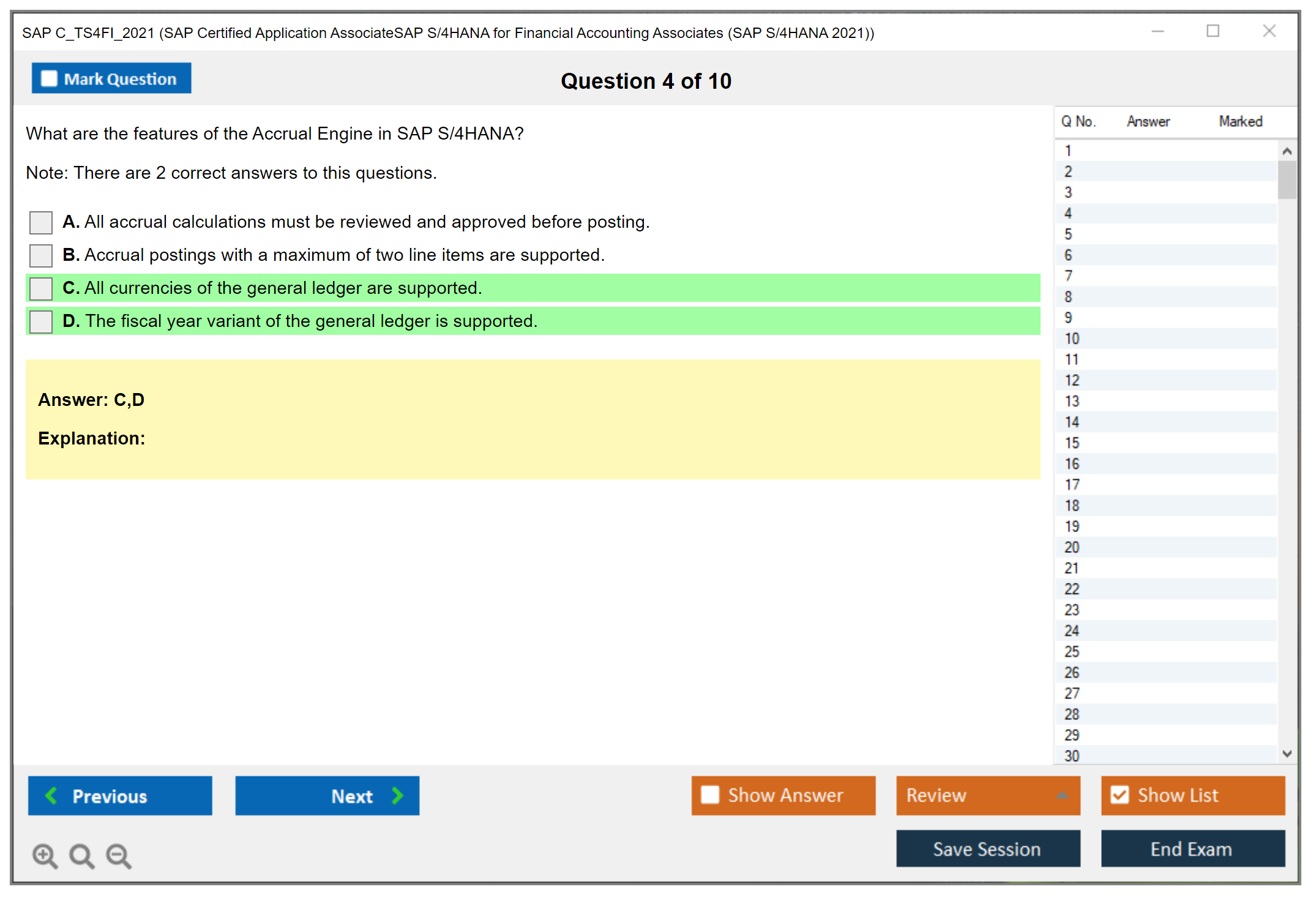
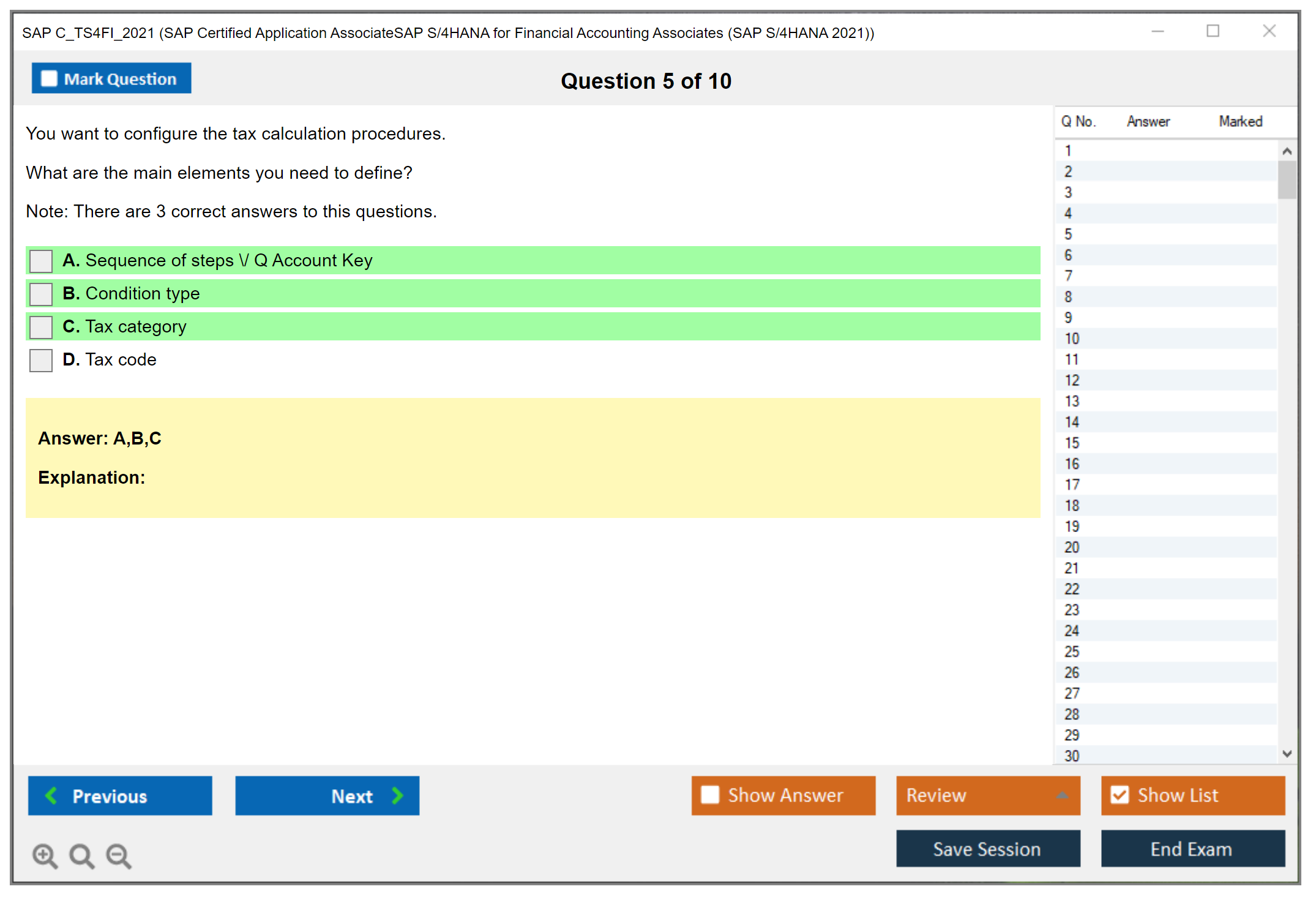
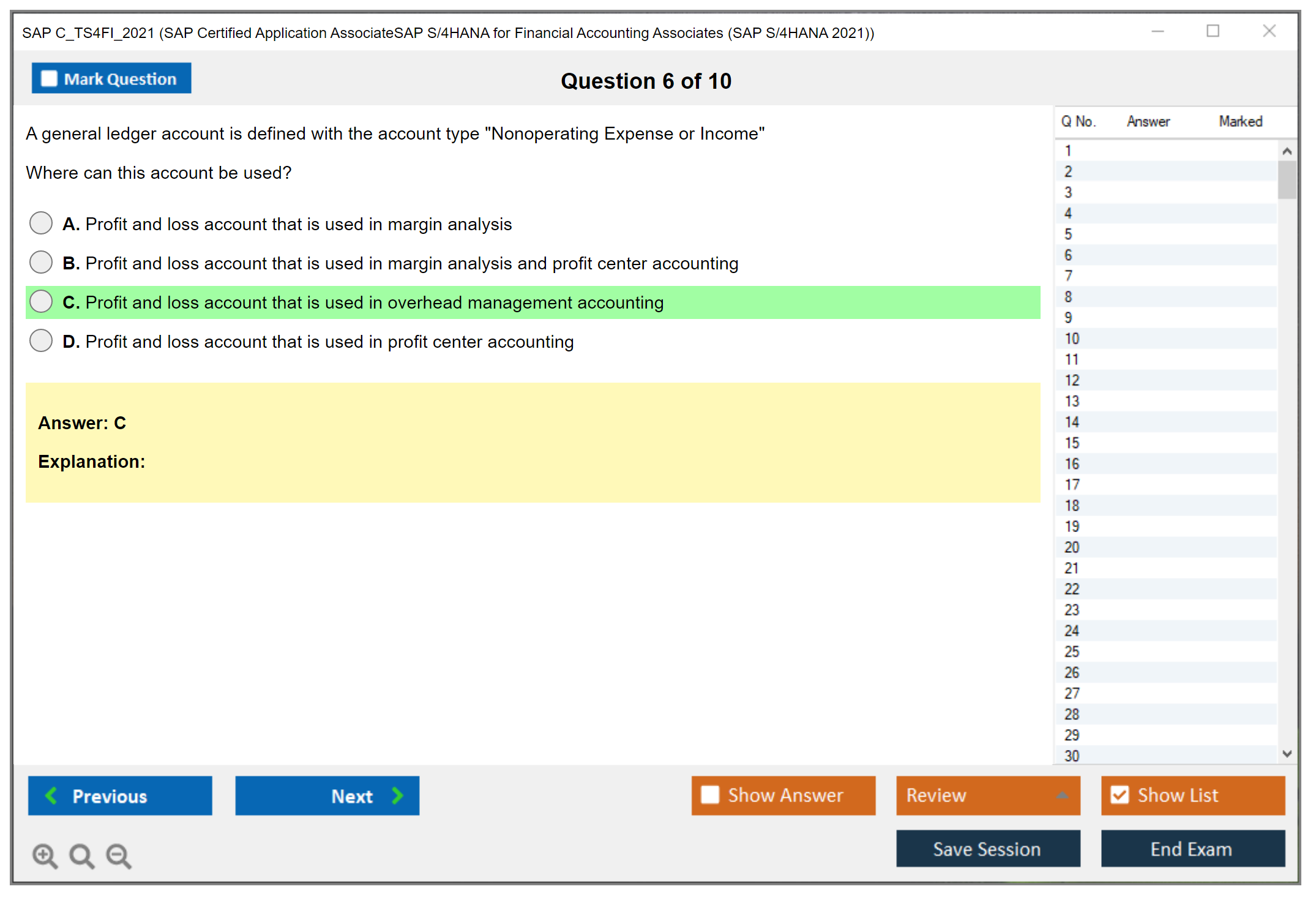
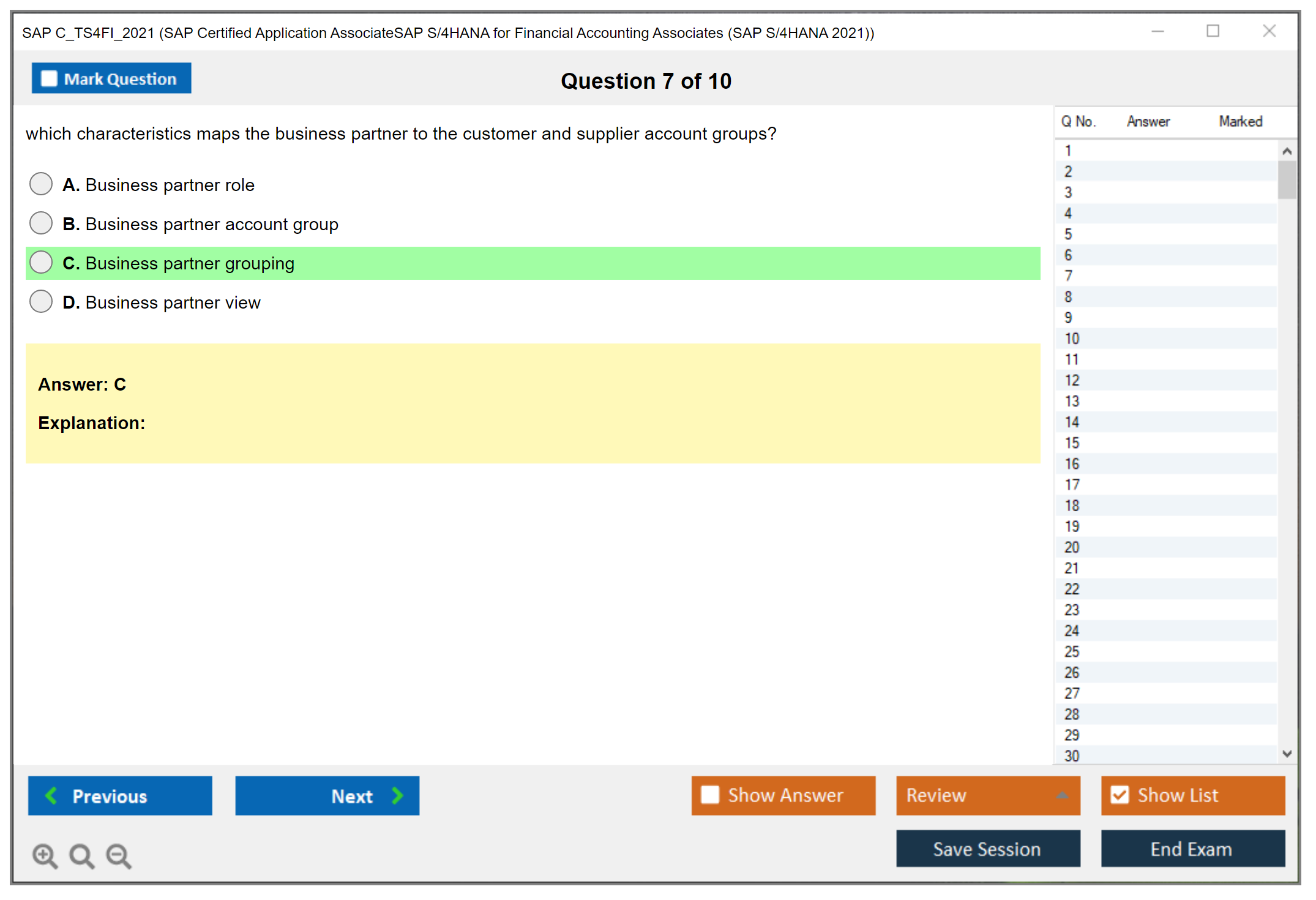
SAP C_TS4FI_2021 (SAP Certified Associate - SAP S/4HANA 2021 for Financial Accounting)
SAP C_TS4FI_2021 Certification Overview
What is SAP Certified Associate, SAP S/4HANA 2021 for Financial Accounting?
The SAP C_TS4FI_2021 certification is an associate-level credential that validates foundational knowledge in the Financial Accounting module of S/4HANA. This certification proves you understand how the modern FI module operates. I mean, if you're working in SAP finance or want to break into that space, it's the standard. Employers across the globe recognize it when they need people who can configure, implement, or support S/4HANA finance processes.
Here's the thing. This certification matters because S/4HANA FI is fundamentally different from classic SAP ERP FI architecture. The Universal Journal changed everything. You're dealing with real-time data, simplified data models, and Fiori apps that actually make sense to end users, which is honestly refreshing after years of clunky interfaces. Employers want proof you understand these changes. C_TS4FI_2021 gives them that confidence.
Career advancement? Opens doors, absolutely. Finance consultants and analysts use it to demonstrate they're current with SAP's latest technology. If you're still showing ECC credentials on your resume in 2024, you're telling recruiters you haven't kept up. Not great. The S/4HANA transformation wave is still rolling through enterprises, and having this certification positions you right where the demand is. (I've seen job postings that won't even consider candidates without current S/4HANA credentials, which feels strict but reflects market reality.)
Who should take the C_TS4FI_2021 exam?
SAP functional consultants specializing in Financial Accounting are the obvious candidates, right? If you're configuring general ledger accounting, accounts payable and receivable in SAP, or asset accounting S/4HANA components, this certification validates what you do daily. But the target audience is broader.
Finance professionals transitioning into SAP implementation roles benefit hugely. Maybe you've worked in corporate finance for years and now your company is deploying S/4HANA, so this certification helps you pivot from pure finance to the tech side. Business analysts working on S/4HANA finance transformation projects also find value here, especially when they need to bridge the gap between business requirements and system configuration.
Project managers overseeing SAP FI deployments should consider it too. You don't need to be hands-on with configuration, but understanding the module's capabilities and limitations makes you way more effective, honestly. Recent graduates entering SAP consulting careers use C_TS4FI_2021 as their entry ticket. IT professionals expanding into finance application configuration round out the list. If you've been doing basis or ABAP work and want to move into functional consulting, this is a solid pathway.
Key benefits of earning SAP S/4HANA Financial Accounting certification
Enhanced credibility is the biggest immediate benefit when applying for SAP FI consultant positions. Recruiters filter candidates by certification status, period. Having C_TS4FI_2021 on your profile means you make it past that initial screening, which is half the battle. The certification validates your skills in the latest S/4HANA architecture and Universal Journal specifically, which is what clients are implementing right now, not five years ago.
Competitive advantage in the job market is real. Certified professionals command higher rates and salaries. I've seen consulting firms that won't even interview candidates without current certifications for client-facing roles, which seems harsh but makes sense from their perspective. Access to SAP's certification community matters too: networking opportunities, beta programs, early access to learning materials.
This certification also provides a foundation for pursuing advanced SAP finance certifications later. Once you've got the associate level down, professional certifications like SAP Certified Application Professional - Financials in SAP S/4HANA become more achievable. It demonstrates commitment to continuous learning in SAP technology, which honestly matters more than people think when you're negotiating contracts or promotions.
Scope of SAP C_TS4FI_2021 in the broader SAP certification space
This certification fits into a whole ecosystem of S/4HANA credentials, which can feel overwhelming but is actually pretty logical once you map it out. It relates to other finance certifications in controlling, treasury, and revenue accounting. The SAP Certified Associate - Business Process Integration with SAP S/4HANA 2020 covers how FI integrates with other modules, which complements what you learn for C_TS4FI_2021. SAP's Learning Path for finance professionals maps out a clear progression from associate to professional level.
The comparison with previous SAP FI certification versions is important, honestly. If you passed the old SAP Certified Associate - Financial Accounting with SAP ERP 6.0 EhP7 exam, that knowledge base doesn't fully translate to S/4HANA because the architecture changes are too significant. Integration points with modules like procurement (covered in certifications like SAP Certified Application Associate - SAP S/4HANA Sourcing and Procurement) matter because FI touches everything.
The pathway from associate to professional-level certifications typically requires hands-on project experience. You can't just study your way to professional level, which is frustrating but makes sense. You need actual implementation work. But C_TS4FI_2021 gives you the foundational knowledge to be effective on those projects.
Evolution from SAP ECC to S/4HANA and why 2021 version matters
Key architectural changes in S/4HANA Financial Accounting fundamentally altered how we approach SAP FI configuration in S/4HANA. I mean fundamentally. This wasn't just a cosmetic update. The Universal Journal replaced multiple reconciliation ledgers with a single source of truth, which isn't just a technical detail but changes how you design chart of accounts, handle parallel accounting, and manage financial closing and reporting SAP processes.
The simplified data model means faster reporting and real-time analytics. No more waiting for batch jobs to reconcile subledgers, which anyone who's worked with ECC knows was painful. Enhanced user experience through SAP Fiori applications changed how end users interact with FI transactions. If you're still training users on SAP GUI screens, you're missing the point of S/4HANA, honestly. Material flow cost accounting and new asset accounting features expanded what's possible in FI.
Why the 2021 release matters specifically: SAP continuously updates S/4HANA, and each release brings new features that you actually need to know about if you're working on current implementations. The 2021 version included improvements to integration with SAP Activate project methodologies, better support for localization requirements, and refinements to the Universal Journal. Staying current with this release means you're not learning outdated approaches. Consultants working on recent S/4HANA implementations need to know what was available in 2021 releases, not what existed in 1809 or earlier versions, which is obvious but worth stating.
C_TS4FI_2021 Exam Details and Structure
SAP C_TS4FI_2021 certification overview
The SAP C_TS4FI_2021 certification is the associate-level checkpoint proving you can operate and configure core FI functionality in SAP S/4HANA 2021 without fumbling through the IMG like it's your first day. It's aimed at folks wanting that SAP S/4HANA Financial Accounting certification badge, whether you're consulting, working internal SAP roles, or just trying to prove you understand real finance flows like postings, period close, and those integrations everyone talks about.
Not magic. Definitely not entry-level easy. Super "SAP-ish" in all the ways you'd expect.
What is SAP Certified Associate, SAP S/4HANA 2021 for Financial Accounting?
It covers the FI scope you're touching daily: general ledger accounting S/4HANA, accounts payable and receivable in SAP, asset accounting S/4HANA, plus closing and reporting fundamentals. The exam's not trying to transform you into some architect-level wizard. It's checking whether you understand what happens when business users post documents, which settings drive that behavior, and how you'd troubleshoot when something posts "wrong" but technically works fine according to the system.
Who should take the C_TS4FI_2021 exam?
New FI consultants who've got a couple project cycles under their belt. Internal analysts supporting FI operations. Anyone following a C_TS4FI_2021 study guide who needs that structured target to aim for. If you've never clicked through configuration screens? You'll feel the pain fast. I mean it.
C_TS4FI_2021 exam details
Exam format and question types
You're looking at 80 questions total. The composition's usually this mix of multiple choice, multiple response, and true/false. The multiple response ones are where people bleed points because SAP gives no partial credit unless you nail the complete correct set.
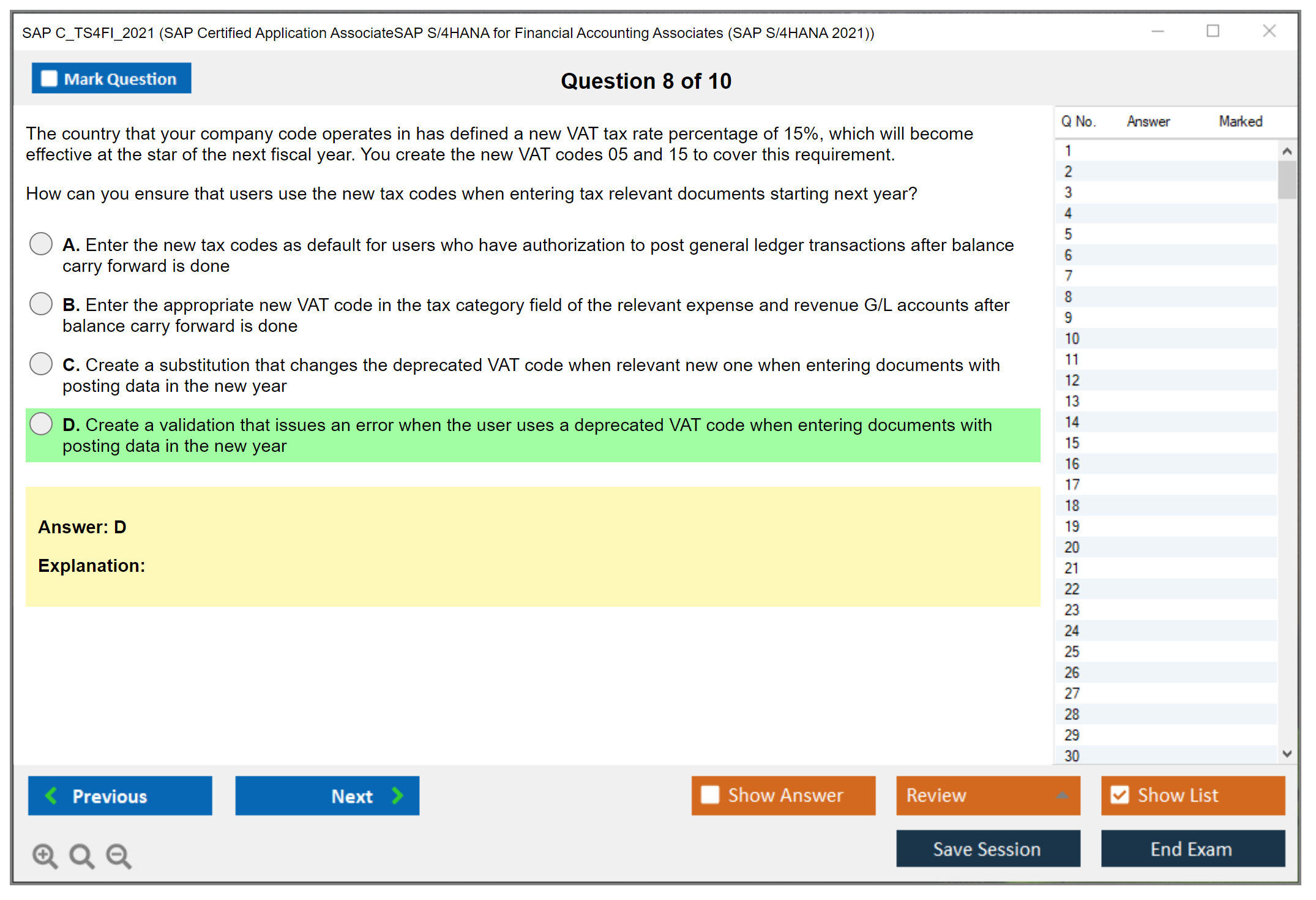
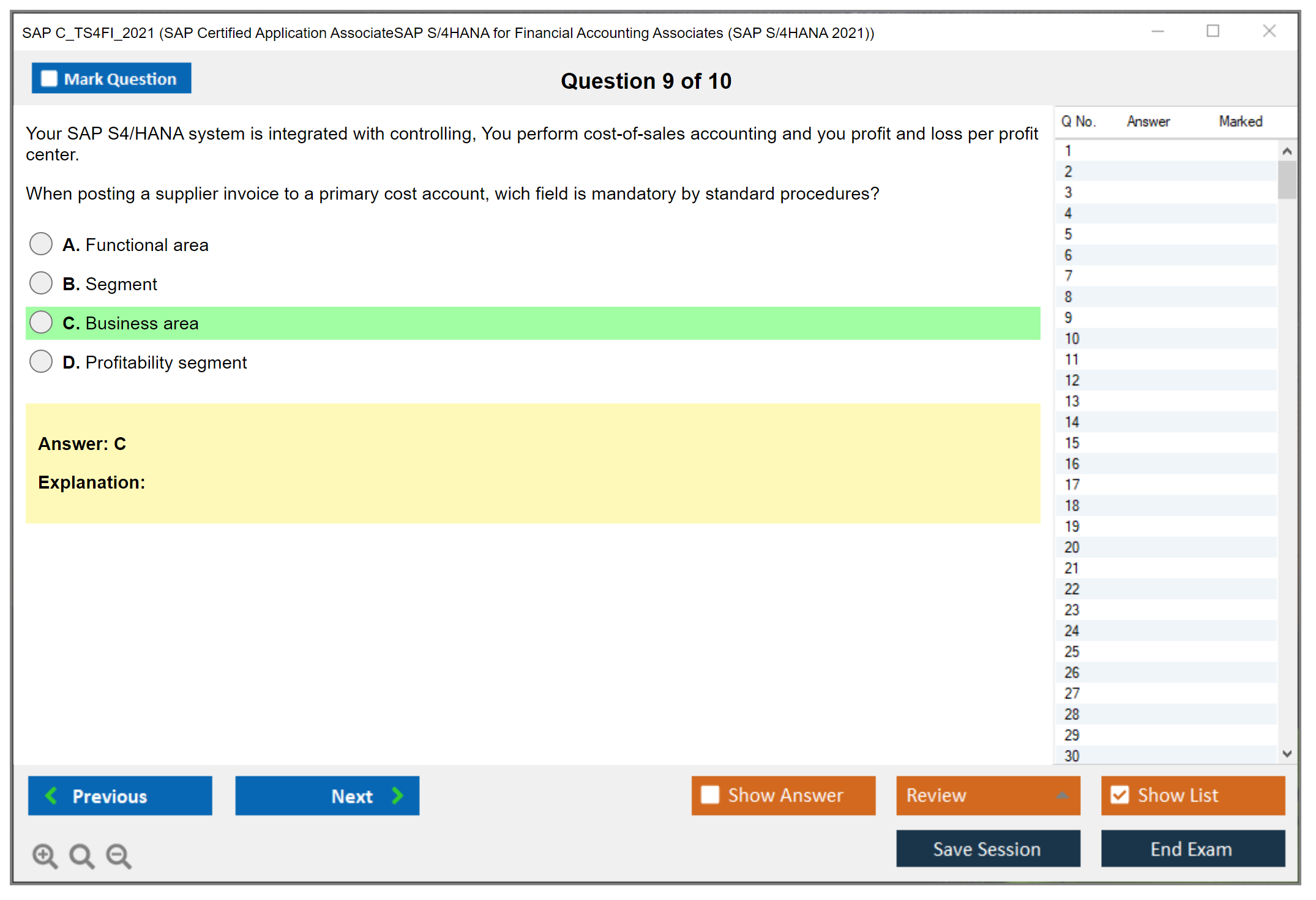
Scenario questions? Everywhere. Short business stories like "Company code X, ledger Y, posting Z, what happens next?" Some questions test practical application knowledge instead of textbook definitions, and they'll tie into those end-to-end process flows like invoice to pay or record to report. You've gotta understand which document gets created, which account gets hit, and what updates for reporting purposes.
Then there's the configuration angle. Screenshots sometimes appear, a snippet of an IMG activity or an app screen, asking what setting's missing or which option fits the requirement. SAP's way of saying "have you done SAP FI configuration in S/4HANA or are you just memorizing slides?"
Business process flow questions matter too. They're not always lengthy, but they force you to know dependencies across G/L, AP, AR, AA, and closing operations. On scoring, SAP can weight by topic area and sometimes by complexity. Some questions feel like easy points while others are worth more because they sit in high-weight exam objective buckets from the C_TS4FI_2021 exam objectives.
Quick rundown of what you'll face:
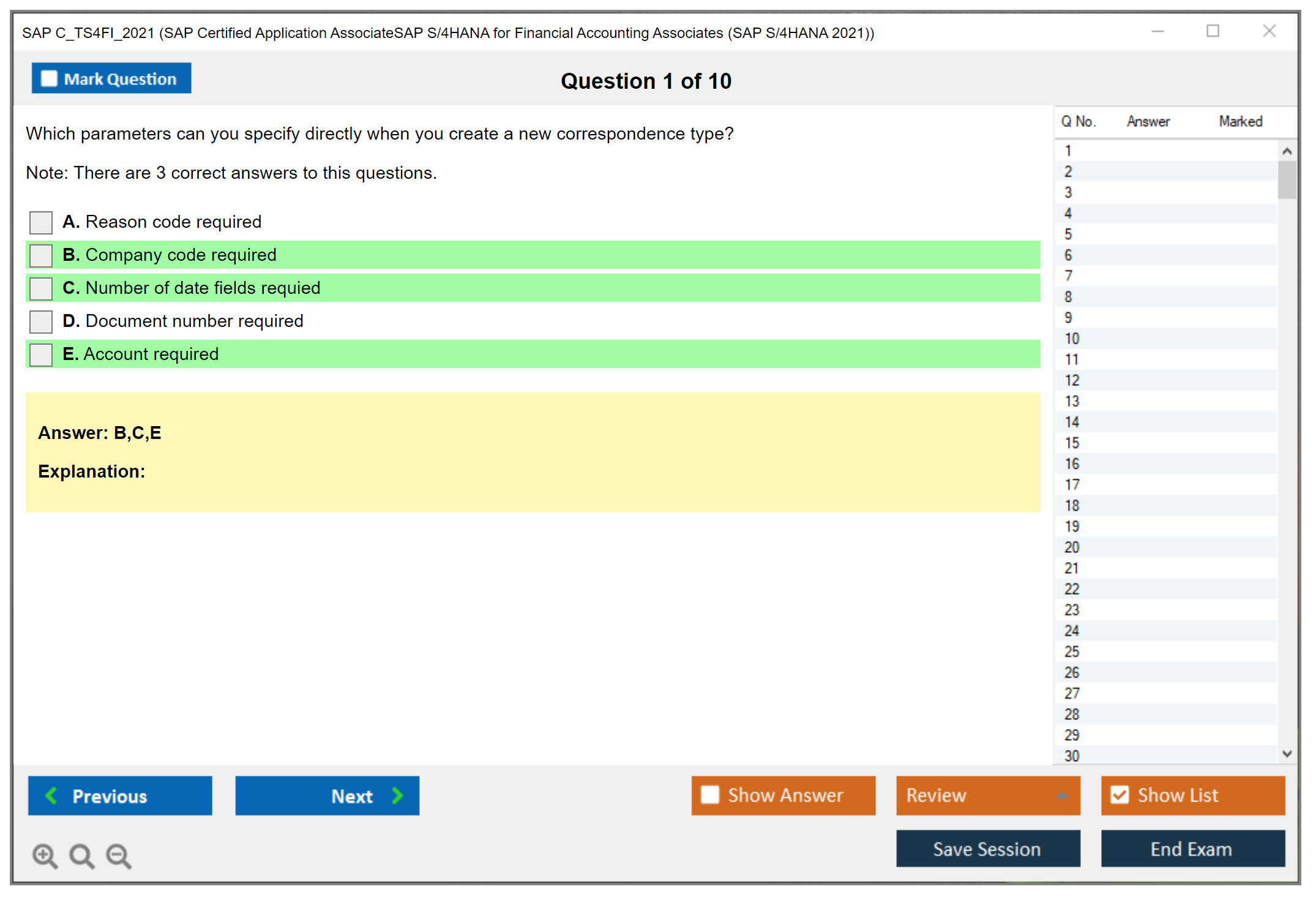
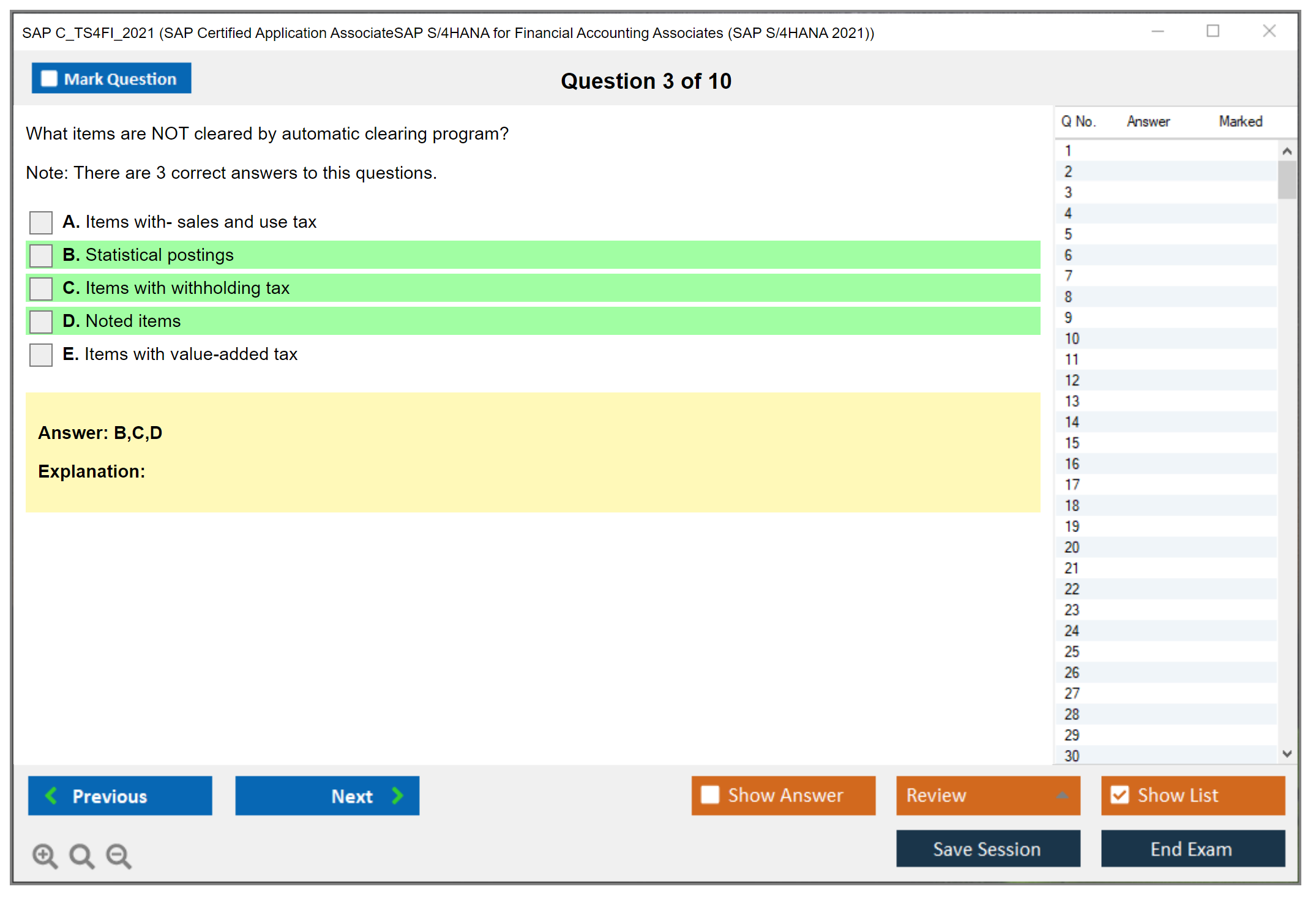
- Multiple response: read twice, because one wrong checkbox kills the entire thing. This is where a C_TS4FI_2021 practice test helps most.
- Screenshot config items: know where settings live and what they impact. Document types, posting keys, tolerance groups, all that.
- True/false: some are freebies, some are traps dressed up nice, and SAP loves tricky wording.
I once spent 20 minutes on a single multiple response question about parallel ledgers during my prep, convinced I had it nailed, only to realize later I'd confused standard with group reporting ledgers. That mistake cost me three more practice attempts before the distinction finally stuck. Sometimes the hard lessons are what make things click.
Exam duration and delivery options
Standard duration sits at 180 minutes. That's a full 3 hours, zero breaks, and yeah that changes how you prep because you can't step away when brain fog hits halfway through.
Math says you get roughly 2.25 minutes per question on average, but the reality's messier. Some take 15 seconds, others take 4 minutes, and if you don't control that swing you'll be rushing the last 10 questions with that gross adrenaline panic where you stop reading carefully and start "pattern matching" words like ledger, parallel accounting, clearing, and hoping for the best.
My take on pacing: move fast on what you know cold, flag the ones requiring re-reading, and reserve a chunk of time for review. Like 15 to 25 minutes. You will misread at least a few. No breaks means prep matters outside the exam. Eat first. Hydrate properly. Clear your desk. Time pressure's a huge reason people call the exam difficult, even when they know FI inside out.
C_TS4FI_2021 passing score (what to expect)
The C_TS4FI_2021 passing score lands around 63 to 65%, though SAP can adjust it. No negative marking exists, so a wrong answer just doesn't earn points. It doesn't subtract anything.
Scoring's based on weighted topic areas aligned to the published objectives, so your final score isn't a simple "correct out of 80" calculation. Some questions carry equal value, others can be weighted heavier because of complexity or objective importance in the real-world role. After you submit, you usually get an immediate pass/fail notification, and the score report shows performance by objective area. Really useful if you fail and need to target weak spots like financial closing and reporting SAP or asset accounting settings.
C_TS4FI_2021 exam cost (SAP Certification Hub / subscription model)
The C_TS4FI_2021 exam cost commonly falls in the €500 to €600 range for a single attempt, depending on your region and currency fluctuations. SAP also pushes the Certification Hub subscription model, where you pay for time-based subscription access and get multiple attempts plus learning resources bundled in. If you're also planning another associate exam soon, subscription pricing can be the smarter deal financially. But if you're only doing one exam and you're confident? The single purchase route can be cheaper overall.
Corporate training packages exist too. Big organizations sometimes get volume discounts, so check with your employer before paying out of pocket. Could save you a few hundred euros. Payment usually runs through the SAP Training and Certification Shop with standard card payment options, and you need to pay attention to refund and rescheduling terms because they can be strict once you book a slot.
Delivery options and testing environments
You can take it at Pearson VUE test centers worldwide or via online proctoring. Test centers are boring in a good way. Controlled environment, stable machines, fewer "my webcam died mid-exam" disasters that make you wanna scream.
Remote proctoring's flexible. No travel required. But you need a functioning webcam, stable internet connection, a quiet room, and the willingness to deal with check-in steps that can feel invasive. Expect ID checks, room scans, and strict rules about phones, paper, and extra monitors sitting around. Scheduling's usually decent for both options, but popular time slots fill up fast.
Exam language options and accessibility accommodations
English is the default language for most candidates taking this. Other languages like German or Spanish may be available depending on your region. Translation tools and dictionaries are generally not allowed during the exam, so don't plan on that as a crutch.
If you need accommodations for disabilities or special needs, SAP and Pearson VUE have processes for requesting them. You should do it early because approvals can take time to process. In some regions there can be extra time allowances for non-native speakers, but don't assume it's automatic. Verify it during registration or you'll be disappointed later.
Final note on prerequisites
There aren't strict C_TS4FI_2021 prerequisites listed like "must attend course X," but functionally you want hands-on exposure with postings, master data, and core configuration work. Otherwise your studying turns into memorizing random trivia without understanding why FI behaves the way it does. That's the difference between passing once and failing twice before you figure out what SAP wants you to know.
C_TS4FI_2021 Exam Objectives and Topic Breakdown
Understanding what the C_TS4FI_2021 exam actually tests
Real talk? If you're eyeing the SAP C_TS4FI_2021 certification, you need to know exactly what you're signing up for. This isn't just another checkbox on your resume. It's a legitimately deep dive into SAP S/4HANA Financial Accounting that covers everything from general ledger configuration to asset accounting workflows. The exam objectives are structured around real-world FI scenarios that'll test whether you actually know this stuff or you're just skimming documentation. SAP doesn't mess around.
The C_TS4FI_2021 exam objectives break down into several major areas, each weighted differently. General Ledger Accounting? Heaviest weight at around 20-25% of the exam. Makes sense. It's literally the foundation of everything else in FI, and you'll need to understand the Universal Journal concept because this is huge in S/4HANA (it consolidates what used to be separate tables into one streamlined structure). Chart of accounts setup, G/L account master data, document splitting for segment reporting, parallel accounting for different GAAPs.. it all shows up here.
I mean, they're not just asking you "what is a posting key?" They want you to know when to use which document type. How field status variants control data entry. Why reconciliation accounts matter for subledger integration because that connection trips people up constantly. Foreign currency valuation comes up too. Expect questions on exchange rate management and how month-end valuation runs affect your balance sheet. Accrual and deferral postings might seem straightforward until you're actually configuring them in a live scenario where business rules get messy.
Accounts payable and receivable processes you can't skip
AP and AR each grab about 15-20%. Substantial coverage. For Accounts Payable, you're looking at vendor master data structure (account groups, number ranges, that whole setup), invoice posting workflows, and the automatic payment program configuration which is where a lot of people trip up because it involves bank determination logic, payment methods, house banks, and the payment medium workbench for generating payment files. Honestly, there's like six interlocking configuration pieces that all need to align perfectly or nothing works.
Down payments and advance payments show up in both AP and AR sections. Not gonna lie, the special G/L indicator logic confuses people initially. You need to know how these transactions post differently and how they clear against final invoices. Withholding tax configuration? Detail-heavy topic that appears regularly, especially for vendor payments.
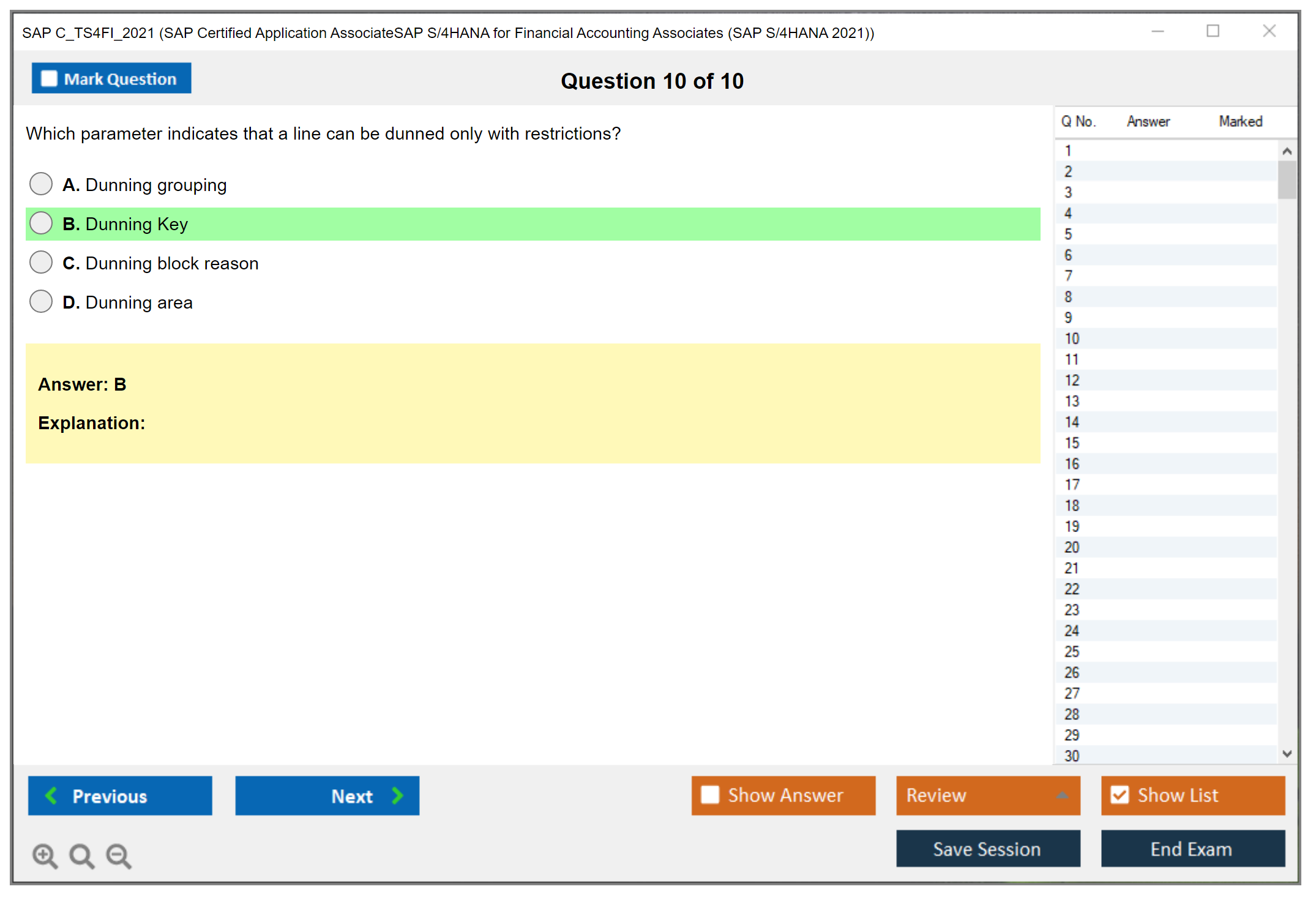
On the AR side, customer master data follows similar patterns but with different business rules that reflect the sales cycle. Dunning program configuration tests whether you understand dunning levels, dunning charges, and grace periods. You're basically automating the "please pay us" process, which sounds simple until you're three levels deep in configuration. Interest calculation on overdue receivables is tested. Credit management integration (how credit limits get checked during order entry and delivery) links FI with the SD module.
Which, wait, this brings us to a key point about this exam. Actually, let me back up for a second. I was talking to a colleague last week who failed this exam twice before passing, and you know what his issue was? He studied each topic in isolation. Treated them like separate islands. That doesn't work here because SAP doesn't operate that way in real implementations.
Integration knowledge separates good scores from great ones
Here's the reality. The C_TS4FI_2021 exam loves testing integration points, and MM-FI integration for invoice verification, SD-FI for billing documents, FI-CO for cost center and internal order postings aren't separate topics. They're woven throughout the entire exam because that's how SAP actually works in production environments. If you've worked on SAP S/4HANA Sales implementations, you'll recognize how customer billing documents automatically create accounting entries. Same principle applies to procurement processes where goods receipts and invoice receipts need to match or you're stuck in three-way matching hell.
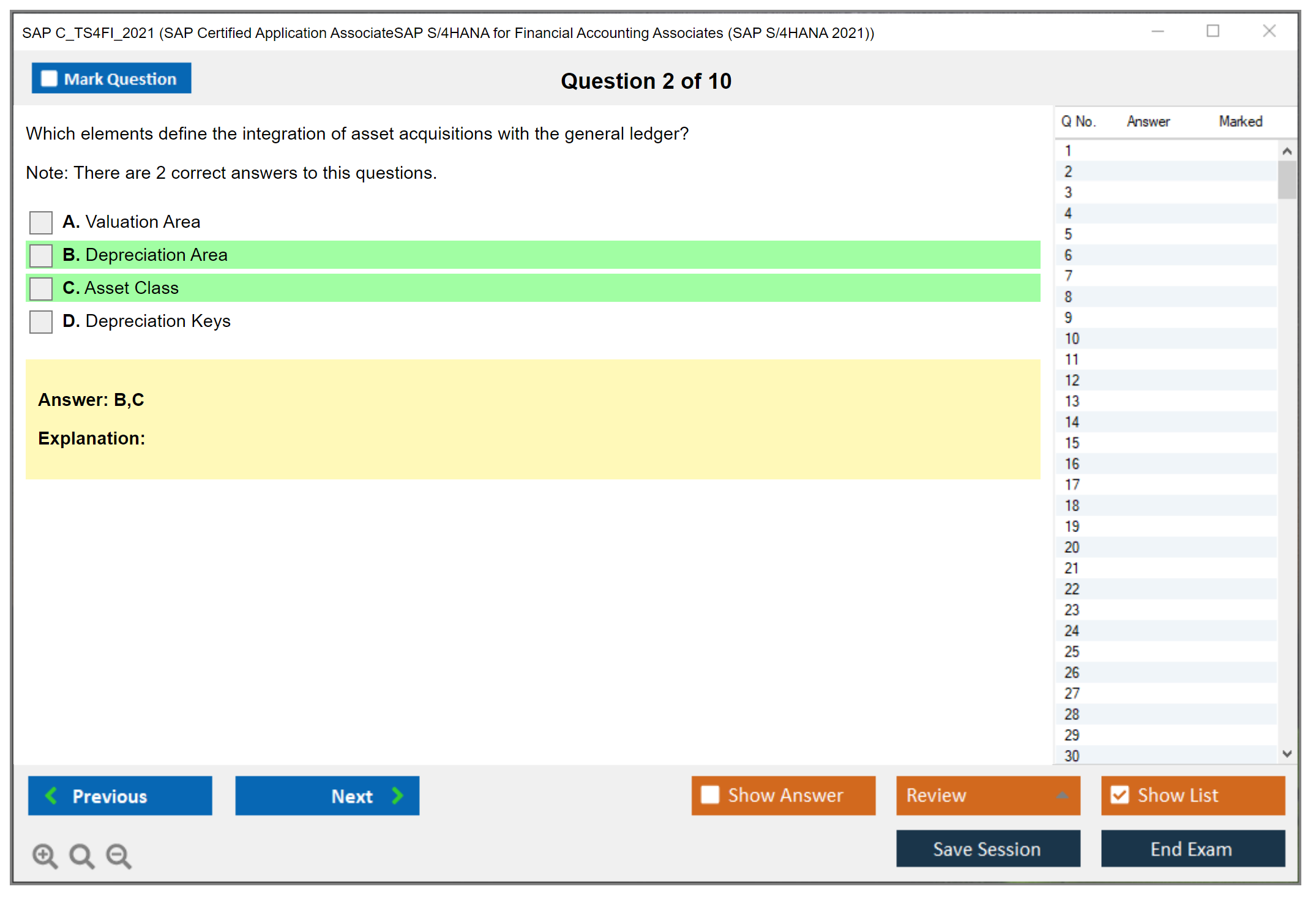
Asset Accounting takes up another 15-20% and it's super configuration-heavy in ways that'll expose whether you've actually done this before. Asset master data structure, asset classes with their depreciation keys, multiple depreciation areas for book and tax purposes. This stuff requires hands-on practice because reading about it doesn't stick. Acquisitions can happen through purchase orders, in-house production with settlement from internal orders, or asset transfers between company codes, and each method posts differently with distinct document types.
Depreciation calculation methods get tested in detail. Planned depreciation follows your configured depreciation keys, but unplanned depreciation for impairments or write-downs requires different posting logic. Asset retirements (scrapping, sale with gain/loss calculation, or transfer) each create specific document types and hit different G/L accounts. Year-end closing for AA involves running depreciation for the final period, checking asset values, and preparing for the new fiscal year rollover which has a specific sequence you can't mess up.
Financial closing operations and the organizational backbone
Period-end activities represent 10-15%. Opening and closing posting periods through the fiscal year variant, running foreign currency valuation for open items and G/L account balances, regrouping receivables/payables for proper balance sheet presentation. These are monthly rituals for FI consultants. The exam tests whether you know the sequence and dependencies because doing things out of order causes problems.
Document parking versus posting, workflow approvals, carrying forward balances to the new fiscal year.. these practical topics show up. Financial statements in S/4HANA use different technology than old ECC reports, and you need familiarity with the new approaches even if (honestly) some of the old reports still get used in production.
Organizational structures and master data (10-12% weight) covers company code setup as the central FI organizational unit, business area for cross-company-code segment reporting, fiscal year variants with their period definitions, and posting period variants for authorization control that determine who can post to which periods. Document number ranges, field status variants, tolerance groups. This is foundational configuration that affects everything downstream, so if you screw this up early, you're fixing it forever.
Currency types? Exchange rate types? Basic tax code setup? These round out this section. They seem simple but the devil's in the details when you're configuring multiple company codes with different requirements across countries.
Fiori apps and modern S/4HANA capabilities
The integration, reporting, and SAP Fiori apps section (8-10%) reflects how S/4HANA changed financial accounting from the ground up. Embedded analytics using CDS views, Fiori apps for common FI tasks, real-time integration without batch reconciliation. This is where S/4HANA shines compared to legacy systems that required overnight reconciliation jobs. If you've explored SAP Fiori development or system administration, you'll recognize these concepts already.
Drill-down reporting, line item displays, and custom queries using SAP Query tool still appear because consultants need these skills for troubleshooting and user support when canned reports don't cut it.
Bottom line? The C_TS4FI_2021 exam objectives basically mirror what you'd configure and support in a real SAP S/4HANA Financial Accounting implementation. It's not theoretical, it's practical skills testing. Study materials should include hands-on practice in a sandbox system because reading alone won't cut it for configuration-heavy topics where you need muscle memory. Practice tests help identify weak areas, but make sure you understand the "why" behind each answer, not just memorize question patterns like you're gaming the system.
Prerequisites and Recommended Experience for C_TS4FI_2021
SAP C_TS4FI_2021 certification overview
Real talk here. The SAP C_TS4FI_2021 certification is SAP's associate-level badge for Financial Accounting on S/4HANA 2021, and honestly, it's mostly about proving you understand the FI building blocks plus the process flow that finance teams actually run every day. Not some theoretical textbook version, but the actual config concepts, master data, postings, and that "why did this document hit that account" detective work everyone needs to master.
New consultants? Perfect fit. Internal FI analysts? Absolutely. Career switchers with accounting chops? You're in the right place. Anyone who wants a SAP S/4HANA Financial Accounting certification on paper and can back it up in a system will benefit from this.
C_TS4FI_2021 exam details
Expect multiple choice and multiple response. Some questions are simple definitions, but plenty are scenario-based where one word changes the right answer. Which is why a decent C_TS4FI_2021 study guide and real practice time matter. I mean, they matter a lot more than people think.
You'll book through SAP's Certification Hub, typically via the subscription model, so the C_TS4FI_2021 exam cost depends on whether you're buying a single attempt, a multi-attempt option, or your employer already pays for SAP Learning Hub and certification attempts. The thing is, don't guess. Check the current price at booking time because it fluctuates.
The C_TS4FI_2021 passing score is published by SAP for the exam, but here's the bigger point: you can "know FI" and still miss the pass because SAP tests their version of FI, their terms, their process order, and their config dependencies.
C_TS4FI_2021 objectives (exam topics)
General ledger accounting S/4HANA? Core chunk. So understand ledgers, document splitting basics, posting logic, and what sits where in the Universal Journal. Also know how financial closing and reporting SAP topics tie back to master data and org structures. Short version: G/L first. Everything else hangs off it.
Accounts payable and receivable in SAP shows up constantly. Vendor and customer master data, payment methods, dunning basics, clearings, and why a posting key even exists (honestly, people overlook this). Asset accounting S/4HANA is also in scope, especially lifecycle concepts, depreciation, and integration points.
Other topics get sprinkled in. Organizational structures. Master data foundations. Integration basics with MM and SD. And yes, SAP FI configuration in S/4HANA is part of the deal, even for an associate exam.
Prerequisites and recommended experience
Are there formal prerequisites for C_TS4FI_2021?
No gatekeeping here. SAP doesn't enforce mandatory prerequisites for registration. No "must complete TS4F1 first" checkbox that blocks you. The C_TS4FI_2021 prerequisites are basically self-managed, meaning the exam is open to anyone interested in demonstrating SAP FI knowledge. That includes people coming from accounting who are new to SAP, and people in IT who touched FI through integration work.
SAP also doesn't require proof of training completion to sit the exam. Honestly, that surprises some folks, because other vendors love locking exams behind course receipts. Here, you can book first and study later. But that's also how people light money on fire, because lack of preparation absolutely tanks your pass probability and the exam doesn't grade on effort or good intentions.
Self-assessment is the real prerequisite. If you can't explain the difference between a customer line item and a G/L line item, or you've never configured a tolerance group, you're not "almost ready." You're guessing. And guessing is a bad plan when the questions are written to punish shallow memorization.
Recommended SAP FI knowledge and project exposure
Professional experience isn't mandatory, but it helps a lot. And I mean hands-on work, not just reading PDFs. A good baseline is 6 to 12 months working with the SAP S/4HANA FI module, where you've done more than just run a few transactions and export to Excel. You should be comfortable with SAP GUI navigation and transaction code usage, because the exam assumes you can picture where settings live and how a process moves across screens, even if the question is phrased in business terms.
Accounting basics matter. Double-entry bookkeeping. Balance sheet and profit & loss statement structure. How AP and AR cycles work. Fixed asset lifecycle and depreciation concepts. Closing activities and reconciliations. Basic tax accounting like VAT and withholding tax. Industry stuff is helpful but not required, so don't stall your prep because you've never done, say, utilities or public sector finance.
If you've touched FI configuration in a dev or sandbox system? You're in a better spot. Not every setting, but enough to understand what drives postings. Company code setup, fiscal year variants, posting periods, field status, document types, and the typical "why is this field required" troubleshooting. Exposure to one full implementation or a support project is a big boost because you've seen the messy edges. Like integration testing between FI and other modules, failed postings due to missing account determination, and the reality of master data governance. (One client I worked with had fourteen different people managing customer master records. Fourteen. It was chaos, but you learn fast what happens when governance falls apart.)
Integration points. Know them. FI with MM for procure-to-pay, FI with SD for order-to-cash, and the basic handoffs that create accounting documents. You don't need to be an MM or SD consultant, but you do need to understand what triggers FI and what FI expects back.
Helpful related training and learning paths
If you want the cleanest path, start with the official SAP S/4HANA Financial Accounting course TS4F1, then move to SAP S/4HANA Financial Accounting Configuration TS4F2. Fundamentals first, then configuration, then business processes. Skipping straight to config without process context is how people memorize menus and still miss scenario questions.
SAP Learning Hub? That's the paid option that gives you structured learning content and practice systems in many cases. SAP Learning Journeys mapped to the Financial Accounting consultant role are a solid way to align your study plan with the C_TS4FI_2021 exam objectives. OpenSAP courses are free and surprisingly useful for S/4HANA fundamentals and finance topics, especially if you need the "big picture" before the config details click.
System access is the make-or-break item. Access to an SAP S/4HANA environment is critical. Whether it's a company sandbox, an SAP trial, or a training system, you need to click through SAP GUI and also get comfortable with the SAP Fiori launchpad and apps, because the exam world is mixed now, and pretending Fiori doesn't exist is a losing move.
For practice? I like mixing official content with timed drills. A C_TS4FI_2021 practice test helps you spot weak areas fast, and if you want targeted drilling, the C_TS4FI_2021 Practice Exam Questions Pack is a cheap way to pressure-test recall for $36.99 without waiting until exam day to find out you blank on asset accounting rules. Use it like a diagnostic, not a crutch. Keep an error log. Rework the topics in the system.
Project experience that makes you sharper? Participation in an S/4HANA migration or greenfield implementation. Writing functional specs. Delivering end-user training. Support desk ticket work. Testing FI processes. Blueprint workshops. Go-live hypercare. Mentioning the rest is easy. Living through one is different.
If you're close to booking, run one more timed set from the C_TS4FI_2021 Practice Exam Questions Pack and compare your results against the C_TS4FI_2021 passing score target, because "I feel good" isn't a metric. Look, pass the exam, sure. But more importantly, build the skills that make the SAP FI associate certification S/4HANA 2021 mean something when you're on a client call.
How Difficult Is the SAP C_TS4FI_2021 Exam?
Overall difficulty assessment and pass rate insights
Look, I'm not gonna sugarcoat this. The SAP C_TS4FI_2021 exam sits firmly in the moderate-to-challenging range for an associate-level certification. It's not impossible. But it's also not one of those basic SAP navigation certs where you can breeze through after watching a few YouTube videos.
From what I've seen and heard from people who've taken it, the pass rate hovers around 60-70% for candidates who actually prepare properly. That means roughly three out of every ten well-prepared folks still fail. It's definitely harder than entry-level SAP certifications but nowhere near as brutal as professional-level or specialist exams like the P_S4FIN_1909 professional cert.
What makes this one tricky? You can't just memorize facts and call it a day. The exam demands both theoretical knowledge and practical application skills, which is a totally different beast. Scenario-based questions are everywhere, and those really separate people who've actually worked in SAP from those who've just read about it. Plus the time pressure is real. Eighty questions doesn't sound like much until you're sitting there second-guessing yourself on question 45 with 20 minutes left.
What makes C_TS4FI_2021 challenging for candidates
Honestly, the breadth of topics is what gets most people. The FI module? Massive. You're covering general ledger accounting, accounts payable, accounts receivable, asset accounting, financial closing, organizational structures. It just keeps going. And it's not surface-level stuff either.
You need deep configuration knowledge in each sub-module, which means you're not just learning the basics but understanding how everything interconnects under different business scenarios. I mean, knowing that you configure company codes is one thing. Understanding which organizational assignment impacts which posting scenario and why certain validation rules fire in specific contexts? That's a whole different level.
Business process flows are another killer. SAP wants you to understand end-to-end processes, not just isolated transactions. Integration scenarios requiring cross-module knowledge show up frequently. Think about how FI connects with MM or SD, similar to what you'd see in broader integration exams like C_TS410_2020.
The scenario-based questions? Brutal. You know the type where answers A, B, and C all sound plausible, but SAP wants the most correct one based on their specific configuration logic. These questions test edge cases and exception handling that you might never encounter in your day-to-day work. Honestly feels a bit unfair sometimes. But here's the thing: that's how SAP validates whether you truly understand their system architecture versus just knowing enough to get by.
SAP-specific terminology and transaction codes are another memorization nightmare. FB50, F-43, FAGLB03. You need dozens of these locked in your brain. No access to the SAP system during the exam means you can't just look things up or verify your thinking. You either know it or you don't.
Difficulty by candidate profile and background
For beginners with 0-6 months of SAP experience? Very challenging, bordering on brutal. Without practical exposure to real-world scenarios, it's incredibly hard to visualize how configuration impacts actual business processes. The sheer volume of new concepts and terminology is overwhelming. I've seen people try to rush this certification early in their career, and honestly, I'd recommend gaining more hands-on experience first. Maybe explore foundational project management concepts through something like C_ACTIVATE13 while you build your FI skills.
Intermediate users with 6-18 months experience find it moderately challenging. You've got enough exposure to common processes but probably have gaps in advanced topics or less-frequently-used functionality. Configuration details might not be fully internalized yet. But with focused study and quality practice materials like the C_TS4FI_2021 Practice Exam Questions Pack at $36.99, you've got a solid shot at passing.
Experienced consultants with 18+ months? It's manageable with structured preparation. Your practical experience really helps with scenario questions. Configuration knowledge is already established through projects. Main challenge is covering the breadth of exam topics systematically rather than just relying on what you use regularly. High pass probability if you review weak areas properly.
Common pitfalls and mistakes candidates make
The biggest mistake I see? People underestimate the breadth and skip entire sections. They think "I never use asset accounting in my job, so I'll just wing that part." Bad idea. Those questions still count.
Relying solely on work experience without studying C_TS4FI_2021 exam objectives is another trap. Your project might focus heavily on AP/AR but barely touch asset accounting or financial closing operations. The exam doesn't care about your project scope. It covers everything.
Not practicing with timed mock exams before the actual test is a huge oversight. Time management is critical. Confusing similar configuration settings or transaction codes happens constantly under pressure. And misreading questions because you're nervous or rushing? Yeah, that'll tank your score fast.
Watch for key words like "NOT," "EXCEPT," or "ALWAYS" in questions. Missing these turns a correct answer into a wrong one instantly, which I've personally experienced and it's incredibly frustrating when you realize what happened. People also second-guess themselves too much and change correct answers unnecessarily. I've done this myself on other certs and immediately regretted it.
Other common mistakes: spending too much time on difficult questions early wastes precious minutes, inadequate hands-on practice with configuration transactions leaves you guessing on practical scenarios, and using outdated study materials from SAP ECC versions instead of S/4HANA 2021-specific content. That last one is surprisingly common and absolutely will hurt you.
Strategies to overcome exam difficulty
Create a full study plan covering all exam objectives. No exceptions. Allocate extra time to unfamiliar or weak areas rather than just reviewing what you already know well. Practice configuration in a live SAP system regularly if you can access one.
Take multiple practice tests under timed conditions. The C_TS4FI_2021 practice questions help you get comfortable with question formats and identify knowledge gaps. Review every incorrect answer to understand the reasoning, not just memorize the right choice.
Join study groups. Use process of elimination for multiple-choice questions when you're stuck. Flag difficult questions and return to them later rather than burning time upfront.
Maintain a calm mindset during the exam. Easier said than done, but panic kills your performance. Get adequate rest before exam day. Your brain needs to be sharp, not running on caffeine and stress.
I remember taking my first SAP cert years back. Walked in overconfident because I'd been working in the system for months. Got absolutely humbled by questions about configurations I'd never touched in real life. Learned that lesson the hard way.
If you're looking at other SAP certifications down the line, consider how they build on each other in ways that might surprise you. Technology foundations from C_FIORADM_21 or development skills from C_FIORDEV_21 can complement your FI knowledge and create unexpected career opportunities.
Best Study Materials and Resources for C_TS4FI_2021
SAP C_TS4FI_2021 certification overview
The SAP C_TS4FI_2021 certification is basically the associate-level badge for SAP S/4HANA 2021 Financial Accounting. It focuses hard on what you'd actually do as an FI consultant: configuration work, business process understanding, not just regurgitating definitions from some glossary. The exam's short. Content's dense. You'll be cross-checking details constantly, which can mess with your head if you're not used to that question style.
What is SAP Certified Associate, SAP S/4HANA 2021 for Financial Accounting?
It's the SAP S/4HANA Financial Accounting certification that proves you can handle core FI topics in S/4HANA 2021, including general ledger accounting S/4HANA, accounts payable and receivable in SAP, asset accounting S/4HANA, and the basics of financial closing and reporting SAP. That's the official line, anyway.
Who should take the C_TS4FI_2021 exam?
Junior FI consultants, definitely. Career switchers from accounting backgrounds who want to break into SAP implementation work. People stuck doing support tickets who're trying to move into actual configuration and implementation projects, because that's where the interesting work lives. If you're already configuring daily, it's still worth it for credibility with clients and recruiters, but you'll pass way faster because you've already lived through the pain of debugging posting errors at 2 AM. I once knew a guy who passed this thing in three weeks flat because he'd spent two years cleaning up a botched G/L migration. That kind of suffering sticks with you.
C_TS4FI_2021 exam details
Exam format and question types
Mostly multiple-choice questions, scenario-based items where they describe a business situation and ask what happens next, and a bunch of "what happens if you configure X this way" type questions that test whether you actually understand cause and effect. Look for wording traps. Tiny details matter. Weirdly.
Exam duration and delivery options
Usually delivered via SAP Certification Hub with remote proctoring being pretty common these days. Quiet room. Good internet. Don't fight the system checks at the last minute. The proctor software can be finicky and you don't want to burn 20 minutes troubleshooting webcam permissions.
C_TS4FI_2021 passing score (what to expect)
The C_TS4FI_2021 passing score is published by SAP on the official exam listing page, and it can vary depending on the version or when they refresh the question pool, so check the current number right before you actually book your slot. Don't rely on some random blog post from 2022 telling you "it's 65%" when SAP can update that threshold whenever they want.
C_TS4FI_2021 exam cost (SAP Certification Hub / subscription model)
The C_TS4FI_2021 exam cost is usually tied to SAP's subscription model through the Certification Hub, where you're often paying for a bundle of attempts rather than a single shot at the exam. People ask, "How much does the SAP C_TS4FI_2021 exam cost?" and the honest answer is: it depends on your region and whether you're buying attempts via a training package or standalone, but it's definitely not pocket change. We're talking a few hundred bucks minimum.
C_TS4FI_2021 objectives (exam topics)
General Ledger Accounting (G/L) in SAP S/4HANA
This is where the exam really likes to camp out and throw curveballs at you. Document splitting logic, ledger configurations, posting transactions, integration touchpoints with other modules like Controlling and Asset Accounting. Know what configuration settings actually drive system behavior versus what's just affecting reporting output or display options.
Accounts Payable (AP)
Vendor master data structure, payment run programs and configuration, tolerance groups for matching and posting, and common AP posting scenarios. Also, the "what is the impact on the G/L when you do this AP transaction" type questions that connect sub-ledger activity to general ledger postings.
Accounts Receivable (AR)
Customer master records, dunning procedures and configuration, incoming payment processing, clearing logic and open item management. Don't ignore small stuff like special G/L indicators for down payments or guarantees, because they love testing edge cases.
Asset Accounting (AA)
If you skip AA during prep, you'll absolutely feel it on exam day. Depreciation areas and how they integrate with ledgers, integration points with G/L posting, asset acquisition and retirement posting logic. These all show up heavily in C_TS4FI_2021 exam objectives and people consistently underestimate how much AA appears.
Financial closing, reporting, and integration basics
Period-end activities and closing tasks, reconciliation procedures between sub-ledgers and G/L, and what reports or Fiori apps you'd use for specific business needs. Not every single report technical name, but you need to understand the concepts behind financial statements and management reporting.
Organizational structures and master data fundamentals
Company code setup, chart of accounts assignment and structure, fiscal year variant configuration, posting period variant. Boring stuff. Still heavily tested. The foundation matters.
Prerequisites and recommended experience
Are there formal prerequisites for C_TS4FI_2021?
The C_TS4FI_2021 prerequisites aren't strict in the sense that SAP won't block you from registering if you haven't taken some specific training code, but they definitely assume you've learned the FI basics somehow, through work or structured learning. If you're brand new to SAP and the entire ERP concept, budget way more prep time. We're talking months, not weeks.
Recommended SAP FI knowledge and project exposure
If you've actually configured posting keys in a sandbox, set up tolerance groups, maintained payment terms for vendors, you're in way better shape than someone who's only watched YouTube videos or read theoretical explanations. Hands-on beats theory every time. Period. No debate.
Helpful related training and learning paths
This is where SAP Learning Journeys and the SAP Learning Hub platform do a ton of heavy lifting for candidates, because they map specific training courses directly to exam objectives and also to the actual FI consultant job role. You're not wasting time on tangent topics that looked interesting but aren't tested.
Difficulty: how hard is the SAP C_TS4FI_2021 exam?
What makes C_TS4FI_2021 challenging?
It's the breadth, honestly. FI is a huge functional area in SAP with tons of moving parts. You're jumping from G/L configuration to AP processing to AA depreciation to period-end closing activities, and SAP expects you to know the "why" behind configuration settings and transaction codes, not just click paths you memorized. That's exactly why people ask "Is the SAP C_TS4FI_2021 exam difficult?" and get wildly mixed answers depending on background.
Difficulty by candidate profile (beginner vs. experienced consultant)
Beginners struggle with terminology, navigation, and just understanding what the system's trying to accomplish with all these settings. Experienced consultants struggle because they assume their project-specific customization approach is "the SAP standard way" when it might've been a workaround. Different problem. Same stress level.
Common pitfalls and how to avoid them
Skipping Asset Accounting prep entirely. Treating S/4HANA as just ECC with a prettier Fiori UI instead of understanding actual architectural differences. Not reviewing S/4HANA-specific updated features like the new asset accounting or universal journal. Cramming the night before without actual practice system experience is a terrible plan that fails more often than it succeeds.
Best study materials for C_TS4FI_2021
Official SAP Learning resources (Learning Journeys, SAP Learning Hub)
If you can afford one paid thing, the SAP Learning Hub subscription is honestly the most complete resource you'll find. It's a thorough platform with e-learning courses built specifically for S/4HANA Financial Accounting topics, plus you get access to learning rooms and expert Q&A forums where you can actually ask SMEs to clarify doubts when you're stuck on some configuration concept. You also get regular content updates that align with the latest S/4HANA releases, so you're not studying outdated screenshots from some legacy PowerPoint deck that still shows the old SAP GUI transactions. You can track your progress through learning paths, earn digital badges that show on your SAP profile, and you can pair the subscription with SAP Live Access systems for hands-on practice environments, which matters because just reading about FI configuration is absolutely not the same as actually doing SAP FI configuration in S/4HANA and seeing the posting results flow through to financial statements.
Cost-wise, expect roughly 500 to 800 euros per year depending on which Learning Hub edition you choose. Sounds steep until you compare it to the cost of retaking an exam or wasting six months spinning your wheels on random free materials that skip critical topics.
SAP Help Portal and product documentation
The SAP Help Portal (help.sap.com) is free and seriously underrated by most candidates. Dry. Very dry reading. But it's the actual source of truth for functional concepts, application behavior, and detailed configuration explanations straight from the product teams. When your practice questions disagree with official SAP documentation, trust the docs every time.
Instructor-led training vs. self-paced learning
ILT is expensive but really focused if you learn well with structure and live Q&A. TS4F1 is the foundation course covering basic FI concepts, TS4F2 goes deeper into configuration and process design. Typical duration is 5 to 10 days depending on which specific course you take. Available as classroom or virtual classroom formats, usually running 3,000 to 5,000 euros per course depending on location and delivery partner. If your employer's paying, absolutely take it and soak up every minute. If you're paying out of pocket yourself, I'd honestly combine Learning Hub subscription plus targeted practice materials instead. ILT works but it's not the only path.
Notes, cheat sheets, and topic-wise revision plan
Make your own one-page summaries for G/L architecture, AP/AR process flows, AA integration points, and closing procedure sequences. Short fragments help memory retention. Screenshots too, especially of config paths. Keep an error log from every practice question you miss and map each mistake back to a specific section in the C_TS4FI_2021 study guide or the relevant SAP Help documentation page.
C_TS4FI_2021 practice tests and exam prep strategy
Where to find reliable C_TS4FI_2021 practice tests
Be picky here. A legitimate C_TS4FI_2021 practice test should explain exactly why each answer option is correct or wrong, not just spit out answer letters with no context. If you want a focused paid practice set that's actually aligned with current exam objectives, the C_TS4FI_2021 Practice Exam Questions Pack is $36.99 and works really well as a drilling tool after you've already covered the fundamental objectives through primary study materials.
How to use practice exams effectively (timed sets, error log, retakes)
Run timed sets first to simulate actual exam pressure and pacing. Then thoroughly review every single wrong answer and write the underlying configuration rule or business logic in your own words, because that forces actual understanding. Only retake practice sets after you've gone back and re-studied the weak topic area properly, otherwise you're just memorizing specific questions instead of learning concepts. That's exactly how people end up getting surprised on actual exam day when the wording's slightly different.
Hands-on practice: key FI configuration and business processes to rehearse
Set up organizational structures from scratch, configure basic G/L settings like posting keys and field status variants, run vendor and customer posting scenarios with different special G/L indicators, perform asset acquisition and depreciation calculation runs, and execute complete period-end closing activities including reconciliation. If you can reproduce these postings in a system and clearly explain the resulting document flow and account impacts, you're really ready for the certification exam.
Renewal and maintaining your SAP certification
SAP certification renewal model (stay-current approach)
SAP uses a stay-current model for many certifications nowadays, meaning you need to complete periodic delta assessments when new S/4HANA releases drop with significant functional changes. It's not "pass once and forget forever" like old-school certifications. Fair approach, given how fast SAP's evolving.
What to do after passing: assessments, updates, and validity
Track the required delta assessments assigned to your certification in SAP Learning Hub or the Certification Hub. Keep your SAP login active. Save proof of completion for your employer's records and your own portfolio.
How often you should review release changes (S/4HANA updates)
At least each major S/4HANA update cycle, which is typically annual. Even just skimming the release notes and "what's new" documentation helps you stay current with feature changes that might affect your certification validity or daily work.
FAQ (people also ask)
How much does the SAP C_TS4FI_2021 exam cost?
Depends heavily on whether you're buying single exam attempts or an attempt subscription package. Check SAP's official Certification Hub listing for your specific region because pricing really changes based on geography and package type.
What is the passing score for C_TS4FI_2021?
Check SAP's official exam detail page for the current C_TS4FI_2021 passing score threshold since SAP can and does revise it periodically when they refresh the question pool.
Is the SAP C_TS4FI_2021 exam difficult?
It's medium-hard if you actually know FI concepts from real work experience, significantly harder if you're just trying to memorize dumps or cram without understanding. The breadth of coverage is the biggest killer for most candidates.
What study materials are best for passing C_TS4FI_2021?
SAP Learning Hub subscription plus SAP Learning Journeys for structured paths plus the SAP Help Portal for detailed documentation, then add a focused practice question set like the C_TS4FI_2021 Practice Exam Questions Pack to pressure-test your weak spots and identify knowledge gaps before exam day.
How do I renew my SAP S/4HANA FI certification?
Follow the stay-current delta assessments that SAP assigns for new S/4HANA releases, usually tracked and delivered through the Learning Hub platform with notifications to your registered email.
Final checklist before you book the exam
Objectives coverage checklist
Confirm you've actually touched every single domain area in the C_TS4FI_2021 exam objectives, especially Asset Accounting and period-end closing processes. No skipping topics. Zero.
Practice test score targets
Aim for consistent scores well above the published pass mark across multiple practice attempts, not one lucky run where everything went right. If you're using the C_TS4FI_2021 Practice Exam Questions Pack, don't stop at "I got 82% once." Repeat until the material's honestly boring.
Exam-day readiness (ID, environment, timing)
ID ready and matching registration exactly. Clean desk with nothing the proctor will flag. Stable internet connection tested beforehand. Actual sleep the night before. Don't underestimate rest.
Conclusion
Wrapping it all up
Look, the SAP C_TS4FI_2021 certification isn't easy. But it's doable. Honestly, if you've got a solid plan and actually put in the work, you'll get there. We're talking about an exam that tests real-world SAP FI configuration in S/4HANA, not just theory from some textbook that's already collecting dust before you even finish the last chapter.
The C_TS4FI_2021 exam cost? It's honestly reasonable compared to other vendor certs (around $500-600 through SAP's current model), and the C_TS4FI_2021 passing score sits at 65% which might sound like a breeze until you're actually staring at scenario-based questions about general ledger accounting S/4HANA processes and asset accounting S/4HANA depreciation rules that make you second-guess literally everything you thought you knew. That passing threshold's fair but you need to know your stuff across all the C_TS4FI_2021 exam objectives: accounts payable and receivable in SAP, financial closing and reporting SAP, the whole spectrum.
Here's the thing. People I know who passed? They didn't just read documentation and call it a day. They got hands-on with the system, configured actual financial structures, ran through month-end closing scenarios multiple times until it became muscle memory. You know, the kind where you don't even think about the steps anymore. The SAP S/4HANA Financial Accounting certification requires you to understand how these processes connect, not just memorize menu paths like some robot. Your C_TS4FI_2021 study guide should include practical exercises because the exam'll absolutely test whether you can troubleshoot a posting issue or explain why a document park failed.
I remember this one guy from a forum who thought he had it all figured out because he'd been doing FI work for three years. Got cocky. Skipped the practice tests entirely and walked in thinking his consulting experience would carry him through. Failed by eight points. Sometimes street smarts and book smarts need each other, you know?
Practice tests? That's where most candidates figure out their weak spots. You might think you're solid on accounts receivable until a C_TS4FI_2021 practice test throws a credit memo scenario at you that involves special G/L transactions and dunning procedures you haven't touched in months. Maybe longer. That's the value right there: finding gaps before exam day, not after when it's too late.
If you've covered the SAP FI associate certification S/4HANA 2021 material thoroughly, met the recommended (though not formal) C_TS4FI_2021 prerequisites through training or project work, and you're consistently hitting 75-80% on practice exams, you're probably ready. But don't skip that final prep phase, seriously. Grab a resource like the C_TS4FI_2021 Practice Exam Questions Pack to simulate the real testing environment and time pressure. It makes a real difference when you've seen question formats and complexity levels that mirror what SAP actually throws at you.
This cert opens doors. Just make sure you walk through them prepared.