

SAP C_TS452_2020 (SAP Certified Application Associate - SAP S/4HANA Sourcing and Procurement)
SAP C_TS452_2020 Certification Overview
Introduction to SAP C_TS452_2020 certification
The SAP C_TS452_2020 certification has become the credential for anyone serious about SAP S/4HANA Sourcing and Procurement work. If you're trying to break into SAP procurement consulting or you're already working in the field and want validation for your skills, this is what hiring managers look for when they review resumes. It shows you understand how modern procurement processes function in S/4HANA. Not just theoretical concepts but the actual workflows companies rely on.
This certification officially designates you an SAP Certified Application Associate in SAP S/4HANA Sourcing and Procurement. That's a mouthful, sure. What it really signals is you've proven you can manage purchase requisitions, purchase orders, vendor management, goods receipts, invoice verification, plus all the procurement scenarios happening in live S/4HANA implementations.
Purpose and value in today's ERP market
The SAP S/4HANA Sourcing and Procurement certification isn't just another certificate. Companies are migrating from legacy SAP ECC systems to S/4HANA at a wild pace right now, and they desperately need consultants who actually understand the new procurement processes instead of just talking about them. Having C_TS452_2020 on your resume immediately signals you're not stuck in the old MM mindset. You get the Fiori apps, the simplified data model, and how procurement has evolved in the HANA era.
Market demand is through the roof. Every mid-to-large enterprise running SAP is either planning or executing their S/4HANA transformation, and procurement is always a critical module in those projects. This certification differentiates you from people who have generic SAP experience or old-school MM knowledge without understanding how things actually work in S/4HANA.
Evolution from SAP ECC to S/4HANA
Here's what trips people up. The old C_TSCM52_67 certification for SAP ECC Materials Management is not the same as C_TS452_2020. Sure, there's overlap in concepts like purchasing documents and inventory management. But S/4HANA introduced major changes. The material master got simplified. Procurement now heavily relies on Fiori apps instead of clunky transaction codes. The underlying database architecture completely changed with HANA's in-memory computing.
If you've been working in SAP ECC procurement for years, you'll recognize plenty, but you'll also need to unlearn some habits. Adapt to the S/4HANA way of handling procurement processes. The certification exam reflects this evolution, testing you on S/4HANA-specific scenarios rather than legacy approaches that don't apply anymore. I remember when everyone panicked during the transition because their muscle memory for T-codes became almost useless overnight.
Career advancement opportunities
Getting certified can seriously boost earning potential. Entry-level SAP procurement consultants without certification might start around $70K-$85K depending on location. Certified professionals with a couple years of implementation experience regularly command $95K-$120K or more in compensation packages. Senior consultants with C_TS452_2020 and solid project experience can push past $140K, especially if they're willing to travel or work contract gigs.
The role progression typically goes from junior functional analyst to procurement consultant to senior consultant to solution architect or module lead. This certification is your entry ticket to that entire path. Some people also transition into procurement manager roles on the business side, where the certification proves you understand both the system and the processes driving business value.
Global recognition and industry acceptance
SAP certifications are recognized globally. Huge advantage there. Whether you're in Chicago, Singapore, Frankfurt, or Mumbai, the C_TS452_2020 credential means the same thing to employers and clients. I've seen consultants use this certification to land projects in completely different countries because SAP implementations follow similar patterns everywhere. Manufacturing, retail, pharma, oil and gas. Pretty much every industry uses SAP procurement, so your certification applies across sectors without limitation.
Certification validity and maintenance
SAP changed their certification model a few years back. Your C_TS452_2020 certification doesn't technically expire, but SAP expects you to keep it current through delta exams or renewal assessments as they release new versions of the software. Right now, if a newer version of the S/4HANA procurement certification comes out, you'd want to upgrade within a reasonable timeframe to stay relevant in the market. The C_TS452_2020 exam itself covers the 2020 version of S/4HANA, and SAP releases updates quarterly, so staying current matters more than people realize.
Target audience breakdown
Who should actually pursue this certification? Procurement consultants are the obvious choice. SAP functional analysts working in MM or logistics modules benefit hugely too. Supply chain managers who want to understand their systems better fit the profile. Implementation specialists on S/4HANA projects. Business process owners who configure procurement workflows. All of them belong here.
You don't need hardcore technical developer skills. This isn't about ABAP coding or database administration. It's about understanding business processes, configuration, and how procurement actually operates in S/4HANA environments where real business gets done.
Business process focus
The C_TS452_2020 exam emphasizes operational procurement scenarios. You'll need to know how to create purchase requisitions, convert them to purchase orders, manage vendor relationships, handle goods receipts and invoice verification. Troubleshoot common procurement issues that pop up during daily operations. The thing is, it's less about technical configuration deep-dives and more about showing you can support real procurement processes that businesses run daily.
Integration with other SAP modules
Procurement doesn't exist in isolation. The sourcing and procurement module connects heavily with Finance (FI) for invoice postings and vendor payments. Controlling (CO) for cost center assignments and internal orders. Materials Management (MM) for inventory movements. Even Sales and Distribution (SD) for stock transport orders between plants. Understanding these integration points is key, and the certification tests your knowledge of how data flows between modules. If you're also interested in financial processes, checking out the C_TS4FI_2021 certification might complement your procurement knowledge nicely.
Real-world application scenarios
Certified professionals apply their C_TS452_2020 knowledge constantly. You might be configuring purchasing organizations for a global rollout. Setting up automated source determination rules. Implementing three-way matching for invoice verification or training end users on Fiori procurement apps. The certification proves you can handle these scenarios, not just pass a test and forget everything.
Certification pathway positioning
C_TS452_2020 sits within the broader SAP S/4HANA certification portfolio as an associate-level credential. Some people pair it with the C_TS410_2020 Business Process Integration certification to show they understand how all S/4HANA modules work together. Others might pursue technical certifications like C_FIORDEV_21 if they want to develop custom Fiori apps for procurement workflows.
Employer expectations
Organizations absolutely use C_TS452_2020 as a hiring criterion. When staffing S/4HANA implementation projects, having certified consultants is often a contractual requirement or at minimum a strong preference that influences selection decisions. It reduces training time and gives confidence that the consultant knows current best practices rather than outdated approaches that'll cause problems down the line.
Continuous learning mindset
Here's the thing. Passing the exam is just the beginning. SAP releases S/4HANA updates quarterly with new features, bug fixes, and sometimes significant procurement enhancements that change how you approach problems. You need to stay current through SAP Community blogs, release notes, and hands-on experimentation. The certification gets you in the door, but continuous learning keeps you valuable.
Community and networking benefits
Once certified, you gain access. SAP Community forums, user groups, and professional networks where procurement experts share solutions to tricky problems become available. They discuss upcoming features and sometimes even refer each other for consulting opportunities. These connections become incredibly valuable as your career progresses and you need insights only experienced practitioners can provide.
C_TS452_2020 Exam Details and Structure
SAP C_TS452_2020 certification overview
The SAP C_TS452_2020 certification is the current associate-level badge for "SAP Certified Application Associate, SAP S/4HANA Sourcing and Procurement". Honestly, it maps to TS452 skills, meaning day-to-day purchasing, goods movement, invoice verification, and how all that stuff connects across the system.
This exam is not theory for theory's sake. Look, SAP cares whether you understand SAP S/4HANA procurement processes as a flow, not whether you can memorize every single screen field down to the last validation rule and dropdown option that nobody ever actually uses in real implementations anyway. Short version? It covers procurement in S/4HANA. With modern assumptions.
What is SAP Certified Application Associate, SAP S/4HANA Sourcing and Procurement?
You are proving you can work with purchasing and inventory basics in S/4HANA, including the document chain and the main master data. The thing is, this is also a check that you get the S/4HANA simplifications compared to ECC, because honestly that's where a lot of people faceplant when questions start mixing classic MM habits with "what S/4 actually does now".
Expect questions that feel like: "Here's the business situation, what document or step fixes it?" Scenario stuff. Not trivia night.
Who should take the C_TS452_2020 exam?
Functional consultants. Key users. Analysts supporting buying and stock. People moving into an SAP S/4HANA Sourcing and Procurement certification track for career reasons.
Who struggles? Beginners with zero system time (that part is obvious). Also ECC folks who learned one way of doing things years ago and never updated their mental model for S/4HANA, especially around purchasing configuration in S/4HANA dependencies and how org structure choices ripple into literally everything downstream.
C_TS452_2020 exam details
Official exam code and designation: C_TS452_2020 is the version you will see listed for the S/4HANA Sourcing and Procurement Associate certification. SAP can revise blueprints, so the "2020" tag does not mean the content is frozen forever. Blueprint updates happen. Quietly sometimes.
Delivery method: computer-based testing via SAP Certification Hub, and you can also sit it at authorized Pearson VUE testing centers. Home testing is convenient. Pearson VUE is calmer for some people. Depends on your setup and your tolerance for proctor rules.
Number of questions: typically 80, mixed multiple-choice and multiple-response. SAP can adjust counts with exam blueprint updates, so treat 80 as the normal target.
Duration: 180 minutes. Three hours. Plenty of time if you read carefully, but not if you argue with every question like it is a design workshop.
Exam format and scoring reality
Question types include single-select, multiple-select, and scenario-based items that test applied knowledge. And yes, scenario-based questions are a big chunk, usually around 30 to 40%, where you are choosing the best next step, the right document, or the setting that explains the behavior.
No partial credit. That part hurts. Multiple-response means you only get the point if you select all correct answers and avoid the wrong ones, so "select everything that sounds nice" is a losing strategy. I knew someone who took this exam four times before finally passing, and every single attempt they got tripped up on those multi-select traps because they kept second-guessing and adding extra answers just to be safe.
C_TS452_2020 passing score: typically 63%. SAP adjusts cut scores based on difficulty and psychometric analysis, so do not assume every sitting behaves the same. Score reporting is quick: you get an immediate preliminary result at the end, and the official certification usually shows up within 24 to 48 hours.
Cost, vouchers, and subscriptions
C_TS452_2020 exam cost: standard pricing is around $550 USD, but region and taxes can change what you pay, including VAT or GST. If you are searching "How much does the SAP C_TS452_2020 exam cost?" that $550 figure is the one most people mean. Just do not be shocked if your checkout price is different.
Subscription angle matters. SAP Learning Hub offers subscription options that bundle learning content and exam vouchers, which can be the better deal if you want structured C_TS452_2020 study materials plus practice time. Not gonna lie, if your employer pays, this is usually the cleanest path because you get the guided content, the learning rooms, and you are not piecing together prep from random PDFs.
Retakes and scheduling
Retake policy is straightforward. If you fail, you can retake after a waiting period (typically 14 days), and you pay the full fee again for each attempt. So yeah, do not "see what happens" unless you like donating money.
SAP TS452 exam difficulty and why it feels tricky
I would call SAP TS452 exam difficulty intermediate. Not ABAP-hard. Not "memorize IMG paths" hard either. It gets hard because it tests whether you can reason through integration, org structure, and document flow when something goes weird, or when the business throws you a curveball scenario that does not match the training manual examples you memorized.
Common pain points include integration scenarios (MM with FI, logistics touches), organizational structure dependencies (plant, purchasing org, purchasing group, company code), procurement document flow (PR to PO to GR to IR), and exception handling like blocked invoices or GR-based invoice verification behaviors. Also, inventory management and goods movement questions can get sneaky because SAP loves asking what triggers accounting postings or what movement types imply.
Success rate patterns are real. Candidates with 6+ months of hands-on time usually do way better than people who only read slides, because you have actually seen the weird messages, the incomplete docs, and the "why is this field greyed out" moments that the exam loves to hint at.
C_TS452_2020 exam objectives and topic weights
SAP publishes C_TS452_2020 exam objectives with approximate weighting. Use that. Do not guess. The common breakdown looks like this: master data (8 to 12%), purchasing documents and processes (20 to 25%), source determination (8 to 12%), inventory management (12 to 18%), invoice verification (8 to 12%), consumption-based planning (8 to 12%), reporting and analytics (5 to 8%). The weights change with blueprint updates, but the shape stays familiar.
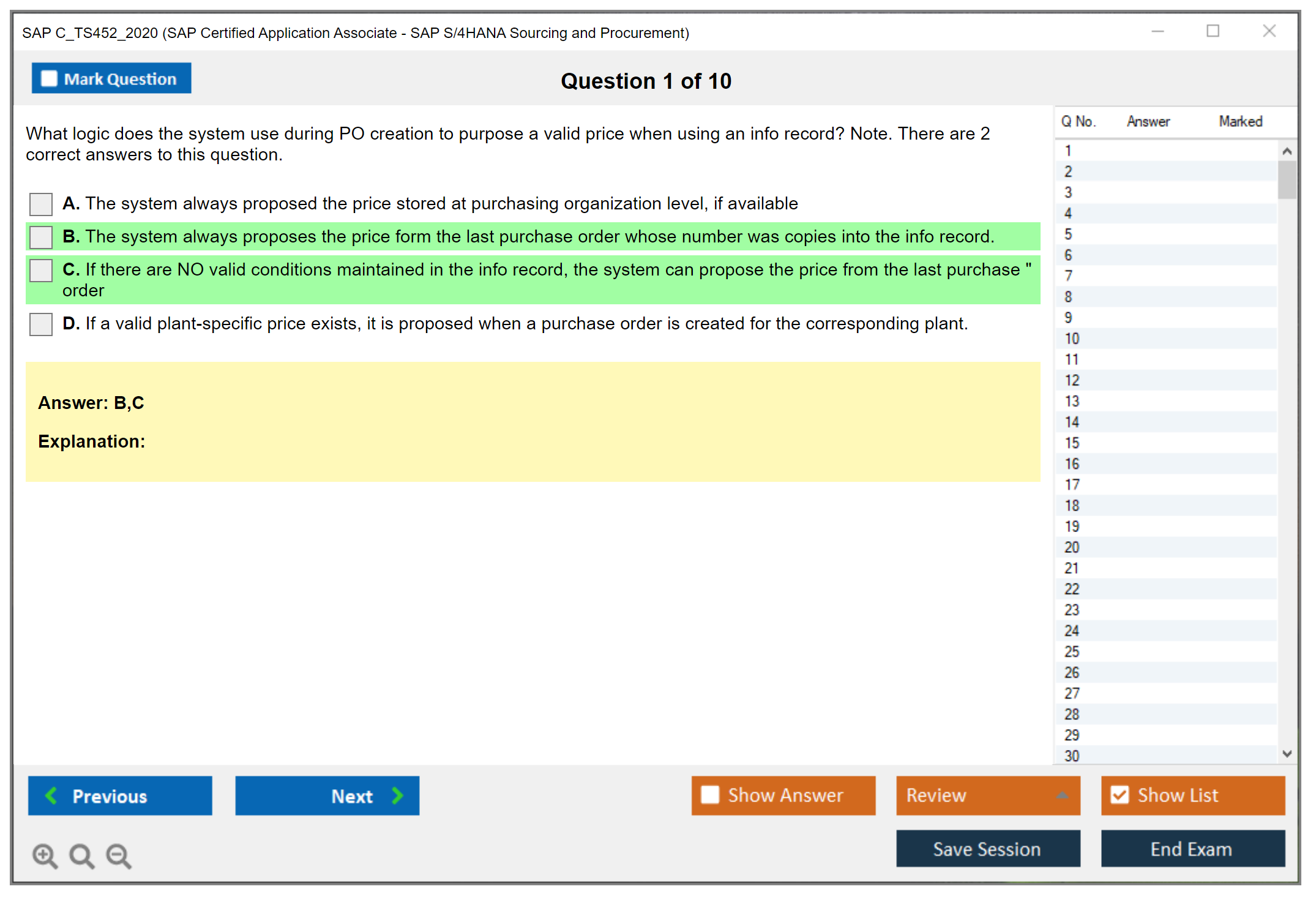
A few quick callouts. Purchasing documents is the big one, so know purchasing documents cold. Source determination and purchasing documents show up together a lot: info records, source lists, and why a source is or is not proposed. MRP and consumption-based planning is usually "touchpoints" rather than deep planning theory, but you still need to know what triggers what, and what the buyer actually sees and acts on.
Process emphasis, config expectations, and Fiori
Configuration knowledge is expected, but at the "what setting would cause this" level, not "name the exact IMG node". You should understand what you can customize and what the business impact is. Fragments matter. Org model. Release strategies. Account assignment behavior.
Business process emphasis is heavy. SAP wants outcomes. Document relationships. Why a PO is stuck. Why an invoice blocks. What happens after GR.
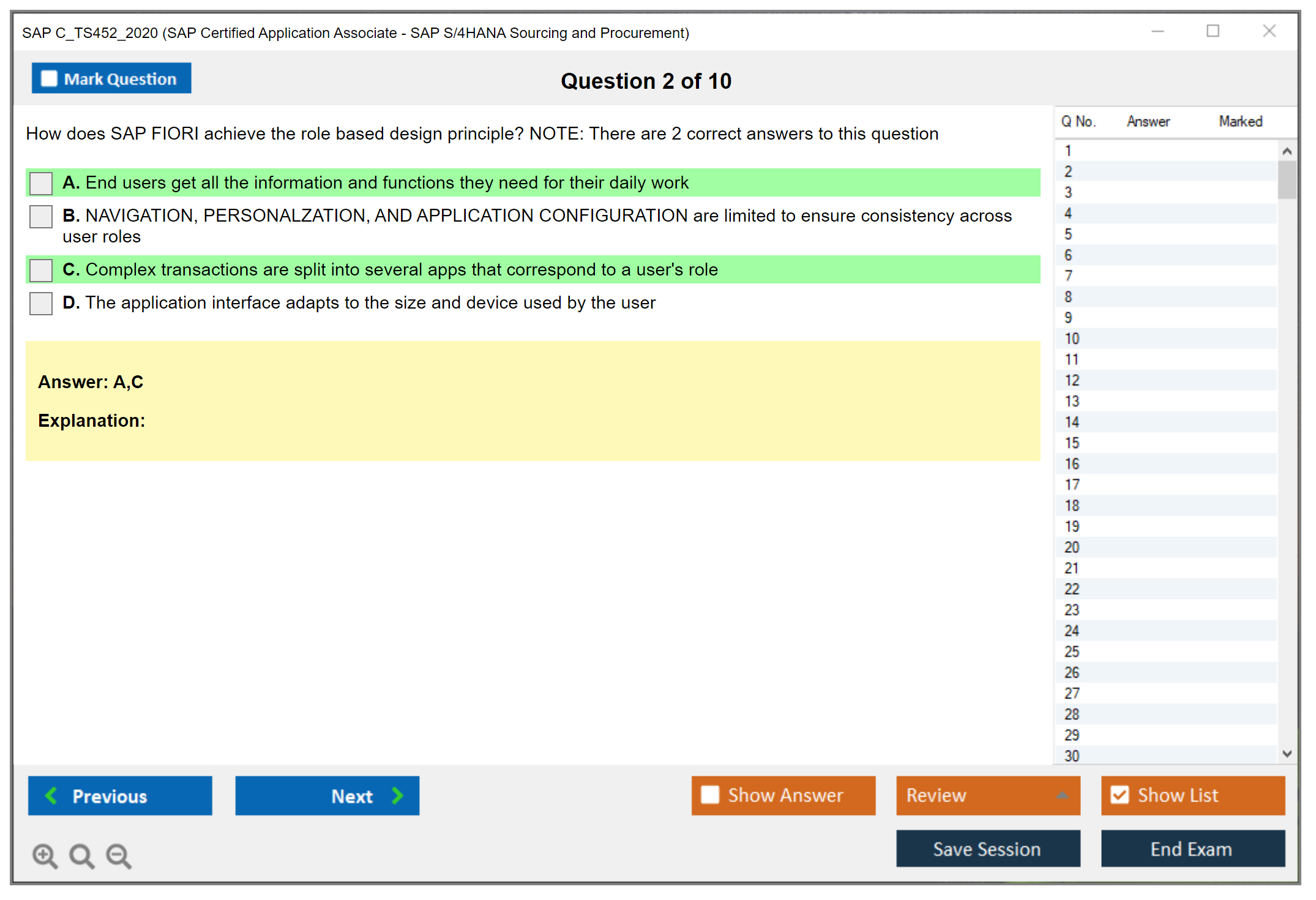
Also, Fiori is in scope. You will see questions that assume familiarity with S/4HANA procurement Fiori apps, like monitoring purchasing documents, managing purchase requisitions, and analytics tiles. English is the primary exam language, with additional languages sometimes offered depending on regional demand.
Exam blueprint updates and staying current
SAP periodically revises exam content to reflect current S/4HANA features and deprecated functionality. That also ties into the "How do I renew or maintain an SAP S/4HANA certification?" question, because it is not like you cert once and coast forever. SAP's model is usually stay-current assessments tied to newer releases, completed through SAP's certification platform, so plan for ongoing maintenance instead of thinking of this as a one-and-done thing.
C_TS452_2020 Exam Objectives Breakdown - Core Procurement Processes
Understanding the procurement space in S/4HANA
Here's the deal. The SAP S/4HANA Sourcing and Procurement certification tests you on actual business situations, stuff that happens daily when companies run S/4HANA. The procure-to-pay cycle kicks off when somebody in your organization suddenly realizes they need something (raw materials, spare parts, services, you name it), and that whole process doesn't wrap up until your supplier's finally gotten their payment. You're basically babysitting everything from that very first purchase requisition through goods receipt, then invoice verification, and ultimately the final payment posting. The C_TS452_2020 exam objectives really drill down into this entire flow because when you don't grasp how these sequential steps actually connect and depend on each other, you'll struggle with configuration decisions down the road.
Real talk? S/4HANA changed everything.
The simplified data model's a completely different beast now. Material ledger's mandatory in tons of scenarios these days. The universal journal basically kicked those old separate ledgers to the curb. Embedded analytics means you're not sitting around waiting for batch jobs to eventually show you procurement KPIs. Everything refreshes in real time through CDS views. The exam hammers this stuff because SAP wants you understanding how S/4HANA actually differs from ECC, not just regurgitating transaction codes you memorized. I once watched a consultant freeze during a client demo because they kept looking for tables that don't even exist anymore in the new data structure.
Organizational structure and purchasing hierarchies
The C_TS452_2020 exam cost might honestly make you hesitate before attempting it unprepared, so let me break down one area where people constantly trip up: organizational structure. You've got your client sitting at the top level, then company codes representing legal entities, plants for physical locations or logical divisions, and storage locations nested within plants. The purchasing organization sits somewhat separately. That's your procurement authority, the entity that's actually negotiating with vendors and putting signatures on contracts.
Here's where things get weird. A purchasing organization can be plant-specific (locked to one plant), company code-specific (serving multiple plants within one company code), or cross-company code (serving plants scattered across different company codes). The assignment logic determines procurement authority and document flow. When you assign a purchasing org to a plant, that plant can procure through that org. Miss this relationship in your configuration and your test system straight-up won't let you create purchase orders. Exactly the kind of gotcha scenario the exam loves throwing at you.
Master data architecture that makes everything work
Master data's where the SAP TS452 exam difficulty truly reveals itself. You've got material masters with multiple views. Purchasing view contains your order unit and purchase order text. MRP views control planning parameters. Accounting view determines valuation logic. Each view matters for completely different process steps. You can't just ignore the purchasing view and magically expect source determination to work properly, right?
Vendor master splits into three distinct segments: general data (address info, bank details), company code data (payment terms, reconciliation account assignments), and purchasing organization data (ordering address, terms specific to that particular purch org). This segmentation approach lets different procurement teams maintain their own vendor relationships while everybody shares basic vendor info across the system.
Then you've got purchasing info records. These store vendor-specific material data like price, delivery time, planned delivery time, standard quantity. You can create them manually or let the system generate them automatically from purchase orders or contracts that've already been processed. The exam will definitely test whether you actually know when info records get updated automatically versus when you need manual intervention to make changes stick.
Source lists define approved sources for materials. They can be mandatory (blocking requisitions if there's no valid source existing) or optional (just providing helpful proposals). The validity period matters because MRP and source determination check dates constantly. Quota arrangements take this concept further by splitting procurement across multiple sources based on percentages or splitting rules. Really useful when you're managing supply risk or negotiating volume commitments with multiple vendors simultaneously.
Purchase requisition fundamentals and approval workflows
Requisitions kick everything off.
Manual creation's straightforward enough, but automatic generation from MRP runs or consumption-based planning? That's where complexity explodes. Stock requisitions replenish inventory levels. Service requisitions procure external services. Requisitions for direct consumption post immediately to cost centers or projects without ever hitting inventory accounts.
Release strategies are approval workflows triggered by requisition value, material group, plant, or other characteristics you've configured. You define release codes (individual approvers), group them into release groups, and set release indicators to track approval status through the workflow. Not gonna lie, the configuration behind release strategies confuses tons of people preparing for the C_TS452_2020 passing score threshold because it involves multiple interconnected settings that all need aligning perfectly.
Source determination in requisitions can happen automatically when you've got valid info records, contracts, or scheduling agreements already maintained. The system checks quota arrangements first, then contracts and scheduling agreements, then info records. Understanding this priority sequence? Critical for the exam and for real implementations where buyers keep wondering why the system isn't proposing the source they're expecting it to suggest.
Purchase orders and account assignment categories
Purchase orders come in different flavors. Standard POs for regular procurement, framework orders (contracts and scheduling agreements) for long-term relationships, subcontracting POs when you're providing components to a vendor for processing. Item categories control behavior at the line level: standard items, limit items for services without quantity tracking, consignment items.
Account assignment categories determine where costs ultimately land in your financials. K posts to consumption accounts immediately (bypassing inventory), A creates assets, C ties to sales orders for third-party scenarios, P connects to projects or WBS elements. Each category changes document flow and posting logic fundamentally. If you're studying C_TS452_2020 study materials, spend extra time here because exam questions absolutely love testing edge cases around account assignment configurations.
Goods receipt and invoice verification integration
Goods receipt creates a material document and updates stock quantities. Movement types define the transaction type: 101 for GR against PO, 311 for stock transfers between storage locations. Stock types matter too. Unrestricted use is available for immediate consumption, quality inspection holds material for testing procedures, blocked stock can't be used without clearance approval.
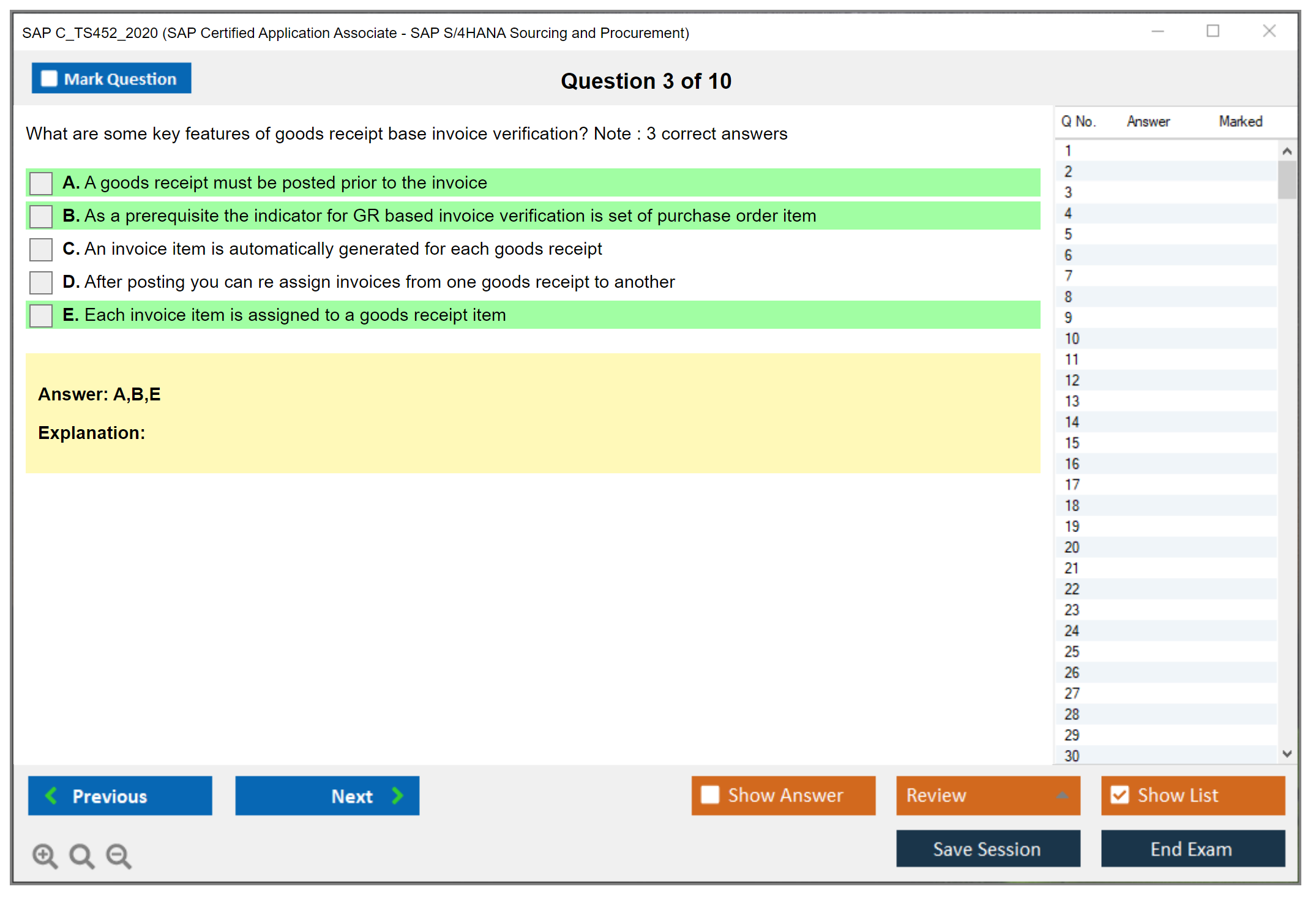
The three-way match in invoice verification compares PO, goods receipt, and invoice data. Tolerance limits define acceptable variances in price and quantity that won't block processing. Evaluated Receipt Settlement (ERS) skips manual invoice entry entirely. The system automatically creates an invoice based on the goods receipt quantity and info record price without human intervention. For ERS to work you need specific indicator settings in the vendor master and purchasing organization data, plus the info record needs ERS flags enabled properly. Miss one setting and the whole automation breaks.
Physical inventory procedures for stock accuracy include cycle counting and annual counts. Inventory differences get posted after approval, adjusting stock and creating financial postings automatically. Integration with SAP S/4HANA procurement processes means these movements immediately update universal journal entries and embedded analytics. No waiting around for reconciliation programs to run overnight.
Special procurement scenarios like subcontracting (where you're providing components to vendors), consignment (vendor-owned stock sitting at your site), and pipeline materials (continuous supply like electricity or water) each have unique configuration and process flows that show up regularly in certification questions.
For anyone considering related certifications, the SAP S/4HANA Asset Management exam covers procurement integration for maintenance materials, while the Financial Accounting certification digs into the accounting side of invoice verification processes. The Business Process Integration exam provides broader S/4HANA context that helps understand how procurement fits into end-to-end business scenarios.
Analytics and Fiori apps in modern procurement
S/4HANA procurement leverages Fiori apps for daily work activities. Manage Purchase Requisitions, Manage Purchase Orders, and Track Purchase Orders provide role-based interfaces that replace clunky transaction codes for many users nowadays. Embedded analytics through CDS views deliver real-time procurement KPIs without needing custom report development efforts. Understanding which apps support which specific processes helps you answer scenario-based exam questions about user experience recommendations and system design decisions.
Prerequisites and Recommended Experience for C_TS452_2020
SAP C_TS452_2020 certification overview
What is SAP Certified Application Associate, SAP S/4HANA Sourcing and Procurement?
The SAP C_TS452_2020 certification proves you can actually work through SAP S/4HANA procurement end-to-end without constantly asking for help. Purchase requisitions, POs, goods receipt, invoice receipt, returns. All the daily operational stuff that keeps a business running.
It's grounded in how SAP S/4HANA procurement processes truly function in the system, not some idealized version from a consultant's slide deck. And yeah, it tests whether you understand where integration headaches pop up. Like when inventory postings contradict what Finance sees and suddenly everyone needs your "expert opinion" immediately.
Who should take the C_TS452_2020 exam?
Functional consultants, mainly. I mean, if you're deep into configuration, process design, and troubleshooting "why isn't the release strategy working", this exam's built for you way more than for a pure ABAP developer. Developers can clear it, sure. But without understanding the business context it's really tough.
End users who handle serious buying or inventory work can also succeed here, particularly if they've learned source determination and purchasing documents through real-world trial and error. Industry background counts too. Manufacturing, retail, distribution folks arrive already knowing why lead times, GR timing, and vendor performance aren't just theoretical concepts.
C_TS452_2020 exam details
Exam format and key facts (code, version, delivery)
Exam code's C_TS452_2020, aligned with TS452 course material for S/4HANA sourcing and procurement. Delivery's usually online proctored or at a testing center, depending on SAP's current offerings in your area. Questions lean heavily on scenarios. Tons of "what happens next" situations.
Exam cost (pricing and subscription options)
People constantly ask about C_TS452_2020 exam cost, and honestly SAP adjusts pricing often enough that posting exact figures here becomes outdated fast. The reliable answer: it's either a single-attempt purchase, or you access attempts through a SAP Certification Hub subscription, depending on your company's procurement method. I've seen folks get reimbursed for both, though the subscription route usually makes finance departments happier since it bundles training access.
Passing score (what you need to pass)
Same deal for C_TS452_2020 passing score. SAP lists it on the official exam page and occasionally adjusts it by version. Check the official listing when booking. Random forum posts from years ago? Not trustworthy.
Exam difficulty (what makes it challenging and who struggles most)
SAP TS452 exam difficulty really comes down to ambiguity. Two options appear correct. The "best" answer hinges on whether you recall the exact S/4 behavior, or the typical configuration impact, or a process dependency like GR-based IV. Beginners hit walls when they've only memorized terminology without actually seeing the transactions or Fiori apps functioning live.
Exam objectives (skills and topic areas tested)
Your C_TS452_2020 exam objectives center on purchasing, inventory, invoice verification, basic planning intersections, and analytics. Not a coding exam. Also not pure theory. You're expected to logically reason through outcomes.
Prerequisites and recommended experience
Official prerequisites (if any)
Let's address the important part first. C_TS452_2020 prerequisites are basically nonexistent from a registration perspective. No mandatory prerequisite certifications required. No formal demand that you finished TS452 beforehand. You can pay, schedule, and take the exam.
However. Real-world reality? Different story.
Recommended background (SAP MM, S/4HANA basics, business process knowledge)
SAP officially recommends 1-2 years of genuine hands-on experience with S/4HANA sourcing and procurement, and they mean actual hands-on work, not "I watched tutorial videos and clicked around briefly." Working inside a live S/4HANA system provides context that theoretical studying simply can't replicate, because you'll start catching the subtle issues: which master data fields truly drive system behavior, what breaks when organizational assignments go wrong, and why selecting the wrong movement type creates reporting nightmares downstream.
Coming from SAP ECC MM background? Definitely helpful, but don't assume you're set. The thing is, you need to grasp S/4HANA simplifications and newer functionality, plus how the data model and user experience evolved. Otherwise you'll answer questions like it's still 2014 and bleed points. Change management's key here, not in the "soft skills seminar" sense, but in the "this process step relocated, this table changed structure, this Fiori app replaced a transaction you memorized" sense.
Business process knowledge forms the other critical half. Real procurement operations. Purchasing policies. Supply chain fundamentals. If you've never encountered approval thresholds, vendor onboarding procedures, stock versus non-stock purchasing, or why organizations obsess over three-way match timing, you'll read exam questions feeling completely lost. Also, configuration awareness matters. Not deep customizing like you're architecting a template for worldwide rollout, but sufficient purchasing configuration in S/4HANA understanding to predict outcomes from organizational structure and master data decisions.
Helpful related training/certifications
TS452's the primary course for this exam. Period. It's 10 days, roughly 80 hours, covering exam-relevant topics with hands-on exercises, which is exactly the point. Delivery options vary. Instructor-led classroom, live virtual sessions, self-paced e-learning.
Want additional context? Financial Accounting or Management Accounting associate certifications can strengthen your integration thinking, especially around GR/IR and account assignment, but they're not mandatory. Consider them "reduces surprises" rather than "exam gatekeeper."
Best study materials for C_TS452_2020
Official SAP Learning Journeys and training courses
Start with TS452, then follow the corresponding Learning Path. Keep it straightforward. If you're hoarding PDFs like collectibles, you're just avoiding actual preparation.
SAP Learning Hub resources (ebooks, learning rooms)
An SAP Learning Hub subscription's the smoothest path to content plus training system access, and system access is the big deal. You need a sandbox where you can practice inventory management and goods movement, execute PO to GR to IR flows, and observe which postings hit where.
Hands-on practice systems (SAP S/4HANA sandbox options)
Can't access a company sandbox? Use SAP-provided practice environments via Learning Hub or training systems. Hands-on practice cements the "why" behind each step. Reading about MRP and consumption-based planning is one experience. Actually watching requirements and stock shift after posting is completely different.
Study plan (2,6 weeks / 6,10 weeks tracks)
My honest take on timeline: experienced SAP professionals can prep in 6-8 weeks with consistent effort. Newcomers should allocate 10-12 weeks, because you're simultaneously learning the tool and the business logic. That's substantial material to absorb without complete burnout.
Also? English proficiency matters. Questions get wordy. Strong reading comprehension prevents careless mistakes.
C_TS452_2020 practice tests and exam preparation
Where to find reliable practice tests (official vs third-party)
Use official sample questions whenever available. For extra drilling, a focused resource can build speed and identify weak spots, like C_TS452_2020 Practice Exam Questions Pack when you want repetition without investing hours creating custom quizzes.
How to use practice exams effectively (timing, review, weak-area loops)
Don't just complete a test and celebrate. Time yourself. Review every incorrect answer thoroughly. Then return to the system and recreate the scenario if feasible, particularly around source determination and purchasing documents where minor details completely change outcomes. If you're using something like the C_TS452_2020 Practice Exam Questions Pack, approach it as a feedback mechanism, not a scoring competition.
Common exam pitfalls and last-week checklist
Major pitfall: guessing based on ECC knowledge. Another: overlooking integration points. You need analytical thinking to trace process flows and diagnose where procurement scenarios break down.
Final week? Prioritize sleep. Do light review sessions. And if you're tackling practice questions, do them methodically, not frantically. The C_TS452_2020 Practice Exam Questions Pack works best here for targeted weak-area remediation, not for panicked midnight cramming sessions.
Best Study Materials and Resources for C_TS452_2020
Official SAP Learning Path and TS452 course materials
The official SAP Learning Path? Honestly your best starting point. SAP built the exam around this content, I mean, it's the source. You'll find the curated learning path through the SAP Training and Certification shop, and it maps directly to what you're facing on test day. The TS452 course materials cover every single exam objective with exercises and case studies built right in, giving you exactly the knowledge SAP expects you to demonstrate. Not gonna lie, they're dense. But work through them methodically? You're getting the real deal.
The course materials walk you through organizational structures, master data setups, and purchasing documents you need to know. Configuration exercises are included that force you to actually think about how purchasing groups relate to plants. You'll see how vendor master records flow into purchase orders.
SAP Learning Hub editions and what you actually get
SAP Learning Hub comes in three flavors: Standard, Professional, and Enterprise. The differences matter here. Standard gives you access to e-learning courses and e-books, which is decent if you're on a budget, honestly. Professional adds learning rooms, live sessions, and here's the big one: SAP system sandboxes where you can actually practice transactions. That's key for building real competency. Enterprise is overkill for most individual exam-takers.
The Learning Hub advantages? Real. Access to e-learning courses means video walkthroughs of procurement processes. E-books cover everything from basic purchasing to advanced source determination. Learning rooms are collaborative spaces where you can discuss tricky topics with other candidates, super helpful when you're stuck on consumption-based planning or, the thing is, when you can't figure out why your purchase requisition won't convert. Live sessions with SAP instructors happen regularly. You can ask questions about specific scenarios that confuse you.
Those system sandboxes though? big deal, honestly. You absolutely need hands-on time with transactions like ME21N, ME51N, MIGO, and MIRO. Reading about purchase order creation is one thing, but actually working through the screens and understanding the data flow is completely different. I remember spending probably three hours just trying to figure out why a purchase req kept erroring out, which sounds frustrating but that kind of troubleshooting sticks with you way better than any study guide.
SAP Help Portal and official documentation
The SAP Help Portal at help.sap.com has the official S/4HANA documentation for Sourcing and Procurement. Your reference bible. The SAP S/4HANA Sourcing and Procurement guide contains detailed process documentation covering both configuration and business processes. Not exactly light reading, but when you need to understand the technical details of invoice verification or how goods receipt updates inventory, this is where you go, no question.
I bookmark specific sections. Refer back constantly while studying. The documentation explains integration points between modules, like how procurement connects to finance through invoice verification or how goods receipts trigger accounting documents.
Community resources and SAP Press books
The SAP Community at community.sap.com has forums, blogs, and Q&A sections specific to S/4HANA procurement. Look, some threads are more helpful than others, that's just reality. But when someone posts about a specific configuration challenge or exam topic that's giving you trouble, those discussions can clarify things the official docs don't explain well. Sometimes real-world explanations just click better.
SAP Press publishes "Materials Management with SAP S/4HANA" and other procurement-focused books. These are written by consultants who actually implement this stuff in the field. They bridge the gap between academic training materials and real-world application with screenshots, step-by-step processes, and business context that helps everything click together.
E-books and learning rooms for collaborative study
Digital study guides specifically written for C_TS452_2020 exam preparation? Available through SAP Learning Hub. Some are better than others. Check publication dates to make sure you're getting current S/4HANA content, not outdated ECC material that'll waste your time. The certification exam focuses on S/4HANA-specific functionality, including Fiori apps and simplified data models that differ significantly from older versions.
Learning Rooms deserve another mention. Collaborative study really works for this exam. You'll find candidates discussing sourcing strategies, sharing configuration tips, and explaining complex topics like quota arrangements or subcontracting scenarios. I've seen people post their study schedules and progress, which creates accountability you don't get studying alone.
System access and hands-on practice options
SAP training simulators replicate S/4HANA procurement transactions and processes in a controlled environment. They're scripted, sure, but they let you practice without worrying about breaking anything. For more flexible practice, SAP CAL (Cloud Appliance Library) lets you provision your own S/4HANA practice systems. There's a cost involved, but you get full system access, which is honestly invaluable for experimenting with different configurations and seeing how changes affect downstream processes.
SAP's trial versions and demo systems? Limited hands-on exploration. They're time-restricted and you can't save configurations long-term, but for familiarizing yourself with navigation and basic transactions, they work fine.
Free and alternative learning resources
YouTube has SAP official channels and community experts providing procurement process walkthroughs. Quality varies wildly, honestly. Some videos are excellent end-to-end process demonstrations. Others are outdated or focus on ECC instead of S/4HANA, which, look, that's not helpful. OpenSAP courses are completely free and cover S/4HANA fundamentals plus specific procurement topics, building solid foundational knowledge even though they're not exam-specific.
Third-party training providers (the authorized SAP education partners) offer instructor-led and online training options. Some people prefer the structure of scheduled classes with a live instructor asking questions and providing immediate feedback. The trade-off? Cost and time commitment. When evaluating third-party study materials against official SAP content, check currency carefully. An older study guide might cover 80% of current exam topics but miss recent S/4HANA enhancements that absolutely appear on the test.
For those also exploring SAP Activate methodologies or broader S/4HANA integration topics, understanding how procurement fits into end-to-end business processes helps tremendously.
Study tools and preparation strategies
Flashcard resources covering key concepts? Essential. Processes and terminology help with memorization. I use digital flashcard sets for organizational structures, document types, and procurement-specific terminology that shows up repeatedly. Mind mapping tools work great for visualizing how organizational structures connect, like how purchasing organizations relate to company codes, plants, and storage locations in this hierarchical mess that honestly confuses everyone at first.
A realistic 6-week preparation track looks like this: weeks 1-2 focus on organizational structure and master data. Weeks 3-4 dig into purchasing documents and processes. Weeks 5-6 cover inventory management, invoice verification, and practice tests. A 10-week preparation track spreads this out with more hands-on practice time between topics, which reduces burnout and improves retention if you've got the luxury of time. Weekly time commitment? Figure 15-20 hours for accelerated prep, 10-12 hours for the extended timeline. Less if you've got practical experience, more if this is completely new territory.
Balance theory and practice. Roughly 60% hands-on work, 40% reading. You retain more by doing than reading. Topic prioritization should follow the official exam guide's weighting percentages. Spend more time on heavily weighted areas like purchasing and source determination, less on peripheral topics that might show up once or twice.
Document your learning, seriously. Screenshots of transaction screens, process flow diagrams, configuration notes. These become your personalized study guide that reflects how you think. Peer study groups through online communities or with colleagues preparing for the same exam create accountability and different perspectives on difficult topics that you might be approaching wrong.
Configuration and transaction practice
Practice organizational structure setup from scratch. Create purchasing organizations, assign them to company codes, set up plants and storage locations. Work through master data creation for vendors, info records, and material masters, the foundational stuff that everything else depends on. Run through complete procurement scenarios: requisition creation, source determination, purchase order processing, goods receipt, and invoice verification as one continuous flow.
Know your key t-codes. ME21N for purchase orders, ME51N for requisitions, MIGO for goods movements, MIRO for invoice verification. You don't need to memorize them all, but you should recognize them and know their purposes instantly. Fiori app exploration is increasingly important. S/4HANA emphasizes the Fiori user experience for requisitions, approvals, and analytics, moving away from the classic transaction-based interface.
Practice integration scenarios end-to-end. Start with a purchase requisition, convert to a purchase order, post a goods receipt, verify the invoice, and trace the accounting documents created. Understanding this document flow is key for exam questions about integration points and process dependencies that trip up candidates who only study individual transactions in isolation.
Work through error handling scenarios, honestly. What happens when a goods receipt quantity exceeds the purchase order? How do you resolve blocked invoices that won't post? Understanding common error messages and their resolutions helps with scenario-based exam questions that present you with problems to solve rather than just asking for definitions.
The C_TS452_2020 Practice Exam Questions Pack offers realistic exam-style questions for $36.99, which honestly is worth it for identifying weak areas before test day. I'd recommend taking practice tests after you've covered the main content, not before, because taking them too early just demoralizes you. Use them to find gaps in your knowledge, then circle back to study materials for those specific topics you're missing.
Make sure all your materials reflect the current S/4HANA release and the specific C_TS452_2020 exam version. SAP updates exams periodically, and studying outdated content wastes time on topics that aren't tested anymore, which is frustrating when you realize it.
C_TS452_2020 Practice Tests and Exam Preparation Strategies
SAP C_TS452_2020 certification overview
The SAP C_TS452_2020 certification is the "Application Associate" badge for SAP S/4HANA Sourcing and Procurement. It maps closely to what a junior MM consultant or procurement analyst actually touches day to day, purchasing documents, source determination, goods movements, and the basic integrations that make procurement "real" inside S/4HANA. Process heavy. Terminology matters.
Who should take it? If you work in procurement operations and want to move into SAP, it's a clean entry point. Already supporting SAP MM? It's a credibility boost that helps in interviews because hiring managers recognize this exam name way faster than some generic "SAP course completion" certificate that doesn't really mean much. Also, if you're switching from ECC to S/4HANA, this one forces you to confront what changed and what stayed basically the same. Most people underestimate how much stays identical when they first make the jump.
C_TS452_2020 exam details
Exam format and key facts: it's the TS452 exam for S/4HANA sourcing and procurement, delivered through SAP's certification platform. Mostly scenario questions where one word changes the answer. Single-select and multiple-select. Read slowly. Really.
On C_TS452_2020 exam cost, SAP typically sells attempts via Certification Hub (often as "Certification in the Cloud" subscriptions) and pricing varies by region and packaging. Treat any fixed number you see online as "maybe." Look at SAP's official store for the current C_TS452_2020 exam cost before you schedule, especially if your employer can expense a subscription instead of a single attempt. Sometimes makes more financial sense if you're planning to take multiple certifications down the road.
For C_TS452_2020 passing score, SAP sets a required percentage and it's published on the exam listing. Don't guess. Check it. But also, don't obsess over it like it's a video game achievement. Passing by 1% or 20% gets you the exact same badge.
On SAP TS452 exam difficulty, beginners struggle when they've only watched videos and never touched the transaction flow or Fiori apps. The exam loves practical ordering, receiving, invoice verification logic, and "what happens next" questions that punish hand-wavy knowledge. Another trap? The purchasing configuration in S/4HANA phrasing, where answers all sound right unless you know which org object controls what. That's where most people lose points without even realizing why. I've seen folks with five years of ECC experience get tripped up by S/4HANA-specific simplifications that seem like trick questions but aren't.
C_TS452_2020 objectives breakdown (what to study)
The C_TS452_2020 exam objectives usually cluster around end-to-end SAP S/4HANA procurement processes, plus the building blocks underneath. You'll see purchasing org and plant relationships, master data basics, and purchasing documents like PRs, POs, scheduling agreements, and contracts popping up everywhere. Then it gets real with source determination and purchasing documents, output, release strategies concepts, and "which document is used when" in scenarios that feel weirdly specific but actually reflect real-world decision trees.
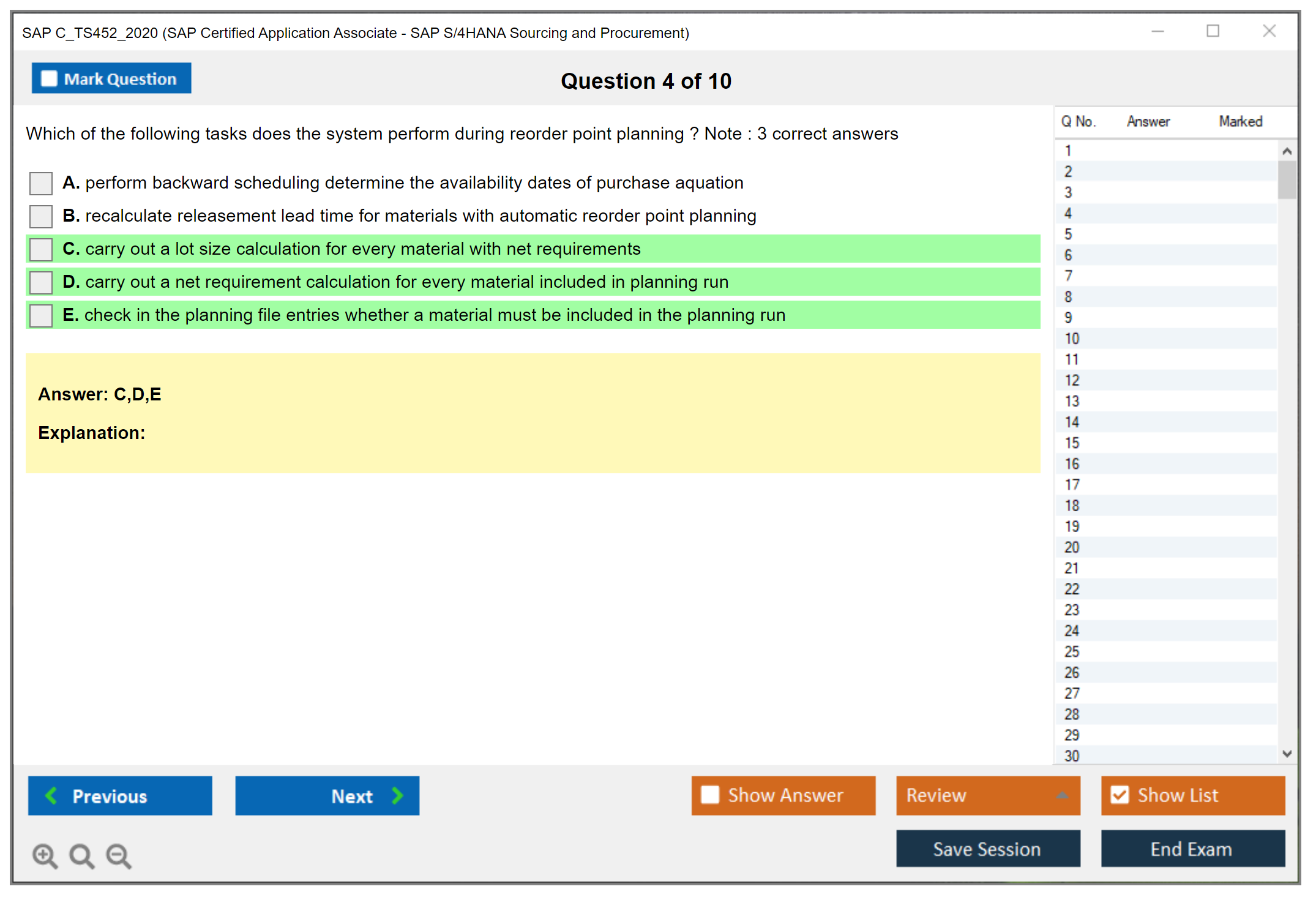
Inventory's always in play. Inventory management and goods movement questions show up as GR posting logic, movement types at a conceptual level, and how stock changes across steps. it's about memorizing movement types but understanding the why behind each one. Add MRP and consumption-based planning touchpoints, because procurement doesn't exist in isolation. You'll get planning-driven procurement situations even if you aren't an MRP specialist. Expect some exceptions and special scenarios too, where the "normal" flow breaks and you need to choose the least wrong option. Feels uncomfortable but tests real problem-solving.
Prerequisites and recommended experience
For C_TS452_2020 prerequisites, SAP doesn't usually require another certification first, but don't confuse "no formal prerequisite" with "easy." You want basic SAP navigation, comfort with procurement vocabulary, and a mental model of how a PO becomes stock and then becomes an invoice. Important.
Recommended background: some MM exposure, some S/4HANA basics, and enough business process context to understand why a buyer cares about confirmations, tolerances, or blocked invoices in the first place. Helpful related training? Anything that gets you hands-on with purchasing configuration in S/4HANA and document flow. Reading about it versus doing it are two completely different learning curves.
Best study materials for C_TS452_2020
Your C_TS452_2020 study materials should mix official and practical sources, because relying on just one type creates blind spots you won't see coming. SAP Learning Journeys and the related training courses keep you aligned with SAP's wording. That matters more than people admit when you're staring at four similar-sounding answers. SAP Help Portal's boring but accurate, and it's the best place to confirm how a function behaves today, not how someone remembers it from an old project they did five years ago.
SAP Learning Hub's the main "one login" option with ebooks, learning rooms, and structured content. If you can get a sandbox, do it. Clicking through purchase requisition to purchase order to goods receipt to invoice receipt once makes ten pages of notes stick. Helps when questions talk about integration points because you've actually seen those connections happen.
Study plan options: 2 to 6 weeks if you already live in procurement, 6 to 10 weeks if you're new and also working full time. Don't cram. Cramming lies.
C_TS452_2020 practice tests and exam preparation
Practice tests? Difference between "I studied" and "I can pass under pressure." The importance of practice tests is simple: they expose your knowledge gaps fast, build time management skills so you stop spending four minutes on one weird question and then rushing the last 20. You need that pressure rehearsal. The real exam timer makes smart people do dumb things they wouldn't normally do.
Official options first. SAP's official practice exams (when available) through SAP Learning Hub tend to be closest to the tone and structure of the real thing. Exam-like questions that force careful reading instead of pattern recognition. SAP Learning Hub practice test features usually include timed mode, review mode, performance analytics, and a topic-wise score breakdown. That's gold because it tells you exactly where your understanding's thin instead of letting you "feel" prepared based on vibes.
Third-party C_TS452_2020 practice tests can help, but you've got to evaluate reliability carefully. Look for recent updates, positive candidate reviews that mention S/4HANA functionality (not ECC screenshots), and question sets that match current exam scope. Not random trivia that somebody pulled from outdated training materials. If the questions feel like they were written by someone who never configured a purchasing org, or worse, never even saw one in action, walk away immediately. If you do want a paid pack to drill questions, the C_TS452_2020 Practice Exam Questions Pack is $36.99 and can be a decent add-on for repetition. Just don't treat any pack like a magic key that unlocks instant success. Mentioning it twice because people ask: C_TS452_2020 Practice Exam Questions Pack.
Quantity recommendation: do at least 3 to 5 full-length practice exams before attempting the real SAP C_TS452_2020 certification exam. Timing strategy that works: take your first practice test untimed to assess what you know, then switch to timed conditions for the next ones. Your pacing becomes automatic muscle memory rather than something you're consciously managing while also trying to answer hard questions. Score interpretation matters too. Practice scores are diagnostic tools, not predictive guarantees, because real exams have different question mixes and your stress level changes everything.
Minimum target: consistently scoring 75%+ before you schedule. Not once. Consistently. After each attempt, review both correct and incorrect answers. "I got it right" can still mean "I guessed right" and you didn't actually understand the underlying concept. For wrong answer analysis, tag the cause: knowledge gap, misread question, or conceptual misunderstanding. Then create focused study loops where you spend extra time on weak topics shown in your analytics, redo a few targeted questions, and retest.
Spaced repetition helps. Retake practice tests at intervals like 1 week, 3 days, and 1 day before the exam to reinforce memory without frying your brain with too much information crammed into too little time. Also practice question type familiarity: single-select and multiple-select formats behave differently. Multi-select's where people bleed points, because all correct options must be selected for credit. Partial answers usually get you nothing. Feels harsh but that's how SAP scores it. Slow down. Count options. Re-read the stem.
Renewal and certification maintenance
SAP's renewal model has shifted toward stay-current assessments for many certifications, completed through SAP's learning platforms when required. Check your certification dashboard, because timelines and rules can change. Nobody wants a surprise expiration after they updated their LinkedIn and told their boss they're certified.
FAQs
What is the cost of SAP C_TS452_2020?
The C_TS452_2020 exam cost depends on SAP's current pricing model in your region, often via subscription bundles. Verify on SAP's certification site before booking.
What is the passing score for C_TS452_2020?
The C_TS452_2020 passing score is listed on the official exam page. Use it as a requirement, not a comfort blanket.
How hard is the SAP S/4HANA Sourcing and Procurement exam?
SAP TS452 exam difficulty is medium if you've done real procurement flows, high if you only memorized terms and never worked with document flow and exceptions.
What study materials are best for TS452?
Best mix: SAP Learning Journeys, SAP Help Portal, Learning Hub resources, plus hands-on practice. Add a question pack like the C_TS452_2020 Practice Exam Questions Pack if you need repetition.
Are practice tests worth it for C_TS452_2020?
Yes. They train timing, highlight weak areas, and reduce exam-day surprises.
Final tips and next steps
Pick a prep path based on role. Consultants should obsess over process plus configuration concepts. End users should focus on document flow and exceptions. Analysts should drill reporting and how data moves through purchasing and inventory. Book the exam only after you've hit your practice score target repeatedly. Confirm your ID and testing setup requirements. Go in with a plan for multi-select questions so you don't donate points for no reason.
Conclusion
Wrapping up your C_TS452_2020 path
You've made it this far. That counts for something.
Look, the SAP C_TS452_2020 certification isn't just some badge you throw on LinkedIn for clout. It actually proves you know your way around purchasing configuration in S/4HANA, how source determination connects with purchasing documents, and the way procurement flows integrate with inventory management and goods movement. These skills? They matter when you're knee-deep in real consulting gigs and implementation projects where things actually break.
The thing is, the C_TS452_2020 exam objectives weren't just tossed together randomly. They reflect what you'll troubleshoot when a purchasing org structure implodes or when MRP and consumption-based planning go sideways against business expectations. I mean, the exam difficulty's brutal for beginners, especially if you've never touched SAP S/4HANA procurement processes in a live environment. But here's where it gets interesting: if you've methodically worked through the C_TS452_2020 study materials, gotten hands-on in a sandbox system, and really understood why certain config decisions matter instead of just screenshot memorization, you're positioning yourself to not only pass but to be really useful from day one on your next project.
The C_TS452_2020 exam cost and C_TS452_2020 passing score (80% most attempts) mean winging it? Not happening. You need structured prep. Period.
The C_TS452_2020 prerequisites aren't officially strict, but let's be real. If you don't have basic SAP navigation skills and at least some grasp of procurement business processes, you're gonna struggle. Hard struggle.
Before booking your exam slot, run through enough C_TS452_2020 practice tests to identify your weak spots. Maybe it's special procurement types. Maybe integration points between goods receipt and invoice receipt. Could be the Fiori apps for analytics too. Whatever yours are, drill those areas until they really click. I'd recommend the C_TS452_2020 Practice Exam Questions Pack if you want realistic questions mirroring actual exam format and difficulty. Not gonna sugarcoat it. Practice exams are where most people finally connect theory with application.
Actually, funny story: I once watched a colleague tank this exam twice because he kept skipping the procurement cycle fundamentals, figuring he'd just memorize transaction codes. Spoiler alert, that didn't work.
Go schedule that exam.
You've got this.
