ISO-IEC-27001-Lead-Auditor Practice Exam - PECB Certified ISO/IEC 27001 Lead Auditor exam
Reliable Study Materials & Testing Engine for ISO-IEC-27001-Lead-Auditor Exam Success!


Free Updates PDF & Test Engine
Verified By IT Certified Experts
Guaranteed To Have Actual Exam Questions
Up-To-Date Exam Study Material
99.5% High Success Pass Rate
100% Accurate Answers
100% Money Back Guarantee
Instant Downloads
Free Fast Exam Updates
Exam Questions And Answers PDF
Best Value Available in Market
Try Demo Before You Buy
Secure Shopping Experience
ISO-IEC-27001-Lead-Auditor: PECB Certified ISO/IEC 27001 Lead Auditor exam Study Material and Test Engine
Last Update Check: Mar 20, 2026
Latest 100 Questions & Answers
45-75% OFF
Hurry up! offer ends in 00 Days 00h 00m 00s
*Download the Test Player for FREE
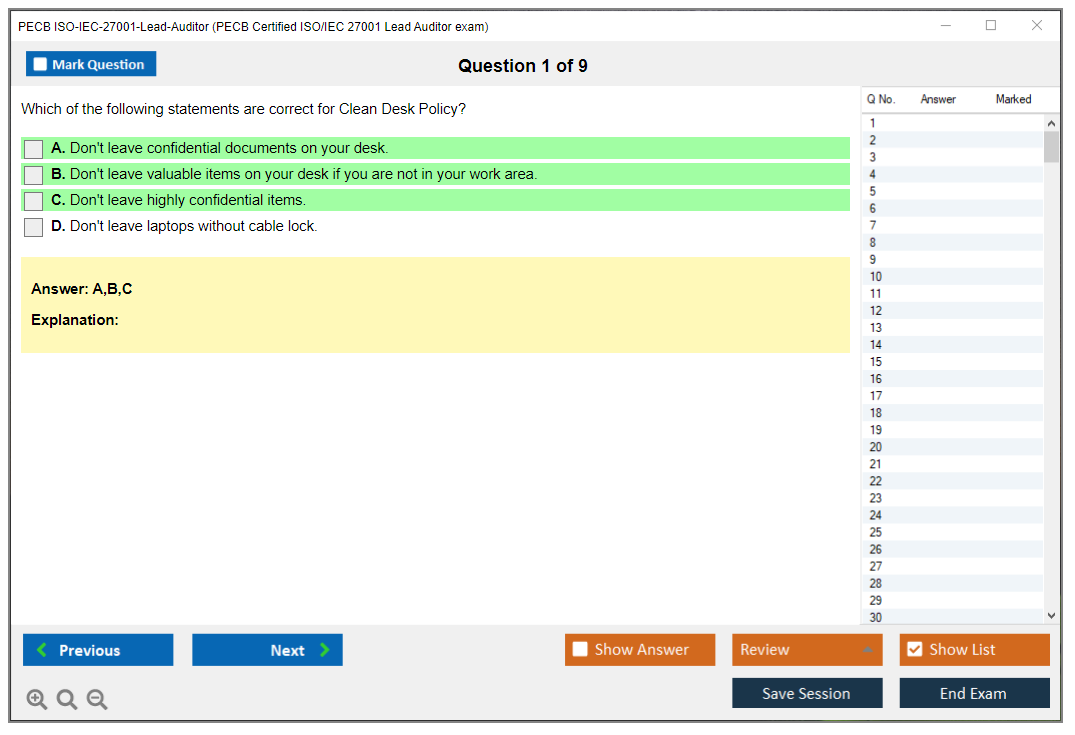
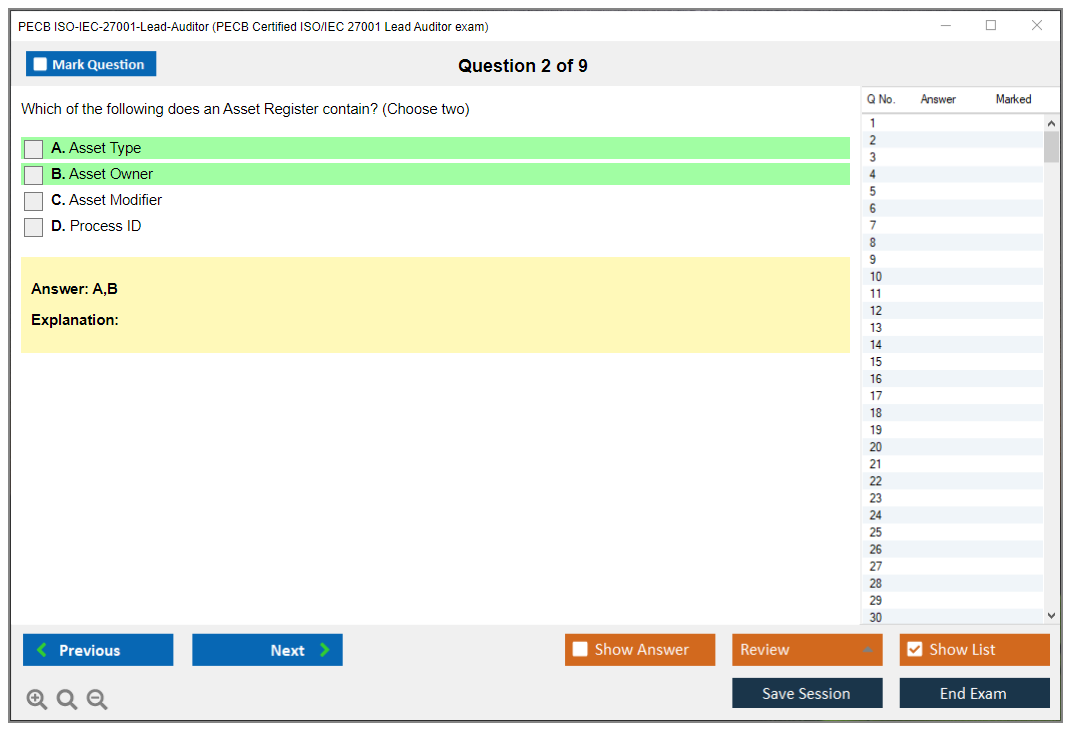
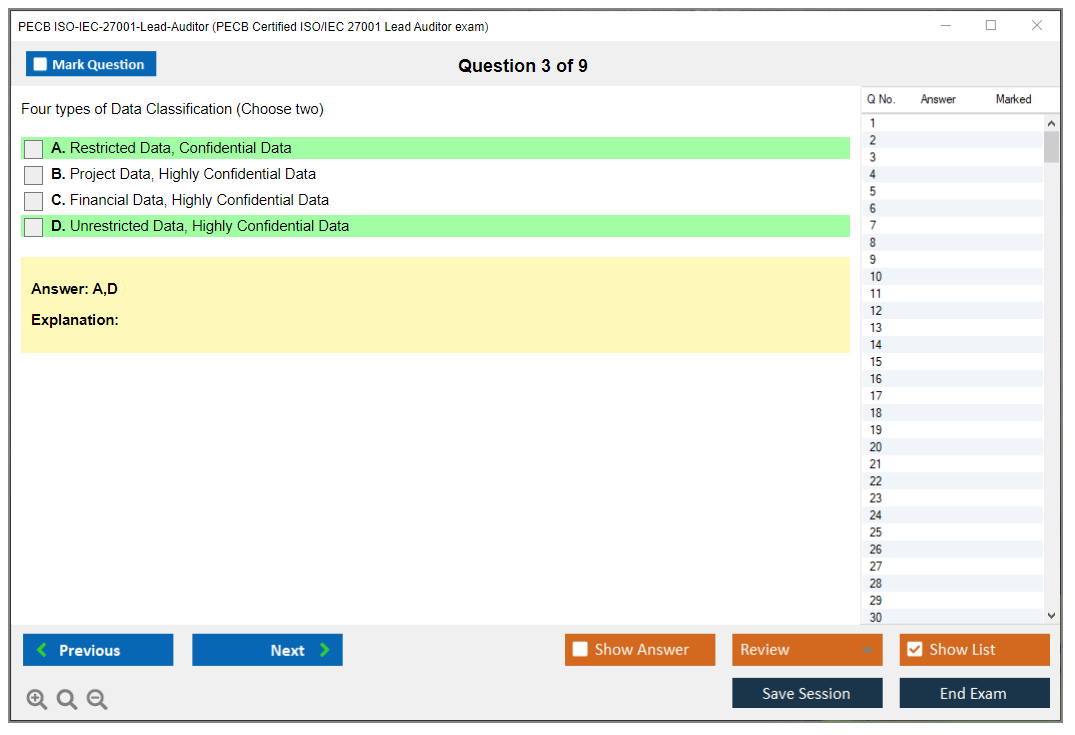
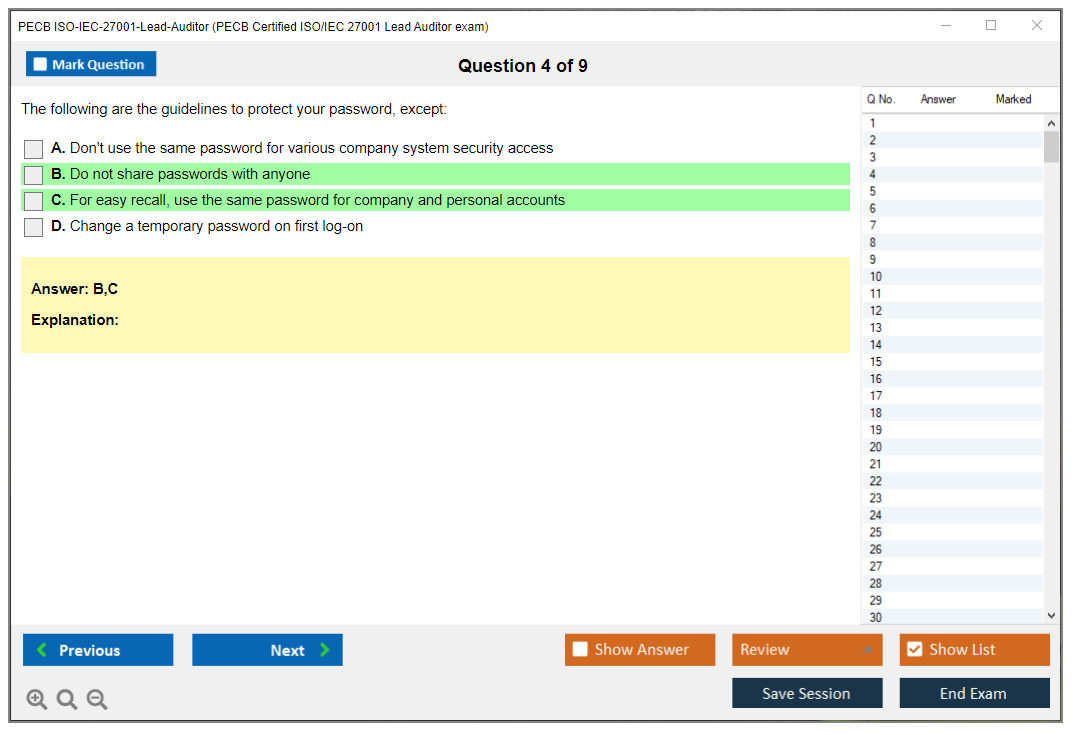
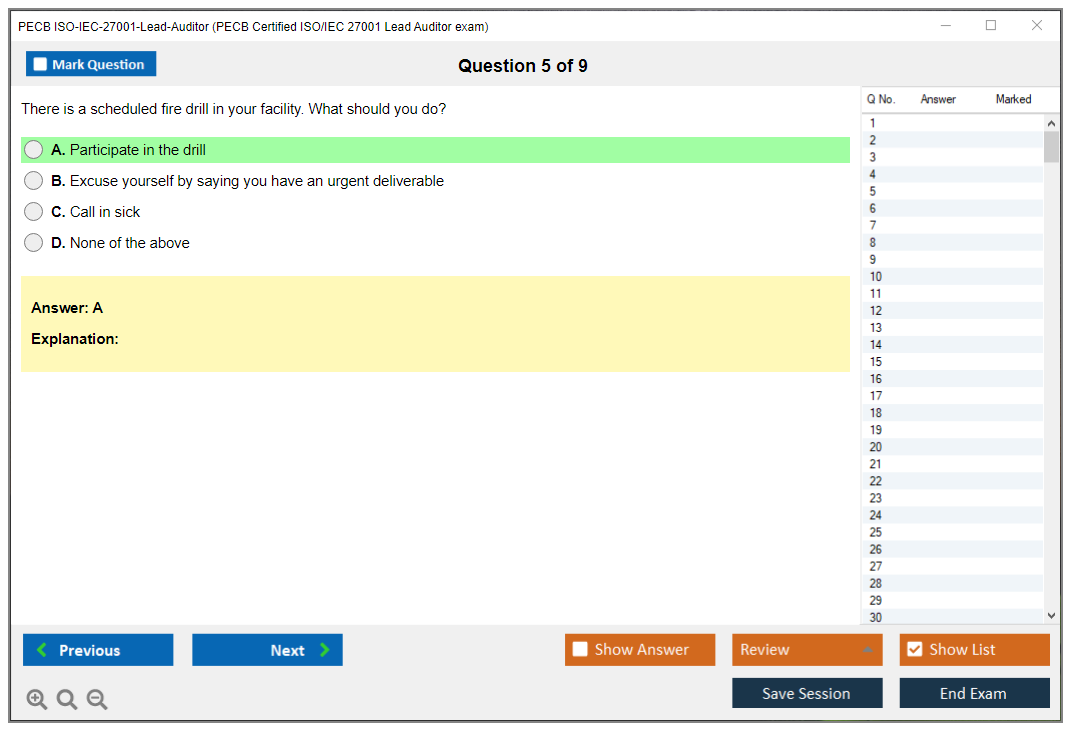
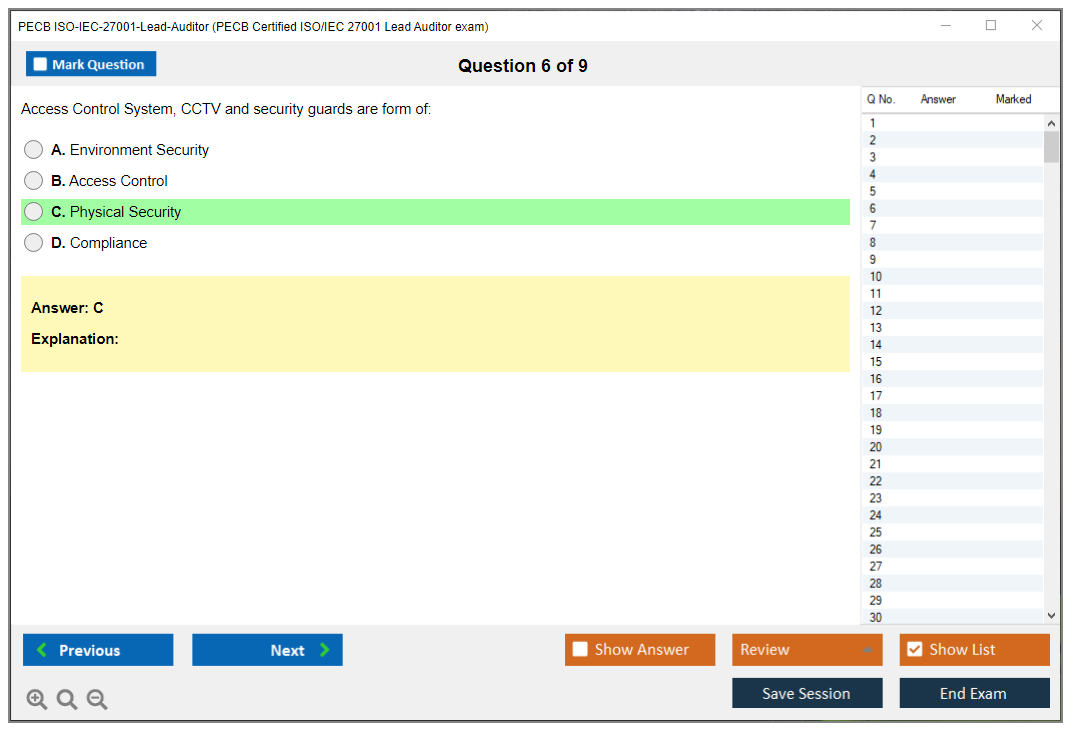
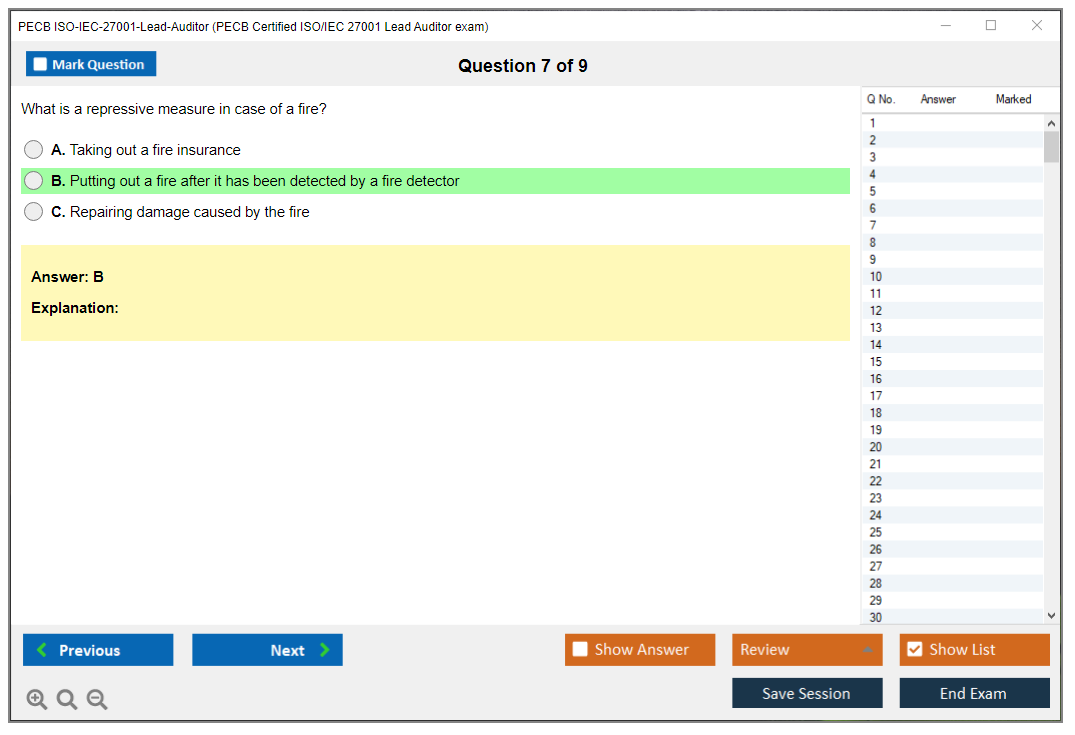
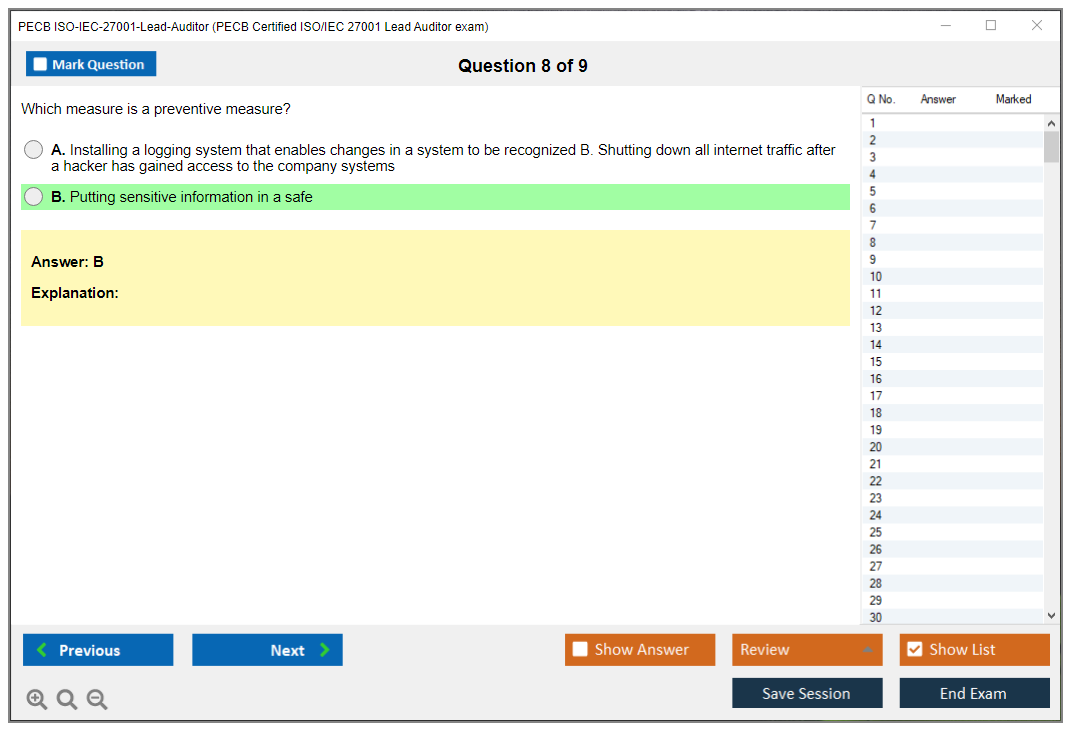
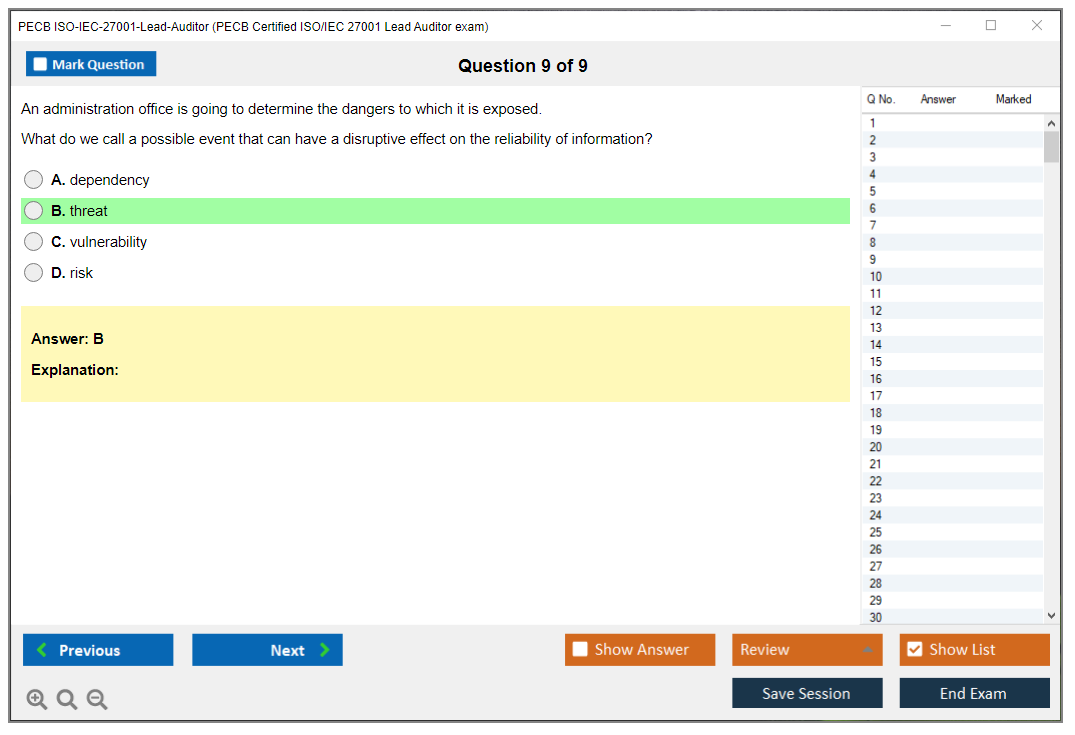
Dumpsarena PECB PECB Certified ISO/IEC 27001 Lead Auditor exam (ISO-IEC-27001-Lead-Auditor) Free Practice Exam Simulator Test Engine Exam preparation with its cutting-edge combination of authentic test simulation, dynamic adaptability, and intuitive design. Recognized as the industry-leading practice platform, it empowers candidates to master their certification journey through these standout features.
What is in the Premium File?
Satisfaction Policy – Dumpsarena.co
At DumpsArena.co, your success is our top priority. Our dedicated technical team works tirelessly day and night to deliver high-quality, up-to-date Practice Exam and study resources. We carefully craft our content to ensure it’s accurate, relevant, and aligned with the latest exam guidelines. Your satisfaction matters to us, and we are always working to provide you with the best possible learning experience. If you’re ever unsatisfied with our material, don’t hesitate to reach out—we’re here to support you. With DumpsArena.co, you can study with confidence, backed by a team you can trust.
PECB ISO-IEC-27001-Lead-Auditor Exam FAQs
Introduction of PECB ISO-IEC-27001-Lead-Auditor Exam!
The PECB ISO/IEC 27001 Lead Auditor exam is a professional certification exam that tests the knowledge and skills of auditors in the implementation and audit of ISO/IEC 27001:2013 Information Security Management Systems (ISMS). Upon successful completion of the exam, participants will be certified as a PECB ISO/IEC 27001 Lead Auditor and will have the ability to lead, manage and perform ISMS audits.
What is the Duration of PECB ISO-IEC-27001-Lead-Auditor Exam?
The duration of the PECB ISO-IEC-27001 Lead Auditor Exam is 4 hours.
What are the Number of Questions Asked in PECB ISO-IEC-27001-Lead-Auditor Exam?
There are 150 questions on the PECB ISO-IEC-27001-Lead-Auditor exam.
What is the Passing Score for PECB ISO-IEC-27001-Lead-Auditor Exam?
The passing score required in the PECB ISO-IEC-27001 Lead Auditor Exam is 75%.
What is the Competency Level required for PECB ISO-IEC-27001-Lead-Auditor Exam?
The Competency Level required for the PECB ISO-IEC-27001-Lead-Auditor exam is Expert. This means that the candidate must have extensive knowledge and experience in the field of information security and risk management.
What is the Question Format of PECB ISO-IEC-27001-Lead-Auditor Exam?
The PECB ISO-IEC-27001 Lead Auditor Exam has multiple-choice questions.
How Can You Take PECB ISO-IEC-27001-Lead-Auditor Exam?
The PECB ISO-IEC-27001 Lead Auditor exam can be taken online or in a testing center. The online exam is taken through the PECB website, while the testing center exam is taken at an authorized PECB testing center. The online exam consists of multiple choice questions and is taken over a three-hour period. The testing center exam is a paper-based exam and is taken over a four-hour period.
What Language PECB ISO-IEC-27001-Lead-Auditor Exam is Offered?
The PECB ISO-IEC-27001-Lead-Auditor Exam is offered in English.
What is the Cost of PECB ISO-IEC-27001-Lead-Auditor Exam?
The cost of the PECB ISO-IEC-27001-Lead-Auditor exam is €1,800.00.
What is the Target Audience of PECB ISO-IEC-27001-Lead-Auditor Exam?
The target audience of the PECB ISO-IEC-27001-Lead-Auditor Exam is individuals who wish to demonstrate their knowledge and skills related to the implementation and management of an Information Security Management System (ISMS) based on ISO/IEC 27001. The exam is suitable for professionals with experience in the field of information security, such as information security officers, auditors, consultants, and IT professionals.
What is the Average Salary of PECB ISO-IEC-27001-Lead-Auditor Certified in the Market?
The average salary for a person with PECB ISO-IEC-27001 Lead Auditor certification is around $90,000 per year. However, salaries can vary depending on the individual's experience and location.
Who are the Testing Providers of PECB ISO-IEC-27001-Lead-Auditor Exam?
PECB is the official provider of the ISO/IEC 27001 Lead Auditor exam. The exam is available in multiple languages and can be taken online or in a physical testing center.
What is the Recommended Experience for PECB ISO-IEC-27001-Lead-Auditor Exam?
The recommended experience for the PECB ISO-IEC-27001-Lead-Auditor exam is a minimum of five years of experience in information security management, including two years of experience in leading and managing information security projects. Additionally, the candidate should have knowledge and understanding of the ISO/IEC 27001 standard, and have experience in auditing information security management systems.
What are the Prerequisites of PECB ISO-IEC-27001-Lead-Auditor Exam?
The Prerequisite for the PECB ISO-IEC-27001-Lead-Auditor Exam is to have a minimum of two years of experience in information security management and to have completed the PECB Certified ISO/IEC 27001 Foundation training.
What is the Expected Retirement Date of PECB ISO-IEC-27001-Lead-Auditor Exam?
The expected retirement date of the PECB ISO-IEC-27001-Lead-Auditor exam is not available online. You can contact PECB directly for more information. Their contact information can be found on their website at https://pecb.com/contact-us.
What is the Difficulty Level of PECB ISO-IEC-27001-Lead-Auditor Exam?
The difficulty level of the PECB ISO-IEC-27001-Lead-Auditor exam is considered to be medium to high. It requires an in-depth knowledge of the ISO/IEC 27001 standard and the ability to apply it to various scenarios.
What is the Roadmap / Track of PECB ISO-IEC-27001-Lead-Auditor Exam?
The certification roadmap for the PECB ISO-IEC-27001-Lead-Auditor Exam is as follows:
1. Complete the PECB Certified ISO/IEC 27001 Lead Auditor training course.
2. Pass the PECB Certified ISO/IEC 27001 Lead Auditor exam.
3. Complete the PECB Certified ISO/IEC 27001 Lead Implementer training course.
4. Pass the PECB Certified ISO/IEC 27001 Lead Implementer exam.
5. Complete the PECB Certified ISO/IEC 27001 Lead Auditor/Lead Implementer Bridge training course.
6. Pass the PECB Certified ISO/IEC 27001 Lead Auditor/Lead Implementer Bridge exam.
7. Complete the PECB Certified ISO/IEC 27001 Lead Auditor/Lead Implementer/Lead Manager training course.
8. Pass the PECB
What are the Topics PECB ISO-IEC-27001-Lead-Auditor Exam Covers?
The PECB ISO-IEC-27001 Lead Auditor exam covers the following topics:
1. Introduction to Information Security: This topic covers the fundamentals of information security and the need for its implementation.
2. Information Security Management System (ISMS): This topic covers the components of an ISMS, including its objectives, scope, and processes.
3. Planning and Implementing an ISMS: This topic covers the planning and implementation stages of an ISMS, including risk assessment and control selection.
4. Auditing an ISMS: This topic covers the principles of auditing an ISMS, including the roles and responsibilities of an auditor, the audit process, and the audit report.
5. Reporting and Follow-up: This topic covers the principles of reporting and follow-up, including the use of audit findings and corrective actions.
6. Legal and Regulatory Requirements: This topic covers legal and regulatory requirements related to information security
What are the Sample Questions of PECB ISO-IEC-27001-Lead-Auditor Exam?
1. What is the purpose of the Statement of Applicability (SoA) in an ISO/IEC 27001:2013 audit?
2. What is the scope of the audit when conducting an ISO/IEC 27001:2013 audit?
3. What are the criteria for selecting an auditor when conducting an ISO/IEC 27001:2013 audit?
4. What is the role of the Information Security Manager in an ISO/IEC 27001:2013 audit?
5. What are the key areas of focus when conducting an ISO/IEC 27001:2013 audit?
6. What is the purpose of the Risk Assessment in an ISO/IEC 27001:2013 audit?
7. What are the key steps in the internal audit process for ISO/IEC 27001:2013?
8. What are the key documents to review during an ISO/IEC 27001:2013 audit?
9. What is the purpose of
PECB ISO-IEC-27001-Lead-Auditor (PECB Certified ISO/IEC 27001 Lead Auditor exam) PECB ISO/IEC 27001 Lead Auditor Exam Overview and Certification Value Look, the PECB ISO/IEC 27001 Lead Auditor exam is one of those certifications that can seriously change your trajectory in information security. Not just another checkbox. We're talking about a thorough assessment that validates whether you can actually plan, conduct, report on, and follow up ISO 27001 compliance audits from start to finish. What the PECB certification actually proves PECB (Professional Evaluation and Certification Board) operates as an internationally recognized personnel certification body for management system auditors. They're accepted across 150+ countries, which honestly matters when you're competing in a global market. When you pass their lead auditor exam, you're showing competence to audit Information Security Management Systems based on the ISO/IEC 27001:2022 standard. Not just theoretical knowledge you crammed... Read More
PECB ISO-IEC-27001-Lead-Auditor (PECB Certified ISO/IEC 27001 Lead Auditor exam)
PECB ISO/IEC 27001 Lead Auditor Exam Overview and Certification Value
Look, the PECB ISO/IEC 27001 Lead Auditor exam is one of those certifications that can seriously change your trajectory in information security. Not just another checkbox. We're talking about a thorough assessment that validates whether you can actually plan, conduct, report on, and follow up ISO 27001 compliance audits from start to finish.
What the PECB certification actually proves
PECB (Professional Evaluation and Certification Board) operates as an internationally recognized personnel certification body for management system auditors. They're accepted across 150+ countries, which honestly matters when you're competing in a global market. When you pass their lead auditor exam, you're showing competence to audit Information Security Management Systems based on the ISO/IEC 27001:2022 standard. Not just theoretical knowledge you crammed the night before.
The certification validates your ability to evaluate information security controls, assess risk treatment approaches, understand organizational context, and make audit decisions that actually hold up under scrutiny. You'll prove you can handle everything from opening meetings to documenting nonconformities and corrective actions to writing audit reports that certification bodies and senior management take seriously. The whole package.
How this stacks up against ISO 19011 requirements
Here's something people miss: the PECB certification confirms your knowledge of ISO 19011 auditing guidelines. That means audit principles, managing audit programs, conducting management system audits according to international best practices. It's not enough to know ISO 27001 clause by clause. You need to understand audit evidence, audit sampling, how to interview people without putting them on the defensive, and when a finding is a minor nonconformity versus a major one.
The ISO/IEC 27001 Lead Auditor certification fits with these broader auditing standards, which makes you valuable beyond just information security contexts.
Who actually needs this credential
Third-party auditors working for certification bodies? They're the obvious candidates. But honestly, internal auditors benefit massively too, especially if your organization takes ISMS audit and compliance seriously. I've seen ISMS managers, security consultants, compliance officers, and IT governance professionals all pursue this because it gives them credibility when they're recommending controls or challenging business decisions.
If you're trying to move into consulting roles or senior audit positions, this certification opens doors that Foundation-level credentials just don't. Certification bodies actively look for certified lead auditors when hiring. Consulting firms can charge higher rates when their staff hold recognized credentials. Simple economics.
Lead Auditor vs everything else in the ISO 27001 family
Not gonna lie, the naming gets confusing. The Lead Auditor certification's fundamentally different from the ISO/IEC 27001 Lead Implementer path. Lead Implementer focuses on designing and implementing an ISMS from scratch. You're building the system. Lead Auditor means you're evaluating someone else's system against the standard.
Internal Auditor certifications are narrower. They prepare you to audit your own organization's ISMS, but don't typically cover certification audit contexts or the full audit program management piece. Foundation certifications give you baseline knowledge of ISO 27001 requirements but won't qualify you to lead audits or make audit judgments independently. Big difference there.
The depth and breadth of the Lead Auditor credential? That's what makes it valuable for career advancement. You're not just learning theory. You're learning how to apply audit principles in real scenarios where your findings have actual consequences.
Why employers actually care about this
Organizations pursuing ISO 27001 certification need qualified auditors for internal audit programs. That's a contractual requirement if you want to maintain certification. Beyond that, companies use certified lead auditors for vendor assessments, compliance initiatives, and due diligence activities that involve evaluating information security controls.
In regulated industries like finance, healthcare, government contracting, ISO 27001 certification audits are increasingly required or expected by clients. Having certified lead auditors on staff means you can handle these requirements without expensive external consultants for every single audit cycle. The thing is, it saves money long-term. I once worked with a mid-size financial services firm that brought their lead auditor role in-house and cut their annual audit costs by 40% over three years. Not every company sees those returns, but it happens more often than you'd think.
For consultants and service providers, the certification's a competitive advantage in a crowded market. When two firms are bidding on the same ISMS implementation project, the one with certified lead auditors on the team usually wins. It's proof you understand not just how to build an ISMS, but how it'll be evaluated when certification time comes.
Prerequisites and what you're actually committing to
PECB has educational background and professional experience requirements for credential issuance. You'll need the training course (typically five days) plus the exam itself. Some pathways let you take the exam without the course if you have extensive audit experience, though most people do the full training anyway because the practical insights you get are valuable.
Investment-wise, we're talking several thousand dollars for course plus exam, depending on your training provider and location. Time commitment's significant. Five days of training, then study time, then the exam itself. But the return on investment shows up in job opportunities, salary negotiations, and client acquisition if you're consulting.
For renewal? Expect ongoing CPD/CPE obligations. PECB wants to see you're staying current through continued education, audit activities, and professional development. The renewal cycle typically runs annually, and you'll need to document your activities. If you let it expire, you're starting over, so factor that maintenance into your long-term planning.
The ISO/IEC 27005 Risk Manager certification pairs well with Lead Auditor if you want to deepen your risk management expertise, while Lead Cybersecurity Manager broadens your scope into ISO/IEC 27032 territory. It all depends on where you want your career to go.
Detailed Exam Objectives and Knowledge Domains
Detailed exam objectives and knowledge domains
The PECB ISO/IEC 27001 Lead Auditor exam is not about memorization, honestly. It tests whether you actually think like an auditor instead of just rattling off clauses like some kind of compliance robot. You will encounter loads of "what would you do next" scenarios where the correct answer hinges on scope, risk context, and whether you are dealing with Stage 1 versus Stage 2 dynamics. These scenarios twist together multiple concepts so you cannot just pattern-match your way through. Quick tip here. Always read twice.
Also, don't obsess over memorizing every single Annex A control name verbatim, because the exam really cares more about understanding intent, gathering proper evidence, and whether you are capable of connecting controls backward to risk treatment decisions and the Statement of Applicability in ways that demonstrate actual comprehension. That is the mindset you develop in a PECB 27001 Lead Auditor training course, and it is precisely why people who have only done policy writing sometimes absolutely struggle with ISO/IEC 27001 audit exam preparation. They know what to document but not how to verify it.
Domain 1: Fundamental concepts and principles (about 15%)
This is the "do you speak ISMS" section. Quick. Foundation stuff.
You need genuine comprehension of ISO/IEC 27001:2022 Clauses 4 through 10, not just the surface-level headings, because exam questions absolutely love mixing them together in creative ways. Like asking how "context" decisions made in Clause 4 eventually manifest as tangible audit evidence within Clause 9 monitoring activities, or how Clause 6 planning connects to Annex A selection processes. Honestly that intersection is where new auditors consistently get tripped up and lose points they should not.
Expect PDCA and continual improvement questions, including what "process approach" actually means in an ISMS audit context and how it fundamentally changes your sampling strategy. Evidence fragments. Process inputs matter. Outputs too.
Information security principles show up as CIA plus those extra properties like authenticity, accountability, non-repudiation, and reliability. Concepts that sound academic but show up in real findings. You are not trying to prove perfection here, you are checking whether the organization defined what actually matters to them, implemented it consistently, and measures it in repeatable ways.
Risk-based thinking matters everywhere: risk assessment methodologies, risk acceptance criteria, risk treatment plans, and how all those feed into the SoA. Look, if you cannot explain how risk assessment results directly drive control selection logic, you will miss easy points. I mean, it is literally the foundation of the standard.
Clause 4 and 5 show up constantly in leadership and context questions. You will face questions about how auditors properly evaluate interested parties, their specific requirements, and scope boundaries without accidentally turning the audit into a consulting session where you are solving problems instead of verifying them. This is also where ISMS audit and compliance becomes tangible: you are verifying they identified relevant stakeholders (customers, regulators, internal IT teams, suppliers, contractors) and that requirements actually got translated into specific controls, measurable objectives, and operational checks rather than just sitting in some strategy document nobody reads.
I once worked with an auditor who spent so much energy chasing perfect documentation that she completely missed an entire shadow IT system running customer data through unsecured cloud services. Documentation looked pristine on paper. Reality was chaos. That taught me something: don't let perfect forms blind you to actual risk.
Domain 2: ISO/IEC 27001:2022 controls and Annex A (about 20%)
Annex A in 2022 is 93 controls grouped into four categories: organizational, people, physical, technological. A restructure from 2013 that actually makes more sense once you work with it. You need to know what each category fundamentally addresses and what evidence typically proves implementation, but not in a pointless trivia way that wastes brain space.
The exam expects you to understand purpose and various implementation approaches, then make judgment calls about what evidence is actually sufficient versus just checkbox documentation. For access control related items, you might look for joiner-mover-leaver records, role definitions with approval chains, periodic access reviews that actually happened, system logs, and exception handling processes. Multiple evidence types that corroborate each other. Meanwhile, for supplier controls, evidence often includes contract clauses with security requirements, due diligence records from onboarding, and performance reviews that check compliance over time. Just mentioning "policies exist" will not cut it anymore.
The big objective is control selection and justification through the Statement of Applicability, where theory meets reality. This is where ISO/IEC 27001:2022 controls and Annex A meets actual audit thinking: you are checking whether controls are included or excluded with a legitimate reason tied back to risk treatment decisions, and whether implemented controls really match what the SoA confidently claims exists. If the SoA says a control is fully implemented but the process owner has absolutely no idea it exists or how it works, that is a major problem waiting to be written up. Not going to lie, SoA mismatch is one of the most common nonconformities you will see in real audits, and exam scenarios love exploiting that gap.
ISO/IEC 27002:2022 guidance supports your assessment work. It is not auditable like 27001 requirements are, but it helps you judge whether an implementation approach is reasonable and whether "effectiveness" was really considered or just assumed. Control effectiveness evaluation shows up as "does it actually achieve the intended risk treatment outcome" rather than "did they write a procedure and call it done."
Common gaps you should recognize instantly: vague risk treatment plans with no ownership, controls implemented inconsistently across different sites or departments, asset inventory that does not remotely match reality when you spot-check, weak or nonexistent logging review processes, and training that is just a slide deck with no tracking of completion or comprehension. Window dressing that looks good on paper. The rest you will spot through practice audits and, honestly, mistakes. And yes, ISO 27001 lead auditor practice questions often reuse these exact themes because they are perennially relevant.
Domain 3: Audit principles and ISO 19011 auditing guidelines (about 25%)
This is the heaviest slice of the exam. It is also where tons of exam points hide in plain sight, because questions can be answered correctly even without perfect ISO 27001 recall if you properly apply ISO 19011 auditing guidelines and understand auditor behavior principles.
You need the seven audit principles cold: integrity, fair presentation, due professional care, confidentiality, independence, evidence-based approach, risk-based approach. Memorize them, absolutely, but also know how they actually change auditor behavior in practice situations. Independence is about avoiding conflicts of interest and bias that compromise objectivity. Evidence-based means you do not just "feel" something is compliant or trust assurances without verification. Show me the records.
Managing an audit program includes planning cycles, implementing audits, monitoring performance, reviewing outcomes, and improving effectiveness over time. Basic PDCA applied to auditing itself. Expect questions about audit program objectives, how they align with organizational needs and external certification requirements, and how risk influences both audit frequency and depth of examination in different areas. One key point. Risk drives focus.
Auditor competence comes up in surprisingly weird ways: selecting auditors with appropriate sector knowledge, determining when to use technical experts versus generalist auditors, and how competence is maintained through continual professional development, not just initial training. Team composition questions often include team dynamics issues, language barriers in multinational audits, and how to properly handle disagreements on findings without undermining team cohesion. This is also where audit criteria, scope, and evidence definitions really matter, because the exam wants you to clearly separate "audit criteria" (27001 requirements, organizational policies, legal requirements, contractual obligations) from "audit evidence" (records, direct observations, interview responses, test results). Different concepts entirely.
Domain 4: Planning and preparing ISO 27001 audits (about 15%)
Audit initiation covers initial contact, feasibility assessment, objectives clarification, and basic logistics coordination. Simple stuff. But surprisingly easy to mess up under pressure. Wait, did I confirm access to the server room?
Document review is a substantial objective: checking ISMS documentation for completeness, consistency, and alignment with requirements before you ever show up on-site. You are not approving documents or editing them, you are identifying whether they adequately support meeting requirements and whether they are actually usable in day-to-day operations versus just shelf-ware. Stage 1 audit readiness is classic PECB Lead Auditor exam format material: verifying scope definition, context understanding, documented information availability, internal audit completion, management review evidence, and whether Stage 2 can realistically proceed or needs delay.
Audit plan development includes detailed schedules, resource allocation, communication protocols, and sampling strategies adjusted to the organization, not just template plans you copy-paste. The exam absolutely loves audit evidence and audit sampling questions because sampling strategies change dramatically based on scope complexity, organizational size, risk profile, multi-site realities, and history of past nonconformities in specific areas. You also need to know what goes into the audit team briefing so everyone understands methods, individual assignments, escalation paths, and how to maintain consistency across auditors.
Domain 5: Conducting on-site audit activities (about 15%)
Opening meeting stuff is procedural but still tested regularly: confirm scope boundaries, explain methods, establish communication channels, and clarify how findings will be handled and reported. Setting expectations prevents conflict later. Then you get into information gathering techniques: structured interviews, document examination, direct observation, and testing activities. This is where you are expected to follow logical audit trails instead of jumping randomly between unrelated topics and confusing everyone.
Audit trail documentation matters enormously. Clear notes. Verified sources. Complete traceability back to evidence, because if it is not documented, it did not happen in audit world.
Findings formulation is a core skill that separates good auditors from mediocre ones: separate observations from actual nonconformities and opportunities for improvement, and link nonconformities to specific cited criteria so they are defensible. You will definitely be asked about major versus minor classification and what makes something systemic rather than isolated. Nonconformities and corrective actions show up as: describe the issue objectively, cite specific evidence, cite the violated requirement, then let the auditee propose both correction (fix the immediate problem) and corrective action (prevent recurrence). You help with, not dictate solutions.
Audit team meetings are part of audit control: align on evidence interpretation, resolve disagreements constructively, and prep for the closing meeting without surprising the client with findings they have never heard mentioned before.
Domain 6: Reporting, follow-up, and audit program management (about 10%)
Closing meeting expectations include presenting findings clearly and professionally, explaining nonconformities with supporting evidence, and outlining next steps and timelines. Stay calm. Remain objective. No arguing with defensive process owners.
Audit report preparation focuses on proper structure, required content elements, clarity for non-auditor readers, and strict neutrality that avoids sounding punitive. Follow-up work is about evaluating corrective action plans for adequacy and verifying evidence of implementation effectiveness over time, not just accepting promises or plans without validation. Certification audit context includes Stage 1 preparation, Stage 2 certification, surveillance audits, recertification cycles, and how continual improvement gets evaluated across multiple audit cycles rather than just once.
Audit documentation retention is the final piece: what records must be kept and for how long, how confidentiality is maintained throughout the lifecycle, and how audit program monitoring measures overall effectiveness and identifies improvement opportunities in the audit process itself.
Quick reality check here: passing score thresholds, exam cost, format details, prerequisites, and renewal policies can vary by provider, region, and change over time. If you are seriously planning ISO 27001 Lead Auditor certification PECB, confirm current rules for the actual passing score, PECB ISO 27001 exam cost, and PECB ISO 27001 certification renewal requirements directly with PECB or your authorized training partner, especially if you are pursuing the full PECB Certified ISO/IEC 27001 Lead Auditor credential issuance after passing the exam. Do not rely on outdated forum posts from 2019.
PECB Lead Auditor Exam Format and Passing Requirements
Exam format overview
The PECB ISO/IEC 27001 Lead Auditor exam isn't typical multiple-choice stuff. You're facing 12 essay-type scenarios that demand genuine critical thinking and full responses. These aren't simple recall questions where you just regurgitate definitions straight from the training manual. That would be way too easy, right? Each scenario puts you in the shoes of a lead auditor facing real audit situations, and that's what makes this certification valuable in the first place.
You've gotta analyze situations, make judgment calls, and demonstrate you can apply ISO/IEC 27001 requirements and ISO 19011 auditing guidelines to messy real-world contexts. Anyone can memorize Annex A controls. Seriously. The exam tests whether you can actually conduct an ISMS audit and make sound decisions when audit evidence is ambiguous or when you've identified nonconformities and corrective actions need documenting.
The good news? Open-book format. You can bring your ISO standards, training materials, and notes into the examination. Some people think that makes it easier, but if you don't already know the material, flipping through pages while the clock ticks isn't a winning strategy. Honestly not even close.
Time allocation and exam duration
You get 180 minutes total. That's three hours to tackle 12 scenario questions, which works out to roughly 15 minutes per question if you do the math. But you'll want to leave some buffer time for reviewing your responses before submitting.
Here's the thing about time management with essay scenarios: reading comprehension eats more minutes than you'd expect. I've seen people underestimate this constantly. These scenarios describe audit contexts with multiple layers (organizational background, ISMS scope, specific findings, stakeholder concerns) so you need to read carefully, identify what the question's actually asking, plan your response structure, then write clearly and comprehensively.
I'd recommend spending maybe 3-4 minutes reading and planning for each question. Then 9-10 minutes writing your response. Save 15-20 minutes at the end for a final review pass. Some questions will be easier and you'll finish faster. Others will require more detailed analysis of audit evidence and audit sampling decisions. Don't get stuck spending 25 minutes on one tough scenario while easier points wait later in the exam.
My friend Sarah burned half her time on the first three questions and ended up rushing through the rest. She passed, barely, but told me afterward she knew she'd left points on the table because of poor pacing.
Passing score for the PECB ISO/IEC 27001 Lead Auditor exam
You need 70% to pass. That translates to approximately 245 points out of 350 total points available. The scoring isn't binary pass or fail per question. Evaluators use detailed rubrics to assess each response based on comprehensiveness, technical accuracy, and how well you apply concepts to the scenario.
Partial credit's a thing here, which is pretty generous when you think about it. If you demonstrate relevant knowledge but miss some aspects of a complete answer, you'll get some points. That's different from multiple-choice exams where you're either right or wrong, period. The rubric might allocate points for identifying the correct audit stage, additional points for citing relevant ISO/IEC 27001:2022 controls and Annex A requirements, more points for recommending appropriate audit procedures, and so on.
This scoring approach rewards candidates who understand the big picture of ISMS audit and compliance even if they don't nail every technical detail. Show your thinking process. Explain your reasoning. Reference specific clauses when applicable. Evaluators can see when someone knows their stuff versus when someone's just throwing audit terminology around hoping something sticks.
Exam administration and proctoring
Most candidates take the PECB Certified ISO/IEC 27001 Lead Auditor exam at PECB-authorized training centers immediately after completing the five-day training course. The course-plus-exam bundle's pretty standard. Some regions offer online proctored options, which expanded after 2020, but availability varies by location and training provider.
For in-person exams at authorized centers, you'll need government-issued ID for verification, obviously. Proctors monitor the room to maintain academic integrity protocols. Standard stuff, really. Nothing too invasive unless you're planning something sketchy. For online proctored exams, technical requirements include stable internet connection, webcam, microphone, and a compatible browser. They'll check your testing environment before starting (making sure you're alone, no unauthorized materials visible, that sort of thing).
Accessibility accommodations exist for candidates with disabilities or special requirements. Extra time, assistive technology, alternative formats. You need to request these in advance through your training provider or PECB directly.
Results delivery and certification issuance
After you complete the exam, there's a waiting period. Ugh. Results typically arrive 4-6 weeks later, which feels like forever when you're anxious about whether you passed. You'll get an email with your pass or fail notification and a score breakdown showing performance across different knowledge domains.
But passing the exam doesn't get you the credential immediately. There's more requirements. The PECB ISO 27001 Lead Auditor certification PECB issues requires meeting experience requirements too. You need documented audit experience. The specifics depend on your educational background, but generally you're looking at some combination of ISMS project work or audit participation hours.
Once you submit your application with the required experience documentation and it's approved, PECB issues your certificate. You also get digital credentials through their platform, which is useful for LinkedIn profiles and online verification. The digital badge links to a verification page that confirms your credential status.
If you're also considering the ISO/IEC 27001 Lead Implementer certification, that follows a similar exam format but focuses on implementation rather than auditing. Different skill set, different scenarios, but comparable rigor. The ISO/IEC 27005 Risk Manager certification complements both nicely if you're building deep ISMS expertise.
Complete Cost Breakdown: Training, Exam Fees, and Total Investment
Cost breakdown for the PECB ISO/IEC 27001 Lead Auditor exam
Money talk first. The PECB ISO/IEC 27001 Lead Auditor exam isn't just an exam fee, honestly. Most folks buy training, standards, maybe a couple practice resources, then suddenly realize travel or taking time off work becomes the sneaky expensive part nobody warned them about.
Prices shift constantly. Provider matters. City matters. Currency, obviously. Even which month you decide to book can swing the number higher or lower than you'd expect based on what you read three weeks ago online somewhere.
PECB 27001 Lead Auditor training course costs
Here's where money disappears. The PECB 27001 Lead Auditor training course typically runs $2,500 to $4,500 USD. That's not marketing fluff. That's what you'll actually encounter depending on location, the training partner you pick, and whether it's public enrollment or a private corporate thing.
Virtual's usually cheaper. In-person classes? Expect $500 to $1,000 more than virtual options, mostly because you're covering physical space, sometimes catering, plus training outfits know attendees mentally accept higher prices when they're "going somewhere" for a full week. Look, virtual works fine if you've got the discipline to stay focused five days straight without your work Slack exploding into chaos every fifteen minutes.
Geography matters more than it should. North America and Western Europe sit at the top end, especially major cities where everything costs more anyway. Parts of Asia can run noticeably lower for the identical PECB course and exam voucher, while the Middle East swings either way depending on whether the class gets positioned as premium corporate training or open enrollment with competitive pressure keeping prices down.
What's included for that money? Usually official PECB materials, participant handbook, course completion certificate, and an exam voucher bundled in. Sometimes you'll score templates for audit plans and reports, which actually helps because the test leans heavily into audit deliverables, audit evidence and audit sampling, plus how you document nonconformities and corrective actions without sounding ridiculously harsh or vague. I spent an entire weekend once trying to word a nonconformity finding that didn't make the IT manager defensive, only to realize my phrasing was half the problem. Anyway.
PECB ISO 27001 exam cost when bundled vs. standalone
Bundled's the normal route. The exam gets included in the training package, so there's no separate line item for the test itself, even though obviously you're paying for it inside that total number.
Standalone surprises people. If you want the PECB ISO 27001 exam cost without attending training, you're looking at $600 to $900 USD as the standalone exam fee. Not every provider offers this path in every region, and some push back because PECB's entire setup is designed around training plus exam plus certification processing as one flow.
Voucher timing's important. Exam vouchers typically stay valid 12 months from training completion, giving you room to schedule around work travel, but don't treat it like "future me will handle this." Future you is swamped.
Certification application and credential issuance fees
After passing, there's still the paperwork tax. Initial certification processing and issuance usually costs $300 to $450 USD for the credential under the PECB Certified ISO/IEC 27001 Lead Auditor track. People forget this when budgeting, assuming passing the exam automatically equals getting the credential mailed to them.
Annual maintenance? Another ongoing hit. Budget $150 to $250 USD per year to maintain active status, depending on exact credential level and current policy updates. Digital badge and online verification typically come included in the certification fee, so at least you're not paying extra just to prove you actually hold the thing.
Additional costs to consider (the stuff that gets you)
Standards aren't free. If you're serious about ISO/IEC 27001 audit exam preparation, plan on buying ISO/IEC 27001:2022 (often $150 to $200) and ISO 19011 auditing guidelines (usually $100 to $150). Toss in supplemental guides if your background's thin on ISMS audit and compliance, or if you need more examples around ISO/IEC 27001:2022 controls and how Annex A mapping actually works in practice.
Practice resources vary wildly. Quality practice tests and simulators generally run $50 to $150. Honestly, I'd rather see you do one solid set and review it thoroughly than buy five questionable banks and memorize garbage that doesn't match the actual exam style. The ISO-IEC-27001-Lead-Auditor Practice Exam Questions Pack sits at $36.99, and it's the kind of add-on that makes sense when you're tightening up weak spots like audit reporting decisions and clause-to-scenario mapping.
Travel's the wildcard. Flights, hotel, meals, local transport. Maybe nothing, maybe a ton depending on where the training's held. And then there's time away from work, which is the quiet monster cost: 5 training days plus study time, and if your employer doesn't protect that schedule, you wind up studying late and retaining way less than you should.
Total investment summary (what most people actually spend)
Minimum realistic total? Around $3,000 to $3,500 USD. That assumes reasonably priced training bundle (with exam voucher), you grab the standards, pay certification processing. No travel, no fancy extras, pretty clean.
Maximum can hit $6,000 to $7,000 USD when you choose premium in-person training, add travel and accommodation, buy every supplemental resource you see, and maybe stack in practice tools like the ISO-IEC-27001-Lead-Auditor Practice Exam Questions Pack plus a simulator. Not gonna lie, this range also includes retakes when people rush the exam while exhausted.
Average spend? $4,000 to $4,500 USD. That's the number I'd use for budgeting a normal path to ISO 27001 Lead Auditor certification PECB with breathing room built in.
Retake fees, rescheduling, and "oops" penalties
Retakes aren't free. Second attempt often costs $400 to $600 USD, and yeah, it stings because you already paid for the week-long course. Rescheduling can add $50 to $100 if you move your date with enough notice.
Cancel late? You might lose the entire fee if you're inside a 7 to 14 day window. Policies shift by provider and region, so check before assuming you can "just move it" without penalty.
Renewal costs and keeping the credential active
Renewal follows a three-year cycle for most people, but money shows up annually. Over three years, reasonable renewal investment runs about $500 to $800, depending on maintenance fees and how you log CPD activities.
CPD can be cheap. Or expensive. Conferences, paid courses, internal audits, writing, mentoring. Your mileage varies, and if you're strategic, you'll pick CPD that also strengthens your day job, like getting sharper at audit evidence and audit sampling decisions that actually matter.
Employer sponsorship and ROI (how people avoid paying out of pocket)
Lots of employers cover this. Corporate training programs often pay the full cost for auditors, consultants, and ISMS managers because having an internal lead auditor reduces external audit prep headaches and improves ISMS audit and compliance maturity across the board.
Reimbursement policies usually look like "we pay if you pass" or "we pay upfront, you repay if you leave within 6 to 12 months." Fair enough. The thing is, if you're justifying it to management, tie it to concrete outcomes: better audit programs, fewer nonconformities and corrective actions spirals, smoother certification audits. And yeah, salary bumps can offset the cost, especially when you can speak confidently about ISO 19011 auditing guidelines and how they translate into actual audit planning that works.
Quick note: costs, exam rules, and renewal details shift by country, training partner, and PECB policy updates, so always verify current terms before buying anything. If you want a low-cost practice add-on while you're researching, the ISO-IEC-27001-Lead-Auditor Practice Exam Questions Pack makes sense as an easy win.
Exam Difficulty Assessment and Success Factors
How hard is the PECB Lead Auditor exam compared to other certifications
Not gonna sugarcoat it.
The PECB ISO/IEC 27001 Lead Auditor exam lands in this moderate-to-challenging territory that honestly sneaks up on folks who think they've got it handled. It's not some brutal technical nightmare like certain security certs, but here's the thing: it's definitely not one of those box-checking exercises either.
Compared to CISSP? Way less technical depth. CISSP absolutely drowns you in cryptographic algorithms and all that network protocol minutiae that makes your brain hurt. The PECB ISO/IEC 27001 Lead Auditor exam focuses more on whether you can actually audit an ISMS in real life, not configure one from the ground up. You're evaluating controls, not implementing firewalls yourself. CISA sits somewhere in between. It's audit-focused like PECB, sure, but it's broader across the entire IT governance space, which makes it a different beast altogether.
Within the PECB ecosystem? This one's definitely tougher than Foundation or Internal Auditor certs, no contest. Those're basically intro-level stuff. The Lead Auditor exam demands you make judgment calls in messy, complicated scenarios where there's no clean answer. Similar difficulty to the ISO-IEC-27001-Lead-Implementer exam, honestly. Both require applying the standard to realistic organizational contexts that get weird, though implementer focuses on building the ISMS while auditor focuses on evaluating it.
Pass rates? Hover around 60-75% for first attempts among candidates who complete the official training course. That's not terrible on paper, but I mean, it means one in four trained candidates still fails initially. Should tell you something.
Common challenge areas and why candidates struggle
Scenario-based questions absolutely wreck people.
You get these complex organizational situations where multiple interpretations seem completely plausible, and you've gotta choose the most appropriate audit action under pressure. It's not "what does clause 6.1.2 say?" More like "the organization has documented their risk treatment plan but hasn't updated it in 18 months and three new cloud services were deployed last quarter, what's your finding and why?" See the difference?
Distinguishing major versus minor nonconformities causes endless headaches for candidates. Is failure to update a policy document a minor nonconformity or just an observation? What if that policy governs access control for payment systems though? The judgment calls around certification impact and systemic versus isolated issues trip up even experienced IT folks who should know better.
ISO 19011 audit process details require actual memorization, which catches people off guard. You need to know audit planning steps, evidence evaluation criteria, and reporting requirements cold. Not kinda-sorta familiar, but cold. People underestimate this part. They focus all their energy on ISO 27001 controls and completely forget the auditing guidelines that form the backbone of the exam.
Annex A's 93 controls represent a massive knowledge surface area. Feels overwhelming. You don't need to implement each one personally, but you absolutely need to understand them well enough to evaluate whether an organization's implementation is actually effective in practice. That's fundamentally different from just reading a list and nodding along.
Written response articulation becomes critical under time pressure, honestly. You've got maybe 15 minutes per question to read a scenario, analyze it properly, determine the appropriate finding or recommendation, and here's where it gets tricky: articulate a full answer that shows your reasoning. Rambling doesn't work. Neither does being too brief. Finding that sweet spot separates passes from fails.
Real talk: I once watched a colleague with ten years of IT security experience bomb this exam because he kept writing technical solutions instead of audit findings. He'd explain how to fix the vulnerability rather than classify the nonconformity and cite the relevant clause. Took him three tries to shift his thinking from "fix it" mode to "evaluate and document" mode. Different mental muscle entirely.
Backgrounds that tend to find the exam easier
Experienced internal auditors usually crush this exam.
They already understand evidence evaluation, sampling techniques, and how to document findings in ways that hold up under scrutiny. The ISO 27001 specifics are new territory, sure, but the audit methodology feels familiar. Gives them a massive head start.
ISMS implementation professionals bring deep understanding of ISO 27001 requirements and controls from actually building these systems in real organizations. They've lived through gap analyses and control implementations, which provides invaluable context for audit scenarios that textbooks can't replicate.
Quality management auditors from ISO 9001 or similar backgrounds have highly transferable skills. Process approach, PDCA cycle, management system thinking all apply directly without much translation needed.
Information security managers with hands-on experience managing controls and risk tend to excel because they understand why controls exist and how they fail in practice. Not just theory from a book.
Backgrounds that may find it harder
IT professionals without audit experience struggle hard, honestly.
Your expertise in configuring Kubernetes clusters or writing Python scripts doesn't translate to evaluating audit evidence or determining nonconformity severity in messy real-world contexts. I've seen brilliant technical people fail because they approached it like a technical implementation exam when it's fundamentally about professional judgment.
Entry-level security practitioners lack the practical context for applying standards to messy real-world organizations where nothing works exactly like the textbook says. The exam assumes you understand how businesses actually function day-to-day. Not just security principles in isolation.
Candidates without management system experience find the PDCA cycle, process approach, and system thinking really foreign. Like learning a new language. If you've never worked within a formal management system framework, the whole approach feels abstract and disconnected from reality.
How long to study for adequate preparation
Minimum 40-60 hours beyond the 5-day training course if you've got relevant audit or ISMS experience already.
That's reading standards thoroughly, working practice scenarios repeatedly, and doing mock questions until patterns emerge. For novices? I'd budget 80-120 hours over 8-12 weeks. Sounds like a lot but it's realistic. That's not casual reading either. That's active study with practice tests and scenario analysis where you're actually thinking.
Experienced auditors with strong ISO 27001 background can sometimes pull off intensive 2-3 week crash courses, but honestly that's risky and I wouldn't recommend it unless you're desperate.
Breakdown roughly: spend about 30% reviewing the actual standards (ISO 27001, ISO 19011), another 30% practicing scenarios until they feel natural, 20% memorizing specific details like Annex A controls, and 20% working through practice tests to identify weak spots.
Critical success factors
Attending official PECB training dramatically increases your pass probability. The stats don't lie.
The instructors provide insights into question styles and scoring expectations you absolutely won't get from self-study alone, no matter how disciplined you are. Hands-on audit experience matters tremendously. Even observer roles in real audits give you context for how evidence evaluation works in practice when things get complicated.
You need thorough standard familiarity, period. Read ISO 27001 and ISO 19011 multiple times, not just training materials or summaries that give you the highlights. The ISO-IEC-27001-Lead-Auditor Practice Exam Questions Pack at $36.99 helps you recognize question patterns and get comfortable with the format without panicking. I'd aim for completing 200+ practice questions minimum before sitting the real exam.
Scenario analysis practice through case studies builds the judgment skills the exam actually tests. Ways that memorization never will. Study groups where you debate audit decisions with peers reinforce learning way better than solo study, because you hear different perspectives. Similar to preparing for ISO-9001-Lead-Auditor or ISO-45001-Lead-Auditor exams, discussing scenarios reveals blind spots you didn't know existed.
Realistic difficulty assessment
This isn't a memorization exam, full stop.
Rote recall won't save you here. The open-book format (you can reference standards during the exam) reduces memorization burden significantly, but you need to know where to find information quickly without wasting precious time. Flipping through standards for 10 minutes per question guarantees failure. I mean, the math just doesn't work.
Time pressure is real. 15 minutes per question demands efficient reading, thinking, and writing without second-guessing yourself constantly. Some responses involve subjective judgment, meaning grading can vary slightly based on evaluator interpretation. Frustrating but reflects the reality of auditing where professional judgment matters more than black-and-white answers.
The ISO-IEC-27001-Lead-Auditor certification validates you can actually conduct third-party certification audits in real organizations, not just understand theory in a vacuum. The exam difficulty reflects that professional standard appropriately. It's achievable with proper preparation and focus, but don't underestimate it or you'll regret it.
Prerequisites, Eligibility, and Experience Requirements
What are the prerequisites for the PECB ISO/IEC 27001 Lead Auditor certification?
For the PECB ISO/IEC 27001 Lead Auditor exam, the "prerequisites" question gets messy because people constantly mix up three different gates: what you actually need to learn the material, what you need to sit the exam, and what you need to get the credential issued at a certain level. Those aren't the same thing, and that's where most candidates totally derail themselves.
No mandatory degree exists. Period.
PECB doesn't require a bachelor's to attempt the exam or to apply. Still. A bachelor's degree is recommended if you care about professional credibility, especially if you're pitching yourself to clients or applying to a formal audit team where HR screens for "degree required" even when the standard doesn't. Paper matters in corporate life. Not always, but often enough that you can't just ignore it.
Foundational knowledge expectations are the real prerequisite. You should already understand basic information security concepts, risk management thinking, and how business processes work, because the exam scenarios assume you can connect controls to real operations and real risk without handholding. If you've never seen an access review, never watched how change management breaks in production, or never sat through a "why do we need this control" argument with a business owner, the course can feel like drinking from a firehose. Actually, it's worse than that. You'll be nodding along pretending to follow while the trainer references scenarios that might as well be in another language.
Recommended prior certifications help. They aren't mandatory.
ISO 27001 Foundation is a nice warm-up. Internal Auditor's also helpful if you've never done audit work, because it teaches the rhythm of evidence, interviews, and findings. Helpful? Absolutely. Required? Nope. If you already live in ISMS audit and compliance work, you can skip them and be fine.
Training course requirement for certification
This is the non-negotiable part for most people pursuing ISO 27001 Lead Auditor certification PECB. You must complete a PECB-authorized ISO/IEC 27001 Lead Auditor training course, typically 5 days or 40 hours. That's the official pipeline. Look, you can self-study the standard all you want, but PECB's big on making sure candidates went through their mapped curriculum and their exam expectations, not some random YouTube playlist.
Only training delivered by PECB-certified trainers through authorized partners counts.
This matters more than people think. I've seen folks take "ISO 27001 lead auditor bootcamps" that were solid training, really good content, but not recognized by PECB, and then they're stuck when it's time to submit paperwork. Annoying. Preventable. Frustrating.
You also need the training completion certificate as documentation for exam eligibility and for the later certification application. Keep it. Download it. Back it up somewhere safe. If your training provider's slow or messy with admin, that can delay everything even after you pass because you're dependent on someone else's bureaucracy at that point.
Alternative pathways sometimes exist, like limited exam-only options for experienced auditors, but you have to verify current PECB policy because it changes and it can vary by region or partner rules. If someone promises you a guaranteed exam-only route, ask for the policy link and the exact conditions, because otherwise you're betting your time and money on vibes and sales pitches.
Professional experience requirements for credential issuance
Passing the test? One thing. Getting the credential at the level you want? Another thing entirely.
PECB offers tiers, and they map to experience. So you might pass the PECB Certified ISO/IEC 27001 Lead Auditor exam and still not qualify for the "full" title immediately, and that's normal. It's not a failure, it's just how the system works.
A provisional credential's often available right after you pass, especially if you have limited or no audit experience. This is PECB saying, "you know the content, now go get the hours." It's not useless. It's a signal you're exam-qualified, and it helps when you're trying to get staffed on audits or convince a manager to give you audit responsibilities.
The certified credential typically requires 2 years or more of ISMS or information security experience plus around 200 hours of audit activities. The hours piece is where people mess up. Not all "security work" counts as audit. And "I attended meetings" is not audit activity unless you can describe your role, what evidence you reviewed, and what audit outputs you contributed to. Honestly, this is where the documentation gets real nitpicky.
Master credential expectations jump hard.
Think 7 years or more of experience. Think 600 hours or more leading audits. That's not a weekend project. That's repeated exposure to planning, conducting interviews, sampling, writing nonconformities and corrective actions, and defending your rationale when stakeholders push back hard because they don't like what you found.
Experience documentation is required. Detailed records. Audit dates, client or internal org context, your role (team member versus lead), hours, and what you did. If you're serious, start logging now, because reconstructing this a year later is painful and you'll forget the specifics. Wait, actually, you won't just forget. You'll confuse audits and blend timelines and make your documentation look sketchy even when it's honest.
Recommended knowledge before training
You'll do better in the PECB 27001 Lead Auditor training course if you walk in with a mental model of ISO/IEC 27001 ISMS fundamentals: the PDCA-ish management system logic, the clause structure, and what "scope" and "statement of applicability" really mean in practice beyond just definitions. A short read of ISO/IEC 27001:2022 and the idea of Annex A controls helps a lot, even if you don't memorize every control. Just knowing they exist and the categories matters.
Information security principles are assumed. Especially confidentiality, integrity, availability. And how they connect to real incidents.
Risk management basics matter too: risk assessment, risk treatment, and monitoring. Not theory. How it plays out when leadership accepts risk, when compensating controls show up, and when someone tries to hand-wave risk away with "we trust our people" like that's a control.
Organizational context is another quiet requirement. You need to understand how businesses operate, how process management works, and where compliance obligations come from: regulatory, contractual, industry standards. Auditors who don't get business reality write findings that are technically correct and totally unusable, and then they wonder why nobody takes their reports seriously.
Audit concepts help before you ever touch ISO/IEC 27001 audit exam preparation. Know what an audit is, what evidence is, how audit sampling works, and why ISO 19011 auditing guidelines exist. If you've never written a finding, go read a few real audit reports. Even sanitized ones. It'll calibrate your expectations.
Skills and competencies to develop
Analytical thinking is huge. Why? Because the exam's not just definitions.
You're evaluating situations, spotting gaps, and deciding what evidence is sufficient versus what's just noise. Communication matters because you're writing audit reports and interviewing humans who are often defensive, busy, or both. Attention to detail shows up when a policy says one thing, the procedure says another, and the logs say a third. That's the job.
Professional skepticism is the secret sauce. You question evidence without being a jerk. You verify claims without turning the audit into a fight. Interpersonal skills matter because you need rapport to get honest answers, but you also need independence so you don't get pulled into internal politics or become someone's advocate. Hard balance. Learnable, but takes practice.
If you want to practice, don't just grind ISO 27001 lead auditor practice questions like flashcards. Do scenario reviews. Read a fake ISMS pack and ask, "what evidence would I request, what sample would I select, and what could become a nonconformity?" That's closer to the actual exam.
Who should wait before pursuing it
Complete beginners to information security should slow down and consider Foundation first. Not because you're not smart, but because the lead auditor track assumes vocabulary and context you won't have yet, and you'll spend the whole week translating basic terms instead of learning audit judgment. That's a waste of time and money.
People without business exposure should also wait.
If you've never worked inside an organization with approvals, budgets, vendors, and compliance pressure, you'll struggle to interpret what "effective implementation" looks like beyond paperwork. It's not gatekeeping, it's just reality. Context matters.
Candidates who can't commit study time should delay. Rushing this usually ends with a fail, extra fees, and a confidence hit. Also, double-check current items like PECB Lead Auditor exam format, the passing score, PECB ISO 27001 exam cost, and PECB ISO 27001 certification renewal rules on the official PECB site or your training partner page, because those details can change faster than the standards do and you don't want surprises at registration.
Conclusion
Wrapping up your prep
Okay, so here's the deal.
The PECB ISO/IEC 27001 Lead Auditor exam? It's tough. You're not just memorizing stuff. You've gotta think like an actual auditor, identify nonconformities and corrective actions when they're buried in messy scenarios, and know ISO 19011 auditing guidelines inside-out enough that you can justify every single call you make. That's what earning your PECB Certified ISO/IEC 27001 Lead Auditor credential is really about: proving you can step into any organization, evaluate their ISO/IEC 27001:2022 controls and how they've implemented Annex A, gather audit evidence and audit sampling data that holds up, and draft findings that auditors and managers actually take seriously.
The exam format? Scenario-heavy questions everywhere.
Some folks pass easily if they've run real ISMS audit and compliance gigs before, while others crash hard because they leaned too heavily on course slides instead of cracking open the standard itself. The thing is, if you haven't actually read ISO/IEC 27001:2022, ISO/IEC 27002, or ISO 19011, you're basically walking into a trap. And let's talk about ISO 27001 Lead Auditor certification PECB costs for a second. Training bundles, exam fees, maybe a retake or two.. it piles up fast, so bombing the test because you skipped practice questions? That's an expensive lesson you don't want to learn. I knew someone who dropped close to three grand on their second attempt because they figured their compliance background alone would carry them. It didn't.
Not gonna lie, the single best move in your final stretch is grinding through realistic ISO 27001 lead auditor practice questions that actually mimic the exam's vibe. You need exposure to how PECB phrases their scenarios, how they expect you to apply audit principles in context, and where those sneaky answer-choice distinctions hide that trip people up. Reading through the PECB 27001 Lead Auditor training course materials is critical, sure, but applying that knowledge under timed, exam-like pressure? That's what separates candidates who nail it on attempt one from those who don't.
For ISO/IEC 27001 audit exam preparation that really makes a difference, grab the ISO-IEC-27001-Lead-Auditor Practice Exam Questions Pack. It's designed to match the real exam's difficulty and question patterns, so you're not flying blind on test day. Work through it multiple times. Dissect every explanation, especially the ones where you messed up, and you'll walk in way more confident than if you just reread your notes for the fifth time (which doesn't help much at that point). Whether you're chasing the credential for career advancement or client credibility, focused practice now beats the nightmare of scrambling after a failed attempt and dealing with PECB ISO 27001 exam cost all over again.
Show less info
Hot Exams
Related Exams
NetApp Certified Hybrid Cloud Implementation Engineer
SAP Certified Application AssociateSAP S/4HANA Cloud (public)Warehouse Management Implementation
Portfolio, Programme and Project Offices® Foundation
Pulse Policy Secure (PPS) Deployment Implementation and Configuration
SAP Certified Application Associate - Business Process Integration with SAP S/4HANA 1809
BCS Foundation Certificate in IS Project Management
CCIE SP Cable Qualification Exam
Certified Fraud Examiner - Fraud Prevention and Deterrence Exam
SAFe Agilist (SA) 5.1
SAP Certified Application Associate - SAP S/4HANA R&D Engineering
Oracle Fusion Middleware 11g: Build Applications with Oracle Forms
Autodesk Certified Professional - Revit for Architectural Design
HCIE-Cloud Computing (Written) V2.0
PECB Certified ISO 22301 Lead Auditor Exam
PECB Certified ISO/IEC 27001 Lead Implementer exam
PECB Certified ISO/IEC 27001 Lead Auditor exam
How to Open Test Engine .dumpsarena Files
Use FREE DumpsArena Test Engine player to open .dumpsarena files


DumpsArena.co has a remarkable success record. We're confident of our products and provide a no hassle refund policy.

Your purchase with DumpsArena.co is safe and fast.
The DumpsArena.co website is protected by 256-bit SSL from Cloudflare, the leader in online security.