Oracle 1z0-811 Java Foundations Exam Overview
Look, if you're just starting to think about Java development or maybe you're in high school wondering if coding is for you, the Oracle 1z0-811 Java Foundations exam is basically where you'd want to begin. I mean, it's designed specifically for people who've never touched Java before or who have maybe dabbled a tiny bit. This isn't one of those brutal certifications that expects you to architect enterprise systems. It's the actual entry point into Oracle's whole Java certification ecosystem.
The Oracle Certified Foundations Associate Java credential sits at the very bottom of Oracle's certification ladder in a good way. It validates that you understand basic Java syntax, can read simple code without your brain melting, and grasp what object-oriented programming actually means at a foundational level. Perfect for absolute beginners, honestly. High school students use it to beef up college applications. Undergrads add it to resumes before hunting for internships. Career switchers prove they're serious about transitioning into development. I've seen people with zero programming background pass this thing after a few months of focused study.
Why this exam matters for your career trajectory
Not gonna lie, the Oracle Java Foundations certification won't make senior developers gasp in awe. But here's the thing: that's not the point. What it does is establish credibility when you have literally nothing else to show. Some community colleges and universities actually grant academic credit for it, which is pretty cool if you're still in school. More importantly, it shows hiring managers or admissions committees that you've committed enough to sit for a proctored exam and validate your knowledge against industry standards.
The positioning within Oracle's certification track makes sense when you map it out. Foundations (1z0-811) first, then Associate like the 1z0-808 Java SE 8 Programmer I. After that comes Professional such as 1z0-809 Java SE 8 Programmer II, and eventually Expert level certifications. Each step builds on the previous. Once you nail Foundations, you're ready to tackle Associate-level material with actual confidence instead of just hoping for the best.
How it differs from higher-tier Java certs
The entry-level Java exam Oracle offers focuses purely on fundamentals. You won't see questions about Spring Framework, Hibernate, or microservices architecture. Instead, expect scenarios testing whether you understand how loops work, what happens when you declare variables with different scopes, and basic inheritance concepts. The 1z0-819 Java SE 11 Developer exam, by contrast, assumes you already know this stuff cold and tests much deeper application of Java features.
Compare this to other entry-level programming certifications and you'll notice differences. Python certifications tend to emphasize scripting and data manipulation. C++ fundamentals focus heavily on memory management. JavaScript basics revolve around browser interaction and async patterns. Java Foundations sits squarely in the object-oriented world with strong typing, which honestly gives you a solid mental model for learning other languages later. My friend tried jumping straight into C# after years of Python scripting and struggled for weeks until he grasped strong typing concepts, which Java would have taught him upfront.
Real-world applications you'll actually understand
After passing 1z0-811, you won't build the next Instagram. Let's be real. But you will be able to read and modify existing Java codebases at a basic level. Simple console applications? Totally doable. You'll understand what's happening when you look at Android app code (which uses Java). Enterprise systems, the kind running in banks and insurance companies, are packed with Java. Having Foundations means you can at least follow along when senior devs explain architecture, though obviously you're not designing it yourself or anything.
I've talked to junior developers who started with this exam and said it gave them the vocabulary to participate in technical discussions. You know what encapsulation means, so when someone mentions breaking encapsulation in a code review, you're not completely lost.
Exam logistics and what to expect on test day
The Oracle 1z0-811 Java Foundations exam runs through Pearson VUE test centers or online proctoring if you prefer testing at home. You'll face multiple-choice questions, code analysis scenarios where you predict output, and questions asking you to identify errors in snippets. Typically you're looking at around 75 questions (though Oracle occasionally adjusts this), and you get about 150 minutes. That's roughly two minutes per question, which sounds generous until you hit a tricky code-tracing problem.
The exam is available in English primarily, with some other languages supported depending on your region. If you need accessibility accommodations like extra time, screen readers, whatever, Pearson VUE handles those requests. Just apply well before your test date.
Who actually recognizes this credential
Industry recognition for Foundations is.. nuanced. Fortune 500 companies won't hire you as a Java developer solely because you passed 1z0-811. But HR systems often filter for "Oracle certified" when screening entry-level candidates. This gets you past that gate. Smaller companies and IT staffing agencies definitely notice it on resumes from junior applicants. Academic institutions love it because it provides external validation of student learning in intro programming courses.
Corporate training programs use Java Foundations as a baseline checkpoint. I've seen companies send entire cohorts of new hires through this exam to ensure everyone starts internal Java training with consistent knowledge. It's a standardized measurement, which matters in large organizations.
How it fits your long-term development plan
Oracle certifications don't expire in the traditional sense anymore, but the technology evolves fast. The 1z0-811 covers Java SE fundamentals that remain relevant, but you'll want to keep moving up the certification ladder. Think of Foundations as valid indefinitely for what it proves, but not sufficient by itself for long-term career growth.
After passing, most people either jump to Associate-level Java certs or explore related Oracle technologies like Oracle Database SQL or Oracle WebLogic Server administration. Some branch into cloud stuff. Others double down on core Java.
The exam blueprint Oracle publishes breaks down tested objectives into clean sections. You're dealing with Java SE (Standard Edition) concepts exclusively. No Jakarta EE, no enterprise frameworks. The objectives align surprisingly well with what junior developers actually do: reading existing code, fixing simple bugs, adding basic features to applications under supervision.
Expected skill level after certification
Pass this exam and you should be able to open a Java file, understand what's happening in straightforward methods, and write basic programs that compile and run. You'll grasp object-oriented principles well enough to create simple class hierarchies. Working with strings and arrays won't require constant Google searches. Exception handling won't be a complete mystery.
This is a stepping stone because it builds the mental models you need for advanced topics. I mean, you can't really understand dependency injection frameworks until you solidly grasp basic object creation and interfaces. You can't optimize database queries from Java until you know how to work with basic data structures. Foundations establishes that base layer.
The Java basics certification exam essentially proves you're ready to start learning the hard stuff, which honestly is exactly what an entry-level cert should do.
Oracle Java Foundations Prerequisites and Recommended Background
Oracle 1z0-811 (Java Foundations) exam overview
The Oracle 1z0-811 Java Foundations exam is the entry-level checkpoint for people who want proof they can read and write basic Java without panicking. It's not a "build a web app" exam. Honestly, it's more like "can you follow Java syntax fundamentals, reason about program flow, and understand the words the compiler's yelling at you".
This exam is part of the Oracle Java Foundations certification track, and it maps to what Oracle expects a beginner to know before they move on to heavier stuff. Look, if you've never coded before, that's fine. If you've coded a little, it'll feel friendlier. Either way, it rewards hands-on practice way more than passive reading, because the questions often feel like tiny debugging sessions where one character changes everything.
What the 1z0-811 certification validates
You're basically proving you can handle the basics. Variables. Data types. If/else. Loops. Methods. Strings. Arrays. A touch of object-oriented thinking.
Not a ton of libraries, though. Not frameworks. And definitely not "real-world architecture".
Also, it's a nice early badge for students and career switchers. The related naming you'll see is Oracle Certified Foundations Associate Java, and yeah, employers won't treat it like senior-level proof, but I mean, it can get you past the "has this person ever touched code" filter.
Who should take Java Foundations (students, beginners, career switchers)
High school students. Community college students. Adults rebooting their career. People in IT support who want to stop being the "printer person" and start moving toward dev or automation.
Newbies especially.
This is a Java basics certification exam, and it's one of the more reasonable "entry-level Java exam Oracle" options, as long as you actually practice.
Oracle 1z0-811 exam cost and registration
The 1z0-811 exam cost changes by country, taxes, and delivery method, so don't trust random blog posts that quote a fixed number forever. Check Oracle's official exam page and the authorized testing provider listing right before you pay. One tab, one minute, saves you from bad info.
Scheduling's straightforward: create your Oracle account, pick a test provider option, then choose online proctoring or a test center if available where you live. Not gonna lie, online proctoring can be annoying if your room setup's chaotic.
Retakes. Read the retake rules before booking. Policies can change, and you don't want surprise waiting periods or extra restrictions.
1z0-811 passing score and scoring details
People always ask about 1z0-811 passing score like it's secret forbidden knowledge. Oracle typically publishes scoring details on the exam page, and that's the only source that matters because older PDFs and forum posts can be outdated.
Score reports usually show your result quickly after you finish. You'll also get topic-level feedback that hints where you're weak, which is useful if you've gotta retake.
Oracle 1z0-811 difficulty level (what to expect)
Is Oracle 1z0-811 hard for beginners. Honestly, it depends on whether you actually type code. If you only watch videos, it'll feel hard, but if you write small programs and break them on purpose, it becomes manageable.
Syntax trips people up fast. So does logic. Off-by-one errors. Confusing assignment with comparison. Forgetting braces. Tiny stuff. The thing is, another common pain point is basic OOP vocabulary, because beginners hear "class" and think it's a schoolroom instead of a blueprint for objects.
1z0-811 exam objectives (skills measured)
Oracle publishes 1z0-811 exam objectives, and you should read them like a checklist, not like marketing. Print them. Track them. Make sure you can do each thing without copying.
Java language fundamentals show up a lot: primitive types, reference types, operators, expressions, and basic conversions. Control flow's a big chunk too. Conditionals, loops, nested logic, and reading code that looks simple until it isn't.
Core OOP is there, but gentle: classes, objects, encapsulation, and inheritance basics. Methods matter: parameters, return values, scope, and knowing what variables exist where. Then you'll see Strings and arrays, plus very common library usage that you'd touch in week one. Exception handling's intro-level, more "what's an error and what happens" than deep try/catch design.
Prerequisites for Oracle Java Foundations (1z0-811)
Here's the part people overthink: the official Oracle Java Foundations prerequisites are basically none. Oracle's stance is that there aren't formal prerequisites required for registration. You can pay, schedule, and sit the exam without showing coursework, age proof, or prior certs.
Recommended prerequisites are a different story.
They're not required. They're just what makes your life easier.
Basic computer literacy's the real baseline. You should be comfortable with folders, file extensions, downloading installers, and knowing where your projects are saved. File systems matter because Java development is you constantly creating files, moving them, naming them correctly, and noticing when your code's in the wrong directory.
A little programming exposure helps a lot, even if it was Scratch, Blockly, or some visual school tool. Why. Because you've already learned that code's picky, steps matter, and logic has consequences, and that mental model's half the battle when you start writing Java syntax fundamentals like 'if (x > 3)' instead of dragging a block onto a canvas.
Math. Keep it simple. Basic algebra and logical reasoning. You don't need calculus. You do need comfort with variables, comparisons, and thinking "if this is true, then that happens". Discrete math exposure's a bonus, same with a mathematical logic class, but it's not required. Still, if you've seen truth tables before, conditionals stop feeling like magic.
Binary numbers are another underrated prerequisite. Not because you'll do binary long division on the exam, but because understanding how computers process data makes types, overflow, and "why does this weird thing happen" feel way less random. Bits. Bytes. Integers have limits. Characters map to numbers. Once that clicks, debugging becomes calmer.
Recommended knowledge and experience
Problem-solving background helps. Puzzles. Simple algorithms. Step-by-step thinking. If you can explain a process clearly, you can write a method.
IDE familiarity's a major boost. Eclipse, IntelliJ IDEA, NetBeans, any of them. I mean, you don't need to be an expert, but you should know how to create a project, run a program, read errors, and not get lost in menus. Wait, syntax highlighting matters too. A text editor that colors keywords isn't "cheating", it's how you learn faster, because your eyes catch mistakes.
Command-line basics are also worth it. 'cd', 'dir' or 'ls', running a command, checking your Java version. Simple stuff. If you can install the JDK, set it up, and confirm it works, you're already ahead of a lot of beginners who get stuck before they write their first 'main' method.
Typing proficiency. Yes, really. Slow typing turns practice into frustration. You don't need gamer speed. You need enough speed that you can do reps without hating it.
English fundamentals matter because Java keywords are English-based, and the exam questions, code comments, and documentation snippets assume you can read carefully. Reading comprehension's a skill. It shows up when two answers look similar and the only difference is one word like "not" or "except".
Age and education. Typically high school completion or equivalent's a good baseline, mostly because it implies basic study skills and comfort with structured learning. For students, introductory computer science courses help, but they aren't required.
By the way, I've noticed people get weirdly hung up on whether they're "smart enough" for this exam. That's not the issue. The issue is whether you're willing to mess up a hundred times in practice. Pride costs you more than ignorance does here.
Helpful prep before starting (timelines and expectations)
For complete beginners, a realistic prep timeline's 3 to 6 months. Not because the content's huge, but because your brain needs repetition, and you need time to actually code, get confused, and recover. That cycle can't be rushed if you're starting from zero.
If you already know another language like Python, JavaScript, C#, or even VBA, you can compress it to 4 to 8 weeks. You'll spend most of that time translating concepts into Java's style, getting used to types, braces, and OOP defaults, and fixing the classic beginner mistakes that come from muscle memory in a different language.
Set expectations.
If you're new, you'll forget things. Daily practice beats weekend marathons.
Best study materials for Oracle 1z0-811
Oracle's official resources are worth checking first, mainly because they align to the objectives and won't teach you extra stuff that wastes time. Beyond that, pick 1z0-811 study materials that force you to type code. Books are fine. Courses are fine. But you need exercises.
One thing I suggest: build tiny labs. A guessing game. A simple grade calculator. An array search. A basic class with fields and methods. Keep it small. The point's to practice the objective, not to ship an app.
Also helpful: watch a beginner Java playlist before you get serious, just to get the vocabulary in your head. Then switch to doing.
Oracle 1z0-811 practice tests and exam prep strategy
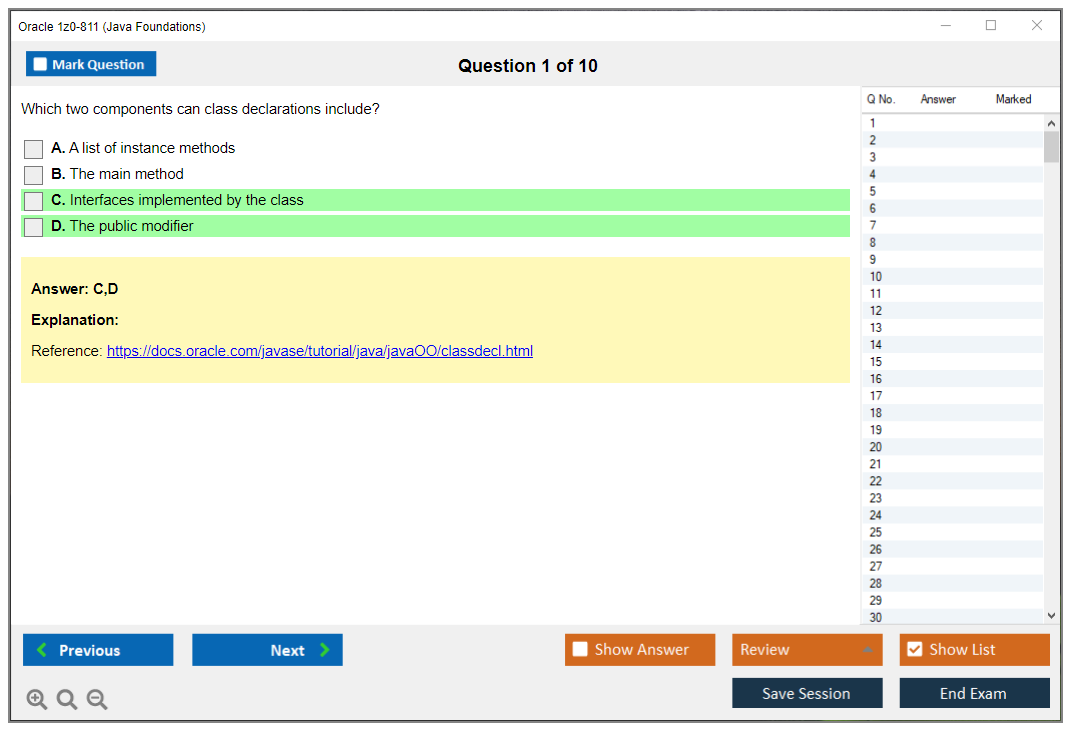
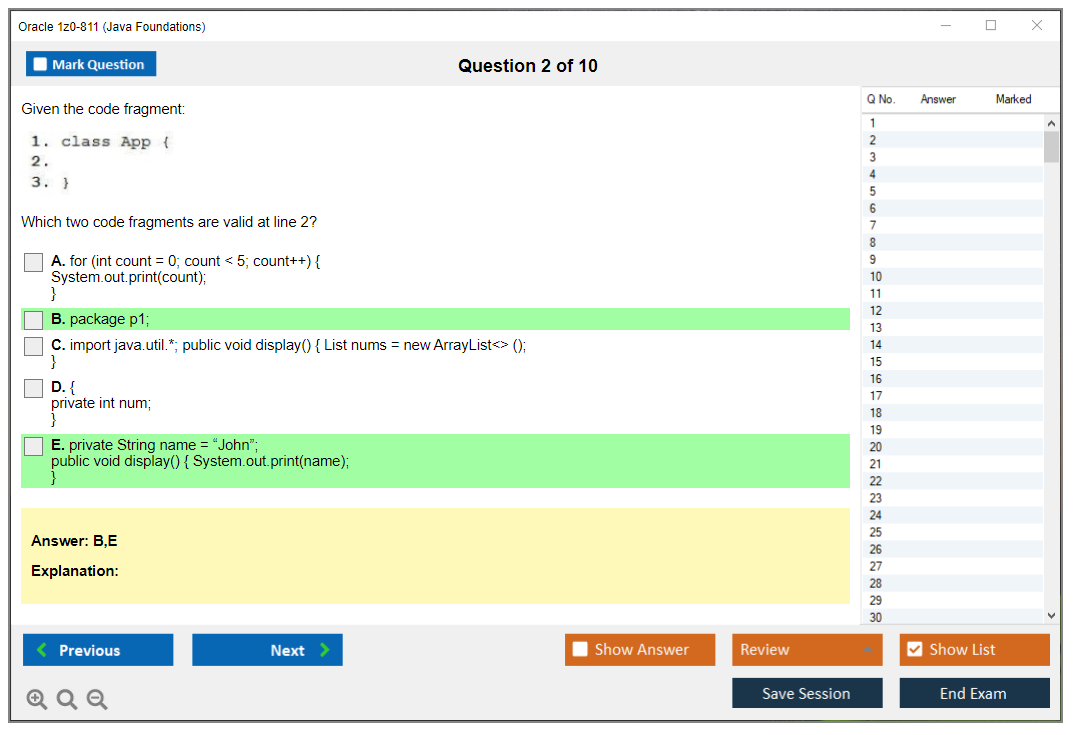
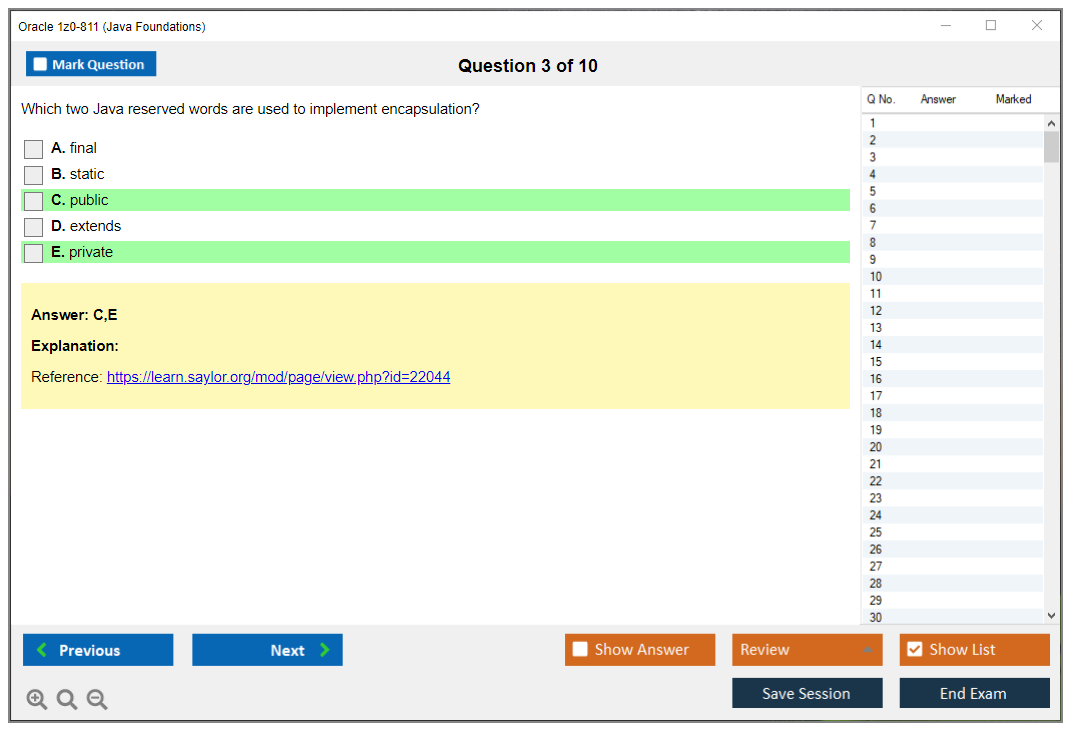
A Java Foundations practice test is useful if it's credible and matches current objectives. Avoid random dumps. They train you to memorize, and that falls apart the moment Oracle changes wording.
My plan is timed sets, review every wrong answer, then go write a tiny program that proves you understand the concept. Spend extra time on control flow and reading code, because that's where people lose points fast.
Other helpful practice sources. HackerRank, Codecademy, small coding challenges. Mentioning them casually, but yeah, they work if you actually do the problems instead of skipping to solutions.
Exam-day tips for 1z0-811
Read the code slowly. Seriously. One character matters.
Time management's basic triage: answer what you know, mark the time-sinks, come back. Watch for off-by-one mistakes in loops, and don't assume you know what a snippet prints until you trace it.
Oracle certification renewal and validity (Java Foundations)
People ask about Oracle certification renewal policy a lot. Policies change. Oracle sometimes treats older certs differently across product lines, so confirm the current rule on Oracle's certification page rather than trusting a screenshot from 2019.
Keeping skills current's simple: after this, aim for deeper Java certs, or start building small projects and reading real code. GitHub's great for that. Pick a small open-source Java project, read a few classes, and notice patterns.
FAQ (Oracle 1z0-811 Java Foundations)
Cost, passing score, difficulty quick answers
How much does the Oracle 1z0-811 exam cost? Check Oracle's exam listing right before purchase because region and taxes affect the price.
What's the passing score for 1z0-811 Java Foundations? Oracle posts it on the official exam page, and that's the number to trust.
Is Oracle 1z0-811 hard for beginners? It's fair if you practice by writing code regularly, and rough if you only read.
Study materials and practice tests best starting points
Where can I find reliable 1z0-811 practice tests and study materials? Start with Oracle's objective list and official training links, then add reputable beginner Java courses, and only use practice tests that clearly map to the current objectives.
Objectives, prerequisites, and renewal what candidates should know
What are the objectives covered in the 1z0-811 exam? Java fundamentals, control flow, basic OOP, methods, strings and arrays, and intro exception concepts, plus reading code.
Do you need prerequisites? Officially, no. Recommended background's basic computer literacy, comfort with files, some logic and algebra, and ideally a little coding exposure.
If you want the simplest answer on how to pass Oracle 1z0-811: learn the objectives, code every day, and get comfortable being wrong while you practice. That's the whole thing.
1z0-811 Exam Objectives and Knowledge Domains
Breaking down Oracle's official exam blueprint
Oracle structures the 1z0-811 exam around what they call "knowledge domains," which is just their way of grouping related skills together. Each domain gets weighted differently based on how many questions you'll see from that area. They stopped publishing exact percentages a few years back (Oracle got weird about that), but you can still figure out which topics matter most by looking at how much detail they cram into each section of the blueprint.
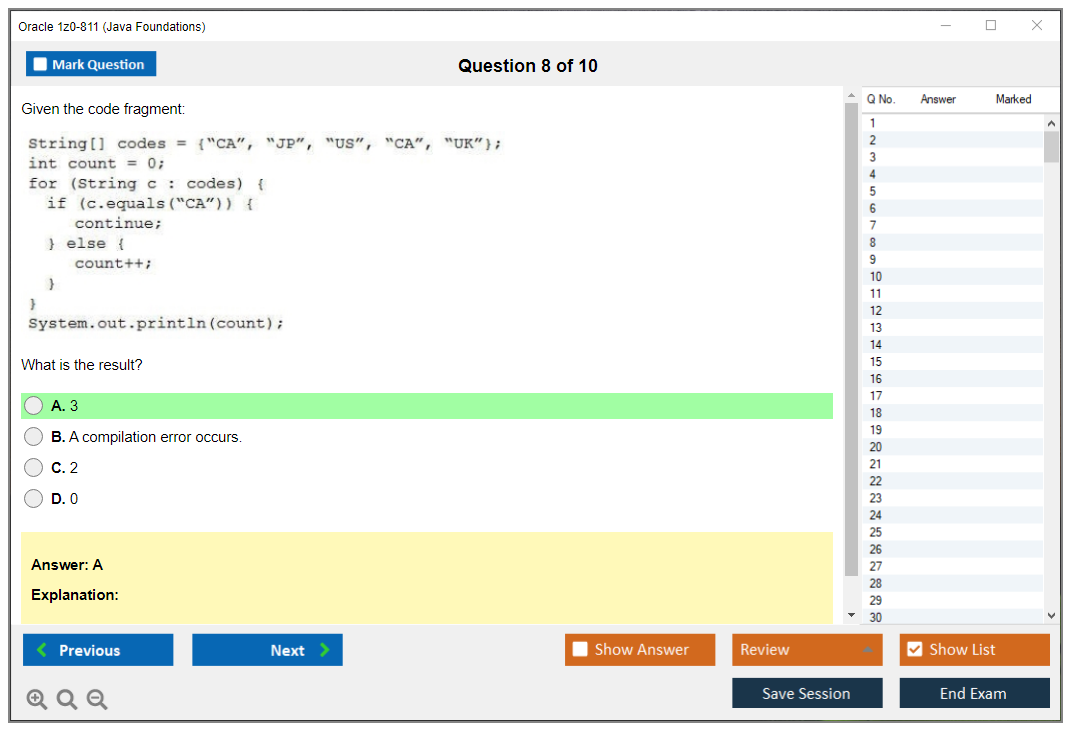
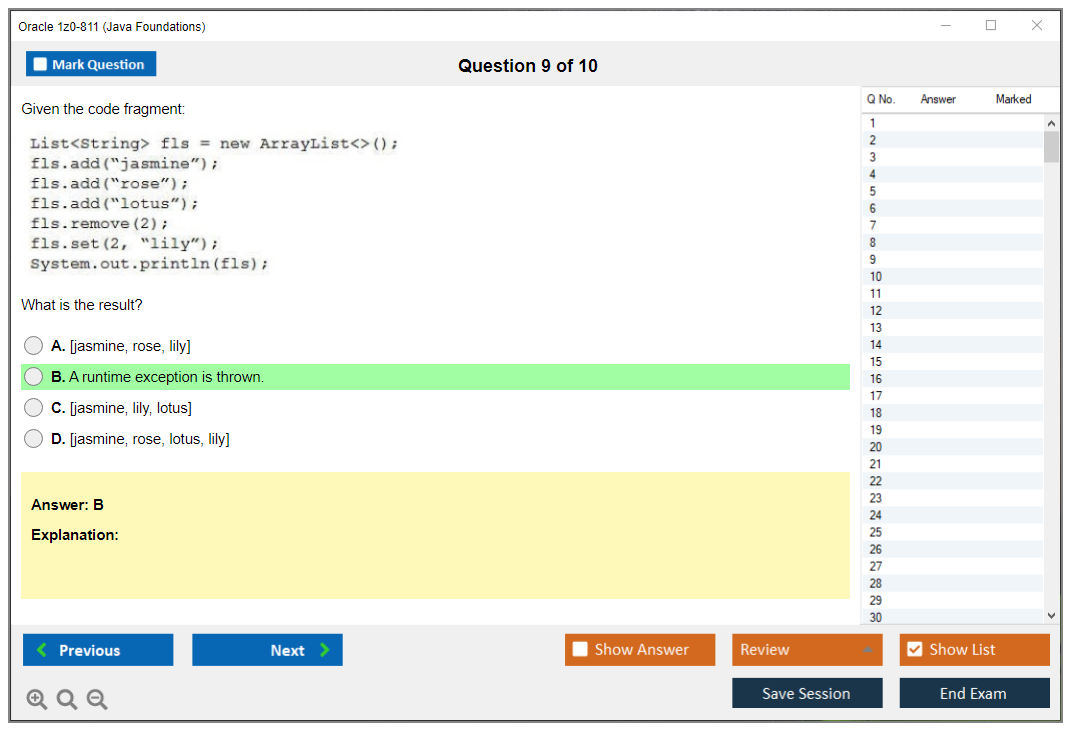
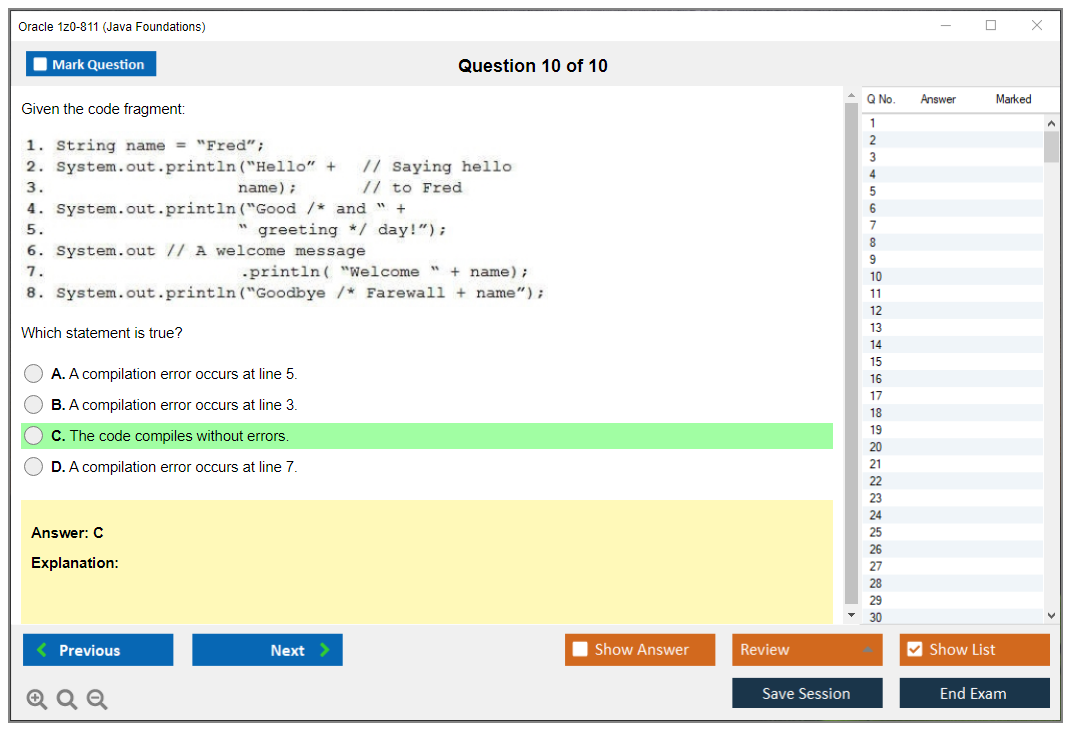
The exam tests your ability to read Java code, predict output, and spot errors. This is different from just writing your own programs from scratch. You need to recognize patterns fast and understand what happens when code executes. A lot of beginners who've only done tutorials where they copy-paste working examples get tripped up by this format.
Understanding Java technology and program structure
Domain 1 covers Java Basics, which sounds simple but actually sets the foundation for everything else. You need to know what Java is: a platform-independent programming language that runs on the JVM (Java Virtual Machine). The whole "write once, run anywhere" concept shows up in exam questions where they ask about portability or why Java code works on different operating systems.
Here's where it gets practical. You must understand the difference between JDK, JRE, and JVM. The JDK (Java Development Kit) is what developers install to write and compile code. JRE (Java Runtime Environment) is what end users need to run Java applications. JVM is the engine that actually executes bytecode. Exam questions love to test whether you know which component does what.
The compilation and execution process matters more than you'd think. Source code (.java files) gets compiled into bytecode (.class files), then the JVM interprets that bytecode. Questions might show you compiler errors versus runtime errors, which you need to identify based on which phase would catch specific problems.
Program structure? Huge here. Every Java application needs a class declaration and a main method with the exact signature: public static void main(String[] args). Get that signature wrong and your program won't run. Comments come in three flavors: single-line (//), multi-line (/ /), and Javadoc (/* /). Package declarations go at the top of files, then imports, then your class definition.
Naming conventions pop up constantly. Classes use PascalCase. Methods and variables use camelCase. Constants use UPPER_SNAKE_CASE. Simple stuff, but the exam tests it.
Primitive types and how they work
Domain 2 dives into the eight primitive data types: byte, short, int, long for integers (with different size ranges), float and double for decimals, char for single characters, and boolean for true/false values. You need to memorize their ranges. Int goes from about -2 billion to +2 billion, while byte only handles -128 to 127.
Variable declaration and initialization? Tested relentlessly. The exam will show you code like int x; followed by System.out.println(x); and ask what happens. Answer: compiler error, because local variables must be initialized before use. Instance variables get default values, but local variables don't.
Type casting shows up in tricky questions. Implicit conversion (widening) happens automatically when going from smaller to larger types. Explicit conversion (narrowing) requires a cast operator and can lose data. Questions will show you int x = (int) 3.9; and ask what x equals. It's 3, not 4. Truncation, not rounding.
Operators get tested through code evaluation, where you need to know operator precedence. Multiplication before addition, logical AND before OR, that kind of thing. Compound assignments like x += 5 are shorthand for x = x + 5. Increment operators have prefix (++x) and postfix (x++) forms that behave differently in expressions. The exam loves questions where the return value differs based on which form you use.
Working with strings and mutable alternatives
Domain 3 focuses on String manipulation, which is critical because strings appear everywhere in Java. The key concept? Strings are immutable. Once created, they can't be changed. When you "modify" a string, you're actually creating a new object, which has huge implications for memory and performance.
String creation using literals gets stored in the string pool for memory optimization. Creating with new String() bypasses the pool. The exam tests whether you understand that "hello" and new String("hello") might not be the same object reference, so == returns false while equals() returns true.
Common String methods you must know: length() returns character count. charAt(int index) gets a specific character. substring(int start, int end) extracts portions. indexOf(String str) finds positions. String concatenation using + creates new objects each time, which is inefficient in loops.
StringBuilder provides mutable string operations. Methods like append(), insert(), delete(), and reverse() modify the same object instead of creating new ones. Use StringBuilder when doing lots of string modifications. Use String for fixed text. The exam asks when each is appropriate.
I spent way too long once debugging a performance issue that turned out to be string concatenation in a loop processing thousands of records. Switched to StringBuilder and the whole thing ran 50 times faster. Sometimes the simple stuff matters most.
Control flow and decision logic
Domain 4 covers how programs make decisions and repeat actions. Conditional statements range from simple if-else to complex if-else-if chains. Switch statements work with specific types (byte, short, int, char, String in newer Java versions) and need break statements to prevent fall-through, where execution continues into the next case.
The ternary operator condition ? valueIfTrue : valueIfFalse is tested as a compact alternative to if-else. Beginners find this syntax confusing, but it appears in exam code regularly.
Loops come in multiple flavors. Traditional for loops have initialization, condition, and increment sections. Enhanced for-each loops iterate over arrays and collections more simply. While loops check conditions before executing. Do-while loops execute at least once before checking. Nested loops create complex iteration patterns that the exam loves to test with "what's the output" questions.
Break exits loops immediately. Continue skips to the next iteration. Infinite loops happen when conditions never become false. The exam might ask you to identify code that runs forever.
Arrays for data collections
Domain 5 introduces arrays as fixed-size collections. Declaration syntax like int[] numbers or int numbers[] both work (first form is preferred). Instantiation uses new int[5] to create space for five integers. Initialization can combine these: int[] numbers = {1, 2, 3, 4, 5};
Array indices start at zero. The length property (not a method, so no parentheses) returns element count. ArrayIndexOutOfBoundsException happens when accessing invalid indices, and the exam tests your ability to spot off-by-one errors in loop conditions.
Multi-dimensional arrays, primarily two-dimensional, get declared as int[][] matrix = new int[3][4]; for a 3x4 grid. Accessing elements uses double brackets: matrix[0][1]. Nested loops typically iterate through 2D arrays.
Object-oriented programming fundamentals
Domain 6 is massive because OOP is central to Java. Classes serve as blueprints defining structure and behavior. Objects are instances created with the new keyword. Instance variables (fields) hold object state. Methods define behavior and can have parameters and return types.
Method overloading lets you define multiple methods with the same name but different parameter lists (number, types, or order of parameters). Return type alone doesn't distinguish overloaded methods. That's a common exam trap.
Constructors initialize objects and have the same name as the class with no return type. Default constructors are provided automatically if you don't write any, but disappear once you create a custom constructor. Constructor overloading works like method overloading. The this keyword refers to the current object and disambiguates between instance variables and parameters with identical names.
Access modifiers control visibility. Public means accessible everywhere. Private means only within the class. Default/package-private means accessible within the same package. Encapsulation hides internal state using private variables with public getter and setter methods.
Static variables and methods belong to the class rather than instances. You can access static members through the class name without creating objects. This concept gets tested through code that mixes static and instance contexts.
Inheritance basics? The extends keyword creates parent-child relationships. Method overriding lets subclasses provide specialized implementations, using the same signature as the parent method. The super keyword accesses parent class members. Polymorphism allows treating child objects as parent types, though the 1z0-811 only touches on basic polymorphic behavior.
Handling exceptions gracefully
Domain 7 introduces exception handling for dealing with runtime errors. Exceptions are objects representing problems that occur during execution. Checked exceptions must be caught or declared. Unchecked exceptions (runtime exceptions) don't require explicit handling.
Common exceptions you'll see in exam code: NullPointerException when accessing null references. ArithmeticException for math errors like division by zero. ArrayIndexOutOfBoundsException for invalid array access. Try-catch blocks surround risky code, with catch blocks specifying exception types to handle. Multiple catch blocks can handle different exception types in priority order. Finally blocks execute regardless of whether exceptions occur, typically for cleanup operations like closing resources.
Java APIs and built-in libraries
Domain 8 covers using existing Java functionality. The java.lang package gets imported automatically and includes fundamental classes like String, Math, and wrapper classes. Math class methods include abs() for absolute value, max() and min() for comparisons, round() for rounding, random() for random numbers.
Wrapper classes (Integer, Double, Boolean, Character) convert primitives to objects. Autoboxing automatically converts primitives to wrappers. Unboxing does the reverse. Code like Integer x = 5; demonstrates autoboxing, while int y = x; shows unboxing.
If you're serious about passing, the 1z0-811 Practice Exam Questions Pack at $36.99 gives you realistic question exposure across all these domains. After you nail the foundations here, consider progressing to 1z0-808 for Java SE 8 Programmer I certification, which builds significantly on these concepts. Some candidates also explore Oracle database certifications like 1z0-071 to round out their backend skills.
How exam questions test these objectives
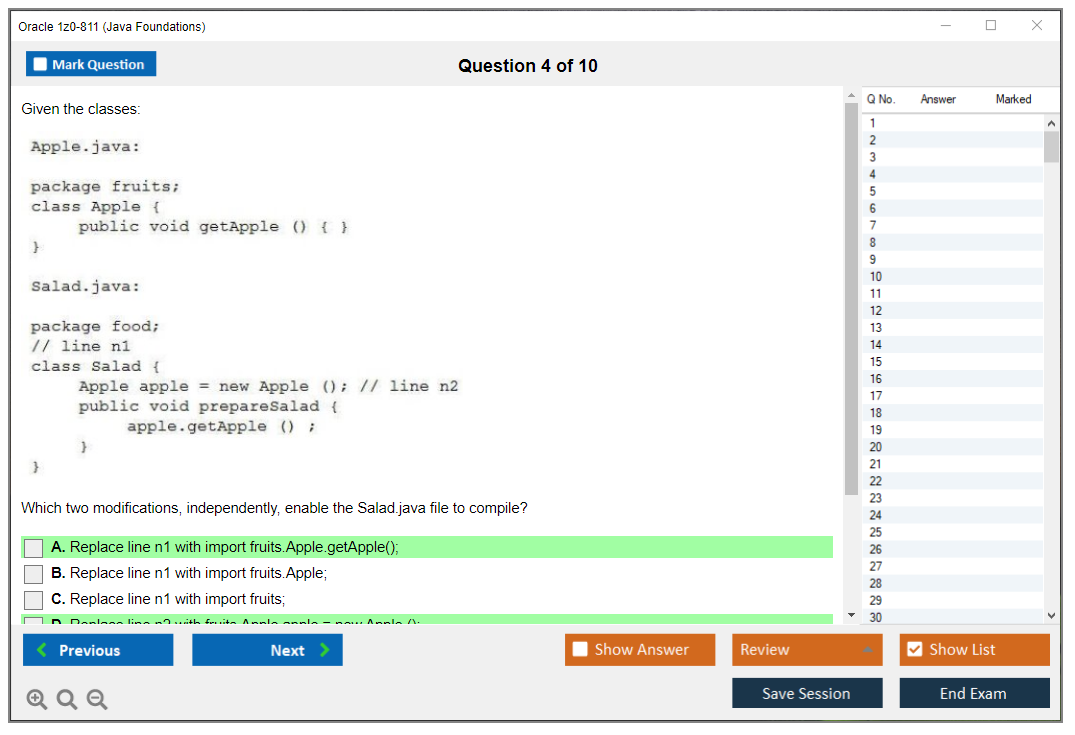
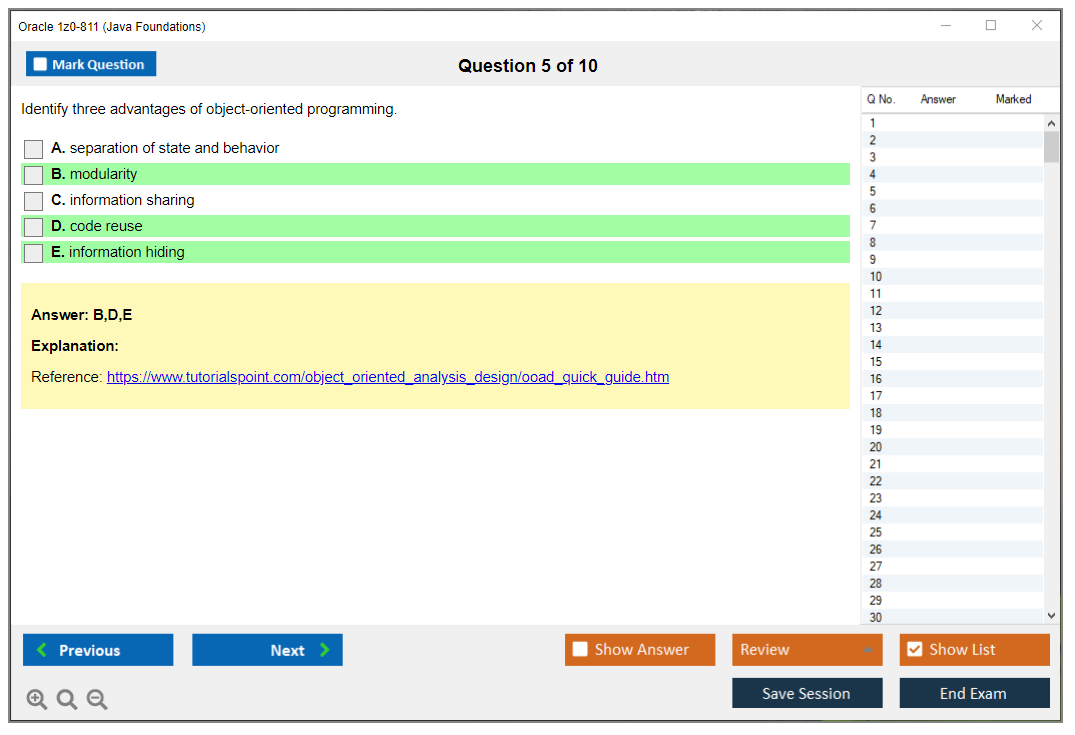
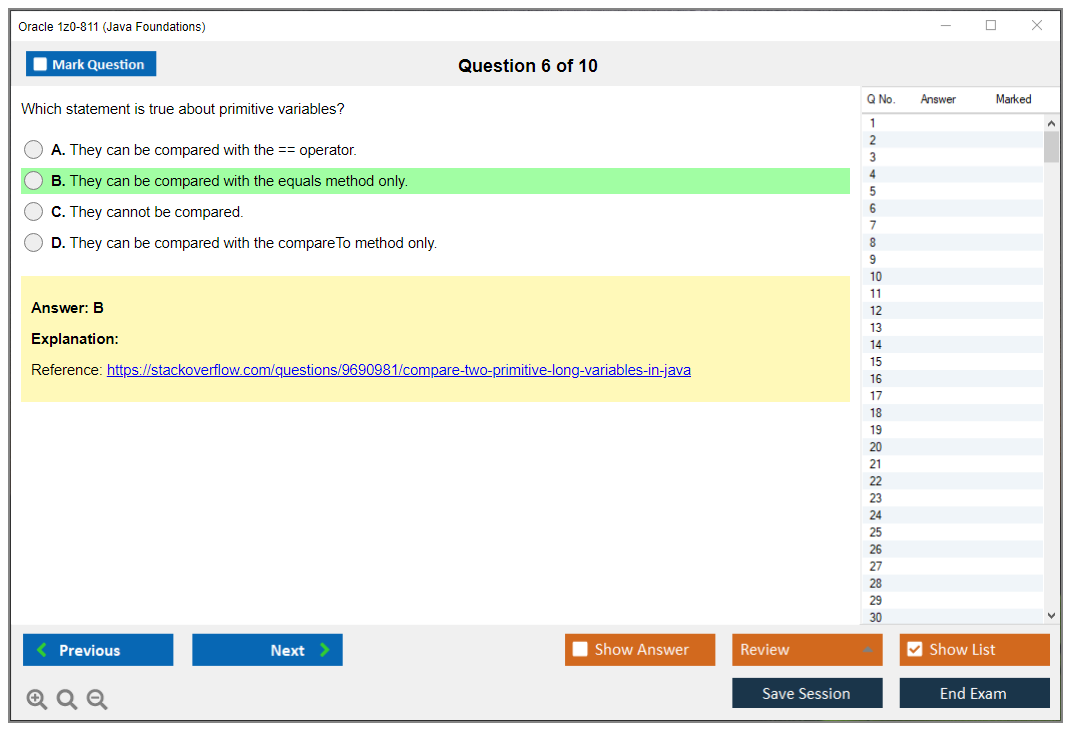
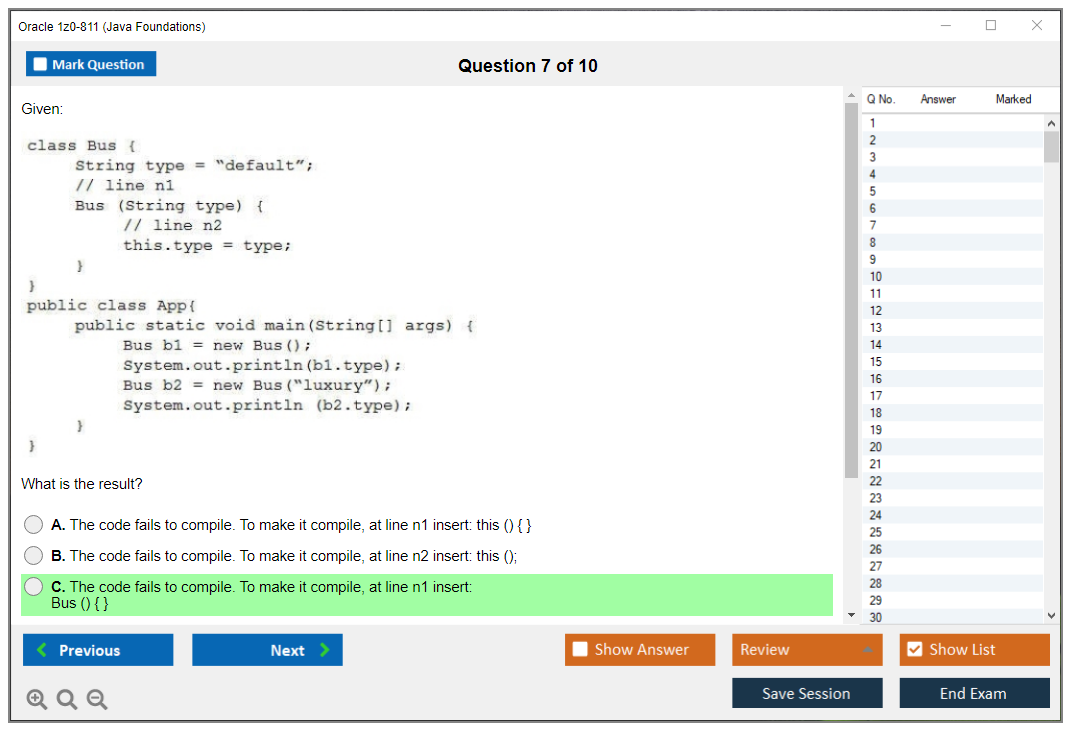
Questions typically present code snippets and ask you to predict output, identify errors, or select correct implementations. You're not writing code from scratch. You're analyzing existing code under time pressure. This requires recognizing patterns quickly and understanding execution flow mentally without running the program.
Domain weighting? Not officially published anymore, but OOP concepts and control flow historically receive heavy emphasis based on the blueprint's detail level. Primitives, arrays, and strings form foundational knowledge tested throughout. Exception handling and API usage appear less frequently but still matter for a passing score.
1z0-811 Exam Cost, Registration, and Logistics
The Oracle 1z0-811 Java Foundations exam is basically Oracle's way of saying you can read and write beginner Java without panicking. It's not an "I build Spring microservices for fun" badge. Honestly, it's a Java basics certification exam that checks whether you understand the building blocks: variables, control flow, simple classes, and the kind of code reading you'll do in every internship screening.
This also maps pretty cleanly to what people call the Oracle Certified Foundations Associate Java level. You're proving you can follow Java syntax fundamentals, reason through simple program logic, and not get wrecked by arrays or string methods. Pretty straightforward.
Students love this one. Career switchers too. If you're trying to pivot into dev, QA automation, or even IT roles where scripting matters, an entry-level Java exam Oracle credential can be a decent signal. I mean, it shows you've actually got the basics down.
Look, if you already ship production Java daily, this isn't for you. If you're still asking what "static" does? It probably is.
Exam cost (pricing factors and where to verify current price)
Let's talk money. The 1z0-811 exam cost in 2026 usually lands in the $95 to $150 USD range depending on region, taxes, and which storefront is actually processing the payment. Oracle changes pricing and regional rules, so verify the current price on Oracle's official certification pages before you commit, because what you saw in a Reddit thread from last year can be wrong today.
Regional pricing varies for a few reasons. Currency conversion is the obvious one, but it's also local purchasing power, local taxes (VAT/GST), and sometimes testing partner fees. If you're paying in a non-USD currency, your bank's conversion rate can add a quiet extra cost, and some cards tack on foreign transaction fees. Annoying. Real.
Oracle University vs Pearson VUE pricing can get confusing. Sometimes you see the exam listed through Oracle University as a voucher-style purchase, and then you schedule through Pearson VUE using that voucher. Other times you pay during scheduling on Pearson VUE. Where applicable, the base price should match, but the final checkout total can differ based on tax handling and what country storefront you land in.
Discounts exist, but you have to qualify. Student discounts and Oracle Academy member pricing are the big ones, and they can move the 1z0-811 exam cost closer to the bottom of that range. Bulk purchase options show up more in school or training-provider setups, not the solo self-study crowd, though it's worth asking if you're buying for a cohort. Promotional pricing also pops up during Oracle events or certification campaigns, and those promos tend to be time-boxed, with rules that feel a little picky, so read the fine print.
Compared to other entry-level IT certs, this exam's usually in the same ballpark or cheaper than a lot of vendor certs. Some entry exams from Cisco or CompTIA can run higher once you add retakes and prep materials, while some cloud "fundamentals" exams can be similar. Not gonna lie, the price feels fair if Java's part of your plan, but it's still real money.
How to schedule the 1z0-811 exam (Oracle/authorized testing options)
Extra costs sneak in. Study materials, a Java Foundations practice test, maybe a course, and retake fees if you miss the mark. The thing is, if you want structured practice without guessing what's legit, I've seen people pair their prep with the 1z0-811 Practice Exam Questions Pack because it's cheap enough to justify and it forces you to answer under exam-style pressure.
Booking's straightforward, but the steps are spread across Oracle CertView and Pearson VUE, which feels like two apps pretending they're one.
Here's the step-by-step registration process through Oracle CertView:
- Create your Oracle account and open CertView. Use the same name as your government ID. Seriously. A mismatch is the dumbest way to lose exam day.
- Build out your CertView profile. Fill in email, address, and candidate info you'll want tied to your certification history.
- Link your certification account to Pearson VUE. CertView will push you into the "connect" flow where Pearson VUE creates or matches your testing profile.
- In Pearson VUE, search for the exam and choose delivery. Test center or online proctored.
- Search for available test centers. You can filter by distance, dates, and seat availability.
- Pick date and time, confirm policies, then pay with card, purchase order, or voucher.
Schedule 2 to 4 weeks in advance if you want decent time slots. Seats disappear during peak periods, and yes, those peaks are real. End of quarter's messy. So's any "cert deadline rush" when schools and training programs all book at once.
After registration, you'll get a confirmation email with your exam name, appointment time, test center address or online instructions, and the policies you agreed to. Also verify your scheduled exam details inside CertView, not just email, because email forwarding and spam filters cause chaos.
Retake policy considerations (what to check before booking)
Oracle retake rules can change, but typically the waiting period between attempts is 14 days for Oracle exams. Allowed retakes are generally unlimited, with the waiting period enforced each time. The retake cost's usually the same as the initial attempt, so budget like you might pay twice.
Rescheduling's where people get burned. Cancellation and rescheduling policies depend on the window. If you reschedule too close to exam time, expect fees, often $25 to $50 within the policy window, or you may forfeit the full fee if you miss the cutoff. Check your exact deadline in Pearson VUE at checkout. Don't assume.
If you fail, use your score report. Don't rage-book the next available slot. Give yourself enough time to fix the weak areas, especially if your gaps are in control flow or basic OOP, because those don't patch overnight.
Passing score (how Oracle reports it and where to confirm)
People ask about the 1z0-811 passing score constantly. Oracle can adjust scoring models, so confirm the current passing score on Oracle's official exam page for 1z0-811. Generally, you'll see a pass/fail plus section-level feedback rather than a super detailed breakdown of every missed topic.
Score report and results timeline
Results are usually available quickly after you finish, with the official record flowing into CertView after Pearson VUE posts it. Sometimes it's fast, sometimes it's "check back later." Keep your confirmation info handy.
Difficulty for beginners vs. those with basic Java experience
Is Oracle 1z0-811 hard for beginners? Honestly, it depends on whether you've written code or just watched videos. If you've built a few tiny console apps and you can trace code with loops, it's manageable. But if you're brand new to programming logic, it can feel sharp because the exam loves tiny details. I've tutored people who sailed through and others who got tripped up on stuff that looked simple on paper but required actual hands-on instinct to catch.
Common challenge areas (syntax, logic, OOP basics, APIs)
Most misses come from reading code too quickly. Off-by-one errors. Confusing assignment vs comparison. Basic class structure and scope rules. Also strings and arrays, because beginners always underestimate them.
Java language fundamentals (types, operators, expressions)
Expect questions that force you to know what types do, how operators behave, and what expressions evaluate to. Simple stuff. Easy to mess up.
Control flow (conditionals, loops)
If you can't trace loops, you'll suffer. Practice with nested loops and break/continue behavior. Slow down.
Core OOP concepts (classes, objects, encapsulation, inheritance basics)
This is gentle OOP. Constructors, fields, methods, and basic inheritance ideas. Not a framework exam.
Methods and basic program structure (parameters, return values, scope)
Scope rules and method signatures show up a lot. Also, what compiles and what doesn't.
Strings, arrays, and common library usage (foundational APIs)
You'll see string operations, array indexing, and common library calls. Not advanced APIs. Still important.
Exception handling basics (intro concepts, common errors)
Think "what throws," what a try/catch looks like, and common runtime errors. Nothing wild.
For Oracle Java Foundations prerequisites, I'd say you want basic programming logic, comfort with variables and loops, and at least light hands-on Java. If you've never opened an IDE, do that first. You don't need to be fancy, but you should be able to run code and debug basic mistakes.
Helpful prep before starting (basic programming logic, IDE familiarity)
Install a JDK, write tiny programs, and get used to reading compiler errors. That skill alone pays off.
Official Oracle learning and exam resources (what to look for)
Stick to the official 1z0-811 exam objectives list as your checklist. It tells you what Oracle thinks matters. Print it. Track it.
Recommended Java fundamentals books and courses (selection criteria)
Pick resources that include lots of code reading and small exercises. Video-only prep's where people get overconfident.
Hands-on labs and coding practice (mini-project ideas aligned to objectives)
Do mini projects. A menu-driven console app. A simple grade calculator. A string parser. Tiny. Useful.
Where to find quality practice tests (how to evaluate credibility)
Credible practice tests explain answers. They don't just dump choices. If a practice set won't tell you why, skip it, because you won't learn the logic traps that show up on the real exam. I mean, if you want something focused and quick to run repeatedly, the 1z0-811 Practice Exam Questions Pack is one option people use to simulate the pressure and then review misses.
Practice test plan (timed sets, review cycle, weak-area drills)
Timed sets matter. Review matters more. Do a set, analyze mistakes, then drill that topic with code and re-test.
Sample question topics to drill (control flow, OOP, strings/arrays)
Control flow. Arrays. Method scope. Constructor behavior. Mentioning the rest casually: operators, types, exceptions, basic library calls.
Time management and question triage
Don't get stuck. Mark it. Move on. Come back with fresh eyes.
Avoiding common traps (reading code carefully, off-by-one errors)
Read every character. Java's picky and the exam is too.
Also, what to bring: a valid government-issued photo ID that matches your registration name, plus your confirmation number. What NOT to bring: phone, notes, bags, smart watches, random paper. Test centers usually provide scratch paper or a dry erase board. Online delivery gives you an online whiteboard instead.
Online proctored requirements are strict. Webcam, microphone, stable internet, and you must pass the system check before exam day. Your room needs to be clean, desk clear, no one else entering, and no second monitor unless allowed by policy. The proctor will message you, may ask for a room scan, and can end the session if rules get violated. Time zones matter too, especially if you book while traveling, so double-check the appointment time zone in Pearson VUE.
Payment methods usually include credit cards, sometimes purchase orders, and vouchers. If you bought a voucher through a training partner, you apply it at checkout. Keep that voucher email.
Renewal policy (how to confirm current Oracle rules)
People ask about Oracle certification renewal policy. Oracle changes rules across tracks, so confirm your credential's validity and renewal requirements on Oracle's official site. Don't assume it lasts forever.
Keeping skills current (recommended next-step certifications and learning path)
After Java Foundations, look at moving into a stronger Java programmer cert or pairing Java with SQL, Git, and a small portfolio. Certs are nice. Proof of work's nicer.
Cost, passing score, difficulty (quick answers)
How much does it cost? Usually $95 to $150 USD, region-dependent, verify on Oracle. Passing score? Confirm on Oracle's exam page because it can change. Difficulty? Beginner-friendly if you actually code, rough if you only watched tutorials.
Study materials and practice tests (best starting points)
Start with the exam objectives, then a fundamentals course, then lots of coding. Add a practice test plan, and if you want a paid option to speed up repetition, the 1z0-811 Practice Exam Questions Pack is priced at $36.99 and fits that "drill and review" loop.
Objectives, prerequisites, and renewal (what candidates should know)
Know the objectives, meet the basics, confirm renewal rules on Oracle, and book early enough to get a sane testing slot. That's the logistics side that people ignore, right up until it bites them.
Best Study Materials and Resources for Oracle 1z0-811
The official vs. third-party resource debate
Look, when you're prepping for the Oracle 1z0-811 Java Foundations exam, you're gonna face a choice right away. Official Oracle stuff or third-party materials? Honestly, it's not either/or. Most people who pass use both. Oracle's official resources are built directly from the exam objectives, which means zero guesswork about what's relevant. Third-party materials though? They often explain things better for actual humans learning Java for the first time.
I mean, Oracle writes documentation like engineers, not teachers. Third-party authors fill that gap with friendlier explanations and more varied practice. But here's the thing: only Oracle knows exactly what's on that test, so you can't just ignore their materials completely.
What Oracle gives you directly
Oracle University offers instructor-led training and self-paced courses specifically for Java Foundations. The self-paced route runs around $300-400 depending on promotions. You get structured lessons that map directly to 1z0-811 exam objectives. Not gonna lie, it's pricey for an entry-level cert, but the alignment is perfect.
The Oracle Java Tutorials? Completely free. They live on Oracle's website and cover everything from basic syntax to object-oriented programming fundamentals. I've used these myself when I needed to verify something specific about Java behavior. Dry as toast, sure. But technically accurate.
Oracle also publishes an official exam preparation guide and objectives document. Download this immediately, seriously. It lists every topic the exam covers, with exact wording Oracle uses. When you're studying String methods or loop constructs, cross-reference this document to make sure you're not wasting time on topics that won't appear.
Oracle Academy provides resources if you're at an academic institution or qualify as a student. Sometimes you can access training materials cheaper this way. Worth checking if you're in school or recently graduated.
Books that actually teach Java foundations
"Java Foundations" by Lewis, DePasquale, and Chase takes a full textbook approach. It's designed for college courses, so it's thorough but can feel slow if you're self-studying. The examples are solid, practice questions align well with academic learning, and it covers object-oriented concepts in depth. You'll find this at most university bookstores or on Amazon for $80-120 new, sometimes $30-50 used.
"Head First Java" by Kathy Sierra and Bert Bates is legendary for beginners. The visual learning style with cartoons and puzzles might seem goofy, but the thing is, it works. I've recommended this to career switchers who found traditional programming books intimidating. It doesn't cover 1z0-811 specifically, but the foundational Java concepts are all there. O'Reilly sells it, Amazon has it, and honestly every programming library should have a copy. My cousin actually learned to code from this book back in 2009 while working night shifts at a warehouse, which tells you something about how accessible it is.
"Java: A Beginner's Guide" by Herbert Schildt offers a structured approach with self-tests at the end of each chapter. Schildt writes clearly and includes practical code examples you can actually run. The self-tests help identify weak areas before you hit practice exams.
Some Oracle Certified Associate Java SE Study Guides can work for foundations level, especially older editions covering Java basics. Just verify the content matches 1z0-811 objectives. Don't assume any Java book automatically aligns.
When evaluating books, I look for clear explanations of control flow and loops, quality examples showing inheritance and encapsulation, practice questions that test understanding not just memorization, and complete coverage of exam objectives. Digital books let you search instantly and cost less. Physical books let you flip back and forth without screen fatigue. Pick based on how you actually study, not what sounds good.
Video training that doesn't bore you to death
Udemy has several courses targeting 1z0-811 preparation specifically. Prices range from $15-90 depending on sales. Never pay full price on Udemy, wait two days for a "special offer." Look for courses with 20-40 hours of video content, recent updates within the last year, and student reviews mentioning actual exam success.
Coursera offers Java fundamentals courses from universities like Duke or UC San Diego. These are more academic but often include graded assignments and peer interaction. Some offer financial aid if cost's an issue.
LinkedIn Learning has Java basics paths that cover foundational syntax, OOP concepts, and basic APIs. If your employer provides LinkedIn Learning access, this is a no-brainer free option.
YouTube channels like Programming with Mosh, Derek Banas, or Cave of Programming offer free Java tutorials for beginners. Quality varies, but you can't beat free for supplemental learning.
When evaluating video courses, check instructor credentials, course currency (Java updates matter), student reviews specifically mentioning clarity and pacing, and whether hands-on labs are included. Video alone won't cut it. You need to code alongside the instructor, pause to experiment, and build small programs yourself.
Coding practice platforms that actually help
Codecademy's Java course provides interactive learning where you write code directly in the browser. Immediate feedback helps beginners catch syntax errors early. The free tier covers basics. Pro costs about $20/month.
JetBrains Academy (Hyperskill) offers a Java track with project-based learning. You build actual programs while learning concepts. It's gamified with progress tracking, which helps maintain motivation during long study sessions.
SoloLearn? Mobile app access. You can literally practice Java syntax while commuting. The bite-sized lessons work great for reinforcing concepts between longer study sessions.
Codewars and HackerRank let you solve Java problems and see other people's solutions afterward. Start with easy-level problems that reinforce loops, conditionals, and string manipulation. LeetCode's easy problems work similarly but focus more on algorithms.
The benefit of interactive platforms is immediate feedback. You write code, it tells you what broke, you fix it. No waiting for compilation or setup headaches.
Setting up your development environment
Download the JDK from Oracle or grab OpenJDK if you prefer open-source. For 1z0-811 preparation, either works fine. Installation guides exist for Windows, macOS, and Linux. Follow them exactly, especially the PATH and JAVA_HOME environment variable setup.
Verify installation by opening command line and typing "java -version". If you see version information, you're good. If not, your PATH's wrong.
Picking an IDE that won't frustrate you
Eclipse IDE is free, widely used, and has plugins for everything. It's been around forever, so Stack Overflow has answers for every Eclipse problem you'll encounter.
IntelliJ IDEA Community Edition offers a modern interface with intelligent code completion that actually helps beginners learn proper syntax. I personally prefer IntelliJ for Java development. The autocomplete's just more intuitive, and it catches errors before you even compile.
NetBeans is Oracle-supported and beginner-friendly with straightforward project setup. Visual Studio Code with Java extensions gives you a lightweight option if you already use VS Code for other languages.
Install one, create a "Hello World" project, and make sure you can compile and run Java programs before diving into study materials.
Free resources you shouldn't ignore
Oracle's official Java documentation and API reference are key. Learn to work through the API docs early. You'll need this skill for the exam and real-world coding. Java Code Geeks, Baeldung's Java basics section, and GeeksforGeeks all provide tutorials and articles that clarify confusing topics. W3Schools has a Java tutorial but lacks depth for certification prep.
Stack Overflow's your friend when code doesn't work. Search before posting, and you'll find most beginner questions already answered.
Practice tests that matter
The 1z0-811 Practice Exam Questions Pack at $36.99 provides exam-style questions that mirror actual test format and difficulty. Taking timed practice tests reveals weak areas and builds test-taking stamina. I recommend doing practice tests weekly during the final month of prep, reviewing every wrong answer thoroughly.
Quality practice tests should match current exam objectives, explain why wrong answers are wrong, and cover all topic areas proportionally. If you're consistently scoring 85% or higher on practice tests, you're probably ready for the real thing.
Once you pass 1z0-811, the natural progression is 1z0-808 for Java SE 8 Programmer I certification, which builds on these foundations with more advanced concepts.
Conclusion
Wrapping up your 1z0-811 path
Okay, so here's the deal. The Oracle 1z0-811 Java Foundations exam? It's not gonna destroy you, honestly it's not the beast certification out there, but don't sleep on it if you're actually serious about carving out a career in Java development. The thing is, you're getting rock-solid validation of foundational stuff: syntax fundamentals, control flow mechanics, core OOP concepts. Basically all the knowledge that really matters when you're knee-deep in debugging production code at some ungodly hour like 2 AM.
Exam objectives? Pretty clear-cut.
You've gotta know types and operators, understand how loops and conditionals function, grasp basic inheritance alongside encapsulation, get comfortable with methods and scope, plus tackle strings and arrays. Exception handling pops up too, though I mean, honestly, not as heavily weighted as those other topics. What actually trips candidates up usually isn't the concepts themselves (those are manageable). It's reading questions with genuine care and staying alert for those sneaky off-by-one errors or scope traps that Oracle absolutely loves embedding in there.
Passing score hovers around 65% depending on which version you're assigned. The 1z0-811 exam cost runs roughly $95 last time I verified, though you should double-check current pricing directly through Oracle's official site since fees can shift without much warning. Not gonna sugarcoat it. That's actually pretty reasonable for an Oracle certification, especially compared to their higher-tier offerings. The Oracle Certified Foundations Associate Java credential doesn't expire under most current policies, but you'll definitely want to confirm the Oracle certification renewal policy specifics since they've adjusted things periodically over recent years.
For study materials, mix your approach. Official Oracle resources provide the structural framework you need, but hands-on coding practice? That's where genuine learning happens. Build small projects targeting the exam objectives directly. Something like a simple grade calculator forces you to wrestle with arrays and conditionals, whereas a basic inventory system makes you think critically about classes and objects. I spent way too much time once building a ridiculous contact manager that stored everything in arrays instead of just using ArrayList, but honestly that constraint taught me more about array manipulation than any tutorial ever did. Practice tests are absolutely huge for timing awareness and question format familiarity.
If you're searching for solid 1z0-811 study materials to strengthen your prep strategy, the 1z0-811 Practice Exam Questions Pack delivers realistic question sets that actually mirror the exam format you'll face. Work through them under timed conditions. Review every incorrect answer until you really understand the why behind it, then drill relentlessly on your weak spots until they're not weak anymore.
This entry-level Java exam Oracle provides? It's your foundation. Wait, actually, it's more than that. It's your launching pad. Master this thing and you're strategically positioned for the Associate and Professional certifications that really move the salary needle in meaningful ways. Start coding today, seriously, not tomorrow.