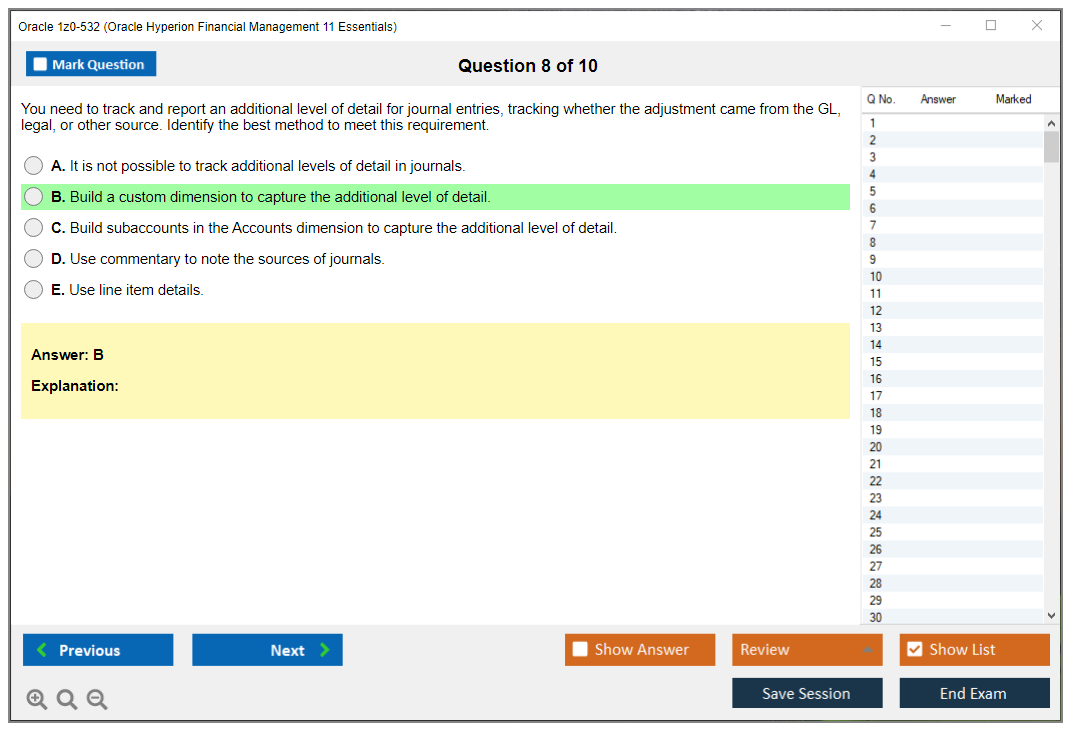
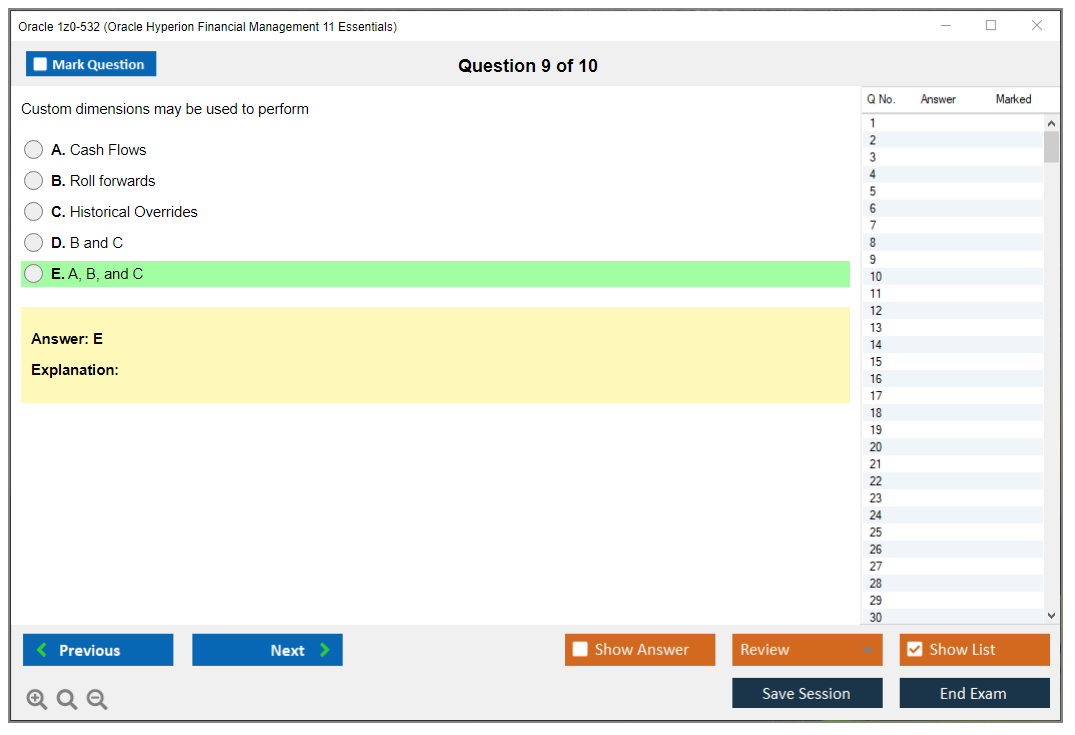
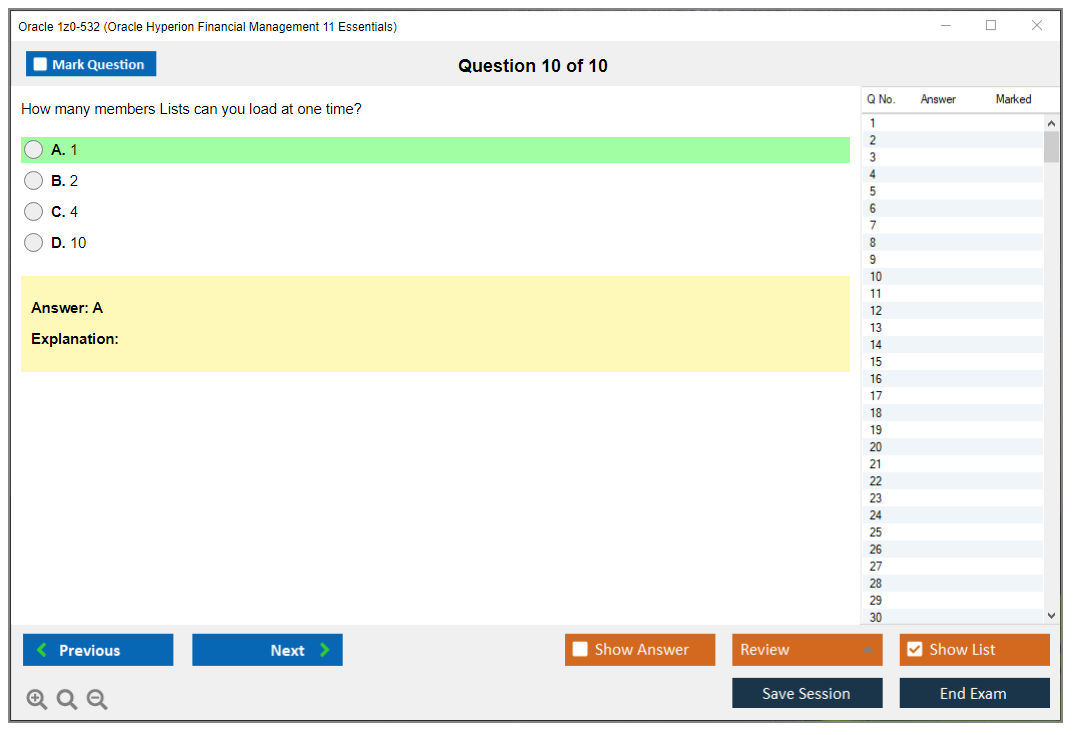
Oracle 1z0-532 Exam Overview: Oracle Hyperion Financial Management 11 Essentials Certification
The Oracle 1z0-532 exam isn't one of those trendy cloud certifications everyone chases right now, but it's still incredibly relevant if you work with enterprise finance systems. Thousands of companies run HFM 11.x on-premises installations and they need people who actually know how to keep these systems running. I mean really running, not just limping along. This certification validates that you can handle the real work: configuring HFM applications, managing metadata structures, loading financial data without breaking things, and executing consolidation cycles that finance teams depend on for month-end close.
What this credential actually proves you can do
The 1z0-532 exam tests whether you understand the full lifecycle of an HFM application. We're talking about dimensional metadata management (accounts, entities, scenarios, all that good stuff), data integration workflows, consolidation processes that have to run correctly every single time, and financial reporting workflows that executives actually use to make decisions. You'll need to demonstrate you can configure HFM applications from scratch, implement business rules without introducing calculation errors, load and validate financial data through various import formats, and troubleshoot the common issues that pop up during close cycles. Which happen more often than anyone wants to admit.
Not gonna lie, this goes way beyond just knowing where buttons are in the interface. You need to understand how metadata changes ripple through the application. How security and access controls work across different user roles. How to optimize consolidation performance when you're dealing with complex organizational hierarchies. You need to know the difference between parent currency adjustments and entity currency translations. You should understand when to use custom rules versus relying on built-in consolidation logic.
Who actually takes this exam and why it matters
Financial systems administrators make up a huge chunk of test-takers. EPM consultants who implement HFM for clients. Implementation specialists who need to prove they know what they're doing. Financial analysts who've moved beyond just using the system and want to understand how it actually works under the hood, though I've noticed that last group sometimes struggles with the more technical aspects. IT professionals supporting HFM environments who are tired of just rebooting servers when something breaks.
The sweet spot? Professionals with 6-12 months of hands-on experience managing HFM applications in production or project environments. You could probably pass with less experience if you're really dedicated to studying, but the exam includes scenario-based questions that are way easier when you've actually dealt with similar situations in real environments. I've seen people try to memorize their way through without practical experience and it rarely ends well. Like, spectacularly doesn't end well.
Career impact and market value
Here's something that might surprise you: certified HFM professionals command salary premiums of 15-25% over non-certified peers in similar roles. Big Four consulting firms specifically look for this credential when staffing EPM projects. EPM service providers use it as a baseline requirement for certain positions. Enterprise finance departments want proof you won't mess up their consolidation process during the most stressful time of the month.
The certification differentiates you for roles like HFM administrator, EPM consultant, financial systems analyst, and similar positions where you're the person everyone calls when HFM isn't behaving. It's recognized by organizations using Oracle EPM Cloud or on-premises solutions, which covers a massive installed base across industries like financial services, manufacturing, healthcare, and retail. I once worked with a guy who landed three job offers in two weeks purely because he had this cert and actual consolidation experience. Competition wasn't even close.
Understanding the exam version and scope
The 1z0-532 specifically covers HFM 11.x, the 11.1.2.x family to be exact. This is distinct from newer Fusion EPM or FCCS certifications that focus on Oracle's cloud-first strategy. Yeah, Oracle's pushing everyone toward the cloud, but migration projects take years and plenty of organizations plan to run HFM 11.x for the foreseeable future. Some well into the 2030s if I'm being honest. Some companies have regulatory or compliance reasons for keeping financial systems on-premises. Others have customizations that would cost a fortune to replicate in cloud environments.
If you're comparing this to related exams, the 1z0-533 Oracle Hyperion Planning certification focuses on planning and budgeting workflows rather than consolidation and reporting. Cloud-focused FCCS certifications cover similar consolidation concepts but in completely different architectural contexts. The 1z0-532 is laser-focused on financial consolidation, close cycle management, and reporting in the classic HFM application framework.
Prerequisites and what Oracle actually recommends
No formal prerequisites required. You can sign up and take the test tomorrow if you want. But Oracle strongly recommends hands-on experience with HFM application lifecycle management, metadata design decisions, and close cycle management before attempting the exam. Translation: you'll have a much better time if you've actually built HFM applications, loaded data through FDM or other integration tools, executed consolidations, and dealt with the inevitable issues that pop up.
Helpful background knowledge? General EPM concepts. Basic consolidation and accounting principles (you should know what intercompany eliminations are). Understanding of dimensional modeling. Familiarity with relational database concepts since HFM stores everything in Oracle or SQL Server databases. If you've worked with other Oracle EPM tools like Planning or Essbase, some concepts will feel familiar. The Oracle Database Administration certifications can provide useful database foundation knowledge that helps when troubleshooting HFM performance issues.
How the exam is delivered and what to expect
Proctored exam available through Pearson VUE test centers and online proctoring where available by region. The online proctoring option became way more popular during the pandemic and it's actually pretty convenient if you have a quiet space and decent internet. Though make sure your internet's stable because disconnecting mid-exam is a nightmare scenario. You'll need government-issued ID, a webcam, and you'll go through a system check before the exam starts.
Primarily offered in English, so check the Oracle Certification website for additional language options in your region. Some countries have localized versions but English is your safest bet for the most up-to-date exam content. The exam itself includes multiple-choice questions, scenario-based questions where you need to apply HFM knowledge to realistic situations, and questions that test your understanding of when to use specific features or troubleshooting approaches.
What you get when you pass and why employers care
Digital badge. You can add it to LinkedIn, email signature, wherever you want to show it off. Listing in the Oracle Certification database that employers can verify. Access to Oracle Certified Professional logo usage rights for your resume and professional materials. These might sound like small perks but they matter when you're competing for positions or trying to win client projects. I've seen candidates get interviews purely because the recruiter spotted that certification badge.
From an employer perspective, this certification signals you can hit the ground running with minimal ramp-up time on HFM projects. Which reduces training costs and shortens implementation timelines. That directly impacts project profitability for consulting firms and time-to-value for internal finance transformation work. When you're bringing someone onto an HFM project, knowing they've passed the 1z0-532 exam means you can assign real work immediately instead of spending weeks on basic training.
The certification is a foundation for advanced EPM certifications or specialized HFM implementation credentials as your career develops. It also complements other Oracle certifications. For example, combining HFM expertise with Oracle WebLogic Server administration skills makes you valuable for full-stack EPM infrastructure roles. Or pairing it with Oracle Data Integrator knowledge positions you perfectly for complex financial data integration projects.
Why this certification still matters in 2026
Look, I'll be straight with you. Oracle's marketing machine is all about cloud, cloud, cloud. But in the real world? Thousands of enterprises maintain HFM 11.x on-premises installations that require certified professionals to keep them running. These aren't small implementations either. We're talking Fortune 500 companies with complex consolidation requirements that won't disappear just because Oracle released a shiny new cloud product.
The 1z0-532 exam proves you understand financial consolidation concepts that apply across platforms. Even if you eventually move to cloud-based EPM tools, the foundational knowledge of consolidation rules, metadata management, and close cycle processes remains relevant. Companies value professionals who understand both legacy and modern systems because migration projects need people who can bridge that gap. And those migration projects? They're happening constantly and they pay exceptionally well.
Oracle 1z0-532 Exam Cost, Registration Process, and Exam Policies
What this exam actually is (and why anyone cares)
The Oracle 1z0-532 exam maps to the Oracle Hyperion Financial Management 11 Essentials certification. It's Oracle's litmus test. Can you handle real HFM admin work without derailing the close? The focus is core setup, daily maintenance, and that lovely "why's consolidation acting up" troubleshooting that invariably surfaces at 6:10pm when everyone's trying to leave.
This cert validates you understand HFM metadata and applications, Hyperion Financial Management consolidation mechanics, HFM rules and calculations, HFM data load and validation, and the basics of financial close and reporting in HFM. It's not an accounting exam, but if intercompany transactions, ownership structures, and eliminations sound like gibberish to you, half the exam scenarios are gonna feel like you're reading Mandarin without a dictionary.
Who should take it. HFM admins. EPM analysts. Consultants who get dragged into close support. Also anyone who's constantly asked to "just tweak the hierarchy real quick" and wants a credential that matches the responsibility dumped on them.
Price tags and the fine print
Oracle uses the standard Oracle certification exam pricing model for most of these tests, and the 1z0-532 typically fits that mold. In North America you'll see $245 USD quoted a lot, but treat that as typical rather than set in stone forever, because Oracle adjusts pricing and local currency conversions whenever the mood strikes.
Regional pricing differences? They're real. Europe commonly runs €195 to €220, the UK often lands £180 to £200, India tends to settle around ₹13,000 to ₹15,000, and Australia usually clocks in at AUD $300 to $330. Always verify on the Oracle University site before you pull the trigger. VAT, currency fluctuations, and Oracle's own whims can shift the number more than you'd expect for what is fundamentally the same exam delivered through the same vendor.
Extra fees sneak in sometimes. Some countries tack on VAT/GST, and in certain locations Pearson VUE can add a test center facility fee for in-person delivery. Not everywhere. Not always. But it happens, and it's incredibly annoying when finance approves one amount and the checkout total mysteriously climbs higher.
Payment's pretty normal: major cards like Visa, MasterCard, and Amex, plus PayPal in many regions. Purchase orders are also an option for corporate or bulk buying through Oracle University. That last one's the only method that feels really "enterprise," and if your company's certifying a whole team, it's worth asking about because you might get a cleaner procurement trail and sometimes better pricing.
Discounts exist. Don't plan your budget around them. Oracle CloudWorld or OpenWorld attendee promos sometimes knock 20 to 30% off when available. Oracle Partner Network member pricing can apply. Bulk purchase discounts for organizations certifying multiple employees are also on the table. The thing is, CloudWorld-style discounts can be time-boxed and require you to buy during the event window, then schedule later. Great if you're organized, terrible if you're the "I'll do it next month" type who never does. I've seen people miss the window entirely and then complain for weeks about losing the discount they knew about for months.
How registration works without wasting a day
The clean path is: create an Oracle Single Sign-On account, purchase an exam voucher through Oracle CertView, then schedule through Pearson VUE using the voucher code. That's it. Don't overcomplicate it.
CertView's the hub. You buy exams there, track your certification history, and download digital badges. It also points you toward exam prep resources, which is handy if you're assembling a 1z0-532 study guide list or trying to sanity-check 1z0-532 exam objectives before you commit.
Scheduling happens on Pearson VUE. Pick a local test center or online proctoring if it's offered for your exam in your region. Availability's very location-dependent. Urban areas often have daily slots. Smaller cities can be weirdly sparse, like two days a week and always at 8am.
Book ahead. For test centers in major cities, 2 to 4 weeks is the safe range. Online proctoring's usually easier, but still aim for 1 to 2 weeks, especially around quarter-end and year-end when everyone suddenly remembers they've got training budgets to burn and calendars fill up fast.
Reschedules, cancellations, vouchers, retakes
Rescheduling's straightforward: you can reschedule without a fee up to 24 hours before your appointment. Inside 24 hours? You typically forfeit the fee. Same vibe for cancellations: cancel more than 24 hours ahead and you usually get a full refund, but late cancellations and no-shows are basically "thanks for the donation."
Voucher validity's another gotcha. Vouchers are typically valid for 6 months from purchase, and you must schedule and complete the exam before it expires. This is where people mess up constantly, because they buy a voucher with good intentions, work gets busy, and then they're emailing support trying to resurrect a dead code.
Retakes cost full price every time. No discounted retake. As for waiting periods: there's no waiting period between the first and second attempt, but after your second failure you hit a 14-day waiting period, and it stays 14 days for subsequent attempts. That's enough time to fix gaps if you take it seriously, and also enough time to forget half the details if you don't.
IDs, rules, and what exam day feels like
For test centers you need two forms of ID. One's government-issued photo ID, and the other's a secondary ID with your signature. Passport, driver's license, national ID card, military ID. Must be current. Expired IDs get you turned away. Brutal but predictable.
Test center rules are strict. No phone. No bag. No notes. No watches. You'll get an erasable noteboard or scratch paper and a pen, depending on the location. Empty pockets. Pat-down sometimes. It feels like airport security for accountants.
Online proctoring has its own pain points. You need a quiet private room, stable internet (Oracle/Pearson commonly quote minimum 1 Mbps up and down), and a working webcam and microphone. Desk must be clear. No extra monitors. No "my notes are face down." Nothing.
System requirements usually mean Windows 10/11 or macOS 10.13+, Chrome or Firefox, and the Pearson VUE OnVUE app installed. Test it at least 24 hours before. Don't wait until five minutes before the exam to discover your corporate laptop blocks the proctoring app, because IT won't save you in time.
Check-in timing matters. Show up 15 minutes early for a test center. For online, start 30 minutes early because you'll do system checks, take photos of your room, and do ID verification on camera. Bathroom breaks are allowed, but there are no scheduled breaks, and the clock keeps running.
Also, you must accept the non-disclosure agreement. It bans sharing exam questions or content, including "Oracle HFM 11 Essentials exam questions" you remember. Don't post them. Don't trade them. Fast way to lose your result and potentially your account.
Need accommodations? Pearson VUE handles that, but request in advance, typically 10 business days ahead, and be ready with documentation.
Passing score, format, and results
Passing score and exam format details can change by version, and Oracle doesn't always keep public pages perfectly consistent. So the honest answer is: verify the passing score on the official Oracle exam page for 1z0-532. Put a placeholder in your notes like "check Oracle University exam page for current passing score and scoring rules (link)."
Question count, duration, and question types vary across Oracle exams, but expect standard multiple-choice and scenario-style items focused on real admin tasks, troubleshooting, and process understanding. Results are often immediate on Pearson VUE for many Oracle exams, but sometimes reporting into CertView can lag. If you pass and don't see it right away, give it a bit before panicking.
Difficulty and what usually trips people up
Difficulty's intermediate if you've done production HFM work. New to it? It can feel advanced because the product's opinionated and the terminology's dense.
The hardest topics tend to be HFM rules and calculations, consolidation behavior, metadata design choices, and data loads that fail validation for reasons that feel petty. People also get caught by "what screen/tool do you use" questions, where knowing the product layout matters as much as knowing the concept.
Study time depends on experience. If you've supported at least one close cycle and touched metadata, rules, and data loads, you might be fine in 2 to 3 weeks with a good 1z0-532 practice test routine. Starting from zero? Plan a month and get hands-on somehow, because "How to pass Oracle 1z0-532" starts with doing the work, not just reading about it.
Skills measured (and where people make mistakes)
Here's a quick mapping of common 1z0-532 exam objectives to what you actually do in HFM.
| Objective area | Key tasks you should know | Tools/screens you'll see | Common pitfalls | |---|---|---|---| | Application setup and configuration | create apps, configure periods, app settings | HFM Application Management areas | mixing up app options, time settings | | Metadata management | build dimensions, members, hierarchies | Metadata management screens | bad hierarchy design, wrong member properties | | Data loading and validation | load data, run validations, fix rejects | Load utilities/process management | ignoring validation rules, mapping mistakes | | Rules, calculations, consolidation | write/maintain rules, run consolidate | Rules editor, consolidation process | misunderstanding calc order, ownership effects | | Security and access | users, roles, provisioning | Security/admin areas | over-provisioning, role confusion | | Data forms and basic admin | grids, forms, simple maintenance | Data entry/form areas | misunderstanding form behavior | | Monitoring and troubleshooting | logs, performance basics | logs/monitoring views | chasing symptoms, missing root cause |
Mentioning the rest: expect questions that connect HFM metadata and applications to close behavior, and scenarios that test whether you understand why HFM data load and validation is failing rather than just where to click.
Final practical notes on prep and renewal
There are usually no formal prerequisites, but recommended experience is real. If you can, get hands-on with the HFM app lifecycle: build metadata, load data, run consolidation, troubleshoot, repeat. Even a sandbox helps.
For study materials, start with official Oracle Hyperion Financial Management training and the Oracle docs (admin and implementation guides). Then add community write-ups and a 1z0-532 practice test source you trust, because bad practice questions teach bad habits fast.
Renewal and recertification depends on Oracle's current program rules. Some Oracle certs don't "expire" the way others do, but version relevance matters in the job market, so check Oracle's policy pages and decide whether to retake, upgrade, or just keep the badge as a proof point.
Quick FAQs people always ask
Who should take it?
If you work with HFM consolidation, metadata, rules, or close support, this is a good fit.
How much does it cost?
Typically $245 USD in North America, with regional ranges like €195-220, £180-200, ₹13,000-15,000, AUD $300-330, plus possible VAT/GST.
What score do I need?
Oracle may vary by exam/version. Verify on the official Oracle exam page for 1z0-532.
Can I pass without hands-on experience?
Possible, but painful. You'll be guessing on the "what would you do next" items.
What happens if I fail?
Full fee again. No wait between attempt 1 and 2, then 14 days after the second failure and each later attempt.
Oracle 1z0-532 Passing Score, Exam Format, and Scoring Model
Look, if you're planning to sit the Oracle 1z0-532 exam, you need to understand how the scoring actually works because it's not as straightforward as you might think. Oracle uses scaled scoring for this certification, which means your raw score (the actual number of questions you got right) gets converted to a scaled score that typically falls on a 0-100 scale or percentage basis.
The passing threshold? Usually around 70-75%.
But here's the thing. Oracle doesn't always publicly disclose the exact passing score for every exam version, and it can vary slightly between different forms of the test.
How scaled scoring actually works
The scaled score exists to account for difficulty variations across different exam versions. Not gonna lie, this confuses a lot of people. If you get a scaled score of 70%, that doesn't mean you answered exactly 70% of the questions correctly. The conversion process weights questions based on their difficulty level, so getting harder questions right counts more toward your final score than nailing easy ones. Two candidates could answer the same number of questions correctly but receive different scaled scores depending on which specific questions they got right.
You should verify the current passing requirement before scheduling your exam. Check the official exam blueprint document on the Oracle Certification website.
I mean, Oracle updates these things regularly. You don't want to walk in with outdated information.
Format breakdown and time management
The 1z0-532 exam throws approximately 75-80 questions at you, though the exact count can vary slightly depending on which exam form you get. You've got 120 minutes total, which works out to about 1.5-1.6 minutes per question on average. That's actually adequate time for careful reading, but you can't dawdle on any single question for too long or you'll find yourself rushing through the last section if you're not disciplined early on.
Most questions? Single-answer multiple choice.
They'll give you 4-5 options. But here's where it gets interesting. About 15-20% of the exam uses multiple-select questions where you need to pick 2-3 correct answers from the available options. These are trickier because there's no partial credit. Get one answer wrong in a multiple-select question and the whole thing counts as incorrect.
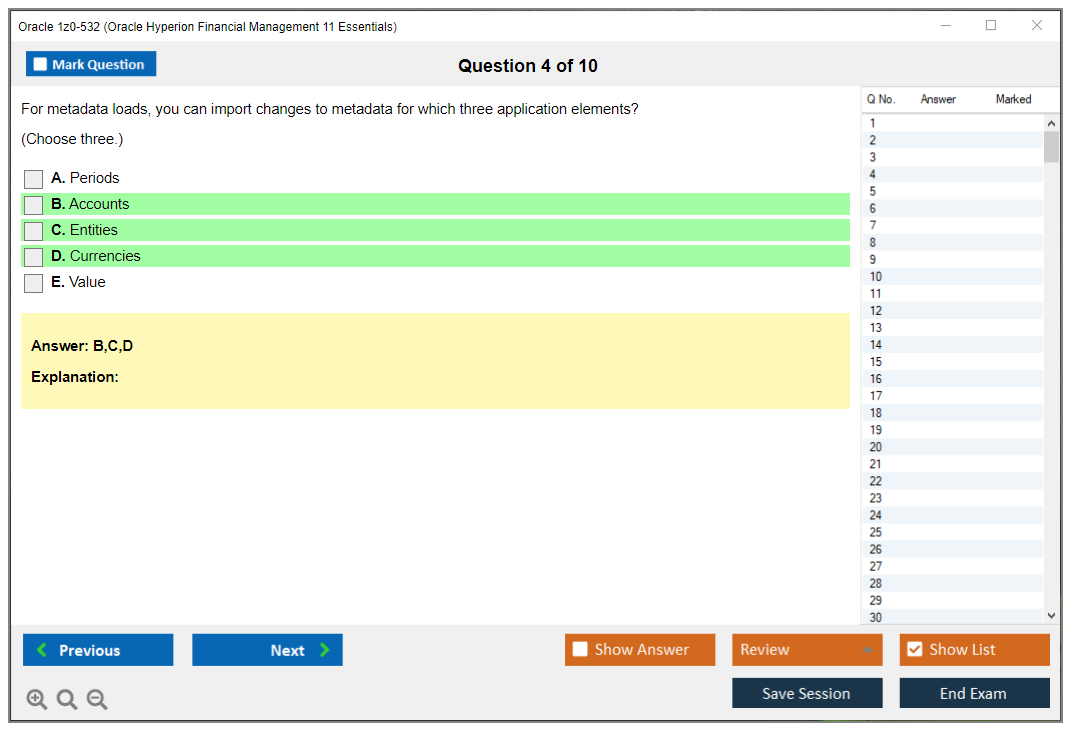
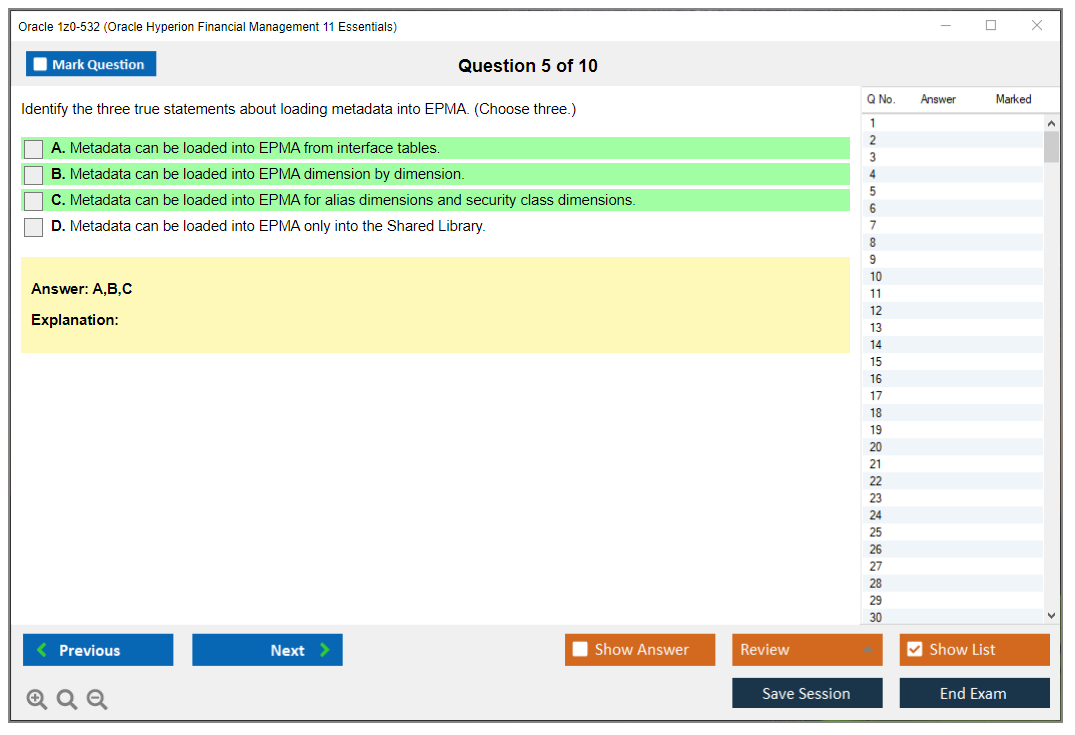
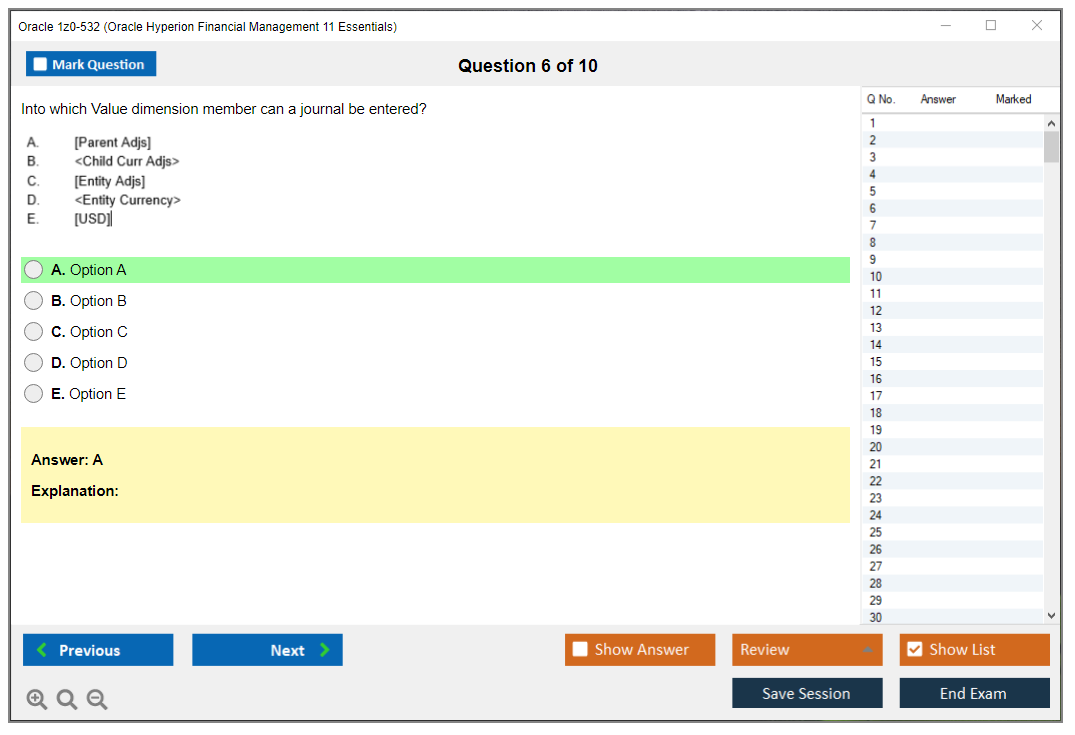
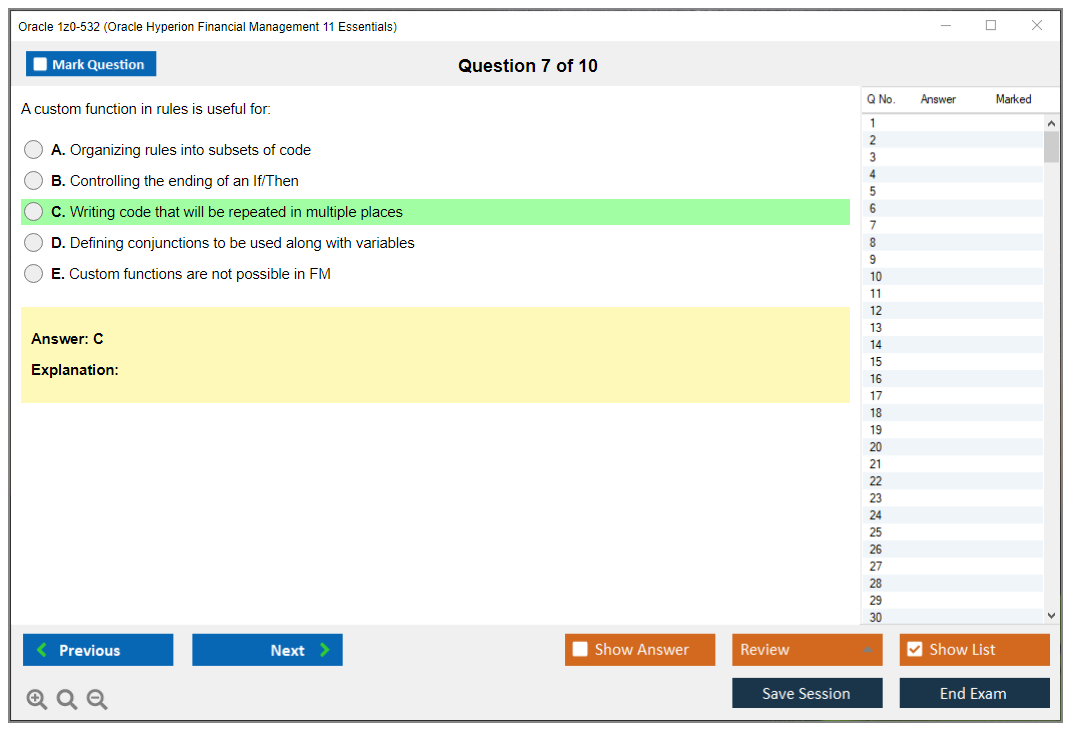
Around 40-50% of the exam presents realistic HFM administration scenarios that require actual analysis and problem-solving rather than just regurgitating facts you memorized. Some questions include HFM interface screenshots, metadata diagrams, or consolidation workflow exhibits that you need to interpret. If you've never actually worked in Hyperion Financial Management 11, these scenario-based questions will absolutely destroy you. No exaggeration.
This reminds me of when I first encountered HFM at a previous job. The interface looked deceptively simple until you started dealing with intercompany eliminations and currency translation rules. Suddenly you're three layers deep in consolidation logic wondering why your trial balance won't reconcile. Point is, hands-on experience matters way more than you'd think for this particular exam.
Scoring mechanics you need to know
All questions carry equal weight.
Doesn't matter if it's a simple recall question or a complex scenario. Each one counts the same. Unanswered questions get marked incorrect automatically, so there's no penalty for guessing. Answer every single question even if you're completely uncertain, because a random guess has a 20-25% chance of being right while leaving it blank guarantees zero points.
The exam interface lets you mark questions for review and return to them before submitting. You can freely move forward and backward through the entire exam to review and change answers, unlike some other certifications that lock you into forward-only navigation. The review screen shows your answered and unanswered status, which is helpful for making sure you didn't accidentally skip anything.
Getting your results and understanding the score report
Most candidates get immediate preliminary pass or fail notification on screen the moment they complete the exam. Within 30 minutes you'll receive your scaled score and a performance breakdown by exam domain via email and in your CertView portal. The score report shows percentage performance in each major domain. Stuff like "Metadata Management: 65%" or "Consolidation: 80%" so you can identify your strengths and weaknesses pretty quickly.
If you pass? Your digital certificate and badge appear in CertView within 24-48 hours and you can share them to LinkedIn or Credly. The certificate includes your name, certification title, exam number (1z0-532), date earned, and a unique credential ID. Employers can verify your certification status through Oracle's certification database using your name and credential ID.
If you don't pass, the score report still includes that domain-level performance breakdown to guide your focused restudy efforts for the retake. That breakdown is valuable. It tells you exactly which areas need more work rather than leaving you guessing about what went wrong.
What you can't do with your score
Oracle does not accept score appeals or manual rescoring requests. Period. The scoring process is completely automated and the results are final. No amount of complaining will change your score, so don't waste time trying. If you took a beta version of a refreshed exam, results might be delayed 8-10 weeks while Oracle establishes scoring standards, but that's rare for established exams like the 1z0-532.
Oracle also doesn't provide percentile rankings.
No comparative statistics showing how you performed against other test-takers. Your score is absolute, not relative. The passing score represents minimum competency for HFM 11 administration tasks. Higher scores indicate stronger mastery, but passing is passing.
Preparing effectively for the scoring model
Given the scoring model, your preparation strategy should focus on breadth and depth across all exam objectives rather than gambling on certain topics. The 1z0-532 Practice Exam Questions Pack at $36.99 helps you get familiar with the multiple-select question format and scenario-based questions that trip up a lot of candidates. Similar to how 1z0-071 Oracle Database 12c SQL tests practical query skills rather than just syntax memorization, the 1z0-532 exam pushes you toward real-world HFM administration scenarios.
If you're coming from other Oracle certifications like 1z0-808 Java SE 8 Programmer I or 1z0-082 Oracle Database Administration I, you already know Oracle's testing style tends toward scenario-based assessment. The 1z0-532 follows that same pattern but applies it to financial consolidation workflows, metadata management, and HFM-specific administration tasks.
Practice under timed conditions.
Take full-length mock exams that simulate the 120-minute time constraint and 75-80 question count. You need to develop a rhythm that lets you read carefully without burning too much time on any single question. Flag tough questions for review and keep moving. You can always come back if you have time remaining.
The scores don't expire, but the certification itself might have renewal requirements depending on Oracle's current policy. Your actual knowledge of HFM 11 will definitely degrade over time if you're not using it regularly, regardless of what your certificate says.
Oracle 1z0-532 Difficulty Level and Study Time Recommendations
What this certification proves in the real world
The Oracle 1z0-532 exam validates Oracle Hyperion Financial Management 11 Essentials knowledge. Look, it's designed for folks who actually do the work, not just work through dashboards. You need to understand end-to-end HFM consolidation processes and how things behave when a close cycle goes completely sideways.
Intermediate difficulty. That's the official line. But here's the thing: it's intermediate the way actual production environments are intermediate. You're juggling concepts and muscle memory simultaneously, facing mini crisis scenarios that require diagnosing misconfigurations, predicting system behavior, or identifying the optimal fix while managing metadata quirks, calculation rules, and process dependencies all at once.
Who should take it and who should wait
HFM administrators with six to twelve months' daily hands-on work? You're squarely in the sweet spot. Implementation consultants carrying solid EPM credentials can definitely clear this hurdle too. Hyperion Planning or OBIEE background helps. But if you've never debugged a consolidation that mysteriously hangs or reconciled why intercompany transactions won't balance, those knowledge gaps will surface fast.
Finance professionals often find consolidation workflows intuitive. IT administrators typically dominate architecture and security components. Both groups hit their pain points eventually, usually VB Script logic and those "predict the next consolidation step" scenarios. Different weaknesses. Identical exam.
Oh, and don't even get me started on consultants who've only worked with one client's heavily customized setup. They assume HFM always behaves like whatever Frankensteined version they support, then get absolutely wrecked by standard configuration questions.
Cost, registration, and policies you should actually plan for
What you'll pay and where to register
Exam pricing varies by region, and local taxes or administrative fees stack on top. Don't assume the figure some random blog mentions matches your actual invoice. Registration happens through Oracle's certification portal, which redirects you to their authorized testing partner. Retake policies shift periodically too, so confirm waiting periods and attempt limits during scheduling.
Budget beyond the voucher. Training courses or lab environment setup? The exam fee becomes your cheapest expense.
Online vs test center delivery
Your location and current Oracle testing-provider protocols determine whether remote proctoring or physical test centers are options. Either path enforces strict conditions. Silent room. Bare desk. Single monitor. Zero "lemme peek at my notes real quick" moments.
ID and exam-day rules
Bring precisely the ID types the provider specifies, with name spelling matching your registration character-for-character. Getting blocked at check-in over a name discrepancy? That's an expensive way to donate money.
Format, passing score, and how results work
Passing score reality check
Oracle occasionally publishes passing thresholds and occasionally adjusts them by exam version, so verify on their official page before sitting down. You can't really game this. Passing requires actually knowing the product.
Questions, timing, and what you'll see
Expect scenario-heavy multiple choice and multi-select formats. Reading difficulty? Minimal. Reasoning difficulty? That's where it bites. Questions force you to mentally execute HFM workflows (load, validate, consolidate, translate, eliminate, report) then identify what breaks when a single configuration or rule goes wrong.
Results typically appear quickly for most Oracle exams, though you should confirm for your delivery method.
How hard is Oracle 1z0-532, really
Difficulty level and comparisons
I'd call the Oracle 1z0-532 exam solidly Intermediate, though "intermediate-plus" fits better if your background lacks consolidation tool experience. It exceeds basic Oracle Database SQL certifications because you're not just memorizing syntax and definitions. It's comparable to Hyperion Planning and OBIEE certifications, where administrative judgment and product behavior matter as much as vocabulary.
Pass rates? Oracle doesn't publish them. Industry whispers suggest roughly 60-70% first-attempt success for adequately prepared candidates. That tracks with what I've observed across EPM exams where hands-on separates passers from failures.
Why candidates struggle
Troubleshooting dominates everything. The exam stresses real-world problem-solving over feature memorization. You need baseline GAAP/IFRS understanding, intercompany elimination mechanics, currency translation methodologies, and ownership structures, because HFM consolidates financial data, not generic information.
The hardest domains, according to candidates
Business rules and calculation scripting consistently tops complaint lists. VB Script syntax, member formulas, consolidation sequences. It's easy to "sorta" understand at work by copying patterns. The exam asks what a rule does in specific POVs, forcing mental execution.
Data validation and intercompany eliminations run second. Transaction matching, plug accounts, balance verification. One incorrect setting launches the "why won't this reconcile" nightmare, and the exam loves that nightmare.
Metadata design decisions are deceptively brutal. You face dimension structure trade-offs, hierarchy optimization, custom dimension choices. You can memorize dimension names endlessly, but when questions probe which design minimizes maintenance or prevents performance degradation, you need judgment beyond trivia.
Process management and troubleshooting creates another barrier. Bottlenecks, lock conflicts, data load failures. You're not identifying menu paths. You're sequencing actions logically under pressure.
The easier domains
Basic navigation, security administration fundamentals, standard dimension properties, and elementary reporting typically feel more accessible. Still study them. Just don't camp there.
Exam objectives and what you're expected to do
What the exam measures in practice
Technical depth across HFM architecture, database structure concepts (relational storage components versus OLAP-style thinking), and source system integration points. Also helps knowing how HFM metadata and applications get maintained in production. Load files and repeatable admin workflows, not just "click member, add child" actions.
Here's a mapping table I wish existed when I started working through the 1z0-532 exam objectives:
| Objective area | Key tasks you must know | Tools/screens you'll touch | Common pitfalls | |---|---|---|---| | Application setup/config | App creation choices, currencies, scenarios, years/periods | HFM Application, Workspace | Treating setup like "set and forget" | | Metadata management | Design dimensions, build hierarchies, manage custom dims | Metadata load files, dimension editor | Over-customizing, messy hierarchies | | Data load + validation | Import formats, validate rules, reconcile totals | Data Load, Validation, Process Control | Assuming loads succeed if no error popup | | Rules + consolidation | VB Script rules, member formulas, consolidation phases | Rules editor, consolidation settings | Skipping rules because "they're scary" | | Security | Users/groups, access rights basics | Shared Services, HFM security | Confusing provisioning vs data access | | Forms/grids admin | Basic grids, usability basics | Workspace, forms/grids | Memorizing clicks, not outcomes | | Monitoring/troubleshooting | Locks, performance basics, error patterns | Task audit, logs, process screens | Random clicking instead of isolating cause |
If you only master two areas thoroughly, make them rules/calculations and consolidation flow. They drive most scenario questions and connect everything else.
Prereqs and the experience that actually matters
Formal requirements vs reality
Strict formal prerequisites? Usually none. Reality's harsher. The exam assumes you've operated HFM administrative interfaces, navigated Workspace comfortably, handled metadata load files, and completed routine tasks like executing consolidations, resolving validation failures, and diagnosing data load issues.
Helpful background splits two ways. Accounting knowledge flattens the consolidation learning curve. Technical admin experience accelerates reasoning about security, architecture, and troubleshooting. Pick your advantage.
Best study materials and what I'd prioritize
Official training, docs, and what to practice
Official Oracle Hyperion Financial Management training delivers value if you need structure and guided labs. Documentation-wise, prioritize admin and implementation guides over generic overviews. Community resources (forums and consultant blogs) explain what breaks and why, which basically mirrors the exam's personality.
A lab environment or sandbox creates massive advantages. Candidates logging 40+ hands-on HFM hours, even in practice environments, report higher confidence and better outcomes. That matches my observations. Reading about consolidations? One experience level. Running them, breaking them, fixing them? That's what sticks.
Practice tests and exam questions without getting scammed
Choosing a practice test that's worth your time
Quality trumps quantity. A worthwhile 1z0-532 practice test provides explanations, maintains current content, and avoids random trivia. Your goal's sharpening reasoning skills, not memorizing "Oracle HFM 11 Essentials exam questions" from sketchy sources.
Something like the 1z0-532 Practice Exam Questions Pack proves useful when treated as feedback mechanism, not magic shortcut, and when you convert missed questions into targeted lab work that evening. If you're not reproducing wrong-answer scenarios in an HFM environment, you're leaving points behind.
Study time recommendations that match real people
How long you should study
For experienced HFM administrators with six to twelve months hands-on exposure, plan 30-40 hours across 7-14 days, targeting gaps and exam-specific content. An accelerated 7-10 day sprint becomes feasible. Not comfortable. Feasible.
For EPM consultants with limited HFM exposure, budget 50-70 hours over 14-21 days, incorporating hands-on practice time beyond just reading a 1z0-532 study guide. This is where resources like the 1z0-532 Practice Exam Questions Pack identify blind spots quickly, though you'll still need lab work on weak areas or you'll repeat the same scenario mistakes.
Beginners? Basic finance systems knowledge but no HFM experience puts you at 80-120 hours over 30-45 days, including proper coursework and extensive labs. Cramming fails here because consolidation concepts and HFM terminology need repetition. Spaced practice wins.
What changes your timeline
Prior consolidation tool experience helps. SAP BPC, OneStream, or older HFM versions. Accounting background accelerates considerably. Practice environment access? Biggest multiplier. Material quality matters too. Official content typically exceeds generic resources in accuracy.
A slower approach works for working professionals. Spreading study across 60-90 days with 45-60 minute daily sessions feels boring, but it's sustainable, and retention beats weekend panic cramming.
Common prep mistakes I see constantly
People lean exclusively on documentation. They memorize button locations. They skip rules and calculations because it feels time-intensive. Then scenario questions requiring multi-step reasoning across rules, metadata, and process management destroy them.
Another classic blunder? Never practicing realistic close scenarios. If you haven't executed complete flows from load through consolidation and reporting, including intercompany and currency translation, you're guessing on exam day.
How you know you're ready
Consistently hitting 75%+ on quality practice exams signals readiness. Troubleshooting common HFM errors without immediately consulting documentation signals better readiness. And if you can articulate the end-to-end financial close and reporting process in HFM, including validation and elimination placement, you've got the right mindset for "How to pass Oracle 1z0-532" style challenges.
Want one paid shortcut that actually works? Use the 1z0-532 Practice Exam Questions Pack diagnostically, then build labs around missed items. Simple. Effective. Unglamorous.
Renewal, validity, and recertification
Does it expire
Oracle credential policies shift by program and era, so verify your specific certification status through Oracle's certification portal. Some Oracle certs don't traditionally "expire" but lose relevance as product versions advance.
If your employer values current-version credentials, you might need upgrading via newer exams rather than "renewing" identical ones. Check Oracle's policy pages for your track.
FAQs
What is the Oracle 1z0-532 exam and who should take it
It's Oracle Hyperion Financial Management 11 Essentials certification, targeting HFM admins and EPM consultants supporting consolidations, close cycles, metadata, rules, and troubleshooting.
How much does the Oracle 1z0-532 exam cost
Region-dependent, plus taxes and fees. Check Oracle's registration flow for current pricing and your local total. When pricing prep, consider Oracle HFM certification cost beyond just the voucher. Labs and training add up.
What is the passing score for Oracle 1z0-532
Verify on Oracle's official exam page since it varies by version. If unpublished, target mastering objectives rather than chasing specific numbers.
Best study materials and practice tests for 1z0-532
Official training and admin/implementation documentation, plus hands-on lab work. Add a quality 1z0-532 practice test for timing and scenario exposure, ensuring it includes actionable explanations.
Is Oracle 1z0-532 difficult and how long should I study
Intermediate difficulty. Harder than basic SQL certifications. Comparable to other EPM product exams. Study ranges from 30-40 hours (experienced HFM admins) up to 80-120 hours (beginners), with hands-on practice making the critical difference.
Oracle 1z0-532 Exam Objectives: Complete Domain Breakdown
Look, if you're eyeing the Oracle 1z0-532 exam, you're basically signing up to prove you know Hyperion Financial Management 11 inside and out. This isn't some theory-heavy certification where you memorize definitions and call it a day. The exam actually tests whether you can build, configure, and maintain HFM applications: the kind of work EPM consultants and finance system admins do every single day.
What you'll actually be doing on test day
The Oracle 1z0-532 exam objectives break down into some pretty specific domains. You're not just answering "what is HFM?" questions. Instead, expect scenario-based problems where Oracle gives you a business requirement and you need to determine the right configuration approach. They'll throw situations at you like "a company needs quarterly reporting with two consolidation methods" and you need to know exactly which application settings to use.
The certification validates you can handle the full application lifecycle, from initial setup through ongoing maintenance. That means understanding when to use a standard consolidation profile versus a custom one. How precision settings affect your data (spoiler: change them after loading data and you're in for a bad time). What happens when you disable features that existing calculation rules depend on.
Creating applications without breaking everything
When you're creating new HFM applications, the application wizard walks you through a workflow that seems straightforward until you realize one wrong choice early on can haunt you later. Picking the right application profile matters way more than people think. Standard consolidation works for most corporate consolidation scenarios, but custom profiles give you flexibility when your requirements don't fit the mold.
Database creation options during setup determine how your application stores data. This is where I've seen people make costly mistakes. The base currency selection isn't something you can just change later without rebuilding the entire application. Same goes for precision settings. Those decimal places for data storage? If you set them to 2 decimals initially and later realize you need 4 for certain calculations, you're looking at a metadata rebuild and data reload. Not fun.
Year setup seems simple. Gets complex fast. You're defining fiscal year structures, periods, and quarters that need to align with how your organization actually reports. If your fiscal year doesn't match the calendar year, you better configure this correctly from day one. Scenario definitions let you separate actual data from budgets, forecasts, and what-if scenarios. The exam will test whether you know when to create a new scenario versus reusing an existing one.
The settings that actually matter
Application properties control features that change how the entire system behaves. Enabling intercompany matching affects how ICP transactions get validated and reconciled. Process management adds workflow capabilities but also creates overhead you might not need. Extended analytics integration requires specific configuration that impacts performance.
System defaults and application-wide options sound boring until you're troubleshooting why consolidations aren't running correctly. The exam tests whether you understand the downstream impact of these choices. If you enable a feature, what rules and processes can now use it? If you disable something, what breaks?
Keeping applications healthy over time
Application maintenance is where real-world experience shows up on the exam. Backup and restore procedures aren't just "click the backup button." You need to understand what gets backed up, where it's stored, and how to restore without losing work. Copying applications sounds straightforward but involves considerations around metadata dependencies and data migration.
Extracting and loading application metadata becomes critical when you're moving between environments or documenting configurations. Version management keeps track of changes over time, which matters for audit trails and rollback scenarios. The exam might give you a situation where metadata got corrupted and ask you the correct recovery approach.
Managing multiple apps without losing your mind
Multi-application environments introduce complexity that single-app scenarios don't have. Understanding application groups helps you organize related applications, while shared services integration determines how security and user provisioning work across multiple apps. Managing multiple applications on a single server requires knowing resource allocation, naming conventions, and how applications interact (or don't).
Common pitfalls? Not planning for growth. Creating inconsistent metadata structures across related applications. Forgetting that changes in shared services propagate everywhere. If you're used to working with just one application, the multi-app questions can trip you up.
Dimensions: where the real complexity lives
Dimension fundamentals form the backbone of HFM knowledge. You've got standard dimensions (Scenario, Year, Period, View, Entity, Value, Account, ICP, and Custom1-4) with specific behaviors and purposes for each one. View dimension controls data entry versus calculated values. Entity represents your organizational structure. Value tracks different data types like ending balance or average balance.
Member properties determine how individual dimension members behave. Labels and descriptions provide user-friendly names, but data types, data storage options (stored versus calculated versus dynamic), and aggregation operators (sum, average, first, last) actually control calculations. Account types like asset, liability, equity, revenue, expense have natural signs that affect how consolidation works. Get the account type wrong and your balance sheet won't balance.
Building hierarchies that don't collapse
Hierarchy design tests whether you understand parent-child relationships beyond simple org charts. Multiple hierarchies within dimensions let you report the same data different ways. Legal structure versus management reporting structure, for example. Shared members appear in multiple places within a hierarchy without duplicating data storage.
The distinction between base members (where data gets entered) and parent members (which aggregate children) matters for performance and data entry forms. Hierarchy navigation in rules and calculations requires understanding how HFM traverses these structures.
Entity dimension gets special treatment
The Entity dimension has unique properties that other dimensions don't. Ownership management tracks parent-child ownership percentages for consolidation calculations. Entity currency assignments determine which currency each entity reports in before consolidation. Consolidation methods (holding, proportional, equity) control how ownership percentages affect consolidated results.
I've seen people struggle with the exam questions around minority interest calculations and currency translation because they didn't fully grasp how entity properties interact. it's about knowing the definitions. You need to understand the math behind consolidation, which actually connects back to how you configured those application settings way earlier in the setup process.
Speaking of getting tripped up by seemingly simple configurations, I once watched a consultant spend two days troubleshooting why consolidation results looked wrong, only to discover someone had accidentally set an entity's ownership percentage to 10% instead of 100%. Tiny mistake, massive headache. The exam loves these scenarios.
Accounts and ICP: the detail that matters
Account dimension specifics go beyond just listing accounts. Natural signs determine whether increases are debits or credits. Custom account properties let you add attributes for reporting. The distinction between balance sheet and income statement accounts affects period rollups and year-end processing. Plug accounts handle rounding differences and consolidation adjustments automatically.
The ICP (Intercompany Partner) dimension tracks intercompany transactions between entities. It's got a relationship to the Entity dimension that needs proper configuration. ICP matching requirements validate that intercompany transactions balance across entities. The exam tests whether you know how to configure this correctly.
Custom dimensions: use them wisely
Custom dimensions (Custom1 through Custom4) provide flexibility for organization-specific requirements like product lines, projects, departments, or cost centers. But they come with tradeoffs. Each custom dimension you add increases application size and can impact performance. The exam expects you to know when custom dimensions make sense versus when you should use account properties or alternative approaches.
For reference on how Oracle structures other EPM exams, check out the 1z0-516 Oracle EBS R12.1 General Ledger Essentials exam, which covers financial modules in a different Oracle product. The metadata concepts share some similarities, though HFM is way more consolidation-focused.
Loading and managing metadata
Metadata load files use a tab-delimited text format with specific column requirements. Loading metadata via the application interface requires mapping file columns to dimension properties and validating that changes don't break existing hierarchies or calculations. The exam might show you a sample metadata file and ask what's wrong with it or what the result of loading it would be.
Member formulas create calculated members using HFM's formula syntax and functions. Calculation order matters because members can reference other members, and you need to avoid circular references. Metadata extraction generates files for documentation or migration to other environments. Understanding metadata queries and generating metadata reports helps with validation and troubleshooting.
Common pitfalls? Incorrect account types cause consolidation errors (revenue accounts marked as assets, for instance). Circular references in hierarchies prevent calculations from completing. Changing member properties after data's loaded causes inconsistencies between metadata and stored values. These scenarios show up repeatedly on the exam because they're real problems people encounter in production.
If you're also looking at database administration skills, the 1z0-082 Oracle Database Administration I certification covers foundational DBA concepts that complement EPM work, especially around backup/recovery and performance tuning.
The 1z0-532 exam really tests practical knowledge you'd use building and maintaining HFM applications in production environments. It's not impossible, but you need hands-on experience with the application wizard, metadata management, and understanding how configuration choices ripple through the system.
Conclusion
Wrapping it all up
Real talk here.
The Oracle 1z0-532 exam isn't something you can just wing on a Tuesday afternoon after watching a couple YouTube videos, you know? Oracle Hyperion Financial Management 11 Essentials certification really does test whether you understand the details of HFM. We're talking metadata structures and consolidation logic. Data validation workflows and security configurations that actually matter in production environments where things can go sideways fast. If you've been working with HFM for a few months and you've gone through close cycles, built a few applications, or at least broken something in a dev environment and fixed it, you're in decent shape. But honestly? Even experienced folks trip up on the exam objectives around rules syntax or the less-obvious parts of intercompany eliminations.
The cost isn't trivial either.
You're dropping real money on this exam, so treating it like a checkbox exercise is asking for a fail and an expensive retake that'll sting your wallet and your pride. Plan your study time around your actual experience level, not what some forum post says. Seven days might work if you're living and breathing HFM daily. Newer to the platform or transitioning from another EPM tool? Give yourself closer to a month with structured practice and maybe some weekend lab sessions.
I spent a stupid amount of time once trying to debug why my consolidation kept throwing a balance error, only to realize I'd fat-fingered a parent member assignment in the hierarchy. Felt like an idiot, but that mistake taught me more about how the engine processes eliminations than any documentation ever did.
Practice tests? That's where the rubber meets the road. Not gonna lie, I've seen people memorize question dumps and still bomb because they didn't understand why an answer was correct or what would happen in a slightly different scenario when the exam throws a curveball. Quality Oracle HFM 11 Essentials exam questions should walk you through the logic. Show you the admin screens or process flows. Explain common traps that catch even veterans off guard.
You want questions that mirror real-world tasks. Loading data with validation errors. Troubleshooting a consolidation that won't balance. Configuring security for a new user role who needs specific access.
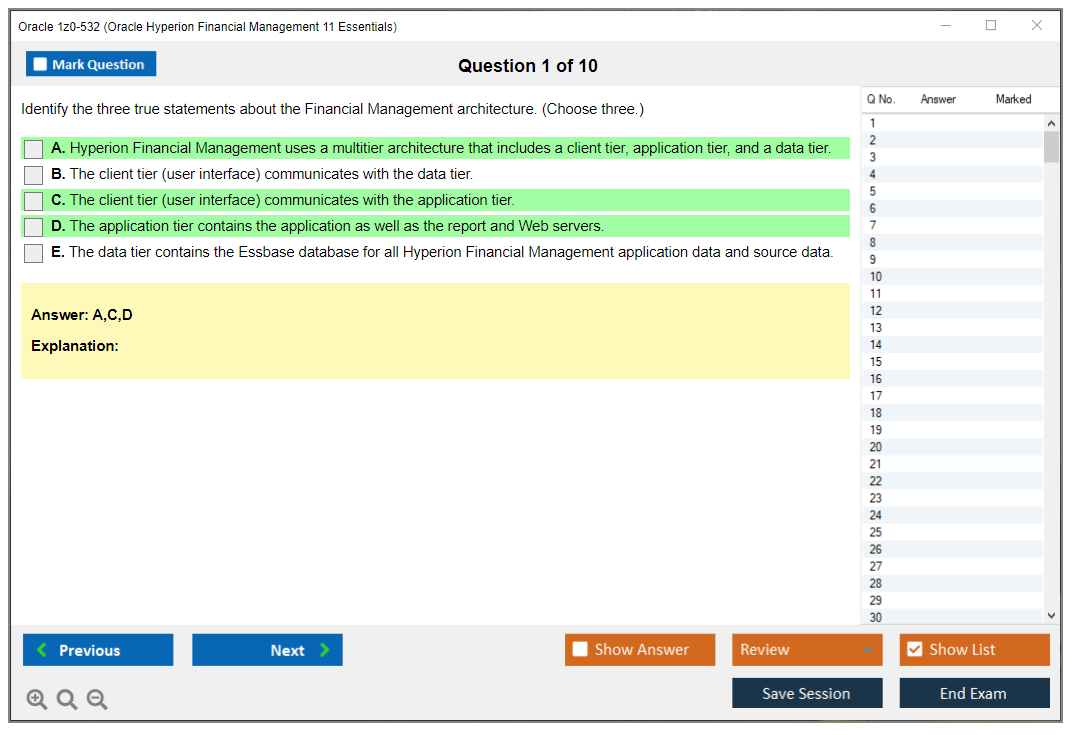
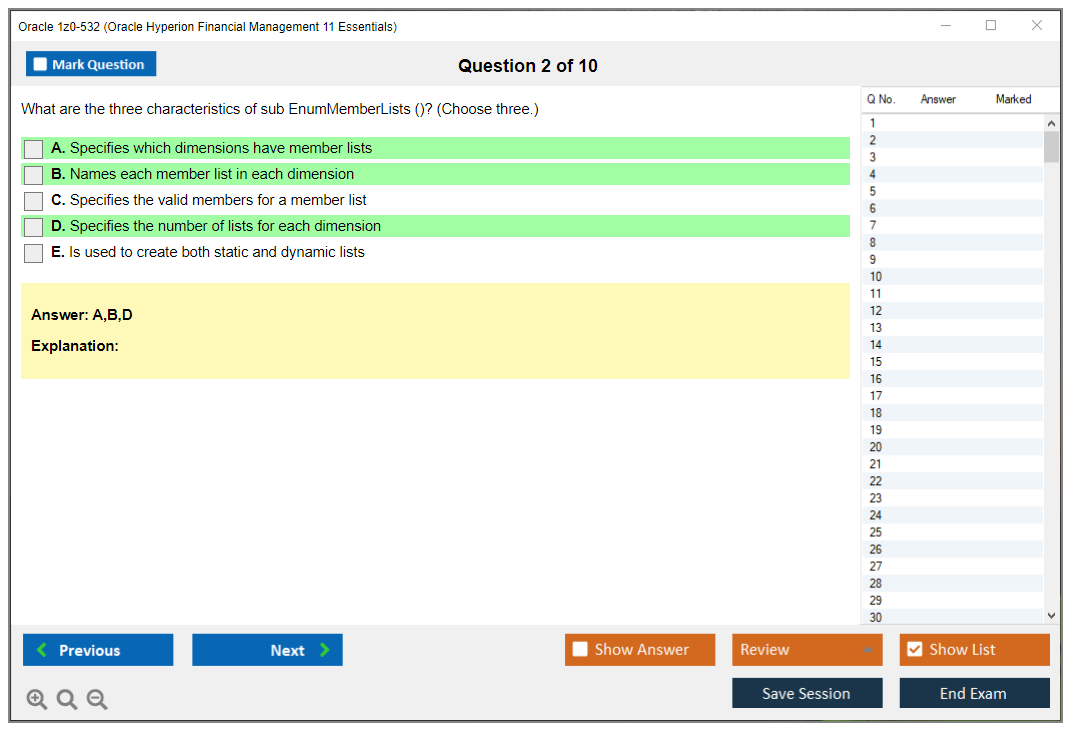
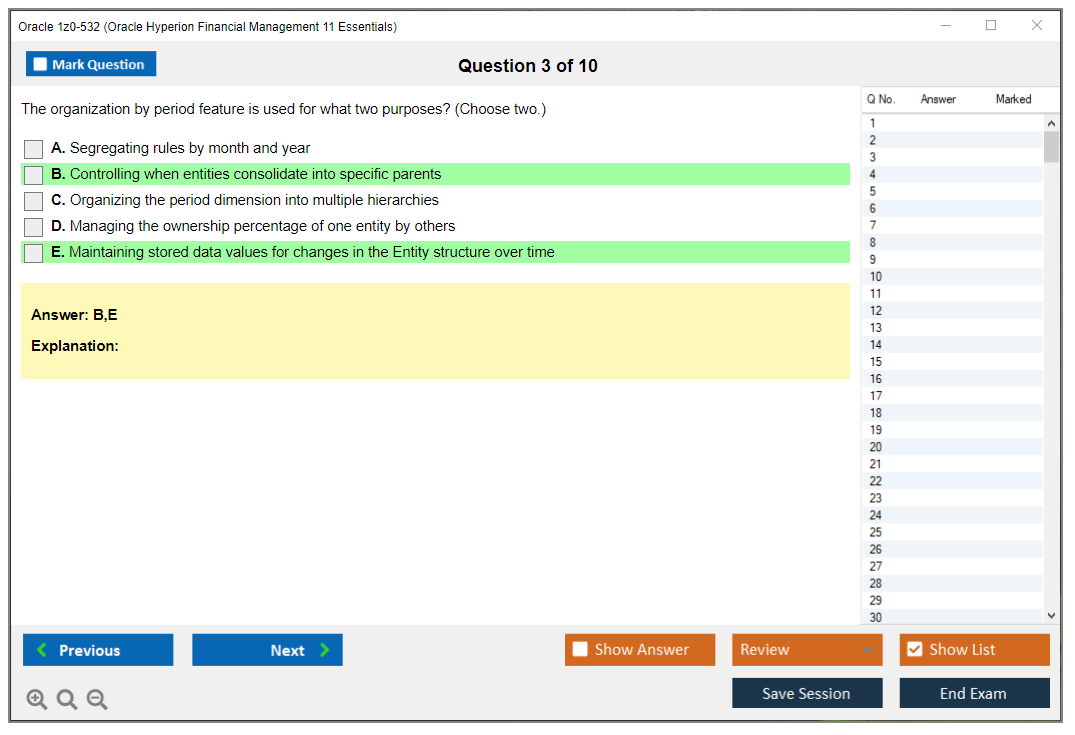
If you're serious about passing the Oracle 1z0-532 exam on your first attempt and you want a resource that actually reflects current exam patterns with detailed explanations that don't assume you're psychic, check out the 1z0-532 Practice Exam Questions Pack at /oracle-dumps/1z0-532/. It's built for people who need more than surface-level recall. You get scenario-based questions that test whether you can apply HFM concepts under exam conditions, plus breakdowns of why wrong answers are wrong, which honestly saves hours of guessing or rereading docs that put you to sleep. Pair that with hands-on lab time and official Oracle training materials, and you've got a solid shot at walking out with the certification and the confidence to back it up in real projects where stakeholders are watching.