

Oracle 1z0-517 Exam Overview and Certification Value
Look, honestly? The Oracle 1z0-517 exam isn't exactly new or flashy, but it's still relevant if you're working with Oracle E-Business Suite implementations. These are everywhere in enterprise environments because companies invested millions in these systems and they're not just gonna abandon them for the next shiny thing. This certification validates your expertise in Oracle EBS R12.1 Payables Essentials, which means you understand how to set up, configure, and manage the Payables module that thousands of companies still rely on daily.
Think about it. We're talking about knowledge across invoice processing, payment processing, supplier management, and accounting procedures. The exam tests whether you can actually configure this stuff and troubleshoot real problems, not just memorize some definitions from a manual.
What this certification actually proves you know
The 1z0-517 certification validates that you understand the complete Payables setup and configuration process. This includes payment terms, invoice tolerances, accounting distributions, holds management. Everything that makes AP run smoothly.
You'll need to demonstrate knowledge of supplier setup and supplier sites, because getting that wrong causes headaches down the line. Invoice matching (two-way, three-way, four-way) is a big focus, along with handling exceptions and resolving holds.
Payment processing? Critical. You need to understand payment batches, payment formats, bank account setup, and how Oracle handles different payment methods across multiple currencies. Period-end close procedures matter too, since finance teams depend on clean monthly closes. The exam also covers integration with General Ledger, Purchasing, and Cash Management. I mean, these modules don't exist in isolation, so you've gotta understand how data flows between them.
Who should actually take this exam
Pretty specific audience here. Oracle EBS functional consultants who specialize in Financials modules need this credential. Implementation specialists working on EBS R12.1 projects should consider it. Accounts Payable managers who oversee EBS Payables in their organizations can benefit from the technical depth it provides.
ERP system administrators? Absolutely. Responsible for maintaining Oracle EBS environments, they'll find value here, especially when they need to troubleshoot configuration issues or support month-end processes. Finance professionals who work closely with Oracle Payables R12.1 and want to understand the system beyond just data entry can get something out of this too. I've seen plenty of finance folks who grew tired of constantly bugging their IT team for every little report or config change, and they decided to learn this stuff themselves. Changed the whole dynamic.
Career advantages you get from passing
Earning the 1z0-517 certification gives you stronger credibility with employers who run Oracle EBS. Not gonna lie, having this on your resume signals that you've invested time in mastering a specialized module, which separates you from people who just claim they "know ERP" without any proof of depth.
You get a leg up in the Oracle EBS job market because many organizations struggle to find qualified Payables consultants who really understand R12.1.
The certification validates specialized Payables module expertise that generic ERP knowledge can't match. When you're competing for Oracle Payables functional consultant roles, this credential can be the thing that gets you the interview. Oracle EBS implementation specialist positions often list this as preferred or required, particularly for projects involving the Financials suite.
Job roles that benefit most
Oracle Payables functional consultants obviously benefit. This is their core certification. ERP business analysts who support AP processes gain technical credibility that helps them bridge the gap between business users and technical teams.
Accounts Payable system administrators need this knowledge to configure workflows, manage security, and troubleshoot processing issues.
Oracle EBS support analysts who handle Payables-related tickets can resolve problems faster when they understand the underlying configuration. Implementation specialists working on full EBS rollouts need Payables expertise since it's a fundamental module in most deployments.
Industry demand and practical knowledge
Here's the thing: plenty of enterprises still run Oracle E-Business Suite on-premises. They're not migrating to Cloud solutions anytime soon because of customizations, integration complexity, or just the massive effort involved. The thing is, migration projects are expensive, risky, and disruptive, so IT leaders avoid them unless there's solid ROI.
This means demand for R12.1 Payables professionals remains steady, even though Oracle's marketing pushes Fusion Cloud.
The certification demonstrates practical knowledge of real-world AP processes like handling invoice exceptions, resolving payment processing issues, managing supplier disputes, and executing period-end close procedures. These aren't theoretical scenarios. They're daily challenges in live EBS environments.
How this fits with other Oracle certifications
The 1z0-517 fits naturally with other Oracle EBS certifications. If you're also pursuing Oracle EBS R12.1 General Ledger Essentials, you'll understand how Payables accounting entries flow into GL.
The Oracle EBS R12.1 Purchasing Essentials certification complements this one perfectly since Purchasing and Payables work together in the procure-to-pay cycle.
Cash Management integration matters for payment processing and bank reconciliation. Understanding how these modules connect helps you design better solutions and troubleshoot cross-module issues.
R12.1 versus Fusion Cloud certifications
Big distinction here. The difference between Oracle EBS R12.1 Payables Essentials and Cloud-based Oracle Fusion Payables certifications is huge. They're different products with different architectures, interfaces, and capabilities.
R12.1 is the on-premises EBS version that's been around for years and has mature functionality. Fusion is Oracle's cloud-native ERP platform.
Many organizations still run R12.1, which means this certification has long-term value despite Fusion being Oracle's strategic direction. If you're working with clients who have existing EBS implementations, R12.1 expertise remains necessary.
Configuration and operational knowledge
The 1z0-517 exam focuses on both configuration tasks and operational procedures. You need to understand setup options like payment terms, distribution sets, and approval rules. But you also need to know operational flows: how invoices get matched, validated, accounted, and paid.
The expected knowledge depth covers setup options, business process flows, integration points with other modules, reporting capabilities, and troubleshooting scenarios. You're demonstrating proficiency across the complete procure-to-pay lifecycle, from supplier setup through invoice payment and accounting.
The certification validates not just theoretical knowledge but practical application skills needed in live EBS implementations. That's what makes it valuable. It proves you can actually do the work, not just talk about it.
1z0-517 Exam Cost, Registration Process, and Exam Policies
What the 1z0-517 certification validates
The Oracle 1z0-517 exam tests real skills. Not theory, actual work you'd do managing Oracle E-Business Suite Payables. The kind of setup decisions and processing tasks that directly impact whether your month-end close happens smoothly or turns into a three-day nightmare nobody wants to repeat.
You're getting tested on Oracle E-Business Suite Payables setup and processing. Operational flow like invoice processing in Oracle Payables R12.1, supplier management in Oracle EBS Payables, and payment processing and payment batches Oracle Payables. Also that back-end accounting piece everyone ignores until quarter-end hits.
Who should take this exam (job roles and experience)
If you're an EBS functional consultant, AP analyst, or support person living in R12.1, this maps well to what you already do. Developers who only poke at Payables tables? You'll feel the gaps fast. Screen navigation matters here.
Look, the exam's called "Essentials" but it's not some beginner quiz. You need to know why a hold happens, what a payment batch is actually doing, how setups ripple across approvals and accounting and reporting. That's mental load which only comes from actually running Payables in a real environment. I once watched a developer with five years of SQL experience completely blank on basic validation workflow because they'd never touched the screens where users spend their entire day.
Exam cost (pricing and regional variations)
Let's talk 1z0-517 exam cost. Standard pricing typically ranges from $245 to $300 USD. Yeah, that spread's annoying, but it's mostly geographic region and local currency conversion doing their thing.
North America usually lands closer to the USD list price you'd expect. Europe can run higher once VAT or local taxes show up at checkout, plus currency conversion swings that change weekly. Asia-Pacific varies wildly by country. Sometimes looks cheaper in local currency but ends up similar after conversion gets done. Other markets? Oracle has a regional price book. Check your exact country in the registration portal before assuming anything holds true.
Oracle University's got a pricing structure that sometimes includes discounts. Partners may see reduced pricing through partner channels. Students occasionally get academic pricing depending on program availability. Bulk purchases are a thing, usually via vouchers bought in quantity rather than some magical coupon box at checkout. Seasonal promos happen, training bundles sometimes include an attempt, some employers have corporate purchasing arrangements too.
Where to register (Oracle/partner testing)
Registration happens through Oracle CertView (Oracle's certification management portal). People still say "Pearson VUE" out of habit because that used to be the front door for Oracle exams, but CertView's where you manage identity, exam history, and the path to scheduling now.
Basic step-by-step:
1) Go to CertView and sign in with Oracle Single Sign-On. 2) Create your CertView profile if it's your first rodeo. 3) Link your Oracle SSO to the testing account when prompted. This part matters more than you'd think. 4) Search for exam code 1z0-517 and confirm you're selecting Oracle EBS R12.1 Payables Essentials certification, not some similarly numbered exam that'll waste your money. 5) Choose delivery: test center or online proctored. 6) Pick date and time, pay, then save that confirmation email and appointment details somewhere you won't lose them.
Name matching's a big deal. Tiny mismatch? Big headache. If your CertView profile says "Mike" and your ID says "Michael," fix it before you pay.
Retake policy and scheduling tips
Retake policy's usually straightforward: if you fail, there's typically a 14-day waiting period before you can try again. You can retake it as many times as you want, but you're paying full fee each time. No mercy pricing whatsoever. No "second attempt half off" unless you bought a voucher bundle that does that through bulk pricing.
Scheduling's flexible most of the year, but peak periods are real. End of quarter, end of year, big conference weeks, training cohorts finishing at the same time. Book 1 to 3 weeks ahead for a test center if you want a specific day. Even earlier if you need a Saturday slot because those fill up fast. Online proctored's got more availability, but don't assume "same day" always works, especially if you're testing across time zones or during popular hours.
Passing score (what to expect and how Oracle reports results)
People ask about 1z0-517 passing score constantly. Oracle reports a passing score and your performance by section, but the exact number can vary by exam version and Oracle's scoring model. Treat any fixed number you see on random forums as "maybe accurate, maybe outdated." You'll see pass or fail right after finishing, plus a score report tied to the exam objectives that breaks down where you did well or bombed.
Exam format (question types, time, delivery method)
Expect multiple-choice style questions, scenario prompts, and those "what happens if" setup questions that feel simple until you realize two answers are almost correct and you've gotta pick the most correct one. Delivery can be test center or online proctored. Your choice should match how you work under pressure, not what sounds convenient when you're registering at midnight.
Payables setup and configuration
The 1z0-517 exam objectives usually lean heavily on setup that drives behavior: options, controls, approval basics, and how Payables interacts with other modules like GL and Purchasing. This is where people who only "process invoices" start guessing because they've never touched the setup screens that control everything downstream.
Invoice processing and payments
Invoice processing in Oracle Payables R12.1 shows up a lot. Matching, holds, approvals, and why something won't validate even though it looks fine. Payments matter too, especially payment processing and payment batches Oracle Payables, formats, and bank account related flow that trips people up. Supplier management in Oracle EBS Payables is in the mix because bad supplier setup causes half the operational issues you'll spend your life fixing on support tickets.
Prerequisites and prep materials
There aren't hard 1z0-517 exam prerequisites like "must take a class," but soft prerequisites absolutely exist. You want hands-on exposure to Payables screens, plus basic AP accounting concepts that make sense of why things work the way they do. GL and Purchasing familiarity helps because accounting and matching questions cross module boundaries constantly.
For Oracle Payables R12.1 study materials, start with Oracle University courses if you can get them paid for, then hit the Payables User Guide and Implementation Guide hard. Add a sandbox. Reading alone doesn't teach you where settings live or how they interact. My Oracle Support notes, internal runbooks, and real ticket history are gold for understanding edge cases and common problems.
Policies: reschedule, refunds, accommodations, and exam day rules
Rescheduling typically must be done 24 to 48 hours before the appointment, depending on delivery method. Late changes can mean a fee or losing the attempt entirely, which stings. No-shows usually forfeit the exam fee completely. Oracle's not messing around there.
Refunds are limited and driven by Oracle's terms, with exceptions for documented emergencies, but don't count on it being easy or fast.
Payment methods commonly include credit cards, Oracle purchase orders, and voucher codes. Vouchers can be purchased through Oracle University, partner channels, or training package bundles that include exam fees as part of a larger purchase.
Special accommodations exist for disabilities or special requirements. You request them during scheduling with documentation backing it up. It can take time to process, so don't wait until the week of the exam or you'll end up postponing.
Exam day: bring valid government-issued photo ID, arrive 15 to 30 minutes early. Expect strict rules that feel excessive but are standard. No personal items in the testing room. Phone, wallet, notes, nothing. You'll get scratch paper or a whiteboard depending on the center. Calculator rules depend on the exam, so assume "no personal calculator" unless the testing system provides one built-in.
Online proctored requirements are picky as hell. Stable internet, decent bandwidth, webcam and microphone that actually work, and a clean desk with nothing on it. No second monitor allowed, no wandering eyes. The proctor will stop you for weird stuff like mumbling or looking off-screen too much. Feels awkward watching someone watch you, but it's normal and you get used to it after five minutes.
You also accept an NDA before starting, which means you can talk about your experience, but not actual questions or answers in any specific way. Don't post "memory dumps" or detailed question recalls. It can get your cert invalidated and Oracle takes that stuff seriously.
Tips for smooth registration: verify your name matches ID exactly, confirm exam code 1z0-517 before payment goes through, and save every confirmation detail in multiple places. Future you will thank present you when you're scrambling to find your appointment info the night before.
1z0-517 Passing Score, Exam Format, and Results Timeline
What you're actually up against score-wise
Okay, so here's the deal. The Oracle 1z0-517 exam typically needs around 70% to pass. That's what most candidates see, anyway. But Oracle doesn't publish exact passing scores because they use psychometric analysis to keep standards consistent across different exam versions. Makes sense when you think about it. If one version turns out slightly harder than another, they adjust the cut score so passing means the same thing regardless of which questions you get.
This scaled scoring system confuses people at first. Your raw score (how many you got right) gets converted to a scaled percentage from 0-100%. it's "answer 49 out of 70 correctly and you're good." Oracle's algorithm weighs question difficulty. Some scenario-based questions that test applied knowledge might carry more weight than straightforward recall items, though Oracle doesn't publish the exact weighting formula. Frustrating if you're trying to strategize.
Breaking down what you'll see on test day
The 1z0-517 exam format includes multiple-choice questions (pick one correct answer), multiple-response questions where you select several right answers, and scenario-based questions that give you a business situation and ask how you'd handle it in Oracle EBS R12.1 Payables.
You'll face 70-80 questions total. The exact count varies because Oracle updates exam versions periodically and might include unscored pretest questions. Experimental items they're testing for future exams that don't count toward your final score. You won't know which ones are pretest items, so treat every question like it matters. Even though part of your score literally doesn't count, which is weird.
Time allocation? 120 minutes. Two hours to get through everything, which sounds like a lot until you're actually sitting there. That's roughly 90 seconds per question if you're doing 80 questions, but you'll blow through some quick ones in 20 seconds and spend 4-5 minutes on complex scenarios. The computer-based testing interface lets you mark questions for review, skip ahead, go back. You can work through however you want until time runs out.
Here's the thing about guessing. There's no penalty for it. Answer every single question. An unanswered question counts as wrong anyway, so take your best shot even if you're completely stumped. I've seen people leave questions blank thinking it's somehow better than guessing wrong, and that's just throwing away potential points for no reason.
Where and how you take this thing
You've got options for exam delivery. In-person at Pearson VUE test centers is the traditional route. You show up, they verify your ID, you sit in a cubicle with a computer. You can also do online proctored exams from home or your office. The online option uses webcam monitoring and screen recording. Some people find it creepy but whatever. Some people love the convenience, others hate the technical setup and prefer just going to a test center where the equipment's guaranteed to work.
Whichever method you pick, the actual exam experience is identical. Same questions, same time limit, same interface, so it's really just personal preference.
I once showed up to a test center that had scheduled me in a room with construction happening next door. Like, actual drilling through walls. They moved me to a different location but I lost 30 minutes of mental prep time just dealing with the chaos. Sometimes the home option starts looking better.
Results and what happens immediately after
The moment you submit that final answer, you get preliminary results on-screen. Pass or fail, right there. No waiting weeks like some certifications from the old days, which was torture. You'll see your scaled score and whether you cleared the passing threshold.
Short version? Instant feedback.
The score report shows performance by exam objective. So you might see "Invoice Processing: 80%, Payment Processing: 65%, Accounting and Reporting: 75%" or whatever the actual domains are. This breakdown matters if you don't pass, because it tells you exactly where to focus your study efforts for a retake instead of just guessing what went wrong.
Your detailed results show up in your Oracle CertView account within 30 minutes to 2 hours after exam completion. Usually it's pretty fast. I've had mine appear in like 45 minutes, though I've heard stories of people waiting the full two hours. The CertView portal is where you'll manage all your Oracle certifications going forward.
If you pass, digital badges and certificates get issued within 24-48 hours. You can download PDF certificates, add credentials to your LinkedIn profile, share Oracle digital badges. All of it. These digital credentials are actually pretty slick compared to the paper certificates of yesteryear that you'd just stuff in a drawer somewhere.
When things don't go as planned
Failing the 1z0-517 exam isn't the end of the world, though it stings when you see that "Did Not Pass" message pop up on screen. Your score report becomes your roadmap. Look at which objective areas scored lowest and drill into those topics. Maybe you crushed supplier management but tanked on payment formats and bank account setup. Now you know where to spend your study time, which is valuable feedback.
Oracle doesn't allow score appeals for objective computer-scored exams like this one. The system scored it, the system doesn't make arithmetic mistakes, so there's really no point arguing. Borderline scores are still fails if they're below the cut score, even by one point. Feels harsh but it's consistent at least.
You can retake the exam, though there are waiting periods and retake fees. Adds up if you fail multiple times. Check Oracle's current retake policy because it changes occasionally and you don't want surprises.
Understanding the psychometric stuff behind the scenes
Oracle uses psychometric analysis to make sure different exam versions are equally difficult. Different exam versions have different questions, but passing one version should be as difficult as passing another. Makes sense from a fairness standpoint. If they roll out a new version with harder questions, the passing score percentage might drop slightly to 68%. If questions trend easier, it might bump to 72%. You never see these adjustments. You just see your scaled score and pass/fail status.
This approach maintains consistent standards over time. A 2024 pass means the same thing as a 2022 pass, even though the actual questions changed. Important for employer credibility. Similar to how other Oracle exams like the Oracle EBS R12.1 General Ledger Essentials certification work. Standardized difficulty despite evolving question banks, so the credential holds its value regardless of when you earned it.
1z0-517 Exam Objectives and Official Topics Breakdown
The Oracle 1z0-517 exam is basically Oracle's way of checking whether you can run Payables day to day in EBS R12.1 without breaking accounting, controls, or the payment cycle. Not theory. Real screens, real setup decisions, real "why is this invoice on hold" moments. If you've worked in AP, EBS support, or implementation, the Oracle EBS R12.1 Payables Essentials certification maps pretty cleanly to what you already do. But it'll call you out if you only know one company's configuration.
You'll see Oracle publish the 1z0-517 exam objectives in the exam blueprint and certification pages. Honestly the blueprint reads like a condensed Payables implementation checklist plus operations and period close. That's what you should study. Short list. Big surface area.
What the exam blueprint mostly tests (and rough weight)
Oracle doesn't always shout exact percentages in a way people love, but from the official topic grouping and how the questions typically cluster, think in these buckets and weights.
Payables setup and configuration sits around 20%. System options, financial options, Payables options, calendar and period controls. This is where you get tripped up by one checkbox. Supplier management also hits about 20%. Suppliers, supplier sites, bank accounts, holds, merges, third-party payees, plus inquiry and reporting. It's broader than people expect.
Invoice processing takes about 25%. Invoice entry methods, types, matching, tolerances, holds, approvals, distributions, prepayments, recurring invoices, cancellations, credit memos, imaging and iSupplier. Payments clock in around 20%. Payment batches, methods, formats, internal banks, validation, Build/Format/Confirm, reconciliation, voids, exchange rates, remittance advice.
Accounting, close, reporting, controls make up about 15%. SLA basics, transfer to GL, period-end, aging and recon, security and approvals, duplicate invoice controls, troubleshooting.
Not gonna lie, that's a lot. But it's consistent.
Setup and configuration topics that show up constantly
Expect questions on Oracle E-Business Suite Payables setup and processing, especially System Options vs Payables Options vs Financial Options. Look at what each controls. Stuff like invoice numbering, payment accounting, terms date basis, allow override settings, and whether matching is required. Then the calendar setup: defining accounting periods, opening and closing periods for Payables transactions, and what happens when a period is closed but someone tries to validate, account, or pay.
Some questions are pure "where do you set this." Others are scenario-based. Like why an invoice can't be validated because the period status is wrong, or why accounting didn't transfer because the posting program hasn't run.
Payment terms, tolerances, holds, approvals
Defining payment terms is a favorite. Creating standard terms, discount terms, and how due dates and discount dates are calculated. Look at terms date, invoice date vs goods received date, and how multiple discounts behave. Simple on paper. Messy in production.
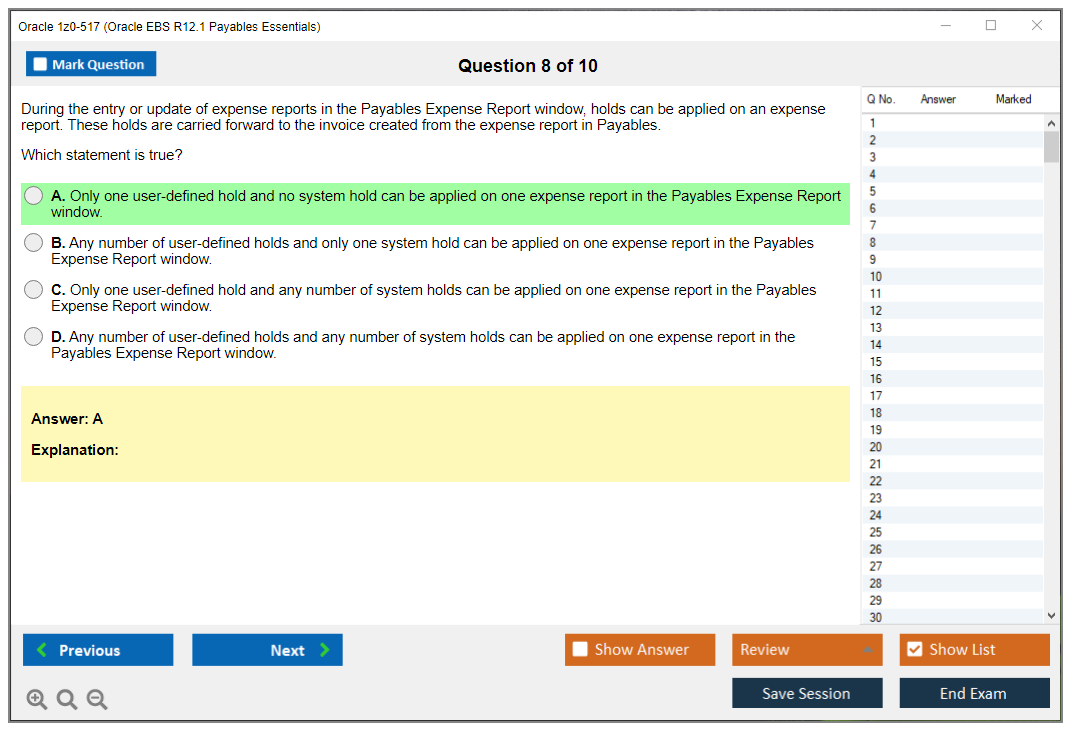
Invoice tolerances matter because they connect straight into matching and holds. You'll see quantity received, price, and amount tolerances for invoice matching, and what happens when you exceed them. Matching holds vs user holds. System holds and automatic release. The thing is, those are the questions where people burn time.
Holds and release names also show up as setup plus operations. Configuring standard holds, adding user-defined holds, and knowing where you release them. Then approvals. AME integration for invoice approval routing is in scope, and I mean the exam doesn't make you build an AME rule from scratch, but it expects you to understand the hierarchy concept, approval limits, notifications, and why an invoice is stuck in "Needs Reapproval."
Tax and expenses (yes, you need them)
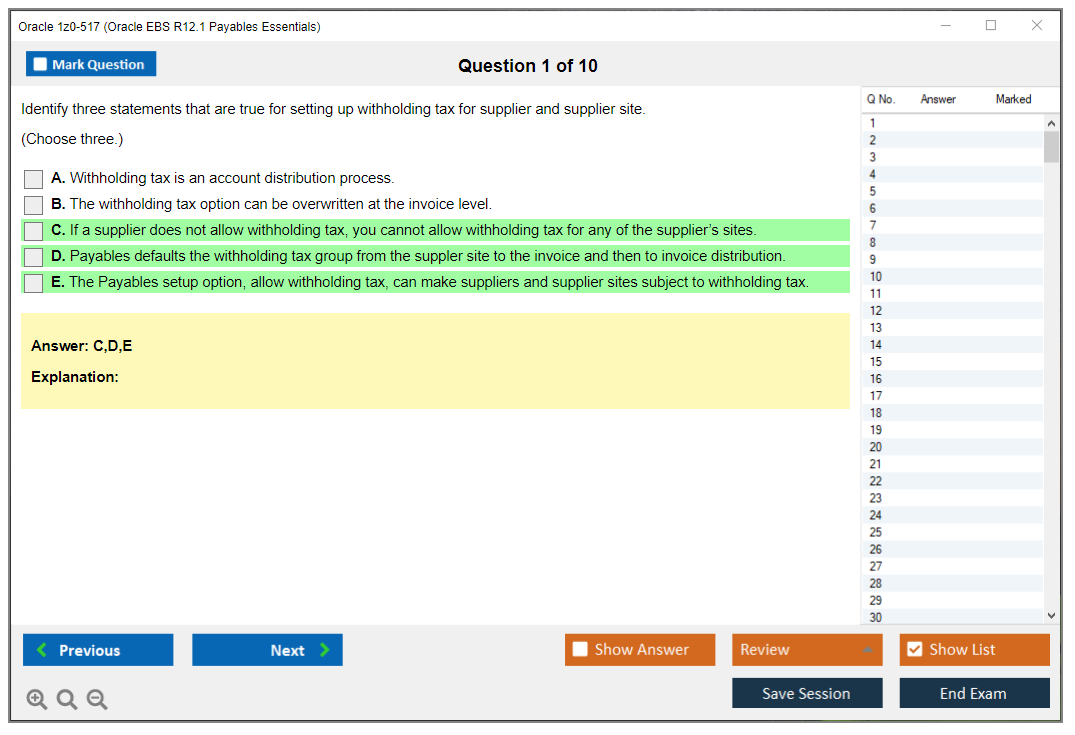
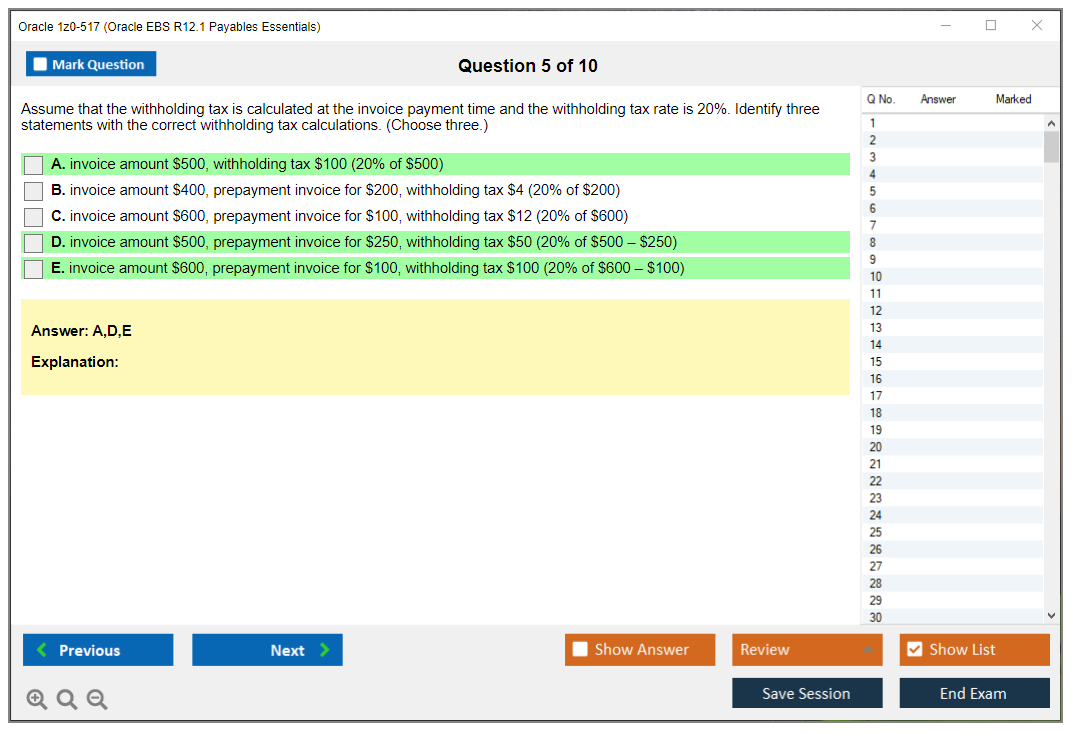
Tax configuration isn't optional. R12.1 pushes you into E-Business Tax, so know tax codes, recovery, and how taxes get calculated and accounted on invoice distributions. Sales and use tax on invoices. Withholding tax processing too, including setup, calculation, and reporting requirements.
Expense report setup also appears. Templates, policies, approval rules. It's Payables, so it connects back to invoice types and distributions. Can hit the same approvals and holds logic.
I spent maybe two weeks once debugging why a particular supplier's invoices kept getting flagged for duplicate checking even though the numbers were different. Turned out someone had customized the duplicate check rule to include partial vendor name matching, and we had two suppliers with almost identical names. Not exam material exactly, but it taught me that the real world doesn't fit neatly into Oracle's standard checkbox logic.
Supplier management objectives (bigger than people think)
Creating and maintaining suppliers is a whole domain: classification, tax details, payment details, and then supplier site setup for pay sites vs purchasing sites, including site-level defaults for terms, payment method, and invoice options. Supplier bank accounts matter for electronic payments and payment validation. You'll also want supplier holds at supplier or site level, and what they prevent (invoice vs payment). Third-party relationships like alternate payees can show up too, along with supplier merging and the implications for history.
Supplier-item relationships, qualification and performance tracking, and mass updates are usually lighter coverage, but they're in the blueprint. So at least know what they are and where they live. Supplier inquiry and reporting also matters because Oracle likes "which report/form confirms X."
Invoice processing and matching, end to end
Invoice entry methods: manual entry, invoice import, scanning and imaging integration, self-service invoice management via iSupplier. Then invoice types: standard, credit memo, debit memo, prepayment, expense reports. Matching is core: two-way, three-way, four-way, and what each compares. Invoice validation rules, common errors, and resolution. Invoice distributions, distribution sets for automatic accounting, code combinations, and tax handling.
Prepayments and applications. Recurring invoices. Cancellation vs voiding. Credit memo processing and automatic application rules. Honestly, if you can explain invoice processing in Oracle Payables R12.1 from entry through validation, approval, accounting, and payment eligibility, you're most of the way there.
Payments and accounting, plus reporting and controls
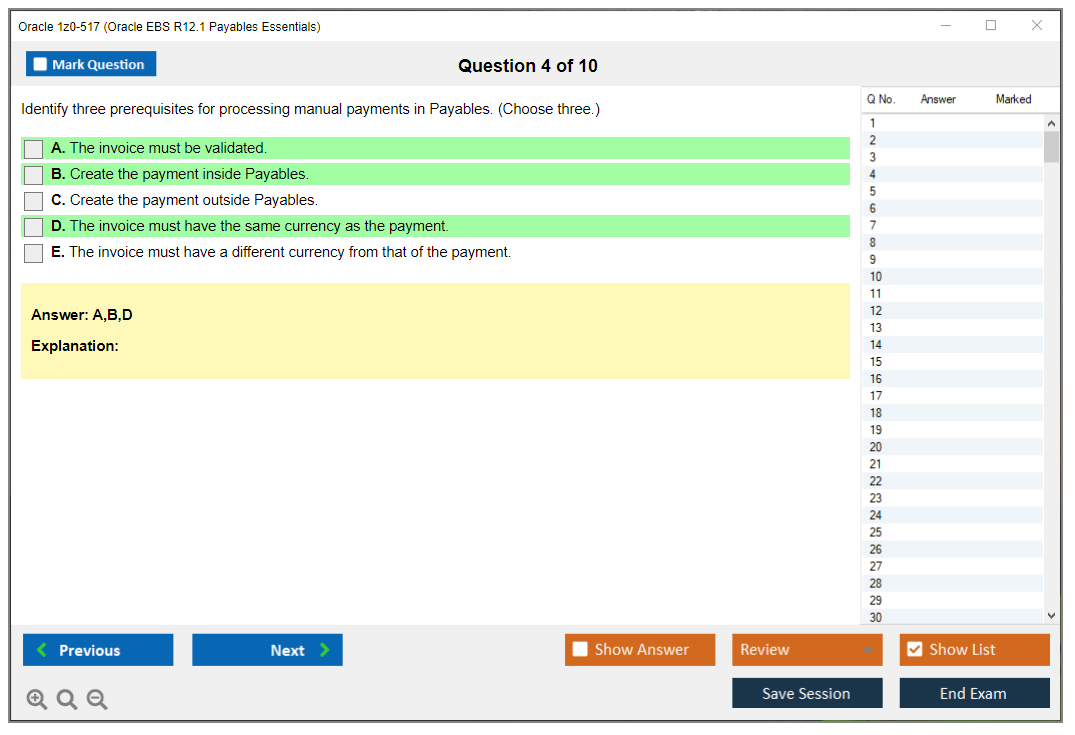
Payments are a full workflow: payment processing and payment batches Oracle Payables style. Build, Format, Confirm. Payment methods (checks, EFT/ACH, wire, cards, outsourced). Payment formats and file generation. Internal bank account setup and payment documents. Validation and exceptions. Void and stop payments, then reconciliation impacts in Cash Management, including clearing, wait actually reconciliation.
Accounting objectives include Payables accounting entries, SLA architecture in R12.1, account derivation basics, and integration with General Ledger, including transfer and reconciliation. Period-end close procedures. Period open/close status. Year-end considerations, plus standard reports like Invoice Register, Payment Register, Posted Invoice Register, Trial Balance, aging and cash requirement reports, and audit and compliance reporting. Security setup and segregation of duties. Duplicate invoice checking. Troubleshooting scenarios, including interface issues like invoice import, payment file generation, and GL transfer.
If you want a focused way to practice the blueprint, I'd rather you map every missed question to an objective than just grind random quizzes. A good starting point is a targeted pack like 1z0-517 Practice Exam Questions Pack when you're ready to test coverage, then revisit weak areas in the Payables User Guide and implementation docs, then come back for another pass with 1z0-517 Practice Exam Questions Pack to confirm you fixed the gaps. Look, repetition works when it's tied to objectives, not vibes.
Cost and score get asked a lot too. The 1z0-517 exam cost varies by region and vendor policies, and the 1z0-517 passing score can change, so check Oracle's current exam page before you book. Same for 1z0-517 exam prerequisites. Oracle often lists recommended experience rather than hard requirements. Hands-on time in Payables setup and operations beats any cram sheet, every time.
Prerequisites and Recommended Background for Oracle 1z0-517
What Oracle actually requires (spoiler: not much)
Here's the deal. Oracle won't stop you from taking the 1z0-517 if you haven't completed specific courses or grabbed prerequisite certifications. There's literally no gatekeeper. Sure, they officially recommend training, but honestly? You could register right now and sit the test tomorrow. That said, walking in unprepared is basically lighting money on fire.
I've watched people blow through exam fees thinking "I use accounting software at work, how hard could it be?" and, I mean, that almost never works out the way they hope.
Oracle pushes their "Oracle Payables R12.1 Essentials" course. Instructor-led training that'll cost you several thousand bucks and roughly a week of sitting in a classroom or on Zoom calls. A self-paced option exists if that's more your speed. The thing is, though, most folks I know who passed this thing didn't pay for official Oracle University courses. They learned through real job experience plus focused study materials.
The hands-on experience that actually matters
Real talk? Six to twelve months working with Oracle E-Business Suite R12.1 Payables in production environments makes an enormous difference. Like night and day difference. Could be implementation work, support tickets, or even heavy business-user responsibilities where you're the go-to person. What matters is you've clicked through those forms, processed dozens of invoices, dealt with payment holds, executed payment batches, and figured out why transactions refused to post correctly to GL.
Why does practical experience demolish pure textbook learning? The 1z0-517 loves scenario-based questions where they describe situations requiring you to diagnose problems or predict outcomes. They'll paint a picture of an invoice stuck on hold and ask what caused it. If you've only skimmed hold types in a manual, you're guessing among four answers that all sound reasonable. But if you've personally cleared 200 holds in your company's live system because suppliers kept submitting invoices without valid PO numbers? You recognize the answer immediately.
The exam tests setup configuration tasks alongside operational processing alongside troubleshooting capabilities. Someone who's personally configured tolerance thresholds, established payment terms in the system, and investigated why payment batches failed validation will cruise through sections that leave theory-only candidates completely stumped.
Accounting fundamentals you can't skip
Basic AP knowledge isn't optional. You need it. Accounts payable concepts, accrual accounting principles, understanding what general ledgers do. This foundation isn't "nice to have," it's required. The exam writers assume you already know the difference between invoices and payments, understand invoice matching fundamentals, and grasp why period close timing matters for accurate financial reporting.
Coming from technical backgrounds without accounting exposure? Spend serious time learning these concepts before anything else. I've seen DBAs and developers crash hard on 1z0-517, not because they couldn't work through EBS interface screens, but because they didn't understand why liability accounts increase with credits or what gets validated during three-way matching processes.
Reminds me of this one guy who was absolutely brilliant with Oracle database tuning but couldn't figure out why debits and credits kept confusing him. Spent three weeks just learning basic accounting before he even touched the Payables module again.
How Payables fits the bigger procurement picture
Oracle Payables never operates alone. It's one piece of the complete procure-to-pay cycle where requisitions become purchase orders (handled by the Purchasing module), goods arrive and get received, then invoices enter Payables for matching against those POs and receipt records. Understanding this entire workflow helps you grasp why certain validation rules exist in the first place and how invoice tolerance settings function operationally.
The exam will test your knowledge about how Payables receives data from Purchasing, specifically around PO matching logic and receiving transaction flows. You should understand different match types. Two-way, three-way, four-way matching. When companies apply each one.
The other modules you need to understand
General Ledger integration? Huge. Every single Payables transaction generates accounting entries that transfer to GL. You need solid understanding of account code combinations, chart of accounts structural rules, and how Payables determines which GL accounts to debit and credit. The exam throws tons of questions about accounting distributions and why transactions sometimes fail transferring to General Ledger.
Purchasing module basics matter considerably too, especially when dealing with matched invoices, which most companies rely on heavily. How do purchase orders flow into Payables systems? What happens when received quantities don't align with invoice quantities? These aren't abstract puzzles. They're issues people troubleshoot daily in real jobs.
Cash Management integration appears less frequently but still shows up on the exam. You should know how Payables payments interact with Cash Management for bank reconciliation purposes and cash forecasting functionality. Nothing super deep or complex, just the basic relationship and data flows.
Similar to how the 1z0-516 Oracle EBS General Ledger exam focuses on GL fundamentals, this test expects you to understand cross-module integration points.
Multi-Org and workflow concepts
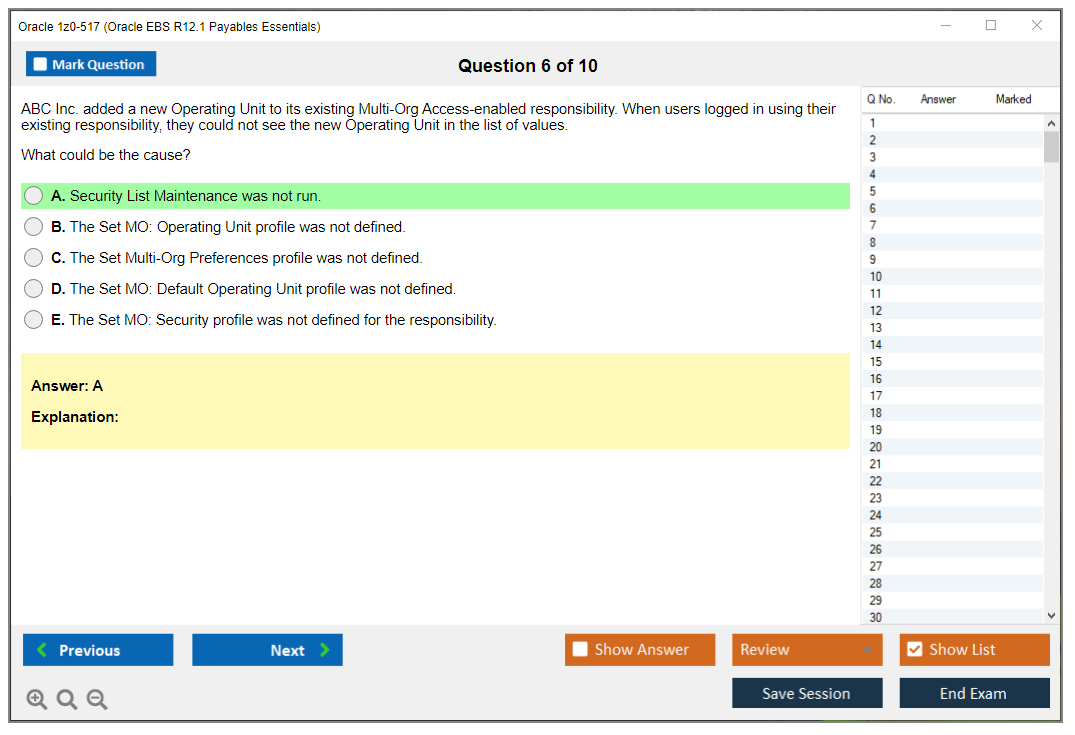
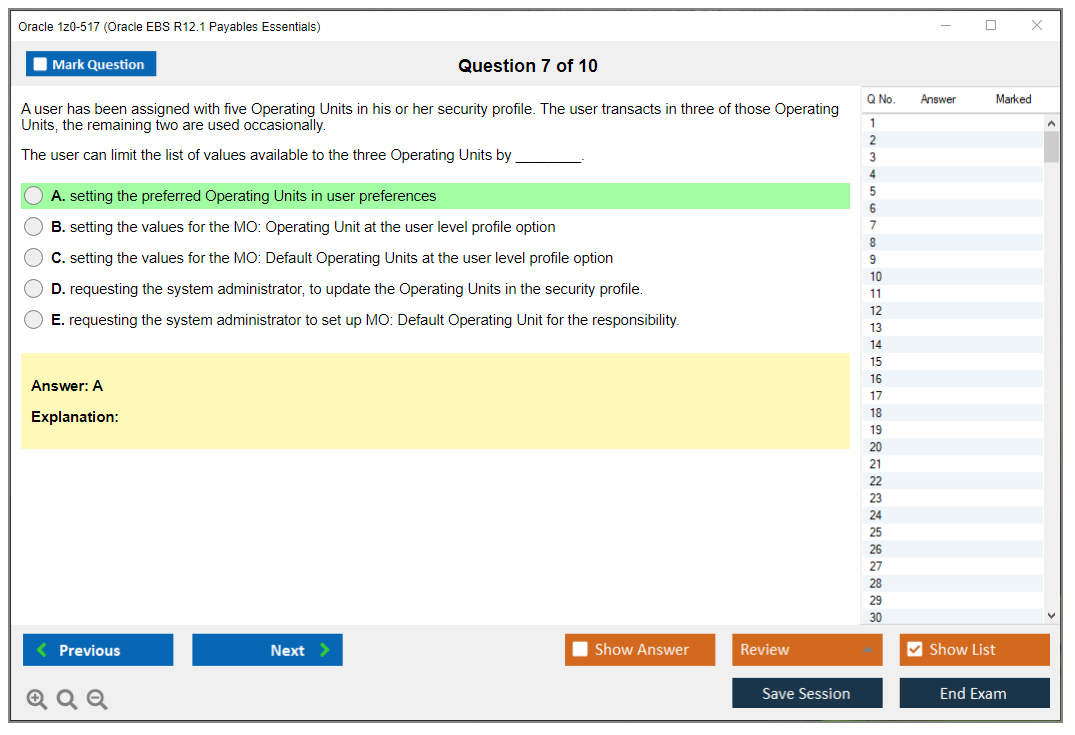
Multi-Organization Access Control (MOAC) affects how Payables functions in environments with multiple business units or operating units under one installation. You need to understand how this architecture impacts both setup decisions and transaction processing behavior. Not every company implements Multi-Org complexity, but the exam covers it regardless.
Oracle Workflow and Approvals Management Engine (AME) appear in questions about invoice approval routing and payment batch approval chains. You don't need workflow developer expertise, but understanding how approvals route through hierarchies and what causes approval failures helps.
Technical skills that help (but aren't required)
Basic SQL query skills aren't officially required for functional consultants, but they're incredibly useful in practice. Writing simple queries helps with troubleshooting and data validation tasks. I'm not saying you need database administration mastery like the 1z0-082 Oracle Database Administration exam covers, but knowing how to SELECT data from key Payables tables (AP_INVOICES, AP_SUPPLIERS, stuff like that) gives you a noticeable edge.
If you're starting from zero
No EBS experience whatsoever? You'll need substantial prep time. Serious dedicated study hours. Complete Oracle's prerequisite courses if your budget allows, but more importantly, get hands-on access to an Oracle EBS R12.1 practice environment. You must have real system time before attempting this certification. There's a world of difference between reading about invoice processing versus processing 50 different invoices in a test instance where you can experiment and break things safely.
Using 1z0-517 practice exam questions for $36.99 helps identify knowledge gaps, but practice tests deliver maximum value when you can verify answers against actual system behavior rather than just memorizing responses.
Checking if you're ready
Ask yourself honestly: Can you set up suppliers and supplier sites? Process invoices both with and without PO matching? Create payment batches and format them correctly? Troubleshoot common hold conditions? Run standard reports and understand what data they're showing? If you're hesitating on any of those questions, you've identified your weak areas. Address those gaps thoroughly before scheduling your exam date.
Real-world experience in industries like manufacturing or service sectors provides helpful context, though the exam sticks primarily to core functionality rather than industry-specific customization scenarios.
Difficulty Level and Common Challenges in the 1z0-517 Exam
Where this exam sits on the difficulty scale
The Oracle 1z0-517 exam usually lands at intermediate level. Not entry-level friendly. Not nightmare territory either. It's picky though. The thing is, it's tougher than those basic Oracle certs where you can just memorize definitions and call it a day, but it's totally passable if you've actually worked with Payables in R12.1 and you treat the 1z0-517 exam objectives like they're actually important.
Here's the kicker. Payables is half configuration, half "day in the life" processing, and the exam expects you to know both sides cold. You're not just answering what a screen does. You're figuring out what happens next, what breaks, what gets held, and which accounting entries hit GL. That's where candidates get blindsided.
How it compares to other EBS R12.1 essentials exams
Similar difficulty to Receivables Essentials and General Ledger Essentials, honestly. Same neighborhood. Different traps.
Receivables trips people up on transaction types and receipts flow. GL nails you with posting logic and period control weirdness. Payables? It hits you with workflow-esque behavior, approvals and holds, and the nitty-gritty details of invoice processing in Oracle Payables R12.1. Plus those "why didn't my payment pick up" questions that make you second-guess everything. The vibe's consistent across the suite though: Oracle wants you thinking like an analyst or functional consultant, not someone who only watched a slide deck and hoped for the best.
The challenges people run into (and why)
Setup versus operations. Big split there. I mean, a lot of candidates can handle one but totally fumble the other.
If you're coming from implementation, you're comfortable with Oracle E-Business Suite Payables setup and processing, stuff like options, payment terms, tolerances, profile options. But you might get fuzzy on operational edge cases that happen in real environments. If you're an AP power user who lives in the system daily, you can fly through invoices and payments, but configuration questions feel like bizarre trivia nobody warned you about. The exam mixes those together deliberately. It's ridiculously easy to overthink a question because the "real life" way you do something at work might be totally different from the "Oracle standard" way the exam's expecting.
Supplier data's another stumbling block. Supplier management in Oracle EBS Payables isn't just "create supplier, create site, done." You need clarity on what belongs at header versus site, what affects payment versus tax versus distribution defaults, and how those defaults cascade when you're creating invoices. Tiny details. Short questions. Big consequences if you miss them.
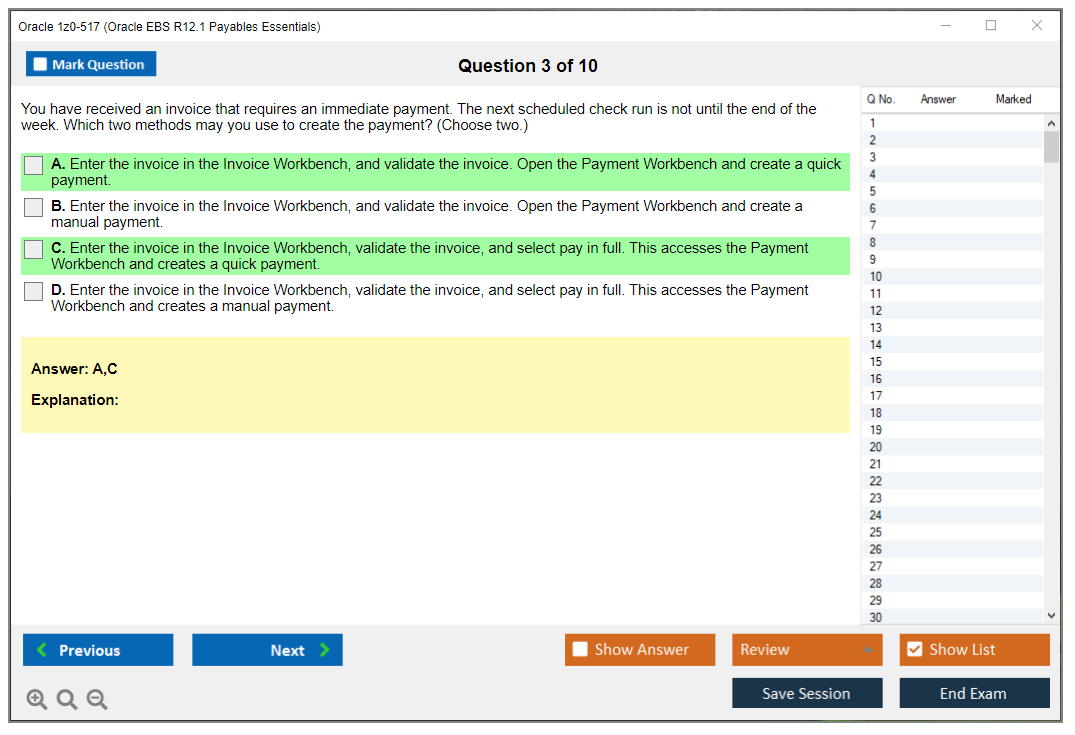
Then payments. People assume payment processing is straightforward. It isn't. Payment processing and payment batches Oracle Payables questions often hinge on why a document didn't get selected, what validation stops it, what a format actually does, or what you can still change after a payment's built. And yeah, the exam loves batch concepts, status transitions, and the kind of troubleshooting you only learn after staring at a Payment Process Request at 6 PM wondering why your life choices led you there.
Accounting and close? That's the other "gotcha." Payables accounting and period close in R12.1 is where functional folks who avoid accounting start sweating bullets. You don't need to be a CPA, but you absolutely need to understand what events create accounting, what posting and transfer mean, and how Payables ties into GL and sometimes Purchasing and Cash Management. Period statuses. Reconciliation-ish thinking. Small wording differences that actually matter.
I once watched a colleague who'd been doing AP for eight years totally blank on a simple period close question because they'd never actually closed a period themselves. The system admin always did it. That kind of gap will absolutely wreck you here.
What "intermediate" really means here
Doesn't mean "read a book and pass."
It means you should be able to picture the flow without guessing wildly. You should understand the difference between entering an invoice, validating it, accounting it, and paying it. And you should know where holds come from, how matching changes everything, and what setups drive approvals. If that sounds obvious, great. If it sounds like a bunch of steps you've never had to connect end-to-end before, that's your warning sign flashing red.
Also, you're expected to handle scenario questions. Not every question is "what is X." Some are "user did Y, system did Z, what's the most likely reason." Those questions absolutely punish shallow memorization.
Quick reality check on prerequisites and prep expectations
Even though this section's about difficulty, your prep inputs decide how hard it actually feels. The 1z0-517 exam prerequisites aren't always enforced as a gate, but practically speaking, hands-on time is the difference between "intermediate" and "why is this nightmare happening to me."
Done real invoice entry? Matching, holds, payment runs? The exam feels fair. Only watched training videos? It feels like Oracle's speaking in cryptic riddles designed to destroy your confidence. That's why I always tell people to pair Oracle EBS Payables R12.1 training with a sandbox environment if you possibly can. Clicking through the screens once burns in the sequence way better than rereading notes for the fifth time while your eyes glaze over.
Cost, passing score, and how that messes with your head
Money pressure changes perceived difficulty, honestly. The 1z0-517 exam cost varies by region and testing program, but most people experience it as "expensive enough that I really don't want a retake." That stress makes candidates rush through questions, or they spend all their time grinding practice questions without actually learning the underlying flows that matter.
Same with the 1z0-517 passing score. Oracle reports it as a scaled score, and candidates fixate on the number instead of fixing their weak objectives. Keep it simple: treat the passing score like a threshold, not a target you're aiming for. Your goal should be consistently correct across objectives, especially the core transaction lifecycle stuff.
Practice tests can help, but they can also wreck you
Yeah, 1z0-517 practice tests are useful. No, they're not a substitute for actually knowing Payables.
The best ones force you to map each miss back to an objective, then back to a concept, then back to a screen or process you can actually reproduce in the system. That's the whole trick right there. If you're just grinding question banks until you recognize patterns, you'll get absolutely crushed by slightly reworded scenarios on exam day when everything looks familiar but not quite right.
What I like: one diagnostic test early to see where you stand, then targeted practice by objective, then one or two full runs under time pressure. The rest of your time? Should be in docs, notes, and hands-on practice. Your Oracle Payables R12.1 study materials should include the user and implementation guides for the exact R12.1 features the exam likes, plus your own "why was this wrong" log that you actually maintain. Boring. Totally effective though.
A readiness checklist (the stuff you should be able to explain)
You're ready when you can clearly talk through these without hand-waving or "I think maybe":
- Payables setup basics, especially options that change behavior downstream. I'd spend extra time here because it affects literally everything downstream, and the exam loves testing downstream effects you didn't anticipate.
- Supplier header versus site defaults, and what actually drives payment and tax behavior in different scenarios.
- Invoice lifecycle: entry, validation, matching, holds, approvals, accounting. The whole path.
- Payment selection logic, payment batches, and what stops a payment from processing when everything looks fine.
- Period close steps and common blockers that make you want to throw your laptop.
- Security, controls, and troubleshooting. Mentioned casually in objectives but still tested more than you'd expect.
If you can do those? The difficulty stays "intermediate" like everyone says. If you can't, it feels way harder than it should, and you'll blame the exam when it's really the missing end-to-end picture that got you.
Conclusion
Wrapping up your 1z0-517 prep
So here's the deal. The Oracle 1z0-517 exam? You can't just wing it and somehow pass. It's testing actual real-world Oracle EBS R12.1 Payables knowledge, like invoice processing in Oracle Payables R12.1, payment processing and payment batches Oracle Payables, supplier management in Oracle EBS Payables, all that core AP stuff you'd deal with daily. You've gotta understand how the system actually functions, not just cram terminology from some glossary. Honestly, if you've never set up a supplier site or resolved an invoice hold in a live environment, those scenario-based questions are gonna eat you alive.
The 1z0-517 exam cost? Around $245. Varies by region. Oracle tweaks pricing sometimes. The 1z0-517 passing score sits at 70%. Doesn't sound too brutal, right?
But here's the thing. Oracle doesn't throw you softballs. The 1z0-517 exam objectives cover Oracle E-Business Suite Payables setup and processing from like a dozen different angles: configuration, day-to-day operations, accounting integration, period close procedures. All of it. You can't just be strong in one slice and pray the rest doesn't pop up.
Most folks I've talked to who passed? They spent 3-6 weeks preparing. Depended on how much hands-on experience they already had. If you're brand new to Oracle EBS Payables R12.1, budget way more time. No 1z0-517 exam prerequisites exist officially. Oracle won't block you from registering. But realistically you want some exposure to the module, whether through a project, Oracle EBS Payables R12.1 training courses, or serious sandbox work. I mean, reading documentation alone won't cut it for understanding Payables accounting and period close in R12.1 or troubleshooting payment batch errors, you know?
Practice is everything.
Not gonna sugarcoat it. Oracle Payables R12.1 study materials vary wildly in quality, and tons of generic exam guides barely scratch the surface of what you'll encounter on test day. You need 1z0-517 practice tests that actually mirror the real exam format: multiple choice, scenario-heavy, time-pressured situations. Work through questions, understand why each answer's right or wrong (not just which one gets the checkmark), map your weak spots back to specific exam objectives, then dive into the system or documentation to patch those gaps.
If you're serious about passing on your first shot and not torching another $245 on a retake, check out the 1z0-517 Practice Exam Questions Pack. It's built specifically for this Oracle EBS R12.1 Payables Essentials certification and covers all the main objectives. Gives you that realistic exam experience you actually need before sitting for the real thing.
I've seen people burn through two or three attempts before they figured out what actually matters. Don't be that person.
Good luck. You've got this if you put in the work.
