

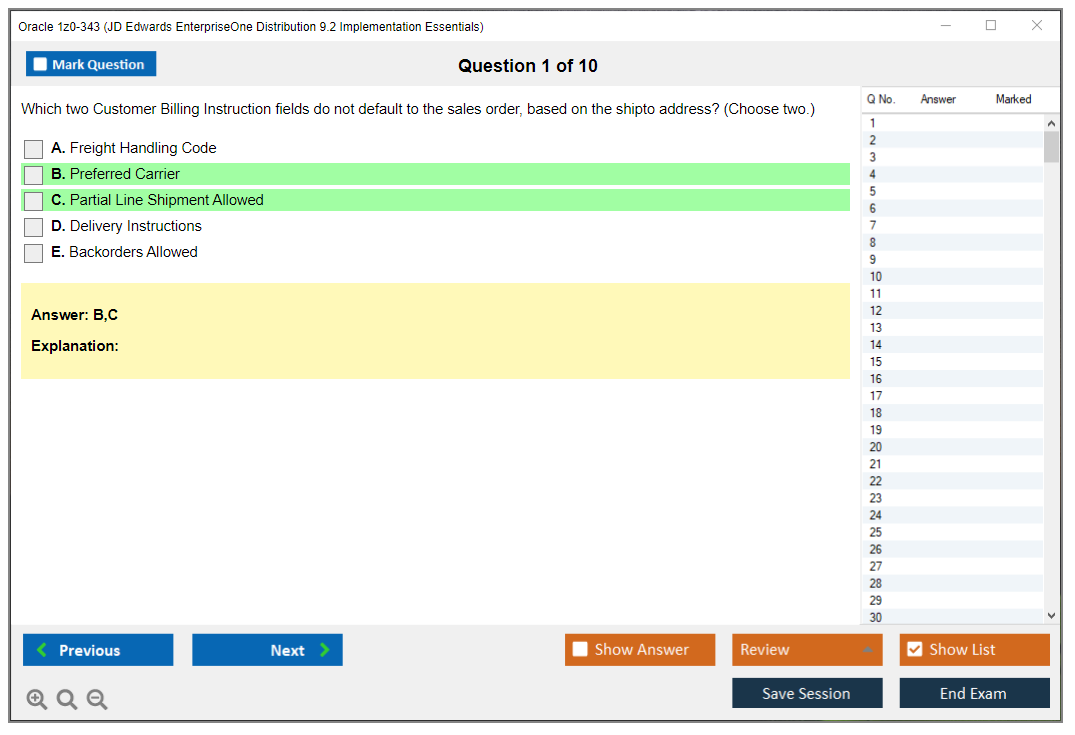
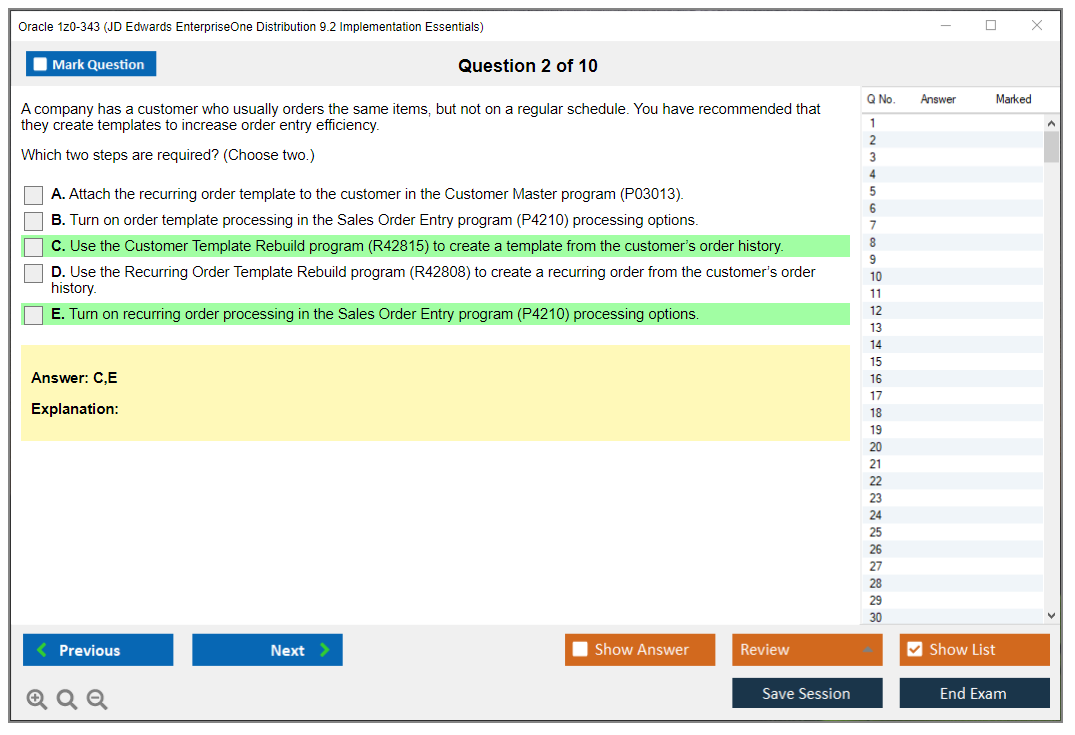
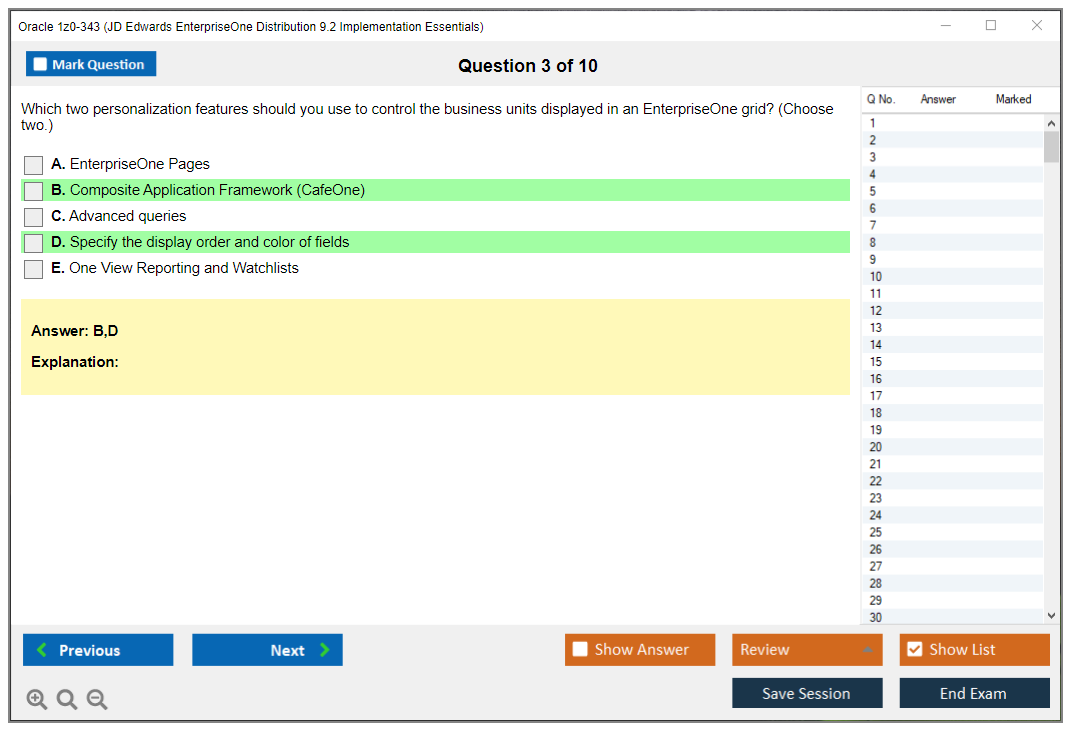
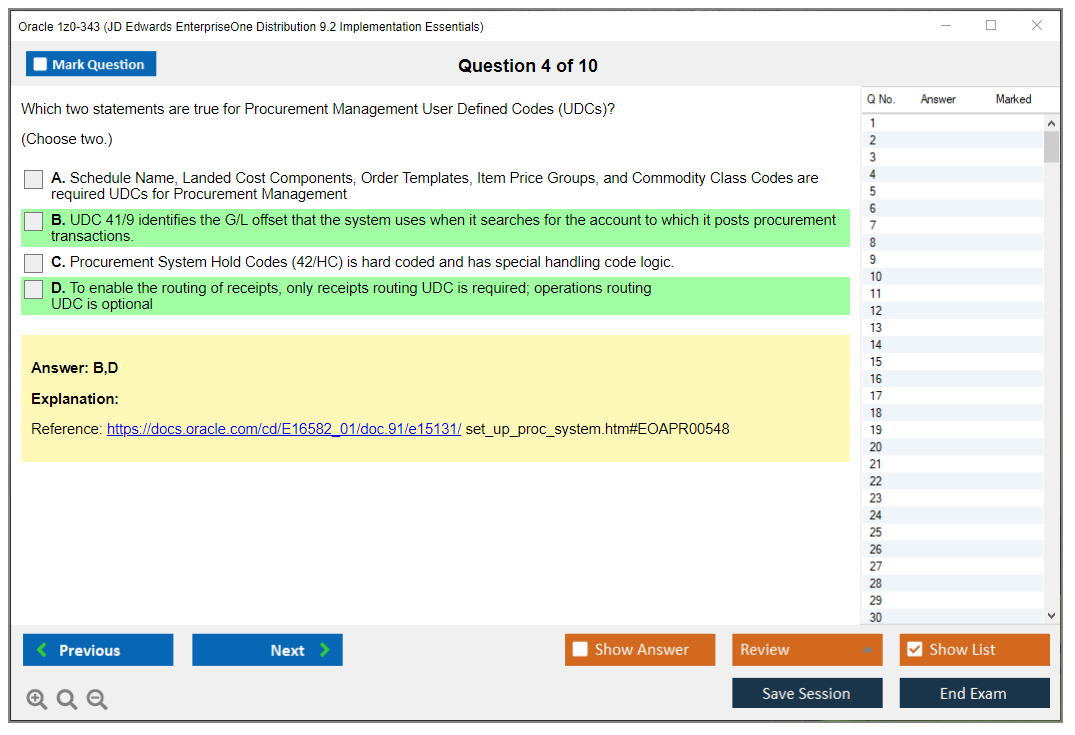
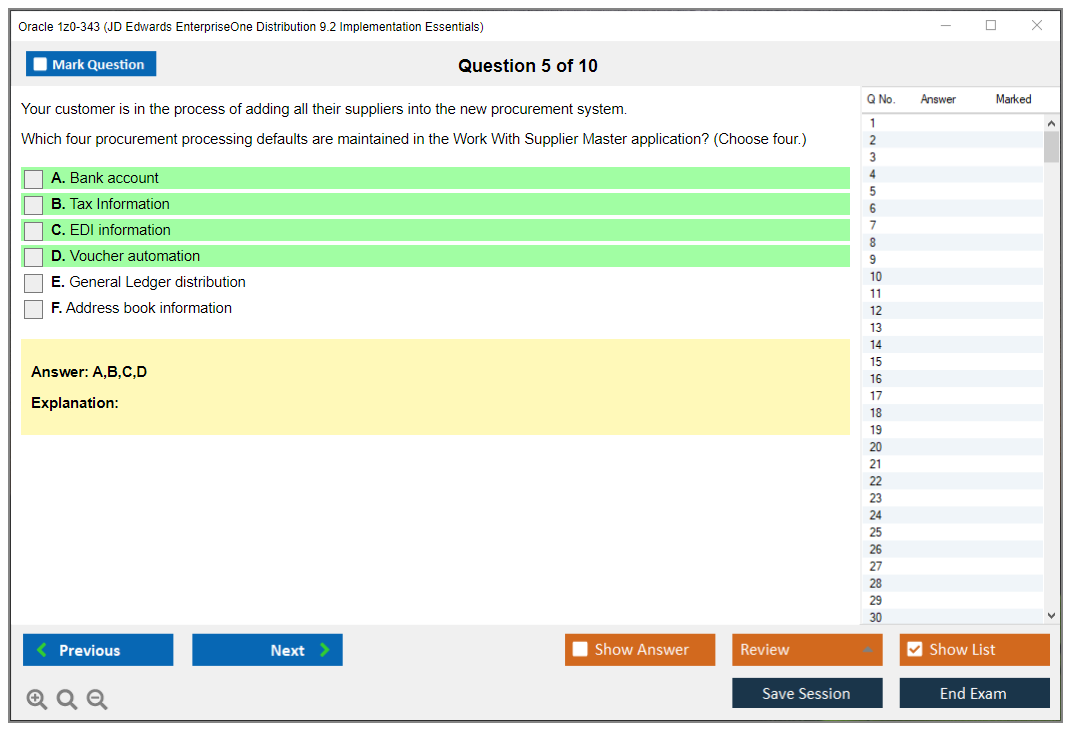
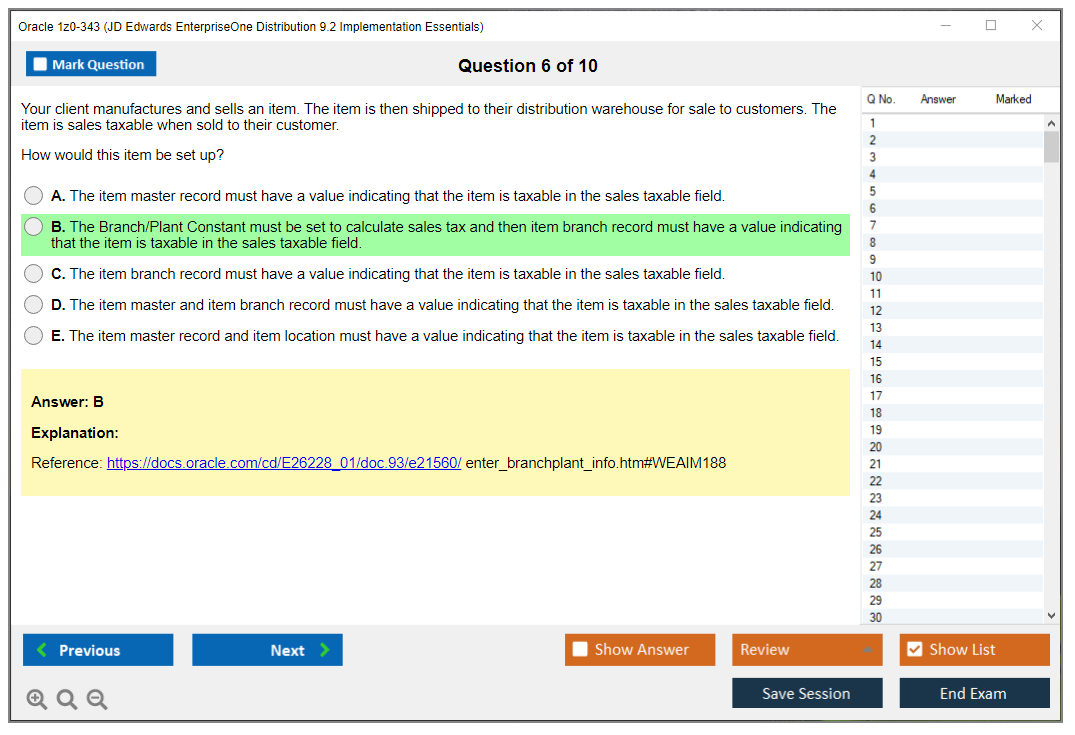
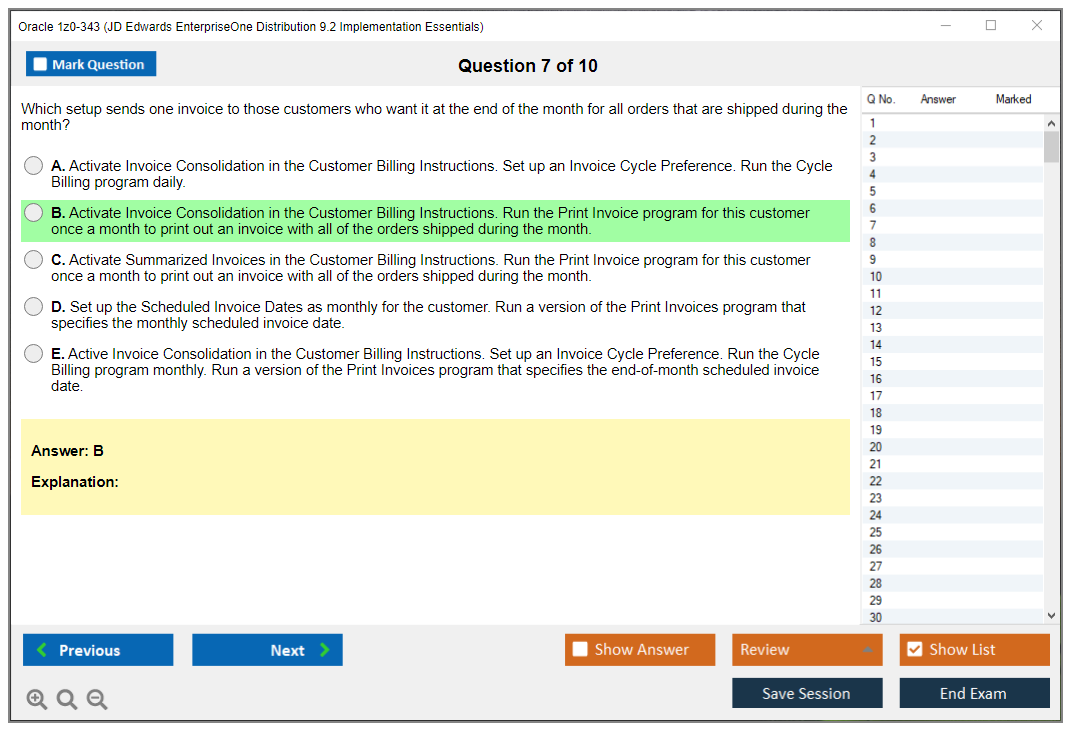
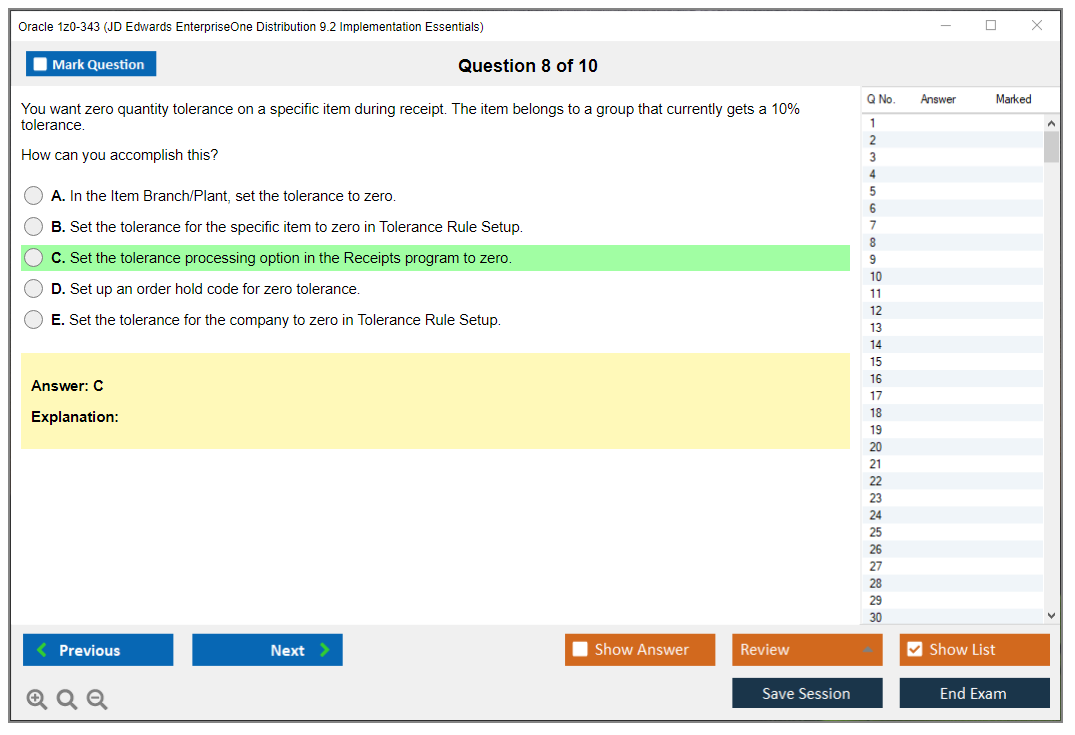
Oracle 1z0-343 Exam Overview: JD Edwards EnterpriseOne Distribution 9.2 Implementation Essentials
Look, if you're working in the ERP world, specifically JD Edwards, you already know that certifications aren't just wall decorations. The Oracle 1z0-343 exam tests whether you can actually implement and configure JD Edwards EnterpriseOne Distribution 9.2 in real business environments, not just recite theory from a manual.
This certification matters because Distribution is everywhere. Manufacturing plants managing raw materials, wholesale distributors handling thousands of SKUs, retail chains coordinating inventory across locations. They all run on modules like this. The JD Edwards EnterpriseOne Distribution 9.2 Implementation Essentials certification proves you understand how to make these processes work at scale.
What you're actually proving
The 1z0-343 certification validates that you can configure the entire distribution chain inside EnterpriseOne. We're talking inventory management that doesn't lose track of widgets. Sales order processing that flows from quote to cash without manual intervention. Procurement connecting suppliers to warehouse receipts. Warehouse management handling bin locations and picking logic, plus transportation routing shipments efficiently.
This isn't a "read the book, take the test" situation. Oracle designed this for people who've actually opened processing options, dealt with UDC tables, created versions, and troubleshot why an order won't release. Or why inventory won't transfer between branches either. Not gonna lie, you need real exposure here.
The exam assesses your ability to configure distribution setups from scratch. Can you set up a branch/plant correctly? Do you know which UDC codes control shipment confirmation behavior? When a user says "the system won't let me backorder," can you trace through the item branch setup, availability rules, and order activity rules to find the problem? That's the kind of thinking required.
Who this exam is built for
The Oracle JD Edwards Distribution 9.2 exam targets functional consultants who implement these systems for clients. Also implementation specialists joining project teams, business analysts translating requirements into JDE configurations. Project managers needing technical depth to lead Distribution rollouts fit here too.
Oracle suggests 6 to 12 months of hands-on implementation experience. That's realistic, honestly. You need exposure to at least one full implementation cycle: requirements gathering, configuration, testing, cutover, post-go-live support. If you've only watched demos or done sandbox exercises? You'll struggle with the scenario questions.
I've seen consultants with three years plus in JDE Financials pass this in four to six weeks because they understand EnterpriseOne architecture. Others with limited ERP exposure need three or four months even with classroom training. Experience with 1z0-342 (JD Edwards EnterpriseOne Financial Management 9.2 Implementation Essentials) helps since you already know how versions, processing options, and workflow tables function across modules.
My cousin tried this exam after two weeks of studying. Crashed hard. Then spent another two months doing actual implementations before passing. Sometimes you just need the project scars, you know?
Why the certification matters for your career
Oracle certification for JD Edwards consultants directly impacts your earning potential. Independent consultants charge $20 to $40 more per hour when certified. Full-time employees use certifications as use during salary negotiations or promotion discussions.
It opens doors. Senior implementation roles, solution architect positions, team lead opportunities typically require certifications as table stakes. Clients explicitly request certified resources in SOWs. Recruiting firms filter candidates by certification status before submitting them to hiring managers.
The EnterpriseOne Distribution 9.2 implementation objectives also align with Oracle's product roadmap. The exam covers mobile solutions for warehouse workers, IoT integration for tracking shipments, analytics for demand forecasting, and automation capabilities introduced in recent releases. These aren't academic topics. Enterprises are deploying these features now and need consultants who understand them.
How the exam connects to real implementations
Here's what makes this certification valuable: it tests integration points. Distribution doesn't exist in isolation. Orders generate financial transactions. Manufacturing work orders consume inventory. Projects allocate materials. Advanced Planning generates procurement recommendations.
The JD Edwards Distribution module configuration you learn for this exam translates directly to solving client problems. When a manufacturing client says their shop floor can't see component availability, you need to understand how Manufacturing pulls from Inventory. How branch/plant relationships work, how lot tracking flows through the system, how to configure availability calculations.
Or when a wholesale distributor wants automated replenishment between their DC and retail locations, you configure transfer orders. Set min/max rules, establish branch relationships, enable automatic sourcing, and integrate with transportation planning. The exam tests whether you know which tables control this behavior and how to troubleshoot when it doesn't work.
What makes 1z0-343 challenging
Scenario-based questions dominate this exam. You get a business requirement and multiple configuration approaches. The wrong answers aren't obviously wrong. They're configurations that might work in simple cases but break under specific conditions.
For example: "A client needs to track serial numbers for warranty purposes but also wants to issue materials to jobs without scanning every unit. What configuration supports both requirements?" You need to know serial number control codes, work order issue methods, and how different combinations behave.
The exam also tests troubleshooting skills. Questions describe symptoms like orders stuck in a status, inventory discrepancies, pricing not calculating. Then they ask you to identify the root cause. This requires understanding the entire processing flow, not just individual screens.
Time pressure adds difficulty. You get scenario questions requiring analysis of multiple data points. If you're not familiar with Distribution workflows from actual project work, you'll spend too much time on early questions and rush through later ones.
Exam logistics you need to know
The 1z0-343 exam cost varies by country and testing partner. In the US, expect around $245 plus applicable taxes. Other regions might be higher or lower based on local pricing. Oracle periodically adjusts prices, so check the official certification portal when you're ready to register.
The 1z0-343 passing score isn't publicly advertised by Oracle for most exams. Your score report shows pass/fail and performance by topic area. Don't obsess over the exact number. Focus on mastering the objectives. If you're consistently scoring 80% plus on quality practice tests that mirror real exam difficulty, you're probably ready.
Format-wise? Expect multiple choice questions delivered through Pearson VUE testing centers or online proctoring. You get around 90 minutes for 60 to 70 questions, though Oracle adjusts these numbers occasionally. No notes, no reference materials. Just you and the testing interface.
Retake policy: if you fail, you wait 14 days before retaking. After a second failure, you wait 30 days. Each attempt costs the full exam fee, so adequate preparation saves money and frustration.
Building a study plan that works
Start with Oracle's official exam topics document. It lists every objective tested. Map each objective to specific EnterpriseOne screens, tables, and processes. For example, if the objective says "configure inventory management," break that into item master setup, item branch records, lot/serial control, location management, cycle counting, physical inventory, and ABC analysis.
Hands-on practice is non-negotiable. Reading about how purchase order processing works isn't enough. You need to create requisitions, convert them to orders, receive against orders, process voucher matches, and handle discrepancies. Do this across different scenarios: standard items, configured items, lot-controlled items, third-party orders.
The Oracle certification exam preparation resources you choose matter. Oracle University offers instructor-led training for Distribution 9.2. It's expensive but full. Product documentation is free and detailed, especially the implementation guides and application fundamentals manuals. Community forums like JDEList provide real-world troubleshooting scenarios that mirror exam questions.
Create flashcards for UDC tables. Distribution uses hundreds of user-defined codes that control system behavior. Know which UDC controls order hold codes, which one defines shipment methods, which one sets branch types. This knowledge appears throughout the exam.
Practice tests and avoiding dumps
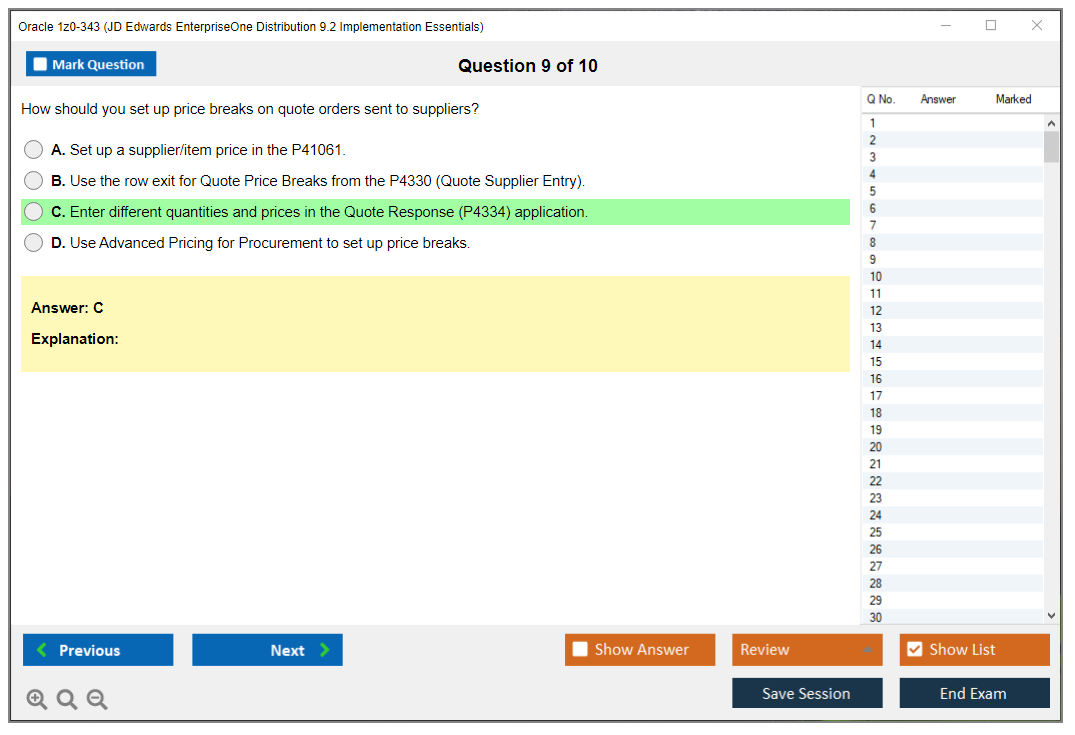
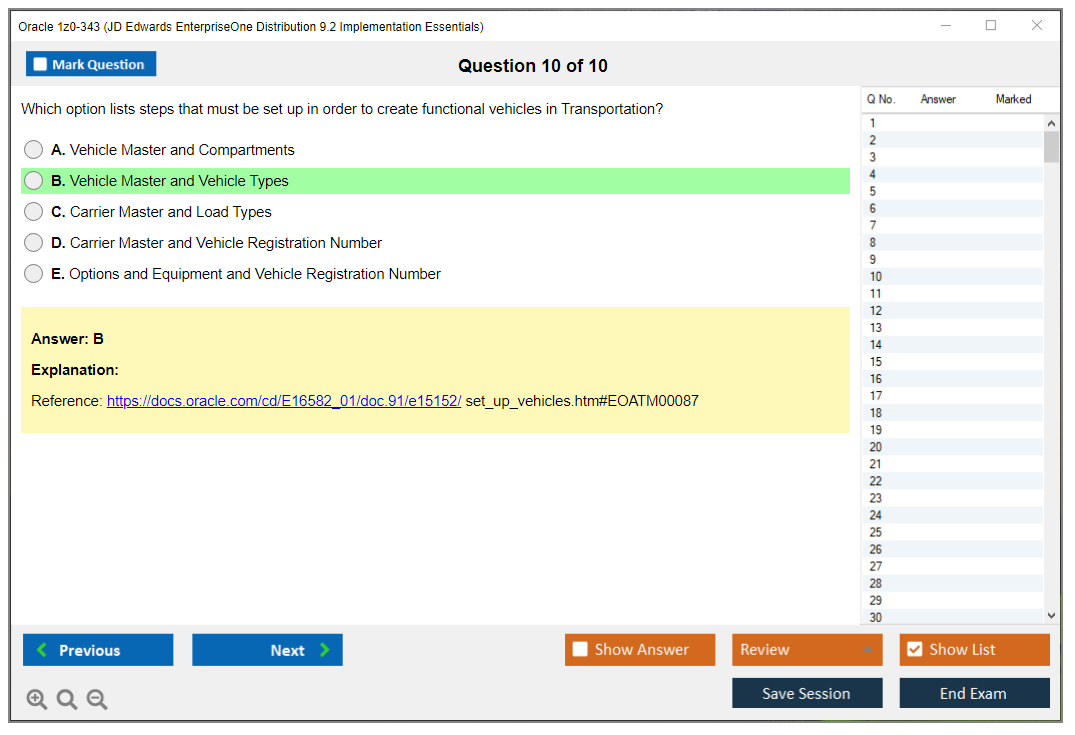
The 1z0-343 practice test space includes both legitimate resources and shady "brain dumps." Official Oracle practice exams, when available, provide the best indication of actual exam difficulty and question style. They're worth the investment.
Third-party practice tests vary in quality. Look for providers that explain answers thoroughly, reference official documentation, and update content when Oracle releases new product versions. Avoid sites promising "actual exam questions" or "guaranteed pass" materials. These dumps violate Oracle's certification agreement and don't help you develop real expertise.
Build your own practice questions from implementation guides. Read a configuration procedure, then write questions about it: "What happens if you enable availability checking at the line level but not the header?" Work through the logic yourself before checking documentation.
Integration knowledge you can't skip
Distribution connects to nearly every other JD Edwards module. Understanding these integration points separates candidates who pass from those who struggle.
Financial integration means sales orders generate revenue recognition, purchase orders create payables vouchers, inventory transactions hit GL accounts. You need to know AAI tables, how distribution codes work, and how transactions flow to Financials. Familiarity with 1z0-071 (Oracle Database 12c SQL) helps when you need to query integration tables during troubleshooting.
Manufacturing integration involves work orders consuming inventory, production generating finished goods, shop floor issues needing backflushing. Configure item availability for manufacturing differently than sales orders.
Project integration? Materials allocation to projects, commitment control, billing rules for time and materials contracts. Projects pull from inventory but with different approval and costing logic.
Common mistakes that cost points
Candidates often confuse processing options with system constants. Processing options control behavior for specific versions of programs. System constants set defaults across the entire environment. Exam questions test whether you know which configuration method applies to a given requirement.
Another trap is assuming all item types behave identically. Stocked items, non-stocked items, kit items, configured items, phantom items. Each has unique rules for ordering, inventory, and costing. Questions describe scenarios that only make sense for specific item types.
Time management kills unprepared candidates. Spending five minutes on a single question leaves insufficient time for later questions. Flag difficult questions, answer what you know, and return to flagged items if time permits.
After you pass
JDE Distribution 9.2 functional implementation skills stay relevant as long as organizations run EnterpriseOne. Oracle continues enhancing Distribution with each tools release, but core concepts remain stable. Your certification validates foundational expertise that applies across versions.
Consider complementary certifications like 1z0-344 (JD Edwards EnterpriseOne Configurable Network Computing 9.2 Implementation Essentials) to understand the technical architecture underneath functional configurations. Or pursue advanced specializations in specific industries. Retail distribution has different requirements than industrial equipment distribution.
The certification doesn't expire in the traditional sense, but Oracle introduces new versions periodically. Staying current might mean taking upgrade exams or recertifying on newer releases. Check Oracle's certification portal for current policies specific to JD Edwards tracks.
This exam isn't easy. It requires genuine implementation experience combined with systematic study. But if you're serious about a career in ERP consulting, especially in the JDE space, the Oracle 1z0-343 exam validates skills that clients actively seek and pay premium rates to access.
1z0-343 Exam Details: Cost, Format, Duration, and Passing Score
Oracle 1z0-343 exam overview (JD Edwards EnterpriseOne Distribution 9.2)
The Oracle 1z0-343 exam is the certification checkpoint for people implementing Distribution in JD Edwards EnterpriseOne 9.2. It's a functional consultant test through and through, meaning you'll face questions that assume you already understand what the business actually needs, what the system can deliver, and which setup choices won't completely explode downstream processes once users start running real transactions at volume.
This matters for Oracle certification for JD Edwards consultants who want credibility on Distribution projects. Hiring managers don't just magically trust paper certs, but they do view a current 1z0-343 certification as proof you at least speak Distribution's language. You can hold your own in implementation conversations. You won't need constant hand-holding on basic configuration concepts.
Short version? It's a credibility badge, not a substitute for actual project time.
What the 1z0-343 certification validates
It confirms you can translate real Distribution requirements into EnterpriseOne setup, processing options, and complete end-to-end flows. Think EnterpriseOne Distribution 9.2 implementation objectives covering foundational config, transaction processing, and that "did you actually validate the entire flow" mindset separating click-through admins from people who can really implement.
You'll encounter JD Edwards Distribution module configuration themes presented as scenarios rather than trivia. Less "what's this acronym mean" and more "given this specific business requirement, which configuration recommendation works best and what else will it impact."
Who should take this exam (roles and experience level)
This fits functional consultants, implementation analysts, and power users transitioning into project delivery. Also worth it for technical folks constantly getting dragged into functional firefights who want structured learning on the Distribution side.
New to JDE? Possible, yeah. Not fun, though. If you've never actually touched Distribution in a real environment, you'll burn most of your study time just building mental models of how modules connect. That's before you even start memorizing where Oracle hides all the settings.
What you'll pay (and what people forget)
The 1z0-343 exam cost typically lands somewhere in the $245 to $295 USD range, depending on your country. Prices fluctuate because of local currency conversion, Oracle's regional pricing strategies, and whatever taxes or VAT apply where you live. Can be surprisingly different even between nearby regions, honestly.
Also? The sticker price isn't always the complete story. Oracle exam pricing may tack on extra charges tied to delivery method. Online proctoring services, test center fees in certain locations, or even expedited scheduling options. You really want to review the full checkout breakdown inside the registration portal before clicking pay and acting shocked later.
One more thing. Exam fees are generally non-refundable. Rescheduling's usually allowed up to 24 to 48 hours before your appointment, but the exact window depends on the testing provider and the rules attached to your booking. Confirm everything before purchase. Don't buy an exam slot you can't realistically sit.
Scoring and the passing target
People always ask for the exact number. The 1z0-343 passing score is typically thought of as 70 to 75%, but Oracle doesn't always publicly post the precise threshold. They can update scoring without notice, so verify what your registration portal shows for your specific exam delivery and version.
Oracle commonly uses scaled scoring, meaning your raw correct answers get converted to a standardized scale accounting for difficulty differences between exam versions. Two people can take different question sets and still be graded fairly. At least in theory. It's not magic, but it does reduce the "I got the harder form" problem.
You get immediate pass/fail at the end. You'll also receive a score report breaking performance down by objective domain, which is the only part I care about after a fail because it shows you exactly what to fix before a retake.
Format, delivery options, and retakes
The Oracle JD Edwards Distribution 9.2 exam usually includes about 70 to 90 questions, mostly multiple-choice and multiple-select. Time limit's typically 120 minutes. Two hours sounds generous until you hit scenario questions requiring you to slow down, reread requirements, and eliminate near-identical answers differing by one configuration implication.
Question types you should expect:
- Single-answer multiple choice (straightforward but still tricky)
- Multiple-select where you must pick all correct options (this is where time disappears)
- Scenario-based items describing business requirements and asking for the best configuration recommendation in a JD Edwards EnterpriseOne Distribution implementation exam style
Delivery's through Pearson VUE, either at a test center or online proctored. Online proctoring's convenient, but it's strict. Stable internet, quiet private room, clean desk, government ID, and compliance with environmental scans plus continuous monitoring. Test centers give you a controlled setup and fewer tech worries, but you'll need to travel and show up on time.
Retake policy matters when you're budgeting. Oracle typically allows one retake within 14 days after a failed attempt, then a 30-day waiting period for subsequent retakes. Unlimited total attempts. Every attempt costs the full fee again. Check the current wording during registration because providers sometimes tweak enforcement details.
What shows up on the exam (and how to think about it)
The exam's basically a check on whether you understand Distribution implementation end to end, not just where buttons live. You'll be tested on fundamentals, core setup, process flows, and validation. Verify you're studying the current active exam version, because Oracle can retire or update versions and you don't want to prep off an old outline.
Implementation fundamentals you'll see
Expect baseline concepts like organizational structure, master data dependencies, and how Distribution processes connect across modules. This is where people who only learned one screen get exposed. Scenario questions assume you understand why something's configured, not just how. It's annoying, I'll give you that, because sometimes the system lets you do something technically but it creates a mess later.
Configuration areas that keep coming back
Core setup and configuration topics often orbit around how the system behaves during real transactions. Processing options. Defaults. Document types. Versions. Next numbers. Security considerations pop up too, usually indirectly.
Some areas you should be comfortable discussing in plain language:
- Order to cash flow impacts
- Procurement and receiving touchpoints
- Inventory effects and availability logic
- Customer and item master dependencies
Business processes covered (typical Distribution flows)
The test likes end-to-end thinking. Sales order entry to shipment to invoicing. Purchasing to receipt to voucher. Inventory moves and adjustments. If you can't explain the flow on a whiteboard, you'll miss scenario cues.
Reporting, troubleshooting, and validation tasks
You won't be "debugging" like a developer, but you will be expected to validate setups, interpret outcomes, and pick the best next step when results don't match requirements. Simple checks. Smart checks. The kind that keep go-lives from turning into chaos.
Objective checklist (align this with Oracle's official topics page before you finalize your 1z0-343 study guide):
- Distribution implementation fundamentals and core concepts
- Setup and configuration across key Distribution modules
- End-to-end process flows and cross-module dependencies
- Reporting/validation and common issue identification
Prereqs and the background that actually helps
Oracle doesn't always enforce formal prerequisites for these exams, but don't confuse "no prereq" with "easy." Recommended background's hands-on exposure to JDE Distribution 9.2 functional implementation, ideally at least one project where you've seen requirements, setup, testing, and user feedback loops.
If you can, get access to a sandbox and practice configuration and transactions. A tiny mini-implementation's enough. Set up basics, run a transaction flow, validate outputs, then change one setting and observe what breaks. That's how you learn what the exam's really asking.
Related training can help, especially Oracle University courseware and official product docs. If your company has a corporate training account, ask about discounts or bundles. Volume agreements sometimes reduce exam costs or package training plus an attempt.
Difficulty: how hard is Oracle 1z0-343?
I'd call it intermediate for someone with real Distribution exposure, and advanced for someone who's book-only. Scenario questions are the pain point. Cross-module dependencies too. You'll get options that are all "kind of right," and you have to pick the one that best fits the requirement and doesn't cause a downstream mess.
Study time varies a lot:
- 0 to 1 year in JDE Distribution means plan weeks of consistent study plus lab time
- 1 to 3 years gets you a shorter ramp, but still do practice sets and objective review
- 3+ years should focus on filling gaps and getting used to exam wording
Best study materials (official + practical)
Oracle docs and implementation guides are the foundation, even if they're dry. Oracle University training's helpful when available, mostly because it matches Oracle's framing and vocabulary, which shows up in questions.
Hands-on labs matter more than people admit. Build a checklist. Setup, run transactions, validate results, repeat. Add notes on what each configuration choice changes. Keep it messy. Real notes.
For your Oracle certification exam preparation resources, I like an objective map plus flashcards for terms and settings, and a running list of "common pitfalls" where you got tricked during practice.
Practice tests and exam-style prep
A good 1z0-343 practice test should feel like the real thing. Timed, mixed question types, and uncomfortable scenario wording. Avoid dumps, not because I'm moralizing, but because dumps train you to memorize patterns. Then you get a different scenario on exam day and you're stuck.
If Oracle offers an official practice exam for your region or version, start there. If not, choose reputable question banks that explain why answers are correct. Make sure they align with the objective list you're studying.
A repeatable plan that works:
- Baseline timed set to find weak domains
- Review by objective and fix notes
- Timed mixed sets with multiple-select practice
- Final readiness test under strict exam conditions
Exam day tips and common mistakes
Show up early if you're going to a test center, like 15 to 30 minutes. Check-in can include ID verification, photo, signature, and policy review. Online proctoring has its own time sink too, with room scans and system checks.
No personal items are allowed. No notes. No phone. Test centers store your stuff. You'll usually get scratch paper and a pen. You must return them. Don't write anything you expect to keep.
Time management's the whole game. Flag long scenarios, answer what you can, then come back. Multiple-select questions are where people bleed minutes and confidence.
Certification validity and renewal policies
The JD Edwards EnterpriseOne Distribution 9.2 Implementation Essentials certification's valid under Oracle's current certification policies, but Oracle can change how they handle renewals and versioning. Check Oracle's JD Edwards certification policy pages and your CertView status for the latest rules.
After you pass, results show up immediately on screen. The official credential typically appears in Oracle CertView within 24 to 48 hours.
FAQ (quick answers)
What is the cost of Oracle 1z0-343?
The 1z0-343 exam cost is usually $245 to $295 USD, varying by country, currency conversion, and taxes or VAT, plus possible delivery-related fees shown at checkout.
What is the passing score for 1z0-343?
The 1z0-343 passing score is commonly around 70 to 75%, but Oracle may update it without notice, so confirm in your exam registration portal.
What are the main objectives on 1z0-343?
Expect Distribution implementation fundamentals, core setup/configuration, end-to-end business flows, and validation/reporting topics aligned to Oracle's official exam topics list.
What prerequisites do I need?
Often none formally, but hands-on EnterpriseOne Distribution 9.2 experience helps a lot.
What are the best study materials and practice tests?
Oracle docs and Oracle University training where available, plus a sandbox and an ethical, objective-based 1z0-343 practice test source.
How long does it take to prepare?
Anywhere from a few weeks (experienced) to a couple months (newer to Distribution), depending on lab access and consistency.
Is renewal required?
Maybe, depending on Oracle's current JD Edwards policies. Verify in CertView and Oracle's policy pages before you assume it's lifetime.
1z0-343 Exam Objectives: Complete Breakdown of Topics Tested
So you're tackling Oracle 1z0-343? You've probably got your hands full with JD Edwards EnterpriseOne Distribution 9.2 already. This isn't some beginner cert you randomly pick up. The Oracle 1z0-343 exam proves you can handle actual implementation and configuration of Distribution modules in live production setups, not just fumbling through practice demos.
The JD Edwards EnterpriseOne Distribution 9.2 Implementation Essentials exam splits into six major sections that span everything from initial setup through complex warehouse operations. You'll see questions on foundational setup, how transactions flow through workflows, inventory control systems, procurement lifecycles, reporting tools, and administration tasks tied specifically to distribution environments. The thing is? It's ridiculously thorough. The exam expects you've logged serious hours configuring these modules. Actually observed how tweaking one setting creates a domino effect across the entire system.
What Oracle is actually testing
The 1z0-343 certification evaluates whether you truly understand how EnterpriseOne Distribution 9.2 is an integrated ecosystem. Expect scenario-driven questions that lay out business needs and then ask you to suggest configuration strategies or diagnose typical issues. Oracle's checking if you comprehend the connections between various setup elements. Can you anticipate how modifying a processing option ripples through subsequent transactions?
Around $245 USD gets you in. Pricing shifts by region, plus potential taxes. The 1z0-343 passing score typically falls between 60-70% using Oracle's usual scaling method, though they stopped publishing precise cutoffs. You've got roughly 90 minutes for 70 questions through Pearson VUE centers or online proctoring.
Distribution setup and configuration fundamentals
This section? Captures maybe 15-20% of questions and checks if you really know how to construct a Distribution environment from the ground up. Branch and plant setup appears constantly. You'll need solid grasp of organizational structures, multi-site inventory approaches when warehouses are geographically dispersed, and those inter-branch connections controlling transfer execution.
Distribution/Manufacturing Constants setup surfaces repeatedly since these constants establish default parameters and system controls influencing literally every single transaction. I've watched candidates bomb questions because they missed that a constant setting would trump a processing option or the reverse. Know which settings exist where. Know their priority sequence.
Item Master configuration digs into item numbering schemes (short format? long?), description handling, stocking classifications, lot/serial activation. The connection between Item Master table and Item Branch table confuses people constantly. One table defines items globally. The other manages location-specific details like reorder levels and preferred vendors. Questions verify you know which attributes belong in which table and how updates flow through.
Unit of measure setups and conversions pop up across multiple contexts. Location management questions examine your grasp of zone hierarchies, bin frameworks, and location-based processing constraints that block specific transaction types in designated areas.
Sales order management workflows
Heavy hitter here. Grabs 20-25% exam weight. JD Edwards Distribution module configuration for sales orders demands understanding order types, order line types, and document types functioning as a three-tier control framework. Each combination triggers distinct validation protocols, pricing behaviors, and fulfillment sequences. That's what determines how orders actually process through the system from entry to final invoice generation and payment collection.
Order entry questions probe version-specific processing options. Dozens of processing options govern order behavior, and the exam loves asking what occurs when you flip specific switches. What validation happens? When does commitment trigger? How are backorders managed? All fair game.
Price and availability processor? Whole different animal. Understand preference handling when multiple suppliers or warehouses could satisfy an order. Commitment logic questions demand knowing differences between soft commits, hard commits, and system inventory availability checks spanning locations. Backorder scenarios appear frequently. What happens with partial fulfillment? How does tracking work for remaining shipments?
Pick slip generation, shipment confirmation, invoice creation form interconnected workflows integrating with inventory and financial modules. Questions test when inventory relief occurs (at pick? ship confirmation?), how accounting entries generate, what happens reversing post-invoice shipments. These cross-module touchpoints make prime exam material.
Procurement and purchase order cycles
Another 15-20% of questions. Procurement covers full cycles from requisition through voucher matching. Purchase order type configuration assesses whether you distinguish standard orders, blanket orders, drop shipments, direct ship setups requiring sales-procurement coordination.
Supplier selection and pricing agreements test knowledge of vendor selection based on item-supplier connections, cost analysis, approved lists. Blanket order questions specifically address long-term agreements with quantity or dollar caps drawn down gradually.
Receiving processes get detailed coverage. Know receipt routing, quality inspection holds, warehouse put-away processing, three-way matching logic between purchase orders, receipts, vouchers. Three-way matching seems straightforward until you hit partial receipts, quantity variances, price discrepancies needing approval workflows. Then it gets messy.
Supplier management covers supplier master configuration, performance metrics, how supplier-item relationships influence procurement automation. Implemented automated PO generation? You'll recognize these scenarios immediately.
Inventory control and valuation
Big one. Represents 20-25% of questions and sits at distribution implementation's core. EnterpriseOne Distribution 9.2 implementation objectives stress tight inventory controls because inventory accuracy drives everything downstream. Can't fulfill orders or plan procurement with inaccurate counts.
Inventory transaction questions span issue and receipt processing across transaction types. Know adjustment reason codes, lot/serial enforcement, audit trail requirements for compliance. Inventory adjustment questions often include financial angles. Which GL accounts get impacted adjusting inventory up or down?
Inventory transfers and inter-branch transfers form a major topic cluster. Transfer order questions verify you understand multi-step workflows where inventory enters in-transit status between shipping location relief and receiving location addition. Cost accounting varies depending on whether transfers happen within identical cost centers or different ones.
Physical inventory and cycle counting assess knowledge of count program configuration, variance processing, approval hierarchies for significant variances, frequency planning. How do you set up ABC analysis counting high-value items more often? How does the system handle discrepancies exceeding tolerance limits? I once saw someone configure the tolerance backwards and create absolute chaos during a cycle count. The approval queue backed up for days.
Warehouse management capabilities
Grabs 10-15% of questions. Warehouse topics include location hierarchies, directed picking strategies, putaway protocols, wave planning, mobile solutions. Location setup goes beyond simple bin definitions. Understand zone classifications, capacity limits, location-specific rules potentially restricting certain items or transactions, pick path optimization mechanics.
Picking strategies include wave planning batching multiple orders for efficiency, zone picking where warehouse sections handle product categories, batch picking where one picker handles multiple orders simultaneously. Each strategy needs different configuration. Each impacts warehouse productivity differently.
Exam includes 9.2-specific mobile apps and warehouse workflow integration. Configured mobile pick confirmation or mobile receiving? Those scenarios will feel familiar.
Reporting and data extraction
About 10-15% covers reporting capabilities, standard reports, custom query building, One View Reporting setup, BI data extraction. Need familiarity with key distribution reports like inventory valuation, sales analysis, procurement performance, exception reports flagging operational problems.
Custom reporting questions test JD Edwards reporting tool understanding, data dictionary navigation, business view creation. How do you join tables for custom reports? What separates business views from tables? These foundational concepts appear in scenarios where standard reports fall short of business requirements.
External BI platform integration surfaces in data extraction questions, batch interfaces, real-time web services. Similar to how Oracle Database Administration I covers database connectivity, understand how EnterpriseOne exposes data for external consumption.
System administration and security
Smaller domain. Covers 5-10% of questions around user security, workflow setup, EDI integration, cross-module connections. Security questions test understanding of user roles, action security controlling menu access, application security governing function access, row security filtering data by user attributes, data security restricting field-level visibility.
Workflow and orchestration questions assess approval routing configurations, notification triggers, automated process execution improving efficiency. Set up purchase requisition approvals or sales order credit holds? You'll recognize these patterns instantly.
EDI integration covers transaction sets for orders, advance ship notices, invoices. Understand inbound and outbound EDI flows, mapping needs, error handling. Integration extends to web services for real-time connections and batch interfaces with financial modules like JD Edwards EnterpriseOne Financial Management 9.2 and manufacturing systems.
Practical implementation knowledge
Throughout the exam you'll find questions demanding hands-on implementation expertise. UDC table structures control dropdown values and validation. Know which UDCs affect which transactions. Processing option impacts appear in nearly every domain since processing options override defaults countless ways. Version management questions test whether you understand creating custom versions for different user groups or business units.
Troubleshooting methodology presents symptoms asking you to pinpoint root causes. Why aren't POs auto-generating? Why isn't inventory relieving during shipment confirmation? These require understanding configuration dependencies and transaction flow logic.
The 1z0-343 practice test materials should emphasize scenario-based questions over simple memorization. I've watched people memorize every processing option description and still crash because they couldn't apply knowledge to realistic business situations.
9.2-specific enhancements
Oracle specifically tests 9.2 features distinguishing this release from earlier versions. EnterpriseOne Pages questions cover modern UI, Orchestrator integrations for workflow automation, mobile enhancements, cloud-readiness features. Coming from 9.1 or earlier? These topics need focused study.
Questions about data migration best practices, system testing approaches, user training strategies, go-live support scenarios test actual implementation project experience. These aren't technical configuration questions. They're asking if you've actually led or participated in complete implementation projects.
Getting ready
The 1z0-343 study guide approach that works? Combines official Oracle docs, hands-on configuration practice, quality practice exams. Can't memorize through this. Need to actually configure these modules and observe how changes affect transaction processing. Build a test environment if possible. Set up branch/plant relationships, configure item masters, process sales orders, run reports.
The 1z0-343 Practice Exam Questions Pack at $36.99 delivers exam-style questions mapped to official objectives, helping identify knowledge gaps before test day. You want discovering you don't understand inter-branch transfer accounting during practice, not during actual exam.
Compare to related Oracle certs like Oracle Database 12c SQL or Java SE 11 Developer. Those test technical syntax and programming logic. The JDE Distribution 9.2 functional implementation exam tests business process understanding and configuration expertise, requiring different study approaches focused on scenarios and workflows rather than code memorization.
Prerequisites and Recommended Background for Oracle 1z0-343 Success
What this certification actually proves
The Oracle 1z0-343 exam is Oracle's way of saying: you can walk into a JD Edwards EnterpriseOne Distribution 9.2 implementation and not get lost. Not "you read the docs once". Not "you watched a video". Real implementation literacy.
It maps to JD Edwards EnterpriseOne Distribution 9.2 Implementation Essentials, which is honestly a fancy name for knowing the Distribution flows, the setup behind them, and how to troubleshoot when the business process doesn't match what the system's doing. That last part? Matters. A lot.
Who should be taking it
Functional consultants. Implementation analysts. Power users moving into a config role. People supporting Distribution in production who keep getting pulled into setup questions and want the credential to match the work they're already doing.
If you've never touched EnterpriseOne and you're hoping to brute force the Oracle JD Edwards Distribution 9.2 exam with flashcards, honestly, you're gonna have a rough time. It's not impossible. It's just a lot of "what would you do here" scenario stuff where experience beats memorization every single time.
Cost details (and what you'll really pay)
People ask, "How much does the 1z0-343 exam cost?" Oracle exams are typically priced around USD $245 in many regions, but it varies by country and currency. Taxes and VAT can also show up at checkout, which is why two people in different places screenshot different totals and argue online.
Look in your Oracle exam registration portal for your exact price. That number's the only one that counts.
Passing score and what Oracle shares publicly
"What's the 1z0-343 passing score?" Oracle sometimes publishes passing scores for specific exams, sometimes it's only visible inside the exam listing, and sometimes it changes over time. So here's the safe answer that won't age badly: Oracle may update without notice, verify the current passing score in your exam registration portal.
Annoying. True. Welcome to vendor certs.
Format, delivery, and the boring logistics
Delivery's usually through Oracle's testing partner (often Pearson VUE), and you can typically take it at a test center or online proctored depending on what's available in your region. Question types are mostly multiple choice, sometimes multi-select. Time limits and question counts can shift, so confirm the current listing when you schedule.
Retakes have got rules and wait periods. Don't guess. Check the official retake policy page from Oracle or the delivery provider before you plan a "take it twice" strategy.
What Oracle expects you to know
The EnterpriseOne Distribution 9.2 implementation objectives usually cover a mix of implementation methodology plus functional configuration and process flows, which means you need to be comfortable with both "how the business works" and "where JDE hides the setting that controls that behavior."
Here's a practical checklist view aligned to the kinds of topics Oracle lists on the official exam page (use it to map your notes and your 1z0-343 study guide plan):
- Implementation fundamentals: environments, roles, basic approach, security awareness, rollout thinking
- Foundation knowledge: OneWorld concepts, navigation, forms, UTB, object-based design basics
- Core Distribution setup: branch/plant, item master, UDCs, processing options, document types
- Inventory and warehousing flows: receiving, issues, adjustments, availability, discrepancies
- Sales order processing: order entry to shipment to invoicing touchpoints
- Procurement: POs, receipts, matching concepts, common receiving problems
- Pricing and advanced pricing awareness: price adjustments, inconsistencies, why pricing "looks wrong"
- Reporting and validation: queries, basic troubleshooting, data validation habits
- Testing and change management: test cycles, user training, cutover readiness
Not everything's equally deep. Some areas you just need to recognize. A couple areas you need to have actually done.
The real prerequisite situation (and the part Oracle "means")
Officially, the Oracle 1z0-343 exam has no formal prerequisites. No mandatory training. No required Oracle University course completion. So yes, you can register and sit for it with nothing but confidence and a credit card.
But Oracle also strongly recommends 6 to 12 months of hands-on experience implementing or supporting JD Edwards EnterpriseOne Distribution 9.2 in a production environment. Look, that recommendation isn't fluff. This exam's written in the language of people who've had to fix receiving when the business is yelling, or explain why an item availability number doesn't match what the warehouse swears is on the shelf.
Background that makes prep way faster
Start with ERP fundamentals. If you don't understand what an item master is, why branch/plants exist, what a UOM conversion does to costing, or how procurement and sales fight over dates, you'll spend half your study time just translating the questions.
Supply chain and distribution process knowledge? Helps a ton. Manufacturing, wholesale distribution, retail, 3PL. Different flavors, same core patterns. When you can "see" the process, the config questions stop feeling random.
Prior exposure to JD Edwards EnterpriseOne architecture's a cheat code. OneWorld foundation concepts, object-based design, the Universal Table Browser (UTB), and basic navigation. Not because the exam's trying to trick you technically, but because it assumes you can move around the product mentally without stopping to ask, "Wait, what screen's that on?"
Training courses (optional, but actually useful)
For 1z0-343 certification, Oracle University training isn't required, but it's often the cleanest way to cover the objectives without gaps. The big one people point to is an instructor-led "JD Edwards EnterpriseOne Distribution 9.2 Essentials" style course (naming can vary slightly by region and schedule). It's structured, it's aligned to exam objectives, and the hands-on exercises force you to connect configuration choices to business process outcomes.
Supplemental training that helps, even if you only skim parts of it:
- JD Edwards Foundation courses, especially navigation and core concepts
- Inventory Management, because inventory accuracy issues show up everywhere
- Sales Order Management, where processing options can make you feel cursed
- Procurement, because receiving and matching behavior drives lots of downstream questions
Do the first one or two seriously. The rest you can treat like targeted fill-in.
Experience that matches exam-style scenarios
The exam loves implementation reality. Requirements gathering. Configuration design. System testing. Data migration. End-user training. Those tasks give you context for the "best next step" and "most likely cause" questions.
You also want direct JD Edwards Distribution module configuration exposure. Branch/plant setup. Item master maintenance. Processing option configuration. UDC table customization. If you've never touched processing options, not gonna lie, you're gonna misread questions because the correct answer's often "that's controlled in a processing option" even when the business thinks it's a master record field.
Troubleshooting matters too. Inventory discrepancies, order processing errors, receiving problems, pricing inconsistencies. You don't need to be a CNC wizard, but you should have that functional instinct for where to look first and what evidence to gather.
Methodology and the "consultant brain" part
This is an implementation exam. So yes, Oracle certification for JD Edwards consultants implies you understand methodology, not just screens. Oracle's Rapid Implementation approach gets referenced conceptually. Testing strategies. Change management. The stuff that separates a setup person from someone who can deliver a go-live without chaos.
Project management experience helps here, even light exposure. Scope definition, timeline pressure, stakeholder communication. Those are the moments where good config decisions happen, and the exam questions often read like mini project problems.
Speaking of chaos: I worked one go-live where someone configured the wrong default UDC for document types, and it took us three days to figure out why half the orders wouldn't print pick slips. Three days. The business was not happy, and I learned more about troubleshooting in that nightmare week than in the previous six months combined.
Technical knowledge that pays off (even for functional folks)
You don't need to be deep technical, but you should recognize the moving parts. Enterprise server. Database platforms. Web server configuration basics. Client deployment models. If you understand that architecture, system behavior questions start making sense, especially the ones that feel like "why's it working for user A but not user B".
Recommended technical skills that punch above their weight: SQL query basics for data validation. EDI standards awareness. Familiarity with web services and integration patterns. Master data governance and MDM thinking. Integration patterns between enterprise apps.
Also, cross-module awareness matters. General Accounting, AP, AR, Advanced Pricing. Distribution doesn't live alone. Never did.
Study resources that don't waste your time
Oracle docs and implementation guides are still the source of truth. Pair them with your own notes. I mean it. Candidates with a personal "config diary" do better, because they can remember why a setting exists, not just what it is.
If you want practice questions, pick ethical materials. Avoid dumps. They rot your understanding and can get you flagged. A decent 1z0-343 practice test should be objective-based and explain why answers are right or wrong.
If you want something packaged, I sell a 1z0-343 Practice Exam Questions Pack for $36.99 that's designed for exam-style pacing and topic coverage, and you can pair it with your notes and Oracle docs. Use it like a diagnostic first, then circle back after you patch weak areas, then take it timed at the end. That repeat loop works.
Sandbox practice (the part people skip)
Spend time in a demo or sandbox environment. Configure something. Break it. Fix it. Run the transaction flow end to end and validate results. That muscle memory's what turns a tricky scenario question into "oh, I've seen this".
Build a mini checklist: setup, key UDCs, processing options, test transactions, validate tables, confirm reporting. Keep screenshots. Keep notes. That becomes your personalized Oracle certification exam preparation resources kit.
FAQ quick answers
The 1z0-343 exam cost is commonly around USD $245 in many regions, but it varies by country and currency, and taxes/VAT may apply. Confirm in your registration portal.
Oracle may change it. Verify the current 1z0-343 passing score in the exam listing inside your registration portal.
How hard is the exam?
Intermediate to advanced if you lack hands-on time. With 6 to 12 months supporting JDE Distribution 9.2 functional implementation, it's very doable, but still detail-heavy and scenario-driven.
Are there official practice tests or dumps?
Sometimes Oracle/Oracle University offers practice exams for certain tracks, sometimes not. Dumps are risky and unethical. If you want structured practice, use reputable question banks and your own sandbox. For a paid option, here's the 1z0-343 Practice Exam Questions Pack again.
Do I need prerequisites?
No formal prerequisites. But practical experience is the real gatekeeper for this JD Edwards EnterpriseOne Distribution implementation exam.
How Hard Is the Oracle 1z0-343 Exam? Difficulty Assessment
Okay, real talk here. The Oracle 1z0-343 exam is legitimately challenging. I'm not gonna sugarcoat it. This isn't some entry-level cert you cram for over a weekend and miraculously pass. It sits solidly in the intermediate to advanced difficulty range. You really need both theoretical knowledge and hands-on implementation experience to pass consistently. Not just one or the other.
Sure, some people get lucky. I mean, statistics say someone's gotta pass without adequate prep occasionally, right? But the JD Edwards EnterpriseOne Distribution 9.2 Implementation Essentials certification wasn't designed for paper tigers. It's built to validate that you can actually configure, troubleshoot, and support Distribution implementations in real business environments where actual money's on the line.
What actually makes this exam tough
The difficulty stems primarily from scenario-based questions. You're not just memorizing definitions like some college midterm. Instead, you're reading complex business requirements (sometimes a full paragraph describing inventory workflows, pricing rules, or warehouse management challenges that'd make your head spin) and then identifying the optimal configuration approach from multiple plausible options. Options that all sound reasonable at first glance.
That last part? Kills people.
The wrong answers aren't obviously wrong. They're configurations that might work in some scenarios but aren't optimal for the specific situation described in the question. You need to understand not just what each configuration option does, but when to use it. What are the downstream impacts on related modules?
Questions testing processing option impacts, UDC table relationships, and configuration dependencies require deep understanding of system behavior. That comes primarily from hands-on practice, not textbook reading. Documentation tells you what settings exist. It doesn't necessarily explain why you'd choose one over another in a production environment with real data, real business constraints, and real users breathing down your neck.
The experience gap problem
Candidates with less than six months hands-on JD Edwards Distribution experience? They struggle hard with this exam. There's a massive difference between theoretical knowledge and practical troubleshooting ability that no amount of flashcards can bridge.
I've seen consultants who could recite module features perfectly but failed because they'd never actually worked through a full implementation lifecycle. Requirements gathering. Configuration. Testing. Data migration. Go-live support. Post-production troubleshooting, which is where you learn the actual lessons, let me tell you. The JD Edwards EnterpriseOne Distribution 9.2 exam difficulty increases dramatically if you're missing exposure to any of those phases because each one teaches different problem-solving angles.
Questions assume you've configured sales orders with branch plant transfers. That you've debugged why inventory isn't committing properly at 2 AM before go-live. That you've set up lot traceability for a pharmaceutical client or serial number tracking for an equipment manufacturer. If you haven't done these things in a real system with real consequences for mistakes? You're guessing, plain and simple.
Pass rates and what they mean
Oracle doesn't publish official pass rates for the 1z0-343 certification. Wish they would, but that's another tangent. Industry feedback and anecdotal evidence from training providers suggests first-attempt pass rates hover around 60-70% for candidates with the recommended experience levels. That means three to four out of every ten people with supposedly adequate preparation are failing their first go.
For candidates without the recommended background? Way lower. Maybe 40-50% first-attempt success, and that's being generous.
The 1z0-343 passing score threshold sits at 70-75%. Oracle uses scaled scoring and doesn't always disclose exact cutoffs, which is frustrating, but this range is consistent with most Oracle implementation exams. You can miss 25-30% of questions and still pass. Sounds generous until you realize the questions are really difficult and the scenarios are intentionally complex with multiple layers of business logic baked in.
Time pressure is real
Here's something people underestimate: time pressure adds significant difficulty beyond just the question content. You've got approximately 90 seconds per question, but scenario questions aren't quick reads where you just skim and click. You're analyzing detailed business situations. Evaluating four or five answer options that all seem plausible. Applying configuration knowledge across multiple modules simultaneously. Selecting the best response while the clock ticks down relentlessly.
Some questions present business situations requiring you to analyze multiple configuration factors at once. You're considering impacts on inventory valuation, financial posting rules, and operational workflows all at the same time. It's mentally exhausting. By question 50 your brain is absolutely fried and you're questioning every life decision that led you here.
I remember taking a different Oracle cert years back (not this one, but similar format) and hitting question 48 where I couldn't remember if I'd already answered it or if my brain was just recycling information. That fog is real.
Version-specific challenges
Candidates transitioning from earlier JD Edwards versions face an additional hurdle that catches people off guard. You must study 9.2 enhancements including mobile applications, Orchestrator capabilities, and EnterpriseOne Pages functionality introduced in recent releases. Not optional legacy stuff. Questions specifically test these newer features, not just legacy functionality you've known for years.
If you implemented Distribution back in 9.0 or 9.1 and haven't kept current with 9.2 capabilities? You'll encounter questions about features you've never used in production. Guessing your way through those rarely works out well. Oracle isn't testing ancient knowledge. They want to validate current-version expertise that's actually marketable right now.
The specialized knowledge trap
Here's where it gets tricky. The exam includes questions on less commonly configured features that most implementations never touch. Advanced warehouse management scenarios. Sophisticated lot traceability scenarios with regulatory requirements. Serial number tracking with complex business rules and exception handling. Multi-tier pricing structures with promotional overrides and customer-specific agreements that'd make your head spin.
Most implementations don't use every Distribution feature. I mean, who actually does? Your company might do basic inventory and sales orders but never touch advanced pricing or sophisticated warehouse directed putaway because their business doesn't need it. The exam doesn't care about your specific experience. It tests the full breadth of Distribution functionality. Stuff you might've never configured in production environments.
This creates preparation challenges beyond just studying harder. You can't just rely on work experience. You need lab access to explore features your company doesn't use, which takes time and initiative most candidates don't have between regular work responsibilities.
How hard is it compared to related certifications?
If you're familiar with other Oracle implementation exams, the Oracle JD Edwards Distribution 9.2 exam sits roughly at the same difficulty level as 1z0-342 (JD Edwards EnterpriseOne Financial Management 9.2). Both require deep module knowledge and practical troubleshooting skills developed over multiple implementations.
It's definitely harder than foundational Oracle certs like 1z0-071 (Oracle Database 12c SQL) or 1z0-808 (Java SE 8 Programmer I), which test more straightforward technical knowledge without complex business scenarios layered on top.
But it's less brutal than expert-level infrastructure exams like 1z0-338 (Oracle Exadata Database Machine and Cloud Service) that require years of specialized experience in niche environments. The 1z0-343 is challenging but achievable for mid-level consultants with solid Distribution exposure across a few different clients.
Study time reality check
How long depends entirely on your background. There's no one-size-fits-all answer here. Someone with two years of Distribution implementation experience across multiple clients might need 6-8 weeks of focused study. Spending 10-15 hours weekly reviewing objectives, practicing configurations in a lab, and taking practice tests.
A functional analyst with only six months experience? More like 12-16 weeks, with heavier emphasis on lab work and scenario practice to build that intuitive understanding.
Complete newcomers shouldn't attempt this exam. Period, full stop. Get real project experience first, then come back when you've got some battle scars. No amount of study material replaces hands-on troubleshooting when the production system's down and everyone's looking at you for answers.
Configuration details you can't ignore
The exam loves testing edge cases that rarely come up in normal operations but do happen. What happens when you enable backorder processing with commitment accounting? How do processing options on the Sales Order Entry program affect downstream invoice generation and GL posting? What's the relationship between UDC tables 40/AT and 40/BT when configuring branch plants, and why does it matter?
These aren't things you memorize from flashcards or study guides. You learn them by breaking stuff in a test environment. Figuring out why it broke (which is half the battle). Fixing it properly. Then doing it again with different variables until the system behavior becomes intuitive rather than mysterious.
Scenario questions may present situations where multiple configurations could theoretically work from a technical standpoint. Only one fits with Oracle's recommended implementation methodology and best practices. You need to think like an Oracle consultant would think, not just a functional user who knows one specific way of doing things.
The cross-module dependency nightmare
Distribution doesn't exist in isolation. That's the reality. Questions test your understanding of how Distribution interacts with Inventory Management, Procurement, Financial systems, and Manufacturing in ways that mirror real business processes. A single scenario might involve sales order configuration, inventory commitment rules, and general ledger posting impacts all tangled together.
If your implementation experience is siloed (you only worked the Distribution side while someone else handled Financials and you never really talked), you'll struggle with integrated scenarios that assume end-to-end process knowledge. Oracle expects consultants to understand the full business process flow across module boundaries. Not just their module in isolation like some specialist who can't see the bigger picture.
Practice resources matter enormously
Quality 1z0-343 practice tests are essential but hard to find. Oracle University offers official practice exams for some certifications, though availability varies by region and cert. Third-party providers sell practice question banks, but quality is wildly inconsistent. Some are excellent. Others are garbage.
Avoid dumps completely. Seriously, don't even think about it. Brain dump sites offering "real exam questions" are unethical, violate Oracle's certification agreement (which you signed, by the way), and often contain outdated or flat-out incorrect answers. They'll teach you wrong information that could tank your exam performance worse than not studying at all.
Focus on objective-based practice that mirrors the scenario complexity you'll face on test day. Each practice question should require analysis and configuration knowledge, not just recall of memorized facts. If practice questions feel too easy or straightforward where you're breezing through them? They're not preparing you adequately for what's actually coming.
Bottom line on difficulty
How hard is the JD Edwards EnterpriseOne Distribution 9.2 Implementation Essentials exam? Hard enough that you can't fake it with clever test-taking strategies. Hard enough that experience matters more than study guides or cramming. But achievable if you've done real implementation work and prepare systematically with a structured approach.
The exam isn't trying to trick you with gotcha questions. It's validating that you can function as a competent Distribution consultant who actually delivers value. If you've configured dozens of sales orders, troubleshot inventory discrepancies that made no logical sense initially, supported month-end processing under pressure, and worked through at least one full implementation from kickoff to hypercare support, you've got the foundation. Add 8-12 weeks of targeted study reviewing objectives, practicing scenarios, and filling knowledge gaps you identify along the way? You'll likely pass.
But if you're short on experience or trying to rush preparation because you need the cert yesterday? Expect to fail. This certification has teeth, and Oracle designed it that way intentionally to maintain credential value.
Conclusion
Wrapping up your 1z0-343 prep path
Look, you can't just wing this exam. The Oracle 1z0-343? It's not about memorizing lists. You're dealing with actual Distribution 9.2 implementation scenarios where you're configuring inventory organizations, setting up sales orders, and honestly, troubleshooting all the chaos that happens when go-live inevitably goes sideways. This exam figures out whether you actually know your stuff. The thing is, it separates consultants who keep getting called for new projects from those who, well, don't.
The 1z0-343 passing score? Sits around 70%. Oracle tweaks this sometimes though, so double-check your registration portal before test day. You've got 90 minutes. Somewhere between 60 and 70 questions that dig deep into Distribution module configuration details, and not gonna lie, some scenario questions will absolutely throw curveballs at you about cross-module dependencies. Inventory, Procurement, and Sales Order Management all tangled together. The 1z0-343 exam cost runs about $245 USD (varies by region and VAT), which is pretty standard for Oracle certification exams but still a serious chunk of change you definitely don't wanna blow on a failed attempt.
Here's what consistently works: candidates who combine official Oracle documentation with hands-on sandbox practice plus quality practice tests? They tend to pass on their first try. Those relying solely on theory or questionable brain dumps struggle hard with applied configuration questions. The JD Edwards EnterpriseOne Distribution 9.2 Implementation Essentials certification really rewards practical experience over rote memorization, so if you haven't actually spent time setting up processing options and validating business process flows, you'll feel it during the exam. Honestly, you'll really feel it.
Side note here, but I've seen people burn through three attempts before they realize their study method was the problem all along. Not the material. The method.
Your best move right now? Get your hands on a thorough 1z0-343 practice test that mirrors the actual exam format and difficulty. I'd recommend checking out the 1z0-343 Practice Exam Questions Pack because it's specifically designed around the current exam objectives for Oracle JD Edwards Distribution 9.2 exam preparation, with scenario-based questions that actually reflect what you'll face in the testing center. The practice questions cover everything from Distribution module configuration to JDE Distribution 9.2 functional implementation scenarios, giving you that realistic prep experience that makes exam day feel like just another practice run.
Block out your study time. Build that sandbox. Take those practice tests seriously.
You've got this.
