

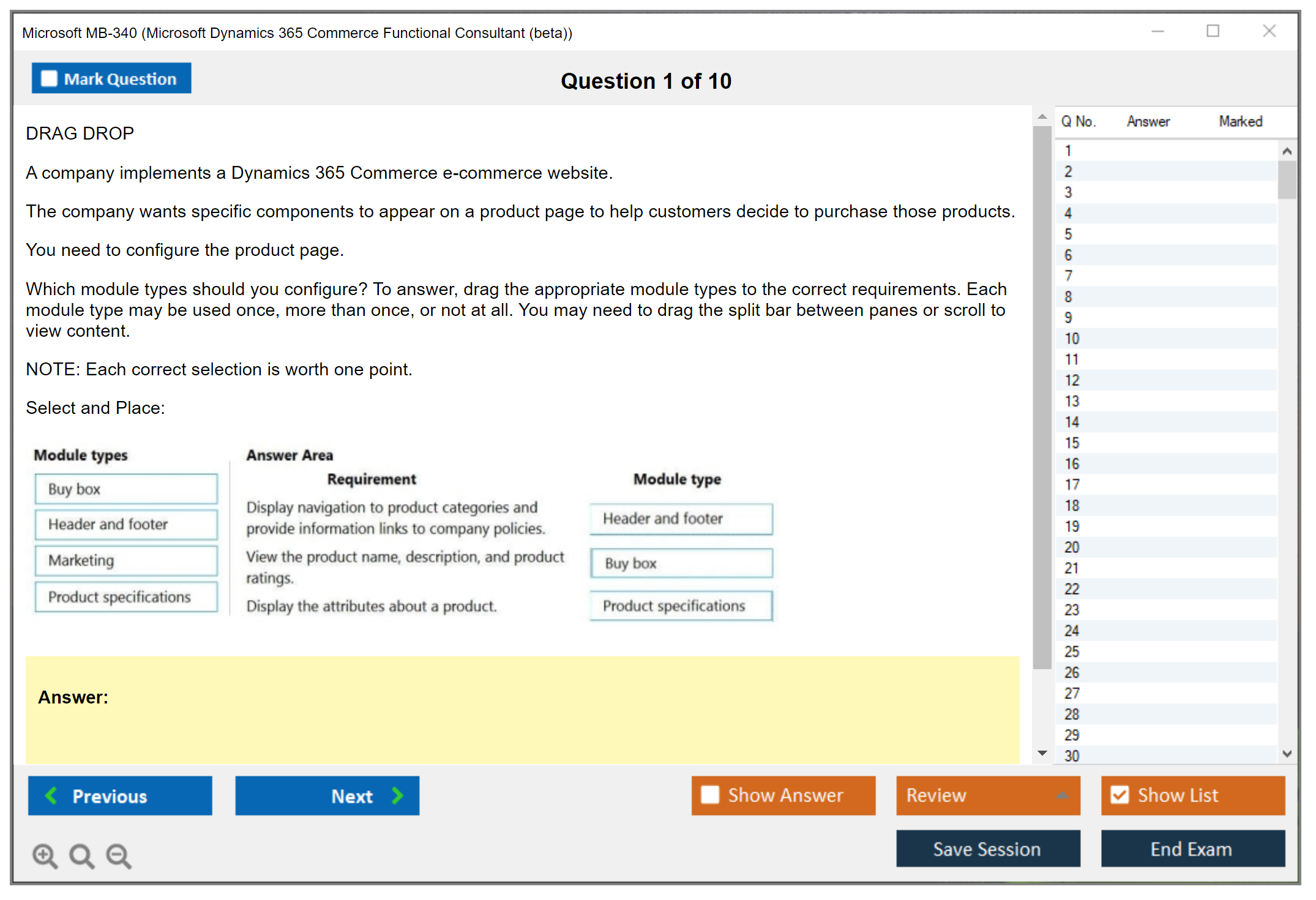
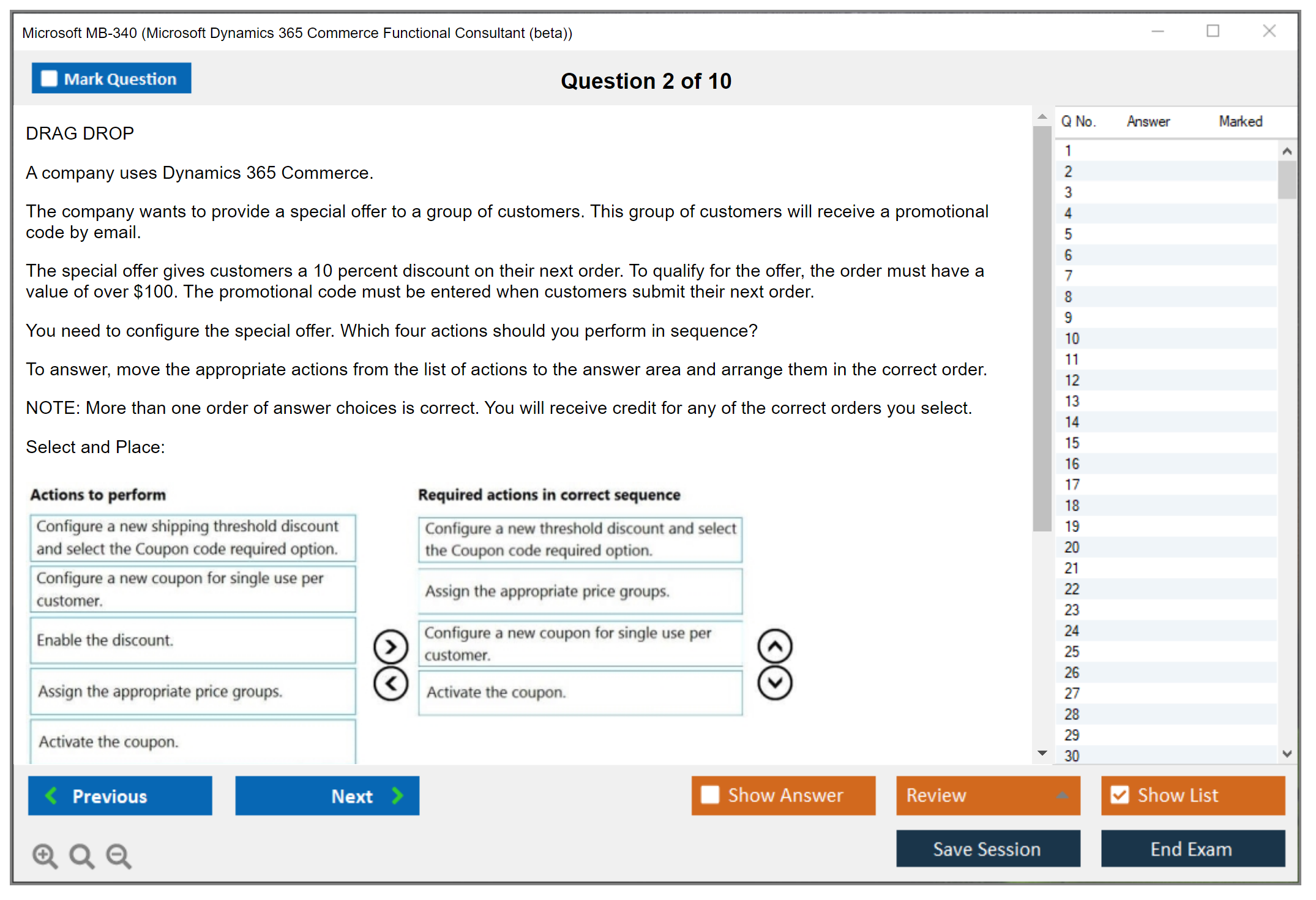
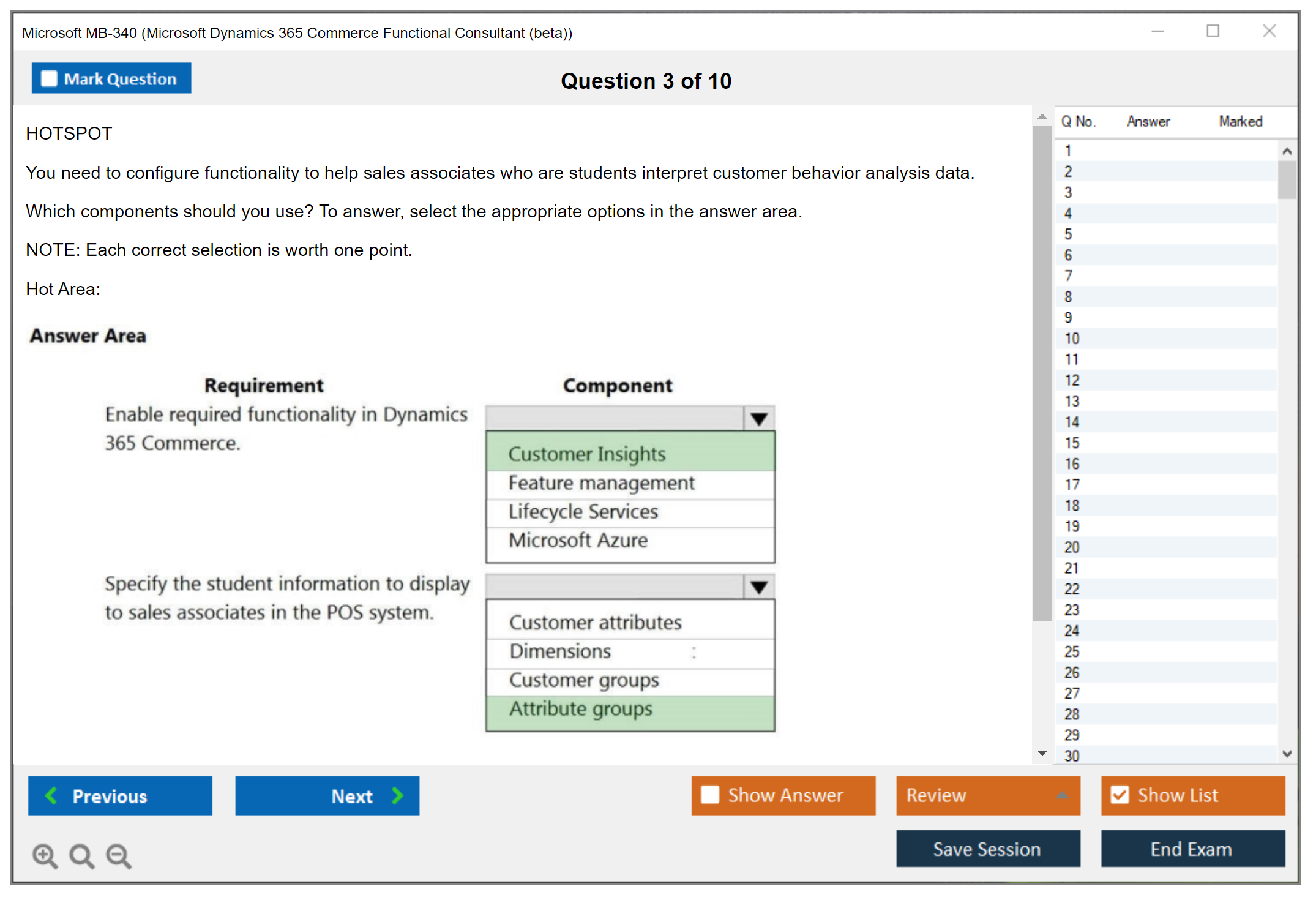
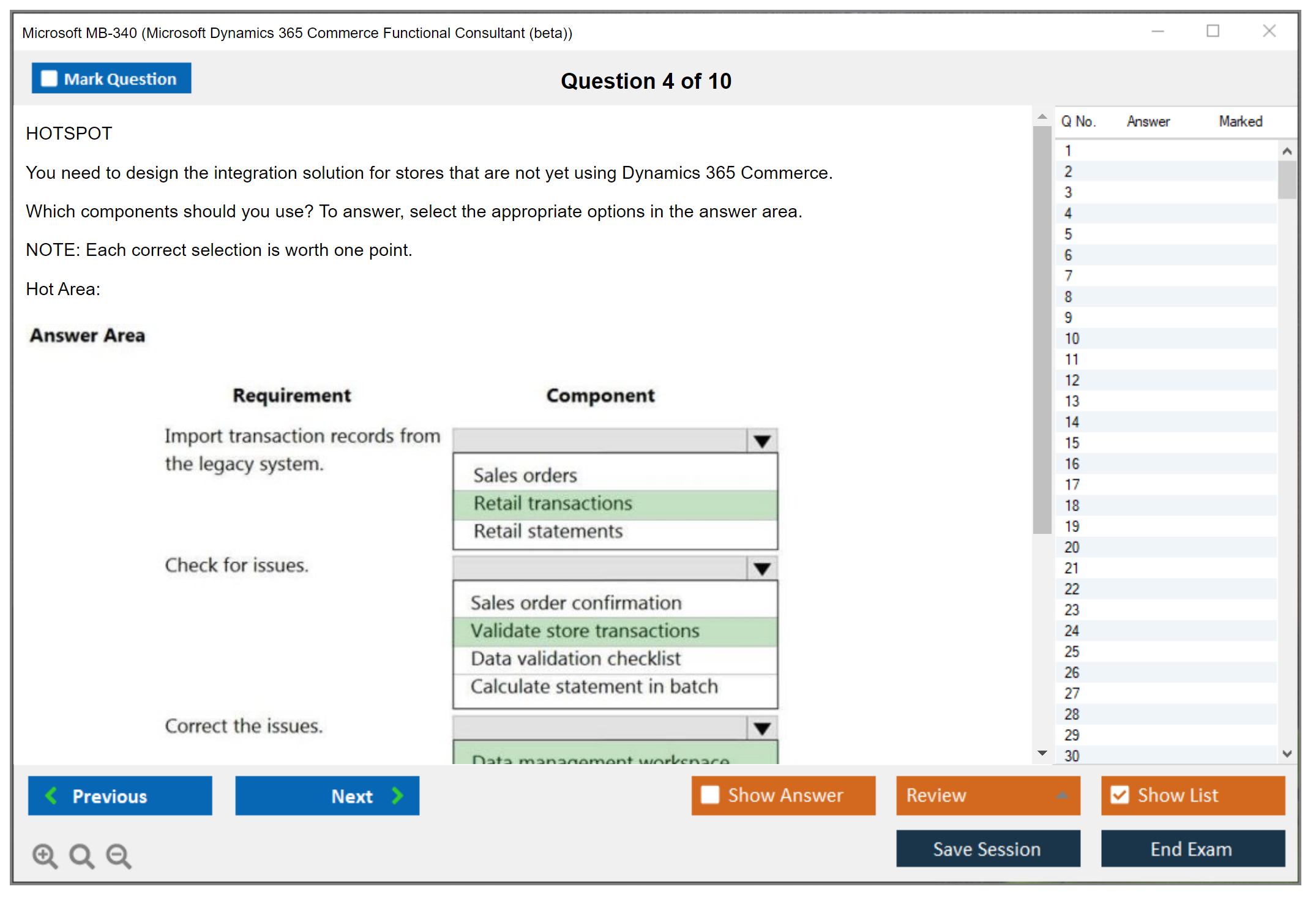
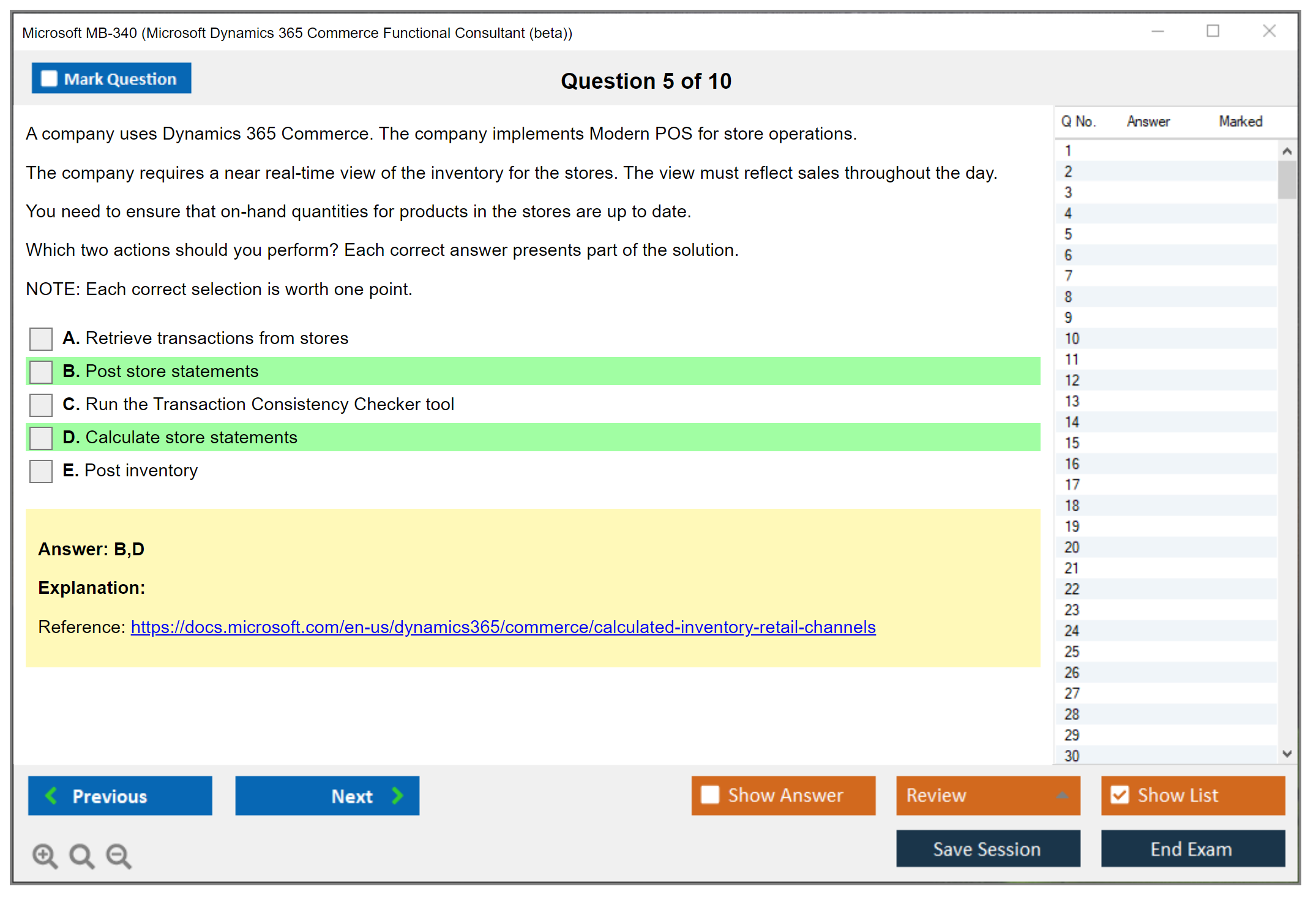
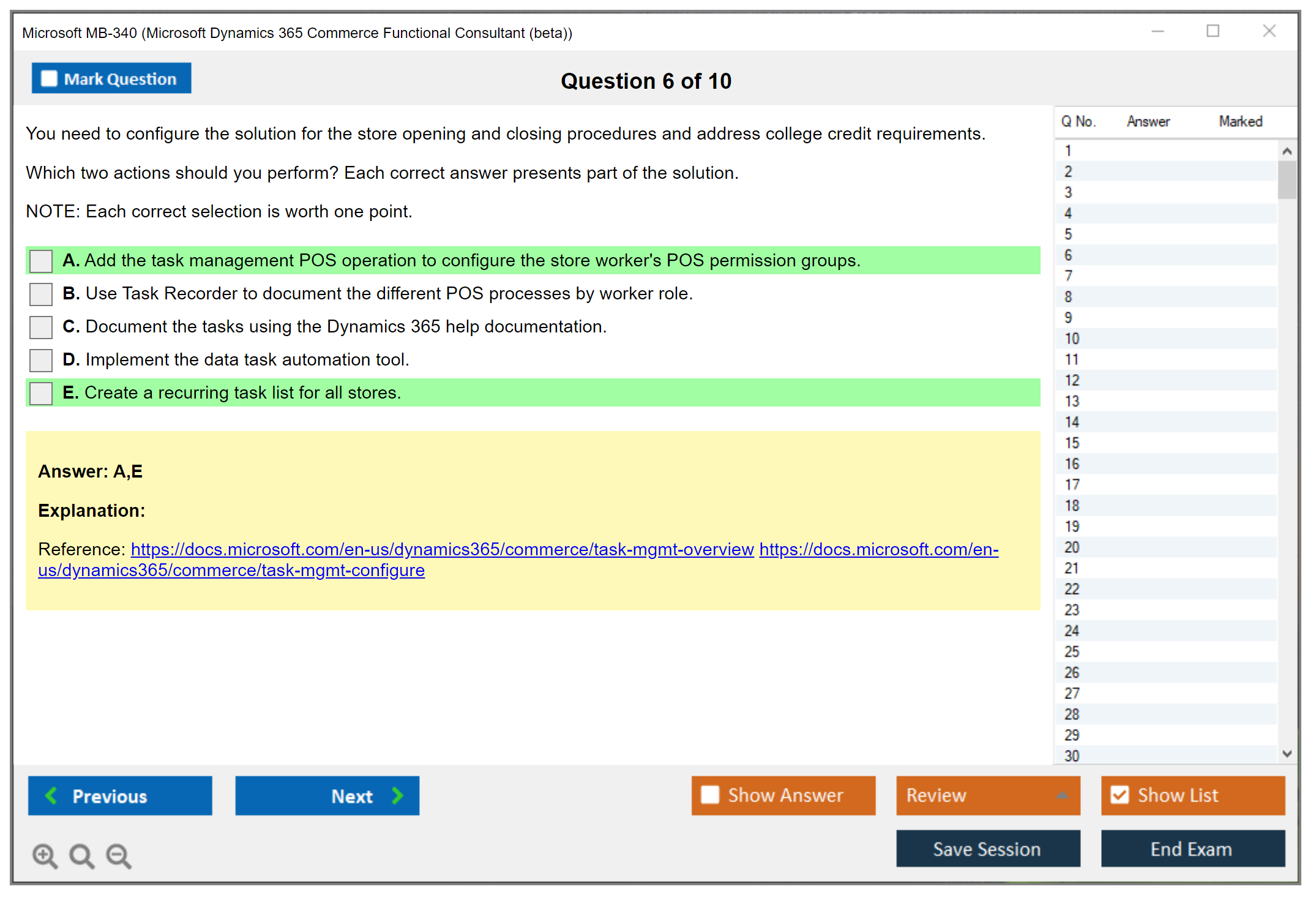
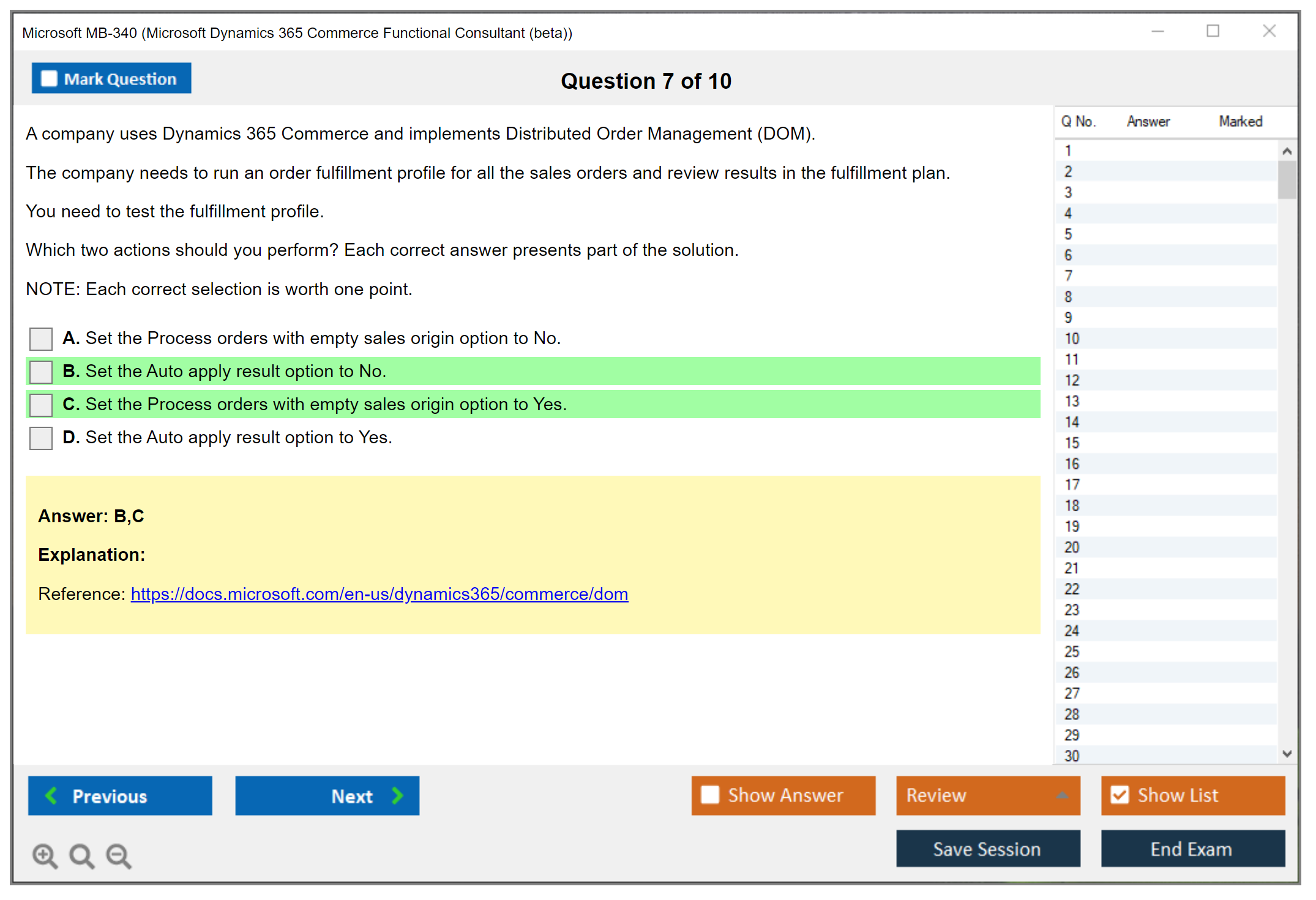
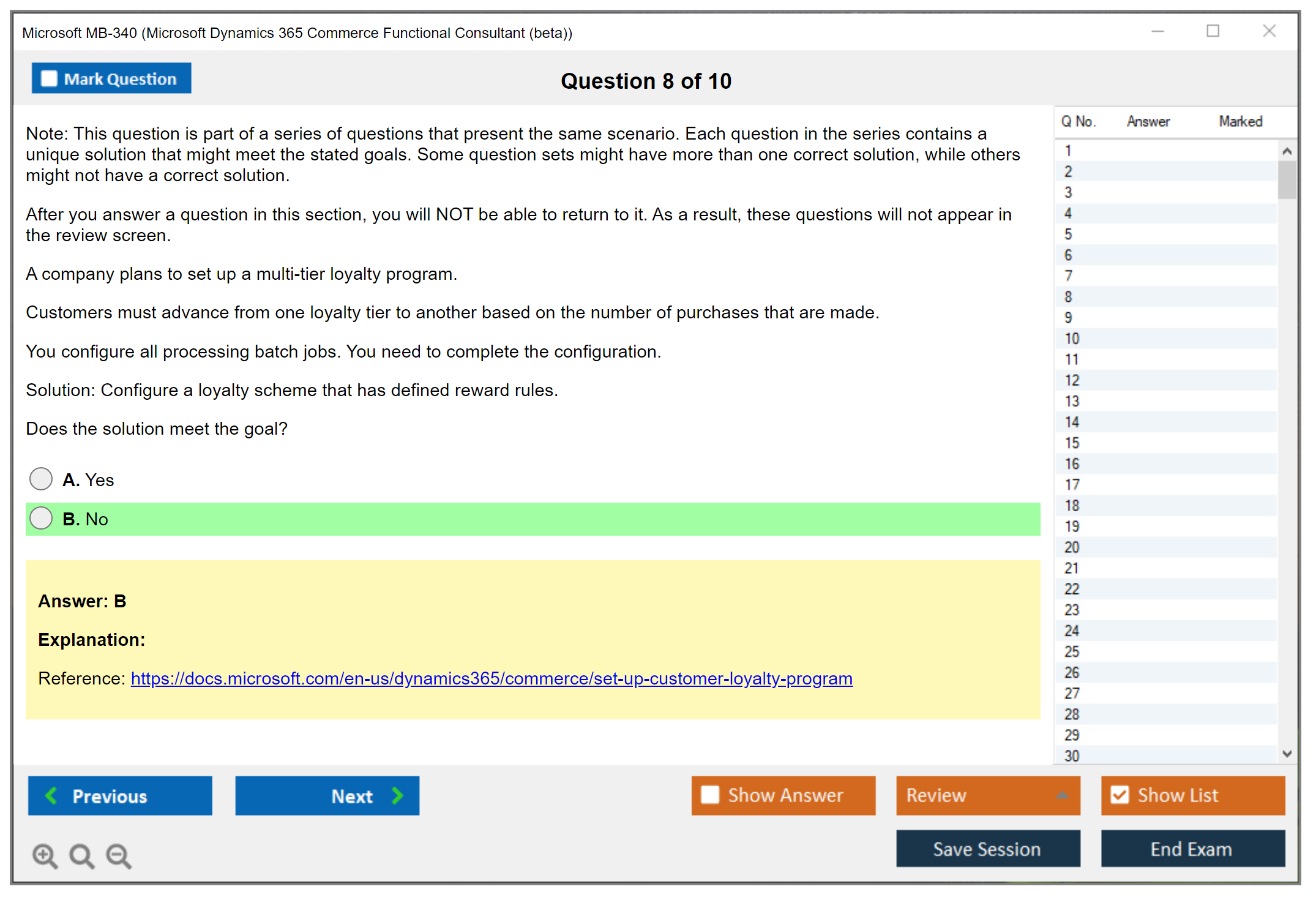
Microsoft MB-340 (Microsoft Dynamics 365 Commerce Functional Consultant)
Microsoft MB-340 Exam Overview and Role Definition
Introduction to the Microsoft MB-340 certification exam
The Microsoft MB-340 exam is officially titled Microsoft Dynamics 365 Commerce Functional Consultant, and it proves you actually know how to configure retail and commerce solutions beyond theory. This is part of Microsoft's role-based certification framework for Dynamics 365, which I appreciate because it's way more practical than older certification approaches that tested random memorization.
What does this exam validate? Your expertise in implementing and configuring Dynamics 365 Commerce solutions. We're talking about real-world retail and commerce business processes, not abstract concepts. The focus lands heavily on POS systems and omnichannel commerce, which makes sense because that's where the rubber meets the road in retail implementations.
This certification's designed specifically for functional consultants who work directly with business stakeholders. You know those people who sit in meetings with store managers and e-commerce directors and actually translate what they want into something that works in the system? That's the target. It demonstrates your ability to take business requirements and turn them into technical configurations without necessarily writing code, though understanding customization boundaries helps a lot.
What the MB-340 certification validates
The exam validates proficiency in configuring Dynamics 365 Commerce headquarters and retail channels, which is basically the foundation of everything else. You need to understand how headquarters settings cascade down to stores and online channels. Mess that up and you'll have pricing inconsistencies across channels. Total nightmare.
You're also proving expertise in setting up and managing Point of Sale systems. This includes device activation, hardware profiles for receipt printers and cash drawers, and all those little details that matter when someone's trying to check out a customer. Call center configuration and order management are in there too, which a lot of people overlook but are critical for businesses doing phone sales or customer service operations.
Product information management and catalog configuration come up extensively. You need to know how to structure category hierarchies, create product assortments for different channels, manage attributes that make products searchable and filterable online. The ability to configure pricing, discounts, and promotions across channels is huge because retail pricing gets complicated fast with trade agreements, threshold discounts, mix-and-match deals, loyalty points.
Skills in inventory management? Tested extensively. Same with fulfillment operations, including how inventory gets allocated across warehouses and stores, how ship-from-store works, how to configure fulfillment workflows. Competence in configuring customer engagement and loyalty programs shows up because that's a major differentiator for retailers. Plus you need knowledge of commerce analytics and reporting capabilities to help businesses actually understand their performance.
Speaking of performance metrics, I once watched a client obsess over average transaction value for weeks, only to discover their POS receipt printer was adding a two-minute delay to every checkout. Sometimes the bottleneck isn't what you expect.
Target audience for the MB-340 exam
This exam's aimed at Dynamics 365 Commerce functional consultants with 1-2 years of experience, though the quality of that experience matters more than the duration. Retail implementation specialists transitioning to Dynamics 365 are a natural fit because they already understand the business processes. They just need to learn how Microsoft's system handles them.
Business analysts working on commerce projects? Definitely consider this. Solution architects focusing on commerce implementations benefit too, especially since understanding the functional side makes architectural decisions way more informed. IT professionals supporting retail operations and POS systems find value here, particularly if they're tired of just troubleshooting and want to get into the configuration side.
Consultants migrating from legacy retail systems to Dynamics 365 Commerce are prime candidates. If you've worked with older Microsoft retail systems or competitors like Oracle Retail or SAP Commerce, you already have domain knowledge that gives you a head start. Professionals with retail domain knowledge seeking technical validation can use this to formalize their expertise and command better project rates.
Skills and competencies measured
Configuration of Commerce headquarters components and parameters? Fundamental. You're setting up organizational hierarchies, defining operating units, configuring posting profiles, establishing the parameters that control system behavior. Setup and management of retail channels includes both physical stores and online stores, with different channel types having different configuration requirements.
POS configuration goes deep. Device activation, hardware profile management, screen layouts, button grids, receipt formats. It's detailed work. Call center setup involves catalog management for phone agents and order processing workflows that guide customer service reps through sales processes. Product assortment configuration and category hierarchy management determine what products show where, which is more complex than it sounds when you have thousands of SKUs and dozens of channels.
Pricing strategy implementation covers trade agreements, price groups, discount groups, and the priority rules that determine which discount applies when multiple offers overlap. Customer management, loyalty programs, and affiliation configuration let you build retention strategies. Inventory management across warehouses and retail locations requires understanding how Dynamics 365 tracks available inventory versus allocated versus on-order.
Payment processing configuration and connector setup are critical because you need to get paid. This includes payment methods, payment services connectors for processors like Adyen, terminal configurations. Reporting, analytics, and data entity management help businesses understand sales patterns and integrate with external systems.
Role responsibilities of certified professionals
Certified professionals spend time gathering and analyzing business requirements from retail stakeholders, which means you need decent communication skills along with technical knowledge. Designing commerce solutions that align with organizational goals requires understanding both the business strategy and system capabilities, then finding the sweet spot between them.
Configuring and customizing Dynamics 365 Commerce to meet specifications? That's the core technical work. Implementing omnichannel retail experiences across physical and digital touchpoints means ensuring a customer can start a transaction online and finish it in-store smoothly, or vice versa. Training end users on Commerce functionality and best practices is often underestimated but absolutely necessary for adoption.
Troubleshooting configuration issues becomes your problem when things don't work as expected. System performance optimization too. Collaborating with developers for customizations beyond standard configuration is important because you need to know when you've hit the limits of configuration and need code. Maintaining documentation of configurations and business processes saves everyone time during support and upgrades.
Career value of MB-340 certification
This certification demonstrates specialized expertise in a growing area of Dynamics 365, which matters because retail and e-commerce aren't shrinking. It increases your marketability for commerce and retail implementation projects. Validates practical knowledge beyond theoretical understanding, which clients and employers actually care about.
It opens opportunities in retail, e-commerce, and omnichannel commerce sectors across industries. Everyone from traditional retailers to manufacturers doing direct-to-consumer needs commerce capabilities now. The certification enhances credibility with clients and employers in a tangible way, similar to how credentials like MB-310 (Microsoft Dynamics 365 Finance) validate finance expertise or MB-330 (Microsoft Dynamics 365 Supply Chain Management) proves supply chain knowledge.
It provides a foundation for advanced Dynamics 365 certifications if you want to move into solution architect roles. Also fits with Microsoft's partner competency requirements, which matters if you work for a consulting firm that needs certified staff to maintain partnership status.
How MB-340 fits in the Dynamics 365 certification path
The MB-340 is part of the Dynamics 365 Commerce certification track specifically, but it complements other Dynamics 365 functional consultant certifications really well. Many commerce implementations integrate tightly with finance and supply chain, so combining this with finance or supply chain certs makes you more valuable on integrated projects.
It can be combined with customer engagement certifications if you're working on solutions that blend commerce with customer service or marketing automation. The cert is a stepping stone to solution architect certifications, where you'd be designing entire solutions rather than just configuring modules. Supports Microsoft partner status and competency achievements, which has business implications for consulting firms.
The certification path is similar to other Dynamics 365 credentials, though each focuses on different business processes. Just like PL-300 (Microsoft Power BI Data Analyst) validates reporting expertise or MS-900 (Microsoft 365 Fundamentals) covers Microsoft 365 basics, MB-340 proves you know commerce inside and out. Understanding how it fits with foundational certs like AZ-900 (Microsoft Azure Fundamentals) helps too, since Commerce runs on Azure infrastructure.
MB-340 Exam Cost, Registration, and Format Details
Microsoft MB-340 exam overview (Dynamics 365 Commerce Functional Consultant)
The MB-340 exam is how Microsoft validates you can walk into a retail or commerce implementation and not get lost the second someone mentions stores, channels, assortments, or call center workflows. It maps to the Dynamics 365 Commerce Functional Consultant role, so you're expected to think like a consultant who configures, tests, and explains tradeoffs. Not someone who's just memorizing menu paths for fun.
This is a role exam. Not trivia. Scenarios dominate.
If you're going after the Microsoft MB-340 certification, you're basically signaling you can help design and configure commerce processes across Commerce headquarters configuration, POS and call center setup in Dynamics 365, plus all the tedious-but-critical stuff like payments, devices, workers, and store operations that always break at 8:55am on Black Friday when everyone's watching.
MB-340 exam cost, scheduling, and format
MB-340 exam cost (price, regional pricing, vouchers)
The standard MB-340 exam cost sits at $165 USD, and that's the number you'll see quoted everywhere. Honestly though, treat it as a baseline, not gospel. Microsoft pricing shifts by country due to currency conversion and local taxes. Sometimes Pearson VUE's checkout surprises people who assumed USD pricing applied globally without question.
Here's what can shift the price or your actual out-of-pocket total:
- Regional variations: Some countries tack on VAT or local exam taxes, so your final amount might be higher even if the list price looks identical at first glance.
- Microsoft partner discounts: If your employer's in the partner network, you might have benefits that reduce exam fees. Lots of folks never check the partner portal and just pay full price without realizing they qualified for a discount the whole time.
- Academic pricing: Students and educators can sometimes snag discounted vouchers through programs like Microsoft Imagine Academy, but it's not always automatic. You may need to go through your institution's admin process first.
- Exam replay packages: Microsoft occasionally offers bundles where you pay more than a single attempt but less than two separate ones, which is nice if you know you want that safety net going in. Let's not kid ourselves.
- Corporate options: Organizations training batches of employees sometimes use volume purchasing or internal voucher programs. It's not a consumer checkout flow, more of a procurement thing, but it can bring per-person cost down.
- Promotional discounts: During Microsoft events or certification campaigns, discount codes show up. Third-party promos, training bundles, and regional campaigns can all apply, but you've gotta catch them at exactly the right time.
Where to purchase exam vouchers
You've got a few legit places to buy or attach payment, and the best option really depends on whether you're paying yourself, using a voucher, or going through work's bureaucracy.
Common purchase paths:
- Microsoft Certification Dashboard: This is the cleanest official flow. You pick the exam, authenticate, and get routed straight into scheduling.
- Pearson VUE: Also normal. You can schedule and pay right there, and it's where you'll end up anyway for appointment management.
- Microsoft partner portal: If you're eligible, this is where partner benefits and discounts usually live. Don't guess though. Verify your org's access.
- Third-party training providers: Some sell course plus voucher bundles. Warning though: read the voucher terms carefully, because expiration dates and region locks are absolutely a thing.
- Microsoft Learn: Sometimes there's an integrated experience that nudges you from learning paths straight into scheduling, and it's convenient if you already live in Learn.
- Educational institutions: Schools running accredited programs may distribute academic vouchers.
- Seasonal promos: Check for event-related discount codes before you click purchase, because once you pay, retroactive discounts usually aren't happening.
Scheduling your MB-340 exam
Scheduling is basically Pearson VUE plus your Microsoft Certification profile. The workflow's predictable, but people still trip over timing rules somehow.
Steps that actually matter:
- Create or sign in to your Microsoft Certification profile.
- Select exam MB-340 from the available exams list.
- Choose delivery: online proctored or test center.
- Pick a date and time, then pay or apply a voucher during checkout.
Test centers often require scheduling at least 24 hours in advance, and popular locations fill up fast. Online proctored exams offer more flexibility, but time slots can still get tight during peak weeks. You don't wanna be the person trying to book the night before while your internet's acting weird.
Rescheduling and cancellations are typically allowed up to 24 hours before your appointment without penalty. Miss that window and late cancellations or no-shows usually forfeit the fee. Brutal. Plan like an adult. Life happens though.
Where to take the exam (online proctoring vs test center)
Test center pros: you get a dedicated environment, fewer random technical failures, and a setup that feels familiar if you've done certifications before. This honestly reduces anxiety for a lot of people who just want a controlled space and nothing else to worry about. The downside? Travel, limited availability in some regions, and fixed schedules that don't care about your job's release cycle or personal commitments.
Online proctoring's convenient because you can take it from home or the office and you often get way more appointment times, but the rules are strict and the tech requirements are real: reliable internet, webcam, microphone, and a private room with a clear workspace. No secondary monitors. No "my phone's face down but it's fine." No interruptions, which is hilarious if you have kids, roommates, or a dog who panics at doorbells. One time I watched someone on a forum describe their beagle losing it during the security check because the mail carrier showed up. Exam canceled. Fee lost.
Do the system test before exam day. Do it again. Seriously.
Proctor interaction is live: they'll watch via webcam and you'll use chat if something breaks. Yes, sometimes they ask you to pan the camera around the room, so don't schedule this in a cluttered shared space unless you really like stress.
Exam format basics (question types, time, languages)
The MB-340 exam typically runs 120 minutes, which is 2 hours. Question count usually lands around 40 to 60 depending on the exam form, and you'll see a mix of multiple choice, multiple response, drag-and-drop, case studies, and hot area items where you click regions on a UI image or diagram to indicate your answer.
Scenario-based questions are the core of it. Honestly they're the whole vibe: you'll get a business situation, constraints, maybe a "what should you configure first" kind of ask, and you've gotta pick the best answer, not just the technically possible one. Case studies can be multi-question sets tied to one scenario, and some sections may not let you go back to previous questions, so don't speed-click thinking you can review everything later.
Non-scored survey questions can appear. No penalty for wrong answers. Guess if stuck.
Languages: English is the default in most markets, and additional options sometimes include Japanese, Chinese (Simplified), Korean, German, French, and Spanish. Availability varies though, so verify during registration. Also, no translation tools allowed during the exam, so pick the language you can read fast under time pressure.
Special accommodations go through Pearson VUE, and you'll need documentation. Some regions also offer extended time for non-native speakers, but it's not universal, and you should submit requests at least 5 business days before your exam date.
MB-340 passing score and scoring details
MB-340 passing score (what you need to pass)
The MB-340 passing score is 700 on Microsoft's scaled score system. It's not "70%," and it's definitely not a straight points-to-percent conversion, which confuses people every single week without fail.
How scoring works (scaled scoring, section weighting)
Microsoft uses scaled scoring because different exam forms can vary slightly in difficulty. Some questions may weigh more than others, especially scenario-heavy items, and your final score reflects that model rather than a simple correct or incorrect tally. This means two people answering the same number correctly might get different scores depending on which questions they got right. You'll get results right after the exam in most cases, and the score report usually highlights skill areas so you can see where you were weak.
Retake policy (attempt limits, waiting periods, fees)
Retakes follow Microsoft's general policy: you can retake if you fail, but there are waiting periods that increase after repeated failures, and each attempt normally costs the exam fee again unless you bought an exam replay bundle or used a voucher that includes retakes. Check the current policy during scheduling because details can change.
MB-340 difficulty: how hard is the exam?
Some people find MB-340 "medium," but that's only true if you've actually done retail and commerce solution configuration work, not just watched videos or skimmed documentation the night before and hoped for the best.
The hard part? It's the applied nature: you've gotta connect Commerce HQ setup, channel configuration, and operational flow, and you can't fake that connection with flashcards alone. It's easier if you've configured stores, registers, workers, and assortments, and you've touched call center and fulfillment scenarios even a little. It's harder if your background's only Finance or only general Power Platform, because commerce has its own weirdness and dependencies, and the exam expects you to know how choices ripple through operations when the business is actually live.
MB-340 exam objectives (skills measured)
Microsoft updates the MB-340 exam objectives periodically, so verify the latest "skills measured" on Microsoft Learn before you build your plan. Domains change. Weighting changes. Your study plan should change too.
Objective areas you'll typically see map to real implementation work like configuring Commerce headquarters configuration, managing products and assortments, setting up stores and channels, and supporting operations across POS and call center setup in Dynamics 365, plus testing and troubleshooting choices that come up after go-live when everything's on fire.
MB-340 prerequisites and recommended experience
Official prerequisites (if any) vs recommended background
There aren't strict MB-340 prerequisites like "must pass X first," but Microsoft expects role-level experience. Recommended background usually includes functional consulting skills, comfort with requirements and configuration, and familiarity with Dynamics 365 Commerce concepts.
Recommended hands-on experience (Commerce HQ, POS, Call Center)
Hands-on beats theory here. If you can, spend time in a sandbox configuring channels, linking products, setting up a store, and walking a transaction end-to-end, because the exam questions read like someone describing a real client problem that started with a simple request and somehow ended with three broken processes nobody saw coming.
Best MB-340 study materials (Microsoft Learn + training)
Microsoft Learn learning paths are the starting point for MB-340 study materials, and official docs fill in the gaps when Learn's too high-level or vague. Instructor-led training can help if you need structure or you're coming from outside commerce, but it's not magic, and you still need lab time to make the configuration steps stick.
Focus on documentation around Commerce parameters, channel setup, assortments, payments, devices, and operational workflows. Those are the areas that turn into scenario questions.
MB-340 practice tests and exam prep strategy
Practice tests (what to look for in high-quality providers)
Good MB-340 practice tests look like scenario questions, explain why answers are right, and don't just dump memorized Q&A. Bad ones teach you nothing and can even train wrong instincts, which is honestly the fastest way to fail a role exam.
Building a hands-on lab environment (recommended approach)
If you can get a demo environment, do it. Configure something small, break it, fix it, and note what settings actually mattered. That loop is basically Dynamics 365 Commerce exam preparation in real life.
FAQs about MB-340
How much does the MB-340 exam cost?
Standard price is $165 USD, with regional tax and currency differences. Partner, academic, promo, and replay options can reduce your effective cost.
What study materials and practice tests are best for MB-340?
Start with Microsoft Learn, then add official documentation and a sandbox. Use practice tests that explain rationale and reflect scenario-heavy questions, not brain dumps.
What are the MB-340 exam objectives?
Check Microsoft Learn for the latest skills measured list, because the objective domains can change and you don't wanna study last year's outline.
MB-340 Passing Score, Scoring System, and Retake Policy
Understanding the MB-340 passing score
The MB-340 exam requires a scaled score of 700 out of 1000 points to pass. That's the magic number. But here's where it gets weird - this isn't just 70% of questions correct, which throws people off more than anything else I've seen. Microsoft uses psychometric scaling to convert your raw score into that final number. This means the actual percentage of questions you need to answer correctly varies depending on which exam form you receive.
The scaling system exists for a good reason. Microsoft creates multiple versions of each exam to maintain security and prevent cheating. Some forms might be slightly harder than others, even though they all test the same skills. The psychometric analysis accounts for these difficulty variations so that someone who gets a harder exam form isn't penalized compared to someone with an easier version. The 700 passing score represents the same minimum competency level regardless of which questions you see.
No partial credit here. If you get a multiple-response question where you need to select three correct answers and you only pick two, that's marked wrong. Frustrating but consistent across all Microsoft certification exams.
How Microsoft's scaled scoring actually works
Raw score? That's straightforward enough. It's the actual number of questions you answered correctly. Microsoft then runs that through their scaling algorithm, which converts it to a number between 1 and 1000. The algorithm considers the difficulty of each question you encountered, weighted against how other candidates performed on those same questions during beta testing and live administration.
During beta exams, Microsoft collects massive amounts of data about question difficulty and discrimination. Basically how well each question separates candidates who know their stuff from those who don't. This data calibrates the scaling for the live exam. So two candidates could get the same number of questions correct but receive slightly different scaled scores if they encountered different question sets with varying difficulty levels.
This makes the exam fairer overall, even though it feels opaque when you're sitting there waiting for your result. The scaling means passing the MB-340 in January means the same thing as passing it in September, even though the actual questions might be completely different. I've taken enough of these exams that the waiting part still gets me every time.
Exam section weighting and what it means for you
The MB-340 exam breaks down into multiple objective domains, each with a specific weight percentage published in the official "Skills Measured" document on Microsoft Learn. Typically you're looking at 4-5 major domains weighted anywhere from 15% to 30% each. The exam pulls more questions from higher-weighted domains.
All domains contribute to your final scaled score, but there's no separate passing requirement per section. You could theoretically bomb one domain and still pass if you crush the others. Not a great strategy because you never know exactly how many questions from each domain you'll see.
When you're planning your study time, weight it proportionally to those domain percentages. If Commerce headquarters configuration is 25% of the exam and POS setup is 15%, spend more time on headquarters. Basic test strategy but people forget it all the time.
For context, if you're also pursuing other Dynamics 365 certifications like MB-310 for Finance or MB-330 for Supply Chain Management, you'll notice similar weighting structures across Microsoft's functional consultant exams.
Getting your exam results and what they tell you
You'll see a preliminary pass/fail result on screen immediately after completing the exam. That's the moment of truth. Your official score report shows up in the Microsoft Certification Dashboard within a few hours, sometimes faster. The report includes your scaled score and a breakdown showing performance by objective domain.
If you passed? Congratulations. Your certification gets issued within 24 hours typically. You'll receive a digital badge through Credly (formerly Acclaim) and can download your certificate from the dashboard. The transcript in your profile shows all your Microsoft certification attempts and achievements, which can be useful when employers want verification.
The score report for failed attempts is more detailed in some ways. It shows percentage ranges for each objective domain - something like "51-60%" or "71-80%" - indicating your performance level in each area. These ranges are approximate due to scaling and the fact that different candidates see different questions, but they're useful for targeting your retake preparation.
You won't get question-by-question feedback. Microsoft doesn't tell you which questions you missed or why. This protects exam security but can be frustrating when you're trying to figure out what went wrong.
Retake policy and waiting periods
Failed your first attempt? You can retake after 24 hours. Same deal for the second attempt - another 24-hour wait. But starting with the third retake, you're looking at a 14-day waiting period between attempts. Microsoft also caps you at 5 attempts per 12-month rolling period.
Each retake requires paying the full exam fee again. At $165 USD (prices vary by region), that adds up fast. This is where Exam Replay packages become worth considering.
Exam Replay packages and cost savings
Microsoft offers Exam Replay bundles that include one exam voucher plus one retake voucher. There's also Exam Replay with Practice Test, which adds an official practice test to the bundle. The cost savings compared to purchasing everything separately can be significant - we're talking potentially $50-100 depending on current promotions.
The catch? You need to purchase these before your first attempt. Can't fail and then decide to buy Exam Replay. The retake voucher typically has a validity period, so check the terms.
If you're uncertain about passing on your first try, especially if you're relatively new to Dynamics 365 Commerce configuration, the Exam Replay with Practice Test option provides good value. The practice test helps you gauge readiness and identify gaps before burning your first attempt. For additional practice, the MB-340 Practice Exam Questions Pack at $36.99 offers another affordable prep option with scenario-based questions that mirror the actual exam format.
What to do after failing
Don't panic. Lots of people fail Microsoft exams on their first attempt, particularly the functional consultant exams that test deep configuration knowledge. Review your score report carefully and note which objective domains showed the lowest performance percentages.
Focus your retake preparation on those weak areas. If you scored poorly on call center setup and integration, spend the majority of your study time there rather than reviewing areas where you already performed well. Seek additional hands-on experience. Reading documentation only goes so far with Dynamics 365 exams, which test whether you can actually do the work, not just recite definitions.
Practice tests targeting your identified gaps are key. I've seen people fail three times because they kept studying the same way. Change your approach. If you were relying purely on documentation, get into a lab environment and actually configure the features. If you were only doing hands-on work, dive deeper into the why behind configurations.
Consider instructor-led training for complex topics that aren't clicking. Sometimes having someone explain channel database configuration or pricing management in a structured way makes concepts finally stick. The official Microsoft courses for Commerce can be expensive, but they're full.
Wait the required period before scheduling your retake. Use that time productively rather than rushing to retake while the failure is still fresh. And if you've failed multiple times, step back and assess whether you need more real-world experience before pursuing the certification.
The scaling system might seem complicated, but it's designed to be fair. Your 700 scaled score means you've demonstrated minimum competency in Dynamics 365 Commerce functional consulting regardless of which specific questions you encountered. Whether you're coming from a retail background, transitioning from other ERP systems, or expanding your Microsoft certification portfolio beyond fundamentals like MS-900, understanding how scoring works helps set realistic expectations and plan your exam strategy better.
MB-340 Exam Difficulty Assessment and Study Time Requirements
Microsoft MB-340 exam overview (Dynamics 365 Commerce Functional Consultant)
The MB-340 exam is Microsoft's role-based test for the Dynamics 365 Commerce Functional Consultant. It targets people who can actually set up Commerce in the real world, not just talk about it at meetings. Think channel configuration, HQ parameters, POS, call center, e-commerce basics, and how all of that connects back to the rest of Dynamics 365.
This exam isn't a trivia quiz. You read a scenario, spot what matters, and pick the configuration path that actually works in Commerce. Short questions. Longer case studies. Weird little "gotchas" that feel like they were written by someone who's had to fix a store rollout at 2 a.m. while the regional manager sends increasingly terse texts.
What MB-340 certifies (role and skills measured)
You're being measured on your ability to configure Commerce, keep data flowing, and support retail processes end-to-end. That means Commerce headquarters configuration, channel setup, POS profiles, assortments, pricing, loyalty, payments, and data sync. The thing is, the exam also expects you to know why you're doing something. Not just where the button is.
Who should take MB-340 (target audience)
This is for consultants, analysts, and admins working with Dynamics 365 Commerce. Also for retail IT folks moving into Microsoft's ecosystem. If you're coming from AX Retail, you'll recognize a lot, even if the UI and the "where did Microsoft hide that setting" game is still very real.
MB-340 exam cost, scheduling, and format
Yes, people ask about money first. Fair.
MB-340 exam cost (price, regional pricing, vouchers)
The MB-340 exam cost is typically USD $165, but regional pricing is a thing. Microsoft changes pricing sometimes. Employer vouchers and training bundles can drop the price, and students often have discounts depending on program eligibility. Check the exam registration page right before you schedule, because what you paid last year isn't always what you pay today.
Where to take the exam (online proctoring vs test center)
You can take it online with remote proctoring or at a Pearson VUE test center. Online is convenient. Also stressful if your internet hiccups or your room setup triggers proctor warnings. Test center's boring but reliable. Honestly, I prefer boring.
Exam format basics (question types, time, languages)
Expect scenario-based multiple choice, case studies, and the occasional "choose the right sequence" style question. Microsoft rotates formats, so don't lock your prep to one practice style. Languages vary by region.
MB-340 passing score and scoring details
MB-340 passing score (what you need to pass)
The MB-340 passing score is 700 on a 1000-point scaled score. You don't need perfection. You do need consistency across topics, because Commerce questions love to mix areas together.
How scoring works (scaled scoring, section weighting)
Scoring's scaled, and the weighting can differ by exam version. You might feel like you bombed POS and still pass because your channel and pricing sections carried you. Or the opposite. It happens.
Retake policy (attempt limits, waiting periods, fees)
Retake rules follow Microsoft's standard policy: short wait after the first fail, longer waits after repeated fails, and you pay again each attempt. So yeah, plan your first attempt like you want it to be your only attempt.
MB-340 difficulty: how hard is the exam?
Overall difficulty rating? I'd call it moderate to moderately difficult among Dynamics 365 exams. Not beginner-friendly. Not architect-level pain either.
It's less difficult than the solution architect exams because you're not designing the entire enterprise system and defending tradeoffs across security, ALM, integration architecture, and governance. But it's more challenging than fundamentals because you must know the actual setup details. You don't get credit for "I understand the concept."
Requires both theoretical knowledge and practical configuration experience. That's the big theme. The questions are often scenario-based and demand application of concepts, not memorization. The depth of Commerce-specific features means you can't just "wing it" off generic Dynamics knowledge.
Integration points add complexity too. Commerce doesn't live alone. You need to understand how it connects with Finance, Supply Chain, and even Marketing in some scenarios. If you've never watched data flow through those handoffs, the exam can feel oddly picky.
Real-world implementation experience cuts difficulty significantly. Not gonna lie, if you've done even one proper rollout with channels, assortments, payments, and a couple of stores, a lot of questions become "oh, I've seen this movie."
Common challenges candidates face
Breadth is the first punch. Commerce spans POS, call center, e-commerce, headquarters, and mobile. The MB-340 exam objectives expect you to have at least working knowledge across all of it. Then you get hit by configuration depth, where questions test detailed parameter settings and setup sequences. If you never actually configured a hardware profile or tuned a store's functionality profile, you're guessing.
Scenario complexity is the next trap. Multi-step business processes show up a lot. You have to understand end-to-end, like how a product gets into an assortment, how pricing applies by channel, how inventory's exposed, and how the POS behaves when something's out of stock or a customer wants split tender.
Limited hands-on access is real. Commerce environments aren't as easy to get as other Dynamics modules, and self-study candidates feel it. Rapid product updates don't help either. Features shift, screens move, and documentation sometimes lags. Also, retail domain knowledge matters. I mean, terminology like assortments, catalogs, fulfillment locations, and loyalty rewards is normal in retail, but it's a foreign language if you've only lived in back-office ERP.
POS hardware and peripherals can be sneaky too. Device configuration, hardware stations, printers, drawers, card readers.. all tied to hardware profiles and connectors. Pricing and discount complexity is another common failure point. Trade agreements, price groups, and promotional pricing can stack in ways that feel logical only after you've debugged it once. Channel management's the constant thread through all this, since every channel has slightly different requirements and constraints.
Technical areas that require deep understanding
Here's where people usually realize they need more lab time.
Commerce headquarters configuration, including organization hierarchies. Retail channel setup across online and offline stores. POS functionality, layouts, button grids, and screen configurations. Product information management, assortments, and category hierarchies.
Pricing gets tested heavily. Base prices, trade agreements, and discount configurations. I mean the "why didn't my discount apply" style of understanding, not the marketing definition of a discount. Payments also show up frequently, so know payment methods, connectors, and payment processing workflows, plus what happens when things fail.
I'd personally spend extra time on CDX and data synchronization because it connects to so many scenario questions. It's easy to misunderstand what data moves, when it moves, and what breaks it. Inventory across warehouses and stores is another one that looks simple on paper but gets messy fast when you mix fulfillment options, stock visibility, and channel constraints.
Call center and catalog-based selling's worth focused study too, even if you don't use it daily. It's one of those areas that shows up on exams because it's distinct. Tests whether you understand Commerce beyond "store POS."
Who finds MB-340 easier vs harder
Easier for: consultants with 1+ years implementing Commerce, retail pros with POS background, people with access to a sandbox, candidates who completed official training, AX Retail veterans, and anyone who already speaks retail operations fluently. Familiar pain. Familiar fixes.
Harder for: candidates without hands-on implementation experience, those new to Dynamics 365, professionals without retail knowledge, self-study folks with no environment, people relying only on docs, and anyone unfamiliar with POS workflows and store realities. Reading about a button grid isn't the same as building one under deadline.
How long to study for MB-340 (time estimates by background)
Experienced Commerce consultants (6+ months implementation): 2 to 3 weeks, about 30 to 40 hours. Focus on gaps, new features, and exam-style scenarios. Use MB-340 practice tests to find weak spots, not to memorize questions.
Dynamics 365 pros new to Commerce: 6 to 8 weeks, about 60 to 80 hours. You'll need the official learning paths plus hands-on practice.
Retail pros new to Dynamics 365: 8 to 12 weeks, around 80 to 120 hours, because you're learning the platform thinking plus Commerce specifics.
Complete beginners to both retail and Dynamics: 12 to 16 weeks, about 120 to 160 hours. You should seriously consider starting with a fundamentals cert and building retail basics at the same time. Slow is smooth.
Factors that influence study time
Access to a Commerce environment's the biggest multiplier. Previous experience with Finance or Supply Chain helps because integrations won't feel mysterious. Retail knowledge speeds up everything because you're not translating terms while also learning setup. Time available matters too. One hour a day beats a weekend cram, honestly. Your brain needs repeated exposure to the same configuration patterns.
Also, the quality of your MB-340 study materials matters more than people want to admit. Random videos can be entertaining and still leave you unprepared for scenario questions.
MB-340 exam objectives (skills measured)
Microsoft updates the skills measured, so verify the latest official MB-340 exam objectives on Microsoft Learn before you lock your plan.
Objective domain 1 (overview + what to study)
Commerce headquarters setup, org structures, core parameters, and shared data. Study how legal entities, operating units, and channels relate. Where Commerce settings live versus Finance settings.
Objective domain 2 (overview + what to study)
Channel configuration and product setup. Focus on assortments, category hierarchies, attributes, and how products get published to channels. Scenario questions love "why can't this item sell in this store."
Objective domain 3 (overview + what to study)
POS and store operations. Device setup, registers, hardware profiles, screen layouts, and operational flows like returns, pickups, overrides, and offline behavior.
Objective domain 4 (overview + what to study)
Pricing, discounts, loyalty, payments, and data sync. Spend time on discount precedence and CDX basics, plus payment flows and connector concepts.
MB-340 prerequisites and recommended experience
Official prerequisites (if any) vs recommended background
There aren't strict prerequisites you must pass first, but Microsoft expects you to have role-level skills. Treat that as the prerequisite. The practical one.
Recommended hands-on experience (Commerce HQ, POS, Call Center)
If you can configure a store, set up registers, publish assortments, test pricing, run a sales order through call center, and verify data sync behavior, you're in a good place. If you can only describe those tasks, you're not.
Helpful related certs and roles (ERP/CRM, retail operations)
Experience with Dynamics 365 Finance and Supply Chain helps a lot. Retail ops experience helps even more. Prior AX Retail experience also transfers surprisingly well.
Best MB-340 study materials (Microsoft Learn + training)
Microsoft Learn learning paths are the baseline. Add official docs for Commerce, POS, call center, HQ configuration, and payments. If you can get instructor-led training, it's useful for structure, especially if you're new and don't know what you don't know.
If you want targeted drilling, a paid question pack can help identify gaps. I've seen people pair Learn with the MB-340 Practice Exam Questions Pack to pressure-test readiness, then go back to the environment and reproduce the scenarios. That loop's what matters.
MB-340 practice tests and exam prep strategy
Practice tests (what to look for in high-quality providers)
Good MB-340 practice tests explain why an answer's right, reference current features, and resemble scenario logic. Bad ones are just dumps of questionable accuracy. Look, if you can't explain the configuration outcome, you're not learning. You're gambling.
Building a hands-on lab environment (recommended approach)
Get any legit sandbox access you can, through work, partner demo tenants, or training labs. Then actually configure things. Set up a channel. Publish an assortment. Break pricing on purpose and fix it. That's how the exam thinks.
Study plan (2-week / 4-week / 8-week options)
Two-week plan's for experienced consultants: objectives review, targeted labs, timed practice.
Four-week plan's for Dynamics pros pivoting to Commerce: Learn paths plus daily labs.
Eight-week plan's for retail pros new to Dynamics: fundamentals first, then Commerce, then exams.
If you're using the MB-340 Practice Exam Questions Pack, use it after each objective domain to spot patterns in what you keep missing. Then go reproduce that config in your environment. Otherwise it's just noise.
Last-week checklist (weak areas, timed drills, review notes)
Timed sets. Review wrong answers only. Rebuild one full scenario end-to-end: product to assortment to pricing to POS sale to return. Sleep. Seriously.
Renewal and maintaining your Microsoft certification
Renewal's yearly via an assessment on Microsoft Learn. No exam fee for renewal. Put a reminder on your calendar because Microsoft will email you, but email's where reminders go to die.
FAQs about MB-340
How much does the MB-340 exam cost?
Typically $165 USD, with regional pricing and vouchers affecting the total MB-340 exam cost.
What is the passing score for MB-340?
The MB-340 passing score is 700 on the scaled score model.
Is MB-340 hard to pass?
Moderate to moderately difficult. Easier with real project experience. Harder if you only read docs and never touch a Commerce environment.
What are the MB-340 exam objectives?
They cover HQ configuration, channels, POS/store operations, pricing/loyalty/payments, and data sync. Confirm the latest skills measured on Microsoft Learn because objectives change.
What study materials and practice tests are best for MB-340?
Start with Microsoft Learn and official documentation, then add hands-on labs. For exam-style drilling, some folks add the MB-340 Practice Exam Questions Pack alongside their lab work, because practice questions alone don't build the muscle memory Commerce demands.
MB-340 Exam Objectives and Skills Measured Breakdown
Where to find the official MB-340 exam objectives
Okay, so first things first. Before you start cramming for the Microsoft MB-340 certification, you need to grab the actual source material straight from Microsoft. The real deal, not some third-party summary that might be sketchy or outdated or just plain wrong.
The official exam objectives? They're sitting on the Microsoft Learn certification page specifically for MB-340. Just search "MB-340 Microsoft Learn" and boom, you'll land right there.
Once you're on that page, there's a "Skills Measured" document you can download as a PDF. Download it immediately. I can't stress this enough. Don't skip this step because that PDF is literally your blueprint for what's actually gonna be on the test, and studying without it is like trying to build furniture without instructions. Technically possible, but why would you torture yourself like that?
Microsoft updates this document periodically to reflect product changes in Dynamics 365 Commerce. You really don't wanna study outdated objectives because, I mean, imagine spending weeks on features that aren't even tested anymore.
Always verify you've got the current version before you start your study grind, right? The exam objectives page shows the last update date right at the top. Check that timestamp religiously. Some folks don't realize Microsoft can shift what's tested, add new features that just dropped, or remove deprecated stuff from the exam scope without much fanfare. If you're the type who plans way ahead (kudos to you), subscribe to Microsoft Learn updates for change notifications.
Check the official page maybe 2-3 months before your exam date for the latest version. I've seen candidates get absolutely blindsided because they studied from objectives that were six months old and missed entire new sections that appeared. Not fun at all.
Understanding the objective domain structure
The MB-340 exam gets divided into 4-5 major functional areas, depending on when Microsoft last updated it (they tinker with the structure sometimes). Each domain comes with an assigned percentage weight that's clearly listed. Those weights indicate relative importance and question distribution, so if one domain's weighted at 25%, roughly a quarter of your exam questions will come from that area, give or take.
Within each domain, you'll find sub-objectives that detail specific skills tested. it's "configure commerce" in some vague sense but rather granular stuff like "configure retail scheduler jobs" or "set up statement posting profiles." Very specific tasks you need to know cold.
Study all objectives regardless of weight. Even a 15% domain can wreck your score if you bomb it completely.
Higher-weighted domains deserve proportionally more study time though, obviously. If you've got limited prep time (and who doesn't?), prioritize the 25-30% sections over the 15% ones. Basic math, really, but people forget this when they're panicking.
The domains align with real-world job responsibilities, which means if you're already working as a Dynamics 365 Commerce Functional Consultant, some sections will feel super familiar. Others might expose gaps in your experience that you didn't even know were there until the exam exposes them for you.
Configure Dynamics 365 Commerce Headquarters (20-25%)
This first major domain hits you with the foundational setup stuff that happens in Commerce headquarters. The backbone configuration, basically. We're talking commerce parameters and shared parameters configuration, which are the settings that affect how your entire commerce environment behaves at a fundamental level.
You need to know organization hierarchy setup for retail purposes. This is more nuanced than it sounds because retail hierarchies serve different purposes than standard org hierarchies. They're not interchangeable, and the exam will definitely test whether you understand those distinctions.
Number sequences configuration for commerce documents is another piece of the puzzle. Every transaction, every order, every statement needs a number, and you configure those sequences here with specific logic and formatting. Workflow configuration for commerce processes comes up too. Approval workflows for things like price adjustments or returns that exceed certain thresholds, which protects against fraud or errors.
Retail scheduler configuration and job setup is huge. Like really huge. The scheduler is what pushes data between headquarters and your channels (stores, online, call center), and if this breaks, everything breaks. You need to understand distribution schedules, job definitions, and how to troubleshoot when data doesn't sync properly. Because trust me, it'll happen in real life and on the exam.
Commerce Data Exchange (CDX) configuration ties directly into this. CDX is the engine that makes the scheduler work, the machinery under the hood.
Then there's the whole section on configuring legal entities and operating units, which sounds dry but it's critical. Stores and warehouse configuration gets tested because each retail location needs proper setup as both a store and potentially a warehouse in the system, depending on your fulfillment model. Channel database setup and management is critical too. Each channel needs its own database that syncs with headquarters, and there's specific configuration that makes this work.
Store locator functionality configuration, store hours and special hours setup. These sound simple on the surface but there are specific configuration steps in headquarters that enable these features in your storefront or POS system, and you need to know where those settings live.
Financial dimensions and posting profiles for commerce
This subsection deserves its own attention. You'll need to configure retail financial dimensions specific to commerce operations, which layer on top of standard Dynamics 365 Finance dimensions. They coexist but serve different purposes.
Statement posting configuration determines how retail transactions get posted to the general ledger when you run your end-of-day statements, and getting this wrong means your books are wrong. Which is bad.
Payment method posting accounts are super important. When customers pay with credit cards, cash, gift cards, or loyalty points, each payment method needs to post to the correct GL accounts, otherwise your accountants will hunt you down. Retail expense accounts and income accounts need configuration so that revenue, COGS, discounts, and fees all land in the right places financially. Sounds straightforward until you're actually mapping dozens of scenarios.
Not gonna lie, this area trips up a lot of people who come from a pure retail background without much finance exposure. And I get it, retail operations and accounting are different worlds. If you're weak on GL posting concepts, spend extra time here. Maybe even review some basic accounting principles if that's not your background. The exam will absolutely test whether you know how to configure these posting profiles correctly, and more importantly, how to troubleshoot when transactions post to the wrong accounts after go-live.
Speaking of accounting nightmares, I once saw a whole retail chain go live with the wrong posting profiles for gift cards. Took them three months to untangle that mess. The reconciliation headaches alone almost made the project manager quit. So yeah, this stuff matters.
How the domains connect to real implementations
Here's what I've noticed working with the MB-340 exam objectives. They're structured almost exactly how you'd implement a Dynamics 365 Commerce solution in the real world, which is actually pretty smart design when you think about it. You start with headquarters configuration (domain 1), then move into product and pricing setup (typically domain 2), then configure your channels like POS and call center (domain 3), and finally handle customer management and order fulfillment (domains 4 and 5, depending on the current exam version, Microsoft shuffles these sometimes).
The exam objectives for MB-340 map pretty cleanly to what you'd do as a functional consultant on an actual project from kickoff to go-live. If you've implemented even one full Commerce project, you'll recognize most of these objectives and have real-world context for the scenarios they test. But if you're coming from a related area (maybe you've worked with MB-310 on the Finance side or MB-330 for Supply Chain) you'll need to learn the Commerce-specific configurations that don't exist in those other modules because each Dynamics module has its own quirks.
The skills measured document breaks down each objective into bullet points, and some of those bullets have sub-bullets underneath. Pay attention to that hierarchy. It matters. The top-level bullets are broader skill areas, while the indented sub-bullets are the specific tasks you should be able to perform without looking up documentation. Microsoft doesn't test you on memorizing menu paths (thankfully), but they absolutely test whether you understand what each configuration option does and when you'd use it versus alternatives in different business scenarios.
Keeping your objectives current
Microsoft typically updates MB-340 exam objectives every 3-6 months, sometimes more frequently if there's a major Commerce release that adds significant functionality. The product team at Microsoft is actively developing new features for Dynamics 365 Commerce. Like, constantly shipping updates. And those features eventually make it into the exam once they're generally available and consultants should reasonably know them.
When you download that PDF, save it with a date stamp in the filename so you know which version you're studying from (something like "MB340_objectives_2024-01-15.pdf" works great). Compare it against the online version a few weeks before your exam to catch any last-minute changes. This is where people get burned.
I've seen domains get reweighted. Like domain 2 dropping from 25% to 20% while domain 4 goes up, and that should shift your study focus slightly if you're strategic about prep time.
The Microsoft Learn platform where you'll find these objectives also hosts the learning paths aligned to MB-340, similar to how AZ-104 and AZ-900 work for Azure fundamentals and administration (if you've taken those, same concept). Those learning paths usually update shortly after the exam objectives change, so if you notice a discrepancy between what the learning path covers and what the objectives say, the exam objectives are the authoritative source. Always go with those.
Conclusion
Wrapping up your MB-340 path
Passing MB-340 isn't just LinkedIn flair. It's proof you can actually configure and troubleshoot Dynamics 365 Commerce solutions in real environments where things break at 3am and nobody's around to help. Been there, and that's when you find out whether you actually know this stuff or you're just faking it. The Dynamics 365 Commerce certification path opens doors to roles that pay well because not many people specialize in this area yet.
The MB-340 exam cost runs around $165 USD. That's not pocket change, but you're investing in a skill set that organizations desperately need as they migrate retail operations to the cloud. The ROI is solid if you're serious about this career path. I've seen functional consultants with this cert command way higher rates than generalists. The MB-340 passing score sits at 700 out of 1000, which sounds rough until you realize the scaled scoring system actually works in your favor if you nail the weighted sections.
What separates people who pass from those who don't?
Hands-on experience. Period.
Commerce headquarters configuration, POS setup, and call center workflows. That's the stuff that matters. You can memorize MB-340 exam objectives all day long, but if you've never actually configured a channel database or troubleshot a payment connector issue, those scenario questions will wreck you. Not gonna lie, I bombed my first attempt ignoring this advice.
Your study plan should mix official Microsoft Learn paths with actual lab time. The documentation for retail and commerce solution configuration is extensive, but reading isn't the same as doing. Build that test environment. Break things. Fix them. That's where real learning happens.
I once spent four hours trying to figure out why a POS terminal wouldn't sync transaction data, only to discover I'd misconfigured a single registry setting. Frustrating as hell, but I never forgot that lesson.
For MB-340 study materials, combine the free Microsoft resources with quality MB-340 practice tests that mirror the actual question format. Practice exams expose your weak spots before the real thing does, and that's valuable. You want realistic scenarios, not just memorization drills.
When you're ready to validate your prep work, the MB-340 Practice Exam Questions Pack at /microsoft-dumps/mb-340/ gives you that final confidence check. These aren't brain dumps. They're properly structured practice questions that help you think like the exam wants you to think. Use them in the last two weeks when you're sharpening your timing and identifying any remaining gaps.
The Microsoft MB-340 certification proves you're more than just another Dynamics consultant. You're someone who understands the complexities of modern commerce platforms and can actually implement them. Get your hands dirty, practice relentlessly, and go crush this thing.
