

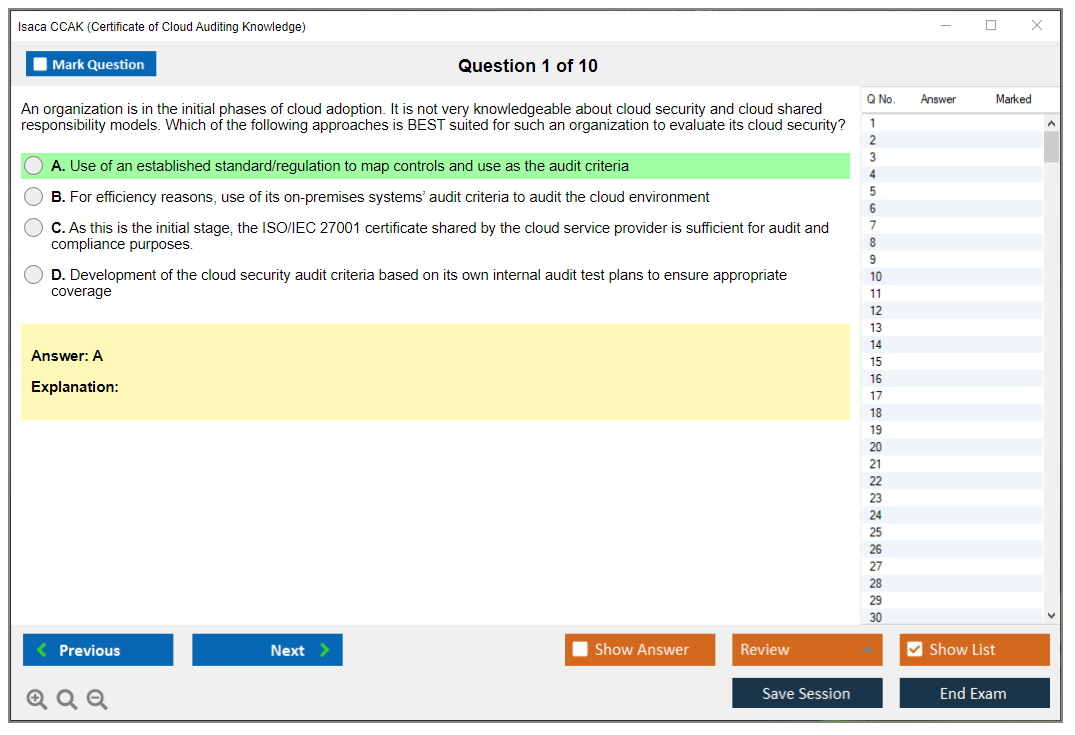
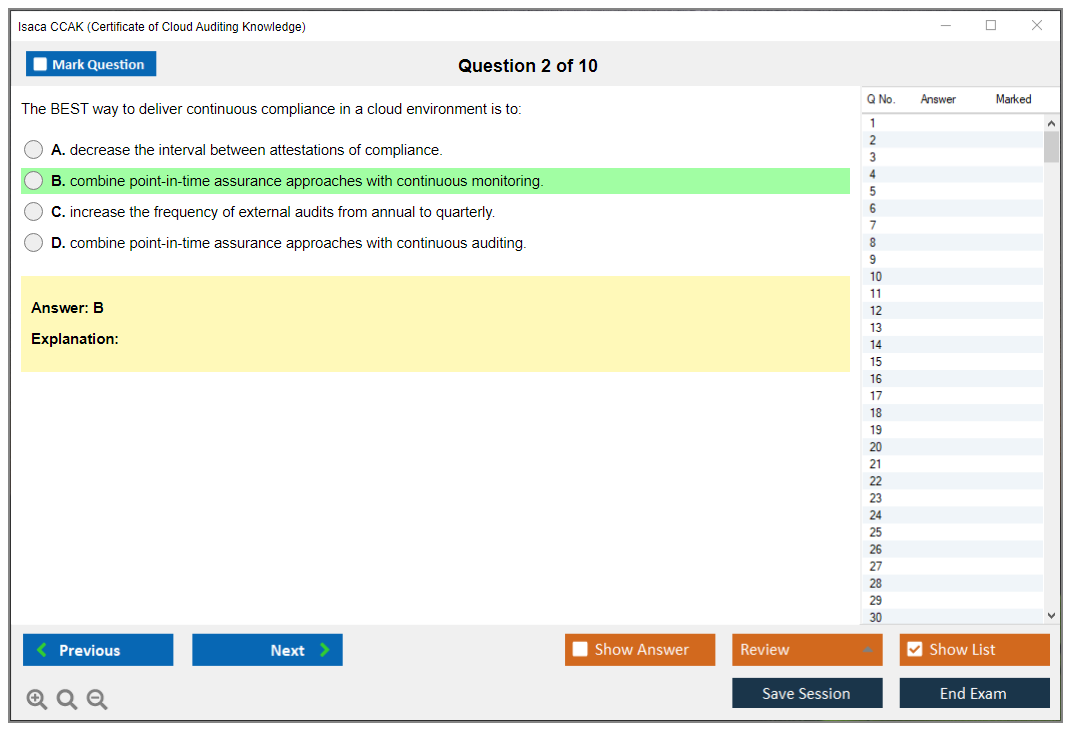
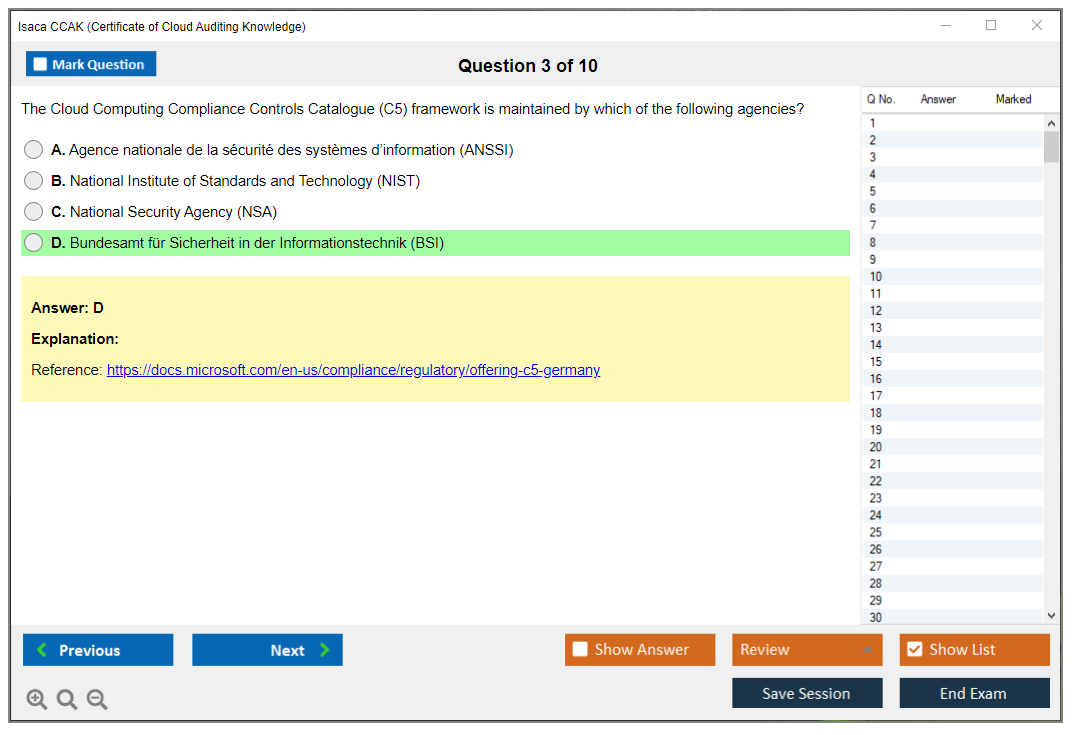
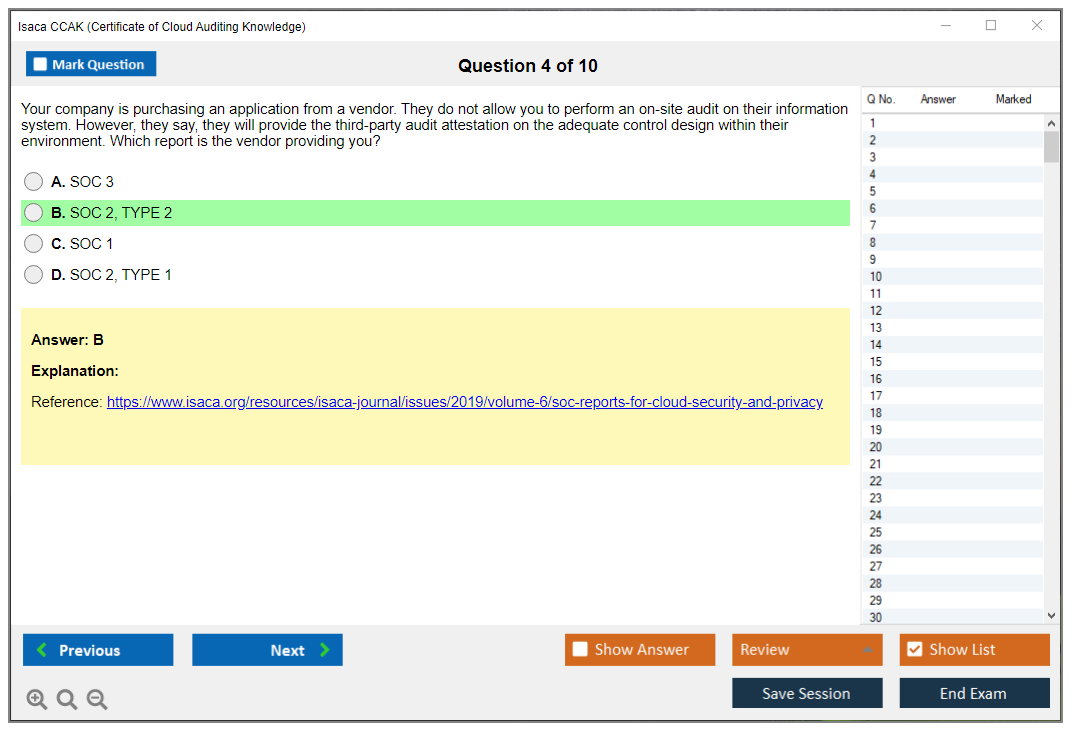
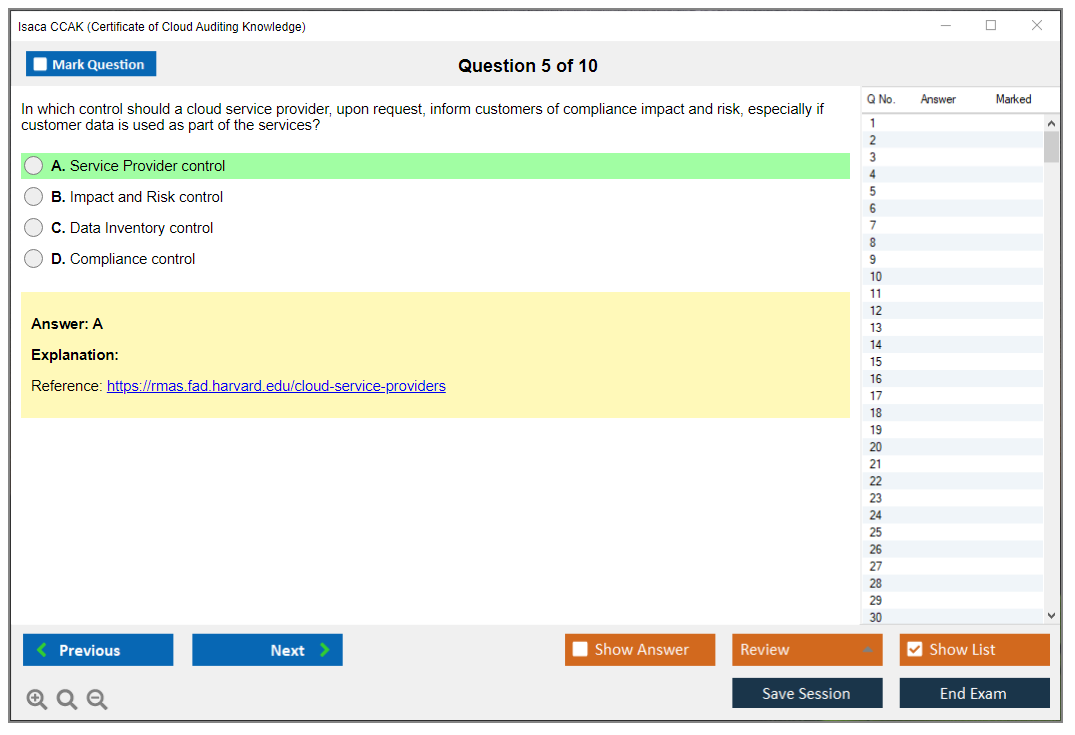
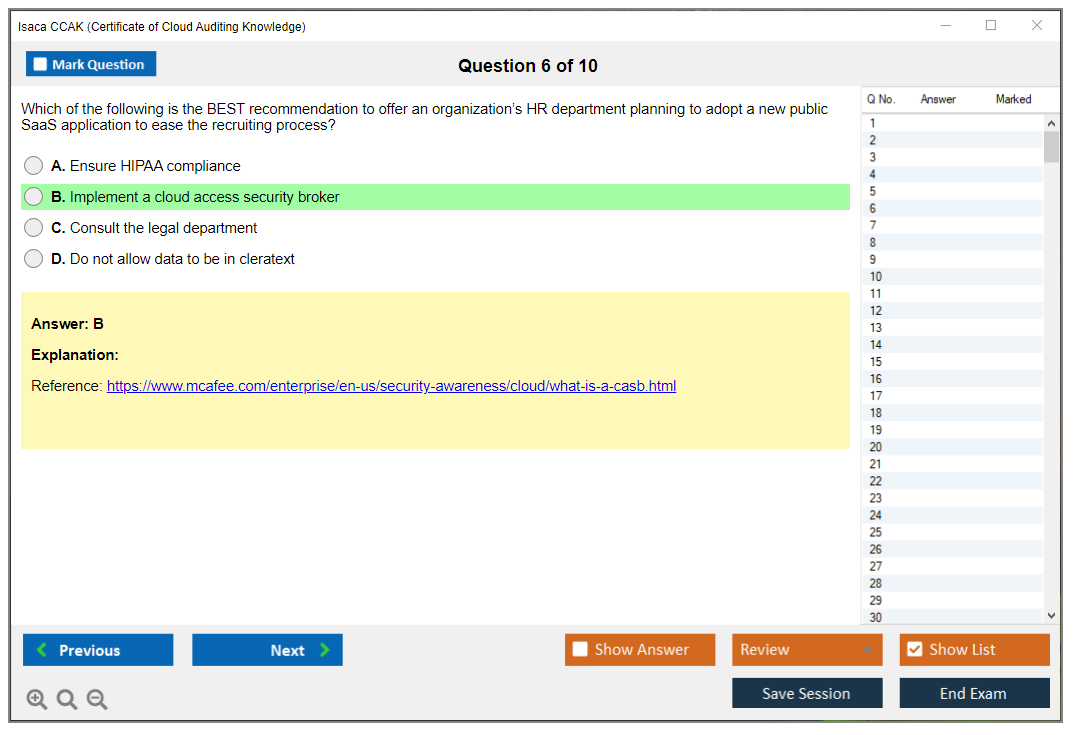
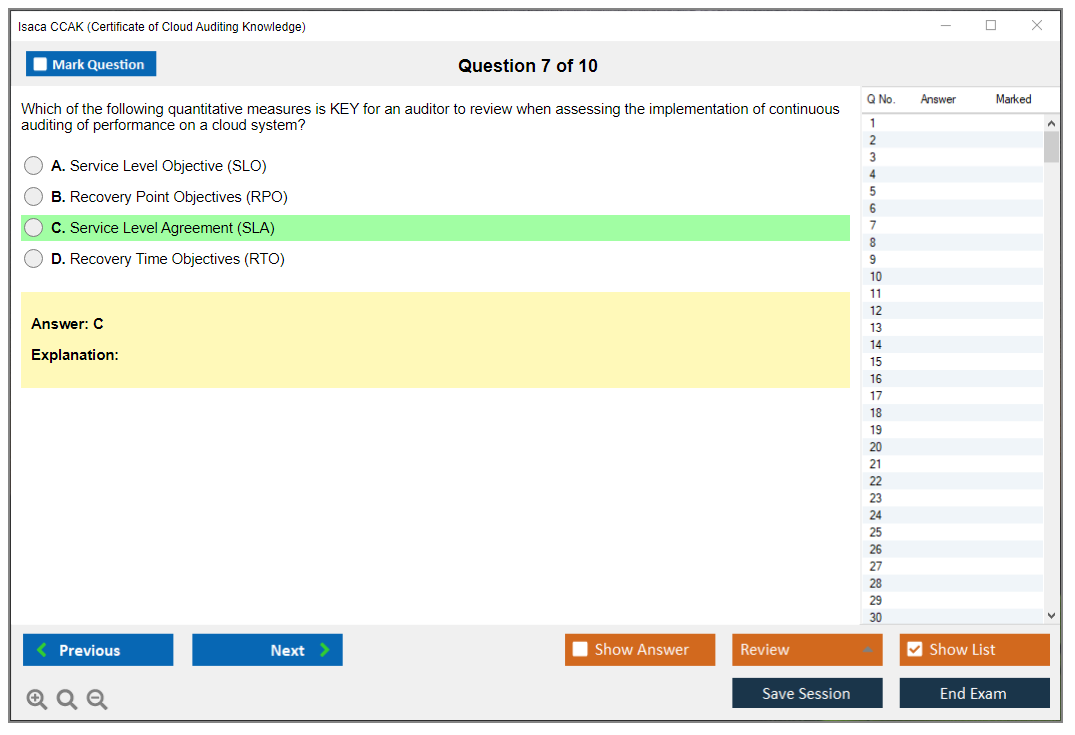
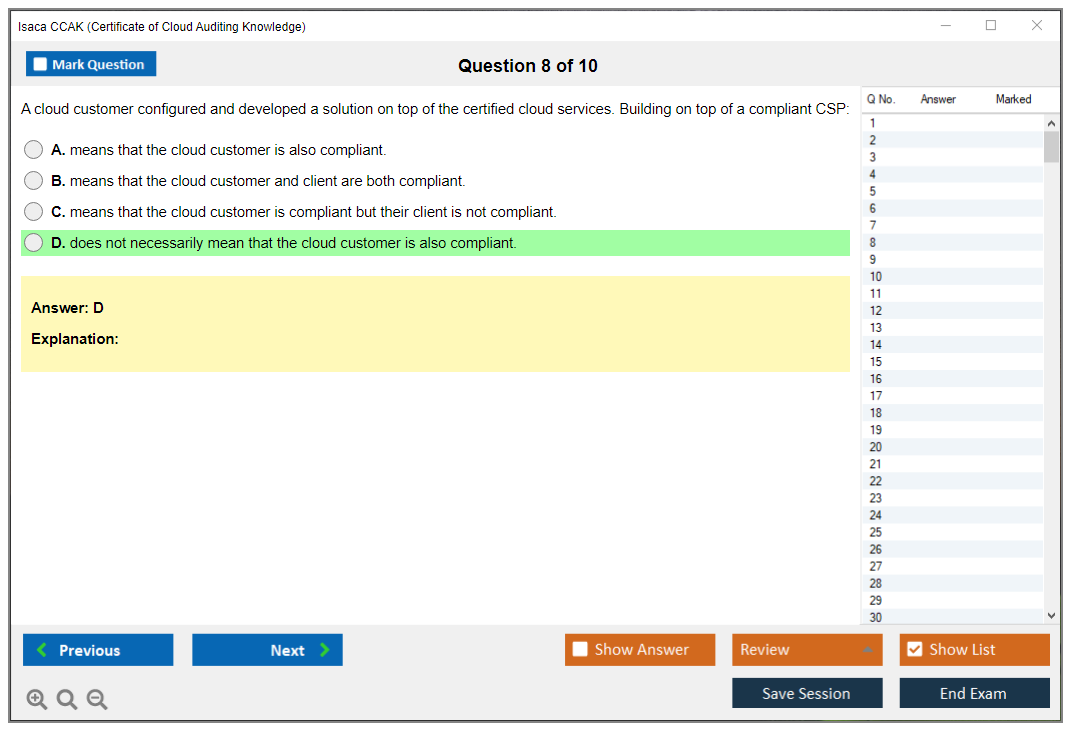
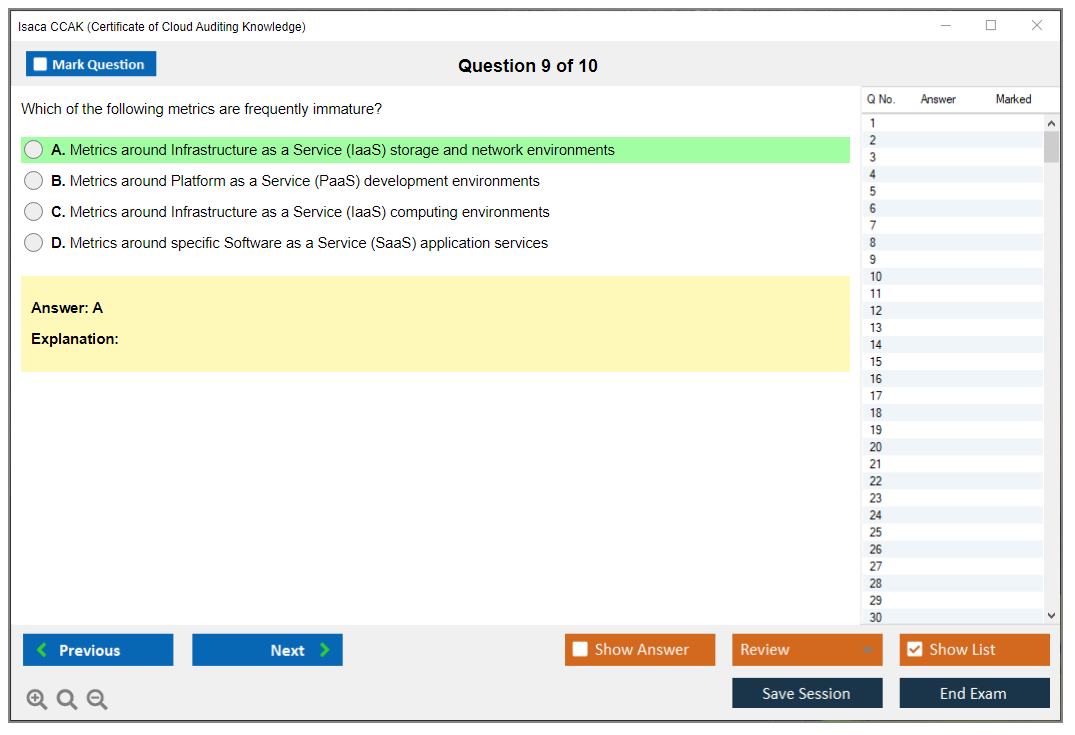
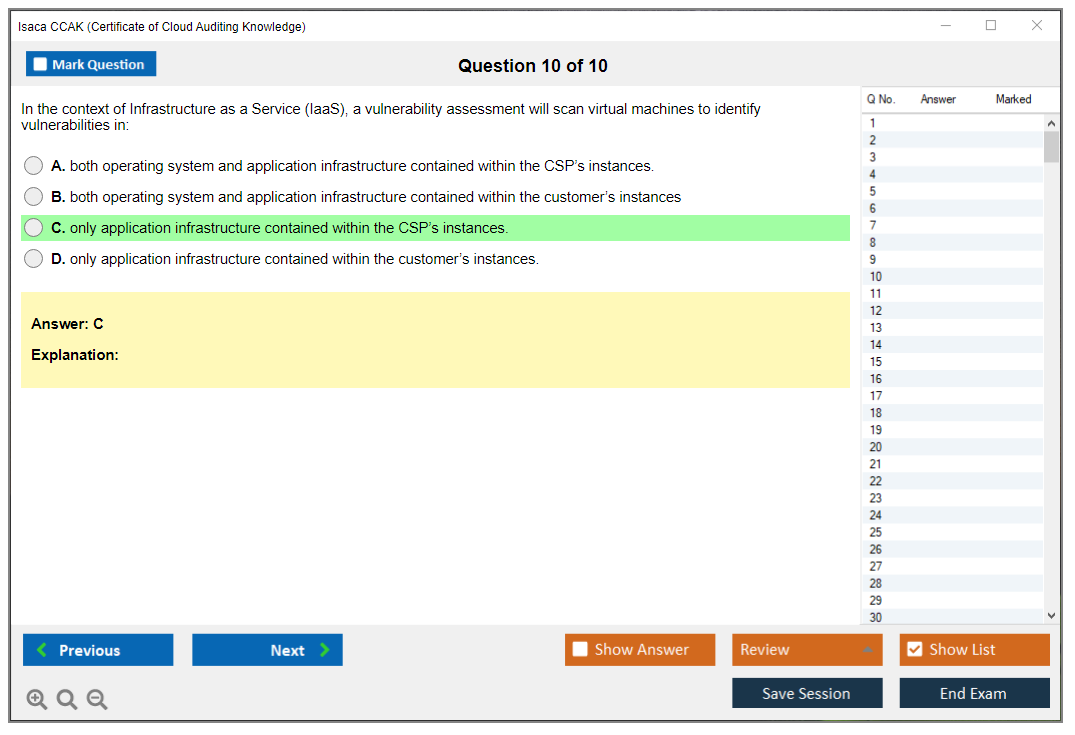
Isaca CCAK (Certificate of Cloud Auditing Knowledge)
Understanding the ISACA CCAK Certification and Its Value in Cloud Auditing
Cloud computing's revolutionized everything. Traditional IT audit approaches? They're basically obsolete now. That's why ISACA created the CCAK certification, to fill this absolutely massive gap in cloud auditing expertise that's been expanding for years.
What is the ISACA CCAK (Certificate of Cloud Auditing Knowledge)?
The ISACA CCAK certification is ISACA's specialized credential for cloud auditing knowledge. It validates that you really understand how to audit cloud environments instead of just traditional on-premise systems. The shift to cloud happened so fast that most auditors were scrambling to keep up with concepts like shared responsibility models, multi-tenancy risks, and cloud-specific control frameworks. Honestly, it was chaos.
ISACA developed this certification with the Cloud Security Alliance (CSA). Huge deal. CSA literally wrote the book on cloud security with their Cloud Controls Matrix and Security Guidance, so this partnership means the CCAK isn't just theoretical. It's grounded in real-world cloud security frameworks that organizations actually use when evaluating their AWS, Azure, or Google Cloud deployments.
The CCAK sits alongside heavyweights like CISA and CRISC within ISACA's certification portfolio, but it's laser-focused on cloud environments specifically. Traditional IT audit certifications cover cloud topics, sure, but they're often just a chapter or two in a much broader curriculum. I mean, that's not enough anymore. CCAK goes deep into cloud governance, compliance, and audit methodologies you need when you're actually sitting down to assess a cloud service provider's controls or your organization's cloud security posture.
The credential's gained global recognition pretty quickly. Financial services, healthcare, government agencies, and basically any heavily regulated industry values CCAK because regulators are increasingly asking tough questions about cloud controls. If you're in an organization that's migrated critical systems to the cloud, having someone on staff who understands cloud audit frameworks is becoming non-negotiable. Not gonna lie.
Who should pursue the CCAK certification?
IT auditors doing traditional infrastructure audits need this credential. Period. When your organization moves from data centers to cloud platforms, you can't just apply the same audit procedures and call it a day. The architecture's different, the risks are different, the control environment operates differently.
Internal auditors responsible for cloud governance assessments should seriously consider CCAK. You're going to be asked to evaluate whether cloud deployments meet your organization's risk appetite and compliance requirements. GRC professionals managing cloud risks will find this certification directly applicable to their day-to-day work, especially when mapping cloud controls to frameworks like NIST, ISO 27001, or industry-specific regulations.
Compliance officers overseeing cloud regulatory requirements need to understand how data sovereignty, encryption, and access controls work in cloud environments. This is particularly true in sectors like healthcare with HIPAA or finance with PCI DSS, where the mechanics differ fundamentally from traditional infrastructure. Information security professionals involved in cloud assurance benefit because CCAK gives you the audit perspective that complements technical security knowledge. Risk managers evaluating cloud service provider controls can use CCAK knowledge to ask better questions during vendor assessments and actually understand what you're looking at in a SOC 2 report.
Consultants providing cloud audit and advisory services can differentiate themselves in a crowded market with this credential. It matters when everyone's competing for the same engagements. Cloud architects seeking audit perspective might seem like an unusual audience, but honestly, understanding how your designs will be audited helps you build better, more defensible architectures from the start. The thing is, most architects don't think about audit until it's too late. Then they're stuck retrofitting controls into systems that weren't built to accommodate them, which gets expensive and messy real quick.
What jobs benefit from CCAK (cloud auditor, IT auditor, GRC, compliance)?
Cloud auditor positions are the obvious fit here. These roles specifically focus on evaluating cloud controls, conducting third-party assessments, and providing assurance over cloud-based systems. IT audit manager roles with cloud portfolios benefit because you're not just managing audits anymore. You're making strategic decisions about audit approach, resource allocation, and risk prioritization in hybrid environments where some systems are on-premise and others are scattered across multiple cloud providers. Gets complicated fast.
Third-party risk assessors evaluating cloud vendors need CCAK knowledge to properly interpret vendor-provided attestations and audit reports. I've seen compliance analysts for cloud-based operations struggle with understanding shared responsibility, what the cloud provider is responsible for versus what the customer must handle. CCAK directly addresses this gap in a way that's immediately applicable.
Information systems auditors in hybrid environments face unique challenges. You're dealing with traditional controls in some areas and cloud-native controls in others. Security auditors focusing on cloud infrastructure need the audit methodology and governance perspective that CCAK provides to complement technical security certifications.
Salary expectations for CCAK holders vary, but market demand's definitely strong. Organizations are paying premium rates for auditors who can competently assess cloud environments, especially when combined with certifications like CISA, CRISC, or CCSP. The combination of audit methodology knowledge and cloud-specific expertise is rare enough that it commands serious attention in the job market.
The business case for CCAK certification
From an organizational perspective, having CCAK-certified staff improves cloud audit quality and effectiveness. Your team actually understands what they're looking at instead of trying to force-fit traditional audit approaches onto cloud environments. This matters when meeting regulatory and compliance audit requirements. Auditors who understand cloud architectures ask better questions, identify more relevant risks, and provide more useful recommendations that actually make sense for cloud deployments.
Boosting stakeholder confidence in cloud controls is huge. Especially for boards and executives who're nervous about cloud adoption. When you can demonstrate that your audit team has specialized cloud audit credentials, it provides assurance that cloud risks are being properly evaluated and managed. I mean, that's what keeps executives up at night. For consulting firms, CCAK provides competitive advantage in the audit and consulting marketplace because clients increasingly expect cloud expertise, not just general IT audit capabilities.
The CCAK complements other certifications really well. Pair it with CISM for security management perspective, CGEIT for governance focus, or even COBIT-2019 for enterprise IT governance frameworks. Each certification adds a different dimension to your professional capabilities. CCAK fills the cloud audit gap that most other certifications don't fully address, which makes it valuable regardless of your current certification portfolio.
CCAK Exam Structure, Format, and Objectives
CCAK exam structure, format, and objectives
The ISACA CCAK certification hits different, honestly. On paper? Looks minor. In reality, it scratches a very particular career itch. Cloud audits get messy fast. Evidence flows through APIs, you're sharing controls with vendors, and the business legitimately believes "we migrated to AWS" equals bulletproof security. This exam tackles that chaos head-on, and the CCAK exam objectives show it.
It's not beginner-friendly cloud stuff. Not pure theory either. More like a weird hybrid.
CCAK exam format and structure details
You're facing 150 questions. All multiple-choice. Sounds straightforward, right? Except these questions lean heavily into scenarios where every answer choice seems plausible until you start thinking like an auditor who actually grasps cloud service provider boundaries, contractual obligations, and where responsibilities really shift.
Three hours. Zero bonus time. Pacing becomes critical.
Quick math gives you roughly 72 seconds per question, but here's the thing: you won't spend time evenly. Some items are just quick definition checks while others dump these long, convoluted scenarios about governance metrics, evidence collection strategies, or what you can reasonably validate when the control lives entirely inside a CSP-managed infrastructure layer. That's where time management transforms from a buzzword into an actual survival skill.
The exam runs on computer-based testing. Standard interface: select your answer, work through forward or backward, watch your progress bar creep along. I mean, this detail matters because marking and reviewing questions saves lives. Tag the time-vampires, maintain momentum, circle back once you've collected easier wins.
It's linear. Not adaptive testing. Questions stay fixed.
The sequence doesn't shift based on how you're performing. You can revisit flagged items, and typically you can modify answers before hitting that final submit button, which is exactly the strategy you should employ: first sweep for momentum, second pass for those judgment-call nightmares.
Also? No negative marking exists. Wrong answers carry zero penalty. Translation: never leave blanks, and when you're stuck between two options, choose whichever aligns better with audit methodology, shared responsibility frameworks, and what evidence would realistically exist in cloud environments.
Language availability varies depending on current program delivery options, but anticipate English as the primary exam language, with alternatives only appearing if the provider lists them for your region and testing schedule. Don't assume anything. Confirm before spending money, especially when you're budgeting around CCAK exam cost and trying to dodge rescheduling penalties.
CCAK exam objectives and domain breakdown
CCAK organizes around five domains. The weighting isn't arbitrary. It mirrors actual cloud audit experiences: governance and compliance establish frameworks, risk management directs priorities, audit execution does the heavy lifting, and assurance represents that "continuous operation" expectation modern organizations demand.
Here's the breakdown candidates typically plan against:
Domain 1: cloud governance (roughly 20%). Decision rights, policy enforcement mechanisms, service catalogs, reporting structures. I'll dive deeper below.
Domain 2: cloud compliance program (roughly 20%). Regulations, contracts, continuous validation, demonstrable proof.
Domain 3: cloud risk management (roughly 20%). Identification, analysis, treatment, monitoring. Vendor risk appears constantly.
Domain 4: cloud audit planning, execution, and reporting (roughly 25%). Largest portion. Evidence gathering, testing approaches, sampling methodologies, reporting standards, follow-up procedures.
Domain 5: cloud assurance and continuous monitoring (roughly 15%). SOC 2, ISO 27001, FedRAMP-style thinking, automation strategies, dashboard implementations.
A massive thread weaving through everything is the shared responsibility model. Without understanding who owns what across IaaS, PaaS, and SaaS, you'll bomb questions even with solid security knowledge. Same applies to deployment models: public, private, hybrid, and multi-cloud configurations appear frequently because audit scope and evidence pathways transform when workloads and controls fragment across environments.
The CSA Cloud Controls Matrix (CCM) is fundamentally embedded in the exam's philosophy. You don't need every control ID memorized, but you absolutely need to recognize how CCM categories translate to audit criteria, how they connect with assurance reports, and why cloud-specific controls (virtualization, tenant isolation, cloud change management) refuse to squeeze into legacy on-premises checklists.
This is a cloud auditing certification demanding you think in mappings. Framework connects to control. Control connects to evidence.
I actually saw someone fail this exam twice before they figured out the shared responsibility model wasn't just a concept to nod at during meetings. They kept approaching questions like traditional IT audits where you control the entire stack. Cloud doesn't work that way. You're constantly negotiating between what you can test directly and what you have to trust through third-party attestations. That mental shift is harder than it sounds.
Domain 1: Cloud governance (roughly 20%)
Cloud governance is where the exam develops a personality, and honestly? I appreciate that. It forces you to think about cloud as a business operating model rather than just a collection of technical services. Expect governance frameworks and underlying principles, plus how organizations structure roles so somebody actually owns cloud decisions instead of playing organizational hide-and-seek with "the platform team."
You'll encounter organizational structure questions: who approves cloud adoption patterns, who manages exceptions, how risk and compliance integrate with engineering workflows, and what "decision rights" actually mean when product teams can deploy infrastructure from templates within minutes. Policy development and enforcement appear here too, but cloud policy isn't a static PDF. It's guardrails, infrastructure-as-code controls, approval workflows, tagging standards, and reporting that leadership comprehends without needing Kubernetes fluency.
Service catalog management appears because approved services constitute governance elements. Metrics and reporting surface because governance without measurement is basically vibes. And accountability models persist because cloud failure modes distribute between internal teams and providers, and the audit question perpetually remains, "who can prove what, and precisely when?"
Domain 2: Cloud compliance program (roughly 20%)
Compliance is where legal reality crashes into architecture. Regulatory and legal requirements, industry frameworks like HIPAA, PCI DSS, GDPR, and similar obligations materialize in scenario formats, usually connected to data handling, logging practices, access patterns, and third-party commitments.
Data residency matters a lot. Contracts matter more. Evidence matters most.
Anticipate questions about audit rights, contractual provisions, and your options when a CSP refuses to provide evidence you'd automatically get on-premises. Compliance automation and continuous monitoring aren't optional extras here. You'll face testing on approaches that render compliance measurable, repeatable, and reportable without depending on annual panic cycles.
Domain 3: Cloud risk management (roughly 20%)
This domain represents classic risk work, but cloud-adapted. Risk assessment methodologies, identification processes, analysis techniques, evaluation criteria, treatment strategies, monitoring approaches, and reporting mechanisms. Third-party and vendor risk management appears frequently because cloud ecosystems now function as supply chains, with managed services, marketplaces, CI/CD tooling, and identity providers all sitting squarely in the blast radius.
Many candidates underestimate this section. Cloud risk isn't theoretical. It's deeply operational.
Domain 4: Cloud audit planning, execution, and reporting (roughly 25%)
This domain claims the largest percentage for good reason. Scoping decisions, materiality assessments, risk-based audit methodologies, and evidence gathering when you can't physically touch hardware and half your "systems" are actually managed services. Testing controls and configurations dominates, alongside recognizing what constitutes solid evidence: logs, IAM policies, configuration baselines, ticket trails, pipeline approvals, and third-party attestations.
Sampling techniques appear, remote auditing appears, and documentation matters because working papers still require scrutiny resistance. Then findings: classification approaches, writing techniques, communication strategies that avoid transforming reports into unread security blog posts. Follow-up and remediation tracking completes the loop, because audits that don't drive corrections are just expensive theater.
Domain 5: Cloud assurance and continuous monitoring (roughly 15%)
This represents the "sustain assurance" domain. Attestation and certification frameworks like SOC 2, ISO 27001, and FedRAMP concepts surface, plus continuous auditing and automated monitoring strategies. Expect mentions of cloud security posture management, real-time control monitoring, dashboards, metrics, and how DevSecOps shifts what auditors can test and testing frequency.
If you're building a CCAK exam preparation guide, this is also where quality CCAK study materials and CCAK practice tests deliver maximum value, because questions blend tooling, assurance reports, and audit expectations in ways that resist improvisation.
Quick notes people always ask anyway
CCAK passing score details typically present as a scaled score with a defined cut score, not "you need 75%." That means your objective is broad competence across CCAK domains and topics, not isolated perfection.
CCAK prerequisites usually aren't rigidly enforced like some certifications, but the exam presumes you understand audit fundamentals plus cloud basics. And CCAK renewal requirements exist for maintaining active certification, so plan for CPE tracking the same way you would for any ISACA cloud audit credential.
Regarding CCAK exam difficulty, it's fair yet unforgiving if you only possess one perspective: auditors lacking cloud knowledge drown in service models, and cloud engineers without audit experience drown in evidence requirements, reporting structures, and governance logic. The thing is, people who excel are usually those who've endured those awkward meetings where nobody can identify who owns the control.
CCAK Exam Cost, Passing Score, and Difficulty Assessment
Breaking down the CCAK exam costs
Okay, so the CCAK exam? Not cheap. If you're an ISACA member, you'll shell out $575 USD as of 2026. Non-members get hit harder at $760 USD. That's a $185 gap right there, which honestly adds up.
Here's the thing, though: ISACA membership runs $135 yearly, so if you're taking the exam anyway, membership basically covers itself plus you pocket $50. I mean, that's kinda obvious math if you're actually serious about the CCAK certification. The exam fee's just the start. Wait, there's a bunch of other costs nobody warns you about properly.
The official ISACA CCAK Review Course? Between $799 and $1,199 depending on timing and which package appeals to you. The CCAK Review Manual runs another $125 to $175. Third-party training and bootcamps'll set you back $500 to $2,000, though some expensive bootcamps honestly don't deliver value matching their price tags. I've seen people waste money there. Practice exams and question banks typically cost $50 to $200. Study materials and reference books add $100 to $300 more.
Total investment? You're realistically looking at $1,000 to $3,500 for complete preparation depending on how much support you need and whether you invest in official materials only. Some folks pass with just the manual and practice tests. Others require the full course package. I once knew a guy who bought every single prep resource available and still failed twice because he never actually opened half of them. Money doesn't replace study hours.
Early registration discounts appear occasionally. Usually around conference seasons or promotional periods. Group registration options exist for organizations sending multiple candidates and save 10-15% per person. Regional pricing variations aren't massive, but currency fluctuations affect international candidates, something worth watching if you're paying in euros or pounds.
What happens if you fail? Retake costs explained
Not gonna sugarcoat it. Retake fees hurt because they're identical to initial registration. Member rate again. Non-member rate again. Zero discount for second attempts. There's a 30-day minimum waiting period between attempts, which actually benefits you because it forces genuine study time instead of impulsive immediate retakes.
Unlimited retake attempts? Allowed. Each one costing the same amount? Also true. When budgeting for CCAK, consider setting aside money for one potential retake. The pass rate hovers around 60-70% for first-timers, meaning roughly one in three people needs another shot.
Refund and cancellation policies? Strict. You can reschedule with fees if you give sufficient notice, but last-minute cancellations usually forfeit the entire registration fee. Rescheduling fees vary based on proximity to exam date, typically $50 to $100 if done within the allowed timeframe.
Understanding the CCAK passing score
The official passing score's 450 out of 800 on a scaled score system. What's that actually mean? Your raw score (the number of questions you answered correctly) gets converted to a scaled score through psychometric calculations that account for question difficulty variations across different exam forms.
Why scaled scoring? Not all exam versions are identical in difficulty. Someone taking version A might encounter slightly harder questions than version B, so scaling ensures fairness across administrations. Your raw score might be 65% correct, but the scaled score could shift higher or lower depending on which specific questions you answered correctly and their difficulty weights.
No partial credit exists. No negative marking either. You either nail the question or you don't, but at least wrong answers don't penalize you beyond not earning points. ISACA establishes minimum performance standards based on what entry-level cloud auditors should demonstrate, then calibrates the cut score accordingly.
What your score report actually tells you
Results arrive fast. Usually within a few days for computer-based exams, sometimes immediately on screen for the pass/fail notification, then a detailed report follows shortly after. If you passed, congrats, you're finished. If you failed, the diagnostic information becomes valuable for your next attempt.
Domain-level performance feedback reveals where you struggled. Maybe you crushed cloud governance but completely bombed third-party risk management. That pinpoints exactly where to focus for your retake. The scaled score shows how close you came. Failing with a 430 stings differently than failing with a 380.
What to do immediately after failing? Don't spiral. Take a day off completely, then review that diagnostic report carefully. Map your weak domains to specific study materials. If you struggled with audit methodology concepts, maybe supplement with CISA materials. If cloud controls tripped you up, dive deeper into CSA guidance and framework documentation.
How hard is CCAK really?
Compared to other ISACA exams? CCAK sits somewhere middle-range difficulty-wise. Easier than CISM or CRISC, harder than foundational certs like COBIT-2019. The 60-70% first-time pass rate backs this assessment up. It's passable but definitely not a gimme.
What makes CCAK challenging? The blend of conceptual and technical content throws people off balance. You need to grasp both audit methodology AND cloud technology architecture at the same time, which requires different thinking modes. Scenario-based questions require applying knowledge in context, not just recalling memorized facts. A question might describe a multi-cloud environment with specific compliance requirements and ask what audit approach makes sense. You can't just memorize your way through that kind of application-level thinking.
Ambiguity in questions frustrates candidates constantly. Sometimes two answers seem correct, and you're choosing the "most correct" option based on audit principles versus technical implementation details. It's subjective in ways that feel unfair. Time pressure matters too. You need to move quickly without rushing through complex scenarios.
Who struggles most with CCAK difficulty?
Traditional IT auditors find CCAK moderately challenging because cloud concepts feel foreign initially. Understanding shared responsibility models, containerization, and cloud-native architectures requires actual technical learning, not just audit framework application like they're used to. I mean, these folks know frameworks but not Kubernetes. They usually need 80-120 hours of study time.
Cloud engineers often struggle more than expected with audit methodology concepts, which surprises them. You might architect amazing AWS environments but have zero clue how to scope an audit engagement or evaluate control effectiveness using COBIT or NIST frameworks. The audit thinking doesn't come naturally if you've never done compliance work before.
Compliance professionals adapt to technical cloud content at varying speeds. Depends entirely on their tech background. If you've done security compliance but never touched infrastructure-as-code or Kubernetes, expect a learning curve.
Candidates with both audit AND cloud experience? Easiest path by far, maybe 60-80 hours of focused study. They're translating existing knowledge into the CCAK framework rather than learning entirely new domains from scratch. Hands-on cloud experience improves exam performance because you can visualize the scenarios instead of reading about them abstractly without context.
Realistic study timelines for different backgrounds
Four to six weeks intensive works if you're experienced in both areas and can dedicate 15-20 hours weekly. Eight to twelve weeks part-time (10 hours weekly) fits most working professionals with relevant background. Twelve to sixteen weeks makes sense if you're newer to either cloud or audit and need time building foundational knowledge before tackling CCAK-specific content.
Your individual study time depends on how much overlap exists between your current role and the exam domains. A cloud security engineer at a financial services firm probably needs less time than a network administrator at a small business who's never dealt with compliance frameworks before.
CCAK Prerequisites, Eligibility, and Recommended Background
CCAK prerequisites, eligibility, and recommended background
When people ask about the ISACA CCAK certification, they usually assume it's got the same gatekeeping vibe as CISA or CISSP. It doesn't. CCAK's way more open, which is actually great news if you're trying to pivot into a cloud auditing certification without waiting years to "qualify" on paper.
Official CCAK prerequisites and eligibility requirements
ISACA's stance? Show up and register.
There are no formal prerequisites required by ISACA for the CCAK exam. You don't need a specific training course, you don't need a certain job title, and you don't need someone to vouch for your experience.
No mandatory work experience to sit for the exam. No educational degree requirements. Open enrollment for all interested candidates. Also, there aren't age restrictions or geographic restrictions that block you from registering, which matters if you're outside the usual North America and Western Europe certification bubble.
One thing people miss is that exam eligibility and real-world certification value are totally different. You can be eligible on day one, but the credential "lands" better when your background lines up with what the exam tests. And what hiring managers expect a cloud audit person to be able to talk through without freezing.
Difference between exam eligibility and certification value
The CCAK isn't a magic key that turns a help desk resume into "Senior Cloud Auditor" overnight. The exam's accessible, but the content assumes you can think like an auditor and also speak cloud. That combo is the whole point of the ISACA cloud audit credential.
So yeah, you can register with zero experience. But if you're brand new, plan on extra ramp-up time, more labbing, and more reading around governance and controls. Not just memorizing terms from CCAK study materials and hoping the questions are friendly.
Recommended professional background for CCAK success
If you asked me for the sweet spot, I'd say 1 to 3 years of IT audit experience is highly beneficial. Not required, just helpful, because once you've done even a couple real audits, the exam prompts feel like normal work: scoping, evidence, control testing, and figuring out whether a provider responsibility or a customer responsibility is getting missed.
Useful background tends to include understanding audit methodology and frameworks, familiarity with internal controls and control testing, basic knowledge of risk assessment processes, and some exposure to compliance and regulatory requirements. Experience with cloud services as a user or administrator helps a lot too, because otherwise the shared responsibility model feels like a trick question instead of a daily reality.
A quick note on roles. Internal auditors in cloud-heavy companies usually "get" CCAK fast. Cloud security people can do well too, but sometimes they over-focus on technical hardening and forget the audit angle: evidence, criteria, and repeatability.
Technical knowledge recommendations (what you should know before studying)
Cloud fundamentals are non-negotiable.
You should be comfortable with service models, the basic building blocks of cloud architecture, and what changes when the infrastructure's abstracted away behind APIs. Virtualization concepts matter, but not in a "build your own hypervisor" way. More like understanding isolation, shared hosts, and what you can and can't prove as a customer.
Here's what I'd want you to have at least "working familiarity" with:
Cloud computing fundamentals and IaaS vs PaaS vs SaaS. This is the one I'd explain in detail because it shows up everywhere: IaaS pushes more controls onto you (OS config, patching, network rules), PaaS shifts parts of that to the provider, SaaS shifts even more, and your audit approach changes with it.
Identity and access management is another big one. If you can't reason about roles, MFA, federation, provisioning, and logging access events, cloud audits get messy fast. The exam'll feel like it's speaking a different language.
Encryption and data protection, network security basics in a cloud context, API security and integration concepts, cloud monitoring and logging capabilities. Mentioning the rest casually, but you get the idea.
Audit and compliance knowledge prerequisites (what helps, even if you're not an auditor)
Audit and compliance isn't about memorizing acronyms. It's about knowing what "good evidence" looks like and how to connect it to a control requirement without hand-waving. Familiarity with internal control frameworks like COSO and COBIT helps, plus audit standards like IIA Standards and ISACA Standards.
Risk frameworks come up too, like ISO 31000 and NIST RMF, and then the compliance world shows up with ISO 27001, SOC 2, and GDPR. Evidence gathering and documentation practices matter. Audit planning and scoping methodologies matter. Report writing matters. Quick fragments. Because your findings have to be readable.
I once watched a contractor submit a cloud audit report that basically said "everything's fine" without a single screenshot, log excerpt, or dated control test. Got sent back three times. The vendor relationship nearly tanked. You don't want to be that person.
Self-assessment checklist before registering for CCAK
Before you pay anything or stress about CCAK exam difficulty, check yourself with a quick gut-level quiz:
Can you explain the shared responsibility model? Do you understand the difference between IaaS, PaaS, and SaaS? Are you familiar with cloud governance concepts? Can you describe basic audit testing procedures and what constitutes audit evidence? Are you comfortable with risk assessment terminology? Have you reviewed compliance frameworks before, even once? Can you interpret cloud service agreements without getting lost in the legal fog?
If you said "no" to most of those, you can still pass. You just need more prep runway, and you should plan your CCAK exam preparation guide around foundations first, not practice questions first.
Bridging knowledge gaps before exam preparation
For cloud computing fundamentals, start with free vendor docs and intro courses. AWS, Azure, and GCP all've got beginner paths, and their free tiers are enough to explore IAM, logging, basic networking, and storage policies without spending real money. Hands-on matters, because otherwise cloud architecture components stay abstract.
For audit methodology, grab an audit primer aimed at IT, then map it to cloud scenarios: scoping a SaaS vendor, collecting SOC 2 evidence, testing user access reviews, validating logging retention. Also, if you can participate in a cloud audit project, even as an observer taking notes, do it. Not gonna lie, watching how evidence's requested and negotiated teaches more than reading ten pages of theory.
And if you want extra reps with exam-style questions, I'm fine recommending a paid pack as long as it's not sketchy. The CCAK Practice Exam Questions Pack is a decent way to pressure-test your weak spots after you've reviewed CCAK exam objectives and covered the CCAK domains and topics. Same link if you want it again: CCAK Practice Exam Questions Pack. Don't use anything that looks like a brain dump. Easy way to get burned.
Optimal candidate profiles for CCAK certification
The best fits? Pretty predictable.
Experienced IT auditors expanding into cloud, cloud security professionals seeking audit credibility, compliance managers overseeing cloud operations, risk professionals assessing cloud providers, internal auditors in orgs moving workloads to AWS or Azure, and consultants doing cloud governance and compliance audit work for clients.
One last thing people always ask: CCAK exam cost, CCAK passing score, and CCAK renewal requirements. The thing is, those details change over time, so I won't hardcode numbers here. You should check ISACA's current page before you register, then build your plan around your timeline, the published scoring approach, and whether your employer'll reimburse fees and CPE tracking. If you're budgeting for prep, factor in optional training, your chosen CCAK study materials, and maybe one focused practice resource like the CCAK Practice Exam Questions Pack once your base knowledge's solid.
Full CCAK Study Materials and Resources Guide
Official ISACA CCAK study resources
Okay, so here's the deal. When prepping for the ISACA CCAK certification, you've gotta start with ISACA's official materials. I mean, yeah, they're pricey, but think about it: you're getting content that actually mirrors what shows up on the real exam, which honestly makes all the difference even if your wallet disagrees at first.
Grab the CCAK Exam Candidate Information Guide first. It's free. Seriously, just download it from ISACA's website right now because this document lays out the exam structure, domains, and precisely what they're testing. You'd be shocked how many folks skip this step entirely and then waste weeks studying irrelevant material.
ISACA's got the CCAK Certificate Review Course in three flavors: online self-paced, instructor-led virtual, and sometimes in-person sessions. The instructor-led format? That Q&A interaction really helps when you're wrestling with shared responsibility models or cloud governance frameworks. Self-paced is perfect if you've got discipline and, honestly, a chaotic schedule like mine where studying at 11 PM somehow works better than morning sessions. I once tried studying at 6 AM after reading some productivity guru's advice about morning routines, and I just sat there staring at the CCM framework like it was written in ancient Greek. Some of us are just wired differently, I guess.
The CCAK Review Manual is your official textbook. Dense doesn't even begin to describe it. This thing is seriously heavy reading, but it methodically covers all five domains using language that matches actual exam questions, which becomes absolutely key when you're trying to decode what they're really asking in those weirdly-worded scenarios. Then you've got the CCAK Review Questions, Answers & Explanations database, which is pure gold because you're not merely practicing questions, you're getting detailed breakdowns explaining why each answer works or fails. The CCAK Practice Exam Questions Pack at $36.99 offers another solid choice that delivers exam-style questions for testing your readiness without the financial devastation some official bundles cause.
ISACA membership gets you discounts, usually 15-20% off everything. If you're planning multiple ISACA certifications (maybe combining CCAK with CISA or CRISC), membership basically pays for itself pretty quickly. They've also got bundled packages merging the review course, manual, and question database that'll save you roughly $100-150 versus buying items separately, which adds up.
The downside? Official materials feel dry. Overly formal. They're thorough but not exactly page-turners, making those marathon study sessions really tough to power through.
Cloud Security Alliance (CSA) resources
Here's what people constantly overlook. The CCAK exam leans heavily on the CSA Cloud Controls Matrix (CCM) version 4.0. Like, really heavily. The CCM provides a framework containing cloud security controls spanning 17 domains, and without understanding it properly, you'll struggle with maybe 40% of exam content. No exaggeration.
Download the CCM free from the Cloud Security Alliance website. It's not light reading, over 197 controls covering everything from application security through supply chain management, but you absolutely need comfort working through its structure. I personally spent probably 15 hours just working through the CCM framework, understanding how controls map onto different cloud service models (IaaS, PaaS, SaaS) and deployment configurations, which felt tedious initially but.. the thing is, it clicked eventually and made exam questions way more intuitive.
CSA publishes the Security Guidance for Critical Areas of Focus in Cloud Computing too, which is basically a detailed white paper collection explaining cloud security concepts comprehensively. Version 4.0 is current as I write this. Free to download. The sections covering governance and compliance feed directly into CCAK domains, so don't skip them thinking they're optional background reading.
The CSA STAR (Security, Trust, Assurance, and Risk) Registry deserves exploration because it showcases real-world implementations of CCM controls by actual cloud service providers. You can examine how legitimate companies document their security postures, which clarifies audit evidence collection, a key CCAK domain that trips people up constantly.
CSA runs webinars regularly. Publishes research papers. Not everything's relevant, obviously, but filter for topics like cloud audit methodology, governance frameworks, and compliance automation because these provide practical context the exam tests indirectly through those scenario questions that make you think three steps ahead.
Third-party CCAK training courses
The third-party training market for CCAK is smaller than for certifications like CISM or CISSP, honestly. Still, options exist.
Bootcamp providers like InfosecTrain and Simplilearn offer intensive 3-5 day courses, both virtual and in-person formats. These compress all content into condensed timeframes with practice exams and hands-on exercises included. Cost typically runs $800-1,500. They work if you need structure and have limited prep time available, but they're absolutely exhausting and require immediate follow-up study to retain everything you just crammed into your brain.
Self-paced platforms like Udemy sometimes feature CCAK prep courses for $50-100, though quality varies wildly between instructors. Check credentials carefully. Read recent reviews. Pluralsight and LinkedIn Learning have cloud auditing content but not always CCAK-specific materials. You're basically piecing together modules covering cloud governance, risk management, and audit methodology, hoping they align with exam objectives.
Corporate group training makes financial sense when you're certifying multiple team members at once. Vendors offer volume discounts and can customize content matching your organization's specific cloud environment, whether you're AWS-heavy, Azure-focused, or running a multi-cloud setup.
Cost-benefit analysis? If you're already experienced in IT audit and just need cloud-specific knowledge added, third-party courses might be overkill honestly. If you're transitioning from cloud engineering into audit or GRC roles, structured training fills knowledge gaps faster than self-study alone ever could.
Free and low-cost CCAK study resources
ISACA Knowledge Center has articles on cloud auditing topics like governance, continuous monitoring, vendor management. Free with membership. Some articles are publicly accessible. They're shorter than official study materials but excellent for reinforcing specific concepts that didn't stick the first time through.
Cloud provider whitepapers are seriously underrated for CCAK prep, I mean it. AWS, Azure, and GCP all publish detailed documentation covering their compliance programs, shared responsibility models, and security controls in depth. The AWS Well-Architected Framework's security pillar, Azure's compliance offerings guide, and GCP's security whitepapers explain how cloud services implement controls that you'll eventually audit in professional practice.
NIST Special Publications, especially the 800-series, are free and highly relevant to exam content. SP 800-145 defines cloud computing characteristics formally. SP 800-53 covers security controls overlapping significantly with CCM frameworks. SP 800-37 explains risk management frameworks that CCAK specifically tests your understanding of.
YouTube has channels covering cloud security and governance. Honestly hit or miss quality-wise, but channels like Cloud Security Podcast and certain university lectures on cloud compliance work decently for visual learners who zone out reading dense manuals.
Reddit's r/AuditPros and LinkedIn groups for IT audit professionals occasionally discuss CCAK study strategies and share tips. Study groups help if you're self-motivated but need accountability from others going through the same struggle.
Creating your personalized CCAK study plan
Start by honestly assessing where you're weak. Coming from an audit background (maybe you've already got your CISA)? Cloud governance and technical controls probably need more time. Cloud engineer transitioning over? Audit methodology and compliance frameworks likely need focused attention.
The five CCAK domains aren't equally weighted in required study time. Cloud Governance is foundational, spend maybe 25% of total time there. Risk Management and Compliance each deserve roughly 20% attention. Audit Planning and Continuous Monitoring split the remaining 35% between them.
An 8-week study plan works for most people committing 10-15 hours weekly. Week 1-2 covers cloud fundamentals and governance concepts. Week 3-4 handles CCM deep dive and compliance frameworks. Week 5-6 tackles audit methodology and planning processes. Week 7 addresses continuous monitoring and reporting mechanisms. Week 8 focuses on practice exams and weak area review using resources like the CCAK Practice Exam Questions Pack to identify remaining gaps.
Balance reading with active practice always. Spending 100% of time reading the review manual doesn't work. You need to apply concepts through practice questions and scenario analysis regularly. I did roughly 60% reading and note-taking, 30% practice questions, and 10% hands-on exploration of cloud platforms, which felt like the right mix for retaining information long-term.
Study techniques for CCAK exam success
Active reading beats passive reading every single time. I annotated my review manual extensively, created domain-specific summaries, and built a flashcard deck covering the 197 CCM controls. Yeah, all of them individually. Overkill maybe? But I passed first try, so no regrets honestly.
Mind mapping helps connect concepts across domains visually. Cloud governance influences risk management, which drives audit scope, which determines monitoring controls. Wait, that's important. These relationships aren't isolated, they're interconnected, and exam scenarios test that cross-domain thinking constantly.
Teach someone else the material. Even if it's just explaining to a confused spouse why cloud shared responsibility matters for security outcomes. If you can't explain it simply, you don't understand it well enough for application-level exam questions that require practical judgment calls.
Spaced repetition for memorization-heavy content like compliance frameworks and control categories works best. Review CCM domains on days 1, 3, 7, 14, and 28 to move information into long-term memory instead of short-term cramming that evaporates by exam day.
Practice question analysis is absolutely critical. Don't just check whether you got it right, understand deeply why wrong answers are wrong. The CCAK Practice Exam Questions Pack provides explanations helping you learn the reasoning behind correct answers, which matters infinitely more than memorizing isolated facts that you'll forget under exam pressure.
Final week should be light review and confidence building exclusively. Don't cram new material now. Hit weak areas one more time, complete a full practice exam under timed conditions, then rest properly before exam day because a tired brain fails even easy questions.
CCAK Practice Tests and Exam Question Strategies
What is the ISACA CCAK (Certificate of Cloud Auditing Knowledge)?
The ISACA CCAK certification is a cloud auditing certification designed for professionals who need to audit cloud environments with actual confidence instead of just hoping they're asking the right questions. It's not tied to any vendor. Think of it more as "can you properly evaluate cloud governance and compliance audit work, grasp the details of shared responsibility models, and request appropriate evidence without getting buried under a provider's glossy marketing presentation."
Who should pursue the CCAK certification?
IT auditors, obviously. GRC analysts, compliance professionals, security assessors. But also cloud engineers who constantly find themselves dragged into audit support situations and are tired of improvising every single time. Different motivations. Same result. Way less chaos.
What jobs benefit from CCAK (cloud auditor, IT auditor, GRC, compliance)?
Cloud auditor and IT auditor roles are the no-brainers here, but honestly, vendor risk teams and internal control owners get real value too. The CCAK domains and topics align surprisingly well with actual audit requests like identity management, logging practices, encryption standards, third-party risk assessment, and evidence quality verification.
CCAK exam overview
Multiple choice format. Heavy on scenarios. You won't face trivia questions like "what port does X use." Instead you're tested on judgment calls and audit thinking, all connected back to cloud control expectations and that shared responsibility framework everyone talks about.
Exam format, question types, and time limit
Expect single-best-answer questions with lengthy prompts. A few are short. Most definitely aren't. Time pressure becomes real because reading comprehension is literally half the battle, and if your mind wanders, you'll burn through minutes without even noticing it happening.
CCAK exam objectives (domains) and what they cover
The CCAK exam objectives focus heavily on governance, risk, compliance, audit planning, and assurance within cloud contexts. Consider control design, control testing procedures, evidence gathering, and how to audit infrastructure you can't physically access. The cloud aspect is legitimate, but the audit methodology drives your scoring. Random aside: the terminology switches between "audit" and "assurance" often enough that you start wondering if there's a meaningful distinction or if it's just ISACA keeping things interesting.
How the CCAK is used in real cloud audits (governance, risk, compliance)
Look, in actual audits you're mapping cloud services to specific requirements, determining which evidence sources are trustworthy, and identifying where the customer's responsibility ends and the provider's begins. Sounds straightforward until you're examining a SOC report that somehow doesn't address your actual control question.
CCAK cost (exam fees and total cost to get certified)
Everyone asks about CCAK exam cost. It fluctuates based on member versus non-member pricing, plus whatever you invest in CCAK study materials like question databases, courses, or textbooks.
Exam registration cost (member vs non-member)
ISACA members typically pay less. Non-members pay more. Add tax in certain regions. Not enjoyable, but entirely predictable.
Training and study material costs (optional vs recommended)
Optional, technically. But I mean, if you're completely new to cloud audit work, investing in practice questions usually costs less than failing once and paying the exam fee again.
Retake fees and budget planning
Budget for a retake even if you're confident you won't need it. That mental safety net reduces panic-driven studying. Panic studying is exactly how people end up memorizing answer patterns instead of actually learning concepts.
CCAK passing score and scoring
What is the CCAK passing score?
ISACA uses scaled scoring and a cut score model, so you won't receive a straightforward "you need 75 out of 100" number. People search "CCAK passing score" expecting a clean figure, but the smarter approach is targeting consistent practice performance.
How the CCAK exam is scored (scaled scoring, cut score concepts)
Scaled scoring means different question sets can be equated to a consistent standard. Translation? Don't overthink one particularly hard-looking question.
Score report details and what to do if you fail
If you fail, use the domain breakdown to drive your next study plan. Not your feelings. Actual data.
CCAK difficulty (how hard is it?)
CCAK exam difficulty depends entirely on whether cloud concepts or audit concepts represent your weaker side. Auditors struggle with cloud architecture details and shared responsibility boundaries. Cloud engineers struggle with audit scoping, evidence sufficiency standards, and control intent. Both groups experience humbling moments.
Difficulty factors (cloud concepts vs audit concepts)
Cloud has its own vocabulary. Audit has its own logic framework. When those collide, you encounter questions that feel "two steps removed," and that's where practice tests become key.
Who finds CCAK easiest vs hardest (auditors vs cloud engineers)
Auditors with basic cloud exposure usually ramp faster. Engineers with zero audit background can absolutely pass, but they need repetitions on question style and governance thinking patterns.
How long to study for CCAK (typical timelines)
If you're consistent, think weeks, not days. If you're brand new, add more time and a lot more practice sets.
CCAK prerequisites and eligibility
Are there formal prerequisites for CCAK?
CCAK prerequisites aren't structured like CISSP experience requirements. It's more "do you really understand what you're reading." Nobody checks your resume at registration, but the exam absolutely will.
Recommended background (IT audit, cloud security, risk/compliance)
Some combination of IT audit and cloud security helps tremendously. Even basic familiarity with SOC reports, shared responsibility models, and control testing goes a remarkably long way.
Experience and knowledge checklist before registering
If you can clearly explain evidence types, scoping methodologies, responsibility boundaries, and core cloud service models, you're in decent shape.
Best CCAK study materials (official and third-party)
Official ISACA CCAK study resources
ISACA's Review Questions, Answers & Explanations Database is the primary resource for CCAK practice tests, featuring 500+ questions with explanations, and it functions like an online simulator.
CSA (Cloud Security Alliance) resources relevant to CCAK
CSA material proves useful when you're connecting audit questions back to cloud control intent, especially around governance and assurance language.
Books, courses, and free references for cloud auditing knowledge
You can combine a course, documentation reading, and practice questions. Keep it boring. Boring wins consistently.
Study plan by objective (mapping resources to domains)
Map what you read to the CCAK exam objectives, then validate with questions. If you can't answer questions correctly, you haven't actually learned the topic. Simple truth.
CCAK practice tests and exam questions
Practice tests are hands down the fastest method to convert reading into exam-ready thinking. You should start doing them after roughly 50% content review. Earlier than that you're mostly measuring ignorance rather than progress, and it can mess with your confidence unnecessarily.
How practice exams identify knowledge gaps is refreshingly blunt: you miss questions in the same domain repeatedly, you're either missing a core concept or misunderstanding what the question is actually asking. Building exam stamina and time management skills is also very real. You need to read lengthy prompts, select the best answer, and move forward. Even when two options appear "kinda right." Weekly full-length timed simulations are the most efficient way to train that skill.
Familiarization matters a lot. Question formats and styles represent their own distinct skill. Reducing test anxiety through simulation isn't therapy-speak, it's just exposure. After you've completed enough timed sets, your brain stops treating the clock like an immediate threat. Calibrating readiness is the final use case. When you're consistently scoring 75%+ on solid questions, across domains, you're probably ready. If you're only scoring high because you memorized patterns, you're not.
Where to find reliable CCAK practice tests
Official first. The thing is, the ISACA database has timed versus untimed modes, performance tracking and analytics, and detailed answer explanations with references. That last part is where genuine learning happens. Timed mode builds stamina. Untimed is for fixing thinking processes. Cost and access options change, so check ISACA directly, but expect to pay for the database separately from the exam itself.
Third-party providers exist, and some are perfectly fine. Quality criteria I actually care about: alignment with CCAK domains and topics, clear explanations that teach, realistic wording, and a question bank that's large enough to avoid repeating too soon. User reviews help, but read the negative ones carefully. "Too easy" and "nothing like the exam" are serious red flags. Pricing varies a lot. Trial options or money-back guarantees are nice, but don't let a refund policy distract you from accuracy concerns.
If you want cheap extra volume, the CCAK Practice Exam Questions Pack is $36.99 and can be a decent add-on for drilling weak areas. Just don't treat any single pack like absolute gospel. I like it most as a second source after you've already worked the official style. You can loop back to the CCAK Practice Exam Questions Pack later for custom quizzes when you're tired of seeing identical prompts.
How to use practice exams effectively (timed sets, review, weak areas)
Start with an initial diagnostic test. One sitting. Zero notes. That baseline tells you what to study next. Then do domain-specific practice for targeted improvement. Maintain a mistake log with the actual reason you missed it. Not the question number. The reason. Weekly full-length timed simulations during prep, review mode for deep learning from explanations, and trend tracking over time. If your score rises but time gets worse, that's a test-taking skill problem, not a knowledge one.
Practice test scoring and interpretation
Target 75%+ consistently before scheduling your exam. Also watch performance by domain carefully. One weak area can sink you even if your overall average looks perfectly fine. Pay attention to difficulty levels too. If you only ace easy questions, you're not done preparing.
Avoid over-reliance on memorization by rotating sources and forcing yourself to explain why the correct answer is correct. I mean, actually explain it out loud.
Practice test red flags (brain dumps and policy risks)
Brain dumps are stolen exam content, or "real questions from the exam" posted by someone who violated confidentiality agreements. ISACA policies treat that seriously. Consequences can include score invalidation and certification revocation. Yeah, it actually happens. Suspicious sources usually scream it: "actual exam," "100% pass," weird PDFs, no explanations, and a focus on memorizing letter patterns. Don't touch it. Your ethical obligation as an ISACA cloud audit credential candidate is straightforward: learn the material, don't cheat, and report unethical sources when you encounter them.
CCAK renewal requirements (maintaining the certificate)
CCAK renewal requirements usually mean CPE tracking and a maintenance fee on a specific cycle. Check ISACA's current rules, log your learning as you go, and don't wait until the deadline week to remember what you did all year.
FAQs about ISACA CCAK
People ask "How much does the ISACA CCAK exam cost?" Answer: member versus non-member pricing, plus study tools, plus possible retake budgeting. "What is the passing score for the CCAK exam?" Scaled scoring approach, so aim for consistent 75%+ on quality practice sets. "How hard is the CCAK certification exam?" Medium-to-hard if you lack cloud or audit background. "What are the CCAK exam objectives and domains?" Governance, risk, compliance, planning, assurance, evidence, third-party, reporting. "How do I renew the CCAK certificate and maintain it?" CPEs plus fees, tracked on ISACA's schedule.
Conclusion
Getting your CCAK isn't just about passing an exam
Look, I've spent enough time in IT audit to know that credentials matter, but what you actually know matters more. The ISACA CCAK certification sits in this weird sweet spot where it proves both. You're not just collecting another acronym for your email signature, you're building real expertise in cloud governance and compliance audit that organizations desperately need right now.
The CCAK exam difficulty is real. Not gonna lie. You're dealing with cloud-specific audit challenges that traditional IT audit frameworks barely touch: shared responsibility models, third-party attestations, continuous monitoring in ephemeral environments. This stuff requires you to think differently than you did for CISA or whatever audit cert you already have. But honestly? That's exactly why it's valuable. If it were easy, everyone would have it and it wouldn't mean anything to hiring managers or clients.
Here's what I mean about preparation making the difference. The CCAK exam objectives span everything from cloud governance frameworks to evidence collection in multi-tenant environments, and you can't just skim the surface on any domain. Well, maybe you can on a few sections if you've got deep cloud experience, but most people can't. I've seen people with years of audit experience struggle because they underestimated the cloud-specific knowledge required. I've also seen cloud engineers breeze through technical sections but get tripped up on audit methodology and reporting requirements. Your background determines where you'll need extra focus with CCAK study materials and where you can move faster.
Side note: I worked with someone who tried to wing this exam based purely on their AWS experience. They figured cloud is cloud, right? Wrong. They bombed the governance and risk sections hard because knowing how to spin up an EC2 instance doesn't teach you squat about control attestation or compliance frameworks. Took them three months of actual studying to pass on the second attempt.
The CCAK exam cost and renewal requirements? Manageable. Way better than some vendor certifications that bleed you dry every year, which is honestly refreshing. You're looking at a reasonable initial investment and then staying current through CPEs that you'd probably be earning anyway if you're active in the field. The CCAK passing score is scaled, so focus on actually understanding the material rather than trying to game some arbitrary number.
What really separates people who pass from those who don't? Practice. Real, timed, scenario-based practice that mirrors actual exam conditions. You need to drill the CCAK domains and topics until the frameworks and audit approaches become second nature, because the exam will test application, not just memorization. That's where most candidates leave points on the table. They know the concepts but can't apply them fast enough under time pressure.
The thing is, if you're serious about knocking this certification out efficiently, you need quality practice materials that actually reflect current exam patterns. The CCAK Practice Exam Questions Pack gives you that realistic exposure to question formats and difficulty levels you'll face. It's not about memorizing answers, it's about training your brain to process cloud audit scenarios the way the exam expects. Use it alongside the official resources, track your weak areas, and adjust your study plan accordingly.
The cloud governance and compliance audit space isn't slowing down. Organizations need people who can actually audit cloud environments competently, not just check boxes on outdated checklists. Get the knowledge, prove it with the credential, and position yourself where the demand is.
