HESI-A2 Practice Exam - HESI Admission Assessment Exam (A2)
Reliable Study Materials & Testing Engine for HESI-A2 Exam Success!
Exam Code: HESI-A2
Exam Name: HESI Admission Assessment Exam (A2)
Certification Provider: Test Prep
Certification Exam Name: Test Prep Certifications


Free Updates PDF & Test Engine
Verified By IT Certified Experts
Guaranteed To Have Actual Exam Questions
Up-To-Date Exam Study Material
99.5% High Success Pass Rate
100% Accurate Answers
100% Money Back Guarantee
Instant Downloads
Free Fast Exam Updates
Exam Questions And Answers PDF
Best Value Available in Market
Try Demo Before You Buy
Secure Shopping Experience
HESI-A2: HESI Admission Assessment Exam (A2) Study Material and Test Engine
Last Update Check: Mar 20, 2026
Latest 620 Questions & Answers
45-75% OFF
Hurry up! offer ends in 00 Days 00h 00m 00s
*Download the Test Player for FREE
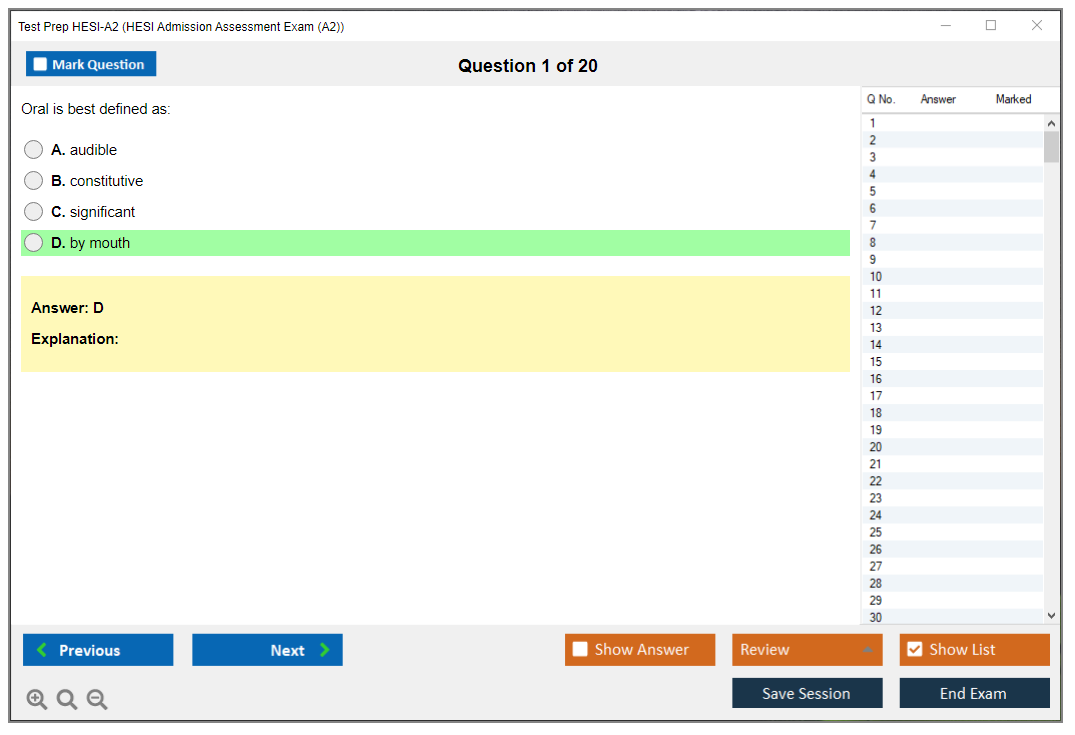
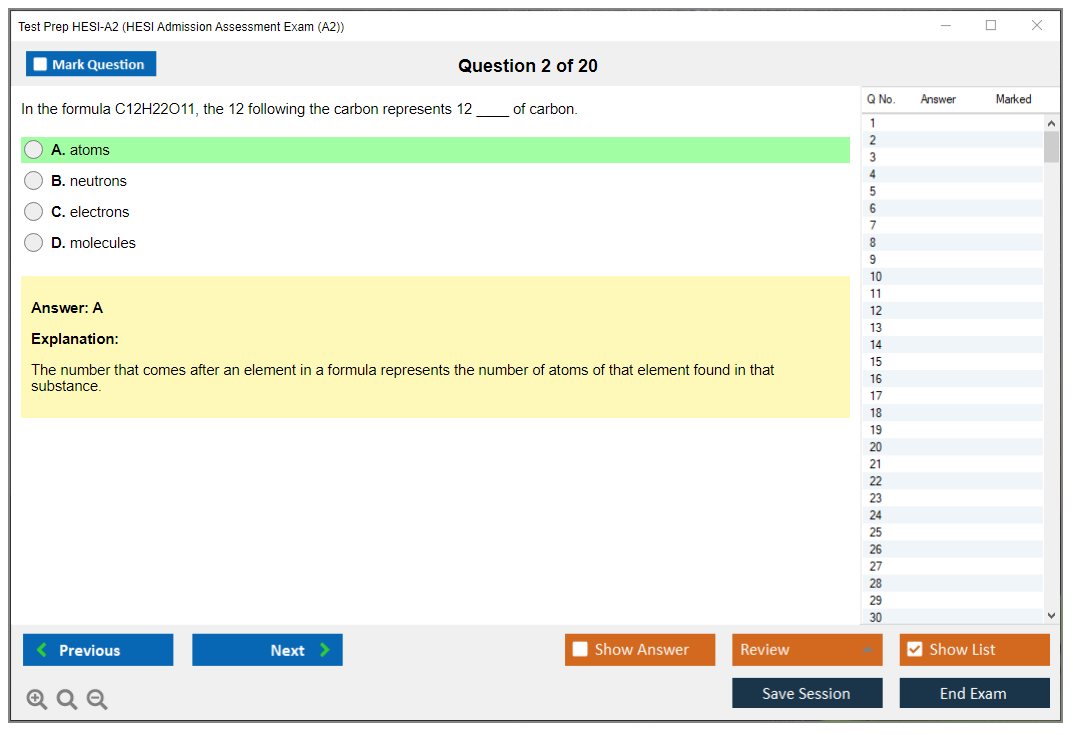
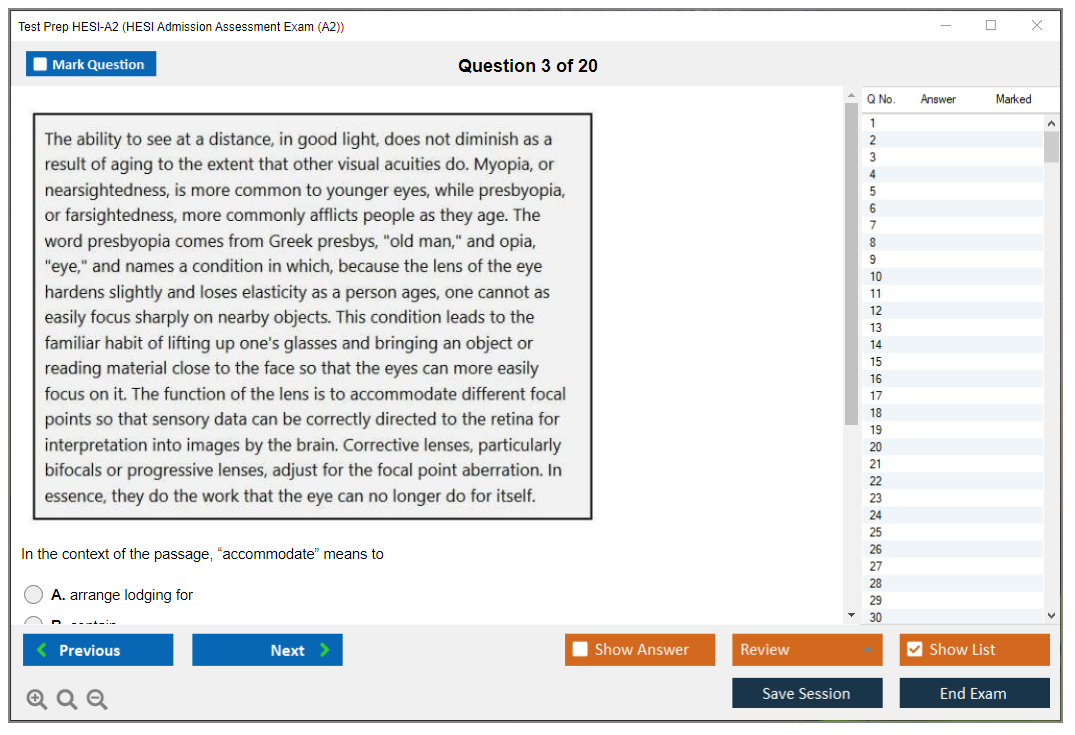
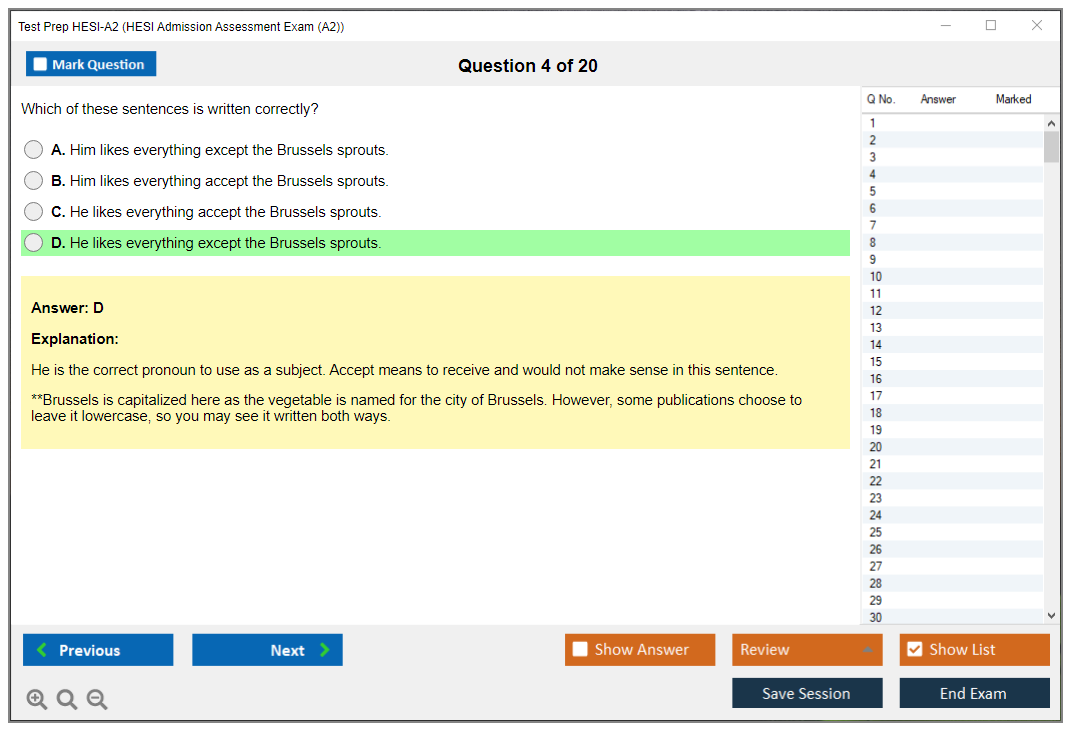
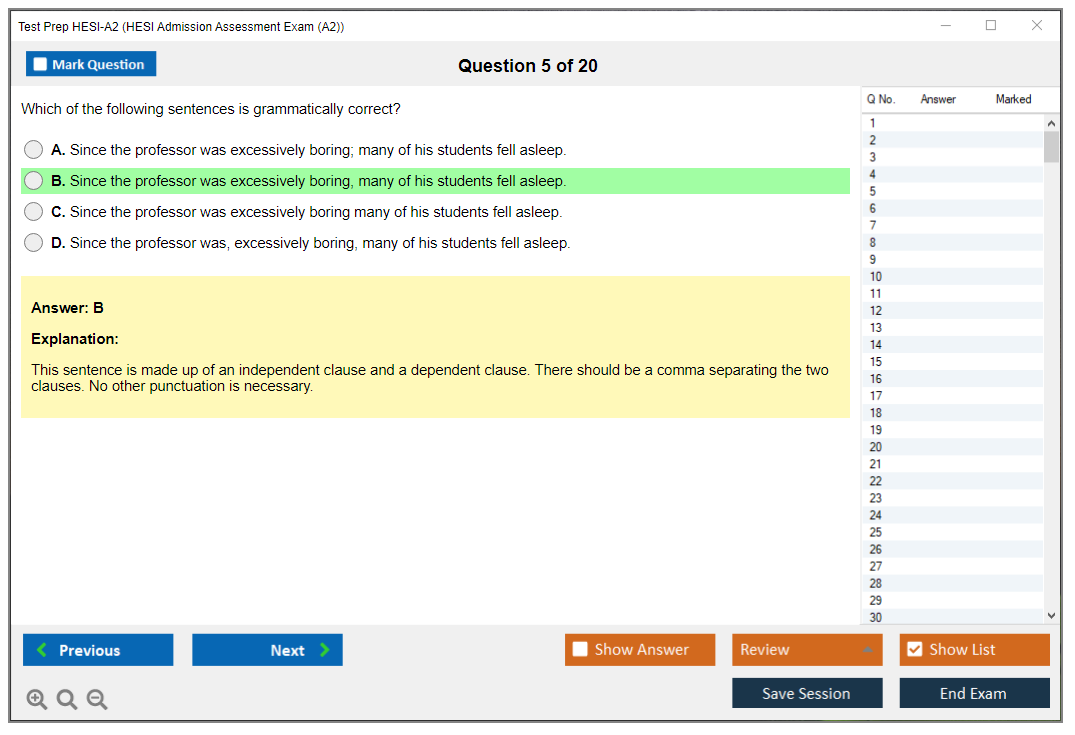
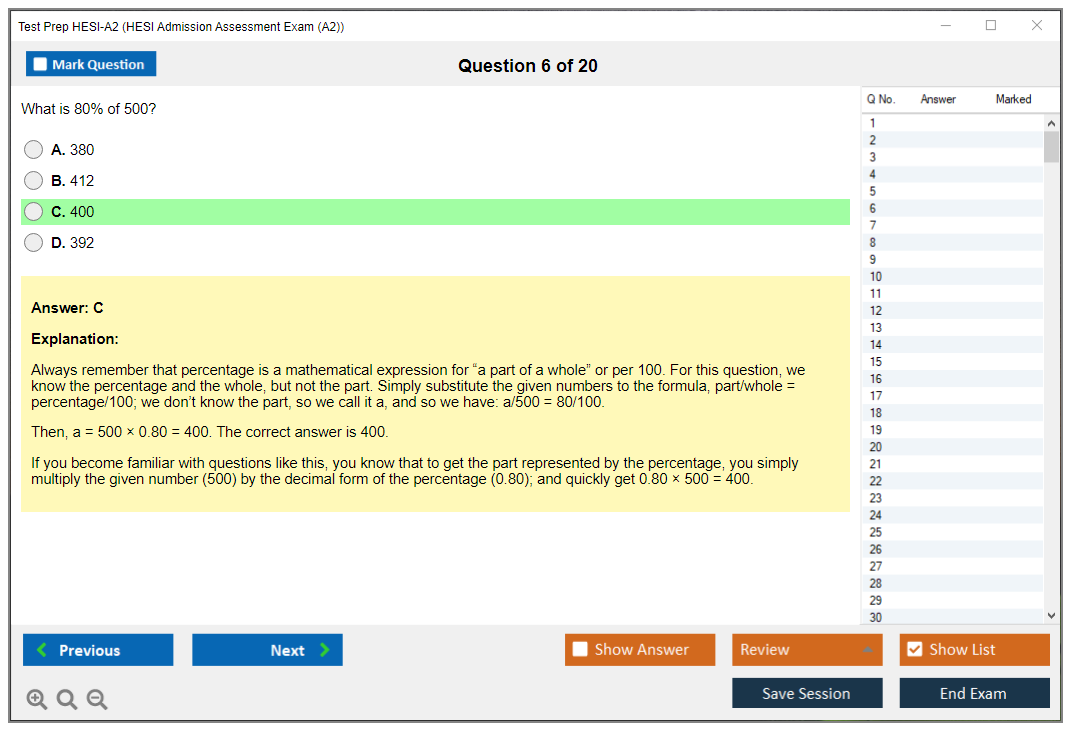
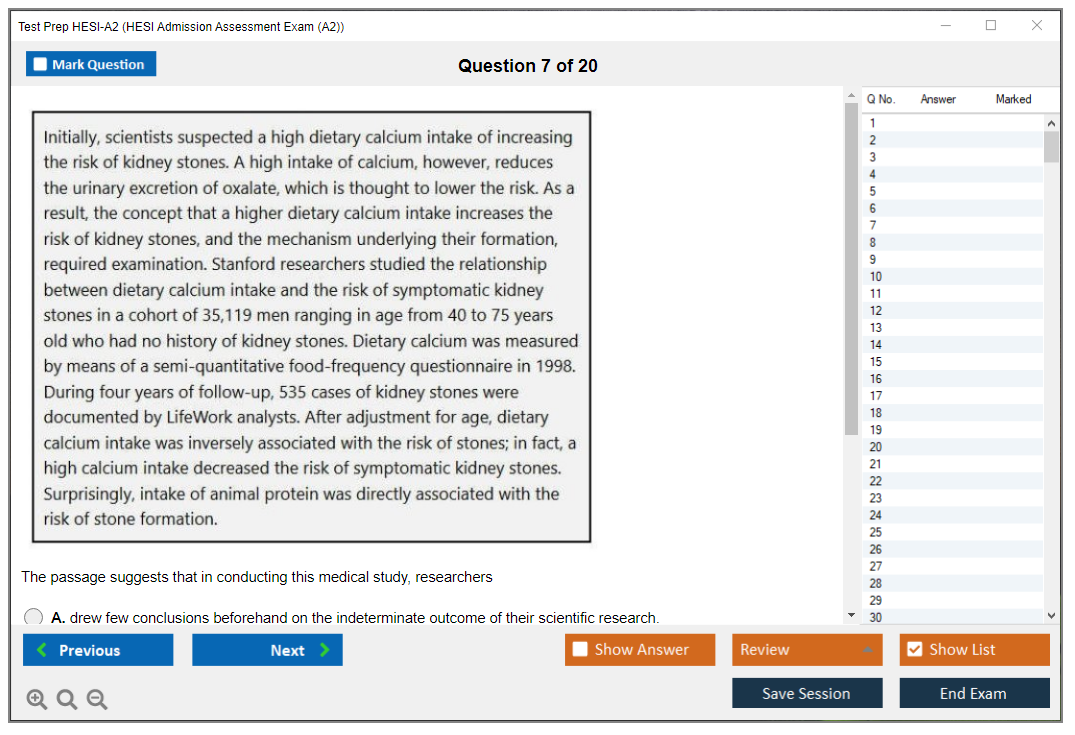
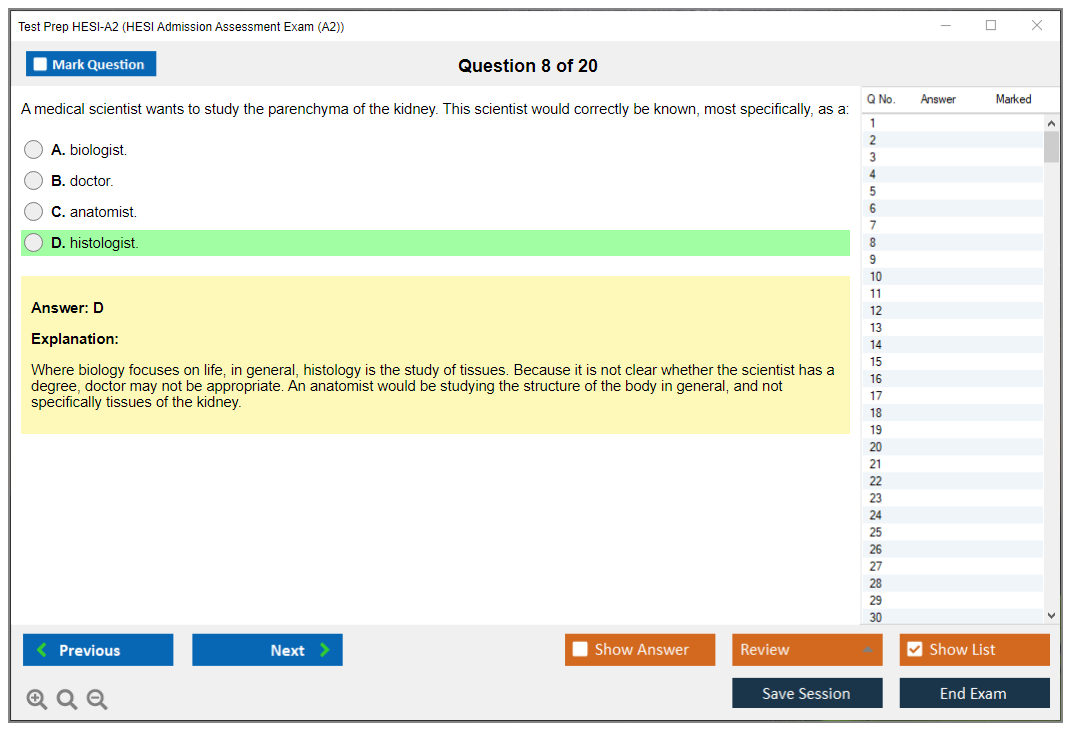
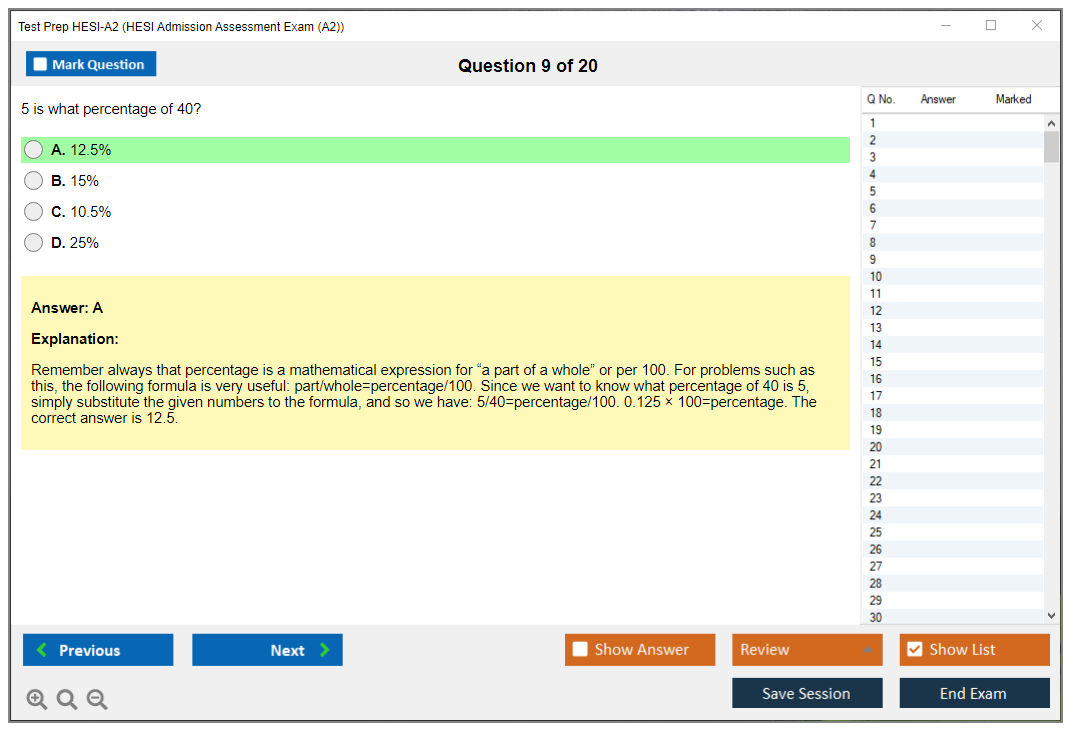
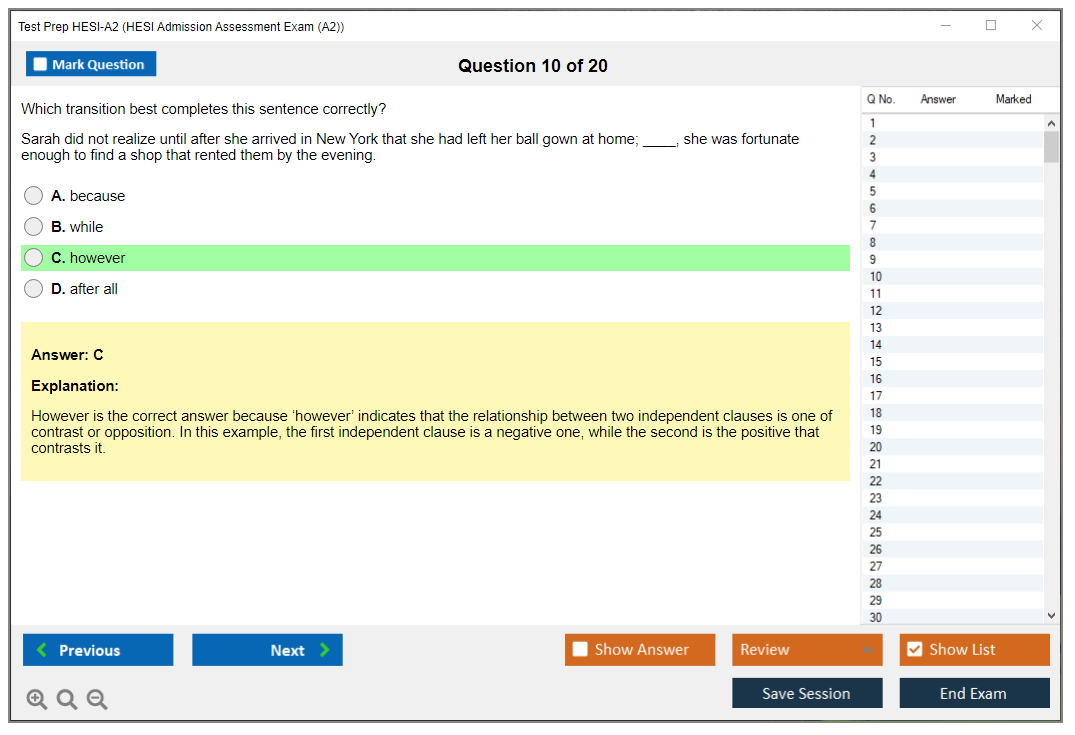
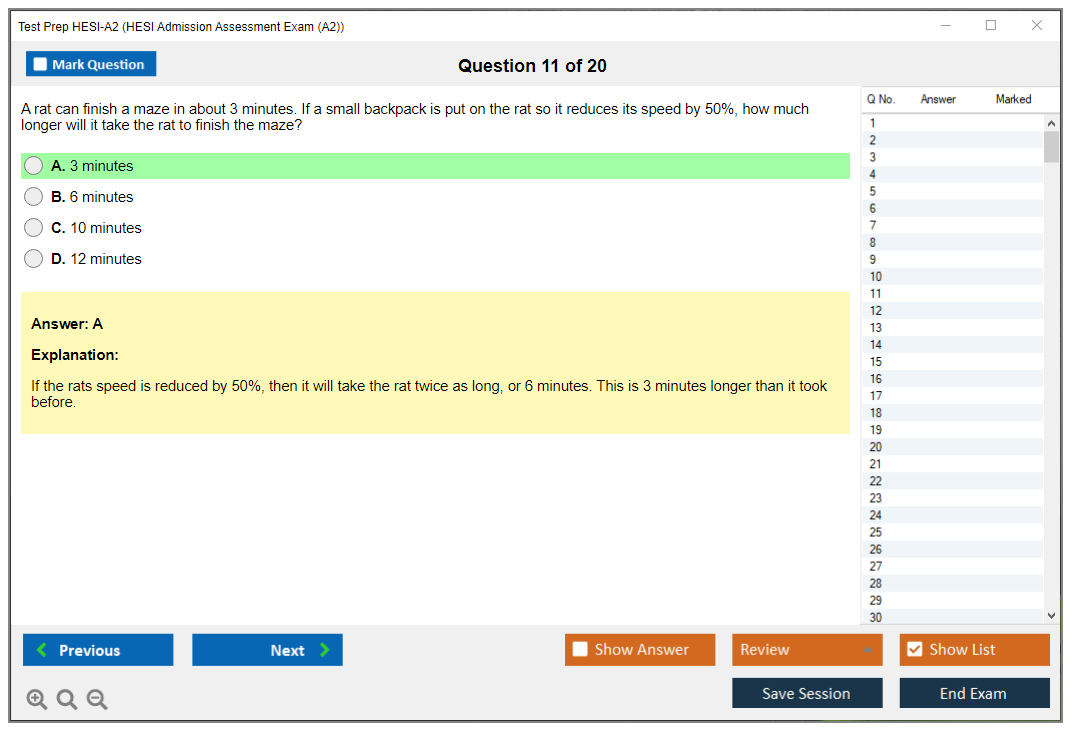
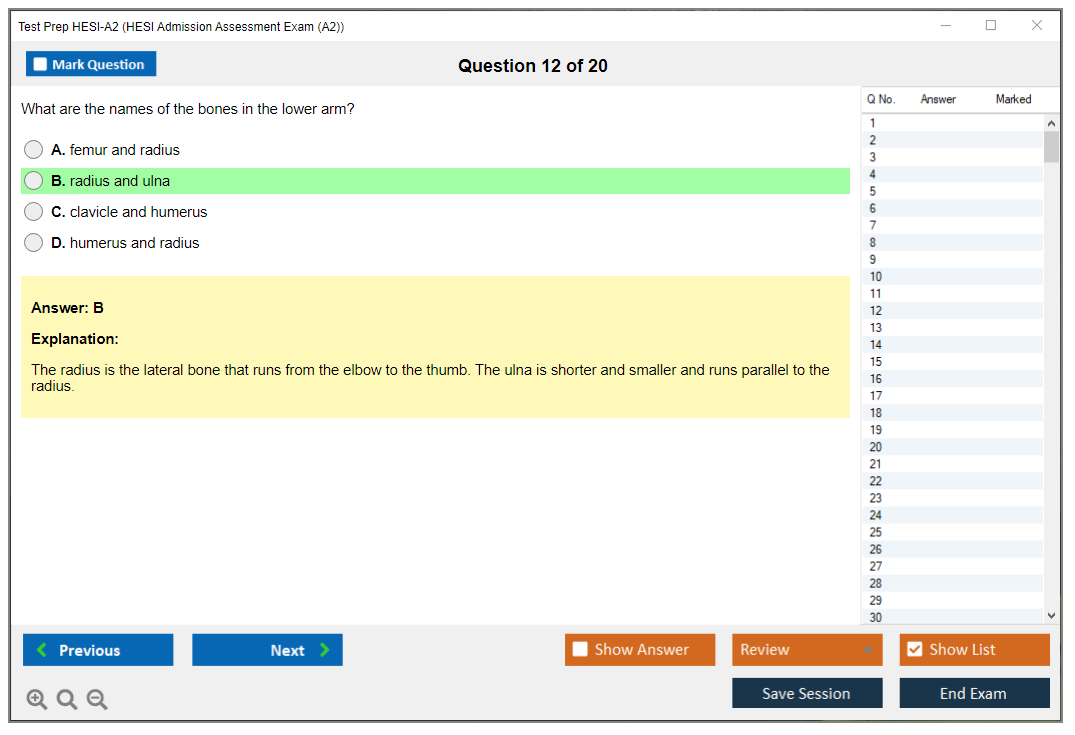
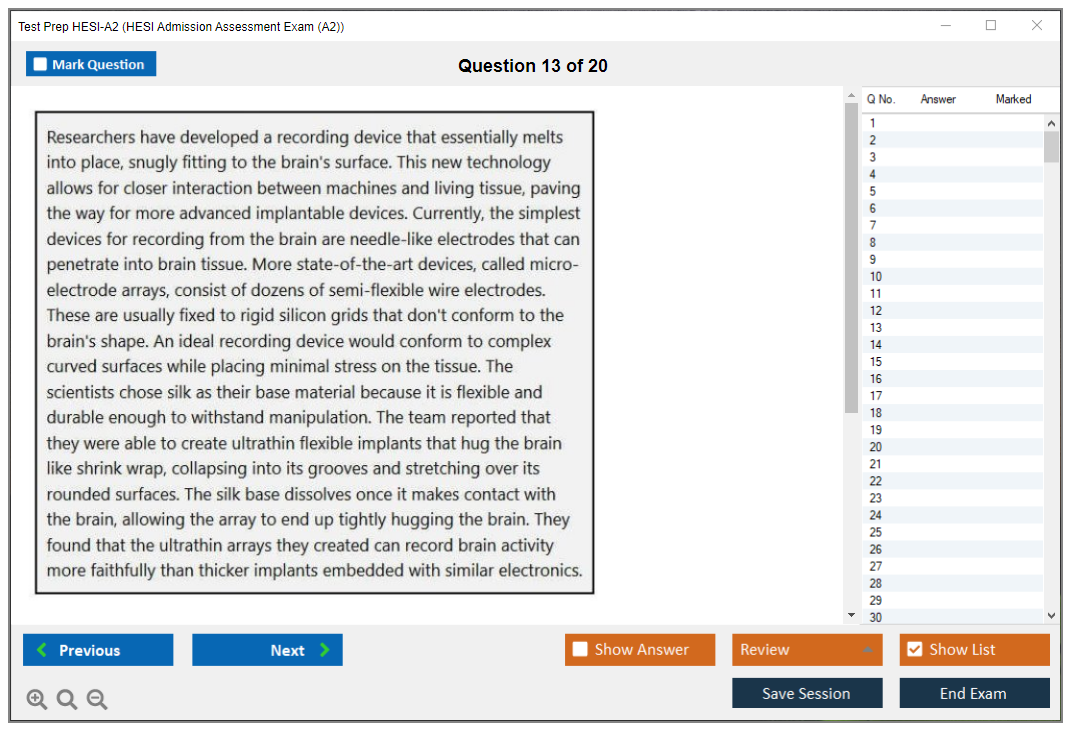
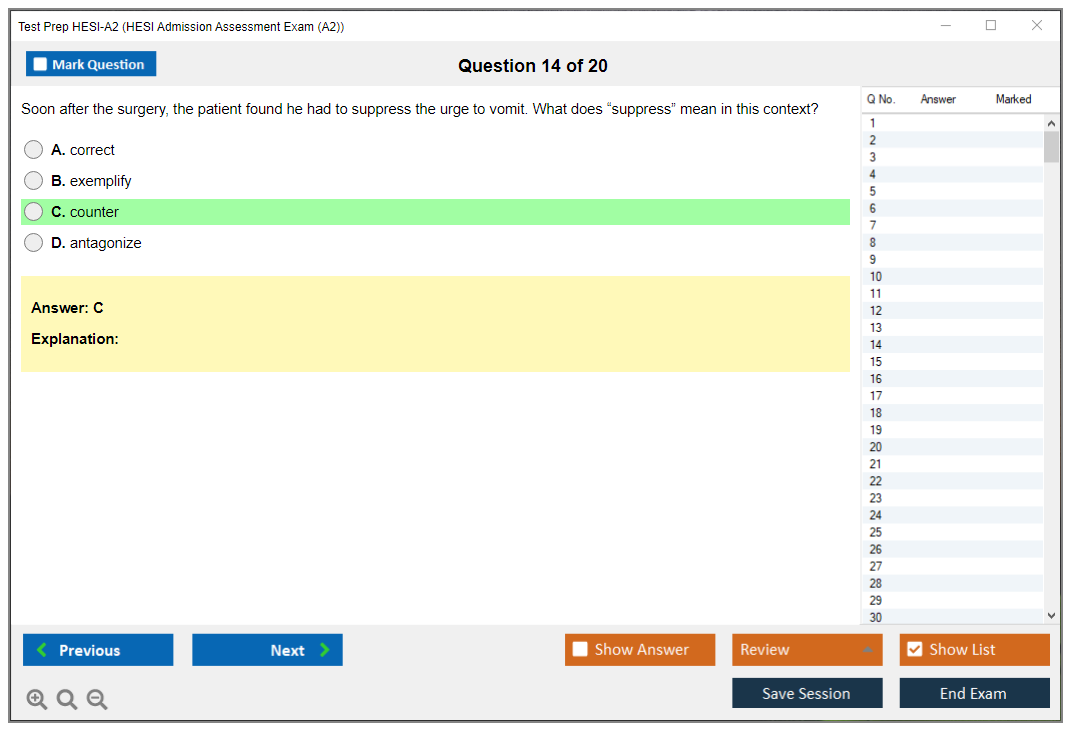
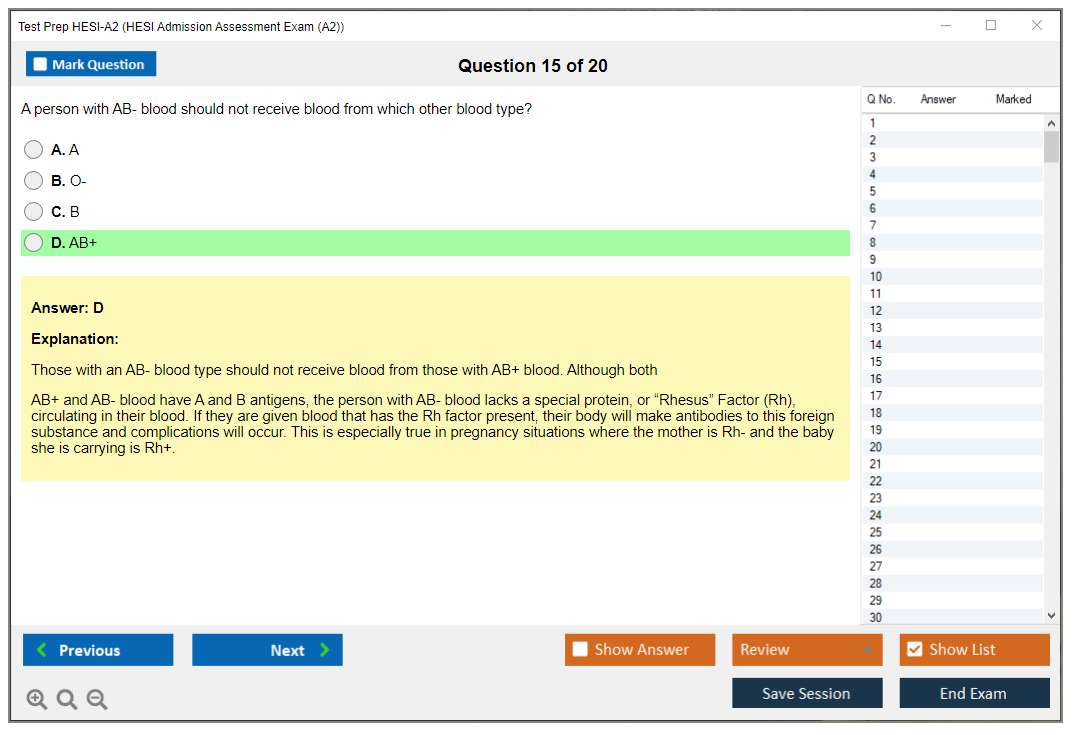
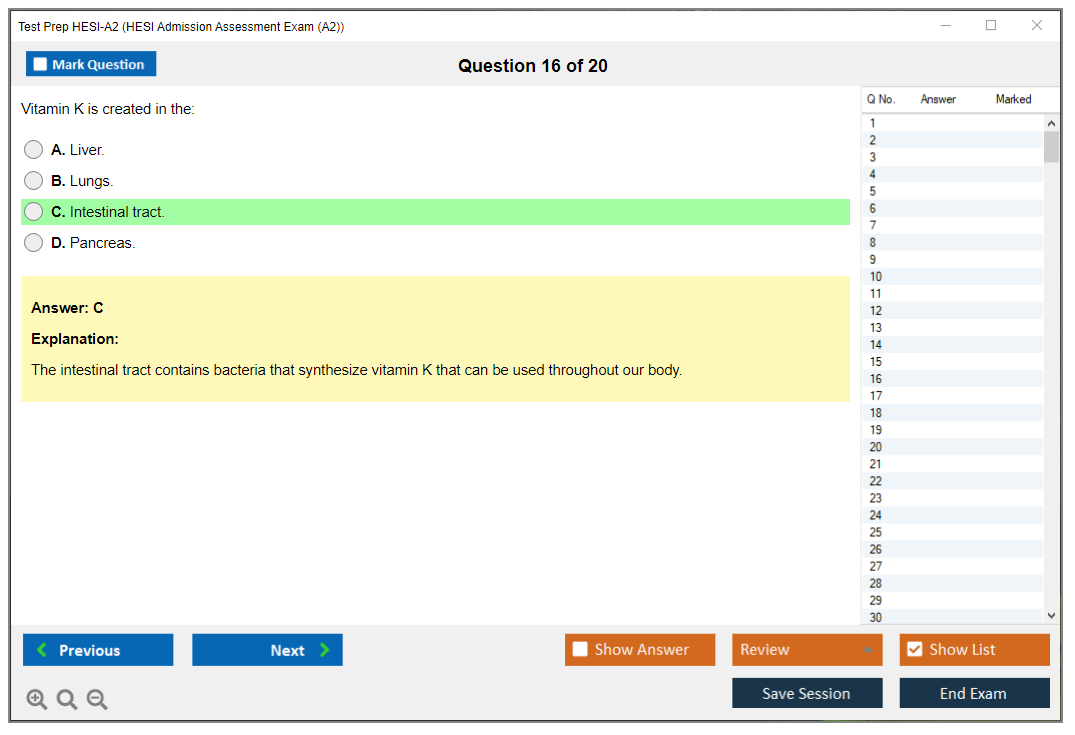
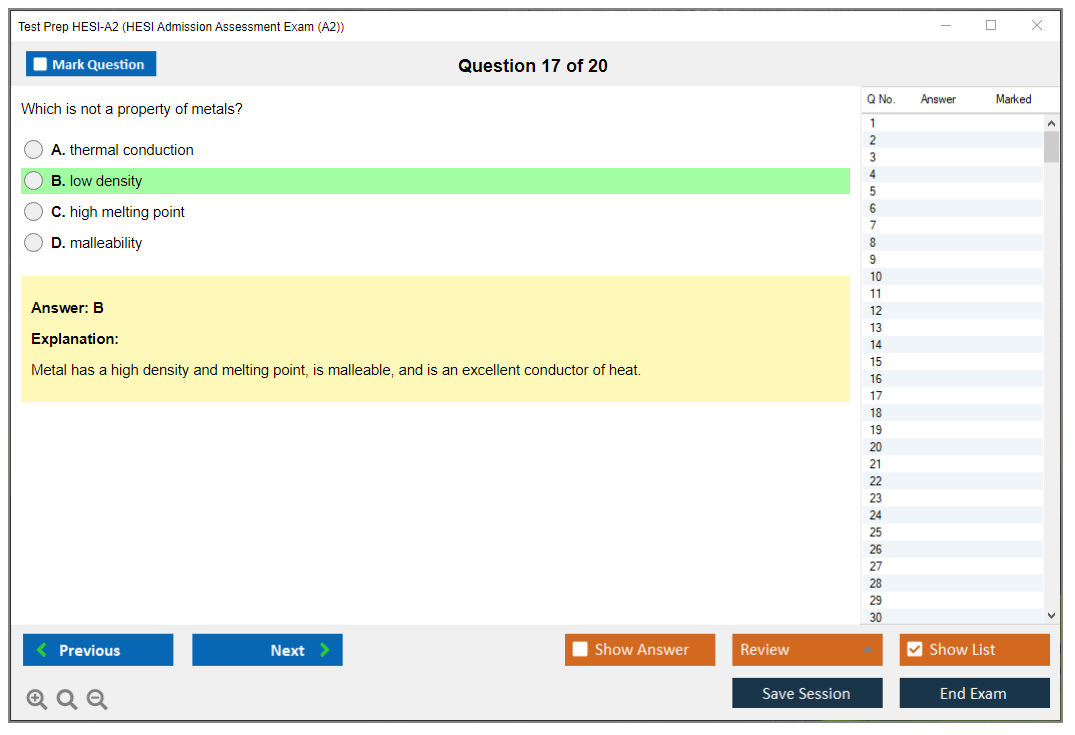
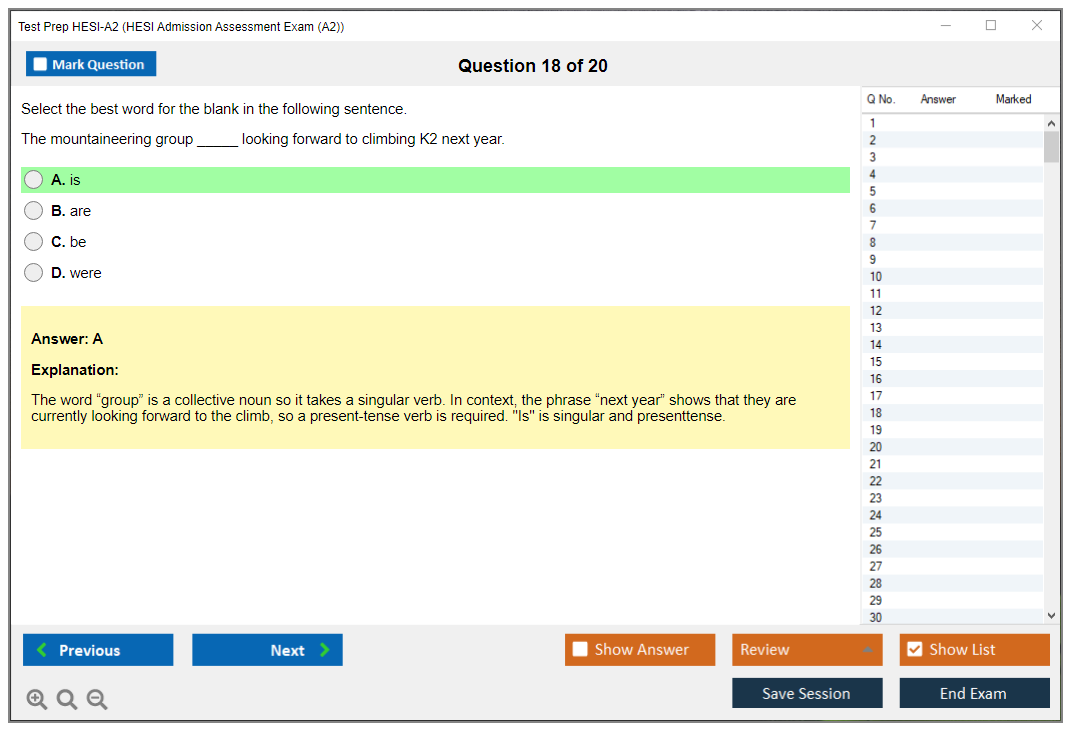
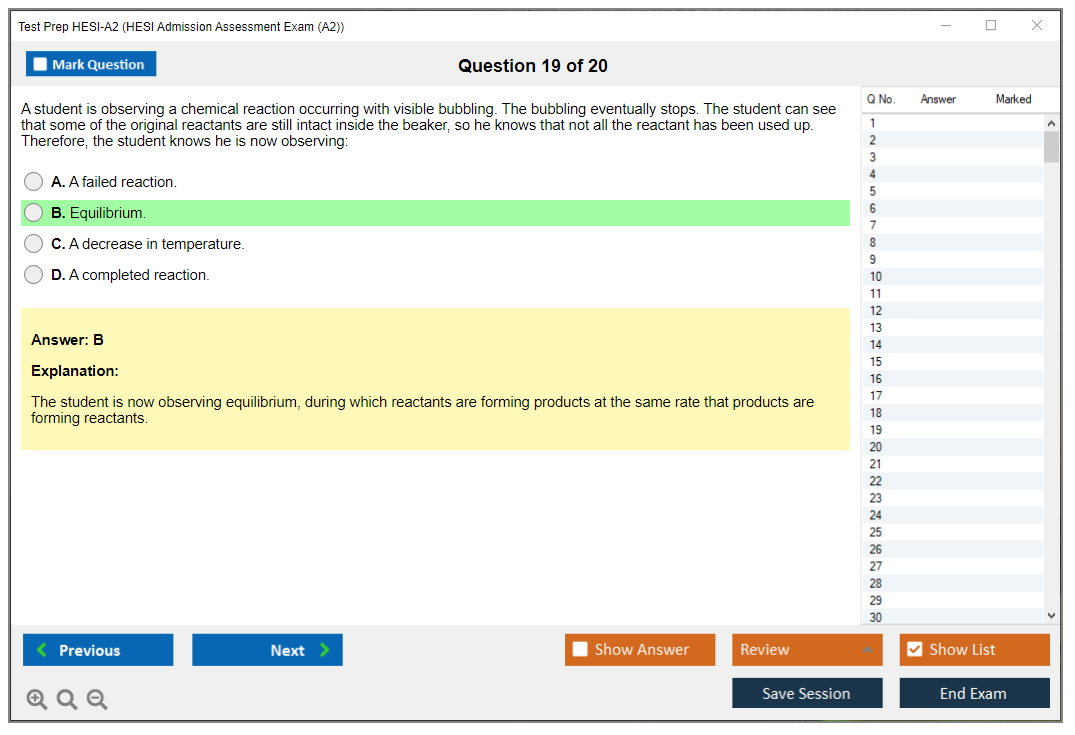
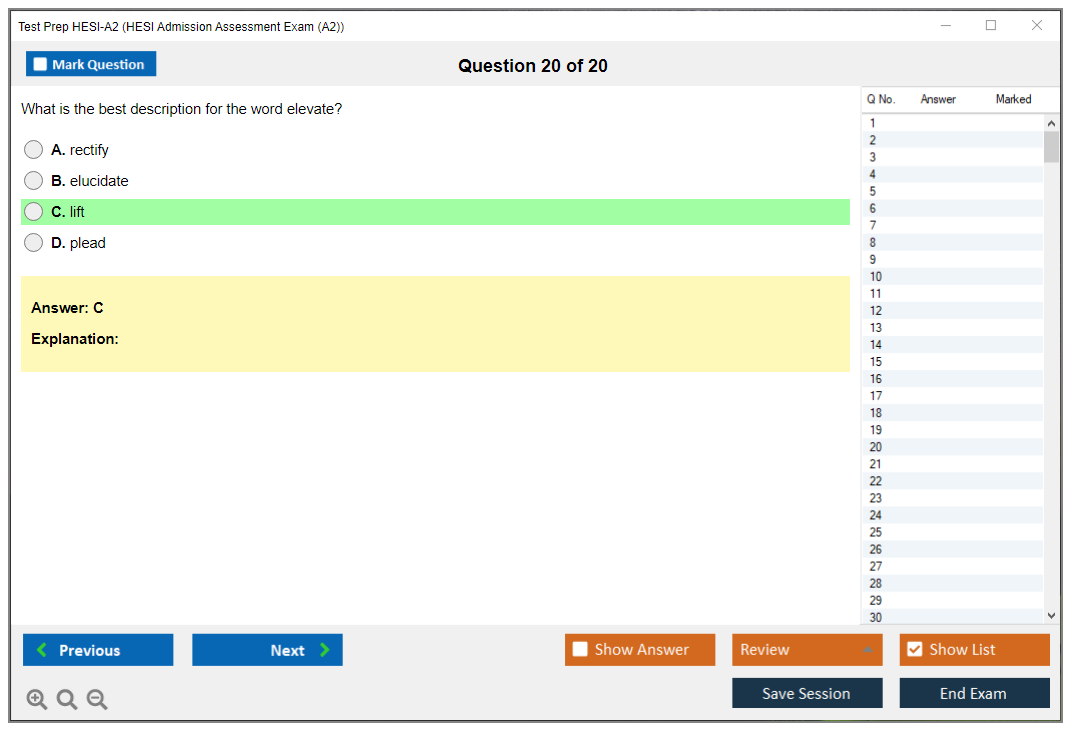
Dumpsarena Test Prep HESI Admission Assessment Exam (A2) (HESI-A2) Free Practice Exam Simulator Test Engine Exam preparation with its cutting-edge combination of authentic test simulation, dynamic adaptability, and intuitive design. Recognized as the industry-leading practice platform, it empowers candidates to master their certification journey through these standout features.
What is in the Premium File?
Satisfaction Policy – Dumpsarena.co
At DumpsArena.co, your success is our top priority. Our dedicated technical team works tirelessly day and night to deliver high-quality, up-to-date Practice Exam and study resources. We carefully craft our content to ensure it’s accurate, relevant, and aligned with the latest exam guidelines. Your satisfaction matters to us, and we are always working to provide you with the best possible learning experience. If you’re ever unsatisfied with our material, don’t hesitate to reach out—we’re here to support you. With DumpsArena.co, you can study with confidence, backed by a team you can trust.
Test Prep HESI-A2 Exam FAQs
Introduction of Test Prep HESI-A2 Exam!
The HESI-A2 (Health Education Systems, Inc. Admission Assessment) is a comprehensive, computer-based exam that assesses a student's academic readiness for health science programs. It is used by nursing and allied health schools to assess a student's aptitude for the rigors of a healthcare program. The exam consists of seven academic sections that cover math, reading comprehension, vocabulary and general knowledge, and two personality sections.
What is the Duration of Test Prep HESI-A2 Exam?
The HESI-A2 exam typically takes 3-4 hours to complete.
What are the Number of Questions Asked in Test Prep HESI-A2 Exam?
The HESI A2 exam consists of seven different sections, with a total of eight scored content areas and a total of 200 questions. The eight content areas are Math, Reading Comprehension, Vocabulary and General Knowledge, Grammar, Biology, Chemistry, Anatomy and Physiology, and Physics.
What is the Passing Score for Test Prep HESI-A2 Exam?
The passing score required in the HESI-A2 exam varies depending on the specific college or university that is administering the exam. Generally, a passing score is at least 75% or higher.
What is the Competency Level required for Test Prep HESI-A2 Exam?
The HESI-A2 exam is an entrance exam used by many nursing and allied health programs. It is composed of nine subtests that measure basic academic skills in reading comprehension, math, vocabulary, and grammar. The test does not have a set competency level, as it is designed to measure basic academic skills. Depending on the requirements of the program, a certain level of competency may be required to pass the exam.
What is the Question Format of Test Prep HESI-A2 Exam?
The HESI-A2 exam is a computer-based exam that covers a wide range of topics, including English, Math, Science, and Human Anatomy & Physiology. Questions on the exam are multiple-choice and range from fill-in-the-blank, matching, and sequencing to true/false and multiple choice.
How Can You Take Test Prep HESI-A2 Exam?
The HESI-A2 exam is available in both online and in-person testing formats. For the online version, students can register for the exam through the Evolve website and take it from the comfort of their own home. For the in-person version, students must register for the exam through their school or testing center. Depending on the location, the exam may be offered on paper or computer.
What Language Test Prep HESI-A2 Exam is Offered?
The HESI-A2 exam is typically offered in English.
What is the Cost of Test Prep HESI-A2 Exam?
The cost of the HESI-A2 exam varies depending on the institution administering the exam. Generally, the cost can range from $50-$200.
What is the Target Audience of Test Prep HESI-A2 Exam?
The target audience for the Test Prep HESI-A2 Exam is students who are preparing to take the HESI-A2 entrance exam for admission to nursing, allied health, and other health care programs.
What is the Average Salary of Test Prep HESI-A2 Certified in the Market?
The average salary for a job with a HESI-A2 certification varies depending on the job, location, and experience. According to PayScale, the average salary for a Certified Nursing Assistant (CNA) with a HESI-A2 certification is $12.78 per hour. For a Licensed Practical Nurse (LPN) with a HESI-A2 certification, the average salary is $20.83 per hour.
Who are the Testing Providers of Test Prep HESI-A2 Exam?
The HESI-A2 exam is typically administered by accredited educational institutions. Depending on the institution, they may provide the exam in-house or use a third-party testing service such as Pearson VUE or Prometric.
What is the Recommended Experience for Test Prep HESI-A2 Exam?
The recommended experience for the Test Prep HESI-A2 exam is to have a strong knowledge of the material covered in the exam, including anatomy and physiology, math, reading comprehension, and vocabulary. It is also recommended to have a good understanding of the test format and question types. Additionally, it is beneficial to practice with sample questions and take practice tests to become familiar with the exam. Finally, it is important to get plenty of rest and be well-prepared for the exam day.
What are the Prerequisites of Test Prep HESI-A2 Exam?
The Prerequisite for the Test Prep HESI-A2 Exam is that you must have a high school diploma or equivalent. Additionally, you may need to meet certain prerequisites for admission to the college or university you are applying to. These prerequisites can vary depending on the school, so it is important to check with the admissions office for specific requirements.
What is the Expected Retirement Date of Test Prep HESI-A2 Exam?
The official website for the HESI-A2 exam does not provide any information about the expected retirement date of the exam. You can visit the Evolve website for more information about the exam: https://evolve.elsevier.com/education/testing/hesi-admission-assessment-exam/.
What is the Difficulty Level of Test Prep HESI-A2 Exam?
The difficulty level of the Test Prep HESI-A2 exam varies depending on the individual taking the exam and the specific version of the exam. Generally, the exam is considered to be of moderate difficulty, with some sections being more difficult than others.
What is the Roadmap / Track of Test Prep HESI-A2 Exam?
1. Become familiar with the HESI-A2 Exam: Learn about the exam's content, format, and scoring.
2. Prepare for the HESI-A2 Exam: Use study guides, practice tests, and other resources to become familiar with the exam's content and format.
3. Register for the HESI-A2 Exam: Register for the exam online or through a testing center.
4. Take the HESI-A2 Exam: Take the exam at a testing center or online.
5. Receive Your HESI-A2 Exam Score: Your score will be available within 24 hours of completing the exam.
6. Review Your HESI-A2 Exam Score: Review your score and determine if you need to retake the exam.
7. Retake the HESI-A2 Exam: If necessary, retake the exam to improve your score.
8
What are the Topics Test Prep HESI-A2 Exam Covers?
The HESI-A2 exam covers a range of topics, including:
1. Math: This section tests a student's knowledge of basic math, including arithmetic, algebra, and geometry.
2. Reading Comprehension: This section tests a student's ability to read and comprehend written material.
3. Vocabulary and General Knowledge: This section tests a student's knowledge of words and general knowledge.
4. Grammar: This section tests a student's knowledge of grammar, including sentence structure and punctuation.
5. Biology: This section tests a student's knowledge of basic biology, including cells, organisms, and genetics.
6. Chemistry: This section tests a student's knowledge of basic chemistry, including elements, compounds, and chemical reactions.
7. Anatomy and Physiology: This section tests a student's knowledge of the anatomy and physiology of the human body.
8. Physics: This section tests
What are the Sample Questions of Test Prep HESI-A2 Exam?
1. What is the role of the hypothalamus in the human body?
2. What is the difference between active immunity and passive immunity?
3. What is the function of the autonomic nervous system?
4. How does the process of osmosis work in the human body?
5. What is the purpose of the lymphatic system?
6. Name three types of cells found in the human body.
7. What is the difference between an atom and a molecule?
8. What is the purpose of the endocrine system?
9. What is the difference between anaerobic and aerobic respiration?
10. What is the difference between a virus and a bacteria?
Test Prep HESI-A2 (HESI Admission Assessment Exam (A2)) Test Prep HESI-A2 (HESI Admission Assessment Exam A2): Complete Overview and What You Need to Know What the HESI A2 is used for (nursing & allied health admissions) So you're eyeing nursing school? Then you've definitely stumbled across the HESI A2. The HESI Admission Assessment Exam (A2's just shorthand for Admission Assessment) acts as the academic gatekeeper that Elsevier cooked up to see if you've got what it takes for nursing programs. Schools lean on it heavily to gauge your skills in reading, math, grammar, vocabulary, plus science subjects like anatomy and physiology. This test matters. A lot. We're talking about programs designed to predict whether you'll actually make it through nursing school's brutal demands without crumbling. Your HESI A2 test prep directly shapes your admission odds because tons of competitive programs filter applicants using these scores before anyone bothers reading your essay or scheduling... Read More
Test Prep HESI-A2 (HESI Admission Assessment Exam (A2))
Test Prep HESI-A2 (HESI Admission Assessment Exam A2): Complete Overview and What You Need to Know
What the HESI A2 is used for (nursing & allied health admissions)
So you're eyeing nursing school?
Then you've definitely stumbled across the HESI A2. The HESI Admission Assessment Exam (A2's just shorthand for Admission Assessment) acts as the academic gatekeeper that Elsevier cooked up to see if you've got what it takes for nursing programs. Schools lean on it heavily to gauge your skills in reading, math, grammar, vocabulary, plus science subjects like anatomy and physiology.
This test matters. A lot.
We're talking about programs designed to predict whether you'll actually make it through nursing school's brutal demands without crumbling. Your HESI A2 test prep directly shapes your admission odds because tons of competitive programs filter applicants using these scores before anyone bothers reading your essay or scheduling interviews. Some even tie scholarship money to your performance.
The exam tackles foundational concepts you'll expand on throughout healthcare training. I mean, if basic biology or medical terminology trips you up now, wait till pharmacology and pathophysiology show up later. That's their reasoning, anyway. My cousin bombed the vocab section and spent six months retaking prerequisites before trying again.
Who administers it and where it's taken (school/testing center/remote options vary)
Elsevier builds and maintains the HESI A2, but here's where things get weird. Individual nursing schools or their chosen testing centers actually run it. Some institutions offer on-campus testing in computer labs they already have. Others ship you off to Prometric or PSI testing centers across town. Remote proctoring? Maybe. Completely depends on your school's policies and what they'll allow.
You've gotta verify with your specific program because there's zero universal system.
One school might greenlight at-home testing with online proctoring while another demands you physically show up on campus during designated windows. It's annoying but that's reality.
Prospective nursing students take this exam. BSN candidates, ADN applicants, LPN/LVN program hopefuls, even allied health students depending on requirements. Most tackle it during application cycles or after wrapping prerequisite coursework. Timing's all over the place depending on institutions.
How the HESI A2 differs from other nursing entrance exams
Here's what sets it apart.
The HESI A2's modular. Unlike the TEAS-Test which locks everyone into the same four-section format, schools cherry-pick which HESI sections their applicants must complete. Your testing session might look completely unrecognizable compared to someone applying elsewhere.
One school might require reading, math, grammar, vocabulary, anatomy, physiology, and biology all together. Another might ditch chemistry completely. Some even toss in physics or personality profiles for good measure. This modular setup makes planning for HESI A2 exam questions and content coverage messier because you absolutely need to know your school's requirements before investing time in test prep.
The computer-based format includes adaptive elements in certain sections, meaning question difficulty shifts based on how you're performing. You get immediate preliminary scores when you finish (which feels both incredible and absolutely terrifying) and official score reports shoot over to your designated programs within days.
Why HESI A2 test prep is essential for competitive programs
Nursing school acceptance rates? Under 50% at most programs.
Schools wield HESI scores as primary screening mechanisms to trim down applicant pools. Honestly, structured HESI A2 test prep dramatically affects whether you even get considered for admission.
Think about it logically. Admissions committees might face 500 applications competing for 80 available seats. They need filters, right? HESI A2 passing score requirements become that initial cut. Strong performance opens interview doors and pushes you forward through the process. Weak scores? Your application might never receive a second glance regardless of your stellar GPA or heartfelt personal statement.
I've watched students with solid prerequisite grades face rejection purely because their HESI scores missed minimums. The stakes? Very real.
The role of HESI A2 scores in complete admissions
Sure, GPA matters.
Prerequisite grades, essays, interviews, volunteer experience. All really important factors. But HESI A2 scores frequently serve as the initial filter in competitive applicant pools that schools rely on first. Programs deploy composite scores or section-specific minimums to generate ranked lists for review.
Many schools hunt for 75% to 85%+ overall with zero sections dropping below certain thresholds they've set. Some weight science sections heavier than others in calculations. There's no universal HESI A2 passing score because each institution creates its own requirements, which makes researching your target school's expectations absolutely critical before testing.
The exam doesn't carry a single passing benchmark everyone follows. One program might accept 75% composites while another insists on 85%+ in anatomy and physiology specifically as non-negotiable requirements.
Sections you might encounter and what makes them challenging
Core academic sections typically include reading comprehension, vocabulary and general knowledge, grammar, and basic math skills. Science sections commonly required are anatomy and physiology, biology, and chemistry fundamentals. Some programs tack on physics or learning style assessments for additional data.
Students consistently struggle with anatomy and physiology due to absolutely massive content volume you're expected to retain. HESI A2 anatomy and physiology prep requires memorizing entire systems, complex terminology, and interconnected processes. Math trips people up with fractions, ratios, conversions, and dosage-style calculations that simulate real nursing scenarios. HESI A2 reading comprehension practice helps tremendously with time management and inference questions that aren't straightforward or obvious.
Difficulty really depends on how long it's been since your last science or math course and how much focused time you've carved out to prepare properly.
How this guide helps you succeed with strategic preparation
This full resource walks you through every testable domain with study plans adjusted for multiple timelines you might face. Whether you've got two weeks or eight weeks available, you'll find targeted approaches for each HESI A2 section that matter. We cover school-specific policies so you know exactly what you're facing come test day, diagnostic assessment strategies to identify weak areas fast, and how to use HESI A2 practice test resources effectively without wasting time.
Similar to how students prepare for other standardized exams like the SAT-Test or ACT-Test, success on the HESI A2 requires understanding test format inside-out, identifying knowledge gaps early, and practicing under realistic conditions that mirror actual testing. The difference? Your sections might be completely unique to your program's requirements.
The HESI A2 exam cost typically ranges from $35 to $100+ per attempt depending on your institution, number of sections you're taking, and delivery method they've chosen. Remote proctoring fees can bump that up significantly. Retake policies vary wildly by school. Some limit attempts strictly, others impose mandatory waiting periods between tries.
Scores usually remain valid for one to two years, but you'll absolutely need to confirm with your specific program's admissions office directly. Starting your HESI Admission Assessment study guide work early gives you buffer room for retakes if things don't go perfectly and reduces the crushing pressure of single-attempt success that paralyzes some students.
HESI A2 Exam Structure: Sections, Content Domains, and What's Actually on the Test
test prep HESI-A2 (HESI Admission Assessment Exam A2): overview
The HESI A2 is an admission assessment for nursing programs and some allied health tracks. It's basically a modular exam where your school picks what it wants to see. Up to 10 sections exist, though most people sit for 5 to 8, which is why HESI A2 test prep can feel messy: you can study "everything" and still miss the one section your program actually cares about.
Step one? Not studying.
Step one is confirming your required sections, because schools mix and match Reading, Vocabulary, Grammar, Basic Math, plus science like Anatomy and Physiology, Biology, Chemistry, and occasionally Physics. Then sometimes they tack on Learning Style and Personality Profile. Different campuses in the same state can demand different combos. Annoying, sure. But normal.
You might take it at a school testing center, through a third-party site, or sometimes remotely proctored. The rules can change the vibe a lot. Especially around scratch paper, calculator policy, and whether you can split sections across days.
HESI A2 exam objectives (what's actually on the test)
The exam's sectioned. Fixed time limits. Separate scores.
Core academic sections are usually Reading Comprehension, Vocabulary and General Knowledge, Grammar, and Basic Math. Science sections commonly required are Anatomy and Physiology, Biology, and Chemistry. Physics is program-specific and less common, and Learning Style and Personality Profile can show up too, though those are usually unscored, untimed, and more about student support than admissions.
Not gonna lie, the biggest mistake I see is people grinding a generic HESI Admission Assessment study guide without matching it to their school's blueprint. Then being shocked by their HESI A2 passing score requirements because the program wanted A&P plus Chemistry and they mostly practiced reading. I mean, that's just setting yourself up for disappointment.
My cousin did this exact thing last year. Spent two months drilling vocabulary flashcards because that's what her friend's program tested heavy, only to find out her school weighted science at 60% of the composite. She passed eventually, but man, what a waste of time that first attempt was.
Reading comprehension (55 minutes, 47 questions)
Reading Comprehension is 55 minutes for 47 questions. The passages tend to be health-related, general science, or practical workplace-style writing. The skills are very "nursing student brain": main idea, supporting details, passage structure, author's purpose, and making inferences without inventing facts that aren't there.
Question types usually include literal comprehension (the answer's right there), inferential reasoning (it's implied), vocabulary-in-context, tone/purpose identification, and logical conclusion questions. This is why HESI A2 reading comprehension practice helps more than just reading random articles. The test wants you to follow a structured passage, track what's actually stated, and pick the safest answer. The one that would hold up in a textbook or clinical documentation.
Short tip. Question first. Then read. Saves time.
Vocabulary and general knowledge (50 minutes, 50 questions)
This section's 50 minutes. Fifty questions. It hits common academic vocab plus a lot of healthcare and nursing-school language, with definition matching, context clues, and word relationship questions thrown in.
If you've ever been thrown by words like "benign," "acute," "proximal," "contraindication," or even plain school words like "infer" and "approximate," yeah, that's the lane we're talking about.
The thing is, medical prefixes, suffixes, and roots are the foundation. Seriously, when you know "tachy-," "brady-," "-itis," "-ectomy," "hypo-," "hyper-," you start answering without memorizing every single term. That matters because the exam is fast and the HESI A2 exam questions here are often about practical word usage, not trivia.
General nursing-text vocabulary. Flashcards help. So does reading rationales from a HESI A2 practice test instead of just checking right or wrong.
Grammar (50 minutes, 50 questions)
Grammar is 50 minutes for 50 questions. It's about standard English conventions that affect professional communication: parts of speech, subject-verb agreement, verb tenses, pronouns, sentence structure, punctuation, and spotting common errors.
High-yield topics show up a lot: subject-verb agreement with collective nouns and indefinite pronouns, pronoun-antecedent agreement, tense consistency, modifier placement, fragments and run-ons, comma usage, and commonly confused words. Small rules, big points. This is the section where a quick HESI A2 vocabulary and grammar review can pay off fast because the rules are learnable. You can drill them until your brain stops debating every option.
Basic math skills (50 minutes, 50 questions)
Basic Math? Fifty minutes. Fifty questions. It's arithmetic, fractions, decimals, ratios, proportions, percentages, basic algebra, conversions, and the foundations you need before dosage calc. Without turning into advanced math.
Content distribution usually looks like fractions (all operations plus simplification), decimals and percent conversions, ratio and proportion setups, basic one-step or two-step equations, Roman numerals, military time, and household to metric conversions. If you're doing HESI A2 math practice, spend extra time on fractions and proportions because those are the spots where people bleed time. They're also the skills that show up later in nursing math when the numbers stop being "nice."
Write conversions down. Don't wing it.
Science sections: A&P, biology, chemistry, and sometimes physics
Anatomy and Physiology is 25 minutes, 25 questions. Often the hardest if you haven't taken A&P recently. It tests body systems, anatomical terminology, directional terms, physiology processes, and structure-function relationships. High-yield systems include cardiovascular (heart anatomy, circulation, blood components), respiratory (gas exchange), nervous (CNS vs PNS, neuron basics), musculoskeletal, digestive, endocrine, urinary (nephron function), integumentary, and reproductive.
If you're doing HESI A2 anatomy and physiology prep, don't just memorize labels. Connect what a structure does to what happens when it fails, because the questions love "what happens if.." logic. Which, honestly, trips people up more than straight recall.
Biology is 25 minutes. Twenty-five questions. Expect cell structure and organelles, macromolecules, cellular respiration and ATP, DNA/RNA and protein synthesis, mitosis vs meiosis, Mendelian genetics with Punnett squares, and taxonomy basics.
Chemistry's also 25 minutes, 25 questions. Atomic structure, periodic table trends, ionic vs covalent bonding, balancing equations, pH and acids/bases, molarity and concentrations, states of matter, and redox basics. Physics exists, 25 minutes, 25 questions, but fewer programs require it. It's more mechanics, energy, waves, light, and electricity than anything nursing-specific.
How to confirm your required sections, costs, and pacing
Check your nursing school admissions site. Call or email admissions. Read the authorization email. Ask an advisor.
Never assume.
Requirements vary wildly, even nearby. It also affects your HESI A2 exam cost, which commonly lands around $35 to $100+ per attempt depending on school fees, remote proctoring, and how many sections you're assigned.
Pacing matters. Each section has a fixed clock, so train that way. A decent rule is about a minute per question for both academic and science sections, but don't treat that like a law. Treat it like a guardrail so you don't spend four minutes stuck and then panic-click the last ten.
If you want a clean plan, take a baseline HESI A2 diagnostic assessment. Drill weak domains. Then retest timed using Elsevier HESI A2 prep resources or section-focused practice sets.
People ask me "what's a good passing score" and "how many times can I take it" and "TEAS vs HESI." The honest answer is your school decides, your school decides, and your strengths decide. Get the section list first, then build your nursing school entrance exam prep around that reality.
HESI A2 Exam Cost, Registration, and Administrative Essentials
How much you'll actually pay for the HESI A2
You're looking at $35 to $100 per attempt. Big range, right? Rural programs might charge $40. Competitive city schools sometimes push $90 or beyond. It depends on what sections your program wants, your location, and whether it's remote proctored or you're heading to campus.
Here's the thing: if your program makes you tackle all eight sections (reading, vocab, grammar, math, plus the four sciences), expect to pay more than someone testing on just academic basics. Remote proctoring? Tack on another $10-$30 typically. Some institutions bundle HESI A2 costs right into application fees, which feels convenient until you're dropping cash before you've even cracked open a study guide.
Testing center fees differ too. Schools running their own labs usually cost less than third-party spots dealing with overhead and staffing expenses. Which makes sense when you think about it, though the convenience factor sometimes justifies paying extra if the alternative involves driving two hours each way.
Finding your exact cost (don't guess)
What I'd actually do? Hit up your nursing program's admissions page or testing section. Current exam fees should be posted there. If it's missing, shoot an email or call the testing coordinator directly. This prevents budget shockers down the road when you're already stressed. Once you're in the registration process, check your school's payment portal because that's where real numbers appear.
Your testing authorization paperwork normally includes fee breakdowns. Read it carefully.
Retake policies and what they'll cost you
Full exam fee every single retake. Yeah, it gets expensive fast at most schools. Some places offer discounted retakes (maybe $25 versus $75) but don't count on it universally. A handful of forward-thinking programs allow section-specific retesting, so you're only paying for bombed sections instead of sitting through everything again.
This matters huge if you crushed anatomy but tanked math. You might drop $15-$30 per section rather than another $75 for the complete exam, though this totally depends on institutional policy.
How registration actually works
You'll register through your school's designated portal or whatever testing platform they use (often Evolve or another Elsevier system). After your school confirms eligibility, you'll receive an authorization code or testing voucher, then schedule your exam date and time if your testing center offers scheduling flexibility. Some schools run HESI A2 testing on fixed dates exclusively, like every second Saturday monthly.
Confirmation arrives with testing instructions. Print that sucker or save it somewhere you won't lose it, because you'll absolutely need those details come test day.
Timeline matters more than you think
Most programs want HESI A2 completed before application deadlines or within specific cycles. Application window closes November 1st? Your exam scores usually need submission by then or earlier. Popular testing dates fill up insanely fast right before deadlines. I mean, we all procrastinate identically.
Register 4-6 weeks ahead of your target date when you can. Gives breathing room if something breaks or rescheduling becomes necessary.
Authorization and eligibility gates
Schools control HESI A2 access by issuing authorization codes. You literally can't take this exam without proper authorization from your intended program. This isn't like the SAT or ACT where you just register whenever you feel like it. Authorization typically arrives after prerequisite verification or application submission, meaning you need to be in their system first.
Payment methods and financial realities
Credit or debit cards through online portals, that's what most institutions accept. Some offer payment plans if you're simultaneously paying tuition or other fees, and occasionally financial aid vouchers cover testing costs. But here's the kicker: exam fees are typically non-refundable. Confirm your testing date super carefully before paying, because that money vanishes once you hit submit.
Similar to other standardized tests like the TEAS or MCAT, you're making a financial commitment at registration.
Refund and cancellation policies (read the fine print)
Policies vary wildly by institution. Some schools allow rescheduling within specific timeframes (like 72 hours pre-test) without penalty, while others charge rescheduling fees around $15-$25. Most don't refund no-shows or last-minute cancellations whatsoever.
Wake up sick on test day? You might lose that full fee unless your school maintains a medical emergency policy requiring documentation.
What to bring on test day
Valid government-issued photo ID is required. Driver's license, passport, or state ID all work fine. The name on your ID must match your registration exactly: middle initials, hyphens, everything. I've actually seen people turned away because their registration said "Katherine" while their ID read "Kate."
Some testing centers enforce additional security like locker storage for personal belongings, no watches permitted, or biometric check-in procedures. Your confirmation email should have specifics.
Remote proctoring versus testing centers
Remote proctoring offers convenience (testing from home) but demands specific technology: working webcam, reliable internet (wired beats WiFi), quiet private space where nobody interrupts you, plus a system check beforehand verifying compatibility.
Testing centers provide controlled environments with zero distractions and computers guaranteed to function properly, but you're traveling there and working around their fixed scheduling. I personally prefer testing centers because I don't trust my home internet during high-stakes exams, though plenty of students love remote options for flexibility they provide.
If you're comparing costs and logistics across different admissions tests like the GRE or GMAT, you'll notice similar trade-offs between convenience and control.
HESI A2 Passing Score Requirements and How Scoring Works
Test prep HESI-A2 (HESI Admission Assessment exam A2): overview
The HESI A2 is one of those nursing school entrance exam prep hoops that feels straightforward at first glance, until you start digging and realize every single program treats it like their own personal experiment. Some schools use it for nursing and allied health admissions, others only for ADN or BSN tracks, and a few will even require completely different sections depending on whether you're applying to day, evening, or bridge options. Weird? Absolutely, but it happens all the time and you've gotta plan for it.
Elsevier runs the HESI brand, but you'll take it wherever your school tells you to. Campus testing center, partner site, sometimes even remote proctoring with a webcam staring you down. This matters because delivery method can actually change your HESI A2 exam cost, scheduling flexibility, and even what you're allowed to bring into the room.
HESI A2 exam objectives (what's on the test)
Most people see the "A2" label and assume it's one fixed exam. It's not. Your school picks the sections, and that's exactly why one student swears it was all grammar and math while another is still recovering from anatomy nightmares.
Core academic sections are usually Reading Comprehension, Vocabulary & General Knowledge, Grammar, and Basic Math. Then you get the science stuff: often Anatomy & Physiology, Biology, and Chemistry, but not every program requires all of them. Some schools also add Physics. Then there are these weird extras like Learning Style or a Personality Profile that may show up, may be unscored, totally school-dependent and honestly confusing the first time you see it pop up on the screen. I had a friend who spent 20 minutes stressing over the personality questions before realizing they didn't even count toward her score.
If you're buying an HESI Admission Assessment study guide or building out a study plan, confirm your exact section list first. Otherwise you'll waste a week doing HESI A2 reading comprehension practice when your program doesn't even count that section. It happens constantly.
HESI A2 cost (exam fees and retake costs)
Most schools charge somewhere around $35 to $100+ per attempt. Not a promise, just what I keep seeing. Price changes based on how many sections you're assigned, whether remote proctoring fees are tacked on, and whether the school bundles it with an application fee or keeps it separate.
Double-check the payment portal and the testing instructions. Don't assume the number your friend paid is your number. Same campus, different program, different bill. Yeah, it's annoying.
HESI A2 passing score (what you need to get in)
Here's the critical truth about HESI A2 passing score requirements: there is no universal passing score whatsoever. Each nursing program sets its own minimum score requirements, and they can range wildly from 70% to 90%+ depending on competitiveness, internal standards, and what the admissions committee decided that year. That's why "what is a good passing score on the HESI A2?" is honestly a trick question, because good for one school is literally a rejection letter at another.
Schools set different cutoffs because they're solving different problems. Competitive programs with tons of qualified applicants often push minimums to 85%+ as a quick filter, while programs with broader access missions may accept 75 to 80. Some use HESI as one factor among many, stacked with GPA, prereqs, essays, and interviews. Others treat it like the main gate, and if you miss the minimum, you're done for that cycle. Period.
How do you find your program's requirement without playing telephone? Check the nursing program admissions requirements page, then read the application instructions like you're hunting for hidden fees, then email or call admissions to confirm the exact minimums and required sections. Information sessions help. Current students help more. Advisors can be hit or miss, but still worth asking.
Understanding HESI A2 score reports
HESI score reports are percentages by section, 0 to 100. Not percentiles. That's a huge deal. A 75% means you answered 75% of the questions correctly, regardless of how other people did. There's no "you're in the top 20%" flex baked into it.
Most programs focus on individual section scores rather than only an overall average. Some schools calculate a composite by averaging the required sections, others evaluate each section independently with separate minimums. Competitive programs may require both a high composite and minimum section scores, so you can't hide a weak science score behind a strong grammar score. They've thought of that.
Section-specific requirements are super common. Math and science sections often have higher minimums, like 80 to 85%+, because they predict whether you'll survive pharmacology math, dosage basics, and pathophysiology reading without melting down. Reading and grammar minimums may be slightly lower, maybe 75 to 80, but don't sleep on them. Miss a grammar cutoff by one point and your 92 in A&P won't save you.
Composite vs individual section scores (and real benchmarks)
If your program uses a composite, ask what sections are included. Some only average math and reading, others include A&P and grammar. That changes everything about how you prep and how you interpret a HESI A2 diagnostic assessment from a practice platform.
Common benchmarks by competitiveness look like this, roughly: highly competitive BSN programs often want 85 to 90%+ composites. Moderately competitive programs hover around 80 to 85%+. Less competitive or open-access programs may accept 75 to 80. A few will list 70% minimums but do complete review. The thing is, some require separate science cutoffs, some want an A&P minimum higher than the composite, some only accept first-attempt scores. Always read the fine print.
Retakes, validity periods, and what happens if you miss
Most nursing programs want scores within a validity window, usually 1 to 2 years from application or start date. Older scores might not count even if they're high. Annoying. Real.
If you don't meet minimums, your options are usually retaking the exam if policy allows, strengthening other application pieces if the program is complete, applying to programs with lower score requirements, or taking additional prerequisite courses before retesting. Retake limits and waiting periods are school-specific, so don't assume you can just book again next week.
Score improvement is very doable. Most students jump 5 to 15 percentage points between the first and second attempt with focused HESI A2 test prep, especially if they stop "reviewing everything" and start drilling weak areas. HESI A2 math practice and HESI A2 anatomy and physiology prep tend to move the needle fastest because they're predictable and skill-based, while vocabulary and grammar review is slower but still pays off over time.
Practice tests and score targets (what I'd aim for)
A quality HESI A2 practice test usually predicts your real score within about 5 to 10 points. So if your program minimum is 75, don't aim for 75. Aim for 85+. Buffer matters on test day, because timing, nerves, and a couple tricky HESI A2 exam questions can easily swing your result.
If you want a tight, question-heavy approach, I like using targeted packs alongside your main book. You need reps, not vibes. The HESI-A2 Practice Exam Questions Pack is the kind of add-on that makes sense when you already know your weak sections and just need volume and feedback. If you're budgeting, $36.99 is cheaper than another exam attempt at a lot of schools, and that's the honest math. I'd rather pay once for practice than pay twice to retest. If you want to build a final-week sprint, the HESI-A2 Practice Exam Questions Pack fits nicely as your drill set while you time yourself and track misses.
HESI A2 Difficulty Analysis: What Makes This Exam Challenging and How It Compares
Overall difficulty: what you're actually dealing with
The HESI A2 sits somewhere between moderately and highly difficult depending on factors most prep advice doesn't mention upfront. Your academic background matters. A lot. If you took anatomy and physiology last semester, you're in a completely different position than someone who hasn't touched science in five years. Most programs require you to pass four to seven sections, and the difficulty multiplies when you're juggling math, reading, vocabulary, grammar, AND multiple science sections in one testing session.
Most students tell me they found it harder than expected even after preparing. The exam tests practical nursing-relevant knowledge, but it does so at a level that assumes you've already mastered prerequisite coursework. That's the disconnect. You're being tested on content you might have learned years ago, and the questions don't just ask for recall. They demand application and analysis.
Reading comprehension hits different under time pressure
Dense healthcare passages are the norm here. You get approximately one minute per question including the time you spend reading the passage itself, which sounds reasonable until you're staring at a 300-word excerpt about cardiovascular disease mechanisms. The vocabulary? Complex. Medical contexts you've never encountered appear without warning.
Questions go beyond "what did the passage say" to "what can you infer about the patient's prognosis based on this information." That's a huge jump. You're analyzing, not just comprehending literally.
Stamina becomes real across 47 questions. Multiple answer choices sound plausible because they're designed to test whether you actually understood the implicit meaning or just skimmed for keywords. Careful elimination takes time you don't always have. By question 35, your eyes start crossing and every passage about cellular respiration blends into the last one you read about homeostasis.
Vocabulary section: medical terminology ambush
Heavy focus on medical terminology catches people off guard constantly. Unless you've worked as a CNA, EMT, or medical assistant, you're encountering words that never appeared in your daily life or even your prerequisite courses. When's the last time you used "dysphagia" at brunch? Academic vocabulary from nursing textbooks shows up. Words have multiple meanings in medical contexts versus everyday usage, and the HESI A2 absolutely tests whether you know the clinical definition.
Some question formats give you limited context clues. You either know the word or you don't. That's what makes targeted vocabulary study so critical, and why our HESI-A2 Practice Exam Questions Pack includes extensive terminology drills.
Grammar challenges the way you actually write
Identifying subtle errors in professional writing is harder than spotting obvious mistakes. You're distinguishing between commonly confused structures like "who" versus "whom" or "that" versus "which" in contexts where both might sound fine conversationally. Formal grammar rules differ from how we text or email. Recognizing errors in context rather than isolated sentences requires a different skill set entirely. It's like trying to edit your own work when you've read it fifty times already and everything looks correct.
The questions present sentences that look correct at first glance. You've gotta actively analyze structure, not just trust your ear.
Math section difficulty varies wildly by background
Students who haven't taken math recently struggle hard with fraction operations and conversions. Those with math anxiety? They face timing pressure that amplifies the challenge. Practical word problems require you to translate scenarios into calculations. You're figuring out medication dosages, measuring conversions, and ratio setups from written descriptions.
Specific challenges test-takers report consistently: fraction division and multiplication without calculators (yes, really), converting between household and metric measurement systems, setting up ratio and proportion problems from word problems, decimal-fraction-percentage conversions in all directions, and interpreting Roman numerals in medical contexts.
If you're comfortable with algebra you'll probably find the math manageable with review. If you haven't done fractions in a decade, plan for serious prep time.
Anatomy and Physiology: the content monster
This is often the hardest section period. Massive content volume across 11+ body systems. You need detailed terminology knowledge, not just "femur" but "medial epicondyle of the femur." Questions test both structure AND function: what something is, what it does, how it relates to other structures.
Integration of multiple systems appears regularly. A question about respiration might require you to understand cardiovascular function simultaneously. The specificity of correct answers means close isn't good enough.
Difficulty factors stack up. You're distinguishing between similar structures (tendons versus ligaments versus fascia). Remembering directional and positional terminology (anterior, posterior, medial, lateral, proximal, distal). Understanding physiological processes at cellular, tissue, organ, and system levels. Retaining information across all systems while you're studying new ones.
Biology and chemistry add science overload
Biology hits you with abstract cellular processes, genetics problem-solving that requires actual calculation, terminology-heavy content, and integration of chemistry concepts you might not remember. Questions require application rather than simple recall. You're analyzing scenarios, not just defining terms.
Chemistry creates obstacles for non-science majors through mathematical problem-solving within chemistry contexts, abstract atomic and molecular concepts, balancing chemical equations, pH calculations, and the reality that many nursing applicants haven't taken chemistry recently or ever avoided it entirely. If you're applying to nursing because you love patient care, stoichiometry probably wasn't your passion.
Time pressure amplifies everything
Fixed time limits create pressure to work quickly while maintaining accuracy. Students consistently report feeling rushed, especially in Reading where you're processing complex passages, and Math where problem-solving inherently takes time. You can know the content and still struggle to finish.
HESI A2 versus TEAS: which is actually harder
Both exams test similar content areas but approach them differently. The HESI A2 has more sections and greater depth in science: separate Anatomy and Physiology, Biology, and Chemistry sections versus the TEAS-Test integrated science approach. HESI A2 includes a separate vocabulary section. The exam's modular, meaning schools choose which sections you take.
Difficulty depends entirely on your individual strengths and program requirements. Students strong in science often find HESI A2 manageable because they can use that depth. Those with recent A&P coursework have clear advantages. Students who struggle with medical terminology find the vocabulary section challenging in ways TEAS doesn't replicate. Math-anxious students face similar challenges on both exams.
Your personal difficulty factors
Long gaps since prerequisite coursework (two or more years) increase difficulty substantially. Taking multiple science sections simultaneously when you're rusty multiplies the challenge. Compressed study timelines under four weeks don't allow for real content mastery. Working full-time while preparing limits your available study hours. First-time exposure to medical terminology without healthcare work experience means you're learning a new language.
Factors that decrease difficulty: recent completion of A&P and chemistry courses means content's fresh. Healthcare work experience provides context and terminology exposure. Strong reading and vocabulary skills transfer directly. Adequate preparation time of six or more weeks allows for review. Using quality study guides focused specifically on HESI A2 content rather than generic nursing entrance materials.
Realistic expectations with proper prep
With focused HESI A2 test prep using targeted study materials and practice tests, most students achieve competitive scores. The exam's challenging but definitely passable with preparation done right. Schools typically want 75-85%+ overall, though requirements vary. Taking a diagnostic HESI A2 practice test early shows you exactly where you stand and what needs work.
The difficulty isn't insurmountable. It's predictable. That's the advantage. You know what's coming, you know what your program requires, and you can prepare accordingly. Students who treat this like the SAT-Test or ACT-Test with generic test-taking strategies struggle. Students who drill specific content and question types succeed.
Prerequisites, Eligibility, and What You Need Before Starting HESI A2 Test Prep
Test Prep HESI-A2 (HESI Admission Assessment Exam A2): overview
The HESI A2 is an admission assessment for nursing programs and some allied health tracks. Think of it as a skills check to see if you can handle the reading, math, and science load that hits fast once classes start. Schools use it to compare applicants with different transcripts, different instructors, different grading policies, and wildly different levels of test-taking stamina.
Elsevier develops the test, but your school controls the experience. Some programs run it in a campus testing center. Others send you to a third-party site. A few allow remote proctoring with stricter rules than you'd expect, like room scans and locked-down browsers. It sounds dramatic until you remember people will try anything when seats are limited and competition gets brutal.
HESI A2 exam objectives (what's on the test)
Most versions include the core academics: Reading Comprehension, Vocabulary & General Knowledge, Grammar, and Basic Math. Then come the science sections that make people sweat. Anatomy & Physiology shows up a lot. Biology too. Sometimes Chemistry pops up. Some schools also tack on Physics, plus a Learning Style or Personality Profile type section that usually goes unscored, but you still have to click through it, which gets annoying when you're trying to conserve focus for what actually matters.
Here's what trips people up. Your "objectives" aren't universal. One program might care a lot about A&P and completely ignore Chemistry. Another might require only the basics. A third will set minimums per section because they had too many students wash out in med math or couldn't keep up with reading-heavy coursework. Before you buy a giant HESI Admission Assessment study guide, confirm exactly which modules your program requires. Studying Chemistry for two weeks when your school doesn't even test it? That's a special kind of pain.
HESI A2 cost (exam fees and retake costs)
HESI A2 exam cost is all over the place. Many schools land around $35 to $100 per attempt. Retakes usually mean paying again, which stings.
The price changes based on stuff that feels minor but adds up fast: how many sections your program requires, whether remote proctoring carries an extra fee, and whether your school bundles testing with an application fee that wasn't obvious at first. Check the nursing department's testing page and the payment portal, not a random forum post from 2019. Policies change fast. Like, semester-to-semester fast.
HESI A2 passing score (what you need to get in)
There's no single official passing score. Each school sets its own HESI A2 passing score requirements. They can demand an overall composite, section minimums, or both depending on what their data shows.
A lot of programs hover around 75% to 85% as a competitive zone, with stricter cutoffs in A&P and Reading for obvious reasons, but don't treat that like a promise. The score report usually breaks down by section, and sometimes you'll see a composite number that your program may or may not care about at all. Read the fine print carefully. One sentence buried on the admissions page can change your whole plan and timeline.
Actually, my cousin applied to three programs last year and each one had totally different requirements, which meant she basically had to reverse-engineer which sections to prioritize based on weighted scoring she found in some PDF that wasn't even linked on the main page. Wild.
HESI A2 difficulty (how hard is it?)
People usually struggle most with A&P because it's a giant vocabulary test disguised as "concepts," and because you can't fake knowing what the kidneys do on a timed exam when you're panicking. Math gets people too, not because it's advanced, but because HESI A2 math practice exposes gaps in fractions, ratios, conversions, and those dosage-style basics that punish careless steps and mental math errors. Reading gets sneaky hard when the clock's running and the questions are inference-heavy instead of just asking for facts.
HESI A2 compared to TEAS? Honestly, it depends on you and your required sections. If you're strong in science but slower in reading, you'll have a different opinion than someone who breezes through passages but hasn't taken biology in five years and can barely remember cellular respiration. Same test day stress. Different pain points.
Prerequisites, eligibility, and what you need before starting HESI A2 test prep
Schools usually don't require specific classes before you're "allowed" to sit for the exam. Eligibility is mostly administrative: being an applicant, getting authorization, making an account, paying the fee, and bringing valid ID on test day. That part's simple. Annoying, but simple.
Academic prerequisites are the real story. Your HESI A2 test prep works way better if you've already taken, or you're currently taking, the classes that match the tested content. You'll be reviewing and drilling instead of learning everything from scratch while also trying to figure out how HESI A2 exam questions are worded and what kind of tricks they pull. Not gonna lie, the students who score well usually aren't magical or naturally gifted. They're just closer to the material.
Recommended coursework before you take it. College-level Anatomy and Physiology I is the big one. A&P II helps a lot if your program tests deeper systems content or expects more detail in endocrine, reproductive, and immune topics that show up less in intro courses. Introduction to Biology or General Biology is the other anchor because it builds the basics that show up in biology modules and even in A&P, like cells, DNA, enzymes, and homeostasis. Without that foundation you end up memorizing random facts instead of understanding why the correct answer is correct, which makes retention so much harder.
Math prerequisites are less about a specific class and more about being fluent in basics: decimals, fractions, percentages, ratios, unit conversions, and word problems that require you to actually set up the equation right. If you haven't done that stuff recently, you'll want a short refresher before you start timed practice. Timing pressure plus rusty arithmetic is how people spiral and lose confidence fast.
What you need before you start studying. A checklist.
- Confirm your required sections with your program, because your friend's version might not match yours at all
- Choose one main study resource, like an Elsevier HESI A2 prep resources book plus a question bank, and don't collect ten half-used tools that overwhelm you
- Take a HESI A2 diagnostic assessment early, even if it stings, because guessing your weak areas wastes days you can't afford
- Plan for repetition: HESI A2 vocabulary and grammar review works best in small daily chunks, while science needs bigger blocks and diagrams you can actually visualize
- Set a retake-aware timeline, since some schools cap attempts or add waiting periods that mess up your whole application cycle
HESI A2 practice tests (how to use them)
Use a HESI A2 practice test as a measurement tool, not a confidence tool that makes you feel good without improving your score. First, take a baseline under timed conditions that mimic the real thing. Then review every miss and tag it: content gap, careless error, or you got tricked by wording that felt deliberately confusing. After that, drill targeted sets by section, like HESI A2 reading comprehension practice for inference and main idea, or a focused HESI A2 anatomy and physiology prep block on cardiovascular and renal. Only then retest to see if you're actually improving.
How many practice tests? Enough that your scores sit above your program's minimum with a buffer, because test day nerves are real and can tank your performance. For most people that's somewhere around 2 to 6, but the number is less important than whether your misses are shrinking for the right reasons. Content mastery, not luck.
FAQs about HESI A2 test prep
What's a good passing score on the HESI A2? Whatever your school requires, but many applicants aim for 80% overall with solid section scores to stay competitive.
How much does it cost to take the HESI A2 exam? Commonly $35 to $100 per attempt, depending on the school and delivery method.
What subjects are on the HESI A2 and what should I study most? Usually reading, vocab, grammar, math, and often A&P and biology, so prioritize whatever your program requires plus your weakest section where you're bleeding points.
How many times can you take the HESI A2 and how long should you study? Retake limits are school-specific, and most people study 2 to 8 weeks depending on how recent their science and math classes were and how much they remember.
Conclusion
Wrapping up your prep strategy
Okay, so here's the thing. HESI A2 test prep doesn't have to drown you. I've watched people spiral over every tiny anatomy detail when their program literally only tests four sections, and honestly, it's exhausting just witnessing it. Start with what your school actually requires, build a timeline that won't destroy you, and please don't try cramming everything the night before because that's a disaster waiting to happen.
The biggest mistake? Waiting on practice tests.
Seriously, you need that diagnostic feedback early. Discovering you're terrible at metric conversions or totally lost on inference questions two days before your exam is rough. Take a HESI A2 practice test within your first week of prep, even if you absolutely bomb it, because that baseline reveals where the real gaps are hiding. You can't fix what you don't know is broken.
Most nursing programs want 75-85% minimums. Some go higher. Know your target, because if your school needs an 80% in A&P and you're consistently hitting 78% on practice, you're not ready yet. Doesn't matter how close it feels or how tempting it is to convince yourself otherwise. Build in a buffer. Test-day nerves are real, and they will mess with your timing in ways you can't predict until you're sitting there sweating through the actual thing.
The HESI A2 exam cost varies wildly. Some schools charge $40, others over $100, especially if you're doing remote proctoring which adds fees. Factor in retake fees if your school allows them, but honestly, solid HESI A2 exam questions practice upfront beats paying for multiple attempts. Every retake eats into your application timeline and your wallet. Who needs that stress?
For the anatomy and physiology prep and math sections, repetition's everything. You can't cram body systems or dosage calculations in 48 hours. Your brain doesn't work that way. Spread it out over weeks, not days. Use your HESI Admission Assessment study guide for content, sure, but live in the practice questions because that's where learning actually sticks. The HESI A2 reading comprehension practice and HESI A2 vocabulary and grammar review sections trip people up constantly because they seem "easy" until you're racing the clock and suddenly nothing makes sense anymore.
My cousin thought she had reading locked down because she'd been an English major. Scored 68% on that section during her first attempt and had to wait three months to retake. Don't assume anything.
If you want a structured way to drill weak areas without piecing together random resources that may or may not actually help, the HESI-A2 Practice Exam Questions Pack gives you focused question sets that mirror the real exam format. It's built for people who need targeted repetition on their problem sections without fluff or filler content that wastes your time.
Bottom line? Treat this like the admission assessment for nursing programs that it is because your HESI A2 passing score requirements aren't suggestions. They're gatekeepers that'll block your entire future if you don't take them seriously. Put in the work now, track your progress with real Elsevier HESI A2 prep resources and timed practice, and you'll walk in confident instead of hoping you studied the right stuff and praying it's enough.
Show less info
Hot Exams
Related Exams
Commercial Drivers Licence
Chartered Financial Analyst Level 3
CLEP Composition and Literature: American Literature, English Literature, Humanities
Pre-Professional Skills Test (PPST) - Mathematics Section
American Academy of Cosmetic Dentistry
Pharmacy College Admission Test
Multiple-choice questions for general practitioner (GP) Doctor
Pre-Professional Skills Test (PPST) - Writing Section
GRE General Test
Certified Professional in Healthcare Quality Examination
Scholastic Assessment Test: Reading, Writing and Language, Mathematics
CLEP Science and Mathematics: Biology, Calculus, Chemistry, College Algebra & Mathematics, Precalculus, Natural Sciences
CLEP History and Social Sciences: American Government, Educational Psychology, History of the United States, Macroeconomics, Microeconomics, Psychology
Law School Admission Test: Logical Reasoning, Reading Comprehension, Analytical Reasoning
Graduate Management Admission Test (2022)
Georgia Assessments for the Certification of Educators
How to Open Test Engine .dumpsarena Files
Use FREE DumpsArena Test Engine player to open .dumpsarena files


DumpsArena.co has a remarkable success record. We're confident of our products and provide a no hassle refund policy.

Your purchase with DumpsArena.co is safe and fast.
The DumpsArena.co website is protected by 256-bit SSL from Cloudflare, the leader in online security.