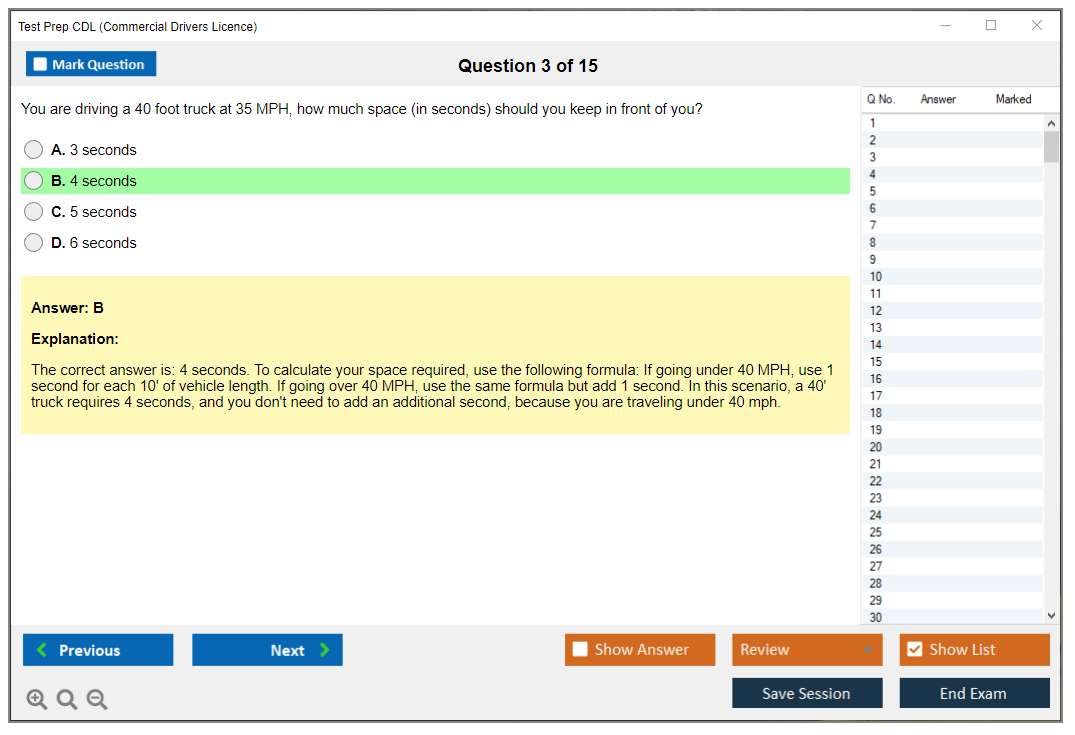
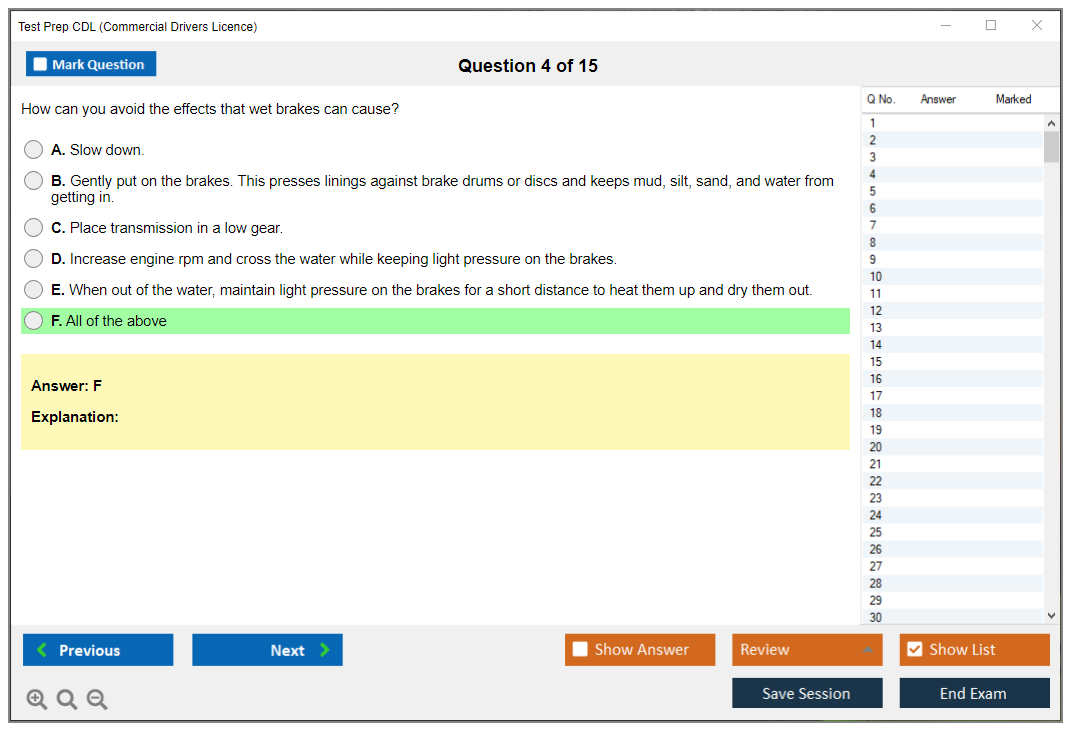
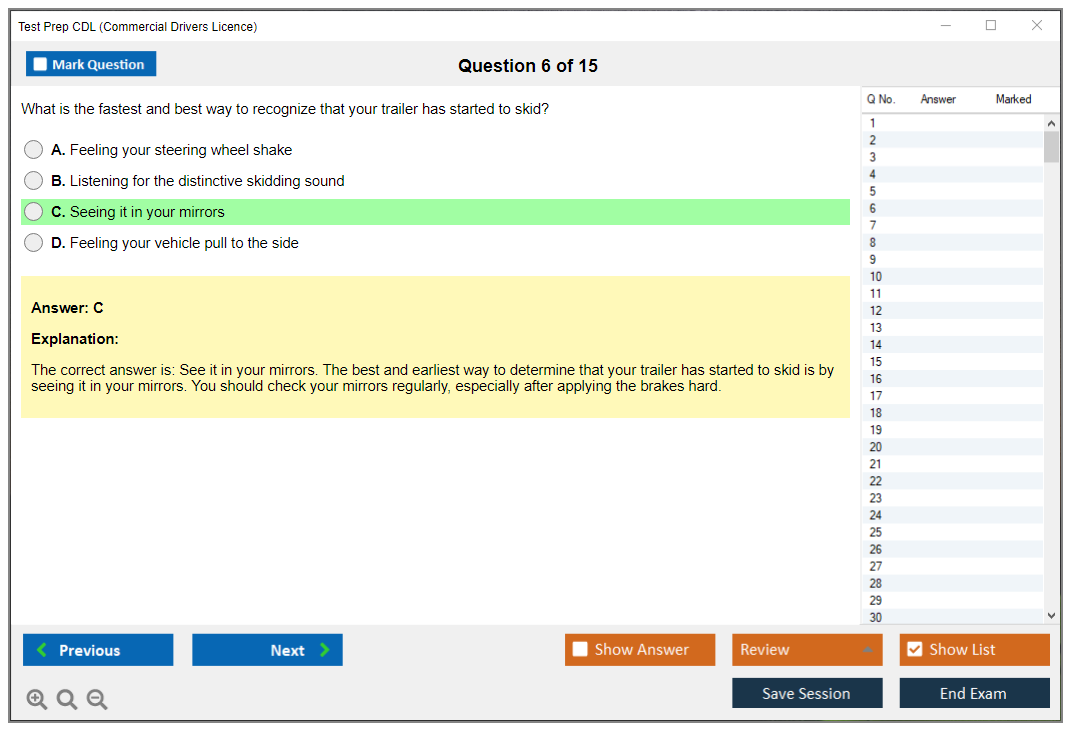
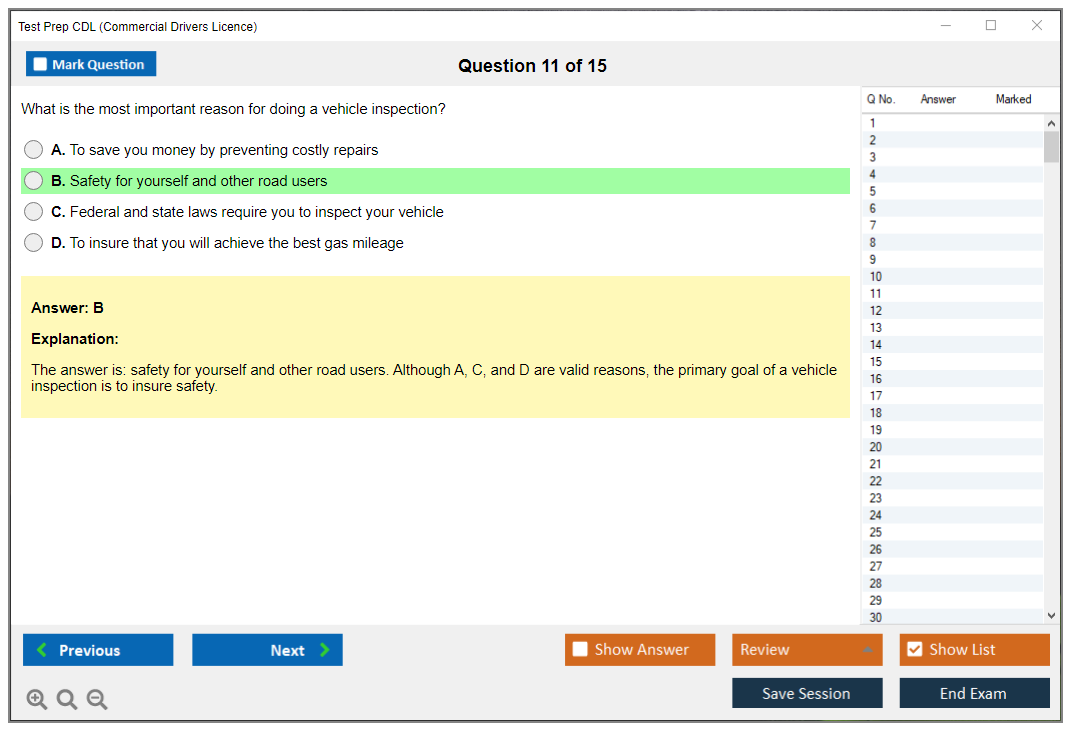
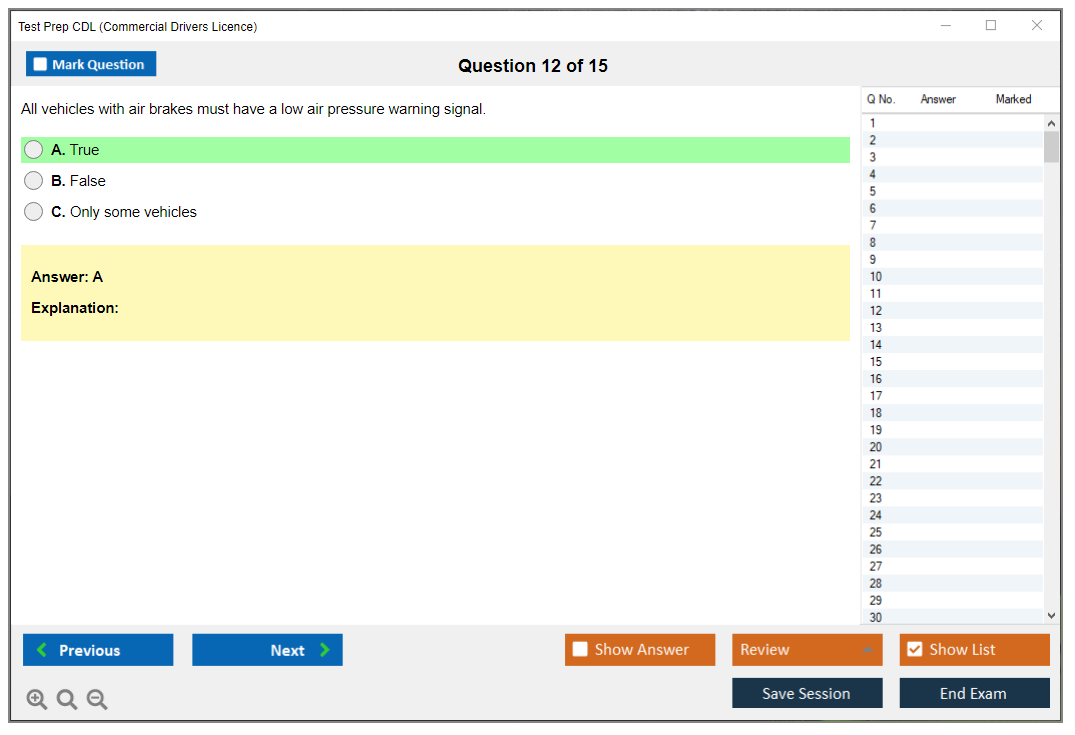
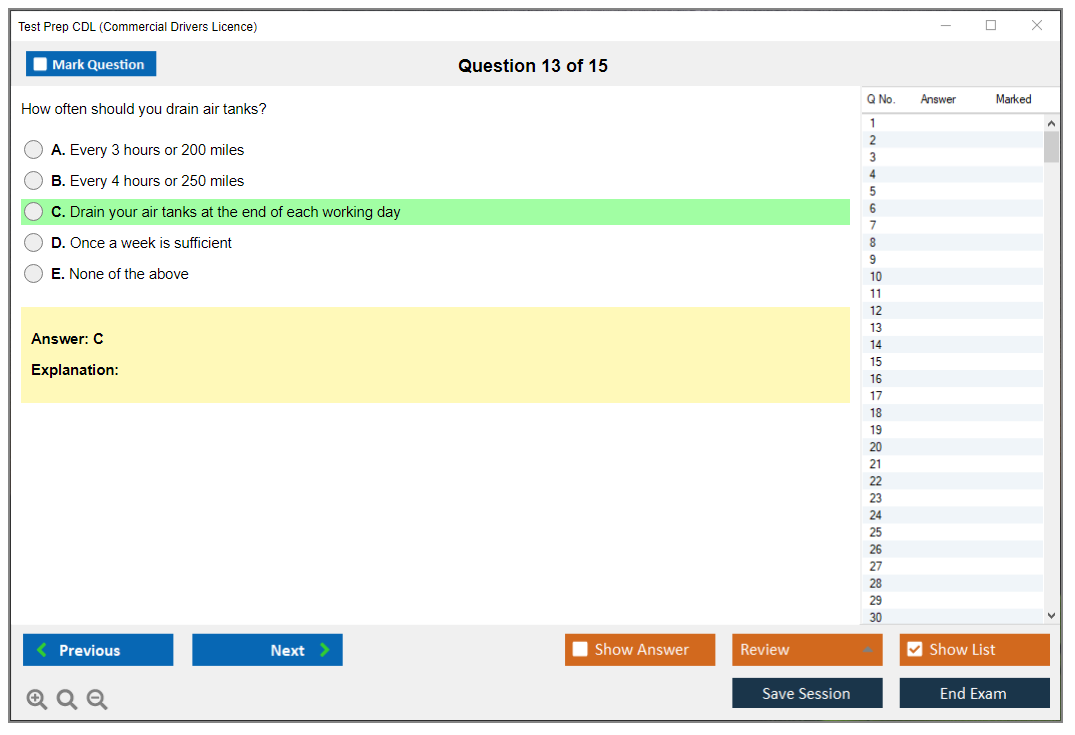
Test Prep CDL (Commercial Drivers Licence): Complete Guide
What you need to know about the CDL exam structure for 2026
Okay, so here's the deal.
The CDL exam isn't just one test. It's this multi-part evaluation combining written knowledge assessments with actual hands-on demonstrations of your ability to safely operate commercial motor vehicles, and honestly, it catches people off guard. You'll face written tests covering general knowledge, air brakes, combination vehicles, and potentially several endorsement topics depending on what you wanna drive. The skills portion breaks down into three sections: pre-trip vehicle inspection, basic vehicle control maneuvers, and on-road driving assessment.
Look, I've seen people walk into this thinking it's like a regular driver's test. It's not. The written portion alone can include multiple tests. You might take four or five separate exams in one sitting if you're going for Class A with endorsements, which is just.. yeah, it's a lot. Each one typically has 20-50 questions depending on the section and your state's requirements.
The skills tests are where things get real though. You're not just driving around the block. I mean, the pre-trip inspection requires you to identify and explain dozens of vehicle components in order, calling out potential defects and safety issues like you've been doing it for years. Basic control tests your ability to maneuver a massive vehicle through tight spaces. And the road test? That's you in traffic, making turns, managing intersections, proving you won't be a hazard to everyone else out there.
Understanding the three CDL classes
Class A is what most people picture when they think "truck driver." Those big rigs hauling trailers down the interstate. This license allows operation of combination vehicles with a gross vehicle weight rating of 26,001 pounds or more, where the towed unit weighs at least 10,001 pounds. We're talking tractor-trailers, tanker trucks, livestock carriers. Honestly, if you want flexibility in the trucking industry, Class A opens the most doors. Or wait, actually, that might depend on your local job market, but generally speaking, yeah.
Class B permits you to drive single vehicles with GVWR of 26,001+ pounds, or you can tow something under 10,001 pounds. Think straight trucks, large passenger buses, segmented buses, dump trucks with small trailers. It's still commercial driving but without the complexity of managing a separate trailer unit. Some people prefer that. Plenty of local delivery jobs, bus driving positions, and municipal work falls under Class B.
Class C covers vehicles that don't meet Class A or B weight requirements but are designed to transport 16 or more passengers (including the driver) or require placards for hazardous materials. Small buses, hazmat vans, that sort of thing. It's the most niche of the three classes.
CDL endorsements that expand what you can haul
Endorsements are where you really start building earning potential, no question. The H endorsement for hazardous materials requires a TSA background check and fingerprinting plus a written test covering DOT hazmat regulations, shipping papers, placarding requirements, and emergency response. Not gonna lie, the background check alone takes weeks sometimes, so plan ahead.
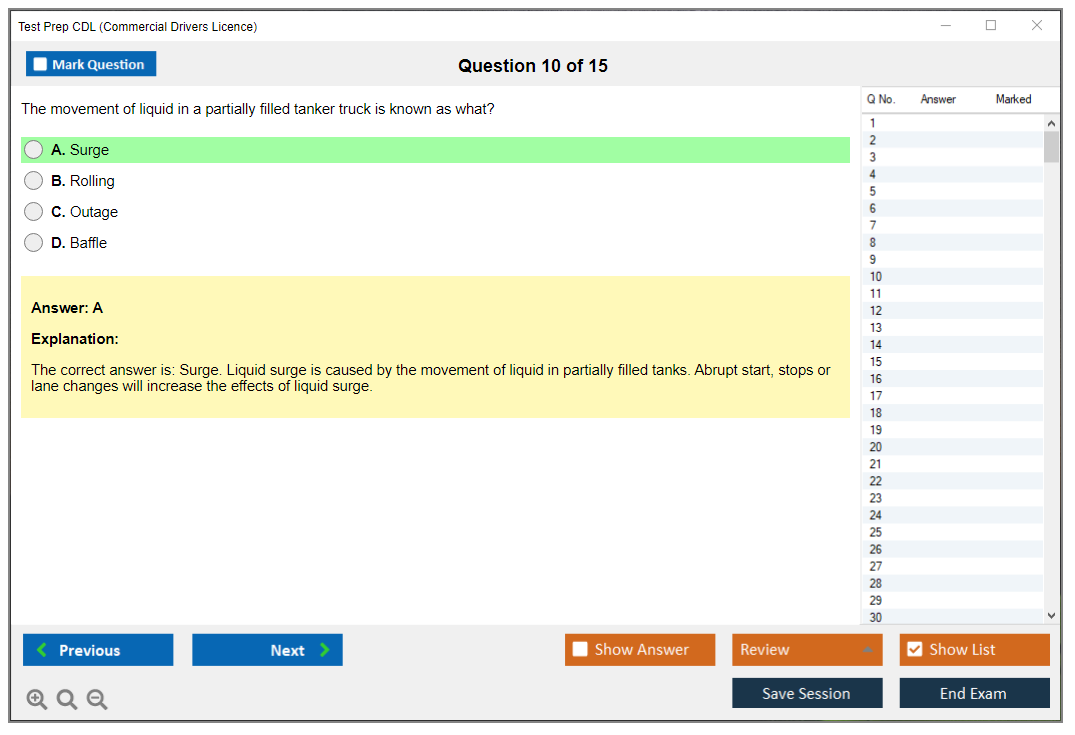
N endorsement is for tank vehicles. Anything hauling liquids or gases in tanks, and the written test focuses heavily on weight distribution, surge control (because liquid cargo shifts in ways that'll surprise you), and the weird handling you get with tankers. You need this even if you're not hauling hazmat, just because the vehicle has a tank.
Short version? It matters.
P endorsement lets you carry passengers in vehicles designed for 16+ people. The test covers loading and unloading procedures, emergency exits, passenger safety, and dealing with difficult situations that'll absolutely come up. You'll also face extra skills testing beyond the standard road test. S endorsement builds on P but adds all the school bus stuff: child safety protocols, railroad crossings, school bus lights and signals, emergency evacuation procedures.
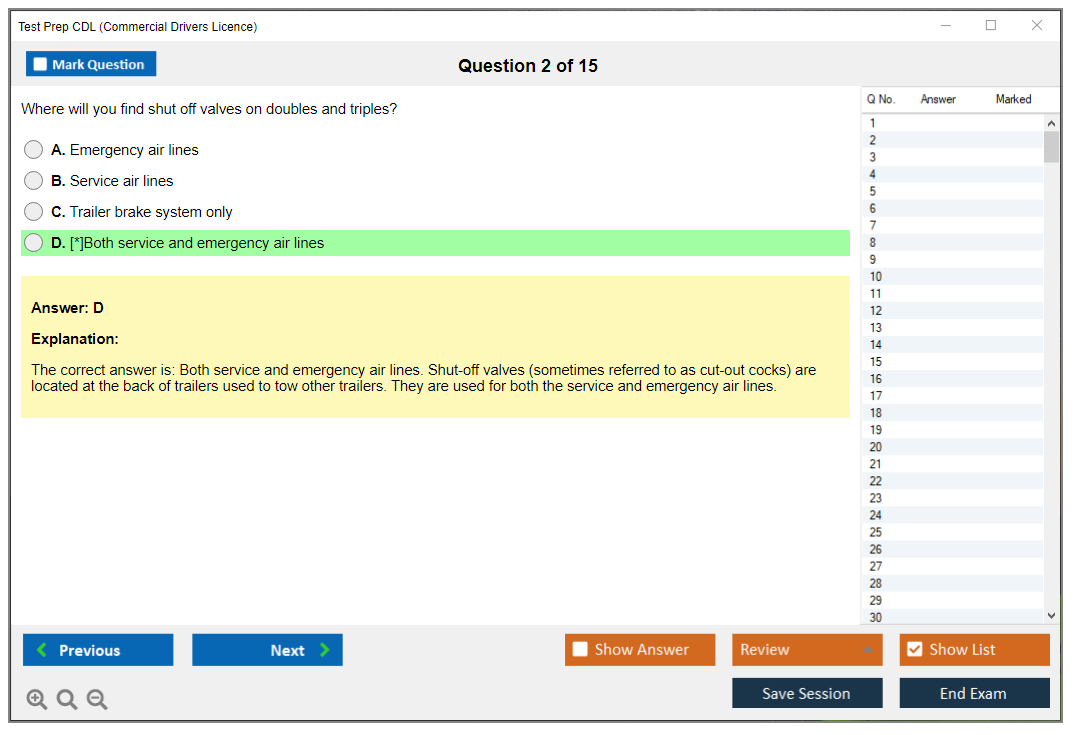
T endorsement is for double and triple trailers, which handle completely differently than single trailers. X endorsement combines H and N for those hazmat tanker jobs that pay serious money.
My cousin drove tankers for three years before switching to dry van because the stress wasn't worth the extra 15k annually, but that's a whole different conversation.
Breaking down the written knowledge tests
The General Knowledge test is mandatory for everyone. Period. It covers traffic laws for commercial vehicles, vehicle inspection procedures, safe driving practices, cargo securement, weight distribution, hours of service regulations, and accident procedures that you'd better know cold. Most states require you to answer 80% correctly to pass. You can miss maybe 8-10 questions depending on the total.
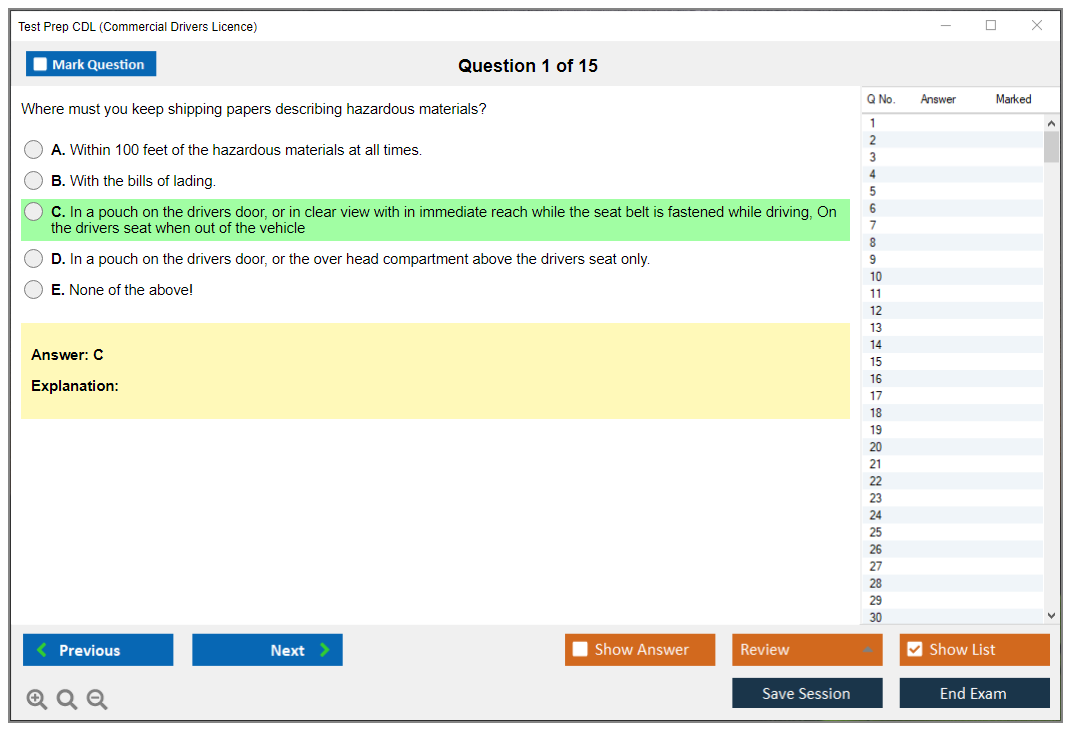
Air Brakes test is required if your vehicle has air brakes, which most commercial vehicles do. You need to understand system components, inspection procedures, how to check for leaks, what happens when air pressure drops, emergency stopping procedures. I mean, air brakes work fundamentally different from hydraulic brakes, so you can't just wing this one.
Not even close.
The Combination Vehicles test is mandatory for Class A applicants. Covers coupling and uncoupling procedures, inspecting fifth wheels and pintle hooks, trailer stability, off-tracking in turns, handling multiple units. This test trips up a lot of people because it gets into procedures you need to memorize, and there's no way to figure them out during the exam.
Endorsement tests each add their own specialized knowledge domain. If you're stacking endorsements like H and N together, expect to spend serious time studying regulations and technical specs.
Skills tests prove you can actually drive
Pre-Trip Inspection is where you walk around the vehicle explaining what you're checking and why. The thing is, you need to identify components, describe what you're looking for, explain acceptable versus defective conditions all in sequence. Examiners are looking for thorough coverage. You can't just point at random stuff. You need a script, basically, that covers every required item in order.
Basic Vehicle Control happens in a closed course. You'll do straight-line backing for 100 feet or so, offset backing into a space, parallel parking (or alley dock) on the driver's side. Honestly, this is where practice makes the difference between passing and failing. Some states add a 90-degree alley dock. Each maneuver has point deductions for touching boundaries, too many pull-ups, or failing to complete. The examiner isn't in the vehicle for this part in many states. They're watching from outside.
On-Road Driving is you, the examiner, and real traffic all happening at once. They're watching lane control, turns (right turns especially where you might clip a curb or swing too wide), intersection procedures, railroad crossings, speed management, following distance, mirror usage, signaling. Basically everything. Automatic failures include hitting the curb, running a light, causing another vehicle to brake or swerve because of you.
State variations you need to research
Federal standards set the baseline but states add their own flavor, which can be frustrating when you're trying to prepare. Some states outsource skills testing to third-party providers, often truck driving schools that have certified examiners. Others do everything at DMV facilities, which might mean longer wait times but potentially lower fees.
Testing availability varies wildly. In some states you can schedule a skills test within a week. Others have two-month backlogs that'll delay your whole career timeline.
Retake policies differ too. Some states make you wait a week between attempts, others let you retest immediately if you pay again. Fees are all over the map. I've seen states charge $40 for the entire written portion and others that charge per test, so you're dropping $200+ before you even get to skills testing.
Entry-Level Driver Training changed everything in 2022
The ELDT mandate that took effect February 7, 2022, requires FMCSA-approved training before you can take skills tests for Class A or Class B, or before adding H, P, or S endorsements. This isn't optional anymore. Your training provider must be listed on the Training Provider Registry or it doesn't count.
Straight up doesn't count.
The regulation covers both theory instruction and behind-the-wheel training with hour requirements depending on your license class. Which honestly makes sense when you think about it. Or actually, I'm kinda mixed on this because it added costs, but safety-wise? Schools submit completion certificates electronically to FMCSA, and that data must be in the system before your state will let you test.
This added cost and time to the CDL process, but it probably reduced the number of under-prepared drivers on the road. Still, it means you can't just study the manual and show up anymore.
Timeline from zero to licensed
Most people need two to four weeks of focused study for written tests if they're starting from scratch. If you've got trucking experience or mechanical knowledge, maybe less. The tests aren't impossibly difficult but they cover a lot of material with details you need to memorize.
Skills training through a professional CDL school typically runs four to eight weeks with daily practice sessions that'll wear you out. Some intensive programs compress it into three weeks but you're there all day every day. Part-time programs stretch it to three months.
From starting study to holding your CDL, figure six to twelve weeks for thorough preparation. That includes waiting periods for background checks if you're getting hazmat, scheduling delays for skills testing, and potential retakes if needed.
Why proper preparation matters financially
Commercial driving offers stable employment with median wages around $48,000-$65,000 annually. Specialized hauling with endorsements can push that higher. Hazmat tanker drivers, long-haul specialists, and those willing to work difficult schedules can clear $80,000+.
Each failed test attempt costs money. Written test retakes might be $20-40 each, which adds up fast. Skills test failures? Easily $200-300 to retest, and you're waiting weeks for another appointment. Proper preparation using quality CDL test prep materials saves those retake fees and gets you earning faster.
The investment in study guides, practice tests, and training pays back quickly once you're working. We're talking weeks to recoup costs, not years like with some professional certifications. Similar to how people prepare for standardized tests like the SAT-Test or ACT-Test, structured preparation for the CDL improves pass rates and reduces total time to completion.
CDL Test Objectives: What to Study
Honestly? CDL test prep's mostly about knowing what the examiner's trying to prove. Not your "vibes". Not your confidence. Competency. The written tests check whether you understand rules and risk, and the skills test checks whether you can control a big vehicle without scaring everyone around you.
Look, this exam's predictable.
You'll see two buckets: knowledge (permit-style written tests) and performance (pre-trip, backing maneuvers, road). And if you treat it like random trivia, you're gonna waste time. The smarter move? Study by objectives, then hammer a CDL practice test until your misses drop to near-zero.
what the cdl exam covers (written + skills)
Written: General Knowledge's the base, and it's why I tell people CDL general knowledge test prep's the first domino, because it touches safe driving, cargo, inspections, and the "commercial-only" rules that show up everywhere else. Then you stack on Air Brakes, Combination Vehicles (Class A), and endorsements like HazMat or Tanker.
Skills: pre-trip inspection, basic vehicle control, on-road driving. Separate scoring. Separate failure points. Different kind of stress.
Three parts total. All matter.
cdl classes and endorsements (class a, b, c. Air brakes, hazmat, tanker, doubles/triples)
Class A: combo vehicles, tractor-trailer world. Class B: single heavy vehicle, maybe a trailer under the limit. Class C: smaller but passenger or hazmat triggers it.
Endorsements're their own tests, and they change what you're legally allowed to do. HazMat adds TSA checks and paperwork focus. Tanker changes how the truck moves. Passenger and School Bus're a whole safety culture, and the thing is, the rules get picky fast.
cdl test objectives (what to study)
This's the meat. This's your CDL written test study guide in plain language, tied to what shows up on the DOT CDL knowledge test and the skills exam.
general knowledge objectives
General Knowledge test objectives form the foundation of CDL competency. That's not some slogan, it's literally how the test system's built, because the other sections assume you already know baseline stuff like stopping distance, space management, and what to do when conditions go sideways.
Vehicle inspection procedures show up early. You need a mental walkaround: engine compartment checks (leaks, belt condition, fluids), cab checks (gauges, warning lights), lights and reflectors, mirrors, and coupling systems if you're in a combo. I mean, people miss easy points here because they "kind of" know it but can't say it cleanly.
Basic control principles matter even on the written. Shifting, backing, visual search patterns, and space management. That "aim high in steering" stuff's nice, but the test cares more that you understand sight lines, blind spots, and why you leave yourself an out.
Safe driving techniques're constant: speed management, night driving, extreme weather operation, hazard perception. Learn how they phrase questions, because they love "most important" and "best first action" scenarios, and your answer's usually about reducing risk early, not showing off fancy recovery moves.
Cargo handling rules're another pain point. Study weight distribution, securement methods, inspecting cargo, and covering or uncovering loads. For example, understand why weight forward on a trailer affects steering traction and why uneven weight can make handling weird in turns and braking, because the questions're often practical even if they're written like a textbook.
Hours of service: logbook requirements, fatigue management, and what you can and can't do on duty. You don't need to memorize every edge case at first, but you do need the basics tight for CDL permit test prep, because the test loves to ask about "driving time vs on-duty time" and what resets what. My cousin failed twice before he figured out they wanted the regulatory answer, not the "how it actually works at his company" answer, which probably tells you something about how training programs cut corners.
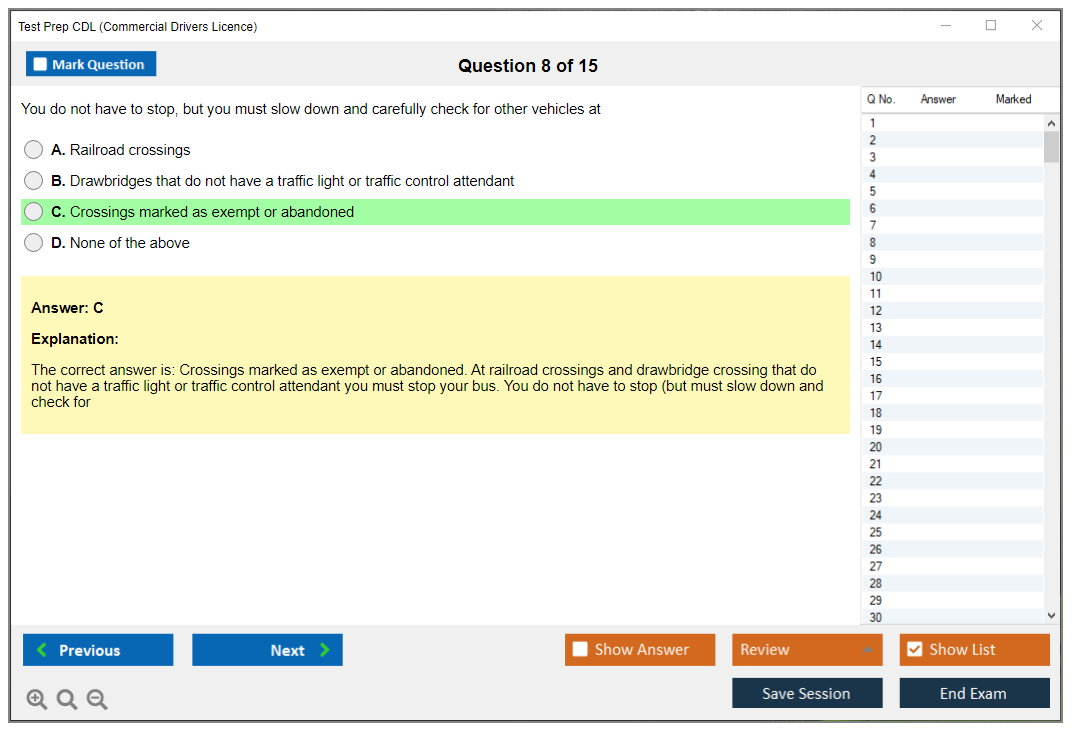
Emergency procedures: brake failures, tire blowouts, fires, accidents, breakdown protocols. The theme's control first, warn others, then move to safety when possible. Federal and state traffic regulations specific to commercial motor vehicles also sit here, like lane restrictions, railroad crossings, and when you must stop.
combination vehicles objectives
Combination Vehicles test objectives for Class A CDL candidates're about one thing: controlling two vehicles that behave like one, until they don't. Off-tracking, trailer swing, and that crack-the-whip effect aren't theory, they're why curbs and signs get taken out.
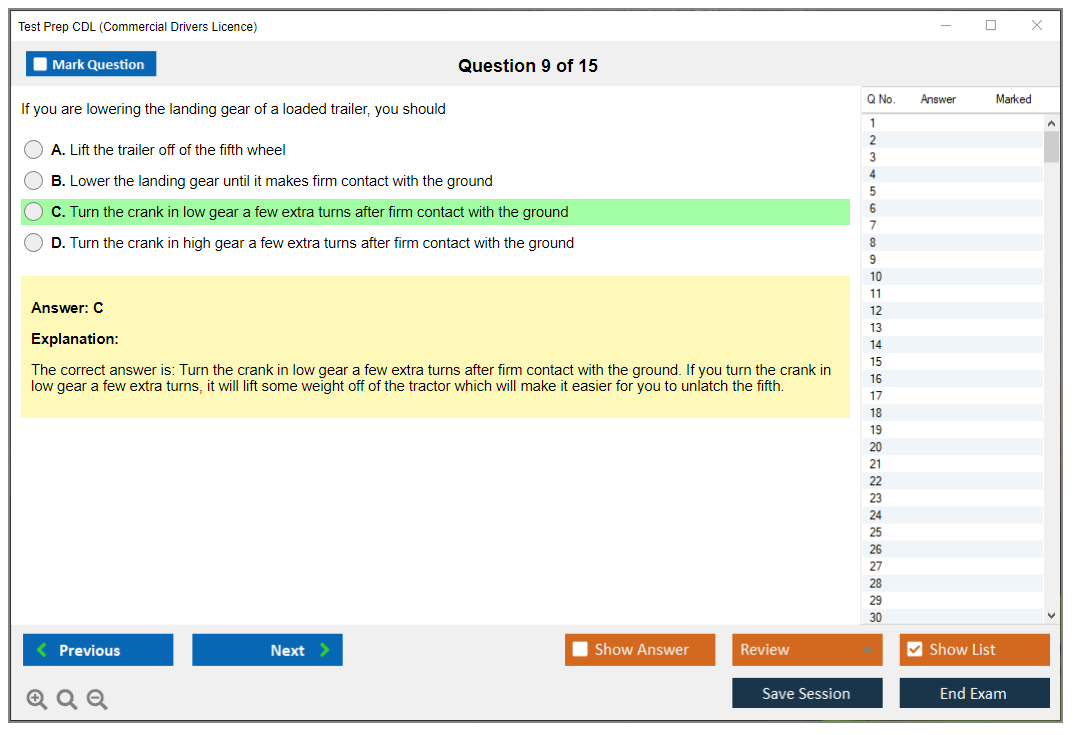
Coupling and uncoupling procedures're huge. Connecting air lines, locking the fifth wheel, raising landing gear, checking connections. The examiner wants you to do it the same way every time, because consistency prevents "dropped trailer" stories. Spend real time on this. Walk the steps out loud. If you want something structured to drill, CDL Practice Exam Questions Pack is one of the few paid packs I've seen people actually finish, mostly because it's organized like the sections you're tested on.
Inspection for combos focuses on fifth wheel condition, sliding tandem positions, air lines, and electrical connections. Know what "gap-free" and "locked jaws" means. Know what you're looking for with airlines: chafing, leaks, proper support.
Trailer types: dry vans, reefers, flatbeds, specialized trailers. You don't need to become a load planner, but you should know how different trailers affect handling and risk. Flatbeds bring securement headaches. Reefers add equipment checks. Specialized trailers can change turning behavior.
Rollover prevention's its own objective: high center of gravity, weight distribution, speed management on curves. Control skids and jackknifing specific to tractor-trailer combinations, which's basically "don't panic brake and don't oversteer," but the test words it in scenario form.
air brakes objectives
Air brakes scare people because they think it's all mechanics. It's not. It's checks, warnings, and proper braking technique.
You need to identify components: compressor, governor, air storage tanks, brake chambers, slack adjusters. Also understand dual systems with primary and secondary circuits, because redundancy's the whole safety story here.
Memorize the air brake system checks: governor cut-in and cut-out, air loss rate, low pressure warning, emergency brake activation. This's where CDL air brakes test prep gets real, because the questions're specific and the skills test wants you to perform checks in a certain sequence without skipping the "tell me what you're checking" part.
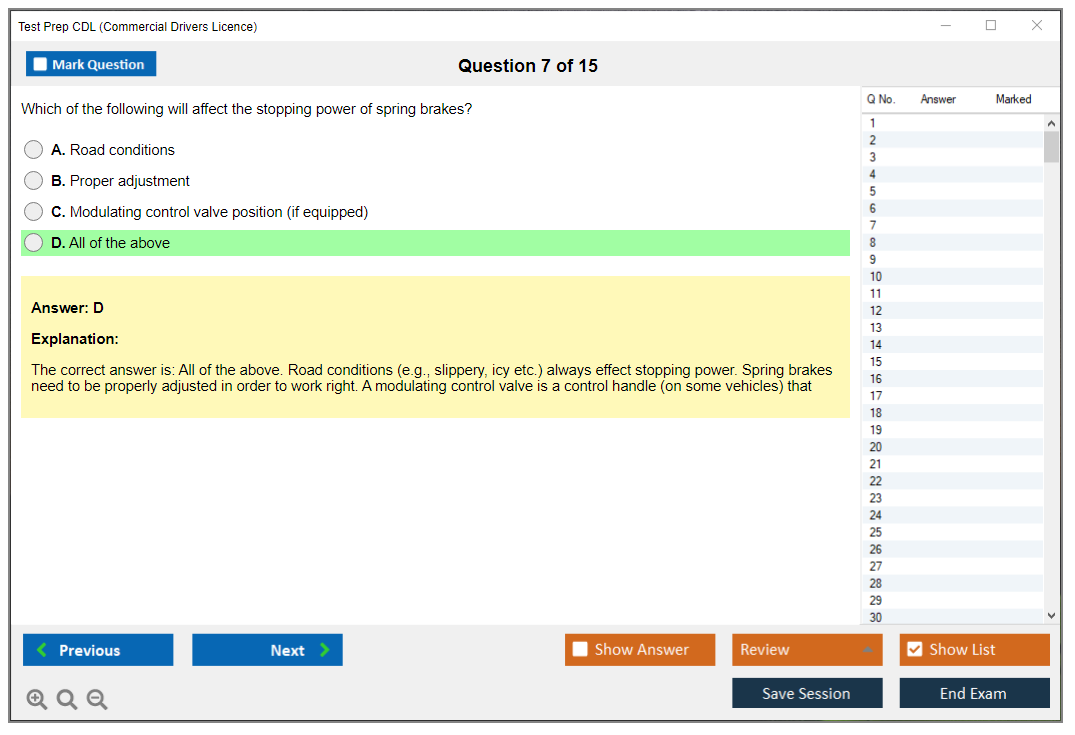
Know common problems: contamination, leaks, slow pressure buildup, component failures. Then proper use: controlled braking, stab braking, avoiding brake fade on long downgrades. Spring brakes and parking brake operation're also core, because misunderstanding spring brakes's how people roll a truck in a yard.
pre-trip inspection objectives
Pre-trip inspection's a memory test wearing a safety hat.
Engine compartment: fluid levels, belts, hoses, wiring, battery, steering components, suspension. Cab check: gauges, controls, mirrors, windshield, wipers, emergency equipment, seatbelts. Lighting and reflectors: all required lights function, correct color, visible.
Tires and wheels: tread depth, inflation, damage, wheel fasteners, hub oil seals. Brake system: adjustment, component condition, air integrity, parking brake function. Coupling system: fifth wheel, kingpin, locking jaws, safety chains where applicable, air and electrical lines. Cargo securement: tie-down methods, weight distribution, device condition.
This's where CDL pre-trip inspection study materials pay off. A checklist and a spoken script beat random reading every day of the week.
basic vehicle control objectives
Backing's where confident people get humbled. Straight-line backing, offset backing, parallel parking, alley dock. All of it's about slow speed, small inputs, and constant mirror use.
Clutch control, smooth steering, minimal pull-ups. Use mirrors. Avoid encroachments and boundary strikes. Get out and look when allowed. Don't be a hero.
Go slow. One sentence.
on-road driving objectives
Starting and stopping: correct gear selection, smooth clutch engagement, controlled braking. Turning: lane position, speed reduction, mirror checks, signaling. Intersections: approach speed, gap selection, clearing, yielding.
Lane changes: mirror checks, signal, speed match, space. Railroad crossings: mandatory stops when required, correct gear, clear tracks fully. Following distance and space cushion show up constantly, and the examiner watches for "crowding" even when traffic's annoying.
endorsement objectives (hazmat, tanker, passenger/school bus)
HazMat: hazard classes, placards, shipping papers, emergency response, security protocols. If you're doing CDL hazmat endorsement practice test work, focus on reading questions carefully because one word changes the answer.
Tanker: liquid surge, baffles, outage, bulkhead effects, high center of gravity. Passenger and School Bus: loading/unloading, evacuation, railroad crossings with passengers, prohibited practices. Doubles/Triples: extra length, coupling multiple trailers, stability concerns.
prerequisites and eligibility requirements
Age: usually 18 intrastate, 21 interstate. Medical: DOT physical and medical card, plus self-certification category.
Identity, residency, driving record: bring what your state asks for, and don't assume your buddy's list matches yours. CLP requirements include passing the knowledge tests, and these days you're also dealing with ELDT rules if you're new, which impacts scheduling and training before skills testing.
cdl test cost (fees you should expect)
CLP application and knowledge test fees vary, often roughly $30 to $100 depending on state and attempts. Skills test fees can be "DMV price" or third-party pricing, and third-party can jump higher, especially with truck rental.
Endorsements: each test might be an extra fee. HazMat adds TSA fingerprints and background check costs, which's usually the big add-on. Other costs: DOT physical (often $80 to $150), training, retests, and time off work. That last one's the silent budget killer.
passing score and scoring rules
Written tests typically want around 80 percent, but states differ by section. Some're 20 to 50 questions with a set number you can miss.
Skills scoring's about errors, and some're automatic failures: unsafe action, traffic violation, striking objects, ignoring instructions, dangerous speed. Retake rules and waiting periods're state-dependent, and some places make you reschedule days out, which hurts if you didn't prepare.
how difficult is the cdl test?
The written test's tricky because of wording, state variations, and "best answer" logic. If your study plan's only memorizing facts, you'll get clipped by scenario questions that want judgment.
The skills test's hard because pre-trip's long, maneuvers're tight, and nerves mess with your hands. Common failures: rushing, not checking mirrors, bad setup on backing, skipping parts of the air brake check, and sloppy intersection habits like late signals or rolling stops.
best study materials for cdl test prep
Official state CDL manual's still the source of truth. Build a state CDL manual study plan: read a section, take notes, then do practice questions immediately while it's fresh.
Study guides and flashcards help for numbers, definitions, and inspection wording. Training programs and ELDT matter for hands-on time. Videos and checklists're great for pre-trip and coupling, because you can rehearse the sequence like a script.
If you want one paid resource, I'd rather see you buy something you'll actually complete than collect free PDFs forever. The CDL Practice Exam Questions Pack is straightforward, and it fits well with truck driving written exam prep because it pushes you section by section instead of throwing random mixed questions too early.
cdl practice tests: how to use them to pass faster
Practice test strategy by section: do General Knowledge first, then Air Brakes, then Combination Vehicles if you're Class A. Mix sets only after you're scoring well per section, because mixed sets hide weak spots.
How many questions: enough that you stop seeing "new" concepts. For most people, that's a few hundred per section, not 40 total. Reviewing missed questions's where progress happens. Turn each miss into a one-line note that explains why the right answer's right.
Simulate test day: timed tests, no notes, mixed sets. If you need a single place to grind CLP practice questions, CDL Practice Exam Questions Pack is an easy plug-in because it keeps you honest with repetition.
study plan (7-day / 14-day / 30-day options)
Beginner 7-day: cram General Knowledge and Air Brakes, then take a practice test nightly and patch misses in the manual. It's brutal. It can work. But you need hours each day.
14-day: slower, better retention. Add combo vehicles and start light pre-trip scripting every day, even if you haven't touched a truck yet.
30-day: best if you're working full-time. Rotate: two days written, one day pre-trip and videos, weekend full practice exams. Endorsement add-on plan: tack on HazMat or Tanker after your base scores're stable.
cdl renewal requirements (and keeping your cdl active)
Renewal frequency varies, often every 4 to 8 years depending on state. Medical card updates and self-certification're ongoing, and if you let the medical lapse, you can get downgraded fast.
HazMat renewals include repeating background checks and fingerprints on a schedule. If your CDL expires, reinstatement can mean fees, retests, or worse, depending on how long it's been. Don't play chicken with deadlines.
faqs about cdl test prep
how much does it cost to get a cdl and take the tests?
Common range: a few hundred if you self-study and already have access to a truck for skills, to several thousand with a school program, plus DOT physical and any HazMat TSA costs.
what is the passing score for the cdl written test?
Often about 80 percent, but your state sets the exact threshold and question counts by section.
how hard is the cdl test to pass?
Written's manageable with focused CDL test prep and enough practice tests. Skills gets people because pre-trip's long and backing punishes bad setup and rushing.
what should i study for the cdl permit test?
General Knowledge first, then Air Brakes, then Combination Vehicles if Class A, plus your state-specific sections. Use the manual plus a CDL learner's permit (CLP) practice questions routine daily.
how often do you have to renew a cdl and endorsements?
CDL renewal varies by state. HazMat endorsement renewals include periodic TSA rechecks, and medical certification updates can be more frequent than your license expiration.
Age gates: it's about turning 18
Okay, so here's the deal.
The age thing? It trips people up constantly. I mean, you can technically snag a CDL at 18, but (and this is the part that gets everyone) you're completely stuck operating only within your state boundaries, which is what they call intrastate. Most folks don't realize this restriction even exists until they've already started studying or, even worse, after they pass their tests, which honestly sucks major time when you're browsing job postings that require interstate routes and realizing you can't apply to half of them.
The intrastate license at 18 gets you Class A, B, or C. You can haul most stuff. Operate most commercial vehicles within your state. But interstate hazmat? Nope, not happening. That's federal territory and they want you at 21 minimum, and the thing is, if you're planning to cross state lines or head into Canada or Mexico, you've gotta wait until you're 21 anyway, so the hazmat restriction becomes kind of a moot point for younger drivers.
Now here's where it gets messier, honestly way messier than it should be. Some states tack on higher age requirements for passenger or school bus endorsements (often 21 or even 25), which seems arbitrary until you realize the logic is insurance-related and safety-related, I guess? Transporting kids or groups of people comes with different liability calculations. You'll need to check your specific state's rules because there's no universal standard here. Like, at all.
Military personnel get a break through federal exemptions that let them drive interstate at 18, but (wait for it) you need to meet specific criteria that aren't exactly advertised clearly. Not every service member qualifies automatically, so don't assume your military ID is a golden ticket.
Medical certification isn't optional
Every CDL applicant goes through a DOT physical examination. Period. You can't skip this. Can't fake it. And you need a certified medical examiner who's actually listed on the FMCSA National Registry. Random doctors can't just sign off because they need specific certification to perform these exams.
Vision gets checked. You need 20/40 in each eye with or without correction. Hearing gets tested too. Blood pressure matters more than you'd think because hypertension can disqualify you or limit your certificate duration. If you're diabetic, you'll need documentation showing stable management, complete medical history, the works. Cardiovascular health gets scrutinized because, honestly, nobody wants drivers having heart attacks behind the wheel of an 80,000-pound vehicle barreling down the interstate at 65 mph.
Your medical certificate validity ranges from 3 months to 2 years. Depends entirely on what the examiner finds and how well you're managing any conditions. Got well-controlled diabetes? Maybe you get a year. Blood pressure's borderline? Maybe six months with a requirement to show improvement at your next exam. Severe issues? Three months, and that's if you're lucky enough to pass at all.
Here's what catches people off guard: you must maintain a valid medical certificate throughout your entire CDL validity period. Like the whole time you're licensed. Let it expire and your state DMV will downgrade your license back to a regular driver's license faster than you can say "oops." You'll also need to self-certify, declaring whether you're driving interstate or intrastate, and whether you're excepted or non-excepted from medical requirements. Most drivers are non-excepted, meaning the medical card is required, no exceptions.
Certain medical conditions require additional documentation and specialist evaluations. Diabetes, vision problems, hearing loss, seizure disorders. These all trigger extra steps that add time and complexity. Sometimes you need a federal exemption application, which takes forever and isn't guaranteed approval. And that medical card? You typically have 15 days to submit it to your state DMV after receiving it, or risk downgrade.
Identity and residency documentation is bureaucracy at its finest
You need proof of identity. Valid passport, certified birth certificate, or other acceptable primary documents work. States are picky about what counts as "acceptable," so check ahead and save yourself the trip back home. Social Security number verification requires your actual card or other SSA-issued documentation. A paystub won't cut it, even if it shows your full SSN printed right there.
Proof of state residency comes through utility bills, lease agreements, property tax statements, government correspondence. Usually you need two or three documents depending on state requirements. The dates matter too because most states want recent documentation, like within the last 60 or 90 days, not something from six months ago.
Non-citizens face additional hurdles (honestly more than seems necessary). You need legal presence verification through permanent resident cards, employment authorization documents, or visa documentation that's current and valid. REAL ID compliance adds another layer depending on your state's implementation timeline and federal deadlines that keep shifting. Some states are stricter than others about what documentation formats they accept.
Your driving record gets thoroughly investigated
You typically need a valid regular driver's license in good standing before applying for a CDL, which seems obvious but some people try to skip straight to commercial and, well, won't work. Background checks run through the Commercial Driver's License Information System (CDLIS), which pulls your driving history across all states, so you can't hide violations by moving to a new state like people used to try back in the day.
Disqualifying offenses? DUI/DWI tops the list. Leaving an accident scene. Using a vehicle to commit a felony. Causing a fatality through negligent operation. Major violations result in disqualification periods ranging from 60 days to lifetime depending on the offense and how many times you've screwed up. Plain and simple. Out-of-service violations carry escalating disqualification periods that basically destroy your employment eligibility in this industry permanently.
Previous CDL suspensions, revocations, or cancellations must be completely resolved and totally cleared before obtaining a new CDL. States communicate with each other now through interconnected databases, so trying to game the system doesn't work like it maybe did decades ago.
CLP requirements before you can even attempt the skills test
The Commercial Learner's Permit gets obtained by passing required written knowledge tests for your desired license class and endorsements. During the CLP period, you must be accompanied by a CDL holder with the proper class and endorsements sitting in the front passenger seat, which (I mean) makes you basically a student driver again. It feels weird if you've been driving regular vehicles for years without supervision.
Federal law requires a minimum 14-day CLP holding period before taking CDL skills tests. Used to be you could test same-day in some states, but Entry-Level Driver Training regulations changed that completely. Your CLP stays valid for 180 days with a possible 180-day extension if you need more practice time or can't schedule your test.
Behind-the-wheel training hours must be logged with qualified instructors meeting ELDT requirements, which I'll get to in a second because that's a whole thing. During your CLP period, you cannot operate a CMV for compensation or transport passengers or hazmat. It's practice only, no exceptions.
ELDT mandate compliance changed everything recently
FMCSA-approved training providers must deliver both theory and behind-the-wheel instruction now. No shortcuts. Theory curriculum covers basic operation, safe operating procedures, advanced operating practices, vehicle systems and components in exhaustive detail. Behind-the-wheel training includes range instruction (non-public areas where you practice maneuvers) and public road driving with minimum hour requirements that vary by license class and what you're trying to get certified for.
The training provider must electronically submit completion information to the Training Provider Registry before you can take the skills test. No TPR completion record? No skills test, doesn't matter how ready you think you are. States check this automatically now through integrated systems.
ELDT exemptions apply to certain military personnel, farmers, firefighters, and drivers upgrading from a valid Class B to Class A. But the exemption criteria are specific and you need documentation proving you qualify. Once training completion gets certified and submitted to TPR, it remains valid indefinitely. You won't need to repeat ELDT if you let your CDL lapse and need to reapply later, though honestly just keeping your license active is way easier than dealing with reapplication hassles.
I remember my cousin tried to let his CDL lapse thinking he'd just take a quick refresher when he needed it again. Turned into a six-week nightmare of paperwork and waiting for training provider slots to open up. Just keep the thing current.
If you're serious about preparing for the written knowledge tests that come before all this skills training, the CDL Practice Exam Questions Pack offers practice questions covering general knowledge, air brakes, combination vehicles, and endorsement topics. It's $36.99 and helps you identify weak areas before you spend money on the actual permit test at the DMV.
State-specific quirks you absolutely need to verify
Some states require additional written tests beyond federal minimums. Certain jurisdictions demand state-specific training courses or orientation sessions that aren't part of ELDT requirements at all. Fingerprinting and additional background checks may be required depending on where you live and what endorsements you're pursuing, which adds time and expense.
Application fees vary wildly by state. Documentation formats and submission procedures differ too. Some states accept digital submissions for certain documents, others want physical copies of everything brought in person. Processing times range from same-day to several weeks depending on how backed up your local DMV is and whether they're adequately staffed.
Not gonna lie, the bureaucracy feels overwhelming when you're starting out. Unlike standardized tests like the SAT or ACT where requirements are pretty consistent nationwide, CDL requirements have federal baselines but state-level variations that really matter and can trip you up. You can't just study a generic guide and assume it applies to your situation without verifying.
The CDL Practice Exam Questions Pack helps with the knowledge test portion, which is at least somewhat standardized across states, but you still need to verify your specific state's additional requirements because they're all over the place. Check your state DMV website. Call them if the information isn't clear. Maybe talk to people who recently got their CDL in your state because firsthand experience matters. Requirements change, sometimes without much notice, and you don't want to show up on test day missing a critical document or certification.
CDL Test Cost: Fees You Should Expect
If you're doing CDL test prep, the first surprise is that "the CDL test" isn't one bill. It's a pile of small fees, some optional costs, and a couple of big ones that hit hard if you go the school route. Also, every state's got its own way of charging you, so the only honest answer is ranges plus a plan to check your DMV site before you book anything.
Some stuff's cheap. Some stuff's not. And the retakes? They add up.
The CDL process splits into two buckets: written knowledge tests for your CLP, then the three-part skills test once you're eligible. Written includes General Knowledge plus whatever applies to your class and setup, like Air Brakes and Combination Vehicles for Class A. After that, the skills test is pre-trip inspection, basic vehicle control (backing maneuvers), and the on-road drive.
Look, people underestimate pre-trip. It's not "walk around and point at tires." It's a memory test under pressure, and if your CDL pre-trip inspection study materials are weak, you'll feel it fast on test day. I mean, you can know every part of that truck and still blank out when someone's watching you with a clipboard.
Class A is combo vehicles over 26,001 lbs with trailer over 10,000 lbs. Class B? Straight trucks, buses, dumps, that sort of thing. Class C's smaller but still commercial, often hazmat or passenger based.
Endorsements are the add-ons. Air Brakes is more of a restriction removal than an endorsement for a lot of people. HazMat's the expensive one. Passenger and School Bus can trigger extra skills testing, and Tanker or Doubles/Triples usually stay written-only. Not complicated, just a lot of paperwork and fees.
General Knowledge's the big umbrella: vehicle inspection basics, safe driving, space management, hazard perception, shifting concepts, braking, and handling emergencies. This is where a good CDL general knowledge test prep routine matters, because the questions aren't trying to be cute, but they'll punish vague thinking.
Combination Vehicles is coupling, uncoupling, trailer off-tracking, rollover risk, and how to avoid trailer skid. If you're using a CDL combination vehicles test prep set, make sure it matches your state wording, because some states phrase things slightly differently and that can mess with your confidence. Honestly, I've seen people fail because they studied the wrong state's version. They were so close, too, knew the concepts cold but the wording threw them off completely.
Air Brakes is system parts, pressure ranges, leak tests, brake lag, and stopping distance. A solid CDL air brakes test prep plan is basically: learn the inspection steps, then drill the numbers until they're automatic.
You're proving the vehicle's safe and legal. That means steering, suspension, brakes, tires, lights, coupling gear, fluids, and in-cab checks. Say the parts. Say what you're checking. Say what "not damaged, not leaking, properly mounted and secured" means in your own words without sounding like a robot. Fragments help. Clear rhythm.
The thing is, examiners can tell when you're reciting memorized scripts instead of actually inspecting, so you've gotta make it sound natural while still hitting every required point.
Straight-line backing, offset backing, alley dock, maybe parallel depending on state and site. Goal's control, not speed. Pull-ups are usually allowed within limits. Get comfortable using mirrors only, because turning your head at the wrong moment is how people chase cones.
Lane control, turns, signals, speed control, railroad crossings, and general "do you act safe?" stuff. The examiner wants predictable. Boring. Professional.
HazMat's rules, placards, segregation, and emergency response. Tanker's liquid surge and braking. Passenger and School Bus focus on loading/unloading safety, stopping procedures, and student danger zones. If you're planning HazMat, don't wait till the last minute because the background check's its own timeline.
Age requirements (intrastate vs interstate)
Most states let you get a CDL at 18 for intrastate work. Interstate's typically 21. That's not a suggestion. That's federal.
Medical requirements (DOT physical/medical card)
You need a DOT physical from a certified medical examiner. You'll get a medical certificate, and the length depends on your health. Sometimes it's two years. Sometimes it's three months and a "fix this and come back" situation.
Identity, residency, and driving record requirements
Bring the right documents. Period. Proof of identity, residency, SSN, and whatever your state asks for. Also, if your driving record's messy, don't assume you'll slide through. Some disqualifications are automatic.
CLP (Commercial Learner's Permit) requirements
You'll apply for the CLP, pass the required knowledge tests, meet medical requirements, and then hold the permit long enough to qualify for skills testing. States vary on waiting periods and how appointments work, so check early. Not later.
the fee ranges people actually pay
Here's where money gets real, because the costs come from multiple places: the DMV, the testing provider, the doctor, TSA, fingerprints, and sometimes a school. If you plan for it, it's manageable. If you don't, you end up paying retake fees and missing work.
CLP application and knowledge test fees (typical ranges)
CLP application fees usually run $10 to $75, depending on the state. Knowledge test fees are often $5 to $40 per section, so if you're taking General Knowledge plus Air Brakes plus Combinations, you might pay three separate charges.
Some states bundle the CLP application and the first round of written tests into one fee, which sounds nice until you fail a section and learn retakes aren't always bundled. Endorsement written exams usually cost $5 to $25 each. Retake fees are commonly $10 to $30 per failed section.
For a Class A candidate doing the normal written set and a couple common endorsements, total written testing costs often land around $50 to $150. Honestly, the written part's rarely what breaks the budget, unless you keep retaking because your CDL written test study guide plan was "skim the manual once and pray."
Skills test fees (third-party testing vs DMV)
Skills testing's where the pricing splits. If your state DMV tests you directly, the full three-part exam (pre-trip, basic control, road) is often $40 to $100. That's the cheap route, and it's great unless the next appointment's six weeks out and you need a job now.
Third-party testers commonly charge $200 to $400 for skills testing, mostly because you're paying for speed and availability, and because running a test site with trucks and examiners costs real money. Some states require third-party testing, others let you pick. Fees might be one package price or broken out by component. That matters because failing one section can mean paying for that section again instead of the whole thing.
Retake fees for failed skills tests usually run $40 to $150 per attempt, and some places charge per failed part. That hurts when you fail pre-trip by missing a couple items you knew yesterday.
Also, vehicle rental. If you don't have access to a compliant truck and trailer, expect $100 to $300 to rent a vehicle for the test, sometimes more if it includes an escort driver and insurance. Not gonna lie, this is where people get blindsided, because they thought the "test fee" included the truck.
Endorsement testing fees (e.g., HazMat)
HazMat's its own beast. The TSA background check is $86.50, federal, non-refundable, and yes, you pay it even if you later decide HazMat isn't your thing. You'll also pay the HazMat written test fee, typically $10 to $25, and fingerprinting services can add $10 to $30 on top depending on the provider.
Passenger endorsement can add costs if your state requires a separate skills test, often $25 to $75 beyond standard testing. School Bus endorsement often means another skills test too, more like $50 to $100 extra. Tanker and Doubles/Triples are usually written-only at the normal endorsement exam price, so they're the "cheap" endorsements from a testing standpoint.
Other costs (DOT physical, fingerprints/TSA, training, retest fees)
DOT physical exams typically cost $75 to $150, depending on location and provider. If you've got medical conditions, specialized evaluations can add $100 to $500+. Sleep apnea testing can jump to $500 to $3,000 depending on home study versus lab study. Recertification can become a recurring yearly cost for certain conditions, which is annoying but part of staying legal.
Training's the big swing cost. A CDL school that meets ELDT requirements often runs $3,000 to $7,000. Private behind-the-wheel instruction's commonly $100 to $200 per hour, which is great for targeted help, like if you can't alley dock to save your life, but it gets expensive fast. Company-sponsored training can be close to free upfront, but you're signing a work commitment contract, and if you bail early, the bill shows up.
Study materials matter more than people admit. A decent set of practice tools like a CDL practice test platform, a CDL permit test prep program with CDL learner's permit (CLP) practice questions, and a clean state CDL manual study plan can run $20 to $100 total. That's money well spent if it prevents retakes. Truck driving written exam prep's cheap compared to paying $150 again because you failed road due to nerves after waiting a month.
Hidden costs are real. Transportation to the DMV and test site. Time off work for appointments. Passport-style photos if your state requires them, $10 to $20. Replacement license fees, $15 to $40. Expedited processing if offered, $20 to $50. Death by a thousand cuts. That's the vibe.
CDL written/knowledge test passing score (typical thresholds by state)
Most states set passing around 80%, but the exact threshold and number of questions vary by section and state. The DOT CDL knowledge test format's usually multiple choice, but the "trick" is that two answers can sound right if you haven't learned the specific rule.
Skills test scoring (pre-trip, control, road) and automatic failures
Skills scoring's typically points-based with automatic fails for dangerous actions. Hit a curb hard, ignore a signal, run a stop, commit an unsafe lane change? You're done. Pre-trip can be pass/fail by minimum items or percentage, and basic control's usually cones plus boundary lines plus pull-up limits.
Retake rules and waiting periods (state-dependent)
Some states let you retake quickly. Some make you wait days. Some require new fees each attempt. Check your DMV policy before you schedule, because your budget depends on those rules more than you think.
What makes the written test challenging (question style, state variations)
The written test's tough when people treat it like trivia instead of rules. Wording matters. Numbers matter. Also, your buddy's notes from another state might not match yours, and that's how you miss questions you "knew."
What makes the skills test challenging (pre-trip depth, maneuvers, nerves)
Skills testing gets you because it's performance. You can know everything and still blank out when an examiner stares at you with a clipboard. Pre-trip's the biggest memory load, and backing's where panic turns into oversteering.
Common reasons people fail (and how to avoid them)
Rushing. Not checking mirrors. Forgetting to signal. Missing pre-trip items. Practicing the wrong backing setup. Another one: showing up without the right paperwork. Brutal way to lose a day.
Official state CDL manual (how to use it effectively)
Read the manual like it's a test blueprint, because it is. Don't highlight everything. Build a checklist of what sections map to what exams, then drill those sections with practice questions.
CDL study guides and flashcards
A CDL written test study guide plus flashcards works best for the number-heavy stuff like air brake tests and following distance rules. The trick's making cards for what you miss, not what you already know.
Training programs and ELDT (Entry-Level Driver Training)
ELDT's required for many first-time applicants and certain upgrades. A legit program gives you structured range time and coaching. A bad one gives you seat time with no feedback, which is basically you paying to repeat mistakes.
Videos, checklists, and pre-trip scripts
Use videos to get the flow, then write your own pre-trip script. Say it out loud. Record yourself. Fix the gaps. If your CDL pre-trip inspection study materials don't include a scriptable routine, you're making it harder than it needs to be.
Practice test strategy by section (General Knowledge, Air Brakes, Combo)
Start with General Knowledge because it builds vocabulary, then stack Air Brakes and Combinations. For HazMat later, use a dedicated CDL hazmat endorsement practice test because the rules are specific and you can't wing it.
How many practice questions you should do (benchmarks)
Do enough that you stop memorizing answer patterns and start recognizing concepts. For most people that's a few hundred per section, mixed and timed.
Reviewing missed questions (turn mistakes into notes)
Missed questions are gold. Write a one-line rule for each miss. That becomes your personal study guide.
Simulating test day (timed tests, mixed sets)
Timed mixed sets expose weak spots. They also train your brain to stay calm, which matters more than people think.
Beginner plan (no experience)
Week one: manual plus General Knowledge practice. Then Air Brakes and Combinations. Add pre-trip script practice daily. Short sessions. Consistent.
Experienced driver refresh plan
Hit practice tests first, then read only the manual sections you're missing. Spend most time on pre-trip wording and backing setups.
Endorsement add-on plan (HazMat, Tanker, Passenger)
Tanker and Doubles/Triples are usually quick written wins. Passenger and School Bus take longer because of procedures and possible skills tests. HazMat takes the longest because TSA's on their own schedule.
CDL renewal frequency by state (typical windows)
Renewal cycles vary, often 4 to 8 years for the license, but medical updates can be much more frequent. Your state sets the calendar.
Medical card updates and self-certification
If your medical card expires, your CDL status can get downgraded. Keep the dates in your phone. Seriously.
Endorsement renewals (HazMat background check, fingerprints)
HazMat's the recurring pain. Background checks repeat, fingerprints may repeat, and you pay again. Plan for it.
What happens if your CDL expires (reinstatement steps)
Some states make you retest if you let it lapse too long. Others charge reinstatement fees. Either way, it's avoidable.
Budget path's usually $500 to $1,500 if you self-study, do state testing, and keep endorsements minimal. Standard path with school and faster third-party testing often lands $3,500 to $8,000. Premium prep with private instruction and multiple endorsements can hit $5,000 to $10,000+. Company-sponsored training can cut upfront to $100 to $500, but you're paying with commitment.
Commonly around 80%, but your state sets the exact number and question count.
Hard if you improvise. Very doable if you follow a plan, use a CDL practice test tool intelligently, and don't treat pre-trip like an afterthought.
General Knowledge first, then Air Brakes and Combinations if you're going Class A, plus any endorsement sections you need. Build your notes from missed questions. Use the manual as the source of truth.
License renewal varies by state. Medical cards can be as short as 3 months or as long as 2 years. HazMat renewals include recurring TSA steps.
how to spend less without getting cute about it
Company-sponsored training can wipe out the big tuition bill, and some employers reimburse testing fees once you're hired. Bundling endorsement tests during your initial written session can save extra appointment fees. Thorough prep's the best money saver of all because retakes are where "cheap" plans get expensive fast.
Using state DMV testing's usually cheaper than third-party if scheduling
Conclusion
Wrapping up your CDL path
Look, getting your CDL isn't just about memorizing facts from the state manual and crossing your fingers. It's building genuine confidence in your knowledge, because the written test? It's designed to catch you slipping if your foundation's shaky. I've watched countless people who absolutely knew their material bomb it anyway because they skipped practicing under actual test conditions or glossed over sections they figured were "easy."
The biggest mistake?
Thinking you can cram everything in a weekend. Maybe some people pull it off, not gonna lie, but most folks need at least two weeks of consistent study. Reading through the CDL manual. Hammering practice tests for general knowledge. Grinding air brakes questions until you're literally dreaming about brake chambers, and drilling that pre-trip inspection until you can recite it backwards while half asleep. The hazmat endorsement practice test alone? That can eat up days if you're serious about mastering it. And honestly, don't sleep on combination vehicles or doubles/triples if those matter for your career path.
Here's what works: mix up your study materials. Use the official state CDL manual as your base, but pile on practice questions to catch that weird, awkward phrasing they love using on the DOT CDL knowledge test. My cousin failed twice before he figured out the test wasn't asking what made sense, it was asking what the manual said word-for-word. Different thing entirely.
Do timed practice runs.
Review every single question you miss, even if you scored 90% right, because that remaining 10%? That might be exactly what pops up on test day. Keep your medical card current. Show up with the right documents. Sleep the night before matters more than you'd think.
If you want a shortcut to passing (and I mean a real one, not some sketchy memorization gimmick) check out the CDL Practice Exam Questions Pack. It's every question type you'll encounter, organized by section, with explanations that actually make sense instead of confusing you further. I mean, you've still gotta put in the work, but at least you're practicing with material that mirrors the actual exam instead of blindly guessing what might show up.
You've got this.
Thousands of drivers pass every month, and most of them aren't geniuses. They just prepared intelligently and stayed consistent with their routine. Get your CLP, nail the skills test, and you'll be rolling down the highway in no time.