CIS-CSM Practice Exam - ServiceNow Certified Implementation Specialist - Customer Service Management Exam
Reliable Study Materials & Testing Engine for CIS-CSM Exam Success!
Exam Code: CIS-CSM
Exam Name: ServiceNow Certified Implementation Specialist - Customer Service Management Exam
Certification Provider: ServiceNow
Certification Exam Name: CIS-Customer Service Management


Free Updates PDF & Test Engine
Verified By IT Certified Experts
Guaranteed To Have Actual Exam Questions
Up-To-Date Exam Study Material
99.5% High Success Pass Rate
100% Accurate Answers
100% Money Back Guarantee
Instant Downloads
Free Fast Exam Updates
Exam Questions And Answers PDF
Best Value Available in Market
Try Demo Before You Buy
Secure Shopping Experience
CIS-CSM: ServiceNow Certified Implementation Specialist - Customer Service Management Exam Study Material and Test Engine
Last Update Check: Mar 19, 2026
Latest 148 Questions & Answers
45-75% OFF
Hurry up! offer ends in 00 Days 00h 00m 00s
*Download the Test Player for FREE
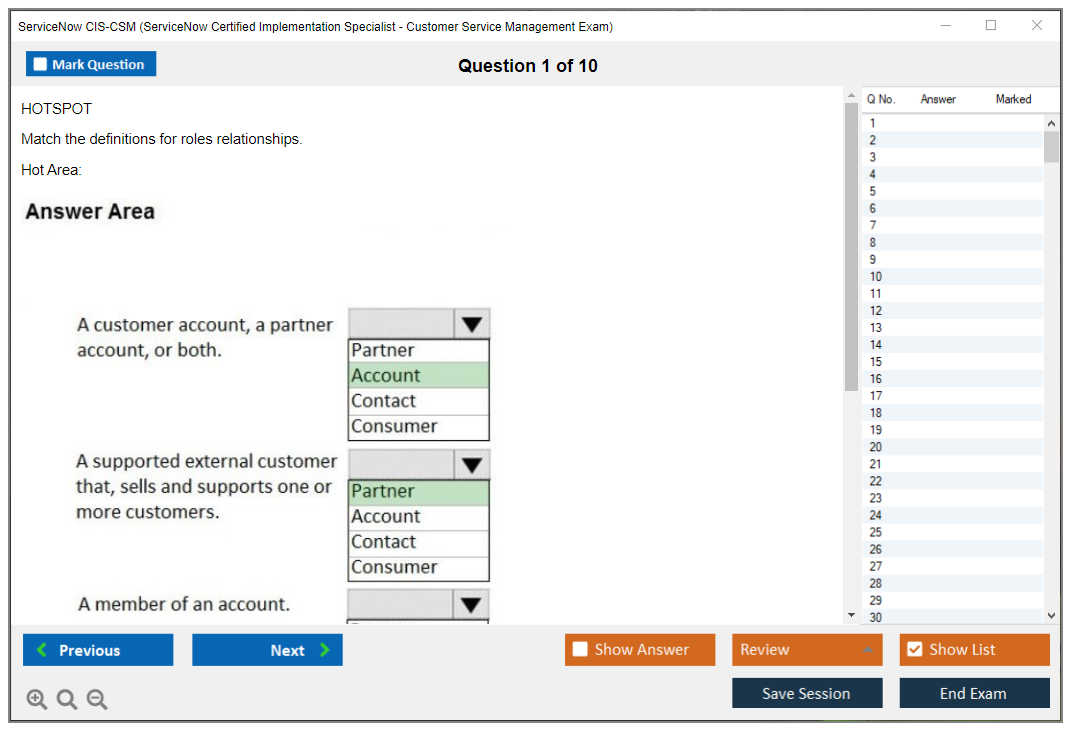
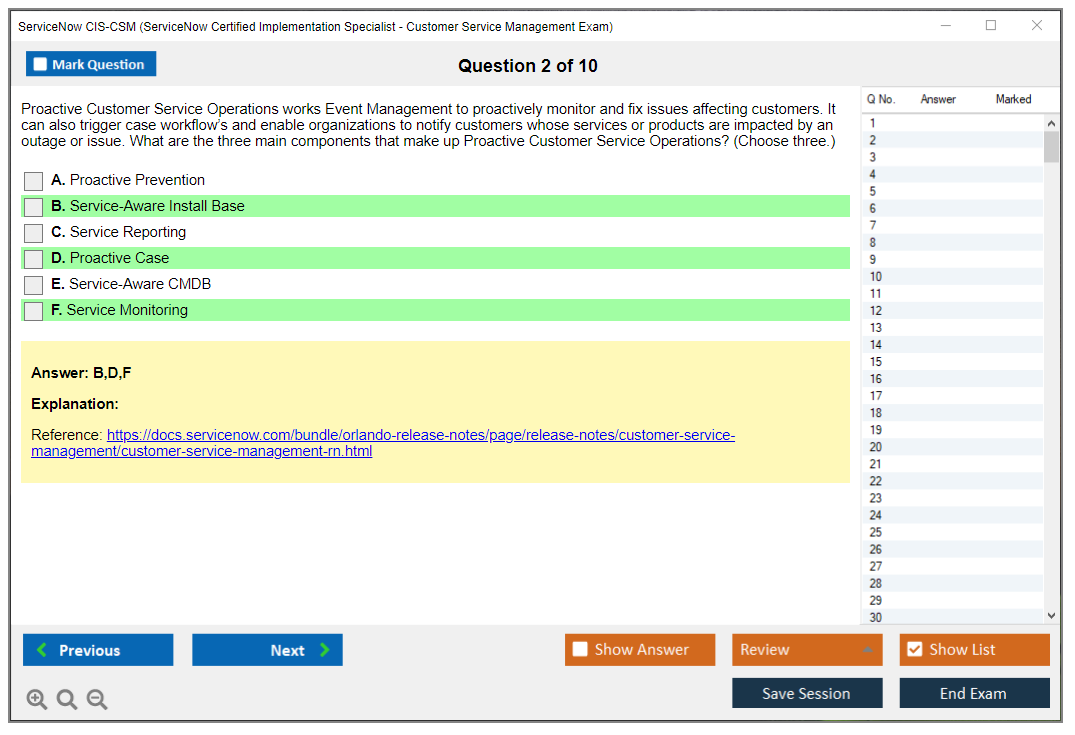
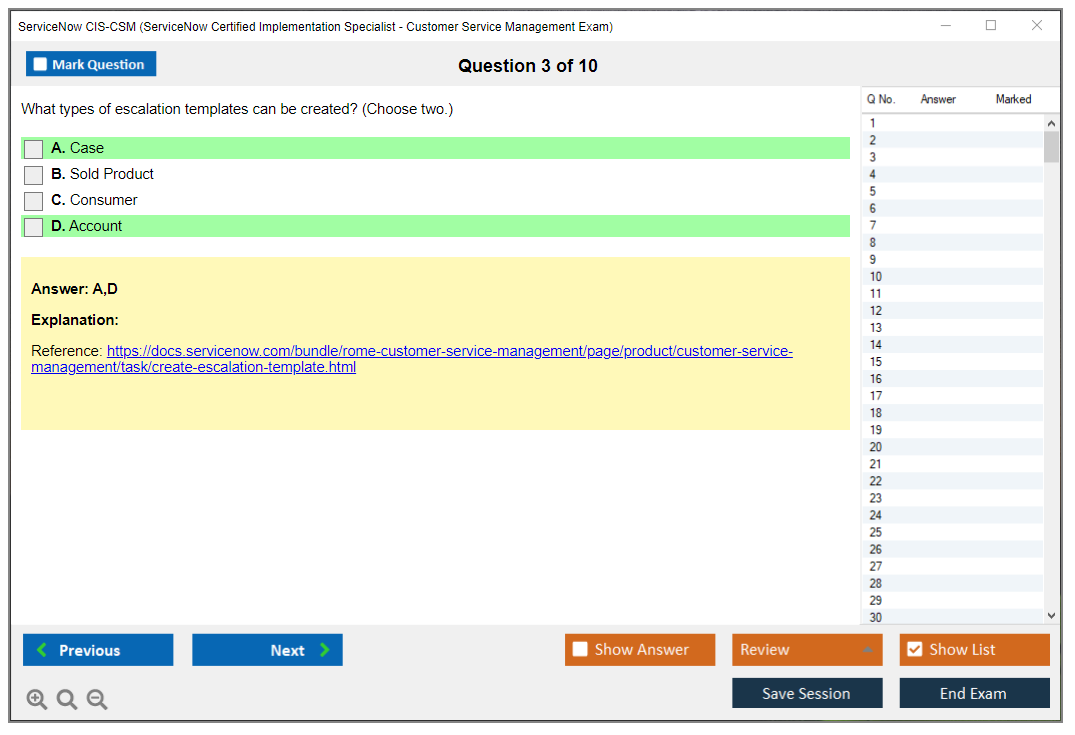
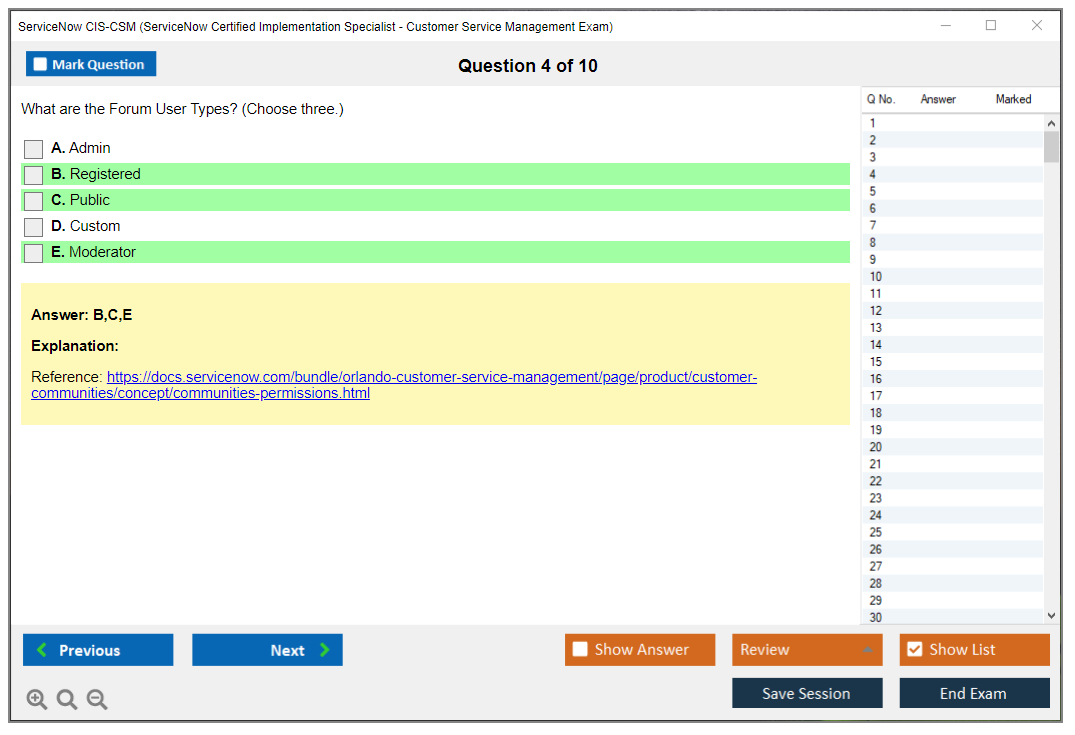
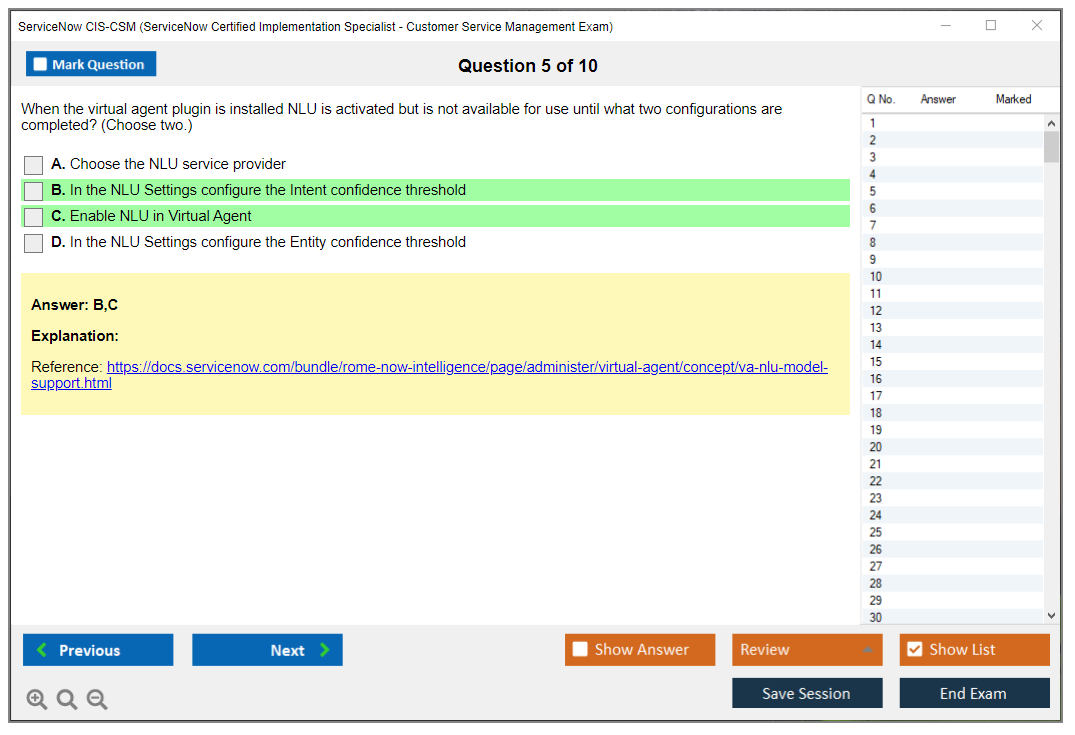
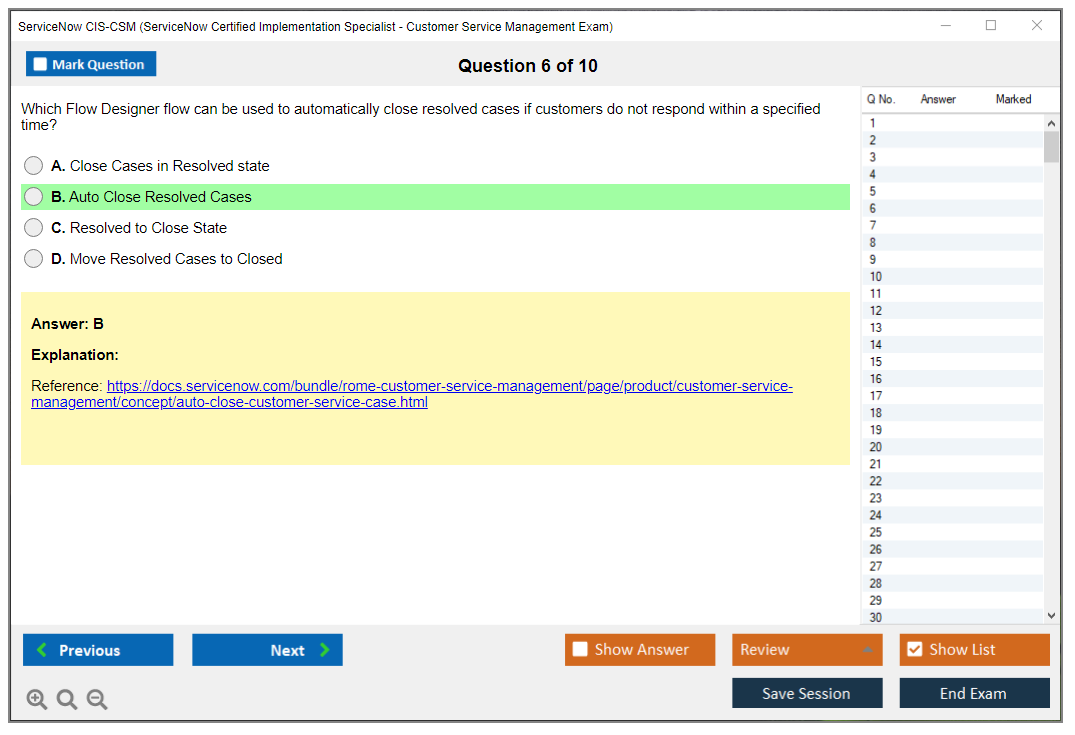
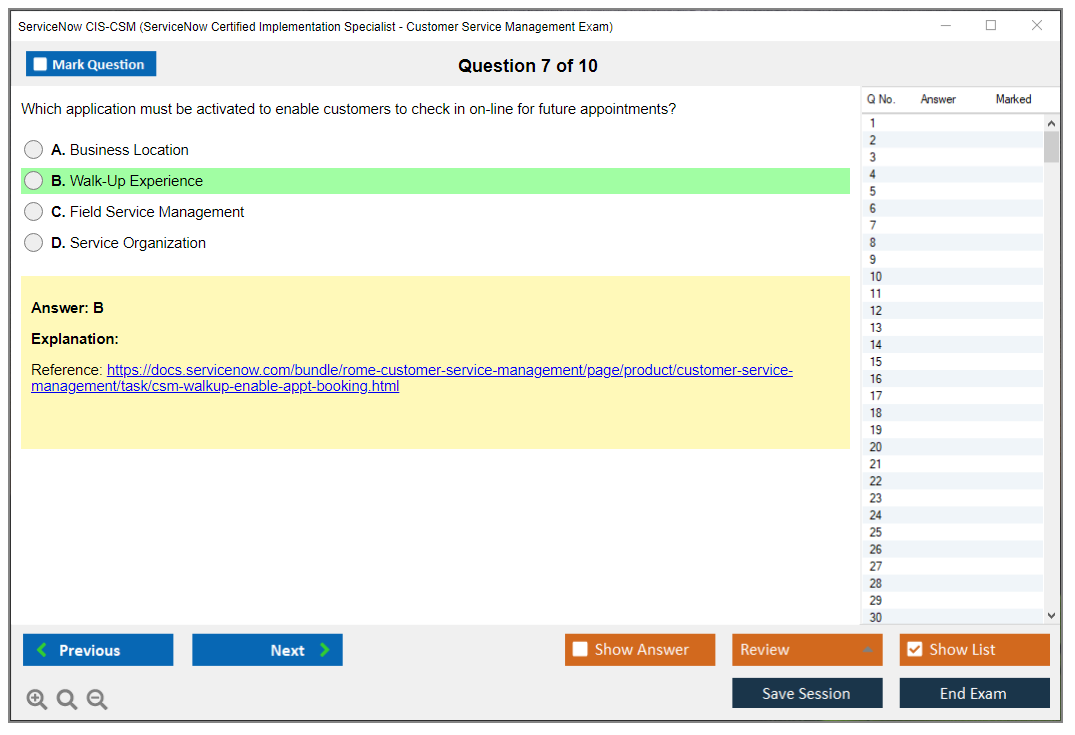
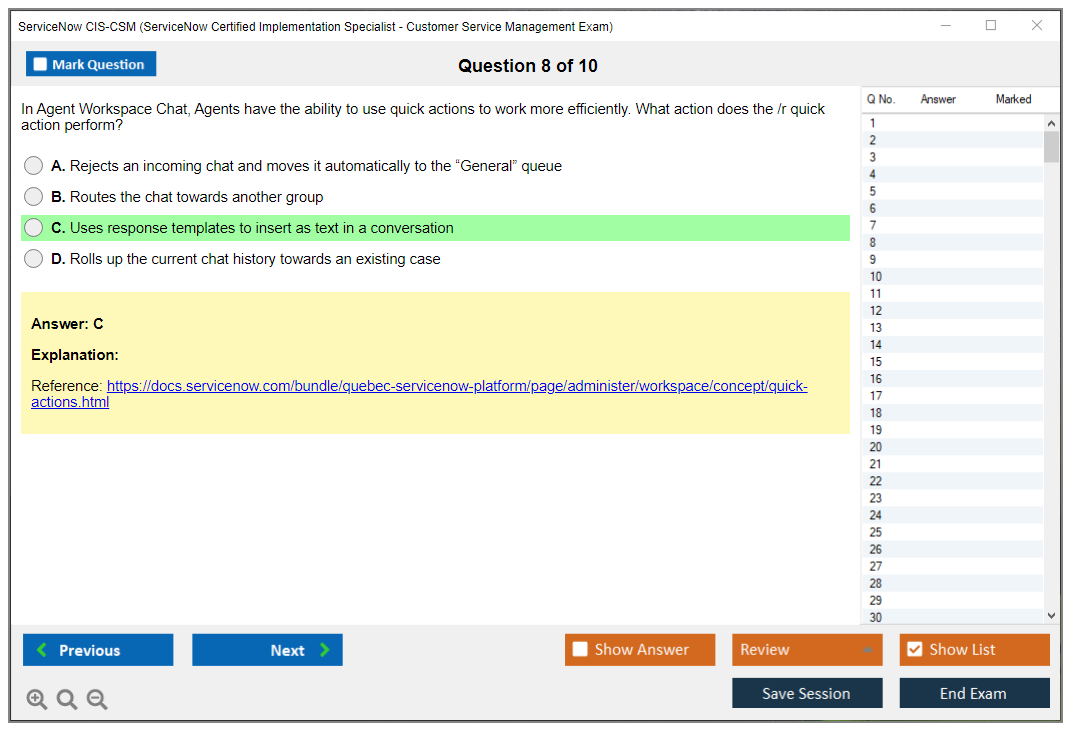
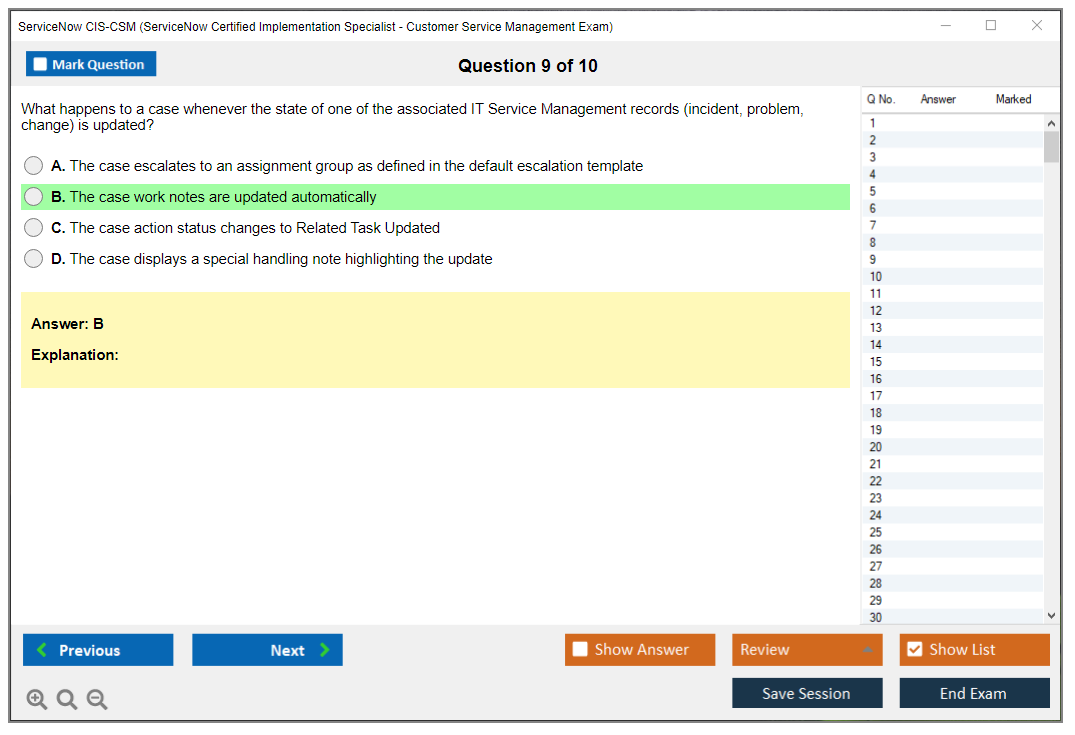
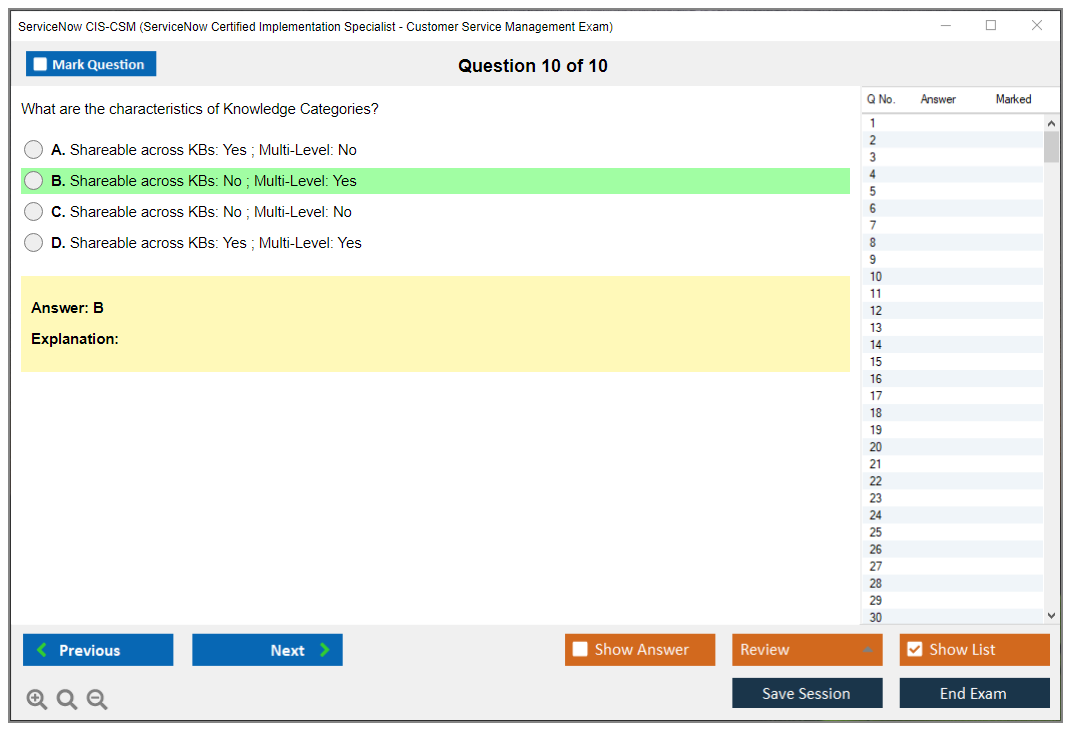
Dumpsarena ServiceNow ServiceNow Certified Implementation Specialist - Customer Service Management Exam (CIS-CSM) Free Practice Exam Simulator Test Engine Exam preparation with its cutting-edge combination of authentic test simulation, dynamic adaptability, and intuitive design. Recognized as the industry-leading practice platform, it empowers candidates to master their certification journey through these standout features.
What is in the Premium File?
Satisfaction Policy – Dumpsarena.co
At DumpsArena.co, your success is our top priority. Our dedicated technical team works tirelessly day and night to deliver high-quality, up-to-date Practice Exam and study resources. We carefully craft our content to ensure it’s accurate, relevant, and aligned with the latest exam guidelines. Your satisfaction matters to us, and we are always working to provide you with the best possible learning experience. If you’re ever unsatisfied with our material, don’t hesitate to reach out—we’re here to support you. With DumpsArena.co, you can study with confidence, backed by a team you can trust.
ServiceNow CIS-CSM Exam FAQs
Introduction of ServiceNow CIS-CSM Exam!
The ServiceNow Certified Implementation Specialist - Customer Service Management (CIS-CSM) exam is a certification exam designed to assess a candidate's knowledge and skills in implementing and configuring ServiceNow Customer Service Management (CSM) solutions. The exam covers topics such as ServiceNow CSM architecture, CSM product features, CSM implementation best practices, and CSM configuration.
What is the Duration of ServiceNow CIS-CSM Exam?
The duration of the ServiceNow Certified Implementation Specialist - Customer Service Management (CIS-CSM) exam is 2 hours.
What are the Number of Questions Asked in ServiceNow CIS-CSM Exam?
There are a total of 60 questions on the ServiceNow CIS-CSM exam.
What is the Passing Score for ServiceNow CIS-CSM Exam?
The passing score required for the ServiceNow Certified Implementation Specialist - Customer Service Management (CIS-CSM) exam is 70%.
What is the Competency Level required for ServiceNow CIS-CSM Exam?
The ServiceNow CIS-CSM exam requires a competency level of Certified ServiceNow System Administrator. Candidates must have a minimum of one year of experience working in ServiceNow, and must be able to demonstrate a comprehensive understanding of ServiceNow features, functions, and capabilities.
What is the Question Format of ServiceNow CIS-CSM Exam?
The ServiceNow CIS-CSM exam consists of multiple-choice, drag-and-drop, fill-in-the-blank, and matching questions.
How Can You Take ServiceNow CIS-CSM Exam?
The ServiceNow CIS-CSM exam can be taken online or in a testing center. For the online exam, you will need to register and purchase an exam voucher through the ServiceNow Certification Portal. Once you have purchased your voucher, you will be able to access the exam and take it from anywhere with an internet connection. For the testing center exam, you will need to contact a Pearson VUE testing center and schedule an appointment. You will then need to bring your exam voucher and valid identification to the testing center on the day of your appointment.
What Language ServiceNow CIS-CSM Exam is Offered?
The ServiceNow CIS-CSM Exam is offered in English.
What is the Cost of ServiceNow CIS-CSM Exam?
The ServiceNow CIS-CSM exam is offered for a fee of $200 USD.
What is the Target Audience of ServiceNow CIS-CSM Exam?
The Target Audience of the ServiceNow Certified Implementation Specialist – Customer Service Management (CIS-CSM) Exam includes ServiceNow administrators, consultants, and developers who have knowledge of customer service management and a working knowledge of ServiceNow.
What is the Average Salary of ServiceNow CIS-CSM Certified in the Market?
The average salary for a ServiceNow Certified Implementation Specialist (CIS) - Certified Scrum Master (CSM) is $93,000 per year.
Who are the Testing Providers of ServiceNow CIS-CSM Exam?
The ServiceNow Certified Implementation Specialist – Customer Service Management (CIS-CSM) exam is offered by Pearson VUE. Pearson VUE is an independent testing center that provides certification exams for a variety of vendors, including ServiceNow.
What is the Recommended Experience for ServiceNow CIS-CSM Exam?
The recommended experience for taking the ServiceNow CIS-CSM exam is a minimum of 2-3 years of ServiceNow experience, including experience configuring and managing ServiceNow instances, as well as knowledge of ServiceNow system administration, security, and workflow administration.
What are the Prerequisites of ServiceNow CIS-CSM Exam?
The Prerequisite for ServiceNow CIS-CSM Exam is that the candidate must have a minimum of two years of experience in ServiceNow Configuration/Administration, or have obtained the ServiceNow System Administrator Certification.
What is the Expected Retirement Date of ServiceNow CIS-CSM Exam?
The expected retirement date of ServiceNow CIS-CSM exam is not available online. You will need to contact ServiceNow directly for this information.
What is the Difficulty Level of ServiceNow CIS-CSM Exam?
The difficulty level of the ServiceNow CIS-CSM exam is considered to be moderate. It is recommended that candidates have a working knowledge of the ServiceNow platform and a good understanding of IT service management concepts.
What is the Roadmap / Track of ServiceNow CIS-CSM Exam?
The Certification Track/Roadmap ServiceNow CIS-CSM Exam is a certification program designed to help ServiceNow professionals demonstrate their knowledge and proficiency in the ServiceNow platform. The exam covers topics such as ServiceNow architecture, configuration, customization, and integration. Successful completion of the exam earns the individual the Certified Implementation Specialist – Customer Service Management (CIS-CSM) certification.
What are the Topics ServiceNow CIS-CSM Exam Covers?
1. ServiceNow System Architecture: This topic covers the fundamentals of ServiceNow system architecture, including the ServiceNow platform, the ServiceNow application, and the ServiceNow database. It also covers the components of the ServiceNow infrastructure, such as the ServiceNow server, the ServiceNow database, and the ServiceNow application.
2. ServiceNow Security: This topic covers the security features of ServiceNow, such as authentication, authorization, and encryption. It also covers the various security controls available in ServiceNow, such as access control lists, security policies, and user roles.
3. ServiceNow Design and Development: This topic covers the design and development of ServiceNow applications, including the creation of custom objects, forms, and reports. It also covers the development of customizations, such as workflow, scripting, and integration.
4. ServiceNow Implementation and Integration: This topic covers the implementation and integration of ServiceNow with other systems, such as web services, databases
What are the Sample Questions of ServiceNow CIS-CSM Exam?
1. What is the purpose of the Customer Service Management (CSM) module in ServiceNow?
2. Describe the features of the Knowledge Management module in ServiceNow.
3. What are the different types of Service Level Agreements (SLAs) that can be configured in ServiceNow?
4. How can ServiceNow be used to track customer satisfaction?
5. What are the best practices for creating and managing customer service requests in ServiceNow?
6. What are the benefits of using the Customer Service Portal in ServiceNow?
7. How can ServiceNow be used to automate customer service processes?
8. What is the difference between incident and problem management in ServiceNow?
9. What are the best practices for configuring and managing customer service queues in ServiceNow?
10. How can ServiceNow be used to improve customer service productivity?
ServiceNow CIS-CSM (ServiceNow Certified Implementation Specialist - Customer Service Management Exam) What is the ServiceNow CIS-CSM Certification? So you've passed your CSA and you're thinking about what's next. The ServiceNow CIS-CSM certification is basically the gold standard for anyone who wants to prove they can actually implement Customer Service Management solutions, not just talk about them at a high level. CSA gets your foot in the door, sure, but CIS-CSM? It shows you can translate messy business requirements into working customer service workflows that enterprises actually use. This isn't a beginner cert. It's designed for people who configure, implement, and deploy CSM applications for real customers. We're talking implementation consultants at ServiceNow partners, internal platform administrators running CSM for their companies, solution architects designing service desk transformations that actually work instead of just looking good in PowerPoint. The Certified... Read More
ServiceNow CIS-CSM (ServiceNow Certified Implementation Specialist - Customer Service Management Exam)
What is the ServiceNow CIS-CSM Certification?
So you've passed your CSA and you're thinking about what's next. The ServiceNow CIS-CSM certification is basically the gold standard for anyone who wants to prove they can actually implement Customer Service Management solutions, not just talk about them at a high level. CSA gets your foot in the door, sure, but CIS-CSM? It shows you can translate messy business requirements into working customer service workflows that enterprises actually use.
This isn't a beginner cert. It's designed for people who configure, implement, and deploy CSM applications for real customers. We're talking implementation consultants at ServiceNow partners, internal platform administrators running CSM for their companies, solution architects designing service desk transformations that actually work instead of just looking good in PowerPoint. The Certified Implementation Specialist Customer Service Management credential validates you've got hands-on chops with case management, omnichannel routing, knowledge bases, customer portals. The whole ecosystem that keeps customer service teams running.
What the CIS-CSM certification actually proves
Look, anyone can watch a demo.
This cert proves you can build it. You're showing expertise in configuring case lifecycles with proper states and transitions. Setting up customer and contact data models that don't turn into a relational nightmare six months later when someone asks why reports take forever to load. Implementing Agent Workspace for CSM with UI components that service reps actually want to use. Bad workspace configs make people hate the platform. I've seen teams refuse to adopt perfectly good CSM implementations because someone botched the workspace design. You know how to set up assignment rules and queues that route cases intelligently instead of dumping everything on one overwhelmed team.
SLA configuration is huge here. Not just "create an SLA" but understanding conditions, workflows, pause conditions, how they interact with case states in ways that'll either save your deployment or create chaos. Knowledge management with article workflows, publishing approvals, retirement processes. Communities for self-service. Service Portal experiences that customers don't immediately bounce from because they can't find anything.
Integrating CSM with CMDB so agents can see what assets a customer owns. Inbound email processing that doesn't create duplicate cases every time someone replies. This sounds basic but it trips up so many implementations, trust me.
The security model too. Roles, ACLs, data access controls that keep customer data appropriately segmented. Reports and dashboards that actually measure what matters. This is implementation-level stuff, not admin basics.
Who should actually pursue this certification
ServiceNow implementation consultants focused on customer service are the obvious candidates. If you're at a partner firm and you touch CSM projects, this cert's basically required. Business analysts who translate customer service requirements into platform configurations need this to be taken seriously. Platform administrators managing CSM applications internally, especially if you inherited someone else's messy config and need to prove you know what you're doing.
Solution architects designing customer service workflows should have this. Technical consultants at partner organizations absolutely need it for staffing on CSM engagements. Career changers targeting ServiceNow CSM implementation roles use this to break in, combined with hands-on practice in a personal developer instance obviously. Customer service operations managers overseeing deployments sometimes pursue it to understand what they're asking their teams to build.
If you've already got your CSA and you're working on any CSM implementation, this should be on your roadmap. It distinguishes you in a competitive job market where everyone claims they "know ServiceNow." Employers specifically search for "CIS-CSM" when staffing projects because they know you can hit the ground running.
How CIS-CSM fits in the certification ecosystem
The CIS-CSM is part of ServiceNow's role-based certification framework for implementation specialists. You've got CIS-ITSM for IT Service Management, CIS-HR for Human Resources, CIS-VR for Vulnerability Response, and CSM's the customer service track. Some consultants collect multiple CIS credentials to become multi-application experts, which makes you incredibly valuable at partner firms that need flexible staffing across different practice areas.
It's recognized by ServiceNow partners for consulting roles focused on customer service transformation. Internal teams use it to validate their CSM administrators. The cert fits with how ServiceNow actually structures their product expertise, so it's resume decoration. It maps to real implementation patterns you'll use on projects.
Exam format and what you're up against
The ServiceNow CIS-CSM exam is scenario-based and practical. You're not memorizing definitions. You're getting questions about configuration decisions, troubleshooting scenarios, best practice implementations that require you to think through the downstream consequences of different approaches. The exam tests whether you understand not just what buttons to click but why you'd configure something a certain way based on business requirements.
Format-wise, it's multiple choice delivered through a proctored testing platform. You'll need to register through the ServiceNow certification portal and schedule a time that works for you. The exam covers CSM fundamentals, case management configuration, service channels like portal, email, chat, mobile. Knowledge and communities, SLAs and routing, integrations, security, reporting. Basically everything you need to implement a production CSM environment.
CIS-CSM exam cost and passing requirements
The CIS-CSM exam cost runs around $300 USD, though check the ServiceNow site for current pricing since it occasionally changes. Not cheap, but in line with other professional IT certifications. Some employers reimburse exam fees, especially if you're at a partner firm where certifications affect partnership tier status.
The CIS-CSM passing score is typically 70%. Sounds generous, right?
That means you need to answer about 70% of questions correctly, which sounds manageable until you realize the questions are scenario-based and require you to actually understand CSM configuration deeply. You can't just memorize dumps and pass this one. ServiceNow rotates questions and tests conceptual understanding, which I've always thought was the right approach even if it makes studying harder.
Prerequisites you need before attempting CIS-CSM
Here's the thing: you need your CSA certification before you can even register for the ServiceNow CIS-CSM exam. That's a hard requirement. CSA proves you understand the platform fundamentals. Navigation, lists, forms, basic configuration, all the stuff you need before diving into specialized applications. CIS-CSM builds on that foundation with specialized CSM knowledge.
Beyond the formal prerequisite, ServiceNow recommends hands-on experience implementing CSM, which is a polite way of saying you'll probably fail without it. You could technically take the exam right after CSA if you cram hard enough, but you'll struggle without real project exposure. The recommended path includes taking ServiceNow's official CSM implementation training courses, working in a CSM instance for several months, and ideally participating in at least one CSM implementation project where you see how requirements become configurations.
If you're self-studying, you need access to a personal developer instance where you can build out CSM configurations. Follow the exam blueprint and configure every topic yourself. Set up cases, contacts, customers, build service portal pages, configure routing rules, create knowledge articles with workflows. This hands-on practice is what separates people who pass comfortably from people who barely scrape by or fail.
Difficulty level: Is CIS-CSM harder than CSA?
Yes. Significantly.
CSA tests broad platform knowledge at an administrative level. Understanding how the platform works generally. CIS-CSM tests deep implementation expertise in one specific application. The questions are more complex, scenarios require understanding multiple configuration pieces working together, and there's less obvious "wrong answer" elimination. You need to know why a configuration approach is better than alternatives, not just that it exists.
Common reasons people fail? Insufficient hands-on practice. Reading about CSM isn't the same as configuring it and seeing what breaks. Not understanding how different CSM components interact. SLAs, workflows, assignment rules, case states all work together in ways that aren't obvious from documentation alone. Weak knowledge of Service Portal configuration for CSM. Gaps in integration knowledge, especially CMDB relationships and inbound email processing.
The scenario-based questions are what trip people up. You'll get a business requirement and need to identify the correct configuration approach from options that all sound plausible. Without real implementation experience, it's hard to distinguish best practices from configurations that technically work but create maintenance nightmares.
Study materials and preparation strategy
Official ServiceNow training is your foundation. The CSM implementation courses on the Now Learning platform walk through configuration in detail with hands-on labs. These aren't optional. They align directly with exam objectives and give you structured practice.
The exam blueprint is your roadmap. ServiceNow publishes the CIS-CSM exam objectives listing every topic area and its weight on the exam. Map your study plan to this document. Don't waste time on CSM features that aren't tested.
Product documentation is necessary for deep dives. When you're configuring case management or SLAs in your practice instance, read the official docs to understand all the options and best practices, not just the happy path. Release notes help you understand recent changes if you're studying for a newer exam version.
CIS-CSM practice tests are valuable if they're high quality: scenario-based, explanatory answers, aligned to current objectives. Garbage practice tests with outdated questions or wrong answers are worse than useless. Look for resources that explain why answers are correct and reference documentation.
Your hands-on practice plan matters most. Build a checklist from the exam objectives. Configure each topic in your personal developer instance. Set up a complete CSM environment from scratch, then break it and fix it. This builds the muscle memory and conceptual understanding you need.
Certification maintenance and staying current
ServiceNow releases platform updates twice a year. Your ServiceNow CIS-CSM certification requires periodic maintenance to stay current. This typically involves delta exams or micro-certifications covering new features in major releases. Check your certification dashboard for renewal requirements and timelines.
The renewal costs are usually lower than the initial exam, but you need to budget time to learn new CSM features. If you let your cert lapse, you might need to retake the full exam, which is expensive and time-consuming. Stay on top of renewals.
Next steps to get certified
Take the official CSM training if you haven't already. Spin up a personal developer instance and work through the exam objectives systematically. Build configurations for every topic. Use practice tests to identify weak areas, then go back to your instance and practice those configurations until they're second nature.
When you're consistently scoring 80%+ on quality practice exams and you can confidently configure any CSM scenario from the objectives, schedule your exam. Review the exam blueprint one final time the week before. On exam day, read scenarios carefully and eliminate obviously wrong answers first.
The CIS-CSM certification opens doors to specialized implementation roles and higher compensation. It's worth the effort if you're serious about ServiceNow CSM work. Just don't underestimate the preparation required. This isn't CSA with different questions, it's a fundamentally more demanding exam that requires real implementation expertise.
CIS-CSM Exam Overview
What is the ServiceNow CIS-CSM certification?
The ServiceNow CIS-CSM exam is the certification check that says you can implement the ServiceNow Customer Service Management module in a way that actually works for a real support org, not just a demo. It's a Certified Implementation Specialist Customer Service Management credential, so the focus is configuration choices, best-practice setup, and knowing what to do when requirements get messy.
This one matters if you want to be the person who can take "we need better customer support" and turn it into case lifecycles, routing, SLAs, knowledge, channels, and reporting that an agent team will survive. A bad CSM setup is the fastest way to get agents to hate the tool and go back to spreadsheets, honestly. Also, if you're stacking CIS certs, it pairs nicely with ITSM thinking, but it's still its own beast. If you're still early, start with CSA (ServiceNow Certified System Administrator) first, then come back here.
Who should take the CIS-CSM exam?
CSM implementers. Platform devs moving into CSM. Consultants who configure.
If you're doing workshops, mapping intake channels, setting up Agent Workspace, tuning assignment rules, and explaining why "just one more field" turns into governance problems later, you're the target.
What skills the certification validates (CSM implementation focus)
Look, this exam's about building, not memorizing menu paths. You're proving you understand case management configuration, customer and contact data models, routing and SLAs, workspace and portal experiences, plus the stuff that always gets overlooked like roles, access controls, and what happens when email or imports start feeding cases at scale. I mean, you need to know how pieces connect, not just where buttons live.
CIS-CSM exam overview
The ServiceNow CIS-CSM certification exam's straightforward on paper and sneaky in practice, because the scenarios sound simple until you realize two answers are both "possible" and only one's the best-practice choice for long-term maintainability and support operations.
Exam format (questions, duration, delivery)
Here's the structure you need burned into your brain:
- 60 multiple-choice questions
- 90 minutes total
- No breaks
It's delivered as a computer-based exam, either online proctored from home or office or at a testing center. The online route's the one most people pick because availability's basically around the clock, but you do need to treat your room like a mini test lab with a door, no noise, no second monitor, and no "quick phone check" on the desk. Questions are weighted. Some heavier. No partial credit.
A lot of questions are scenario-based, so you'll read a mini story about customer requirements and you'll have to pick the configuration approach that matches ServiceNow CSM implementation best practices. Yes, some questions include screenshots of ServiceNow interface configurations so you need to recognize what you're looking at without clicking around.
You'll see a mix of recall, application, and analysis-level questions, and that mix is why people walk out thinking "I knew the material" but still miss the passing score. Knowing what a feature is doesn't mean you know when to use it, when not to, and what breaks when you do it the lazy way.
Results show immediately after you submit, which's great for closure and terrible for your stress level during the last five minutes.
CIS-CSM exam cost
The CIS-CSM exam cost's typically $300 USD for a standard attempt, and the retake fee's also $300 USD if you don't pass. Pricing can change, but assume three hundred and plan around it.
No discounts for employees or partners. Training's separate money. Budget for both.
You can practice on a personal developer instance for free, which's honestly the best deal ServiceNow gives you because hands-on time's what converts "read the docs" into "I can configure this under pressure." If you work for a decent employer, there's a good chance they reimburse certification costs after you pass. The thing is, ROI's real too, not gonna lie. The ServiceNow CIS-CSM certification reads well for implementation roles and can bump your salary range, and compared to other enterprise software cert programs, $300's annoying but not outrageous.
CIS-CSM passing score
The CIS-CSM passing score's 70%, which works out to 42 out of 60 questions correct. There's no partial credit since it's multiple-choice, and scaled scoring may apply if the exam weights harder questions more heavily, so don't get hung up on "I think I got 42" because the score math can feel a little opaque.
You must show competence across the CIS-CSM exam objectives, not just crush one topic and bomb another. If you fail by a point or two, you still retake the whole exam. The score report'll break down performance by objective category, which's useful because it tells you where your study plan lied to you.
Exam registration and scheduling
Registration's through the ServiceNow certification portal at now.servicenow.com. You create an account, verify the ServiceNow CSA prerequisite for CIS is met, then select the ServiceNow CSM implementation specialist exam from the catalog and pick delivery method.
Online proctored requires webcam. Microphone too. Stable internet.
You'll get a confirmation email with instructions, and you should do the system check at least 24 hours before, because the worst feeling's solving a browser or permissions issue while a proctor watches the clock. You need a valid government-issued photo ID. You need a quiet private room. Testing centers exist in major cities worldwide if you hate remote proctoring or your home setup's chaotic.
Reschedule or cancel at least 24 hours ahead to avoid losing the fee. If you fail, expect a waiting period before you can schedule the retake, and every attempt costs the full amount.
Exam delivery platform and technical requirements
The online proctored delivery's through Pearson VUE. Windows or Mac's supported, and Chrome is required for the online proctored path. Webcam monitoring's on the entire time, screen recording captures your activity, and the proctor can message you via chat if something looks off or your audio drops.
No secondary monitors allowed. No notes. No scratch paper.
Also no phone. No reference materials. A calculator isn't needed and isn't permitted, which's fine because you're not doing math, you're doing judgment calls about configuration. Broadband stability matters, with at least 1 Mbps as a baseline. Pearson's got a compatibility check tool you should run before you schedule, not after.
CIS-CSM exam objectives (topics you'll be tested on)
ServiceNow updates objective blueprints over time, so align your prep to the current release of the exam, but in practice the CIS-CSM exam objectives usually cluster around these areas.
Customer Service Management fundamentals (cases, customers, contacts)
Know the data model. Customers, consumer vs B2B patterns, contacts, accounts, and how that ties into case visibility and experience design. This's where people do dumb things like overexpose cases or invent custom tables for no reason.
Case management configuration and lifecycle
States, assignment, workflows and flows, templates, case types, and the "what happens next" logic. You'll see scenario questions that basically ask, "Given these requirements, which configuration choice avoids painting yourself into a corner," and you need to think like an implementer who'll be on the hook for phase two.
Service Portal and Agent Workspace experience for CSM
Agent experience matters. A lot. If you don't understand what agents need surfaced in Workspace versus what belongs in portal self-service, your design'll be a mess and your adoption'll be worse. The exam likes to test that line in subtle ways.
SLAs, routing, assignment, and queues
This's a big one. Spend time here. You should be comfortable with how SLAs apply, what conditions make sense, how routing rules and assignment groups play with queues, and how to keep it maintainable when the business says "we need fifteen exceptions" because they always do. You need to pick the option that keeps logic centralized and debuggable.
Knowledge, communities, and self-service enablement
Knowledge management, deflection, and self-service patterns show up because CSM's not just "agents answer tickets." You should know what to configure and what to avoid when the goal's fewer cases, not just faster case closure.
Integrations and data (CMDB, imports, email, channels)
Expect questions about email ingestion, channels, imports, and data quality. CMDB can appear depending on how the scenario frames products, entitlements, or services, so don't ignore it even if you're "not a CMDB person."
Reporting, dashboards, and performance analytics (as applicable)
You won't build a full analytics program in an exam, but you should understand what a CSM leader wants to measure, and what native reporting can do versus when Performance Analytics's the better fit.
Security, roles, and access controls in CSM
This's where implementers get burned in real projects. Case visibility rules, role separation, and customer access models. If you can't reason about who should see what, you're not job-ready, and the exam knows it.
Prerequisites and recommended experience
Required prerequisite certification(s) (e.g., CSA)
You need the ServiceNow CSM certification prerequisites met, and the big one's the CSA. If you don't have it, start with CSA (ServiceNow Certified System Administrator).
Recommended hands-on experience (implementation or project exposure)
A developer instance and a checklist. That's the move. Build a mini implementation with case types, routing, SLAs, workspace views, portal entry points, and a basic knowledge flow, then break it on purpose and fix it. Those "why's this not assigning" moments are where the scenario questions come from.
Training or course prerequisites (if applicable)
Official training helps, and ServiceNow partner learning content for CIS-CSM can be useful if you've got access, but don't treat courses like a substitute for clicking around and building.
Difficulty: How hard is the CIS-CSM exam?
Harder than people expect. Not impossible. But picky.
What makes CIS-CSM challenging (scenario-based configuration questions)
The scenarios. They're written like real stakeholder requests, and you've got to choose best-practice solutions, not the hack that works today. That's the whole trick.
CIS-CSM vs CSA difficulty comparison
Is CIS-CSM harder than CSA? Yeah, for most people. CSA's broad platform fundamentals, and CIS-CSM's narrower but deeper, with more "what would you do" judgment questions. If you haven't implemented CSM or at least built it end-to-end in a lab, the exam'll feel like it's asking about things you never had to decide.
Common reasons candidates fail
Relying on memorization. Skipping hands-on. Underestimating security and access controls. Also, people waste time during the exam second-guessing. With 60 questions in 90 minutes, you don't have space for that because every minute counts. Oh, and another thing: candidates who only study one or two CSM areas deeply but ignore others like knowledge or reporting. You can't fake breadth on this test.
Best study materials for CIS-CSM
Official ServiceNow training (recommended courses and labs)
Take the official CSM implementation course if you can. Labs matter more than videos. The course aligns to the CIS-CSM exam objectives and gives you the "why" behind common patterns.
Exam blueprint, objectives and release alignment
Match your studying to the current blueprint for your exam release. ServiceNow changes features and names, and outdated notes can send you straight into wrong-answer land.
Documentation to study (product docs, release notes)
Read CSM docs and release notes for your target version, especially around Workspace and case routing behavior, because that's where subtle exam traps live.
Hands-on practice plan (personal developer instance and lab checklist)
Build a lab plan. Do two things deeply: case lifecycle with routing and SLAs, and security and visibility. Touch the rest like knowledge setup, portal basics, email channel, reporting widgets, a simple import.
CIS-CSM practice tests and exam prep strategy
What to look for in a quality CIS-CSM practice test
A CIS-CSM practice test's only useful if it's scenario-heavy and explains why an answer's best-practice, not just "A is correct." If it feels like trivia, it's not preparing you for the exam you'll actually take.
Sample study plan (2 to 6 weeks)
Two weeks if you've implemented CSM recently. Six weeks if you haven't.
Do short daily sessions, and do at least two longer weekend lab builds where you implement from scratch, because repetition's what makes the config choices automatic.
Practice exam review method (missed-question log, objective mapping)
Keep a missed-question log, map each miss to an objective, then go reproduce it in your instance. That loop's how you stop making the same mistake with different wording.
Final-week checklist
System check done. ID ready. Workspace and routing reviewed. Sleep scheduled. Yes, sleep.
CIS-CSM renewal and maintenance policy
How ServiceNow certification renewal works (delta or maintenance exams)
ServiceNow certification maintenance and renewal's usually handled through periodic delta or maintenance assessments tied to release cycles. The rules can change, so confirm in the certification portal, but assume you'll need to stay current.
Renewal timelines and costs (where applicable)
Sometimes the maintenance assessment's included in your program access, sometimes it's tied to learning subscriptions. Check your account details before you get surprised.
Keeping CIS-CSM current across releases
Skim release notes, redo a few lab exercises each release, and keep an eye on Workspace changes. CSM evolves fast.
FAQs
What score do you need to pass CIS-CSM?
70%, or 42 out of 60 correct, with possible weighting.
How much is the CIS-CSM exam?
Typically $300 USD per attempt, and $300 for a retake.
Can you take CIS-CSM without CSA?
No, the CSA's the standard prerequisite. Start here: CSA (ServiceNow Certified System Administrator).
What study materials are best for CIS-CSM?
Official training, current blueprint, product docs, and hands-on in a personal developer instance. If you're collecting certs, compare approaches with other CIS tracks like CIS-ITSM or CIS-SAM to see how ServiceNow frames implementation decisions.
Are CIS-CSM practice tests worth it?
Worth it if they teach reasoning. Not worth it if they're just answer dumps.
Conclusion
If you want the ServiceNow CIS-CSM exam to feel fair, treat it like an implementation review, not a quiz. Build CSM in a lab, align to the CIS-CSM exam objectives, use a solid CIS-CSM practice test for timing and scenario exposure, then schedule the exam when you can give it a clean 90 minutes with no interruptions, because the proctoring rules're strict and the clock's not your friend.
Next step: review CIS-CSM (ServiceNow Certified Implementation Specialist - Customer Service Management Exam), confirm your CSA's active, and if you're planning a broader path, peek at CAD (Certified Application Developer - ServiceNow) or CIS-EM depending on where you want your career to go.
CIS-CSM Exam Objectives and Topics
CIS-CSM exam objectives (topics you'll be tested on)
Real talk here. The CIS-CSM exam is not some straightforward memorization test. You need actual implementation experience to pass this thing. I mean really hands-on work.
Customer Service Management fundamentals? About 12-15% of the exam. This is where loads of people think they can cruise through because "fundamentals" sounds easy, right? You need to understand the entire CSM application scope and what separates it from traditional ITSM approaches. It's a completely different beast. The data model relationships between customers, contacts, and consumers trip up tons of candidates. Not the same as your typical ITSM user structure, which throws people off constantly. You'll need to know account hierarchies inside and out, how product catalogs connect to customer records, and the whole entitlement management framework with service coverage rules that determine what support a customer actually gets. Sneaky stuff.
The licensing model questions are tricky too. They'll ask about application dependencies and how CSM integrates with other ServiceNow modules like Field Service Management or CMDB. Multi-channel engagement strategy fundamentals come up, plus data privacy considerations that matter way more in customer service than internal IT. I once spent three hours debugging an entitlement rule that wasn't firing because someone had the product catalog relationship backwards, and honestly that kind of experience is what actually prepares you for these questions.
Case management configuration? Pulls the heaviest weight. We're talking 18-22% of exam coverage here, and this makes sense since cases are literally the core of everything in CSM. You need deep knowledge of the case table structure, all the relationships it has with other tables, and how case states flow through the lifecycle. Business rules for automation are not just "know they exist." You'll see scenario questions where you have to pick the right approach for validation or automatic field population, which requires actual experience. Short answer: you can't fake this part.
UI policies versus client scripts for case forms? They'll test whether you know when to use which one. Case categorization strategies matter because they drive routing and reporting, and the priority calculations based on urgency and impact follow specific logic you need to memorize. Parent-child case relationships get complex fast, especially when you're dealing with major cases that spawn multiple child cases. Case templates, deflection strategies, closure workflows with satisfaction surveys are all fair game. They love asking about case reopening logic and what business rules fire when a closed case gets reopened. Proactive case creation from monitoring alerts is a newer topic that shows up more on recent exam versions.
The Service Portal and Agent Workspace section? That's 15-18% of the exam and tests both customer-facing and agent-facing interfaces. Service Portal configuration goes beyond just "make it look nice." You need to understand CSM-specific widgets, how portal components interact with case data, and the customer account management pages that let people view their entitlements and open cases. Knowledge base integration in portals is huge for deflection metrics.
Then there's Agent Workspace, which replaced the old interface and has its own configuration complexity that's pretty different. The configurable workspace layouts, productivity tools, and macros all show up in questions. Similar case suggestions and knowledge article recommendations based on case content use specific configurations you'll need to know. The 360-degree customer view pulls data from multiple sources. Questions will test whether you understand what displays where and why. Mixed feelings about how deep they go here. Multi-session management for agents juggling several cases simultaneously has particular settings that enable or restrict functionality.
SLAs, routing, assignment, and queues? Another 15-18%. This section destroys people who only have theoretical knowledge. Absolutely wrecks them. SLA definition seems simple until you're configuring start conditions, pause conditions, and breach workflows for real scenarios with actual business requirements. Multiple SLAs can track on a single case record, and you need to understand the evaluation order and which one takes precedence.
Assignment rules have their own evaluation sequence that matters when multiple rules could apply. Assignment data lookup for routing decisions requires understanding the data sources and how the system queries them. Work notes versus customer-facing comments in the assignment process? This distinction shows up constantly because it affects what customers see, which is obviously critical. Queue configuration, agent visibility permissions, and load balancing strategies across teams all appear in scenario-based questions.
Skill-based routing is a whole subsystem where you define agent skills, proficiency levels, and how cases route based on required skills. Omnichannel routing across email, chat, and phone channels has different configuration points that are not intuitive. Round-robin versus load-balanced versus least-busy assignment methods each have specific use cases, and you'll need to pick the right one for described scenarios. Holiday schedules and business hours impact SLA calculations in ways that are not immediately obvious, especially across multiple time zones for global support operations.
Knowledge management, communities, and self-service? That's 12-15% of exam content. Knowledge base setup for CSM has particular considerations around article workflows and approval processes that differ from general ServiceNow knowledge management. They're optimized for external consumption. Article templates and content structure affect reusability and search effectiveness. Categories and topics need proper organization or nobody finds anything. Publishing, versioning, and retirement workflows all have specific states and transitions.
Knowledge feedback mechanisms and rating systems help measure article quality, but the configuration behind them appears in exam questions, which surprises people. Search relevance tuning is technical. You're adjusting weights and filters to improve search results. Contextual knowledge suggestions in case forms use specific rules to match articles to case content. Knowledge-centered service (KCS) methodology implementation shows up as a best practice approach, though not everyone loves that methodology. The Communities platform has its own configuration for customer engagement, with content types, moderation workflows, and gamification elements that encourage participation. Integration between the knowledge base and communities is not automatic. There are specific configurations that enable knowledge articles to appear in community spaces and vice versa.
Integrations, data management, and channels? We're at 10-14% coverage and get pretty technical here. CMDB integration for asset visibility in CSM cases requires understanding CI relationships and how configuration items link to customer accounts and products. Customer and account data import strategies using import sets and transform maps come up frequently. You need to know field mappings and data transformation logic. The actual technical implementation.
Email integration and inbound email processing have multiple configuration points for routing, parsing, and case creation. Email templates for customer communications need proper variable usage and formatting. Chat integration and virtual agent setup involve understanding the conversation flow and how it creates or updates cases. Social media channel integration options exist but have specific limitations and requirements. Telephony integration for call center operations uses CTI connectors with their own configuration quirks. API integrations with external CRM systems require knowing REST endpoints and authentication methods. Data quality rules and duplicate detection prevent creating multiple records for the same customer, but the matching logic needs proper configuration.
Reporting, dashboards, and analytics? That's 8-12% of the exam. CSM-specific reports have particular data sources and filters. Dashboard configuration for different audiences matters because agents need different views than managers, obviously. Performance Analytics for CSM provides pre-built metrics but you can customize them, and questions test whether you understand the underlying indicator calculations.
KPIs like case volume, resolution time, and backlog have standard definitions but can be measured different ways. Agent productivity and utilization metrics track things like cases handled per day and average handle time. CSAT reporting pulls from survey responses with specific score calculations. SLA compliance and breach analysis requires understanding how to slice the data by team, category, or time period.
Security, roles, and access controls? That rounds out 8-10% of the exam content. The CSM role structure builds on base system roles but adds specific capabilities. ACLs for CSM tables control who can read, write, and delete records. Field-level security restricts sensitive customer data to appropriate roles. Customer portal user roles have different permissions than internal agent roles, and questions will test whether you understand the separation. It's key. Data separation strategies for multi-tenant scenarios where one ServiceNow instance serves multiple business units or brands require careful role and ACL design.
If you're prepping for this exam, I'd strongly recommend getting your hands on the CIS-CSM Practice Exam Questions Pack to test your knowledge across all these domains. Real scenario-based questions make a huge difference in identifying gaps. Make sure you've already passed the CSA certification since that's the prerequisite. The CIS-CSM exam assumes you know core platform concepts and jumps straight into CSM-specific implementation details. Some people also look at CIS-ITSM for comparison since the case management approaches differ significantly, but CSM focuses on external customer service rather than internal IT support.
The exam objectives shift slightly with each release, so verify you're studying content aligned with your exam version. The fundamentals don't change drastically, but new features in recent releases definitely appear in updated exam questions. Hands-on practice in a personal developer instance makes the biggest difference. Reading documentation only goes so far when you need to configure SLA definitions or build assignment rules under time pressure.
Prerequisites and Recommended Experience
Prerequisites and recommended experience
Look, the ServiceNow CIS-CSM exam isn't where you just "see how it goes." It's an implementation specialist test, which means the exam assumes you already know your way around the platform and you've touched the ServiceNow Customer Service Management module enough times that basic setup choices feel obvious, not mysterious.
Short version?
You need CSA first. Then you need time in the product.
Required prerequisite certification(s) (e.g., CSA)
First things first. ServiceNow CSA prerequisite for CIS is mandatory. Zero wiggle room. If you want the ServiceNow CIS-CSM certification (aka Certified Implementation Specialist Customer Service Management), you've gotta already be a Certified System Administrator (CSA), and it's gotta be active and valid when you register for CIS-CSM.
No exceptions.
None.
CSA isn't some box-check. I mean, it's the baseline proof that you can function in ServiceNow without getting lost every five minutes. CSA validates platform fundamentals like navigation, lists, forms, user and group basics, simple security concepts, and the kind of "where's that setting again" muscle memory that matters when you're implementing CSM under deadlines.
Here's what CSA is really doing for you, and why it's a hard prerequisite for the ServiceNow CSM implementation specialist exam: CSM configuration sits on top of the platform, and the platform mechanics are half the battle. Actually, wait, more than half if you're dealing with complex routing scenarios. You're gonna be dealing with records, relationships, UI behaviors, notifications, SLAs, workflows or Flow Designer patterns depending on the build, and role-based access control. If you're shaky on how lists filter, how forms behave, how to interpret a related list, or what a business rule can break, you're gonna burn time on the CIS-CSM exam just trying to decode the question.
CSA covers the essentials you need for CIS-level work: navigation, lists and filters, forms and form layout, basic configuration patterns, workflows and automation basics. Stuff that sounds "intro" until you're in the middle of a CSM case routing scenario and you realize you don't understand why a field's read-only or why an assignment rule isn't firing.
Expired CSA? Renew it first. The ServiceNow CSM certification prerequisites are strict here. If your CSA lapsed, you've gotta handle ServiceNow certification maintenance / renewal before you can pursue CIS-CSM. Attempting CIS-CSM without that CSA foundation doesn't just lower your odds, it kind of guarantees you'll misread scenario questions and second-guess simple platform behaviors when the exam's pressuring you.
Some people do CSA and CIS-CSM back-to-back with intense study. It happens. I mean, it's doable if you're living in the docs and you've got hands-on labs every day, but if you're asking what's recommended, I'd rather see you get some real platform time between the two so the CIS content feels like applied work, not trivia.
Recommended hands-on experience (implementation/project exposure)
The unofficial expectation? Experience.
A lot of it.
ServiceNow doesn't always phrase it as a hard requirement, but in practice, 6 to 12 months of hands-on CSM implementation work is what makes the ServiceNow CIS-CSM exam feel fair instead of brutal. Even better: participation in at least one full CSM implementation project, where you saw the messy parts like requirements changes, stakeholder disagreements, weird email ingestion behavior, and the "why are cases duplicating" fire drills.
Hands-on means more than clicking around in a personal instance once. You want actual exposure to configuring cases, customers, contacts, and service channels in something close to a production environment, because the exam likes scenario-style questions that assume you understand tradeoffs and best practices, not just definitions. This is where ServiceNow CSM implementation best practices stop being a slide and start being a reflex.
A few experience areas that matter:
- Agent Workspace and Service Portal work (not just "I opened it once," but configuring experiences, understanding what agents need, and knowing what breaks when you customize too aggressively)
- Case management lifecycle configuration including states, case types, templates, assignment and routing logic, SLAs, and the random edge cases like VIP handling or reopening rules
- Security and access, because RBAC in CSM is where good intentions go to die if you don't test properly, especially when external users, contacts, and customer accounts get involved
Other exposure that helps, even if you only touched it lightly: data migration/imports, integrations (email, CTI-ish patterns, CMDB relationships where relevant), knowledge bases and communities, upgrades and release management, reporting needs, and multi-channel engagement setups. Mentioning those casually's fine. Having done one or two deeply is better.
Real-world troubleshooting's the multiplier. When you've actually debugged why a workflow didn't trigger, or why an SLA timer paused unexpectedly, or why an inbound email action created the wrong record type, you start reading exam questions differently. You stop memorizing. You start reasoning.
Also, don't ignore the "customer service" part. Understanding how a support center runs, how teams triage, what escalation looks like, and how performance metrics get used makes the configuration choices make sense. If you've sat with stakeholders and translated business requirements into CSM design, you're already thinking like the exam wants you to think. I once watched someone nail the exam because they'd spent three months just handling agent feedback and understanding why certain UI choices drove people nuts. That kind of exposure sticks.
If you don't have project access yet, you can still simulate a lot in a developer instance, but give yourself structure. Build a basic CSM setup. Configure routing. Add SLAs. Create knowledge. Test self-service. Then break it on purpose and fix it. That's the closest you can get to experience without being on a project.
And yeah, if you want extra exam reps, a focused practice product can help, but it won't replace build time. I've seen people pair hands-on work with a targeted question pack like this CIS-CSM Practice Exam Questions Pack and do way better because they can map missed questions back to what they built.
Training/course prerequisites (if applicable)
Training's the accelerant.
Experience is the fuel.
ServiceNow's official "Customer Service Management Fundamentals" course is commonly recommended, and the "CSM Implementation" training (instructor-led or on-demand) is honestly where a lot of the exam-shaped understanding comes from. Completion of CSA training's also part of that foundation, because CIS assumes you already know how to operate the platform and you're ready to implement an application on top of it.
If you're at a partner, you may have access to ServiceNow partner learning content for CIS-CSM through the partner portal. That stuff can be gold, especially when it includes implementation notes, extra labs, or internal guidance that mirrors how real projects are delivered. ServiceNow University learning paths also help you sequence things so you're not randomly hopping between modules and hoping it sticks.
Labs matter.
A lot.
Hands-on labs and simulator exercises give you a safe place to practice configurations without wrecking a real environment, and the better courses align pretty tightly to CIS-CSM exam objectives. But training completion certificates don't magically turn into implementation skill, and the exam'll punish "course-only" prep because scenario questions tend to expect you to know what happens when two features overlap in the real world.
Time-wise, budget 40 to 60 hours for the official course content, then add your own self-study on top. You'll need it. Docs, product documentation, some release notes reading, and practice in a personal developer instance. Community posts can fill gaps too, especially when you're stuck on a specific behavior and need to see how others solved it.
Mentorship helps more than people admit. If you can get an experienced CSM implementer to review your approach, or even just explain why they avoid certain customizations, you'll compress weeks of confusion into one conversation. And if you want exam-style repetition, mixing that mentorship and lab work with something like the CIS-CSM Practice Exam Questions Pack can keep you honest about what you actually know versus what you think you know.
One more opinion. Don't obsess over things like CIS-CSM passing score or CIS-CSM exam cost at the prerequisites stage. Those are real questions, sure, and you should check the current numbers when you're ready to schedule, but the thing is the bigger gate's meeting the ServiceNow CSM certification prerequisites and having enough hands-on time that the exam feels like "work I've done" instead of "facts I crammed." If you do that, the CIS-CSM practice test phase becomes confirmation, not a rescue mission.
If you're close to ready, do the training, build in your instance, then validate with a tight set of questions like the CIS-CSM Practice Exam Questions Pack before you book the date. That combo's boring. It's also effective.
How Hard is the CIS-CSM Exam?
What makes the ServiceNow CIS-CSM exam really difficult
Look, I'm not gonna sugarcoat this. The ServiceNow CIS-CSM exam is tough. Really tough. It's one of those tests where you can walk in feeling confident about your Customer Service Management knowledge and still get humbled pretty quickly.
The biggest challenge? Scenario-based questions that force you to think like an actual implementation consultant, not someone who just memorized features from training materials. You'll get questions that present a realistic customer situation. Maybe a company needs to handle complex case routing across multiple teams, or they're struggling with SLA configurations that aren't firing correctly. You have to pick the best implementation approach. Not just any approach that technically works, but the best one considering business requirements, platform constraints, and CSM best practices all at once.
These aren't simple recall questions like "What table stores case records?" (though honestly, you better know that too). They're more like "A customer wants agents to see only cases from their assigned account territories, but managers need visibility across all territories in their region, and the VP wants everything. What's the most efficient way to configure this using CSM security and access controls?" Now you're juggling ACLs, data policies, role inheritance, maybe some scripting considerations, and the practical reality of maintaining this configuration long-term.
What really separates CIS-CSM from easier ServiceNow exams is the focus on understanding why behind configurations. You can't just know how to create an assignment rule. You need to know when to use assignment rules versus workflow versus Flow Designer versus business rules, and defend that choice based on the scenario's specific requirements. The exam writers are good at crafting questions where multiple answers are technically correct, but only one represents true implementation best practice.
The breadth of CSM functionality they test is honestly overwhelming. Case management fundamentals, sure. But also Agent Workspace configuration, Service Portal customization, knowledge management integration, email channel setup, telephony integration considerations, communities enablement, queue management, routing logic, SLA definitions, entitlements, customer and contact data models, CMDB relationships, reporting requirements, and security models. That's a lot of ground to cover deeply.
Time pressure makes everything harder. Ninety minutes for 60 questions sounds reasonable until you realize these aren't quick questions. Each scenario requires careful reading, analyzing the requirements, eliminating obviously wrong answers, then choosing between 2-3 plausible options. I've seen people run out of time because they got stuck overthinking questions in the first half.
The hands-on experience gap
Here's something that trips up a lot of candidates: this exam assumes real implementation experience. Not "I completed the training course and did the labs" experience. Actual "I configured CSM for a customer project and dealt with their messy requirements" experience.
Questions reference specific field names, table structures, and configuration locations. You'll see things like "Which table relationship allows customer accounts to have multiple service entitlements?" or "Where in Agent Workspace would you configure the case form layout for specific interaction types?" If you haven't actually navigated through CSM configuration in a personal developer instance or real project, you're guessing. Period.
Integration questions are particularly nasty because they require understanding how CSM interacts with other platform capabilities and applications. How does CSM pull CMDB data for asset-related cases? What's the relationship between CSM contacts and platform users? How do you configure email channels to automatically create cases while maintaining proper security? These cross-application dependencies aren't always covered thoroughly in basic training.
The exam also expects you to differentiate between out-of-box CSM functionality and when customization is actually required. Newer candidates often think everything needs custom development, while experienced folks know CSM has powerful configuration options that don't require code. Questions test whether you can make that judgment call correctly.
Customer service business process knowledge matters too. You need to understand concepts like case escalation procedures, service level management, omnichannel support strategies, and self-service deflection. The exam assumes you speak the language of customer service operations, not just ServiceNow technical terminology. I remember once spending three hours debugging an SLA that wasn't firing, only to realize the schedule was wrong. That kind of frustration teaches you things no training course can.
Troubleshooting questions appear frequently. "An SLA isn't attaching to cases meeting the defined conditions. What are the most likely causes?" Now you're thinking through SLA workflow order, condition logic, retroactive settings, schedule configurations, and data issues. This requires systematic problem-solving skills you only develop through actual implementation work.
CIS-CSM vs CSA: not even close in difficulty
Is CIS-CSM harder than CSA? Yes. Significantly harder. Anyone telling you otherwise either hasn't taken both exams or has an unusually strong CSM background.
The CSA tests foundational platform knowledge across many areas at an introductory level. Questions are more straightforward with clearer correct answers. "What does the CMDB stand for?" or "Which role is required to create business rules?" These test whether you understand core platform concepts, not whether you can implement complex solutions.
CIS-CSM assumes you already passed CSA and builds substantially upon that foundation. It focuses narrowly on Customer Service Management but expects advanced proficiency in that specific domain. The scenario complexity is night and day compared to CSA questions.
CSA pass rates? Typically higher than CIS-CSM pass rates, though ServiceNow doesn't publish official statistics. From what I've observed in the community, plenty of people pass CSA on their first attempt after 40-80 hours of study. CIS-CSM often requires 80-120 hours of preparation even for experienced platform folks, and the failure rate is noticeably higher among candidates without real implementation projects under their belt.
Time management becomes more critical in CIS-CSM. CSA questions you can often answer in 30-45 seconds. CIS-CSM scenarios require more careful reading and analysis. You might spend 2-3 minutes on complex questions. That changes how you need to pace yourself through the exam.
Both exams use similar question formats, but CIS-CSM questions include more technical detail, longer scenario descriptions, and answer choices that require deeper discrimination. You're not just picking the right answer. You're picking the best answer from multiple viable options.
Why candidates fail CIS-CSM
Lack of hands-on implementation experience is the number one reason. You really can't memorize your way through this exam. People who only complete training courses and maybe do a few labs struggle with the practical implementation decision-making the exam requires.
Underestimating the depth of CSM knowledge needed is another common mistake. Some candidates assume their general platform knowledge from CSA or experience with CIS-ITSM will carry them through. It won't. CSM has its own data model, configuration approach, and best practices that differ from other ServiceNow applications.
Not studying the official exam objectives thoroughly is a rookie error. The exam blueprint tells you exactly what domains are covered and their relative weight. If you skip entire sections thinking "I know cases pretty well," you're gambling with your pass rate.
Poor time management during the exam kills people. Getting stuck on difficult questions early, not flagging items to review later, running out of time in the final 10 questions. These are all avoidable mistakes.
Relying solely on dumps or practice tests without understanding the underlying concepts is a huge red flag. Look, I know why people search for shortcuts. But CSM implementation requires genuine understanding because you'll need to apply this knowledge in real projects after certification anyway.
Not enough hands-on practice in a personal developer instance is probably the most fixable preparation gap. ServiceNow gives you free access to practice environments. Use them. Configure cases, build assignment rules, set up SLAs, create knowledge articles, customize Agent Workspace, test different routing scenarios. The more you actually do this work, the better you'll perform on scenario-based questions.
What you need to succeed
Real implementation experience? Non-negotiable. Or extensive hands-on practice. If you haven't worked on actual CSM projects, you need to simulate that experience in a PDI (personal developer instance). Build out multiple use cases, not just follow training labs step-by-step.
Deep study of official ServiceNow documentation for CSM is critical. Product docs, implementation guides, release notes. These contain details you won't find in training courses. Understanding technical specifics about table structures, field definitions, and configuration options comes from documentation review.
Quality practice tests help, but only if you use them correctly. Don't just take practice exams to get a score. Review every missed question. Understand why the correct answer is best. Map questions back to exam objectives and identify knowledge gaps to fill. A CIS-CSM practice test should be a learning tool, not just a confidence booster.
Understanding the "why" behind CSM configurations matters more than memorizing steps. When you learn how to configure something, ask yourself why ServiceNow designed it that way. What problems does it solve? What alternatives exist? When would you choose different approaches?
The CIS-CSM exam is hard because it's designed to verify real implementation capability, not just theoretical knowledge. But with proper hands-on experience, thorough study of CSM functionality, and strategic exam preparation, it's absolutely passable. Just don't underestimate what you're up against.
Conclusion
Wrapping up: your path to ServiceNow CSM implementation success
Okay, real talk. The ServiceNow CIS-CSM exam isn't something you just casually show up for on a Tuesday morning after skimming some docs. It's a practical, scenario-heavy test that expects you to actually know how Customer Service Management works in real implementations, not just theory you memorized over the weekend. And that's what makes the Certified Implementation Specialist Customer Service Management credential actually valuable in the market, you know?
If you've made it this far through understanding the CIS-CSM exam objectives, the cost structure, the passing score requirements, and what differentiates this from your CSA, you're already ahead of most people who think they can wing it. The ServiceNow CSM implementation specialist exam tests your ability to configure case lifecycles, set up proper routing and assignment rules, build out Agent Workspace experiences that don't make support reps want to throw their keyboards out windows, and integrate everything from email channels to knowledge bases without breaking existing workflows that everyone depends on daily.
Three things matter most.
First, you need that hands-on time in a personal developer instance. Reading about SLA definitions is completely different from actually troubleshooting why your escalation conditions aren't firing correctly at 2 AM when your manager's breathing down your neck. Second, align your study materials to the actual exam release you're taking because ServiceNow updates their platform constantly and the CIS-CSM exam objectives shift with major releases. They don't always announce every little change, which is annoying but whatever. Third, and not gonna lie this is where most people either pass comfortably or fail repeatedly, you need quality practice questions that mirror the scenario-based format of the real exam.
Side note: I once spent three hours debugging a workflow that turned out to be a typo in a condition script. Three hours. Could've been building actual functionality but nope, hunting for a missing parenthesis like some kind of code archaeologist.
The ServiceNow CSM certification prerequisites exist for a reason. You should have your CSA done first and ideally some real project exposure before attempting this. I've seen people rush it and, well, mixed results there.
But once you're ready? Having access to realistic CIS-CSM practice test materials makes the difference between walking in confident versus second-guessing every queue configuration question.
For ServiceNow certification maintenance down the road, remember you'll need to complete delta exams as new releases come out, so this isn't a one-and-done situation. Plan for ongoing learning.
If you're serious about passing on your first attempt without spending months in study hell, check out the CIS-CSM Practice Exam Questions Pack. It's built specifically around the current exam blueprint with detailed explanations for each answer. Not just "here's the right option" but actually why the other choices are wrong and what ServiceNow CSM implementation best practices you need to understand. Worth it if you value your time and exam registration fee.
Show less info
Hot Exams
Related Exams
Certified Implementation Specialist - Application Portfolio Management (APM)
Certified Implementation Specialist - Project Portfolio Management (PPM)
ServiceNow Certified Implementation Specialist - Customer Service Management Exam
ServiceNow Certified System Administrator
Certified Application Developer - ServiceNow
Certified Implementation Specialist-Human Resources
Certified Implementation Specialist - Security Incident Response Exam
ServiceNow Certified Application Specialist - Performance Analytics Exam
Certified Implementation Specialist - Cloud Provisioning and Governance
Certified Implementation Specialist -Vendor Risk Management
Certified Implementation Specialist - IT Service Management
Certified Implementation Specialist - Software Asset Management Professional Exam
Certified Implementation Specialist - Vulnerability Response
Certified Implementation Specialist - Hardware Asset Management
Certified Implementation Specialist - Service Mapping
Certified Implementation Specialist - Risk and Compliance
How to Open Test Engine .dumpsarena Files
Use FREE DumpsArena Test Engine player to open .dumpsarena files


DumpsArena.co has a remarkable success record. We're confident of our products and provide a no hassle refund policy.

Your purchase with DumpsArena.co is safe and fast.
The DumpsArena.co website is protected by 256-bit SSL from Cloudflare, the leader in online security.