What is Professional Scrum Developer I (PSD I) Certification
What PSD I actually is
Professional Scrum Developer I (PSD I) is a globally recognized credential from Scrum.org that proves you understand both Scrum principles and the engineering practices needed to actually ship quality software in iterative cycles. A lot of certifications focus on theory or process, but PSD I's different because it validates that you can work as a technical contributor within a Scrum team while maintaining standards for code quality, testing, and continuous delivery.
Look, this isn't just another badge. Sure, it looks nice on LinkedIn. But the certification demonstrates you know how to apply Scrum values in real development scenarios where you're writing code, refactoring messy systems, implementing automated tests, and collaborating with cross-functional team members to deliver potentially releasable increments every Sprint. It's about proving you can bridge the gap between understanding Scrum theory and applying engineering practices that actually enable empiricism, transparency, and sustainable pace. That's what separates developers who get it from those who don't.
Who should consider getting this certification
PSD I's designed specifically for software developers, programmers, testers, QA engineers, DevOps engineers, technical leads, and basically any technical team member working within Scrum environments. If you're the person actually building the product rather than helping with ceremonies or managing the backlog, this is your certification. Not gonna lie, it's more relevant than PSM-I (Professional Scrum Master I) or PSPO-I (Professional Scrum Product Owner) if you're in a hands-on technical role because those focus on different aspects of Scrum. They're still valuable, just less directly tied to daily coding work.
You'll find this valuable across industries like technology, finance, healthcare, telecommunications, e-commerce, and any organization adopting Agile methods where they need developers who understand both the process and the craft.
What technical skills PSD I validates
Honestly? Several interconnected areas.
You need to show understanding of Scrum values and how they apply to development work. Cross-functional team collaboration where you're not just coding in isolation but working together to achieve Sprint Goals. Technical excellence through practices like test-driven development, continuous integration, refactoring, and maintaining clean code that doesn't make your teammates cry during code reviews.
It validates your ability to write automated tests, implement CI/CD pipelines, work together on shared codebases, and contribute to Sprint Retrospectives with technical improvement suggestions. The focus is on sustainable development pace and quality craftsmanship, not just churning out features. It also covers how developers create transparency through things like Definition of Done and maintaining potentially releasable increments. Which should be standard practice but isn't always, if we're being honest.
I once worked with a team that thought "potentially releasable" meant "we could theoretically release this if we spent another week fixing bugs." That's not it.
How PSD I differs from other Scrum credentials
Unlike PSM-I which focuses on facilitation and Scrum Master responsibilities, or PSPO-I which covers product ownership and backlog management, PSD I focuses on the technical and engineering aspects of working in Scrum environments.
You won't spend much time on stakeholder management or removing impediments for the team. Instead, you're getting into pair programming, continuous integration practices, and technical debt management (which honestly never gets enough attention in most certifications).
This makes it work alongside other certifications rather than replace them. Some people even pursue PSD (Professional Scrum Developer I) with PSM-I to show they understand Scrum from different angles.
Why Scrum.org credentials matter
PSD I's issued by Scrum.org, which was co-founded by Ken Schwaber, one of the original creators of Scrum. This isn't some third-party organization slapping a framework label on generic content. The connection to authentic Scrum principles matters because you're learning practices that actually reflect how Scrum was intended to work, not some watered-down version that's been through fifteen corporate committees.
Employers worldwide recognize Scrum.org certifications as proof of both Scrum knowledge and technical capability. When you list PSD I on your resume, hiring managers know you can deliver high-quality software in iterative cycles while working within a Scrum team structure. It sets you apart in competitive job markets where everyone claims to be "Agile" but few can demonstrate they understand the engineering practices that make agility possible.
Building toward advanced expertise
Real talk?
PSD I works as a foundation for Professional Scrum Developer II if you want to pursue deeper expertise validation later, though I've got mixed feelings about whether you actually need the advanced certification unless you're gunning for specific roles. But even on its own, it shows commitment to technical excellence, good design, and the continuous improvement thinking that modern development teams need. And that thinking's probably more valuable than the certificate itself.
The integration with DevOps culture's another key aspect. You'll cover automation, CI/CD practices, and infrastructure considerations that match how modern development teams actually operate. It's about proving the skills employers actively seek when they're building high-performing Scrum teams.
PSD I Exam Overview and Structure
What PSD I is, and who it's for
The Professional Scrum Developer I (PSD I) certification is Scrum.org's check on whether you can build software in a Scrum Team without hand-waving the engineering side. Developers. Testers. Build and release folks. I mean, honestly, anyone who touches code and ships increments while working inside Scrum fits the target.
This one focuses on skills, not vibes. You'll see Scrum framework fundamentals, empiricism, and Scrum values, but the heavier weight goes to engineering practices, testing strategies, and technical debt management, because that's where teams fall apart when deadlines show up and quality gets "negotiated" away. Real work. Messy work.
What the exam looks like on Scrum.org
The Scrum.org PSD I assessment is an online exam delivered through their web platform, and it's 80 questions total. Multiple-choice. Multiple-answer. True/false. No essays. No whiteboard. Just you, a browser, and a clock that doesn't care about your feelings.
Time's the whole game here. You get 60 minutes, which works out to roughly 45 seconds per question, and that forces quick decision-making even if you're the type who likes to overthink "best answer" wording. Look, you can't treat it like a casual quiz. You've gotta move, mark, and come back.
The interface is actually decent. You can jump between questions, mark items for review, and keep an eye on time remaining, which matters because some scenario questions are longer and you'll want to bank time by blasting through the easy ones first.
What PSD I tests (and how the questions feel)
Scrum.org doesn't publish a single neat blueprint, but the PSD I exam objectives basically break into two chunks: Scrum knowledge plus engineering application. A rough split many candidates notice is around 40% Scrum framework knowledge and 60% engineering practices and technical application within a Scrum context. Honestly, that means Scrum roles, events, artifacts, empiricism, and values, plus stuff like CI habits, testing approaches, and what "done" implies when you're not faking it.
Some questions? Pure recall. Definition checks. Simple true/false. Others are scenario-based questions where a team's mid-Sprint, quality's slipping, there's tech debt stacking up, and you've gotta pick what fits with Scrum values while still being sane engineering wise. Those are the ones that separate people who've shipped software from people who just read a Professional Scrum Developer I study guide once.
Cost, attempts, and retakes
People always ask about the Scrum PSD I exam cost. Scrum.org prices can change, so check the current number on their site, but what matters structurally is this: one paid registration typically equals one attempt, and additional attempts require another purchase. No freebies. No "second try" baked in unless you buy another assessment.
Training's optional. There are classes and bundles sometimes, but there's no mandatory course requirement, which is nice if you're self-taught, or if your team already runs solid Agile engineering practices Scrum style and you just want the credential.
Scoring, passing, and what you get right after
The PSD I passing score is set by Scrum.org (confirm the current percentage before you sit), and scoring's straightforward. No negative marking. Wrong answers don't subtract points, so leaving blanks is just throwing away chances. Guess if you must. Pick something.
Results are immediate. As soon as you submit, you get pass/fail plus a percentage score. If you pass, you also get a digital certificate and a Scrum.org profile badge right away, and you can download it and share it on LinkedIn without waiting days for an email chain.
Difficulty and how it compares to PSM I
PSD I difficulty's higher than many expect, mostly because it mixes Scrum rules with day-to-day dev reality. Is PSD I harder than PSM I? For most developers, yes, because PSM I is more about the Scrum framework and language, while PSD I asks how engineering practices show up inside Scrum, especially around testing and technical debt. If you're comparing tracks, see PSM-I (Professional Scrum Master I) and how its focus differs, then decide whether you want the dev angle first or the facilitator path.
Actually, funny thing: I've seen developers ace PSM I after a weekend cram session, then fail PSD I twice because they ignored the testing and CI parts. The framework stuff feels familiar, but then you hit a question about acceptable unit test coverage or whether the Definition of Done should include automated regression checks, and suddenly you're guessing. That disconnect trips people up more than they admit.
Common fail reasons are boring but real. People spend too long "open-booking" everything, they underestimate scenario questions, they ignore engineering topics, and they don't do timed practice, so the clock crushes them.
Open-book, global access, and technical needs
Yes, it's open-book. You can reference the Scrum Guide and other resources. Not gonna lie, the time limit makes heavy lookup impractical, so open-book's more like "quick confirm" than "learn while testing." You either know it, or you don't.
It's available globally, primarily in English, with limited translations depending on what Scrum.org supports at the moment. You can take it from anywhere with stable internet and a compatible browser. Technical requirements are simple: modern Chrome/Firefox/Safari/Edge, at least 1 Mbps, and an uninterrupted environment where nobody yanks you into a meeting mid-exam.
Question bank, updates, and what to prep with
Questions are randomly pulled from a larger bank, so each candidate gets a different mix, which helps exam security and also explains why two coworkers can have very different experiences. Scrum.org also updates and revises content periodically to match the current Scrum Guide and evolving software engineering practices, so an old PSD I practice test might miss newer emphasis areas.
If you're starting from scratch, begin with PSD (Professional Scrum Developer I (PSD 1)) for context, then layer in framework clarity via PSM-II (Professional Scrum Master level II (PSM II)) style thinking if scenarios trip you up, and keep an eye on adjacent topics like flow and policies if you've also looked at PSK-I (Professional Scrum with Kanban (PSK 1) Exam).
Quick FAQ people ask anyway
How much does the PSD I exam cost? Check Scrum.org for the current fee. One attempt per purchase. What's the passing score for Scrum.org PSD I? Scrum.org sets it, and you see your percentage instantly. What should I study for the Professional Scrum Developer I exam? Scrum Guide basics plus testing, CI habits, and tech debt management in a Scrum context. Does PSD I certification expire or require renewal? PSD I renewal policy's simple: no expiration, no renewals, but your skills can still get stale if you stop practicing.
PSD I Exam Objectives and Knowledge Domains
Breaking down what Scrum.org actually tests
The Professional Scrum Developer I (PSD I) certification isn't your typical multiple-choice exam where you memorize definitions and coast through. Scrum.org designed this assessment to validate whether you can actually work as a developer in a Scrum environment. That means they're testing real engineering practices alongside Scrum theory, not just buzzwords you'd throw around in meetings. The PSD (Professional Scrum Developer I (PSD 1)) exam covers six major knowledge domains, each weighted differently based on what matters most when you're writing code in Sprints.
The Scrum framework through a developer's lens
Understanding and Applying Scrum Framework accounts for 25-30% of your exam. Makes sense, right? You can't be an effective Scrum developer if you don't get the fundamentals. This domain digs into empiricism, how inspection, adaptation, and transparency actually work when you're coding. The Scrum values (commitment, focus, openness, respect, courage) show up repeatedly, but they're testing how developers embody these values in daily work. Not just definitions you crammed the night before.
You need to understand the Developer accountabilities inside out. Self-management isn't just a catchphrase here. It's about how your team creates the Sprint plan, adapts the Daily Scrum format to your needs, and holds each other accountable for quality. Wait, actually it's more than that. It's proving you can function without someone micromanaging every decision, which honestly reminds me of my first Scrum team where our manager kept scheduling "quick check-ins" that defeated the entire purpose of self-organization. Anyway, the exam will probe your understanding of Sprint mechanics from the developer perspective: how you participate in Sprint Planning to forecast what's possible, collaborate during execution, demonstrate working software in Sprint Review, and identify process improvements in Sprint Retrospective.
Definition of Done mastery? Critical. You're expected to know how to create one, maintain it as your quality standard evolves, and actually stick to it when pressure mounts to cut corners (which happens constantly in real projects). They'll test scenarios involving multiple Definitions of Done when working on multiple products. Every Increment must be potentially releasable and meet that Definition regardless of whether the Product Owner releases it. Exam questions will challenge your understanding of what "releasable" truly means.
Engineering practices that separate passing from failing
Test-Driven Development and Testing Practices represents 20-25% of the exam. This is where developers who haven't practiced TDD often struggle. Like, really struggle. The red-green-refactor cycle, writing tests before code, and understanding when to apply unit versus integration versus acceptance testing aren't theoretical concepts on this exam. They're practical scenarios.
The automated testing pyramid concept shows up frequently. Unit tests form the foundation with the most coverage. Integration tests sit in the middle layer. End-to-end tests at the top are fewer but still necessary. Exam questions will present situations where you need to evaluate whether test distribution is appropriate or if someone's building an inverted pyramid, which is a disaster waiting to happen in any codebase.
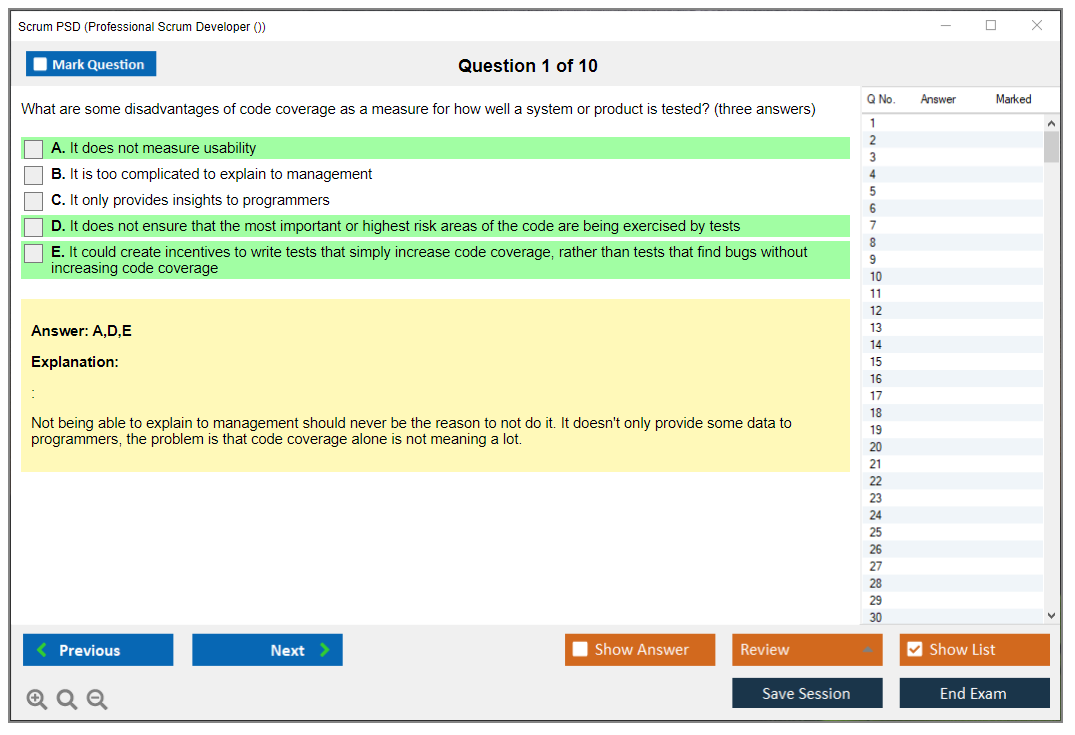
Test coverage metrics can be misleading. The exam knows it. You'll face questions about when coverage is actually sufficient versus when teams chase vanity metrics that don't indicate real quality. I've seen teams with 90% coverage and garbage code, so the numbers alone don't tell the whole story. Behavior-Driven Development principles, writing specifications as executable tests, and collaborating with the Product Owner on acceptance criteria all appear in this domain. Continuous testing integration through CI pipelines? Non-negotiable. Every code change must be validated automatically.
Design principles and technical craftsmanship
Software Design and Architecture claims 15-20% of the exam weight. SOLID principles, design patterns, and managing technical debt aren't just interview topics. They're daily decisions that enable or destroy agility. Emergent design principles challenge the big upfront design mentality, but you still need structural integrity as architecture evolves iteratively.
Refactoring practices are fundamental here. Recognizing code smells, applying refactoring techniques without changing external behavior, and continuous code improvement all get tested. Technical debt management is particularly important: identifying it, tracking it, making visible trade-offs between features and technical improvement. The exam will present scenarios where you need to decide whether to address debt now or later, and there's usually context that makes the "right" answer less obvious than you'd think. Kinda frustrating, actually.
CI/CD and modern delivery approaches
Continuous Integration and Continuous Delivery occupies 15-20% of the exam. Version control best practices, branching strategies, trunk-based development, and feature toggles show up alongside CI/CD pipeline implementation. Build automation, dependency management, ensuring builds are repeatable..these are testable concepts, not suggestions.
Deployment strategies like blue-green deployments, canary releases, and feature flags enable frequent, low-risk releases. You need to understand when each approach fits. Similar to how the PSM-I (Professional Scrum Master I) tests Scrum theory deeply, PSD I tests whether you can actually implement modern engineering practices.
Collaboration and culture domains
Collaborative Development Practices (10-15%) covers pair programming, mob programming, code reviews, and collective code ownership. Working agreements, coding standards, how developers collaborate with the Product Owner during refinement..all of it matters here. Not just theory.
DevOps and Engineering Culture (10-15%) tests the DevOps mindset, monitoring, observability, creating feedback loops. Everything required to deliver a Done Increment falls under developer accountability: documentation, deployment, configuration, operational readiness. This surprises some developers who thought that's "someone else's job." Engineering excellence isn't optional. It's the commitment to craftsmanship that defines professional developers in Scrum environments.
PSD I Exam Cost, Registration, and Logistics
What it is, really
The Professional Scrum Developer I (PSD I) certification is Scrum.org's developer-focused credential. It's aimed at devs, testers, and engineers working on Scrum Teams who want proof they understand Scrum plus the engineering habits that make Scrum actually work in real codebases.
Scrum's the easy part. Shipping? That's the hard part. PSD I is basically validation for Scrum developer skills with a heavy tilt toward Agile engineering practices, and it expects you to think like someone building, testing, integrating, and releasing software. Not just reciting the Scrum Guide like some kind of robot.
Who this fits
Developers first. QA folks and SDET types too. Platform and DevOps engineers who basically live inside CI/CD pipelines all day. You'll also see people using it to connect Scrum and DevOps practices without turning everything into process theater that wastes everyone's time and makes meetings unbearable. I've sat through enough status updates disguised as standups to know the difference.
What it validates
Not a framework trivia badge. It checks whether you actually understand working agreements, technical debt, CI, testing, and collaboration inside Scrum environments where real work happens. The thing is, it's closer to "can you be effective on a Scrum Team?" than "can you memorize roles?" which is refreshing if you've dealt with other cert programs that test nothing useful.
Exam basics you should know
Scrum.org offers the Scrum.org PSD I assessment online. No test center hassle. No proctor appointment to schedule around your life. You buy an attempt and take it when you're ready, which is great if you hate scheduling your entire existence around an exam vendor's calendar like it's some kind of doctor's appointment.
Exam objectives matter here. PSD I exam objectives include Scrum fundamentals, but also engineering practices, quality standards, and what a "Done" Increment implies in real delivery situations. If you're hunting a Professional Scrum Developer I study guide, start with Scrum.org's resources then add practical engineering reading. Books, articles, whatever helps concepts stick.
Cost and what you get for the money
The Scrum PSD I exam cost is straightforward: standard exam fee is USD $200 for a single attempt purchased through Scrum.org (prices can vary by region and currency, so check yours).
You pay once. Take once.
Included in that fee: one exam attempt, immediate digital certificate when you pass, lifetime access to your Scrum.org certification profile, downloadable certificate, and a digital badge you can actually use on LinkedIn without looking desperate. No recurring fees. No annual renewal nonsense. The PSD I renewal policy is basically "there isn't one," and not gonna lie, I wish more certs worked like that instead of charging rent forever like you're leasing knowledge.
Discounts, training, and bundles
Discount opportunities happen, but don't plan your entire budget around them. Sometimes there are promotions during events, and sometimes bundle pricing if you buy multiple Scrum.org assessments at once. Though honestly, who needs that many certs immediately?
For teams? Corporate or group pricing is a thing. Orgs buying lots of vouchers can contact Scrum.org to discuss volume pricing, plus invoice options for business purchasing that make accounting departments slightly less miserable.
Training bundle options exist too. Many Professional Scrum Developer training courses include an exam attempt as part of the course fee, typically $1,000 to $2,500 total. Sounds like a lot until you factor in instructor time and materials. Courses from Scrum.org's Professional Scrum Trainer network typically include two exam attempts, which changes the math if you want that safety net or tend to freeze under pressure.
Passing score, results, and verification
People always ask about the PSD I passing score. Scrum.org sets a required percentage score (verify the current number on the assessment page because they can change it without sending out press releases). You submit, and you get results right away. Great because you don't sit around refreshing your email like it's 2009 and you're waiting for concert tickets.
Verification is clean. Employers can verify authenticity in Scrum.org's public certification registry using your certificate number, which beats sending screenshots that could be faked in five minutes using any halfway decent image editor.
Difficulty: where people get wrecked
PSD I difficulty is higher than many expect because it mixes Scrum knowledge with engineering reality in ways that expose gaps. If you're strong in Scrum but weak on testing strategy, CI, refactoring discipline, or "what does Done force us to do," you'll feel it. Like, immediately feel it when question three makes you second-guess your entire career.
Common fail reasons? Treating it like PSM I, ignoring engineering practices entirely, and underestimating scenario questions where more than one option sounds "Agile-ish" but only one fits with Scrum and good delivery. PSD I vs PSM I? PSM I is more pure Scrum rules and roles. PSD I assumes you can apply Scrum while actually building software, so it can feel harder if your day job doesn't include modern delivery habits or you've been stuck in waterfall-disguised-as-Agile hell.
Prereqs and prep time
PSD I prerequisites aren't formal. No mandatory training requirement. Still, you want Scrum basics plus real dev experience. The kind where you've felt the pain of bad deploys and messy merges.
Prep time depends wildly. If you ship code weekly and live in PRs and pipelines, 1 to 2 weeks might do it. If you're newer to Scrum or engineering practices, give it 3 to 4 weeks of focused study. If you're switching careers or rusty on fundamentals, 6+ weeks is normal and nothing to feel bad about.
Practice tests and study strategy
A PSD I practice test helps, but only if you review why you missed questions instead of just memorizing answers like some kind of exam zombie. Timed sets, then deep review. Track weak areas ruthlessly. Repeat until patterns emerge.
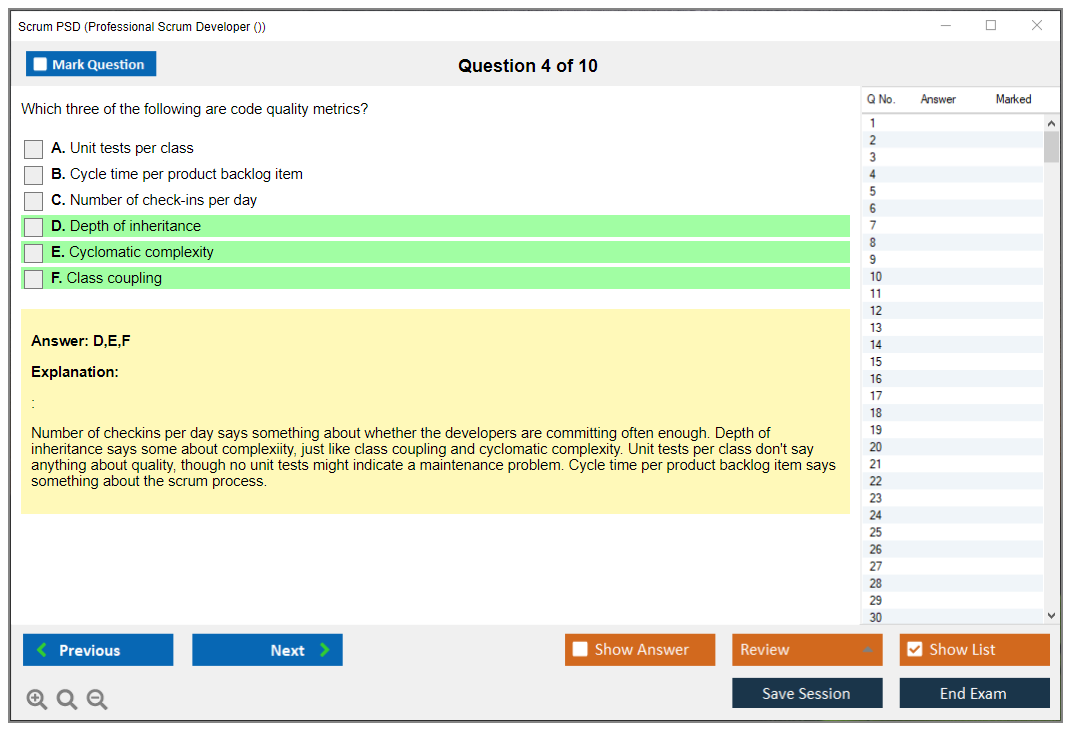
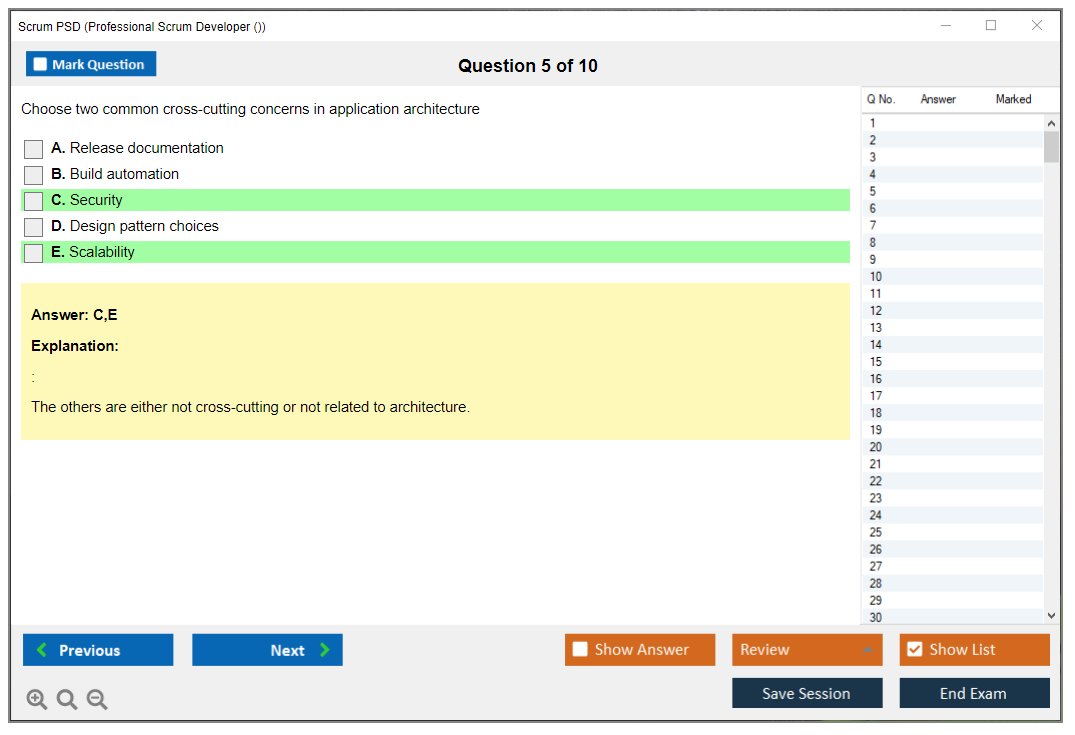
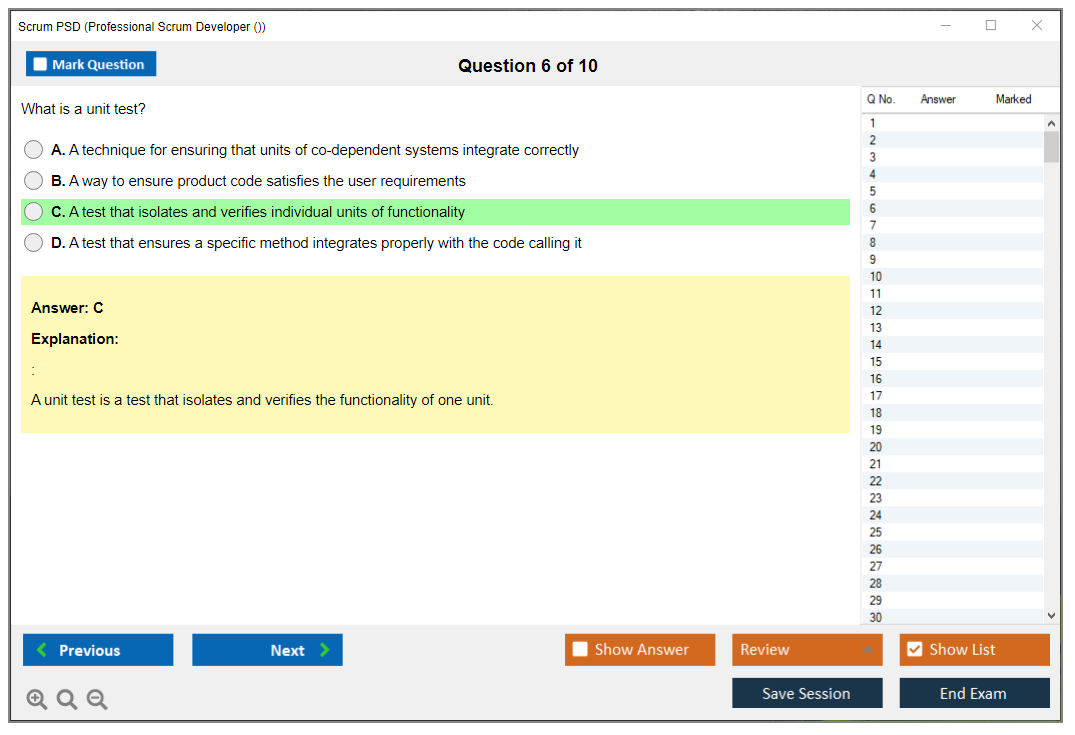
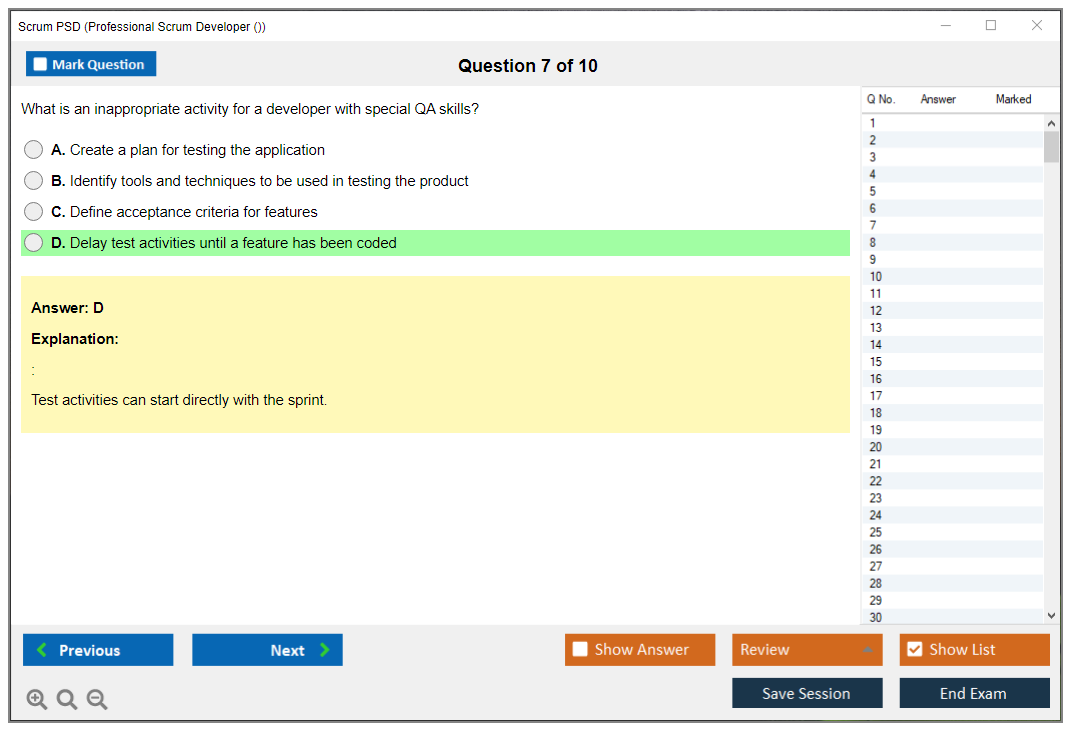
If you want targeted prep, and honestly, who doesn't, I like having a question bank you can grind through: PSD Practice Exam Questions Pack is $36.99 and works well for building speed and spotting gaps in your knowledge before they cost you $200. Use it, then go back to the official wording and your notes, then hit PSD Practice Exam Questions Pack again under time pressure to simulate exam conditions.
Final week checklist? Do one or two full mocks. Re-read confusing concepts. Sleep properly. Take the exam when you're calm, not after a 12-hour incident call where everything caught fire and you questioned your life choices.
Registration and logistics
Registration is simple: create a Scrum.org account, go to the PSD I assessment page, pay, and you get access immediately. Like, within seconds.
Scheduling flexibility is the best part: no appointment required, take it right away or later within the attempt validity period. Purchased attempts typically don't expire, but verify current Scrum.org terms because policy can change and I'd hate for you to lose money on a technicality.
Refund policy is usually "no refunds once purchased," so read the terms before you click buy in that moment of confidence. Retakes cost full price. If you fail, you purchase a new attempt at $200, there's no limit on retakes, and there's a 14-day waiting period between attempts to force you to actually study instead of just panic-retaking.
Quick FAQ
How much does it cost? Usually $200 per attempt. Does it expire? No, and there's no renewal fee. Seriously, none. Worth it? Compared with competitor programs that force training and charge renewals like subscription services, PSD I is often cheaper long-term, and the value assessment comes down to whether it helps you land interviews, justify a raise, or prove you can ship in Scrum without making everyone miserable. If you need structured practice, PSD Practice Exam Questions Pack is a solid add-on for $36.99.
PSD I Passing Score Requirements and Results
Understanding the 85% threshold
Scrum.org's strict here. You need 85% to pass the PSD I exam. That's 68 questions out of 80 answered correctly. Not 67, not "close enough." Exactly 68 or better.
This isn't some random number they pulled from a hat. The elevated threshold exists because Scrum.org wants to make sure you actually know your stuff, covering both Scrum framework fundamentals and the engineering practices that make Scrum teams really effective. They're certifying you as a Professional Scrum Developer, so they're gonna hold you to professional standards that reflect real-world competency.
How your score gets calculated
The scoring? Refreshingly straightforward. Each question carries equal weight. No trick weighting where certain questions count more than others, which I appreciate. Your final score's just the percentage of questions you answered correctly.
Here's where it gets annoying though. Those multiple-answer questions require you to select all correct options. Every single one. Partial credit doesn't exist in their world. If a question has three right answers and you only pick two, you get zero points for that question. This trips up tons of candidates who assume they'll get partial credit for being mostly right.
What happens the moment you finish
Results delivery? Instant.
You click submit and boom. Your pass/fail status and exact percentage score appear on screen immediately. No waiting days or weeks for some committee to review your answers, which is honestly refreshing compared to other certification programs I've experienced.
The results screen shows your overall percentage but that's about it. You won't get a question-by-question breakdown or see which specific questions you missed. Scrum.org keeps that information locked down. Makes sense from their perspective but can be frustrating when you're trying to figure out what actually went wrong.
If you pass, your digital certificate generates immediately and you can download it straight from your Scrum.org profile. The PSD certification includes a unique identification number that anyone can verify through Scrum.org's public directory.
When you don't pass
Failed attempts? Limited diagnostic feedback.
You'll see your percentage score. Maybe you got 82% or 79%. But you won't receive detailed information about which knowledge areas tripped you up. Some candidates find this maddening because they want to know exactly where to focus their study efforts for the next attempt, which is totally understandable.
Scores are final with no appeal process available. Think the exam glitched or believe a question was worded strangely? Doesn't matter. The score stands and you'll need to retake the complete exam if you want another shot.
The mandatory waiting period
After failing, you must wait 14 days before purchasing and attempting the exam again. Use this waiting period to address knowledge gaps rather than just immediately jumping back in with the same preparation approach. At $200 per attempt, this gets expensive fast if you're not careful. I've seen people burn through $600 or more by rushing back unprepared.
Speaking of money, I knew someone who failed three times before finally sitting down with the actual Scrum Guide instead of just skimming summaries. Turned out half his understanding came from outdated blog posts that still referenced 2017 practices. Sometimes the boring official documentation is actually worth reading.
What your certification includes
Pass the exam and you get more than just a certificate.
Scrum.org provides a digital badge you can share on LinkedIn, stick in email signatures, and display on professional profiles. Your Scrum.org profile maintains a permanent record of all your certification attempts and achievements for personal tracking purposes.
The certification itself never expires. Once you achieve PSD I, it remains valid indefinitely without renewal requirements, which is a huge advantage. This differs significantly from some other certifications that require periodic renewal or continuing education credits. Compare this to something like the PSM I which follows the same no-expiration policy.
Score comparison is meaningless
Don't try comparing your 87% with someone else's 89%. Question sets vary between attempts, so comparing scores between candidates is basically impossible and honestly pretty pointless. Passing is the only benchmark that matters. Nobody cares if you passed with 85% or 95%. You're both certified PSD I professionals with the same credential.
Strategic considerations
Some candidates intentionally use their first attempt as a diagnostic tool to see what the exam feels like and identify weak areas. Interesting approach, right? This is an expensive strategy at $200 per attempt, but not gonna lie, it can be effective if you've got the budget and learn better from actual test-taking experience than from practice tests.
Verification for employers
Employers can verify your certification status using your certificate number through Scrum.org's verification system, which adds legitimacy. The certification establishes you at the "Professional Scrum Developer I" level, with PSD II available if you want advanced validation later. Though that's a whole different beast.
The bottom line? 85% is the standard. No negotiation, no curve. Just you, 80 questions, and the requirement to demonstrate you really understand both Scrum and the engineering practices that make development teams successful in real-world environments.
PSD I Difficulty Level and Comparison with Other Certifications
What you're signing up for with PSD I
The Professional Scrum Developer I (PSD I) certification is Scrum.org's way of asking, "Cool, you know Scrum, but can you actually ship software on a Scrum Team?" That's the vibe. It targets developers, testers, and engineers who live in the code and still need to work cleanly inside the framework.
This cert validates Scrum developer skills validation plus the engineering habits that keep increments releasable. Think Agile engineering practices Scrum, not just ceremonies and roles. I mean, if you're coming from a place where "done" meant "code complete", look, this exam will correct that assumption fast. It keeps circling back to quality, testing, and feedback loops.
Exam basics that matter
The Scrum.org PSD I assessment is 80 questions in 60 minutes. Fast. No breaks. Most questions are multiple choice or multiple select, and the scenario wording is where people lose time.
PSD I exam objectives cover Scrum rules, plus technical practices like TDD, refactoring, CI, and the relationship between Scrum and DevOps practices. Sounds straightforward until you're juggling both knowledge domains under a ticking clock while trying to remember if the question asks what the team should do or what they're allowed to do. It's offered by Scrum.org, taken online, and you can do it from home, which is convenient and also a little dangerous if you're not disciplined about timing.
Cost and what you get
Scrum PSD I exam cost is typically USD $200 (check Scrum.org in case it changes). One attempt. Password never expires. If you fail, you pay again. Not gonna lie, that stings, so prep matters.
If you want structured drilling, I've seen people pair official material with a paid question bank like the PSD Practice Exam Questions Pack when they're trying to simulate the clock and stop overthinking.
Passing score and results
PSD I passing score is 85%. High bar. Scoring is straightforward percentage, no weird weighting you can game, so you either know it or you don't.
Results show up right after you submit. You can verify your certification on Scrum.org's public validation page, which hiring managers actually do check sometimes, especially when they're filtering candidates quickly.
Why PSD I feels hard
PSD I difficulty is usually "moderately difficult to challenging", and honestly that's fair. It's not a memorization quiz. The dual knowledge domains are the trap: you're expected to integrate Scrum framework understanding with engineering practices like TDD, CI/CD, and refactoring at the same time, while also respecting the definition of done and the whole "potentially releasable" thing.
Scenario complexity? Real. Questions read like: the build's failing, the PO wants a release, technical debt is piling up, and the team argues about branching strategy. You're not recalling a definition. You're applying multiple principles under pressure. Sometimes more than one option sounds "nice" until you notice Scrum rules or good engineering says otherwise.
Time pressure is a factor too. The thing is, 60 minutes for 80 questions is brutal if you read slowly, if English isn't your first language, or if you're the type who wants to debate every option in your head like it's a design review. Community pass rate guesses float around 60 to 70% first try for prepared candidates, but Scrum.org doesn't publish an official number.
Common failure reasons? Lack of hands-on TDD, fuzzy CI/CD knowledge, and weak technical debt management instincts. Developers fail when they cling to traditional dev approaches like "testing later" or "merge at the end", or when they're shaky on Scrum basics and misread accountabilities. Non-developers struggle because the exam assumes coding literacy, automated testing exposure, and comfort with refactoring and design patterns. Harsh, but accurate.
PSD I vs PSM I vs PSPO I (and PSD II)
PSD I is generally harder than PSM I. PSM I focus is Scrum framework, facilitation, servant leadership, and team dynamics from the Scrum Master perspective. PSD I technical emphasis goes into code quality, testing strategy, continuous integration, and how developers keep the increment done every sprint.
Question style is similar, but PSD I has more code-related scenarios and practice applications. Prep time differences show up here: if you're not already technical, PSD I can take 4 to 6 weeks, while PSM I often takes 2 to 4 weeks. PSM I is accessible to non-technical roles. PSD I prerequisites basically assume you've built software.
PSPO I is a different world. It's value, stakeholders, and backlog ordering. Great cert. Just not comparable. And PSD II? Big jump. Higher complexity, deeper technical expectations, and an 85% target again, except the scenarios are nastier.
I once worked with a tester who passed PSM I on the first try, felt confident, then bombed PSD I twice before stepping back to actually learn TDD and refactoring patterns. Sometimes the gap between knowing Scrum theory and applying it in code is wider than you think.
Prereqs and realistic prep time
Recommended background: basic Scrum knowledge plus real development practice. If you've got 2+ years on a Scrum Team, you'll probably find the exam manageable. If you're coming from waterfall, the learning curve is steeper because the feedback loops and automation expectations feel "extra" until you've lived them.
Language barriers are also real. Technical terminology plus long scenarios can slow you down, so practice under time.
Study materials and practice strategy
Start with Scrum.org resources and the Scrum Guide, then add engineering references on TDD, refactoring, and CI. A Professional Scrum Developer I study guide helps, but only if you also practice, because the exam isn't impressed by theory-only learning.
My preferred approach? Do timed blocks early. Review wrong answers immediately. Then repeat. If you want a bank that mimics the pacing, the PSD Practice Exam Questions Pack is one option people use, and at $36.99 it's cheaper than burning a retake fee.
Final week: at least two full mock runs, timed, no notes. Track your weak zones by PSD I exam objectives, not by vibes. If you keep missing CI questions, fix that. Don't reread Scrum events again.
Renewal policy and validity
PSD I renewal policy is simple: no expiry. No renewals. Your badge stays valid, but your skills won't if you never practice, so keep doing the work.
Exam-day tips that actually help
Schedule it when you're sharp. Read the last sentence first sometimes. Mark and move on when you're stuck, because time pressure will eat you alive if you camp on one scenario.
If you're consistently finishing late in practice, do more timed sets. Also, use one clean resource set, plus a practice bank like the PSD Practice Exam Questions Pack, and stop "collecting" materials like that's studying.
How much does the PSD I exam cost? Usually $200. What's the passing score for Scrum.org PSD I? 85%. Is PSD I harder than PSM I? Yep, because it adds real engineering. What should I study? Scrum basics plus TDD, refactoring, CI/CD, technical debt. Does it expire? No. If you don't pass, pay again, so treat prep like it matters.
PSD I Prerequisites and Recommended Background
There's literally no mandatory entry barrier
Here's the deal: Scrum.org doesn't require any formal prerequisites to attempt the PSD (Professional Scrum Developer I (PSD 1)) exam. No prior certifications needed. No mandatory training courses whatsoever, which honestly surprises people when they first hear it. You can wake up tomorrow and register for it if you want. That said, just because you can doesn't mean you should without proper preparation. I've seen plenty of developers learn this the hard way after burning through their exam fee.
The exam assumes you already know your way around a codebase and understand what it means to work in a Scrum environment. Without that foundation? You're basically setting yourself up to fail.
What actual experience helps you pass
Most people who succeed have 1-2 years of software development experience under their belt. Any programming language works, any framework, Python, Java, C#, JavaScript, doesn't matter one bit. What matters is that you've actually written production code, dealt with bugs at 3 PM on a Friday, and understand why version control exists beyond "it's where we store files."
You need active coding experience. Not theoretical knowledge from a bootcamp you finished three years ago. The exam tests practical application of engineering practices within Scrum, so if you haven't touched an IDE in months, you're gonna struggle with questions about continuous integration workflows or test-driven development scenarios.
Look, I'm not saying you need to be a senior architect or anything. But you should understand software design principles, know how to debug without panicking, and have used Git for something more complex than pushing to main every time. I once watched a candidate spend 20 minutes trying to explain merge conflicts during a mock interview, and it became painfully clear they'd never actually resolved one in a real repository. That's the kind of gap that'll sink you on scenario questions.
Scrum environment exposure matters more than you think
The recommended background includes 6-12 months working within an actual Scrum team environment, participating in Sprints, attending ceremonies, doing collaborative development work. Not just reading about Scrum, but living it every single day. There's a massive difference between understanding what a Sprint Retrospective is and having sat through 20 of them where your team actually identified impediments and adapted their process.
Never participated in Daily Scrums? Sprint Planning? Sprint Reviews? You'll find the exam questions disconnected from reality. The PSD I doesn't just test Scrum theory. It tests how developers apply Scrum in real development scenarios with actual technical constraints and messy human dynamics.
You absolutely need deep Scrum Guide knowledge
Thorough understanding required. I mean cover-to-cover knowledge of the Scrum Guide content: Scrum values, accountabilities (not roles, that's old terminology that'll trip you up), events, artifacts. This overlaps with what's covered in the PSM-I (Professional Scrum Master I) certification, which is why many candidates pursue PSM I first to build that strong Scrum framework foundation before tackling the developer-specific content.
Honestly? That's not a bad strategy at all. The PSM I gives you the Scrum fundamentals, then PSD I layers on the engineering practices and technical stuff.
Testing and automation aren't optional knowledge areas
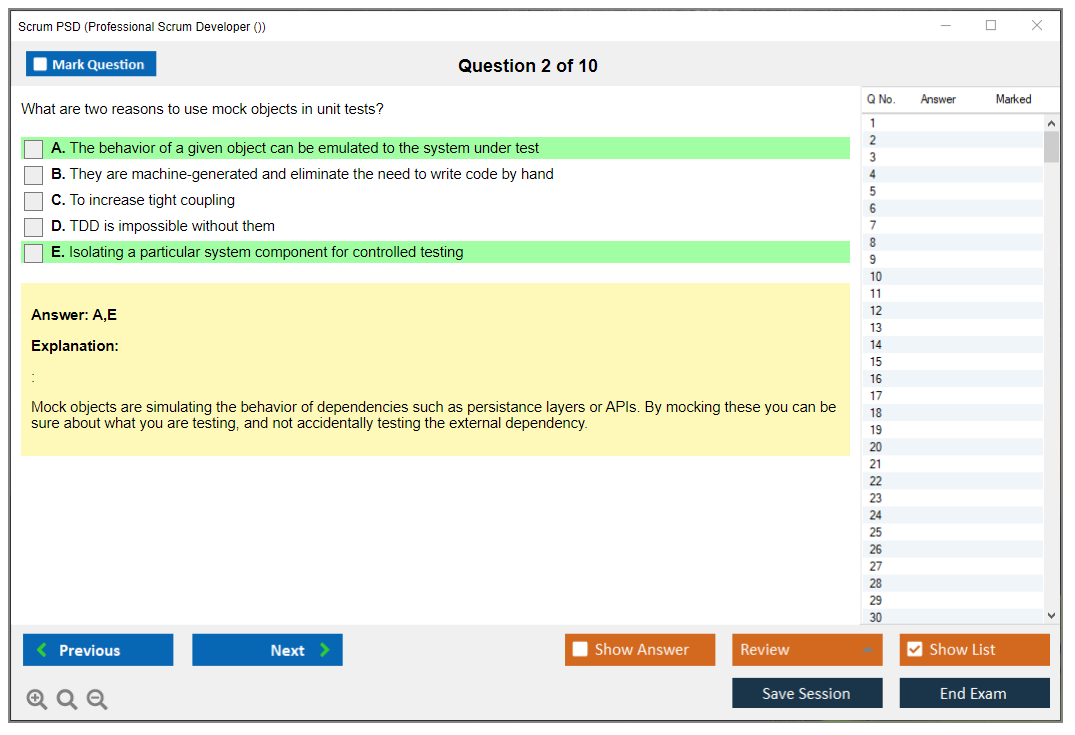
You need familiarity with software testing concepts including unit testing, integration testing, and ideally some test automation exposure. If you've never written a unit test or don't understand why we mock dependencies, you're missing a foundational piece that'll come back to haunt you. The exam assumes you know what good testing practices look like within a Scrum context, not just theoretical definitions.
Version control experience? Non-negotiable. Practical experience with Git or similar systems, understanding branching strategies, merging, handling conflicts, collaborative coding workflows. All essential. Not just "I commit my code sometimes." You should understand why feature branches exist and what a pull request review process accomplishes beyond rubber-stamping changes.
The Agile mindset foundation you can't skip
Understanding the Agile Manifesto values and principles beyond just Scrum-specific practices helps tremendously. It makes a real difference in how you interpret tricky scenario-based questions. Scrum implements Agile, but knowing the broader context (why we value individuals and interactions over processes and tools, why responding to change matters more than following a plan) gives you the philosophical grounding to answer situational questions correctly.
Some exposure to continuous integration concepts helps. Automated builds. CI pipelines. Understanding why we automate instead of manually deploying every Sprint. You don't need to be a DevOps expert, but you should grasp the basics of how modern development teams integrate and deliver software continuously without everything catching fire. The SAFe-DevOps (SAFe DevOps Practitioner Exam (SDP 6.0)) dives deeper into these practices if that's your thing, but PSD I keeps it at a practical developer level.
Not gonna lie, the PSD I assumes you're already a functioning developer who's worked in Scrum teams. It's testing whether you can apply engineering excellence within that framework, not whether you understand basic programming or what Scrum is at a surface level.
Conclusion
Wrapping up your PSD I path
Look, the Professional Scrum Developer I (PSD I) certification isn't just another checkbox on your resume. It's proof you can actually work in a Scrum team without making everyone's life harder, you know? The Scrum.org PSD I assessment validates that you understand both Scrum fundamentals and the engineering practices that make Agile work in the real world. Not just theory, but the stuff you'll use every day when you're writing code, running tests, and shipping features.
The exam costs $200. Honestly isn't cheap. But you're getting lifetime certification with no renewal policy to worry about. Compare that to certs demanding constant recertification where those fees add up fast, and suddenly the PSD I looks pretty reasonable. The PSD I passing score sits at 85%, which yeah, is tough. You need to really know your stuff about Scrum and DevOps practices, test-driven development, continuous integration, all of it.
Here's the thing about PSD I difficulty: it's harder than PSM I if you're weak on technical practices. I mean like way harder. Most developers I know who failed weren't shaky on Scrum basics. They stumbled on questions about refactoring, automated testing strategies, or how to actually put into practice the engineering stuff Scrum teams need. That's where a solid Professional Scrum Developer I study guide comes in, but honestly? Hands-on experience matters more than memorizing definitions. Way more.
Your PSD I prerequisites are minimal officially. Realistically though? You want at least some development background and basic Scrum knowledge before jumping in, otherwise you're gonna struggle with the technical scenarios they throw at you. Give yourself 3-4 weeks with the right PSD I exam objectives mapped out if you're relatively new. Maybe 1-2 weeks if you've been doing this work already and just need to formalize your knowledge.
I remember bombing a different cert once because I skipped the practice round. Stupid move. Cost me time and money I didn't have back then.
Before you register though, seriously work through some practice questions. Not gonna lie, I've seen too many people waste $200 because they didn't test themselves first, and it's painful to watch. The PSD Practice Exam Questions Pack gives you the real feel of what Scrum.org throws at you. Question patterns, technical depth, time pressure, everything. Run through a few PSD I practice test sets. Find where you're weak. Then fill those gaps. When you're consistently hitting 90%+ on practice tests, you're ready. That Scrum developer certification online is waiting, but prep smart first.