

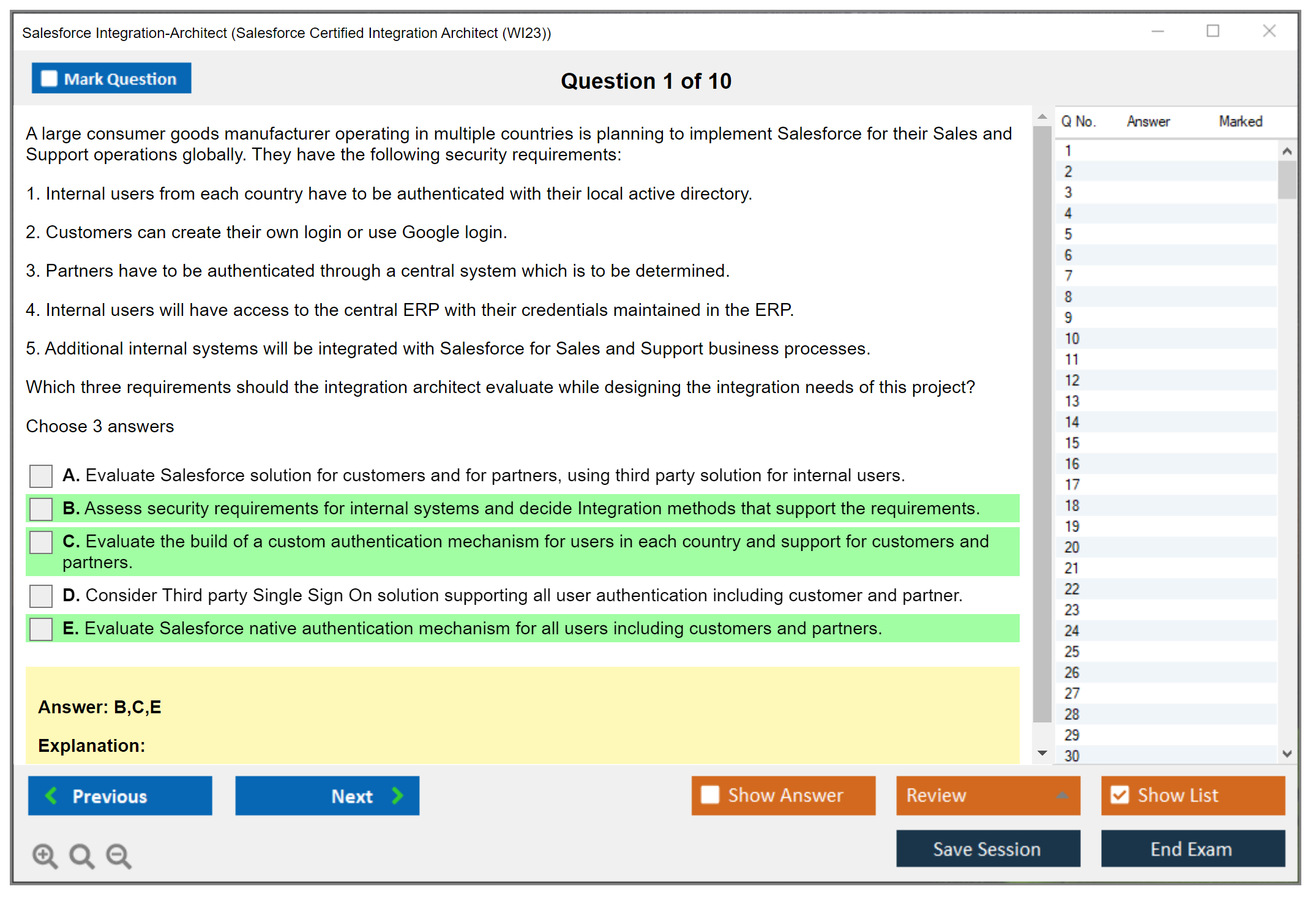
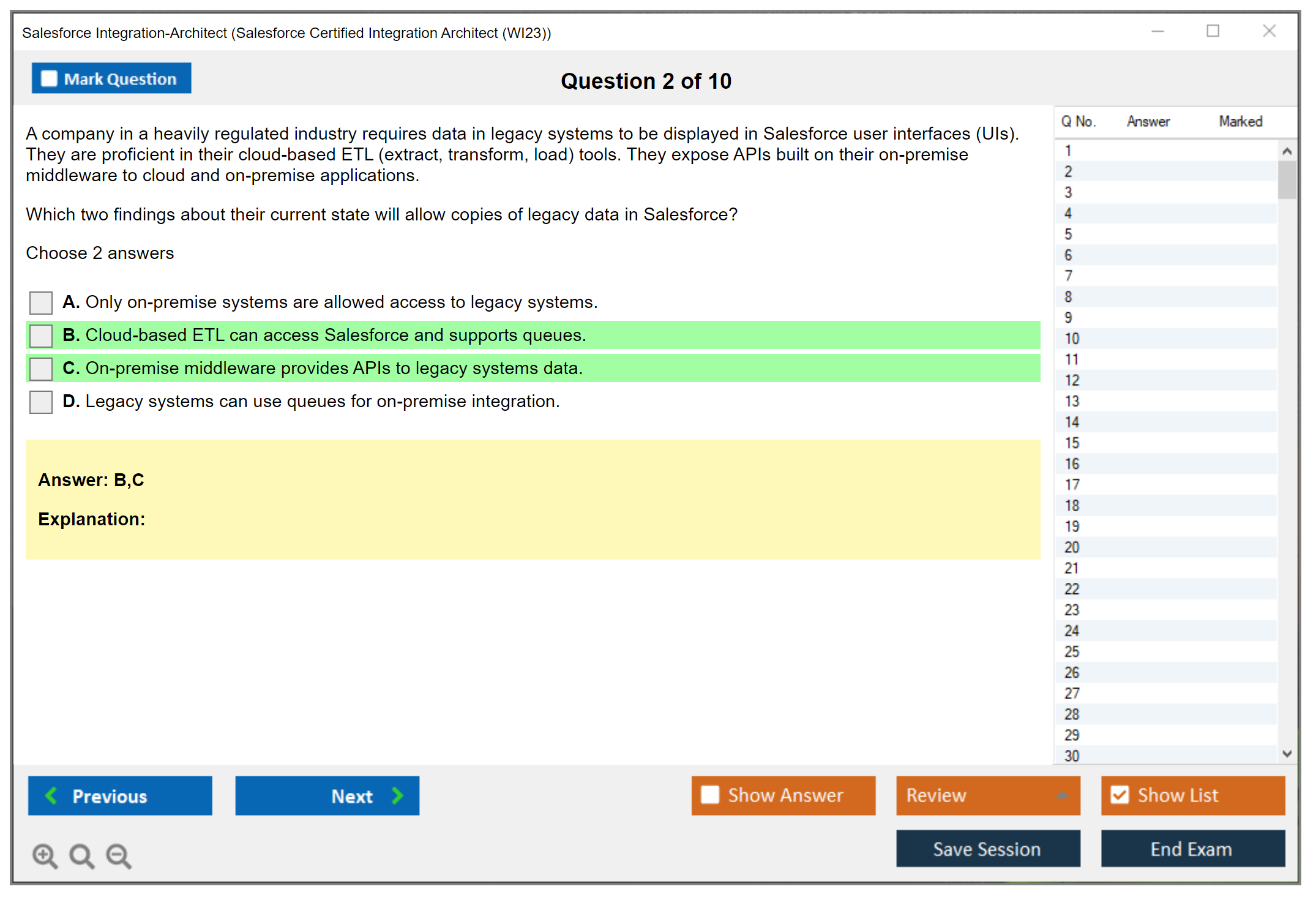
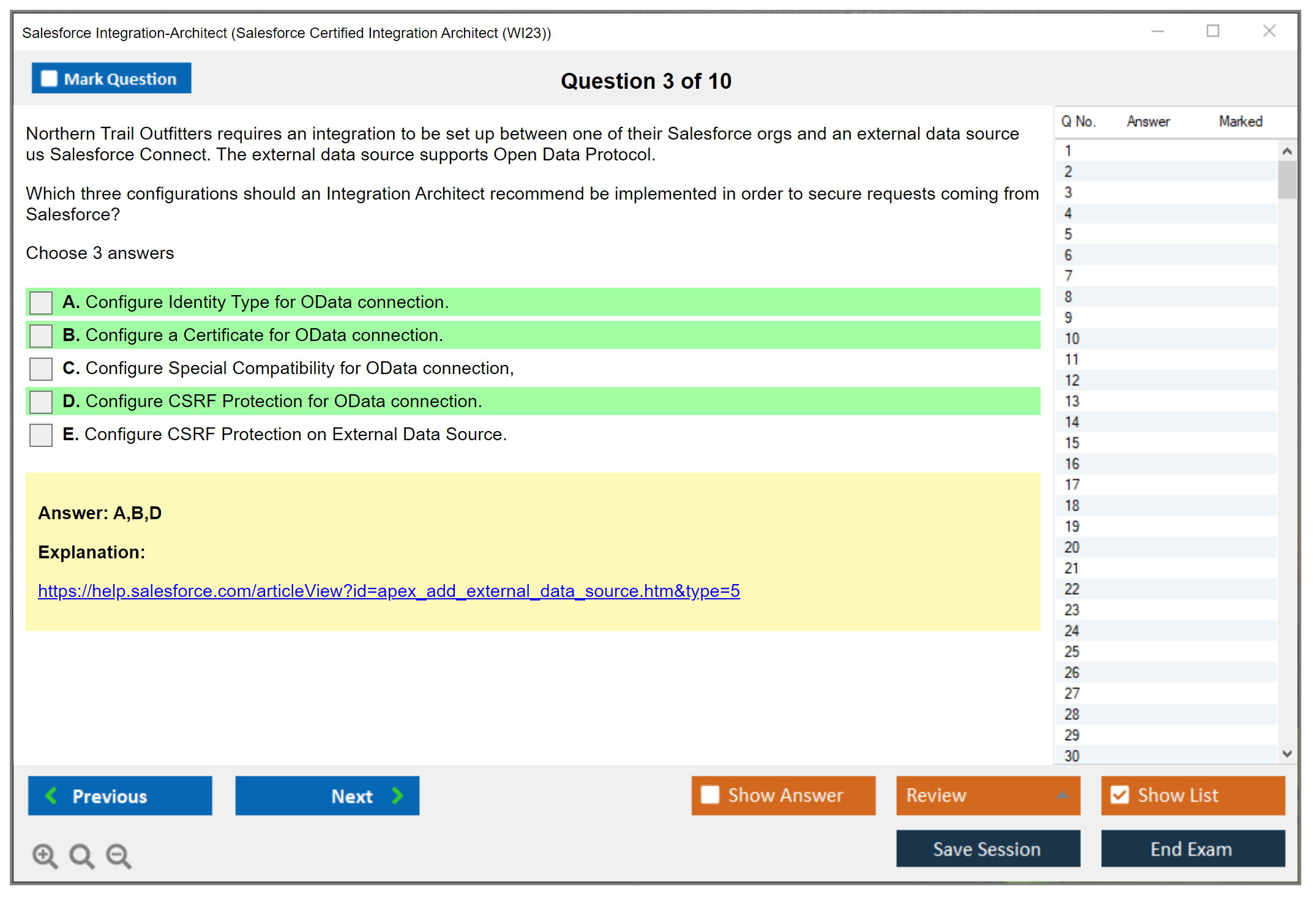
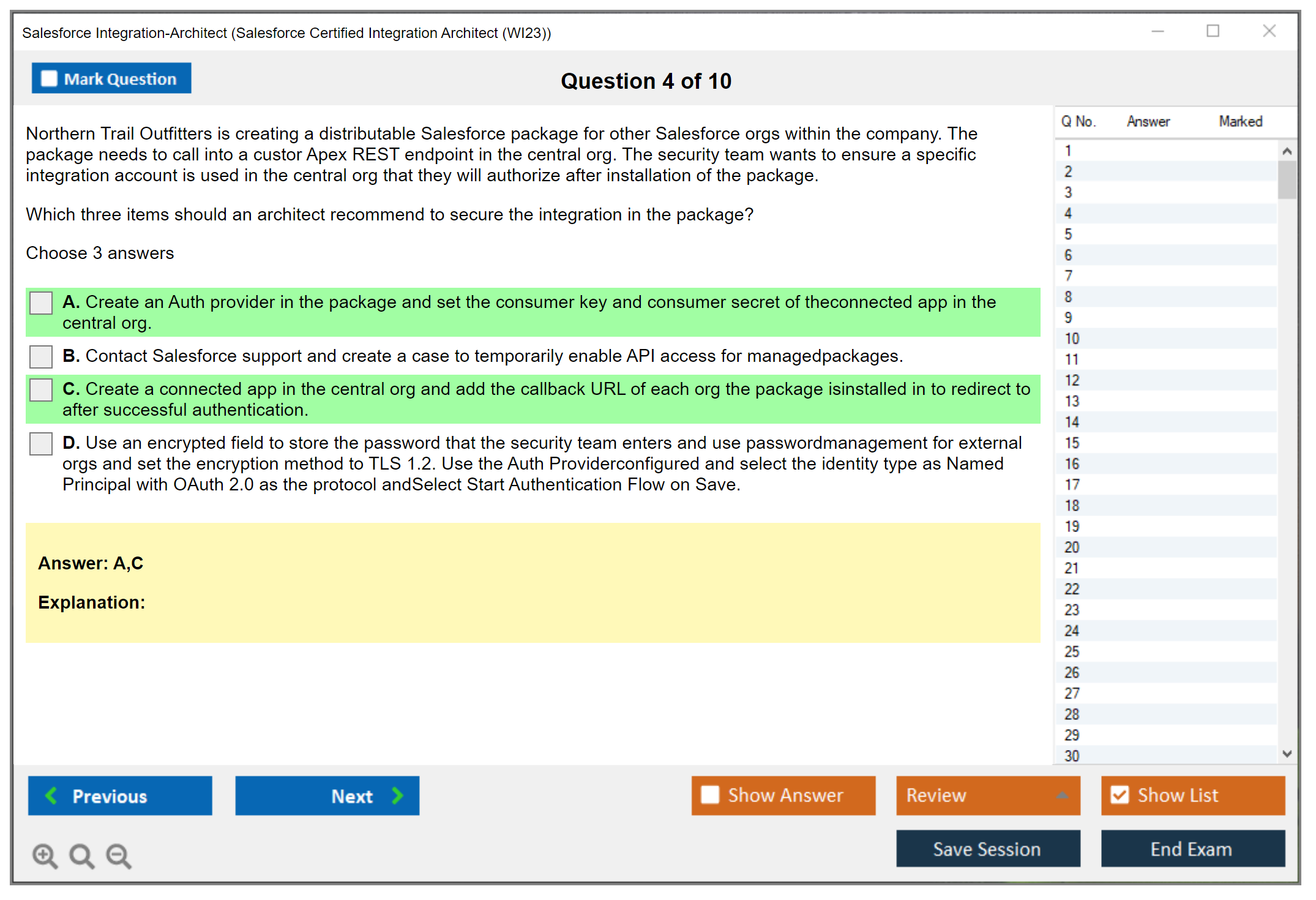
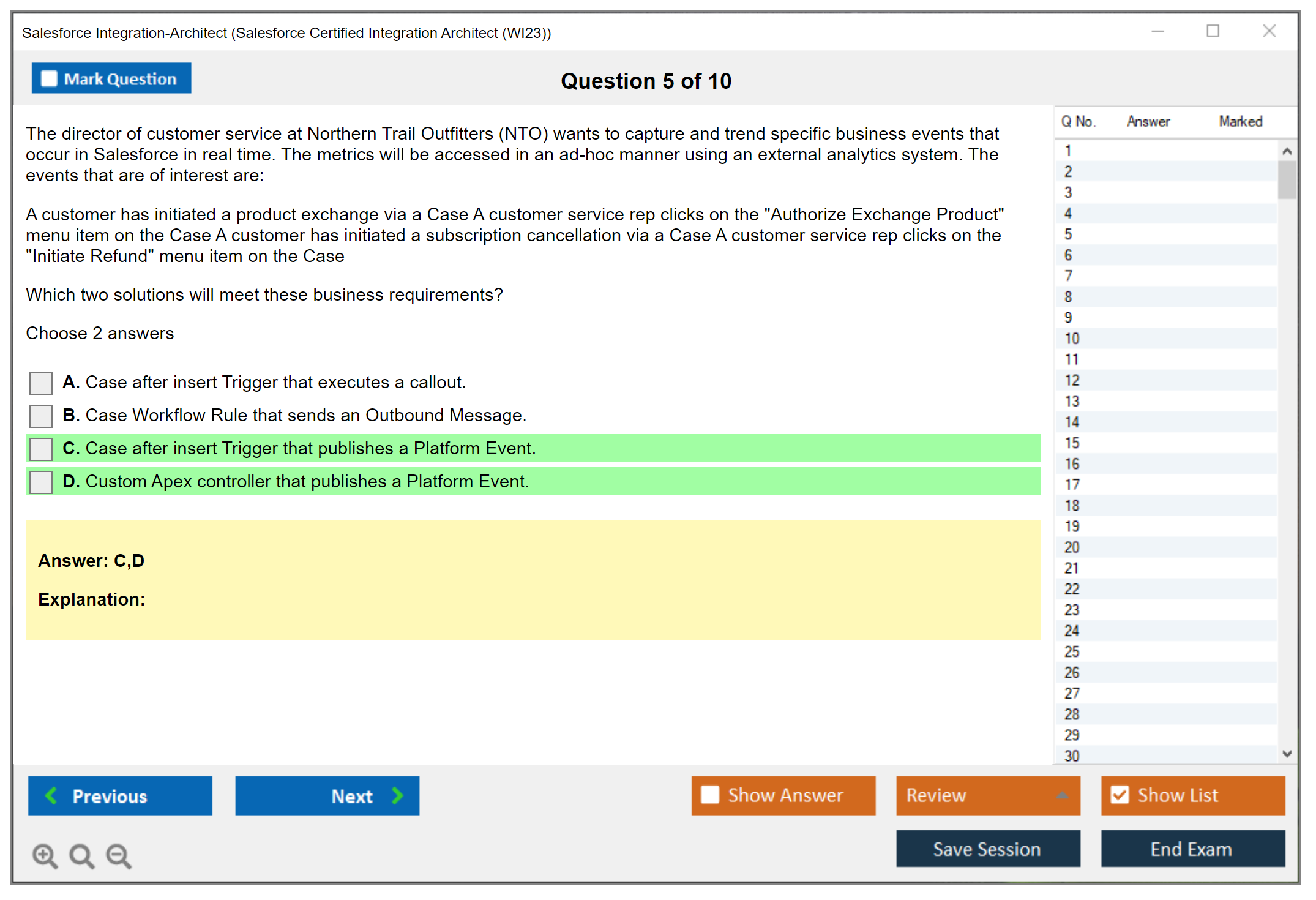
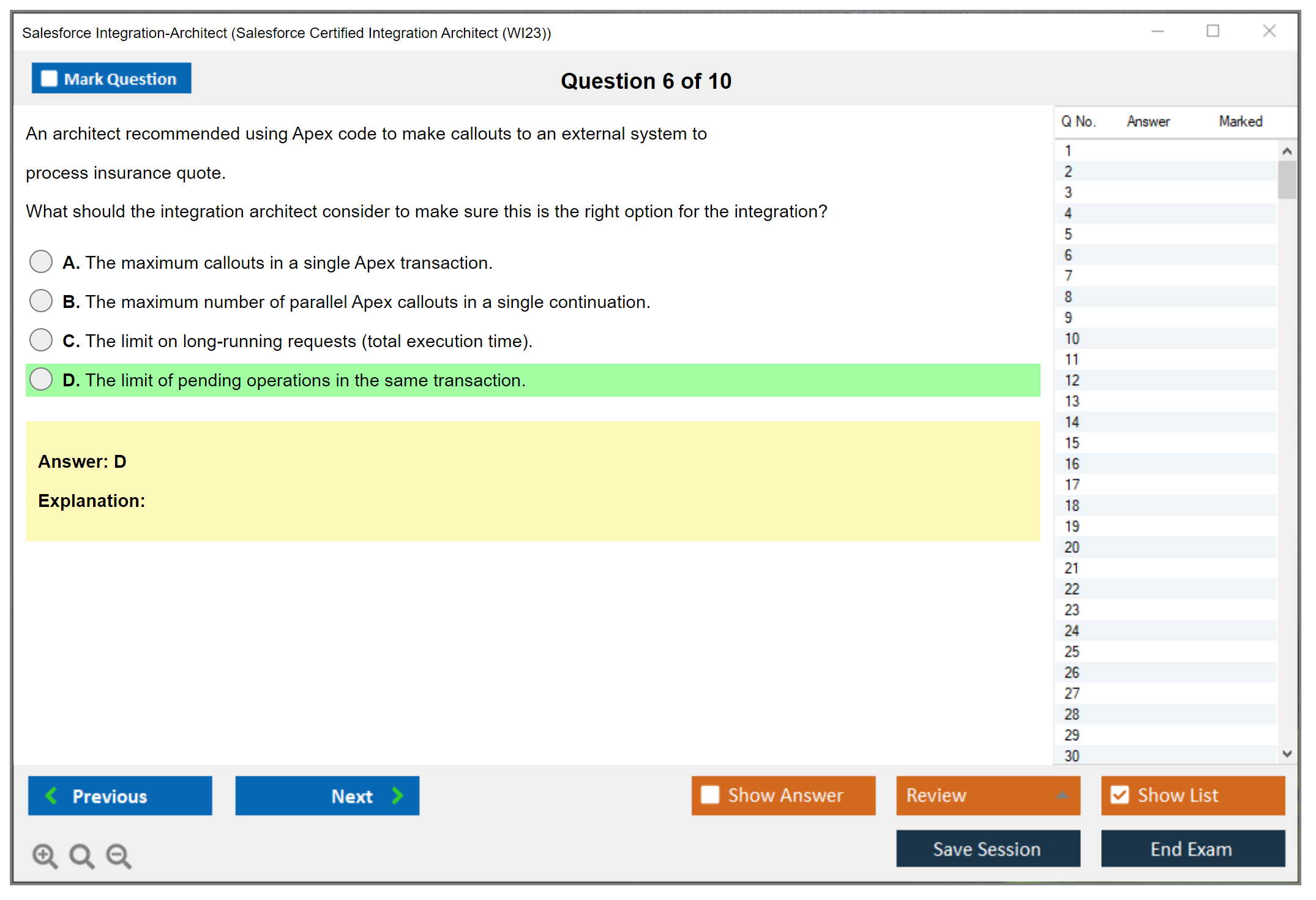
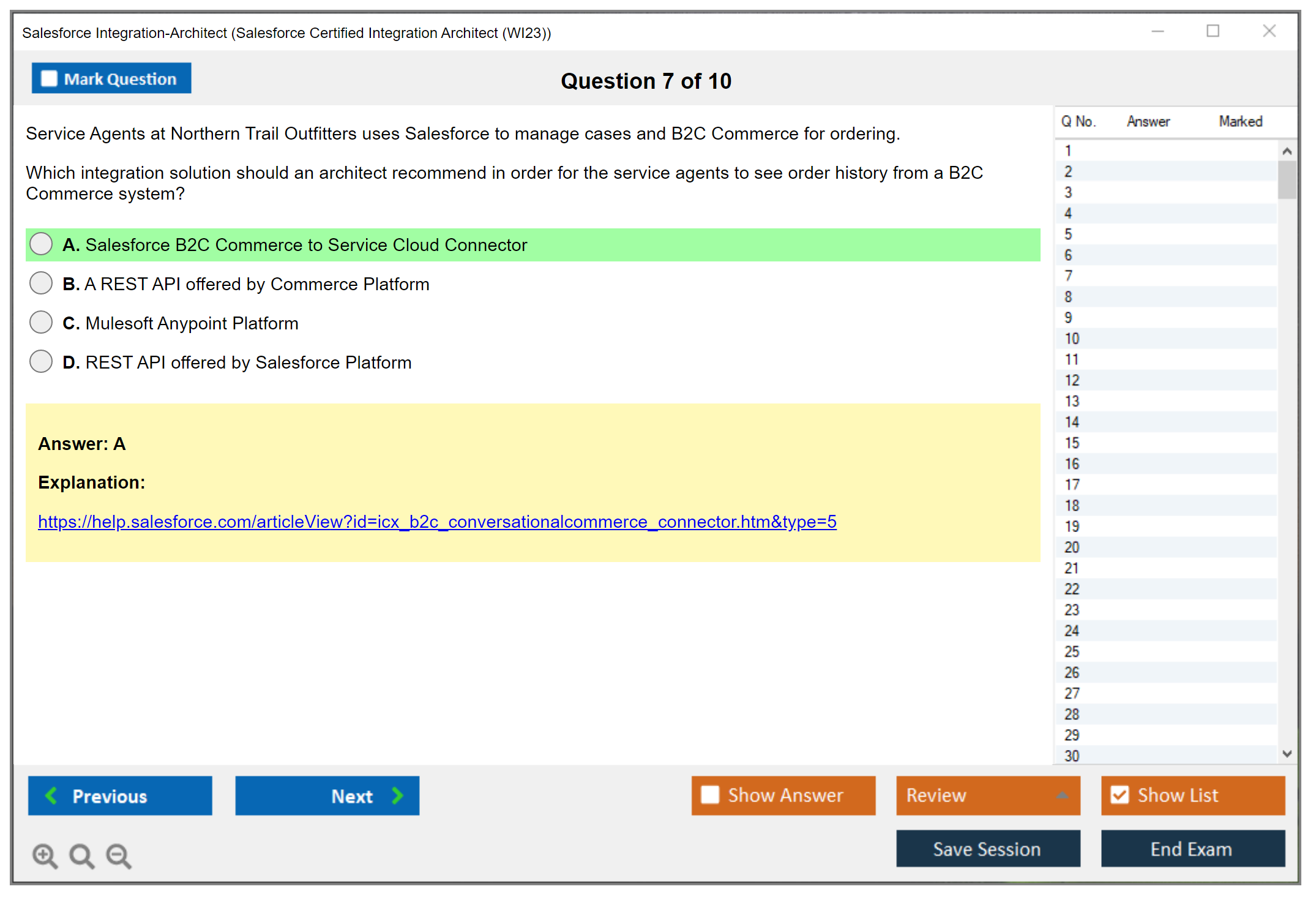
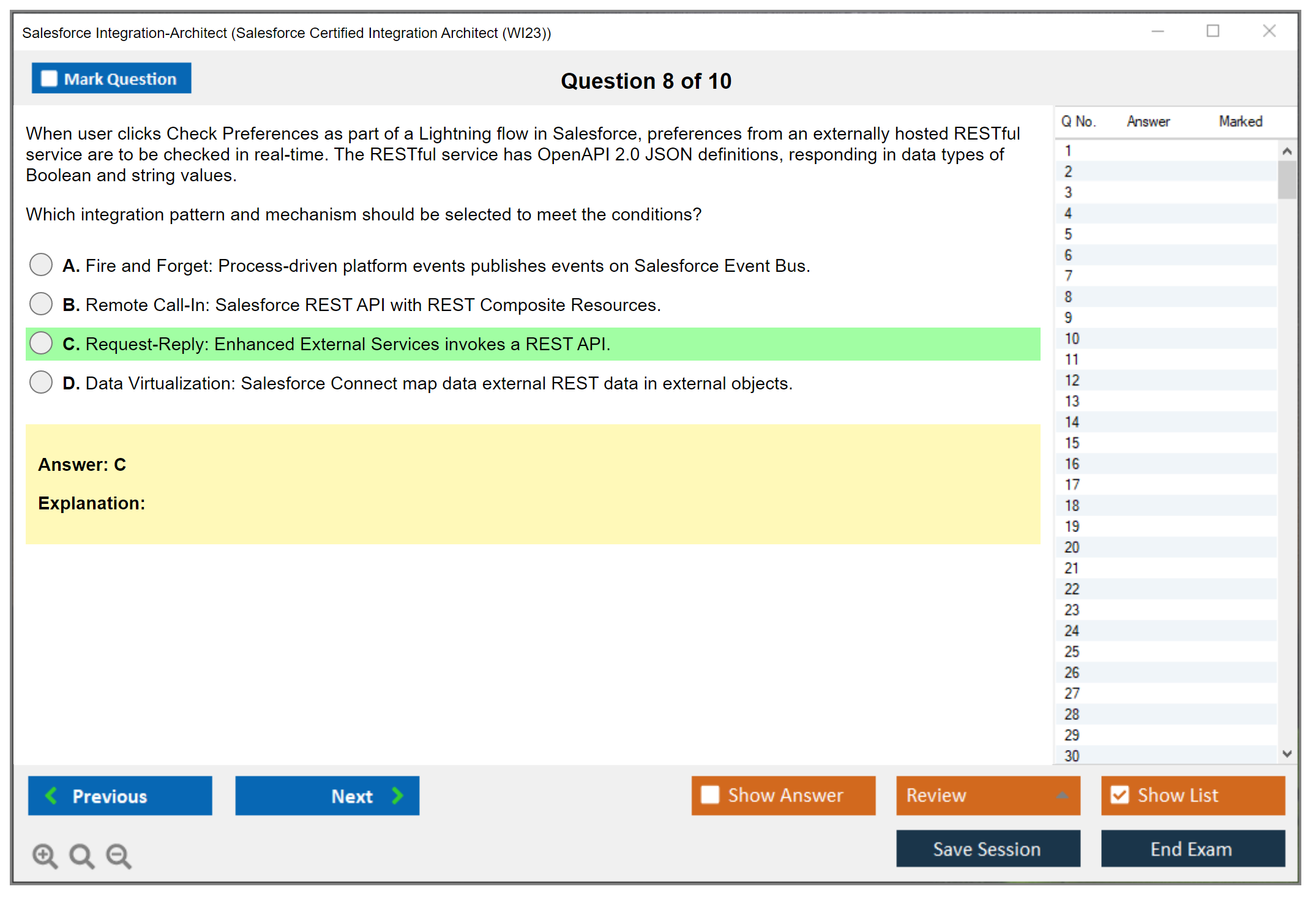
Salesforce Integration-Architect (Salesforce Certified Integration Architect)
Salesforce Integration Architect Certification Overview
What is the Salesforce Certified Integration Architect?
The Salesforce Certified Integration Architect is a technical credential that validates your ability to design and govern enterprise-grade integrations between Salesforce and external systems. This isn't your basic cert. You'll be evaluating APIs, middleware platforms, and event-driven architectures, then making strategic calls about how data flows across complex multi-system landscapes that can get pretty messy if nobody knows what they're doing. The cert proves you understand integration patterns at the architectural level. Not just clicking buttons or writing a REST callout.
This credential sits at the advanced architect tier within the Technical Architect pathway. It requires both breadth (knowing about all the different integration options Salesforce offers) and depth in understanding when to use each approach based on volume, latency, security requirements, and organizational constraints. You're designing solutions that need to scale, handle errors gracefully, and remain maintainable as business requirements evolve.
Who should take this certification?
Senior developers transitioning to architecture roles? Sweet spot here. If you've been building integrations for 3-5 years and find yourself making more strategic decisions about how systems should connect rather than just implementing what someone else designed, that's when this cert makes sense. Integration specialists who've worked with Salesforce APIs, middleware platforms, and authentication patterns will find this validates the expertise they've already built up through real projects. Which is more valuable than theoretical knowledge anyway.
Solution architects focused on multi-system landscapes need this too. If you're designing solutions that span Salesforce, ERP systems, data warehouses, and legacy applications (most enterprises have all of these), the Integration Architect cert demonstrates you understand the tradeoffs between different integration approaches. Enterprises managing complex Salesforce ecosystems with multiple integrated applications really value this credential when hiring or promoting technical leaders.
Skills validated by this certification
The Integration Architect exam tests your ability to develop integration strategies that align with business objectives. You need to know when to use REST versus SOAP versus Bulk API, and why that decision matters. Authentication and authorization patterns (OAuth flows, JWT bearer tokens, connected apps, named credentials) keep data protected while systems communicate.
Data synchronization approaches get tested heavily. You need to understand bidirectional sync, conflict resolution, and how to handle large data volumes without hitting governor limits.
Error handling frameworks matter more at the architect level than most people realize. When something breaks at 2 AM, your architecture should have monitoring, logging, retry logic, and alerting already built in. Not something you scramble to add later. Governance models too. How do you establish standards across integration projects so different teams aren't building contradictory solutions that create chaos down the road?
API selection and design? Huge. You're not just consuming APIs, you're designing custom APIs that external systems will call. That means thinking about versioning, backward compatibility, rate limiting, and documentation that actually helps developers instead of confusing them. Event-driven architectures using Platform Events versus Change Data Capture versus Streaming API each have specific use cases. You need to articulate the differences. I've actually seen teams pick the wrong one and spend months refactoring because nobody at the planning stage really understood the volume implications.
Business value and career differentiation
This cert demonstrates you can design scalable, secure, maintainable integration solutions that solve business problems within technical constraints. Companies care because bad integration architecture creates technical debt that haunts them for years. If you can prevent those mistakes upfront by designing proper patterns, error handling, and governance, you're saving the organization headaches and costs down the road.
Career-wise? Positions you for enterprise architect roles. Technical leadership positions. Consulting engagements requiring complex system integration expertise pay well because not many people have this combination of Salesforce knowledge and broader integration architecture skills. It's a rare blend. You become the person who can walk into a room with business stakeholders and IT leaders, understand requirements from both sides, then design a solution that works instead of just sounding good on paper.
The certification integrates with other Salesforce credentials in a logical progression. It builds on Platform Developer and Application Architect knowledge. You need that foundation first. Then it bridges to System Architect and Technical Architect (CTA) credentials if you want to go all the way up the architect track. Some people combine it with Data Architecture and Management Designer since data integration and data modeling overlap heavily.
Real-world application scenarios
Multi-cloud integrations are everywhere now. You've got Service Cloud talking to Marketing Cloud, which connects to external fulfillment systems, which feed data back into Sales Cloud. Each system has different APIs, authentication requirements, and data models. The Integration Architect designs how all these pieces fit together without creating a maintenance nightmare that keeps developers up at night troubleshooting weird edge cases.
Legacy system modernization projects need integration architects who can connect decades-old mainframe systems to modern Salesforce orgs. Real-time data synchronization for scenarios where sales reps need current inventory data from an ERP system before closing deals. Event-driven microservices architectures where Platform Events trigger processes across multiple systems. B2B partner integrations where external companies need controlled access to Salesforce data through well-designed APIs with proper security boundaries.
Skill progression and industry recognition
The progression goes from declarative configuration (clicks not code) to programmatic development (Apex, REST APIs) to architectural design and governance oversight. Kind of a natural evolution. Early in your career you're implementing integrations someone else designed. Mid-career you're designing integrations for specific projects. At the architect level validated by this cert, you're establishing patterns and standards that other developers follow across multiple projects.
Strong industry recognition for this cert. Enterprises managing complex Salesforce ecosystems specifically look for Integration Architects because they know integration problems can sink entire implementations. They've probably seen it happen before and don't want to repeat expensive mistakes.
Certification maintenance and time investment
You need to complete annual release exam modules to maintain the cert. Salesforce integration capabilities evolve with each release (new APIs, enhanced authentication options, improved event platforms) and the maintenance exams ensure you stay current instead of relying on outdated knowledge. If you miss renewal deadlines, your cert becomes inactive and you have to go through a reinstatement process.
Time investment varies based on your background. If you've been doing integration work for years, maybe 100-150 hours of focused study. If you're newer to APIs, middleware, and enterprise patterns? Expect 150-200 hours. This isn't a cert you cram for over a weekend. The exam tests practical architecture skills and tradeoff analysis that only come from hands-on experience combined with studying Salesforce-specific capabilities that you won't just pick up from reading documentation once.
Hands-on experience emphasis
The certification validates practical architecture skills, not just theoretical knowledge. You need real-world integration project experience to pass this exam. There's really no way around it. The questions present scenarios with business requirements, technical constraints, volume considerations, and security requirements, then ask you to evaluate different approaches. You can't memorize your way through that. You need to have designed integrations, dealt with governor limits, troubleshot authentication issues, and made decisions about when to use synchronous versus asynchronous patterns.
Collaboration skills get validated too. Can you communicate technical decisions to stakeholders who don't understand APIs? Can you document integration patterns so other teams implement them correctly? Can you establish governance frameworks that balance flexibility with standardization? Architecture isn't just technical design. It's organizational leadership around technology decisions.
Problem-solving focus
The exam tests your ability to evaluate tradeoffs between integration approaches. There's rarely one "right" answer. Instead, you're weighing options based on data volume, latency requirements, complexity, organizational skills, and budget constraints that can shift mid-project. Should you use middleware or point-to-point integrations? When does Platform Events make more sense than Change Data Capture? How do you handle authentication for external systems that don't support modern OAuth flows but you still need to integrate with them somehow? These decisions require judgment developed through experience, which is why the Integration Architect cert carries weight in the market.
This cert separates people who can implement integrations from people who can design integration strategies that scale across the enterprise. If you're serious about technical architecture within the Salesforce ecosystem, it's one of the most valuable credentials you can earn.
Exam Details: Cost, Format, and Passing Requirements
Exam cost and retake fees
The Salesforce Certified Integration Architect exam runs $400 USD for attempt number one. That's official pricing as of 2026, though regional taxes and Salesforce's mood swings can nudge it around a bit depending where you're sitting.
Retakes? Cheaper, sure. Still painful.
If you bomb the first go, the retake fee drops to $200 USD per attempt, which honestly still stings when you're the one swiping the card. Also, you can't just immediately reschedule out of spite. There's mandatory cooling-off time baked into the policy, and it's worth knowing if you've got a promotion cycle breathing down your neck or a project deadline that won't wait. Current retake waiting periods work like this: minimum 14 days between attempts one and two, then if you somehow manage to fail three times, you're looking at a 60-day timeout before try number four. Annoying? Absolutely. But the thing is, it forces you to actually patch the knowledge gaps instead of just rage-clicking through the same weak spots hoping for better RNG.
Payment works how you'd expect. Major credit cards, obviously. Corporate folks sometimes swing purchase orders, which is clutch if your employer's footing the bill and you'd rather skip reimbursement paperwork purgatory. In some situations you can burn Salesforce training credits, but don't assume that's automatic. Ask whoever controls your training budget or poke around your Salesforce account options. Enterprise customers occasionally get corporate voucher programs through Premier Success or Signature Success plans, so if your company's already hemorrhaging money to Salesforce every quarter, look, just ask your account team because vouchers randomly materialize in big orgs and nobody bothers telling the folks actually doing the work.
Side note, but worth mentioning because I've seen it trip people up more than once: if you're expensing the exam fee, make sure you actually download the receipt from the confirmation email. Salesforce doesn't send paper invoices, and your finance team will absolutely come back three weeks later asking for documentation you've already deleted from your inbox. Save yourself the headache and grab that PDF immediately.
Exam format (questions, time, delivery method)
This exam's basically about choosing the "least terrible" option under ridiculous constraints, which, I mean, is exactly what real integration architecture feels like when you're three meetings deep and nobody agrees on anything.
Format-wise, expect multiple-choice and multiple-select questions with heavy emphasis on scenario-based architectural decision-making. You'll see prompts that read like a panicked client email with friction baked into every sentence. Data volume issues, latency requirements, governor limits, security mandates, governance theater, and some political nightmare like "the ERP team refuses to touch anything on their end."
Question count's straightforward enough: 60 scored questions plus 5 unscored pilot questions, so 65 total on your screen. Those pilot questions feed future exam development, and they're not marked. You won't know which ones they are, which means you treat every single question like it counts, even if one feels bizarrely worded or completely off-topic. The scoring methodology's simple: only 60 questions actually matter, and those pilot ones don't touch your pass/fail outcome.
Time allocation's 105 minutes total, so 1 hour 45 minutes. Do the math and you're averaging under 2 minutes per question, which is tight. Not impossible, but tight enough that if you get stuck re-reading some sprawling scenario about MuleSoft and Salesforce integration plus a partner API plus an identity provider, you can burn five minutes without even noticing. Three quick tips that actually help: read the last line first, mark and move on, watch the clock like your job depends on it.
Detail people forget constantly: no partial credit whatsoever. If it's multiple-select, you must nail all correct options and zero incorrect ones. Pick three when there's four? Wrong. Pick all four but accidentally also grab a fifth "maybe"? Also wrong. That's why this exam tends to punish "I kinda remember this" guessing, and it's also why the Integration Architect exam guide deserves actual focused reading with a highlighter, because the exam wants precision on stuff like REST API vs SOAP API Salesforce, eventing choices, and OAuth and connected apps Salesforce.
Delivery options give you flexibility. You can take it as a proctored online exam from home or office, or hit in-person testing at Kryterion testing centers worldwide. Online's convenient. Testing centers are calmer. Pick based on your life situation and stress tolerance.
For online proctoring requirements, Salesforce and Kryterion aren't playing around. You need a stable internet connection, working webcam and microphone, plus a quiet private room. You'll also need government-issued ID, and you typically run a system check before exam start. Not gonna lie, the system check's where tons of people discover their corporate VPN, locked-down laptop, or aggressive firewall's about to wreck their entire day. If you're going online, test your setup early and have a backup machine ready if possible. Even a backup hotspot if you can swing it.
Testing center advantages are legit though. You get a controlled environment that mostly eliminates random technical disasters. You don't have to stress about home setup requirements, and you get immediate proctor support if something breaks. Also, no doorbell. No roommate walking in. No cat deciding your keyboard's a bed. That alone's worth it for some people, honestly.
Scheduling flexibility's decent overall. Exams run year-round, and appointment slots typically open up within 1 to 2 weeks of when you want to sit. Sometimes faster, sometimes slower around major conference seasons or right after release pushes when everyone simultaneously decides they're finally getting certified.
Rescheduling policies matter because people always forget them until it's too late. You can usually reschedule up to 24 hours before your appointment without penalty. Cancel late or no-show? You may forfeit the exam fee entirely, and that's a brutal way to lose $400. Put it on your calendar. Twice. Set alarms.
Passing score (and how scoring works)
The passing score requirement sits at 67%. With 60 scored questions, that works out to roughly 40 correct answers to pass. It's approximate because of rounding rules, but mentally, you're targeting 40+. And because multiple-select offers no partial credit, your "I'll grab the points I can" strategy needs actual sophistication. If you're not sure, eliminate aggressively and only choose what you can defend with a rule, a limit, or documented best practice.
Results delivery's quick, thankfully. You get a preliminary pass/fail immediately upon completion, which is either pure relief or a mini emotional crisis depending how it goes. The official results and score report typically land within 24 hours in the Salesforce Certification portal. That report's more valuable than people realize, because it gives a breakdown by exam domain showing your percentage performance in each objective area. If you fail, it tells you exactly where to focus next. If you pass, it shows what you barely survived, which is useful if your job expects you to actually be competent at Salesforce integration patterns and not just lucky.
One more practical note worth mentioning: the exam blueprint's public information. The Integration Architect exam guide includes detailed weighting of each domain area, so you can focus prep where it actually pays off. I mean, if 20% of the exam's security for integrations and you've been winging OAuth flows your entire career, that's not a cute personality trait anymore. It's a real risk to your pass rate.
And yeah, the question style's usually "multiple viable solutions exist, pick the optimal approach given these specific constraints." Think: Platform Events vs Change Data Capture, or when to use REST API vs SOAP API Salesforce, or which integration error handling and retry strategies fit a flaky downstream system without breaking Salesforce governor limits. Sometimes the "best" answer's the one with proper governance and monitoring even if it's not the one you'd prototype fastest on a Friday afternoon when you just want to go home.
After you pass, your credentials appear in several places. You get the Trailhead profile badge. A downloadable certificate. Verifiable credential through the Salesforce Certification Verification portal. The certification validity period runs three years from issue date, and you maintain it through ongoing maintenance, typically release update modules. Miss those, and your status can flip to inactive, which gets awkward if you're on the Salesforce Certified Technical Architect pathway trying to demonstrate steady progress.
Accommodations are available if you need them, by the way. Candidates with disabilities can request special testing accommodations through a Salesforce support ticket process. It takes time though, so don't wait until the week of your exam to start that conversation.
Language availability's mostly English, with select translations like Japanese, Spanish, Portuguese, and French. Translations can help, but honestly, the platform terms stay the platform terms, so if you work day-to-day in English documentation, taking it in English can reduce weird phrasing surprises.
That's the deal: pay the fee, pick your delivery method, manage the clock, respect the scoring quirks, and treat every scenario like a real architecture review where security, limits, and operational reality actually matter.
Difficulty Level and Preparation Timeline
How hard is the Integration Architect exam really?
Honestly? The Salesforce Certified Integration Architect sits firmly in the 8-9 out of 10 difficulty range. This is not one of those certs where you can skim through Trailhead modules for a week and wing it. Most candidates who have been through it describe the exam as really tough, not because the questions are trying to trick you, but because they test architectural judgment that only comes from actually building and breaking integrations in production.
The pass rate hovers somewhere between 40-60% on first attempts, which.. yeah, that means roughly half the people who walk into this exam do not make it through on their initial try. Compare that to something like the ADM-201 (Salesforce Certified Administrator) where pass rates trend higher because the concepts are more straightforward. The Integration Architect exam expects you to evaluate complex scenarios where multiple solutions could work, but only one best fits the specific constraints presented.
It's really challenging. When you stack it against other Salesforce certifications, Integration Architect is tougher than Platform Developer I or II. Roughly comparable to Application Architect in terms of difficulty, though they test different thinking patterns. The only thing clearly harder? The CTA review board, which involves defending your architecture decisions in front of actual architects who will poke holes in your reasoning.
Why so many candidates fail this certification
The biggest failure point? People show up with theoretical knowledge but zero hands-on integration project experience. You can memorize every API endpoint Salesforce offers, but if you have never dealt with the panic of hitting governor limits in production or troubleshot why OAuth tokens keep expiring, you will struggle with the scenario-based questions. I mean, these questions do not ask "what is the Bulk API." They ask "your client needs to sync 5 million records nightly with tolerance for 10-minute delays, what's your approach and why not the alternatives?"
Salesforce API limits trip people up constantly.
Integration design decisions critically depend on understanding these constraints. If you do not immediately recognize that Composite API can batch up to 25 subrequests or that Platform Events have a 2,000 event/hour limit on lower-tier licenses, you will pick architecturally sound solutions that will not actually work within Salesforce's boundaries.
Security represents another massive gap in most people's knowledge. OAuth flows sound simple until you need to distinguish between web server flow versus JWT bearer token flow for different integration patterns. Connected app configuration seems straightforward until you're troubleshooting certificate management for mutual authentication. The exam digs into these details because in real projects, security implementation is where integrations commonly fail or introduce vulnerabilities.
Look, the exam also demands strong tradeoff analysis skills that most IT professionals have not really developed through their day-to-day work. You will see questions where three or four approaches could technically work. The right answer depends on weighing factors like data volume, latency requirements, maintenance overhead, security posture, and budget constraints. If you're used to exams with clear right/wrong answers, this judgment-call approach feels uncomfortable and kind of disorienting.
Event architecture confuses people.
Platform Events versus Change Data Capture versus Streaming API. They all move data in near-real-time, but the use cases and limitations differ significantly. CDC cannot be configured for custom logic. Platform Events offer more flexibility but introduce different governor limit considerations. Streaming API works great for UI updates but might not suit backend system synchronization. The thing is, the exam expects you to know exactly when each fits and what breaks when you pick wrong.
Middleware knowledge gaps sink candidates who have worked primarily with declarative Salesforce tools. If you have never touched MuleSoft, Dell Boomi, Informatica, or built custom middleware, you will struggle with questions about ESB patterns, message transformation, orchestration layers, and when middleware adds value versus unnecessary complexity. Integration architecture is not just about Salesforce APIs. It's about the entire data ecosystem and how different systems actually talk to each other without falling apart.
What experience do you actually need?
The recommended minimum sits at 3-5 years working specifically with Salesforce integrations. I mean hands-on work building APIs, implementing authentication, designing data synchronization jobs, troubleshooting production issues when integrations break at 3am. Not just "I called an API once in a developer org."
Real experience matters here.
The ideal candidate has led multiple integration projects from requirements gathering through deployment. You have designed integration architectures, not just implemented them based on someone else's design. You have made architectural decisions and lived with the consequences, both the good choices and the mistakes that taught you what not to do next time.
Technical prerequisites include solid understanding of REST and SOAP APIs beyond just knowing the acronyms. You should be comfortable with JSON and XML data formats, understand HTTP protocols (status codes, headers, methods), and know authentication standards like OAuth 2.0 and SAML inside out. If terms like "refresh token rotation" or "SAML assertion" make you pause, you need more foundational work before attempting this certification. Maybe a couple months more, actually.
Development skills matter too. Apex programming for custom integrations, JavaScript for Lightning Web Components, plus understanding of middleware scripting languages. You do not need to be a senior developer, but you should be able to read code and understand what it's doing. The CRT-450 (Salesforce Certified Platform Developer I) provides good foundational development knowledge.
Platform knowledge requirements go deep, honestly deeper than most people anticipate when they first start preparing for this exam. You need intimate familiarity with Salesforce data model, security model, sharing rules, platform limits, and how different API versions expose different capabilities. Questions assume you understand how Salesforce actually works under the hood, not just the admin-level configuration.
How long will preparation actually take?
For experienced developers already doing integration work, plan 6-8 weeks with 10-15 hours per week of focused study. That includes hands-on labs, practice exams, and deep dives into topics you have not touched recently. This timeline assumes you already understand REST APIs, authentication patterns, and have worked with Salesforce APIs before.
Integration specialists can move faster, maybe compress the timeline to 4-6 weeks if you have already passed something like Data Architecture and Management Designer. You understand the architectural thinking patterns. You are mainly filling specific integration knowledge gaps rather than learning how to think architecturally from scratch.
Career switchers new to Salesforce integration work? Budget 12-16 weeks minimum. You need time to build foundational understanding, get hands-on practice with multiple integration patterns, learn the Salesforce platform deeply, and develop the architectural judgment the exam tests. Rushing this timeline typically leads to failed attempts and wasted exam fees, which.. I have seen it happen more times than I can count.
Consistent daily study beats weekend cramming every time. Architecture concepts require time to internalize. You cannot memorize your way through this exam. Spending an hour each day reviewing integration patterns, building small proof-of-concepts, and analyzing case studies builds deeper understanding than marathon eight-hour weekend sessions.
The Integration-Architect Practice Exam Questions Pack at $36.99 helps identify knowledge gaps early, but do not just memorize answers. Use practice questions to understand why wrong answers fail and what architectural principles drive the correct solutions.
Building the right preparation approach
Hands-on practice is not optional. It's absolutely critical to passing this exam and I will die on that hill. Building actual integrations in Developer Edition orgs teaches you practical constraints that documentation never captures. You will discover why certain patterns work better, how governor limits actually behave, what error messages mean, and how to troubleshoot when things break. Theory only takes you so far.
Focus on real scenarios, not abstract concepts.
Scenario-based learning matters more than memorizing API documentation, because let's be real, you can look up API docs anytime in actual work but you cannot during the exam. When you encounter a scenario, practice articulating multiple solution options, identifying tradeoffs for each, and justifying your recommendation based on specific requirements. This mirrors how the exam questions actually work.
Architectural thinking development takes deliberate practice that most technical folks have not cultivated through their normal development work. Do not just find the right answer. Understand why alternatives do not fit as well. What assumptions does each solution make? What happens when requirements change? How does each approach scale? What are the cost implications? This analytical framework serves you during the exam and in actual client work.
Common knowledge gaps to specifically address include Bulk API 2.0 capabilities versus the original Bulk API, Platform Events retry behavior and durability guarantees, Change Data Capture limitations around DML operations, and Composite API use cases for reducing API calls. These topics appear frequently but candidates often underestimate them, wait, actually, they almost always underestimate them.
Integration monitoring and logging strategies deserve serious attention. Error handling patterns and retry logic. Idempotency design to prevent duplicate processing. Data consistency approaches when dealing with distributed systems. The exam tests these practical concerns, not just happy-path integration flows.
Time management during the exam requires practice if you are going to make it through all the questions. Complex scenario questions can easily consume five minutes if you are not careful. Practice answering within a 1.5-2 minute timeframe to avoid rushing through final questions. Take multiple full-length practice exams under timed conditions to build stamina and calibrate your pacing.
Mental preparation matters too. Architect exams test judgment and decision-making under uncertainty. You need comfort with selecting the "best answer" rather than searching for a "perfect answer" that does not exist. Many questions present scenarios where you would want to ask clarifying questions in real life, but you must make decisions . Kind of frustrating, honestly, but that's the format.
If your practice exam scores consistently fall below 70%, do not schedule the real exam yet. Just do not. Additional preparation will save you the exam fee and the frustration of failing. The exam costs real money, and each retake adds up. Better to be over-prepared than to rush in hoping you will get lucky.
Prerequisites and Recommended Experience
Official prerequisites (what Salesforce says vs what reality says)
Salesforce doesn't list formal prerequisites for the Salesforce Certified Integration Architect credential. No gatekeeping cert. No required training. You can technically register, pay, and sit for the exam whenever you want.
That's the official story, anyway.
In real life, attempting the Salesforce Integration Architect certification without already thinking like an architect is a fast way to donate exam fees. You're expected to reason about integration choices across APIs, identity, data movement, limits, and governance under serious time pressure while the questions keep shifting one constraint at a time like some kind of logic puzzle designed by someone who enjoys watching people sweat. The Application Architect certification (or equivalent experience) gets strongly recommended before you attempt it. It forces you to get serious about data modeling, sharing, and lifecycle stuff that always sneaks into integration decisions anyway.
Also, the Integration Architect exam guide reads like it's testing "integration," but honestly it's testing judgment. Messy judgment. The kind you only get after you've been burned by retries, timeouts, duplicate records, and "why is prod different" incidents.
Required hands-on experience (the non-negotiables)
Minimum 2 to 3 years of hands-on work designing, building, and maintaining Salesforce API integrations in production. Production. Not a demo org. Not a Trailhead project. Real integrations with monitoring, on-call pain, and stakeholders who notice when orders stop flowing.
You need scars. You need receipts. You need to've watched an integration fail at 2 a.m. and figured out why before the CEO's morning dashboard loaded.
That experience should include Salesforce APIs and integration work across common patterns like request-reply, fire-and-forget, publish-subscribe, and batch data synchronization. Pattern recognition matters when the exam loves scenarios where the "obvious" API turns out completely wrong once you factor in limits, volume, latency, or downstream system constraints, and you've gotta map the business requirement to a viable pattern without inventing some ridiculous science project nobody can maintain.
Troubleshooting skill's part of the prerequisite too, even if nobody says it out loud. Being comfortable in Postman, reading response headers, interpreting auth errors, correlating Salesforce debug logs with middleware logs, and knowing what to try next when you get a 401 versus a 403 versus a 429. That's the difference between guessing and engineering.
If you want realistic practice that feels closer to exam thinking, I'd rather see you do scenario drills than memorize trivia. The Integration-Architect Practice Exam Questions Pack works for that "constraint shifting" style of question, as long as you treat it like a reasoning workout and not a cheat sheet.
Authentication and identity (where most "API people" get humbled)
Working knowledge of OAuth 2.0 flows is table stakes: authorization code, JWT bearer token flow, and when refresh tokens're appropriate. You also need comfort with connected apps, scopes, callback URLs, and the "why's this failing only for this user" kind of debugging that comes from profiles, permission sets, and IP restrictions interacting in annoying ways.
Then there's SSO.
SAML SSO comes up a lot, and so do federation standards and identity provider behavior. You should be able to talk through single sign-on patterns, user provisioning, and SCIM at a practical level, not a marketing level. The exam'll happily combine "external system needs access" with "no user licenses" with "must be auditable" and see if you pick a sane approach instead of something that'd never survive a security review.
Certificate management's another sneaky prerequisite. Expiration. Rotation. Where certs live. Who owns them. What breaks when they rotate. If you've never had a JWT integration die because someone replaced a cert without telling you, I mean, congrats, but also you're missing a common real-world failure mode.
This's also where Salesforce security for integrations becomes more than a buzz phrase. You should know how GDPR/CCPA concerns change what you log, how you encrypt, and what you replicate, plus how audit logging and compliance frameworks influence architecture decisions.
Data integration projects (ETL, sync, batch, quality)
You should've got experience with ETL processes and data migration, plus ongoing sync. Not just "we imported Accounts once." Real pipelines. Mapping rules. Deduping. Reconciliation. Data quality management that includes validation, error queues, and what happens when a downstream system rejects a record.
Batch processing and real-time synchronization both need to be familiar territory. The thing is, you should be able to explain when eventual consistency's acceptable, when you need near-real-time, and when "real-time" is just somebody's emotional support requirement that can be met with a five-minute schedule and good monitoring without burning through API calls like they're free.
Integration error handling and retry strategies matter here. Dead-letter queues. Idempotency keys. Replay behavior. Backoff. Poison messages. Lot of candidates fail because they pick an API correctly but ignore what happens after the first failure. The exam absolutely cares about resiliency, monitoring, and operational ownership.
Middleware exposure (you need at least one "bus" in your head)
Hands-on work with at least one integration platform's a practical prerequisite. MuleSoft, Dell Boomi, Informatica, Workato, Jitterbit, or a custom stack. Any of those can work, but you need to understand what middleware changes about your design: where transformations happen, how retries're configured, how secrets're stored, what observability looks like, and how you version APIs.
MuleSoft and Salesforce integration shows up especially often in exam scenarios. You don't need to be a MuleSoft developer, but you should understand Anypoint Platform basics, CloudHub deployment concepts, API-led connectivity, and what the Salesforce Connector does well versus where you still need to think about limits and bulk behavior.
Heroku shows up too, and not just as "hosting." Know Heroku Connect, External Objects patterns, when Heroku Postgres sync's helpful, and when you're better off with a proper middleware tool. Marketing Cloud and Commerce Cloud integration patterns're also worth knowing if you're in those ecosystems. They introduce their own constraints, APIs, and sync expectations.
Technical foundation (APIs you must be fluent in)
REST API mastery's non-negotiable. Resources, request/response formats, auth, query optimization, pagination, composite requests, and how to reduce call volume without turning your design into spaghetti. You should be able to argue REST API vs SOAP API Salesforce choices. SOAP still wins in some legacy enterprise setups, WSDL-driven tooling, and certain enterprise messaging patterns.
Bulk API knowledge matters for large data volumes. Bulk API 1.0 vs 2.0 differences, job lifecycle, batching patterns, and monitoring bulk operations aren't trivia. They change how you design load windows, recovery plans, and how you keep users from hitting limits during month-end data loads that always seem bigger than anyone estimated.
Matters a lot.
Streaming API capabilities're another big chunk: PushTopic, Generic Streaming, Platform Events, and Change Data Capture. Platform Events vs Change Data Capture's a real architectural decision, and the exam likes to test whether you understand delivery guarantees, replay, payload shape, and how consumers scale. This's where Salesforce event-driven architecture stops being a slide deck and becomes an operational promise.
Metadata API familiarity also matters more than people expect. Deployment automation, CI/CD, metadata-driven configuration, and programmatic org management show up as "governance" questions, where the right answer's the one that won't melt during release week.
Finally, Apex REST/SOAP services. You should be able to build custom APIs when standard ones don't fit, and you should understand versioning strategies so you don't break consumers when the business changes its mind. Which it will. Always does.
Recommended certification pathway (the order I actually like)
Platform Developer I's a great foundation because you need Apex, SOQL, governor limits, and how Salesforce behaves under load. Limits matter.
Platform Developer II's where you get into advanced patterns, async processing, and integration-adjacent logic that shows up in real projects. Queueable, Batch, Platform Events publishing, callout patterns, and how to avoid locking yourself into brittle code.
JavaScript Developer I helps if you touch Lightning Web Components and external app integration. Architects still need to understand how front ends call APIs, how tokens're handled in browser contexts, and why CORS and session handling create weird constraints.
Application Architect's the "strongly recommended" step before this exam for a reason. Data model, security design, sharing, and lifecycle management're architecture muscles, and integration always collides with those topics no matter how much you try to keep things separate. System Architect's complementary: deployment architecture, release management, and multi-org strategies, which matter when you're integrating across orgs, sandboxes, and environments that don't behave the same.
If you're aiming long-term at the Salesforce Certified Technical Architect pathway, this whole stack's part of the gravity well anyway. The Integration Architect credential's one of the clearer signals that you can design under constraints instead of just building point-to-point connections.
The "architect" prerequisites people ignore (but the exam won't)
Non-functional requirements. Scalability, reliability, security, performance, monitoring, disaster recovery. These aren't optional, and the exam tests 'em by sneaking them into the wording, like "must support growth" or "must meet compliance" or "must minimize downtime," and then watching whether you pick a solution that can actually be operated.
Documentation practices matter too. Diagrams. Integration specs. Data flow docs. Technical design docs that a team can build from. You don't need to be a Visio artist, but you need to communicate clearly. Architects who can't write're just opinion generators.
Business analysis capabilities're part of it. Translating business requirements into integration touchpoints, defining success criteria, and knowing what questions to ask when requirements're vague. Soft skills count. Communication, stakeholder management, presentation skills, technical writing, and influence without authority. Half your job's getting three teams to agree on one contract and one ownership model.
Networking fundamentals and IAM also show up in the real world: IP whitelisting, firewalls, VPN, reverse proxies, plus identity provider configuration and federation standards. DevOps and monitoring experience matters because integrations die quietly unless you build alarms, dashboards, runbooks, and incident response habits.
If you want a single prep resource to pressure-test whether you actually understand these tradeoffs the way the exam phrases 'em, the Integration-Architect Practice Exam Questions Pack works as a decent checkpoint. Use it to find weak spots, then go back to docs and fix the gaps. That's the move.
Exam Objectives and Domain Breakdown
Exam objectives and domain breakdown
The Salesforce Certified Integration Architect exam tests your ability to design and implement enterprise-grade integrations that connect Salesforce with external systems. Look, this isn't just about knowing APIs exist. You need to architect solutions that handle real-world complexity, massive data volumes, security constraints, and organizational chaos.
The exam breaks down into four major domains with different weightings. Let me walk you through what each domain actually covers and why it matters.
Domain 1: evaluate the current system space (8% weighting)
This domain's all about understanding what you're working with before you design anything. You can't just show up and start building integrations. You need to know the existing mess first.
System inventory and documentation requires cataloging every system that needs integration. Not just "we use SAP and Oracle" but digging into technical details like which APIs are available, what data models exist, whether systems support REST or only SOAP, and how business-critical each application is. Some systems are legacy nightmares running on ancient infrastructure. You need to know that upfront before promising the moon.
Integration maturity assessment evaluates how good the organization actually is at integrations. Do they have governance processes or is it the wild west where developers just build point-to-point integrations whenever they feel like it? What monitoring tools exist? Who supports integrations when things break at 2 AM? I once worked with a company that had forty-three separate integration accounts and nobody knew who owned half of them. These organizational capabilities directly impact what you can realistically implement without getting fired six months later.
Technical constraints cover the stuff that'll kill your fancy architecture dreams. Network restrictions like firewalls blocking certain ports. Security requirements like data encryption mandates or compliance obligations for HIPAA or GDPR. Legacy system limitations where you're stuck with batch files because the mainframe doesn't have APIs. You need to identify all these constraints early because they fundamentally shape your design options.
Data quality assessment is honestly one of the most overlooked parts, and it drives me crazy. Before integrating systems, you need to analyze whether the data's even any good. Is customer data duplicated across systems? Are addresses formatted consistently? How much cleansing needs to happen before you can reliably sync data? I've seen integration projects fail not because of technical issues but because nobody checked if the data was complete garbage from day one.
Domain 2: evaluate business needs (11% weighting)
This domain focuses on translating what stakeholders want into something you can actually build. Easier said than done.
Requirements gathering means conducting proper stakeholder interviews, not just accepting vague requests like "we need real-time integration." You document functional requirements (what the integration must do), non-functional requirements (performance, security, availability), and clear acceptance criteria so everyone agrees on what success looks like. Or at least what they said success looks like before changing their minds later.
Data requirements get specific about which Salesforce objects need integration. Should Accounts sync bidirectionally with the ERP? Do Opportunities push to the data warehouse nightly or in real-time? What transformation rules apply? If the external system uses "customer" but Salesforce uses "account," how do you map that? Data governance policies also matter here, like who owns which data and what happens when conflicts occur (because they will).
Process mapping documents how business processes currently work versus how they should work after integration. Where're the trigger points? When an Opportunity closes in Salesforce, should it immediately create an order in the ERP or wait for approval? What happens when exceptions occur, like if the external system's down? You need detailed process flows that account for both happy paths and failures.
Success metrics define how you'll measure if the integration actually works. Not just "it runs" but specific KPIs like data synchronization completing within 5 minutes, 99.9% system availability, zero duplicate records, or business outcomes like reducing order processing time by 50%. Without clear metrics, you can't prove value, which becomes awkward during budget reviews.
Domain 3: translate needs to integration requirements (22% weighting)
This's the largest domain and it's where you convert business needs into technical specifications. Most architects struggle here because it requires both business understanding and deep technical knowledge, which is a rare combination.
Pattern selection involves choosing the right integration pattern for each use case. Request-reply for synchronous queries where you need an immediate response. Fire-and-forget for asynchronous operations where you don't need confirmation. Batch processing for large data volumes overnight. Real-time streaming for events that need immediate action. Event-driven architectures for decoupled systems. Each pattern has tradeoffs and you need to match pattern characteristics to business requirements without overengineering or underdelivering.
API selection requires understanding when to use REST API versus SOAP API versus Bulk API versus Streaming API. REST API works great for simple CRUD operations and mobile apps but has governor limits. SOAP API handles complex enterprise transactions and provides WSDL contracts. Bulk API processes millions of records but it's asynchronous. Streaming API pushes data changes in near-real-time but requires maintaining subscriptions. You select based on data volume, latency needs, and complexity.
Data volume analysis is critical for staying within Salesforce limits. I mean really critical. You calculate daily and monthly record volumes, assess against API call limits, storage limits, and processing time limits, then design batching strategies or throttling mechanisms to avoid hitting governor limits. I've seen integrations crash production because nobody did this math upfront and everyone just assumed it'd work fine.
Latency requirements determine synchronous versus asynchronous processing. If users need immediate confirmation when creating a record, you need synchronous integration with sub-second response times. If overnight batch processing's acceptable, you can use asynchronous patterns with much higher throughput. The business requirement drives the technical approach.
Error handling design specifies exactly what happens when things fail, and the thing is, they will fail. You define retry logic with exponential backoff. Dead letter queues for messages that fail repeatedly. Error notification stuff so humans know when manual intervention's needed. Data reconciliation processes to fix inconsistencies. This isn't optional, it's how you build integrations that don't wake you up every night.
Security specifications cover authentication methods like OAuth 2.0 or JWT bearer tokens, authorization models defining what systems can access which data, data encryption requirements for sensitive information in transit and at rest, audit logging for compliance and troubleshooting. Security's baked into requirements, not added later when someone finally asks about it.
Domain 4: design integration solutions (28% weighting)
This domain's the heaviest and covers actually designing the technical implementation. You need deep knowledge of every Salesforce integration technology and when to use each one. No faking it here.
REST API implementation requires designing proper RESTful endpoints, resource modeling that makes sense, using HTTP verbs correctly (GET for retrieval, POST for creation, PUT for updates, DELETE for removal), pagination strategies for large result sets, and versioning approaches so you can evolve APIs without breaking existing integrations and creating a support nightmare.
SOAP API usage applies when you need enterprise messaging patterns, complex transactions with rollback capabilities, or integration with systems that require WSDL-based contracts. Basically when you're dealing with old-school enterprise systems. SOAP provides more structure than REST but with more overhead.
Bulk API patterns handle large-scale data loading, extraction, and synchronization. Bulk API 1.0 works for most scenarios but Bulk API 2.0 offers better performance for really massive operations. You design jobs that process millions of records without hitting limits or timing out.
Streaming API architectures implement PushTopic subscriptions for monitoring specific Salesforce queries, Generic Streaming channels for custom events, or Change Data Capture for automatic change notifications. These enable near-real-time data push to external systems, which is what everyone says they want until they see the complexity.
Platform Events create event-driven architectures where systems publish and subscribe to events without tight coupling. Incredibly powerful for building integrations that can evolve independently without breaking everything. You can reference similar architectural thinking in the Salesforce Certified Data Architecture and Management Designer certification which also covers event-driven data patterns.
Change Data Capture uses built-in change tracking to publish Salesforce data changes to external systems with minimal custom code. It's declarative and reliable but you need to understand its limitations before committing to it.
Composite API optimization reduces API call consumption by combining multiple operations into single requests, which is key for staying under governor limits. Composite API, Composite Batch, and Composite Graph each serve different use cases for multi-object operations.
External Services provide declarative integration to external REST APIs using Flow orchestration. No code required.
Middleware selection evaluates when to use MuleSoft versus custom Apex versus third-party iPaaS platforms based on integration complexity, data volume, transformation requirements, and organizational capabilities. Not every integration needs expensive middleware. Complex scenarios usually benefit from it, though sometimes they don't depending on how good your dev team is.
Heroku integration often uses Heroku Connect for bidirectional PostgreSQL synchronization with Salesforce, which works well for certain application architectures.
The exam expects you to design complete solutions that combine multiple technologies appropriately. You might use Platform Events for real-time order notifications, Bulk API for nightly customer synchronization, and REST API for on-demand product lookups, all in the same architecture. That's the reality of enterprise integration. Nothing's ever simple or uses just one tool.
Conclusion
Wrapping things up
Look, the Salesforce Certified Integration Architect certification isn't something you knock out in a weekend. It's serious business.
You're basically proving you can design integration solutions that won't completely fall apart when real-world constraints hit. API limits, security requirements, data volume issues, all that fun stuff companies actually deal with on Tuesday mornings when everything's on fire. This exam tests whether you actually understand the tradeoffs between REST API vs SOAP API in production scenarios, not just textbook definitions. That's what makes it valuable. Companies need architects who can explain why Platform Events vs Change Data Capture matters for their specific use case, not just architects who memorized feature lists like they're prepping for a spelling bee.
The Salesforce integration patterns you'll master here translate directly to job responsibilities. When you're evaluating MuleSoft and Salesforce integration architectures or designing OAuth and connected apps Salesforce implementations, you'll draw on this knowledge constantly. Salesforce event-driven architecture decisions. Salesforce security for integrations requirements. Integration error handling and retry strategies that actually work under load. This certification validates you can handle all of it.
The preparation timeline varies wildly based on your background. If you've been building integrations for years, maybe you need four weeks to sharpen specific areas. Fresh to architecture? Plan for three months minimum, with serious hands-on practice. I'm talking actual keyboard time, not just reading docs while Netflix autoplays in the background. Study the Salesforce integration best practices documentation until you dream about governor limits. Build real integrations. Break them. Fix them. That's how you learn the details between what technically works and what you should actually recommend to a client. My buddy once spent an entire Saturday debugging a bulk API timeout issue that turned out to be a batch size configuration he could've caught in testing, but you know how it goes when deadlines loom.
The Integration Architect exam guide gives you the blueprint, but practice exams show you where your knowledge gaps actually are. I've seen too many capable architects fail because they underestimated the scenario-based questions. You need to practice applying concepts, not just recognizing them.
Real talk?
Before you schedule that exam, grab the Integration-Architect Practice Exam Questions Pack and work through realistic scenarios. These questions expose whether you truly understand Salesforce APIs and integration design patterns or just think you do. They'll highlight weak spots in your knowledge of the Salesforce Certified Technical Architect pathway prerequisites too, which matters if that's your eventual goal.
This certification opens doors. Real ones. Get after it.
