
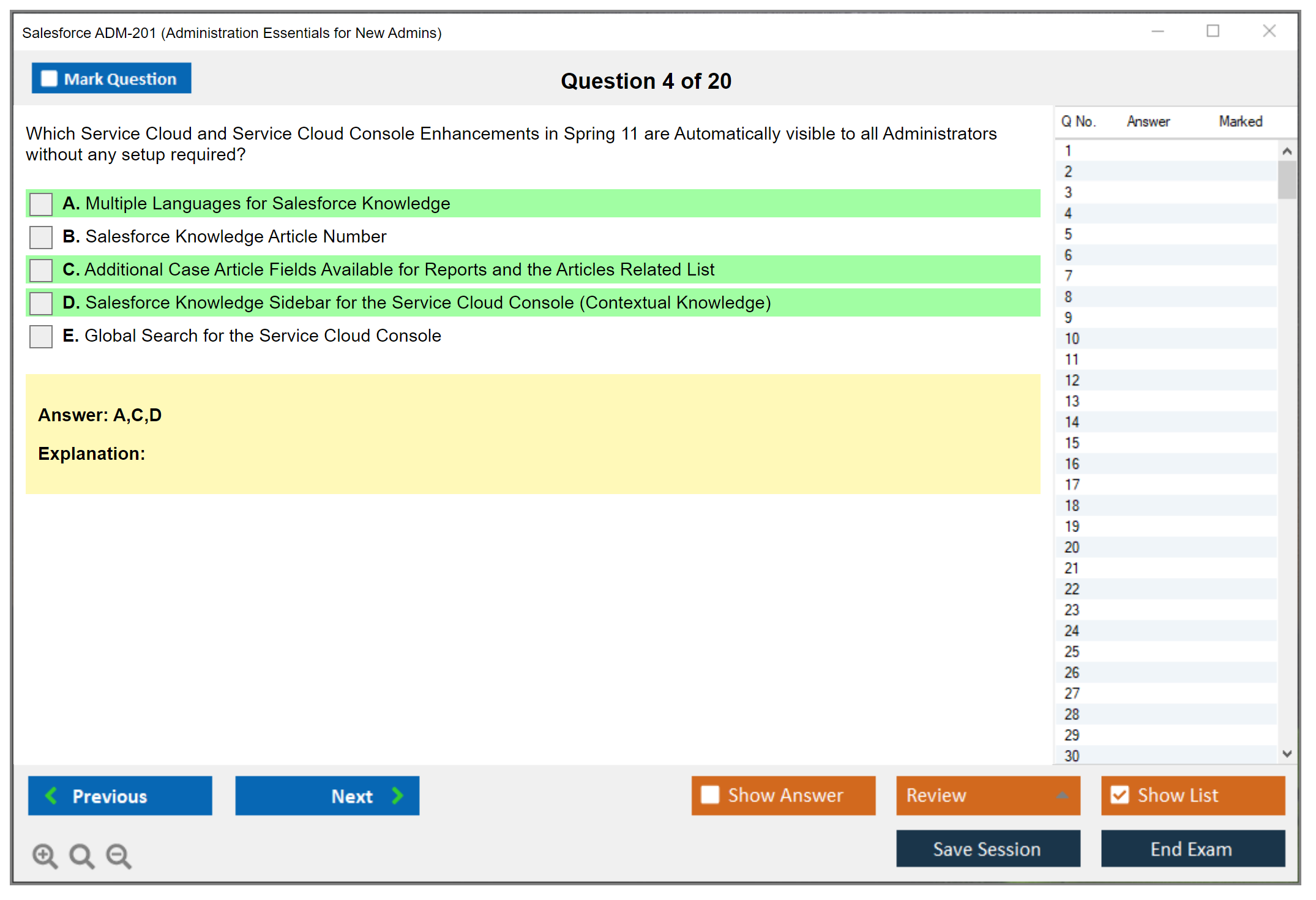
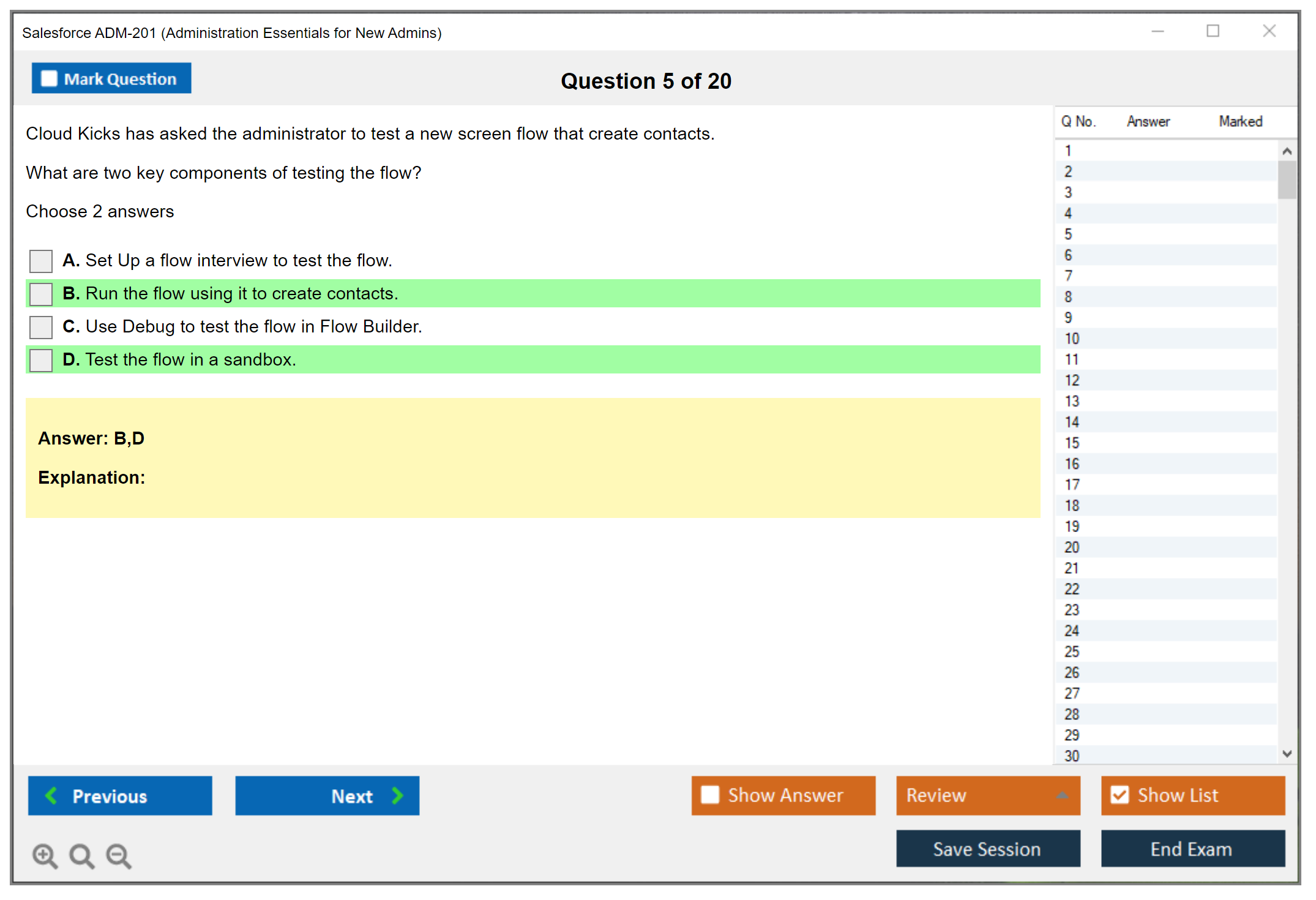
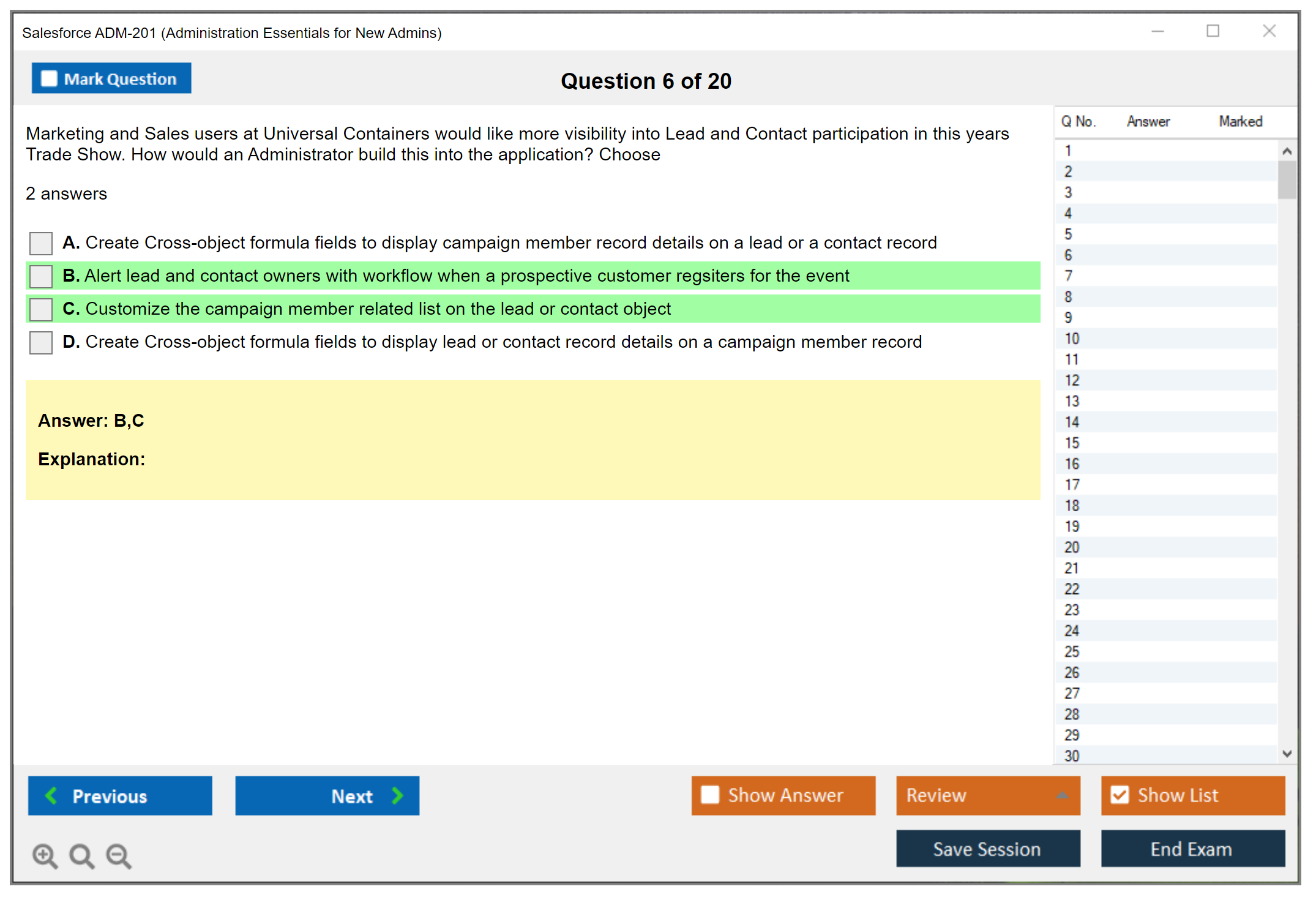
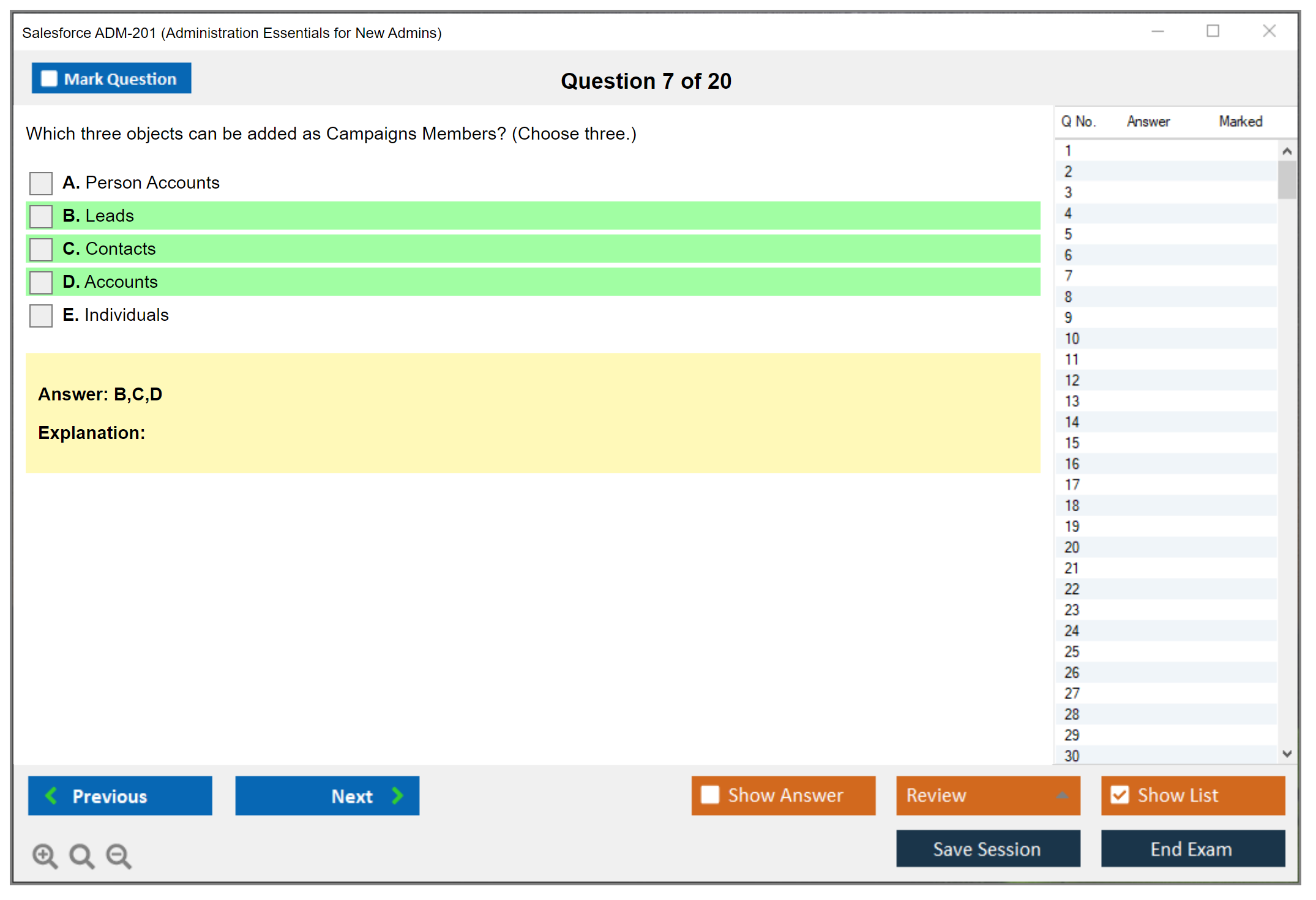
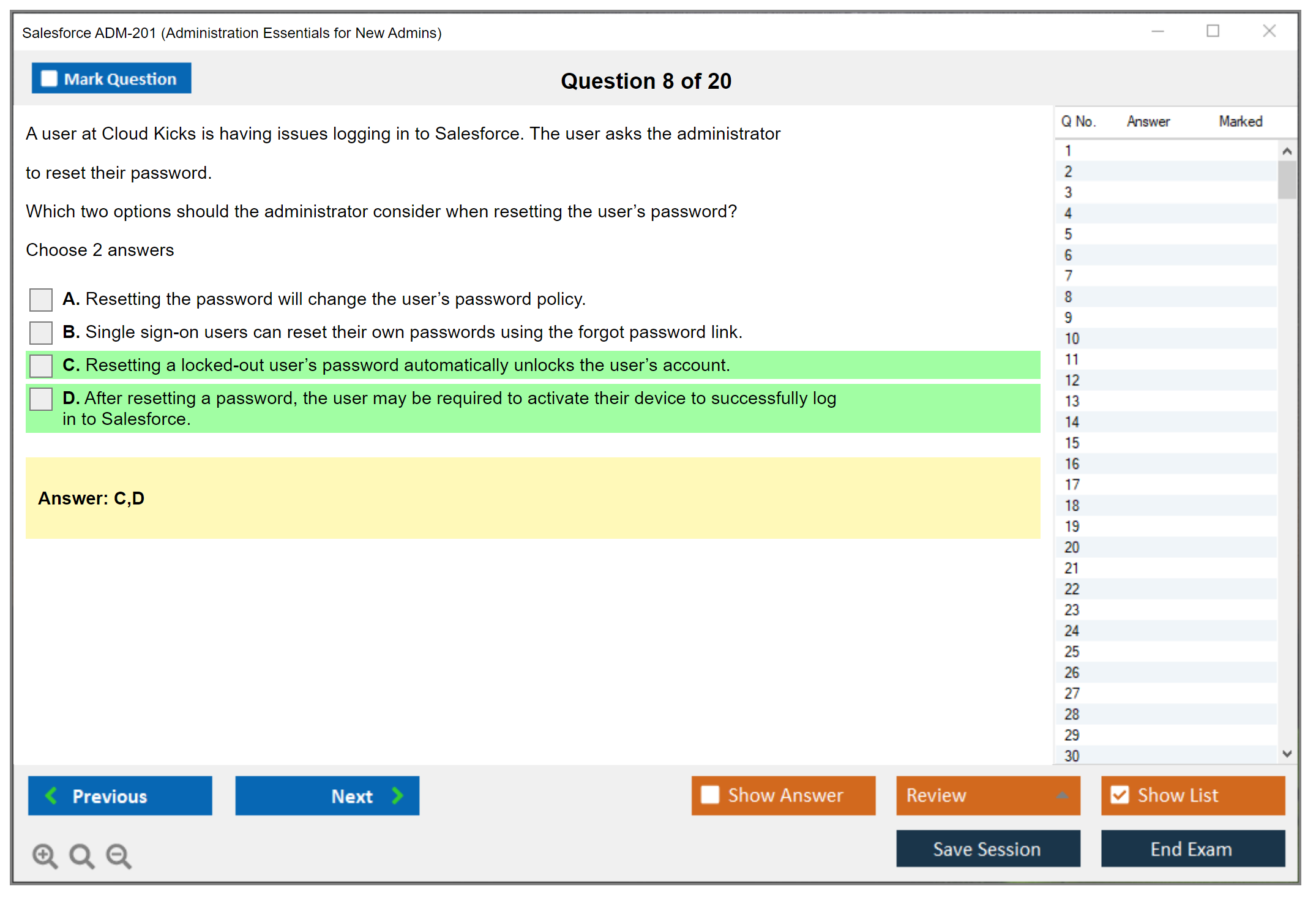
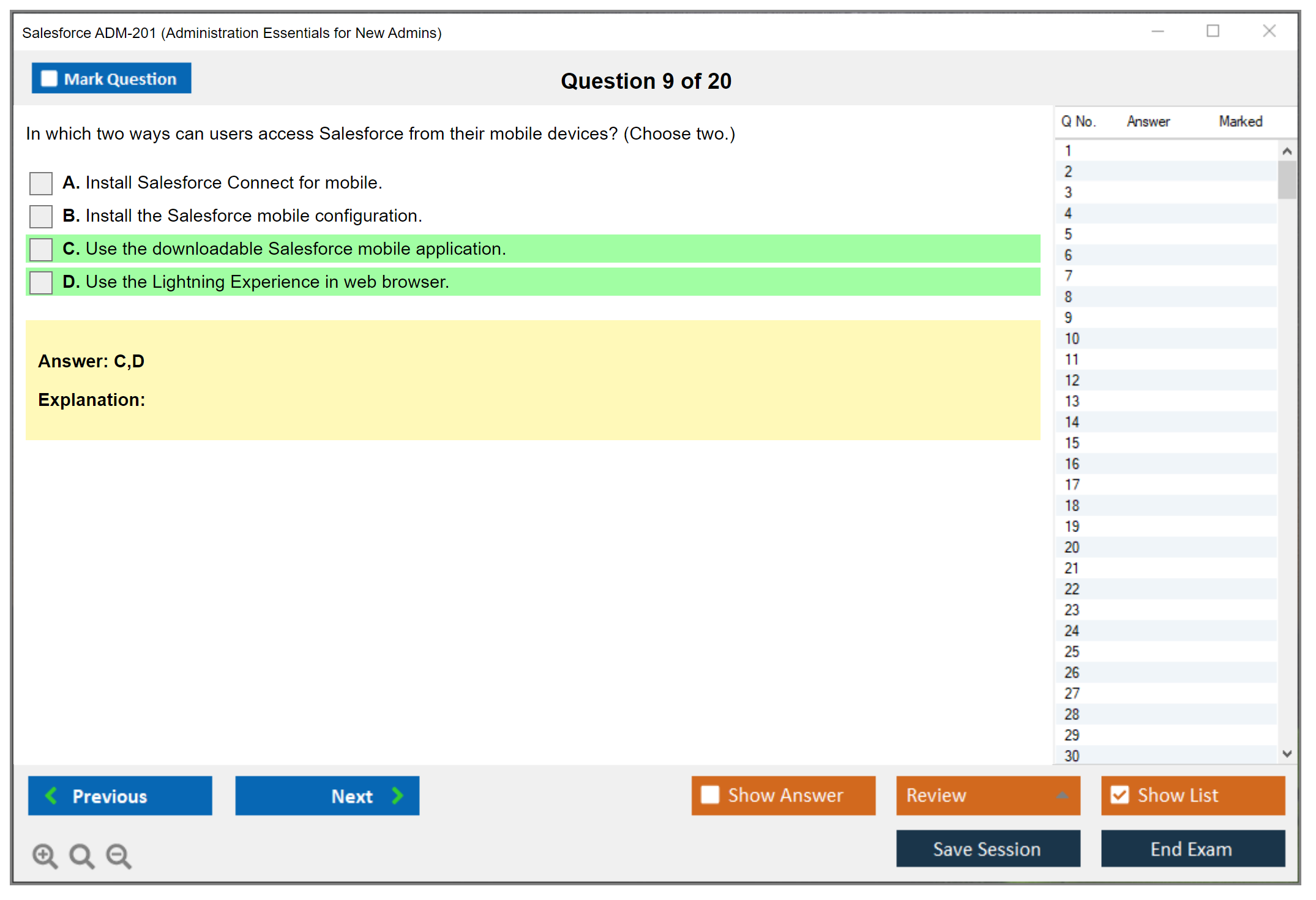
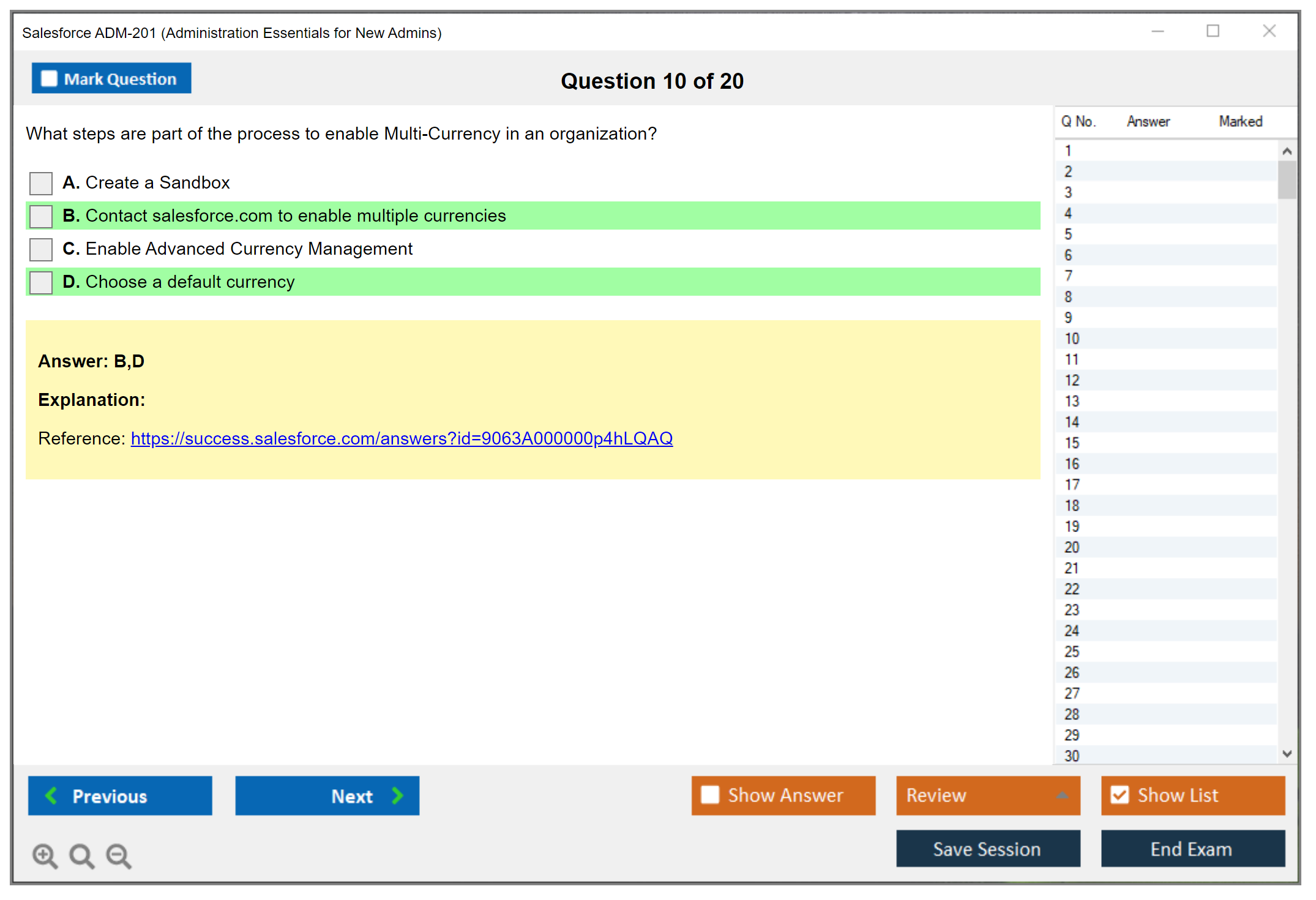
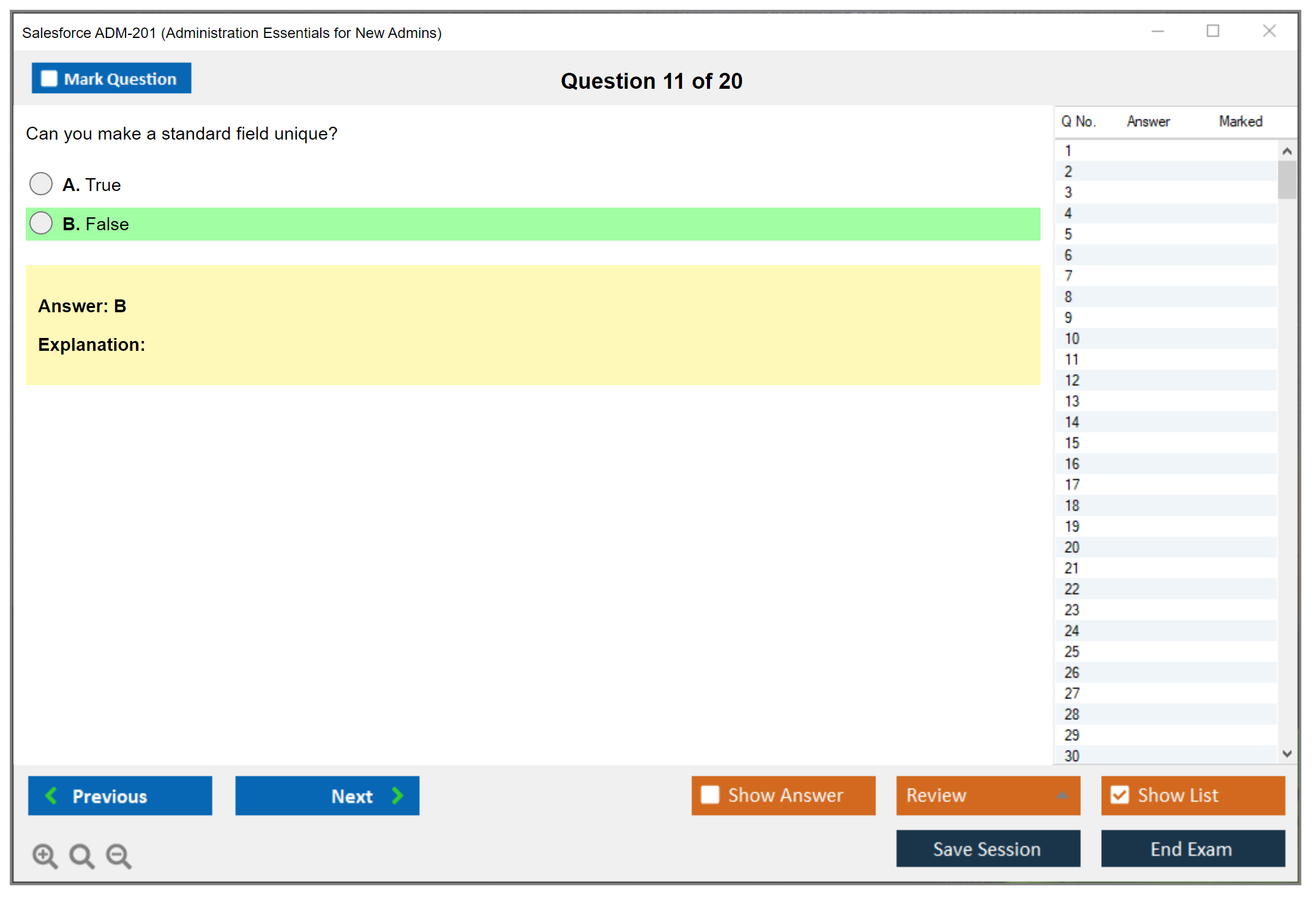
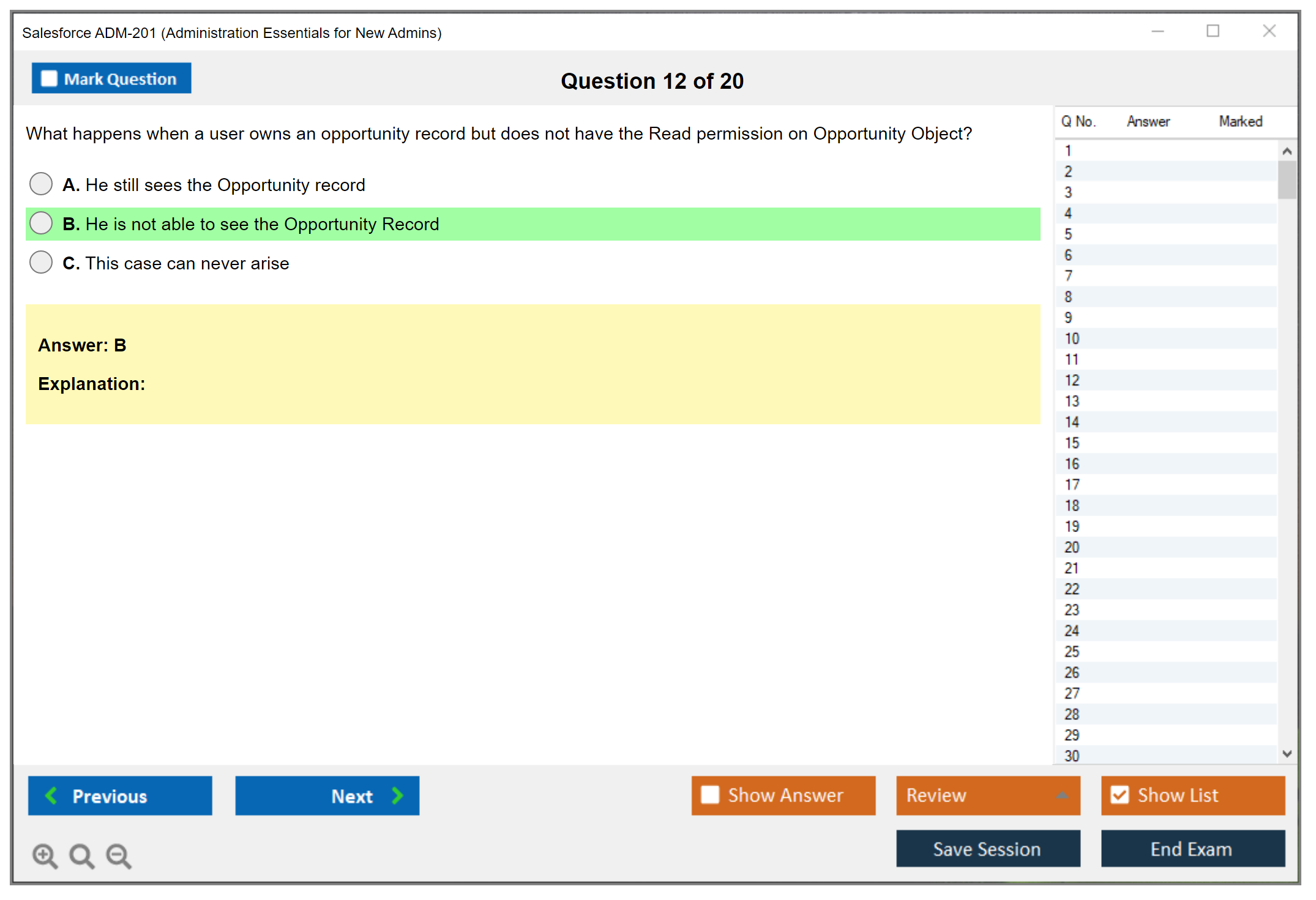
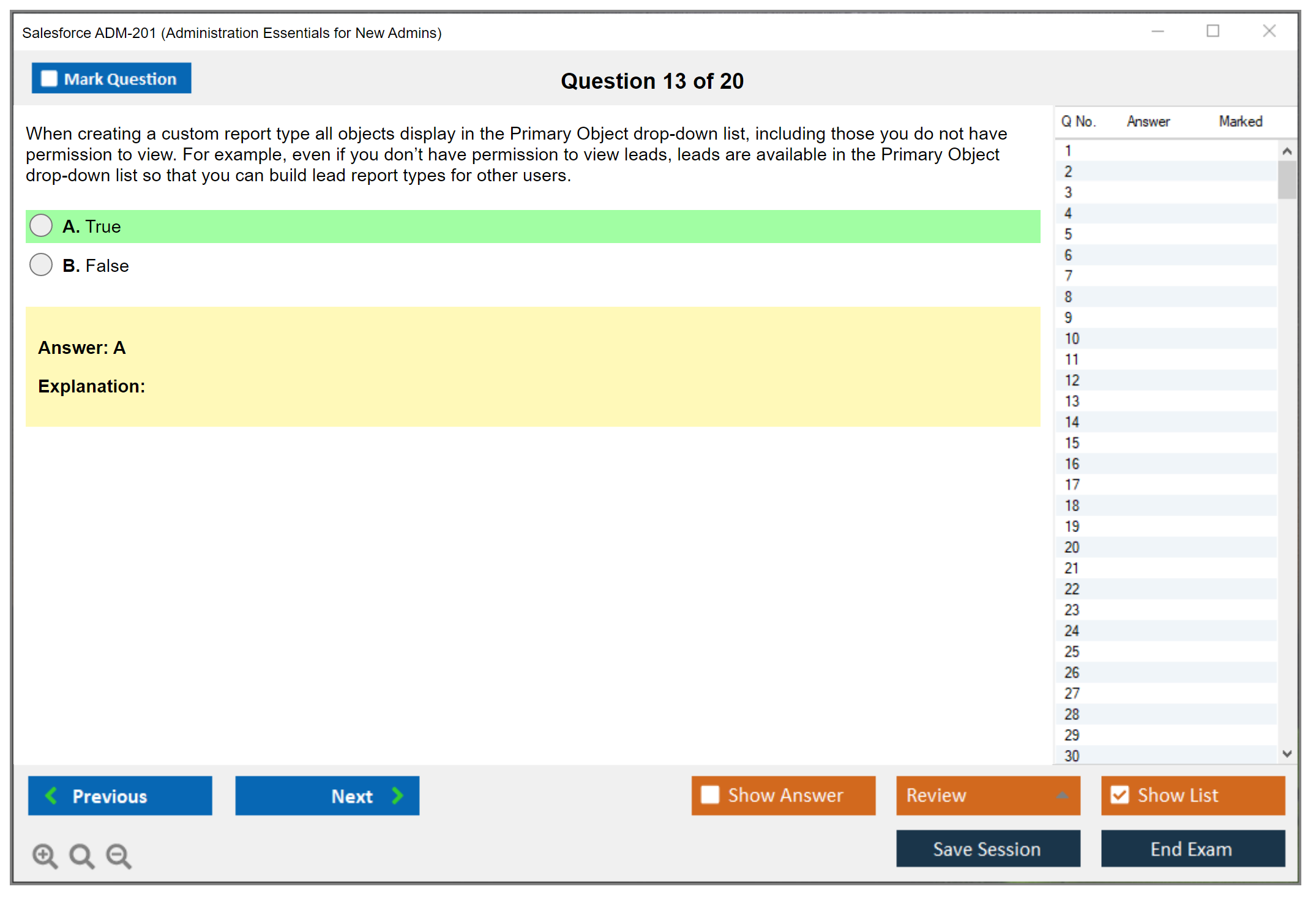
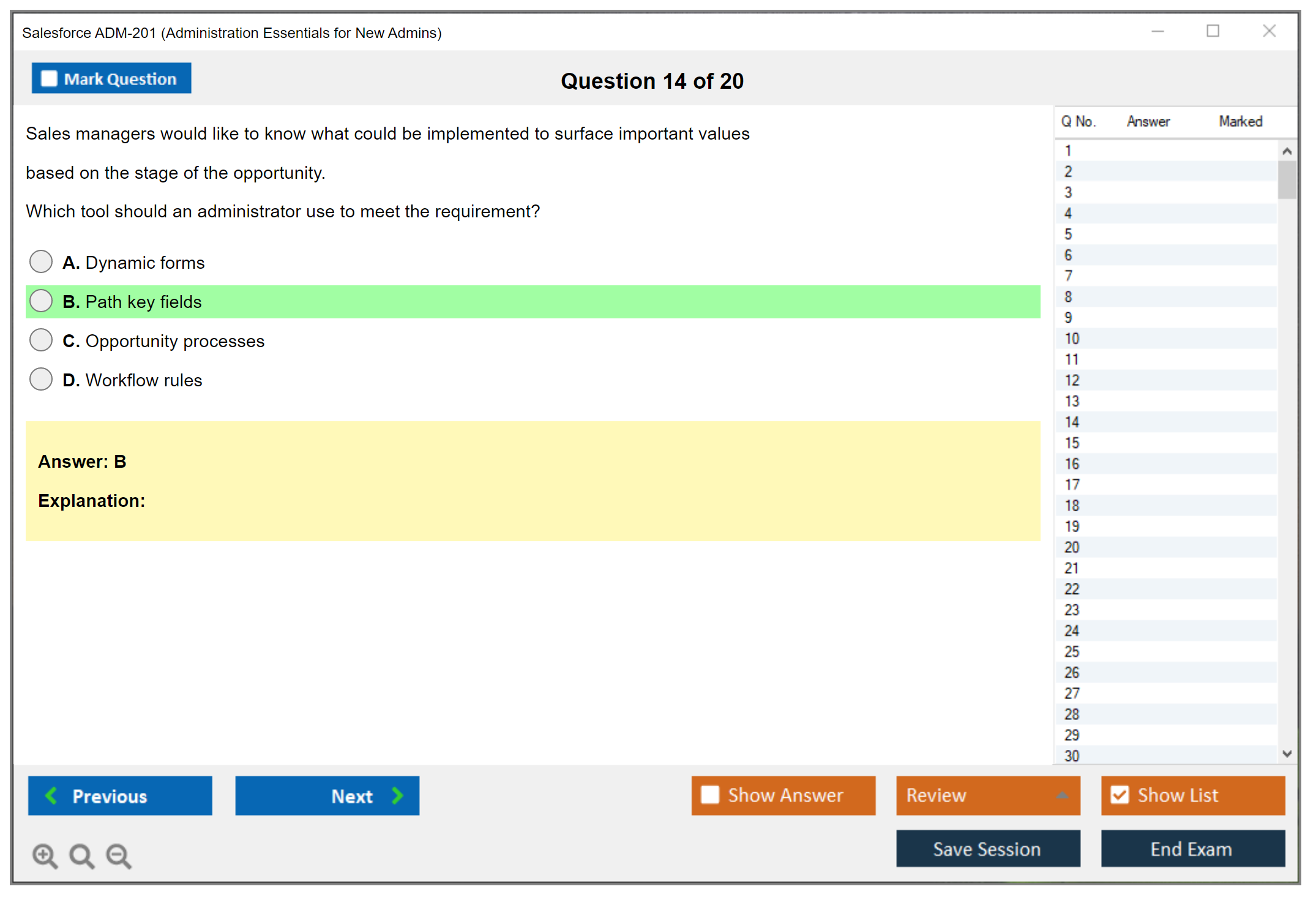
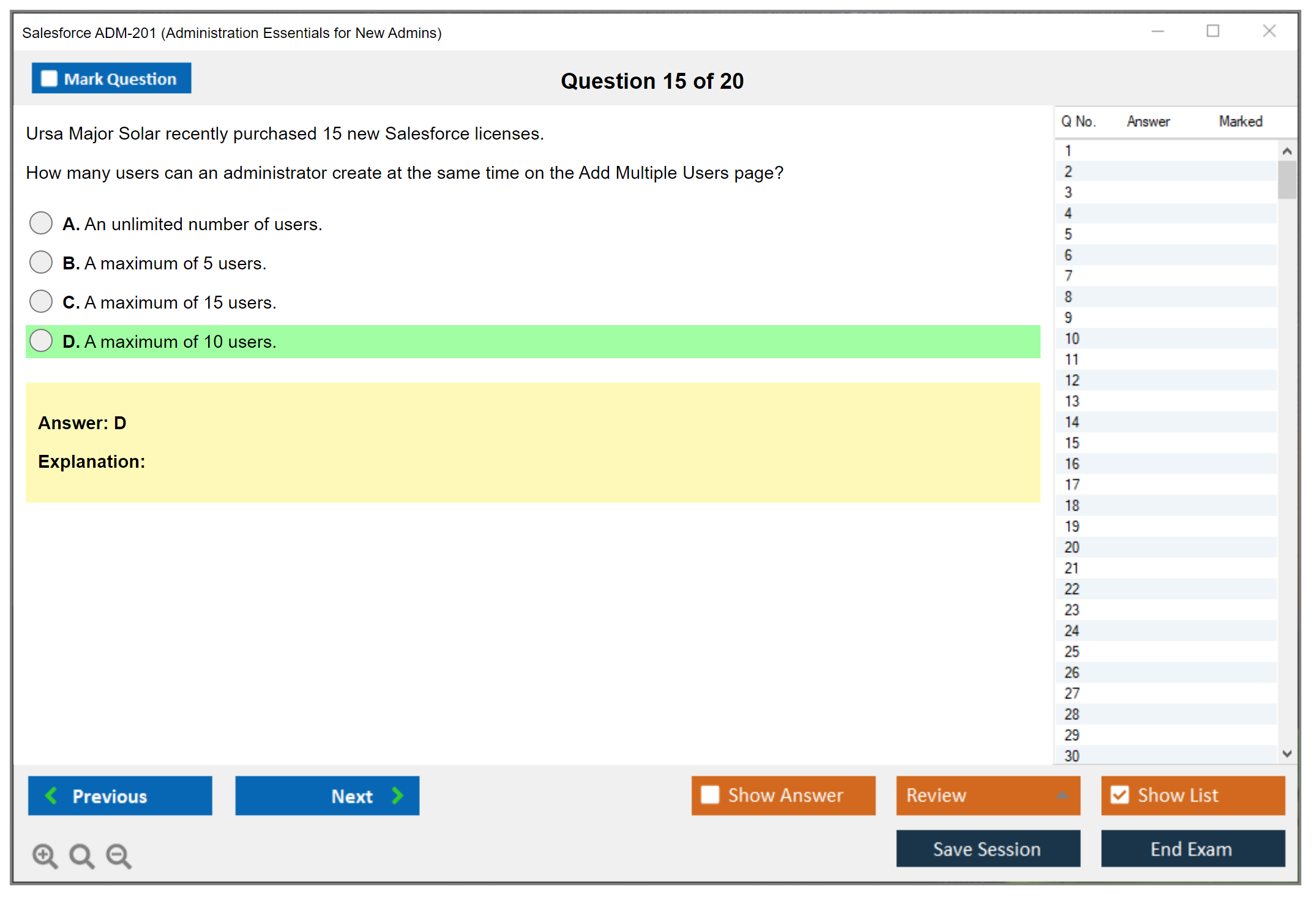
Salesforce ADM-201 (Salesforce Certified Administrator)
Salesforce ADM-201 Certification Overview and Exam Fundamentals
What Salesforce ADM-201 certification actually proves
The Salesforce ADM-201 certification is your entry ticket into the Salesforce ecosystem as someone who really understands what they're doing. This is not some fluffy credential you post on LinkedIn and forget exists. It validates you can configure, manage, and maintain Salesforce implementations without breaking everything or pestering support constantly.
The Salesforce Certified Administrator exam tests whether you understand the platform from ground level: user management, security models, automation, data handling, reports. Stuff admins encounter daily. Anyone can click around Salesforce, but this credential proves you actually understand why you are clicking what you are clicking, which makes all the difference when things go sideways. Employers globally recognize it when they need someone managing their Salesforce environment without creating chaos.
This is the entry point. Once you have got ADM-201 completed, you can branch into advanced administrator territory with CRT-211, or maybe pursue the developer route if that interests you. The certification pathway gets extensive afterward, but everyone starts here.
Who should actually take this exam
Anyone serious about Salesforce careers. Admins obviously, but also business analysts, operations specialists, or consultants who need proving they are not just improvising. If you are the person in your company who gets asked "can you fix this in Salesforce?" more than twice weekly, you probably should get certified.
The exam covers declarative configuration, the point-and-click stuff. Zero code required. That is the beautiful part. You are translating business requirements into Salesforce solutions using standard functionality, which companies absolutely love because they do not want custom code everywhere making maintenance a nightmare down the road.
Exam format, cost, and what you need to pass
The Salesforce Certified Administrator exam contains 65 multiple-choice and multiple-select questions. You get 105 minutes, which sounds generous until you are staring at scenario-based questions requiring actual critical thinking about business requirements. Five questions are unscored (they are testing them for future exams), but you will not know which.
ADM-201 exam cost runs $200 USD plus taxes. Retakes cost $100 if you fail, and hey, it happens to plenty of people, so you want passing the first time.
The passing score is 65%. You need at least 42 questions correct. Sounds manageable, right? The thing is, questions are not just "what button do you click." They are scenario-based, requiring you to understand how features interact, when to use what, and sometimes choosing the BEST answer when multiple answers could technically work.
Prerequisites and what you should know before attempting
No official prerequisites exist. You could theoretically take this exam tomorrow with zero Salesforce experience, but that would be stupid. Salesforce recommends at least six months hands-on experience as an admin, and honestly that is bare minimum if you want actually passing without just memorizing dumps.
Get yourself a Developer Edition org or Trailhead Playground and build stuff. Create users, mess with profiles and permission sets, build flows, import data, create reports. The Salesforce Administrator certification requirements might not officially demand experience, but the exam absolutely assumes you have done this work previously.
Breaking down the exam domains
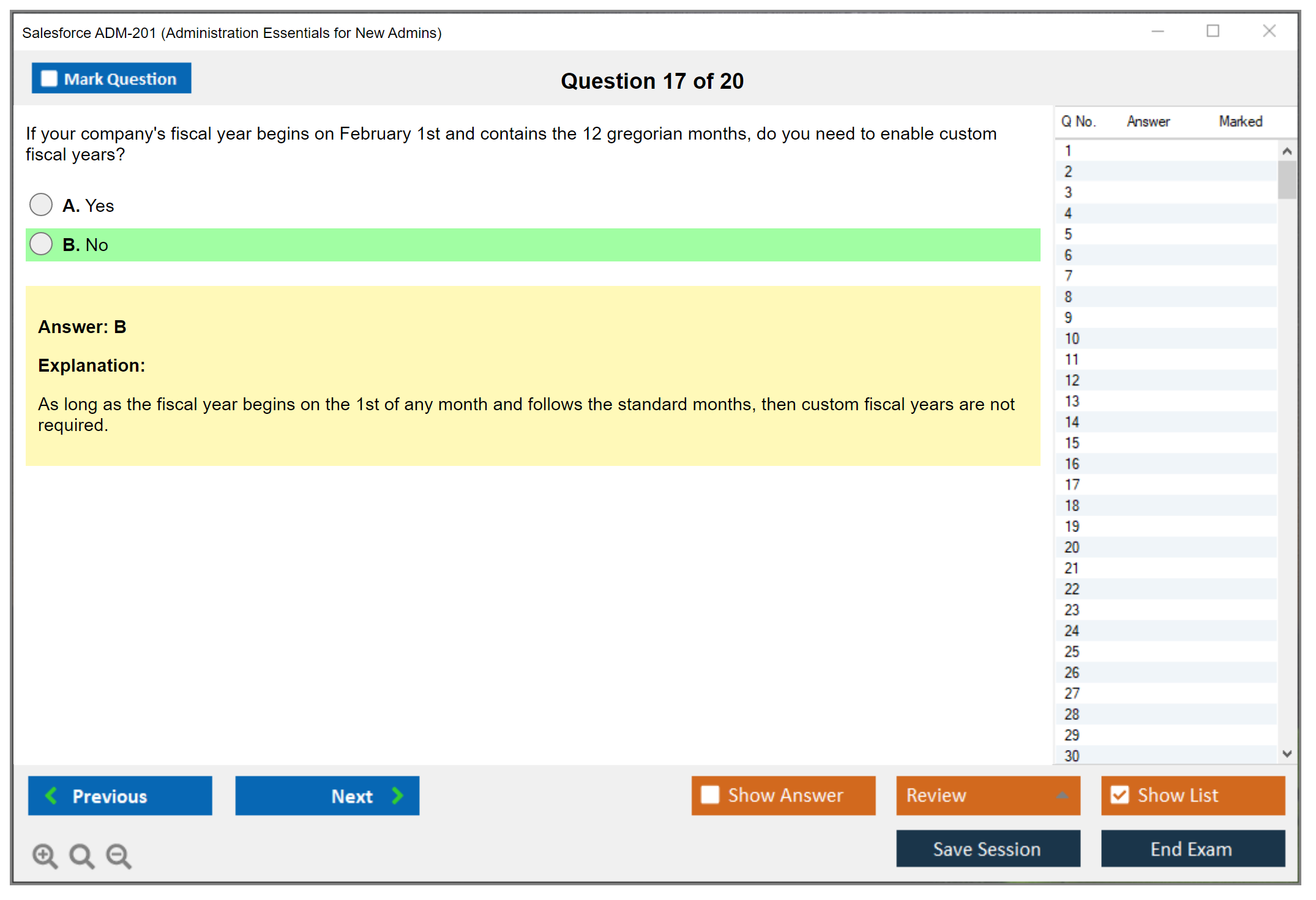
The ADM-201 exam guide lays out exactly what they are testing. Configuration and Setup represents about 20% of the exam. Company settings, fiscal years, currency management, locale stuff. Boring but essential.
Object Manager and Lightning App Builder hits another 20%. You need understanding standard and custom objects, fields, relationships, page layouts. This is where you prove you actually understand the Salesforce data model and are not clicking randomly.
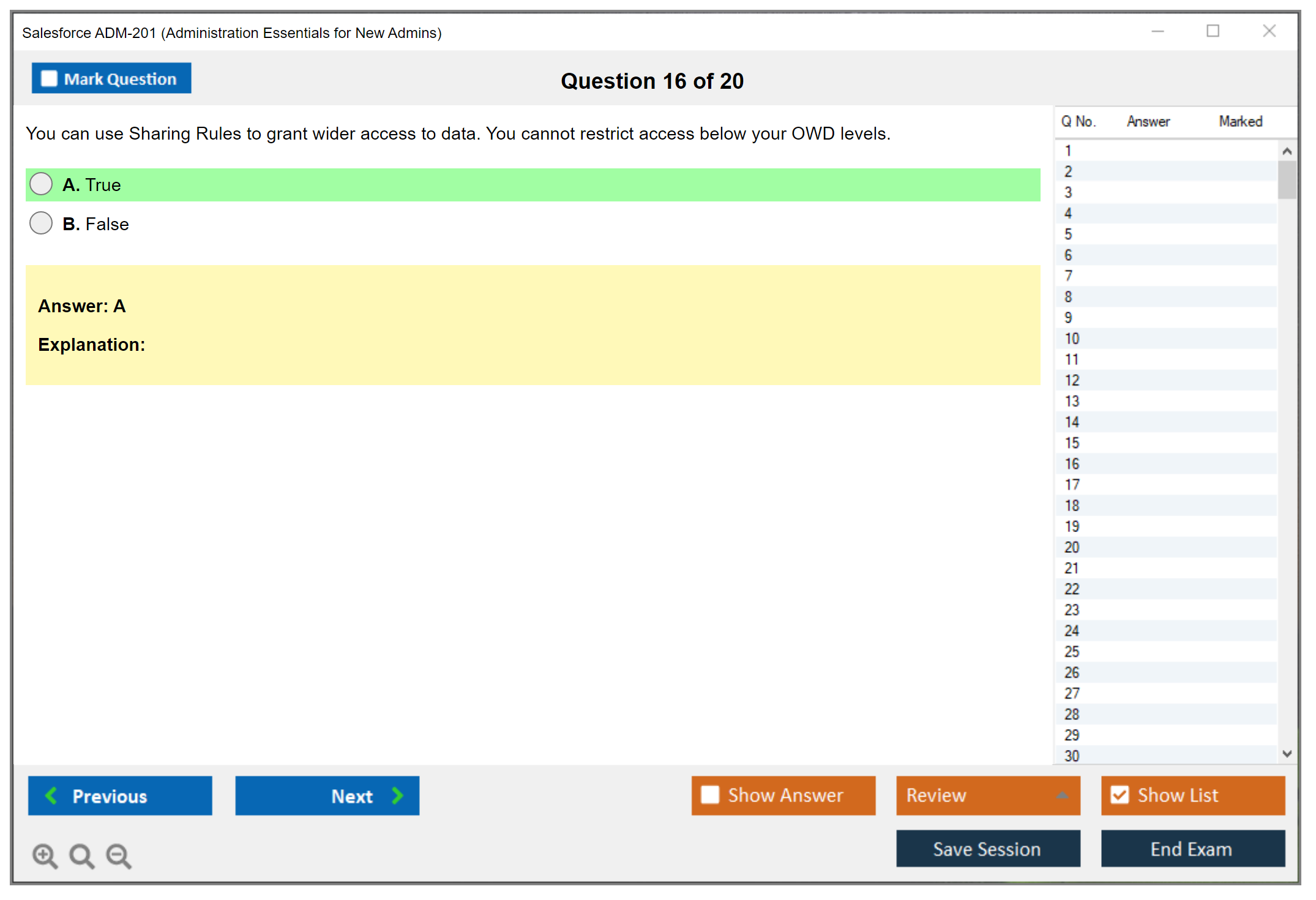
Salesforce security and access is huge, roughly 20% of exam weight. Profiles, permission sets, role hierarchies, sharing rules, organization-wide defaults. This stuff confuses people because there are so many layers stacked on each other. You need knowing not just what each security feature does, but when to use which one. Like, when do you use a permission set versus modifying a profile? When do sharing rules make sense versus adjusting OWD settings?
Sales and Service applications make up roughly 12%. You should understand leads, accounts, contacts, opportunities, cases, and how those objects relate. The exam does not go super deep into Sales Cloud or Service Cloud specifics (save that for CRT-251 or Service-Cloud-Consultant exams) but foundational knowledge is essential.
Automation with Flow and other tools represents about 16% of the exam. Flow Builder is massive now since Salesforce deprecated workflows and process builder. You also need understanding approval processes, validation rules, and formula fields. This section trips people up because automation requires understanding business logic, not just clicking buttons.
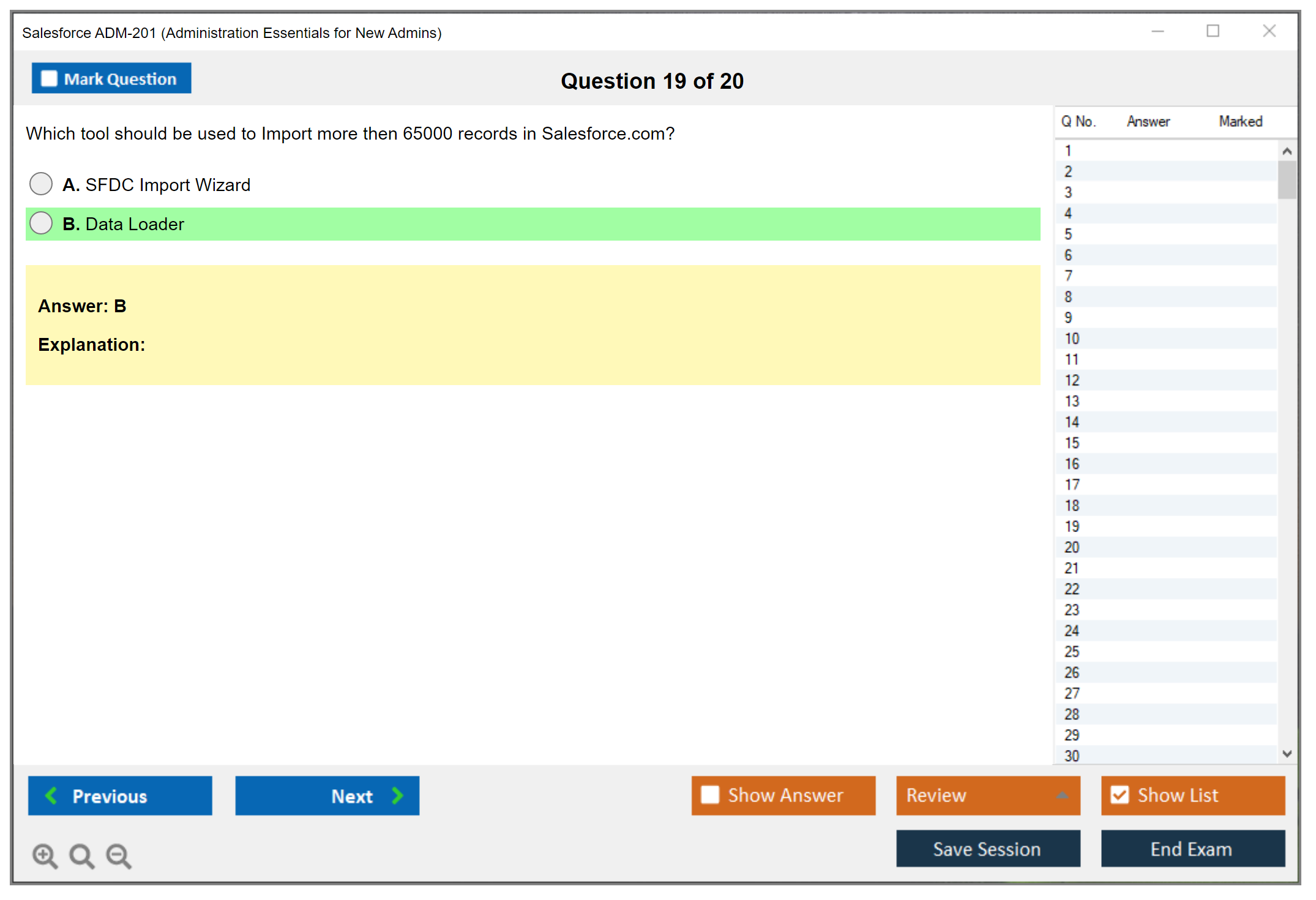
Data management sits around 8%. Import/export operations using Data Loader and Data Import Wizard, maintaining data quality, duplicate management, mass updates. Pretty straightforward if you have imported messy data before. Though honestly, even straightforward stuff gets weird when you are dealing with legacy systems that somebody built in 2012 and nobody documented properly.
Reports and dashboards in Salesforce accounts for roughly 14%. You need knowing report types, how creating custom reports works, report formulas, dashboard components, and sharing reports. What is the point of all that data if you cannot analyze it?
How hard is this thing really
The difficulty level varies wildly depending on your background. If you have been working as a Salesforce admin for a year, you will probably find it manageable. Coming in cold with just Trailhead modules? You are gonna struggle.
What candidates find hardest? Usually security model questions and knowing which automation tool to use when. The security stuff requires understanding how different features interact. If you set OWD to Private but then create a sharing rule, what happens? If someone has a profile that does not grant access to an object but you give them a permission set that does, can they see it? These layered scenario questions kill people.
Time management matters. 105 minutes for 65 questions gives you about 90 seconds per question. Not much when you are reading a paragraph describing a business scenario and then evaluating four possible solutions.
Study materials that actually work
The official study materials should be your foundation. Salesforce's exam guide tells you exactly what is covered and the weighting. Trailhead has specific trails for admin certification prep. They are free and honestly pretty solid. The ADM-201 study guide approach should mix Trailhead modules with hands-on practice.
Focus on Superbadges too. Those require you actually configuring stuff correctly to pass, not just watching videos. Admin Beginner, Admin Intermediate, Advanced Administrator. Do all of them.
For those who learn better with structure, instructor-led training exists through Salesforce or authorized training partners. Expensive, several thousand dollars usually, but you get expert instructors and guided labs. Worth it if your employer is paying or you learn better in classroom settings.
Books? Mike Wheeler's admin study guide gets recommended frequently. Organized by exam objectives and includes practice questions. Just do not rely solely on books. You need hands-on work.
Practice tests and exam readiness
ADM-201 practice tests are everywhere, but quality varies massively. Avoid brain dumps that just give you exact exam questions. That is cheating and does not actually prepare you. Look for practice tests explaining WHY answers are correct or incorrect. Understanding the reasoning matters more than memorizing answers.
Salesforce's official practice exam is worth the money. It simulates the real exam format and gives you a baseline for where you stand. Scoring below 70% on practice tests? Not ready.
Final week revision should focus on your weak areas. Most people know reporting pretty well but struggle with security or automation decision-making. Use that last week hammering whatever domains you are shaky on.
Registration and test day logistics
You can take the exam at a testing center or online with a proctor. Online proctoring is convenient (you take it from home) but requires a webcam, quiet space, and passing their system check. The proctor watches you the entire time, which feels weird but whatever.
Testing centers provide controlled environments if your home setup is not ideal. Either way, you will need government-issued ID matching your registration name exactly. Salesforce is strict about this.
Keeping your credential current
This is not one-and-done certification. Salesforce releases three updates yearly, and you need completing maintenance modules to keep your credential active. The renewal requirements involve completing short Trailhead modules and quizzes for each release. Not hard, maybe 30 minutes per release, but you MUST do them.
Miss your renewal deadlines? Your certification expires. You will have retaking the full exam to get certified again. Do not be that person.
Career impact and next steps
The Salesforce admin credential opens doors. Entry-level admin positions, business analyst roles, operations specialist jobs all look for this certification. It proves you have got standardized knowledge and are not just someone who happened using Salesforce at one company.
From here, you might pursue Advanced-Administrator certification or branch into Platform-App-Builder territory. Some admins go toward Marketing-Cloud-Administrator or Nonprofit-Cloud-Consultant depending on industry interest.
The ecosystem is massive. ADM-201 just proves you understand the foundation well enough building on it. Where you go from there depends on what interests you and what your career goals look like, but you gotta get this one first.
Salesforce Certified Administrator Exam Details: Format, Cost, and Passing Requirements
Salesforce ADM-201 (Salesforce Certified Administrator) overview
What the certification validates
The Salesforce ADM-201 certification proves you can actually run a Salesforce org. Real work. Not the "I watched some videos once" situation, but the "I set up users, configure security, build custom objects, troubleshoot reports, and automate repetitive tasks" kind of competence. This exam validates you understand Salesforce org setup and configuration, know how Sales Cloud and Service features work in practice, and can maintain everything after the initial implementation excitement fades.
Admins exist in chaos, frankly. Requirements shift constantly. Sales demands one approach. Support pushes back with completely different needs. Security wants to lock everything down until the end of time. The thing is, the Salesforce admin credential proves you can work through those conflicting priorities and know the platform deeply enough to choose the right solution instead of just throwing 14 custom fields at the problem and hoping it works.
There's something satisfying about fixing a workflow that's been broken for months because someone created a validation rule that conflicts with an approval process. Nobody else notices until you fix it, but you notice.
Who should take ADM-201
If you're targeting junior admin positions, admin-adjacent roles, or you're the accidental admin at a company that "just needs minor adjustments," this fits you. Business analysts who keep getting dragged into admin responsibilities should look at this too. If you're touching users, objects, reports, or Flow automation regularly, you're already performing the job.
Some folks wait until they feel completely "ready." That's procrastination dressed up as caution. If you can build a basic application, manage permissions without random guessing, and diagnose why a report shows incorrect data, you're closer to prepared than you realize.
Exam details (format, cost, passing score)
Exam format and time limit
The Salesforce Certified Administrator exam contains 65 multiple-choice and multiple-select questions with 105 minutes allowed. That includes five unscored questions used by Salesforce for research purposes, and they won't tell you which ones. Every question feels important, even though only 60 questions actually count toward your score.
Question formats vary. Some are straightforward single-answer multiple-choice. Others are multiple-select where you must identify every correct option and no partial credit exists. Miss one choice or select one extra option, the entire question's wrong. Brutal, honestly. The exam's delivered via computer, either through online proctoring or at a Kryterion testing center, and both pull from identical question pools with matching time limits and scoring systems.
The interface works fine. There's a countdown timer, question flagging capability, navigation between questions, and a basic calculator for quick calculations. Questions appear in random order too, with simple and complex mixed together, so don't expect any gentle warm-up section.
Do the math here. 105 minutes for 65 questions equals roughly 1.6 minutes per question, and that's before you reread a scenario twice because the wording does that Salesforce thing where it's technically precise yet somehow vague at the same time.
ADM-201 exam cost
The ADM-201 exam cost runs $200 USD for your initial attempt. Retakes cost $100 USD. Pricing fluctuates by country due to taxes and currency conversion, so your actual checkout amount might differ from what someone in the US paid.
The fee covers either online proctored delivery or testing center scheduling. Salesforce occasionally releases promotional discounts or vouchers through partners, training providers, or events. Not consistently. Not predictably. But worth investigating if your employer's covering costs or you're participating in a workforce development program.
Passing score (and how scoring works)
The ADM-201 passing score sits at 65%. Since only 60 questions contribute to scoring, you need at least 39 correct answers out of 60 to pass. Salesforce positions that 65% threshold as the minimum competency level for administrators who can actually do the work, which politely translates to: you can miss several questions, but you can't demonstrate weakness in basic areas.
Scoring's binary. Multiple-select questions follow all-or-nothing scoring. Candidates receive immediate pass/fail results after finishing, followed by a detailed score report in the certification portal breaking down performance by domain. That domain-level feedback becomes valuable if you fail, because it identifies exactly where your ADM-201 study guide needs attention.
No appeals process exists. Failing means you wait 14 days before retaking. There's no attempt limit, but each retake costs money, so failing three times creates a serious budgeting issue.
Prerequisites and recommended experience
Prerequisites (official vs. recommended)
Officially, there's zero hard prerequisites. No mandatory coursework. No required employment history. You can register with nothing but determination and payment method.
Recommended expectations differ. I mean, Salesforce expects hands-on experience completing typical admin tasks: user provisioning, permission configuration, basic automation, and report building. If you've never encountered profiles or record types, the exam will feel like it's written in an alien language. Fragments, obscure features, stuff you didn't realize mattered.
Suggested hands-on experience and admin skills
Get real time in an actual org, even a developer org. Create a custom object. Construct a screen Flow. Break sharing settings then repair them. Configure a role hierarchy, then verify record visibility using different user accounts. And invest serious time on reports and dashboards in Salesforce, because reporting questions tend to punish shallow understanding.
ADM-201 objectives (exam topics breakdown)
Salesforce publishes the official blueprint with domain weightings, and you should align your preparation directly to it because the exam distribution isn't uniform.
- Configuration and Setup (20%): company information, fiscal year, currencies, system defaults
- Object Manager and Lightning App Builder (20%): objects, fields, page layouts, record types
- Sales and Marketing Applications (12%): leads, accounts, contacts, opportunities, campaigns, products
- Service and Support Applications (11%): cases, solutions, service console, knowledge articles
- Productivity and Collaboration (7%): activities, Chatter, content management, mobile
- Data and Analytics Management (14%): import/export, data quality, reporting fundamentals
- Workflow/Process Automation (16%): Flow, approval processes, validation rules, formulas
The ADM-201 exam guide on the Salesforce certification site is freely available and includes detailed breakdowns plus sample questions. The blueprint updates periodically to reflect Salesforce's three annual releases, so verify you're studying the current version, not some outdated PDF from 2019 that someone randomly reposted.
Difficulty and pass strategy
Difficulty level (what candidates find hardest)
How hard is it? Medium difficulty, but frustrating. The toughest part is the "two answers seem correct" pattern, especially in Salesforce security and access and automation topics. Salesforce loves asking what you "should" do, not what you "can" do, and the best-practice answer wins even when another option technically functions.
Common mistakes and how to avoid them
Biggest mistake: guessing on security concepts. Profiles versus permission sets versus permission set groups versus sharing rules versus organization-wide defaults. If your mental framework's unclear, you lose points fast. Another common error is treating Flow like a buzzword. The exam expects you to understand when to use record-triggered Flow, when validation rules are cleaner, and why approval processes exist separately.
Candidates over-focus on memorization and under-focus on reading comprehension. The scenarios bury the actual requirement in one sentence, and if you skim, you'll pick the "interesting feature" instead of the correct one.
Time management during the exam
Flag questions early, move forward, circle back. Don't waste five minutes on a multiple-select where you're only 60% confident. Maintain steady pacing, and when returning to flagged questions, re-read the question stem first, not the answer choices. Your brain will try convincing you the option you already liked is correct.
Best study materials for Salesforce ADM-201
Official study materials (Trailhead, exam guide)
Trailhead is the primary route for most candidates, and it's adequate. The real foundation is the ADM-201 exam guide, because it reveals what Salesforce considers important. Use it like a detailed checklist. Then map each domain to corresponding Trailhead modules. Maintain notes. Simple ones work best.
Instructor-led training options
Instructor-led courses help if you need structure, accountability, and someone to answer "why not this alternative option" without you spiraling into confusion. Salesforce, partners, and training companies all offer this, and quality varies wildly.
Books, notes, and study plans
A personal notes document beats most published books. Write down what you answered incorrectly on a Salesforce Administrator practice test, and add the principle you should've remembered. That's how you stop repeating identical mistakes.
Practice tests and exam readiness
ADM-201 practice tests (what to look for)
A quality practice test explains why each answer is correct and why the others fail. If it's just a question dump, you're training yourself to memorize patterns, and Salesforce will still catch you with scenario variations.
Practice question strategy (why answers are right/wrong)
Don't just check the correct option. Explain the incorrect ones. For security and Flow automation especially, because the exam loves near-miss answers that fail one constraint like "needs automation for all users" or "must be reportable."
Final week revision checklist
Focus on weak domains from your practice scores. Rebuild several Flows. Review sharing configurations. Complete a reporting sprint. Sleep properly.
Registration, scheduling, and test-day requirements
Online proctoring vs. test center
Online proctored exams involve webcam monitoring and screen sharing, and you can test from home or your office. Testing centers provide more controlled environments with on-site proctors and fewer weird technical surprises. Both are identical in content and policies, so choose based on your environment and your tolerance for proctoring friction.
ID requirements and exam policies
Bring valid identification. Clear your workspace if testing online. Expect strict enforcement of rules. If you fail, remember the 14-day waiting period before retaking, and plan accordingly if your employment timeline is tight.
Renewal and maintenance (Salesforce credential)
Renewal requirements (maintenance modules/cycle)
Salesforce Administrator renewal happens through periodic maintenance tasks tied to the release cycle. Salesforce ships three releases annually, and you're expected to complete assigned maintenance modules to keep the credential active.
What happens if you miss renewal deadlines
Missing the window can cause your credential to lapse and you'll need to follow Salesforce's current policy to regain status, which typically means completing overdue maintenance. Don't ignore those emails.
FAQs
Is ADM-201 still the right exam name for Salesforce Administrator?
People still use ADM-201 constantly, and you'll encounter it in older resources and job postings. Salesforce branding shifts periodically, but you should always confirm the current exam listing and ADM-201 exam guide on the official site before booking.
How long does it take to prepare?
Depends on your hands-on experience. If you already perform admin work daily, a few weeks of focused study can suffice. If you're new, expect longer, because you need practice repetitions, not trivia memorization.
What jobs does Salesforce Administrator certification help with?
It helps with entry-level Salesforce admin roles, admin-in-training positions, sales operations where Salesforce is your primary tool, and internal systems roles where you own configuration, reports and dashboards in Salesforce, and basic automation. It also satisfies requirements for numerous recruiters screening for Salesforce Administrator certification requirements.
Prerequisites and Recommended Experience for ADM-201 Success
No formal prerequisites, but that doesn't mean you should wing it
Okay, so here's the deal with Salesforce ADM-201 certification. There aren't any mandatory prerequisites, technically speaking. Salesforce won't demand prior certifications or formal training or even a set amount of hands-on work before you register. You could literally sign up tomorrow.
But honestly? That whole "open to everyone" thing is kind of misleading. I mean, sure, it's accessible, but it's also sort of a trap if you're not careful.
Just because you can take the exam with zero experience doesn't mean you should, you know? The pass rate? Yeah, that tells a completely different story than the marketing materials do. Candidates who walk in with actual Salesforce exposure perform way better than those who just cram study guides the week before.
What "recommended experience" actually means in practice
Salesforce suggests around six months of hands-on administration work. Not six months reading documentation or binging videos. Actual time configuring a production org or at least a solid sandbox environment. This means you've dealt with real users complaining about permissions, you've built custom objects that people actually use, and you've probably broken something at least once. We all have, let's be real.
That six-month window? It gives you exposure to business scenarios that exam questions love throwing at you.
Questions about whether to use a validation rule versus a workflow versus Flow. How to handle a user who needs access to records they don't own. Why a report isn't showing the data someone expects.
These aren't theoretical puzzles. They're literally Tuesday afternoon problems in any admin's life.
When I say hands-on experience, I'm talking about stuff like creating user accounts and figuring out why someone can see a tab but not the records underneath it. You should've built at least a few custom objects from scratch, complete with fields, page layouts, and those annoying validation rules that always fire when you don't expect them. Real-world troubleshooting teaches you the platform's logic in ways that study materials just can't replicate.
The technical foundation you need (even if you're not technical)
You don't need to be a developer for the Salesforce Certified Administrator exam, but you can't be afraid of systems either.
Basic database concepts matter here.
Understanding what objects, fields, and records actually represent helps everything else make sense. If you've worked with any database or even just understand how Excel tables relate to each other, you're ahead of the game already.
The Salesforce data model is fundamentally relational. Accounts relate to contacts, contacts relate to opportunities, everything connects through lookup and master-detail relationships. If those words make you nervous, spend time in a practice org just creating objects and linking them together. Click around. See what happens when you delete a master record that has detail records underneath it. Wait, actually, maybe back up first.
You should be comfortable working through web applications in general. Know how browsers work, understand what cookies do, recognize when you're looking at a URL parameter. This sounds basic, I know, but I've seen candidates struggle with exam questions simply because they didn't understand web application fundamentals.
Spreadsheet skills help more than you'd think. Data import and export scenarios show up throughout the exam. Understanding how CSV files work, what happens with duplicate records, why field mapping matters..all of that comes easier if you've spent time in Excel or Google Sheets doing vlookups and pivot tables. My old coworker used to joke that being good at Excel was basically 30% of the admin job, and he wasn't entirely wrong.
Business context separates good admins from great ones
Here's what study guides won't tell you: understanding business processes matters as much as knowing which button to click. The ADM-201 exam guide covers sales processes, service workflows, and operational scenarios because administrators don't work in a vacuum, right? You're solving business problems with technology.
If you've worked in sales, service, or operations (even outside Salesforce) you already understand concepts like lead qualification, case escalation, or approval chains. That context helps you interpret exam questions correctly. When a question asks about the best way to handle opportunity stages, it's testing whether you understand sales methodology, not just Salesforce configuration.
Prior CRM experience, even with platforms like HubSpot or Microsoft Dynamics, gives you a framework for understanding what administrators actually do. User management, access control, reporting, data quality..these challenges exist across all CRM systems. Salesforce just handles them differently.
What you should have actually done before exam day
Configuration experience beats theoretical knowledge every time.
You need to have created profiles and permission sets, not just read about them. Built validation rules that actually work. Set up sharing rules and seen how they interact with role hierarchies. Created reports that aggregate data across multiple objects.
The automation piece trips people up if they haven't practiced. Flow Builder looks intimidating at first, and exam questions about when to use Flow versus Process Builder (yes, it's still tested even though Process Builder is being retired) versus workflow rules require hands-on experience to answer confidently. Not gonna lie, you should've built at least a few flows that actually do something useful, not just clicked through Trailhead modules.
User support experience matters too. Having troubleshot why someone can't see a record, or why their report shows different numbers than their colleague's report, or why they can't edit a field that looks completely normal..these scenarios teach you how Salesforce security layers stack on top of each other. The exam loves questions about permission troubleshooting.
Study time varies wildly depending on your starting point
Candidates with six months of solid admin experience might need 40-50 hours of focused study. That's reviewing weak areas, taking practice tests, and filling knowledge gaps.
Someone brand new to Salesforce?
You're looking at 80+ hours easily, and that's assuming you're also getting hands-on practice in a Developer Edition org or Trailhead Playground.
I've seen people try to cram everything in two weeks. Some pass. Most don't. The Salesforce Administrator practice test scores tell you when you're ready. If you're consistently hitting 80%+ on quality practice exams, you're probably good to go.
Trailhead offers a "Prepare for Your Salesforce Administrator Credential" Trailmix that aligns perfectly with exam objectives. It's free, it's official, and it's one of the better structured learning paths out there. But here's the catch. You can't just watch the videos and click through the challenges. You need to actually understand why each answer is correct, not just memorize patterns.
Joining a study group or online community helps because other people ask questions you didn't know you had. I mean, the thing is, sometimes you don't even know what you don't know until someone else brings it up. The Salesforce Trailblazer Community has dedicated certification forums where people share tips and resources. Some of those explanations from experienced admins are better than official documentation.
Technical skills that make everything easier
Basic formula syntax understanding helps even though you won't write complex formulas from scratch on the exam.
Being able to read a formula and understand what it's checking for shows up in validation rule questions and formula field scenarios. You don't need to memorize every function, but knowing the difference between AND() and OR() logic is pretty fundamental.
Understanding of business logic and process flows supports all the automation questions. When should a record trigger an email? What happens when multiple automation processes fire on the same record? How do you prevent recursion? These aren't coding questions, but they require logical thinking about cause and effect.
If you've got any project management background, that helps with change management questions. The exam tests whether you understand testing strategies, deployment best practices, and how to communicate changes to users. Real-world exposure to Salesforce releases (watching your org go through an upgrade cycle) teaches you about maintenance windows and testing requirements.
The practice environment you absolutely need
You can't learn Salesforce administration by reading alone.
Get yourself a free Developer Edition org or use Trailhead Playgrounds to experiment without consequences. Build objects that don't make sense. Create validation rules that conflict with each other just to see what happens. Import bad data and learn how to clean it up.
The ADM-201 Practice Exam Questions Pack helps you understand question formats and identify weak areas, but practice exams work best when combined with hands-on configuration experience. When you miss a question about sharing rules, go into your practice org and actually build that scenario. See it in action.
Some candidates move on to more advanced certifications after passing ADM-201. The Advanced Administrator certification builds on this foundation, while the Platform App Builder focuses more on custom application development without code.
Don't skip the fundamentals
Understanding role-based access control concepts forms the foundation for like 20% of the exam.
You need to know how organization-wide defaults, role hierarchies, sharing rules, and manual sharing work together. Each layer adds or restricts access, and questions test whether you understand the order of operations.
Common business terminology shows up everywhere. Leads versus contacts versus accounts. Opportunities and their stages. Cases and their lifecycle. Campaigns and their members. If these terms are new to you, spend time in a standard Salesforce org just clicking around and seeing how objects relate to each other.
The exam focuses heavily on declarative configuration (point-and-click administration rather than coding). That's what makes it accessible to non-developers. But you still need comfort with technical concepts like field dependencies, record types, and page layout assignments. These aren't programming, but they require systematic thinking.
Documentation skills matter more than people expect. Can you write clear requirements? Can you explain a configuration change to non-technical users? Can you create process documentation? These soft skills support the harder technical questions about change management and deployment strategies.
Bottom line on prerequisites
The Salesforce Administrator certification requirements might not mandate prerequisites, but successful candidates typically bring six months of hands-on experience, business process understanding, and comfort with technical systems.
You can pass without that background, sure.
But you'll need a lot more study time and deliberate practice to compensate for that gap. The exam tests practical knowledge that comes from actually doing the work, not just reading about it. And there's really no shortcut around that reality. I mean, you can try, but the pass rates don't lie.
ADM-201 Exam Objectives and Domain Breakdown
Salesforce ADM-201 (Salesforce Certified Administrator) overview
The Salesforce ADM-201 certification is basically the "can you actually run an org day-to-day without breaking stuff" badge. It's not about writing Apex or anything fancy like that. It's about knowing what button to click, why that button exists in the first place, and what completely breaks if you click the wrong one at 4:55pm on a Friday when everyone's already mentally checked out.
What it validates is pretty practical stuff. Salesforce org setup and configuration, basic to mid-level automation with Flow, data model choices that don't paint you into a corner three months later, and the admin habits that keep users productive instead of constantly annoyed and submitting passive-aggressive help tickets.
Real admin stuff, honestly.
Tabs. Page layouts. Reports that actually make sense. Security models. The whole "why can't I see this record" conversation you've had seventeen times this month.
Who should take ADM-201? New admins, accidental admins who got voluntold into the role, power users trying to go legit, and anyone who wants the Salesforce admin credential without pretending they love code. If you've been asked to own Sales Cloud or Service Cloud setup, this exam maps directly to your actual life.
Exam details (format, cost, passing score)
ADM-201's multiple choice and multiple select, and the clock matters more than people think. You get 105 minutes, plus time for the usual non-scored questions and the pre-exam screens that feel like they take forever. Pace is the game.
ADM-201 exam cost
The ADM-201 exam cost is typically USD $200, plus applicable taxes depending on where you're located. Retakes are usually $100 which hurts less but still hurts. Prices can change, so check the current listing in Webassessor before you schedule. Budget for one retake anyway. Takes the pressure off, honestly.
Passing score (and how scoring works)
The ADM-201 passing score is 65%, which sounds generous until you're in it. Salesforce scores by section weight, so completely bombing a 20% domain hurts way more than missing a few questions scattered across a 7% domain. Also, "multiple select" questions are all-or-nothing scoring. Rude, but you get used to it.
Prerequisites and recommended experience
No formal prerequisites exist in the Salesforce Administrator certification requirements sense, meaning you can literally register right now if you want.
Recommended experience? Another story entirely.
Look, if you haven't actually built a couple objects, fixed a page layout mess that someone created before you arrived, and cleaned up bad data imports where someone mapped everything to the wrong fields, the questions'll feel weirdly specific in ways study guides can't prepare you for. The exam's basically a bunch of mini-scenarios that assume you've been burned before by these exact situations and learned from them.
Hands-on skills that pay off big: creating users with the right profile mix, profiles and permission sets that don't accidentally give someone delete-all access, building a simple Flow that doesn't loop infinitely, setting up lead assignment rules that actually route correctly, building reports and dashboards in Salesforce that stakeholders can understand. Data loads without completely wrecking ownership chains or creating duplicate nightmares. Also knowing where settings actually live in the interface. Half the battle's just finding the right menu without googling it.
Oh, and understanding why someone thought it was a good idea to create 47 custom fields on the Account object when most of them are blank 90% of the time. You'll see that kind of mess in real orgs, and the exam writers know it.
ADM-201 objectives (exam topics breakdown)
The ADM-201 study guide divides exam content into eight weighted domains that collectively represent the knowledge areas tested. You should treat the weights like your study budget. Spend where the points are, not where you personally find things interesting.
Configuration and setup (20%)
Configuration and Setup (20%) covers foundational organization settings that establish the framework for all Salesforce operations, which sounds boring until you realize how much breaks when these are wrong. This domain includes configuring company information such as business hours, holidays, fiscal year settings, and currency management. Yes, those show up as questions that feel too "admin-y" to be real until you see them on the actual exam.
Candidates must understand default settings, locale configurations, and how organizational preferences affect user experience across the board. That means time zones, language preferences, date formats, and the random little checkboxes that change behavior across the entire org in ways you don't expect.
You're also tested on user interface customization including Lightning Experience versus Classic and app navigation patterns. Expect questions about search configuration, global actions, and utility bar customization, because those are the kinds of "setup proficiency" signals Salesforce likes to test. One long scenario can combine Lightning app navigation, global actions configuration, and a support console utility item, and you have to pick the least messy answer from options that all kinda work.
Object manager and Lightning App Builder (20%)
Object Manager and Lightning App Builder (20%) is tied for the largest weighted domain and it's where a lot of people either shine or completely spiral. Standard and custom object creation, modification, and relationship configuration form the core here. You need to be comfortable choosing the right relationship type for the use case, not just defining what each one does in theory.
Field types matter. A lot.
Text, number, picklist, lookup, master-detail, formula, and roll-up summary all come up repeatedly. The exam loves asking which field type unlocks which feature downstream. Roll-up summaries only work on master-detail relationships, for example. That's the sort of thing you don't want to "kind of remember" when you're staring at the question.
UI configuration's here too: page layout configuration, record type implementation, and compact layout design for different contexts. Lightning App Builder proficiency includes creating custom pages, adding components in smart ways, and configuring visibility rules. Can feel like trivia until you remember admins do this constantly to reduce clicks and guide data entry behavior.
Knowing when to use custom objects versus just extending standard objects and how relationships affect data access is critical, especially when the question quietly implies security and access impacts without stating them directly. Schema Builder also shows up, mostly as "can you visualize what you're building" rather than "can you physically click the tool and make it work".
Sales and marketing applications (12%)
Sales and Marketing Applications (12%) is standard Sales Cloud territory: lead conversion process, assignment rules, and lead scoring concepts. You should know exactly what lead conversion creates automatically, what can be auto-created versus manually added, and how assignment rules route leads to the right people or queues.
Account and contact management is tested, including account hierarchies, contact roles, and relationship mapping features. Opportunities follow naturally: stages, forecasting categories, products, price books, and quote management. Campaign management's in scope too. Campaign hierarchies, member statuses, and influence models, plus sales process automation features like Path and guided selling style features that keep reps on track.
Service and support applications (11%)
Service and Support Applications (11%) is the Service Cloud side of the house: case management fundamentals, case assignment rules, escalation rules, case teams. Email-to-Case and Web-to-Case configuration are common topics because they're easy wins for admins and easy questions for the exam writers to create scenarios around.
Service Console configuration matters here. Utility bars, split views, and macros that speed up agent work. Knowledge article management is here too: article types, data categories, publishing workflows. Entitlements, service contracts, and milestones are the "advanced service capabilities" part. Not gonna lie, people skip them during study and then regret it.
Productivity and collaboration (7%)
Productivity and Collaboration (7%) is smaller, but it's not free points you can ignore. Activity management (tasks, events, calendars) shows up. Chatter configuration too, like groups and feeds and who sees what.
Content management includes libraries, content delivery, and versioning. Mobile app configuration and customization's also here. Email integration topics can include Einstein Activity Capture and templates. I'd focus hardest on activities and email basics, then skim the rest unless your job uses it daily.
Data and analytics management (14%)
Data and Analytics Management (14%) mixes reporting capabilities with data hygiene and bulk operations, which is honestly where a lot of admin work lives. Report types and custom report types, report builder basics, and report formats (tabular, summary, matrix, joined) all matter because you need to pick what fits the question requirements, not what you personally like building.
Dashboards include components, filters, dynamic dashboards, and scheduling options. Data import tools include Data Import Wizard vs Data Loader capabilities, plus limitations of each. Data export options, backup strategies, and retention policies show you understand admin responsibility beyond just building shiny screens.
Duplicate management rules and matching rules show up. Mass update, mass transfer, mass delete operations. This domain's very "day two admin" energy. The stuff you do after the initial setup excitement wears off.
Workflow/process automation (16%)
Workflow/Process Automation (16%) is where modern admin work actually lives and breathes. Automation with Flow is the headline: Screen Flows, Record-Triggered Flows, Scheduled Flows, and the Flow Builder interface with elements, resources, and logic. You need to know when to use Flow versus other tools, and also why Process Builder still appears in orgs everywhere. Process Builder knowledge remains relevant for maintaining existing automations though Flow's now preferred for new builds. Workflow rules understanding is necessary for supporting legacy orgs that haven't migrated yet.
Approval processes, validation rules, formula fields, assignment rules, auto-response rules, and execution order all show up. Execution order's the trap door for a lot of people because multiple automations can technically "work" but still conflict in subtle ways that create weird behavior.
Best practices are tested too: bulkification, efficiency, maintainability. Translation: don't build a Flow that loops through 10,000 records one-by-one and then act surprised when it hits governor limits.
App deployment (10%)
App Deployment (10%) is change management and release basics that separate professional admins from people just clicking around: sandbox types (Developer, Developer Pro, Partial Copy, Full Copy), change sets, what can and cannot be deployed via change sets, and basic release management thinking like testing strategies and rollback planning.
AppExchange topics include installing packages and knowing managed vs unmanaged differences. Documentation and user training show up as "maturity" signals. It's not glamorous. It's on the exam anyway.
Difficulty and pass strategy
"How hard is the Salesforce Certified Administrator exam?" Medium, if you've done actual admin work. Annoying, if you only studied terms. Scenario-based questions test ability to analyze requirements and select the most appropriate solution from options that might all technically work. They often give you multiple viable paths where only one matches best practice and platform limits.
Cross-domain questions are real.
A data model question can quietly be a security question in disguise. An automation question can actually be about execution order and reporting implications. Know governor limits and platform limitations at a high level, and know when to recommend alternatives, even as an admin.
Time management: flag and move on. Don't wrestle with one question for five minutes. Come back later.
Best study materials for Salesforce ADM-201
Official stuff first: Trailhead modules, the ADM-201 exam guide PDF, and the official exam outline. Regular review of the official guide keeps you aligned when Salesforce updates objectives mid-year.
Instructor-led training can help if you need structure and accountability, but it's expensive and not required. I'm a bigger fan of building a small practice org, breaking it on purpose, and fixing it, because the exam rewards "I've seen this before" way more than pure memorization.
Practice tests and exam readiness
A Salesforce Administrator practice test is useful if it explains why answers are wrong, not just why one answer's right. That's the muscle you actually need on exam day when you're second-guessing yourself.
If you want targeted drilling after you've learned the concepts, the ADM-201 Practice Exam Questions Pack is the kind of thing I'd use after I've already read the ADM-201 study guide and built features in a sandbox, because otherwise you're just guessing and memorizing patterns without understanding. The pack at $36.99 is also cheaper than a retake, which is honestly the only math that matters.
Final week checklist: review domain weights again, rebuild a Flow from scratch without looking at documentation, create a custom object with record types and page layouts, do one Data Loader import and export cycle, and build a dashboard with at least two report formats. Then hit questions again, like the ADM-201 Practice Exam Questions Pack and focus on your misses.
Registration, scheduling, and test-day requirements
You can take it online proctored or at a test center, your choice. Online's convenient but picky about your environment. Test centers are calmer but take more planning.
Bring the right ID. Follow the policies. Clear your desk completely if you're at home. Don't argue with the proctor about anything. Never worth it.
Renewal and maintenance (Salesforce credential)
Salesforce Administrator renewal's handled through maintenance modules on Trailhead on Salesforce's release cycle, usually three times a year. Do them on time. Put a calendar reminder. Miss the deadline and you can lose active status, which is a complete pain if your employer tracks certs for client requirements or internal compliance.
FAQs
Is ADM-201 still the right exam name for Salesforce Administrator?
People still call it ADM-201 constantly in forums and study groups, and a lot of materials keep the name even though Salesforce may label it as Salesforce Administrator in official places. Community shorthand sticks, and most candidates searching "ADM-201 exam guide" are still looking for the admin exam.
How long does it take to prepare?
If you're new, 6 to 10 weeks with hands-on practice is realistic and doesn't burn you out. If you already admin part-time, you can compress it to maybe 3-4 weeks. Cramming's possible, but honestly it's risky because scenario questions punish shallow recall.
What jobs does Salesforce Administrator certification help with?
Admin roles obviously, CRM analyst roles, sales ops, service ops, and that increasingly common "systems administrator but also Salesforce" hybrid job. The Salesforce ADM-201 certification is also a decent signal for internal transfers, because it shows you can own configuration without waiting on developers for everything.
And yeah, if you want extra reps before scheduling, loop back through your weak domains and hit the ADM-201 Practice Exam Questions Pack one more time, but only after you can explain the features in plain language to someone non-technical, not just pick answers that look vaguely familiar.
Difficulty Level and Strategies to Pass the Salesforce Administrator Exam
How hard is the Salesforce Certified Administrator exam
Honestly? Depends entirely on your background.
I've watched people with six-plus months of genuine hands-on admin work sail through ADM-201 without breaking a sweat. Sure, maybe a couple questions made them pause, but nothing that triggered full-blown panic mode. Then you've got the folks who dove straight into study materials without ever actually clicking around a real Salesforce org. They bomb it. Like, spectacularly.
Here's the thing: this exam doesn't care if you've memorized textbook definitions or can recite feature lists while half-asleep. It wants proof you can troubleshoot problems the way an actual admin does when something breaks at 4 PM on Friday. When you're staring down a scenario involving sharing rules, role hierarchies, and maybe some profile quirks thrown in, and the question demands you identify the best solution, that "best" qualifier isn't arbitrary. You need the kind of context that only comes from configuring this stuff yourself, deploying it, then watching users either successfully access what they need or (more entertainingly) completely fail to see records they swear should be visible.
Industry folks estimate first-time pass rates hover around 60-70% for candidates who actually prepare properly, though Salesforce doesn't publish official stats. Kinda frustrating if you ask me. But talk to enough people who've sat for this thing (or lurk in Trailblazer Community forums like I do way too often) and that range checks out. The exam's definitely passable. Just not a cakewalk.
The Salesforce Certified Administrator exam requires 65% to pass. That's 42 correct out of 65 total questions. Sounds totally manageable until you're actually in there realizing that multiple answers could technically work in some questions, and you've gotta pick the best one based on context clues buried in the scenario.
Common mistakes that trip people up
Not gonna sugarcoat it. Tons of candidates torpedo themselves with preventable mistakes.
The biggest killer? Blowing through questions without absorbing every single word of the scenario description. I mean, you're anxious, the timer's counting down, you spot a familiar topic and think "oh yeah I've got this" and BAM. You select an answer before noticing the question specifically asked "which of these would NOT work."
Missing keywords destroys people. NOT, EXCEPT, LEAST. Wait, actually, let me interrupt myself here because this reminds me of a study group I ran where someone missed like eight practice questions in a row, and when we made him read them out loud he literally facepalmed because every single one had EXCEPT in it. He'd been reading on his phone in dim lighting too, squinting at the screen during his lunch breaks at this warehouse job, which probably didn't help. Anyway, yeah. Those qualifier words completely flip the question's meaning. Read. Carefully.
Another trap: grabbing the first answer that looks remotely plausible instead of evaluating all four options thoroughly. The exam writers aren't amateurs. They deliberately plant attractive wrong answers that sound totally reasonable if you understand Salesforce at a surface level but haven't really wrestled with implementation decisions. The right answer might be lurking down at option D, but if you stopped reading at B because it "made sense," congrats, you just donated a point to Salesforce.
Complex scenarios really separate people. A question drops three different business requirements on you, and all the answer choices address some combination of those requirements. Only one nails all three. People constantly miss this because they fixate on the first requirement, spot an answer solving that particular piece, then move on while completely ignoring requirements two and three sitting right there in the text.
Time management during the exam
You get 105 minutes total. Sixty-five questions. Works out to roughly 1.6 minutes per question, which seems generous until you slam into one of those dense paragraph-long scenarios requiring you to mentally walk through multiple configuration approaches and their downstream implications. Some folks burn five whole minutes wrestling with question 8 because it's really tough, then they're panic-sprinting through the final 15 questions with maybe 10 minutes remaining and sweaty palms.
Better approach? Knock out easy ones first.
The second a question makes you hesitate for more than 20 seconds, mark it for review and keep moving. Just skip it entirely. Circle back later after you've banked all those gimme points. This strategy alone probably bumps pass rates up by a meaningful percentage, but people resist it because they're weirdly committed to answering in order or they convince themselves they'll forget to review marked questions. The exam platform literally has a review feature. Use the thing.
This exam's difficulty doesn't stem from obscure features that three people worldwide actually use in production. It comes from needing to understand how features interact with each other in real org environments. Like, sure, you might know what validation rules do, and yeah, you probably understand workflow rules (well, Flows now, but whatever, same concept), but the question's asking what happens when both fire at the same time on the same record save. That's where hands-on experience becomes absolutely non-negotiable.
Why practical experience matters so much
Never been an actual Salesforce admin? Not even for a tiny org or a practice sandbox? You're gonna find this exam harder, full stop.
The scenario-based questions aren't theoretical exercises dreamed up by test writers in a vacuum. They're ripped straight from actual admin situations people encounter daily. Questions about when to use lookup relationships versus master-detail, or whether to solve something with a Flow versus an approval process, these require you to have actually made these architectural decisions before. Ideally multiple times. Ideally with at least one decision going horribly wrong so you learned what not to do.
I always tell people to grab a Developer Edition org and just break stuff intentionally. Build custom objects, create users with different profiles, set up security models, generate some reports and dashboards. The Platform App Builder certification builds directly on these foundational admin concepts, so if you're mapping out a certification path, this hands-on experience pays dividends multiple times down the road.
Candidates attempting to pass purely through reading study guides and binge-watching video courses without ever actually configuring anything are setting themselves up for disappointment. You can memorize that profiles control baseline permissions while permission sets extend additional access, but until you've actually troubleshot why Sarah in Accounting can't see opportunity records even though her profile looks correct, that knowledge stays frustratingly theoretical and doesn't help you on exam day.
What actually helps you prepare
The official Trailhead modules? Solid. Completely free. Really full.
Start there, seriously. The Administrator certification trail walks you through every exam objective with interactive exercises that actually stick in your memory. Then grab the official ADM-201 exam guide straight from Salesforce that breaks down every topic and its weighting percentage. Security and access represents like 20% of the exam, so you'd better know profiles, permission sets, organization-wide defaults, sharing rules, role hierarchy. Literally all of it inside and out.
Practice tests are key. But here's the thing. Not all practice tests are created equal, not even close.
You want ones that explain why wrong answers are wrong, not just slap you with the correct answer and move on. Understanding why three options don't work teaches you way more than memorizing one correct option ever will. Some people rotate through multiple practice test sources to get exposure to different question styles and phrasing approaches.
Study groups help if you can find decent ones (big if, admittedly). Explaining concepts to other people forces you to actually understand them at a deeper level than passive reading ever achieves. Plus someone else might have real-world war stories with a feature you've never touched, and their experiences make concepts stick way better than any textbook explanation possibly could.
Books and study guides? Quality varies wildly. Some are basically glorified dumps of the exam objectives with minimal actual explanation or context. Others really teach the underlying concepts with scenarios and use cases. Focus your money and time on materials that include realistic scenarios, not just bulleted feature lists you could've gotten from help documentation.
The renewal process nobody talks about until it's too late
Here's something that blindsides people: this certification expires if you don't actively maintain it.
Every Salesforce release (that's three times per year, by the way) you need to complete a maintenance module on Trailhead. It's not particularly hard, maybe 30-45 minutes of reading release notes and taking a short quiz, but if you miss it your credential goes inactive and employers see that lapsed status.
The Salesforce Administrator renewal requirements are honestly pretty reasonable compared to other vendor certifications that force you to retake entire exams and drop hundreds of dollars every couple years. But you absolutely need to stay on top of it. Set calendar reminders for when new releases drop, because maintenance modules typically become available a few weeks before the release actually goes live in production orgs.
If you do let it lapse? You can still reactivate by completing all the missed modules in sequence, but why create extra work for yourself when you could just knock them out as they're released?
Is this exam worth the stress
The Salesforce Administrator certification opens legitimate doors. Entry-level admin positions, contract roles, consulting opportunities. They all want to see this credential on your resume.
Exam cost sits at $200 (or $100 for retakes if needed), which is honestly pretty standard for IT certifications in 2024. Not exactly cheap, especially if you're career-switching, but not outrageous either compared to what other vendors charge.
Compared to something like Advanced Administrator or specialized consultant certifications, this one is your foundation credential. You can branch into Service Cloud, Sales Cloud, development paths like Platform Developer I, or even architect tracks like Data Architecture and Management once you've got this base established.
Most people can prepare adequately in 4-8 weeks with consistent study time and hands-on practice mixed in. Longer if you're starting from absolute zero Salesforce exposure, shorter if you're already working as an admin daily and just need to formalize knowledge you're already applying.
The exam's challenging but fair, honestly. It tests what you really need to know to do the job competently. That's actually refreshing compared to some certification exams that test obscure trivia nobody uses in real-world implementations.
Conclusion
Wrapping up: is the Salesforce ADM-201 certification worth it?
Absolutely worth it.
Look, I'm not gonna sugarcoat this. The Salesforce Certified Administrator exam isn't exactly a breeze, but it's one of the most practical certs you can snag if you're serious about working with Salesforce orgs day-to-day. The ADM-201 exam cost might feel steep at $200 (or $100 for a retake), but here's the thing: when you actually sit down and consider how much it opens up in terms of job opportunities and salary bumps, it pays for itself pretty fast. We're talking significant increases here. Companies are legitimately desperate for admins who actually understand user management, security and access, and can build decent reports and dashboards in Salesforce without breaking everything in the process.
The passing score? 65%.
Sounds reasonable until you're staring at those tricky scenario questions that test whether you really know the difference between profiles and permission sets or when to use Flow versus a validation rule. That's where having a solid ADM-201 study guide and putting in hands-on practice makes all the difference. You can't just memorize stuff and hope for the best.
What I really appreciate about this Salesforce admin credential is that it's not one-and-done. The Salesforce Administrator renewal process keeps you current with three maintenance modules per release, which honestly isn't bad considering how ridiculously fast the platform changes. You stay sharp, you stay certified, you stay employable. Simple as that.
Here's the thing about exam prep though. Trailhead is great for learning concepts and the official ADM-201 exam guide tells you what to study, but you need to test yourself under real conditions before you schedule that exam. You've gotta see where you're actually weak. Maybe it's automation with Flow, or understanding Salesforce org setup and configuration at a deeper level, or those weird edge cases around sharing rules.
I remember back when I first started with Salesforce, I thought I could just read through documentation and be fine. Totally wrong about that. Real pressure is different.
That's why I'd seriously recommend checking out a full Salesforce Administrator practice test before your exam day. The ADM-201 Practice Exam Questions Pack gives you that realistic exam experience with detailed explanations for why answers are right or wrong, which is actually how you learn this stuff for real. Don't just wing it. Practice until those Salesforce Administrator certification requirements feel second nature, then go crush that exam.
