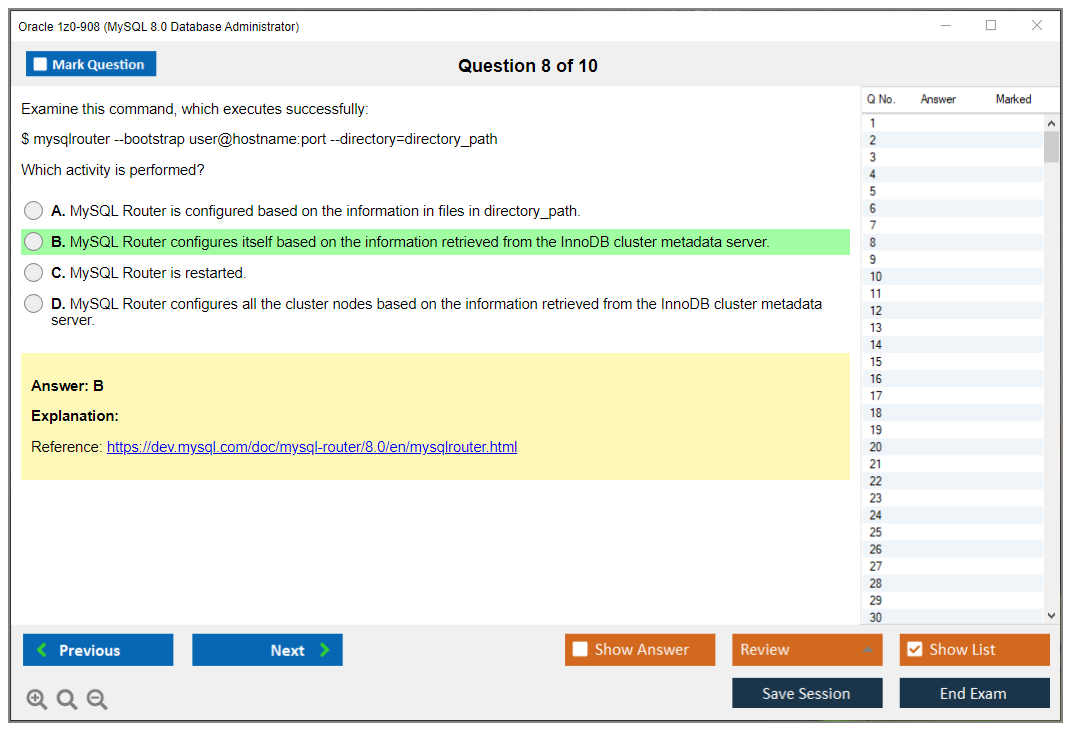
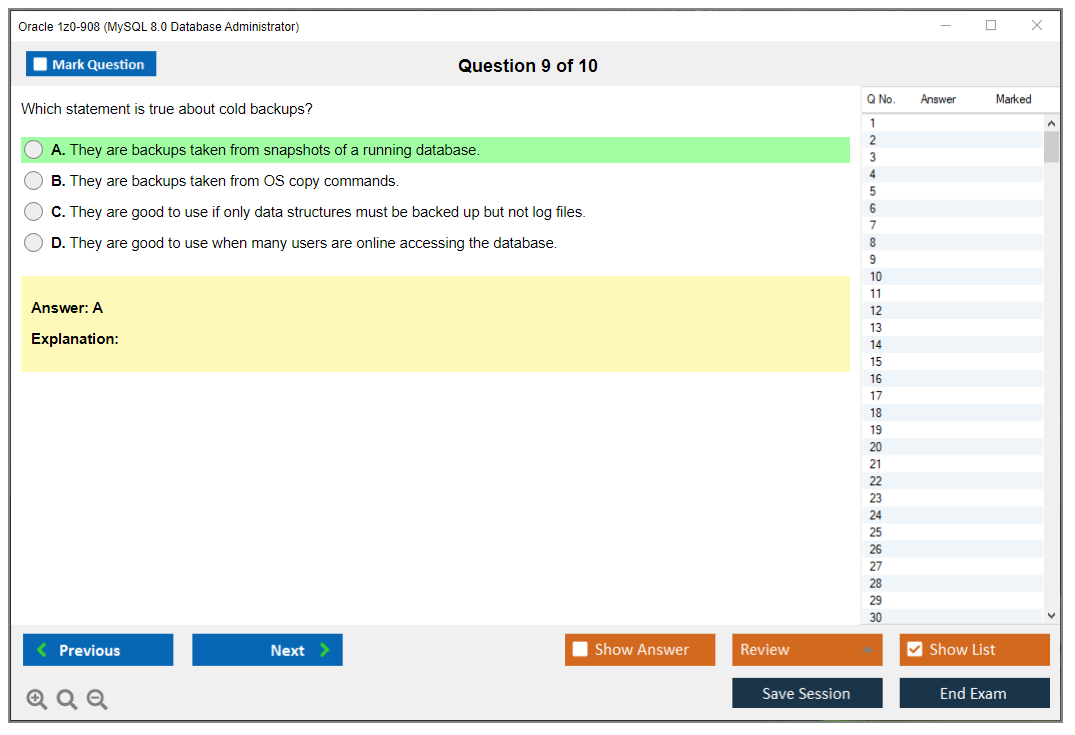
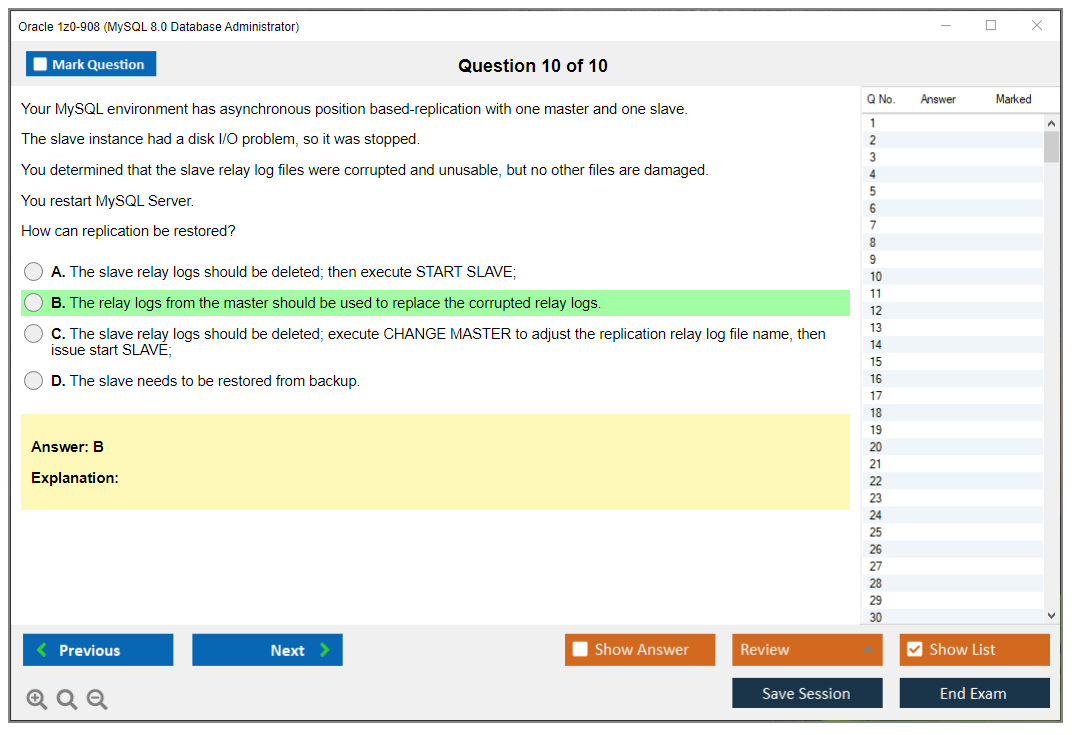
Oracle 1Z0-908 MySQL 8.0 Database Administrator Certification: Complete Exam Overview
If you're managing MySQL databases in production or thinking about leveling up your database career, the Oracle 1Z0-908 MySQL 8.0 Database Administrator certification is probably on your radar. This exam validates real-world competency in administering MySQL 8.0 environments. Not just surface stuff, but the deep expertise you need when things break at 3 AM or when your boss wants to know why that query takes 45 seconds to run.
The certification proves you can handle the full lifecycle of MySQL administration: installation and configuration, user management, backup and recovery, performance tuning, replication, high availability, and troubleshooting MySQL 8.0 systems. Really full. We're talking about the skills that keep databases running smoothly while developers are pushing code and users are hammering your infrastructure.
Who benefits most from this credential
Database administrators are the obvious audience. But the exam appeals to a broader group. System administrators transitioning to MySQL, developers who've been handed administrative responsibilities (happens more than you'd think), and IT professionals managing MySQL infrastructure all benefit from this. If you're the person who gets paged when the database goes down or when queries start timing out, this certification makes sense.
The 1Z0-908 exam objectives break down into six major domains: MySQL architecture and installation, security and user management, backup and recovery strategies, monitoring and performance optimization, replication and high availability, and ongoing maintenance tasks. Each domain reflects scenarios you'll actually encounter in production environments. Or at least that's what Oracle claims, though I'd say they're pretty accurate on this one.
Why MySQL 8.0 specifically matters
MySQL 8.0 introduced big changes from 5.7. Pretty fundamental stuff. The data dictionary's now stored in InnoDB instead of those old .frm files, DDL operations are atomic (finally), JSON support got way better, and we got window functions, common table expressions, descending indexes, and invisible indexes. If you're still thinking in 5.7 terms, you'll struggle with this exam.
The exam tests practical knowledge. You need to understand how to diagnose performance bottlenecks, recover from failures, configure replication topologies, and automate routine tasks. Oracle wants to know you can actually do the work, not just recite definitions from the manual.
InnoDB architecture and troubleshooting
InnoDB architecture and troubleshooting receives substantial coverage because InnoDB's MySQL's default and most feature-rich storage engine, handling ACID transactions, crash recovery, and multi-version concurrency control. You'll need to understand buffer pool sizing, redo logs, undo logs, doublewrite buffer, and how InnoDB manages concurrency. I spent probably 30% of my prep time just on InnoDB internals. I mean, it shows up everywhere in the exam, so you can't really avoid diving deep here. Actually, there's this weird edge case with the undo tablespace where if you're not careful about setting innodb_max_undo_log_size correctly, you can end up with bloat that's a nightmare to fix later. Found that out the hard way on a staging server once.
The certification distinguishes candidates in competitive job markets by proving hands-on competency with MySQL 8.0's advanced features including roles, authentication plugins, resource groups, and InnoDB enhancements. Employers value this. Reduces training costs and lowers risks related to database misconfigurations or security holes.
Security and real-world hardening
MySQL 8.0 administration and security topics focus on real-world scenarios: hardening installations, implementing least-privilege access, encrypting data at rest and in transit, and auditing database activity. MySQL 8.0's enhanced security features require understanding of caching_sha2_password authentication (which caused some headaches during early adoption, still does occasionally), password policies, connection encryption with TLS, data-at-rest encryption, and audit logging.
The exam tests your knowledge of MySQL utilities and tools. mysqldump, mysqlpump, MySQL Shell, MySQL Enterprise Backup, Performance Schema, sys schema, and third-party monitoring solutions. You should be comfortable jumping between these tools and knowing when to use each one.
Backup and recovery strategies
Backup and recovery in MySQL covers logical backups (SQL dumps), physical backups (file copies), incremental backups, point-in-time recovery, binary log management, and backup validation strategies. This stuff's critical. Backup failures are career-ending events, honestly. I've seen DBAs lose jobs because they assumed backups were working but never tested recovery procedures. The exam will definitely probe your understanding of different backup methods and their tradeoffs.
Replication and high availability
MySQL replication and high availability knowledge proves necessary as modern applications demand near-zero downtime. Or at least they claim to, though honestly most can tolerate a few minutes here and there. You need to understand asynchronous replication, semi-synchronous replication, group replication, and how to configure replication topologies. The exam covers failover scenarios, split-brain situations, and how to maintain data consistency across replicas. All connecting directly to real production challenges most companies running MySQL at scale face.
Performance tuning fundamentals
Performance tuning with MySQL covers query optimization, index strategy, buffer pool configuration, connection management, slow query analysis, and resource allocation for optimal throughput. The exam checks your ability to monitor database health using Performance Schema, sys schema views, INFORMATION_SCHEMA tables, error logs, slow query logs, and general query logs. You'll see questions about diagnosing slow queries, identifying missing indexes, and understanding execution plans.
Candidates must understand MySQL's client-server architecture. Connection protocols, authentication mechanisms, privilege system, storage engine differences, and transaction isolation levels. These fundamentals underpin everything else, similar to how Oracle Database Administration I and Oracle Database Administration II build on core Oracle concepts.
Exam format and scoring
The 1Z0-908 exam cost typically runs around $245 USD, though pricing varies by region and Oracle occasionally offers promotions. Keep an eye out if you're budget-conscious. You'll register through Oracle's certification portal and can take the exam at a Pearson VUE testing center or via online proctoring.
The 1Z0-908 passing score is 60%. Sounds reasonable until you realize the questions test applied knowledge rather than simple recall. The exam includes 85 questions with a 120-minute time limit. Question types include multiple choice, multiple select, and scenario-based questions where you analyze a situation and determine the correct administrative action.
Prerequisites and preparation timeline
There aren't formal 1Z0-908 prerequisites. But Oracle recommends hands-on MySQL administration experience and familiarity with Linux or Windows system administration. Realistically, you should have at least 6-12 months of MySQL experience before attempting this exam. If you're coming from other database platforms like Oracle or SQL Server, the concepts transfer but MySQL has its own quirks.
Oracle MySQL 8.0 Database Administrator exam preparation requires combining theoretical knowledge with hands-on practice in realistic scenarios. The timeline varies by experience level: seasoned MySQL DBAs may need 2-4 weeks of focused study while those newer to MySQL administration should allocate 6-12 weeks. Build a test environment. Local VM, cloud instance, whatever works. Practice installations, configurations, user management, backup procedures, replication setup, and failure recovery scenarios.
The MySQL 8.0 Reference Manual is required reading. Particularly sections on InnoDB, replication, security, and performance optimization. Oracle University offers official training courses, though they're pricey. 1Z0-908 practice tests help identify weak areas, but make sure they're updated for MySQL 8.0 features since older practice materials won't cover recent changes.
Career impact and renewal
The credential never expires. But Oracle recommends recertification as new MySQL versions release to maintain relevance and demonstrate current expertise. Certification benefits include stronger resume credibility, higher salary potential, and recognition within Oracle's certification community. MySQL remains one of the world's most popular open-source relational databases, powering applications from startups to Fortune 500 enterprises, so this certification stays relevant.
Passing the exam demonstrates ability to manage MySQL in diverse environments: on-premises servers, virtual machines, containerized deployments, and cloud platforms (AWS RDS, Azure Database, Google Cloud SQL). This flexibility matters. MySQL runs on Linux, Windows, macOS, and Unix variants, though Linux administration experience proves most valuable for most roles.
Successful candidates combine book knowledge with real-world experience troubleshooting production issues, optimizing poorly performing queries, and maintaining database availability under load. It's not a paper certification. You need actual hands-on competency to pass, and I think that's what makes it worth pursuing.
1Z0-908 Exam Cost, Registration Process, and Scheduling Options
What the 1Z0-908 certification validates
The Oracle 1Z0-908 MySQL 8.0 Database Administrator certification is basically Oracle saying, "yes, you can run MySQL 8.0 in the real world and not light it on fire." It maps to day-to-day admin work: installs, upgrades, security, users, backups, troubleshooting, and the stuff hiring managers actually ask about like MySQL replication and high availability and performance tuning with MySQL.
You're proving you understand internals too. Not kernel-hacker level, but enough InnoDB architecture and troubleshooting to explain why a query's slow, why purge is lagging, or why a disk spike shows up right after a "simple" index change. Messy. Practical. Good.
Who should take the MySQL 8.0 DBA exam
If you already babysit production MySQL, this exam fits. If you're a sysadmin who got handed databases "temporarily" two years ago, same thing. Honestly, if you're a developer who keeps getting pulled into on-call because nobody else understands backup and recovery in MySQL, you're also the target audience, whether you like it or not.
Brand-new to ops? Cool, but it's harder.
Exam price (cost) and voucher options
Let's talk money because everyone dances around it. The 1Z0-908 exam cost in the United States is $245 USD as of 2026. That's the number most people'll see, but pricing varies by country and region because Oracle has this whole global pricing structure with taxes and local adjustments that can make your friend in another country pay something that looks totally different.
Discounts exist. Not always. Oracle Certification Program'll occasionally run promotional discounts, voucher bundles, or special pricing during Oracle OpenWorld and other major tech conferences. If you're paying out of pocket, it's worth waiting a couple weeks when a big event's coming up. If your employer's paying, honestly, just schedule it and move on.
Vouchers are the normal path. Exam vouchers purchased through Oracle University can be used within one year of the purchase date, which is nice because you can buy it when budget approvals happen, then schedule when you're actually ready instead of panic-cramming for a random deadline.
For companies training teams, there're volume discount programs. Organizations buying multiple vouchers can get reduced rates for team cert pushes, and it's one of the few times corporate training procurement actually helps you instead of slowing you down with weird approval chains. Also worth knowing: Oracle Workforce Development Program sometimes offers discounted or free certification exams to students, educators, and unemployed individuals in qualifying regions. Verify eligibility because it changes, and you don't wanna plan your whole timeline around a discount that isn't available in your location.
Retakes sting. Oracle's retake policy allows candidates who fail to reschedule after a 14-day waiting period, and each retake requires buying a new voucher at standard pricing. No free second shot. Budget for that possibility if you're not consistently passing 1Z0-908 practice tests.
Where to register and schedule the exam
Registration starts in Oracle's CertView portal. You create or sign into your Oracle account, buy the voucher, and that's also where you'll later manage your certification credentials, score reports, and digital cert stuff.
After you purchase, you receive authorization codes by email. Then scheduling happens through Pearson VUE, because they're Oracle's authorized testing delivery partner. They run thousands of test centers worldwide and also support online proctoring for remote exams. Pearson is Pearson, but the workflow's predictable.
Test centers are searchable by postal code, city name, or proximity. Online scheduling shows you what's open. Time slots vary a lot by location and demand, so book 2 to 4 weeks ahead if you want a specific day or weekend slot, especially around end-of-quarter when everybody suddenly "needs" the cert.
Online proctoring's through OnVUE. You can test from home or office, but you need reliable internet, a webcam, a microphone, and a private space with no distractions. And yes, they mean private. The thing is, they'll fail you for weird stuff. Not kidding. I had a friend get flagged because his cat walked across the desk halfway through. The proctor stopped everything, made him restart the whole check-in process, and he lost twenty minutes of test time. Just lock the door.
System requirements matter. OnVUE needs Windows or Mac. Tablets and Chromebooks aren't supported. You also need a stable broadband connection and the ability to install the OnVUE software. Corporate locked-down laptops can ruin your day here, so test the system check early.
Rescheduling or cancellation must happen at least 24 hours before the exam time or you forfeit the fee. Within 24 hours, voucher loss. No exceptions you'd wanna bet on.
Passing score (and how scoring works)
People always ask about the 1Z0-908 passing score. Oracle can adjust scoring models over time, and some exams use scaled scoring, so the safest move's to check the current exam page in CertView or the Oracle certification listing right before you sit. The practical takeaway: don't aim to "barely pass." Aim to be comfortable across the objectives, because the exam'll find your weak spots.
Preliminary pass/fail shows immediately when you finish. Official score reports usually show up in CertView within about 30 minutes. Fast.
Question types, time limit, and exam delivery
Expect multiple-choice style questions and scenario-based items that feel like, "a server's doing X, which setting fixes Y without breaking Z." Test center delivery's the classic locked-down workstation vibe with proctors watching, plus scratch paper or an erasable noteboard depending on the site.
Online delivery adds the check-in ritual: 360-degree room scan, desk clear except computer and mouse, no extra monitors, no phone, no notes. They're strict because Oracle maintains exam confidentiality with an NDA you sign before testing, and sharing questions or detailed content descriptions is prohibited. Don't be that person posting "memory dumps." It's career poison.
Difficulty factors (hands-on admin tasks, troubleshooting, tuning)
Is the MySQL 8.0 DBA exam hard? It can be. The hard part's that it expects admin instincts, not memorized trivia, so if you've never actually restored a backup at 2 a.m. or chased down a replication lag issue, the questions feel like they're written in a different language.
Real work topics show up: MySQL 8.0 administration and security, tuning, permissions, logs, and how choices affect reliability. There's usually more than one "kinda right" option, and you've gotta pick the one that best fits the constraints given. That's what makes it annoying.
Who finds it easiest vs hardest (experience benchmarks)
Easiest: DBAs or ops folks with 6 to 18 months of MySQL 8.0 production exposure, especially if you've touched backups, replication, and performance triage.
Hardest: people who only know SQL and've never owned the server. Also folks who learned on older MySQL versions and assume defaults didn't change. MySQL 8.0 has opinions.
Installation, configuration, and MySQL architecture basics
You should understand install patterns, config file behavior, key server variables, and basics of how MySQL's structured. InnoDB basics matter. So do common startup and upgrade gotchas.
User management, authentication, and security hardening
This is where policy meets reality. Accounts, roles, privileges, authentication plugins, password policies, and secure connections. You don't need to be a full security engineer, but you should know what "reasonable hardening" looks like.
Backup, restore, and disaster recovery planning
Backups aren't optional. Expect concepts around logical vs physical backups, restore workflows, and validation. This is the section that bites people who've only ever run a backup command and never tested a restore.
Monitoring, troubleshooting, and performance tuning
Slow queries, indexing, EXPLAIN, metrics, logs, and symptoms-to-cause thinking. Performance tuning with MySQL is less about magic parameters and more about reading what the server's telling you.
Replication, high availability, and scalability concepts
Replication types, failure modes, lag, and basic HA thinking. You don't need to design a global system from scratch, but you should understand tradeoffs and what breaks first.
Maintenance tasks (logs, upgrades, metadata, automation)
Logs, routine housekeeping, upgrades, metadata visibility, and the stuff you script because you're tired of doing it manually. Fragments. But important.
Recommended MySQL and Linux/Windows admin experience
There're no hard 1Z0-908 prerequisites like "must have another cert first," but you want experience. My opinion: at least a few weeks of hands-on admin labs, and ideally some exposure to Linux service management, file permissions, and basic networking.
Helpful prior knowledge (SQL, networking, storage, security)
SQL basics, TCP/IP basics, what latency looks like, how disks behave, and how access control works. If you don't know what DNS's doing, replication troubleshooting gets weird fast.
Official Oracle University training and documentation
If you like structured learning, Oracle University training's aligned with the exam. Pair it with the MySQL docs because Oracle courseware alone can feel sanitized compared to production reality.
MySQL 8.0 Reference Manual sections to prioritize
Prioritize security, replication, backup/restore tooling, and InnoDB sections. Server variables and troubleshooting guides too. Skim the rest. Read the parts you keep "meaning to read later." Later's now.
Labs: build a practice environment (local, VM, cloud)
Build a small lab. Local Docker's fine, a VM's better, cloud is nice if you wanna simulate networks. Practice creating users, rotating passwords, setting up replication, doing a backup, breaking it, restoring it, then confirming your data's actually consistent. That last part matters.
How to choose reliable 1Z0-908 practice exams
Pick practice tests that explain answers. If a practice bank only gives you A, B, C, D with zero rationale, it's probably junk. Also, if it looks like leaked questions, avoid it. Besides being unethical, it trains you badly.
Practice test strategy (timed sets, review notes, weak-area loops)
Do timed sets, review every miss, write a tiny note, then retest your weak areas. Keep it boring. Keep it honest. That's how you pass.
Fast-track plan (experienced DBAs)
Week 1: review 1Z0-908 exam objectives, run two full practice exams, and build a checklist of weak topics like replication failover steps or backup verification. Week 2: labs only, then one more timed exam near the end.
Standard plan (newer administrators)
Weeks 1 to 2: read docs and a MySQL 8.0 DBA certification study guide if you've got one, do small labs daily. Weeks 3 to 4: heavier labs, plus practice tests. Weeks 5 to 6: tighten gaps and do full-length exams under time pressure.
Final-week checklist (objectives review plus full practice exams)
One full practice exam. One replication lab. One backup-restore lab. Confirm your Pearson VUE setup if you're testing online. Sleep.
Renewal requirements and recertification options
People ask about 1Z0-908 certification renewal. Oracle's recert policies can change by program, so check CertView for the current rules tied to this credential. Some certs stay valid without renewal, others get updated expectations when new versions roll out.
Keeping skills current (MySQL 8.x feature updates)
Even if the cert doesn't "expire," your skills can. Keep up with MySQL 8.x release notes, security changes, and replication improvements, and keep practicing the core ops motions so you're not rusty when production gets spicy.
Is 1Z0-908 worth it for MySQL DBAs?
If you want a credential that maps to real admin work, yes. If your job market values Oracle-branded certs, double yes. If your employer doesn't care about certs at all, it's still useful as a structured way to force yourself through the boring but necessary MySQL topics.
Can I pass 1Z0-908 using only self-study?
Yep. Docs, labs, and good Oracle MySQL 8.0 Database Administrator exam preparation with practice exams's enough. The catch is discipline. Most people don't fail from lack of resources, they fail from skipping labs.
What score do I need to pass 1Z0-908?
Check the current listing in CertView or the Oracle exam page for the official 1Z0-908 passing score. Don't rely on old blog posts, including mine, because Oracle updates things.
What's the best way to practice replication, backups, and tuning?
Build a lab and break it on purpose. Set up replication, introduce lag, fix it. Take backups, delete a table, restore it, confirm row counts. For tuning, capture a slow query log, add an index, and measure the difference. That muscle memory's what makes exam questions feel obvious instead of tricky.
1Z0-908 Passing Score, Exam Format, and Question Structure
What you're actually dealing with: the passing threshold
The 1Z0-908 passing score sits at 66%. Roughly 40 correct answers out of 60 questions Oracle throws at you. But here's the thing: Oracle doesn't just add up your correct answers and call it a day. They use scaled scoring which sounds fancy but really just means they're accounting for the fact that some questions are harder than others. Your exam might have a slightly different mix of questions than someone else's, so Oracle adjusts the scoring to keep things fair across different test forms.
Look, this is why you won't find Oracle publishing exact raw score requirements. The threshold might technically be 39 correct on one version and 41 on another, depending on how the psychometric analysis shakes out. They're measuring competency, not just counting check marks. Honestly it makes sense when you think about it. A test with five nightmare scenario questions shouldn't have the same raw passing score as one with easier recall questions, right?
How the exam format actually works
You get 60 multiple-choice questions. And 105 minutes to finish them. That's 1 hour and 45 minutes, which breaks down to about 1.75 minutes per question if you're doing the math, though not gonna lie that sounds like plenty of time until you hit question 23 and realize it's a three-paragraph scenario about replication lag with a config file excerpt that you need to parse.
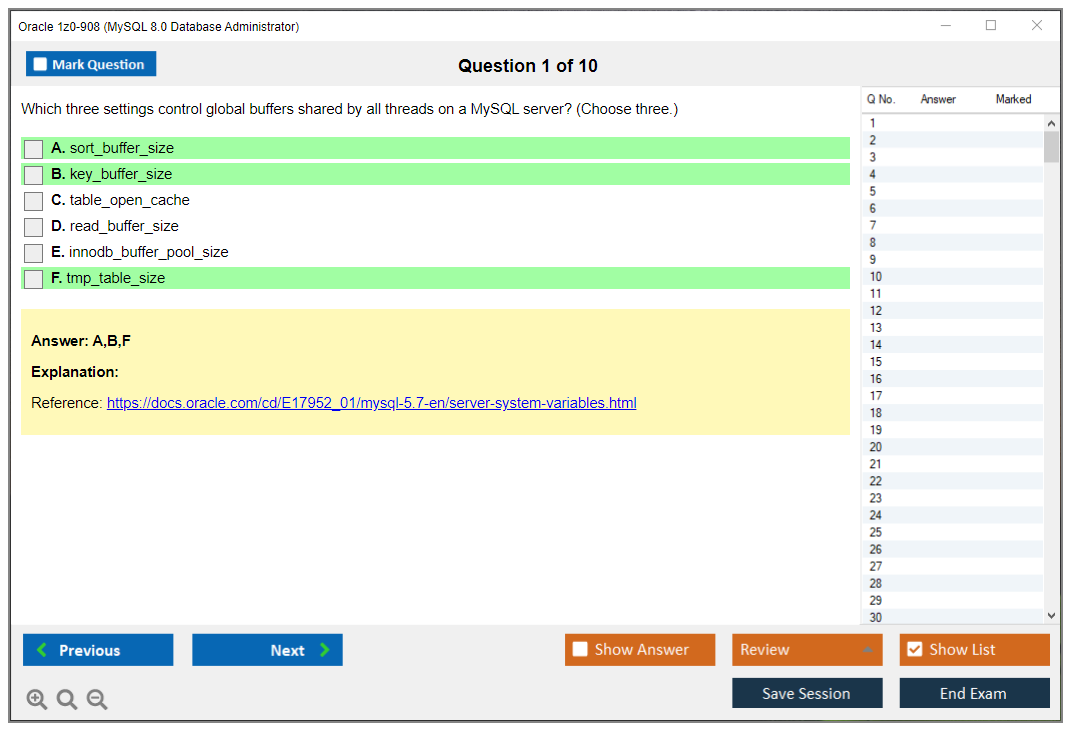
The multiple-choice format includes both single-answer questions (pick one from four or five options) and multiple-answer questions where you might need to select two, three, or however many the question specifies. Those multiple-answer ones are brutal because partial credit isn't a thing. You either nail all the correct options or you get zero points for that question. The exam explicitly tells you how many to choose, like "Choose three" or "Choose all that apply," so at least you know what you're dealing with.
I mean, the 1z0-908 Practice Exam Questions Pack for $36.99 becomes pretty valuable when you realize how these multiple-answer questions work. You've gotta practice identifying not just the right answers but ALL the right answers.
Question distribution across domains
Performance monitoring and optimization dominates the exam at 25% of the content. Makes sense. That's what you're doing half your day as a MySQL DBA anyway. Security comes in second at 20%, then you've got installation and configuration, backup and recovery, and replication and high availability each at 15%. Maintenance tasks round things out at 10%.
That 25% performance weighting? You're looking at maybe 15 questions on monitoring, troubleshooting, and tuning. You need to know InnoDB internals, understand query optimization, recognize slow query log patterns, interpret EXPLAIN output, and identify bottlenecks from symptoms alone. This isn't just "which command shows processlist" stuff. It's "here's query output showing 500ms execution time, what's causing the problem and how do you fix it" scenarios.
The security domain at 20% covers GRANT statements, authentication plugins, SSL/TLS configuration, role management, and privilege escalation prevention. Backup and recovery questions test your knowledge of mysqldump versus mysqlpump versus binary backups, point-in-time recovery procedures, and disaster recovery planning. Oh, and if you've worked with Oracle database administration before, you might find the 1z0-082 or 1z0-083 Oracle Database Administration exams follow similar patterns, though MySQL obviously has its own quirks.
What the questions actually look like
Scenario-based questions dominate this exam. You'll see realistic DBA situations where you need to diagnose problems from symptoms, select appropriate tools, or identify best solutions. Some questions drop a config file excerpt on you (maybe 15 lines from my.cnf showing InnoDB buffer pool settings, query cache configuration, and connection limits) then ask what's misconfigured or what would improve performance.
Command-line syntax appears frequently. You need to know the difference between mysqldump options, understand replication setup commands, recognize correct GRANT syntax, and identify proper backup procedures. Questions might show you actual command output from SHOW ENGINE INNODB STATUS or SHOW SLAVE STATUS and ask you to interpret what's happening.
Log file samples pop up too. You might see binary log positions, error log entries about crashed tables, or slow query log excerpts with query times and lock waits. The exam expects you to read these like you would in production and make decisions based on what you're seeing. Kind of reminds me of that time I spent two hours staring at a slow query log at 3am trying to figure out why a reporting query suddenly started timing out after a minor schema change. Turned out to be a missing index on a join column that worked fine with 10,000 rows but fell apart at 500,000. Anyway.
MySQL-specific terminology matters here. The differences between statement-based and row-based replication, how GTID replication works versus traditional replication, MyISAM versus InnoDB characteristics, the behavior of different isolation levels. This stuff comes up constantly. You can't just know "MySQL has replication," you need to understand how semi-synchronous differs from asynchronous, what happens during failover, and how to diagnose replication lag.
Testing mechanics and strategies
No external references allowed during the exam. No documentation, no notes, no Google searches whatsoever. Everything comes from what you've memorized and actually understand. They don't provide a calculator either, but honestly you won't need one. This exam tests concepts and troubleshooting, not math skills.
The interface lets you mark questions for review and work through backward and forward before final submission. Smart test-takers mark the tough ones, knock out the easier questions first to bank those points, then circle back. You've got time for this strategy with 105 minutes, but not unlimited time, y'know? Spending five minutes on a single question means you're stealing time from three others.
Unanswered questions get zero points. So guess if you're running out of time. An educated guess based on eliminating obviously wrong answers beats a blank every single time. Sometimes you can rule out two options immediately, giving you a 50/50 shot on what remains.
Oracle provides a 15-minute tutorial before your exam clock starts. This covers the interface, navigation buttons, how to mark questions, that sort of thing. It doesn't count against your 105 minutes, so don't skip it. Get comfortable with the system before the real questions start.
The exam experience and what happens after
Once you start, you can't pause except for pre-approved accommodation breaks. The timer keeps running. If you just sit there staring at question 37 wondering what you've done with your life, well, that's on you. Oracle uses computer-based testing with point-and-click interfaces, so you're selecting radio buttons and checkboxes, not typing commands. But understanding syntax is still key because you need to recognize correct commands when you see them.
Results appear immediately after you submit. Pass/fail status, your percentage score, and a breakdown showing how you performed in each exam objective domain. This breakdown's actually useful. If you fail and see you bombed the replication section, you know exactly what to study before your retake.
The exam content stays confidential. Under Oracle's non-disclosure agreement. You can't share specific questions publicly or discuss them in detail online, period. Oracle periodically updates the exam to reflect new MySQL 8.0 features, deprecated functionality, and evolving best practices. Sometimes they run beta exams before major revisions, offering discounted pricing if you're willing to test preliminary content and wait longer for results.
Look, scaled scoring and scenario-based questions mean you need actual hands-on experience, not just memorization. The thing is, the 1z0-908 Practice Exam Questions Pack helps, but combine it with real MySQL administration work. Build test environments. Break things, fix them, practice backup and recovery until you can do it in your sleep. The 66% passing score might sound reasonable until you're staring at question 48 about binary log rotation during a GTID replication topology change. That's when practical experience saves you.
Understanding 1Z0-908 Difficulty: Is the MySQL 8.0 Database Administrator Exam Hard?
What this certification actually proves
Look, the Oracle 1Z0-908 MySQL 8.0 Database Administrator certification is Oracle's way of saying you can actually handle MySQL 8.0 in the wild. Not just classroom scenarios or sanitized tutorials, but real production admin work where databases decide to implode at ungodly hours and you're the one holding the pager.
It validates you're capable of installing and configuring MySQL, managing users, locking down security, executing backups, recovering data when everything goes sideways, monitoring system health, tuning performance bottlenecks, and keeping replication from turning into a disaster. Honestly, that's exactly why folks keep circling back to the same anxious question: Is the MySQL 8.0 Database Administrator exam hard? Yeah, for most people it absolutely is. Not because the topics are particularly exotic or theoretical, but because the exam assumes you've actually rolled up your sleeves and done the job, troubleshot real issues, made real mistakes, learned from real fire drills.
Already working with MySQL servers regularly? This credential makes sense. I mean, if your MySQL experience tops out at "I wrote SELECT statements in an application layer," sure, you can still pass. But let's be real, you're signing up for a much steeper learning curve with a lot more operational complexity than you're probably expecting right now.
Developers transitioning into DBA roles often get blindsided by the operational minutiae. Backups that actually need to restore correctly. Replication that must fail over smoothly. Capacity planning. Boring, unsexy details. The exam loves those details.
Pricing reality and voucher talk
People constantly ask: How much does the Oracle 1Z0-908 exam cost? Oracle adjusts pricing by region and program structure, so I'm not gonna pretend there's one universal number that stays frozen forever. Check the Oracle certification site specific to your country and verify pricing through your testing provider portal before you commit any money.
Vouchers sometimes surface through employers, Oracle University promotional cycles, or bundled training packages. If your company already subsidizes learning initiatives, ask about that option first. Quick win.
Booking the test without overthinking it
Scheduling follows Oracle's standard flow through their testing partner network. Pick a date, choose between online proctoring or a physical test center, show up with proper ID, and whatever you do, don't install random software on your testing machine the night before. I mean it, online proctoring environments can be ridiculously finicky about system configurations and running processes.
Scoring and format basics
Next common question: What is the passing score for the 1Z0-908 exam? Oracle publishes exam details on the official page, including the 1Z0-908 passing score when they choose to make it public, plus any format updates or policy changes. Treat third-party numbers floating around forums as "maybe accurate" unless you personally verify them against Oracle's current documentation.
Format wise, you're dealing with 60 questions in 105 minutes. That works out to roughly 1.75 minutes per question, which sounds generous until you hit the scenario-based questions that require actual operational thinking. Time pressure becomes very real very fast. Short factual questions help your pace. Complex scenario questions absolutely hurt. And you definitely won't have time to stare at two "kinda right" answers for five minutes while you debate philosophically.
Question style and delivery
Multiple choice dominates. Expect "best answer" traps everywhere. Two options can both be technically correct under certain conditions, but one represents the best practice given the specific symptoms or constraints described in the scenario, and that's the entire game Oracle's playing with you.
Command syntax shows up frequently enough to matter, though not constantly. mysqldump options. mysqlpump features. MySQL Shell functionality. Administrative SQL that needs to be exactly right. Little things. Annoying things. Fragments.
Why difficulty varies so much
So, is the MySQL 8.0 Database Administrator exam hard? Difficulty swings wildly depending on hands-on experience levels and operational exposure. Seasoned DBAs with production battle scars usually call it moderately challenging but manageable. Newcomers or folks with mostly theoretical knowledge call it really difficult. Both groups are completely right from their perspectives.
This exam fundamentally assumes you've managed production MySQL environments under real-world constraints and pressures. Not a toy Docker container you spun up once for a tutorial, but actual systems with actual users and actual consequences when things break. The thing is, it expects you to recognize what "replication lag combined with rising CPU utilization" smells like in practice, what you check first, what you change last, and what you absolutely never touch during peak traffic hours unless you really enjoy pain and angry user tickets.
Linux and Unix administrators usually feel more comfortable because MySQL admin work is heavily command-line oriented and log-file intensive. Windows admins can absolutely pass with flying colors, but the service management differences, path conventions, and permission model variations add extra learning overhead you'll need to account for.
DBAs migrating from Oracle Database, PostgreSQL, or SQL Server have plenty of transferable architectural concepts, but MySQL has its own vocabulary quirks and operational oddities that don't quite map directly. You know that frustrating feeling when you "almost" know something because it's similar to what you already understand, but the details are just different enough to trip you up? That.
InnoDB internals are a pain on purpose
InnoDB architecture and troubleshooting is where a significant number of candidates get really humbled, sometimes brutally. Buffer pool behavior under various workload patterns. Redo logs versus undo logs. Doublewrite buffer mechanics. Change buffer optimizations. Adaptive hash indexing. The exam wants considerably more than textbook definitions or surface-level understanding.
You need to know what symptoms actually look like in practice and which configuration knobs matter for specific situations. For example, if the workload is write-heavy and you're observing checkpoint pressure or transaction stalls, you should have informed opinions about redo log sizing strategies and flush behavior tuning. And if you've never had to interpret InnoDB status output during a production incident under actual stress conditions, honestly, the questions feel like they're written in a completely different language that you never studied.
Performance questions feel like real incidents
Performance tuning with MySQL gets significantly harder when the scenarios get messy and complex. Slow queries piling up, high CPU utilization with no obvious cause, lock contention cascades, replication lag creeping upward, "everything looks fine in the metrics but users are complaining loudly." You're expected to pick the right diagnostic tool quickly: EXPLAIN, performance schema instrumentation, sys schema views, SHOW STATUS, slow query log analysis, maybe optimizer hints in specific contexts.
One thing to watch carefully: they love questions where adding an index seems obviously right at first glance, but the actually better answer involves changing the query pattern itself, fixing cardinality estimation issues, or recognizing a transaction isolation or locking problem that an index won't solve. If you've only ever tuned performance by randomly adding indexes until things got faster, you're gonna have a really bad time.
Security details are not optional
MySQL 8.0 administration and security comes up with more technical depth than most people expect going in. Authentication plugins like caching_sha2_password versus mysql_native_password and the practical implications of switching between them. Role-based access control implementation. Privilege system details that feel unnecessarily petty until you're the one who accidentally granted excessive permissions and created a security incident.
Encryption settings, TLS configuration best practices, and "what's the right secure default configuration" type questions pop up regularly too. This isn't philosophical security theory. It's practical configuration reality that affects production systems.
Backup and recovery is where theory dies
Backup and recovery in MySQL is really hard because you absolutely must understand operational trade-offs in real-world contexts. Logical versus physical backup approaches. Online versus offline backup methods. Full versus incremental backup strategies. And point-in-time recovery procedures that are actually believable and executable under pressure.
Let me be blunt here. If you've never actually restored from binary logs to a specific timestamp under realistic conditions, you're basically going to guess at these questions. And guessing on complex scenario questions is extremely expensive in terms of your overall score. The exam particularly likes asking what you do first in a recovery scenario, what you must have enabled ahead of time for certain recovery options to even be possible, and what breaks transactional consistency if you skip steps.
I once watched a colleague spend forty-five minutes in a recovery drill trying to remember whether to stop replication before or after applying the binary logs, and it wasn't because he was incompetent. He just hadn't done it enough times under time pressure for the procedure to stick. That's the difference between passing and failing this thing.
Replication and high availability gets broad fast
MySQL replication and high availability represents another significant difficulty spike that catches people off guard. Source-replica topology setups, GTID-based replication mechanics, semi-synchronous replication configurations, group replication architectures, multi-source replication scenarios, plus all the operational stuff like identifying lag root causes and executing failover procedures correctly without data loss.
The "best answer" angle bites particularly hard here too. Lots of different topologies technically work for a given requirement, but the exam wants the specific one that matches all the constraints mentioned in the prompt, not just the one you're most familiar with or prefer personally. Read carefully. Then read again.
MySQL 8.0-only changes trip up older admins
If you're coming from 5.7 or earlier versions, MySQL 8.0-specific changes add noticeable friction and knowledge gaps. Data dictionary architectural changes. Atomic DDL operations. Roles as first-class objects. Resource groups. Invisible indexes. Also the query cache being completely removed in 8.0, which is a classic gotcha that shows up in configuration questions when candidates expect options that literally don't exist anymore.
Configuration parameters matter significantly. my.cnf and my.ini settings across different platforms. Connection limits, buffer pool sizes, InnoDB tuning variables that actually affect performance. And you need to know what not to look for anymore because it was deprecated or removed.
Monitoring and troubleshooting expects tool fluency
Monitoring questions expect you to be really comfortable with Performance Schema instrumentation, sys schema views, INFORMATION_SCHEMA tables, and interpreting their outputs under various conditions. Not just "what is performance schema conceptually," but more like "which specific view or query helps you confirm this particular bottleneck type in the shortest time."
Troubleshooting is about systematic thinking processes. Read error messages carefully. Check relevant logs. Use SHOW STATUS and SHOW VARIABLES appropriately. Identify actual root cause rather than surface symptoms. That mental diagnostic flow is fundamentally what Oracle is testing throughout.
How long prep takes (realistic timelines)
Candidates with 2+ years of hands-on MySQL administration experience usually find the exam challenging but ultimately passable with 2 to 4 weeks of focused, deliberate study and lab practice. Short daily sessions, every day consistently, labs absolutely included because reading alone won't cut it.
Less than a year of experience, or mostly theoretical knowledge? Expect 6 to 12 weeks of preparation time. Not particularly fun, honestly. But totally doable if you commit. Build a proper lab environment. Break replication intentionally. Practice restore procedures until you stop sweating nervously.
Study materials that actually help
People frequently ask: What are the best study materials and practice tests for 1Z0-908? I've got opinions here. The MySQL 8.0 Reference Manual combined with extensive lab work beats most "study guide only" approaches by a significant margin, because the exam is fundamentally operational and hands-on rather than purely theoretical or memorization-based.
A MySQL 8.0 DBA certification study guide can definitely help you organize the 1Z0-908 exam objectives into a coherent study plan, but it won't replace actual command-line repetitions and real troubleshooting practice under realistic conditions. For practice testing, I personally like doing timed question sets because 105 minutes evaporates fast under pressure. If you want something specifically targeted, the 1z0-908 Practice Exam Questions Pack is a decent way to pressure-test knowledge recall and identify weak spots, and it's currently listed at $36.99. Use it like a diagnostic tool to find gaps, not as a crutch to memorize answers mindlessly.
Practice tests without fooling yourself
1Z0-908 practice tests are really useful when you meticulously review every single miss and then recreate the scenario in your lab environment to understand why you got it wrong. If you just memorize correct answers without understanding the underlying operational reasoning, you'll get absolutely wrecked by slightly reworded questions that test the same concept from a different angle.
My usual loop is simple. Take a timed 20-question block, no notes allowed, just go. Review wrong answers deeply, then physically reproduce one or two scenarios in a lab environment, especially backup procedures or replication configurations, because that's where understanding solidifies. Update your personal notes with lessons learned, then retest that same material later to verify retention.
If you want a one-stop practice pack to maintain that testing cadence consistently, the 1z0-908 Practice Exam Questions Pack can fit that need effectively, and I've definitely seen people use it well when they treat it as "find my weak spots" rather than "memorize to pass."
A 2 to 6 week plan that doesn't waste time
Fast-track plan for experienced DBAs who already know their way around production systems: Week 1 is objectives mapping plus MySQL 8.0-only features that differ from previous versions. Week 2 is intensive labs for backup/recovery procedures and replication topologies, because those topics are high-value and high-miss at the same time. Week 3 is performance schema deep dive, InnoDB internals review, and full timed practice exams under realistic conditions.
Standard plan for newer administrators or folks transitioning roles is necessarily slower and more methodical. Spend an entire week just on installation/configuration basics, service management across platforms, and file layout understanding. Another week dedicated to users, roles, authentication plugins, and TLS configuration. Then allocate two full weeks on backup/recovery and replication because they really take repeated practice to internalize. Add tuning and monitoring topics after you can reliably keep the database alive and healthy.
Final week before exam day: Full practice exams, strictly timed. Fix any remaining syntax gaps. Re-read the 1Z0-908 exam objectives list and honestly check off items you can execute without searching or hesitation. If you're using the 1z0-908 Practice Exam Questions Pack, this is where it earns its value, because you'll feel the time pressure and you'll see exactly what topics you still hesitate on.
Prereqs people ignore
Official 1Z0-908 prerequisites are not usually strict gatekeeping requirements, but the practical prerequisite is crystal clear: you should be really comfortable administering MySQL databases and the operating system they run on, not just theoretically familiar but actually comfortable under pressure.
Helpful prior knowledge includes SQL fundamentals beyond basic queries, networking basics like TCP/IP and DNS, storage and filesystem concepts including I/O patterns, and security concepts like TLS certificates and least privilege principles. If those foundational areas are weak, you'll be patching knowledge holes while you study for the exam, which significantly extends your timeline.
Renewal and staying current
People also frequently ask about 1Z0-908 certification renewal policies and requirements. Oracle's policies change periodically, so verify your specific certification's validity period and recertification rules directly on Oracle's official site rather than relying on outdated information from forums or third-party sources. Don't assume it's a lifetime credential.
Skill-wise, keep current with MySQL 8.x changes as they're released in minor versions. Minor version updates add behavioral changes, performance improvements, and security default adjustments that affect real-world administration. The exam is MySQL 8.0 oriented specifically, but your actual job won't freeze in time at one version forever.
Quick FAQs people keep searching
What are the objectives covered in Oracle 1Z0-908? Installation and configuration procedures, security implementation, backup and recovery strategies, monitoring and troubleshooting methodologies, performance tuning techniques, replication and high availability architectures, plus routine maintenance tasks like log management and upgrade procedures.
Can I pass using only self-study? Yes, absolutely. But only if your self-study approach includes extensive hands-on labs and practical work. Reading study guides alone is definitely not enough, honestly, no matter how thoroughly you read or how good your theoretical understanding becomes.
Is 1Z0-908 worth it? If you're targeting a MySQL DBA role or you already have one and need a credential that signals hands-on administrative ability to employers or clients, it's absolutely worth considering seriously.
What's the best way to practice replication, backups, and tuning? Build a proper two-node replication lab environment, intentionally break it in various ways, fix it systematically, then practice restore procedures with binary logs until you can execute point-in-time recovery without panicking or constantly referencing documentation. Then layer on tuning practice: slow query log analysis, EXPLAIN output interpretation, index strategy, and performance schema views for bottleneck identification. Repeat until it becomes second nature.
Full 1Z0-908 Exam Objectives and Domain Breakdown
Six exam domains form the complete MySQL 8.0 administration blueprint
The 1Z0-908 exam objectives break down into six weighted domains that mirror real-world MySQL administration workflows. Installation and Configuration takes 15%, Security grabs 20%, Backup and Recovery gets 15%, Monitoring and Troubleshooting claims 20%, Optimization hits 15%, and High Availability rounds out the final 15%. These splits actually reflect what you'll spend time doing as a DBA, not just arbitrary categories someone dreamed up.
Installation and Configuration might seem basic at 15%, but it's the foundation for everything else that comes after. You've gotta know binary installations versus source compilations, which most people skip these days unless they're doing something really custom or niche. Package managers like yum on Red Hat flavors, apt on Debian/Ubuntu systems, and rpm direct installations all behave differently with dependency handling and default configurations. The differences matter more than you'd think. Windows folks deal with MySQL Installer which has its own quirks around service setup and path configuration that can drive you nuts if you're not familiar.
The configuration file hierarchy trips people up constantly. On Linux and Unix you're dealing with /etc/my.cnf, /etc/mysql/my.cnf, ~/.my.cnf, and the datadir my.cnf. MySQL reads them in a specific order where later files override earlier ones. That's important because you might set something globally and wonder why it's not working when a user-specific config is overriding it. Windows uses my.ini typically in the installation directory or ProgramData. Variable scoping between global and session levels matters because changing a global variable doesn't affect existing sessions unless you also set session-level. Some variables require server restarts while others apply on the fly.
Actually, I spent three hours once debugging a connection timeout issue that turned out to be a stale my.cnf in someone's home directory. Nobody thought to check there first.
MySQL 8.0 architectural changes you need to understand
MySQL 8.0's transactional data dictionary stored in InnoDB tables represents a massive departure from the old .frm, .MYD, and .MYI file-based metadata system. This isn't just trivia. It affects crash recovery, atomic DDL operations, and how you troubleshoot metadata corruption when things go sideways. The system databases like mysql, information_schema, performance_schema, and sys all serve distinct purposes that the exam tests in depth.
Client-server model mechanics include connection establishment, thread handling (one thread per connection in traditional mode), thread pool plugins for high-concurrency scenarios, and how connection limits interact with operating system resources. Storage engine architecture covers pluggable engines where InnoDB dominates for transactional workloads, MyISAM for read-heavy legacy apps, and specialty engines like MEMORY and CSV for specific use cases.
Server startup procedures go beyond just "service mysql start." You need to know mysqld_safe wrapper scripts that add monitoring and automatic restart capabilities, systemd unit files on modern Linux distributions, init.d scripts on older systems, and safe mode startups with --skip-grant-tables for password recovery or --skip-networking for security during maintenance.
Security domain at 20% weight demands hands-on authentication experience
MySQL 8.0 administration and security stresses the shift to caching_sha2_password as default authentication versus the older mysql_native_password plugin. Creating users requires understanding authentication plugin selection, host wildcarding (which gets complex with IP ranges and DNS resolution), and password policy enforcement through validate_password component with configurable strength levels that you can adjust based on organizational requirements.
The privilege system operates at five distinct levels. Global privileges affect all databases. Database-level privileges target specific schemas. Table-level controls access to individual tables. Column-level provides granular field restrictions. Routine-level governs stored procedure and function execution. The GRANT and REVOKE syntax has details around WITH GRANT OPTION allowing privilege delegation and whether FLUSH PRIVILEGES is necessary after direct privilege table manipulation versus using GRANT statements.
Role-based access control in MySQL 8.0 lets you bundle privileges into named roles like 'app_developer' or 'reporting_user', assign these roles to multiple users, and even create role hierarchies where roles inherit from other roles. Pretty powerful stuff. Default roles activate automatically on connection while users can switch between assigned roles during sessions. This dramatically simplifies administration when you've got dozens of users needing identical permissions.
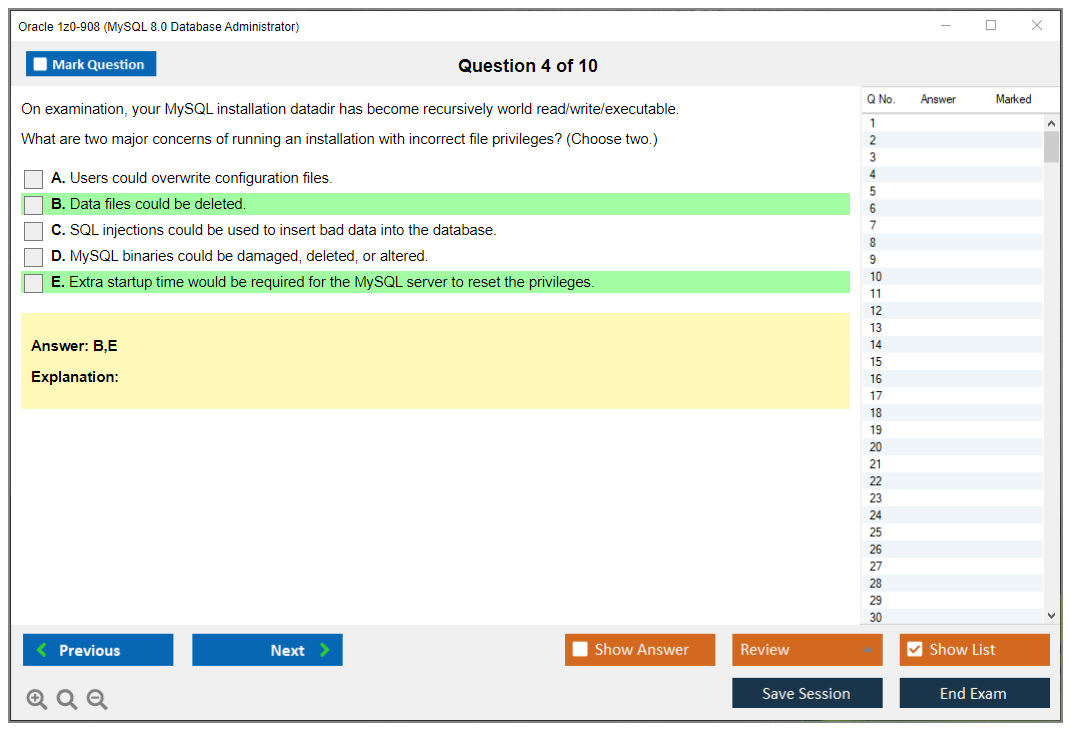
Security hardening checklist items include running mysql_secure_installation script, removing anonymous user accounts that allow passwordless local connections, restricting root to localhost connections only, dropping the test database that has permissive access, and configuring host-based firewall rules to limit MySQL port 3306 exposure. Encryption spans data-at-rest using InnoDB tablespace encryption with keyring plugins, redo log and binary log encryption, and data-in-transit protection through TLS/SSL certificate configuration requiring X.509 certificates.
Backup strategies split between logical and physical approaches
Backup and recovery in MySQL logical methods center on mysqldump which produces SQL statements to recreate database structures and data. Slow for huge databases but highly portable across MySQL versions and platforms. The newer mysqlpump offers parallelism with multiple threads dumping different databases at once, though it's got limitations around certain object types. SELECT INTO OUTFILE exports table data to delimited text files but requires FILE privilege and careful character set handling.
Physical backups copy actual data files. They include MySQL Enterprise Backup for hot backups of running InnoDB tables, file system snapshots using LVM on Linux or storage array snapshots in SAN environments, and manual file copies after clean shutdown with mysqladmin shutdown or service stop. Binary log management for point-in-time recovery requires understanding log rotation, purging old logs to manage disk space, and replaying binary logs from backup restoration point up to failure timestamp or specific transaction position.
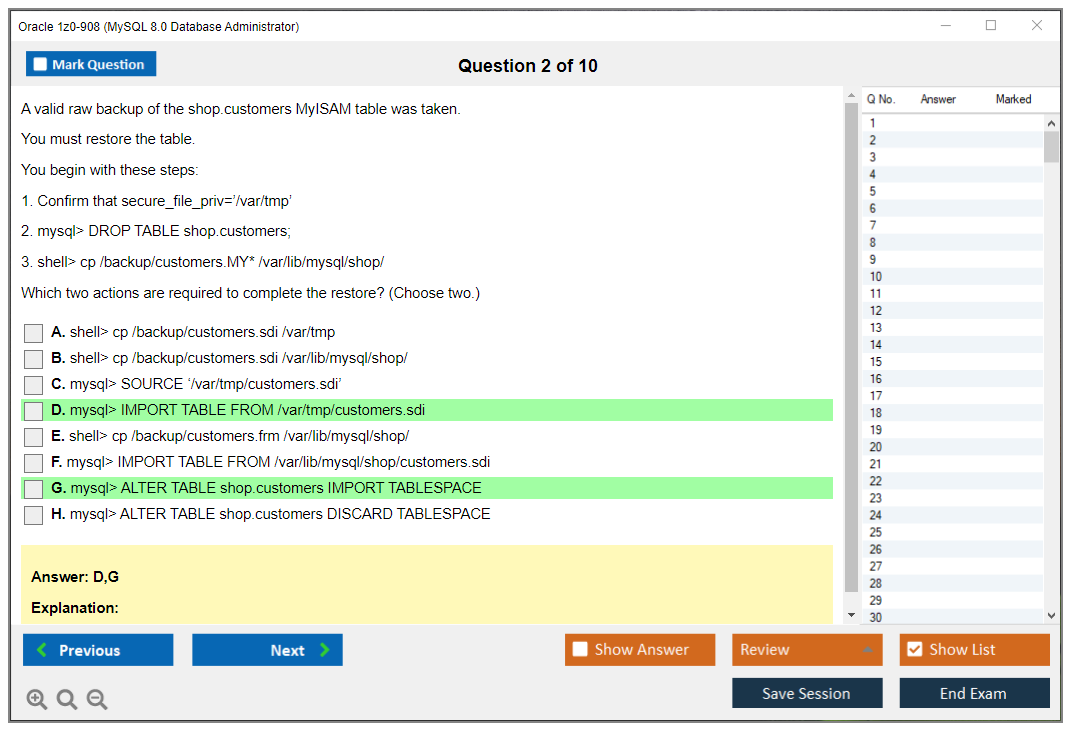
Recovery procedures test your ability to restore full backups, apply incremental binary logs, handle partial restores of specific databases or tables, and perform disaster recovery when the entire MySQL server is lost. The exam throws scenarios like corrupted InnoDB tablespaces requiring tablespace discard and import operations, or recovering from accidental DROP TABLE statements using binary log event extraction.
Monitoring domain covers performance schema and system metrics
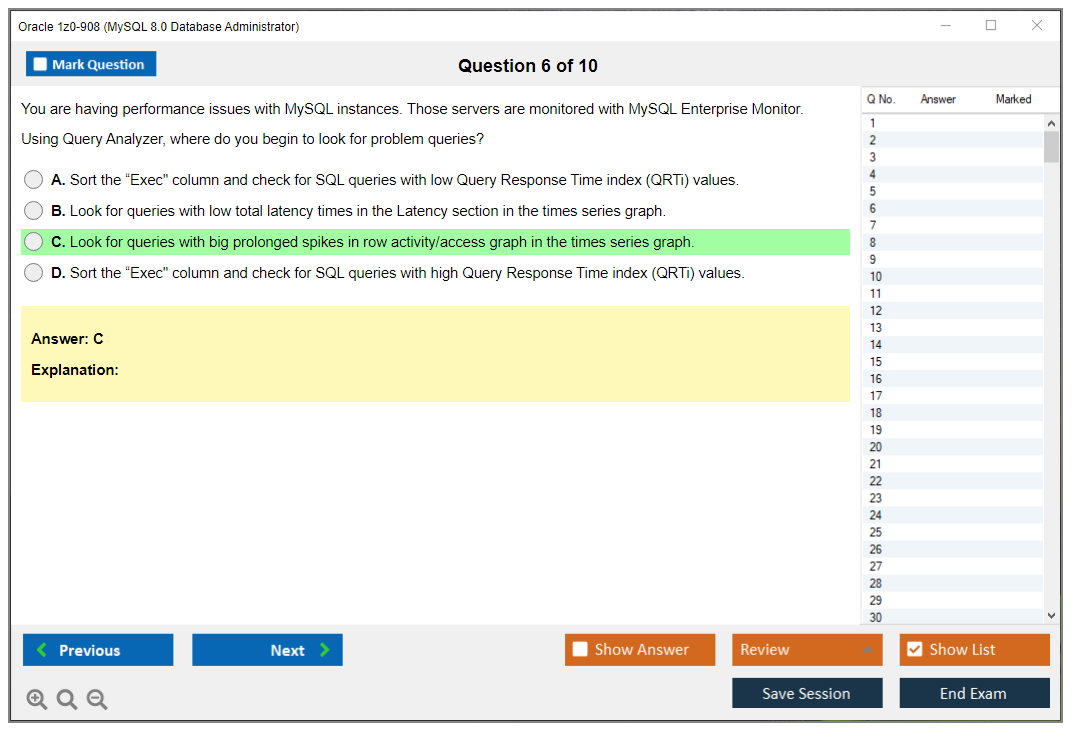
Performance_schema intimidates people with its 100+ tables of instrumentation data, but you need to know key tables like events_statements_summary_by_digest for query analysis, file_summary_by_instance for I/O monitoring, and table_io_waits_summary_by_table for identifying hot tables. The sys schema provides friendlier views like statements_with_full_table_scans and schema_unused_indexes that wrap performance_schema complexity into something more digestible.
Error log analysis requires understanding log formats, verbosity levels controlled by log_error_verbosity, and filtering capabilities. Slow query log captures queries exceeding long_query_time threshold and helps identify optimization candidates. You'll need to know log_slow_admin_statements for capturing administrative commands and log_queries_not_using_indexes for index tuning work.
InnoDB architecture and troubleshooting includes buffer pool management where innodb_buffer_pool_size typically consumes 70-80% of dedicated server RAM, adaptive hash index for frequent access pattern optimization, change buffer for delayed secondary index updates, and redo log sizing for crash recovery speed versus write performance tradeoffs. SHOW ENGINE INNODB STATUS output contains sections on semaphores, transactions, buffer pool, row operations, and more that you'll analyze during troubleshooting sessions.
Performance tuning requires query optimization and server configuration
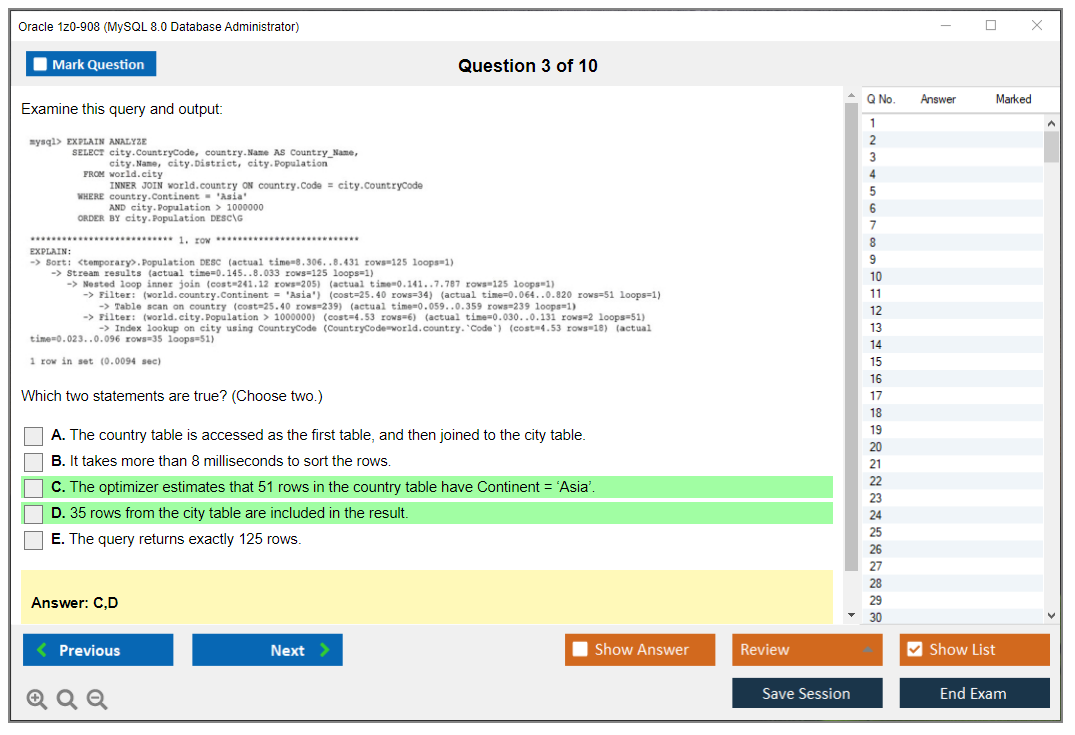
Performance tuning with MySQL query optimization starts with EXPLAIN and EXPLAIN ANALYZE output interpretation. You need to understand access types from const (best) through ALL (worst), key column showing index usage, rows examined, and filtered percentages. Index strategy involves choosing between B-tree indexes for range queries, hash indexes for exact matches in MEMORY tables, and full-text indexes for text search operations.
Server variable tuning covers connection settings like max_connections and thread_cache_size, InnoDB parameters including innodb_flush_log_at_trx_commit for durability versus performance balance, query cache configuration though it's removed in MySQL 8.0, and tmp_table_size plus max_heap_table_size for temporary table handling. Configuration changes require understanding performance testing methodology with realistic workloads rather than blindly copying internet recommendations that may not apply to your specific environment.
High availability through replication and clustering
MySQL replication and high availability asynchronous replication uses binary logs where source server records changes and replica servers pull and apply them with lag measured in seconds or minutes. Semi-synchronous replication waits for at least one replica acknowledgment before transaction commit, improving data protection with minimal performance impact. Group Replication provides multi-primary or single-primary modes with automatic failover, conflict detection, and distributed recovery.
Replication topology options include traditional source-replica with one writable source and multiple read replicas, chain replication where replicas can have their own replicas, and multi-source replication where one replica pulls from multiple sources for data aggregation. The exam tests replication setup using CHANGE MASTER TO statements, monitoring replication lag through SHOW REPLICA STATUS, and resolving common issues like duplicate key errors or missing transactions.
Similar to Oracle Database Administration I which covers Oracle RDBMS fundamentals, the MySQL 8.0 DBA cert validates complete database lifecycle management, just with MySQL-specific architecture and tooling. You'll notice the administration concepts overlap with Oracle Database Administration II in areas like backup strategies and performance tuning, though implementation details differ significantly between Oracle and MySQL platforms.
Conclusion
Getting certified is one thing, keeping the job is another
Real talk here.
Passing the Oracle 1Z0-908 MySQL 8.0 Database Administrator certification definitely opens doors. I've seen it help DBAs land roles they wouldn't have gotten callbacks for otherwise, the kind where HR actually reads past your name on the resume. But here's the reality check nobody wants to hear: the cert proves you studied, not that you can handle a production disaster at 2am when replication breaks and your manager is freaking out.
The exam cost isn't trivial. You're looking at real money for the registration, honestly not the kind of expense you wanna repeat. The 1Z0-908 passing score sits at 63%, which sounds reasonable until you're staring at a troubleshooting scenario about InnoDB architecture and your mind goes blank. Some questions test memorization, sure, but the tough ones demand you actually understand backup and recovery workflows, not just recognize keywords. You can't fake your way through performance tuning questions if you've never analyzed slow query logs in anger.
What makes this certification valuable?
The exam objectives force you to touch everything. MySQL 8.0 administration and security, replication and high availability, the whole stack. Most DBAs specialize and ignore chunks of the platform (honestly not gonna lie that's how you end up dangerous in production). This cert makes you round out those gaps. Even experienced admins usually discover blind spots when they map their knowledge against the official objectives, which is kinda humbling actually.
Your study approach matters more than how many months you spend. Build a lab environment, break things deliberately, fix them without googling every step. That's where learning happens. The MySQL 8.0 DBA certification study guide and reference manual are solid resources, but hands-on repetition is what makes concepts stick. Practice tests help if you use them right, not as a shortcut to memorize answers, but to identify weak areas you need to revisit with actual configuration work.
I spent maybe two months preparing while working full-time, which meant late nights and sacrificed weekends. My wife kept asking why I was "playing with databases" at 11pm. Hard to explain that breaking a replication setup seventeen different ways teaches you more than any video course.
One resource that consistently gets mentioned in DBA circles is the 1z0-908 Practice Exam Questions Pack. It's structured around the actual exam objectives and includes explanations that go beyond just "here's the right answer." When you're doing final prep and want realistic question exposure without burning through expensive official practice exams, it's worth checking out.
Don't chase the cert just to update LinkedIn. I mean, do what you want, but that's missing the point. Chase it because MySQL 8.0 has legitimately powerful features you should master, and Oracle MySQL 8.0 Database Administrator exam preparation forces that learning. The certification renewal requirements mean you can't coast either. You stay current or you lose the credential. That's actually a feature, not a bug.