MB-800 Practice Exam - Microsoft Dynamics 365 Business Central Functional Consultant
Reliable Study Materials & Testing Engine for MB-800 Exam Success!
Exam Code: MB-800
Exam Name: Microsoft Dynamics 365 Business Central Functional Consultant
Certification Provider: Microsoft
Corresponding Certifications: Microsoft Certified: Dynamics 365 Business Central Functional Consultant Associate , Microsoft 365


Free Updates PDF & Test Engine
Verified By IT Certified Experts
Guaranteed To Have Actual Exam Questions
Up-To-Date Exam Study Material
99.5% High Success Pass Rate
100% Accurate Answers
100% Money Back Guarantee
Instant Downloads
Free Fast Exam Updates
Exam Questions And Answers PDF
Best Value Available in Market
Try Demo Before You Buy
Secure Shopping Experience
MB-800: Microsoft Dynamics 365 Business Central Functional Consultant Study Material and Test Engine
Last Update Check: Mar 18, 2026
Latest 172 Questions & Answers
Training Course 10 Lectures (1 Hours) - Course Overview
45-75% OFF
Hurry up! offer ends in 00 Days 00h 00m 00s
*Download the Test Player for FREE
Printable PDF & Test Engine Bundle
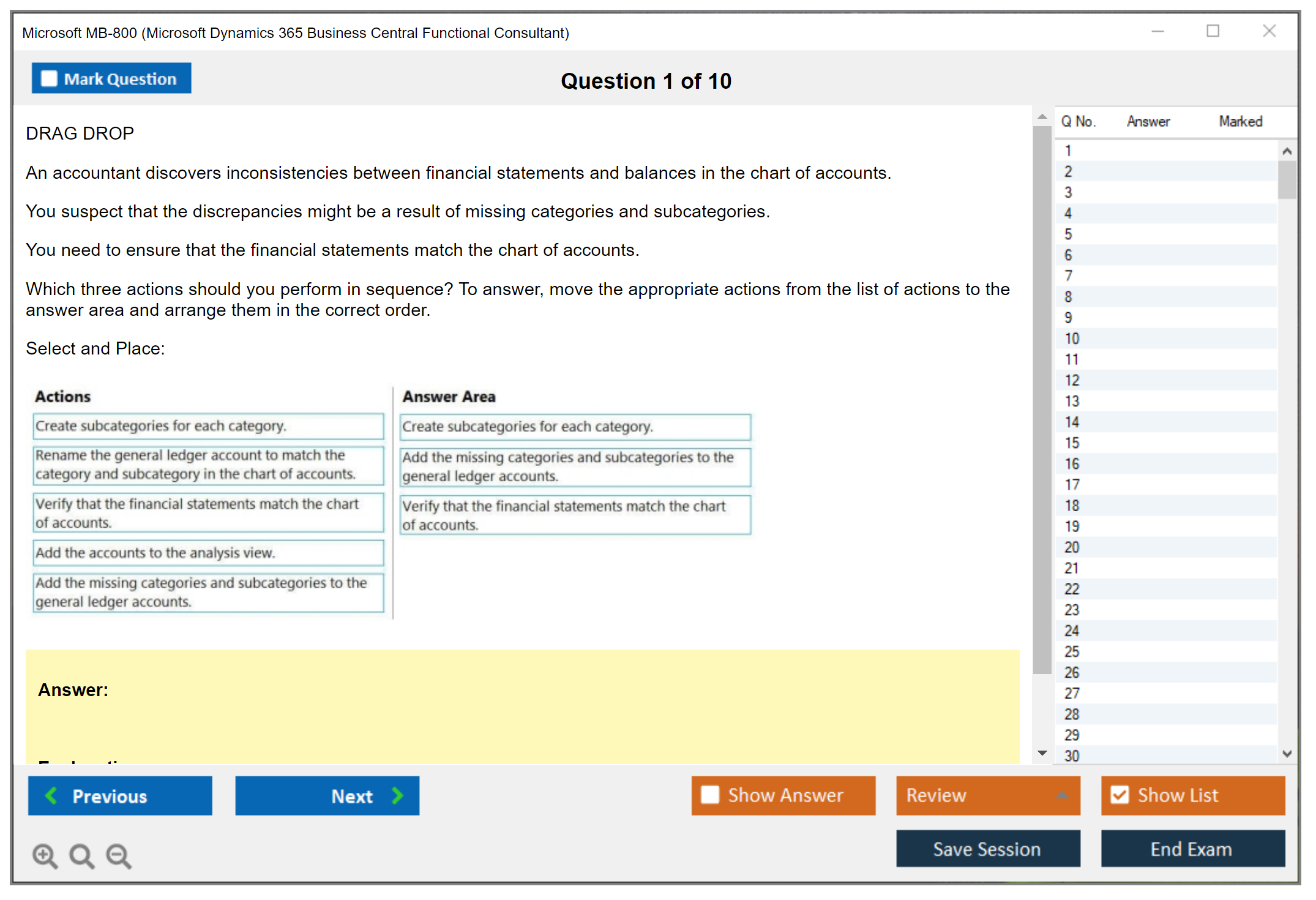
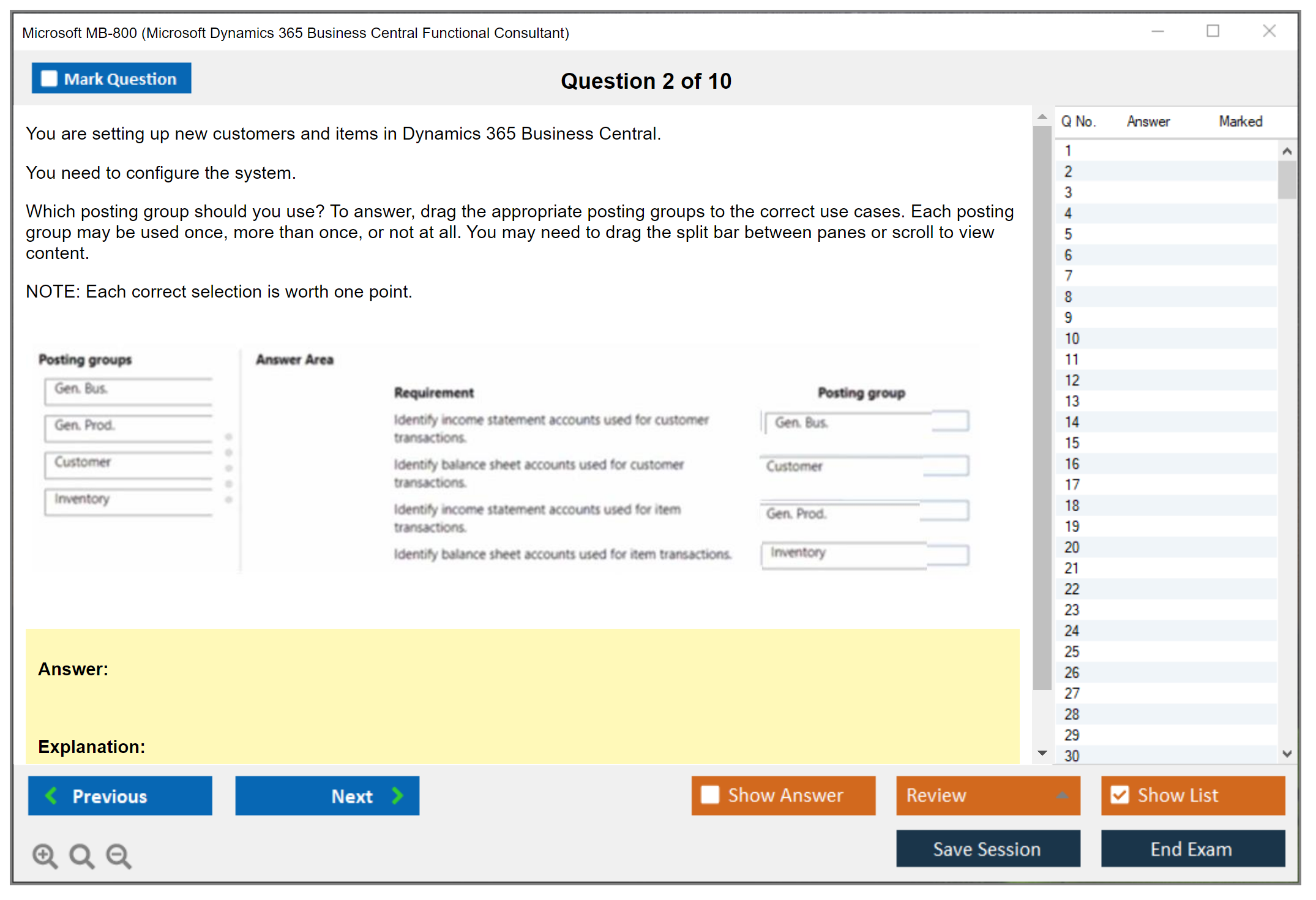
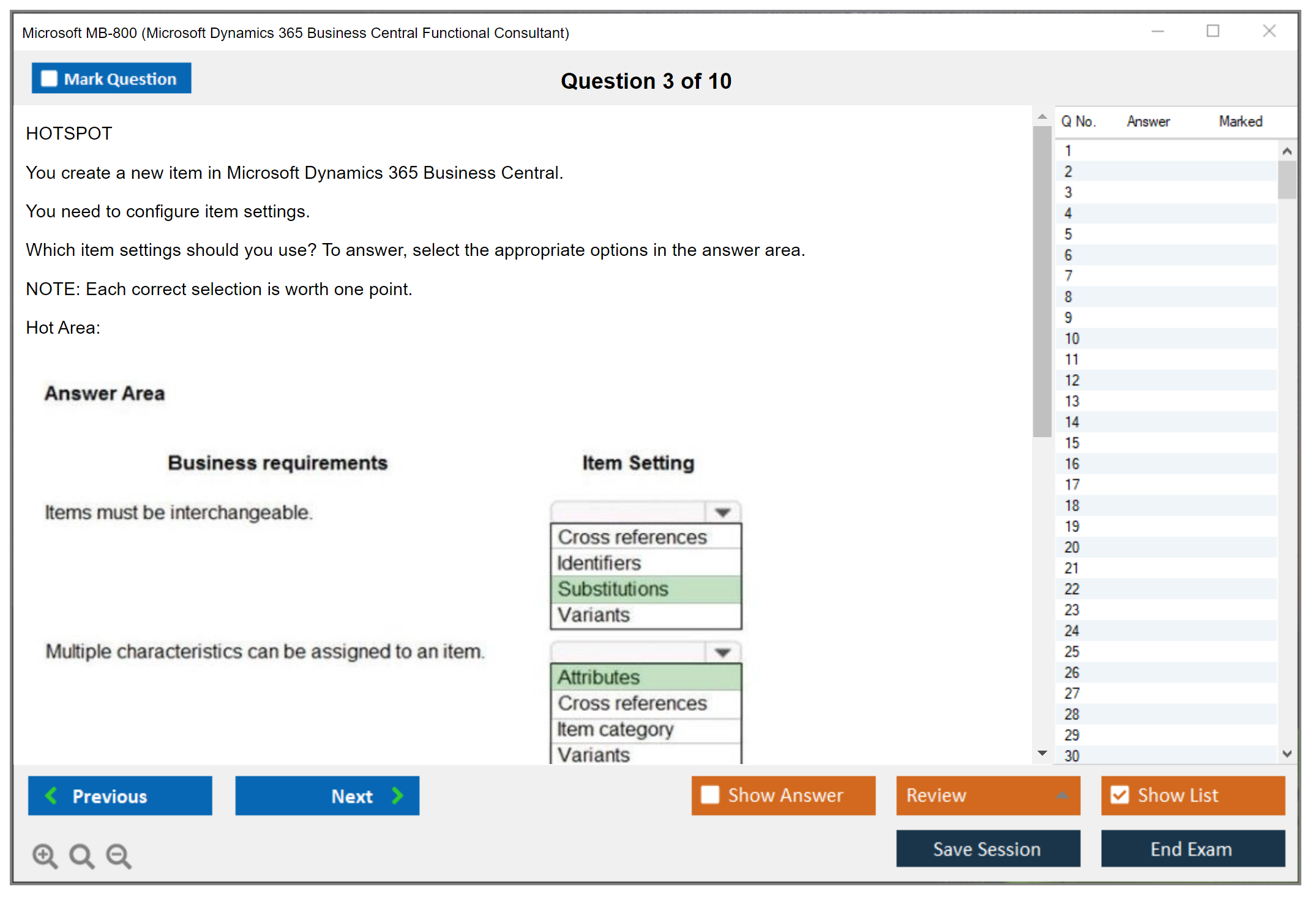
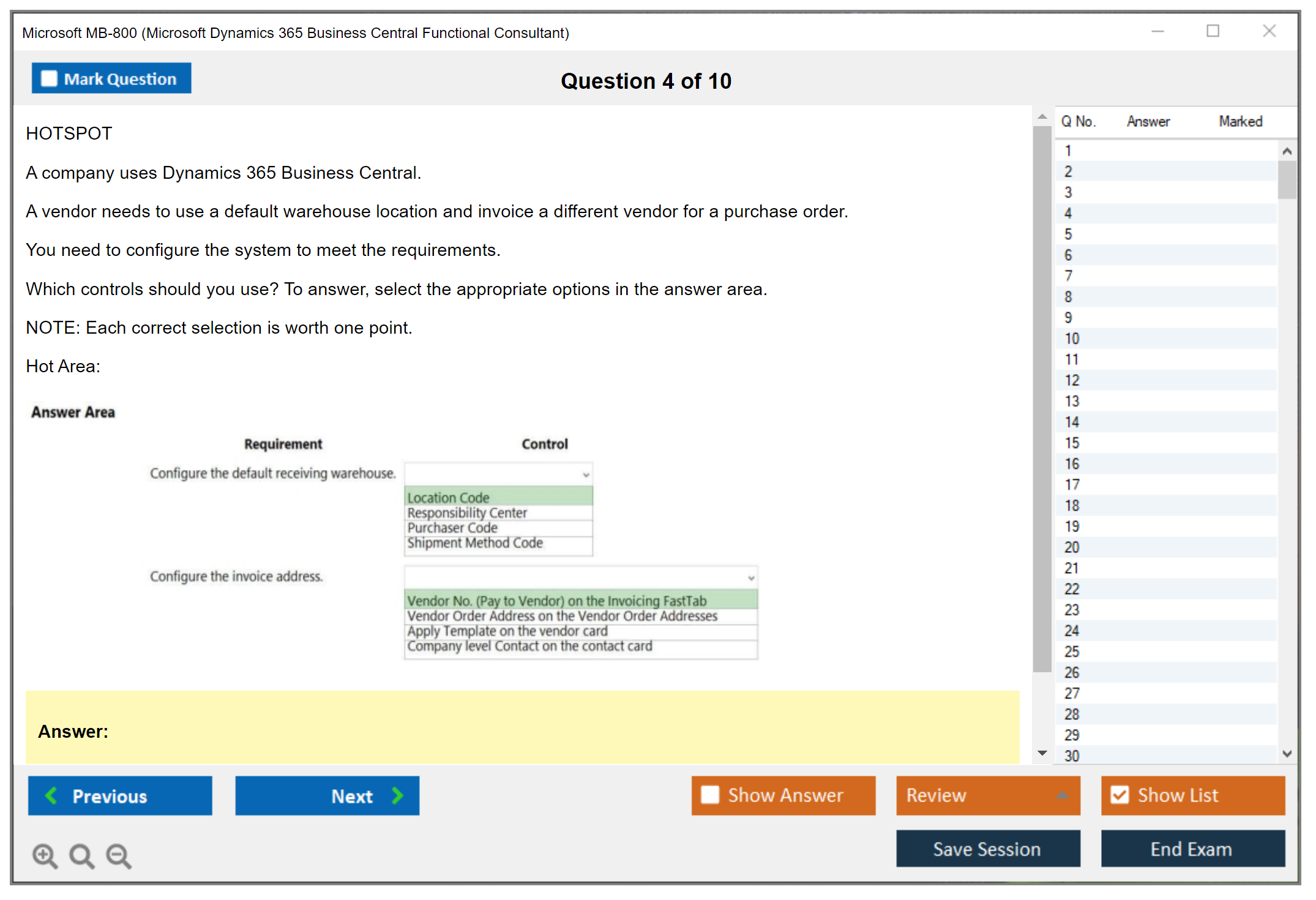
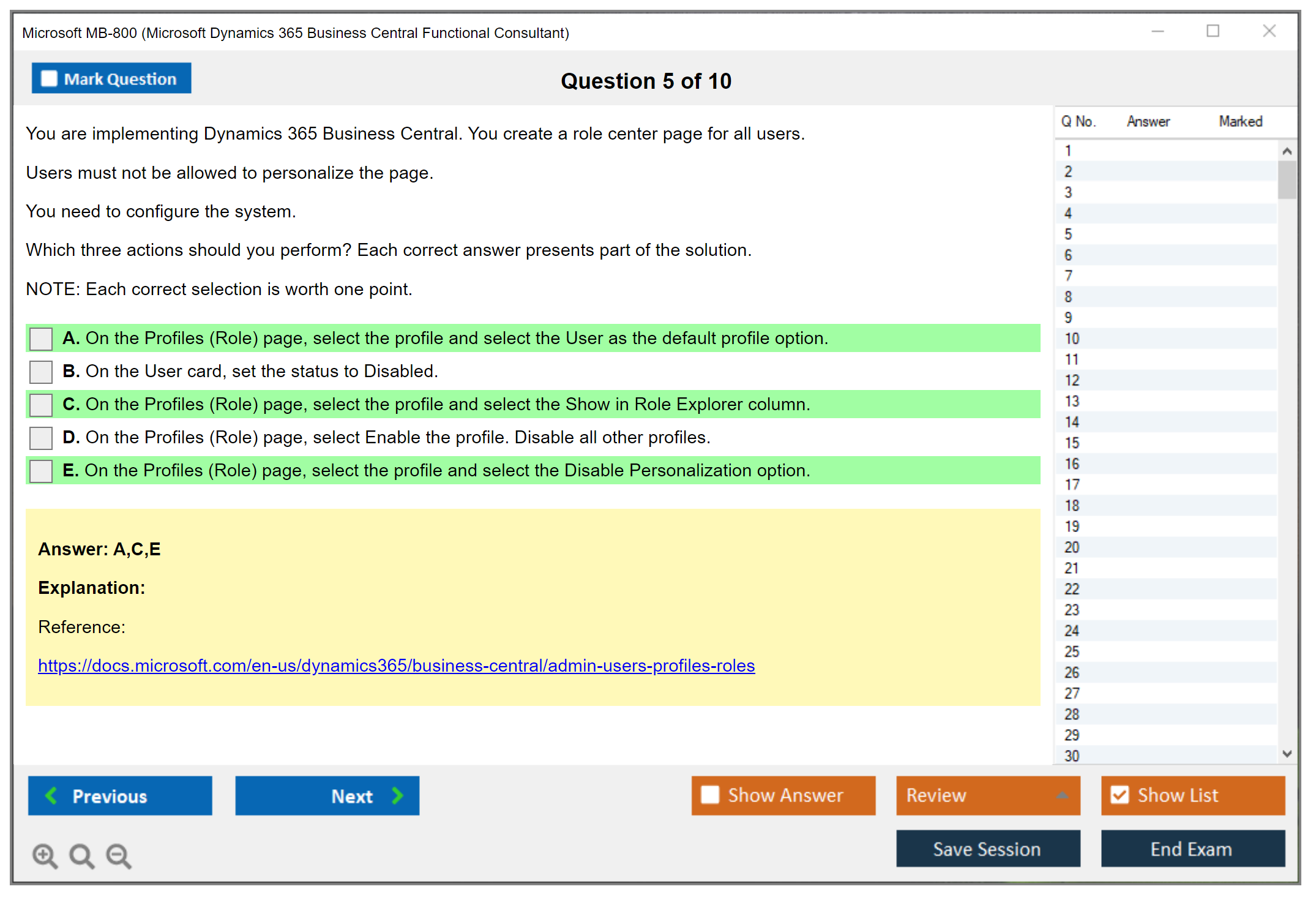
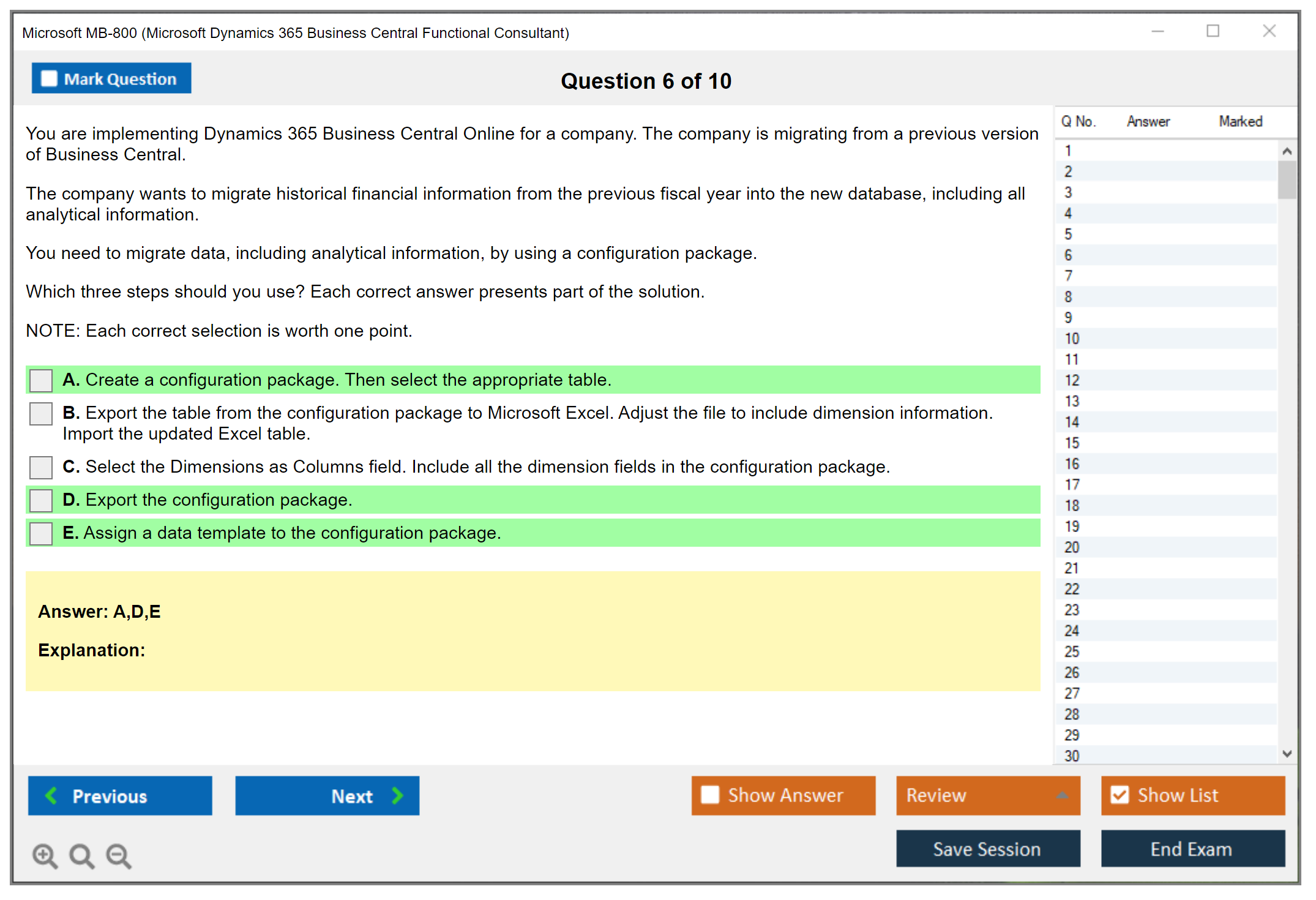
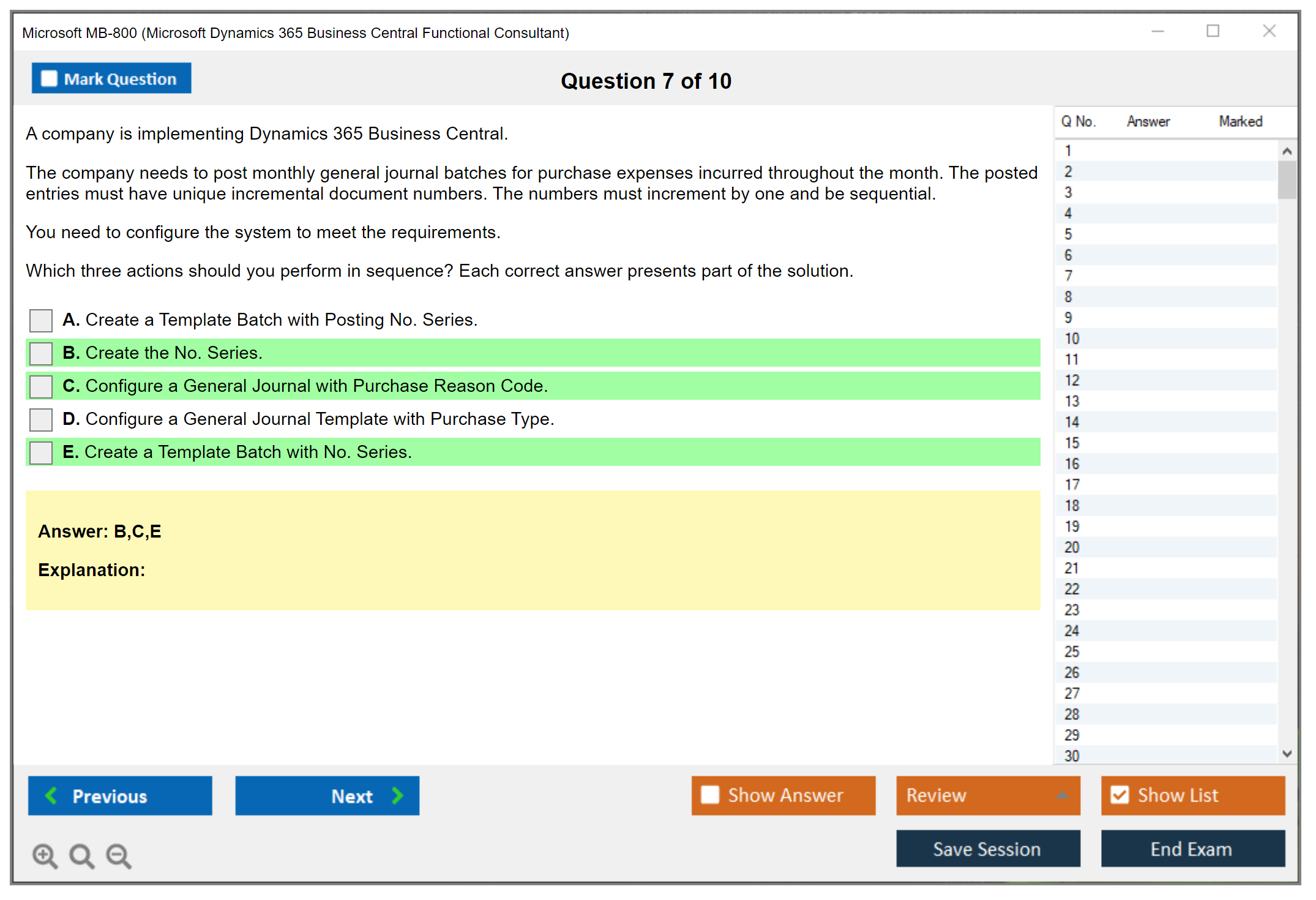
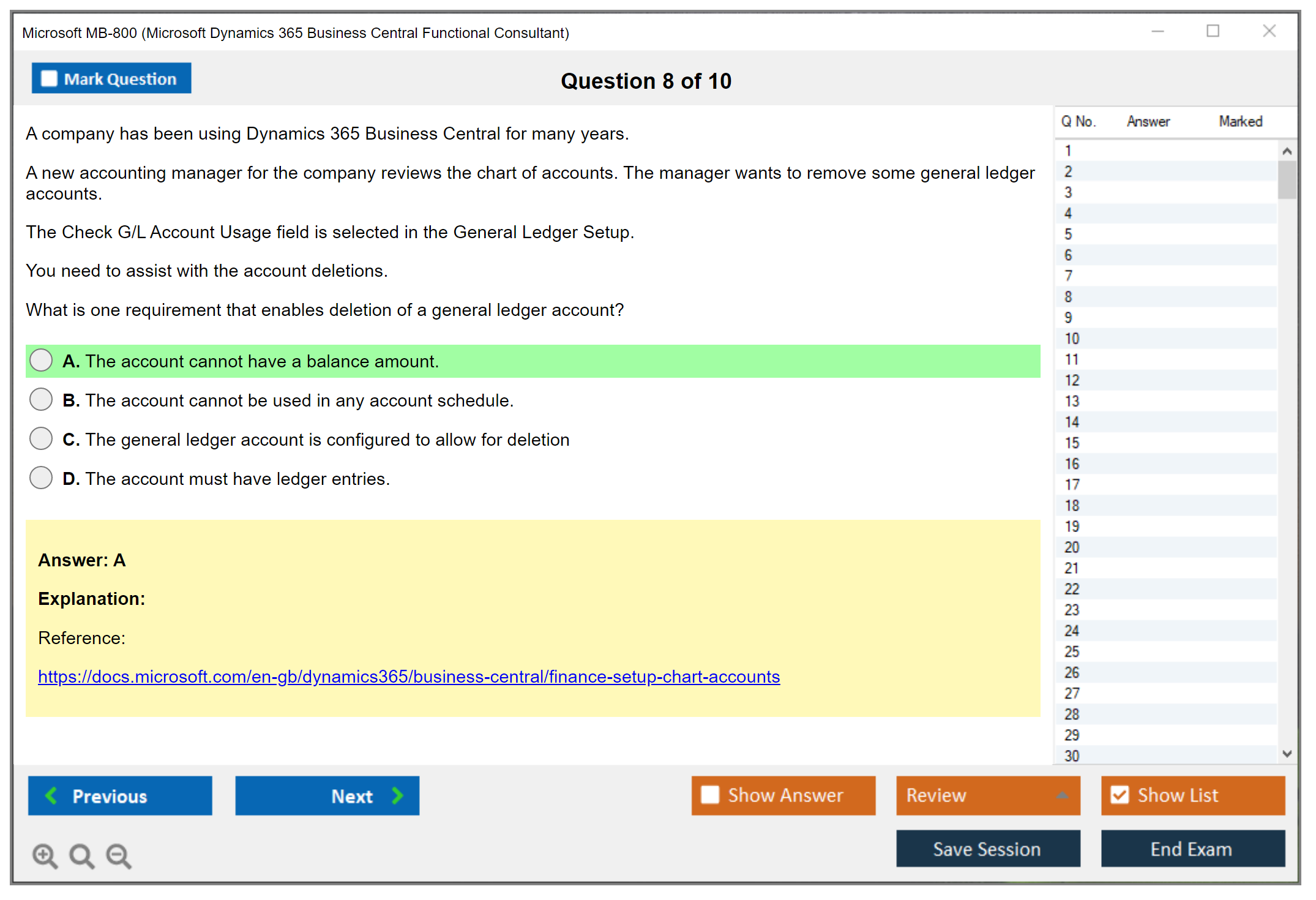
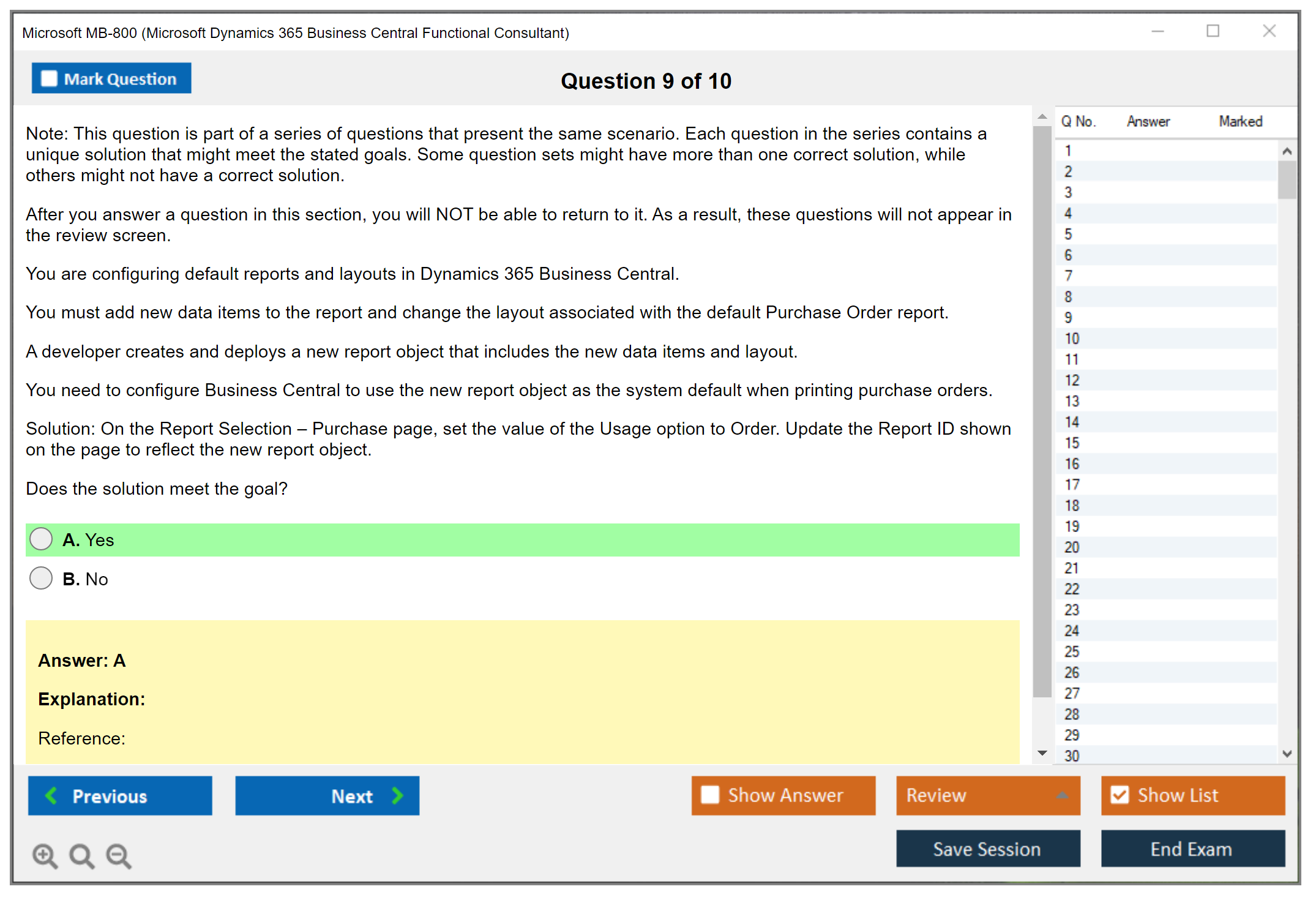
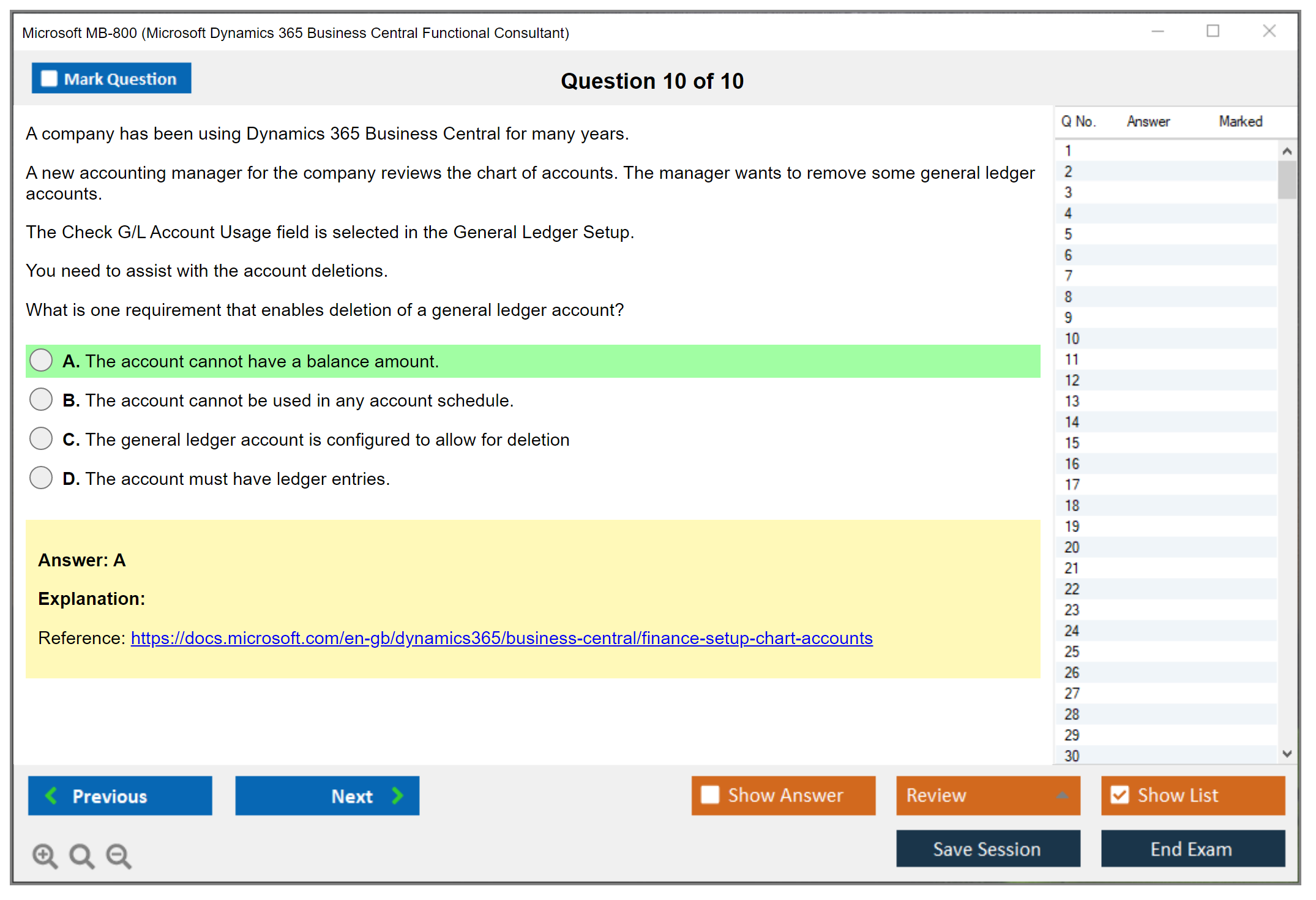
Dumpsarena Microsoft Microsoft Dynamics 365 Business Central Functional Consultant (MB-800) Free Practice Exam Simulator Test Engine Exam preparation with its cutting-edge combination of authentic test simulation, dynamic adaptability, and intuitive design. Recognized as the industry-leading practice platform, it empowers candidates to master their certification journey through these standout features.
What is in the Premium File?
Satisfaction Policy – Dumpsarena.co
At DumpsArena.co, your success is our top priority. Our dedicated technical team works tirelessly day and night to deliver high-quality, up-to-date Practice Exam and study resources. We carefully craft our content to ensure it’s accurate, relevant, and aligned with the latest exam guidelines. Your satisfaction matters to us, and we are always working to provide you with the best possible learning experience. If you’re ever unsatisfied with our material, don’t hesitate to reach out—we’re here to support you. With DumpsArena.co, you can study with confidence, backed by a team you can trust.
Microsoft MB-800 Exam FAQs
Introduction of Microsoft MB-800 Exam!
MB-800: Microsoft Dynamics 365 Business Central Functional Consultant is an exam that tests a candidate's knowledge and skills in implementing Dynamics 365 Business Central. The exam measures the candidate's ability to analyze business requirements, configure the application, and advise on the solution's design. It also tests the candidate's knowledge of how to manage the application and how to extend or customize it with extensions and programming.
What is the Duration of Microsoft MB-800 Exam?
The Microsoft MB-800 exam is a two-hour exam.
What are the Number of Questions Asked in Microsoft MB-800 Exam?
The Microsoft MB-800 exam consists of 40-60 questions.
What is the Passing Score for Microsoft MB-800 Exam?
The passing score required to pass the Microsoft MB-800 exam is 700 out of 1000.
What is the Competency Level required for Microsoft MB-800 Exam?
The Microsoft MB-800 exam requires a competency level of Expert.
What is the Question Format of Microsoft MB-800 Exam?
The Microsoft MB-800 exam is a multiple-choice exam with a mix of single and multiple-response questions. The exam also includes drag-and-drop, build list, and reorder questions.
How Can You Take Microsoft MB-800 Exam?
Microsoft MB-800 exam can be taken either online or in a testing center. The online version of the exam is offered through the Microsoft Learning Platform, which requires an active Microsoft account. The exam can also be taken in a testing center, which requires registering for the exam through the Pearson VUE website.
What Language Microsoft MB-800 Exam is Offered?
The Microsoft MB-800 exam is offered in English.
What is the Cost of Microsoft MB-800 Exam?
The cost of the Microsoft MB-800 exam is $165 USD.
What is the Target Audience of Microsoft MB-800 Exam?
The Microsoft MB-800 exam is designed for professionals who want to demonstrate their expertise in developing Microsoft Dynamics 365 Customer Engagement solutions. This includes professionals such as business analysts, developers, and consultants.
What is the Average Salary of Microsoft MB-800 Certified in the Market?
The average salary for someone with Microsoft MB-800 certification varies depending on the job market and the individual's experience. According to PayScale, the average salary for someone with Microsoft MB-800 certification is $87,878 per year.
Who are the Testing Providers of Microsoft MB-800 Exam?
Microsoft offers official practice tests for the MB-800 exam through its Microsoft Learning Platform. The practice tests are designed to help you prepare for the MB-800 exam and assess your knowledge of the topics covered in the exam.
What is the Recommended Experience for Microsoft MB-800 Exam?
The recommended experience for the Microsoft MB-800 exam includes having a solid understanding of the fundamentals of Microsoft Dynamics 365, including its architecture, components, and features. Additionally, candidates should have experience with the various Microsoft Dynamics 365 applications, such as Sales, Customer Service, Field Service, and Project Service Automation. Experience with the Power Platform, including PowerApps, Power BI, and Flow, is also recommended.
What are the Prerequisites of Microsoft MB-800 Exam?
The Microsoft MB-800 exam has no prerequisites. However, it is recommended that you have a working knowledge of Microsoft Dynamics 365 and the Power Platform, including Power Apps, Power Automate, and Power BI. Additionally, familiarity with the concepts of customer service, customer engagement, customer service processes, customer service automation, and customer service analytics is recommended.
What is the Expected Retirement Date of Microsoft MB-800 Exam?
The official Microsoft website for checking the retirement date of the MB-800 exam is:
https://docs.microsoft.com/en-us/learn/certifications/exams/mb-800
What is the Difficulty Level of Microsoft MB-800 Exam?
The difficulty level of the Microsoft MB-800 exam is classified as Intermediate. This exam is designed to assess the knowledge and skills of individuals who are experienced in developing and customizing Power Platform solutions.
What is the Roadmap / Track of Microsoft MB-800 Exam?
1. Understand the MB-800 Exam Objectives: Before starting your preparation for the MB-800 exam, it is important to understand the exam objectives. This will help you focus on the areas that you need to study and prepare for.
2. Get Familiar with the Exam Format: The MB-800 exam consists of multiple-choice and case study-based questions. It is important to understand the format of the exam before beginning your preparation.
3. Get the Necessary Materials: Once you have a good understanding of the exam objectives and format, you need to get the necessary materials such as study guides, practice tests, and other resources to help you prepare for the exam.
4. Create a Study Plan: Once you have all the materials, it is important to create a study plan that will help you stay on track and ensure that you are covering all the topics in the exam.
5. Take Practice Tests: Taking practice tests is
What are the Topics Microsoft MB-800 Exam Covers?
The Microsoft MB-800 exam covers the following topics:
1. Manage Identity and Access: This topic focuses on the management of identity and access in a Microsoft Dynamics 365 environment. This includes the implementation of authentication and authorization, identity synchronization, and single sign-on.
2. Implement Platform Security: This topic covers the implementation of security measures in a Dynamics 365 environment. This includes the configuration of security roles, data security, and security policies.
3. Manage Data Integration and Data Quality: This topic focuses on the management of data integration and data quality in a Dynamics 365 environment. This includes the implementation of data integration, data quality control, and data governance.
4. Manage Solutions and Apps: This topic covers the management of solutions and apps in a Dynamics 365 environment. This includes the configuration of solutions and apps, the deployment of solutions and apps, and the integration of solutions and apps.
5. Manage Business Processes:
What are the Sample Questions of Microsoft MB-800 Exam?
1. What is the purpose of the Microsoft Dynamics 365 Customer Engagement Hub?
2. What are the benefits of using the Dynamics 365 Customer Engagement Hub?
3. How can you customize a Dynamics 365 solution to meet the needs of an organization?
4. What are the components of the Microsoft Dynamics 365 Customer Engagement Platform?
5. What are the features and benefits of Dynamics 365 for Sales?
6. How can you use the Dynamics 365 Customer Engagement Hub to manage customer relationships?
7. What are the security and privacy considerations when using Dynamics 365?
8. How can you integrate Dynamics 365 with other applications and services?
9. What are the best practices for deploying Dynamics 365 solutions?
10. What are the different deployment options for Dynamics 365?
Microsoft MB-800 (Microsoft Dynamics 365 Business Central Functional Consultant) Microsoft MB-800 Certification Overview and Career Impact What the MB-800 certification actually proves So here's the deal. MB-800 is Microsoft's way of saying you know how to implement Business Central for real companies. Not just in theory, but actually walking into a client site and configuring their ERP system without causing total chaos. The Microsoft Certified: Dynamics 365 Business Central Functional Consultant Associate credential validates that you can handle the whole operational backbone of how businesses track money and goods: financials, sales, purchasing, inventory management, all of it. The exam digs into setup and configuration. You've gotta show you can migrate data without losing critical information, set up integrations that actually work, and build reports that business owners will really use instead of ignoring. Anyone can click through Business Central's interface, but can you design... Read More
Microsoft MB-800 (Microsoft Dynamics 365 Business Central Functional Consultant)
Microsoft MB-800 Certification Overview and Career Impact
What the MB-800 certification actually proves
So here's the deal. MB-800 is Microsoft's way of saying you know how to implement Business Central for real companies. Not just in theory, but actually walking into a client site and configuring their ERP system without causing total chaos. The Microsoft Certified: Dynamics 365 Business Central Functional Consultant Associate credential validates that you can handle the whole operational backbone of how businesses track money and goods: financials, sales, purchasing, inventory management, all of it.
The exam digs into setup and configuration. You've gotta show you can migrate data without losing critical information, set up integrations that actually work, and build reports that business owners will really use instead of ignoring. Anyone can click through Business Central's interface, but can you design a solution that fits a manufacturing company's specific workflow? That's what MB-800 tests you on.
Who this certification is really for
Business Central functional consultants? Obviously the main target. These are folks spending their days talking to clients about current operations, then translating all that into Business Central configurations that make sense. ERP implementation specialists need this too, especially if they're pivoting from other ERP platforms into the Microsoft ecosystem.
Solution architects working with Dynamics 365 Business Central should have this credential because, let's be real, you can't design solutions for something you don't understand at the functional level. I've seen architects try to spec out Business Central projects without knowing the platform's actual limitations. Never ends well. Application consultants and business analysts round out the target audience, particularly those who need to bridge the gap between technical teams and business stakeholders who speak completely different languages.
Career paths this opens up
Microsoft partners? Always hiring. Once you've got MB-800, you're immediately more valuable to consulting firms that need certified consultants to maintain their partner status and deliver client projects successfully. Direct employment with companies using Business Central is another route. Lots of mid-sized organizations bring consultants in-house once they realize how much ongoing configuration work Business Central actually requires.
Freelance consulting becomes totally viable with this cert. Smaller businesses can't afford big consulting firms with their massive hourly rates, but they still need Business Central expertise desperately. Senior consultant and solution architect positions typically require MB-800 as a baseline before you can move up. Simple as that. The certification proves you've done the groundwork instead of just talking about it.
The money situation
Real talk here. Certified Business Central consultants typically earn 15-25% more than their non-certified peers. We're talking average salaries from $75,000 to $120,000 depending on experience and location. Major metro areas pay more, though remote consulting gigs have complicated the geographic salary differences somewhat. You'll still see higher rates in markets with lots of Microsoft partner activity.
This isn't just about the initial salary bump. Having MB-800 on your resume changes how recruiters treat you entirely. You're not just another ERP consultant. You're a verified Business Central expert. That distinction matters when companies are evaluating candidates for high-stakes implementations.
I remember talking to a recruiter last year who flat-out told me they filter resumes based on certifications first, experience second. Makes you wonder how many solid consultants get overlooked just because they haven't sat for the exam yet, but that's the reality we're working with.
Why businesses actually care about this cert
Organizations implementing Business Central want certified consultants because failed ERP projects are incredibly, ridiculously expensive. Companies have literally gone bankrupt because their ERP implementation went sideways and created cascading operational failures. Certification doesn't guarantee success, but it reduces the risk of hiring someone who's just figuring things out as they go along and hoping for the best.
Business Central deployments touch every single department. Finance, sales, purchasing, inventory, sometimes manufacturing. One misconfigured module can cascade into company-wide problems that take months to untangle. Certified consultants know how to avoid the common pitfalls everyone else keeps stumbling into. Business Central isn't cheap when you factor in licensing and implementation costs, so companies want consultants who can extract value from the platform quickly instead of burning budget on trial-and-error approaches.
How MB-800 fits into the bigger picture
MB-800 is associate-level. Your entry point into the Dynamics 365 certification ecosystem, basically. From here you can pursue expert-level credentials or specialize in specific Business Central areas that interest you. Similar to how DP-300 is a foundation for Azure database roles or MB-920 introduces the broader Dynamics 365 ERP fundamentals, MB-800 establishes your functional consulting baseline.
The certification demonstrates hands-on capability. Not just theory. Anyone can read documentation about Business Central's financial setup, but configuring chart of accounts, posting groups, and VAT calculations for an actual business with real compliance requirements? That requires practical understanding. That's what separates MB-800 holders from people who've just watched training videos and memorized some terminology.
Why this cert matters in 2026 and beyond
Business Central's market share in the cloud ERP space keeps growing. Microsoft has been pushing customers from legacy on-premises solutions to Business Central, and that migration wave creates sustained demand for certified consultants who understand both worlds. Year-over-year growth in Business Central deployments means consistent demand for people who can implement and support it effectively.
The cloud ERP market itself is expanding as smaller businesses finally move off spreadsheets and ancient accounting software that should've been retired years ago. Business Central targets that sweet spot of companies too big for QuickBooks but too small for SAP. That's a massive market, and they all need consultants.
Partner requirements and client confidence
Microsoft partners need certified consultants to maintain competencies, period. If a partner organization wants to keep their Dynamics 365 partnership status and access partner benefits, they need a certain number of certified consultants on staff at all times. This creates structural demand for MB-800 holders that goes beyond just individual project needs.
Client confidence is the softer benefit. When you're proposing a $50,000+ Business Central implementation to a skeptical CFO, clients want reassurance that you're not experimenting on their dime. Certification provides that reassurance because it signals you've been vetted by Microsoft and follow their established best practices. Whether that's entirely fair or not is debatable, but it's how clients think when evaluating consultants.
Business Central updates regularly with new features and changes, and maintaining your certification requires staying current with those changes instead of relying on outdated knowledge. Similar to how professionals maintain credentials like AZ-104 or PL-300, you're committing to ongoing education that keeps your skills relevant as the platform evolves and client expectations shift.
MB-800 Exam Structure, Cost, and Logistics
Microsoft MB-800 certification overview (Business Central Functional Consultant)
MB-800's what people target when they say "I'm chasing the Dynamics 365 Business Central Functional Consultant cert." Maps straight to real work. You're configuring Business Central. Turning chaotic business requirements into actual setup and workflows.
Look, MB-800 proves you won't completely lose it when a client's chart of accounts looks like someone sneezed on a spreadsheet, their posting groups are basically half-baked ideas, and they're still demanding explanations for why inventory valuation suddenly shifted after running a reclass journal. I mean, honestly, that scenario happens way more than it should. The thing is, it's functional work, not development, but there's enough technical depth that just "watching some YouTube videos" won't rescue you when those scenario questions hit.
Who needs it? Consultants, obviously. Business analysts. Power users who keep getting voluntold to babysit Business Central configuration. Anyone proving they can juggle finance plus sales/purchasing plus operations without everything catching fire. Also (and hiring managers won't always say this out loud), if you're targeting partner work, this Microsoft MB-800 exam is one of those signals that instantly registers, even when they pretend credentials don't matter.
MB-800 exam details (cost, passing score, format)
MB-800 exam cost
Current MB-800 exam cost sits at $165 USD. Prices shift depending on where you're taking it, so honestly, double-check Microsoft's official exam page for your local currency and whatever the actual current rate is before you start budgeting. Taxes can sneak in there too, which catches people off guard every single time.
Discounts exist. Sometimes. Microsoft occasionally drops promos, Ignite attendees get codes, and certain volume licensing customers or partners access vouchers, but I wouldn't build your entire timeline around "maybe I'll stumble onto a discount code."
MB-800 passing score
The MB-800 passing score's 700 on that weird 1-to-1000 scale. Microsoft uses scaled scoring, which basically means different exam versions can vary slightly in difficulty, and their scoring model attempts to keep the passing standard consistent across versions. You won't see "you got 42 correct out of 55 questions." You'll get a score report with domain-level breakdowns instead.
Exam format, question types, and duration
Expect somewhere between 40 to 60 questions and roughly 90 to 120 minutes total. Exact count fluctuates. And yeah, adaptive testing can factor in, meaning the exam might adjust difficulty based on how you're answering, so your final score reflects actual competency level instead of just luck.
Question types? Mixed bag. Not just multiple choice. You're hitting multiple response, drag-and-drop, case studies, scenario-based questions, hot area selections, build-list questions. Some fly by fast. Others are basically "read this three-paragraph business nightmare, then pick the least-wrong configuration approach." Those devour time, so watch your pacing.
Scheduling the MB-800 exam (online vs. test center)
You schedule through Pearson VUE, either at a physical test center or online with Pearson VUE OnVUE proctored testing. I mean, both options work fine, but they fail in completely different ways. Test centers are strict but predictable. Online's convenient until your webcam driver randomly decides to update itself during check-in. I once knew someone whose entire desk got flagged because they had a standing desk mat the proctor thought was suspicious, which delayed everything by twenty minutes while they explained that no, it wasn't contraband, just ergonomic equipment. That's the kind of weird friction you sometimes hit with remote proctoring.
Retakes, cancellations, and results logistics
Retake policy matters because people assume they can just immediately rebook. If you fail, you're waiting 24 hours minimum before your first retake attempt. After a second failure? You're waiting 14 days between any subsequent attempts.
Retakes aren't free. Each one requires paying the full exam fee again unless you grabbed an exam replay bundle or you've got voucher coverage. That's why I'm really not a fan of the "I'll just wing it and see what sticks" approach. Your wallet definitely feels that strategy.
Need to reschedule? Cancel or move your appointment at least 24 hours before the scheduled start time or you're forfeiting the entire fee. Zero mercy. Pearson VUE stays consistent about that policy.
Results: preliminary pass/fail appears immediately after you finish. Official score report typically lands in your Microsoft certification dashboard within 24 hours. If you pass, your digital certificate and badge show up in your Microsoft Learn profile somewhere around 5 to 7 business days. The score report also breaks down your performance by MB-800 exam objectives, which actually helps if you're planning an MB-800 practice test cycle and want to zero in on weak domains.
Test day experience (test center vs. online)
At a test center, arrive 15 minutes early carrying valid government-issued ID. Personal items stay outside the exam room. They usually provide scratch paper and a pen. Proctoring's old-school strict.
Online proctored demands more: quiet private room, stable internet (minimum 1 Mbps), working webcam and microphone, completely clear desk, plus a system check required before exam day. Run the system test about 24 hours before. Then start check-in 30 minutes before your scheduled slot, because you'll photograph your ID and your room, and the proctor might ask you to pan the webcam around like you're filming some low-budget reality show.
Interface-wise, Microsoft's exam UI works decently. You can mark questions for review, strike through answer options, monitor remaining time, leave feedback comments. Small thing. Helps though.
Accessibility accommodations exist, they're legitimate. Request them at least two weeks before scheduling so you're not scrambling to negotiate accommodations the day before.
MB-800 exam objectives (skills measured)
This section shifts periodically, so treat Microsoft's "Skills measured" document as your source of truth. High level, you're covering: configuring Business Central, setting up financials, setting up sales and purchasing, setting up operations like inventory and projects (sometimes manufacturing/service depending on scope), plus basics around integrations, security, admin tasks. If your MB-800 study materials don't align to the published outline? They're noise.
MB-800 FAQs people keep asking
How much does the MB-800 exam cost? Typically $165 USD, varies by region. What is the passing score for MB-800? 700 scaled. Is MB-800 difficult to pass? Intermediate difficulty. Hands-on experience beats theory every time. What are the MB-800 exam objectives? Whatever the official page currently lists, mapped to configuration and business processes. How do I renew the MB-800 certification? Through Microsoft's renewal assessment on Learn when you're eligible, following the Microsoft certification renewal process for role-based certs. Typically involves a free online renewal window rather than paying the full exam fee again.
Complete MB-800 Exam Objectives and Skills Measured
Understanding the MB-800 exam structure and measured skills
The MB-800 certification validates your ability to implement and configure Microsoft Dynamics 365 Business Central for clients. This isn't just theory testing. Microsoft designed this exam to measure hands-on functional consulting skills, so you'll face scenario-based questions that simulate real implementation decisions you'd make during a Business Central deployment. The exam covers everything from initial company setup through financial configuration, sales and purchasing workflows, inventory management, and integration points with other Microsoft services.
Here's the thing: Microsoft regularly updates the skills measured document. Don't assume what you read six months ago still applies. Always verify current objectives at microsoft.com/learning before beginning your study plan because Microsoft tweaks Business Central functionality with every release wave, and the exam reflects those changes. I've seen candidates caught off guard because they studied outdated material. It's frustrating to watch.
How domain weighting shapes your study approach
Each domain represents a percentage of the exam, and this matters more than most people realize. Focus study time proportionally to the weight of each domain rather than trying to master everything equally. If one domain accounts for 25% of questions and another only 10%, you know where to invest your hours. I've watched people spend weeks perfecting low-weight topics while ignoring high-weight areas, then wonder why they failed.
The typical MB-800 breakdown looks like this. Configuration and setup form major components. Financial management takes another substantial chunk. Operations (sales, purchasing, inventory) make up significant portions. Smaller percentages go to specialized areas like manufacturing or service management, depending on the exam version.
Company setup and foundational configuration tasks
Create new companies. Configure company information, set up multiple companies in a single environment, copy company data and settings. These form the base of any Business Central implementation. You'll need to know how to establish a new company from scratch, when to use configuration packages versus manual setup, and how to efficiently replicate settings across companies in multi-entity environments.
Configure user interface customization including role centers, profiles and personalizations, page customizations, and modifications to lists and cards. Business Central's flexibility here is both powerful and complex. It's a double-edged sword. Manage user permissions by assigning permission sets, creating custom permission sets, configuring user groups, implementing security best practices, and managing data security across different user roles.
Configure general application settings like number series for document numbering. Posting groups control G/L integration. Dimensions help with analytics and reporting. Analysis views let users slice data effectively. Set up workflows for approval processes, configure workflow templates, set up workflow users with appropriate permissions, test and troubleshoot workflows before go-live. Configure notifications so users receive timely alerts. Set up workflow notifications, manage notification schedules to avoid overwhelming people.
Data migration and integration capabilities
Implement data migration strategies by planning your migration approach carefully. Use configuration packages to bundle related setup data. Import data from Excel when appropriate. Validate migrated data thoroughly before letting users loose on the system. Set up integration capabilities including API access for custom applications. Web services connect external systems. Power Platform integrations extend Business Central functionality. Third-party application connections come in handy when clients use specialized tools.
Actually, one thing nobody tells you about data migration: clients always have messier data than they admit. You'll spend half your time cleaning up duplicate customer records and fixing invalid item numbers they swear don't exist. Budget extra time for this phase.
Financial management configuration domains
Configure general ledger by setting up chart of accounts that matches your client's reporting needs. Configure account categories for financial statement mapping. Set up posting groups that control automatic G/L posting. Configure general posting setup that defines the intersection of business and product posting groups. Set up currencies if you're dealing with international operations. Configure additional reporting currency, set up exchange rates, configure currency exchange rate services for automatic rate updates.
Configure dimensions (this is huge in Business Central, can't stress that enough) by setting up dimension values. Configure default dimensions at various levels. Set up dimension combinations to prevent invalid combinations. Implement dimension-based reporting. Set up VAT/sales tax by configuring VAT posting groups, setting up VAT statements for regulatory reporting, configuring tax areas and groups for North America, implementing reverse charge VAT for EU transactions.
Configure bank account management through bank account setup. Bank account posting groups come next. Payment methods matter. Bank reconciliation features do the heavy lifting. Set up cash flow forecasting using cash flow accounts, cash flow forecasts, and cash flow dimensions. Configure fixed assets including asset classes. Depreciation methods (straight-line, declining balance, etc.) need proper setup. FA posting groups, insurance and maintenance tracking round out the fixed asset picture. Set up budgets by creating G/L budgets, configuring budget dimensions, setting up budget analysis views.
Configure financial reporting through account schedules (now called financial reports in newer versions). Row and column definitions structure the output. Comparative reports across periods or companies give clients what they need. Implement cost accounting if clients need internal cost allocation. Set up cost types, configure cost centers and cost objects, allocate costs using various methods, create cost budgets separate from G/L budgets.
Sales, purchasing, and operational setup requirements
Set up customers with proper posting groups, customer price groups, customer discount groups, payment terms. Configure sales processes including sales prices and discounts (this moved to price lists in recent versions, which confused a lot of people initially). Shipment methods need configuration. Shipping agents track carriers. Salespersons and purchasers get set up for commission tracking. Set up vendors similarly with vendor posting groups, price and discount groups, payment terms.
Configure purchasing processes through purchase prices and discounts. Requisition worksheets help with planning. Approval workflows control purchase documents. Configure items and inventory using item categories. Item attributes help with filtering. Inventory posting groups control the flow. Units of measure include base and alternate units. Set up pricing and discounts via sales price lists, purchase price lists, campaign prices for promotions, line discounts.
Configure receivables management with payment terms. Finance charge terms address late payments. Reminder terms and levels handle dunning processes. Customer statement setup matters. Configure payables management including vendor payment terms. Payment methods vary by situation. Payment journals process the transactions. Payment suggestions automate payment selection.
Set up sales tax/VAT for transactions by configuring tax groups for customers and vendors. Tax area codes handle location-based taxation. Tax details round it out. Configure document approval workflows for purchases, sales, and other processes with appropriate approval limits at different organizational levels.
Inventory, warehouse, and specialized modules
Set up inventory management by configuring locations. Bins enable warehouse management. Transfer routes connect locations. Stockkeeping units allow location-specific item settings. Configure warehouse management from basic warehouse configuration up through advanced warehouse features. Put-away and pick strategies drive efficient operations.
Set up manufacturing (if applicable) through production BOMs. Routings map the process. Work centers and machine centers provide capacity. Manufacturing posting tracks the costs. Configure assembly management for assemble-to-stock and assemble-to-order scenarios. Set up job/project management with job posting groups. Job tasks break down the work. Job planning looks ahead. Resource allocation assigns the right people. Configure resources including resource cards, resource groups, resource costs and prices, resource capacity.
Set up service management if clients offer service contracts. Configure service item groups. Service orders track the work. Service contracts lock in recurring revenue. Service pricing ensures profitability. Configure inventory costing methods (FIFO, LIFO, Average, Standard). Automatic cost adjustment settings keep things current. Inventory period closing handles period-end processes.
Similar to the MB-310 financial management exam for Finance & Operations, MB-800 demands deep understanding of financial setup, though Business Central's SMB focus means simpler regulatory requirements than what you'd see in the enterprise DP-300 database administration track. Set up planning and requisition by configuring planning parameters. Reordering policies (order, lot-for-lot, maximum quantity, etc.) control replenishment. Safety stock and reorder points prevent stockouts. Configure supply chain features like drop shipment. Special orders handle one-off requests. Transfer orders move inventory between locations. Requisition worksheets aid purchase planning.
Prerequisites, Recommended Experience, and Learning Path
Official prerequisites (and what that really means)
Microsoft doesn't mandate formal prerequisites for the MB-800 certification. No required course. No prior cert either. Nothing you've gotta "unlock" before the Microsoft MB-800 exam pops up in your dashboard.
That said.
You still need reps.
Hands-on matters.
Look, MB-800's a functional consultant exam, but it's not a vocabulary quiz where you just memorize definitions and call it a day. A lot of the questions read like "A customer wants X, but they've got Y constraint, what should you set up?" and if you've never actually clicked around Business Central setup and configuration, you'll burn time second-guessing basic stuff like where posting groups live or how dimensions behave when users do something weird with them in ways you didn't anticipate during setup.
Recommended hands-on experience (the 6 to 12 month sweet spot)
My honest recommendation? 6 to 12 months doing real work in a Dynamics 365 Business Central implementation, even if it's "only" configuration, testing, data cleanup, training users, or supporting go-live when everything's chaos. You wanna have seen the messy middle. Late requirements changes. Partial inventory counts that don't balance. Customers who absolutely insist on invoice discounts being calculated this one specific way. Finance teams that close the month in a very specific sequence and want the system to match it perfectly or they'll escalate to your PM.
Some people pass with less.
Sure.
Not common, though.
If you're coming from Dynamics NAV, QuickBooks, or SAP Business One, you'll have transferable ERP instincts, but you still need Business Central-specific muscle memory because the product's got its own logic for posting, dimensions, approval flows, and the way "helpful defaults" can surprise you in unexpected ways when you're setting up a new company from scratch.
Functional knowledge you should already have
You're expected to think like a consultant who can map real business processes into the product without constantly Googling basic workflow questions. That means accounting, sales, purchasing, inventory, and a bit of project management thrown in. Not MBA-level theory. More like "I know what happens before and after this transaction posts, and who yells when it doesn't post right."
Here's what I'd have in my head before going hard on MB-800 exam objectives:
- Accounting basics: double-entry bookkeeping, general ledger structure, accounts payable/receivable, and how financial statements actually get produced at month-end. If you don't know why a posting date matters, or what a balancing account does, the financial questions feel like quicksand you're sinking into slowly.
- Quote-to-cash: quotes, orders, shipments, invoices, returns, and the pricing/discount logic that makes it annoying in real life when customers negotiate weird terms.
- Procure-to-pay: requisitions (where applicable), purchase orders, receipts, invoicing, vendor payments, and approvals that sometimes get stuck in someone's inbox for days.
- Inventory workflows: item cards, costing methods, adjustments, and the reality of "we found 12 extra units" at month end and now finance is asking why.
- Financial close: posting periods, recurring journals, bank rec, and reporting checks that make controllers sleep at night instead of emailing you at 11 PM.
Industry experience helps. A lot. If you've been a BA, an ERP analyst, or a functional consultant before, you'll recognize patterns and you'll move faster because you're not learning what a purchase invoice is while also learning where Business Central hides the switch for it.
Some of this stuff you won't appreciate until you've been yelled at during your first month-end close. I remember a client's controller calling me at 10:47 PM because a recurring journal posted to the wrong dimension and now the departmental P&L was off by $18,000. Not a huge amount in the grand scheme of their operation, but enough that she had to explain it to the CFO the next morning. That kind of panic teaches you why setup decisions matter in ways no training module ever will.
Technical baseline (you don't need to code, but you can't be allergic to tech)
You don't need to be a developer or write AL code. But you do need to be comfortable working in cloud software and the Microsoft 365 neighborhood without panicking. Basic cloud concepts. Browser-based apps. Permissions and roles. How environments work at a high level.
You also need to understand configuration vs. customization, which trips people up constantly. Configuration is no-code setup: number series, posting groups, dimensions, approval workflows, role centers, report selections. Customization is development work: extensions, AL programming, sometimes integrations with third-party systems. MB-800 lives mostly in configuration land, but the exam expects you to know when the correct answer is "configure Business Central" versus "this needs a developer and an extension package."
Business Central navigation (the underrated prerequisite)
This is where people waste points and don't even realize it until after the exam. Business Central navigation is part of being effective, and it absolutely shows up indirectly in scenario questions that assume you know where things are.
Get comfortable with search. Role centers. Personalization options.
Know how to use Tell Me search to jump to pages instantly, how to customize a role center so a user sees what they need without clutter, and how to access the built-in documentation from within the product when you're stuck. Also, practice reading pages like a consultant: what's required, what's optional, what's controlling behavior behind the scenes in ways that aren't immediately obvious.
Learning path (a practical plan that matches how the exam feels)
Start with Microsoft Learn. The "Get started with Dynamics 365 Business Central" path is the right first stop because it teaches the product vocabulary and navigation without throwing you into the deep end immediately. Then move into the "Configure Dynamics 365 Business Central" modules because that's where you begin aligning setup choices to business requirements across functional areas in ways that actually make sense.
After that, go deeper by domain. Financial management modules: general ledger, cash management, fixed assets, and financial reporting that auditors will scrutinize. This is where accounting basics pay off big time because you'll understand why each setup decision exists, not just where the toggle is hidden. Sales and purchasing modules: customer/vendor setup, workflows, pricing strategies that get complicated fast, and the document lifecycle from order to posting with all the steps in between. Inventory and operations modules: inventory management, warehouse operations, plus project and service management basics (and yes, you should at least understand what those areas are even if your day job is mostly finance and you never touch projects).
You need a practice environment, period. Create a free trial or use the Cronus demo company, then run end-to-end scenarios: set up a company, create master data, post transactions, fix mistakes you made, and produce reports that actually make sense. The "fix mistakes" part is where the learning sticks because you're troubleshooting like you would in the real world.
For MB-800 study materials, I also like mixing in official documentation, especially setup guides by functional area that Microsoft publishes, and reading recent release notes so you don't study something that's been tweaked or renamed in the last wave. Community forums and user groups help too, mostly for the "how do people actually do this" angle that official docs sometimes skip. Instructor-led training is optional, but if you want structure and pressure to keep pace instead of procrastinating, it can be worth it.
Study timeline and practice tests (how to pass MB-800 without guessing)
Plan 8 to 12 weeks, 10 to 15 hours weekly. Some weeks will feel easy, then you hit posting setup, dimensions, or inventory costing and suddenly your brain is full and nothing else fits. Normal.
Use practice questions, but use them the right way instead of just memorizing answers. A decent MB-800 practice test should force you to map questions back to the objective it's testing, then go reproduce the scenario in a sandbox environment to prove you actually understand it. If you want something quick to drill exam-style questions without building everything from scratch, the MB-800 Practice Exam Questions Pack is $36.99 and can be a good supplement when you're trying to tighten up weak areas and get faster under time pressure during your final prep phase. Don't make it your only resource or you'll regret it. Make it the thing you use after you've done the labs, so the questions actually mean something instead of just looking like random trivia. If you're shopping for targeted practice late in your prep, the MB-800 Practice Exam Questions Pack fits that "final stretch" use case when you're polishing weak spots.
Quick FAQ-style notes people always ask while prepping: the MB-800 exam cost depends on your region, so check the official listing for your locale instead of assuming it's universal. The MB-800 passing score is published by Microsoft as 700 out of 1000. And yes, people ask "Is MB-800 difficult to pass?" and I'd call it intermediate difficulty, mostly because it's scenario-heavy and punishes shallow memorization in ways that catch people off guard. For renewal, Microsoft role-based certs typically use an online renewal assessment during the eligibility window that opens before expiration, so learn the Microsoft certification renewal process early and don't let it sneak up on you six months from now when you're busy with other stuff.
MB-800 Difficulty Assessment and Common Challenges
How hard is the MB-800 exam really?
Honestly? Intermediate territory.
Not a walk in the park, but I've seen tougher Microsoft certs. Industry estimates peg pass rates around 60-70% for first-timers, which tells you this isn't some exam where you skim docs and cruise through on test day.
The real challenge? It's scenario-heavy. You'll face business requirements that mirror actual consulting gigs, then you've gotta figure out the right configuration approach or troubleshoot what's broken. That's completely different from those "what does this button do" style questions.
What makes MB-800 actually challenging
Breadth kills you here.
You need solid knowledge across financial management, sales, purchasing, inventory, and operations modules. Can't just dominate one area and pray. The exam digs into specific configuration steps and settings, not fluffy high-level concepts. Which posting group goes where. How to set up dimensions correctly. The exact steps to configure VAT.
This is why hands-on practice is required. Reading about it doesn't cut it.
Here's something candidates often miss: you've gotta understand how different modules interact with each other. When you create a sales order, what happens to inventory? How does that hit the general ledger? What about posting groups and dimensions flowing through transactions? The exam assumes you know this stuff cold.
Time management? Another layer. You're looking at 40-60 questions in 90-120 minutes, which works out to roughly 2 minutes per question. Some questions are multi-part case studies that need careful reading, so you can't afford burning time second-guessing straightforward stuff.
Common pitfalls that tank exam scores
Not gonna lie, the biggest mistake I see is insufficient hands-on practice. People study the documentation, watch some videos, maybe take a MB-800 practice test, then think they're ready. But if you haven't actually configured Business Central environments yourself, you'll struggle with the specific configuration questions. I mean, really struggle.
Candidates keep underestimating certain topics. Dimensions? More complex than they look. Posting groups? Yeah, those'll trip you up if you haven't worked with them before. Workflow configurations? Deeper than you'd think.
Financial management gets heavily weighted on this exam and contains details that require precision. Chart of accounts setup, posting groups, VAT configurations. This stuff is detailed and exact, and you can't hand-wave your way through it.
Warehouse management surprises people.
The advanced warehouse features and bin management configurations go way beyond basic inventory tracking. If your experience is mostly with simple warehouse setups, you'll need to dig deeper for the exam. I once spent three hours just figuring out directed put-away and pick logic because the documentation glossed over the practical gotchas.
The technical side that catches functional consultants off guard
While MB-800 is mainly a functional consultant exam, it includes technical elements around integrations and data management. Web services, API capabilities, Power Platform integration. You need some technical knowledge here that goes beyond pure functional consulting. This catches purely business-focused candidates off guard.
Terminology precision? Matters more than you'd think.
Business Central uses specific terms that differ from other ERP systems, so you've gotta know the exact field names and process terminology, not just general concepts. Close enough doesn't work on multiple-choice questions.
Version-specific features are another trap waiting to spring. The exam includes questions on recent features and updates, so if your study materials are outdated or you're working with an older Business Central version, you might give wrong answers based on how things used to work.
Who passes and who struggles
Candidates with 6+ months of hands-on Business Central implementation experience plus structured study preparation typically pass on first attempt. Notice both parts matter. Experience alone isn't enough without focused exam prep, but study without experience doesn't work either.
Who struggles?
Those relying only on theoretical study without practical configuration experience. Also, consultants transitioning from very different ERP systems sometimes struggle because they try to map old concepts onto Business Central instead of learning how Business Central actually works.
The exam assumes you understand standard business processes. If you lack business analysis background, like you've never worked with accounts payable workflows or inventory management processes in real companies, that increases difficulty big time.
How MB-800 compares to other Microsoft certifications
Difficulty-wise? Comparable to other Dynamics 365 functional consultant exams.
Similar to MB-920 or MB-230 in terms of depth and breadth requirements. It's way more challenging than fundamentals exams like MS-900, but not as technically demanding as developer certifications.
If you've passed other Dynamics functional consultant exams, you'll find the format and question style familiar. The specific Business Central content is obviously different, but the exam approach is consistent.
Strategies that actually reduce difficulty
Extensive hands-on practice is strategy number one. Work through complete implementation scenarios in a sandbox environment. Configure entire companies from scratch. Break things and fix them. This builds the muscle memory you need for configuration-specific questions.
Quality practice exams help a lot, but use them right. Don't just memorize answers. When you get something wrong, go back to the product and figure out why. Review incorrect answers by exam objective to identify weak areas. The MB-800 Practice Exam Questions Pack at $36.99 gives you realistic question exposure.
Build a study plan that balances documentation review with hands-on configuration work. Maybe 40% reading, 60% doing. That ratio works better than heavy reading followed by a little practice at the end.
Full MB-800 Study Materials and Resources
Microsoft MB-800 certification overview (Business Central functional consultant)
The MB-800 certification? Honestly, it's Microsoft's stamp that you won't completely freeze when someone asks, "Cool, but how do we post this?" during a Dynamics 365 Business Central Functional Consultant project. Setup. Configuration. Real business processes inside Business Central, not theory, not vibes, actual clicks with consequences that stick around.
Who should take it? People knee-deep in Dynamics 365 Business Central implementation work, power users eyeing consulting roles, and anyone constantly dragged into finance plus ops questions because "you're the Business Central person." Newbies can pass, sure, but you really want hands-on time first. A lot of questions are scenario-based and they expect you to know what setting affects what, not just definitions. The wording gets specific in ways that matter.
MB-800 exam details (cost, passing score, format)
Let's talk logistics. The Microsoft MB-800 exam is still a Microsoft certification exam, which means rules, timers, and weirdly specific wording that makes you second-guess yourself.
MB-800 exam cost
MB-800 exam cost: depends on your country or region. Microsoft changes pricing and local taxes, so don't trust random blog posts (including mine, I mean) for the exact number. Check the official exam page and it'll show your localized price at checkout. Quick, annoying, necessary.
MB-800 passing score
MB-800 passing score: Microsoft's published passing score for role-based exams is typically 700 out of 1000. Confirm it on the current exam page because Microsoft updates policies. They do that, often without fanfare.
Exam format, question types, and duration
Expect multiple-choice, case studies, "choose all that apply," and those questions where two answers look right but one is "more Microsoft." Time and question count can vary, so again, the exam page is the source of truth for duration and what you'll actually see on test day. I once spent way too long on a case study section only to realize I had three more waiting. Pacing matters here.
Scheduling the MB-800 exam (online vs. test center)
You can schedule online proctored or at a test center. Online's convenient, but it's strict. Clear desk, no mumbling, no second monitor. Test center is less comfy but fewer "your webcam moved two millimeters" problems that tank your session.
MB-800 exam objectives (skills measured)
The MB-800 exam objectives map to what a functional consultant actually does day-to-day. Use the "Skills measured" outline on the official certification page as your checklist, and keep it updated because exam outlines shift with release waves and nobody sends you a memo.
Configure Business Central
This is the backbone. Company setup, number series, posting setup, dimensions, user personalization, approvals, and the stuff that makes the system behave like the business wants instead of like a default installation.
Set up financials
General ledger. Cash management. Budgets, VAT, posting groups, reporting. If you can't explain why something didn't post, this section will absolutely hurt.
Set up sales and purchasing
Customer and vendor setup, pricing, discounts, order processing, and documents flowing through posting. Quote to cash. Procure to pay. The whole thing, end to end.
Set up operations (inventory, warehouse, projects, manufacturing/service)
Inventory setup, costing methods, warehouse configurations, stock movement. Projects and service show up depending on the objective mix, which honestly shifts between exam versions.
Integrations, security, and administration basics
Permissions, profiles, basic admin, and knowing where integrations and extensions fit. Not super deep, but you need to be comfortable with the concepts or you'll bomb easy points.
MB-800 prerequisites and recommended experience
No formal prerequisites. That's the official vibe. But look, you really want experience doing Business Central setup and configuration in a sandbox, not just watching YouTube videos at 1.5x speed.
Helpful background: basic accounting, how purchasing works, how sales orders flow, and what inventory costing means in real life. If you've never seen a posting group before, learn it now. Tiny setting, huge impact when things break.
MB-800 difficulty: how hard is the exam?
I'd rate it intermediate. Not impossible. Not friendly either. The hard part? MB-800 likes scenarios: "User does X, system does Y, what should you configure?" So memorizing terms won't save you when the question is really testing process knowledge across modules that interact in ways the UI doesn't explain.
Common pitfalls: posting groups, dimensions, VAT setup, warehouse versus inventory simplifications. Approvals and workflows that look easy until you try building them and everything routes to the wrong person.
Who passes first try? Usually people who've done at least one implementation phase or spent serious time in a trial environment testing full cycles, not just clicking around menus hoping things stick.
Best MB-800 study materials (official + practical)
Microsoft Learn training paths for MB-800
Start with the Microsoft Learn MB-800 learning path at microsoft.com/learn. Free. Lines up to the exam. It's the closest thing to an official map of what Microsoft expects you to know, and honestly, skipping it is just making your life harder.
Key modules to hit:
Get Started with Dynamics 365 Business Central: navigation, basic concepts, personalization, UI customization. Fast win that builds confidence.
Configure Dynamics 365 Business Central: this is the core, and it touches all functional areas, so spend time here because the exam lives here.
Financial Management in Business Central: general ledger, cash management, budgets, financial reporting. Go slow, rebuild setups in a sandbox, make mistakes where they don't cost real money.
Sales and Purchase Management: customer and vendor setup, pricing and discounts, order processing. Learn the document flow or you'll guess wrong on half the sales questions.
Inventory and Warehouse Management: inventory setup, costing methods, warehouse configurations, stock management. Do at least one realistic scenario from receiving to shipment.
Documentation to study (Business Central docs, feature notes)
The official Business Central documentation at docs.microsoft.com/dynamics365/business-central is where you go when Learn is too shallow or skips the "why it works this way" notes that show up indirectly on exam questions.
Also read Business Central release notes for recent waves. Not gonna lie, exam questions love new-ish features and renamed pages, and you don't want to lose points because the UI moved and you're still using old terminology.
Hands-on practice: sandbox environment and sample company data
Get a Business Central trial environment (free 30 days) from dynamics.microsoft.com/business-central. Use the Cronus demonstration company to explore posted transactions and existing setups, then create your own company to practice clean configuration without inherited weird settings.
If you're employed somewhere running Business Central, ask for a sandbox environment. Safe space, no production damage, infinite do-overs. If you're at a Microsoft partner, push for partner demonstration environments too, because those tend to have richer data and longer-lived tenants for training purposes.
MB-800 practice tests and exam prep strategy
A good MB-800 practice test is about feedback, not ego. Review wrong answers by objective area, then go reproduce the scenario in a sandbox. That loop is where you actually learn instead of just memorizing answer patterns.
If you want a paid option that's focused and straightforward, the MB-800 Practice Exam Questions Pack is $36.99 and can help you spot weak areas fast. I mean, don't make it your only resource. Pair it with Learn and hands-on work. Still, the MB-800 Practice Exam Questions Pack is useful when you're close to exam day and need reps under time pressure.
Study plan options:
2-week: only if you already work in Business Central daily and know posting groups in your sleep.
4-week: most people. Learn path plus sandbox builds.
6-week: best if you're new to finance or inventory and need time to absorb why things connect.
Practice scenarios to complete
Do these. Seriously. This is how to pass MB-800, not flashcards.
Set up a new company from scratch, then configure complete financial setup, then post sample transactions and fix what breaks. That's the exam in miniature, and you'll finally understand why posting groups and dimensions matter instead of just knowing they exist.
Build sales and purchase workflows with approvals, discounts, and posting, then run end-to-end testing from quote to cash and procure to pay, because the modules connect in ways the UI doesn't warn you about until something fails.
Also do configuration exercises like creating posting groups, setting up dimensions, configuring VAT, building workflows, setting up integrations. Mentioning the rest casually, but yeah, do them or you'll regret it on test day.
MB-800 renewal: how to keep your certification active
Microsoft role-based certs typically renew via a free online renewal assessment on Microsoft Learn, and it's usually annual. No extra exam fee, which is nice. Keep an eye on your certification dashboard and renewal emails, then study what changed year to year in release notes and updated Learn modules. This is the Microsoft certification renewal process you don't want to ignore, because letting it lapse is annoying and then you're scrambling to recertify when someone asks for proof.
MB-800 faqs
How much does the MB-800 exam cost?
It varies by region. Check the official exam page for your localized price instead of guessing.
What is the passing score for MB-800?
Typically 700/1000, but confirm on Microsoft's current policy for the exam because they update things.
Is MB-800 difficult to pass?
Intermediate difficulty. Harder without hands-on practice, easier if you've configured finance plus sales and purchasing plus inventory at least once and understand how they talk to each other.
What are the MB-800 exam objectives?
They're listed under "Skills measured" on the official Microsoft certification exam page. Treat that as your live checklist because it changes.
How do I renew the MB-800 certification?
Complete the renewal assessment on Microsoft Learn when you become eligible, usually yearly, following the prompts in your certification profile. It's straightforward once you're in the system.
Final checklist before you take MB-800
Confirm your objectives coverage. Take a timed practice test. Rebuild your weakest setup areas in a sandbox until they feel automatic. If you want extra question reps right before the date, the MB-800 Practice Exam Questions Pack is a decent last-mile tool, but only after you've done the real work in Business Central. Practice questions aren't magic, they're just targeted review.
Conclusion
Wrapping up your MB-800 path
Look, the MB-800 certification isn't just another line on your resume. It's proof you can actually walk into a client site and configure Business Central without breaking everything. I mean, anyone can say they know Dynamics 365, but this exam forces you to demonstrate you understand the practical side of Business Central implementation. Setting up financials, configuring sales and purchasing workflows, and making sure the system actually works the way businesses need it to work.
Here's the thing. Hands-on experience matters way more than memorization with passing the Microsoft MB-800 exam. You can't cram your way through scenario-based questions that ask you to troubleshoot a setup issue or recommend the right configuration for a specific business requirement. Honestly, I've tried that approach early in my career and it backfired spectacularly. The MB-800 exam objectives cover everything from basic Business Central setup and configuration to integrations and security fundamentals. You need to know not just what each feature does but when to use it. Real time in a Business Central sandbox environment makes this whole thing easier.
Standard Microsoft pricing applies. The MB-800 exam cost and passing score follow the usual thresholds, but what really determines whether you pass is how well you've prepared with quality MB-800 study materials. Microsoft Learn paths are free and thorough, but they're not always enough on their own. The thing is, they give you breadth without necessarily giving you depth in the tricky areas. That's where MB-800 practice test resources come in. They expose the gaps in your knowledge before exam day does.
Not gonna lie, I've seen too many capable consultants fail because they skipped the practice exam step and walked in overconfident. One guy I worked with had five years of implementation experience and still bombed it because he assumed he knew everything already. Didn't even look at a practice question.
Be honest with yourself. If you're serious about becoming a Dynamics 365 Business Central Functional Consultant and want to know exactly how to pass MB-800, start with a realistic assessment of where you stand. Take a practice exam. Identify which exam objectives trip you up. Then drill those areas in a sandbox until the configuration steps become second nature.
Ready to test your readiness? Check out the MB-800 Practice Exam Questions Pack at /microsoft-dumps/mb-800/ to simulate the real exam environment and pinpoint exactly what you need to review before test day. The Business Central functional consultant certification is within reach. You just need the right prep strategy and enough practice to make the scenarios feel familiar instead of intimidating.
Show less info
Comments
Hot Exams
Related Exams
Microsoft Power BI Data Analyst
Microsoft Azure Administrator
Developing Solutions for Microsoft Azure
Microsoft Dynamics 365 for Sales
Administering Information Security in Microsoft 365
Microsoft 365 Fundamentals
Microsoft Security Compliance and Identity Fundamentals
Microsoft Dynamics 365 Finance
Microsoft Power Platform Solution Architect
Planning and Administering Microsoft Azure for SAP Workloads
Troubleshooting Microsoft Azure Connectivity
Microsoft Azure AI Fundamentals
Designing and Implementing a Data Science Solution on Azure
Managing Microsoft Teams
Microsoft Information Protection Administrator
Configuring and Operating Windows Virtual Desktop on Microsoft Azure
How to Open Test Engine .dumpsarena Files
Use FREE DumpsArena Test Engine player to open .dumpsarena files


DumpsArena.co has a remarkable success record. We're confident of our products and provide a no hassle refund policy.

Your purchase with DumpsArena.co is safe and fast.
The DumpsArena.co website is protected by 256-bit SSL from Cloudflare, the leader in online security.