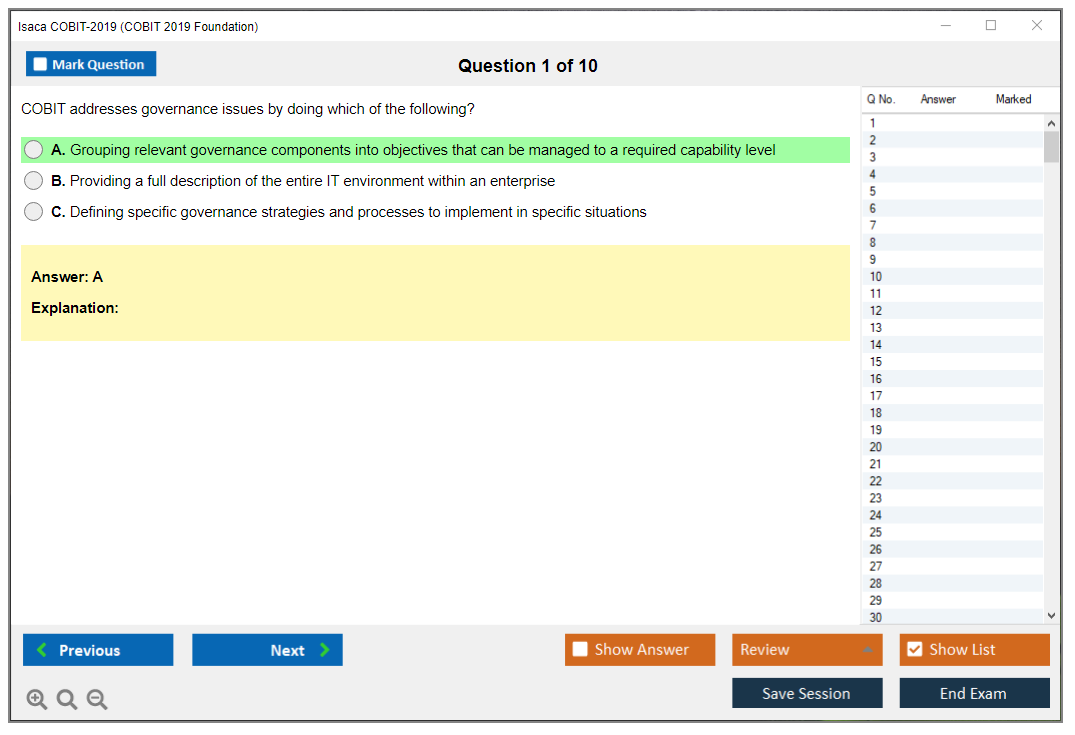
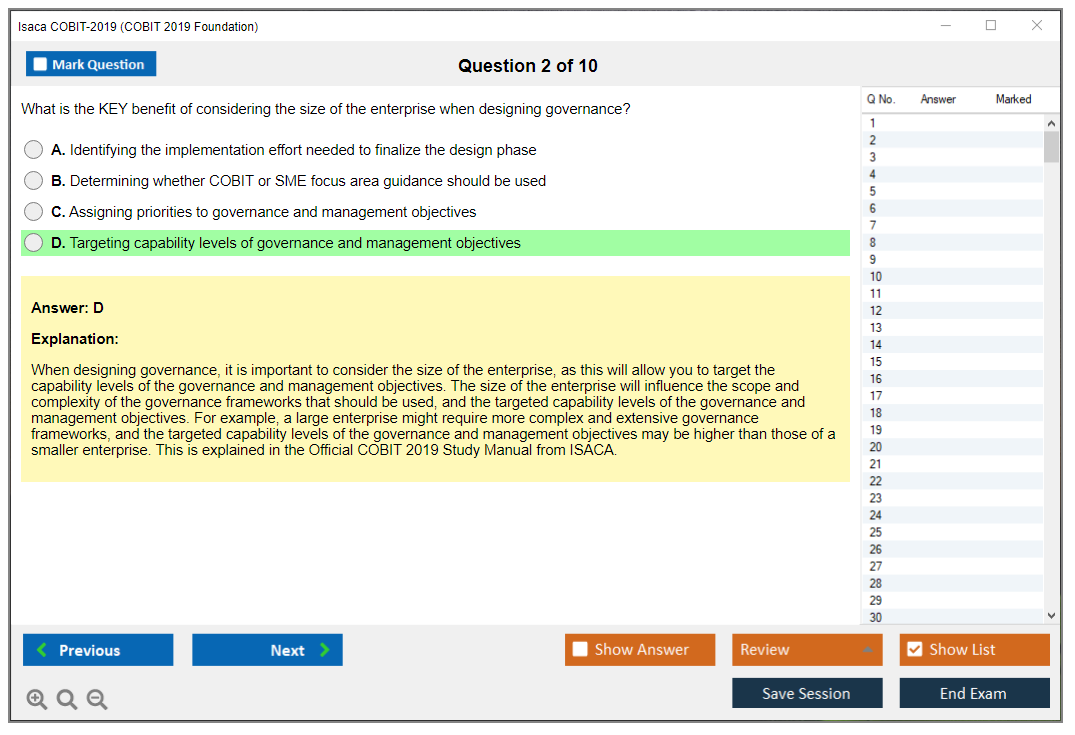
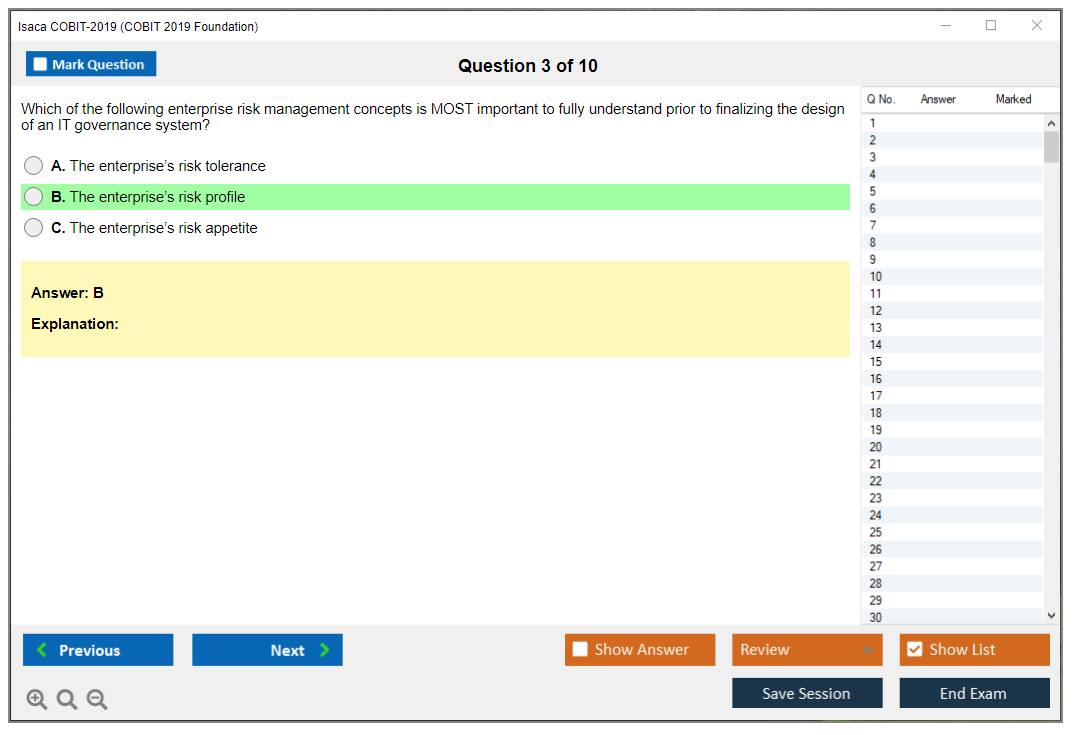
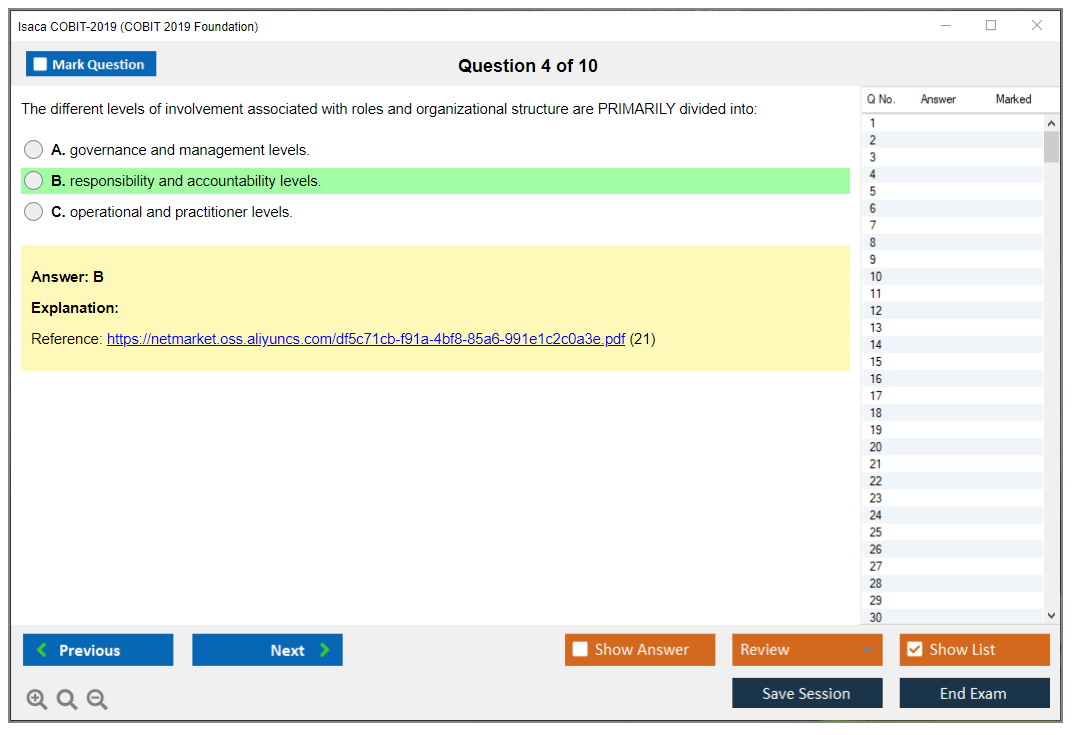
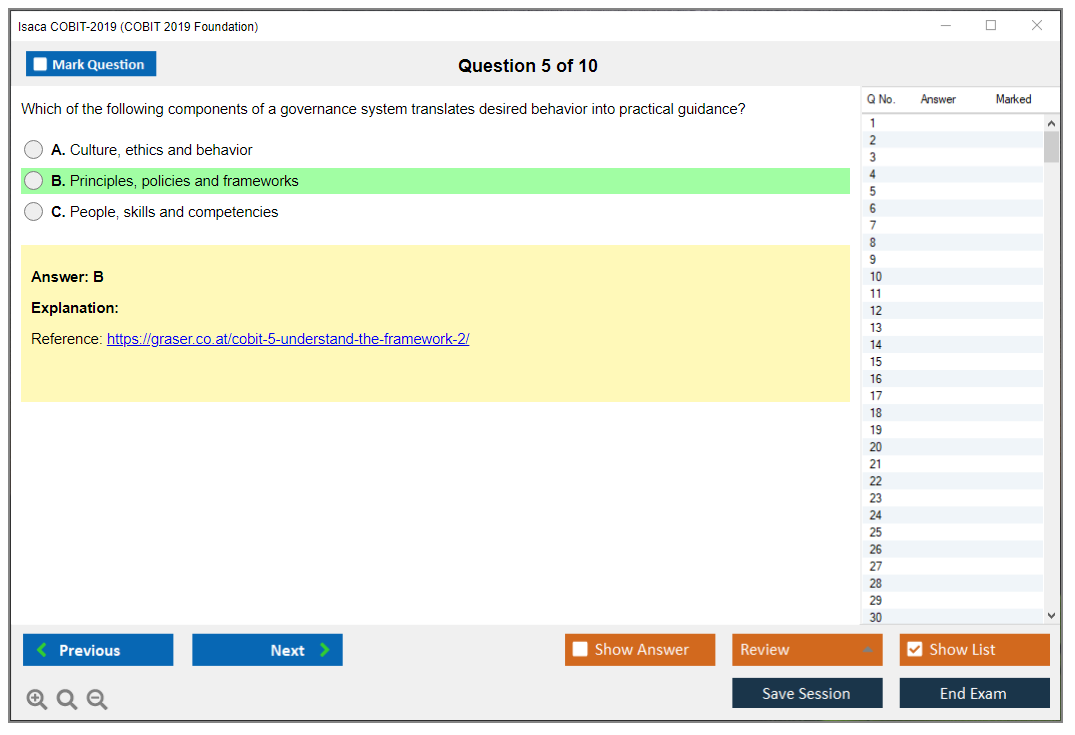
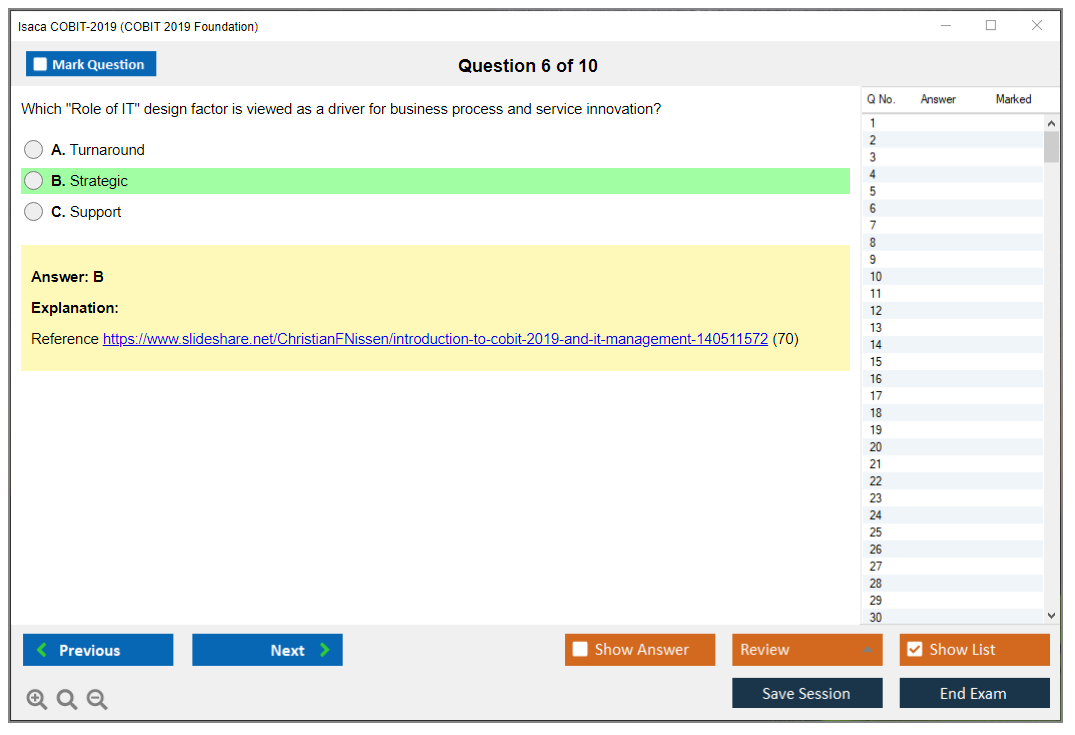
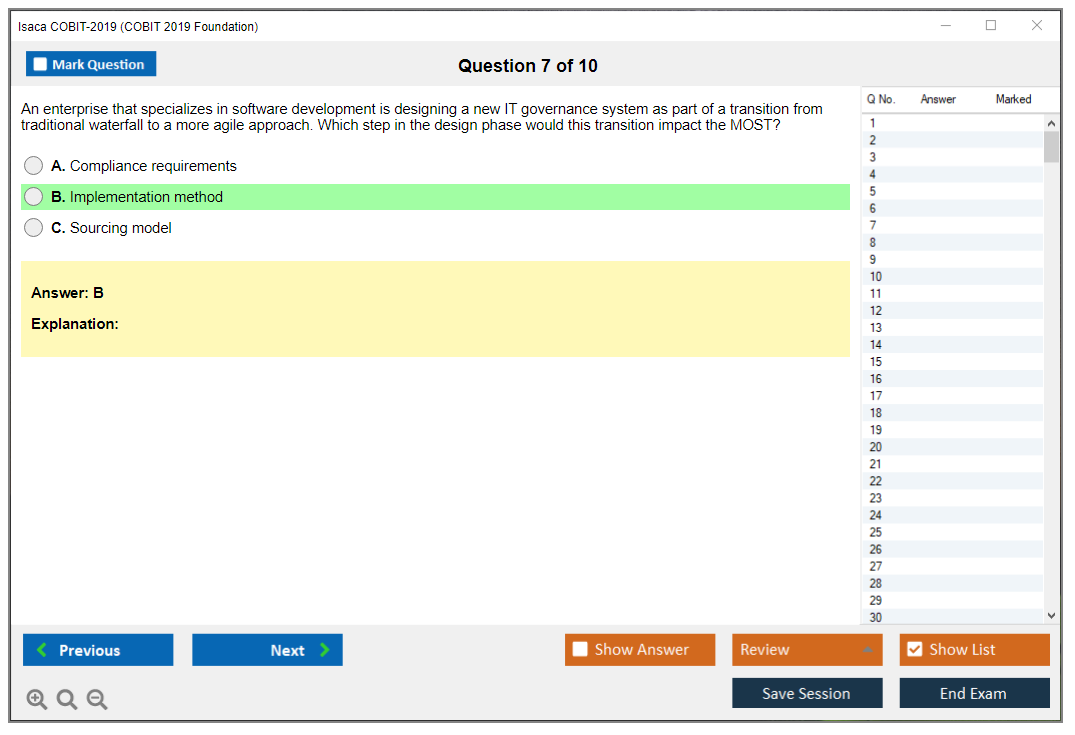
Isaca COBIT-2019 (COBIT 2019 Foundation)
COBIT 2019 Foundation Certification: Complete Introduction
What is the COBIT 2019 Foundation certification and why it matters
So here's the thing. The COBIT 2019 Foundation certification? It's your entry ticket into enterprise IT governance and management. Honestly, it's built for anyone needing to understand how organizations align technology investments with business goals while juggling risk management and meeting those compliance requirements that never end.
ISACA (that's the Information Systems Audit and Control Association, by the way) issues this credential, and they've been the authority for IT governance, risk, and audit professionals for decades. They're the same folks behind CISA, CISM, and CGEIT, so the COBIT 2019 Foundation certification carries real weight.
COBIT's evolved a lot. Earlier versions like COBIT-5 laid groundwork, but COBIT 2019 brought big improvements. We're talking better flexibility for tailoring governance systems to specific organizational needs, clearer performance management guidance, plus updated design factors reflecting modern business complexities like cloud adoption, agile development, and DevOps practices. The framework emphasizes enterprise governance of information and technology (EGIT) rather than just IT governance, recognizing that technology affects every corner of modern organizations.
Who actually needs this certification
IT governance professionals get obvious benefits.
If you're designing or implementing governance frameworks, COBIT 2019 Foundation gives you the vocabulary and structure everyone recognizes. It's like speaking a common language in a room full of different dialects.
Auditors and assurance practitioners? They use COBIT as an assessment benchmark constantly. Internal auditors evaluating IT controls reference COBIT governance and management objectives all the time. The EDM, APO, BAI, DSS, and MEA domains become your everyday language. Risk managers and compliance officers find COBIT helpful because it connects IT risks to business outcomes and maps cleanly to regulations like SOX, GDPR, and industry-specific requirements.
Enterprise architects benefit too. COBIT helps bridge that gap between technical architecture decisions and business strategy, which is harder than it sounds. IT managers and directors use it to justify budgets, demonstrate value, and communicate with non-technical executives who don't speak tech.
This isn't just for IT people, though. Business leaders overseeing digital transformation projects or sitting on governance committees find COBIT 2019 Foundation valuable because it demystifies how technology governance works without drowning them in technical jargon. I once watched a CFO actually light up during a COBIT presentation when she realized the framework could help her finally understand what the IT department was spending money on.
How COBIT 2019 Foundation fits in the certification space
Here's where things get interesting.
Unlike CISA which focuses on auditing or CRISC which zeroes in on risk management, COBIT 2019 Foundation covers the broader governance ecosystem. It's less specialized but way more foundational, if that makes sense. You learn the framework that other certifications reference constantly.
CGEIT requires years of experience and covers advanced governance topics, while COBIT 2019 Foundation? No formal prerequisites whatsoever. It's deliberately accessible, which I appreciate. You can earn COBIT 2019 Foundation early in your career, then build toward COBIT Design and Implementation or pursue specialized credentials like CDPSE for privacy or CCAK for cloud auditing.
Real-world applications that actually matter
Frameworks are useless sitting on shelves.
COBIT 2019 shines when you're designing governance systems from scratch or fixing broken ones, and there are plenty of broken ones out there. The design factors (enterprise strategy, risk profile, compliance requirements, role of IT, sourcing model, implementation methods, technology adoption, enterprise size, and others) help you customize governance instead of forcing cookie-cutter approaches that never quite fit.
Performance management is another practical area I've seen make real impact. You'll learn setting governance objectives, defining metrics, and measuring whether IT investments deliver promised value. This matters when executives ask "Are we getting ROI from our cloud migration?" or "How do we know our cybersecurity program's actually effective?"
Aligning IT with business objectives sounds like consultant-speak, I know, but it's really important in practice. COBIT's governance and management objectives provide a common language between business stakeholders and IT teams, reducing those misunderstandings that torpedo projects before they even launch.
Regulatory compliance becomes more manageable when you map COBIT to frameworks like ISO 27001, NIST Cybersecurity Framework, or COSO. ISACA even offers NIST-COBIT-2019 implementation guidance for organizations juggling multiple frameworks at once.
Career impact and market demand
Not gonna lie here. Salary data shows certified professionals earn more. The exact premium varies by role and region, but governance professionals with COBIT credentials consistently command higher compensation than those without.
More importantly? The certification opens doors globally in ways other credentials don't. Government agencies, financial institutions, healthcare organizations, and multinational corporations across North America, Europe, Asia-Pacific, and Latin America recognize COBIT 2019 Foundation. Public and private sectors both value it because governance requirements don't respect industry boundaries.
Job postings tell the story. IT governance analysts, compliance managers, senior auditors, and director-level positions increasingly list COBIT knowledge as preferred or required. Employers value the credential because it signals you understand governance principles beyond vendor-specific tools or tactical implementation details.
What you'll actually master and time commitment
The certification validates understanding governance system components: principles, policies, processes, organizational structures, culture, information, services, infrastructure, and applications. It's a lot, honestly. You'll grasp design factors, focus areas, and how to adjust governance to organizational needs without making things unnecessarily complicated.
Performance management concepts become second nature. Goals, metrics, maturity levels. You'll speak this language fluently. The governance and management objectives across all five domains give you a mental map of what good IT governance covers.
Most people spend 40 to 80 hours preparing depending on background, which seems reasonable. If you're already working in audit, risk, or governance, four weeks of part-time study might suffice. Maybe less if you're already immersed in this stuff. Career changers or those new to governance concepts should budget 8 to 12 weeks with COBIT 2019 Foundation study materials and practice tests.
The certification doesn't expire. Though many professionals pursue continuing education to stay current anyway. Best practices shift constantly. It's really a stepping stone. Once you've got foundational knowledge, advanced roles and certifications become more accessible.
COBIT 2019 Foundation Exam Overview and Structure
What is the ISACA COBIT 2019 Foundation certification?
COBIT 2019 Foundation certification is your entry credential if you're tired of governance conversations that go nowhere. You get a shared language for enterprise governance of information and technology (EGIT) that actually sticks. The thing is, if your organization keeps circling back to "who owns IT risk" every quarter without landing anywhere, COBIT hands you the structure to break that loop. Clarity beats another round of confused stakeholder meetings.
Who it's for (audience and roles)
Auditors. Risk folks. Security managers, IT managers, PMO leads. Basically anyone in the trenches. Also consultants who keep getting dragged into "fix our governance" projects (you know who you are). If you're already swimming in ISACA waters like CISA or CISM, this fits right into the same vocabulary, just governance-first instead of audit-first.
What you'll learn (skills and outcomes)
You'll learn how COBIT defines a governance system, how principles and components hang together instead of floating around, and how objectives map across EDM/APO/BAI/DSS/MEA. You also get the logic for tailoring, which is the whole point, because copying some generic model never survives contact with a real enterprise that has actual people and actual politics. I've seen teams try. It falls apart by month two.
COBIT 2019 Foundation exam overview
The COBIT 2019 Foundation exam looks straightforward on paper. But it punishes fuzzy memorization hard. No fluff allowed. Closed-book environment.
Exam format (questions, time limit, delivery options)
Format is simple: 40 multiple-choice questions, single best answer only. Time? 60 minutes total, no breaks, so you better have pace down. Delivery is either online proctored through the ISACA platform or in-person at authorized testing centers worldwide. Language defaults to English with translations depending on your region. Check availability first.
Closed-book status really matters here. You can't "reference lookup" your way through component lists or objective names mid-exam, so you have to build recall beforehand, not hope for the best. For allowed materials, expect basically none: no personal calculator needed, and if a calculator is permitted it's typically an on-screen one. Scratch paper rules depend on the proctoring provider and test center, so check your appointment email and don't just assume you can grab a notepad off your desk.
Online proctoring has its own tax. System checks, stable internet that won't drop, webcam and mic that work, ID verification, camera angle that shows both you and your desk, and a clean environment with no extra monitors, phones, or random papers lying around. Proctors will stop you for stuff that feels silly until it happens to you mid-exam and tanks your focus.
Exam objectives (domains and key topics)
Domain 1 is core concepts and the six principles of the governance system. Foundation stuff you'll see everywhere. Principle 1, Provide Stakeholder Value, is about value creation balanced against risk and resources, and you'll see it applied in governance design through the goals cascade, where stakeholder drivers roll into enterprise goals, alignment goals, and then governance and management objectives in sequence. Principle 2, Complete Approach, is the one people trip on because it spans seven component categories: processes, organizational structures, policies and procedures, information flows, culture and behaviors, skills and competencies, and services and infrastructure. All of them, not pick-and-choose.
Principle 3, Dynamic Governance System, is about tailoring and staying current using design factors, not freezing the model in time like some dusty framework from 2003. Principle 4, Governance Distinct from Management, is the EDM oversight side versus management execution through APO/BAI/DSS/MEA. The exam loves this distinction. Principle 5, Adjusted to Enterprise Needs, leans on 11 design factors and how you prioritize them based on context. Principle 6, End-to-End Governance System, covers full enterprise scope, not just "IT department governance only" like some orgs try to do.
Domain 2 goes deep on governance system components. You'll get questions that ask you to identify which component category a scenario is describing, especially culture/behaviors versus policies/procedures (they're not the same thing), and how information flows show up as reporting, decision inputs, and escalation paths that actually matter.
Domain 3 is the objectives hierarchy. Super testable. Governance is EDM (Evaluate, Direct, Monitor). Management splits into APO with 14 objectives for strategy alignment, BAI with 11 for building and change, DSS with 6 for operations and service delivery, and MEA with 5 for monitoring, assurance, and compliance. Memorize those counts. The exam likes structure questions: purpose statements, components, and the related guidance around each objective, plus recognizing where an activity "belongs" when a scenario mixes planning, delivery, and monitoring all at once (which happens constantly in real orgs).
Domain 4 is COBIT performance management: capability assessment, maturity levels, and performance metrics that show whether you're improving or lying to yourself. Domain 5 is design factors and focus areas, including enterprise strategy, enterprise goals, risk profile, IT-related issues, threat environment, compliance requirements, role of IT, sourcing model, implementation methods, technology adoption strategy, and enterprise size. Eleven factors total. Domain 6 is implementation guidance, basically making COBIT actionable in your org without turning it into a shelf document that nobody reads after the first steering committee meeting.
Funny thing about Domain 5: the design factors sound academic until you're in a room with finance, legal, and operations all pulling different directions, and suddenly you realize why "threat environment" and "role of IT" aren't just buzzwords. They're survival tools.
Question weighting and how questions feel
ISACA doesn't always publish a neat percentage table in marketing copy (I mean, they could, but they don't), but the heaviest weighting is typically on core concepts and principles, components, and the objective model (EDM/APO/BAI/DSS/MEA). Scenario-based questions show up a lot, mixed with knowledge recall, so you need both: know the definitions cold, and also read the scenario for the "real ask" (oversight vs execution, design choice vs operational control, monitoring vs building).
Common formats: definition matching, scenario analysis, component identification, principle application. The trick is not overthinking. Pick the single best answer that matches COBIT wording, not what sounds good in your org.
COBIT 2019 Foundation cost
People ask about ISACA COBIT 2019 certification cost constantly, and yes, it varies by member vs non-member status and region, sometimes significantly. Add optional training course fees if you want structure, plus the book/publication cost, plus retake fees if needed (hopefully not), plus practice questions if you buy a question bank separately.
Passing score and scoring
COBIT 2019 Foundation passing score is typically presented as a scaled result rather than "you need X out of 40," so don't try to reverse-engineer it or game the system. Aim to be solid across domains, not perfect in one and terrible in another.
Difficulty: How hard is COBIT 2019 Foundation?
Beginner-to-intermediate level, really. The hard part isn't conceptual complexity. It's terminology and mapping, like remembering which objective domain you're in and not mixing governance with management when you're tired and rushing. Performance management also trips people because capability and maturity ideas sound similar when you're staring at question 35 with five minutes left.
Prerequisites and eligibility
COBIT 2019 Foundation prerequisites are basically none. Wide open. Recommended background: governance, risk, audit, compliance, or IT management experience helps a ton. If you've done CRISC or looked at CGEIT, you'll recognize the mindset immediately and have a head start.
Best study materials for COBIT 2019 Foundation
Start with official COBIT 2019 publications and the official exam outline for COBIT 2019 Foundation exam objectives. Don't skip the outline. Add a short course if you need deadlines to stay accountable. COBIT 2019 Foundation study materials that actually help are the ones that force you to map principles, components, and objectives actively, not just passively read and hope osmosis works (it doesn't).
Practice tests and exam prep strategy
Use an official COBIT 2019 Foundation practice test if you can find one. They're worth it. Timed sets matter, because 60 minutes goes fast once you're in the chair. Keep an error log for every practice question you miss. Review wrong answers by objective and principle, then revisit your weak domain with fresh eyes. Don't just redo the same questions until you memorize answer letters. That's fake confidence.
Renewal and maintaining the credential
COBIT 2019 Foundation renewal is usually not like ISACA certifications with ongoing CPE requirements (wait, let me check that), but policies change, so confirm with ISACA directly before assuming. If you want next steps, look at COBIT Design & Implementation or governance-heavy tracks like CGEIT to build on the foundation.
FAQs
How much does the COBIT 2019 Foundation exam cost? Member status and region change it. Check ISACA's site. What is the passing score for COBIT 2019 Foundation? Scaled scoring model, plan for broad competence across domains. How hard is the COBIT 2019 Foundation certification? Terminology-heavy, not math-heavy. Memorization with application. What are the best study materials and practice tests for COBIT 2019 Foundation? Official pubs plus timed practice under exam conditions. Does COBIT 2019 Foundation require renewal or CPE credits? Usually no, but verify current ISACA rules before assuming.
ISACA COBIT 2019 Certification Cost Breakdown
COBIT 2019 Foundation cost breakdown: what you'll actually pay
Here's the deal. The official COBIT 2019 Foundation exam fee sits at $195 USD if you're an ISACA member. That's your baseline number. Non-members? You're looking at $335 USD, which is a pretty hefty premium just for sitting the exam.
Now here's where it gets interesting, and I mean this is where people mess up the calculation constantly. ISACA annual membership runs around $135-$150 depending on your region and membership type. Wait, let me back up. If you're planning to knock out just this one cert, the math doesn't really favor joining because you'd spend roughly $345 total ($195 exam plus $150 membership) versus $335 as a non-member. But if you're eyeing multiple ISACA credentials like CGEIT or CISM down the road, membership pays for itself fast. Two exams? You're already $140-plus ahead.
Regional pricing gets messy
The USD prices I mentioned? They shift based on where you actually are. Kind of annoying. Europe tends to run slightly higher due to VAT considerations. Asia-Pacific pricing sometimes includes local tax structures that bump the effective cost. I mean you might see the same $195 member price listed, but after currency conversion and regional adjustments, it could land anywhere from $180 to $230 equivalent.
Currency conversion is its own headache. If your local ISACA chapter prices in EUR or GBP or AUD, you're subject to whatever exchange rate they've locked in, which might not match today's actual rate. Not gonna lie, I've seen people pay 5-10% more just because of unfavorable conversion timing.
Training costs vary wildly
Official ISACA-endorsed training courses range from about $800 up to $2,500. That's a massive spread when you think about it. The wide variation comes down to delivery format and what's bundled into the package. In-person instructor-led sessions hit the top end because you're paying for the physical classroom, dedicated instructor time, and usually better networking opportunities. Virtual classroom options typically run $1,200-$1,800, which saves you travel costs but keeps that live instructor interaction.
Self-paced e-learning? That drops to the $500-$1,200 range. Flexible scheduling, work at your own speed, rewind the confusing parts about governance and management objectives fifty times if needed. Most training packages include official COBIT 2019 materials, practice questions, some level of instructor access (varies a lot), and sometimes an exam voucher bundled in. Always check what's actually included because that voucher alone is worth $195-$335.
I spent an embarrassing amount of time once comparing fifteen different training providers line by line in a spreadsheet, trying to figure out which package gave the best bang for buck. Turned out the mid-tier option from a provider I'd never heard of before had the same content as the premium one but without the fancy branded notebook and coffee mug. Live and learn.
Don't forget the framework and study materials
The thing is, the COBIT 2019 Framework publication is free if you're an ISACA member. Just download it. Non-members pay somewhere around $75-$95 to purchase. That's another membership perk that adds up.
Third-party study materials? All over the place. Books run $40-$80 typically. Video courses from platforms like Udemy or specialized IT training sites range $100-$300. Question banks and practice test subscriptions might cost $50-$150 as one-time purchases, or $30-$50 monthly for subscription access. The COBIT 2019 Foundation practice test options matter more than people think. You need to understand how ISACA phrases questions about design factors and focus areas, which is its own skill.
Hidden fees and gotchas
Exam retake fees mirror the initial attempt, which stings. Failed? You're paying another $195 (member) or $335 (non-member) with zero discount. None. Rescheduling runs $25-$50 depending on how much notice you give. Less than 48 hours and you might forfeit the entire fee.
Total cost estimation really depends on your path. There's no one-size-fits-all here. Budget self-study approach: $250-$450 total (exam plus basic materials plus maybe a question bank). Moderate investment with a course: $1,000-$1,800. Premium full prep with instructor-led training and all materials: $2,000-$3,000. That premium tier makes sense if your employer's paying or you need the structure because you can't stay disciplined with self-paced stuff.
Speaking of employers, definitely explore sponsorship. Build a business case around how COBIT governance system knowledge applies to your organization's compliance needs or COBIT Design and Implementation roadmap. Many IT departments have training budgets sitting unused.
Special pricing and discounts
Group training discounts kick in when organizations certify multiple employees at once. Sometimes 15-20% off per seat. ISACA runs special promotions during awareness months or regional conferences, so timing matters. Student discounts exist but availability varies by region and you'll need proof of enrollment.
Payment methods? Credit cards for individuals, purchase orders and wire transfers for organizational purchases. Refund policies are strict. Check the specific terms before you register because circumstances preventing you from testing don't always qualify.
ROI wise? If you're in IT governance, risk, or audit, salary bumps of $5,000-$15,000 aren't uncommon after adding governance credentials like this plus CRISC or CGEIT. One to three years and the certification investment pays back, particularly if you're moving into enterprise governance of information and technology roles where this framework knowledge becomes critical.
COBIT 2019 Foundation Passing Score and Scoring Methodology
What is the ISACA COBIT 2019 Foundation certification?
Look, COBIT 2019 Foundation is basically the starting point if you wanna talk governance without everyone's eyes glazing over. It covers enterprise governance of information and technology (EGIT), showing you what "good" actually means when business goals, risk appetite, and IT delivery all slam into each other in the real world.
Who it's for (audience and roles)
Perfect for auditors. GRC analysts too. IT managers, security leads, process owners, consultants. Honestly, anyone who's stuck playing translator between "the board demands control" and "the engineers just want speed." Different jobs, yeah. Same headache.
What you'll learn (skills and outcomes)
You'll pick up COBIT principles and the governance system plus all its components, then figure out how governance and management objectives (EDM, APO, BAI, DSS, MEA) actually map to daily work instead of just sitting in a binder collecting dust. There's COBIT performance management in there. Also the design factors and focus areas that let you adjust a governance system to your specific enterprise instead of forcing some cookie-cutter spreadsheet nightmare onto departments that don't fit the mold.
My old manager used to joke that governance frameworks were like assembling IKEA furniture without instructions, except the instructions exist but nobody reads them, and then someone complains when the bookshelf falls over. He wasn't entirely wrong.
COBIT 2019 Foundation exam overview
The thing is, the COBIT 2019 Foundation exam checks whether you recognize the model, know the terminology, and follow the logic. Not whether you can architect an entire governance program solo on day one. It's still an exam, though. Don't sleep on those vocabulary questions.
Exam format (questions, time limit, delivery options)
You get 40 multiple choice questions. Answer them all, hit submit, and boom. Immediate results pop up right after exam completion with a crystal-clear pass or fail status. No waiting game. No "we'll email you in 6 weeks" nonsense. I mean, that instant feedback? Pretty refreshing.
Exam objectives (domains and key topics)
Expect COBIT principles and governance system, governance system components, the objective families (EDM/APO/BAI/DSS/MEA), COBIT performance management, designing a adjusted governance system (design factors, focus areas), and actually making COBIT work with implementation concepts. The exam loves official phrasing. Keep those COBIT 2019 Foundation exam objectives nearby while studying, even if you already "get" governance from years in the field.
COBIT 2019 Foundation cost
Everyone asks about ISACA COBIT 2019 certification cost. Yeah, it adds up fast once you stack exam fees, textbooks, and practice question banks. Budget like a grown-up. Future you will be grateful.
Exam fee (member vs non-member, region considerations)
ISACA pricing shifts based on member status and sometimes region or delivery partner. Check current pricing in your ISACA profile before committing, because the cheapest route might be "join first, register second," or it might be "skip membership," depending on your math.
Training course cost (optional) and what's included
Official training helps if structure works for you. Self-driven? Skip it. Put that cash toward better COBIT 2019 Foundation study materials and more practice questions instead.
Additional costs (retake fees, books, practice questions)
Retakes aren't cheap. Fail once? You're paying full price again. Books and question packs are the other usual expenses. This is where something like the COBIT-2019 Practice Exam Questions Pack becomes a solid option if you want volume practice for $36.99.
Passing score and scoring
This is what everyone obsesses over. Fair enough. It's the gatekeeper.
COBIT 2019 Foundation passing score (what to expect)
The official COBIT 2019 Foundation passing score sits at 70%. That's 28 correct answers out of 40 total questions. Score 69%? You fail. Complete retake, full fee payment required. Harsh? Absolutely. But clear.
How scoring works (scaled vs raw, if applicable)
No partial credit here. Each question carries equal value, with zero weighting differences between topic areas. There aren't any "experimental" unscored questions hiding in there. This exam uses straightforward raw percentage calculation, not scaled scoring, so your result is literally "how many you got right." No curve. No adjustment based on how other candidates performed.
Your score report? Pretty bare-bones. You get total percentage correct plus pass/fail status. That's it. No item-level feedback, no diagnostic breakdown by domain or objective. Mainly to protect exam security, which, honestly, makes sense when questions come from a shared bank and people constantly post screenshots everywhere.
Difficulty: How hard is COBIT 2019 Foundation?
Beginner to intermediate territory, but that 70% threshold demands solid mastery rather than minimal competency. The killer is terminology and mapping. Like keeping governance system components, performance management, and objective families straight when all the answer options feel almost right, you're mentally drained, and the wording reads like a committee wrote it during a three-hour meeting nobody wanted to attend.
Questions undergo psychometric analysis to maintain consistent difficulty across versions. Different candidates get different question sets pulled from a validated item bank. ISACA also uses equating processes, so one version doesn't accidentally become the "easy one" whispered about on Reddit while another turns into the "why am I here" nightmare version. Your scoring remains raw, though.
Prerequisites and eligibility
COBIT 2019 Foundation prerequisites? Basically none. No experience requirement, no mandatory audit hours. Still, recommended background definitely helps.
COBIT 2019 Foundation prerequisites (required vs recommended knowledge)
Required: register, show up, pass. Recommended: understand basic IT governance, risk management, controls, and how organizations actually make decisions instead of how they claim to in mission statements.
Best study materials for COBIT 2019 Foundation
Use official COBIT publications first. Then layer in practice questions. Not gonna lie, reading the source material feels glacially slow sometimes. But it prevents you from accidentally memorizing someone else's incorrect summary that'll tank your score.
Official ISACA/COBIT publications to use
Start with core COBIT 2019 Framework material, then drill into governance and management objectives. Hit performance management sections you keep missing in practice quizzes.
Practice tests and exam prep strategy
Practice tests? That's where you build your safety margin. Target 80%+ on any COBIT 2019 Foundation practice test, because exam-day nerves are absolutely real. 70% leaves zero room for a rough question set or one bad brain moment.
Use timed sets. Review every single miss. Maintain an error log. Hammer your weak areas relentlessly. When shopping around, the COBIT-2019 Practice Exam Questions Pack is one solid option for getting volume fast. You can loop through it again during your final week to verify your accuracy stays stable under time pressure.
Also? Time management matters more than people think because unanswered questions are just wrong answers you didn't even guess on. There's no penalty for wrong answers, so always pick the best available option, even when you're uncertain. A "maybe" can still score a point.
Renewal and maintaining the credential
COBIT 2019 Foundation renewal rules run lighter than advanced certifications. Your exam result doesn't expire, but your certification status depends on whatever maintenance requirements ISACA applies to that credential currently. Double-check in your ISACA account. Thinking about moving up? Consider COBIT Design & Implementation, or ISACA tracks like CGEIT or CRISC.
Digital badge and certificate issuance typically lands within 24 to 48 hours after passing. You can access official certification verification through the ISACA online registry. If you suspect a scoring error occurred, ISACA maintains a score verification request process, but don't expect item-level regrading since the report never shows individual questions.
FAQs
How much does the COBIT 2019 Foundation exam cost?
Depends on member status and region, plus any add-ons like textbooks and practice questions. Plan for exam fee plus prep materials. Remember, a fail means paying the whole thing again.
What is the passing score for COBIT 2019 Foundation?
70%. That's 28 out of 40.
How hard is the COBIT 2019 Foundation certification?
Moderate difficulty. Terminology heavy. Passing demands real preparation.
What are the best study materials and practice tests for COBIT 2019 Foundation?
Official COBIT documentation plus consistent practice work, like the COBIT-2019 Practice Exam Questions Pack, combined with your own personalized error log.
Does COBIT 2019 Foundation require renewal or CPE credits?
The exam result doesn't expire, but maintenance rules can apply to keep certification status active. Verify everything in ISACA's portal. Compared with scaled exams like CISA and CISM (450/800), this one's way simpler to understand because your COBIT 2019 Foundation passing score is literally just your raw percentage.
How Hard is the COBIT 2019 Foundation Certification Exam?
Overall difficulty: beginner to intermediate territory
Look. The COBIT 2019 Foundation certification sits comfortably in that beginner-to-intermediate range. It won't wreck you like CISSP or CISA will, but it's definitely not a cakewalk either. I'd put it roughly on par with ITIL Foundation, maybe slightly harder depending on your background. If you've got basic IT governance understanding, you're already halfway there.
IT professionals with audit or compliance experience? They cruise through this thing. Operations folks who've been heads-down in technical implementation for years tend to struggle more because they're suddenly thinking about governance from 30,000 feet instead of, you know, configuring servers.
The terminology gauntlet
The biggest hurdle? Drowning in COBIT's alphabet soup. EDM, APO, BAI, DSS, MEA, RACI. You'll be dreaming in acronyms. The framework has 40 governance and management objectives, and you need to know not just what they are but how they relate to each other. That's a lot of mental real estate.
Memorizing six COBIT principles sounds simple until you realize you need to apply them to scenario questions, not just recite them. Same deal with the 11 design factors. You're not just listing them, you're explaining how they influence governance system tailoring for different organizations.
Quick tangent: I once watched someone fail this exam three times because they kept treating it like a vocab test. They could define every term perfectly but couldn't figure out which objective applied to actual situations. Don't be that person.
Governance versus management: the eternal struggle
Here's where people trip up constantly. Understanding the difference between governance activities (the EDM domain) and management activities (APO, BAI, DSS, MEA) requires a mental shift that catches folks off guard. Governance is about directing and monitoring. Management? That's about planning, building, running, and measuring. Sounds simple written out like that, but exam questions love to blur those lines and watch you squirm.
The goals cascade concept is another layer of complexity. Stakeholder drivers flowing through enterprise goals down to alignment goals. That tests whether you actually understand the framework or just memorized some flashcards.
Scenario-based thinking beats rote memorization
The exam isn't testing if you can parrot definitions. It wants to know if you can apply COBIT concepts to real situations. You'll get carefully worded questions that require close reading and elimination of distractors. They're not trying to trick you exactly. Or wait, maybe they are? Similar-sounding objectives and confusing governance versus management activities are common mistake patterns you'll encounter.
Performance management concepts? Yeah, those. Including capability levels and maturity assessment approaches. That's where the conceptual nature really shows up. You need to understand the why and how, not just the what.
Time management and practical factors
Sixty minutes. Forty questions. That gives you 90 seconds per question, which's generally adequate if you've prepared properly. But you can't afford to second-guess every answer because time evaporates faster than you'd think. The questions aren't particularly long, but some require mental gymnastics to work through all the options.
Candidates with IT audit backgrounds? They find this exam way more accessible because they're already familiar with controls and governance thinking. They get it. But someone coming purely from development or infrastructure has a learning curve for sure. You're shifting from technical implementation focus to governance perspective.
Study time reality check
Complete beginners should budget 60-80 hours. Some governance experience? Cut that to 40-60 hours. Experienced practitioners who've worked with ITIL, ISO, or COSO frameworks can probably get away with 20-40 hours because they already think in governance terms. It's just how their brains're wired at that point.
The COBIT 2019 Foundation study materials from ISACA are full and well-organized, which makes the exam easier than it could be. The framework structure's logical. Terminology is well-defined. But that broad scope covering the entire framework means you can't skip chapters and hope for the best. Tried that approach once, wouldn't recommend it.
What makes it manageable (and what doesn't)
The complete approach principle challenges people because it requires systems thinking across seven component categories. You can't compartmentalize when everything connects to everything else, which's kind of beautiful but also frustrating. The five management domains each have specific focus areas, and distinguishing between them requires genuine understanding, not memorization.
Focus areas? They're pre-configured governance scenarios adding another complexity layer. You're not just learning the base framework, you're learning how it adapts.
But here's the thing: practical experience with governance implementation dramatically reduces exam difficulty. If you've actually used COBIT concepts in real work, even tangentially, the abstract concepts become concrete. Real-world examples stick in your brain way better than dry definitions. Who actually retains pure theory anyway?
Preparation strategies that actually work
Multiple COBIT 2019 Foundation practice tests significantly improve your success probability. Not because questions repeat. They don't. But because you get familiar with question styles and how ISACA thinks, which's invaluable for building that test-taking instinct. Scoring 80%+ on practice exams? You're probably ready.
Self-study's totally doable with discipline, but instructor-led training reduces complexity through guided learning. Someone explaining the interconnections between components saves you hours of puzzling through documentation alone.
Don't underestimate this exam just because it says "foundation." The designation means it's entry-level for the COBIT track, not that it's trivial or something you can wing. Understanding component descriptions and their relationships matters more than rote memorization, and that takes actual mental effort.
If you're considering next steps after passing, check out the COBIT Design and Implementation certificate or broader certifications like CGEIT or CRISC to deepen your governance expertise.
COBIT 2019 Foundation Prerequisites and Eligibility Requirements
What is the ISACA COBIT 2019 Foundation certification?
The COBIT 2019 Foundation certification is ISACA's entry credential for people who want to speak governance without sounding like they memorized a policy binder. COBIT deals with enterprise governance of information and technology (EGIT), which means how businesses squeeze value from IT while keeping risk locked down and backing everything up with actual evidence.
Who it's for (audience and roles)
Auditors love it. Controls everywhere.
Compliance folks too. IT managers, business analysts, enterprise architects, risk people, even security leads who've gotten sick of arguing with the business using only technical language. They all show up here.
The thing is, it's broad. Like, super broad.
What you'll learn (skills and outcomes)
You'll pick up how COBIT frames a governance system, including COBIT governance system and components, plus mapping work to governance and management objectives (EDM, APO, BAI, DSS, MEA). There's also COBIT performance management basics, and you'll see how design factors and focus areas shape a adjusted governance approach that actually fits different orgs and industries instead of some cookie-cutter nonsense. Less "configure the tool," more "prove the decision makes sense."
COBIT 2019 Foundation exam overview
The COBIT 2019 Foundation exam is typically multiple choice and delivered either online proctored or through a testing partner depending on your region. Honestly the main trick is pacing because the questions often feel like two answers could work unless you're anchored to the framework's wording and intent, not just winging it based on experience. Not hard math. More reading comprehension.
Exam objectives (domains and key topics)
The COBIT 2019 Foundation exam objectives usually cluster around COBIT principles and the governance system idea, plus governance system components like processes, org structures, info flows, culture. You get EDM/APO/BAI/DSS/MEA objective families. Performance management shows up. Design factors and focus areas matter, along with implementation concepts that make COBIT actionable.
COBIT 2019 Foundation cost
People always ask ISACA COBIT 2019 certification cost because training can dwarf the exam fee. ISACA membership isn't required, but it often drops pricing and gives you access to extra resources, which adds up fast. Region matters. Delivery method matters. Check your local ISACA site for exact numbers.
Training courses? Optional. Priced like professional training, not some $20 video class. Books and question banks add up too. I mean, if you want a cheaper way to drill the format, COBIT-2019 Practice Exam Questions Pack is $36.99 and works as a quick reality check after you read the core guide.
Passing score and scoring
The COBIT 2019 Foundation passing score is set by ISACA and may be presented as scaled scoring depending on the exam version and delivery partner. Translation: don't obsess over raw percentages from random forums, because those numbers shift. Focus on consistently getting the objective mapping questions right. Those are where people bleed points.
Difficulty: How hard is COBIT 2019 Foundation?
Beginner to intermediate.
The technical depth required is minimal, which surprises a lot of folks, because you're not being tested on implementing controls in a firewall. You're being tested on governance logic, terminology, and how the framework pieces fit together like a puzzle. Common pain points? Terminology, especially components and objectives. Distinguishing governance vs management trips people up. COBIT performance management scoring concepts feel abstract until they click.
Study time? If you already work near audit, risk, or governance, 1 to 4 weeks is realistic. Brand new? 4 to 8 weeks is safer, and a structured course may save you from random gaps that self-study misses.
I knew someone who tried cramming this in three days before a job interview. Predictably, it went sideways. They passed on the second try after actually reading the framework guide instead of just YouTubing "COBIT explained" videos at 2x speed. Lesson there.
Prerequisites and eligibility
Here's the part people overthink.
Officially, COBIT 2019 Foundation prerequisites are basically: none.
No mandatory prerequisites. The exam's open to anyone interested in IT governance. No degree required. No work experience required, unlike advanced ISACA certifications like CISA or CISM. No prior certification required either, so you don't need to stack something else first, which is refreshing. Age is the one practical gate: you generally must be 18+ to sit for ISACA exams in most jurisdictions, though that's standard professional testing stuff.
Membership status? Not required for eligibility, but it can mean cost savings and better access to COBIT 2019 Foundation study materials and events that non-members don't see. Language matters too: you need strong reading comprehension in the exam language, usually English, because the questions are wordy and subtle, not quick technical multiple choice. And if you're doing online proctoring, basic computer literacy matters. Like being able to install testing software, handle webcam rules, and troubleshoot simple issues without melting down.
Recommended background knowledge is simple: basic IT operations, business processes, and organizational structures. Ideal candidate profile? 1 to 3 years in any role that touches governance, risk, audit, or compliance. IT audit professionals tend to pick this up fast because they already think in controls and evidence chains. IT managers do well because they live the operational pain and understand business alignment needs every single day. Business analysts bring systems thinking. Enterprise architects understand stakeholder management, which honestly maps perfectly to governance conversations that cross silos. Risk and compliance professionals have an advantage through regulatory familiarity and assessment methods they've already used.
Prior exposure to frameworks helps, but it's a nice-to-have, not a need-to-have: ITIL, ISO 27001, COSO, NIST. Industry context matters too. Financial services, healthcare, and government often feel familiar because governance is everywhere and auditors never leave you alone. Geographic and regulatory context can make the concepts click faster, because you can tie design factors and focus areas to real obligations you've seen in practice.
Complete beginner? You can still pass with dedicated study. But not gonna lie, training beats self-study when you don't have the mental model yet, because you'll waste time on wrong interpretations.
Best study materials for COBIT 2019 Foundation
Start with the COBIT 2019 Framework: Introduction and Methodology guide. That's your on-ramp. Add official ISACA materials if you can, then layer practice questions on top. If you want extra reps, COBIT-2019 Practice Exam Questions Pack is a straightforward way to pressure-test your understanding before you book a date and commit money.
Pre-study activities that actually help: review basic IT terminology, understand who owns governance in an org (boards, execs, IT leadership, the power layers), and refresh risk and control concepts if they've gotten dusty. Fragments help. Little refreshers beat zero prep.
Practice tests and exam prep strategy
Use a COBIT 2019 Foundation practice test early as a diagnostic, not as a victory lap when you're already confident. Keep an error log of why you missed questions, especially when you confuse EDM vs APO or mix up components vs objectives, because those patterns repeat. Do timed sets. Re-read weak topics. In the final week, focus on mapping objectives, performance management, and design factors. The stuff that ties everything together, not isolated vocab.
If you want a ready-made question set for that workflow, COBIT-2019 Practice Exam Questions Pack is $36.99 and fits nicely as a last-mile check before game day.
Renewal and maintaining the credential
People ask about COBIT 2019 Foundation renewal and CPE. Foundation isn't like CISSP-style ongoing maintenance in the same way for every path, so read ISACA's current policy for your specific credential status and any certificate validity rules in your region, because they tweak things. If you like the content, next steps are usually COBIT Design & Implementation, or you pivot into CGEIT or CRISC depending on whether you're more governance or risk focused.
FAQs
How much does the COBIT 2019 Foundation exam cost?
Varies by member vs non-member and region, plus delivery method. Membership can reduce the fee significantly.
What is the passing score for COBIT 2019 Foundation?
ISACA sets it and may report it as scaled. Aim for mastery of objectives and terms, not internet percentages that shift.
How hard is the COBIT 2019 Foundation certification?
Moderate difficulty. Heavy on reading and framework mapping, light on technical implementation.
What are the best study materials and practice tests for COBIT 2019 Foundation?
Start with the official framework guide, then add official training if you're new, and use targeted practice sets like COBIT-2019 Practice Exam Questions Pack to find gaps fast.
Does COBIT 2019 Foundation require renewal or CPE credits?
Policies vary by credential type and ISACA updates, so confirm on ISACA's site, but Foundation usually isn't the same ongoing CPE grind as advanced certs like CISA.
Best COBIT 2019 Foundation Study Materials and Resources
Why you need proper COBIT 2019 Foundation study materials
Okay, real talk here.
The COBIT 2019 Foundation exam? It's not impossibly difficult, but you'll absolutely struggle if you walk in without decent study materials backing you up. I've watched enough people try winging it to know that never ends well. The framework itself is technically free to ISACA members, but just sitting there reading dry governance documents? That's honestly a recipe for confusion and wasted time. My old manager tried that approach and failed twice before he finally bought actual study materials.
The real challenge? Understanding how all 40 governance and management objectives connect to design factors and focus areas. Sounds straightforward until you're actually knee-deep in it. You need materials that actually explain the relationships, not just list definitions.
Official ISACA publications that actually matter
The Official COBIT 2019 Framework publication is your primary source document. Real lifesaver. It's available free if you're an ISACA member, which honestly makes membership worth considering just for access alone, though some people disagree on that investment. This covers all exam objectives, but it reads more like a reference manual than a study guide. Don't expect page-turners.
You'll also want the COBIT 2019 Framework: Introduction and Methodology guide. This one explains governance system design and the implementation approach in ways that make sense for exam questions. I spent probably 40% of my study time here because the methodology questions trip people up constantly.
The COBIT 2019 Framework: Governance and Management Objectives document is basically your detailed reference for all 40 objectives. EDM, APO, BAI, DSS, MEA domains with purposes, components, and guidance. It's dense. Really dense. Like, unexpectedly so. But you need familiarity with at least the high-level structure of each objective, even if you're not memorizing every subsection.
Don't skip the ISACA official COBIT 2019 Foundation Exam Candidate Guide. Free download. It outlines exam structure, includes sample questions, and provides study tips that actually reflect what you'll see on test day. The sample questions alone are worth downloading it.
Training courses worth considering
The Official ISACA COBIT 2019 Foundation training course is a thorough 2-3 day program covering all exam domains with expert instruction. Honestly? It's expensive but effective if you learn better with structure and can ask questions in real-time. I've got mixed feelings about whether everyone needs it. I've seen people pass after just this course plus maybe 10 hours of review.
ISACA's online learning platform offers self-paced modules with videos, readings, knowledge checks, and final assessments. Great flexibility. These work great if you're juggling work and study because you can pause whenever life happens. The knowledge checks help identify weak spots before you waste time on practice exams.
Third-party training providers are out there. ISACA has accredited education partners offering classroom and virtual instruction with various teaching styles. Some are way better at explaining performance management concepts than others, so definitely check reviews before committing your budget.
Budget-friendly alternatives that work
Udemy COBIT 2019 Foundation courses? Typically affordable video-based training, often under $20 during sales, which happens frequently enough. Quality varies wildly though. You've gotta look for instructors who've actually passed the exam recently and include practice questions. Some courses are just someone reading slides, which honestly you could do yourself with the free PDFs.
For serious exam prep, the COBIT-2019 Practice Exam Questions Pack at $36.99 gives you realistic question formats and explanations that mirror actual testing conditions better than most alternatives out there. Practice questions are important because COBIT exam questions test application, not just memorization. You need to recognize scenarios involving design factors and focus areas, not just define them word-for-word.
How to actually use these materials
Start with the Introduction and Methodology guide. Read it twice. Yes, twice. Then skim the full Framework publication to understand structure without getting bogged down. Don't try to memorize everything. Focus on relationships between governance system components, because that's what actually gets tested.
Take notes on the 40 governance and management objectives. You don't need every detail memorized, but understand what each domain covers. EDM, APO, BAI, DSS, MEA. How objectives within each domain differ from one another in practical application. Performance management questions will test whether you understand how these objectives get measured.
Use practice tests strategically. Not all at once. After covering each major topic, do 10-15 questions on that area specifically. When you get questions wrong (and you will), go back to the source documents and figure out why your thinking was off. The COBIT-2019 practice questions help here because they include explanations that connect back to framework concepts.
Building on COBIT 2019 Foundation
Once you pass, you might consider the COBIT Design and Implementation certificate which goes deeper into practical application of everything you've learned. Or if you're coming from audit backgrounds, CISA pairs really well with COBIT knowledge. They complement each other nicely. For governance-focused roles specifically, CGEIT is the natural next step.
Some people jump straight into CRISC after Foundation because risk management overlaps heavily with COBIT principles. Just depends on your career direction honestly.
Bottom line? The key is mixing official ISACA materials with practice questions that test real scenarios you'll encounter. Reading alone won't cut it. You need to apply the concepts to actually pass.
Conclusion
Wrapping up your COBIT 2019 Foundation path
The COBIT 2019 Foundation certification won't magically transform your career overnight. But it does something more valuable in the long run. It hands you a structured framework for thinking about enterprise governance of information and technology that actually makes sense when you're stuck in those soul-crushing stakeholder meetings or trying to explain why governance isn't just another compliance checkbox people begrudgingly tick off.
The real value? It shows up when you can confidently map business priorities to governance and management objectives without fumbling through endless slides. When someone asks about performance management or design factors and you actually know which levers to pull. That's when the COBIT governance system shifts from abstract theory into something you use day-to-day.
The COBIT 2019 Foundation exam itself? Not brutal. The COBIT 2019 Foundation passing score is achievable if you put in focused study time, especially drilling down on those governance and management objectives (EDM, APO, BAI, DSS, MEA) that trip candidates up. Most people spend 3-6 weeks with COBIT 2019 Foundation study materials depending on their background. The ISACA COBIT 2019 certification cost stings upfront, but it's a one-time investment with zero COBIT 2019 Foundation renewal headaches since this credential doesn't expire or demand CPE credits.
What matters more than robotically memorizing the COBIT 2019 Foundation exam objectives is understanding how COBIT performance management ties to actual outcomes. How design factors shape what governance looks like in your specific environment. The framework becomes useful when you stop treating it like bureaucratic busywork and start using it as a decision tool.
Quick tangent: I've seen people pass this exam and immediately shelf the whole framework because they think it's just for massive enterprises. Wrong move. Even smaller IT shops benefit from the design factor approach. You don't need to implement every process. Pick what fits.
Anyway, schedule that exam?
Wait. Get your hands on quality practice materials first. You need exposure to how ISACA phrases questions around COBIT principles and governance system components. Their wording's tricky. A solid COBIT 2019 Foundation practice test reveals where your understanding's off, not just what facts you forgot during cramming.
That's where the COBIT-2019 Practice Exam Questions Pack comes in handy. Real exam-style questions that expose gaps in your understanding of performance management and those design factor scenarios everyone struggles with. Use it timed. Review wrong answers hard. Schedule the exam when practice scores consistently clear the passing threshold.
Go get certified. Then actually use what you learned instead of just adding another acronym to your email signature.