

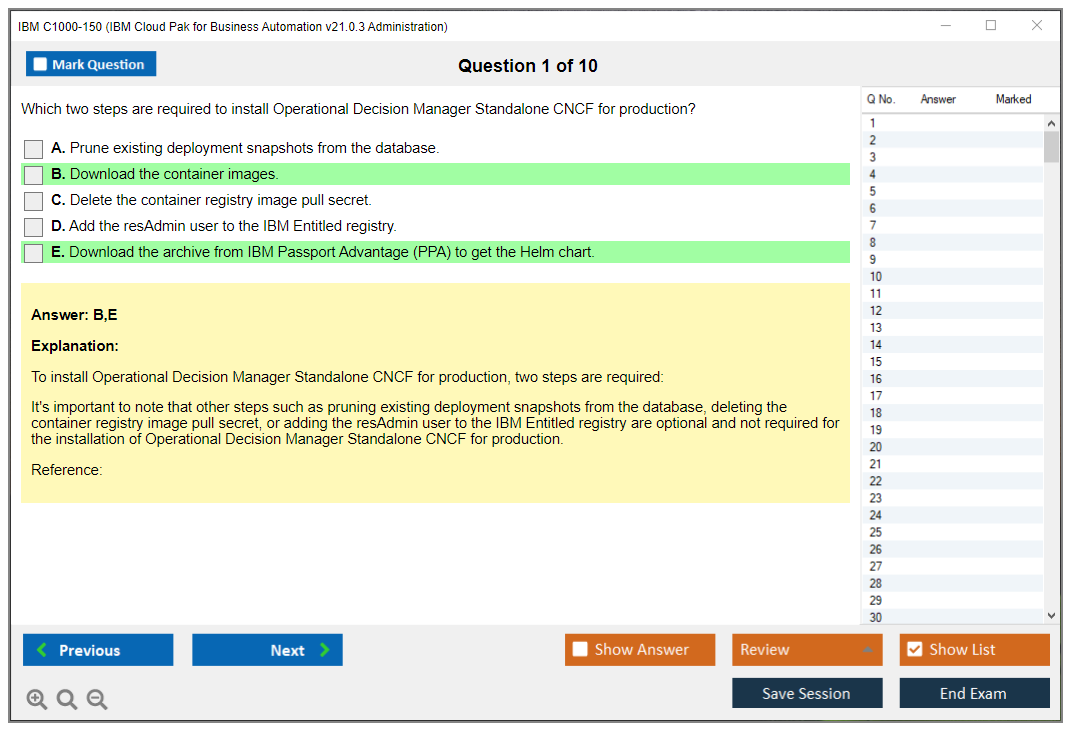
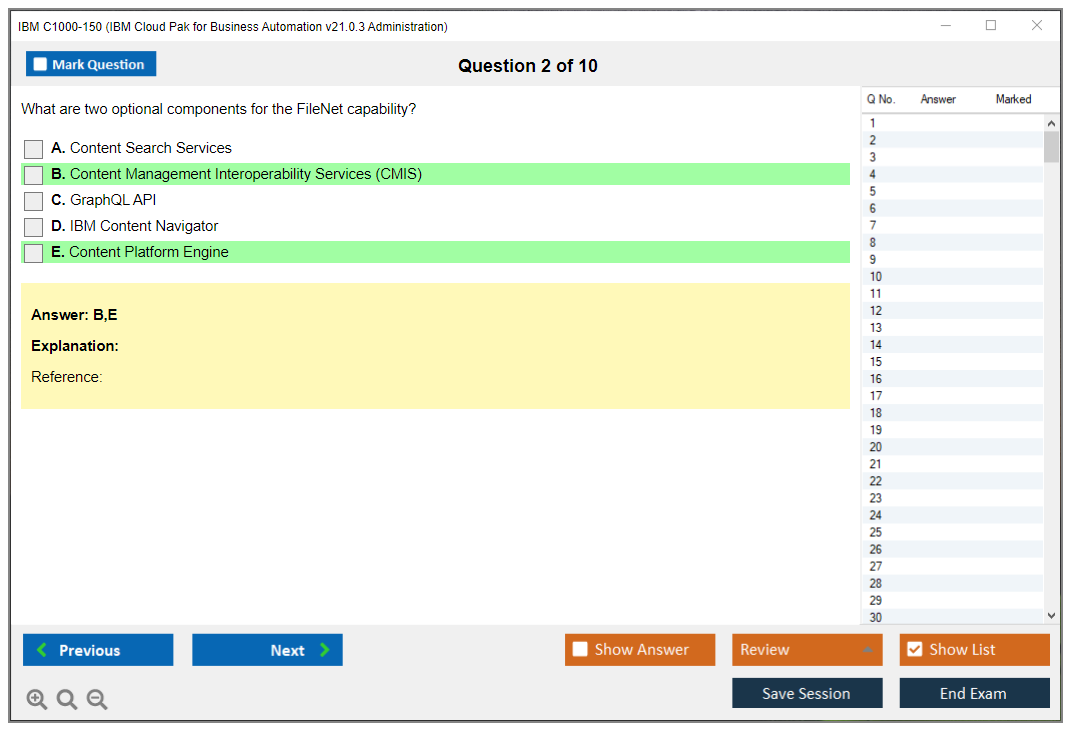
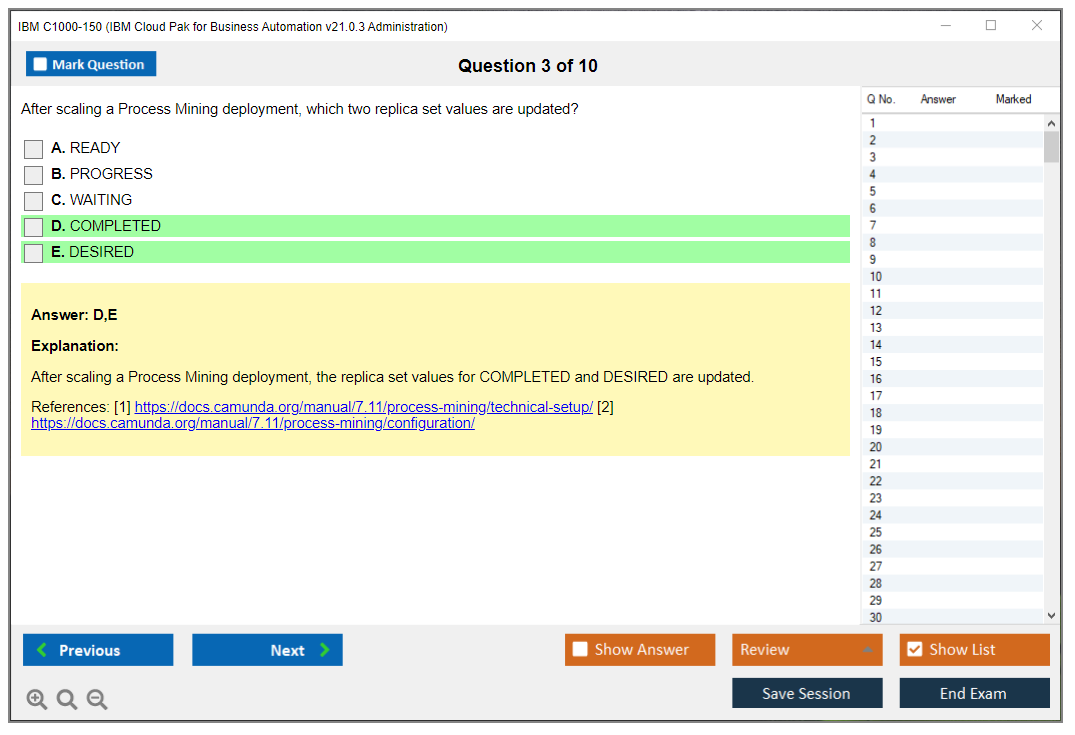
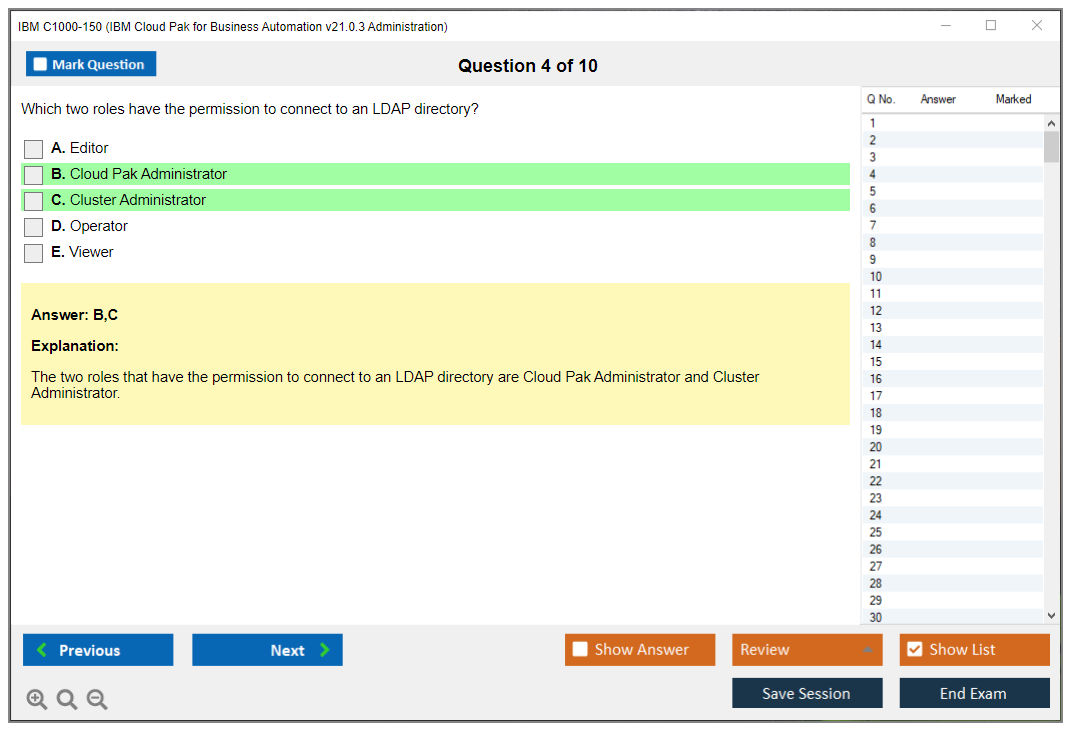
IBM C1000-150 Exam Overview and Introduction
Look, if you're working with IBM's enterprise automation stack, you've probably heard about the IBM C1000-150 exam. Real talk? This certification isn't one of those easy entry-level tests you can cram for over a weekend. Honestly, it's designed for people who actually get their hands dirty with IBM Cloud Pak for Business Automation v21.0.3 in real production environments where things break and you're the one fixing them.
What makes this certification different from other IBM exams
The C1000-150 validates you know how to administer CP4BA v21.0.3 across containerized environments: installation, configuration, security implementation, monitoring infrastructure, and troubleshooting when things inevitably break at 2 AM. Not theoretical fluff.
IBM wants proof you can actually manage their platform in the wild, not just recite definitions from a PDF you downloaded yesterday.
Most IT certifications test whether you memorized some concepts, right? This one assumes you've deployed Business Automation Workflow, configured FileNet Content Manager, set up Automation Decision Services, and dealt with the integration headaches that come with multi-component platforms that never play nice on the first try. You'll face scenario-based questions that mirror actual admin tasks. The kind where you're troubleshooting at midnight while everyone's waiting for systems to come back online. Not just "what is X?" definitions that anyone could Google.
Breaking down what CP4BA actually is
IBM Cloud Pak for Business Automation is basically IBM's answer to the fragmented automation space where everyone's juggling seventeen different tools. Instead of cobbling together separate tools for workflow, content management, decisioning, capture, and operational intelligence, CP4BA unifies everything on Red Hat OpenShift. Enterprise-grade stuff. (That's corporate speak for "complex but powerful," let's be honest.)
The platform runs on Kubernetes. Specifically OpenShift. So you're managing containerized workloads. Each component (whether it's Business Automation Workflow for orchestrating processes or Operational Decision Manager for business rules) runs as pods in your cluster, which gives you scalability and resilience but also means you need solid container platform knowledge or you'll drown fast.
CP4BA represents IBM's bet on hybrid cloud automation. Organizations use it to digitally transform business processes, automate decision-making, and manage content at scale. The thing is, if you're administering it, you're sitting at the intersection of traditional enterprise software and cloud-native infrastructure. It's a unique position requiring skills from both worlds. I once spent three hours debugging why a FileNet pod wouldn't talk to LDAP, only to discover it was a DNS resolution issue that had nothing to do with FileNet itself. That's the kind of cross-domain troubleshooting you'll live with.
Who IBM designed this exam for
Platform administrators? Obviously. You're responsible for keeping CP4BA running smoothly, managing deployments, handling upgrades, and troubleshooting when users complain things are slow (and they always complain).
DevOps engineers fit here too, especially in organizations practicing continuous deployment where you might be automating CP4BA deployments, managing configuration as code, or integrating the platform into CI/CD pipelines. Cloud architects who design and oversee CP4BA implementations need this certification to validate their expertise. And IT professionals managing production and non-production environments? Yeah, you're definitely in the target demographic.
Not gonna lie, this exam assumes you're not starting from zero. You should already understand Kubernetes concepts, have worked with OpenShift, and ideally have deployed CP4BA at least once or twice (preferably more). The exam tests whether you can handle day-2 operations, not whether you can follow a quickstart guide someone else wrote.
Exam format and what to expect on test day
The C1000-150 delivers through Pearson VUE. Either at physical testing centers or via online proctoring. You're looking at 60-70 questions typically, with 90 minutes to complete everything. That gives you roughly 75-90 seconds per question. Sounds generous? Wait until you hit those multi-paragraph scenarios describing a broken deployment with five different symptoms and three possible root causes.
Questions split between multiple-choice knowledge checks and scenario-based problem-solving. The scenarios are honestly where most people struggle because they require you to actually think like an administrator, not just recall facts. You'll read about a CP4BA environment with specific symptoms (maybe certificate errors, performance degradation, or failed pod deployments) and need to identify the correct troubleshooting approach or configuration fix based on how these systems actually behave.
Online proctoring? Convenient but comes with requirements: stable internet connection, compliant testing environment (clean desk, no extra monitors), and a webcam that shows your workspace. Testing centers remove those variables but require travel and scheduling. Pick your poison.
Why this certification matters for your career
IBM certifications carry weight in enterprise environments, period. If you're working at organizations implementing digital transformation or intelligent automation initiatives, having C1000-150 on your resume signals you're not just familiar with the concepts. You can actually administer the platform when the pressure's on.
The certification demonstrates expertise in enterprise automation platform administration, which is increasingly valuable as companies move workflows and processes to cloud-native architectures. You're validating hands-on skills with Kubernetes/OpenShift-based deployments, not just theoretical understanding you picked up from a book. Career prospects in hybrid cloud automation improve significantly when you can prove competency with platforms like CP4BA that enterprises are betting serious money on.
I've seen this certification open doors to senior administrator roles, cloud architecture positions, and consulting opportunities where you're billing $200+ per hour. Companies investing in CP4BA (and they're investing millions) need people who can deploy it correctly, secure it properly, and keep it running during business-critical operations. The certification proves you can do all three without someone holding your hand.
Real-world skills the exam actually tests
Focus here: practical stuff. The C1000-150 covers practical administration tasks you'll perform regularly. Cluster management, component configuration, user access control, certificate management. These aren't abstract topics someone invented for a test. They're what you'll actually do. Configure LDAP integration for user authentication. Manage SSL/TLS certificates across components. Set up backup and restore procedures. Optimize performance when the platform slows down under load because someone decided to run a massive batch job during business hours.
Skills tested directly apply to daily work in ways most certifications don't. Need to troubleshoot why Business Automation Workflow isn't connecting to FileNet when everything looks fine on the surface? The exam covers component integration and those weird edge cases that only happen in production. Dealing with persistent storage issues in OpenShift where volumes won't mount? That's in scope, and you'll face it eventually. Managing resource quotas and limits for CP4BA pods so one component doesn't starve the others? Absolutely covered.
The exam also tests your understanding of CP4BA architecture. How components interact, what dependencies exist, and where configuration lives (ConfigMaps, Secrets, custom resources). When something breaks at 3 AM, you should understand the platform well enough to isolate the issue quickly instead of randomly restarting pods and hoping for the best.
Version specificity and platform evolution
Here's something critical that trips people up: this exam targets v21.0.3 specifically. Not "CP4BA in general." IBM Cloud Pak for Business Automation evolves rapidly, with architecture changes, new features, and updated deployment patterns in each release that can completely change how you approach administration tasks. The C1000-150 tests your familiarity with v21.0.3's particular capabilities, deployment operators, and administration procedures. Not the version you used six months ago.
This version specificity matters because what worked in v21.0.1 might differ significantly in v21.0.3. Operators change behavior. Custom resource definitions get updated. Best practices evolve as IBM learns from customer deployments and fixes issues. You can't rely solely on generic Kubernetes knowledge or experience with older CP4BA versions and expect to pass. You need current, version-specific expertise.
IBM periodically updates certification requirements as new versions release, which means professionals need to stay current with platform evolution through recertification or taking newer exams as they become available. It's just the nature of certifying on rapidly evolving enterprise platforms that refuse to stand still.
Career pathway and related certifications
The C1000-150 sits as a professional-level credential, building on foundational knowledge of Kubernetes and OpenShift. If you're pursuing IBM automation certifications (and honestly, if you're doing one, you might as well build out the portfolio), this potentially leads to advanced credentials or related certifications like IBM Cloud Pak for Integration V2021.2 Administration or IBM Cloud Professional Architect v5 depending on where your career's headed. The certification pathway recognizes that administrators often work across multiple IBM Cloud Paks, so skills transfer between platforms. What you learn securing CP4BA applies to CP4I, and vice versa.
C1000-150 Exam Cost and Registration Details
IBM C1000-150 exam overview (CP4BA v21.0.3 administration)
What CP4BA is, in plain terms
IBM Cloud Pak for Business Automation (CP4BA) is IBM's automation platform bundling workflow, content, decisions, RPA, and process mining capabilities into something you need to run reliably on Kubernetes or OpenShift. Think "enterprise automation suite," but the real work happens after setup. Day-2 ops means keeping pods healthy, managing storage, tuning resources, handling upgrades, and making sure identity plus certificates don't blow up at 2 a.m. It's a platform product, so you deal with operators, namespaces, custom resources, and all the stuff making platform admin roles both valuable and occasionally miserable.
This is where the IBM Cloud Pak for Business Automation v21.0.3 Administration certification comes in.
Who this exam is for
Already acting like an IBM Business Automation platform administrator? The IBM C1000-150 exam targets you directly. Admins, platform engineers, SRE-ish folks supporting automation teams. Also the "accidental admin" who installed CP4BA once and now owns it forever.
Look, if you've never touched OpenShift, pause.
Format basics (what you'll see on test day)
Delivery happens through Pearson VUE, either at a test center or online proctoring. Question count and time can change by version, so verify the current listing when you schedule. Expect scenario-heavy items feeling like real Cloud Pak for Business Automation installation and configuration work, plus admin routines around CP4BA security and user management and CP4BA troubleshooting and monitoring.
IBM C1000-150 exam cost
Fee expectations and what "$200" really means
The standard fee structure looks simple on paper. The C1000-150 exam typically costs $200 USD in the United States. That number is the baseline most people quote when they talk about C1000-150 exam cost, and it's usually accurate for US-based candidates paying in USD.
Then reality kicks in. Currency conversion, regional pricing rules, and taxes can push your final amount up or down. You only really know your price when you're logged into your regional Pearson VUE portal looking at the checkout screen.
Regional pricing, taxes, and retakes (the stuff that surprises people)
Regional pricing variations are real. Pearson VUE doesn't price every country the same, and it's exchange rates. Local market conditions and regional pricing policies can change what you pay, plus some countries bake in extra fees or require local currency payment. Candidates should verify exact pricing through their regional Pearson VUE portal, not a random blog post from 2022.
Taxes can sting. Depending on where you live, VAT, GST, or sales tax may get added to the base exam fee, potentially increasing total cost by 5-25%. That range sounds dramatic until you see a VAT line item show up at checkout and realize your "$200 exam" is now "$240-ish" in local terms.
Retakes are the other wallet punch. If you fail, you pay the full exam fee again for each retake. No discounted retry pricing. No "second shot half off." Thorough prep isn't just about pride, it's about not lighting another couple hundred bucks on fire.
Vouchers, bundles, student discounts, and employer reimbursement
IBM occasionally offers promotional exam vouchers. Not always. Not forever. But they pop up through training partners, special events, conference promos, or bundles paired with training courses. They can be worth 10-50% off when you catch them at the right time.
Training bundle packages can be decent value if you were buying training anyway. Some IBM training partners sell combined training plus voucher deals, and while the sticker price can look big, it may beat purchasing training and the exam separately. Read the fine print though. Expiration dates, region restrictions, whether the voucher covers this exact IBM CP4BA administrator exam.
Corporate reimbursement programs are the sleeper win. A lot of employers reimburse certification costs from professional development budgets, but they often want documentation like receipts, the exam confirmation email, and proof you passed. Ask before you register, and ask what happens if you fail, because some companies reimburse only passing attempts.
Student and academic discounts exist, but they're limited. Sometimes you can get academic pricing through the IBM Academic Initiative or university partnerships if you qualify as a student or educator. Worth checking, just don't assume it's available everywhere.
Side note: I once watched someone spend thirty minutes arguing with Pearson VUE support about a promo code that expired the day before. That was time they could have spent reviewing operator logs. Just saying.
C1000-150 passing score and results
Passing score: what you can and can't know upfront
People ask about the C1000-150 passing score constantly. IBM exams often publish the passing score on the exam details page, but sometimes they keep it vague or present it as a scaled score. The practical answer? Check the live Pearson VUE/IBM exam listing for the current passing score information.
Annoying, yeah.
Scoring approach and how results show up
Typically you get a score report right after you finish, especially at a test center. Online proctoring usually posts results quickly too. Section weighting can vary, and IBM loves mixing conceptual stuff with operational decision-making, so you can't just cram one domain and hope to limp across the line.
C1000-150 difficulty level (how hard is it?)
Why it feels harder than "a product exam"
The IBM C1000-150 exam isn't a trivia contest. Difficulty comes from expecting hands-on admin judgment. What you do during deployment, what breaks after, and how you prove it's healthy. If you've actually lived inside OpenShift, read operator logs, and followed a CP4BA v21.0.3 administration guide during a real rollout, you'll recognize the patterns.
If you haven't, it can feel brutal.
Common pain points I see
A lot of candidates struggle with mapping components to responsibilities, which makes sense given how many moving pieces CP4BA has. Another common issue involves mixing up "Kubernetes generic" with "CP4BA specific" steps, especially around certificates, ingress/routes, identity integration, and storage classes. Troubleshooting questions can also be time sinks because they're written like real incidents, not like flashcards.
Study time estimates (rough, but honest)
If you're experienced with CP4BA day-2 operations, you can prep in 1 to 4 weeks with focused review and a lab. If you're new to CP4BA but decent with OpenShift and containers, plan more like 4 to 8 weeks. Beginners with shaky Kubernetes fundamentals should slow down and build those skills first. Otherwise every CP4BA scenario feels like reading a foreign language while a timer runs.
C1000-150 exam objectives (official domains to study)
What to cover, without pretending it's "one thing"
The C1000-150 exam objectives generally track what admins do across the lifecycle. Platform architecture and CP4BA components. Installation and deployment administration. Configuration and day-2 operations. Security, identity, access control, and certificates. Monitoring, logging, backup/restore, and troubleshooting. Upgrades, patching, and lifecycle management.
That list isn't optional. It's the job.
If you want a mental model, think about it this way: install it, secure it, keep it running, fix it when it breaks, and upgrade it without downtime drama. Sprinkle in documentation literacy and operator troubleshooting and you're basically there.
Prerequisites for IBM C1000-150
Experience that makes this exam way less painful
C1000-150 prerequisites aren't always formal, but the recommended experience is clear. You need Kubernetes or OpenShift admin comfort, containers, networking basics, and storage concepts. You should know what namespaces/projects are, how operators work, how to inspect pods, events, logs, and how to reason about resource limits and persistent volumes.
Then the CP4BA-specific skills kick in. Deployment patterns, configuration, day-2 operations, and the boring stuff that matters like user access, certificates, and integrations.
Helpful related skills include general OpenShift administration, LDAP/OIDC familiarity, and being able to read vendor docs without getting lost.
Best study materials for C1000-150
What I'd actually use
Start with official IBM documentation. The CP4BA v21.0.3 administration guide style docs are where the exam tone comes from, and they reflect real procedures and constraints. Add IBM training courses if your budget allows, because instructor-led structure helps when you're trying to connect architecture to operational tasks.
Hands-on labs matter more than people admit. Build a sandbox if you can. Even a limited environment where you practice reading operator status, checking CRs, and following install/upgrade runbooks will pay off.
Two study plan options
One plan: 1 to 4 weeks. Focus on C1000-150 exam objectives, run through your weak areas, and do targeted notes plus a small lab routine every day.
Another plan: 4 to 8 weeks. Mix fundamentals refresh (OpenShift, storage, networking) with CP4BA install/config practice, then finish with review and timed checks.
C1000-150 practice tests and exam prep resources
What a good practice test looks like
A quality C1000-150 practice test mirrors the exam's scenario style and explains why wrong answers are wrong. Avoid anything looking like copied question dumps. Brain dumps are tempting when you're stressed, but they're often inaccurate, they can violate exam policies, and they train you to memorize nonsense instead of learning how CP4BA actually behaves.
How to use practice questions without fooling yourself
Do timed sets. Review every miss. Write down the exact concept you missed, like "certificate chain placement" or "operator reconciliation symptoms." Then go back to docs and reproduce the behavior in a lab if possible.
Sample question topics tend to cluster around deployment decisions, CP4BA security and user management, and troubleshooting signals like logs, events, and operator status.
C1000-150 renewal and certification validity
Expiration and what to confirm
Certification validity rules change. Confirm the expiration timeline on IBM's certification site for this specific credential, because versioned products like CP4BA can push people toward newer exams as the platform updates.
Renewal options and staying current
Renewal usually means recertification or taking the newer version exam when IBM updates the track. Keeping skills current is less about rereading marketing pages and more about tracking release notes, upgrade guides, and what operators changed between versions.
Final prep checklist for exam day
What to do 48 hours out
Review your notes mapped to C1000-150 exam objectives. Revisit the areas you keep missing in your C1000-150 practice test results. Skim key docs for install flows, security setup, and troubleshooting steps.
Sleep. Seriously.
Registration, payment, scheduling, and the policies that bite
Registration goes through Pearson VUE. Create an account, find the IBM C1000-150 exam, pick test center or online proctoring, then schedule your slot. Payment methods usually include major credit cards (Visa, MasterCard, American Express), debit cards, and sometimes PayPal or voucher codes depending on region.
Scheduling flexibility is decent. Online proctoring appointments can often be booked 24-48 hours in advance, while test center availability may require several days depending on your location. Sometimes you're lucky, sometimes you're not.
Cancellation and rescheduling policies matter. Pearson VUE typically requires 24-48 hours notice to avoid forfeiting exam fees, and last-minute changes can mean full fee loss. After you register, you'll receive an exam confirmation email with the date, time, location or online instructions, and required ID details.
Budget planning and getting your employer to pay
Budget planning should include the exam fee, potential retake costs, C1000-150 study materials (roughly $100-300), and optional training courses ($1,000-2,500). That range sounds big because it is.
If you're negotiating employer sponsorship, talk business value. CP4BA administration skills reduce platform downtime, shorten incident resolution, and improve automation project success rates because the platform stops being a fragile snowflake that everyone's afraid to touch. That's the pitch. That's also the truth.
C1000-150 Passing Score and Results Interpretation
What IBM actually tells you about passing
Look, IBM isn't super transparent about exact passing scores, which drives a lot of people crazy. For the IBM C1000-150 exam, you're typically looking at a scaled score requirement somewhere in the 65-70% range. That translates to roughly 630-700 on the 200-800 scale IBM uses. But here's the thing: IBM doesn't always publish the exact threshold publicly, and it can vary slightly between exam versions.
This vagueness isn't just IBM being difficult. They use scaled scoring for a reason. Different versions of the exam might have slightly different question sets, and some questions are objectively harder than others. The scaling process adjusts for these difficulty variations to ensure that passing the exam in January with one question set is roughly equivalent to passing it in June with a different set. It's supposed to ensure fairness across different testing windows and question pools.
How the scoring actually works
Every question on the C1000-150 is scored as either right or wrong. No partial credit here. If you select three out of four correct answers on a multi-select question but miss one? That's a wrong answer. Period. This makes preparation pretty straightforward in one sense. You need to actually know the material, not just kinda know it.
The exam breaks down into several objective domains. Each domain carries different weight. Typically you're looking at sections weighted anywhere from 10% to 25% of the total score. For CP4BA administration, the heavily weighted areas usually include installation and deployment, security and access control, and day-to-day operations like monitoring and troubleshooting. If you absolutely crush the 25% section on security but barely scrape by on a 10% section about upgrades, you can still pass comfortably.
But don't take that as permission to ignore entire sections. While the overall scaled score is what determines pass/fail, completely bombing any single domain is a red flag. It suggests you're not actually ready to handle real-world CP4BA administration responsibilities, even if you squeaked by the exam. The C1000-150 Practice Exam Questions Pack can help you identify which domains need more work before exam day.
When you find out your results
Online proctored exams give you preliminary results immediately. Like, the second you finish the last question and submit, you'll see pass or fail on the screen. Test center exams work similarly. You'll typically see results within minutes of completing the exam. Nerve-wracking but also a relief not to wait days wondering.
The official detailed score report takes longer. Expect it via email within 24-48 hours after completing the exam. This report includes your scaled score and a breakdown showing your performance in each objective domain. Even if you passed, this breakdown is super valuable because it shows you exactly where your knowledge gaps are. Maybe you crushed the Kubernetes and OpenShift sections but barely passed the backup and restore questions, which tells you what to focus on for actual job performance.
What those section breakdowns mean
The domain-level performance report doesn't give you exact percentages for each section. Instead, IBM typically uses ranges like "below target," "near target," or "above target" for each objective area. If you passed overall but see "below target" in security administration? That's a warning sign. You met the minimum competency to pass, but you're probably going to struggle with certificate management and LDAP integration in real deployments.
I've seen people pass the exam with mediocre section scores and then get absolutely hammered when they tried to actually deploy CP4BA in production. The exam is testing baseline knowledge for a reason. If you're consistently scoring "near target" across most domains, you passed, but consider spending more time with hands-on labs and the official IBM documentation before taking on complex production deployments. Real-world scenarios don't forgive gaps the way scaled scoring does.
I remember one guy who passed with a 660 and thought he was ready for anything. Three weeks into his first deployment, he was calling senior admins at 2 AM because he couldn't figure out why the object store kept losing connections. Turns out that "below target" score in database configuration wasn't just theoretical.
Retaking if you don't pass
Failed the first attempt?
There's a mandatory 14-day waiting period before you can retake the C1000-150. No exceptions. IBM wants you to actually study and improve, not just keep hammering the exam hoping for an easier question set. You'll pay the full exam fee again for each retake attempt, so failures get expensive fast.
The good news? There's no limit on total attempts. You can keep trying until you pass. But if you're on attempt three or four, something's wrong with your study approach. Maybe you need more hands-on experience with actual CP4BA deployments. Maybe you're relying too much on memorization instead of understanding the underlying architecture. Similar IBM certification paths like IBM Cloud Pak for Integration V2021.2 Administration share a lot of foundational Kubernetes and OpenShift concepts that might help strengthen your knowledge base.
Understanding your score in context
So what does your score actually mean? If you scored 750+ on the 200-800 scale (roughly 80%+), you've demonstrated strong mastery of CP4BA administration. You're probably ready to handle complex deployments, troubleshoot issues independently, and make architectural decisions about the platform.
Scored 650-700? You passed, which means IBM considers you minimally competent to work with CP4BA v21.0.3 in an administrative capacity. But you're going to need continued learning and probably some mentorship from more experienced admins. Don't walk into a greenfield enterprise deployment expecting to know everything. Use that score report to identify specific areas where you need real-world practice.
The digital badge and what comes next
Pass the exam and you'll receive an IBM digital badge through the Credly platform, usually within a few days of your official score report. This badge is verifiable proof of your certification. Looks great on LinkedIn profiles. Employers can click through and confirm you actually earned the certification and when.
Your certification stays valid according to IBM's lifecycle policy, typically three years before recertification becomes necessary. But with how fast the Cloud Pak platform evolves, three years is an eternity. You'll want to stay current with release notes, upgrade guides, and new features. The CP4BA v21.0.3 administration skills you demonstrate on this exam will need continuous updating as IBM releases v21.0.4, v22.x, and beyond.
Score confidentiality and verification
Your exam scores are confidential between you and IBM. They won't share results with anyone without your permission. But you can (and should) share your certification status with employers, on your resume, and via that Credly badge. The official IBM certification transcript is accessible through your IBM certification account, which is useful when employers want formal verification during hiring processes.
There's no appeals process for exam scores. IBM pre-validates all questions and scoring is automated, so what you see is what you get. If you really believe there was a technical issue during the exam (proctoring software crashed, questions didn't display properly), you can contact IBM support immediately, but they won't manually re-grade your responses or adjust scores based on subjective interpretation of questions.
Using resources like the C1000-150 Practice Exam Questions Pack during your preparation helps you understand the question format and difficulty level before the real exam, reducing the chances of surprises on test day. You'll already know what "IBM-style questions" feel like and how to interpret the sometimes-ambiguous wording they use.
C1000-150 Exam Difficulty Assessment and Preparation Timeline
What you're signing up for with the IBM C1000-150 exam
The IBM C1000-150 exam is the admin cert for IBM Cloud Pak for Business Automation v21.0.3. Honestly? It's aimed at people who can actually run CP4BA, not folks who skimmed a PDF once and crossed their fingers. Intermediate to advanced feels like the right label here, mostly because the questions expect you to think like an on-call admin who's gotta fix stuff fast while everyone's watching.
This exam is heavy on doing. Like, really doing. Around 70 to 80% of what shows up assumes you've deployed, configured, and troubleshot Cloud Pak for Business Automation installation in a cluster, and you've been burned at least once by certificates, LDAP, or storage. The thing is, getting burned teaches you more than any doc section ever could.
CP4BA is IBM's bundle of business automation capabilities running on OpenShift, packaged and managed with operators. It's not "one product". Multiple stacks, actually. They share cluster resources, identity, networking, storage, ingress routes, and a whole pile of YAML.
Think BAW, FileNet, ADS, ODM. Plus the platform glue. That multi-component integration is where the exam gets spicy because the right answer's often "it depends which component is failing and which shared service it's pulling from".
Who should take it (and who shouldn't)
If you're an IBM Business Automation platform administrator, or you're the person your team pings when the operator's stuck in Progressing, this fits. Day-2 ops? Patching, backups, log review, user access, route rotation? You're in the target zone.
Never touched oc? Pause. You can still get there, but the Kubernetes complexity factor'll hit you hard.
Format basics you should confirm
IBM changes delivery details over time, so check the current listing for number of questions, time limit, and whether it's remote proctored. The vibe stays consistent though. Scenario-based questions, multi-step troubleshooting, and a lot of operator thinking.
Exam cost: what people usually mean by "how much"
People ask "How much does the IBM C1000-150 exam cost?" and they usually mean the Pearson VUE price tag. The C1000-150 exam cost varies by region and currency, and taxes can get added on top, so your checkout total might not match what your coworker in another country paid.
Retakes? Yep, also region-dependent. Some places have different retake pricing rules, and your employer may have a corporate agreement that changes what you see.
Vouchers exist sometimes. Employer reimbursement's common in bigger orgs, especially if you're already supporting CP4BA in production. Ask your manager before you pay out of pocket. I once knew someone who paid themselves, submitted the receipt two weeks later, and finance kicked it back because they needed pre-approval. Don't be that person.
Passing score and results: what to expect
"What is the passing score for C1000-150?" comes up constantly. IBM typically publishes a C1000-150 passing score (often as a percentage) in the official exam page, but don't assume it matches other IBM exams you've taken.
Scoring's usually weighted by domain. Not always evenly. That's why you can feel "good overall" and still fail if you're weak in CP4BA security and user management or operator-based deployment patterns.
Results are normally immediate or near-immediate after you submit, plus a score report with domain-level performance. That report matters a lot if you need a retake.
Difficulty level: why this one feels harder than basic IBM certs
"How hard is the IBM C1000-150 exam?" It's harder than the intro certs, comparable to other IBM Cloud Pak administration certifications, and it punishes shallow knowledge.
Big reason? Hands-on weight. The exam assumes you've done real CP4BA v21.0.3 administration guide type work. Reading logs, spotting misconfigurations, checking operator status, validating routes, confirming storage classes, knowing which custom resource controls what behavior.
Then there's OpenShift. Candidates without a solid Kubernetes foundation face a much higher difficulty ceiling because CP4BA's cloud-native by design. The questions expect comfort with oc/kubectl, YAML edits, pod inspection, events, and container troubleshooting. Basic cluster literacy is non-negotiable.
Where candidates struggle (the same pain points, over and over)
Certificate management's a classic. Rotating certs, trusting chains, matching route certs, understanding where the operator stores secrets, figuring out why a component's throwing TLS errors in logs. Not fun.
LDAP integration troubleshooting's another. Look, LDAP can fail in ten different ways, and the exam likes "what would you check next?" style prompts. Bind DN issues, group mapping, TLS to the directory, wrong base DN. All fair game.
Storage configuration details show up a lot too. Dynamic provisioning, access modes, RWX vs RWO, file vs block, how a bad storage class choice turns into pods stuck Pending.
Operator patterns. This is the v21+ world. If you're still thinking in "run a big installer script and hope" terms from older stacks, v21.0.3 introduced changes that make outdated v20.x or v19.x instincts actively misleading.
Scenario questions: why memorization fails
You'll see multi-step troubleshooting scenarios. Symptoms, a log snippet, maybe an operator condition, and you choose the best remediation. Not theoretical. Not trivia.
Documentation navigation skills matter here, which sounds weird for an exam, but it mirrors real admin life. You need to know where to find the answer in IBM docs fast because nobody remembers every parameter in every CR spec. Knowing the right doc section's a skill.
Exam objectives: what to study (and what to actually practice)
The C1000-150 exam objectives typically map to domains like:
- Platform architecture and CP4BA components (BAW, FileNet, ADS, ODM), plus shared infrastructure, which is where people mix things up
- Installation and deployment administration, mostly operator-driven, CR creation, prerequisites
- Configuration and day-2 operations like scaling, tuning basics, validating component health
- Security stuff: identity, access control, certificates (spend extra time here)
- Monitoring, logging, backup and restore, and CP4BA troubleshooting workflows
- Upgrades, patching, lifecycle management, version-specific behavior in v21.0.3
One detail to go deep on is operators and CRs. If you can't look at a custom resource and reason about what it'll create, what it'll reconcile, and what it'll break if you change it, the exam will feel like a brick wall.
Another detail? oc workflows. You should be comfortable doing 'oc get pods', 'oc describe', checking events, pulling logs, validating secrets and configmaps. The questions assume that mental model even when they don't show literal commands.
Prereqs: the stuff that changes your timeline
The C1000-150 prerequisites aren't just "read the objectives". If you lack Kubernetes or OpenShift experience, add 2 to 4 weeks just for foundations. Otherwise you'll spend your CP4BA lab time debugging basic cluster issues and learning nothing about CP4BA itself.
Helpful background includes identity basics, certificate chains, storage classes, ingress concepts, routes, operator lifecycle. Related IBM certs can help, but they don't replace time in a cluster.
No amount of C1000-150 study materials replaces hands-on. Lab practice's non-negotiable.
Prep timeline: beginner vs intermediate vs advanced
If you're new to CP4BA, plan 8 to 12 weeks and about 100 to 150 hours. That's realistic if you're doing it right, with 40 to 50% of that time in labs deploying, configuring, breaking things, fixing them.
Admins with 6 to 12 months exposure usually need 4 to 6 weeks, around 60 to 80 hours. You're not learning everything from scratch. You're mapping your experience to the exam and shoring up weak domains like certs or LDAP.
Daily admins on v21.0.3 can often do 2 to 3 weeks, 30 to 40 hours, mostly focused review and coverage checks. Still do labs. Just smaller, targeted ones.
A good weekly commitment's 10 to 15 hours. More's fine, but don't go "all reading, no doing". That's where people fail.
Practice tests and prep resources that actually help
A C1000-150 practice test is useful if it's scenario-heavy and explains why answers are right or wrong. Timed sets matter. Reviewing wrong answers matters more.
Avoid brain dumps. Not just because of policy risk, but because they teach you to recognize patterns instead of learning how CP4BA behaves when something's broken.
If you want a paid option, the C1000-150 Practice Exam Questions Pack is $36.99 and can be a decent checkpoint tool if you use it like a diagnostic, not a crutch. I'd treat it as "find my weak spots", then go back to docs and your lab. Later, rerun it. Same link again when you're closer to the exam: C1000-150 Practice Exam Questions Pack.
Read the CP4BA v21.0.3 administration guide sections relevant to your weak domains. Keep a personal index of doc pages. That sounds nerdy. It works.
Readiness signals, pass rates, and retakes
Practice exam performance's a solid indicator. If you're consistently scoring 80% or better on quality practice exams, you're probably ready. Below 70%? Don't book yet unless you like donating money.
IBM doesn't publish pass rates, but anecdotal first-attempt pass rates around 60 to 70% for adequately prepared candidates feels believable. This exam punishes gaps.
If you fail, most people need 3 to 4 more weeks focused on the domains they missed. Use the score report. Build labs around those misses. Then retake.
Renewal and staying current
Certification validity and renewal rules change, so confirm the expiration timeline on IBM's cert portal. Sometimes renewal means taking the newer version exam. Sometimes there's a recert path.
Keeping skills current's mostly release notes, upgrade docs, and actually doing upgrades. v21.0.3 isn't v20.x. That version-specific detail's literally part of the difficulty.
Review your notes on certs, LDAP flows, storage classes, operator conditions.
Do one last lab run where you practice reading logs, checking events, identifying root cause fast. That's what the exam wants from an IBM CP4BA administrator exam candidate.
Confirm proctoring requirements, clean desk rules, ID, system checks. After you pass, grab the badge, update LinkedIn, and then go back to work where the real exam's waiting anyway.
C1000-150 Exam Objectives and Domain Breakdown
The IBM C1000-150 exam isn't your typical multiple-choice quiz where you memorize a few facts and call it a day. Real talk? This certification digs into actual CP4BA administration across multiple domains, and you've gotta understand how these components work together on OpenShift. This isn't just theory. You're expected to know operator-based deployments, storage configurations, and troubleshooting methods that actually matter when things go sideways at 2 AM. We're talking real situations here.
How IBM structures the exam domains
IBM breaks down the C1000-150 exam objectives into distinct domains that cover everything from initial planning through day-to-day operations.
You're looking at 5-7 major domains depending on how IBM groups them in the current exam guide. Each domain has a percentage weight attached, which helps because you can actually prioritize your study time based on what matters most. If a domain's worth 25% of the exam, you'd better spend more time there than on a 10% section, right? Makes planning easier.
The domains typically flow in a logical sequence that mirrors the actual CP4BA lifecycle. You start with architectural understanding and planning, move through installation and deployment, then into configuration and ongoing operations, and finish with monitoring and troubleshooting. It makes sense when you think about how you'd actually approach a real implementation project.
Understanding the containerized architecture
Look, you absolutely need to grasp how CP4BA runs as a containerized, microservices-based platform on Red Hat OpenShift.
This isn't a traditional monolithic application you install on a VM and forget about. The architecture includes control plane components that manage the platform, data plane components that handle actual workloads, and management components that tie everything together. Each layer serves a specific purpose.
The exam expects you to identify and explain the purpose of major components like Business Automation Workflow (BAW), FileNet Content Manager, Automation Document Processing, Automation Decision Services, Operational Decision Manager, Business Automation Insights, and Resource Registry. That's a lot of moving parts. You need to know what each one does, how they interact, and why a business would choose particular options during deployment. It can feel overwhelming at first. For example, if someone needs document capture and classification, you'd deploy Automation Document Processing alongside FileNet. That kind of thinking matters here.
Operator-based deployment fundamentals
The operator model's critical to understand for the C1000-150 exam.
CP4BA uses Kubernetes operators for lifecycle management, which means the operator continuously monitors the cluster state and reconciles it against your desired configuration. The icp4acluster custom resource definition (CRD) is where you declare what you want, and the operator makes it happen through reconciliation loops.
This differs from old-school installations where you run a script and hope it works. The operator keeps watching and fixing drift. If a pod dies, the operator notices and recreates it. You modify the custom resource to add a new capability? The operator deploys the necessary components. You need to understand this reconciliation behavior because it affects how you make changes post-deployment. Just editing a config file somewhere won't work. You modify the custom resource and let the operator handle it.
Storage architecture gets messy fast
Storage requirements for CP4BA? No joke here.
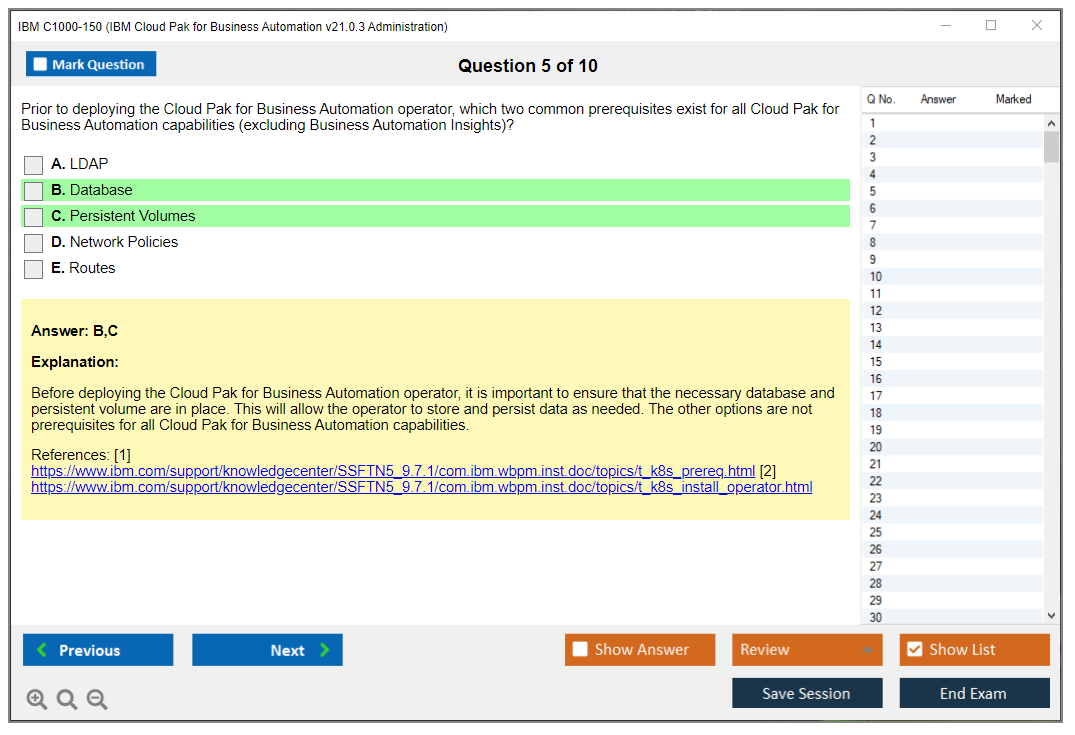
Different components need different storage classes and access modes. Some require ReadWriteMany (RWX) access so multiple pods can mount the same volume at once, while others work fine with ReadWriteOnce (RWO). You need to know which components need what, understand persistent volume claims, and spot when storage performance becomes a bottleneck. Getting storage wrong early on creates headaches later. Worse, sometimes those headaches don't show up until you're already in production and users are complaining about sluggish response times.
The exam objectives include understanding storage architecture requirements, which means you should know how FileNet content storage differs from workflow data storage. FileNet typically needs high-capacity storage for documents, while databases need lower-latency storage for better transaction performance.
Networking and service exposure patterns
OpenShift routes and ingress controllers are how CP4BA exposes services to users and external systems.
You'll need to understand how routes work, how the ingress controller handles traffic, and basic service mesh concepts for inter-component communication. Some services are exposed externally through routes so users can access them via browser, while others remain internal for component-to-component communication only.
The C1000-150 exam objectives cover how CP4BA implements these patterns. You might see questions about troubleshooting access issues, configuring custom hostnames, or understanding why certain services aren't reachable. Network policies also play a role in controlling which pods can communicate with each other, adding another layer to consider. Networking trips people up more often than you'd expect.
High availability and scaling considerations
Production deployments need high availability, which means understanding replica sets, pod distribution across nodes, and affinity rules that control where pods run.
CP4BA components scale differently. Some scale horizontally by adding more replicas, others scale vertically by increasing resource allocations per pod. You need to know which approach works for which component and why. There's no one-size-fits-all answer here.
Workflow servers can scale horizontally pretty well by adding more replicas behind a load balancer. Database connections might need connection pooling configuration to handle increased load efficiently. The exam tests whether you understand these scaling patterns and can make appropriate decisions based on workload requirements.
Database integration architecture matters
CP4BA supports multiple database platforms including Db2, Oracle, PostgreSQL, and SQL Server.
You need to know the requirements for each, how connection pooling works, and what database configurations different components need. Some components share databases, others require dedicated instances. Database preparation scripts create the necessary schemas, tables, and users. Running these correctly is part of the deployment process the exam covers. Database prep's where I've seen deployments fail most often, no exaggeration.
Understanding database architecture also means knowing how to troubleshoot connection issues, optimize database performance for CP4BA workloads, and plan capacity based on expected transaction volumes.
Pre-installation planning and sizing
Before you deploy anything, you need to calculate cluster resource requirements based on expected workload, user counts, and which CP4BA capabilities you're deploying.
The exam objectives include this planning phase because getting it wrong means poor performance or failed deployments. You need CPU, memory, and storage calculations for various deployment scenarios. This part's tedious but critical.
OpenShift cluster preparation involves configuring security context constraints, storage provisioners, image registry access, and network policies before the CP4BA operator even gets installed. Understanding deployment topology options (starter versus production patterns, for example) helps you choose the right approach for particular business requirements.
Installation and deployment procedures
Installing the CP4BA operator through Operator Lifecycle Manager, configuring operator subscriptions, and understanding upgrade channels? All fair game.
You create and configure the icp4acluster custom resource with parameters for your selected capabilities, resource allocations, and integration settings. This custom resource is basically your deployment blueprint.
LDAP directory integration for authentication happens during deployment, as does certificate management setup for TLS communications. The exam tests your knowledge of these procedures and how to validate successful deployment through pod status checks and component health validation. Similar containerized platforms like IBM Cloud Pak for Integration V2021.2 follow comparable operator-based patterns, though the particular components differ.
Post-deployment configuration and tuning
Once deployed, you configure individual capabilities, adjust resource allocations based on performance monitoring, and set up integrations with external systems.
User and group management across components, content repository administration in FileNet, workflow server configuration, and business rules management all require component-specific knowledge the exam objectives cover in detail. Deployment's just the beginning. The real work starts after.
Resource tuning means adjusting CPU limits, memory allocations, replica counts, and JVM settings based on actual workload patterns. You're not just deploying and walking away. Ongoing optimization is part of the administrator role.
Security implementation across domains
Authentication mechanisms including LDAP, SAML, and OpenID Connect need configuration.
Role-based access control (RBAC) combines OpenShift RBAC with CP4BA security roles and component-specific security models. Certificate lifecycle management (generating, renewing, replacing TLS certificates) is critical for maintaining secure communications. Expired certs cause outages fast.
Secrets management using Kubernetes secrets, security context constraints, network security policies, audit logging, and encryption configuration all fall under security domains in the exam. Vulnerability management and responding to security advisories round out this area.
Monitoring, logging, and troubleshooting
Setting up monitoring with Prometheus and Grafana, collecting performance metrics, configuring health checks, and implementing log aggregation? Required administration tasks.
The exam includes systematic troubleshooting methods like pod inspection, log analysis, event examination, and resource constraint identification because that's how you actually diagnose issues in production environments where IBM Cloud Professional Architect v5 level thinking comes into play. Troubleshooting skills separate good admins from great ones.
Understanding common problems and their resolutions helps you work faster when issues arise. Not every problem requires deep debugging. Sometimes it's just a certificate that expired or a storage volume that filled up. Simple fixes happen more often than you'd think.
Conclusion
Wrapping up your C1000-150 path
Here's the thing. Getting your IBM Cloud Pak for Business Automation v21.0.3 Administration certification? it's another checkbox. This validates you can actually deploy, configure, and manage CP4BA in production environments. Skills really in demand right now. Honestly more than most people realize.
The IBM C1000-150 exam tests practical admin knowledge. That's what makes it valuable but also challenging if you're not properly prepared, which, I mean, let's be real, most people aren't.
You've seen the objectives. They cover everything from platform architecture and installation to security management and troubleshooting, and it's a lot to absorb all at once. The C1000-150 passing score requirements mean you can't just wing it. You need solid understanding across all domains. No shortcuts. And with the C1000-150 exam cost being what it is (plus potential retake fees, which add up fast), you really want to pass on your first attempt.
Best readiness gauge? Practice tests.
Not gonna lie, they're probably the most underutilized C1000-150 study materials out there. You can read documentation all day, but until you're answering scenario-based questions under time pressure, you won't know where your knowledge gaps actually are. And trust me, they exist even if you think you've got it covered. I've seen too many people skip this step and then get surprised by the exam format or question style, which is frustrating because it's so preventable.
Your study plan should combine official IBM documentation (CP4BA v21.0.3 administration guide, installation docs, security references) with hands-on practice in a real environment or sandbox. Kubernetes and OpenShift experience helps a ton here. Like seriously, it makes certain sections way easier. Then layer in practice questions to test retention and identify weak areas you didn't know existed. Two weeks of focused study works for experienced admins, but if you're newer to the IBM Business Automation platform administrator role, give yourself a solid month or more. Maybe six weeks if you're juggling other responsibilities.
I'll be straight with you, though. I once watched someone take this exam after just skimming the docs for a weekend. Confident as hell walking in. Failed by 20 points. Had to wait months to retake it because of budget approval cycles at their company. That delay cost them a promotion opportunity. So yeah, preparation matters more than you think.
Meeting the C1000-150 prerequisites (both the recommended experience and actual technical skills) makes everything easier, honestly. You want to walk in confident about Cloud Pak for Business Automation installation and configuration, CP4BA security and user management, and CP4BA troubleshooting and monitoring. These aren't just exam topics, they're what you'll actually do on the job, day in and day out.
For a solid prep resource that mirrors the real IBM CP4BA administrator exam format and difficulty, check out the C1000-150 Practice Exam Questions Pack at /ibm-dumps/c1000-150/. It's designed to help you identify knowledge gaps and build confidence before exam day. Combined with hands-on lab work and official documentation, quality practice tests give you the best shot at passing the first time.
