

IBM C1000-118 (IBM Cloud Professional Architect v5)
IBM C1000-118 (IBM Cloud Professional Architect v5) Overview
What the IBM C1000-118 exam actually tests
Real talk: the IBM C1000-118 exam isn't one of those certs where you memorize service names and call it a day. This thing tests whether you can actually architect enterprise-grade solutions on IBM Cloud, not just recite documentation back like some trained parrot. I mean, sure, you need to know the services, but the exam throws real-world scenarios at you that get messy fast. Conflicting business requirements, compliance constraints that seem impossible to satisfy, budget limits that force uncomfortable trade-offs. The whole chaotic deal that anyone who's actually done this work recognizes immediately. You're expected to translate all that chaos into technical architectures that actually work when the rubber meets the road.
The IBM Cloud Professional Architect v5 credential validates you can design solutions that are secure, scalable, and don't fall over when traffic spikes unexpectedly at 3 AM. It's about making architectural decisions that balance cost, performance, security, and operational complexity. Often simultaneously. Often with incomplete information. Honestly, this is where tons of folks struggle because knowing what VPC stands for is fundamentally different from knowing when to use Transit Gateway versus VPN for hybrid connectivity in a specific customer scenario with legacy infrastructure constraints.
Who should even consider taking this thing
Look, this certification targets cloud architects, solution architects, infrastructure architects. Basically anyone who's responsible for designing enterprise IBM Cloud deployments rather than just implementing them. Senior cloud engineers, technical leads, people who've moved beyond just implementing what someone else designed and handed down. If you're the person stakeholders come to asking "can we move this SAP workload to cloud?" or "how do we architect multi-region DR that actually works?", then yeah, this is your exam.
The C1000-118 certification assumes you've already got solid hands-on experience with IBM Cloud. Not just clicking around the console during a trial period, but actually building production workloads that handle real traffic and real business consequences when things break. You should understand classic infrastructure and VPC environments, have worked extensively with Kubernetes or OpenShift, and probably dealt with hybrid cloud integration headaches that kept you up debugging networking issues. If you're still learning what a landing zone is, pump the brakes and get more practical experience first, seriously.
Exam format and what you're walking into
The exam gets delivered through Pearson VUE, either at a testing center or via online proctoring from your home. Online proctoring's convenient but honestly kind of annoying with the webcam monitoring and locked-down browser requirements that make you feel like you're in some surveillance state. You'll need a quiet room, stable internet, and patience for the pre-exam system check that always seems to take longer than it should. Budget an extra 15 minutes for that nonsense.
Wait, let me back up. Format-wise, expect multiple choice and multiple select questions. Some scenarios will be long. Like full paragraph-length descriptions of a customer's environment, business requirements, technical constraints, and political considerations that influence technical decisions. You'll need to pick the best architectural approach from options that might all seem partially correct, which is intentional and frustrating. It's not quick either. Budget your time carefully because those scenario questions eat up minutes fast when you're mentally mapping out network topologies or calculating storage requirements while the clock ticks.
C1000-118 exam cost and passing score details
The C1000-118 exam cost typically runs around $200 USD, though pricing varies by region and currency conversion rates. Some countries pay more, some less. That price doesn't include taxes where applicable, naturally. IBM's retake policy usually lets you attempt again after a waiting period if you fail, but you'll pay full price again. So failing gets expensive quick if you're funding this yourself.
As for the C1000-118 passing score, IBM doesn't publicly disclose exact passing percentages for most professional certs, which is annoying but standard practice. You'll get a pass/fail result with a score report showing performance by domain, but they don't publish "you need 70%" or whatever specific number. The scoring's scaled, meaning they adjust for question difficulty across exam versions. Just aim to know the material thoroughly rather than trying to game a specific percentage. That's a losing strategy anyway.
What the exam objectives actually cover
The IBM Cloud Professional Architect v5 objectives span the entire architecture lifecycle from initial scoping through deployment and operations. You start with requirements gathering and translating business needs into technical designs that stakeholders can actually approve and fund. Then you're into selecting appropriate compute, storage, networking, and security services from IBM Cloud's extensive catalog. The exam hits hard on IBM Cloud landing zone patterns, those standardized deployment frameworks that give you consistent, secure starting points for enterprise architectures rather than reinventing the wheel every project.
IBM Cloud architecture design questions cover VPC environments extensively. This is unavoidable. You need to understand subnet design principles, routing tables and how they propagate, security groups versus network ACLs (and when each makes sense), load balancers for high availability, and how all that interconnects without creating security holes or performance bottlenecks. Then there's connectivity options. VPN for site-to-site, Direct Link for dedicated connections with predictable latency, Transit Gateway for hub-and-spoke topologies that scale. Questions will throw complex network requirements at you and expect you to choose the right connectivity pattern while considering cost and operational complexity.
Security and compliance is massive. IBM Cloud security and compliance questions test your IAM design skills: how you structure resource groups for logical isolation, access groups for role-based permissions, service IDs for application authentication, API keys and their lifecycle management. Encryption strategies for data at rest and in transit. Network isolation patterns that satisfy auditors. Compliance framework mapping for regulated industries like finance and healthcare where mistakes have legal consequences. I've seen scenario questions where you need to architect solutions meeting specific regulatory requirements like HIPAA or PCI-DSS while keeping costs reasonable. Good luck with that balance.
Container architecture comes up frequently too. IBM Cloud Kubernetes Service versus Red Hat OpenShift on IBM Cloud: when to use which, how to design for high availability across zones without over-engineering, persistent storage strategies that actually perform, registry options and vulnerability scanning. If you haven't actually deployed production containerized apps that handle real traffic and deal with state management, these questions will wreck you completely.
IBM Cloud resiliency and disaster recovery gets tested through scenarios about multi-region architectures, backup strategies that satisfy RPO/RTO requirements without breaking the budget, failover automation that actually works during incidents. You'll need to know how to design for high availability within a region and disaster recovery across regions. These are different problems requiring different solutions. Storage replication options, database failover patterns, application-level resiliency patterns are all fair game.
Cost optimization questions are sneaky. They'll describe a workload and ask how to optimize costs while meeting performance requirements that seem contradictory. Right-sizing instances based on actual utilization patterns, reserved capacity versus on-demand for predictable workloads, storage tier selection that balances access patterns and cost, egress bandwidth costs that surprise everyone. You need to think like someone who's actually accountable for cloud spending and gets questioned about the bill every month. My old boss used to review line items with a highlighter, asking why we needed three NAT gateways instead of two. That level of scrutiny.
Prerequisites and the experience you actually need
Official prerequisites? IBM lists recommended experience but doesn't enforce hard requirements. You can register and sit for the exam whenever your credit card clears. But realistically, you need substantial hands-on experience. I'd say minimum 2-3 years working with IBM Cloud in an architecture or senior engineering role where you're making consequential decisions. You should've designed and deployed multiple production workloads, dealt with security reviews that identified gaps you had to fix, participated in architectural decision-making that involved trade-offs and compromise.
The exam assumes you know IBM Cloud services deeply. Not just "I've heard of Code Engine" but "I've architected serverless solutions using Code Engine and understand when it's appropriate versus Kubernetes based on workload characteristics and team skills." You should be comfortable with the console, CLI for automation, Terraform for IBM Cloud for infrastructure as code, and API interactions for custom tooling. Experience with other cloud platforms helps for comparison and pattern recognition, but this exam is IBM-specific in its service details.
If you're coming from IBM Cloud Advocate v2 or similar foundational certs, understand that this is several steps up in complexity and depth. Those certs validate basic knowledge and service awareness. C1000-118 expects you to apply that knowledge to complex architectural decisions under constraints.
Why people find this exam challenging
Is IBM Cloud Professional Architect v5 hard? Yeah, it's challenging. Don't let anyone tell you otherwise. The difficulty comes from scenario complexity and the need to make trade-off decisions without perfect information. Questions rarely have one obviously correct answer that jumps out. You're choosing the best option among several that could work in different contexts or with different priorities. That requires deep understanding of service capabilities, practical limitations you only learn through experience, cost implications across services, and architectural patterns proven in production environments.
Common pitfalls include overthinking questions and second-guessing yourself into wrong answers. Also, people who've studied documentation extensively but lack real-world experience struggle with practical scenarios that don't match the clean examples in docs. The exam tests applied knowledge, not memorization of service specifications. If you've never actually designed a hybrid cloud connectivity solution that had to integrate with existing MPLS networks and legacy firewalls, reading about Direct Link in documentation won't be enough preparation.
Service selection questions trip people up constantly. IBM Cloud offers multiple ways to accomplish most things. Several database options with different consistency models, multiple compute choices optimized for different workloads, various storage types with different performance characteristics. You need to know when to recommend Db2 versus PostgreSQL based on workload requirements, when to use Bare Metal versus Virtual Servers considering performance and cost, when Object Storage makes sense versus Block Storage for specific access patterns. That wisdom comes from experience and mistakes, not study guides.
Study approach that actually works
Start with official IBM study materials. The exam page lists specific documentation and learning paths aligned with current objectives. IBM's official resources align with current exam content, which matters tremendously since cloud platforms change constantly and old materials teach deprecated approaches. The C1000-118 study guide (if IBM provides one) should be your foundation, but detailed documentation is where you'll spend most study time digging into service specifics.
Prioritize IBM Cloud architecture documentation covering Well-Architected Framework principles, landing zone patterns for different scenarios, reference architectures for specific workloads like SAP or VMware. Read through case studies and solution tutorials showing real implementations with the decisions explained. The VPC documentation is particularly important. Networking questions appear throughout the exam embedded in scenarios about other topics.
Hands-on labs are non-negotiable, period. Build a reference project that spans multiple services in a realistic architecture. Create a VPC with proper subnet design across availability zones, deploy a Kubernetes cluster with persistent storage, set up hybrid connectivity with VPN to simulate on-premises integration, implement IAM policies following least-privilege principles, configure logging and monitoring with proper alerting. Actually doing this stuff cements understanding in ways reading never will. You'll remember troubleshooting connectivity issues better than any diagram.
For C1000-118 practice test resources, start with any official IBM practice questions if available. Third-party practice exams can help identify weak areas but verify they're current. Outdated practice tests teaching old service names or deprecated features will hurt more than help by creating confusion. When you take practice exams, don't just check your score and move on. Review every wrong answer and understand why the correct answer is better architecturally. Map weak areas back to exam objectives and hit that documentation again with focused attention.
Time-wise? If you're already working as a cloud architect with IBM Cloud daily, maybe 3-4 weeks of focused study outside work hours. If you're transitioning into architecture or newer to IBM Cloud specifics, plan 6-8 weeks minimum of dedicated preparation. Rushing this exam is a recipe for failure and wasted money. Trust me on this.
Registration and exam day logistics
Register through Pearson VUE's website after creating an account linked to your IBM certification profile. You'll select either testing center or online proctored delivery based on preference and availability. Testing centers are more reliable technically but less convenient scheduling-wise. Online proctoring lets you test from home but requires a quiet private room, working webcam with decent resolution, and no interruptions for 90+ minutes straight.
ID requirements are strict. Government-issued photo ID matching your registration name exactly, no exceptions. For online proctoring, you'll do a system check beforehand to verify your computer meets requirements, then on exam day the proctor will verify your ID via webcam, make you pan your webcam around the room showing all surfaces, check your desk is clear. It's invasive but necessary for exam security and preventing cheating.
Know the retake policy before you sit. IBM typically requires a waiting period between attempts, maybe 14 days. Check current policy on their certification site. If you fail, you can't immediately retest, and you'll pay full exam cost again without discounts. This makes thorough preparation financially smart beyond just the learning benefits.
Maintaining the certification after you pass
IBM certifications don't last forever. This isn't a permanent credential. The renewal requirements for professional-level certs typically require recertification every few years, often by passing an updated version of the exam or earning continuing education credits through IBM training activities. Check IBM's official certification renewal policy for C1000-118 specifically, as requirements vary by certification level and program.
When a new exam version releases (like eventual v6), you'll likely need to pass that updated exam to maintain your credential and keep it appearing as active. IBM Cloud changes constantly. New services launch quarterly, existing ones get updated with new features, architectural best practices shift as the platform matures. Your certification demonstrates current knowledge, so IBM wants to ensure you're staying current rather than coasting on outdated information from years ago.
Keeping skills fresh means regularly working with IBM Cloud, reading release notes for new services and features as they drop, reviewing updated reference architectures IBM publishes. Follow the IBM Cloud blog, participate in architecture discussions on community forums, maybe contribute answers to help others. The knowledge you validated by passing isn't static. Cloud architecture is a field requiring continuous learning or you'll fall behind fast.
For those working across IBM platforms, credentials like IBM Cloud Pak for Integration V2021.2 Administration or IBM Maximo Manage v8.0 Implementation might complement your architecture certification, depending on your focus areas and the solutions you're implementing for customers or your organization.
C1000-118 Exam Details (Format, Cost, Passing Score)
IBM C1000-118 (IBM Cloud Professional Architect v5) overview
What the certification validates
The IBM C1000-118 exam is IBM's pro-level check that you can design real-world IBM Cloud architecture design solutions, not just memorize service names. You're expected to read a scenario, spot constraints, pick the right mix of services, and explain why that design won't explode later when security shows up or when the network team says "nope."
This is about architecture choices. Tradeoffs. Risk. Cost. Governance. The stuff that makes cloud work in an org that has rules.
Who should take the C1000-118 exam
If you're aiming for IBM Cloud Professional Architect v5, this is for architects, senior engineers, consultants, and cloud leads who already build on IBM Cloud and keep getting pulled into "design review" meetings. Look, if you're brand new to IBM Cloud, you can still pass, but it's going to feel like learning a new language while taking a logic test.
Also, if your job touches IBM Cloud landing zone decisions, enterprise account setup, IAM patterns, VPC design, or resiliency standards, this IBM Cloud Architect certification has career value because it maps to what companies actually pay for.
C1000-118 exam details (format, cost, passing score)
Exam format and delivery (online/in-person)
The IBM C1000-118 exam typically runs around 60 to 70 questions, mostly multiple-choice and multiple-select, delivered through Pearson VUE. Some questions are straight recall, but the ones that matter are scenario-based. You read a mini case study and decide what architecture pattern fits, what service is the best match, or what governance control is missing.
Time-wise? Expect 90 to 120 minutes depending on the current blueprint. That sounds generous until you hit long scenarios and start second-guessing whether IBM wants "best practice" or "minimum viable" for that customer. Short tip. Don't overthink every item.
Delivery options are flexible. You can take it at a Pearson VUE testing center or do online proctoring. Testing center is the controlled setup: provided computer, quiet room, someone checking your pockets like you're entering a concert. Online proctoring is convenient but picky. It's only "easy" if your home setup is stable, your internet doesn't hiccup, and you can keep your environment silent for the whole session.
For online proctoring, you'll need a stable connection, webcam, microphone, and a workspace that meets Pearson VUE rules. No extra monitors. No random notes on the wall. No "my roommate will be quiet" promises. It's strict.
C1000-118 exam cost
The C1000-118 exam cost varies by region. You'll usually see it land somewhere in the $200 to $300 USD range once you convert local currency. In the United States, pricing generally hovers around $200 USD for an initial attempt, but IBM can update pricing periodically, so don't treat that number like a law of physics.
Internationally, IBM converts pricing into local currencies. You'll see regional variation based on market conditions and purchasing power. Sometimes taxes get added at checkout depending on location. Sometimes the displayed price already includes them. Check the final screen before you click pay.
One thing people miss. The C1000-118 exam cost is just the exam voucher. It doesn't include optional training courses, a C1000-118 study guide, paid labs, or a C1000-118 practice test you bought from somewhere else. Those are separate line items, and they add up fast if you go on a shopping spree. I spent close to $500 once because I panicked and bought three different practice tests that basically asked the same questions with different wording.
IBM also occasionally runs promos. Not always. Not predictable. But they happen: promotional pricing, bundled certification packages, or volume discounts for organizations buying multiple vouchers. If you're in a company with an IBM relationship, ask your manager or training coordinator because some orgs straight-up cover the C1000-118 exam cost as part of professional development.
Payments usually process through major credit cards. Corporate buyers can often use purchase orders. IBM training credits may apply in some cases. The exact payment methods you see depend on how your region's IBM training portal routes you through checkout.
Refunds are typically a no. Exam fees are usually non-refundable, so treat scheduling like a real commitment. Rescheduling is commonly allowed if you do it with enough notice under IBM and Pearson VUE policy, but the window matters. Missing it can mean losing the fee. Not gonna lie, this is where people get burned, especially if they schedule too early and then life happens.
Retakes matter too. If you fail, you generally have to wait a minimum period, commonly 14 days, before attempting again. You pay full price again. So if you're planning "I'll just try it and see," remember you might be paying twice.
C1000-118 passing score
The C1000-118 passing score isn't usually published as a single fixed percentage by IBM. What you'll hear in the community is a rough range like 65% to 75%, but IBM uses scaled scoring and statistical methods that can shift slightly between versions based on question difficulty. The honest answer is: there's a standard, but it's not a simple "get 42 out of 60 and you're good" situation.
Pass or fail? You typically get results immediately after you finish (for most formats), and then you can access a score report through the IBM certification portal. The report usually breaks down your performance by objective domain, which is useful because it tells you where you were below target versus near target or above target, without revealing individual questions. That's exam security and IP protection. Yeah, it's frustrating when you want to know exactly what you missed.
If there's a technical issue during the exam, you can file an incident with Pearson VUE support. Appeals of results generally aren't a thing, but incident reports are the path when the platform glitches.
C1000-118 exam objectives (domains & skills)
Architecture design and IBM Cloud reference architectures
Expect questions that test whether you can map requirements to reference architectures and patterns, including landing zone thinking. You should know what "good" looks like for enterprise setups and why certain choices reduce risk later.
Security, IAM, governance, and compliance
This is where IBM Cloud security and compliance shows up. IAM, access groups, least privilege, resource isolation, auditability. Some questions'll feel like policy disguised as architecture. That's what real architecture work is, though.
Networking and connectivity (VPC, VPN, Direct Link, DNS)
You'll see IBM Cloud networking (VPC, connectivity) decisions: VPC layout, subnets, routing implications, private connectivity, VPN vs Direct Link, DNS choices, and how connectivity constraints change the design.
Compute, containers, and application architecture patterns
Classic "pick the right compute" questions. VMs, containers, managed services, and when you'd choose one over another. A couple of these get scenario-heavy.
Storage, databases, and integration services
Know storage types and database positioning. Integration services, data movement, and managed vs self-managed tradeoffs all matter here too.
Observability, operations, resiliency, and DR
This is one of the areas people underestimate. IBM Cloud resiliency and disaster recovery shows up as RTO/RPO thinking, multi-zone vs multi-region, backup patterns, and what you monitor to prove the system's healthy.
Cost management, scalability, and performance considerations
Cost isn't a single "billing" topic, it's architecture. Sizing, scaling behavior, service choices, and governance controls that prevent surprises.
Prerequisites and recommended experience
Prerequisites (official vs. recommended)
Usually there's no hard prerequisite exam, but IBM expects you to know the platform at a working level. If you can't explain VPC basics, IAM structure, and common service categories, you'll feel it.
Recommended hands-on experience and role alignment
A few months of hands-on building helps. A lot. Create a simple landing zone style setup, deploy an app, wire networking, lock down IAM, add logging and monitoring, and think through failure modes.
C1000-118 difficulty and what makes it challenging
Difficulty level and who struggles most
I'd call it intermediate to advanced, depending on your background. People who struggle most are the ones who only studied flashcards and never designed systems, because scenario questions punish shallow knowledge.
Common pitfalls
Big pitfall: picking services without reading constraints. Another: ignoring governance, especially account structure and IAM. Time management is real too. Long scenarios can eat minutes fast.
Best study materials for IBM C1000-118
Official IBM study materials (exam page, learning paths, docs)
Start with the official exam page and the IBM Cloud Professional Architect v5 objectives list. Print it. Seriously. That objective list is your checklist for what IBM thinks matters.
IBM Cloud architecture documentation to prioritize
Prioritize docs on landing zone patterns, IAM and access groups, VPC connectivity options, and security/compliance services. Then layer in resiliency guidance.
Hands-on labs and building a reference project
Build one reference project and keep iterating. One VPC, multiple subnets, security groups, connectivity, a workload, logging, and a DR story. It doesn't need to be fancy. It needs to be coherent.
Study plan (1 to 2 weeks / 3 to 4 weeks / 6 to 8 weeks)
If you're already working on IBM Cloud, 1 to 2 weeks is possible with focused review. If you're new-ish, 3 to 4 weeks is more realistic. If you're juggling work and learning from scratch, 6 to 8 weeks keeps you sane.
C1000-118 practice tests and exam readiness
Practice tests (official sources first, then reputable third-party)
Use official sources first if available, then be picky with third-party. A C1000-118 practice test is only useful if it matches the current objectives and explains why answers are right.
How to use practice exams effectively
Don't just retake until you memorize. Review wrong answers, map them back to objectives, and go read the relevant IBM docs. That feedback loop is what moves your score.
Final-week checklist and time management strategy
Do one timed run. Fix your weakest domain. Sleep. And during the exam, flag tough questions and move on. Burning five minutes early can cost you easy points later.
Registration, scheduling, and exam day tips
How to register and schedule
Register via IBM's certification site, then schedule through Pearson VUE. Double-check the exam code: C1000-118.
ID requirements, system checks, and proctoring rules
Bring the required ID for test centers. For online, run the system check ahead of time and clean up your desk area. Pearson VUE rules aren't flexible.
Retake policy and rescheduling (link to official policy)
Expect the common 14-day wait after a failed attempt and rescheduling rules that depend on notice windows. Verify the current policy on IBM and Pearson VUE before you schedule.
Certification validity, renewal, and maintaining your credential
Renewal requirements and timeline
Certification validity typically runs around 36 months starting on your pass date. IBM can adjust policies, so confirm for your version.
Recertification options
Often it's passing the newer version exam when it releases. Sometimes there are alternative paths, but don't assume.
Keeping skills current
Read IBM Cloud release notes, track service changes, and revisit reference architectures. Cloud changes. Exams follow.
FAQ (C1000-118)
Cost, passing score, and difficulty
How much does the IBM C1000-118 exam cost? Usually $200 to $300 USD depending on region, with the US commonly around $200 for the first attempt. What's the passing score for C1000-118? IBM doesn't publish a fixed percentage. Scoring is scaled, but people commonly estimate 65% to 75% depending on version. Is IBM Cloud Professional Architect v5 hard? Intermediate to advanced, especially if you haven't done scenario-based architecture work.
Best study materials and practice tests
Start with the official objectives and IBM docs, then add a C1000-118 study guide and a credible C1000-118 practice test if you need structure.
Objectives, prerequisites, and renewal
What're the objectives for the C1000-118 exam? Architecture design, security/governance, networking, compute/app patterns, data services, operations/resiliency, and cost/performance. How do I prepare for the IBM C1000-118 exam and find practice tests? Match your study to the objective list, build something hands-on, then use practice exams to find weak spots. Before you register, verify the current IBM C1000-118 exam format, the C1000-118 exam cost, and scoring policies on IBM's official site, because those details can change with updates.
C1000-118 Exam Objectives (Domains & Skills)
Architecture design and IBM Cloud reference architectures
Architecture design is where IBM tests if you actually think like an architect, not just someone who memorized service catalogs. This section's about 25-30% of the exam, and it's where candidates either prove themselves or totally crash. You're getting scenario-based questions where they throw business requirements at you. Stuff like "a financial services company needs real-time transaction processing with regulatory compliance and disaster recovery across three regions." You've gotta map that mess into actual IBM Cloud services.
Real talk? The IBM Cloud architecture design questions force you to justify every single decision. Why'd you pick Code Engine over Kubernetes? Why this database over that one? They're testing whether you understand the trade-offs, not just the feature lists. Anyone can read that Cloud Object Storage exists. But can you explain when to use it versus Block Storage versus File Storage in an actual architecture?
Reference architectures come up constantly. IBM publishes these blueprint patterns for web apps, data platforms, enterprise integration. You've gotta know them cold. Not memorize word-for-word but understand the reasoning. When they show you a three-tier web application scenario, you should immediately think about VPC design, load balancer placement, compute tier choices, database layer, and how everything connects. The exam loves asking about microservices patterns versus monoliths, event-driven architectures, serverless use cases where you'd legitimately use Cloud Functions instead of just running containers.
And IBM Cloud landing zone stuff? Everywhere now. Landing zones are IBM's automated deployment frameworks for setting up enterprise-grade cloud environments. You've gotta understand organizational patterns. How you'd structure multiple accounts for dev/test/prod, how network topology gets laid out, where security controls fit, identity management architecture. They'll give you scenarios like "multinational corporation needs separate environments for five business units with centralized governance" and you better know how to design that account hierarchy, resource groups, policy structure.
Security, IAM, governance, and compliance
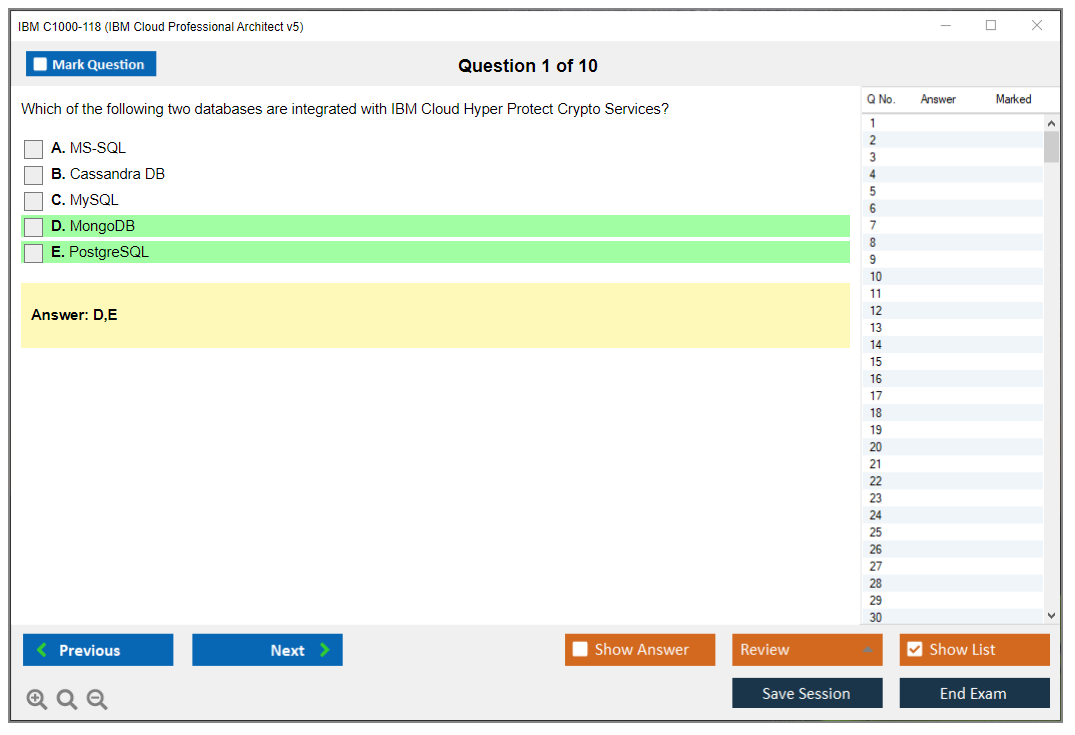
Security and compliance represents roughly 20-25% of exam weight. The thing is, every architecture decision has security implications. The IBM Cloud security and compliance questions go deep on zero-trust principles. You're not just picking "yes use encryption." You're designing entire encryption strategies including key management with Key Protect or Hyper Protect Crypto Services, certificate lifecycle management, secrets handling through Secrets Manager.
IAM architecture gets tested hard. Like really hard. You need to understand identity provider integration (SAML, OAuth, OIDC), how to structure access policies following least privilege, when to use service IDs versus user IDs, API key management strategies, and how to prevent privilege escalation. They'll give you scenarios about third-party vendor access or cross-account access and you've gotta architect the right solution. I've seen questions where the wrong answer technically works but violates security best practices. That's the trap.
Compliance framework mapping is huge. GDPR, HIPAA, PCI-DSS, SOC 2, ISO 27001. You need to know what each requires and how IBM Cloud services help you meet those requirements. This gets tedious because you're learning regulatory requirements, but the exam expects you to say "for HIPAA we need BAA coverage, these specific services are covered, here's how we implement encryption and audit logging." Context-based restrictions, network isolation with security groups and ACLs, private connectivity patterns all get tested extensively.
Networking and connectivity (VPC, VPN, Direct Link, DNS)
The IBM Cloud networking (VPC, connectivity) domain is 15-20% of exam content and it's super technical. VPC architecture questions test whether you actually understand IP networking, not just IBM's implementation. CIDR planning, subnet design across multiple zones, routing tables, public gateways, floating IPs. You've gotta be comfortable with all this. They love asking about multi-zone architectures and how you'd design networking to support high availability without creating security holes.
Connectivity options are critical. VPN gateways for site-to-site connections. Direct Link for dedicated private connectivity to on-premises datacenters. Transit Gateway for hub-and-spoke architectures connecting multiple VPCs. You'll get scenarios like "customer has five VPCs across two regions plus on-premises datacenter, design the connectivity" and you need to know when to use Transit Gateway versus VPC peering. Oh, and speaking of Direct Link, I once saw an architect spec the lowest tier for a customer who needed 5 Gbps throughput. That mistake cost them three months of delays and a complete redesign because the speed tiers affect not just cost but also what routing protocols you can use.
Load balancer architecture comes up constantly. Application load balancers versus network load balancers, public versus private, multi-zone configurations, health checks, SSL offloading. DNS architecture includes public and private DNS zones, split-horizon DNS setups, integration with external providers. Flow logs for troubleshooting. DDoS protection strategies.
Compute, containers, and application architecture patterns
Compute and containers is another 15-20% chunk. You need to know virtual server instance types: balanced, compute, memory profiles. Bare metal servers for performance-intensive workloads, dedicated hosts for licensing compliance, placement groups for affinity rules. But honestly, most questions focus on containers because that's where modern architectures live.
IBM Cloud Kubernetes Service versus Red Hat OpenShift on IBM Cloud. Understand the differences and when you'd pick each. Worker pool design, cluster networking, ingress controllers, persistent storage for containers. The IBM Cloud architecture design questions around containers get into real scenarios: "stateful application needs persistent storage, high availability, and automatic scaling, design the solution." Container registry strategies. Image security scanning with Vulnerability Advisor. Deployment patterns using Helm or operators.
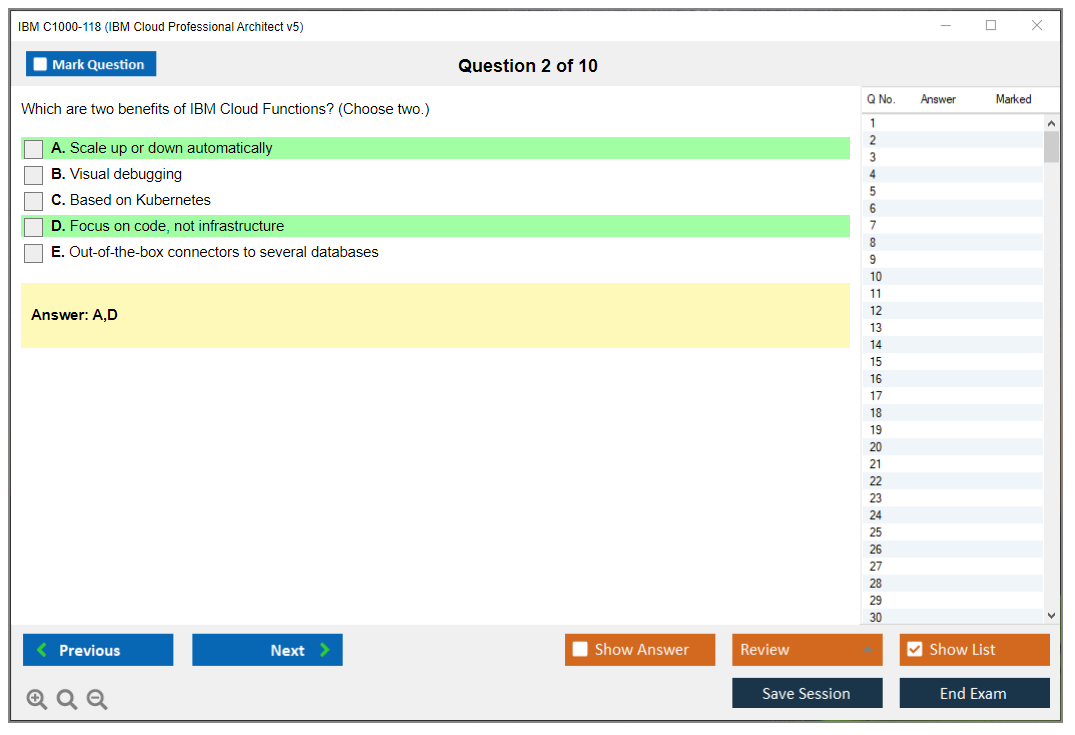
Serverless architecture with IBM Cloud Functions gets tested but usually in context of appropriate use cases. When does serverless make sense versus containers? Event-driven architectures, API Gateway integration, cold start considerations. VMware on IBM Cloud appears in hybrid scenarios, migration patterns from on-premises VMware to cloud.
Storage, databases, and integration services
Storage and databases is roughly 15% of the exam. Storage architecture questions cover Block Storage performance tiers (3 IOPS/GB versus 10 IOPS/GB), File Storage for shared workloads across multiple compute instances, Object Storage for unstructured data and backups. You've gotta understand performance characteristics, cost implications, durability guarantees. Backup strategies. Snapshot policies. Cross-region replication for disaster recovery.
Database service selection gets complex. Managed PostgreSQL, MySQL, MongoDB, Cloudant, Db2, Data Warehouse. Each has specific use cases. They'll describe application requirements and you need to pick the right database. NoSQL versus relational. Consistency models. Scaling characteristics. Data pipeline architecture includes ETL patterns, streaming with Event Streams (Kafka), data lake architectures using Object Storage plus analytics services.
Integration patterns test your knowledge of API management, message queuing, service mesh, event-driven architectures. When do you need App Connect versus Event Streams versus direct API calls?
Observability, operations, resiliency, and DR
Observability and resiliency represents 15-20% of exam weight. IBM Cloud resiliency and disaster recovery questions test multi-zone architectures, backup strategies, failover mechanisms, RTO/RPO requirements. You've gotta design architectures that actually survive failures, not just theoretically handle them. Active-active versus active-passive deployments. Database replication strategies. Application-level failover versus infrastructure-level.
Monitoring architecture covers IBM Cloud Monitoring (Sysdig), logging with Log Analysis (LogDNA), distributed tracing. How do you instrument applications? What metrics matter? Alerting policies, escalation to incident management platforms. High availability patterns across regions. Disaster recovery testing procedures. Business continuity planning.
Cost management, scalability, and performance considerations
Cost management typically hits 10-15% of the exam. Cost modeling, using the cost calculator effectively, understanding service pricing models, TCO analysis. Right-sizing virtual servers. Reserved capacity planning. Cost allocation through tagging and resource groups. Scalability architecture includes auto-scaling configurations for compute, database read replicas for read-heavy workloads, caching strategies with CDN and Redis.
Performance optimization topics cover caching layers, content delivery networks, database query optimization, application performance monitoring. Capacity planning methodologies. Performance testing approaches before production deployment. The C1000-118 Practice Exam Questions Pack helps you understand how these cost and performance topics appear in actual exam scenarios because they're usually embedded in larger architecture questions rather than standalone.
The IBM Cloud Professional Architect v5 objectives get updated periodically when IBM adds new services or retires old ones, so always check the official exam page for the latest domain weightings. If you're also looking at foundational knowledge, the C1000-083 (Foundations of IBM Cloud V2) certification covers basics, while C1000-142 (IBM Cloud Advocate v2) focuses on broader cloud concepts. For integration-focused architects, C1000-147 (Cloud Pak for Integration v2021.4 Solution Architect) and C1000-130 (IBM Cloud Pak for Integration V2021.2 Administration) complement the Professional Architect certification nicely.
Prerequisites and Recommended Experience
Prerequisites (official vs. recommended)
For the IBM C1000-118 exam, the official prerequisites story is pretty straightforward. There aren't any. No mandatory training. No required prior cert. You can register, pay, and sit for the exam even if you've never touched the IBM Cloud Professional Architect v5 track before. That's great for experienced architects who don't want extra hoops, and it's also a trap for people who assume "no prerequisites" means "easy." It doesn't.
No gatekeeping. Cool. Also not a free win.
IBM's recommended baseline is where it gets real. IBM strongly recommends you have the IBM Cloud Associate Architect certification, or at least the same level of foundational knowledge, before you attempt the professional exam. That recommendation exists for a reason: the professional-level questions expect you to already know how IBM Cloud works day to day, and they jump quickly into tradeoffs, governance, and design decisions that only make sense if the basics are automatic for you first. If you're still figuring out what lives in the catalog versus what's account-level configuration, you'll burn time and miss scenario clues.
So what counts as "equivalent foundational knowledge"? You should be comfortable with cloud computing fundamentals (shared responsibility, regions vs. zones, scaling models, managed services), networking basics (TCP/IP, DNS, routing, VPN concepts), security principles (IAM, least privilege, encryption basics, key management), and infrastructure concepts (subnets, firewalls, load balancers, storage types). That's generic cloud stuff, sure, but you've gotta map it to IBM's vocabulary and service behavior, because the C1000-118 certification isn't testing your ability to recite definitions. It's testing whether you can design something that survives real business constraints.
Training-wise, IBM Cloud Essentials is the minimum "you should probably know this" level. Not because the exam asks "where's the button in the console," but because you need platform navigation and basic operations to be second nature. Service catalog familiarity matters. Account structure matters. Resource groups, IAM access groups, policies, and basic provisioning patterns matter. If you can't move around the IBM Cloud console quickly, you'll struggle to reason through scenario questions that assume you understand what's configurable where.
Tools are another quiet requirement. IBM doesn't require you to prove you've used them, but honestly you should have hands-on familiarity with the IBM Cloud console plus CLI tools, and you should know what the Terraform provider can and can't do. Same with API interfaces. The IBM Cloud Architect certification at the professional level leans into repeatability and automation, and the exam writers love to frame questions around "how would you roll this out consistently across environments" or "how do you reduce manual drift." If "Terraform + IBM Cloud Schematics" is still abstract to you, that's a gap you'll feel.
A weirdly underrated requirement is enterprise IT literacy. If you've never worked in a place with change management, incident response, and SLAs, some questions'll feel like they're written in corporate fog. They're not. They're testing whether you can design within reality: approval gates, segregation of duties, operational ownership, and what happens when a system breaks at 2 a.m. Knowing ITIL terms helps, but what helps more is understanding how those processes shape architecture decisions. Actually, funny thing, I once watched a candidate bomb a simulation question because they ignored the "must support quarterly audits" requirement buried in the scenario text. They nailed the technical design but missed that detail completely, and in the real world that's how you end up redoing work at 10 p.m. before a compliance deadline.
And yes, having exposure to AWS, Azure, or Google Cloud's helpful. Not required. But useful. Multi-cloud patterns show up in real IBM Cloud work, and the exam can hint at hybrid connectivity, migration, or governance patterns that make more sense when you've seen how other platforms frame similar problems. Still, don't overthink it. This exam's IBM-focused, and you're expected to know IBM-specific services and design approaches.
People ask about logistics too, even in a prerequisites section. "How much does the IBM C1000-118 exam cost?" depends on region and currency, plus taxes, and IBM can change pricing, so always confirm on the official exam page. Same vibe for "What's the passing score for C1000-118?" IBM doesn't always publish a simple fixed number publicly for every exam, and results're typically reported as pass/fail with section feedback, so don't build your plan around chasing a magic percentage.
Recommended hands-on experience and role alignment
If you want my blunt take, the best preparation for the IBM C1000-118 exam is time spent building and running things that matter. IBM's recommended experience range of 12 to 24 months on IBM Cloud in production or production-like environments is reasonable, because this's a professional architect exam and it reads like one. You're expected to evaluate tradeoffs, pick services that fit constraints, and design for security, failure, cost, and operations, all at once, while still keeping the solution buildable by a team that's got deadlines and tickets and compliance reviews.
Time matters. So does variety. Production changes you.
That "12 to 24 months" shouldn't be one tiny corner of the platform either. You'll be in a better spot if you've touched at least 3 to 5 major IBM Cloud service categories, like compute, networking, storage, databases, and security. Not gonna lie, candidates who only did one workload, one VPC, one pattern, tend to overgeneralize, and scenario questions punish that. You need reps across different shapes of problems: a public-facing app with strict uptime, an internal service with heavy IAM constraints, a data workload with encryption and retention rules, a regulated environment with audit requirements.
Hands-on with IBM Cloud landing zone deployments is a huge advantage. IBM-provided templates or a custom landing zone both count. The point's you understand the "day zero" design: account structure, IAM model, network segmentation, logging/monitoring baselines, key management, and guardrails that prevent teams from doing wild stuff later. A lot of IBM Cloud architecture design questions're basically landing zone questions wearing a different hat. If you've built one, you'll recognize the intent behind the exam options instead of guessing based on vibes.
I also like seeing people who've led architecture discussions, written design docs, and presented to stakeholders. Not because the exam asks you to write a document, but because the mental process's the same: gather requirements, identify constraints, propose options, call out risks, and choose a design with a rationale. When you've done that in front of security, ops, and a business owner who keeps asking "why's this taking so long," you learn quickly that architecture's communication plus tradeoffs, not just picking a service.
The thing is, troubleshooting experience matters more than most folks admit. If you've been on the hook for production incidents, you'll have better instincts for observability and operational design. Root cause analysis teaches you what breaks in real life: mis-scoped IAM, DNS issues, routing mistakes, certificate problems, "small" limits, noisy neighbors, bad scaling assumptions. That background shows up directly in scenario-based questions around IBM Cloud resiliency and disaster recovery because you stop thinking only about deploying, and start thinking about operating.
Migration and modernization experience also maps well to the exam. Cloud migration projects teach you connectivity patterns and risk management. Application modernization and greenfield cloud-native development teach you what "cloud-native" means beyond marketing, like managed databases, eventing, container scheduling, and how teams actually ship changes. If you've lived inside a CI/CD pipeline, even better. Understanding SDLC, DevOps practices, and agile workflows helps you answer questions about how an architecture supports frequent releases without turning compliance and security into blockers.
Containers aren't optional knowledge here. Familiarity with Docker's table stakes. Kubernetes is expected. OpenShift often comes up in IBM contexts, and you should know the basics of how container platforms change networking, identity, secrets, and deployment patterns. If you're shaky on that, you'll feel it in the container architecture domain questions, and those questions tend to be more "pick the best design" than "name the thing."
Security and compliance experience's another differentiator. You should've worked with enterprise security requirements, compliance frameworks, audit expectations, and implementing security controls, because the exam leans into IBM Cloud security and compliance decisions. Experience designing for regulated industries like financial services, healthcare, or government gives you extra context, since you've already seen why key management, logging retention, separation of duties, and network isolation become non-negotiable. You don't need that background to pass, but it makes the "best answer" more obvious.
Networking skills matter too, and I mean real networking: TCP/IP, DNS, VPNs, routing concepts, plus IBM-specific IBM Cloud networking (VPC, connectivity) options like connectivity patterns and what you'd choose for different latency, security, and operational needs. Same for security tech like encryption, certificates, and firewalls. This exam expects you to design systems that don't fall apart when they hit enterprise networks.
If you're transitioning from on-prem infrastructure roles, you can absolutely do this, but you should supplement with cloud-specific training and labs. Don't rely on "I know VMware" confidence. Cloud identity, network segmentation, managed services, and automation're different muscles. For self-study candidates without much production exposure, you can still prepare, but you've gotta spend extra time in hands-on lab environments and do scenario practice, because reading a C1000-118 study guide alone won't teach you how to choose between two "almost right" architectures.
IBM training courses're helpful structure, but they can't replace real architectural decision-making. You need to practice making calls with imperfect info. That's why I'm okay recommending targeted practice content if you use it the right way. If you want a focused set of scenario-style questions to pressure-test your gaps, the C1000-118 Practice Exam Questions Pack is a decent add-on, and it can help you map your weak spots back to the IBM Cloud Professional Architect v5 objectives. Don't treat any C1000-118 practice test like a cheat sheet though. Use it like a mirror.
One more time, because people always ask: "Is IBM Cloud Professional Architect v5 hard?" It's hard if your experience's shallow or purely theoretical. It's manageable if you've designed, deployed, and supported IBM Cloud solutions and you can explain why you chose specific services, controls, and patterns. And if you're trying to speed things up, pair your reading with labs and a realistic question bank like the C1000-118 Practice Exam Questions Pack, then go back and build the missing pieces for real.
Also, keep your expectations straight about admin trivia. This exam's architecture. You're gonna see questions that blend governance, security, connectivity, operations, and cost in one scenario, and that's why experience wins. If you're missing that experience, you can still build it in a lab, but you've gotta be deliberate and repeat the patterns until they feel normal, then validate with something like the C1000-118 Practice Exam Questions Pack and your own reference build.
C1000-118 Difficulty and What Makes It Challenging
Is IBM Cloud Professional Architect v5 hard?
Okay, here's the deal: the IBM C1000-118 exam is really tough. This is not your standard associate-level cert where you just memorize service definitions and call it a day. The IBM Cloud Professional Architect v5 certification sits squarely in intermediate to advanced territory, and the pass rates? They tell the whole story. Most first-time test-takers see success rates hovering somewhere between 40-60%, which honestly should tell you everything about the preparation this beast demands.
When half the folks walking into this exam don't make it through on their first go, you're clearly dealing with something requiring serious commitment. I've watched colleagues who breezed through other cloud certs get absolutely humbled by this one.
What actually makes the C1000-118 certification challenging
The difficulty doesn't stem from obscure technical trivia. It's those scenario-based questions that'll wreck you. You're not answering simple "what is X service?" stuff. Instead, you're analyzing multi-layered situations where you have to evaluate requirements, weigh trade-offs, and select the optimal architecture from multiple technically correct options. That's a completely different skill set compared to just memorizing facts.
These scenarios typically throw security requirements, compliance constraints, performance targets, cost limitations, and operational considerations at you all at once. You might see a question describing a retail company needing to deploy a new e-commerce platform with PCI DSS compliance, sub-50ms latency for North American customers, disaster recovery capabilities with a 4-hour RTO, and a quarterly budget cap. Then you have to architect the solution addressing all that within IBM Cloud.
Questions test judgment more than recall. Two answers might both work technically, but one could violate a subtle compliance requirement mentioned three sentences into the scenario. Miss that detail? You're wrong even though your technical knowledge was solid.
Where candidates typically struggle most
Service selection questions are brutal because IBM Cloud has so many services with overlapping capabilities. When do you use Cloud Object Storage versus Block Storage versus File Storage? What's the actual difference between Code Engine, Cloud Foundry, and Red Hat OpenShift for container workloads? These are not theoretical questions. You need understanding of the nuanced differences and matching them to specific use cases.
Governance and compliance questions require you to map regulatory requirements to specific IBM Cloud security controls and architectural patterns. You cannot just know that encryption exists. You need understanding of which encryption options satisfy which compliance frameworks, how Key Protect differs from Hyper Protect Crypto Services, and when you'd implement one versus the other.
Networking questions? Particularly challenging. The complexity of VPC architectures, routing configurations, and connectivity options creates massive room for confusion. You might need to design a hybrid cloud setup using Direct Link with BGP routing while maintaining proper security group configurations and subnet isolation. If you don't get how these pieces interact, you're toast.
The scenario complexity problem
Questions involving multiple interconnected services really separate those who've actually built IBM Cloud architectures from folks who've just read about them. Understanding service integration points and data flow across a complex architecture requires hands-on experience. I mean, when you're looking at a scenario involving Virtual Servers, Cloud Object Storage, Event Streams, Cloud Databases, and API Connect all working together, you need to visualize how data moves through that system. There's no shortcut here.
Time management is another significant challenge with complex scenarios requiring careful reading and analysis within a limited exam duration. You cannot skim these questions. Some include architectural diagrams, configuration snippets, or requirement tables needing interpretation. Rush through them and you'll miss critical details.
The IBM Cloud landing zone questions test both conceptual understanding and practical implementation knowledge of automated deployment frameworks. Not something you can fake your way through without actual experience.
Breadth versus depth challenge
The difficulty gets amplified by the sheer breadth of the IBM Cloud service catalog. You need familiarity with compute options, storage services, multiple database offerings, networking components, security tools, and specialized services for AI, IoT, and data analytics. Candidates who've spent their careers focused on a single area (say, just working with Kubernetes) struggle hard when questions span multiple architectural domains.
I've seen professionals with five years of cloud experience fail this exam because their experience was narrow. Knowing containers inside and out doesn't help when you're hit with questions about cost optimization across reserved instances, commitment discounts, and service tier selections. Breadth beats depth here.
Cost optimization and DR complexity
Cost optimization questions are challenging because they require understanding pricing models, commitment options, and cost-benefit analysis across service alternatives. You might need to calculate whether reserved capacity makes sense versus on-demand pricing for a specific workload pattern, or evaluate the cost implications of data transfer between regions.
Disaster recovery and resiliency questions require understanding RTO/RPO calculations, data replication options, and failover mechanism trade-offs. These are not checkbox questions. You're evaluating architectural approaches against specific business continuity requirements. Real trade-offs, real consequences.
The cloud platform transition struggle
Professionals coming from other cloud platforms face a learning curve understanding IBM Cloud-specific terminology, service names, and architectural patterns. If you're coming from AWS or Azure, you cannot just map concepts one-to-one. IBM Cloud has its own approaches to identity management, networking, and service organization requiring dedicated study.
The exam gets regularly updated to reflect new services and retired features too. You cannot rely on outdated study materials or old practice tests. Questions focus on current best practices and supported service configurations, avoiding deprecated services or obsolete architectural patterns. This means candidates need to study current documentation rather than relying on materials from even a year ago. Kinda frustrating when you're trying to prepare efficiently.
For context, if you've already tackled something like the C1000-142 IBM Cloud Advocate v2 or even the foundational C1000-083 Foundations of IBM Cloud V2, you'll have some baseline knowledge, but the C1000-118 exam requires significantly deeper technical expertise and architectural decision-making skills. The jump from associate to professional level? Real and substantial in IBM's certification track.
Conclusion
Wrapping up your C1000-118 path
Look, getting your IBM Cloud Professional Architect v5 certification isn't something you knock out in a weekend. This exam? It's full. Covers everything from landing zone design to disaster recovery patterns, and IBM expects you to actually know how to architect real solutions, not just memorize service names. Though honestly, that'd be way easier if they let you get away with it.
The C1000-118 exam cost runs about $200. Not terrible. Especially compared to some vendor certs that'll drain your wallet faster than a misconfigured cloud storage bucket racks up egress fees. But here's the thing: you don't wanna pay that twice because you rushed through prep. The passing score varies since IBM uses scaled scoring, but most people report needing somewhere around 65-70% to clear it. Sounds reasonable, right? That is, until you hit those scenario questions where three answers look correct and you're second-guessing your VPC design choices at 2am wondering if you should've gone with a different subnet strategy. I spent an embarrassing amount of time once debating whether a particular workload even belonged in the cloud at all, which wasn't even what the question was asking, but that's the kind of rabbit hole these exams can send you down.
What really separates people who pass from those who don't? Hands-on experience with IBM Cloud architecture design, period. You can read documentation all day about IBM Cloud security and compliance or IBM Cloud networking concepts, but until you've actually configured a VPC with multiple zones, set up Transit Gateway connectivity, and dealt with IAM policies that won't cooperate (like, they just refuse to behave no matter how many times you check the syntax), you're missing critical context. The exam objectives cover IBM Cloud resiliency and disaster recovery in depth. Those scenario questions? They'll expose gaps in your practical knowledge fast.
Your study plan should balance official IBM materials with actual lab work. Build something real. Even if it's small. Deploy a multi-tier app across availability zones, implement backup strategies, configure monitoring dashboards. Not gonna lie, the IBM Cloud landing zone framework questions trip up a lot of people because they've never actually implemented one. They've just read about the concept and figured that'd be enough. It's not.
Before you schedule your exam, grab the C1000-118 Practice Exam Questions Pack at /ibm-dumps/c1000-118/. Practice tests are really the best way to identify weak areas and get comfortable with IBM's question style. Don't just take them once. Review every wrong answer, map it back to the IBM Cloud Professional Architect v5 objectives, then hit the docs or labs to fill that gap.
This certification opens doors. Architect-level roles. Consulting gigs. Put in the work now, and you'll have credentials that actually mean something in the IBM Cloud ecosystem.
