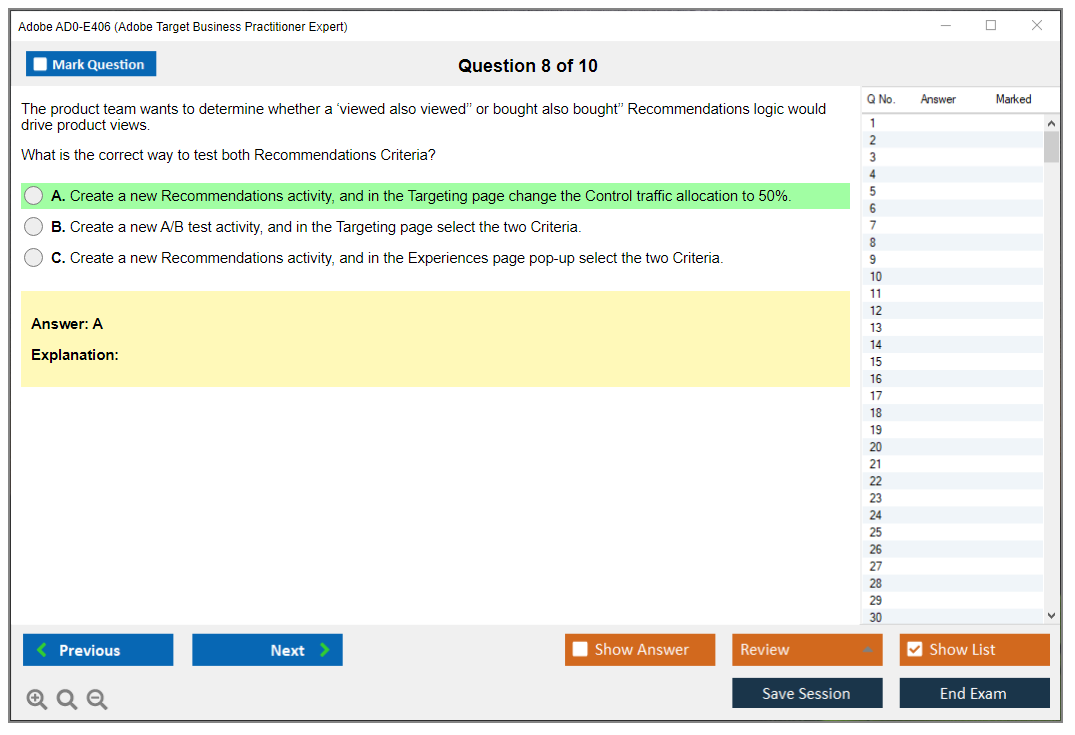
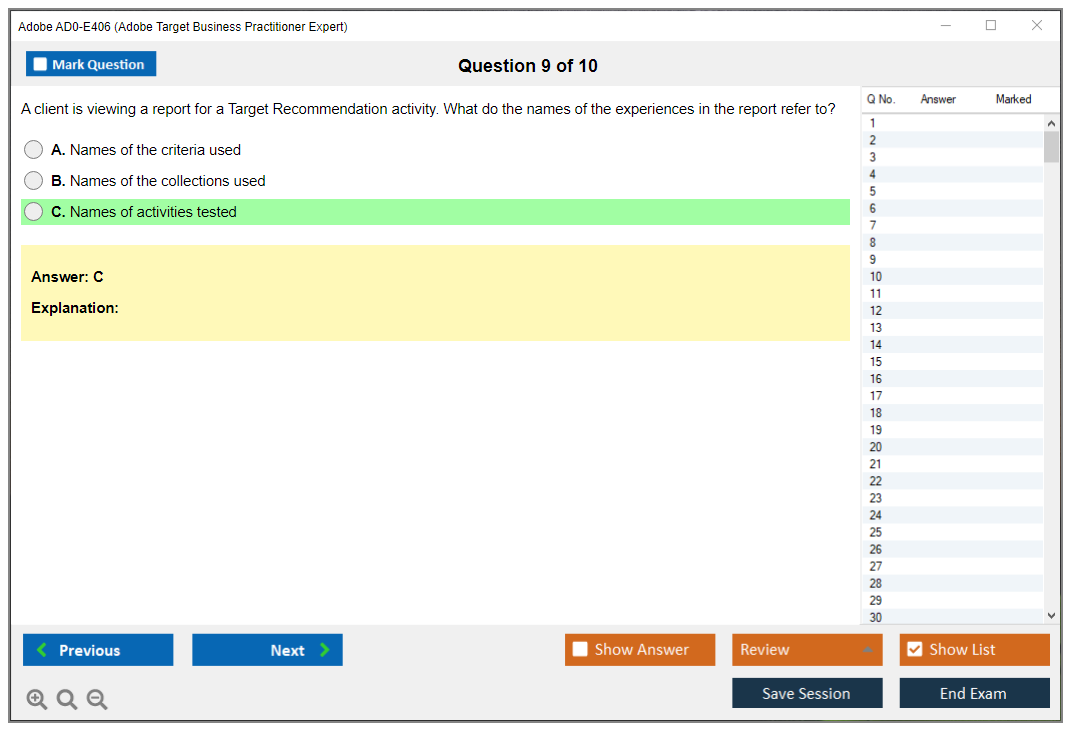
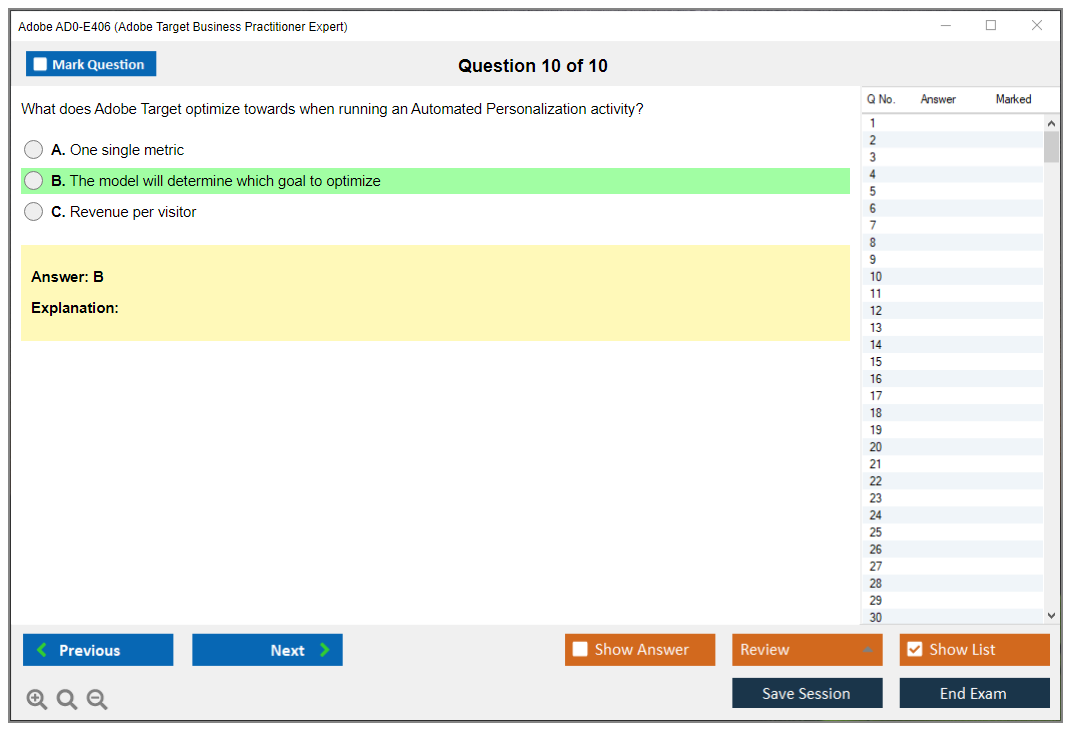
Adobe AD0-E406 (Adobe Target Business Practitioner Expert) Exam Overview and Introduction
Look, if you're working in digital marketing or conversion optimization, the Adobe AD0-E406 exam probably landed on your radar for good reason. This certification validates you actually know what you're doing with Adobe Target. Not just clicking around the interface, but designing real personalization strategies that move business metrics. Plenty of people can set up a basic A/B test. The Adobe Target Business Practitioner Expert certification demonstrates you understand the strategic layer: hypothesis formation, audience segmentation, statistical validity, and how to translate test results into actionable recommendations that executives actually care about.
What this certification actually proves
The AD0-E406 exam tests whether you can operate Adobe Target within the broader Adobe Experience Cloud ecosystem. That integration piece matters more than people realize. You're not just proving Target knowledge in isolation. You need to understand how it connects with Adobe Analytics for reporting, how Adobe Audience Manager feeds audience data, and how everything fits together when you're running enterprise-level optimization programs.
That's what separates this Expert-level cert from Associate credentials.
You're expected to think strategically about personalization campaigns, not just execute tasks someone else designed. This exam covers the full lifecycle. Planning activities, selecting the right test type (A/B versus multivariate versus experience targeting), building audiences, creating offers, managing QA workflows, interpreting statistical results, and providing optimization recommendations. The breadth catches some people off guard, especially folks who've only worked in one narrow slice of the platform.
Who's actually taking this thing
The target audience skews toward marketing professionals who live in the optimization world. Conversion rate optimization specialists. Digital strategists managing personalization programs. Personalization managers at mid-to-large companies. Business practitioners who design and execute testing campaigns but might not be writing custom JavaScript (though understanding technical constraints helps). If you're the person translating business goals into testable hypotheses and then explaining lift percentages to stakeholders, this certification validates that skillset.
I've seen people from consulting firms pursue it too. Being able to show clients you're certified in Target opens doors when you're pitching optimization engagements.
Why bother getting certified
Career prospects, obviously.
The digital experience space keeps growing, and companies using Adobe Experience Cloud want practitioners who can extract value from their investment. The certification signals you won't need six months of hand-holding before contributing. But beyond resume credentials, preparing for AD0-E406 forces you to fill knowledge gaps. Maybe you've run hundreds of A/B tests but never touched Automated Personalization. Maybe you're great at building audiences but fuzzy on statistical confidence calculations. The exam blueprint pushes you to develop T-shaped expertise across Target's capabilities.
Real-world application matters here. You'll use these skills managing multivariate tests, setting up experience targeting rules, configuring recommendation algorithms, analyzing performance data, and providing optimization roadmaps. Companies investing in personalization want someone who can design statistically valid experiments and interpret results correctly. Misreading test data costs money and credibility fast.
Exam logistics you should know
The AD0-E406 exam runs through PSI testing centers or online proctoring. You're looking at 50-60 questions (the exact count varies slightly) that you'll complete in 105 minutes. That's roughly two minutes per question, which sounds generous until you hit the scenario-based questions that require actually thinking through implementation approaches.
Multiple-choice and multiple-select formats.
English is the primary language, though regional availability might vary. You can take it in-person at authorized centers or do remote proctoring from home. I'd suggest the remote option if you've got a quiet space and reliable internet. Saves the commute and you can test in familiar surroundings. Though some people prefer the structure of going to a center because home distractions are real. I once tried taking a practice test at home and my neighbor decided that was the perfect time to fire up his leaf blower for what felt like an hour straight. Anyway.
What it takes to pass
Preparation time varies wildly based on your current experience. If you're already working in Adobe Target daily, maybe 4-6 weeks of focused study combined with targeted practice in weak areas. Coming from a different platform or light Target experience? Expect 8+ weeks, maybe more if you're balancing a full-time job while studying. You need that combination of theoretical knowledge (understanding when to use which activity type, audience building best practices, statistical concepts) and practical implementation experience (actually configuring activities, troubleshooting, interpreting reports).
Success factors include hands-on experience you can't fake. Reading documentation helps, but actually building complex audience rules or analyzing multivariate test results gives you pattern recognition that makes exam questions click. Strategic thinking matters too. Many questions test whether you'd recommend the right approach for specific business scenarios, not just whether you know where buttons are in the interface.
The certification demonstrates current expertise as of the 2026 exam version, which means Adobe keeps content updated as Target changes. After passing, you're looking at career pathways into senior optimization roles, personalization strategy positions, or even consulting if that interests you. Some folks use it as a stepping stone toward other Adobe certifications. Adobe Experience Platform Technical Foundations or Adobe Analytics Developer Professional credentials can complement Target expertise nicely when you're building out Experience Cloud knowledge.
Bottom line: AD0-E406 validates you can drive business results through data-driven personalization. If that's the work you're already doing or want to do, the certification backs up your claims with third-party validation that actually means something in this space.
AD0-E406 Exam Cost, Registration, and Administrative Details
Quick context before the admin stuff
The Adobe AD0-E406 exam is the one tied to the Adobe Target Business Practitioner Expert certification, and honestly, it's aimed at people who can plan and run experiments, not people who live in JavaScript all day.
Not for beginners.
If you've been living in Target activities A/B testing and personalization, doing audience targeting and segmentation in Adobe Target, and you can talk through reporting and optimization in Adobe Target without hand-waving, you're the intended audience. The thing is, this cert expects you've already shipped campaigns and dealt with stakeholders who changed their minds mid-flight.
What you're actually paying for
The standard AD0-E406 exam cost is typically $225 USD for an initial attempt. That number is the one most candidates see when they register, and yeah, it's pretty stable, though Adobe does change things sometimes, so always sanity-check the Adobe Credential Management System right before you click pay.
Regional pricing variations are real. Look, if you're outside the US, your price can move a bit because of currency conversion, local taxes, and whatever your country thinks about digital services fees. You might see slightly more than $225 after tax. Or you might see a converted amount that looks "off" compared to today's exchange rate, which can mess with budget approvals if you're expensing this.
Payment is straightforward. You can usually pay with major credit cards like Visa, MasterCard, and American Express. If you're doing this through work, purchase orders can be an option for corporate-sponsored candidates, though that depends on how your company buys exams and whether they want to deal with procurement paperwork for a single AD0-E406 attempt.
Registration and scheduling without the drama
Registration is a short workflow. Create or log into your Adobe Credential Management System account, find the Adobe AD0-E406 exam in the catalog, then select your testing option, pick a date, and confirm your details.
Takes maybe ten minutes.
The annoying part isn't the clicks. It's making sure the name on your account matches your ID exactly, because testing providers are picky and they're not going to "let it slide" if your profile says Mike and your ID says Michael.
Scheduling flexibility is decent. You can usually choose a PSI testing center or go with online proctoring, and there are multiple time slots, which matters if you're trying to squeeze this around work, releases, and the weekly "why did that audience qualify?" meeting.
Book earlier than you think. I mean, if you have a preferred day, a preferred time, and you don't want to drive across town, schedule 2 to 3 weeks in advance because seats fill up. Online proctoring slots can get weirdly competitive near the end of a quarter when everyone suddenly remembers goals exist.
Changes, cancellations, and what happens if you fail
Rescheduling and cancellation policies are one of those details people ignore until they're sick, traveling, or their laptop dies. You can reschedule or cancel up to 48 hours before your scheduled exam time without a penalty, which is a fair window if you're paying attention.
Inside 48 hours is where the pain shows up. Late cancellation fees usually mean you forfeit the exam fee. The system doesn't care if your calendar blew up, so treat that 48-hour line like a hard wall.
Retakes are allowed, with waiting periods. If you fail, you can usually retake after 24 hours for the first retake, then you'll wait 14 days for subsequent retakes, which is kind of a blessing in disguise because it forces you to actually study instead of just burning money on repeat attempts. Each retake attempt requires paying the full fee again, so yes, another $225 USD per try. This is why I always tell people to do at least one AD0-E406 practice test and a targeted review before they swing again.
Unlimited retakes are allowed, generally, as long as you respect the waiting periods. "Unlimited" doesn't mean "smart" though, because the bill adds up fast and your confidence takes a hit after the second or third fail.
Speaking of retakes, I once knew someone who failed three times before realizing they were studying outdated materials from a certification two versions back. Not saying that's common, but it happens more than you'd think, especially when people rely on shared study docs instead of checking what Adobe actually wants tested.
Vouchers, discounts, and who gets a cheaper shot
If your employer is serious about certs, corporate voucher programs are the cleanest route. Organizations can buy exam vouchers in bulk for employee certification initiatives, then hand them out internally, which also makes expense reporting way less annoying.
Adobe Partner program benefits can also change the math. Partners may receive discounted or complimentary vouchers depending on partner tier. If you're at an agency or consultancy in the Adobe Experience Cloud Target certification ecosystem, it's worth asking whoever manages your partner relationship because those perks sometimes exist quietly in the background.
Student and academic discounts are limited. They can show up for qualifying programs, but it's not a guarantee, and you'll usually need proof or eligibility verification.
If you do get a voucher, watch the clock. Exam voucher validity periods are typically 12 months from purchase. Expired vouchers are sad little codes that do nothing.
Refund policies are usually non-refundable except for technical issues or extenuating circumstances, and even then, you may be routed into a case review instead of an instant refund. Not gonna lie, it's better to plan like you won't get money back.
Exam-day logistics people forget
Special accommodations requests should be handled during registration. If you need accessibility accommodations, request them early, because last-minute asks can push your date out while approvals happen.
ID requirements are strict. Bring a valid government-issued photo ID, and the name must match your registration, letter for letter. The check-in staff and online proctors have rules and they follow them.
Testing center check-in is basic but time-sensitive. Arrive about 15 minutes early, complete the check-in process, and store personal items where they tell you. Phones, bags, notes, and even some watches can be banned.
Online proctoring has its own checklist. You need reliable internet, a webcam, a microphone, and a private testing space. You'll do a system check before the exam, and you should do that check the day before too, because "my mic stopped working" five minutes before start time is a dumb way to burn $225.
Fast answers people search for
How much does the AD0-E406 exam cost? Usually $225 USD, with small regional variations.
What is the AD0-E406 passing score? Adobe doesn't always publish an AD0-E406 passing score publicly, so treat any exact number you see online as suspect and verify in official exam details.
How hard is the Adobe Target Business Practitioner Expert exam? Hard if you're guessing, manageable if you've built activities, handled approvals, and can explain outcomes from reports.
What are the best study materials for AD0-E406? Start with Adobe Target certification objectives, Adobe docs, and a realistic AD0-E406 study guide, then validate with a practice test and review misses.
Does the AD0-E406 renewal policy matter? Yes, but rules change, so confirm the AD0-E406 renewal policy inside your Adobe credential portal so you don't rely on outdated blog posts, including mine.
AD0-E406 Passing Score Requirements and Scoring Methodology
Look, Adobe doesn't publish passing scores for the AD0-E406 exam. Won't find that number anywhere official. Honestly, that's intentional. I've watched people frantically search for some magic percentage, but once you get how their methodology works, Adobe's approach actually makes sense. My cousin spent two weeks trying to find the "real" cutoff score before I finally convinced him to just study the actual content instead.
How Adobe calculates your final score
The AD0-E406 uses scaled scoring. Your raw score (basically right answers) gets converted to a standardized scale running from 0 to 1000. This isn't Adobe being difficult for no reason. Different exam versions might have slightly different difficulty levels, and scaled scoring accounts for that variation so everyone's held to identical standards regardless of which form they happen to get on test day.
Based on what I've heard from test-takers, passing scores generally land between 550 and 700 on that scale. Pretty wide range, not gonna lie. But it reflects how different exam versions might adjust where the cut score falls. Some folks report passing at 600-ish, others closer to 650. Point is? Know your stuff across all domains.
Why the secrecy around exact numbers
Adobe keeps specific passing thresholds confidential for practical reasons. First, it gives them flexibility to adjust for exam difficulty without causing panic among candidates who obsess over precise numbers. If one version turns out slightly harder than another, they tweak the scaled score conversion to keep things fair. Second? Exam security. When people know the exact passing score, they sometimes aim for bare minimum instead of actually mastering the material, which defeats the whole purpose of certification.
The minute you finish your computer-based AD0-E406, you'll get results. No waiting. The screen shows a clear pass or fail notification right there. Your official score report won't give you specific percentage breakdowns though. Instead, you get performance indicators for each major domain covered.
Understanding what your score report actually tells you
These domain-level performance indicators are more useful than a single percentage, honestly. The report shows whether you performed "above," "at," or "below" target for each content area. Activity planning. Audience targeting. Reporting and optimization. That kind of stuff. If you fail and need retaking, this breakdown tells you exactly where to focus study efforts instead of reviewing everything again blindly.
Here's something important: no partial credit exists on this exam whatsoever. Each question gets scored as either correct or incorrect, even on those multiple-select questions where you need several right answers. Miss one required option? Incorrect. That's just how it works.
And definitely don't leave questions blank ever. Unanswered questions automatically count as incorrect, so educated guessing is actually the smart play when you're unsure. You've got nothing to lose by selecting your best guess rather than skipping entirely.
What happens after you pass
Once you pass, Adobe issues a digital badge through Credly pretty much immediately. You can download an official certificate too. Both are verifiable through Adobe's Credential Management System, which matters because employers can check whether someone actually holds the certification they claim. I've seen people add these badges to LinkedIn profiles, email signatures, resumes.. anywhere you want showing off that expertise.
Your score itself remains confidential unless you decide sharing it. Adobe won't release your results to anyone without permission. And before you ask, no, there's no appeals process for scoring. The system is automated and objective, so you can't argue about whether a question was fair or poorly worded after the fact. Frustrating but understandable.
Technical scoring details you should know
Not all questions necessarily carry equal weight, by the way. Some complex scenario-based questions might be weighted more heavily than straightforward recall questions. Adobe doesn't publish exact weighting formulas, but it's worth remembering when you're taking the test that those longer, more involved questions deserve extra attention and careful reading.
The AD0-E406 isn't adaptive. Everyone gets identical question counts regardless of performance. You might encounter some experimental questions that don't actually count toward your score. Adobe includes these as pilot questions to evaluate them for future exam versions. Unfortunately, you won't know which questions are experimental while testing. Kind of annoying.
Time management shouldn't be huge. Adobe provides enough time to work through all questions thoughtfully without rushing. That said, don't overthink things to the point where you're spending five minutes on a single question analyzing every word.
If you need retaking the exam after failing, remember that you must hit the passing score on a single attempt. You can't combine scores from multiple tries or anything like that. Focus your retake preparation on those domains where your score report showed below-target performance. That's the most efficient way to improve your results. Similar to how candidates prepare for other Adobe certifications like the Adobe Experience Platform Technical Foundations exam, targeted studying based on weak areas makes a real difference in outcomes.
Understanding AD0-E406 Exam Difficulty Level and Preparation Challenges
What this certification really is
The Adobe AD0-E406 exam is Adobe's expert-level check on whether you can run Target like a business practitioner, not like a button-clicker. It's the Adobe Target Business Practitioner Expert certification, and honestly it expects you to think in tradeoffs, risk, governance, and measurable outcomes. Not just "pick A/B test and hit launch."
Look. Not for beginners.
Who should take it
If you're translating business goals into Target activities, partnering with analytics, wrangling stakeholders, and making calls about what to test and why, you're the audience. I mean, if you live in audience targeting and segmentation in Adobe Target, and you've had to debug "why did this experience not deliver" at least once, you're probably ready.
Not gonna lie. Experience matters more than any AD0-E406 study guide.
Exam price and fees (what to expect)
People ask, "How much does the AD0-E406 exam cost?" Pricing can change by region and program updates, so check Adobe's certification portal for the current AD0-E406 exam cost. Budget for a retake too because this one bites candidates who underestimate the scope, especially those treating it like a feature quiz instead of a strategic assessment where real-world judgment calls separate passing from failing.
Money aside. Time is the real cost.
Retake fees and retake policy (if applicable)
Adobe's retake rules can shift, and they're sometimes tied to waiting periods. Verify the latest retake policy in the same place you schedule the exam because, the thing is, you don't want your study timeline wrecked by an unexpected cooldown window.
Is the passing score published by Adobe?
"What is the passing score for Adobe AD0-E406?" Adobe often doesn't publish a simple universal number like "72%" for every exam version, so the AD0-E406 passing score may be presented as scaled scoring or only shown as pass/fail after you submit.
That ambiguity is annoying. It's also normal.
How scoring typically works (general guidance)
Expect weighted objectives and scenario questions that punish shallow recognition. You can "know the feature" and still miss the point because the exam is grading judgment, not trivia, and the distractors are usually plausible enough that you'll second-guess yourself under time pressure.
Why people say it's hard
"How hard is the Adobe Target Business Practitioner Expert exam?" It's hard because it's expert-level in the real way: advanced strategic thinking beyond basic Adobe Target feature knowledge. The Adobe AD0-E406 exam leans heavily on scenario-based questions where you have to analyze a messy situation, synthesize multiple concepts, then pick the best action, even when several actions are technically possible.
Also? The clock is rude. You get 105 minutes for about 50 to 60 questions, so you need fast reading and decision-making, not slow perfectionism.
What makes AD0-E406 challenging?
The depth expectation is the big jump. You need to know what features do, sure, but more importantly when, why, and how to apply them in business contexts, including governance and stakeholder constraints. That means the exam hits breadth too: activity planning, audience targeting, experience design, QA, reporting and optimization in Adobe Target, plus organizational best practices.
Scenario complexity levels vary. Some prompts are multi-layered: you'll see audience definitions plus conflicting KPIs plus implementation limitations plus "which activity type is best" in one question. Then you'll get ambiguous answer choices with distractors that sound like something a smart person might do but not the best-practice move. I've watched people who sailed through Adobe Analytics certification stumble here because they assumed pattern recognition would carry them. It doesn't.
Skills and experience that reduce difficulty
Six months of hands-on Target work is a real divider, especially if you've done more than simple Target activities A/B testing and personalization. Analytics background helps a lot too, because statistical and analytical reasoning shows up: experimentation methodology, statistical significance, confidence intervals, interpreting results, calling out when data is inconclusive. Knowing what to do next.
Cross-functional knowledge matters. Marketing strategy, UX basics, CRO habits, and project management workflows all show up indirectly because the exam assumes you can run an optimization program, not just configure a tool.
Where the blueprint usually stretches people
Adobe Target certification objectives tend to cluster around a few pain points. Complex audience segmentation scenarios are common, and you need to be comfortable with "who qualifies, when do they qualify, and what happens if they qualify for two experiences." Advanced activity design decisions show up too, like choosing between A/B, Experience Targeting, Automated Personalization, or Recommendations based on the business question and data reality.
Troubleshooting is the sleeper difficulty. Implementation issues, QA failures, offers not rendering, reporting mismatches. Fragments, tiny clues in the prompt.
Integration complexity is another. The Adobe AD0-E406 exam often expects you to understand how Target integrates with other Adobe Experience Cloud solutions, especially reporting flows and measurement, so Adobe Experience Cloud Target certification prep should include those connections, not just isolated Target screens.
Prerequisites and the experience Adobe doesn't say out loud
People look for AD0-E406 prerequisites like a formal checklist. There may not be strict "must have X cert first" requirements, but practically you want real implementation exposure plus a foundation in testing methodology and hypothesis thinking.
Overconfidence is a common failure mode. Using Target for simple A/B tests doesn't prepare you for expert-level strategic questions, and the exam absolutely covers less-used features you might skip in day-to-day work.
Study materials that actually help
"What are the best study materials for AD0-E406?" Start with the official blueprint and docs, but don't stop there. You need scenario practice, you need to build activities, QA them, read reports, and explain the "why" behind decisions.
If you want structured drilling, a practice pack can help you spot weak areas fast. I've seen people use AD0-E406 Practice Exam Questions Pack as a checkpoint after they've done real hands-on work, not as a replacement for it, and that's the right order.
Practice tests and a sane prep strategy
An AD0-E406 practice test is useful if you review it the right way. Don't just mark wrong answers. Write down why each distractor is wrong, what assumption it relies on, and what extra detail in the scenario would make it correct, because that's how Adobe writes these.
A simple plan. Week 1: blueprint plus core docs plus rebuild a couple activities end-to-end. Week 2: focus on reporting and optimization decisions, stats basics, and integration behaviors. Week 3: scenario drills and timed sets. Week 4: patch weak areas, then do one last timed run with something like the AD0-E406 Practice Exam Questions Pack to rehearse pacing.
Renewal and staying current
"Does the Adobe AD0-E406 certification expire or require renewal?" Policies change, so confirm the AD0-E406 renewal policy on Adobe's site for your credential and version. The 2026 version angle matters too because Target capabilities evolve, and the exam expects current behavior, not what worked two years ago.
Keep up with release notes. Seriously.
Last-minute advice before you sit
The week of the exam, focus on decision logic: best practice vs possible approach, interpreting results correctly, and what you'd recommend to a business stakeholder. Do a timed run, practice skipping and returning, and get comfortable choosing the "least wrong" option when answers are intentionally close.
And if you fail? Don't spiral. Use the score report, tighten your weak domains, and run another round of scenarios, maybe with the AD0-E406 Practice Exam Questions Pack as a structured way to measure improvement.
Complete AD0-E406 Exam Objectives and Content Blueprint Analysis
Look, if you're prepping for the Adobe AD0-E406 exam, you absolutely need to understand what Adobe actually tests. Walking into this thing blind? Asking for trouble. The official exam blueprint Adobe publishes isn't just some marketing fluff. It's literally your roadmap to what shows up on test day, and honestly, ignoring it is probably the biggest mistake I see people make.
Why the blueprint matters more than you think
Here's the thing. I've seen too many people waste time studying random Adobe Target features that barely appear on the exam. Features that might be cool in practice but don't help you pass. The blueprint breaks down exactly which domains get tested and how much weight each carries. Not gonna lie, this changes everything about how you prep. You're not just learning Target. You're learning what the exam writers think matters most for a Business Practitioner Expert, which is a different beast entirely.
Activity planning makes up about a quarter of your score
Domain 1 typically accounts for 20-25% of questions. So yeah, you better know your activity types cold, because that's substantial weight. The exam wants you to show when A/B testing makes sense versus when you'd use multivariate testing or experience targeting. Real scenarios, not textbook definitions. Simple A/B tests are straightforward. Two variants, measure which performs better, done. But MVT? That's where people trip up because you're testing multiple elements simultaneously, and the traffic requirements get insane fast with factorial designs. Like, we're talking millions of visitors for some configurations.
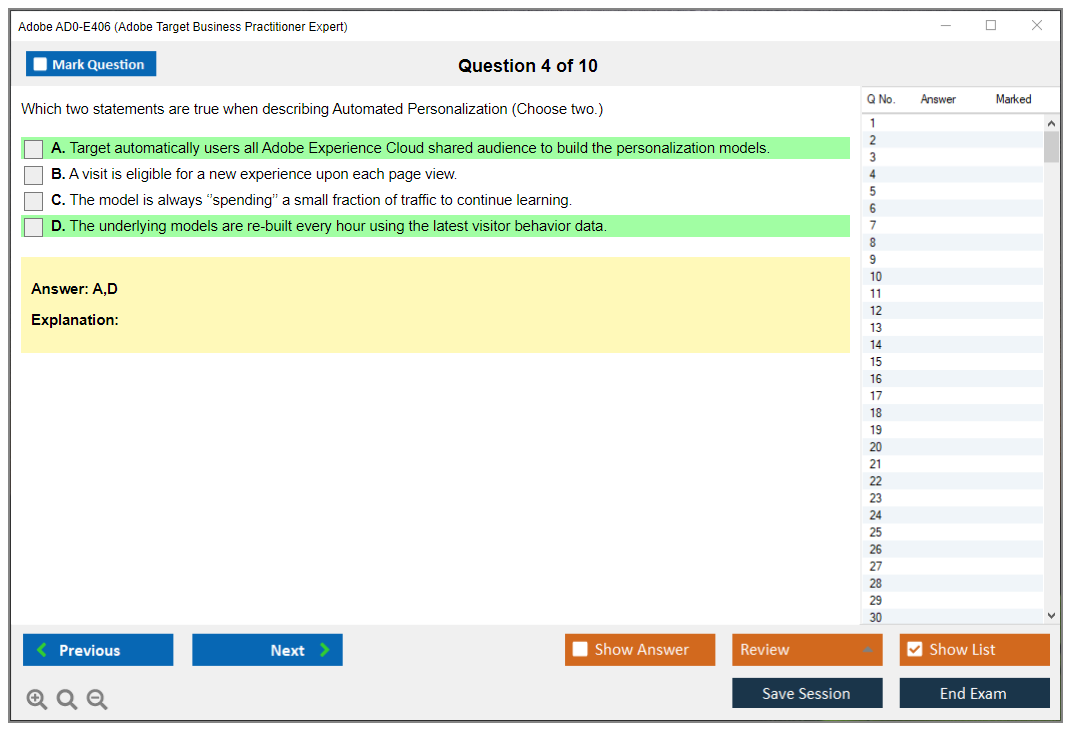
Experience Targeting's different. You're not doing statistical testing at all. You're just delivering different experiences to different audiences based on predefined rules. Then there's Automated Personalization, which uses machine learning to work at scale, and Recommendations for behavioral algorithm stuff like collaborative filtering. The exam'll throw scenarios at you, and you need to pick the right tool immediately.
Hypothesis development matters too. You can't just say "let's test a red button." You need clear success metrics and expected outcomes tied to business goals. Test prioritization frameworks like ICE (impact, confidence, ease) help you decide what to test first when you've got 47 ideas and limited traffic. Which, let's be honest, is every company's reality.
Oh, and here's something that still bugs me about most testing programs. Companies obsess over CRO tactics but completely ignore the organizational politics that kill half their tests before launch. Like, your perfect hypothesis doesn't matter if legal sits on it for three months.
Audience targeting and segmentation is roughly 18-22% of the exam
Domain 2 digs into how you actually create and manage audiences in Target's interface and backend systems. Profile scripts. Visitor attributes. Behavioral data. Geographic stuff. Technology parameters. All fair game. If you're using Adobe Audience Manager integration, you need to know how AAM segments flow into Target and what that data-sharing relationship looks like. The distinction between profile attributes, mbox parameters, and profile parameters trips up a lot of people.
Visitor profile persistence across sessions and devices gets tested regularly. Cookie-based versus declared IDs, what persists where. Audience combination logic with AND, OR, NOT operators seems basic until you're staring at a complex scenario question with nested conditions. Real-time versus batch updates matter because timing affects when visitors qualify for experiences.
I'd recommend checking out the AD0-E600 Adobe Experience Platform Technical Foundations content if you need more context on how audience data flows across the Experience Cloud ecosystem.
Content and offers account for 15-20% of questions
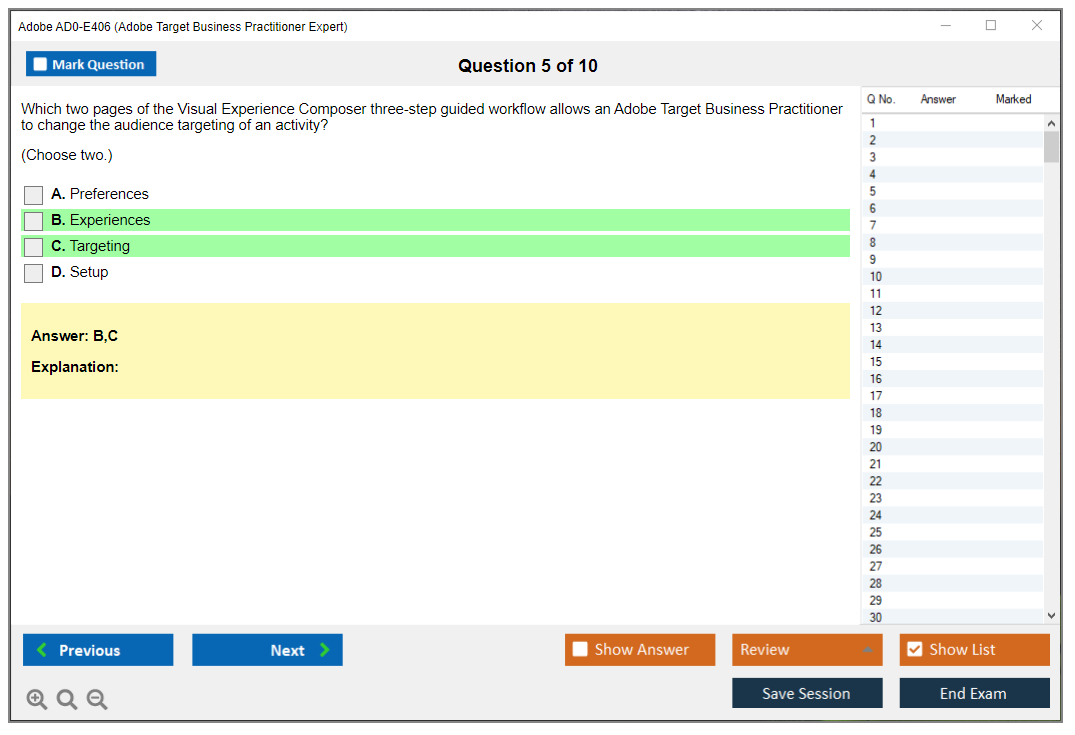
Domain 3 covers experiences, offers, and content management across different delivery methods. You've got HTML offers, JSON offers, image offers, redirect offers, dynamic offers. Each has specific use cases you should memorize. The Visual Experience Composer's great for point-and-click modifications, but Form-based Experience Composer is necessary for non-visual or complex implementations like APIs.
Mobile app experience design requires understanding the Adobe Target SDK implementation patterns. SPA considerations for frameworks like React or Angular come up because implementation differs significantly from traditional page loads. You're dealing with view changes instead of page loads. Responsive design implications matter because your experiences need to work across devices without breaking. Nothing worse than a test that looks great on desktop but crashes mobile.
QA and launch readiness is 12-16% of the exam
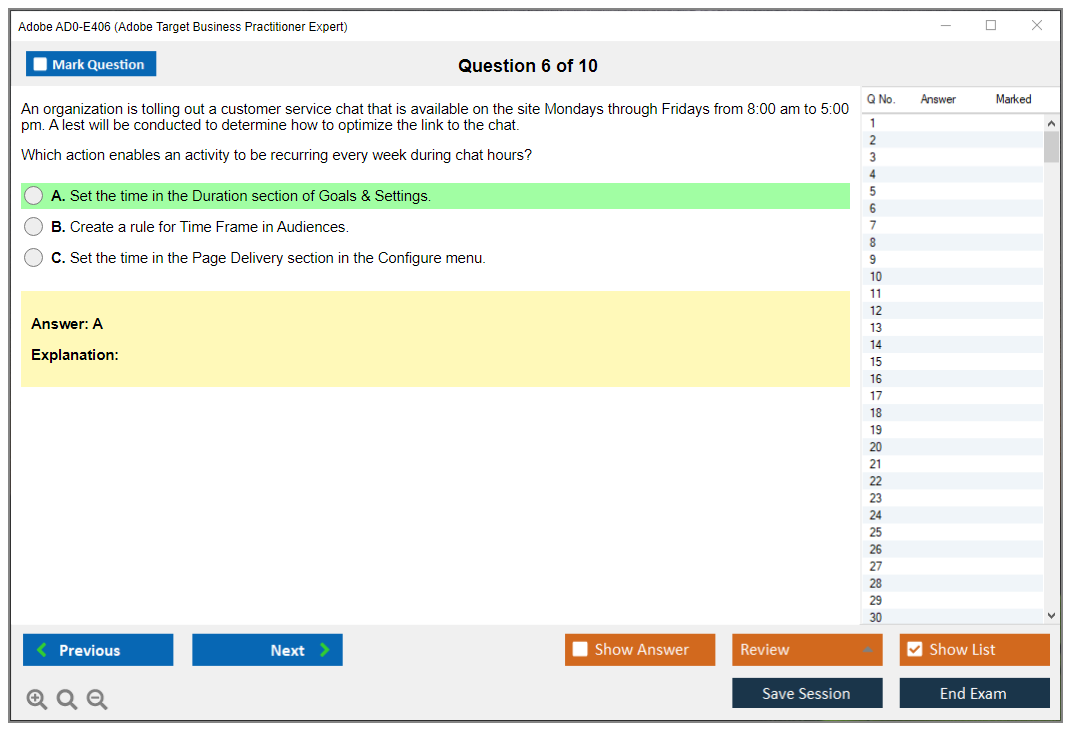
Domain 4 focuses on quality and governance before you launch anything to real traffic. QA mode and preview URLs let you test before going live. Super important for stakeholder sign-off. Activity collision detection helps identify conflicts when multiple activities target the same audience or page elements. Priority settings become critical when you're running dozens of tests at once and need to control what fires when.
The exam loves asking about validation steps. Confirming mboxes fire correctly. Parameters pass through. Tracking works end-to-end. Activity scheduling, audience validation, success metric configuration all need to happen before launch, because fixing things post-launch is a nightmare. Following checklists reduces errors dramatically.
Reporting and analysis is another 20-25% chunk
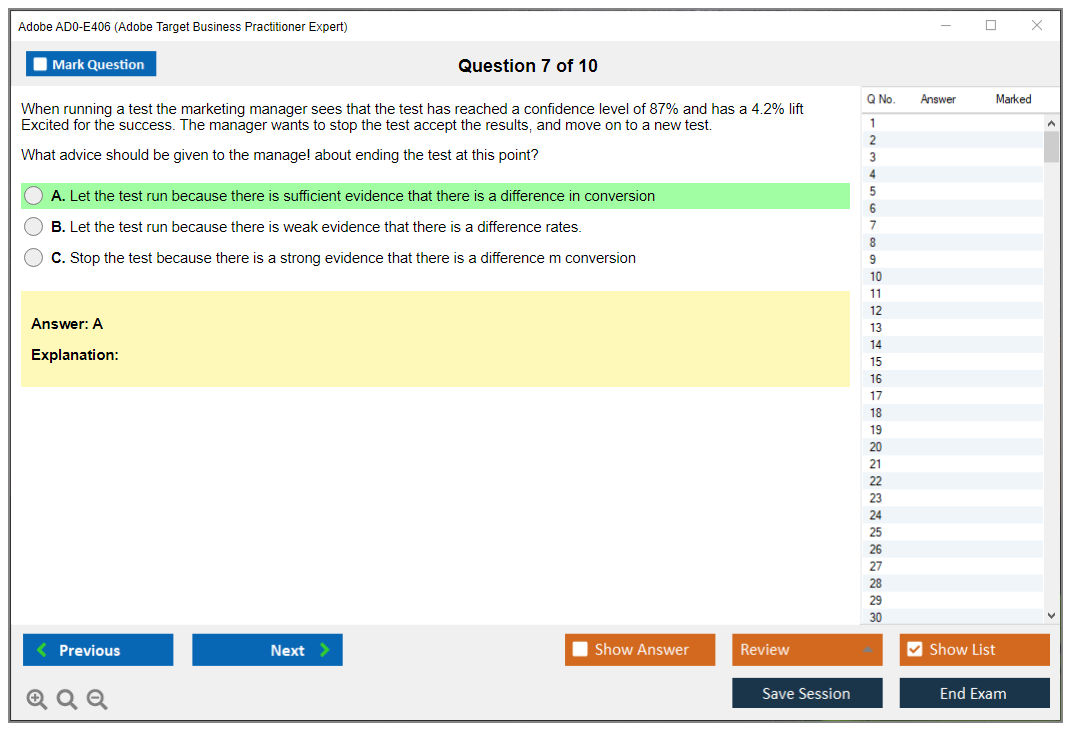
Domain 5's huge. Understanding statistical significance, confidence levels, confidence intervals. This isn't optional knowledge, it's foundational to making test decisions. You need to calculate and interpret lift percentages under different scenarios. The Adobe Target reporting interface has specific visualizations you should know inside-out.
Automated Personalization insights reports show important attributes and automated segments that the algorithm discovers. If you're using Analytics as the reporting source (A4T), that integration creates different reporting considerations around processing time and metric availability. Multi-armed bandit reporting differs from standard A/B test reporting, and the exam'll test whether you understand those differences.
Winner declaration criteria matters. When do you have enough data? 95% confidence is standard, but business risk tolerance varies by organization and test type. Revenue metrics, engagement metrics, time-based trends. All testable. Outlier handling can skew results if you're not careful. One whale customer can throw everything off.
For more on analytics integration, the AD0-E213 Adobe Analytics Developer Professional exam covers related concepts.
Optimization strategy is 12-16% of questions
Domain 6 covers iterative testing strategies and ongoing improvement programs. How do you build on previous test learnings instead of just running isolated experiments? Winner implementation strategies matter because rolling out to 100% traffic has implications for measurement and future testing. Developing optimization roadmaps based on business impact gets tested. Prioritization at scale.
Holdout groups for long-term measurement help you track cumulative optimization impact over quarters or years. Personalization maturity progression. Moving from basic A/B to advanced automation. Common scenario question, honestly one of my favorite topics because it shows strategic thinking.
Governance and privacy round out 8-12%
Domain 7 covers compliance stuff that's increasingly important. GDPR, CCPA impact targeting and personalization in ways most marketers don't initially consider. Opt-out and consent management isn't just checking boxes. It affects who sees what experiences and how data's collected. Data governance policies. Documentation requirements. Stakeholder communication. All appears on the exam.
The AD0-E406 Practice Exam Questions Pack at $36.99 covers all these domains with realistic scenario questions. Worth it if you want targeted prep rather than studying everything.
Similar Adobe Experience Cloud certifications like AD0-E121 for AEM Sites Business Practitioner Expert follow comparable blueprint structures, so understanding this format helps across multiple exams if you're building out your certification portfolio.
AD0
What you're signing up for
Look, the Adobe AD0-E406 exam targets folks who basically live in Adobe Target from a business practitioner lens. You'll plan experiments, choose activity types, craft audiences, read results, and walk stakeholders through next steps. It's not developer-only. Not pure marketing theory either. Somewhere between both, honestly.
What the credential actually means
The Adobe Target Business Practitioner Expert certification is Adobe's stamp saying you can operate Target in a real organization without torching processes or wrecking measurement or deploying janky tests nobody believes in after launch. That's harder than it sounds when you've got competing priorities and seven teams with wildly different definitions of "conversion." You've gotta translate business goals into Target configurations smoothly, and you need solid experimentation discipline when multiple squads chase wins simultaneously using shared audiences, shared pages, and way too many loud opinions.
CRO leads fit here. Product marketers too. Experimentation program managers, definitely. Or that analyst constantly pulled into Target activity post-mortems. Yeah, this exam matches your pain. If you're mostly implementing at.js, mbox calls, or data layer plumbing, the exam might feel "easy" in bizarre sections and frustratingly vague elsewhere. The sweet spot? Someone who's shipped activities and owned every decision tied to them.
What you'll pay
The AD0-E406 exam cost shifts by region and whatever promo cycles Adobe's running, so any static number online is basically "maybe accurate, maybe stale." Adobe certification exams typically hover in the few-hundred-dollar zone. Taxes or local fees depend on scheduling location. Plus there's sometimes this separate proctoring platform dance that feels unnecessarily convoluted.
Retakes and policies
Retake rules evolve. Adobe tweaks waiting periods periodically, so double-check the official exam page before planning a two-attempt roadmap. Some programs enforce cool-down windows. Others cap annual retakes. This matters more than you'd think, because plenty of people bomb this exam by underestimating how obsessively Adobe evaluates process and governance detail. Not because quantitative difficulty trips them up.
Passing score reality
The AD0-E406 passing score rarely gets published in a "here's the magic number" format. That's intentional. You'll receive a score report breaking down domain-level performance. The scoring model uses scaling, meaning two exams with different question pools stay comparable without revealing raw point mechanics to test-takers.
How scoring usually feels
Expect scenario-driven items. Expect "best next step" choices. And yeah, sometimes two answers seem plausible, but one aligns tighter with Adobe's recommended workflow. Especially around QA gates, approval chains, and measurement alignment checkpoints.
How hard is it
People constantly ask, "How hard is the Adobe Target Business Practitioner Expert exam?" Medium-hard if you've only run basic A/B tests and stopped there. Pretty manageable if you've operated a program juggling multiple stakeholders, defended results in tense meetings, wrestled messy audience definitions, navigated conflicting KPIs, and survived the classic "we launched but analytics never tagged it properly" disaster.
The real challenge? Target offers multiple paths for similar outcomes. Adobe wants the answer matching their documented approach, even when your company jerry-rigged workarounds with custom processes, improvised naming conventions, or that shared spreadsheet everyone pretends constitutes a proper system.
I once watched a senior manager argue for 20 minutes about why "lift" and "improvement" meant different things before realizing the entire room was using the same metric with different labels. That kind of communication chaos? The exam assumes you've learned to cut through it.
What Adobe expects you to know
Adobe publishes Adobe Target certification objectives as a blueprint. Treat that document like your survival checklist.
Picking the right activity type
You've gotta map use cases to activity types, including Target activities A/B testing and personalization variants like A/B, Experience Targeting, Automated Personalization, and recommendation patterns depending on your stack. Know when randomization matters. When targeted experiences work better. When you should pause everything and repair your measurement foundation before building anything new.
Audiences and segmentation
This section's massive. Audience targeting and segmentation in Adobe Target covers building audiences, conceptually applying profile scripts or external data sources, understanding visitor qualification logic. You need to avoid creating twenty nearly-identical audiences that destroy maintainability. You also need to grasp how audiences impact sample size and test duration, because "target everyone" versus "target a microscopic segment" live in completely different statistical universes.
Offers and experience design
Know offer selection mechanics. Experience structure. Content constraints. What breaks with poor location selection and wonky content delivery. Fragments matter. Naming conventions too. Version control habits prevent chaos.
QA and launch readiness
Target provides QA links, preview methods, and workflows that shift based on organizational maturity levels. You'll face questions on what "good" actually looks like. Approvals, audience qualification checks, content validation. Confirming reporting infrastructure exists before declaring mission accomplished.
Reporting and optimization
Expect heavy coverage of Reporting and optimization in Adobe Target: interpreting results, grasping confidence intervals, making recommendations that don't wildly oversell what data actually supports. Know when to iterate, when to kill tests, how to document learnings so your program evolves instead of recycling identical tests quarterly with slightly different button shades.
Governance and privacy
This appears more than people anticipate. Think consent frameworks. Data handling protocols. Role definitions. Basic program guardrails. This connects to the broader Adobe Experience Cloud Target certification ecosystem where adjacent tools and policies constrain what you can deploy.
Prereqs and experience
The AD0-E406 prerequisites aren't strict like "must hold certification X first," but Adobe absolutely expects genuine familiarity. Never built an activity? You'll struggle hard. Built five activities but never examined reporting details or governance layers? Same struggle, different flavor.
Useful adjacent knowledge: experimentation fundamentals, analytics concepts, CRO workflows. The exam assumes you reason about outcomes, not just memorize UI click patterns.
Start with Adobe's official learning resources, the blueprint, core Target documentation. Your AD0-E406 study guide should blend the blueprint with your hands-on notes. The thing is, the best prep involves building activities end-to-end: craft hypothesis, select activity type, construct audiences, QA thoroughly, launch, analyze reporting, then draft a one-page summary like you'd email a product squad.
Practice tests and how to use them
An AD0-E406 practice test helps identify weak domains, but don't treat it like a brain dump goldmine. Better approach: complete one, dissect every mistake, then recreate that concept in Target or documentation until you can explain it simply to someone new. Flashcards work. Peer review sessions help. Blueprint mapping's solid. Just don't let them substitute actual hands-on practice.
Simple plan: week 1 blueprint plus docs, week 2 build activities plus reporting deep-dives, week 3 practice test plus patch gaps, week 4 light review and proper rest.
People ask, "Does the Adobe AD0-E406 certification expire or require renewal?" The AD0-E406 renewal policy can shift, so verify current rules on Adobe's certification site. Timelines and recert mechanisms get updated periodically. When renewal exists, it's typically some combination of a recertification assessment or taking the exam's updated version.
Between renewals, maintain sharp skills by running real experiments, reading Target release notes, and staying aligned with Adobe's governance and measurement expectations, because that's often where exam answers originate.
Quick FAQ style answers
How much does the AD0-E406 exam cost? Check Adobe's regional listing. Fees fluctuate. What is the passing score for Adobe AD0-E406? Not transparently published, expect scaled scoring models. What are the best study materials for AD0-E406? Blueprint plus official docs plus hands-on builds, period. Can you pass without hands-on? You could try. I wouldn't risk it. Week-of-exam focus: reporting interpretation, audience rule logic, QA workflows, activity type selection decisions.
Conclusion
Wrapping up your AD0-E406 path
Real talk here. The Adobe AD0-E406 exam? It's no joke. You can't just roll out of bed and ace this thing on luck alone. The Adobe Target Business Practitioner Expert certification digs deep into whether you actually get the platform mechanics plus all that strategic thinking behind personalization, A/B testing, audience segmentation, and reporting that separates the pros from the people just clicking buttons. You need to know when to use XT versus MVT, how to structure your audiences without creating some nightmarish tangled mess, and here's the thing: interpreting test results without falling into those common statistical traps that even experienced practitioners stumble into constantly.
The AD0-E406 exam cost runs around $225. Not exactly pocket change. So treating this seriously from day one just makes sense instead of winging it and watching that money evaporate. Adobe doesn't publicly post the AD0-E406 passing score, which is frustrating, but you should assume you need solid competency across all Adobe Target certification objectives. Not just your favorite comfortable areas where you already shine. I've seen people who are absolutely amazing at building activities completely bomb the governance and privacy questions because they skipped those sections in the AD0-E406 study guide thinking they wouldn't matter much.
Balance matters most.
Real hands-on experience beats memorization every single time, but you also can't ignore the AD0-E406 prerequisites and recommended background or you're setting yourself up for failure. If you've never actually run a multi-week test campaign or dealt with audience overlap issues in a production environment where real money's on the line, the exam scenarios will feel abstract and confusing. Candidates with 12-18 months of active Target work have a way easier time than someone who just read documentation for two weeks straight thinking that'd cut it.
Oh, and speaking of documentation, I once watched a colleague try to cram the entire Adobe Experience Cloud help center in three days. He made flashcards. Color-coded spreadsheets. The whole obsessive routine. Still failed because he couldn't translate any of it into actual decision-making when the scenario questions hit him. Book smarts only get you so far.
The AD0-E406 renewal policy requires you to recertify, so this isn't a one-and-done situation where you coast forever. You'll need to stay current with Adobe Experience Cloud Target certification updates and platform changes as they roll out. That's actually good though because it keeps the credential meaningful instead of letting it become some outdated badge that doesn't prove anything anymore.
Before you schedule, work through an AD0-E406 practice test. Multiple times if possible. Not just once. Each practice round should reveal weak spots you didn't know you had lurking in your knowledge gaps. I recommend grabbing the AD0-E406 Practice Exam Questions Pack because it mirrors the real exam structure and question styles better than generic study materials that don't capture Adobe's actual approach. You want questions that actually reflect Adobe Target business practitioner exam prep scenarios, not watered-down theory quizzes that make you feel prepared without actually preparing you.
Schedule when you're really ready. Not when it's convenient.
You've got this.