
SQL From Intermediate to Advanced Level
Prepare for your examination with our training course. The course contains a complete batch of videos that will provide you with profound and thorough knowledge related to certification exam. Pass the test with flying colors.
Curriculum For This Course
-
1. Having The Database with Oracle VirtualBox16m 29s
-
1. Introducing Database Objects and Reaching Another User's Objects9m 34s
-
2. Reaching Another User's Objects6m 21s
-
1. What Are Data Dictionary Views?1m 15s
-
2. What Is There In Data Dictionary Views?1m 12s
-
3. Dictionary Table3m 18s
-
4. Differences Between USER, ALL, DBA, V$ Prefixes1m 31s
-
5. USER_OBJECTS, ALL_OBJECTS, DBA_OBJECTS Views9m 13s
-
6. USER_TABLES View5m 11s
-
7. USER_TAB_COLUMNS View5m 4s
-
8. User Constraints View9m 47s
-
9. USER_CONS_COLUMNS View5m 29s
-
10. USER_TAB_COMMENTS & USER_COL_COMMENTS Views3m 42s
-
1. What is a Sequence and Why is It Used For?1m 27s
-
2. Creating Sequences6m 42s
-
3. Modifying Sequences2m 48s
-
4. Dropping Sequences1m 23s
-
5. Using Sequences9m 8s
-
6. Using Sequences As a Default Value4m 30s
-
7. Sequence Caching2m 28s
-
8. User Sequences2m 29s
-
1. What Is a Synonym and Why Is It Used For?2m 32s
-
2. Creating & Dropping Synonyms7m 3s
-
3. Using Synonyms2m 34s
-
4. Analyzing USER_SYNONYMS3m 43s
-
1. What is an Index and Why is It Used For?2m 43s
-
2. Types of Indexes2m 19s
-
3. Creating Indexes7m 47s
-
4. Creating Index on Table Creation7m 44s
-
5. Function Based Indexes4m 32s
-
6. Multiple Indexes With Same Columns9m 4s
-
7. Dropping Indexes2m 52s
-
8. USER_INDEXES and USER_IND_COLUMNS Views4m 3s
-
1. What is a View and Why Is It Used For?2m 52s
-
2. Types Of Views1m 58s
-
3. Creating Simple Views12m 17s
-
4. Creating Complex Views4m 35s
-
5. Modifying Views3m 37s
-
6. Analyzing User Views3m 20s
-
7. Performing DML Operations with Views6m 41s
-
8. Using WITH CHECK OPTION Clause10m 54s
-
9. Preventing DML Operations on A View2m 22s
-
10. Dropping Views2m 2s
-
1. What is a Materialized View and Why is it Used For?5m 2s
-
2. Creating Materialized Views Part 16m 32s
-
3. Creating Materialized Views Part 24m 54s
-
4. Complex Materialized Views3m 50s
-
5. Types of Refreshing Materialized Views9m 53s
-
6. Refreshing Materialized Views Manually10m 31s
-
7. Scheduling Periodic Refresh of Materialized Views1m 40s
-
1. Using Subqueries as a Source5m 40s
-
2. Scalar Subqueries9m 11s
-
3. Multiple Column Subqueries7m 21s
-
4. Correlated Subqueries4m 10s
-
5. EXISTS Operator5m 16s
-
6. NOT EXISTS Operator4m 56s
-
7. Using WITH Clause6m 31s
-
8. Using Recursive WITH Clause5m 33s
-
9. Inserting Data By Using a Subquery as a Target7m 6s
-
10. Manipulating Data by Using "WITH CHECK OPTION" Keyword6m 24s
-
11. Correlated Delete2m 23s
-
12. Correlated Update6m 15s
-
1. Using DEFAULT Keyword on Insert And Update Statements5m 45s
-
2. Multitable Insert Statements1m 20s
-
3. Unconditional Insert Statements6m 31s
-
4. Conditional Insert Statements8m 7s
-
5. Conditional Insert First Statements5m 21s
-
6. Pivoting Insert4m 28s
-
7. Merging Data10m 3s
-
8. Flashback Operations11m 6s
-
9. Purge Operations4m 2s
-
10. Tracking Changes In Data In a Particular Time1m 28s
-
11. FLASHBACK Query6m 31s
-
12. FLASHBACK VERSIONS Query4m 57s
-
1. Adding Constraints7m 21s
-
2. Removing Constraints3m 51s
-
3. On Delete CASCADE & On Delete SET NULL9m 35s
-
4. Cascading Constraints3m 57s
-
5. Renaming Constraints2m 40s
-
6. Disabling Constraints3m 2s
-
7. Enabling Constraints2m 34s
-
8. Status Of Constraints3m 4s
-
9. Deferring Constraints13m 48s
-
10. Creating Temporary Tables10m 28s
-
1. What Are Privileges And Why Are They Used For?2m 46s
-
2. Creating A User3m 55s
-
3. System Privileges3m 58s
-
4. Granting System Privileges7m 7s
-
5. What is A Role and Why is It Used For?4m 28s
-
6. Changing The User Password5m 5s
-
7. Object Privileges2m 2s
-
8. Granting Object Privileges10m 29s
-
9. Revoking Object Privileges3m 13s
-
10. Searching For Privileges in Data Dictionary Views6m 44s
-
1. Understanding Hierarchical Retrieval2m 48s
-
2. Generating Hierarchical Queries3m 12s
-
3. Walking On The Tree (Bottom to Up - Up to Down)7m 12s
-
4. Ranking Rows (Using LEVEL Pseudocolumn)4m 6s
-
5. Formatting Tree Structure (LEVEL & LPAD)3m 59s
-
6. Pruning Branches Of a Tree3m 51s
-
1. Generating Scripts By Using Data Dictionary Views6m 4s
-
1. What is Regular Expressions and Why and Where Do We Use Them?2m 22s
-
2. What Are Metacharacters?13m 37s
-
3. Regular Expression Functions2m 34s
-
4. Using REGEXP_LIKE() function4m 45s
-
5. Using REGEXP_REPLACE() Function10m 18s
-
6. Using REGEXP_SUBSTR() Function8m 34s
-
7. Using REGEXP_INSTR() Function6m 11s
-
8. Using REGEXP_COUNT() Function4m
-
9. Using REGEX in Constraints4m 59s
-
1. What are the Analytic Functions?12m 34s
-
2. ROW_NUMBER Analytic Function4m 22s
-
3. RANK and DENSE_RANK Analytic Functions4m 51s
-
4. LEAD & LAG Analytic Functions (Next & Previous Values)8m 13s
-
5. Windowing Clause in Analytic Functions - Part 110m 56s
-
6. Windowing Clause in Analytic Functions - Part 29m 16s
-
7. INTERVAL Keyword In Analytic Functions4m 26s
-
8. FIRST_VALUE and LAST_VALUE Analytic Functions..6m 46s
-
9. Selecting Top-N Rows with Analytic Functions4m 22s
Hot Exams
Free Test Engine Player
How to open .dumpsarena Files
Use FREE DumpsArena Test Engine player to open .dumpsarena files
Our test engine player will always be free.
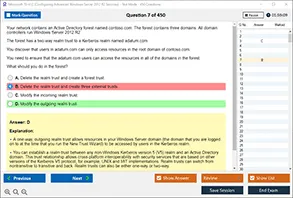
Satisfaction Guaranteed
98.4% DumpsArena users pass
Our team is dedicated to delivering top-quality exam practice questions. We proudly offer a hassle-free satisfaction guarantee.
Why choose DumpsArena?
23,812+
Satisfied Customers Since 2018
- Always Up-to-Date
- Accurate and Verified
- Free Regular Updates
- 24/7 Customer Support
- Instant Access to Downloads
Secure Experience
Guaranteed safe checkout.
At DumpsArena, your shopping security is our priority. We utilize high-security SSL encryption, ensuring that every purchase is 100% secure.