What Is the CBEST Reading Section (Section 2)?
What you're actually getting yourself into with CBEST Reading
Look, if you're trying to teach in California, you're gonna bump into the CBEST eventually. It's Section 2 of the California Basic Educational Skills Test, and honestly it's basically the state's way of making sure you can actually read at a level that won't embarrass anyone in front of a classroom. The test rolled out back in 1983, which means it's been making prospective teachers sweat for over four decades now. Crazy when you think about how much else has changed in education since then, but here we are.
This isn't some obscure exam either. We're talking about the gateway for teaching credentials, substitute teaching authorization, and various education specialist positions across California public schools. Even if you're coming from out of state with years of teaching experience, California doesn't care. You're probably taking the CBEST. I mean, some private schools and charter schools ask for it too, even though they're not legally required to, because honestly it's become shorthand for "this person can handle basic academic tasks."
The Reading section specifically? It measures whether you can comprehend what you read and analyze it critically. Not rocket science. But also not something you can just wing if you haven't read anything more complex than social media posts in the last five years. The test assumes you'll eventually need to understand curriculum materials, state standards documents, and parent emails written at 2 AM, so the bar's set accordingly.
Who actually has to take this thing
Multiple subject credential candidates (that's elementary and middle school teachers) definitely need it. Single subject folks teaching high school in specific content areas? Yep, they're in too. Education specialists working with special needs students? Absolutely required. But the thing is, it gets broader than that.
Career changers moving into education from tech, business, or whatever field realize pretty quickly that California wants proof you can read. Paraprofessionals and instructional aides in some districts need passing scores. Even people going for administrative services credentials sometimes have to show CBEST results. I've seen administrators roll their eyes about this, but rules are rules. The California Commission on Teacher Credentialing uses this as a baseline competency check, and there's really no dancing around it if you want to work in public education here in 2026.
Substitute teachers are an interesting case. District requirements vary wildly, but emergency permits almost always require CBEST passage. Not gonna lie, I've seen plenty of substitute candidates get frustrated because they thought their bachelor's degree would be enough. Nope.
How the test actually works when you sit down to take it
You get 50 multiple-choice questions. That's it. No essays in the Reading section, no short answers, just you picking between options A through D over and over. The questions are spread across 6 to 9 passages of varying lengths. Some are short little 100-word chunks, others stretch to 400 words and feel like they'll never end when you're staring at a screen, especially if it's dense scientific content or something.
Here's the deal with timing: you get 4 hours total for all three CBEST sections combined. Reading, Math, and Writing all share that time pool. Most people budget around 70 to 90 minutes for Reading, but there's no hard cutoff per section. If you're crushing the reading passages and want to bank extra time for Math, go for it. Smart strategy actually. If reading comprehension is your jam and you need two hours, nobody's stopping you.
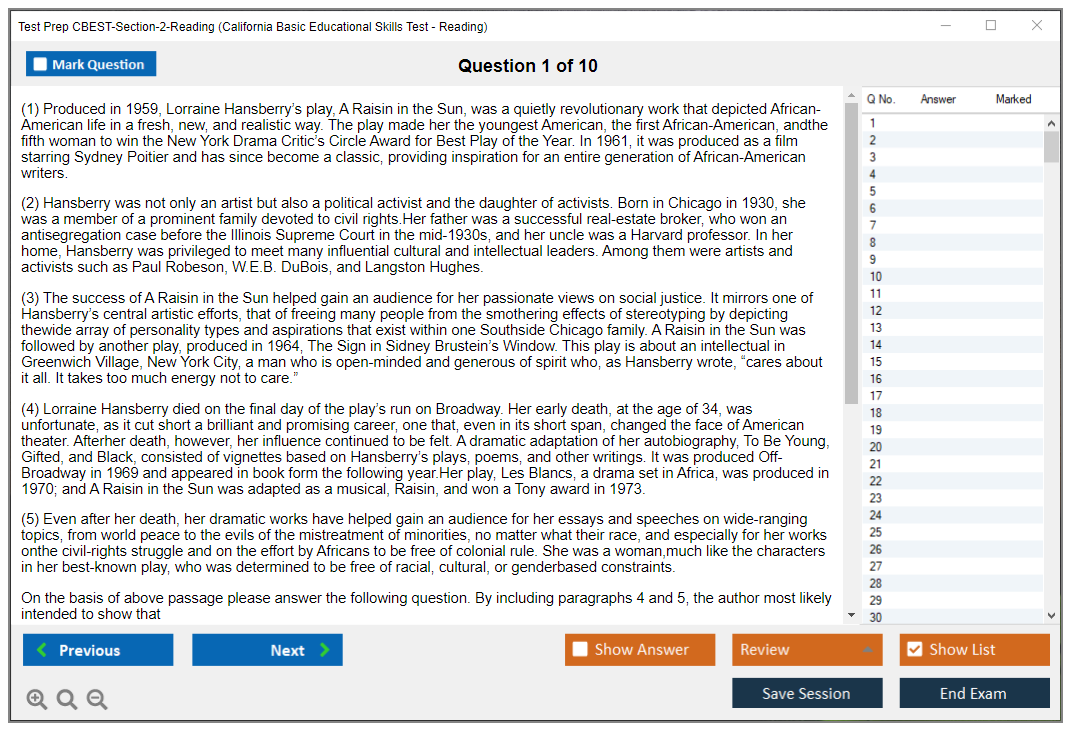
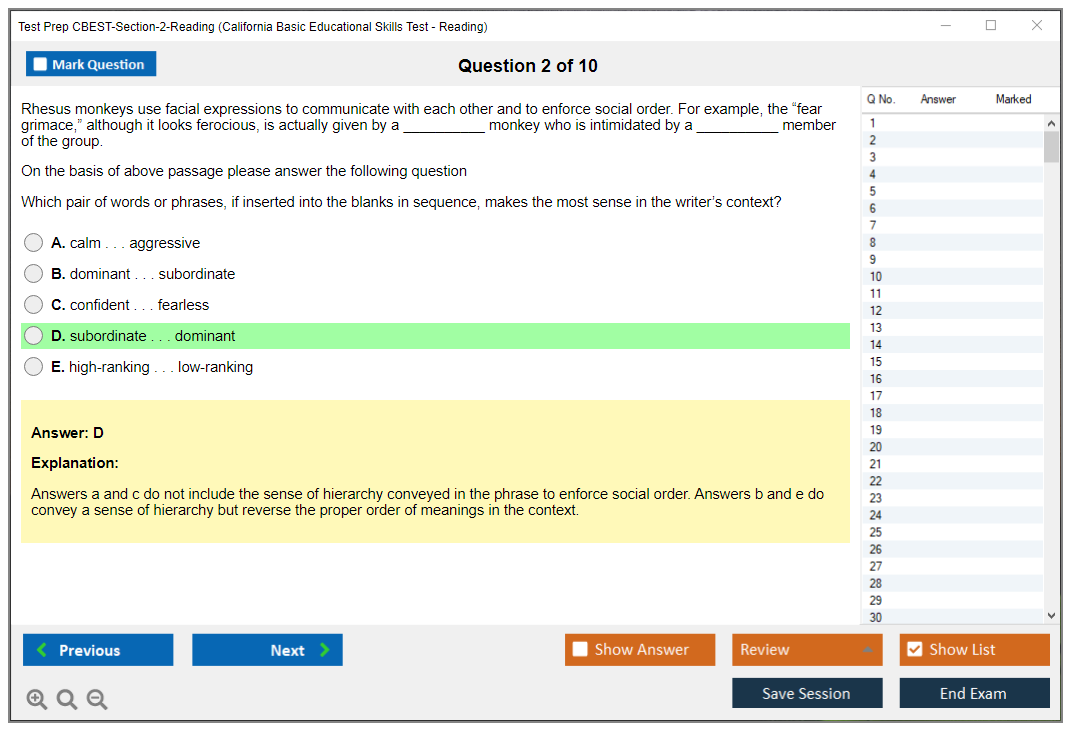
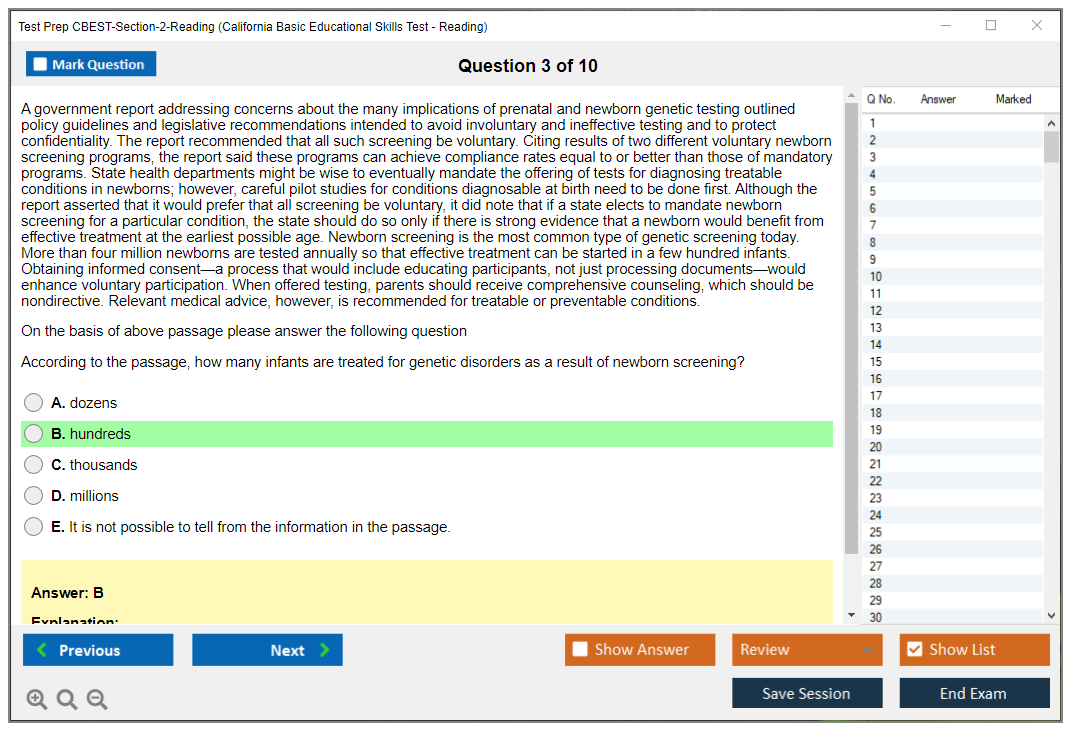
Computer-based testing at Pearson VUE centers is the most popular option now because you get your Reading and Math scores immediately. Like, before you even leave the building. The interface gives you highlighting tools, strikethrough to eliminate wrong answers, and a review screen that shows which questions you've answered versus skipped. Pretty intuitive once you mess with it for a minute. Paper-based testing still exists with maybe 4 to 6 administration dates per year, but you're waiting 3 to 4 weeks for scores and manually bubbling answer sheets like it's 1995.
I remember when I took a standardized test on paper back in college and smudged an entire row of bubbles with the side of my hand. Had to erase and re-fill like fifteen answers. Paranoid the scanner would misread them the rest of the test.
The three skill areas they're actually testing
The test breaks down into three major competencies, though honestly the lines between them blur pretty quickly when you're reading actual passages.
First is basic comprehension and analysis of informational passages. Can you identify the main idea? Can you follow the author's argument from point A to point B without getting lost? Can you distinguish between a major supporting detail and some random tangent the author threw in? This is foundational stuff, similar to what you'd see on tests like the SAT or GRE, just calibrated for basic professional competency rather than college admissions.
Second is critical reading. Evaluating arguments, spotting assumptions, weighing evidence. The test wants to know if you can read an editorial or research summary and actually think about whether the logic holds up. Are the author's conclusions supported by the evidence presented? What assumptions is the writer making that they haven't stated explicitly? This gets trickier because you're not just absorbing information, you're judging it, and sometimes the distinctions between answer choices feel hair-splittingly subtle.
Third is interpretation skills: inference, tone, purpose, vocabulary-in-context. Can you read between the lines? Can you figure out what an unfamiliar word probably means based on surrounding sentences? Can you detect whether an author is being sarcastic, objective, or trying to persuade you of something? Some of these questions feel subjective until you practice enough to see the patterns. Then you start recognizing what test writers consider "correct" interpretation.
Scoring mechanics that actually matter for passing
Your raw score is just the number of questions you got right out of 50. Then it gets converted to a scaled score between 20 and 80. The passing threshold is 41 for the Reading section if you're looking at it in isolation. Straightforward enough. But here's where it gets interesting: you can also pass by hitting a combined scaled score of 123 across all three sections with no individual section below 37.
So if you score 38 on Reading (technically a fail), but you crush Math with a 45 and Writing with a 43, your total is 126 and you pass overall. This is huge strategically. I mean, I've seen people stress about Reading when they should be focusing on bringing up their stronger sections to compensate. Work smarter, not harder, right?
There's no penalty for guessing. None. Which means leaving any question blank is just throwing away potential points. The scaled scoring system uses statistical equating to ensure different test versions have consistent difficulty, which sounds fancy but basically means your score should reflect your ability regardless of which random question set you get assigned.
Scores never expire for California credentialing, and if you retake the test, they use your highest section scores even if they're from different test dates. You could pass Math and Writing in January, fail Reading, retake just Reading in June and pass, and California will combine your best scores. Pretty reasonable policy honestly. One of the few parts of this process that doesn't feel punitive.
What makes this section challenging for some people
The difficulty isn't that the passages are written at a PhD level. They're not. But the questions require careful attention to what the passage actually says versus what you think it implies, and that distinction trips up more people than you'd expect. Test writers love creating wrong answers that sound plausible if you're skimming or bringing in outside knowledge, which is honestly their whole game.
Time pressure gets real. If you're a slow reader or if you get stuck overthinking questions, suddenly you're at question 30 with 20 minutes left. Some people spend three minutes on a single question trying to find the "perfect" answer when they should be moving on and circling back. Perfectionism kills your score faster than weak reading skills do.
The passages themselves cover everything from science and social science to humanities and practical documents. You might read about coral reef ecosystems, then jump to a historical analysis of voting rights, then tackle an excerpt from a literary essay. The variety keeps you on your toes, or throws you off balance depending on your perspective.
Critical analysis questions trip people up more than straight comprehension. Finding the main idea? Usually manageable. Identifying an unstated assumption in the author's argument? That's where scores start dropping, because now you're inferring what's NOT explicitly stated while avoiding reading too much into it. Vocabulary-in-context questions can be sneaky too because they often use common words in uncommon ways, and you can't just rely on dictionary definitions. Context is everything.
Practice resources that actually help
The official CBEST materials from the test administrators include sample questions and the complete test framework. Start there. You need to know exactly what they're testing before you throw money at study guides. I've seen people waste $200 on prep courses before even looking at official materials, which is backwards.
For paid resources, multiple CBEST-specific study guides exist, though quality varies wildly. Look for ones with detailed explanations of wrong answers, not just answer keys. That's where the learning happens. Online courses range from $30 self-paced modules to $200+ tutoring packages, which feels steep but might be worth it if you've failed multiple times. Honestly, most people don't need expensive tutoring unless they've failed Reading multiple times and can't figure out why. At that point you're probably dealing with underlying comprehension issues, not test-taking issues.
Practice tests are your best diagnostic tool, hands down. Take a full-length Reading section under timed conditions before you start studying seriously. No music, no interruptions, real test conditions. Your baseline score tells you how much work you're looking at. Scoring 35 to 38? You need focused practice on specific question types and you're probably close. Scoring 25 to 30? You might need broader reading comprehension work before test-specific strategies matter much. The thing is, you can't strategy your way past fundamental skill gaps. Similar to prep for tests like the TEAS or HESI-A2, understanding your starting point changes everything about your study plan.
Registration details and what it costs
Current CBEST fees run about $41 if you're taking just the Reading section by itself, or $41 for all three sections taken together in one sitting. Yeah, it's the same price either way, which makes taking all three at once the better deal if you're ready. No-brainer economically. Retakes cost the same as initial attempts, so there's no escalating penalty.
You register through the official CBEST website, select computer-based or paper-based testing, and pick your location and date. Computer-based testing is available year-round at Pearson VUE centers throughout California and some neighboring states. Convenient if you need to schedule quickly. Paper-based has specific dates that fill up fast, especially in major metro areas.
Test day requires government-issued photo ID. No phones, no watches, no scratch paper from home. They provide everything you need at the center, though honestly the erasable noteboards they give you are kind of terrible. If you need accommodations for disabilities or learning differences, you submit documentation through the registration system. Extended time, separate testing rooms, screen readers, various options exist but require advance approval, usually 4 to 6 weeks out, so don't wait until the last minute.
Strategy tips that actually move the needle
Active reading matters more than passive skimming, period. I'm talking about mentally summarizing each paragraph as you go, predicting where the author is heading, noticing transition words that signal shifts in argument. All that close reading stuff your English teacher nagged you about. This feels slower at first but actually saves time because you're not rereading the passage three times trying to find answers.
For each question, find the evidence in the passage before you even look at answer choices. The correct answer has to be supported by specific sentences or phrases in the text. If you can't point to where the passage says something, you're probably about to pick a trap answer. This simple rule prevents so many mistakes.
Eliminating obviously wrong answers first narrows your odds dramatically. Cross off anything that contradicts the passage. Anything too extreme. Anything that brings in outside information the passage doesn't mention. Then you're choosing between two reasonable options instead of four, and your guessing odds just doubled. Basic probability.
Time management means knowing when to skip and move on. If you're stuck after 90 seconds, mark it for review and keep going. You might answer three easier questions in the time you'd spend agonizing over one hard one. Way better return on investment. Come back to the tough ones when you've banked all the easy points.
Taking sections separately versus all at once
You can take Reading by itself, which some people do if they've already passed Math and Writing or if they want to focus preparation on one area. The 4-hour time limit applies whether you're taking one section or all three, so taking Reading alone means you have 4 hours for 50 questions. That's way more time than you need, honestly. You'd have to read painfully slowly to use even half that.
Most candidates take all three sections together because it's efficient and the fee structure doesn't penalize you for it. Plus, if you fail one section, you've still got passing scores for the others banked, which is strategic. Your score report breaks down each section individually regardless of how you took the test.
How long does it take to prepare
If you're a strong reader who just needs to familiarize yourself with question formats, maybe two weeks of casual practice. Hour a day, work through a study guide, take a couple practice tests, you're probably fine. Don't overthink it.
If you're scoring below 35 on practice tests, budget 4 to 6 weeks of more intensive study. That means daily reading practice, working through question types systematically, building up stamina for longer passages. Some people need even more time if they're ESL or if it's been years since they've done academic reading. No shame in that, just reality.
The good news? Reading comprehension skills transfer across tests. If you've studied for the LSAT or MCAT, you've already built some of the critical reading muscles CBEST requires. Different context, same fundamental abilities. The specific question formats differ, but the underlying ability to analyze arguments and draw inferences is the same.
Bottom line: CBEST Reading is a hurdle, not a brick wall. It tests real skills you'll actually need as an educator, and with focused preparation, most people pass within one or two attempts. Start with a diagnostic test, identify your weak spots, practice consistently, and don't overthink it on test day. Easier said than done, I know, but that's the formula.
CBEST Reading Test Objectives (What You'll Be Tested On)
Look, the CBEST Reading section (Section 2) is basically a reality check on whether you can read what schools hand you all day and make smart calls fast. Not fancy literature analysis. Not random trivia. Just focused reading skills that map straight to classroom life: reviewing curriculum materials, interpreting directions, spotting weak arguments in a memo, or figuring out what a data summary actually implies about student performance.
You'll see passages pulled from a bunch of areas: education, social sciences, humanities, natural sciences, and practical workplace texts. Articles, reports, short essays, instructions, and sometimes technical-ish documents where the "technical" terms get explained right there in the passage. The reading difficulty's usually around 9th to 12th grade level. Manageable, honestly. But time pressure? That's what makes people sloppy.
Also, you don't need outside knowledge. The test's built so every correct answer comes from the text you're given. If you catch yourself thinking, "Well I remember in college that.." stop. The thing is, on CBEST Reading test prep, the passage is your entire universe.
Skill domains and how they're weighted
The CBEST Reading test objectives fall into three primary areas, and the weighting matters because it tells you where points're hiding.
Roughly 40% is comprehension and context. Another 40%? Critical analysis and evaluation. The remaining 20% is research and reference skills. That split's why some people who're "good at reading" still get clipped. They can understand the passage, sure, but they don't evaluate claims well, or they ignore how a paragraph functions inside the whole.
Questions range from basic recall to higher-order thinking. Some are straightforward, like "What does the author say happened first?" Others jump to whether a conclusion's justified, what assumption must be true, or what an author hints at without stating outright. Short questions. Long thinking.
If you're using a CBEST Reading study guide or a CBEST Reading diagnostic test, you want to tag missed items by category, not just "I got it wrong." Patterns show up fast. I learned this the hard way after blowing through two practice tests and wondering why inference questions kept wrecking me. Once I started tracking the type of mistake, the fix became obvious.
Comprehension and context (about 40%)
This is the part most people picture when they hear "reading comprehension for CBEST." Main ideas. Details. Sequence. Cause and effect. Compare and contrast. Structure. All the fundamentals, but under a timer, with answer choices that're close to true but not actually supported.
Main idea identification shows up constantly. You might be asked for the central thesis of the entire passage, the primary purpose of a specific paragraph, or the best title (which is basically main idea in disguise). Sometimes the main idea's explicit in a topic sentence. Sometimes it's buried, and you've gotta extract it by asking "What do all these paragraphs keep circling back to?"
Next is supporting detail recognition. Expect questions that ask what evidence the author uses, what example illustrates a point, or which fact supports a claim. I mean, detail-oriented questions can be painfully literal too, like locating a specific piece of information that's explicitly stated. Look, don't overthink those. Go back and point to the line.
Sequential understanding's common in passages that describe a process, a timeline, or an argument that develops step by step. Teachers do this daily with procedures, IEP documents, lab instructions, or policy updates. On the test, it becomes "What happens after X?" or "Which step comes before Y?" The trap's when two steps're both mentioned, but only one's actually in the right order.
Cause-and-effect relationships can be explicit ("because," "therefore") or implied ("as a result," "led to," "contributed to"). You'll get asked what caused an outcome, what the likely effect is, or whether a claimed cause-effect relationship's actually supported. Don't confuse correlation with causation when the passage doesn't go that far.
Compare-and-contrast analysis shows up when the author puts two theories, events, or perspectives side by side. Sometimes it's obvious. Sometimes it's subtle, like one's described warmly and the other's described with skepticism, which is still a contrast.
Organizational pattern recognition is underrated. Chronological order, problem-solution, classification, cause-effect structure, argument-and-support. If you can label the structure quickly, questions about paragraph function and summarization get easier.
Summarization skills and paraphrasing are basically "Can you restate the passage without twisting it?" You'll pick a sentence that condenses the main idea without adding new claims, leaving out key qualifiers, or making it too extreme. The wrong choices often sound smarter because they're more dramatic. Ignore the drama.
Critical analysis and evaluation (about 40%)
This is where CBEST Reading question types get more "teacher brain." You're not just reading. You're judging. And you're doing it based on the text, not vibes.
Argument structure analysis is huge. In persuasive or opinion passages, you'll identify claims, premises, and conclusions. A claim's what the author wants you to believe. Premises're the reasons. The conclusion's the "therefore" moment, even if "therefore" isn't written. If you can map that, a lot of questions become pretty mechanical.
Evidence evaluation asks whether support's strong, relevant, and sufficient, not whether you agree. If a passage claims a new program improved test scores but only cites one classroom with no comparison group, that's weak evidence. If it cites broad data but the data doesn't actually measure the thing being claimed, it's irrelevant. These show up a lot in CBEST Reading practice test sets for a reason: people confuse "sounds scientific" with "is supported."
Next comes logical reasoning assessment. You may need to spot invalid reasoning, like a conclusion that doesn't follow from the premises. Generalization evaluation fits here too. If the author draws a sweeping conclusion from a tiny sample, you're supposed to notice.
Assumption identification is one of those skills that feels abstract until you practice it. An assumption's the unstated belief that must be true for the argument to work. For example, if the author argues that longer school days increase learning because students spend more time in class, the assumption is that the extra time's used productively for learning, not just seat time.
Bias and perspective recognition also pops. Identify author viewpoint, purpose, and potential slants. Sometimes bias is loud. Sometimes it's in word choice, what evidence is included, or what counterarguments're ignored. Fact versus opinion distinction's part of this too. A fact's verifiable from the passage or basic reality. An opinion's a judgment, value statement, or interpretation.
Counterargument consideration matters because strong arguments often acknowledge objections. You might be asked what objection the author addresses, which point would weaken the author's claim, or what alternative viewpoint's being dismissed.
Persuasive technique identification is the "rhetoric radar" piece. Emotional appeals, loaded language, anecdotal hooks, authority references. Not every passage uses them, but when they do, the test wants to know if you can see it.
Credibility assessment's the grown-up version of "should I trust this source?" Some passages reference studies, reports, or expert statements. You may need to evaluate reliability based on what's described: sample size, transparency, neutrality, or whether the source's even named. Again, no outside knowledge required. The clues're in the writing.
Interpretation: inference, tone, and purpose
A big chunk of CBEST Reading test objectives lives in interpretation of passages and arguments, especially when the test moves past literal meaning.
Prediction and inference questions ask what's most likely true, what the author hints at, or what can reasonably be concluded. The key word's reasonably. Not "could be," not "might be in some universe," but what the passage actually supports.
Author's purpose determination is standard stuff: inform, persuade, entertain, explain. Sometimes there's a primary purpose and a secondary one, like informing while also encouraging a policy change.
Tone and attitude analysis is where people get tripped. Tone's how the author sounds: skeptical, enthusiastic, cautious, critical. Watch out for answer choices that exaggerate. The passage is mildly concerned, and the wrong option says "outraged." No.
Implication recognition and subtext recognition're related. You're reading between the lines, but not inventing. If the author describes a policy with lots of hedging and mentions unintended consequences, the implication might be that the policy's risky or incomplete.
Audience awareness comes up when the writing's clearly aimed at parents, educators, researchers, or the general public. That affects vocabulary, register, and what background the author assumes.
Connotation versus denotation matters when a word has a literal meaning but also an emotional association. Figurative language interpretation can appear too, metaphors or symbolic phrasing, though CBEST's usually pretty practical. Mood and atmosphere's more common in humanities passages, where description and word choice shape how you feel about the subject.
Perspective shifts can happen inside a passage: moving from historical background to modern debate, or from one speaker's view to another. Track those shifts. Easy points if you stay organized.
Research and reference skills (about 20%)
This area sounds small, but it's a steady source of points if you practice it. It's basically "Can you decode the text efficiently?"
Contextual vocabulary's the star here. You'll determine word meanings based on surrounding sentences and usage. Multiple-meaning words show up a lot, where the wrong answer's a common definition but not the one used here. Context clue strategies matter: look for examples, contrasts, restatements, or definitional context where the author gives an explicit or implied definition.
Prefix, suffix, and root analysis is fair game. If you know that "anti-" opposes, "pre-" means before, "-ology" study of, you can often narrow choices even if the word's unfamiliar. Synonym and antonym relationships can also signal meaning when the author sets up a contrast like "not X, but Y."
Pronoun and reference tracking's sneakier than people expect. Questions ask what "this," "that," "they," or "which" refers to in a dense sentence. Same with demonstrative phrases like "this approach" or "that outcome." If you're sloppy here, you miss easy questions.
Transition and connection words're another quiet skill: however, therefore, for example, in contrast, Plus. Those words tell you relationships between ideas, and they often reveal the author's logic. Paragraph function ties in here too, like why a paragraph exists at all: to provide an example, introduce a counterargument, define a term, or set up a problem.
Structural elements and text feature interpretation show up when passages have headings, subheadings, formatting, lists, or divisions. You're expected to understand how those guide organization, not just skim them. Register and formality also matters, especially when vocabulary changes depending on whether the text's formal, instructional, or conversational.
Why these objectives match actual teaching work
This section fits with teaching demands more than people admit. You're practicing skills you'll use when you evaluate curriculum materials, read assessment reports, interpret parent communications, and review student writing for clarity and reasoning. It also reflects California Standards for the Teaching Profession reading requirements, because teachers're constantly expected to interpret complex texts, evaluate claims, and communicate decisions based on evidence.
And yeah, on a practical level, CBEST Reading test prep is you training yourself to be the adult in the room who can read a document once and not miss the point.
If you're tracking CBEST scaled score requirements or wondering about a CBEST Reading passing score, remember the test isn't rewarding trivia. It rewards disciplined reading: locate proof, separate what's stated from what's implied, and don't let answer choices drag you outside the passage.
CBEST Reading Question Types and Examples
The basic structure you'll encounter
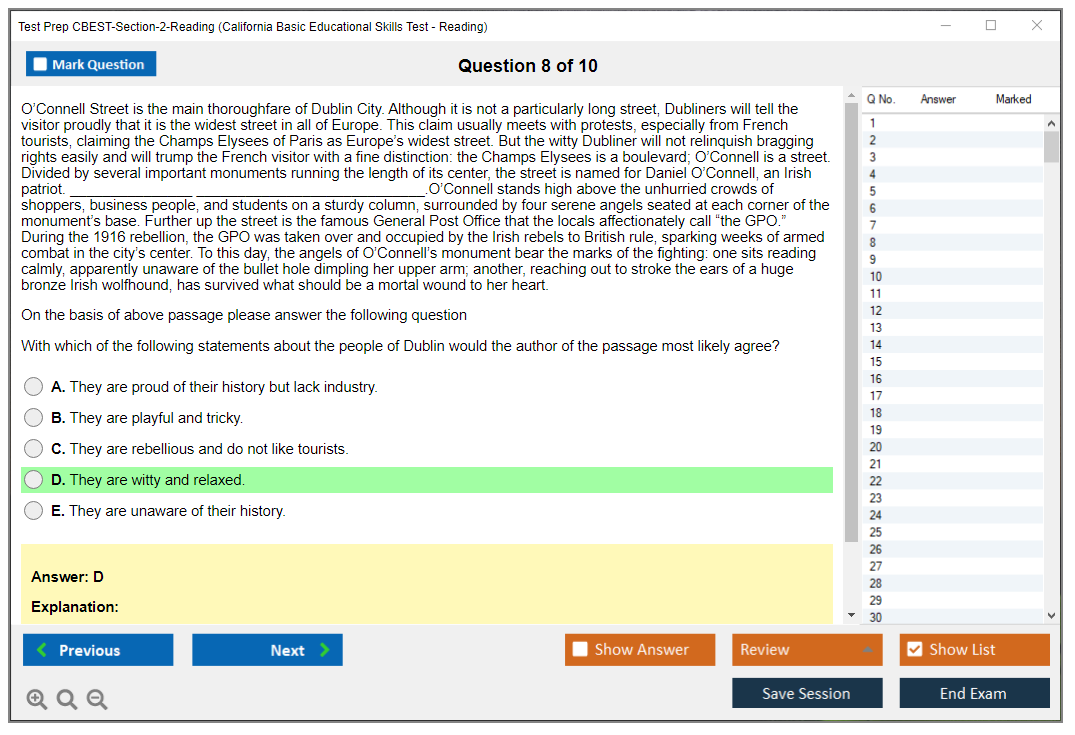
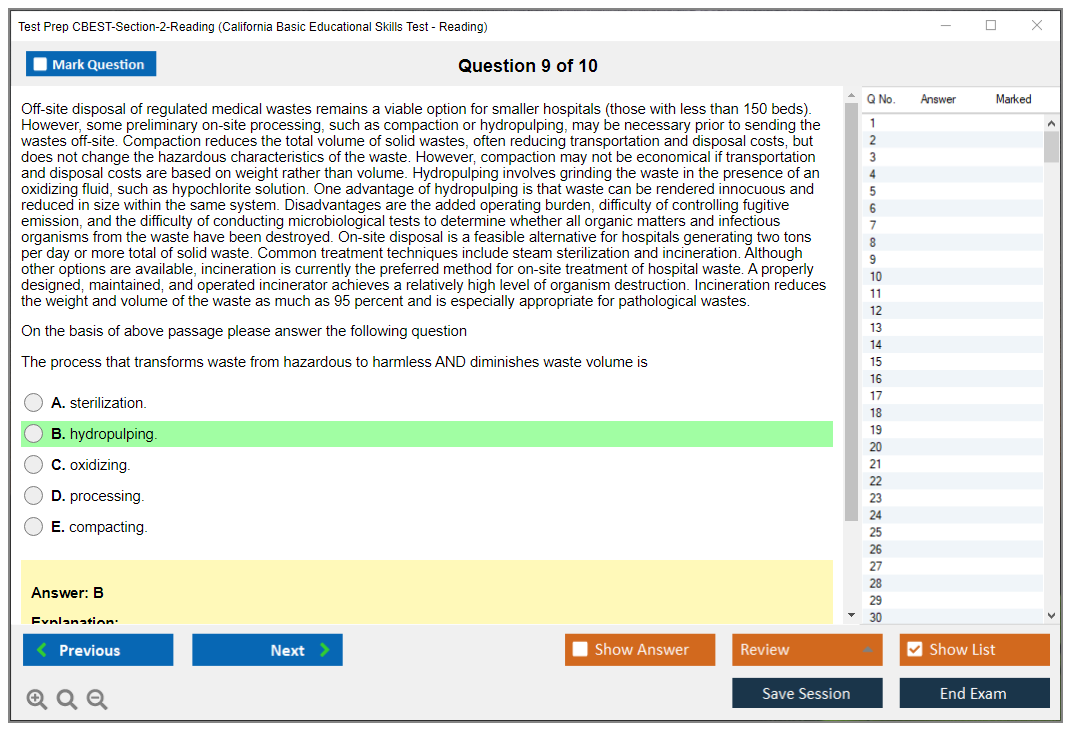
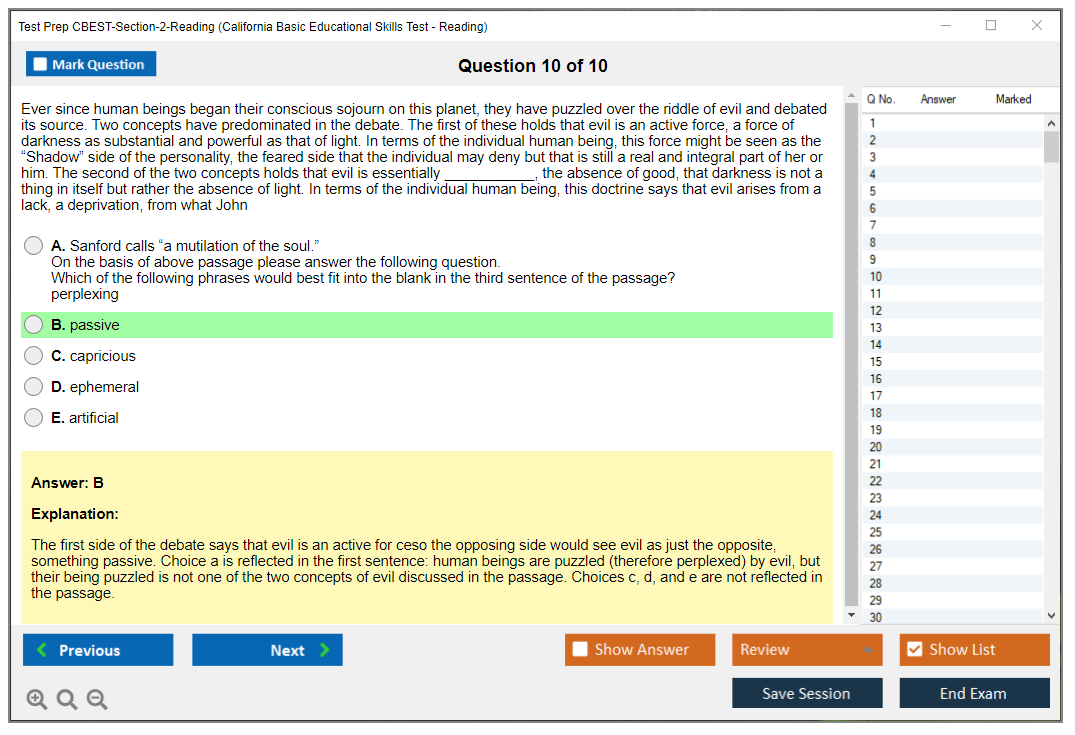
Every question's multiple-choice. Four options. That's it, no essays, no short answers, just picking A through D. Question formats change up though. Sometimes you get direct questions like "What is the author's primary purpose?" Other times it's incomplete: "According to the passage, the most significant factor was.." And yeah, plenty of "which of the following" too.
Answer options? They're crafted to look similar in length and structure. Test makers don't want you eliminating choices just because one option's way shorter or built differently. The distractors (wrong answers) are sneaky because they're often partially correct or they address a different aspect of the passage that wasn't actually asked about. This trips people up constantly. You might read an answer and think "well, that's true according to the passage" but it doesn't actually answer the specific question being asked.
Here's the thing about correct answers: they're always supportable by specific passage content. You don't need outside knowledge. I mean, wait, you might know stuff about the topic from your own experience, but that knowledge can actually hurt you if you rely on it instead of what's written. Questions test passage comprehension, period.
How questions are organized and timed
Questions generally follow passage organization, but not always strictly sequential. You might get a main idea question first, then some detail questions jumping around the passage, then an inference question near the end. Difficulty distribution's mixed throughout the test, not organized easy-to-hard or anything predictable.
Effective pacing? You're looking at approximately 1.5 to 2 minutes per question. Some you'll blast through in 45 seconds. Others might take three minutes. The key's not getting stuck on any single question for too long, which is easier said than done when you're staring at four options that all seem plausible.
Main idea and detail questions
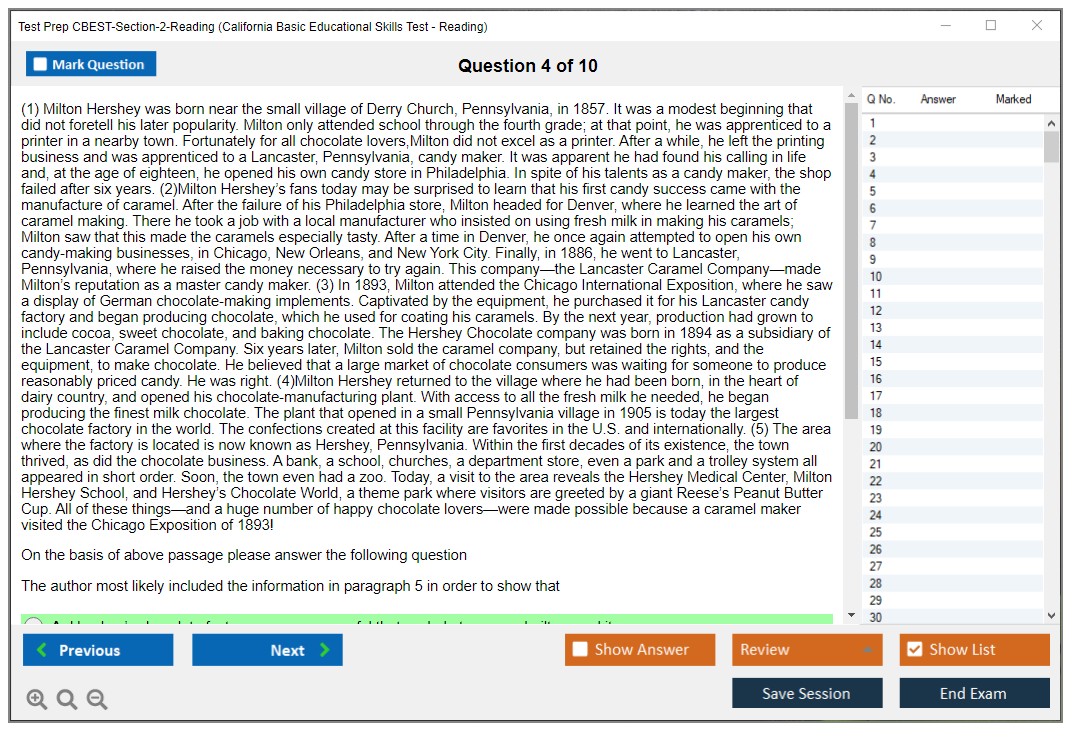
Main idea questions typically ask "Which of the following best expresses the main idea of the passage?" You need the most full option covering the entire passage scope, not just one paragraph or supporting detail. For example, if you get a passage about educational technology discussing implementation challenges, teacher training needs, and student outcomes, the main idea isn't just "teachers need training in educational technology." Too narrow. The correct answer would cover the broader discussion about how educational technology integration requires addressing multiple interconnected factors.
Main idea answer characteristics matter. It shouldn't be too specific (that's probably a detail) and it shouldn't be too vague either. Needs to capture what the whole passage's fundamentally about.
Detail questions are more straightforward: "According to the passage, which of the following is true about [topic]?" Strategy here's locate specific information in the passage before evaluating answer choices. Don't work from memory. A detail question example might follow a passage describing teaching methods with a question about a specific technique mentioned in paragraph three. You go back to paragraph three, find the relevant sentence, and match it to answer choices. Simple in concept, but you'd be surprised how many people skip this step and work from their vague recollection of what they read.
Inference and vocabulary questions
Inference questions use language like "The passage suggests that.." or "It can be inferred from the passage that.." The answer must be a logical conclusion from stated information, but it won't be explicitly stated. That's the whole point. If it's directly stated in the passage, it's not an inference, it's a detail question.
Inference example? A passage about student motivation might describe how students in classrooms with choice and autonomy show higher engagement and achievement, without ever saying "therefore, giving students choices improves motivation." That inference would be supported by the evidence presented, even though the author never wrote that exact sentence. The trick's making sure your inference is actually supported and not just something that sounds reasonable.
Vocabulary-in-context questions ask "As used in line X, the word [word] most nearly means.." The strategy? Substitute answer choices into the original sentence to test appropriateness. This is huge. Don't just think about the dictionary definition. The word "engaged" in a teaching context might mean "involved" rather than "betrothed," which is another perfectly valid meaning of engaged. Context is everything.
I've seen people miss vocabulary questions because they picked the most common meaning without checking if it actually makes sense in the sentence. Always plug the answer back in.
Purpose, tone, and function questions
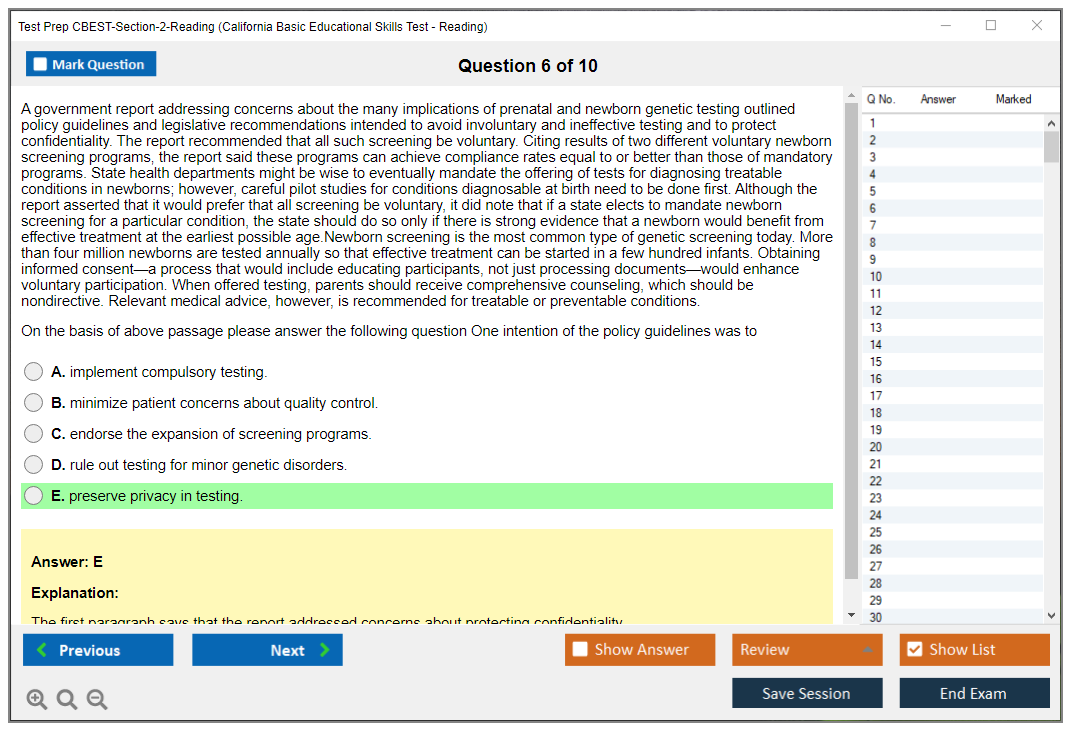
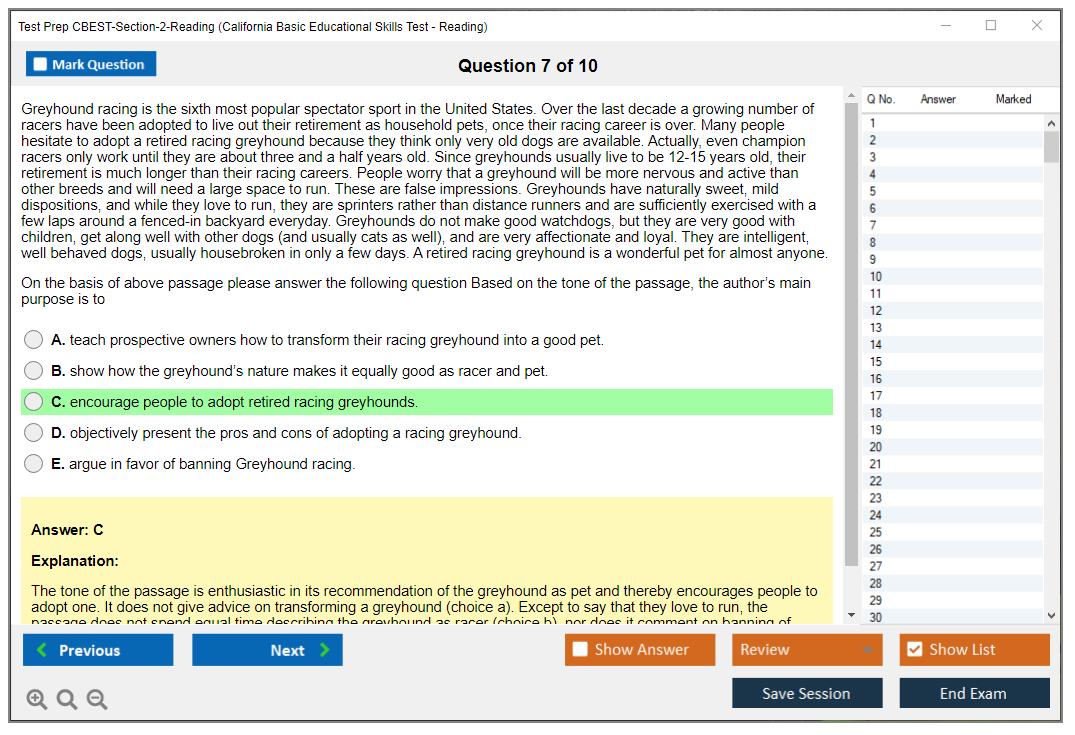
Purpose questions ask "The author's primary purpose in this passage is to.." and answer types include: inform, persuade, describe, explain, compare, or critique. A passage presenting research findings objectively has the purpose to inform rather than persuade, even if you personally feel persuaded by the data. Purpose's about the author's intent, not your reaction.
Tone questions want to know "The author's tone in discussing [topic] can best be described as.." Common tone descriptors? Objective, critical, enthusiastic, skeptical, neutral, concerned, and optimistic. These can be tricky because you need to pick up on subtle cues in word choice and phrasing, not just the topic itself.
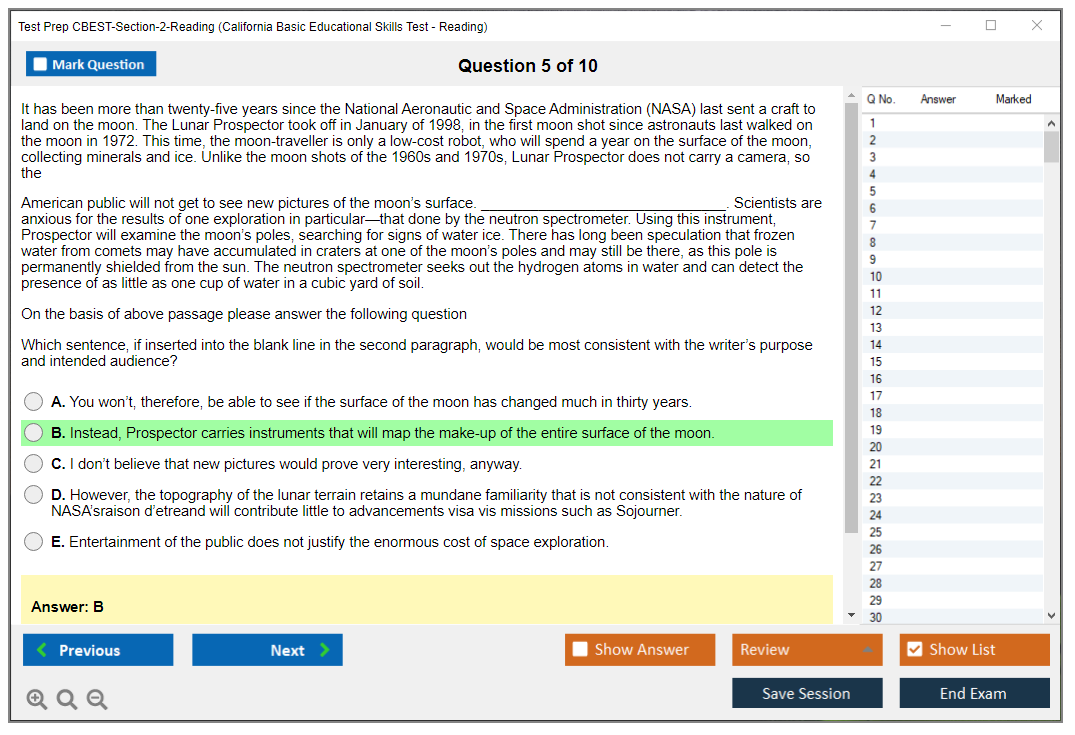
Function questions are about why the author included specific details: "The author includes [specific detail] primarily to.." Maybe they included a statistic to support a claim. Or an anecdote to illustrate a broader point. Or a counterargument to acknowledge and refute opposing views. The function's the role that detail plays in the passage's structure and argument.
Speaking of structure, I once watched someone spend four minutes on a function question trying to decide if an example was meant to "illustrate" or "demonstrate," which are basically the same thing. Sometimes you just gotta pick one and move on.
Evidence-based paired questions
Some questions come in two-part structures. First question asks for an interpretation, and the second asks for supporting evidence. There are two approaches here. You can answer the first question, then verify with the evidence question. Or you can use the reverse strategy, some test-takers prefer identifying evidence first, then answering the interpretation question based on what evidence's strongest.
Example sequence might be Q1: "What is the author's main concern?" followed by Q2: "Which sentence best supports your answer to the previous question?" The evidence location in that second question typically provides line numbers or direct quotes from the passage, which is helpful.
Here's the consistency requirement: answers to paired questions must logically align with each other. If you chose answer B for the interpretation but then the evidence that supports answer B doesn't actually appear in the evidence choices, you probably got the interpretation wrong. Use that verification technique, selected evidence should clearly support your first answer choice.
Time management consideration? Paired questions may require slightly more time than single questions, but keep in mind that scoring independence means each question's scored separately even when conceptually linked. Common pairing patterns include an inference question followed by a textual evidence question. Strategic advantage? The evidence question can actually help confirm or correct your first answer if you're uncertain.
Avoiding common traps and distractors
"Close but not quite" distractors are everywhere. These answers are partially true but miss a key aspect of the correct answer. Trap avoidance means reading all options before selecting, because the correct answer fully addresses the question, not just part of it.
Extreme language traps use words like "always," "never," "only," or "all." These are often incorrect unless the passage uses that same extreme language. Passages about education rarely deal in absolutes, so if an answer says "teachers should never use direct instruction," that's probably wrong unless the passage explicitly makes that extreme claim.
Opposite answer trap? States the reverse of the correct answer, catching careless readers. Avoidance strategy's carefully noting whether the question asks what IS or IS NOT true. I've seen people miss questions because they found the correct information in the passage but didn't notice the question asked "which of the following is NOT mentioned."
Outside knowledge traps are insidious. You might know from your teaching experience that cooperative learning improves student outcomes, but if the passage doesn't say that, you can't pick it. Prevention method's basing every answer exclusively on passage content and ignoring personal knowledge, which feels weird but is necessary.
Partial answer traps address only part of the question or only a portion of the passage. True-but-irrelevant traps are statements that are accurate according to the passage but don't answer the specific question asked. Avoidance technique? Reread the question stem after reading answer choices to make sure it's relevant. Takes two extra seconds and saves you from careless errors.
Final trap types to watch for
Misplaced modifier traps involve answer choices with subtle wording differences that change meaning. Pay attention to words like "some," "most," "few," and "many." The difference between "some teachers" and "most teachers" can make one answer correct and another wrong.
Emotional reaction trap's when you select an answer that "feels right" without textual support. Maybe the passage discussed budget cuts and you feel strongly about that issue, so an answer criticizing budget cuts feels correct even though the passage's tone was actually neutral and informative. Base your choice on evidence, not emotions.
Overthinking traps happen when you add complexity not present in straightforward passages. Sometimes the answer really is that simple. Vocabulary confusion traps use similar-sounding words or a common word with an uncommon meaning, which circles back to checking context.
The scope trap's huge: answers can be too broad or too narrow for the question asked. If the question asks about a specific teaching strategy mentioned in paragraph two, an answer discussing all teaching strategies in general's too broad. If it asks about the main theme and you pick something that only appeared in one example, that's too narrow. Prevention strategy's matching answer scope precisely to question scope and passage content.
If you want structured practice with these question types, the CBEST-Section-2-Reading Practice Exam Questions Pack gives you realistic examples with detailed explanations for $36.99, which helps more than just reading about strategies. Similar to how the SAT-Test and ACT-Test measure reading comprehension for college admissions, or how the TEAS-Test evaluates reading for nursing school candidates, the CBEST Reading section requires recognizing these specific question patterns and trap types to consistently choose the best answer.
CBEST Cost and Registration Details
why this section matters for your wallet
Look, CBEST Reading test prep usually starts with passages and question drills, but the fastest way to blow up your plan? Ignoring the money and timing piece. Fees, deadlines, change policies..these are the boring details you only care about after something goes wrong. Then you care a lot.
Budgeting is part of test prep. Seriously. If you are lining up a credential program start date, a district hiring window, or you are trying to hit a summer deadline, the registration rules basically decide whether you are calmly studying from a CBEST Reading study guide or panic-booking a seat and paying extra because you waited.
Short version: plan early. Save receipts.
the base fee structure (and the part people misunderstand)
As of the 2026 test cycle, the full CBEST battery (all three sections) costs $102. That includes Reading, Mathematics, and Writing together. Here's the weird part that catches people: single section testing is also $102, even if you take only Reading.
Yep. No discount.
California does not do per-section pricing for CBEST. You do not pay less for taking fewer sections, and you do not pay more for taking all three. The registration fee structure is basically one-time per attempt, covering your test attempt regardless of whether you select one, two, or three sections. So if you are thinking, "I'll just take Reading now and save money," you are not saving money, you are just splitting your stress across multiple test days.
Computer-based testing fee? $102 for the complete test. Paper-based testing fee? Also $102 for the complete test. Same price. Different vibe. Computer feels more flexible, paper feels more old-school. Honestly some people read better on paper when they are doing reading comprehension for CBEST and trying not to second-guess every inference.
extra charges you can trigger (aka the avoidable fees)
This is where your budget can get wrecked. The $102 is the starting line, not the finish.
Common add-ons include a $36 late registration surcharge if you register after the regular deadline. This one hurts because it is pure penalty, and it usually happens when someone is busy doing "one more" CBEST Reading practice test and forgets registration is a separate task with a calendar. Test center changes cost $20 if you change your location after you already registered. Sometimes it is unavoidable, like your preferred center fills up. A lot of the time it is just indecision. Date change fees run $20 if you reschedule your test date, and you have to do it before the deadline. Miss the deadline and you are often looking at worse options, including forfeiting fees. Additional score report requests typically cost $20 per extra institution beyond your initial designations. Most people do not need many, but if you are applying to multiple programs or districts, those little $20 hits add up fast.
Mentioning the rest quickly: if you need special shipping, special processing, or you are dealing with edge-case admin stuff, that is where you should read the current rules carefully on the official registration site because details can change by vendor or cycle.
how you can pay (and what is not an option)
Online registration generally accepts credit card, debit card, or e-check. That is the practical list that matters. If you are registering late at night because you finally finished reviewing CBEST Reading test objectives and realized your date is about to disappear, online payment is what saves you.
No payment plans. None. Full payment is required at registration. Not gonna lie, that part is annoying if you are between jobs or paying for multiple exams, but at least it is straightforward.
One more real-world note. If you are using an e-check, double-check your routing and account numbers, because a failed payment can mean your registration does not stick. Then you are in that fun situation where you assumed you were scheduled and you are not.
deadlines and why "early" is not just a motivational poster
Registration deadlines vary by test date and format, and you should treat that as a hard constraint, not a suggestion. Paper-based dates tend to be more limited. Computer-based testing often has more availability, but that does not mean your preferred day and center will.
Early registration is recommended for a few reasons, and only one of them is "being responsible." The real reasons? Seats fill. Life happens. Deadlines do not care.
If you are planning your study timeline around a CBEST Reading diagnostic test and a 2 to 4 week ramp, register first, then study. I know that sounds backwards, but it is actually sane. When you have a date locked, your CBEST Reading tips and strategies become real actions, not vague intentions.
late registration penalties (the $36 mistake)
If you register after the standard deadline, you are typically paying an extra $36 late fee. That is it. That is the penalty.
And honestly, the late fee is not the only cost. The hidden cost is you usually get stuck with worse test center times, longer drives, or you settle for a format you did not want. If you are the kind of person who performs better when you are fresh, being forced into an awkward time slot can matter as much as your prep. I mean, especially on questions that test interpretation of passages and arguments where mental fatigue shows up fast.
confirmation and what to do with it
Save your registration confirmation. Do not assume you can "pull it up later."
Print it or save it offline. Screenshot it. Email it to yourself. Whatever. Then bring the confirmation to the test center if the rules for your format require it. Even if they do not, it is still your proof if something goes sideways at check-in. Test centers are usually fine, but if your name is slightly off, or you are at the wrong building, or your appointment is not showing, that confirmation is the difference between fixing it and going home angry.
Also bring the right ID. If your ID name does not match what you registered with, fix it early. Not test-day early. Like, days or weeks.
retakes, no-shows, and cancellation refunds (read this before you gamble)
If you need to retake, expect to pay again. There is no "cheap retake" pricing. That is why people treat the $102 as "per attempt," because that is basically what it is in practice.
No-show policy is harsh. If you do not show up and you did not cancel properly, you typically forfeit the entire registration fee. Full loss. No sympathy from the system. If you are sick, stuck in traffic, or you overslept, it still counts as absent.
Cancellation refunds are usually partial if you cancel before the deadline. A common example you will see is a $41 refund from the $102 fee, meaning you are still out money, but not all of it. Policies can vary, so check the current rules for your registration, but the concept stays the same: cancel early or expect to lose most of it.
Emergency cancellations are another bucket. Typically no refund, but you may receive a credit toward a future test if you provide documentation. Think medical emergency, military orders, serious stuff. Do not assume your emergency counts. Submit the paperwork and be prepared to wait.
My cousin tried to cancel two days before his test because his car broke down. He figured that was emergency enough. Nope. Lost the full fee. Turned out the cancellation window had closed three days prior, and "car trouble" was not on the approved list anyway. He ended up borrowing a car, taking the test tired and annoyed, and barely passing. Would have been cheaper to just Uber.
fee assistance, waivers, and reimbursement (real options, limited supply)
Fee assistance exists, but it is not unlimited and it is not automatic.
There are financial hardship waivers that may be available through the California Commission on Teacher Credentialing, and they generally require documentation showing public assistance or economic hardship. The fee waiver application process is paperwork-heavy by design, so start early if you think you qualify, because waiting until the last week is how people miss deadlines and then pay out of pocket anyway.
There can also be military fee waivers or fee reductions for active-duty personnel with proper documentation. If that is you, do not guess. Get the official requirements and submit exactly what they ask for.
Employer reimbursement is the sleeper option. Some school districts reimburse testing fees for hired teachers, especially if the CBEST is part of your hiring pipeline. This is very "depends on the district," and sometimes it is only after you are onboard, but it is worth asking HR. Worst they say is no. Best case, you get your $102 back and you can spend it on a decent CBEST Reading online prep course or extra practice materials.
score reports and extra report fees
Your score report fees are included in the initial registration. Official score reports are sent automatically based on the standard process, so you are not paying extra just to get your own results.
Where you can pay more is when you want extra official reports sent to additional institutions beyond what you selected at registration. That is typically $20 per additional institution. If you are applying to multiple credential programs, plan that out up front so you are not nickel-and-dimed later.
scheduling realities: test centers, formats, and planning your prep
CBEST can be taken computer-based or paper-based, and like I said earlier, the price is the same. The scheduling experience is not.
With CBEST computer-based test appointments, you often have more dates and times, but popular centers still book out. Paper-based testing tends to have fewer dates, which means more deadline pressure. Either way, align your prep timeline with your actual seat, not your dream seat.
If you are using practice work to gauge readiness, tie it to your calendar. A CBEST Reading diagnostic test first, then targeted review of weak areas, then a timed CBEST Reading practice test once a week. Keep an eye on CBEST scaled score requirements and do not confuse "I feel good" with "I'm scoring where I need to score."
Because test-day logistics matter. Parking. Check-in time. What you are allowed to bring. All that boring stuff. It affects performance more than people admit, especially on CBEST Reading question types that punish rushing and reward careful evidence selection.
quick answers people keep asking
Passing score question comes up constantly: What is the passing score for the CBEST Reading section? The CBEST uses scaled scoring, and you are generally aiming for the standard passing threshold used for CBEST sections, but also remember there are overall rules that can allow compensation across sections depending on your score mix, so read the current policy carefully if you are close.
Cost question: How much does the CBEST test cost in California? For 2026, it is $102, whether you take one section or all three, and then you watch out for late fees, changes, and extra score reports.
Difficulty question: How hard is the CBEST Reading test? It is not grad school, but it is not free points either. The thing is, the hardest part for many people is staying disciplined with evidence and not getting baited by plausible distractors, especially in argument questions and tone or inference items. Wait, I am thinking of those argument questions. Yeah, argument questions and tone or inference items.
Question types question: mostly multiple-choice, focused on comprehension and analysis. Think main idea, inference, structure, purpose, and argument evaluation, aligned with the California Basic Educational Skills Test Reading section expectations.
Study materials question: the "best" stuff is usually a mix. One decent CBEST Reading study guide, a set of high-quality practice tests, and a plan to review mistakes like you are debugging code, not like you are reading a horoscope.
Conclusion
Pulling it all together: your roadmap to CBEST Reading success
Here's the deal.
The California Basic Educational Skills Test Reading section? It's not the most brutal standardized test out there, honestly, but you can't just waltz in unprepared if you're planning to teach in California or snag one of those education-adjacent positions. The reading comprehension for CBEST demands way more than skimming passages and choosing answers that vaguely sound plausible. They're testing you on interpretation of passages and arguments, inference, critical analysis, the whole nine yards. The thing is, tons of test-takers completely underestimate how much actual prep they need, which is kinda wild when you think about it.
CBEST Reading test prep isn't about cramming vocabulary lists or memorizing gimmicky shortcuts. It's pattern recognition. Once you've ground through enough CBEST Reading question types and trained yourself to spot the common traps (like answer choices that're technically factually accurate but totally sidestep the actual question being asked, or those sneaky distractors that lift passage vocabulary but completely twist what it means), you'll start viewing the entire test through a different lens. That's the moment your practice test scores really take off.
I mean, if you've stuck with the CBEST Reading tips and strategies we laid out earlier? You already understand this: active reading demolishes passive reading every single time. Mark up those passages like your future depends on it. Predict answers before you even glance at the choices. Locate the evidence first, then get rid of the garbage answers one by one. Oh, and time yourself religiously, because the CBEST computer-based test format won't give you sympathy points when you're "almost done" and the clock hits zero.
My recommendation for the home stretch? Simple.
Take at least two full CBEST Reading practice test sessions under strict timed conditions before test day arrives. Review every single question you miss. Not just memorizing the right answer, but really understanding why each wrong option was designed to trap you. Identify your weak spots (is it inference questions? tone questions? maybe vocabulary-in-context?) and drill those areas relentlessly. I knew someone who kept missing the same type of question over and over because they never actually stopped to figure out the pattern. Don't be that person. And honestly, invest in quality materials that actually reflect the real test format and difficulty level, because garbage practice materials create false confidence.
If you're serious about nailing that CBEST Reading passing score on your first attempt and you want realistic practice mirroring what you'll actually encounter on test day, definitely check out the CBEST-Section-2-Reading Practice Exam Questions Pack at /test-prep-dumps/cbest-section-2-reading/. It's built to help you recognize patterns, build real confidence, and walk into that testing center (or log into that online proctored session, whatever) knowing what's coming your way. You've got this. Now go out there and prove it.