

Test Prep SAT-Test (Scholastic Assessment Test: Reading, Writing and Language, Mathematics)
SAT Test Prep: Overview of the SAT (Reading, Writing and Language, Mathematics)
SAT Test Prep: Overview of the SAT (Reading, Writing and Language, Mathematics)
Your college ticket.
The SAT's basically this standardized test measuring if you're actually ready for college-level work in critical reading, writing, and math reasoning. Colleges use it to stack students from completely different high schools and backgrounds against each other on one scale, which feels weird but it's how admissions works. The thing is, it's stressful. Not gonna sugarcoat that. But once you understand what you're facing, prep becomes way less overwhelming and more strategic.
What the SAT measures (skills and readiness)
This test goes beyond memorization.
Sure, content knowledge matters, but here's the thing: the SAT's really obsessed with critical thinking skills and evidence-based reasoning instead of just regurgitating formulas or vocabulary. Can you read some dense passage about climate policy and pinpoint which exact sentence backs up the author's main claim? Can you catch a grammar error that actually shifts meaning versus one that's just stylistically different but doesn't really matter? The math section throws problem-solving at you across algebra, advanced math concepts, data analysis, geometry, and yeah, some trigonometry too.
You're working under timed conditions where efficiency counts as much as getting answers right. Who performs their best when there's a clock screaming at you? Honestly, the SAT wants proof you can think when the pressure's cranked up and time's running out. My brother used to practice with a timer going just to get used to that panicky feeling, which sounds miserable but apparently helped.
Digital SAT format, sections, timing, and adaptive testing basics
big deal alert.
Starting in 2024, the SAT went fully digital, and I've got mixed feelings about this because some students thrive on computers while others really don't. The test now takes 2 hours and 14 minutes instead of that old 3-hour marathon that felt like it'd never end. It's computer-based, meaning you're testing on a laptop or tablet in a proctored environment that honestly feels less intimidating than those massive testing halls. The structure's cleaner than before with two main sections instead of the confusing jumble. Reading and Writing got combined into one adaptive section. Math splits into two modules, which streamlines things considerably.
Here's where it gets interesting.
Each section has two adaptive stages, meaning the second module adjusts difficulty based on your performance in the first stage. If you absolutely crush the first module, you get harder questions in the second. If you struggle, you get easier ones. This adaptive design's supposed to give a more precise score with fewer questions overall, but it also means consistency across both modules matters way more than people realize. You can't just phone in the first module and expect to recover later. That strategy's dead.
Built-in tools matter.
The digital platform includes a built-in graphing calculator (Desmos) for the entire math section, which is honestly huge since you don't need to bring your own anymore or worry about batteries dying mid-test. There's also a reference sheet, review and flag functions, and a countdown timer per module that either motivates you or freaks you out depending on your personality. Navigation tools let you jump between questions within a module. This differs completely from the old paper test where you had to work sequentially and couldn't really skip around without losing your place. I mean, you can actually skip and come back without those bubbling nightmares where you fill in the wrong row and destroy your entire score.
SAT Exam Objectives (What You'll Be Tested On)
Reading objectives (comprehension, evidence, vocabulary in context)
Okay, reading questions?
They're testing comprehension, evidence location, and vocabulary in context. You know, the usual suspects, but they've gotten smarter about how they approach this stuff over the years. You'll read passages from literature, history, social studies, and science. Some are paired passages where you're comparing arguments side by side. Questions ask you to identify main ideas, understand author's purpose, interpret data from charts or graphs embedded in passages, and determine word meanings based on usage.
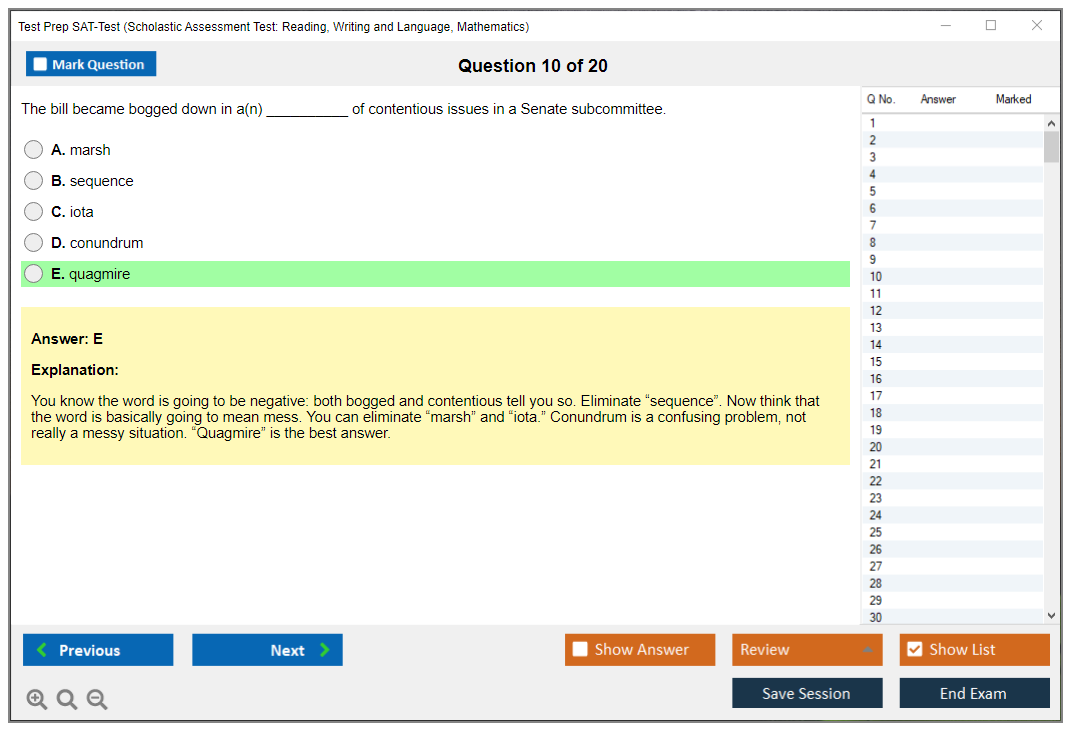
The vocabulary isn't about obscure words anymore. It's about understanding how words function differently depending on context. I mean, "sanction" can mean approve or punish depending on the sentence. Weird, right? Sometimes you'll see a word like "pedestrian" used to mean boring instead of a person walking, which throws people off completely.
Writing and Language objectives (grammar, usage, rhetoric, editing)
Writing questions test grammar rules, punctuation, sentence structure, and rhetorical skills. You're essentially editing passages. Fixing comma splices, choosing between who and whom, deciding whether a sentence should be added or deleted based on the paragraph's focus (which, the thing is, sometimes feels subjective but there's always a "best" answer).
Rhetoric questions ask about tone, transition words, and whether a revision strengthens an argument. Standard English conventions? You need those cold. But also understand how writing choices affect clarity and persuasiveness. That's kinda where art meets science.
Mathematics objectives (algebra, advanced math, problem-solving, data analysis, geometry/trig)
Math covers four domains.
Heart of Algebra: linear equations, systems, inequalities. Problem Solving and Data Analysis includes ratios, percentages, statistics, scatterplots. Passport to Advanced Math brings quadratics, exponentials, polynomials, radicals. Additional Topics mean geometry, trigonometry, complex numbers.
Some questions are multiple choice. Others are grid-ins where you type your answer, and honestly I've got mixed feelings about grid-ins because one tiny mistake and you're just done. The calculator's available for everything now, but some questions are actually faster without it, which catches people off guard. You need to recognize when a formula applies versus when logical reasoning gets you there quicker.
SAT Cost, Registration, and Retake Policy
SAT registration cost (fees, late fees, regional differences)
Base registration runs about $60 in the US as of 2024. International students pay way more, often $100+, which honestly feels steep when you think about how standardized tests are supposed to level the playing field but then immediately create financial barriers that hit students from lower-income backgrounds the hardest. Late registration tacks on about $30. Need to change your test center or date after registering? That costs extra too. And if you send score reports beyond the four free ones included with registration, each school costs more.
Fee waivers (who qualifies and what's included)
Fee waivers cover registration costs for students facing financial hardship. Usually those receiving free or reduced-price lunch qualify, which is the standard metric. Waivers also include four free score reports and access to official practice resources. Your school counselor can confirm eligibility and provide waiver codes. This makes the SAT accessible even if you can't afford the upfront cost, which matters more than people realize.
Retake strategy (when to retake and how often)
Most students take the SAT 2-3 times.
First attempt? Usually junior spring for a baseline. Not happy with your score? Retake in summer or fall of senior year after targeted prep, the kind where you drill down on weak spots instead of just doing practice tests endlessly and hoping something sticks. My cousin took it five times and his scores barely budged after the third, which just ate into his college application time. Taking it more than three times shows diminishing returns unless there was a specific issue affecting an attempt, like illness or a fire alarm mid-test. Schools generally superscore, meaning they take your highest section scores across all test dates. Strategic retakes focusing on weaker sections make sense here.
SAT Scoring: "Passing Score," Score Ranges, and What's Considered Good
Is there a passing score for the SAT? (how colleges interpret scores)
Here's the thing. There's no passing score. The SAT isn't set up as pass/fail, which I think trips up a lot of people. Scores range from 400 to 1600 by combining two sections that're each scored 200-800. What counts as "good" depends entirely on where you're applying. A 1200 might be competitive for some state schools but it'll fall below average for Ivy League institutions where expectations are just different.
SAT score scale and section scoring
Your total score combines Evidence-Based Reading and Writing (ERW) with Math. Simple enough. You'll also get subscores that break down specific skills like Command of Evidence or Heart of Algebra. Some students ignore these but they're useful for identifying weak spots. Percentiles show how you stack up against other test-takers. A 1300 might land you in the 87th percentile, meaning you've scored higher than 87% of students who took it. Colleges look at both total scores and sometimes they'll check section scores for placement purposes or prerequisites.
My cousin actually bombed the Math section twice before figuring out he could just focus on improving that one area. Brought his score up 80 points in a month.
Target score setting by school/program (percentiles and benchmarks)
Research your target schools' middle 50% score ranges. This matters way more than you'd think. If a school's range sits at 1250-1450, aiming for 1450+ puts you in a strong position. For merit scholarships, hitting specific thresholds like 1400+ can unlock real funding. We're talking thousands of dollars sometimes. I'd recommend setting a target 50-100 points above a school's average because it gives you buffer room and also shows you're competitive beyond their typical admit.
SAT Difficulty: How Hard Is the SAT and What Makes It Challenging?
The SAT's moderately difficult. Honestly, not impossible, but challenging enough that most students need prep before walking in there. The reading passages pull from college-level texts that demand sustained focus you probably haven't built up yet, while writing questions drill into nuanced grammar rules that you'd never encounter in everyday speech or texting. Math questions? They combine multiple concepts into single problems, forcing you to recognize which approach works under pressure.
Timing pressure amplifies everything. You've got roughly a minute per reading question and less for math sections. If you're not used to working that fast, you'll struggle even when you know the content cold. Tricky wording's another pain point: questions get phrased to test whether you're reading carefully or just pattern-matching from practice tests. Weak foundations in algebra or grammar compound over time. They make harder questions nearly impossible without serious review.
I remember my cousin spent three months prepping and still felt rushed on test day. She knew the material but couldn't shake that clock anxiety. Makes you wonder if speed really measures understanding or just trains you to game a system.
Compared to the ACT-Test, the SAT gives slightly more time per question but includes more complex reading passages that require deeper analysis. It's less about raw speed, more about depth of understanding. Though honestly, I have mixed feelings about whether that's better for everyone. Neither test's objectively harder. Depends on your strengths.
Prerequisites and Who Should Take the SAT
Recommended grade level and coursework background
Most students take the SAT junior or senior year. You really need Algebra II done first, plus at least some geometry and basic trig exposure under your belt. Reading stamina matters too. You've gotta focus on those dense passages for what feels like forever without your brain checking out completely.
Haven't wrapped up Algebra II? Some of those advanced math questions are gonna be brutal, not gonna lie. But you can still pull off solid scores in the other sections. It's not a total loss or anything.
One thing nobody tells you: the test rewards people who read regularly outside of class. Like actual books or long articles, not just Instagram captions. Sounds obvious, but the difference shows up fast when you're staring at a 700-word passage about polymer chemistry at 8 AM on a Saturday.
Accessibility and accommodations considerations
Students with documented disabilities can request accommodations. Extended time. Frequent breaks. Assistive technology, whatever you need through College Board's Services for Students with Disabilities (SSD).
The catch? You'll need documentation from your school, and the approval process isn't exactly quick. Kind of frustrating when you're trying to plan everything out. Start early. I'm talking months before your actual test date, not weeks.
Best SAT Study Materials (Free + Paid)
Official College Board resources? Absolute gold.
Khan Academy's free SAT prep is personalized and ties directly to official practice tests. Your weak spots automatically generate targeted practice questions. The College Board's Bluebook app simulates the digital test environment. For books, look for recent editions reflecting the digital format. Older prep books based on the paper test won't match current question styles.
Online courses range everywhere. Self-paced platforms like PrepScholar. Live tutoring sessions.
Pros: you get structured curriculum and built-in accountability. Cons: the cost, and not everyone needs that level of hand-holding. Especially if you're already disciplined. Apps like SAT Daily Practice provide bite-sized drills if you're short on time. I spent weeks bouncing between different apps before realizing I was just procrastinating instead of actually studying, which was its own kind of lesson.
The best material depends on whether you're self-motivated or need external structure pushing you forward. Some kids thrive with a tutor breathing down their neck. Others do better locked in their room with a practice book.
SAT Practice Tests: How to Use Them to Improve Fast
Okay, here's the deal. Start with a full-length diagnostic test to identify weak areas. This step's key because you can't fix what you don't know is broken. Skipping it means you're basically just guessing where to focus your energy instead of actually targeting the concepts that'll move your score the most. Then do targeted practice on specific concepts. Quadratic equations. Transition words. Whatever's tripping you up.
Drill 'em until you're consistently accurate.
The thing is, after a few weeks, you've gotta take another full-length test under timed conditions to measure progress. But here's where most people mess up: the review method matters way more than how many tests you take. I mean, you could take ten tests and learn nothing if you're not reviewing properly. Create an error log tagging each mistake by topic and question type. Redo missed questions after reviewing the concept. This cycle of test, review, drill, retest? That's how you improve fast.
Section drills and mini-tests work well between full-lengths to maintain stamina without burning out. Mixed feelings here. Some people thrive on full-lengths exclusively, but I'd say that's overkill for most. My cousin tried doing a full test every other day for two weeks and basically fried his brain. Not worth it.
Much like how students preparing for the PSAT-Test build foundational skills, SAT prep needs consistent practice rather than cramming.
SAT Study Plan (2, 4, 8, and 12-Week Options)
A 12-week plan is probably your best shot. You get enough space to actually learn things instead of just panic-memorizing formulas the night before. Weeks 1-3, you're doing diagnostic tests and going back through content you forgot. Weeks 4-9 are where you drill specific sections over and over. Weeks 10-11, you sit down and take full practice tests. Week 12 is cleanup and making sure you know what time to show up on test day.
The 8-week version crams that content review down to two weeks (which, yeah, good luck with that), then pushes the practice harder to make up for lost time.
Four weeks can work if you're already pretty close to your target score. At that point you're mostly fixing dumb mistakes and tightening up timing. Two weeks is just straight survival mode. You focus on whatever gets you the most points fastest and hope for the best.
More time helps. That's just how it is.
But sometimes you find out late that you need to take this thing, and then you work with what you've got.
Oh, and if you're dealing with multiple tests at once (like, I knew someone juggling SAT studying while also prepping for a completely different exam and they basically lost their mind for a month), you might want to stagger them. For international students, lining up SAT prep with IELTS preparation can actually help you knock out language proficiency stuff on a reasonable timeline instead of doing everything back-to-back in some nightmare testing marathon.
Renewal / Validity: Do SAT Scores Expire?
Here's the thing: SAT scores don't technically expire. But most colleges will only accept scores from the past five years.
So let's say you took the SAT freshman year and you're applying to college senior year. Those scores are still perfectly valid. However, if you're taking a gap year or applying later in life, older scores might raise some eyebrows about your current academic readiness. It makes sense when you think about it from their perspective. Colleges want to know where you are now, not where you were half a decade ago. Sometimes I wonder if they'd prefer we just retested every year, but that would be exhausting for everyone involved.
Some scholarship programs have stricter timelines. They're requiring scores within two years, which is pretty tight when most students test junior year anyway.
Check specific program requirements before assuming older scores will work for what you need.
SAT Exam Objectives (What You'll Be Tested On)
SAT exam objectives (what you'll be tested on)
Okay, so here's the deal. The digital SAT throws two massive skill categories at you: Reading and Writing smooshed together, plus Math. That smooshed-together thing? It actually changes everything when you're prepping, because there's no separate grammar gauntlet anymore where you just fix sentences in isolation. You're reading actual passages, thinking through context, making edits that need to make sense with what the author's trying to say, all while the clock's ticking down and your brain's starting to feel like oatmeal.
Adaptive testing's part of this now. Module 1 happens. Then Module 2 looks at how you performed and cranks the difficulty up or down, which means your SAT practice test full length runs need to simulate actual conditions. Real timing, real pressure, that slightly panicky feeling when you're not sure if you should skip or guess. Not those chill untimed drills where you pause for snacks and scroll Instagram between questions.
Reading objectives (comprehension, evidence, vocabulary in context)
The Reading section isn't some cozy "curl up with a novel and see what happens" situation. I mean, it's short passages, sometimes two passages that talk to each other, and the test expects you to extract meaning quickly, figure out who's arguing what, then back it up with specific lines like you're building a legal case but with way less time to think. Literature appears, yeah, including fiction and occasionally poetry or this literary nonfiction hybrid that sounds fancy but reads weird. But you'll also encounter informational text from history/social studies and science. And honestly the tonal whiplash between a Darwin excerpt and a passage about voting rights legislation in the 1960s messes people up more than they admit. Especially if they've only practiced one genre and assumed everything else would feel similar.
Short single passages? Common. Paired passages? That's the trap door. You've got to bring together information across both, compare claims, notice where authors align or completely clash, and resist the temptation to pick an answer that sounds intelligent but isn't actually supported by the words sitting right there on your screen staring back at you.
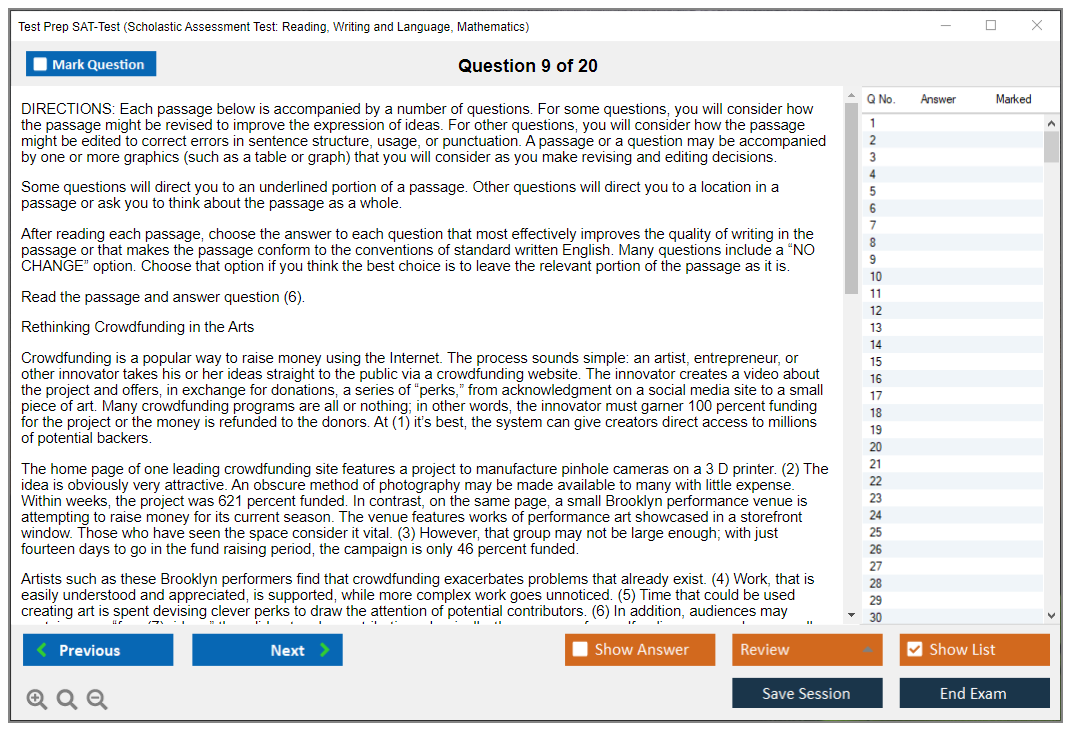
Evidence-based reading is the backbone. They test explicit meaning, sure, but also implied meaning, the author's purpose, point of view. And those "why did the author include this particular sentence" questions absolutely wreck sloppy readers who remember the general topic but totally miss the function of specific details, like whether that sentence was an example, a counterargument, or just rhetorical flourish. You'll also need to interpret data connected to the passage, like a tiny chart or table that either supports or contradicts a claim in the text, so reading well isn't enough on its own. You have to bridge the gap between the prose and the numbers without your brain short-circuiting.
Vocabulary shows up. But it's vocabulary in context, not you flexing 500 flashcards you made at midnight. The test wants you inferring meaning from surrounding sentences, catching when a familiar word gets used in an unusual sense, then selecting a synonym that matches the author's specific intent in that moment, not the first dictionary definition you memorized while half-asleep. Domain-specific terms pop up in science or social science passages, and the goal's understanding how that term functions right there in that paragraph. Not reciting some glossary entry you found online.
Command of Evidence questions are their own beast. You get a claim or conclusion, then you choose the line or lines that best support it. Which means you're distinguishing really strong evidence from stuff that's "kinda related." And weak evidence is usually true but irrelevant, or relevant but way too general, or pulled from the wrong part of the argument entirely. Sometimes they make you connect evidence across two different sources, which is basically the SAT's way of asking, "can you handle school-level research reading without your brain melting into chaos."
My cousin took the test last spring and spent the whole car ride home complaining about one specific paired passage where both authors agreed on the main point but used completely opposite examples, and she couldn't figure out if the question wanted her to focus on the agreement or the difference. She guessed. Still doesn't know if she got it right. That's the kind of thing that keeps you up at night.
Writing and language objectives (grammar, usage, rhetoric, editing)
Writing and Language is embedded editing work, not isolated fix-this-sentence drills. You're reading a full passage, then fixing it as you go, which completely changes your study approach. Because SAT Writing and Language practice has to include reading for overall meaning and flow, not just hunting stray commas like you're some kind of punctuation-obsessed robot on a mission.
Standard English conventions get tested heavily. Subject-verb agreement, obviously. Pronoun clarity and agreement. Verb tense consistency and proper sequence. Modifier placement, like is that phrase actually describing what you think it's describing. Parallel structure when you're listing things or making comparisons. Sentence boundaries, meaning fragments and run-ons that look fine until you realize they're grammatically broken. Possessives versus contractions. Then punctuation: commas, colons, and yeah dashes show up even though they confuse literally everyone. And the SAT grammar rules and punctuation questions absolutely love offering answer choices that are almost right but quietly break one specific rule you forgot existed.
Quick list of what I see students miss most:
Commas around nonessential clauses, because people go by how it "sounds" instead of applying the actual rule. And the passage context makes the wrong option feel smooth and natural when you read it aloud in your head.
Pronouns, especially "they/it/this" with unclear antecedents, because the SAT punishes vagueness hard when a reader could reasonably point to two different possible nouns and go "wait, which one?"
Parallel structure and comparisons, which sounds super academic and intimidating. But it's really just the test checking whether your sentence parts match in form and basic logic. Like are you comparing apples to apples or apples to the concept of fruit in general.
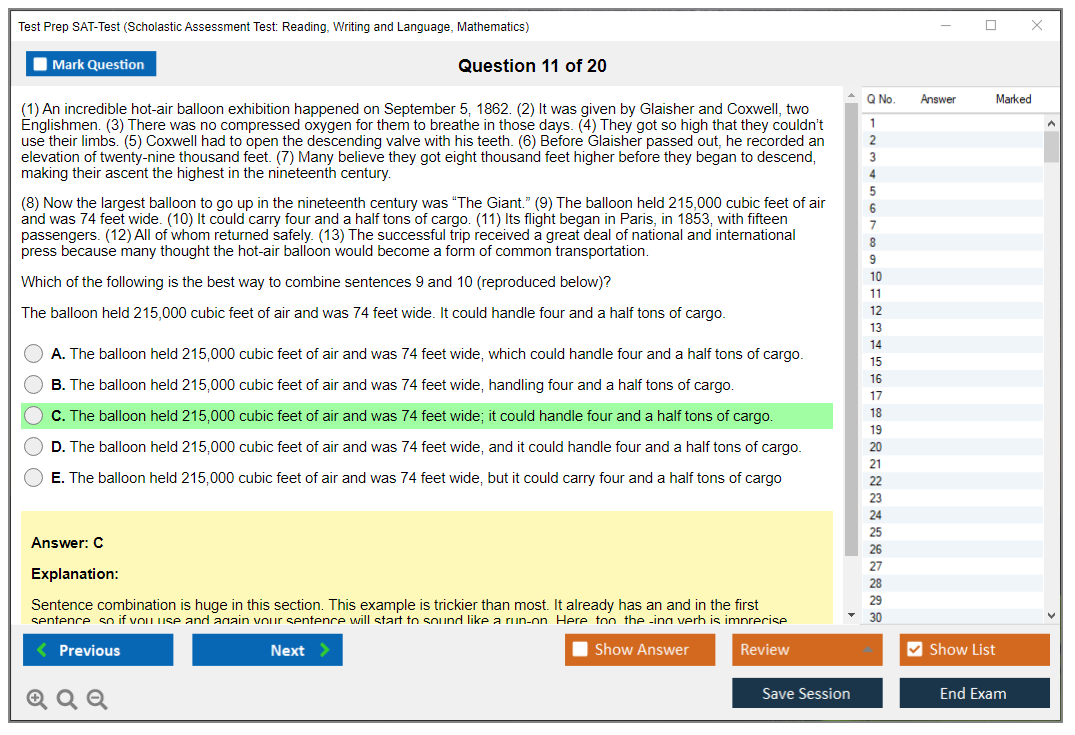
Expression of ideas is the other half of this section. Organization and logical sequence. Transitions that actually make sense. Combining sentences without turning them into forty-word monstrosities. Precision and conciseness, saying what you mean without the fluff. Style and tone consistency throughout the passage. Rhetorical purpose, like adding a sentence that really supports the main claim, or choosing the best transition word based on what the paragraph's actually doing, not what you wish it was doing or what sounds fanciest. This is where naturally good readers rack up free points. And where people who only grind grammar drills get blindsided because they never practiced thinking about the passage as a whole.
Data representation can appear here too, not just over in Reading, which catches people off guard. A passage might reference a graph or table, and you'll need to pick the sentence that accurately describes the trend you're seeing, or revise a claim so it fits with the numbers shown. Which is sneaky but also very learnable if you practice it enough times that the pattern clicks.
Mathematics objectives (algebra, advanced math, problem-solving, data analysis, geometry/trig)
Math still uses the four-domain setup: Algebra, Advanced Math, Problem-Solving and Data Analysis, and Geometry/Trigonometry. Your SAT Math practice questions need to cover all four domains thoroughly, because that adaptive second module will absolutely punish gaps fast. And you don't want your "easy points" just sitting there in whichever domain you decided to ignore because it seemed boring or hard.
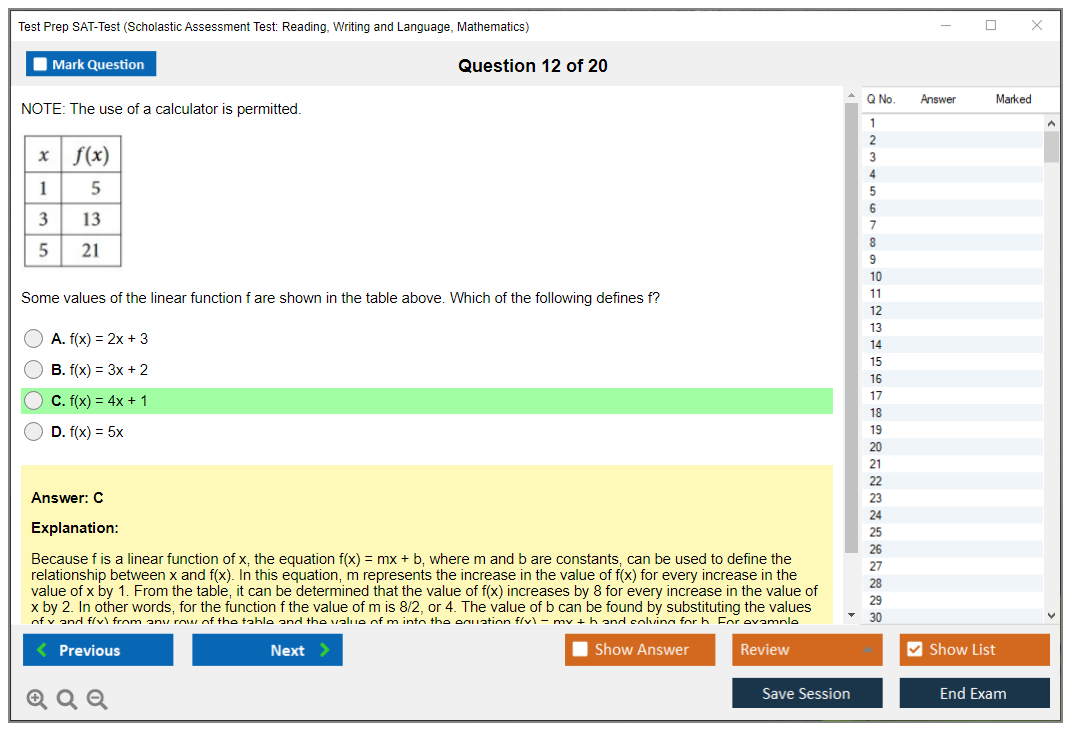
Algebra includes linear equations and inequalities, systems of equations, slope and intercepts, interpreting graphs, absolute value, and linear modeling pulled from word problems that sometimes read like tiny confusing novels. Substitution and elimination both matter. So does carefully reading what the question's actually asking for, because sometimes it wants "what is k" not "what is x," and that's a tiny difference that creates a massive score swing when you solve for the wrong variable and don't even realize it.
Advanced Math is where quadratics and functions set up camp. Factoring trinomials. Polynomial operations. Exponentials and growth/decay models. Rational expressions that look scary until you remember they're just fractions with variables. Radical and rational exponents. Function notation and transformations, like shifts and stretches. Nonlinear systems. If you're doing Scholastic Assessment Test preparation seriously, like actually trying to improve not just going through motions, this is the domain that often separates a 600-ish Math score from a 700+ Math score. Because it's less about raw arithmetic speed and more about recognizing structural patterns and knowing which algebraic moves to make.
Problem-Solving and Data Analysis hits ratios, rates, percentages, unit conversions, scatterplots, trend lines, mean/median/mode/range, standard deviation concepts, two-way tables, and probability. Also this thing called "data-driven decision making," which is basically a fancy way of saying you'll read a real-world scenario, pick the right method, compute something, then interpret what that computed value actually means in context. With correct units attached.
Geometry and trig covers area and volume formulas, angles, triangles, circles, coordinate geometry, similar triangles, and basic trig ratios that show up more than you'd think. Sine/cosine/tangent appear. Right triangle setups. Pythagorean theorem, obviously. Circle stuff like arc length and sector area sometimes. Not constant, sure, but you absolutely can't pretend it won't appear and then panic when it does.
Calculator access is available for the entire digital SAT Math section. But honestly? The calculator's not some magic wand that solves everything for you. Some questions are really faster with mental math or direct algebraic manipulation, and the test rewards people who know when to stop typing numbers into Desmos and just solve the thing by hand because it's simpler that way.
Multi-step problems are everywhere, no exaggeration. Extract the information. Set up your equation or system. Solve it. Check if your answer's even reasonable in context, like did you just calculate that a person is 347 years old, because if so you messed up somewhere. Grid-ins also appear, where you produce the numerical answer yourself, and you have to enter it correctly using acceptable formats like fractions or decimals. And there's no partial credit, no "close enough," no vibes-based grading.
If your goal is "how to improve SAT score fast," your best move, I mean this, is aligning your practice sessions directly to these specific objectives, then drilling the exact failure points you're seeing in review. Not just doing more random questions because it feels productive and you can tell yourself you studied for three hours.
SAT Cost, Registration, and Retake Policy
SAT registration cost (fees, late fees, regional differences)
Money talk time.
The base SAT registration fee sits at $60 for domestic US students as of recent testing cycles, though the College Board tweaks this annually so expect it might creep up. That's your standard fee if you register during the regular registration window, which closes about 4-5 weeks before your actual test date.
Miss that deadline? Late registration fees slap another chunk onto your total. Usually around $30 extra, bringing your total to $90 for domestic testing. Late registration closes roughly two weeks before the test date. There's still a window but it costs you. Phone registration? Even worse. If you call instead of registering online they tack on an additional surcharge that can push your cost even higher. Seems ridiculous in 2026 but here we are.
Change your mind about your test center or decide you need a different date after registering? That'll be another fee, usually around $25-$35 for making changes. The system penalizes indecision pretty hard.
International students face steeper costs. We're talking an additional $43-$53 in regional processing fees depending on where you're testing. Students outside the US are paying somewhere in the $103-$113 range total. That's nearly double the domestic cost just because of geography, and it adds up fast if you're planning multiple test attempts.
Additional score reports beyond the four included with registration run about $12-$14 per report sent to colleges. Those four free reports need to be selected before you see your scores. Once you know how you did, every additional college costs extra. The Question and Answer Service (QAS) and Student Answer Service (SAS) are available for select test dates, giving you access to the actual questions and your answers for review, but those cost extra too. Roughly $18-$20 depending on the service level.
The SAT with Essay was discontinued in 2021, but if you're looking at older resources or talking to someone who took the test before then, know that used to add another $17 to the base cost. Not relevant anymore but worth understanding for context.
Fee waivers (who qualifies and what's included)
Look, fee waivers? Honestly a big deal if you qualify. The College Board offers them based on income eligibility, typically tied to participation in federal lunch programs. If you get free or reduced-price lunch at school you're almost certainly eligible. Family income guidelines also apply, generally hovering around 185% of the federal poverty line, though the exact threshold shifts.
What do you actually get with a fee waiver? Two complete test registrations covered, which is huge since most students take the SAT at least twice. You get unlimited score reports at the time of registration (instead of just four), plus four additional score reports you can send after you get your scores back. Many partner colleges waive their application fees for students using SAT fee waivers too, which can save you hundreds across multiple applications.
The catch is simple. You need to get these waivers through your high school counselor. They've got a limited number allocated and handle the distribution, so talk to your counselor early. Like, beginning of junior year early. Some students automatically qualify based on indicators already in the school system, but you still need to formally request and receive the waiver code.
Using the waiver during registration is straightforward through your College Board account. You'll enter the code your counselor provides and the fees disappear. Just make sure you don't lose that code and that it hasn't expired, because they do have validity periods.
Retake strategy (when to retake and how often)
Here's the thing about retaking the SAT: there's no limit on how many times you can take it. None whatsoever. You could take it every single test date if you wanted and had the money, though that would be objectively terrible strategy and honestly kind of exhausting. Actually, funny story, I knew a kid who took it five times and improved by like 20 points total, which made the whole thing feel sort of pointless. Anyway, the more important thing is understanding when retakes actually make sense rather than just knowing you can take it endlessly.
The Score Choice policy means you control which test dates get sent to colleges. You're not locked into sending every score from every attempt. But not all colleges honor Score Choice. Some schools, particularly more competitive ones, require all scores from all test dates, so check each college's specific policy before you assume you can hide that rough first attempt.
Most colleges that receive multiple scores will superscore, meaning they take your highest section scores across all test dates and combine them. Got a 700 Math and 650 Reading/Writing on one test, then 680 Math and 710 Reading/Writing on another? They'll combine the 700 Math with the 710 Reading/Writing for a 1410 superscore. This practice makes retaking pretty low-risk at schools that superscore.
When does retaking actually make sense? If you're expecting at least a 50-point improvement based on additional prep, absolutely. If your first attempt was basically a diagnostic and you hadn't studied, retake it. Timing issues killed you? Finished only half the sections? Retake it. You've now addressed content gaps through practice? Worth another shot.
I'd say space attempts by 2-3 months minimum. That gives you actual time for focused study between tests rather than just hoping magic happens. Most students see diminishing returns after 3-4 attempts. Your score tends to plateau once you've hit your current skill ceiling, and taking it six or seven times doesn't show real improvement to colleges. It actually might signal you're not using your time well, which is the opposite impression you want to make.
Timing matters too. Taking it in spring of junior year gives you fall senior year for retakes if needed, keeping you ahead of early application deadlines. The seven annual test dates (August, October, November, December, March, May, June) mean you've got options, but align them with your college application timeline and score release schedules, which can take 2-3 weeks.
Similar to how the ACT-Test allows unlimited attempts, the SAT gives you flexibility, but smart planning beats brute force testing. And if you're also considering the PSAT-Test as practice, that's worth doing in 10th or 11th grade before you commit to serious SAT attempts.
Standby testing exists for emergencies. You missed the registration deadline completely or need to switch test centers on test day itself. But it costs extra (another $60-$70 on top of base fees), availability is limited to space and materials, and you might not get your preferred center. It's a backup option, not a plan.
SAT Scoring: "Passing Score," Score Ranges, and What's Considered Good
SAT test prep: Overview of the SAT (Reading, Writing and Language, Mathematics)
The SAT is the Scholastic Assessment Test, now mostly taken in a digital format that feels more like two focused sprints than one long paper marathon. Reading and Writing is one section, Math is the other, and both check "college readiness" skills, not whether you memorized random trivia. Short passages. Lots of choices. Plenty of traps.
If you're doing SAT test prep, treat it like a skills exam. That's what it is when you strip away the stress and the "my whole future depends on this" panic. You get better by practicing what the test rewards: evidence-based reading, concise editing, and SAT algebra plus problem solving that's faster than what you do in class.
What the SAT measures (skills and readiness)
Reading's about comprehension and proof. Writing is about clarity and rules, like SAT grammar and punctuation, plus editing decisions that sound "right" because they're logical, not because you vibe with them. I've seen students rely on "what sounds good" and get stuck around 650 because their intuition breaks down when the sentences get weird. Math is mostly algebra, functions, and data analysis, with some geometry and trig mixed in.
It's criterion-referenced. The SAT tries to measure your readiness against a standard, not rank you like a class curve, even though percentiles still get reported.
Digital SAT format, sections, timing, and adaptive testing basics
Digital means you get two modules per section. Your performance on module 1 routes you to an easier, medium, or harder module 2. This is why people sometimes say, "I got a lot right, why wasn't my score higher?" If you land on an easier second module, the score ceiling's lower even with high accuracy, while the harder route has more room to hit the top end if you keep performing.
The adaptive format isn't just about difficulty. It's also about keeping you in questions that match your level so the test can be more precise with fewer total questions. Think of it like a video game that adjusts enemy difficulty based on how you're doing, except way less fun and with college applications at stake.
SAT exam objectives (What You'll Be Tested On)
Reading objectives include Command of Evidence and Words in Context. Writing focuses on Expression of Ideas and Standard English Conventions, which is where that "comma vs no comma" pain lives.
Math objectives cover Heart of Algebra, Problem Solving and Data Analysis, and Passport to Advanced Math. Some questions are straightforward. Others are time sinks. You won't know which is which until you're already 90 seconds deep into a question that should've taken 45.
SAT cost, registration, and retake policy
SAT test registration cost changes by location and add-ons. Late fees will make you regret procrastinating. Fee waivers exist for students who qualify, and they can cover testing costs and sometimes extra perks like sending scores to colleges for free.
Retakes are common. Not a moral failing. If you can superscore at your target schools, a retake can be more like "raise Math" or "raise Reading/Writing" instead of gambling on the whole thing again.
SAT scoring: "Passing Score," score ranges, and what's considered good
Is there a passing score for the SAT? (how colleges interpret scores)
No. There's no official "passing score for the SAT." Colleges don't treat it like a driver's test where you hit 70% and you're good to go. They set their own expectations, and those expectations shift by major, applicant pool, and how competitive the school is that year. So when someone asks, "What is the passing score for the SAT?" the real answer is there isn't one, but there is a score that's "good enough" for a specific school, program, or scholarship.
Test-optional makes this even more situational. If a school's test-optional, you usually submit scores only if they're at or above that college's middle 50% range, because a below-range score can drag the application down more than it helps.
SAT score scale and section scoring
Total SAT score range? 400 to 1600. It's just two section scores added together: Reading and Writing (200 to 800) plus Math (200 to 800). Each section has two modules that combine into one section score. You don't get a separate "module score," but your module 2 difficulty route affects your scoring ceiling in ways that aren't always obvious until you compare attempts.
You'll also see diagnostic breakdowns: Command of Evidence, Words in Context, Expression of Ideas, Standard English Conventions, Heart of Algebra, Problem Solving and Data Analysis, Passport to Advanced Math, plus cross-test reporting like Analysis in History/Social Studies and Analysis in Science. Useful fragments. Especially when you're deciding whether you need SAT Reading test prep, SAT Writing and Language practice, or just more SAT Math practice questions.
Target score setting by school/program (percentiles and benchmarks)
Percentiles confuse people. National percentile compares you to all US students, while user percentile compares you to actual test-takers, and those can shift a little year to year based on the cohort.
What's "good" depends on context: target colleges, intended major, scholarship rules, and your own baseline. For admissions tiers, a rough guide is highly selective schools often want 1450 to 1600, selective schools tend to sit around 1300 to 1450, moderately selective colleges are often 1100 to 1300, and below 1100 can be acceptable at less selective places. I've got mixed feelings about those cutoffs because they oversimplify what makes an application work. For top schools, Ivy League and similar often show middle 50% ranges around 1450 to 1570, and Stanford/MIT/Caltech ranges around 1470 to 1580. The 25th percentile isn't an auto-reject line. It's more like a realistic target if the rest of your application's strong.
State schools vary. Big time. Flagship state universities commonly land around 1200 to 1350, regional state universities may be more like 1000 to 1200. Out-of-state applicants sometimes need higher numbers because the pool's different.
College Board readiness benchmarks are 480 for Evidence-Based Reading and Writing and 530 for Math, tied to about a 75% chance of earning a C or higher in related first-year courses. Not perfect. Still helpful.
Scholarships are their own game. National Merit's based on PSAT/NMSQT cutoffs that vary by state, but people often talk about a rough 1400 to 1520 SAT equivalent depending on where you live and what year it is. Institutional merit awards can have hard breakpoints too, like 1300, 1400, or 1450 triggering automatic money. Full-ride competition's brutal.
SAT difficulty: How hard is the SAT and what makes it challenging?
Reading can be sneaky because it's not about opinions, it's about what the text proves. Writing's speed plus rules. Math punishes weak foundations and slow algebra.
SAT vs ACT? The SAT tends to reward evidence and precision, while ACT feels faster and more "go go go." Neither's "harder" universally. It depends on your strengths and how you handle pacing pressure.
SAT practice tests: How to use them to improve fast
A SAT practice test full length diagnostic is step one. Then targeted work. Then timed sets. Review's where score jumps happen because you find patterns like "I always miss transitions" or "I always blow linear equations under time."
If you want a structured set of realistic drills, the SAT-Test Practice Exam Questions Pack ($36.99) is a solid add-on next to official materials, especially when you're trying to grind repetition without hunting for questions for an hour.
Setting realistic improvement expectations
Score gains depend on where you start. Below 1000, 100 to 200 points is very doable with consistent work. From 1000 to 1200, think 80 to 150. From 1200 to 1400, 50 to 100's common. Above 1400, increases get harder, and 20 to 50 points can take real effort and careful review cycles.
Balance matters too. STEM programs may care more about Math, while humanities may care more about Reading/Writing. A lopsided score can raise questions even with a high total.
Superscoring changes strategy. If your schools superscore, you can retake and focus on the section you're closest to improving, and your "good score" becomes the best combo across dates, not one perfect Saturday.
If you're building your plan and want a ready-made bank to push volume, I'd keep the SAT-Test Practice Exam Questions Pack in the mix while you're also using official resources and an error log. "How to improve SAT score fast" is mostly about doing more of the right questions, then fixing the exact mistake, then redoing it until it's boring.
SAT Difficulty: How Hard Is the SAT and What Makes It Challenging?
The SAT's overall difficulty: what you're really up against
Here's the deal. The SAT isn't designed to be easy or impossibly hard. It's built to spread students across a wide range, from those who barely meet college readiness benchmarks all the way to those ready for selective programs that demand serious academic chops. You'll see basic high school curriculum questions mixed with problems that demand actual reasoning, not just formula memorization you can regurgitate on autopilot. The challenge isn't usually about encountering totally unfamiliar content. It's about applying what you know under pressure, in unfamiliar contexts, with limited time breathing down your neck.
The test distinguishes between students who've memorized procedures and those who can actually think through problems. That's what makes it tricky, honestly.
What makes Reading brutal for most test-takers
Reading passages run 500-750 words. Dense stuff, I mean. You're staring at academic-level text about scientific studies, historical documents, or literary excerpts, and you've got roughly one minute per question including the time to read the passage. That's not much breathing room when you're dealing with complex arguments or subtle rhetorical moves that require real attention to decode properly.
The vocabulary isn't tested in isolation anymore. It's all context-based, which sounds easier but honestly requires deeper comprehension than just knowing definitions. You need to understand how a word functions in a specific sentence, not just know its dictionary definition sitting in a vacuum. Paired passages add another layer because now you're synthesizing two authors' perspectives and tracking how they relate, which gets messy fast.
Some questions ask you to identify the main idea of a passage that deliberately avoids stating it explicitly. Like, the author's playing hide-and-seek with the thesis. Others want you to pinpoint the author's rhetorical purpose for including a specific detail. Command of Evidence questions are particularly nasty because you pick an answer, then you need to identify the exact lines that support it. The wrong "evidence" often seems plausible if you're not reading carefully.
Why SAT Reading feels harder than school assignments
Most textbooks you read in class sit around 9th-10th grade complexity, right? SAT passages? They're consistently 10th-12th grade level, sometimes higher for science content that assumes you've got advanced vocabulary and conceptual frameworks already locked in. Topics jump around: evolutionary biology, Reconstruction-era politics, 19th century novels. You can't rely on background knowledge the way you might on a history test where you've studied that specific era for weeks.
In class, you can reread confusing paragraphs. You can ask the teacher. Here, time pressure prevents that luxury you're used to having. Questions test whether you actually understood the passage's structure and purpose, not whether you caught surface-level facts that anyone skimming could grab. If you're used to multiple-choice questions that reward skimming, the SAT will punish that habit fast.
My cousin once spent twenty minutes on a single Reading passage during practice because she kept second-guessing herself about what "tone" meant. She'd circle back to the same two answer choices, rereading the passage each time like it might suddenly reveal something new. It didn't. Eventually she just guessed and moved on, but that kind of spiral happens to a lot of people under pressure.
Writing and Language: grammar meets judgment calls
The Writing section embeds grammar rules in full passages, so you need to know the rule and apply contextual judgment about what sounds right in that specific sentence. Not every question has one objectively correct answer. Some ask you to choose the best option for clarity or effectiveness, which is subjective territory that throws students who want clear-cut rules they can memorize and apply mechanically.
You'll also get data interpretation mixed into writing questions, which is weird. A graph appears, and suddenly you're evaluating whether a sentence accurately represents the data. It's testing multiple skills at once, which compounds the difficulty in ways that catch people off guard.
Grammar concepts that trip everyone up
Punctuation rules are everywhere. Especially semicolons versus colons versus dashes, these cause endless confusion even among strong writers. Students often know comma basics but freeze when facing more complex punctuation choices that require understanding clause relationships. Pronoun ambiguity questions require tracking references across multiple sentences, which gets confusing when there are three possible antecedents floating around.
Subject-verb agreement seems straightforward until there's a long phrase wedged between subject and verb, and suddenly your ear betrays you. Verb tense gets complicated when you're dealing with sequences of events across different time periods. Past perfect versus simple past versus present perfect. Modifier placement errors are subtle, the sentence might sound fine on first read, but it's technically describing the wrong thing. Parallelism in complex lists or comparisons demands attention to structure that many students haven't practiced systematically in their regular English classes.
Math difficulty varies wildly by topic area
Algebra questions? Usually the most accessible. Solve for x, manipulate equations, straightforward procedures you've practiced a thousand times. Problem-Solving and Data Analysis requires careful reading of word problems and applying math to real-world scenarios, which is harder than pure computation where you just crunch numbers. Advanced Math brings in function manipulation, quadratics, exponential growth, and polynomial operations that require conceptual understanding, not just plugging numbers into formulas you've memorized without really understanding what they mean.
Geometry and trigonometry trip up students who struggle with spatial reasoning or haven't used those concepts recently. Like, if you took geometry sophomore year and haven't touched it since, you're gonna struggle. The formulas are provided, sure, but recognizing which formula applies takes practice and conceptual clarity.
What makes Math questions painful in practice
Word problems require translating English into mathematical expressions. That translation step is where errors creep in because language is ambiguous in ways math isn't. Multi-step problems are unforgiving because one wrong calculation early on cascades through the entire solution, and you've wasted three minutes getting the wrong answer. Questions frequently combine multiple concepts (algebra plus data interpretation plus geometry), so you can't just drill one skill in isolation and expect to coast through the section.
Grid-in questions provide no answer choices. You're on your own, no options to work backward from. Just you and the blank grid, which is honestly intimidating for students used to having choices. Sometimes the question asks for something specific like "the value of 2x" when you've solved for x, and students rush and grid in the wrong value. Completely avoidable mistake that costs points anyway.
Calculator availability doesn't eliminate difficulty
The digital SAT lets you use a calculator for the entire Math section, which sounds generous on paper. But honestly, some questions are faster without it. Simple arithmetic or algebraic simplification where typing into a calculator actually slows you down and introduces opportunities for input errors. Over-relying on your calculator for everything can become a crutch that prevents you from developing number sense and mental math flexibility that actually speeds up your problem-solving in the long run.
Time pressure: the silent killer
Here's what kills people. Reading and Writing gives you approximately 64 seconds per question across 32 questions in a 64-minute module, which sounds manageable at first. Math provides roughly 95 seconds per question (44 questions across 70 minutes total). That sounds like enough until you're actually taking the test and realize how fast those seconds evaporate when you're staring at a complicated word problem.
Time management becomes a skill itself, separate from content knowledge. Knowing when to skip and return, when to guess and move on, when you're spending too long on one question. These decisions affect your score as much as content knowledge does, maybe more.
Adaptive testing adds psychological pressure
Perform well on the first module? Congrats, your second module just got harder. Like noticeably harder questions that require more steps and deeper thinking. Those harder questions are worth more points, but they're also more likely to stump you, which creates a weird mental challenge mid-test where you're simultaneously proud of doing well and stressed about what's coming.
Conversely, if you struggle on the first module, the second becomes easier but with a lower scoring ceiling, so you're mathematically capped in how high you can score. Neither scenario feels great psychologically when you're sitting there taking the actual test.
Stamina and focus over two-plus hours
You're maintaining concentration for over two hours straight. Staring at a screen the whole time, which is its own special kind of exhausting. Mental fatigue hits hard around the second or third module. Like, your brain just starts refusing to cooperate. Later sections often see performance drops simply because you're exhausted, not because the content got harder or you suddenly forgot how to do algebra. For students not used to sustained reading on screens, eye strain becomes a real issue that affects comprehension independently of your actual reading ability.
SAT versus ACT: which is actually harder?
The ACT-Test is more time-pressured overall, less time per question across the board, which creates a different kind of stress. SAT Math covers more advanced topics but provides formulas, while ACT Math is more straightforward but you need formulas memorized, so it depends on your memory versus reasoning strengths. SAT Reading passages are slightly longer with fewer questions each, versus ACT's shorter passages with more questions that require faster switching between different topics and writing styles.
The ACT includes a Science section that the SAT doesn't have, though SAT integrates scientific passages into Reading instead. SAT vocabulary is context-based, ACT's approach is more direct with vocabulary tested more explicitly. Neither is objectively harder. It depends on your strengths and weaknesses, your reading speed, your stamina, your comfort with different formats.
How SAT differs from typical high school work
Most classroom tests? They reward memorization and procedure-following. You study the unit, you take the test on that unit, you move on. The SAT demands application and integration of concepts learned across multiple years, which is a totally different cognitive skill. Reading comprehension matters even in Math because word problems require careful parsing of language before you can even set up an equation. Careless errors that might get partial credit in class result in wrong answers here. There's no partial credit on multiple-choice, which feels harsh when you made one small mistake in a five-step problem.
Tricky wording and common traps
Answer choices deliberately include common mistakes as distractors. The test makers know what errors students typically make and specifically include those wrong answers. If you make a typical calculation error, that wrong answer will be waiting for you looking totally plausible. Questions require careful reading to identify what's actually being asked versus what seems obvious at first glance when you're rushing. "Except" and "not" questions require extra attention to the question stem, and students miss these constantly because they're reading on autopilot.
Data sufficiency questions test whether you recognize what information is relevant and what's just noise designed to distract you. That's a different skill than solving problems, more about analysis and judgment.
Why some students struggle more than others
Weak foundational skills compound quickly. If your algebra basics are shaky, Advanced Math becomes nearly impossible because you're trying to learn new concepts on top of a foundation that's already crumbling. Test anxiety affects performance independent of actual ability, and standardized tests trigger anxiety more than classroom assessments because the stakes feel higher and the environment is unfamiliar. Lack of familiarity with test strategies and timing means you're fighting the format itself, not just the content. Like trying to play a game where you don't fully understand the rules.
Learning differences that aren't accommodated without formal documentation create additional barriers that have nothing to do with intelligence or capability. Students who need extra time or alternative formats but don't have accommodations are at a real disadvantage competing against peers who get to work under optimal conditions for their learning style.
Digital format adjustment challenges
Students used to paper tests need time to adapt. You can't physically underline or circle text the same way, though digital tools exist that supposedly replicate that experience but feel clunky. Navigation differs from paper tests, you're clicking instead of flipping pages, which changes your spatial memory of where information was located. Technology comfort level affects efficiency in ways that have nothing to do with academic ability. Some students find digital annotation tools awkward compared to pencil marks on paper, which is a completely legitimate complaint about test design.
Honestly, the SAT is challenging because it tests multiple skills at once under time pressure in an unfamiliar format that doesn't resemble most classroom experiences. The SAT-Test Practice Exam Questions Pack at $36.99 provides realistic practice that helps you understand these difficulty factors before test day, which makes a huge difference. Success requires content knowledge, strategic approach, time management, and stamina. Not just one of those elements in isolation but all of them working together under pressure.
Prerequisites and Who Should Take the SAT
SAT test prep: overview of the SAT (Reading, Writing and Language, Mathematics)
Okay, so SAT test prep starts with knowing what the exam's actually measuring. The SAT is a college readiness test that checks how well you can read unfamiliar passages, edit writing like an annoyed copy editor, and solve math problems under a clock. Not school grades. Not effort. Just skills.
What the SAT measures (skills and readiness)
Reading is comprehension plus evidence. Writing is grammar and clarity. Math is mostly algebra with some geometry and data work tossed in there. Colleges treat it as one data point next to GPA, courses, essays, and stuff like activities, but honestly, if your target school has SAT score requirements for college admission or scholarships, your score can matter a lot. Like, scholarship-money-on-the-line lot.
Digital SAT format, sections, timing, and adaptive testing basics
The digital SAT format and timing is different from the old paper version. Two main areas: Reading and Writing plus Math, and each area's split into two modules. The test adapts, meaning module 2 gets easier or harder based on how module 1 went. Kinda wild when you think about it. That's why a SAT practice test full length has to match the digital flow, not just be "SAT-ish questions" in a random order.
SAT exam objectives (What you'll be tested on)
Look, you can study forever, but you'll improve faster when you aim at the actual objectives. Scholastic Assessment Test preparation is way less mysterious when you treat it like a list.
Reading objectives (comprehension, evidence, vocabulary in context)
Expect short passages, charts, paired texts, and questions that reward proof. The points come from finding the exact line that supports your answer and not getting baited by something that "sounds right." I mean, they're really good at writing wrong answers that feel correct.
Writing and Language objectives (grammar, usage, rhetoric, editing)
This is where SAT Writing and Language practice pays off quickly. SAT grammar rules and punctuation show up constantly, plus transitions, sentence placement, and trimming wordiness. It's basically "make the sentence clearer" over and over, with commas trying to ruin your day.
Mathematics objectives (algebra, advanced math, problem-solving, data analysis, geometry/trig)
SAT algebra and problem solving is the core. Linear equations, systems, functions, ratios, percent, and interpreting graphs. That's your bread and butter. Then you'll see some geometry and a touch of trig. If you're drilling SAT Math practice questions, don't just chase hard problems. Fix the medium ones you miss because those are the score killers.
SAT cost, registration, and retake policy
Money and logistics matter more than people admit. You can have the best plan and still miss a deadline, which.. yeah, that's frustrating.
SAT registration cost (fees, late fees, regional differences)
SAT test registration cost varies by location, but in the US the base fee's typically around the high $60s. Late fees add up fast. International testing costs more. Add potential costs for sending scores, changing test centers, and you start realizing why planning early is a real thing.
Fee waivers (who qualifies and what's included)
Fee waivers usually apply to students who meet income guidelines through school programs, and they can cover test fees and sometimes extra score reports. Ask your counselor early, because waiting until the last week is how people end up paying when they didn't need to.
Retake strategy (when to retake and how often)
Retake when you've got new learning, not just new hope. Most students do one to three attempts. If you're already near your target, spacing matters, because you need time to actually change your habits. Especially on reading accuracy and math pacing.
SAT scoring: "Passing Score," score ranges, and what's considered good
People ask about passing like it's a driver's test. It's not.
Is there a passing score for the SAT? (how colleges interpret scores)
There is no passing score for the SAT. Colleges compare your score to other applicants and their own historical ranges. Some schools are test optional, some aren't, and scholarships can be picky.
SAT score scale and section scoring
The SAT is 400 to 1600 total. Reading and Writing is one section score, Math is the other. Each 200 to 800. Adaptive modules can affect difficulty, but the final score's scaled so different test dates are comparable.
Target score setting by school/program (percentiles and benchmarks)
Use a school's middle 50 percent range as your benchmark. If your score's below that range, plan for improvement. If it's above, you're probably fine and can focus energy elsewhere.
SAT difficulty: how hard is the SAT and what makes it challenging?
Honestly, the SAT isn't "hard" like advanced physics. It's hard like a timed logic game.
Difficulty by section (Reading vs Writing vs Math)
Reading's the toughest for a lot of students because it's stamina plus precision. Writing's learnable fast if you drill rules. Math is predictable, but it punishes gaps.
Common pain points (timing, tricky wording, weak foundations)
Timing's the number one issue. Tricky wording is number two. Weak foundations is the silent problem, because you can't speed-run algebra if you're still shaky on solving equations or translating words into expressions.
SAT vs ACT difficulty considerations
Is the SAT harder than the ACT? Depends. SAT reading's more evidence-based and the digital format changes pacing. ACT's faster with more questions. If you hate speed, SAT often feels better. If you hate multi-step math reasoning, ACT can feel cleaner. The thing is, neither's objectively harder. Just different vibes.
Prerequisites and who should take the SAT
This is the part people skip, then wonder why prep feels miserable. Some baseline readiness helps a lot.
Recommended grade level and coursework background
Most students take their first SAT in spring of junior year (11th grade) or fall of senior year (12th grade). That timing lines up with finishing Algebra 2 or being deep into it. Gives you time for a retake before applications drop. Some advanced students take it in sophomore year as a baseline assessment, or for talent programs, but not gonna lie, that only works if they're already reading above grade level and their math fundamentals are solid. Otherwise you're just paying for a practice run you could've done at home, which feels like a waste.
Coursework wise, you want solid Algebra 1, Geometry basics, and at least exposure to Algebra 2 topics like functions and systems. For Reading and Writing, you don't need a special class, but you do need consistent reading habits. That's the unsexy prerequisite nobody wants to hear.
I had a friend in high school who thought he could cram two weeks before the SAT without having read a full book in like a year. Just did practice questions and vocabulary lists. His reading score came back way lower than his math, and he spent the whole summer redoing it because turns out you can't fake reading comprehension when you haven't been reading. Anyway, build the habit early or you'll regret it later.
Skills prerequisites (reading stamina, core algebra/geometry readiness)
Reading stamina matters more than people think. Can you stay locked in for multiple passages without drifting? Can you prove answers with evidence instead of vibes? On math, you need to be comfortable with equations, manipulating expressions, and interpreting graphs quickly, because the SAT doesn't give you time to "warm up" into the problem. It just hits you. If you're missing basics, start with a SAT study guide PDF or structured lessons before you grind drills, because random practice questions won't fix a concept you never learned.
Accessibility and accommodations considerations
If you've got ADHD, a learning disability, or other documented needs, accommodations can change your whole experience. Extended time, extra breaks, or assistive tech can be available, but approvals take time, so don't wait. The digital format can also help some students with focus, while others prefer paper. Test out the interface during SAT Reading test prep and math practice.
FAQs (People also ask)
What is a good SAT score for top colleges?
Usually you're aiming near or above a school's 75th percentile. For highly selective schools, that's often 1500 or higher, but check each college because "top" is vague.
How much does it cost to take the SAT?
Expect roughly $60 to $80 in the US depending on options, and higher internationally. Late changes and extras add more.
What is the passing score for the SAT?
None. Schools set their own expectations, and scholarships often set cutoffs.
Is the SAT harder than the ACT?
Neither's universally harder. SAT rewards careful reasoning, ACT rewards speed. Pick the one that matches you.
How many practice tests should I take for the SAT?
Enough to see patterns, not so many you burn out. For most students, three to six SAT practice test full length attempts with deep review beats twelve sloppy ones. If you want how to improve SAT score fast, the review's where the points are. Like, that's the actual secret.
Conclusion
Wrapping this up
Okay, real talk.
SAT prep doesn't need to feel like you're scaling Everest with a blindfold on. You've now got the full breakdown of what each section's gonna throw at you, whether that's Reading comprehension curveballs or those SAT Math practice questions that bury algebra deep inside word problems that look innocent until you're halfway through and realize you've been tricked. The digital SAT format? It's actually your friend if you understand how the adaptive testing reacts to your answers, but that only helps when you've drilled enough to keep your cool as difficulty levels jump around.
Here's the thing.
You need legitimate Scholastic Assessment Test preparation that goes way beyond skimming some random SAT study guide PDF you found online. I'm talking about SAT practice test full length sessions where you're timing yourself strictly, screwing up (because you will), reviewing exactly what derailed you, then hammering those weak spots over and over until SAT grammar rules and punctuation feel automatic. That's how to improve SAT score fast. Not by panic-memorizing vocabulary at midnight the day before.
Your study plan's gotta match your timeline, but if you're serious about nailing those SAT score requirements for college you're chasing, invest in quality materials that challenge you. Free resources from College Board work great for baseline work, sure, but you'll hit a ceiling fast without seeing harder question variations. An SAT test prep course online provides structure, definitely. Practice volume though? That's what separates a 1200 from a 1400+.
Won't sugarcoat it.
The SAT test registration cost hurts, especially when you're looking at multiple attempts, which is exactly why your first attempt deserves proper prep. Don't burn through fee waivers or retake opportunities because you just winged it and hoped. My cousin did that, ended up taking it four times because she thought she could "feel it out" without studying. Four times. The stress alone nearly killed her GPA senior year.
If you want concentrated practice mirroring real exam conditions, the SAT-Test Practice Exam Questions Pack delivers that question density and format familiarity you're after. It's built for drilling weak areas, whether that's SAT Reading test prep passages or SAT Writing and Language practice editing tasks or those SAT algebra and problem solving questions that haunt your dreams. You're not just taking tests. You're internalizing the test's rhythm.
Stop overthinking.
Grab materials, block distractions, start working. Your score improves when you put in reps, not when you endlessly read about putting them in.

