

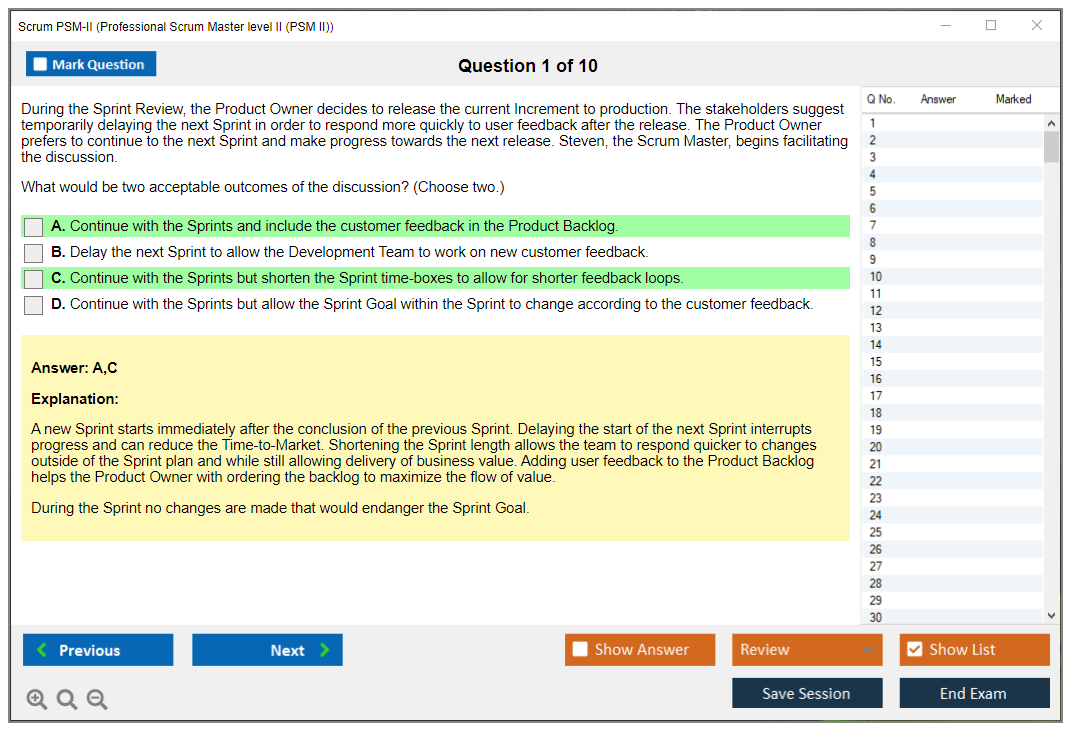
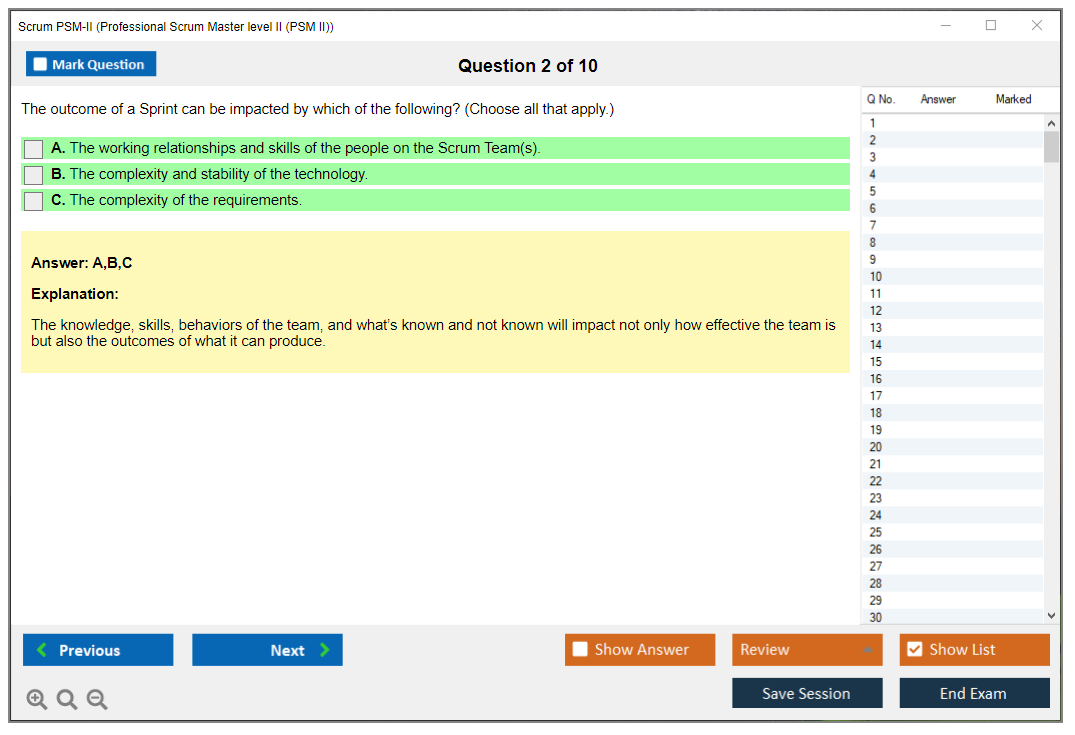
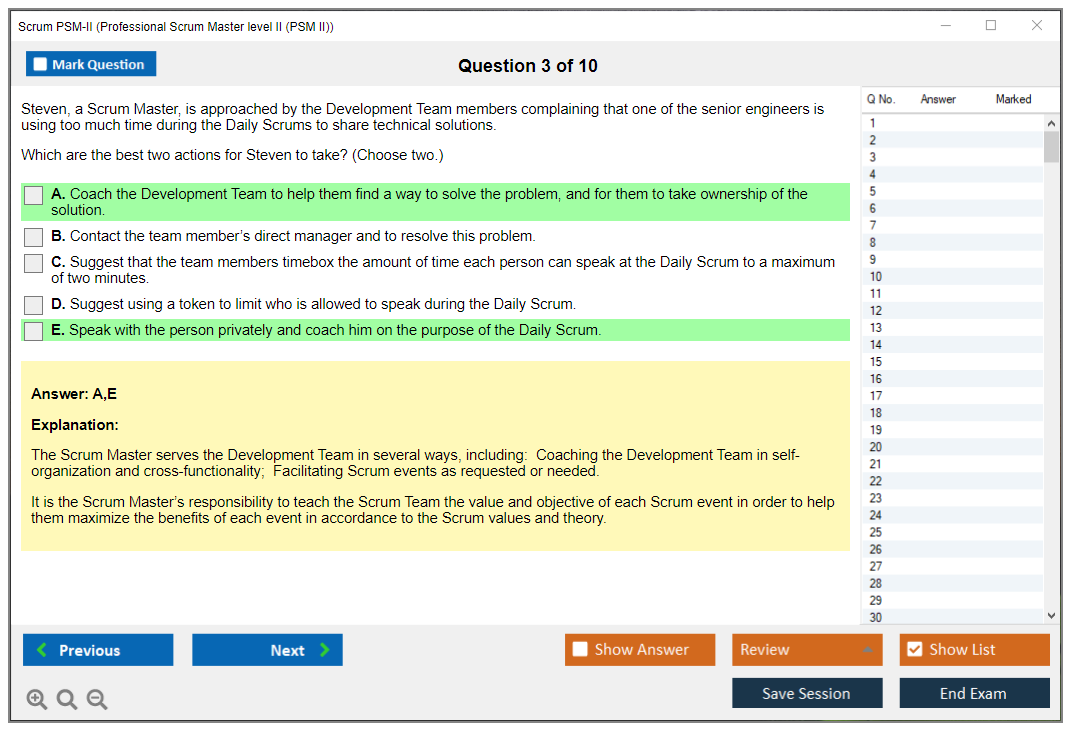
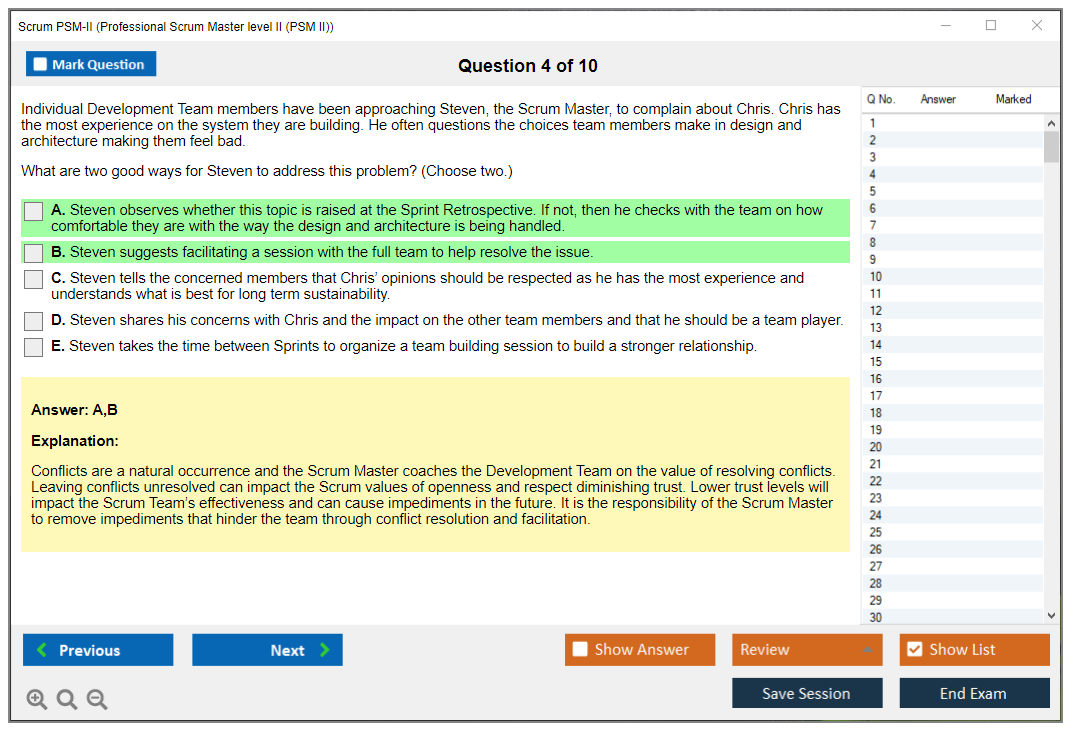
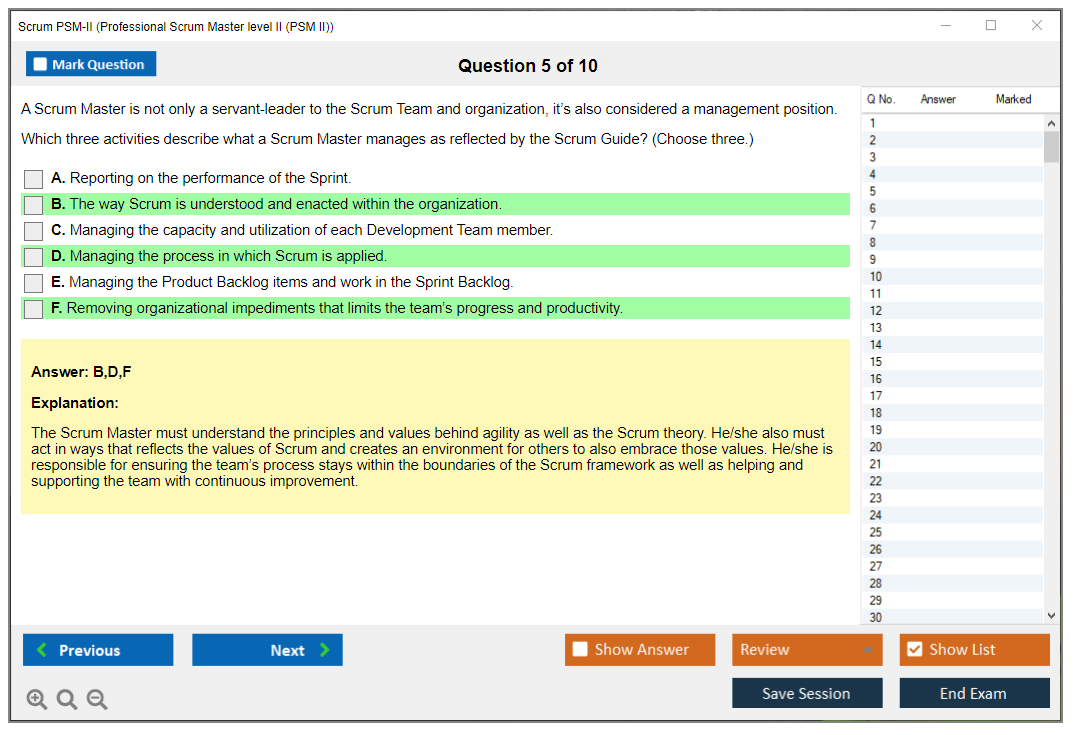
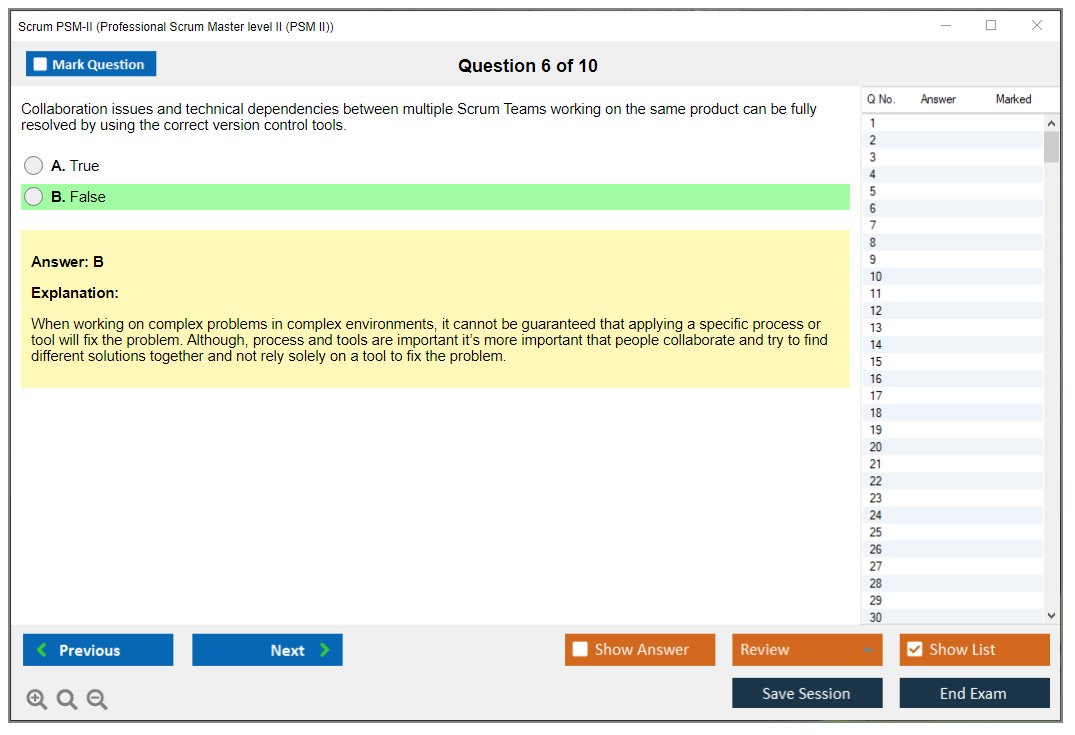
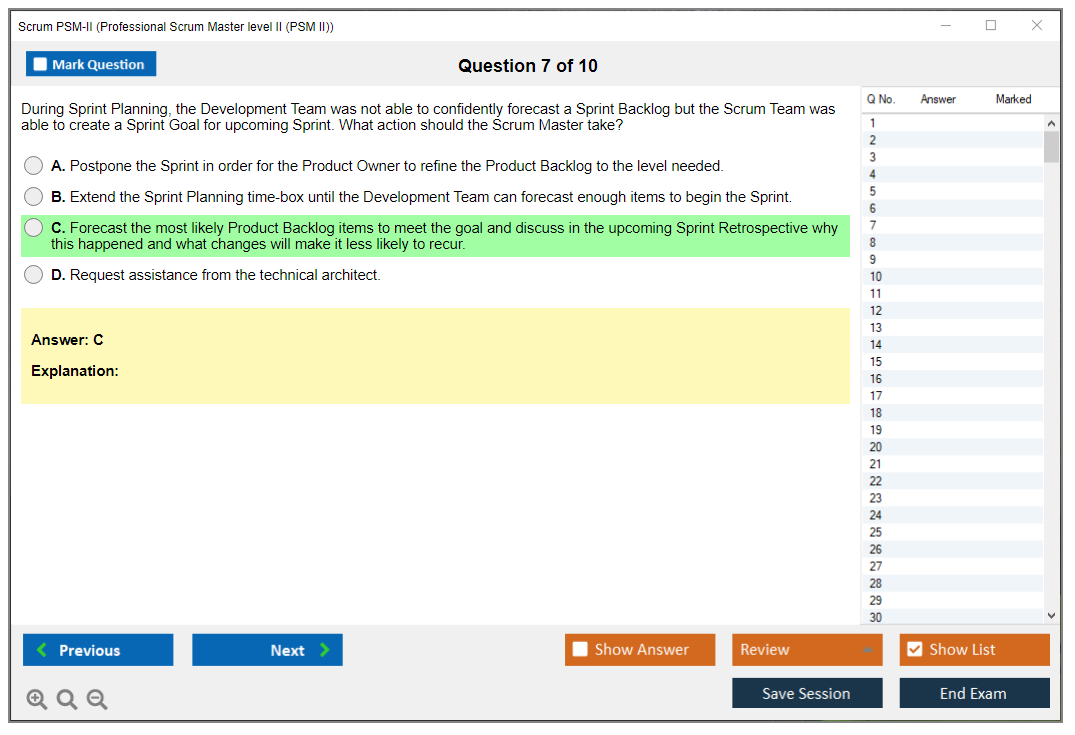
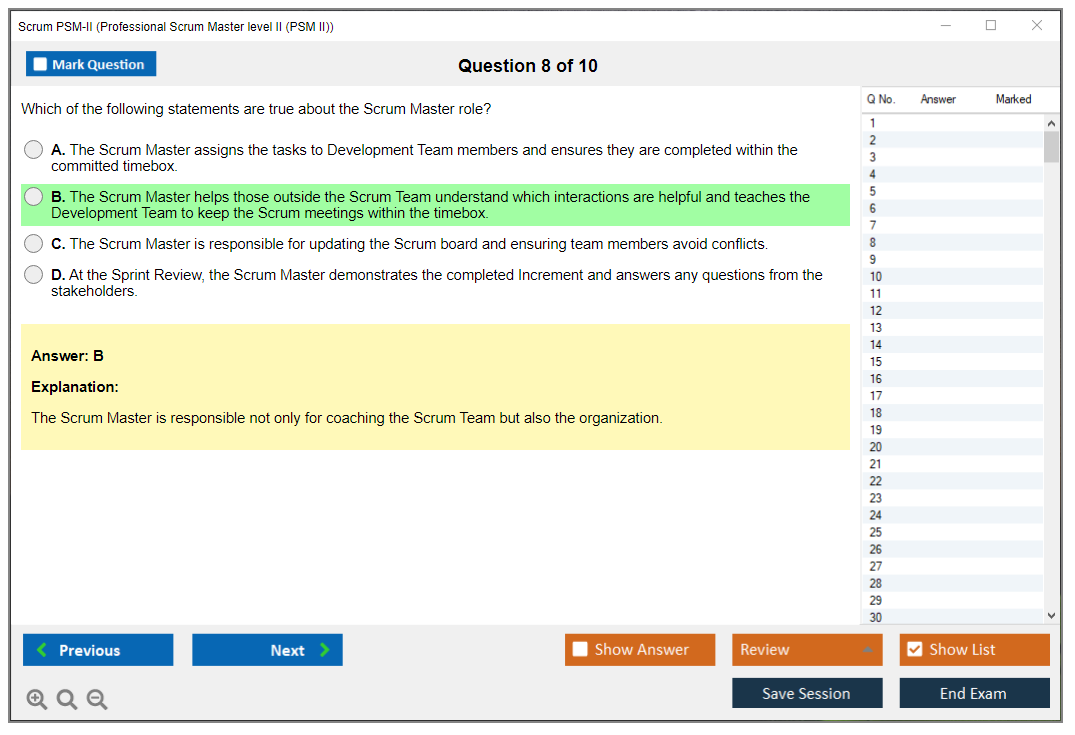
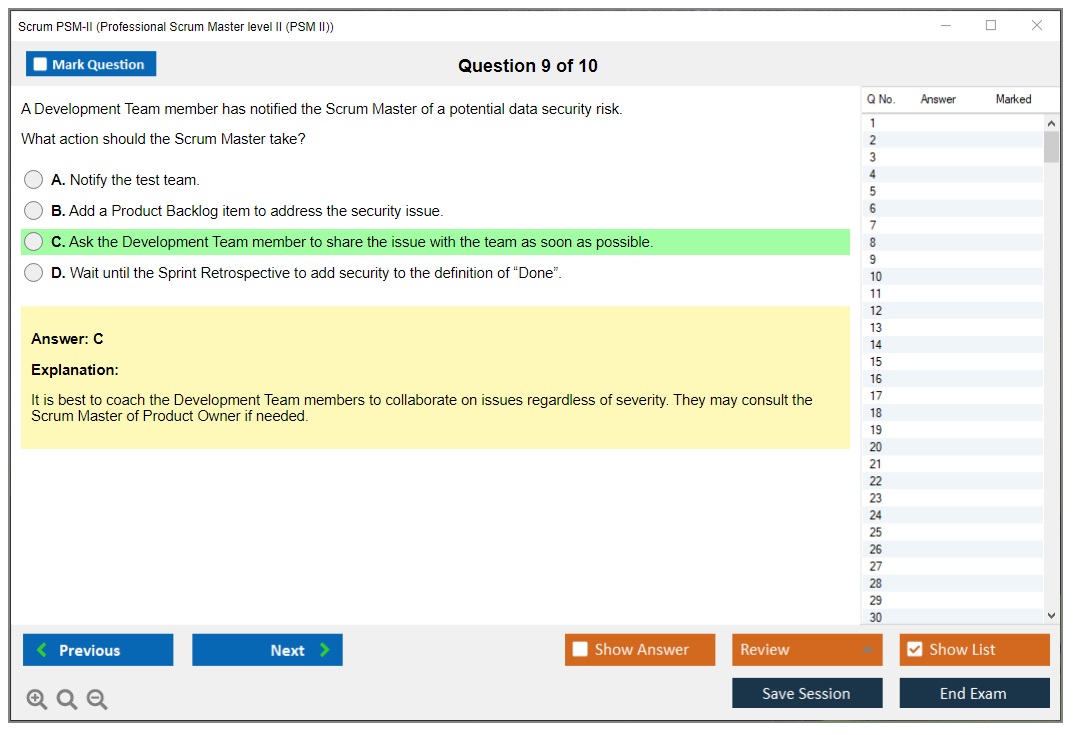
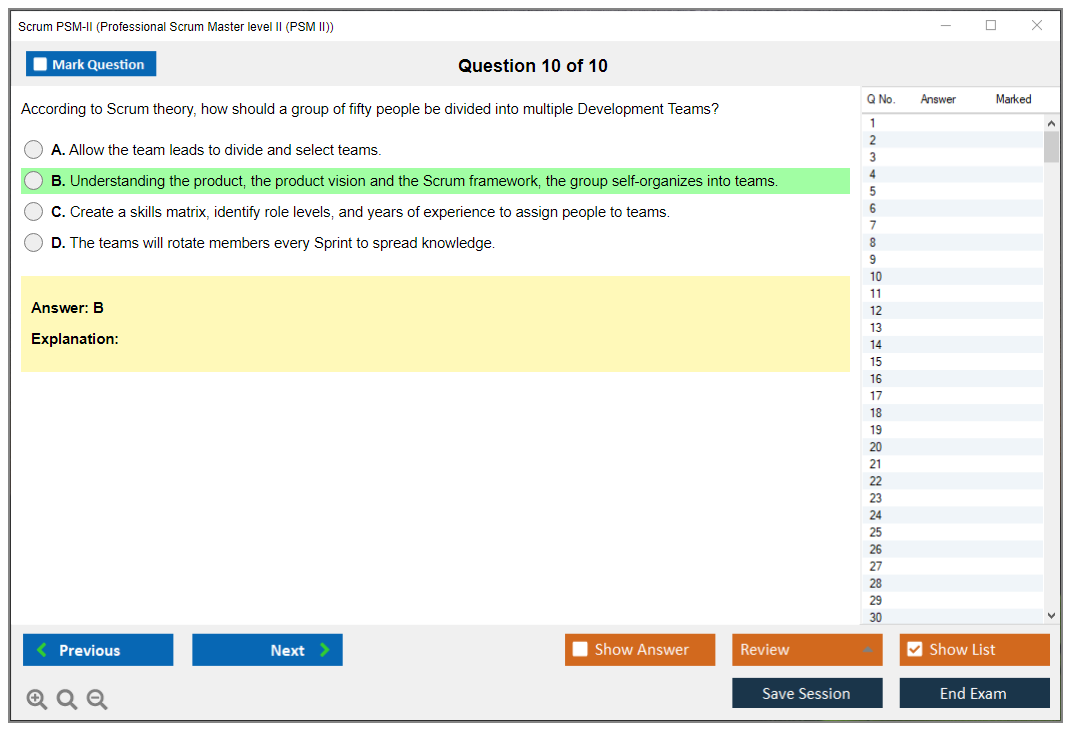
Scrum PSM-II (Professional Scrum Master level II (PSM II))
Understanding PSM II Certification and Its Value in 2026
The PSM II certification sits at that sweet spot where you've moved past the basics and you're ready to prove you can actually handle the messy reality of being a Scrum Master. Not gonna lie, this is where things get real. We're talking about scenarios where the textbook answer doesn't quite fit what's happening in your organization, and you need to understand the why behind Scrum practices well enough to adapt them without breaking everything. That's what separates people who just know the framework from those who can actually use it when everything's on fire.
Look, anyone can memorize the Scrum Guide. But Professional Scrum Master II is about demonstrating you can coach a struggling team, work through organizational politics that are killing your sprint goals, and help a Product Owner who's drowning in stakeholder demands. It validates that you understand empiricism deeply enough to explain why certain approaches work and others don't, especially when someone three levels above you is pushing for waterfallish roadmaps because "that's how we've always done it."
What is the PSM II (Professional Scrum Master II) certification?
The Scrum.org PSM II represents the intermediate credential in their Professional Scrum Master pathway. Think of it as the certification for Scrum Masters who've been in the trenches for at least a year and have battle scars to prove it. You've run dozens of retrospectives, coached teams through conflicts, and probably had a few heated discussions about why "just this once" adding work mid-sprint is actually a terrible idea. Or maybe that's just me, but I doubt it.
Real application matters here.
This certification goes way beyond foundational knowledge. It tests your ability to apply Scrum leadership and coaching principles in complex situations. Can you help a team that's stuck in storming phase? Do you know how to coach a Product Owner who treats the backlog like a wish list? Can you identify when an organizational structure is fundamentally preventing self-organization? These are PSM II questions.
Unlike entry-level certifications that focus on "what" Scrum is, PSM II digs into real-world application. You need to show mastery of coaching techniques, facilitation skills that go beyond just running meetings, and understanding of organizational change management. I mean, it's one thing to know what a Sprint Retrospective is supposed to accomplish. It's completely different to run one where half the team doesn't trust each other and the other half is actively disengaged, and you've only got 90 minutes to make something valuable happen.
The certification addresses servant leadership behaviors, conflict resolution, and developing high-performing teams. You're expected to understand team development stages and how to coach teams through them. It also covers how to work with multiple teams, address dependencies, and scale Scrum practices while keeping framework integrity intact. Which is way harder than it sounds when you're dealing with 50 people across six teams who all want to do things differently.
Who PSM II is for (experienced Scrum Masters)
PSM II targets Scrum Masters with practical experience under their belts. If you've only read about Scrum or completed PSM-I recently, you're probably not ready yet. The sweet spot is at least one year of hands-on experience as a practicing Scrum Master, though more is better. You should have run all the Scrum events multiple times, coached teams through actual problems, and dealt with organizational impediments that don't have clean solutions.
This is for practitioners ready to tackle situations involving scaling, organizational change, and servant leadership challenges. Maybe you're coaching multiple teams now. Maybe you're being asked to help with an agile transformation beyond just your immediate team. Or you're finding yourself coaching Product Owners on maximizing value and Development Teams on achieving higher performance, which requires a completely different skill set than just being a good facilitator.
What PSM II validates (advanced Scrum mastery, leadership, coaching)
The certification checks capabilities in several areas that go way deeper than framework knowledge. You need to understand empiricism and Scrum theory well enough to explain the "why" behind practices and adapt them appropriately to context. When someone asks why we do daily standups, "because the Scrum Guide says so" isn't good enough. You need to articulate how it supports transparency, inspection, and adaptation. Thing is, executives don't care about Scrum events. They care about outcomes.
Facilitation and stakeholder management skills are critical.
PSM II-level practitioners must effectively engage with executives, Product Owners, and cross-functional stakeholders who often have competing priorities and different understandings of what agile means. You're expected to run difficult conversations, manage conflict constructively, and create environments where self-organization and empiricism can thrive, even when the broader organization is fighting against it.
The certification incorporates principles from evidence-based management (EBM) with Scrum, helping practitioners measure and improve organizational agility and value delivery. This means understanding metrics beyond velocity, knowing how to help organizations understand their agility levels, and identifying improvement opportunities that actually matter for business outcomes.
PSM II exam overview
The PSM II exam is scenario-based and focuses on judgment calls. You won't see many "what are the three pillars of Scrum" type questions. Instead, expect situations like "a team member approaches you privately about another team member's behavior during sprint planning, what do you do?" with multiple answers that could work depending on context. The assessment tests your ability to apply Scrum principles in nuanced, real-world situations where there isn't always one perfect answer.
Questions cover coaching Product Owners on maximizing value, helping Development Teams achieve higher performance, removing organizational impediments, and working within larger organizational systems like portfolio management, budgeting, and strategic planning contexts. You need to show you understand how Scrum works when it bumps up against traditional organizational structures, which happens constantly unless you're working at some unicorn company.
The exam also tests teaching and mentoring skills. Can you develop other Scrum Masters? Can you spread agile mindsets throughout organizations? Understanding how to introduce Scrum in resistant environments and sustain agile transformations is key. This includes organizational change management concepts that most foundational certifications don't touch.
I once worked with a company that had been "doing agile" for three years but still required every team to submit detailed project plans six months in advance. Talk about missing the point. That's exactly the kind of organizational impediment PSM II expects you to recognize and address.
Exam format (question style and delivery)
The exam is delivered online through Scrum.org's assessment platform. You can take it from anywhere with a stable internet connection. Questions are mostly multiple-choice and multiple-select, but the scenarios can be lengthy. You'll need to read carefully because details matter. A small change in context can completely shift what the best answer is.
Time management is important. You get 90 minutes for the exam, and while that sounds like plenty, scenario-based questions take longer to process than factual recall questions. You need to understand the situation, consider the implications of each answer option, and select the response that best fits with Scrum values and empiricism.
PSM II objectives (what you're tested on)
The exam covers understanding of Scrum theory at a deep level, servant leadership principles including how to lead without authority, and coaching techniques for teams, Product Owners, and organizations. You need to know how to spot and address systemic organizational impediments that prevent teams from achieving their potential, not just team-level blockers.
Advanced Product Backlog management concepts are included, like helping Scrum Masters coach Product Owners on ordering, refinement, and stakeholder engagement. You should understand the relationship between Scrum values (commitment, courage, focus, openness, respect) and team behaviors, and know how to use values as coaching tools rather than just abstract concepts.
Running Sprint events at an advanced level is tested. This means managing group dynamics, time-boxing effectively, and ensuring valuable outcomes even when things go sideways. If your Sprint Planning always goes perfectly, you're either incredibly lucky or not paying attention. The exam also covers complementary practices that can enhance Scrum implementation, such as technical excellence, DevOps integration, and user experience design considerations.
Scrum.org assessment rules and retake policy (what to know)
Unlike certifications requiring mandatory training courses, PSM II allows candidates to prepare through self-study, practical experience, and optional learning resources. You don't have to take a class first, which I appreciate because it recognizes that real experience matters more than sitting through another two-day workshop.
If you don't pass, you can retake the exam, but there's a waiting period and you'll need to pay the full fee again. Scrum.org doesn't offer partial refunds or discounted retakes, so it's worth preparing thoroughly rather than treating your first attempt as a practice run.
PSM II cost and registration
The PSM II cost is $250 USD as of 2026. That gets you one attempt at the exam and a certificate if you pass. No physical materials are included, though passing does give you access to a digital badge and certificate you can share on LinkedIn or wherever.
You register directly through Scrum.org's website. The process is straightforward. Create an account, pay the fee, and you'll get an exam password that's valid for one attempt. You can schedule it whenever you want within the validity period, which gives you flexibility to prepare at your own pace.
There aren't really bundles or discounts available for PSM II specifically, though sometimes Scrum.org offers promotions around major conferences. Training options exist from various providers, but they're separate purchases and not required. Some companies offer packages that include training plus exam fees, but you're paying for both separately even if it's bundled pricing.
PSM II passing score and results
The PSM II passing score is 85%, which is the same as PSM-I, but PSM II feels significantly harder because the questions are way more complex and scenario-driven. You need to get 85% or higher to pass. Results are available immediately after you complete the exam. No waiting period. You'll see your score right away and know whether you passed.
The scoring is straightforward.
Each question has a point value, and you need to accumulate enough points to hit that 85% threshold. Partial credit isn't given for multiple-select questions. You need to select all correct answers and no incorrect ones to get points for that question.
What happens if you fail (retake options and tips)
If you don't pass, you can retake after 14 days. You'll need to pay the full $250 again, which is a good incentive to prepare properly the first time. Scrum.org provides some feedback on areas where you struggled, though it's not question-by-question detail. I mean, that'd be nice, but they've gotta protect the exam integrity somehow. Use that feedback to focus your studying for the retake.
Many people who fail the first time do so because they underestimate the PSM II difficulty or rely too heavily on their PSM I knowledge. The jump in complexity is significant. Spend time with real PSM II study materials that focus on scenarios and application, not just framework knowledge.
PSM II difficulty: how hard is it?
PSM II is challenging. The pass rate is lower than PSM I, and for good reason. How hard is the PSM II certification exam? Hard enough that you shouldn't take it lightly. Scenario-based questions require you to think through implications and choose the best answer when multiple options might work.
The exam tests judgment in ambiguous situations. You need to understand servant leadership deeply enough to know when to step in and when to step back. You need to know how to coach through conflict without solving the problem for the team. You need to recognize organizational dysfunction and know how to address it appropriately.
Why PSM II is considered advanced (scenario-based questions)
Unlike certifications that test whether you've memorized content, PSM II tests whether you can apply it. Questions present realistic scenarios where the "right" answer depends on context, values, and outcomes you're trying to achieve. This is way closer to what you actually face as a Scrum Master than "name the Scrum events" type questions.
The scenarios often involve multiple stakeholders with competing interests, organizational constraints that limit what you can do, and teams that aren't working ideally. You need to show understanding of how to work through these situations while staying true to Scrum principles and servant leadership. Which sounds simple until you're actually in the middle of it with a VP demanding status reports every day.
Common challenges (servant leadership, coaching, scaling, metrics)
Servant leadership questions trip people up because the concept seems simple but application is nuanced. When do you protect the team from outside interference versus coaching them to handle it themselves? How do you lead without authority when the organization keeps looking to you for decisions?
Coaching questions require understanding different coaching stances and when to use them. Sometimes you're teaching, sometimes you're mentoring, sometimes you're asking powerful questions. Knowing which approach fits which situation is key.
Scaling topics can be tricky if you haven't worked with multiple teams. Understanding how to address dependencies, coordinate without creating overhead, and maintain Scrum integrity when scaling is tested. You might want to check out SPS content if scaling is unfamiliar territory.
Metrics and evidence-based management (EBM) with Scrum challenge people who've focused primarily on team-level facilitation. You need to understand how to measure organizational agility, value delivery, and improvement opportunities beyond just sprint-level metrics. Thing is, most organizations are still obsessed with velocity, which is basically useless for understanding real value delivery.
Recommended experience level before attempting
You should have at least one year of active Scrum Master experience before attempting PSM II. Two years is better. You need to have encountered real organizational impediments, coached teams through actual conflicts, and worked with Product Owners who are learning the role just like you are.
If you're still figuring out how to run a good retrospective or struggling with basic stakeholder management, focus on getting more experience before investing in PSM II. The certification assumes you've mastered the fundamentals and are ready for advanced application.
PSM II prerequisites (do you need PSM I?)
Technically, you don't need PSM-I before taking PSM II. Scrum.org doesn't enforce prerequisites. But practically speaking, if you haven't passed PSM I or don't have equivalent knowledge, you're probably not ready for PSM II. You need that knowledge level whether you have the certificate or not. The difficulty jump is significant.
That said, having PSM I doesn't automatically mean you're ready. The real prerequisite is practical experience applying Scrum in real organizational contexts. If you have that plus solid framework knowledge, you can attempt PSM II whether you have PSM I or not.
Required vs recommended prerequisites
Required: Nothing official.
Recommended: PSM I or equivalent knowledge, plus at least one year of Scrum Master experience. Understanding of the Scrum Guide is assumed. PSM II doesn't re-test basic framework knowledge, it builds on it.
You should be comfortable with all Scrum events, artifacts, and accountabilities before attempting PSM II. If you're still looking up what the Definition of Done is or how Sprint Planning works, you're not ready.
Practical experience expectations (Scrum Master time-in-role)
One year minimum, but quality of experience matters more than quantity. If you've been a Scrum Master for six months but worked with three different teams, coached Product Owners, and dealt with organizational impediments, you might be ready. If you've been in the role for two years but only ran meetings without doing real coaching, you probably aren't.
Look for experience with conflict resolution, coaching teams through performance issues, working with stakeholders at multiple organizational levels, and addressing systemic impediments. If you haven't encountered these situations yet, you'll struggle with PSM II scenarios.
PSM II study materials (official and best alternatives)
The Scrum Guide is your foundation, but it's not enough for PSM II. You need to go deeper into the theory behind the framework. The PSM II study materials ecosystem includes several resources worth your time.
Scrum.org's own reading list is a good starting point. Books like "Coaching Agile Teams" by Lyssa Adkins and "The Professional Product Owner" help with coaching and Product Owner collaboration topics. "Scrum Mastery" by Geoff Watts covers servant leadership well. That book changed how I think about the role.
Official Scrum.org resources (Scrum Guide, Nexus/EBM references as relevant)
The Scrum Guide is mandatory reading, obviously. But also look at the Evidence-Based Management guide, which covers metrics and measurement approaches tested in PSM II. The Nexus Guide helps if you're weak on scaling topics, though it's not required.
Scrum.org's blog has articles from experienced practitioners that provide deeper context on applying Scrum principles. These real-world perspectives help bridge the gap between framework knowledge and practical application.
Recommended books and learning paths (advanced Scrum mastery)
"Coaching Agile Teams" is probably the single most valuable book for PSM II prep. It covers coaching stances, team dynamics, and organizational change in ways that directly apply to exam scenarios. "The Great ScrumMaster" by Zuzana Šochová provides good perspective on the role's evolution and advanced practices.
For servant leadership depth, "The Servant" by James Hunter offers foundational understanding, while "Turn the Ship Around!" by David Marquet shows leadership without authority in action. Both help internalize concepts tested in PSM II.
Study plan (1,4 weeks, depending on experience)
If you have solid experience and PSM I knowledge, two weeks of focused study can work. Spend the first week reviewing framework knowledge and reading recommended materials. Second week, focus on PSM II practice test scenarios and areas where you're weak.
If you're less confident, plan for four weeks. Week one: framework review and Scrum Guide deep-dive. Week two: coaching and servant leadership materials. Week three: scaling, metrics, and organizational topics. Week four: practice tests and weak area focus
PSM II Exam Structure and Assessment Format
What the PSM II (Professional Scrum Master II) certification is
The PSM II certification is Scrum.org's "prove you can actually do the job" badge for experienced Scrum Masters. Not theory-only. Not flashcards-only. It's an advanced Scrum Master certification that expects you to make calls in messy situations, the kind where there's no clean playbook and stakeholders are breathing down your neck asking why things aren't moving faster.
Who's it for? People who've already been a Scrum Master long enough to have scars, honestly. If you've dealt with a Product Owner who can't say no, a manager who wants Gantt charts, and a team that silently hates Sprint Planning, you're the target audience.
What it checks is mostly Scrum leadership and coaching. Servant leadership, coaching stances, facilitation choices, and the ability to improve outcomes without turning into the team's boss. And look, that last part's harder than it sounds. The thing is, the urge to just tell people what to do when everything's on fire? That never fully goes away.
PSM II exam overview
The PSM II exam is 30 questions in 90 minutes. Three minutes per question on average. That sounds comfy until you realize many questions are long scenarios with multiple plausible answers, and you're reading like a lawyer while the clock quietly drains your remaining time.
Delivery's fully online via the Scrum.org PSM II assessment platform. No testing center. No appointment. You can take it any time, which is great for working adults who have, you know, a life outside of certification prep. The platform also lets you mark questions for review and move backward and forward, so you can dump the time-sink scenario, grab the quick wins, then come back when your brain's warmed up.
No proctoring. No webcam. Scrum.org basically bets on PSM II difficulty being high enough that "just Googling" won't save you. The questions are scenario-based and context-heavy, and honestly the best answer often depends on what Scrum's trying to achieve, not what sounds nicest or what makes the executive happy in the short term.
Exam format (question style and delivery)
Most questions are scenario-based. Complex stuff. Realistic situations. Think organizational pushback, stakeholder pressure, dysfunctional Sprint events, conflict inside the team. A Product Owner who wants to bypass the Sprint Goal. An executive who wants "resource efficiency" across multiple teams because they read about it in a Harvard Business Review article from 2003.
Multiple-choice includes single-answer and multiple-answer. The exam tells you when more than one option should be selected, which matters because if you miss that indicator you can torch your score fast. Also, unlike simpler tests, you'll see "all of the above," "none of the above," and "best answer" options. Those are traps, but not cheap tricks. They force you to compare options against Scrum theory and empiricism, and against the Scrum Master accountabilities, and against what preserves self-management even when it's uncomfortable.
Read carefully.
Re-read the last line.
Then answer.
PSM II objectives (what you're tested on)
The Scrum Guide's the foundation, but the exam goes way beyond memorization. You're being tested on application in ugly real-world contexts. Multiple teams. Enterprise constraints. Distributed organizations where half the team's in a different timezone and nobody's camera works properly.
Common knowledge areas show up a lot:
- Scrum theory and empiricism: transparency, inspection, adaptation, and what to do when one of those's missing because someone's hoarding information or the Product Owner never attends Sprint Review
- Servant leadership behaviors: coaching, teaching, helping with, and removing impediments without becoming the "process police" who everyone resents
- Facilitation and stakeholder management: handling dominant voices, quiet rooms, conflict, and getting to outcomes without forcing it or letting one person steamroll everyone else
- Coaching Product Owners on value: value maximization, backlog management, stakeholder engagement, and "no, we can't do all of it this Sprint" conversations that never get easier
- Organizational change: how to work with leadership, policies, funding models, and incentives that fight Scrum at every turn because the company's been doing waterfall since 1987
Questions can also reference related stuff like Nexus, Evidence-Based Management, and Kanban, usually in a "how does this fit with Scrum" way, not as trivia. Nexus might show up when you're dealing with scaling across multiple Scrum Teams. Kanban might show up as a way to improve flow inside a Sprint or improve transparency of work. Wait, I should clarify that. It's not about abandoning Scrum, it's about complementing it. And evidence-based management (EBM) with Scrum pops up when the scenario's about metrics, outcomes, and decision-making beyond story points.
Side note: I once watched a team adopt every Kanban practice they could find while insisting they were "doing Scrum" just to avoid the accountability that comes with Sprint commitments. The board looked beautiful. The outcomes? Not so much. Anyway, that's the kind of pattern PSM II wants you to spot and address without being preachy about it.
Scrum.org assessment rules and retake policy (what to know)
Results? Immediate.
After you finish, you get your percentage score and pass/fail. No detailed breakdown by topic area, which is a little annoying because you can't easily see whether you bombed coaching, metrics, or scaling.
If you fail, you can retake after a 14-day wait. Full fee again each attempt. That waiting period's a quiet hint: don't rage-click "buy" the same day. Fix the gaps. Study what hurt.
PSM II cost and registration
How much does the PSM II exam cost? The PSM II cost is set by Scrum.org and can change, so check the official page before you budget it. You buy an attempt and take it online, and there's no scheduling fee or testing center add-on, which keeps it simple compared to some other certification programs that nickel-and-dime you.
Discounts and bundles sometimes exist through training partners or course packages, but don't assume. Some people take a class, some don't. I'm not gonna lie, training's nice if your experience is narrow, like you've only done Scrum in one company with one flavor of dysfunction and you need exposure to different contexts.
PSM II passing score and results
What is the passing score for PSM II? Scrum.org publishes the PSM II passing score on the assessment page. Verify it there, because policies can change. Scoring's percentage-based, and you only see the final percent plus pass/fail at the end, which honestly makes the last few questions feel nerve-wracking.
If you fail, don't spiral. Mark what felt hard during the exam: scaling questions, coaching stances, metrics, conflict, Product Owner coaching. Then aim your prep at those specific areas instead of just re-reading everything. One detailed tip that works: write down why the right answer's right and why the tempting answer's wrong. PSM II loves "almost correct but subtly harmful" options that sound responsible but undermine empiricism or self-management.
PSM II difficulty: how hard is it?
How hard is the PSM II certification exam? Substantially harder than PSM I, no question. PSM I can feel like "do you know the rules." Professional Scrum Master II is more like "can you make good calls without breaking Scrum's intent," especially when the organization's pushing you to do something convenient and wrong.
Two things make it hard. First, scenarios often include constraints that are realistic but uncomfortable. Distributed teams. Multiple stakeholders with conflicting priorities. Managers demanding status reports in formats that destroy transparency. Second, the "best answer" is often the one that improves empiricism and supports self-management, even if it doesn't immediately soothe the loudest stakeholder or make your life easier tomorrow.
Common challenges people hit:
- Servant leadership versus command-and-control habits. Old instincts die hard, the thing is.
- Coaching without taking over. That line's thin, and you'll cross it accidentally sometimes.
- Metrics and outcomes. Evidence. Real product measures. Not vanity charts that look good in PowerPoint but tell you nothing.
Recommended experience? Honestly, if you've never had to coach a Product Owner through a messy backlog or help with conflict in a retro where people are actually mad at each other, you'll be guessing. And guessing hurts on this exam.
PSM II prerequisites (do you need PSM I?)
Do I need PSM I before taking PSM II? No formal requirement. You can buy PSM II directly. But it's recommended to have PSM I-level knowledge locked in, because PSM II assumes you already know the basics and wants you applying them under pressure.
Practical expectation's time-in-role. Not a specific number of months, just enough that you've seen failure modes in the wild. Management resistance. Teams gaming story points. Product Owner burnout. The stuff that doesn't show up in a two-day workshop but shows up every two days in real work.
PSM II study materials (official and best alternatives)
PSM II study materials start with the Scrum Guide. Read it multiple times. But don't stop there, because the test won't reward rote recall or being able to quote the definition of Done verbatim.
Official stuff worth reading includes Scrum.org resources around EBM and Nexus, plus articles about coaching and empiricism. Complementary reading helps too, especially around facilitation, conflict handling, and organizational change. I mean, there's a ton of decent books on servant leadership and systems thinking that'll give you better mental models. A lot of people also benefit from reviewing the Scrum values and asking, "If this value's missing, what would I do as Scrum Master?"
A simple study plan that works for many people:
Week 1: Scrum Guide mastery, plus EBM basics. Short sessions. Daily review.
Week 2: Scenario practice and reviewing wrong answers, not just tracking your score.
Weeks 3 to 4: Target your weak areas, especially coaching and org impediments that feel abstract.
PSM II practice tests and exam prep strategy
A PSM II practice test is useful, but only if you treat it like a diagnostic, not a victory lap. Don't just chase a score. Review every wrong answer and map it back to Scrum purpose: what improves transparency, what enables inspection, what supports adaptation, and what keeps the team self-managing even when it's messy.
Good practice targets include:
- Coaching a Product Owner who's optimizing for output, not value
- Handling stakeholder interruptions mid-Sprint
- Addressing impediments outside the team's control without "escalation theater" that wastes everyone's time
- Helping with Sprint events when conflict's real and people are checked out or passive-aggressive
Also.
Timebox your practice. Three minutes per question's the exam reality, and the clock changes how you think, honestly. You'll make different choices under time pressure.
PSM II renewal policy (does it expire?)
Does PSM II require renewal or continuing education? Scrum.org certifications don't expire and there's no renewal fee. No continuing education requirement either, which is nice compared to certifications that treat you like a subscription service. That said, your market value still depends on whether you can do the work, so keep learning even if the certificate's permanent.
PSM II FAQs
How much does the PSM II exam cost?
Check the current PSM II cost on Scrum.org, since pricing can change.
What is the passing score for PSM II?
The PSM II passing score is listed on the Scrum.org assessment page for PSM II.
How hard is the PSM II certification exam?
Harder than PSM I by a lot, because it's scenario-heavy and tests judgment, coaching, and organizational thinking.
Do I need PSM I before taking PSM II?
Not required, but strongly recommended unless you already have PSM I-level knowledge and real Scrum Master experience.
Does PSM II require renewal or continuing education?
No renewal. No mandatory continuing education. Keep your skills current anyway.
PSM II Cost, Registration, and Exam Logistics
How much does the PSM II exam cost?
$250 USD. That's it.
The PSM II certification costs $250 USD as of 2026, and there aren't any hidden fees or mandatory training packages you have to buy before they'll let you take the thing. This positions it right in the middle when you compare it to other agile credentials out there. Not cheap enough to be a throwaway decision, but way more affordable than certifications forcing you into multi-day training courses running $1,000 to $2,000 or more before you even touch the exam.
What you're getting for that $250 is pretty straightforward: one attempt at the Professional Scrum Master II assessment, immediate results the second you finish, and lifetime certification if you pass. No renewal fees. No continuing education requirements. No annual payments to keep your credential active. You pass once, you're certified for life, which is a massive difference from some other certifications in the agile space that treat you like an ATM every couple years.
Payment processing happens through Scrum.org's platform directly. You'll need a credit card or PayPal, and it's all standard and secure. Once your payment clears, you get immediate access to the exam. Not like "we'll email you in 3-5 business days" immediate. I mean you can literally start the exam five minutes after paying if you're feeling confident (or reckless, depending on your prep level).
Registration walkthrough and what to expect
Registration happens entirely through Scrum.org's website.
You'll need to create a free account if you don't already have one from taking the PSM-I or using their free practice assessments. The whole process is painless. Fill in your details, select the PSM II assessment from their certification menu, add it to your cart like you're buying anything else online, and check out.
After payment goes through, you get an email confirmation with your exam access details and a unique assessment password that's valid for your purchased attempt. Here's the thing that throws some people: there's no expiration on when you have to take it. You control when you're ready. No scheduling required, no appointment booking, no calling some testing center to find an available slot three weeks from now. You just log in whenever you feel prepared and start the thing.
Look, this flexibility's both blessing and curse. The blessing is obvious. You can wait until you're really ready, maybe knock out some more scenario practice or review the Scrum Guide one more time. The curse? Some people buy the exam thinking it'll motivate them to study, then that access just sits there for months while they procrastinate. I knew a guy who bought his PSM II access right after passing PSM I, felt all pumped up about continuing his certification path, and then didn't actually take the exam for almost nine months because life kept happening. Don't be that person.
Training requirements (or lack thereof)
Zero mandatory courses.
Here's what I really appreciate about Scrum.org's approach: there are zero mandatory training courses before you can purchase the PSM II exam, which means you can prepare entirely through self-study and practical experience if that's your preference. This is fundamentally different from some other certification bodies that basically force you to pay for their training before they'll let you near the exam.
That said, Scrum.org does offer bundles that package PSM II with training classes. Some Professional Scrum Training organizations also put together deals where you get a training course plus the PSM II assessment at a reduced combined price. These can be worth it if you're planning to take training anyway. Optional. Not required. Big difference.
If you're someone who learns better through structured courses and wants that instructor-led experience, those training packages might make sense. But if you've been working as a Scrum Master for a couple years and feel solid on the advanced concepts, you can skip straight to the exam and save yourself a grand or more. Your call entirely based on your learning style and experience level.
What happens if you don't pass
Not gonna lie, the retake policy's where things get painful.
Failed attempts require purchasing a completely new exam access for another $250. There's no "second attempt discount" or "buy two get one free" situation here. Each attempt is a fresh $250 charge, which really drives home the importance of thorough preparation before you hit that start button.
Scrum.org also doesn't offer refunds for purchased exam attempts, even if you change your mind and decide not to take it. You buy the access, that money's gone whether you use it or not. This isn't them being jerks. It's pretty standard for professional certifications. But it's definitely something to know before you impulse-buy the exam after three beers on a Friday night thinking you'll totally crush it Monday morning.
When you do fail (and plenty of experienced Scrum Masters do on their first try because the PSM II exam is really challenging), you get your overall percentage score but nothing else. No breakdown by topic area, no "you were weak in coaching but strong in scaling" feedback. Just a number and a pass/fail status. This makes it harder to target your studying for the next attempt, which is frustrating but also part of how Scrum.org maintains exam security.
Getting the most value from your $250 investment
The online format eliminates travel costs and time away from work that you'd deal with for testing center-based certifications. You take it from home, your office, a coffee shop if you're brave. Wherever you've got reliable internet and can guarantee 90 minutes of uninterrupted focus time. This alone probably saves you a hundred bucks or more in travel and lost productivity compared to having to drive somewhere and sit in a sterile testing facility.
International candidates pay that same $250 USD regardless of location, though currency conversion rates apply when your bank processes the payment. If you're paying in euros or pounds or whatever, check the exchange rate before you buy so the charge doesn't surprise you when it hits your statement.
Some organizations offer certification reimbursement or have professional development budgets that can cover the PSM II cost. If your employer has anything like that, definitely explore it before paying out of pocket. Worst case they say no and you're back where you started. Best case, they cover the whole thing and you're getting certified on company dime. I've seen some employers that'll reimburse the cost if you pass, which creates a nice little incentive to prepare thoroughly.
Your purchase also includes access to Scrum.org's community resources, forums, and ongoing updates to certification-related materials. it's "here's your exam, good luck." You're getting entry into a broader network of resources and connections with other certified practitioners. The value of that community aspect varies depending on how much you engage with it, but it's there if you want it.
Technical logistics and exam day considerations
Most modern browsers work fine.
The exam platform works on Chrome, Firefox, Safari, Edge without requiring any special software downloads or plugins. Scrum.org recommends taking it on a computer rather than a mobile device, which should be obvious but apparently enough people tried taking a 90-minute scenario-based assessment on their phone that they had to officially recommend against it.
Technical requirements are basic: stable internet connection, modern web browser, and a device with a screen big enough to read questions comfortably. You don't need a NASA-grade setup, but maybe don't try taking it on public WiFi at the airport or on your ancient laptop that crashes when you open too many tabs.
Plan for the full 90-minute time block plus buffer time for technical setup and post-exam result review. The assessment platform doesn't allow pausing once you start. That 90-minute timer runs continuously until you either complete the exam or time expires. No bathroom breaks, no "let me grab coffee real quick," nothing. It starts, it runs, it ends. Prepare accordingly.
Questions come in random order, with each candidate getting a different sequence for security reasons. The interface shows a question counter, remaining time, and lets you mark questions for later review if you want to skip something and come back. You can change answers anytime before final submission, so if you second-guess yourself on question 12 when you're on question 48, you can go back and revise it.
After you click submit
Immediate results.
Results appear immediately on screen showing your percentage score and pass/fail status. Like, literally the second you hit submit. No waiting period, no "results will be emailed in 5-7 business days" nonsense. You know right then whether you passed or need to schedule another $250 attempt.
Passing candidates receive a digital certificate via email within minutes, along with access to the PSM II logo for professional use on LinkedIn, business cards, email signatures, wherever you want to show that credential. The digital certificate includes a unique verification number that employers and clients can verify through Scrum.org's public registry, which helps when someone wants to confirm you're not just making up credentials.
Speaking of that registry, Scrum.org maintains a public directory of certified professionals, though you can opt out if you prefer privacy. Most people leave themselves listed because it's free marketing and credibility, but the option exists if you're weirdly secretive about your certifications for some reason.
If you're seriously preparing for PSM II and want to test your readiness before dropping $250 on the real thing, the PSM-II Practice Exam Questions Pack at $36.99 is way cheaper than a failed attempt. Just saying. Some people also progress through PSM-III after mastering PSM II, or branch into other Scrum.org credentials like PSPO-II or SPS for scaling contexts.
The $250 investment's real money, but compared to the career boost that advanced Scrum Master certification can provide, it's actually pretty reasonable. Just make sure you're really ready before you spend it.
PSM II Passing Score and Results Interpretation
What is the PSM II (Professional Scrum Master II) certification?
The PSM II certification from Scrum.org is the "you've been in the trenches" version of Scrum Master credentials. It's not a vocabulary quiz. It's an advanced Scrum Master certification that expects you to reason through messy situations, coach people who don't want coaching, and still keep empiricism and Scrum theory intact when the organization's trying to "customize Scrum" into something unrecognizable.
Who's it for? Experienced Scrum Masters. People doing Scrum leadership and coaching, not just scheduling events and taking attendance. If your day includes stakeholder arguments, Product Owner support, team conflict, and the occasional "we need a Gantt chart by Friday" request, you're exactly the target audience they're looking for here. Honestly.
PSM II validates a lot of the stuff that's hard to measure on a resume. Facilitation and stakeholder management. Handling organizational impediments. Helping teams inspect and adapt without turning every Retro into a complaint session. Evidence-based management (EBM) with Scrum concepts shows up too, at least in spirit, because Scrum.org cares about outcomes, not theater. You know the difference if you've done this work long enough.
PSM II exam overview
The PSM II exam is 30 questions. That's it. Short. Brutal. The format's mostly scenario-based, and that's what makes people spiral a bit because two answers can look "fine" until you notice one breaks a Scrum rule or undermines self-management.
Question style matters. Some are single-answer multiple choice. Others are multiple-answer questions, and this is where folks lose easy points because you either get it fully right or you get zero. No partial credit. Pick three correct options but miss the fourth? Still wrong. All-or-nothing scoring. Harsh. Also fair, I guess.
Scrum.org assessment rules are pretty simple: you buy an attempt, you take it online, it's auto-scored, and if you fail there's a waiting period. That 14-day waiting period between attempts is there to stop people from rage-clicking "retake" five minutes later and hoping for a luckier question set. Look, it's annoying, but it also pushes you to do real study and reflection instead of gambling your way through.
PSM II cost and registration
Let's address the money part because people always ask: How much does the PSM II exam cost? The PSM II cost is typically $250 per attempt. Not cheap. Not outrageous compared to some cert programs, but it stings if you treat it casually and end up paying twice.
Discounts and bundles exist sometimes through training providers, but Scrum.org itself is pretty consistent with pricing. If you're the kind of person who learns best with a structured set of questions, grabbing something like a PSM-II Practice Exam Questions Pack can be a decent add-on, especially if you need more scenario reps than the free sample questions provide. I mean, the $36.99 is way cheaper than burning another $250 attempt, and sometimes you just need volume to see patterns.
PSM II passing score and results
The PSM II passing score is 85%. With 30 questions total, that means you need at least 26 correct answers to pass. That number's not flexible. There's no "close enough." You either hit it or you don't.
This high passing threshold reflects the advanced nature of the certification and the expectation that Professional Scrum Master II holders have a mastery-level understanding. Scrum.org's pretty open about quality standards. The 85% requirement is way higher than many industry certifications that pass candidates at 60-70%, and that's a big reason employers tend to trust Scrum.org PSM II more than some "attend a class and you're certified" options.
Scoring itself is straightforward. Each question's worth equal points. No weighting differences between questions. No "this scenario's worth 5 points." It's clean math. The catch is those multiple-answer questions: all-or-nothing, no partial credit. So your strategy changes. You don't guess wildly. You eliminate, re-read, and commit only when you're confident you've got the full set.
Results are calculated automatically by the assessment platform and displayed immediately upon exam completion. Instant. You'll see your exact percentage score, like 87% or 90%, not just a pass/fail banner. That's nice feedback, even if it's a little painful when you land at 84% and realize you were literally one question away.
One limitation though: the results screen doesn't provide detailed breakdowns by topic area or knowledge domain. You get the overall percentage only. No "coaching: weak, facilitation: strong" type report. So if you miss, you've gotta self-assess based on what felt hard, what you flagged, and what you second-guessed.
Passing candidates get immediate confirmation and access to their digital certificate, typically within minutes. The digital certificate includes your name, the certification title (Professional Scrum Master II), the date earned, and a unique verification number. Certificates are delivered via email as PDF files, which is perfect for forwarding to HR, tossing into a portfolio, or attaching to a client proposal.
Scrum.org also gives you access to the official PSM II logo. Use it on business cards, email signatures, LinkedIn. Don't plaster it everywhere, but yeah, it helps.
Also: it doesn't expire. No renewal fees. No continuing education requirements. Lifetime credential status. People ask, Does PSM II require renewal or continuing education? Nope. You can still upskill on your own, obviously, but the credential itself stays valid. Which is refreshing when you've watched other certifications nickel-and-dime people with annual fees just to keep a logo on their resume.
What happens if you fail (and how to interpret your score)
Failing shows your percentage score. That's it. No detailed map. So interpretation becomes practical.
If you score 80-84%, you were very close. Usually that means you understand Scrum rules and events, but you're leaking points on judgement calls: how to coach a PO who's stuck, how to handle stakeholder pressure, when to escalate an impediment, what "Done" really means when the org wants exceptions. Focused review can be enough. A targeted PSM II practice test rotation helps here, and I'd rather see you do 100 scenario questions carefully than skim three books half-awake. If you want a question bank with volume, the PSM-II Practice Exam Questions Pack is one option.
Below 80% is different. Not doomed. Just a signal. You probably need more full study and, the thing is, more practical experience before attempting again, because PSM II difficulty isn't about memorizing the Scrum Guide. It's about applying it when people are stressed, political, or just confused.
Remember the waiting period: 14 days. Use it. Review the Scrum Guide thoroughly. Do scenario-based practice questions. Reflect on the questions you remember being difficult, because the lack of a domain breakdown forces you to play detective. Keeping notes during the exam about challenging questions can help guide study later, but watch your time management because 30 questions goes fast when you overthink.
Viewing a failed attempt as a learning opportunity helps. Not motivational-poster stuff. It's just reality: this exam teaches you what you don't actually know yet, especially around facilitation, coaching stances, and empiricism. Many successful candidates say preparing for PSM II improved their real Scrum Master capability regardless of whether they passed first try. Which, if you think about it, means the exam's doing its job even when you fail.
PSM II difficulty: how hard is it?
People ask, How hard is the PSM II certification exam? Harder than PSM I. The pass rate's estimated to be lower than PSM I, and that tracks with what I see in study groups. PSM I is "do you know Scrum." PSM II is "do you know Scrum when your org doesn't."
Common challenges show up around servant leadership, coaching, scaling conversations, and metrics. Evidence-based management (EBM) with Scrum themes can appear indirectly too, because Scrum.org likes outcomes, product value, and inspection based on real data. If you've only ever been a meeting host, you'll feel it.
Approach it with realistic expectations. The 85% threshold means even strong practitioners may need multiple attempts. And the investment in retakes, again, $250 each time, is why I'm a fan of doing serious prep upfront with solid PSM II study materials and a decent practice set like the PSM-II Practice Exam Questions Pack if you learn by drilling scenarios.
PSM II prerequisites (do you need PSM I?)
Do I need PSM I before taking PSM II? Not required. Scrum.org doesn't force it. But recommended? Yeah, for most people. PSM I is the baseline, and PSM II assumes you already have that baseline internalized so you can spend brainpower on judgement, coaching, and trade-offs.
Time-in-role matters. If you haven't spent real months handling impediments, coaching a PO, and working with stakeholders who want deadlines more than transparency, PSM II will feel like getting ambushed by "it depends" questions. Trust me on this.
PSM II FAQs (quick answers)
What's the passing score for PSM II? 85%, at least 26/30 correct.
How much does the PSM II exam cost? Typically $250 per attempt.
Do you get results immediately? Yes, immediate auto-scoring with your exact percentage.
Does PSM II expire? No, lifetime credential.
Why's the score so high? Because Scrum.org wants mastery-level certification holders, not marginal passes. Employers and clients can trust that a PSM II certification holder cleared a high bar, fast, with no hand-waving.
PSM II Difficulty Level and Common Challenges
Why PSM II is really difficult
Not gonna lie here. The PSM II certification is hard. Like, really challenging in ways that'll surprise you even if you're confident going in.
Most people who've taken both say PSM II is significantly more challenging than the PSM I, and honestly it's one of the tougher agile certifications out there. Period. This isn't marketing hype from Scrum.org trying to sell you something. The difficulty comes from a completely different exam philosophy that catches people off guard: PSM II tests judgment and context awareness rather than your ability to memorize definitions and regurgitate them on command. You can't just read the Scrum Guide five times, highlight some passages, and expect to pass.
The questions are scenario-based. Every single one. Each presents a complex organizational situation with multiple potentially correct answers that all sound reasonable when you're reading them. Your job? Select the "best" or "most appropriate" response. That word "best" is doing a lot of heavy lifting here because the thing is, you're not choosing between right and wrong. You're choosing between good, better, and best, which is way harder than it sounds.
The scenario trap that gets everyone
Here's what makes PSM II brutal, honestly. You'll read a scenario about a Development Team struggling with technical debt while their Product Owner is pressuring them for new features and stakeholders are breathing down everyone's necks. The question asks what you should do as Scrum Master. You look at the answers and think "well, all of these could work in different situations depending on context."
And you'd be right.
That's the entire point, which is frustrating but also kind of brilliant if you think about it. The exam forces you to understand not just what Scrum says in the guide, but why it says it, what principles underpin those statements, and how those principles apply in messy real-world contexts where nothing's clean or simple. Organizational constraints exist. Politics happen whether we like it or not. Human dynamics complicate everything. The PSM II exam lives in that uncomfortable space where textbook answers meet actual organizations full of actual people with competing interests.
I mean you might see four answers that are all technically aligned with Scrum values and empiricism. But one supports self-organization better while respecting current team maturity. Another maintains transparency while working within current organizational limitations that aren't going away tomorrow. A third addresses the immediate problem but doesn't build long-term capability or help the team grow. You need to pick the one that best serves the specific situation described, not the one that sounds most "Scrum-y."
Time pressure makes everything worse
You get 90 minutes. Thirty questions total.
That's three minutes per question on average, which sounds reasonable until you're actually in the exam reading a three-paragraph scenario about stakeholder conflicts erupting during Sprint Review, analyzing four nuanced response options that all have merit, and watching the clock tick down while your stress level climbs.
Some questions I breezed through in 60 seconds. They were straightforward once you understood the core issue. Others I really needed five or six minutes to think through properly, weighing trade-offs and considering second-order consequences. The time pressure creates this constant internal debate: "Do I spend more time on this complex scenario or move on and come back later?" Except coming back means re-reading the entire scenario again, losing your previous analysis, and burning more precious time.
The PSM II exam averages only three minutes per question, which sounds fine sitting here reading this, but it's a different experience when you're actually in it analyzing whether a Scrum Master should escalate an organizational impediment to executives right now or continue working with middle management first to build support. Both answers have legitimate justifications, by the way.
Common challenge areas that trip people up
Coaching and mentoring scenarios are everywhere in this exam. Not just "what should a Scrum Master do" but "how should a Scrum Master coach someone through this specific situation while respecting their autonomy and building capability." This requires understanding adult learning theory, behavioral change principles, and when to be directive versus hands-off. The context matters. The exam expects you to know the difference between mentoring (sharing your experience), coaching (asking powerful questions to help someone find their own answers), and teaching (transferring knowledge), plus when each approach serves best.
Servant leadership questions test whether you actually understand leading without authority or just know the buzzwords. Can you influence through asking good questions? Create environments where self-organization emerges naturally? I saw multiple scenarios where the "obvious" answer involved the Scrum Master solving the problem directly and efficiently, but the better answer involved creating conditions for the team to solve it themselves and learn from the experience.
Organizational impediments get really nuanced. Really. You need systems thinking and change management knowledge beyond basic Scrum framework understanding. How do you work with executives who don't understand Scrum and frankly don't care to learn? When do you escalate versus when do you work within current constraints? The exam presents situations where immediate confrontation might be "right" according to pure Scrum values but organizationally disastrous for actual long-term change, and you have to work through that tension.
Stakeholder management scenarios require balancing competing interests without compromising framework integrity. You'll see questions about Product Owners being pressured by executives who control budgets, stakeholders demanding features that contradict product vision and evidence, or situations where transparency might damage relationships you're actively trying to build for future collaboration. The exam tests whether you can maintain Scrum integrity while operating in organizational reality where people have feelings, politics exist, and change takes time.
Speaking of which, I once watched a Scrum Master try to "maintain transparency" by sending an unfiltered Sprint report to executives showing every impediment and delay, including ones caused by those same executives. Technically correct according to Scrum values. Politically catastrophic. That person lasted maybe two more months before getting quietly reassigned. Sometimes the route to real change isn't the most direct one.
Scaling and metrics questions demand deeper knowledge
Scaling scenarios show up more than I expected going in. How do Scrum principles apply when you have multiple teams working on one product? What changes and what fundamentally stays the same? These questions require understanding that Scrum itself doesn't prescribe specific scaling approaches but its principles still apply regardless of scale. You just need to figure out how. You might want to check out Scaled Professional Scrum concepts even if you're not taking that particular exam, because the thinking helps.
Metrics and measurement questions separate people who've actually used evidence-based management from those who just read about it in articles. The exam asks what to measure, how to avoid vanity metrics that make you feel good but don't actually help, and how to use empiricism to drive genuine improvement. "Velocity" appears in several scenarios, and the right answer is rarely "track velocity and increase it." Which surprised me initially but makes sense when you think about what velocity actually measures.
Product Owner and Development Team coaching
Product Owner coaching scenarios assess whether you can help POs maximize value without doing their job for them or undermining their accountability. How do you coach a PO who's struggling with stakeholder management and getting overwhelmed? What about a PO who treats the Product Backlog like a fixed requirements document instead of an emergent plan? These questions require understanding the PO role deeply. Maybe even PSPO I or PSPO II level knowledge helps here, honestly.
Development Team coaching questions test technical excellence understanding without requiring you to be a developer yourself. How do you help teams improve without micromanaging their technical decisions? When should you suggest specific practices versus let them figure it out through experimentation? What do you do when a team's definition of "Done" is clearly inadequate by any reasonable standard but they're resistant to changing it because it requires more work?
Dealing with group dynamics and conflict
Group dynamics and conflict resolution show up constantly. I'd say at least a third of the exam touches on this somehow. Sprint Retrospectives where teams aren't being honest because psychological safety is lacking. Sprint Planning sessions dominated by one vocal team member while others disengage. Daily Scrums that have become status reports directed at the Scrum Master. The exam expects you to know specific techniques and, more importantly, when to apply which technique based on team maturity and situation.
I saw questions about handling conflict between team members with different working styles, between PO and Development Team over scope or quality, and between the Scrum Team and external stakeholders who don't understand or respect Scrum events. The answers require understanding different conflict resolution approaches. Compromising, collaborating, accommodating, etc. Which serves the long-term relationship and team health best, not just which resolves the immediate issue fastest.
Scrum in traditional organizations
Questions about implementing Scrum in resistant environments with hierarchical management and command-and-control cultures are probably the hardest ones on the exam. You'll see scenarios where managers want to assign tasks to individual team members, where HR policies conflict directly with self-organization principles, or where procurement processes make iterative development nearly impossible within existing rules.
The exam tests whether you can identify problems clearly while also being pragmatic about organizational change that takes time. Sometimes the "right" answer involves temporary compromises while working steadily toward longer-term organizational change. Other times framework integrity must be maintained despite organizational pressure, and figuring out which situation you're in requires judgment that comes from.. I don't know, experience mostly.
Why experience matters more than study
Here's the thing. The uncomfortable truth. You cannot memorize your way through PSM II no matter how good your memory is. Practical experience as a Scrum Master significantly improves your performance because you've lived these scenarios. You've actually coached teams through technical debt discussions that got heated, worked through difficult stakeholder conversations where people had real disagreements, and dealt with resistant organizations that didn't want to change.
I've seen people with two years of hands-on Scrum Master experience pass with minimal study beyond reviewing key concepts. I've also seen people with PSM I certification and extensive Scrum Guide knowledge fail because they'd never actually done the work in real organizational contexts where things are messy. The exam rewards practical wisdom over theoretical knowledge, which is frustrating if you're trying to pass without experience but actually makes sense for a professional certification.
That said, if you're considering PSM III eventually, PSM II is excellent preparation for that even higher level of scenario complexity and detail.
Conclusion
So is PSM II actually worth the time and money?
Look, I'm not gonna sugarcoat it. The Professional Scrum Master II certification isn't cheap. The PSM II exam costs $250, and honestly, the PSM II difficulty level means a lot of people don't pass on their first try (which, I mean, that stings both pride-wise and wallet-wise). But if you're serious about leveling up as a Scrum Master, this is one of the best investments you can make in your career.
Here's the thing.
What makes PSM II certification different from PSM I is the depth, the realness of it all. You're not just answering theory questions anymore. You're solving actual problems that feel ripped straight from a dysfunctional sprint retrospective. The exam throws you into messy scenarios where stakeholders are fighting, teams are struggling, and you need to figure out the right coaching approach without a safety net. It tests your understanding of empiricism and Scrum theory in ways that actually matter when you're dealing with organizational impediments or trying to shift a company's mindset around evidence-based management.
The PSM II passing score sits at 85%. Yeah, that's tough. But here's the thing: passing at that level means something real. Scrum.org PSM II isn't a participation trophy. It's proof you understand advanced Scrum Master certification concepts like facilitation and stakeholder management at a level most people never reach, honestly never even attempt. Companies know this. I've seen job postings call out PSM II specifically, and I've watched people jump from basic Scrum Master roles into Agile Coach or Senior Delivery Lead positions after getting certified.
Your study approach matters more than how many hours you log (though hours help, obviously). The Scrum Guide is still your foundation, but you need to go deeper into Scrum leadership and coaching scenarios. Way deeper than you think. Read books, work through case studies, think about how you'd handle conflict in a scaled environment where everyone's got opinions and half of them contradict the other half. I spent three weeks just working through facilitation techniques before I felt ready, which sounds excessive until you're in a room with eight people who all want different things. And honestly? PSM II study materials alone won't cut it. You need hands-on practice with realistic questions that make you uncomfortable.
That's where a good PSM II practice test becomes critical, like non-negotiable critical. You need to see how Scrum.org phrases these scenario questions. Understand the detail between "technically correct" and "best serves the team." Identify your weak spots before you're sitting in the actual exam sweating through every question. The PSM II Practice Exam Questions Pack gives you exactly that kind of targeted prep, with real scenario-style questions that mirror what you'll face.
The certification doesn't expire. Once you pass, you're done. No renewal headaches. Just you, your knowledge, and a credential that opens doors for years to come.
