

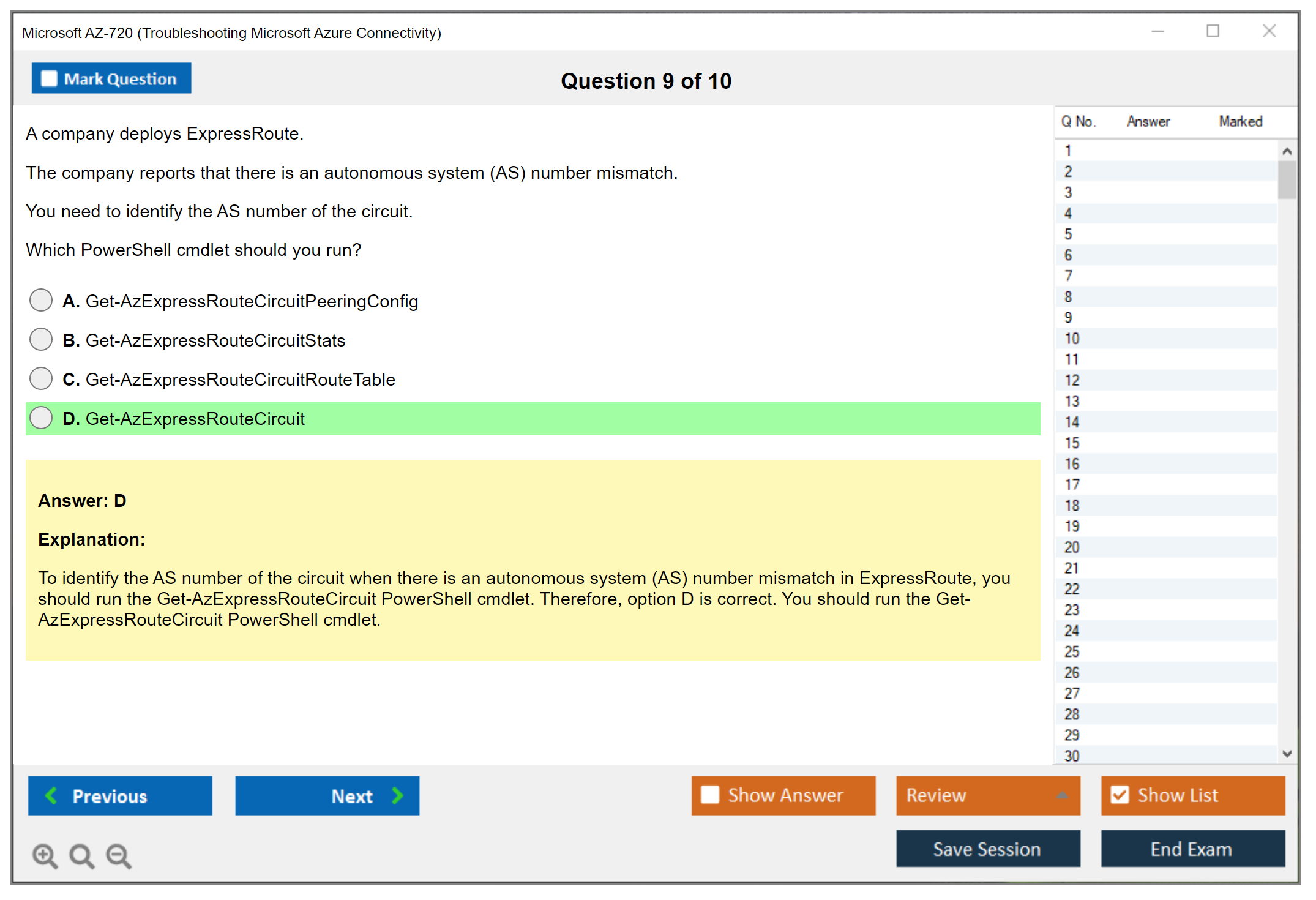
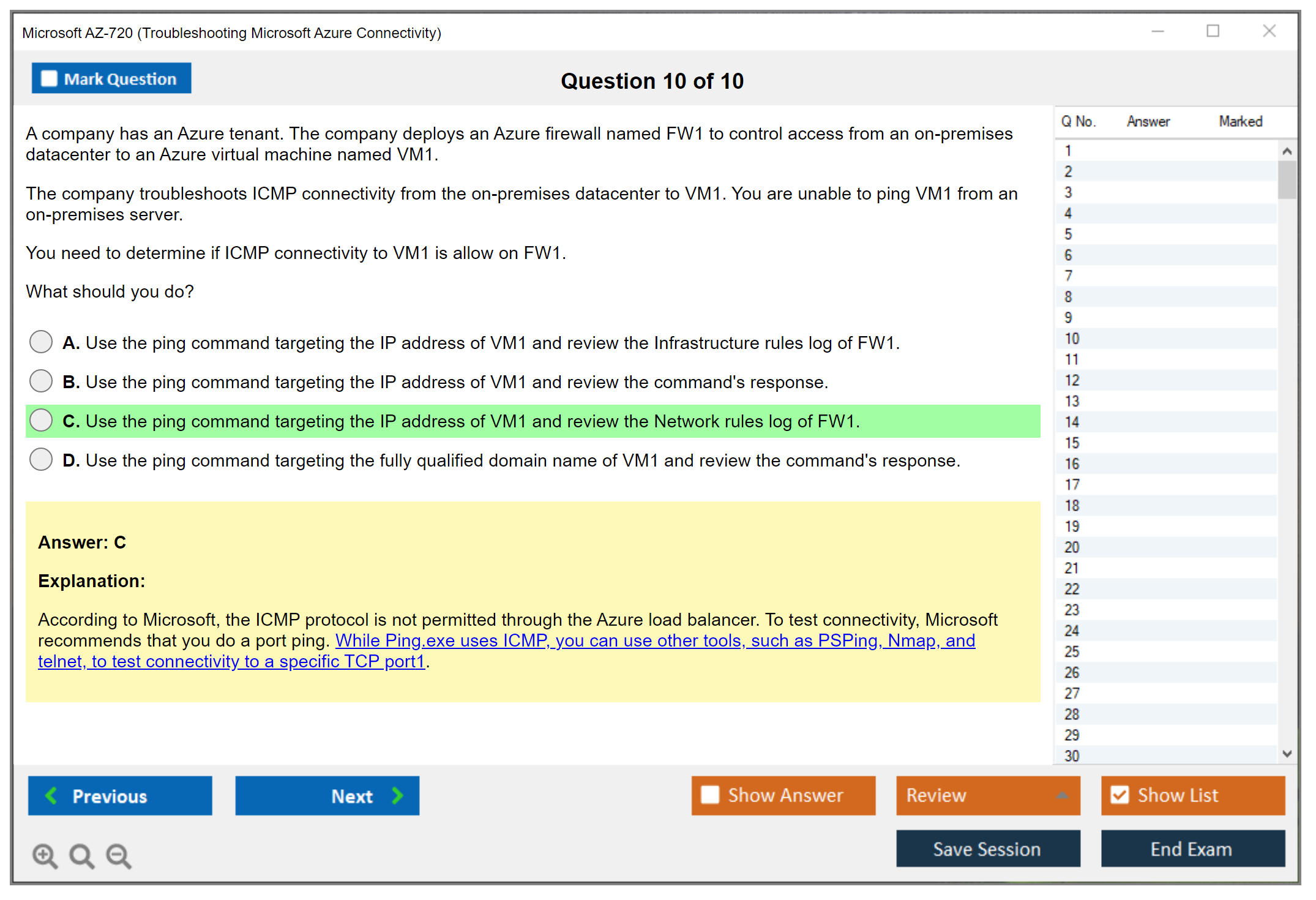
What Is Microsoft AZ-720 (Troubleshooting Microsoft Azure Connectivity)?
Look, if you've ever been on call when Azure networking goes sideways, you know that panicked feeling. The Microsoft AZ-720 certification is built for exactly that scenario. It validates you can actually troubleshoot Azure connectivity problems when things break, not just architect pretty diagrams.
This cert isn't about designing networks from scratch. It's reactive. You're the person who gets paged at 2 AM because ExpressRoute just dropped or VPN tunnels won't establish. AZ-720 proves you can grab diagnostic tools, interpret cryptic error messages, and fix the problem before the business loses more money.
Who this certification actually targets
Azure Support Engineers? Obvious fit here. Network Engineers transitioning to cloud? Absolutely. Azure Administrators who inherit networking responsibilities and need to level up fast? Yeah, you too. Honestly, if you've ever stared at NSG flow logs trying to figure out why traffic isn't flowing, this exam speaks your language.
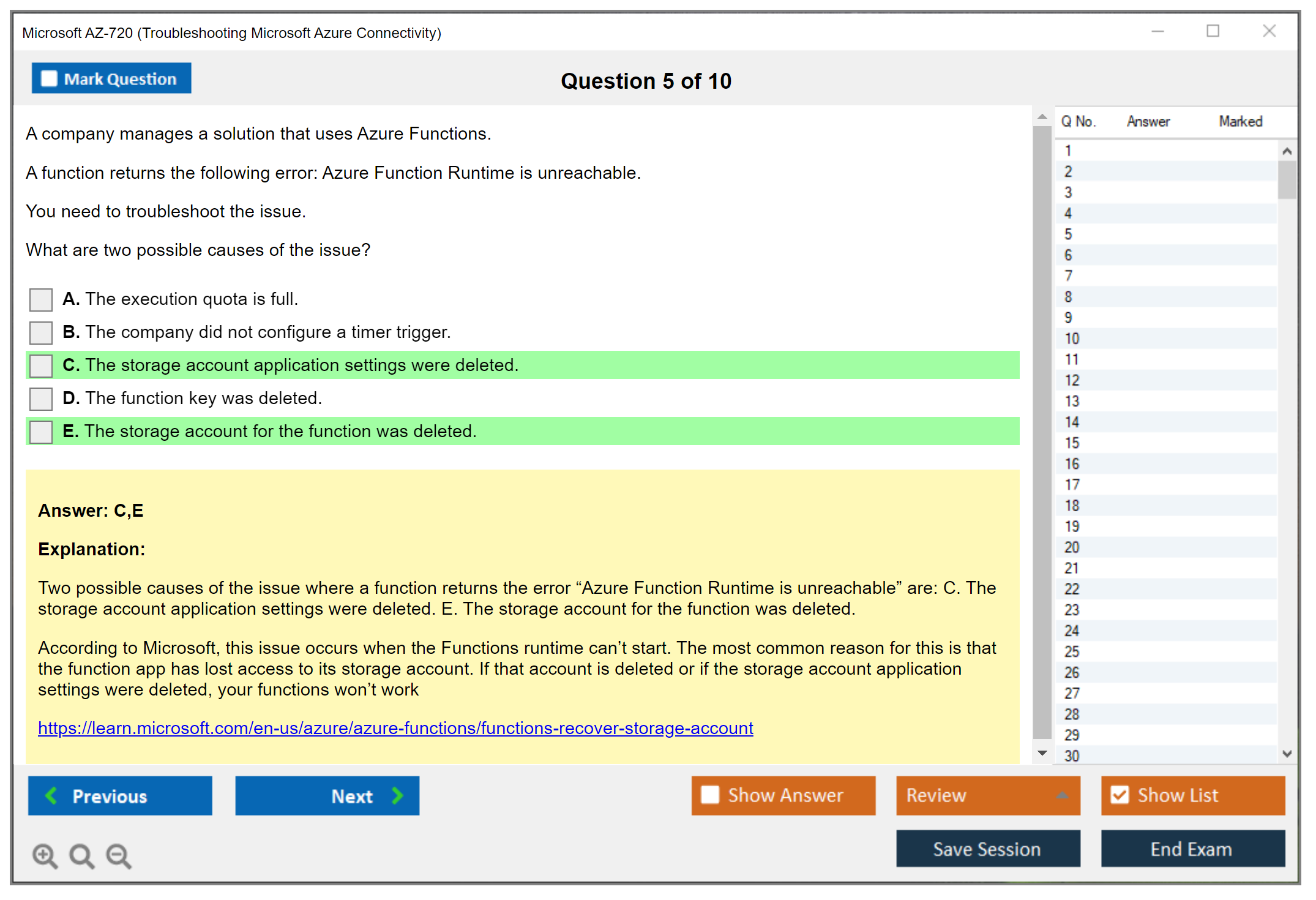
The cert focuses on hands-on troubleshooting skills, not theory. You need to know how to use Network Watcher packet capture and NSG flow logs, Connection Monitor, NSG diagnostics. The whole Azure connectivity issues and diagnostics toolkit. I mean, it's about muscle memory with these tools under pressure, the kind you can't fake when everything's on fire and stakeholders are breathing down your neck asking for ETAs you don't have yet.
What makes AZ-720 different from other Azure network exams
Here's the thing: AZ-700 (Designing and Implementing Microsoft Azure Networking Solutions) is about building Azure networks. You're designing hub-spoke topologies, planning ExpressRoute circuits, implementing security controls. That's proactive architecture work.
AZ-720? Totally different beast.
Something's already broken. Users can't reach the app. Database connections are timing out. Your job is to figure out why and fix it. Fast.
The exam throws scenario-based problems at you. You get symptoms, gather data, analyze logs and metrics, identify root causes. Then you recommend solutions. It mirrors real support tickets. The messy, incomplete information you actually get in production environments where nobody documented the custom routing table someone implemented six months ago.
Core skills the exam measures
You'll troubleshoot Azure virtual network connectivity, obviously. VNet peering issues, routing problems, subnet misconfigurations. But also hybrid connectivity scenarios. This is huge. You need to troubleshoot Azure VPN and ExpressRoute failures, diagnose why site-to-site tunnels won't establish, figure out why on-premises resources can't reach Azure workloads.
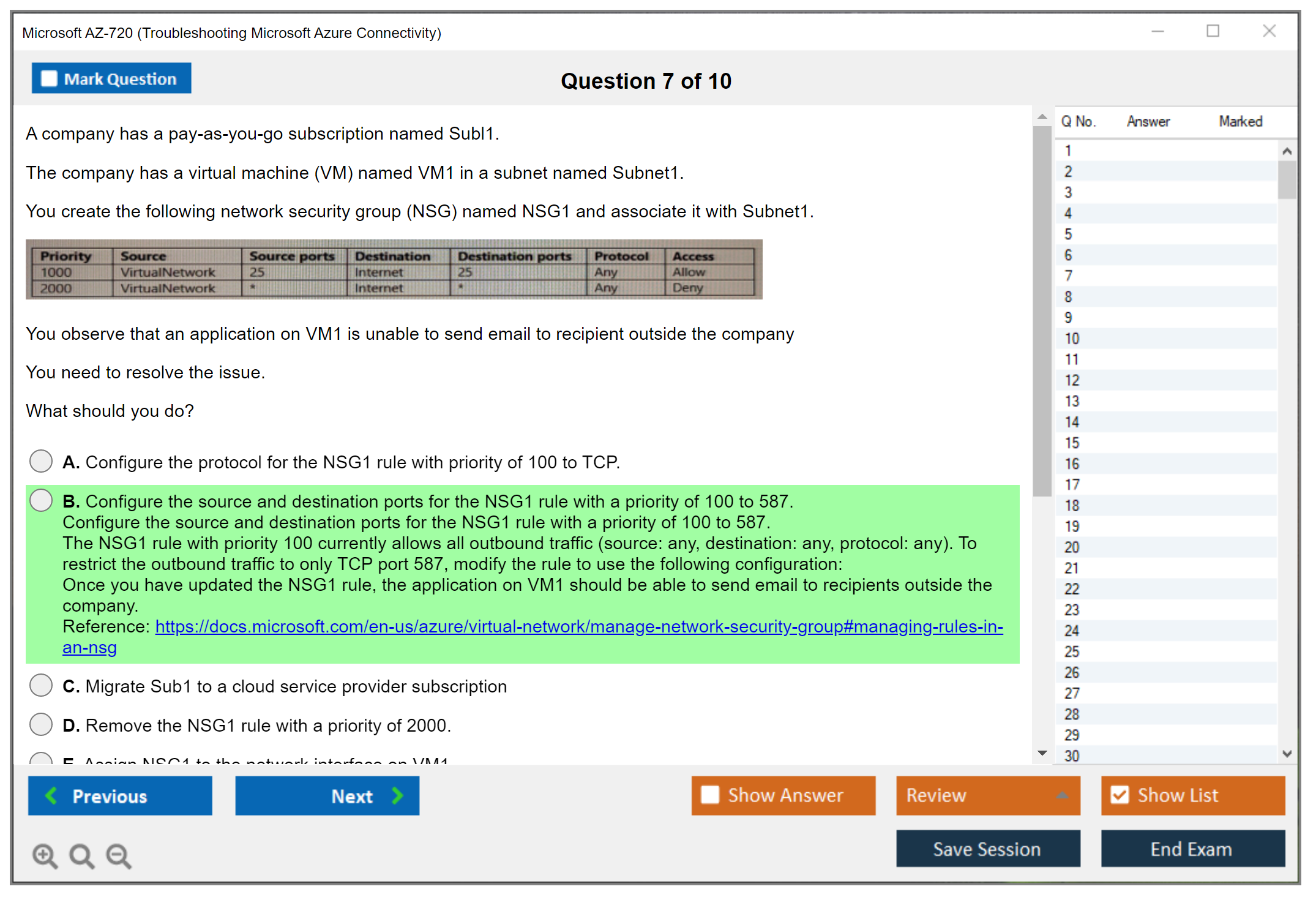
Network security troubleshooting? Another major area. NSGs blocking traffic they shouldn't, Azure Firewall rules gone wrong, service endpoints misconfigured. You need to trace packet flows through multiple security layers and pinpoint where things die.
Azure DNS and routing troubleshooting comes up constantly. Private DNS zones not resolving, public DNS records pointing to wrong IPs, custom routing tables sending traffic into black holes. Name resolution breaks everything, and you need to diagnose it fast.
Application delivery troubleshooting covers Load Balancer, Application Gateway, Azure Front Door. Backend health probes failing, SSL offloading issues, traffic distribution problems. When the app's down, nobody cares about your architecture. They want it working.
What you're really validating
Honestly, this cert proves you can work under pressure. Production outages don't wait for you to Google documentation. You need to know which diagnostic tool to grab immediately, how to interpret the data it gives you, and what remediation steps to take.
You'll need solid understanding of Azure networking fundamentals. VNets, subnets, routing, DNS, network security. If you're shaky on AZ-104 (Microsoft Azure Administrator) level networking concepts, you'll struggle. AZ-720 builds on that foundation.
The exam also tests your ability to distinguish between network issues, application issues, and platform issues. Is the connection failing because of NSG rules? Or is the app crashing? Or is Azure experiencing a regional outage? You need that diagnostic intuition. Wait, actually, you need the methodical process to develop that intuition because gut feelings fail at 3 AM when you're exhausted.
Scenarios you'll encounter
Troubleshooting private endpoints and Private Link services shows up. These're tricky. DNS resolution has to be perfect, NSGs need specific rules, and the error messages are often vague. You'll also deal with Azure Bastion connectivity problems, VPN client issues, point-to-site scenarios that work on some devices but not others.
Multi-region connectivity gets complex fast.
Virtual WAN troubleshooting, global network architecture issues, cross-region peering failures. You need to understand how traffic flows across Azure's backbone and where it can break.
Third-party network virtual appliances add another layer. When a firewall NVA sits in your traffic path and things stop working, you need to know how to isolate whether it's the NVA, Azure routing, or something else entirely. I once spent four hours chasing what turned out to be an expired license on a third-party firewall that was silently dropping packets. Fun times.
Tools and diagnostic approaches
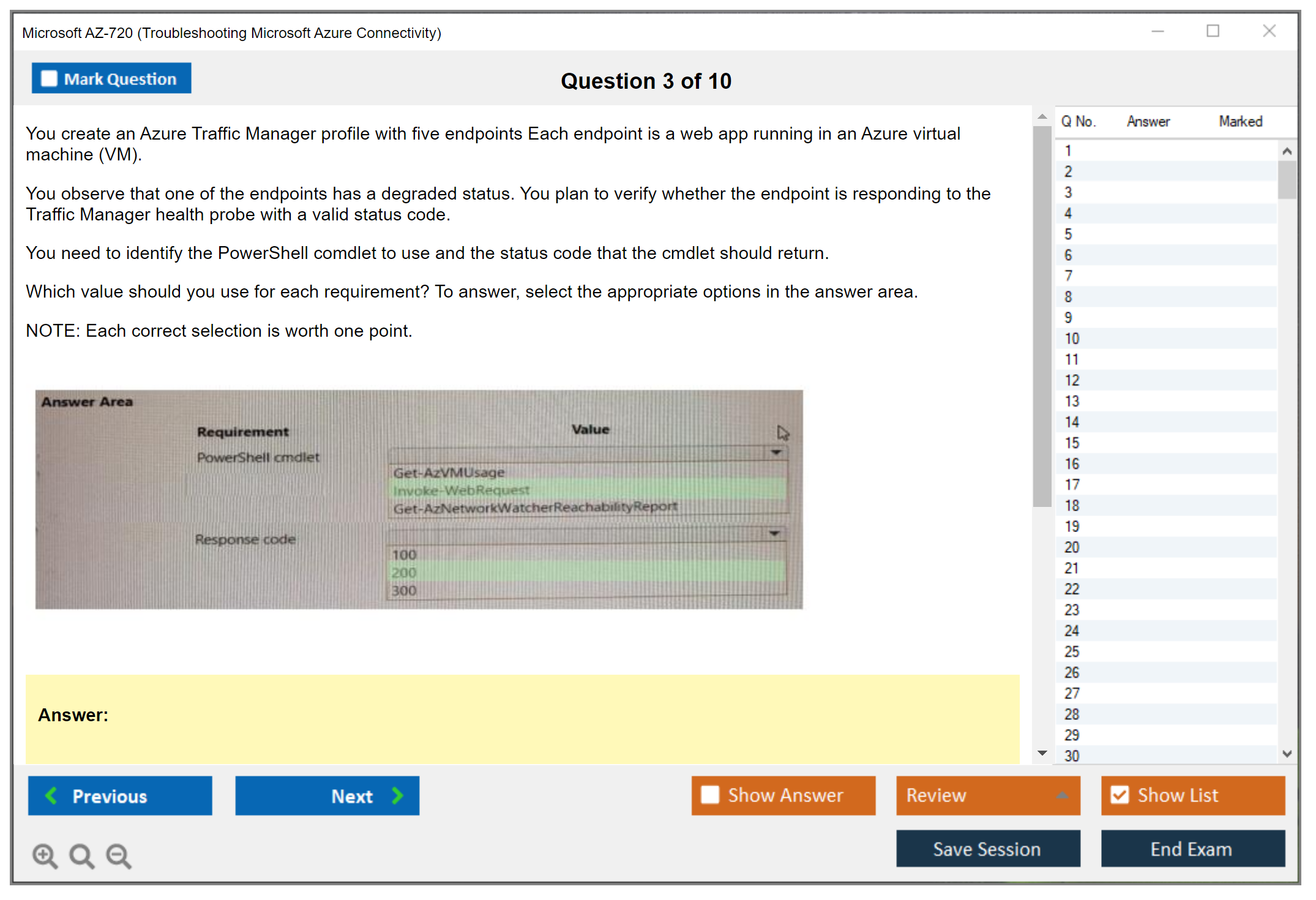
Network Watcher's your best friend. Packet capture for deep analysis, Connection Monitor for ongoing monitoring, IP flow verify to check NSG rules, Next hop to validate routing. You need to know which tool solves which problem type.
Azure CLI and PowerShell for gathering diagnostic data quickly. The Portal's great for visualizing, but when you're scripting diagnostics at scale or automating data collection during incidents where every minute counts and you can't afford to manually click through blade after blade, command-line tools matter.
Understanding Azure service limits and quotas is critical too. Sometimes connectivity fails because you've hit a connection limit or exhausted available ports. These aren't obvious until you know where to look.
The real-world value
If you're supporting Azure production workloads where downtime costs real money, this cert demonstrates you have the skills that matter. Not gonna lie, it's particularly valuable for 24/7 support roles and incident response teams.
It bridges traditional network troubleshooting and cloud-native diagnostics. Your CCNA knowledge helps, but Azure has its own quirks, its own diagnostic tools, its own failure modes. AZ-720 validates you've mastered both worlds.
For anyone serious about Azure networking careers, especially if you want to specialize in AZ-500 (Microsoft Azure Security Technologies) or move into Azure architecture roles later, this troubleshooting expertise is foundational. You can't design resilient networks if you don't understand how they fail.
AZ-720 Exam Objectives: Skills Measured in Detail
Microsoft AZ-720 certification proves you can troubleshoot Azure networking when everything's burning and stakeholders are hovering over your desk demanding answers.
Not theory. Real work.
The thing is, this exam tackles actual "why can't this VM talk to that endpoint" situations you'll hit in production environments where downtime costs money and people want answers yesterday.
This exam targets network admins, cloud engineers, SRE-ish folks, and anyone owning connectivity in Azure and hybrid setups. If you've ever had to explain asymmetric routing to an app team at 3 AM while they insist the network's broken, congrats. You're exactly who Microsoft built this for.
The AZ-720 exam objectives get organized into major skill domains weighted by importance. You don't study everything equally. Microsoft also updates the "skills measured" doc periodically, and honestly you should always verify the current version before locking your study plan. The blueprint shifts. Old practice questions can get weirdly irrelevant fast when Azure adds new features or deprecates old services.
Who it's for in the real world
Day job matters. A lot.
If you manage VNets, NSGs, Azure Firewall, VPN/ExpressRoute, Private Link, DNS, and load balancers daily, you're in the zone. If you only click around the portal occasionally? The AZ-720 exam difficulty's gonna feel high, because the exam blueprint emphasizes real-world troubleshooting scenarios rather than theoretical knowledge. You'll get prompts that read like an incident ticket with missing context and users screaming in all caps.
What the AZ-720 exam validates
You're expected to diagnose. Quickly. With the right tool. Then pick the fix that won't break something else downstream.
AZ-720 exam objectives (skills measured)
Virtual network connectivity problems you actually see
VNet peering's a big one. Diagnose and resolve VNet peering issues including peering state (initiated vs connected), routing conflicts (especially when someone adds UDRs later without telling anyone), and cross-subscription peering where permissions and "allow forwarded traffic" settings bite you. One small checkbox. Hours of pain. I mean, we've all been there.
Subnet issues show up too. Troubleshoot subnet connectivity problems related to address space exhaustion, overlapping ranges, and delegation that nobody documented. Address space exhaustion's sneaky because deployments succeed until they don't. Then you're staring at "failed to allocate" messages and wondering why DHCP feels haunted.
Routing's its own mini exam, honestly. Identify and fix routing issues using effective routes, user-defined routes (UDRs), and route table associations. Effective routes tells you what the NIC actually thinks is true, not what you meant when you configured it. That difference is basically the entire plot of AZ-720.
Private Link and service endpoints are also prime "works on my machine" material. Resolve service endpoint and private endpoint connectivity failures. Don't forget DNS integration, because half of "private endpoint is down" complaints are actually "private DNS zone link is missing" situations.
NIC configuration matters more than people admit. Diagnose network interface card (NIC) configuration issues including IP configurations and accelerated networking mismatches. Honestly, accelerated networking mismatches and multi-IP NIC setups cause some of the most annoying intermittent symptoms that'll make you question your career choices.
And yes, you'll troubleshoot connectivity between VMs in same and different VNets, which sounds basic until you throw in peering, NSGs, ASGs, and a forced tunnel that someone enabled six months ago. Actually, forced tunnels deserve their own special place in troubleshooting hell, right up there with asymmetric routes and mystery MTU drops that only happen during backups.
Hybrid connectivity: VPN and ExpressRoute pain, the official version
This domain's where you "troubleshoot Azure VPN and ExpressRoute" for real, not just memorize SKUs like it's trivia night.
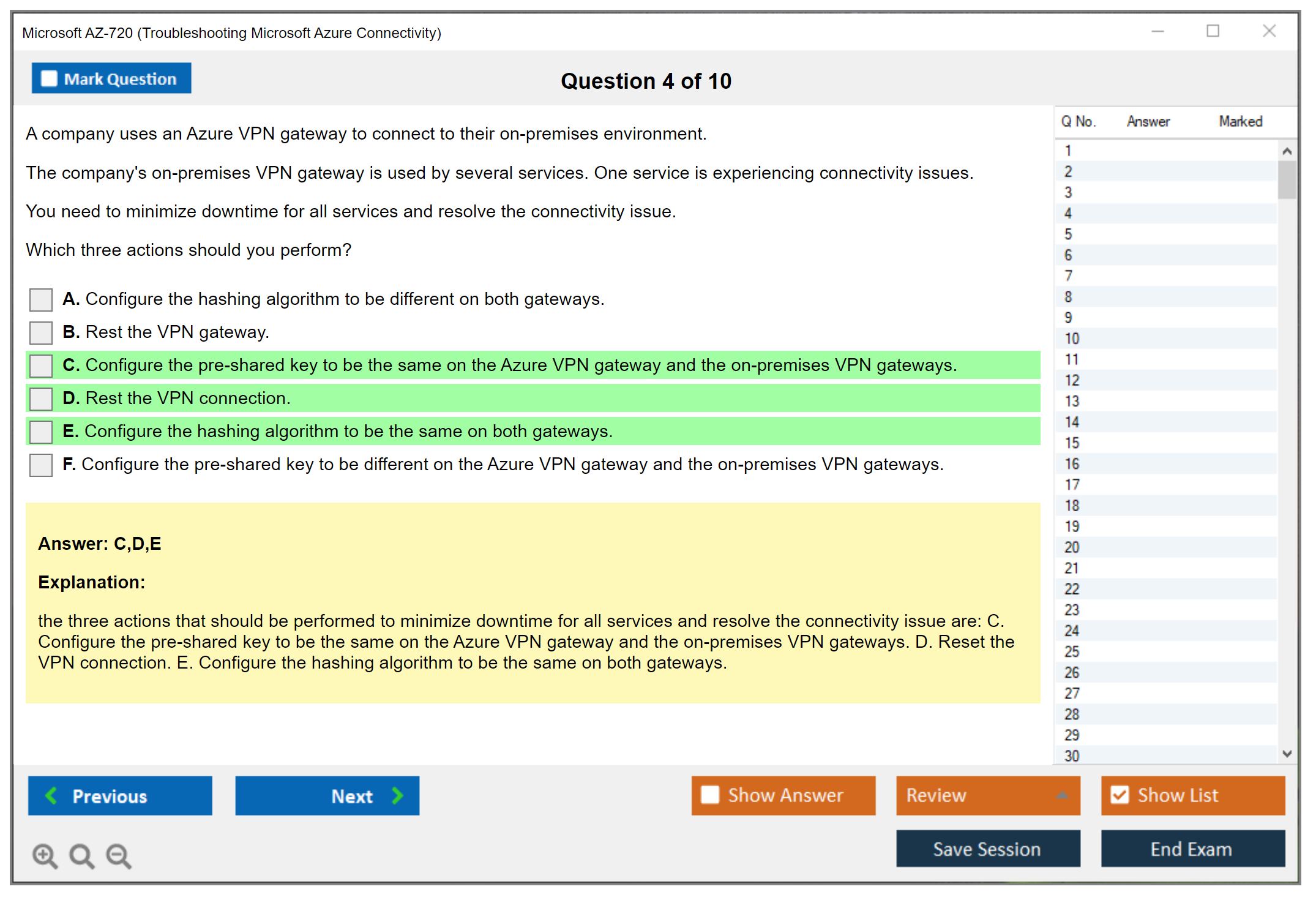
Diagnose site-to-site VPN tunnel establishment problems including IKE phase 1 and phase 2 failures. Proposals and lifetimes still ruin weekends in 2026, turns out.
Point-to-site's different pain entirely. Resolve point-to-site VPN client connectivity issues including certificate problems and client configuration mishaps. One expired root cert. One wrong VPN client package. One user on a locked-down laptop. Done, you're toast.
Expect SKU reality checks. Troubleshoot VPN Gateway SKU limitations affecting throughput and connection count, because the exam loves asking why performance is bad when the gateway's undersized or you're pushing the wrong tunnel type through a Basic SKU.
ExpressRoute gets deep: provisioning and peering config issues, private peering failures into Azure VNets, Microsoft peering for Office 365 and Dynamics 365 connectivity, BGP routing issues in ExpressRoute and VPN scenarios, and performance degradation with packet loss that makes users complain about "the cloud being slow." FastPath and Ultra Performance gateway issues can appear, plus Global Reach configs, ExpressRoute Direct redundancy, and coexistence scenarios where VPN and ER routing conflicts create asymmetric paths that "sort of work" until stateful firewalls say no and drop half your traffic.
Virtual WAN hubs show up as the glue connecting everything. Troubleshoot on-premises connectivity through Virtual WAN hubs that are supposed to simplify life but sometimes don't. Also NAT Gateway affecting outbound hybrid connectivity, because outbound source IP surprises can break allowlists and nobody thinks to check that first.
Security, access, and the stuff that blocks you
NSGs are everywhere. Like, really everywhere.
Identify issues with network security group (NSG) rules blocking legitimate traffic. Specifically identify NSG rule evaluation order problems causing unexpected blocking or allowing. Priority wins. Always. People forget. Then they add rule 500 and wonder why rule 300 still applies.
Use Network Watcher IP flow verify to validate security rule evaluation, and diagnose problems with application security groups (ASGs) and their rule associations. ASGs are great until a NIC isn't in the right ASG and you swear the rule's correct but it's just.. not applying.
Azure Firewall's heavily represented. Diagnose Azure Firewall rule processing and policy conflicts. Troubleshoot DNAT, SNAT, and application rules that mysteriously don't match. Resolve performance and scaling issues, and troubleshoot Azure Firewall Manager policy inheritance and hierarchy. Forced tunneling through Azure Firewall also comes up. It can wreck Azure service connectivity if you don't handle exceptions correctly (wait, I mean, the exceptions for Azure platform services specifically).
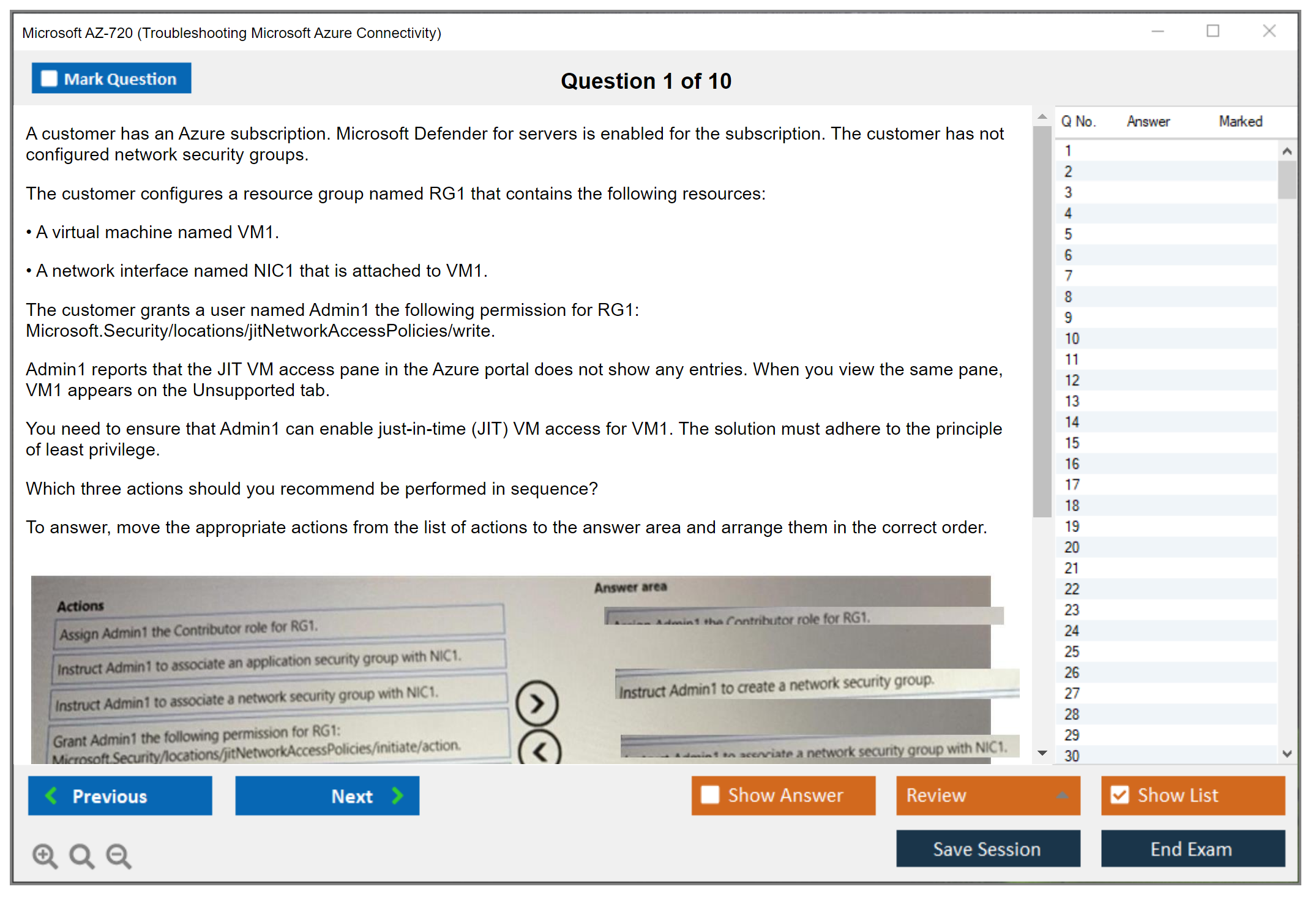
Add DDoS Protection Standard activation and mitigation logs, Azure Bastion session failures when someone can't RDP despite "everything being configured," and JIT VM access problems. Mentioned casually in docs, but they're absolutely fair game in exam scenarios.
WAF false positives matter too. Resolve WAF false positives and rule tuning without exposing actual vulnerabilities, plus SSL/TLS certificate issues on Application Gateway and Front Door when apps "randomly" fail handshakes and developers blame the network.
Name resolution and routing: where "it pings" goes to die
This is the Azure DNS and routing troubleshooting chunk that separates the pros from the pretenders. Diagnose Azure DNS issues for public zones. Resolve Azure Private DNS zone configuration and virtual network link problems, and troubleshoot DNS resolution failures for VMs using Azure-provided DNS.
Custom DNS is common in enterprises that don't trust Azure's defaults. Identify issues with custom DNS server configurations in VNets. Diagnose conditional forwarding and DNS forwarder problems in hybrid scenarios, and resolve split-brain DNS conflicts where public and private answers collide and nobody knows which one's actually correct.
Private endpoint DNS integration shows up constantly. Troubleshoot private endpoint DNS integration and automatic registration that didn't actually register automatically. Plus DNS caching issues that make changes "not work" for way too long and make you look incompetent. Azure DNS Private Resolver configuration and rule sets can appear, especially when you're trying to stop running random DNS VMs that cost a fortune.
Load balancing and app connectivity failures
Load balancers fail predictably. Diagnose Azure Load Balancer backend pool health probe failures and rule distribution issues that send all traffic to one poor VM.
Application Gateway adds more knobs: backend health that shows "unhealthy" with zero explanation, listener and routing rule conflicts, URL/path-based routing rules that don't match what you think they match, session affinity cookie persistence problems, and WAF policy blocking good traffic because someone set it to Prevention mode. Front Door adds origin health across regions, cross-region routing preferences, and certificate problems that differ by endpoint. This is where "the app is down" becomes "the network is fine but the routing rule isn't doing what you think."
Monitoring and diagnostics tools you must be fluent in
This is the tools domain. It's basically how you prove what's happening instead of guessing.
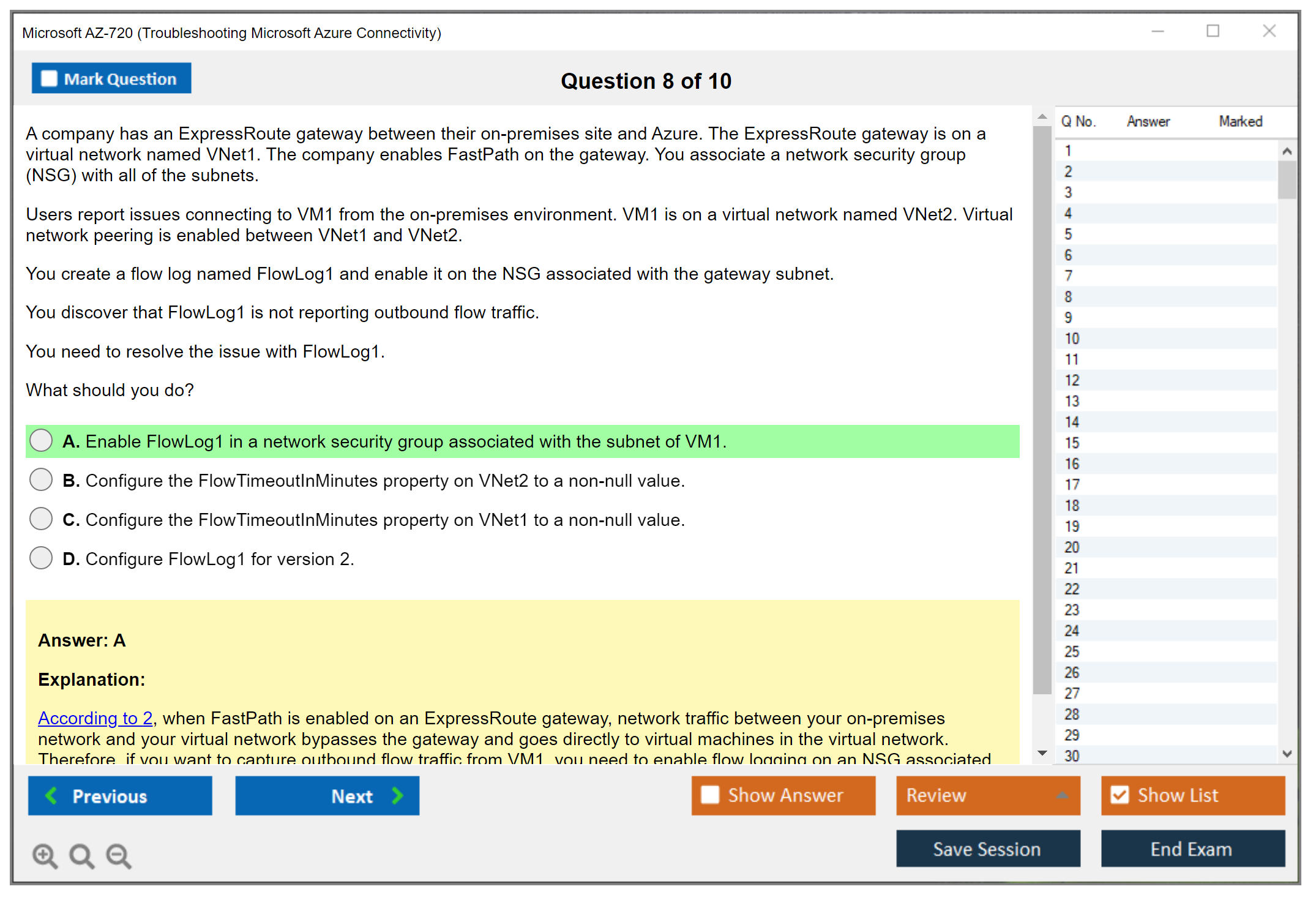
Master Network Watcher packet capture and NSG flow logs for deep traffic analysis that shows exactly what's being dropped and why. Use Connection Monitor for end-to-end checks across regions. Topology for visuals that actually help during incident calls. Next Hop for routing decisions that reveal your UDR mistakes. Connection Troubleshoot for point-to-point validation.
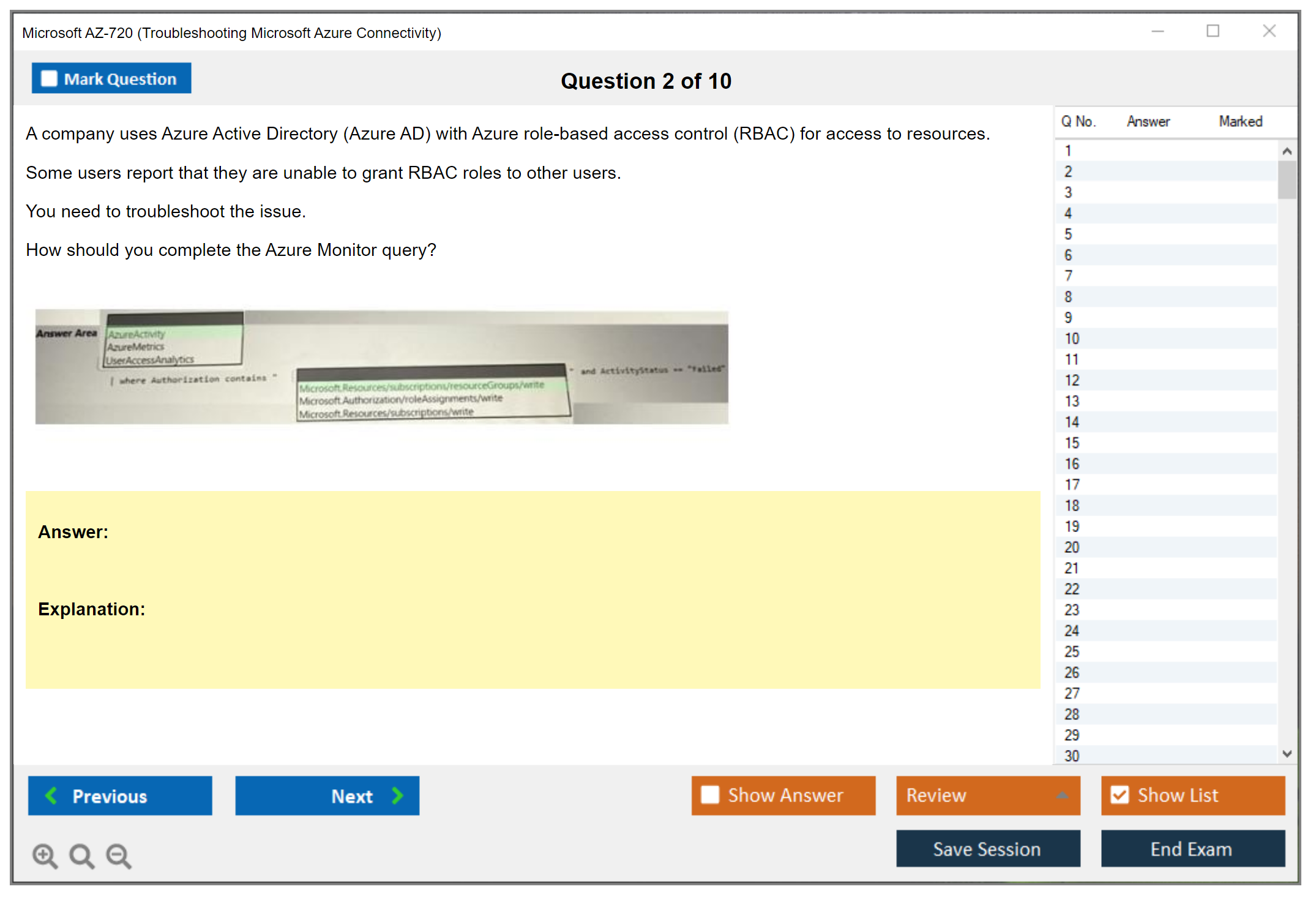
Also critical: VPN Diagnostics and VPN Troubleshoot for tunnel issues, Azure Monitor metrics for gateways and load balancers showing actual utilization, Azure Monitor Logs with KQL for pattern spotting across thousands of events, effective security rules to see what's actually applied, and interpreting diagnostic logs from Azure Firewall, Application Gateway, and Front Door. If you can't read logs, you're guessing. And guessing fails exams.
AZ-720 cost, passing score, and the admin stuff people ask
How much does the AZ-720 exam cost? It varies by region, currency, and whatever discounts you can stack, so check Microsoft's exam page for the current AZ-720 exam cost before you register and discover it's more expensive than you budgeted.
What's the passing score for AZ-720? Microsoft typically reports a scaled score with 700 as the common pass mark, but policies can change without warning. Verify the current AZ-720 passing score rules on the official page instead of trusting some random forum post from 2023.
Prep notes: materials, practice tests, renewal
For AZ-720 study materials, start with Microsoft Learn and then live in the docs for Network Watcher, VPN/ExpressRoute, Private Link, Azure Firewall, and DNS. Add labs. Break your own stuff intentionally. Fix it. That's the exam, essentially.
For AZ-720 practice tests, pick ones that read like incidents, not flashcards with trivia. If the questions don't mention effective routes, DNS links, or BGP tables at least sometimes, they're probably too shallow and won't prepare you for the scenario-heavy questions.
AZ-720 prerequisites? No hard prereq, but you want solid Azure networking fundamentals and some hybrid exposure. AZ-720 renewal's the usual Microsoft renew process, so keep an eye on the renewal window and any skill updates. The objectives shift as the platform changes and Microsoft decides certain technologies matter more than they used to.
AZ-720 Exam Cost and Registration Process
What you'll actually pay for AZ-720
Right now? $165 USD. That's where the AZ-720 exam cost lands in the United States. It's standard pricing for most Microsoft specialty exams, honestly. But here's the thing: pricing isn't universal across the board, and it definitely shifts depending on where you're actually taking it.
In Europe, you're looking at somewhere between €99 and €165 depending on which country you're in. Germany tends to be on the higher end, while some Eastern European countries come in cheaper. UK candidates usually pay around £99 to £139, which feels like it fluctuates with exchange rates and local tax considerations that nobody really wants to calculate manually. Over in India, the AZ-720 exam cost typically falls between ₹4,800 and ₹5,500 INR, making it relatively accessible for the region.
Look, I always tell people to check Microsoft's official certification page for your specific country before you budget. Prices change. Currency conversions happen. You don't want to show up short when it's time to register.
Ways to reduce what you spend
Not gonna lie, $165 adds up fast if you're chasing multiple Azure certifications.
But there are ways. Student discounts exist through Microsoft Imagine Academy and certain educational institutions. Sometimes you can knock 50% or more off the price if you're enrolled in qualifying programs. Microsoft Certified Trainers (MCTs) often receive exam vouchers as part of their annual benefits package, which is a nice perk if you're teaching Azure content. Larger organizations that want their teams certified on Microsoft AZ-720 certification and related specialties sometimes have enterprise volume licensing agreements that include exam vouchers for employees.
Watch for promotional periods. Microsoft occasionally runs deals where you can get discounted pricing or bundle offers that include training plus exam vouchers together. Third-party training providers sometimes offer exam retake guarantees with their courses too. You pay for the course, they cover your second attempt if you fail. That's peace of mind if you're worried about AZ-720 exam difficulty and whether you'll pass on the first shot.
I once saw a guy in a study group miss out on a 40% discount because he registered the day after the promotion ended. He was pretty salty about it for weeks. Point is, timing matters.
How to actually register for this thing
You register through Pearson VUE. They're Microsoft's authorized exam delivery partner. First step is creating or signing into your Microsoft Certification profile. If you've taken any other Microsoft exam, you already have one. If not, it's a quick setup.
Once you're logged in, you can choose between online proctored exams or test center appointments. The flexibility's really helpful depending on your situation. Online proctoring lets you take the AZ-720 exam from home or your office, which is convenient if you've got a stable internet connection, a webcam, and a quiet private space where nobody's going to barge in asking about dinner plans or interrupting your concentration. Test centers are available in most major cities worldwide if you prefer the structured environment or your home setup isn't ideal for proctoring requirements.
Before you schedule an online exam, you'll need to run a system check. This verifies your computer meets technical requirements, your webcam works, your mic works, all that. Do this a few days before your actual exam date so you're not scrambling last-minute if something fails. Been there, it's stressful.
I recommend scheduling at least 2-3 weeks in advance. Slots fill up, especially for popular time windows like weekday mornings or Saturday afternoons. The exam duration is 120 minutes (two full hours) plus additional time for instructions and surveys at the beginning and end that nobody reads but you still gotta click through.
Test day logistics and what happens if you need to reschedule
Test center? Arrive 15 minutes early. They need to check your ID, get you logged in, explain the rules.
For online exams, start the check-in process right at your scheduled time. The proctor needs to verify your workspace, scan your room with your webcam, check your ID. It takes a few minutes, sometimes longer if there's technical hiccups.
Rescheduling is allowed up to 24 hours before your exam time without penalty. Life happens, I get it. But if you cancel within that 24-hour window or just don't show up, you forfeit the full exam fee. That $165 is gone. Poof.
The retake policy nobody wants to use but should know about
First attempt doesn't go your way? You can retake the AZ-720 exam after waiting 24 hours. That's it. One day. Which is actually generous compared to some certification programs I've seen that make you wait weeks.
Fail the second time and you're looking at a 14-day waiting period before your third attempt. Every subsequent failure also requires 14 days between tries. Each retake costs the full exam fee again. There's no discount for persistence or loyalty or whatever. Microsoft doesn't limit the total number of attempts within the certification validity period, so theoretically you could keep going indefinitely, but at $165 a pop that gets expensive fast and honestly demoralizing.
Before you retake, seriously consider investing in additional AZ-720 study materials or AZ-720 practice tests. Really sit down and assess what went wrong. If you failed twice using the same prep strategy, something needs to change. Maybe you need more hands-on experience with troubleshoot Azure VPN and ExpressRoute scenarios, or you're weak on Azure DNS and routing troubleshooting and need to actually lab that stuff out instead of just reading about it. Diagnose the gaps before throwing more money at the problem.
Microsoft doesn't offer refunds for failed attempts. Once you click "finish exam" and see that fail score, the money's spent. Exam vouchers typically expire 12 months from purchase, so don't sit on them too long thinking you'll get around to it eventually. Most vouchers aren't refundable either, though depending on where you bought it, you might be able to transfer it to someone else. Check the terms.
Connecting the dots with other Azure networking work
If you're serious about Azure network troubleshooting certification, the AZ-720 pairs naturally with the AZ-700 for designing and implementing Azure networking solutions. The thing is, the 700 teaches you how to build the networks and the 720 teaches you how to fix them when they break. I've also seen people stack this with AZ-104 since administrators constantly deal with connectivity issues, or even AZ-500 if you're focusing on security-related network problems involving NSGs and Azure Firewall configurations.
The registration process isn't complicated. The costs are straightforward. Just plan ahead, budget for potential retakes (hope you don't need them, but be realistic), and make sure you're actually ready before you schedule.
AZ-720 Passing Score and Scoring Methodology
Microsoft AZ-720 certification is the one people pick when their day job is basically "why can't this VM talk to that thing" and the thing could be an on-prem router, a private endpoint, or an app behind a load balancer. Honestly, it's an Azure network troubleshooting certification, not a design exam, so you're expected to read symptoms, pick the right tooling, and prove you can fix Azure connectivity issues and diagnostics without flailing around.
This matters for roles like cloud network engineer, SRE, support engineer, and anyone who gets paged for "site down" and then has to troubleshoot Azure VPN at 2 a.m. Look, if you've ever chased asymmetric routing, weird DNS split-brain, or an NSG rule that somebody "temporarily" added three months ago, you're the target audience.
Who this exam is really for
If you live in Network Watcher packet capture and NSG flow logs, you'll feel at home. If you've never touched them? You can still pass, but honestly you'll be memorizing instead of thinking. AZ-720 exam objectives are less about naming SKUs and more about choosing the next best step when packets vanish.
The scoring number everyone asks about
The AZ-720 passing score is 700, on a scale of 100 to 1000 points. That 700 threshold's consistent across most Microsoft role-based certifications, so if you've taken other Azure exams, this part won't surprise you. You finish the exam and you get a pass/fail notification immediately. Which is nice. Because waiting around would be torture.
Detailed results show up in the Microsoft Certification dashboard within 24 hours, and they stick around in your certification profile indefinitely. One sentence that matters: employers can't see your score, only that you passed and the certification's valid. Your badge and transcript don't show the number either, so stressing about whether you got a 742 or an 812 is mostly ego.
How the scaled score actually works
Microsoft uses scaled scoring. Translation: your raw performance gets converted to a scaled score so different versions of the exam can be comparable even if the exact questions differ. Different exam versions may have slightly different items, plus some adaptive elements, but the intended difficulty level's equivalent. The scoring approach is there to keep it fair for everyone regardless of which question set they get.
And no. Microsoft doesn't set a quota like "only 40% can pass today." Minimum competency's set by subject matter experts, using psychometric analysis, not by pass-rate targets. That psychometric work's also how they estimate question difficulty and assign point values, which is why two people can answer the same number of questions correctly and still land on different scaled scores depending on what they were asked.
Question count, weighting, and why some items hit harder
Expect about 40 to 60 questions depending on the version. Not all questions carry equal weight. Single-answer items can be quick points, but case studies and troubleshooting scenarios typically carry more weight because they're testing multi-step reasoning, not trivia, and that's basically the whole point of Troubleshooting Microsoft Azure Connectivity.
So if you get a long scenario about Azure DNS and routing troubleshooting, or a hybrid setup where BGP routes look fine but traffic still dies, don't rush it. Those are the questions that can swing your score more than you think. They're also where real-world folks separate themselves from "I watched a video once."
Funny aside: I once spent an entire evening debugging what turned out to be a perfectly fine network config. The actual problem? A developer had hard-coded an old IP in the app config file. Not Azure's fault. Not the firewall. Just someone who forgot to update one line of code six months back. Sometimes the network isn't even the issue, but you're still the one who has to prove it.
Guessing, blanks, and pretest questions
Unanswered questions are marked incorrect. No penalty for wrong answers. So yeah, guessing's better than leaving items blank, every time. If you're down to the last minute, click something, move on. I mean, the only way to lose points is to give Microsoft nothing.
Also? You may see pretest questions that don't count toward your score. Microsoft uses them for future exam development. Candidates can't identify which questions are scored versus pretest, which is annoying, but it's another reason to take every item seriously.
Reading your score report without overthinking it
Your report breaks performance down by major skill domain and labels each area as "above target," "near target," or "below target." You don't get exact numeric scores per domain. Just the bands. That's on purpose. It keeps people from gaming a section and it pushes you toward skill-building instead of score-chasing.
If you failed? Focus your next round of AZ-720 study materials on anything marked "below target." If you passed but barely, like 700 to 730-ish, you're basically at borderline competency. You still get the same certification as someone who scored 920, but in real life you may want more reps in Azure connectivity issues and diagnostics before you're the primary on-call.
Scores above 850 usually mean strong grasp of troubleshooting skills. Not magic. Just fewer blind spots.
Keeping difficulty consistent as Azure changes
Azure evolves constantly. But Microsoft aims to keep exam difficulty consistent even as services get updates. That's part of why scaled scoring exists, and part of why they rotate questions. You'll still see the same themes: routing, security, name resolution, and tool-driven diagnosis, with plenty of "what would you check next" energy.
Cost and prep, quickly, because everyone asks
AZ-720 exam cost varies by region, discounts, and sometimes employer programs, so check Microsoft's exam page before you schedule. If you're building a prep plan, I like mixing Microsoft Learn with hands-on labs, then checking yourself with AZ-720 practice tests that are scenario-heavy. If you want a paid option to grind targeted questions, the AZ-720 Practice Exam Questions Pack is $36.99 and it's useful for repetition, especially if you treat each miss as a mini lab task. Same link again for later when you're actually ready to commit: AZ-720 Practice Exam Questions Pack.
Retaking just to improve a passing score's usually pointless. Certification validity and AZ-720 renewal requirements are identical for all passing scores, and all passing candidates receive the same certification regardless of whether they squeaked by or crushed it. The thing is, focus on getting good at the work: troubleshoot Azure VPN and ExpressRoute, interpret flow logs, and pick the right move under pressure. The number follows.
AZ-720 Exam Difficulty: What Makes This Exam Challenging
Why AZ-720 sits in that awkward middle tier
Most candidates rate the AZ-720 exam difficulty somewhere between intermediate and advanced, which honestly makes sense when you look at what it's testing. This isn't a foundational cert where you memorize service definitions and basic concepts. It's not quite architect-level either, but it demands a specific kind of thinking that catches people off guard.
Look, you need both theoretical knowledge and actual troubleshooting experience. Reading documentation helps, sure. But if you've never actually had to figure out why a VPN tunnel won't establish or why ExpressRoute peering is flapping, the exam scenarios feel foreign. Many folks say AZ-720's harder than AZ-104 because AZ-104 tests whether you can configure Azure services, while AZ-720 tests whether you can fix them when they break. Totally different skill set.
The difficulty's comparable to AZ-700, but the focus shifts from implementation to diagnostics. AZ-700 asks "how would you design this network?" while AZ-720 asks "this network's broken, now what?" Both require deep Azure networking knowledge, but troubleshooting demands that you synthesize information from logs, metrics, config files, and platform status all at once. You're basically becoming a detective instead of an engineer.
Real-world scenarios that actually mimic reality
The scenario-based questions? Brutal.
They're not those clean "choose the correct answer" setups where all the information's neatly presented. Instead, you get case studies that present incomplete information, just like actual support tickets. A user reports "can't connect to the application" and you've got to determine what diagnostic steps to take first, what data to gather, and how to interpret the results.
These questions demand critical thinking, not memorization. You might know every NSG rule syntax by heart, but that won't help if you can't figure out whether the connectivity failure's happening at the network layer, the DNS layer, or the application layer. The exam tests whether you can differentiate between symptoms and root causes under time pressure, which is exactly what happens in production support.
Several questions present multi-layered problems requiring sequential diagnostic steps. You can't just jump to the solution. You've got to work through it: check platform health, verify routing, validate DNS resolution, examine NSG flow logs, review effective security rules. Miss a step, and you'll pick the wrong answer even though your final diagnosis might be correct.
What separates this from other Azure networking exams
AZ-720 focuses narrowly on troubleshooting while AZ-700 covers broader network engineering topics like design principles and implementation patterns. Less broad than AZ-104 but way deeper in networking troubleshooting specifics. More practical and scenario-driven than AZ-305, which tests architectural decision-making at a higher level.
The exam often tests your ability to select the most efficient troubleshooting approach among several valid options. Yeah, you could eventually solve the problem by checking everything, but what's the fastest path given the symptoms? That requires understanding diagnostic methodology, not just technical facts.
It requires familiarity with diagnostic tools that many candidates haven't used extensively in production. Network Watcher packet capture, NSG flow logs, Connection Monitor, VPN diagnostics, ExpressRoute troubleshooting tools. Knowing they exist isn't enough. You need to understand when to use each one and how to interpret the output. I mean, log interpretation questions demand understanding of normal patterns versus abnormal ones, which you only develop through hands-on experience.
Where candidates from different backgrounds struggle
Candidates with real support experience find scenarios familiar and manageable because they've lived through similar situations. Those without troubleshooting background struggle with diagnostic methodology. They know the technology but not the process. Having AZ-700 certification provides a good foundation but doesn't fully prepare you for AZ-720's troubleshooting focus.
Networking professionals transitioning to Azure? They find concepts familiar but tooling new. Traditional network engineers understand routing, BGP, and firewall rules, but Azure's implementation through NSGs, route tables, and service endpoints requires mental translation.
Azure administrators without deep networking background find the exam quite challenging because it assumes you already understand subnetting, routing protocols, and the OSI model. Hybrid connectivity scenarios require knowledge of both Azure and on-premises networking, which is where a lot of people stumble. You need to understand how ExpressRoute circuits work with on-prem routers, how VPN gateways interact with third-party VPN devices, and how DNS resolution flows between Azure Private DNS and on-prem DNS servers.
Common mistakes that tank otherwise good candidates
Jumping to solutions without proper diagnostic data collection's probably the biggest mistake. Always gather evidence first. Check platform status, review logs, validate configurations before proposing fixes. The exam punishes people who skip straight to "rebuild the VPN gateway" without first checking whether the gateway's even the problem.
Overlooking NSG flow logs and effective security rules in security troubleshooting happens constantly. Candidates see "connectivity blocked" and immediately assume firewall rules, but they forget to check if there's an Azure service outage or if the route table's sending traffic to a Network Virtual Appliance that's offline.
Not considering DNS as root cause? Classic error.
So many connectivity issues ultimately trace back to DNS resolution problems, but people spend 20 minutes troubleshooting routing before checking whether the hostname even resolves correctly.
Failing to check service health and platform status before deep troubleshooting wastes time and leads to wrong answers. If there's a known Azure platform issue affecting VPN gateways in your region, spending time analyzing your specific configuration's pointless. Misinterpreting routing tables and effective routes in VNet scenarios catches people who don't fully understand how Azure processes routes. User Defined Routes, system routes, BGP routes, and route propagation all interact in ways that aren't immediately obvious.
Neglecting to verify ExpressRoute circuit provisioning state before troubleshooting peering's a sneaky one. The circuit might show "Enabled" but if the service provider hasn't completed provisioning on their end, peering will never establish. Assuming application issues are network problems without proper validation happens when candidates see "connection timeout" and immediately blame the network instead of checking if the application's actually listening on the expected port.
Time pressure and tool fluency requirements
Time management's critical with complex case studies consuming significant minutes each. You can't afford to spend 10 minutes on a single scenario when you've got 40-50 questions total.
Performance troubleshooting questions require understanding of baseline metrics and acceptable thresholds. Is 50ms latency normal or problematic for this workload? Security-related connectivity issues require balancing access needs with security best practices, not just opening everything up to make it work.
Questions may reference Azure CLI, PowerShell, and portal approaches interchangeably, so you need to recognize diagnostic commands across all three interfaces. The exam also requires staying current with Azure platform changes and new diagnostic features, which means studying from outdated materials'll leave you unprepared.
Forgetting to check service endpoints and private endpoint configurations trips people up in scenarios involving Azure PaaS services. Not validating VPN gateway SKU capabilities against requirements, like trying to establish 20 site-to-site connections on a Basic SKU gateway that only supports 10. Overlooking subnet delegation requirements for specific Azure services causes confusion when trying to troubleshoot why a service won't deploy.
Not following the OSI model systematically when diagnosing connectivity leads to random troubleshooting instead of methodical diagnosis. Honestly, attempting complex solutions when simple configuration fixes would resolve the issue shows you're not thinking like a troubleshooter. Always check the obvious stuff first.
If you're prepping for this exam, the AZ-720 Practice Exam Questions Pack at $36.99 gives you scenario-based practice that mirrors the real exam's troubleshooting approach. You need that exposure to diagnostic workflows, not just technology facts.
AZ-720 Prerequisites and Recommended Background
The Microsoft AZ-720 certification is what you grab when you're done with "it should work" excuses and ready to prove you can actually fix Azure connectivity when it's broken. Not whiteboard it. Fix it. Under pressure, with logs, routes, DNS, and security rules all battling each other like they've got personal beef.
No gatekeeping here. Microsoft doesn't enforce AZ-720 prerequisites for registration, so there's no mandatory "take X first" requirement, and nobody's checking your resume before you schedule. Still, look, that doesn't mean you can just wing it. The exam is a bunch of realistic outage stories where you're expected to spot what's wrong quickly and pick the best next step. Some of these scenarios feel like they were pulled straight from someone's worst Tuesday morning incident channel.
What this exam is really about
Real talk? AZ-720 exam objectives focus on Azure connectivity issues and diagnostics, and the vibe's troubleshooting-first, not "memorize every SKU." You're expected to understand how traffic should flow, then prove you can find why it isn't. That includes knowing where Azure hides the evidence, which is half the battle right there.
The people who fit best are network support folks, cloud ops, SRE-ish roles, and anyone who gets paged for broken hybrid links or random "app is down" tickets that turn out to be routing, DNS, or firewall policy doing something nobody documented. If you've ever had to troubleshoot Azure VPN and ExpressRoute while someone's asking for ETAs every five minutes, you're the target audience. If you've only done labs where everything's pre-built and perfect? This exam can feel rude.
The "no prerequisites" part, and what Microsoft actually expects
Officially: no mandatory prerequisite.
You can register today, pay, and sit for it. That's the clean answer.
The real answer is Microsoft strongly recommends foundational Azure networking knowledge and real hands-on time. I'd treat 6 to 12 months of hands-on Azure networking work as the baseline. The exam expects you to already know the components and spend your brainpower on troubleshooting moves, not on figuring out what a UDR is or why private DNS zones exist in the first place.
Prior troubleshooting experience in a network support or operations role helps. A lot. Not because it makes you "smarter," but because you've built the instincts: verify assumptions, isolate layers, check routing tables, confirm effective security rules, and don't trust screenshots from someone who "swears nothing changed." That mindset maps directly to how you debug Azure connectivity for a living.
Recommended background before you start studying
You want comfort with Azure VNets, peering, effective routes, NSGs, Azure Firewall, and the basic hybrid building blocks. Also DNS.
Always DNS.
If you're shaky there, expect pain when you hit Azure DNS and routing troubleshooting, because name resolution problems can look like "network down," and the exam likes that kind of misdirection like it's some kind of game. It's weird how many people skip DNS practice entirely and then act surprised when half the test questions involve it. I mean, what did you expect?
Tooling matters too. You should be hands-on with Network Watcher packet capture and NSG flow logs, Connection troubleshoot, IP flow verify, and how to interpret what you're seeing without spiraling into "check everything" mode. A lot of candidates study features and forget the workflow: what do you check first, what do you check second, and what signal actually proves you're right versus just confirming your assumptions.
If you're coming from on-prem networking, great. If you're coming from app/dev, also fine, but you'll need to grind the networking fundamentals harder than you think. Azure networking is familiar but not identical, and the "effective" view (effective routes, effective security rules, effective next hop) is where troubleshooting usually ends or you keep chasing ghosts.
Practical prep advice (what I'd do)
Start with Microsoft Learn, then immediately build a small lab and break it on purpose. One VNet, two subnets, an NSG, a VM, a private DNS zone, a VPN gateway if you can afford it, and some peering. Then misconfigure one thing at a time and prove you can detect it using the tools. Not vibes.
For AZ-720 study materials, prioritize docs and Learn modules around Network Watcher, VPN/ExpressRoute, Azure Firewall, routing, and DNS. Read the docs like you're hunting for "what would I check at 2 a.m.," because that's what the exam feels like. Some questions have that exact energy. AZ-720 practice tests are useful, but only if they explain why the wrong answers are wrong. Otherwise you're just memorizing patterns and you'll get wrecked by a slightly different scenario that tests the same concept from another angle.
Quick answers people always ask
How much does the AZ-720 exam cost? The AZ-720 exam cost depends on region and currency, so check Microsoft's exam page when you're ready to schedule because pricing and taxes can shift.
What is the passing score for AZ-720? Microsoft typically reports a scaled score with a AZ-720 passing score of 700, but always verify on the official page since policies can change.
Is AZ-720 difficult compared to other Azure exams? The AZ-720 exam difficulty feels higher than many associate-level exams because it's messy troubleshooting, not clean architecture. You need judgment. Not flashcards.
What are the main objectives covered in AZ-720? The objectives center on troubleshooting VNet connectivity, hybrid scenarios (VPN/ExpressRoute), network security/routing, DNS, load balancing/app connectivity, and monitoring/diagnostics.
How do I prepare with study materials and practice tests? Use Microsoft Learn plus targeted docs, do hands-on labs, and use practice tests to find weak spots, not to "learn the exam."
One more thing: renewal
Don't ignore AZ-720 renewal. Microsoft certifications generally require periodic renewal via an online assessment, and it's way less stressful if you keep notes as you study so you can refresh later without re-learning everything from scratch. Most people don't do this and then regret it when renewal time hits.
So yeah, no enforced AZ-720 prerequisites. But if you don't already speak networking and you haven't spent real time troubleshooting Azure connectivity, you'll spend most of your prep just trying to catch up to the starting line.
Conclusion
Wrapping up your AZ-720 path
Look, the Microsoft AZ-720 certification isn't for everyone. That's honestly a good thing. This exam zeros in on people who actually troubleshoot Azure connectivity issues in production environments, not folks who just want another cert on their LinkedIn. You know the type. If you're spending your days chasing down why VPN tunnels keep dropping or why ExpressRoute circuits aren't behaving the way they should even though everything looks right on paper, this validation makes sense for your career trajectory.
The AZ-720 exam difficulty? Real.
It's real because it mirrors actual work scenarios you'll face. You won't breeze through multiple-choice questions about definitions. You'll face troubleshooting scenarios that require you to know Network Watcher packet capture inside and out, understand NSG flow logs at a granular level, and diagnose Azure DNS and routing problems under time pressure that'll make your palms sweat. Microsoft designed this to separate people who've done the work from those who memorized a few blog posts. The thing is, the AZ-720 passing score sits around 700 out of 1000, which sounds generous until you're staring at a case study about hybrid connectivity gone wrong and second-guessing everything.
Honestly the AZ-720 exam cost (currently $165 USD in most regions, though check Microsoft's official page since prices shift) is reasonable compared to what you'd spend on a networking boot camp. My cousin dropped like two grand on one of those last year and still failed his first attempt, but that's a whole other story. Anyway, don't waste that money by showing up unprepared thinking you'll wing it. The AZ-720 exam objectives demand hands-on experience troubleshooting VPN and ExpressRoute, working with Azure Firewall rules, and using diagnostic tools that you can't fake your way through. AZ-720 study materials from Microsoft Learn are solid, but you need practice beyond reading documentation.
Practice. Then more practice.
Your prep approach should hammer Azure network troubleshooting certification scenarios repeatedly. Build test environments. Break them on purpose. Fix them using Network Watcher and logs. Then do it again with different failure modes because each one teaches you something new.
When you're ready to validate your readiness, quality AZ-720 practice tests become necessary. Not gonna lie, most practice exams out there are garbage. Either too easy or completely disconnected from real AZ-720 exam objectives. You want something that actually reflects the troubleshooting narratives and diagnostic workflows Microsoft tests. The AZ-720 Practice Exam Questions Pack gives you scenario-based questions that match the actual exam format, helping you identify weak spots in Azure connectivity issues and diagnostics before you sit for the real thing.
The AZ-720 renewal process is straightforward. Free online assessment every year, so this cert doesn't become shelf-ware. Get after it.

