

Linux Foundation KCNA Certification: Complete Introduction and Overview
I'll be honest here. When I first heard about the Linux Foundation KCNA certification, I thought "great, another entry-level cert that probably won't matter much." But after watching how cloud native technologies have exploded across basically every industry - from finance to healthcare to retail operations - I've completely changed my tune on this one.
The Kubernetes and Cloud Native Associate (KCNA) is the Linux Foundation and Cloud Native Computing Foundation's answer to a pretty obvious problem: tons of people need to understand Kubernetes and cloud native concepts, but not everyone needs to be a hands-on cluster administrator right out of the gate. This certification validates that you actually understand the foundational concepts driving modern infrastructure without requiring you to troubleshoot a broken deployment at 2 AM. Nobody enjoys that anyway.
Why KCNA exists in the first place
Here's the deal. Kubernetes certifications like CKA and CKAD are performance-based exams that throw you into live environments and expect you to solve real problems under time pressure. That's amazing for proving competency, don't get me wrong. But it's also completely terrifying if you're just starting out or transitioning from different tech stacks. KCNA fills that gap.
Multiple-choice format. Short and sweet.
The certification uses this format to test conceptual understanding across Kubernetes fundamentals, container technologies, cloud native architecture principles, and the broader CNCF ecosystem that's grown like wildfire over the past few years. You won't manipulate clusters during the exam. You won't write YAML under pressure (thank god). You will need to demonstrate that you understand how these technologies work and why they matter in modern infrastructure contexts.
Who actually benefits from taking KCNA
Developers who keep hearing about "microservices" and "containerization" but haven't worked with them directly? KCNA makes sense. IT professionals transitioning from traditional infrastructure to cloud native environments where everything's ephemeral and declarative? Perfect fit. DevOps practitioners looking to formalize their foundational knowledge? Sure.
Students entering the job market can use KCNA to stand out when they don't have years of production Kubernetes experience yet. Let's face it, most students don't. System administrators curious about where infrastructure is heading - and maybe a little worried about their traditional skills becoming less relevant - will find the certification covers exactly what they need to know to participate in modernization discussions intelligently.
The key insight here is that KCNA doesn't require hands-on Kubernetes administration experience as a prerequisite. It's designed for people who need to understand cloud native technologies conceptually before diving into implementation details.
Actually, this reminds me of when I was trying to explain Kubernetes to my uncle at Thanksgiving last year. He's been doing traditional server admin work for twenty years, and the whole conversation kept circling back to "but where does the application actually live?" The mental model shift from physical servers to ephemeral containers is really hard for some people, and there's no shame in that.
How KCNA fits into the certification ecosystem
Think of KCNA as the foundation. You start here to build conceptual understanding, then progress to performance-based certifications when you're ready for hands-on validation that actually proves you can do the work.
After KCNA, most people move toward either CKA if they're heading into administration roles or CKAD if they're focused on application development workflows and containerizing applications. There's also CKS for security specialists, but that requires CKA as a prerequisite, so it's further down the path.
KCNA establishes baseline knowledge.
Not gonna lie though. If you're already working with Kubernetes clusters daily, debugging pods, writing manifests, and dealing with production incidents, you might want to skip straight to CKA or CKAD. KCNA covers concepts you're probably already applying without even thinking about it. The multiple-choice format won't validate your hands-on skills the way performance-based exams do, which employers often value more for experienced practitioners.
KCNA exam cost and practical details
The KCNA exam cost sits at $250 USD, which includes one free retake if you don't pass on your first attempt. That's a pretty decent safety net honestly. That's cheaper than CKA or CKAD, which makes sense given the different exam formats and scope of what they're testing.
The KCNA passing score? 75%.
That means you need to correctly answer 75% of the multiple-choice questions to earn your certification. Not trivial but also not impossible with proper preparation. The exam runs for 90 minutes and includes about 60 questions, giving you roughly 1.5 minutes per question on average. Enough time to think through scenarios without feeling completely rushed.
You take the exam online through a proctored browser, which means you can test from anywhere with a stable internet connection and a webcam that doesn't make you look like you're calling from 1995. The global accessibility is honestly one of KCNA's biggest advantages. No need to travel to testing centers or work around limited appointment availability that might not fit your schedule.
What KCNA actually tests
The KCNA exam objectives cover five main domains, though not all weighted equally because some concepts are just more fundamental than others. Kubernetes fundamentals make up the largest chunk: clusters, nodes, pods, deployments, services, and how these components interact in ways that aren't always intuitive at first.
Container fundamentals address images, registries, and runtime concepts. Basically everything you need to understand before Kubernetes even enters the picture, since containers are the building blocks. Cloud native architecture explores microservices patterns, API-driven design, and scalability principles that define modern applications versus traditional monolithic approaches.
Observability basics touch on metrics, logs, and tracing concepts that help you understand what's actually happening in distributed systems. Security fundamentals cover RBAC principles, least privilege approaches that minimize attack surfaces, and supply chain security awareness that's become increasingly critical with so many dependencies. There's also some focus on networking concepts like services, ingress basics, and DNS that can get confusing quickly.
The thing is, none of this requires you to configure anything hands-on during the exam. But you absolutely need to understand how these pieces fit together conceptually and what happens when they interact in real-world scenarios.
KCNA difficulty and who finds it challenging
Is the KCNA certification hard for beginners? Depends entirely on your background and how your brain processes technical concepts.
If you've worked with any cloud platforms like AWS, Azure, or GCP - or modern application architectures that use distributed services - you'll recognize many concepts even if Kubernetes terminology is new and sounds like alphabet soup at first. The exam tests understanding rather than memorization. That actually makes it harder for people who try to cram facts without grasping underlying principles about why things work the way they do.
Complete beginners struggle more.
Complete beginners to both cloud and containers will find KCNA challenging because there's a lot of conceptual ground to cover from scratch, and everything builds on everything else. People with traditional infrastructure backgrounds sometimes struggle with cloud native thinking patterns. The shift from pets to cattle, declarative versus imperative approaches, that kind of fundamental mindset change that doesn't happen overnight.
KCNA exam difficulty increases when questions present scenarios requiring you to identify appropriate solutions rather than just recalling definitions from documentation you memorized yesterday. You need to think through how Kubernetes components interact and why certain architectural decisions make sense in specific contexts.
KCNA study materials that actually work
The official Linux Foundation KCNA training course provides coverage aligned with exam objectives, but honestly it's not mandatory if you're comfortable learning from multiple sources. The CNCF and Kubernetes documentation are freely available and cover everything tested, though they can be overwhelming without structure.
Best KCNA study materials? Mix it up.
Good study materials combine multiple approaches. Reading documentation to understand concepts in depth. Watching videos or taking courses for visual explanations that click differently than text. Using practice tests to identify knowledge gaps you didn't even know existed. I've seen people succeed with free resources alone and others who prefer structured paid courses. Neither approach is inherently better, it's about what works for how you learn.
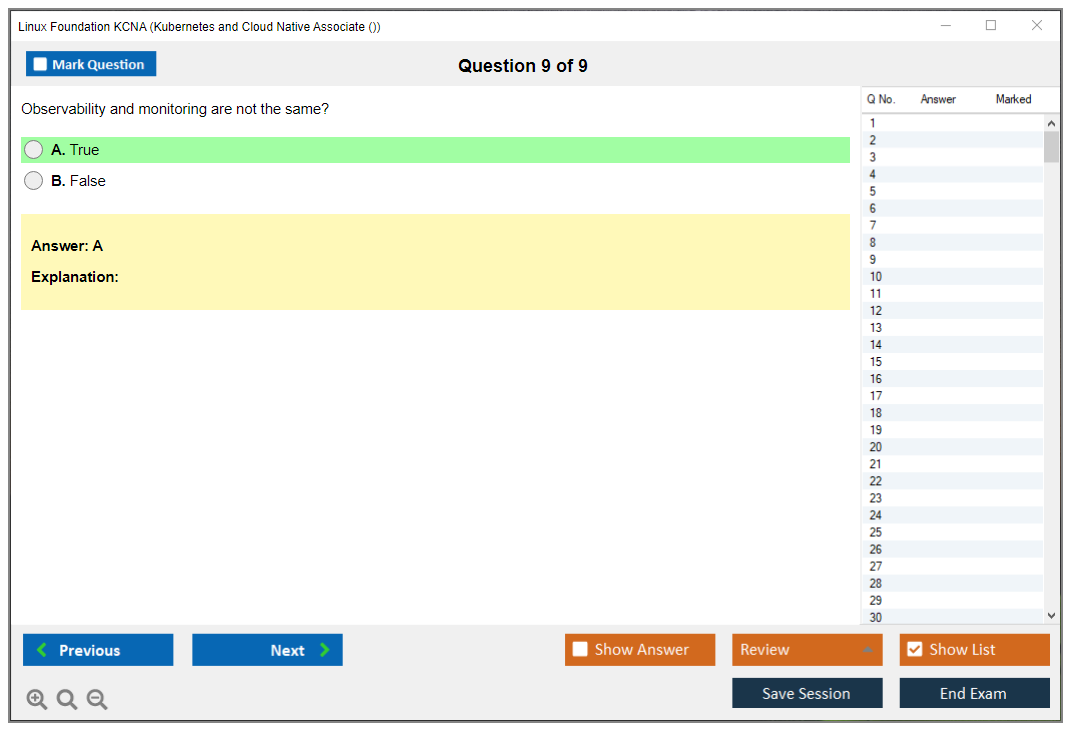
KCNA practice tests are key for exam prep because they reveal how questions are structured and what level of detail you need to know versus what's too granular to worry about. Good practice tests explain why wrong answers are incorrect, not just which answer is right. Builds understanding rather than pattern recognition.
Some people swear by KCNA flashcards for memorizing key concepts and terminology that comes up repeatedly. Others prefer mind mapping the relationships between components to see the bigger picture. The study approach matters less than actually understanding how cloud native technologies work together in production environments.
Time investment and preparation timelines
Most candidates need 30-60 hours of total study time depending on their starting point and how quickly they absorb new technical concepts. Someone with cloud experience might prepare in 2-3 weeks studying a few hours daily. Complete beginners might need 6-8 weeks to absorb all the concepts without feeling overwhelmed.
One-week KCNA study plans exist, but they're brutal and really only work if you already understand most cloud native concepts and just need to fill specific knowledge gaps or refresh what you've forgotten. Four-week plans provide more sustainable pacing for most people who have jobs and lives outside studying for certifications.
KCNA renewal policy and certification validity
Valid for three years.
KCNA certifications remain valid for three years from the date you pass, after which you'll need to decide whether renewal makes sense. The KCNA renewal options include either retaking the exam or potentially completing continuing education requirements, though the Linux Foundation has evolved their renewal policies over time and might continue adjusting them.
Honestly, by the time your KCNA expires, you'll probably have moved on to more advanced certifications anyway if you're actively working in this space. The certification is a stepping stone rather than an endpoint in your cloud native path.
Why KCNA matters in 2026
Look, cloud native adoption isn't slowing down anytime soon. Every company I talk to - and I mean literally every single one regardless of industry - is either running Kubernetes in production, planning their migration strategy, or at minimum evaluating whether it makes sense for their specific workloads and organizational maturity.
KCNA demonstrates you understand the vocabulary and concepts driving these conversations at technical and strategic levels. It shows employers you've invested time learning modern infrastructure patterns rather than just adding "Kubernetes" to your resume because it's trendy and appears in every job posting now.
Career relevance extends beyond jobs.
The career relevance extends beyond just getting jobs too. People don't always consider this. KCNA preparation builds the conceptual framework you need for deeper learning in this rapidly evolving ecosystem where new projects launch monthly. You'll actually understand what people mean when they talk about service meshes, operators, or GitOps instead of just nodding along pretending you get it. We've all been there.
For anyone entering cloud native roles or trying to participate meaningfully in infrastructure modernization efforts that are happening across the industry, KCNA provides exactly the foundation you need without overwhelming you. It's not going to make you a Kubernetes expert overnight. But it'll give you the conceptual tools to become one if that's where you're heading career-wise.
KCNA Exam Structure, Cost, and Registration Details
What the KCNA certification is (and why people take it)
The Linux Foundation KCNA certification is basically where you start if you want proof you understand Kubernetes and cloud native stuff without anyone expecting you to manage live production clusters when something breaks at 3 a.m.
It's all conceptual. Zero terminal work.
That's honestly the whole appeal.
If you're going after entry-level cloud positions, SRE internships, platform engineering apprenticeships, DevOps-adjacent helpdesk exits, or maybe you're a software developer who keeps hearing "Kubernetes" thrown around in meetings and you're tired of feeling lost when people start talking cluster architecture, KCNA makes sense. Works for managers and PMs too. People who need to grasp what a cluster actually does without memorizing kubectl syntax.
Who tends to do well on KCNA
Complete beginners can pass, but the thing is, it goes way smoother when you've got six to twelve months just poking around containers or cloud environments. Even if that's only experimenting with Docker, reading YAML files, and deploying some basic app once. That experience level isn't officially required, it's just how it plays out.
There aren't mandatory prerequisites. The KCNA prerequisites are more like unofficial guidelines: basic comfort with Linux command line, understanding software development ideas (APIs, deployments, versioning), and some exposure to containerization concepts like the difference between images and containers.
KCNA vs other Kubernetes certs (KCNA vs CKA vs CKAD)
KCNA is the "know what this technology is" exam.
CKA, CKAD, and CKS? Those are the "actually do the thing under pressure" exams.
Cost-wise, KCNA is also way gentler on your wallet. KCNA runs $250, while CKA ($395), CKAD ($395), and CKS ($395) cost more and they're performance-based, which completely changes the stress factor. If you're mapping out a Linux Foundation Kubernetes certification path, starting with KCNA is pretty reasonable. Then you'd pick CKA (cluster admin focus) or CKAD (application developer focus), and later CKS if security becomes your specialty.
KCNA exam cost and what you actually get
The KCNA exam cost is $250 USD (as of 2026). That standard price includes one exam attempt plus one free retake, provided you use it within one year of registration.
That "free retake" part? It matters more than you'd think. Changes your whole study approach, because you can take a first attempt when you're reasonably prepared, then refine based on the score breakdown instead of spiraling into perfectionist paralysis.
Extra retakes beyond that initial free one cost additional money. Fail twice, you're buying another voucher at full price. No magical discount code fairy shows up.
Bundle pricing options (training + exam)
Linux Foundation regularly offers bundles that combine the KCNA exam with official training at a reduced total price. Details shift around, but the pattern stays consistent: training plus exam voucher together costs less than purchasing each separately, especially during promotional periods. If you've already assembled your own KCNA study materials, skip the bundle. If you learn better with guided video content plus labs, bundles can justify the investment.
I mean, Linux Foundation training isn't some miracle cure.
It's just structured.
Discount opportunities you should actually watch for
If you're covering this yourself, timing matters. Linux Foundation frequently runs seasonal promotions around Black Friday, Cyber Monday, and major community events like KubeCon. There are occasionally student discounts, and companies can inquire about bulk purchase options when certifying multiple team members.
Also, just ask your employer. Plenty of organizations reimburse professional development expenses, and KCNA is an easier approval compared to pricier programs. Not gonna lie, the fastest way to "get a discount" is submitting an expense report.
Exam format: what the session feels like
KCNA is 60 multiple-choice questions, online proctored.
Single-answer format. No performance-based tasks, no "type a command," no partial credit for being half-right.
The exam duration is 90 minutes. That works out to roughly 1.5 minutes per question. No scheduled breaks, so plan accordingly. Eat beforehand. Hydrate, but not excessively. I once made the mistake of downing a huge coffee thirty minutes before a proctored exam and spent the last twenty questions uncomfortably aware of my own bladder, which is a special kind of distraction you don't need.
Passing score and scoring methodology
The KCNA passing score is 75%, which translates to 45 correct answers out of 60.
Scoring is straightforward: every question carries equal weight, correct answers get tallied, and you receive a percentage. No weird weighting schemes. No "this question is worth five points." Clean and simple.
Online proctoring: PSI Bridge and the reality of remote exams
The exam gets delivered through PSI Bridge with live remote proctoring via webcam. You're being watched. Your room setup matters. Your desk matters. Your internet connection matters.
You need stable connectivity and a quiet private space. PSI Bridge usually works fine, but if your setup is questionable you're basically signing up for unnecessary anxiety. I've watched people lose valuable time to camera glitches, audio permission issues, or a laptop that suddenly decides to install updates.
Technical requirements (don't ignore these)
Minimum setup expectations include:
- Computer with webcam and microphone (built-in works fine)
- Stable internet, at least 1 Mbps upload/download
- Supported OS: Windows, macOS, or Linux
- Chrome browser
Run the system check early. Like, days early. Not ten minutes before.
Testing environment restrictions (yes, they're strict)
You need a clean workspace.
No reference materials. No sticky notes. No second monitor. No phone. No smartwatch. No tablet sitting on the desk. No other people wandering in.
One monitor only.
If you're used to working with a laptop plus external display, unplug that extra monitor ahead of time so you're not fumbling during check-in.
Check-in process and identity verification
Plan to arrive 15 minutes early. PSI check-in typically includes ID verification, a workspace scan, and proctor instructions. The identity verification requirement is a valid, non-expired government-issued photo ID, and the name must match your registration exactly.
Exactly means exactly. Middle names, suffixes, spacing. If your Linux Foundation profile says "Chris A Smith" and your ID says "Christopher Andrew Smith," fix it before exam day. This is honestly the dumbest way to lose an attempt, and it happens.
Scheduling, eligibility window, rescheduling rules
Scheduling is flexible. KCNA exams are typically available 24/7, and you can schedule up to 12 months in advance, which is great if you're trying to grab a quiet weekend slot or align it with your training timeline.
Your voucher stays valid for 12 months from purchase, so you're not forced to rush. That said, don't buy it and then forget it exists. Put a reminder on your calendar.
Rescheduling is usually free up to 24 hours before the exam. Cancel inside that 24-hour window and you typically forfeit the attempt. Read the current policy when you book, but that 24-hour rule is what catches people.
Registration process walkthrough (the boring part, but important)
Here's the normal flow:
- Create your Linux Foundation account.
- Purchase the KCNA exam voucher.
- Go to the PSI portal from your LF dashboard and schedule your exam time.
- Run the system requirements check on the same device and network you'll use on exam day.
- Prep the room, desk, lighting, and your ID so check-in doesn't turn into a 20-minute scramble.
The key step? Number four. Do it early. Wi-Fi in one room can be perfect, and terrible in another.
Results, score reports, and what you get if you pass
You usually see preliminary pass/fail immediately after finishing. Official results, your certification, and the digital badge typically appear within 24 hours if you pass.
Score reporting includes your percentage score and a breakdown by domain, which is incredibly helpful if you're using the free retake and want targeted improvement based on KCNA exam objectives instead of vague "I'll study more Kubernetes."
Certificate delivery is digital: downloadable PDF plus a shareable badge through Credly, and you can appear in the Linux Foundation certification directory.
Accommodations and language considerations
If you need disability accommodations, they're available, but you must request them ahead of time with documentation.
Do not wait until the week of the exam.
The exam gets delivered in English, so reading comprehension matters. KCNA questions are usually straightforward, but a few are worded in that "choose the best answer" style, and if English isn't your first language you'll want extra practice reading quickly.
KCNA exam difficulty: what makes it tricky
The KCNA exam difficulty isn't about typing commands. It's about confusing similar concepts when you're under time pressure.
People mix up Pods vs Deployments, Services vs Ingress, metrics vs logs vs traces, and basic security ideas like RBAC and least privilege. Also, cloud native architecture terms can blur together if you only memorized definitions and never connected them to actual systems.
What you need to know (high-level objectives)
KCNA stays in fundamentals. Expect questions across:
- Kubernetes fundamentals: clusters, nodes, pods, deployments
- Container fundamentals: images, registries, runtime basics
- Cloud native architecture: microservices, APIs, scaling concepts
- Observability: metrics, logs, tracing
- Security basics: RBAC concepts, supply chain basics, least privilege
- Networking: Services, Ingress basics, DNS concepts
Don't over-study kubeadm. Don't under-study networking vocabulary.
Best study materials and practice tests (quick opinions)
For KCNA study materials, I like a docs-first approach mixed with one structured course, because the exam is conceptual and the Kubernetes docs are written for humans, mostly. Official Linux Foundation training is fine if you want a single guided track, and bundles can reduce cost.
For KCNA practice tests, "good" ones do two things: they explain why an answer is right, and they map questions back to the objectives. Random question dumps are a waste because they train recognition, not understanding. Topic-by-topic practice is better than taking full tests every day, at least until the last week.
KCNA renewal policy and validity
People ask about the KCNA renewal policy constantly. Linux Foundation certifications typically have a validity period and renewal is usually handled by recertifying (taking the exam again) rather than collecting continuing education credits, but you should confirm the current KCNA validity in your LF portal because policies can shift.
KCNA FAQ (people also ask)
How much does the KCNA exam cost? $250 USD as of 2026, with one attempt plus one free retake within a year.
What is the passing score for the KCNA exam? 75%, which is 45/60.
Is the KCNA certification hard for beginners? It's doable, but beginners struggle with terminology speed and similar concepts. Some hands-on exposure helps tremendously.
What are the best KCNA study materials and practice tests? Kubernetes docs plus one structured course, then practice tests that explain answers and track to objectives.
Does the KCNA certification expire and how do you renew it? It has a validity window. Renewal is typically recertification. Check your Linux Foundation account for the current rule before planning timelines.
KCNA Exam Objectives and Domain Breakdown
The KCNA exam doesn't mess around with its structure. You're looking at a certification that's methodically divided into five domains, each weighted differently to reflect what actually matters in cloud native work. The Linux Foundation's been pretty smart about this distribution, honestly. They've allocated question counts based on practical importance rather than just covering everything equally.
How the exam divides its focus
The biggest chunk?
Kubernetes Fundamentals at 46%. That's nearly half the test. This isn't random. Kubernetes is the centerpiece of cloud native infrastructure, and if you don't understand how it works at a fundamental level, the rest doesn't make much sense. Container Fundamentals takes 22%, which makes sense because you can't really grasp Kubernetes without understanding what you're actually orchestrating. Cloud Native Architecture grabs 16%, while Observability and Application Delivery each get 8%.
When you're sitting for the exam, this weight distribution tells you where to spend your study time. If you're weak on Kubernetes basics but strong on observability, you're gambling with the wrong odds.
The massive Kubernetes Fundamentals domain
This 46% section? That's where most people either feel confident or completely lost. The control plane components are critical knowledge here: API server, scheduler, controller manager, and etcd. You need to understand what each does, not just memorize names.
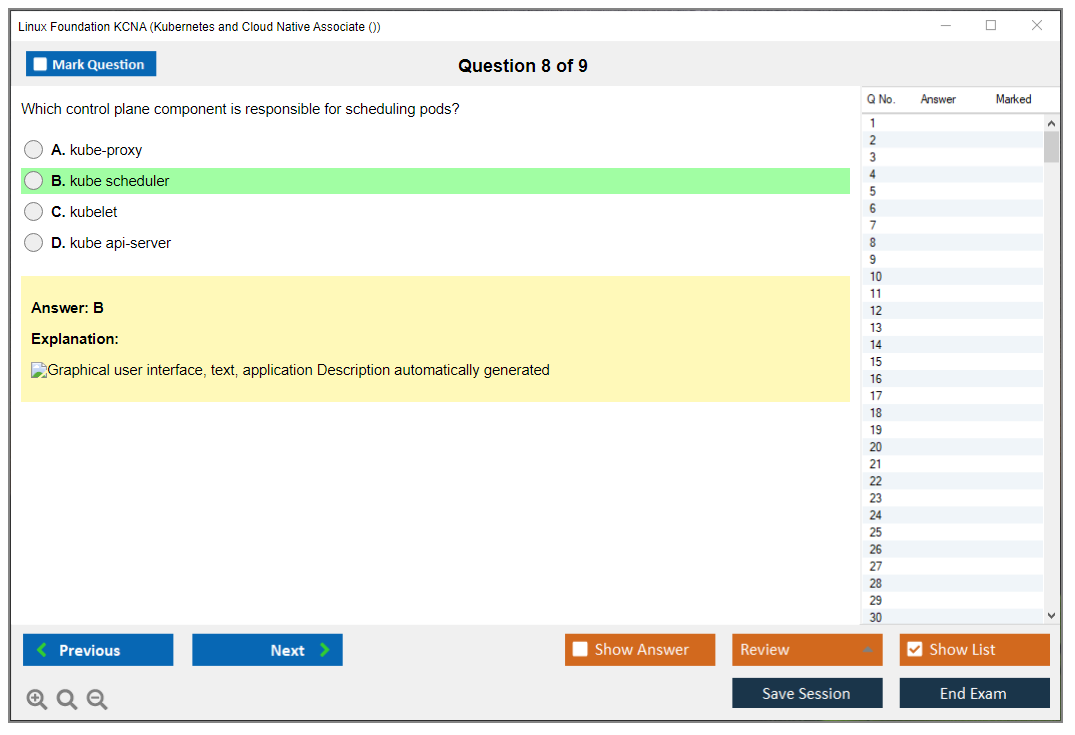
The API server's your central control point. Everything goes through it. The scheduler decides which node gets which pod based on resource availability and constraints. Controller manager runs all those controllers that watch cluster state and make changes to match desired state. And etcd? That's your cluster's brain, storing all configuration and state data.
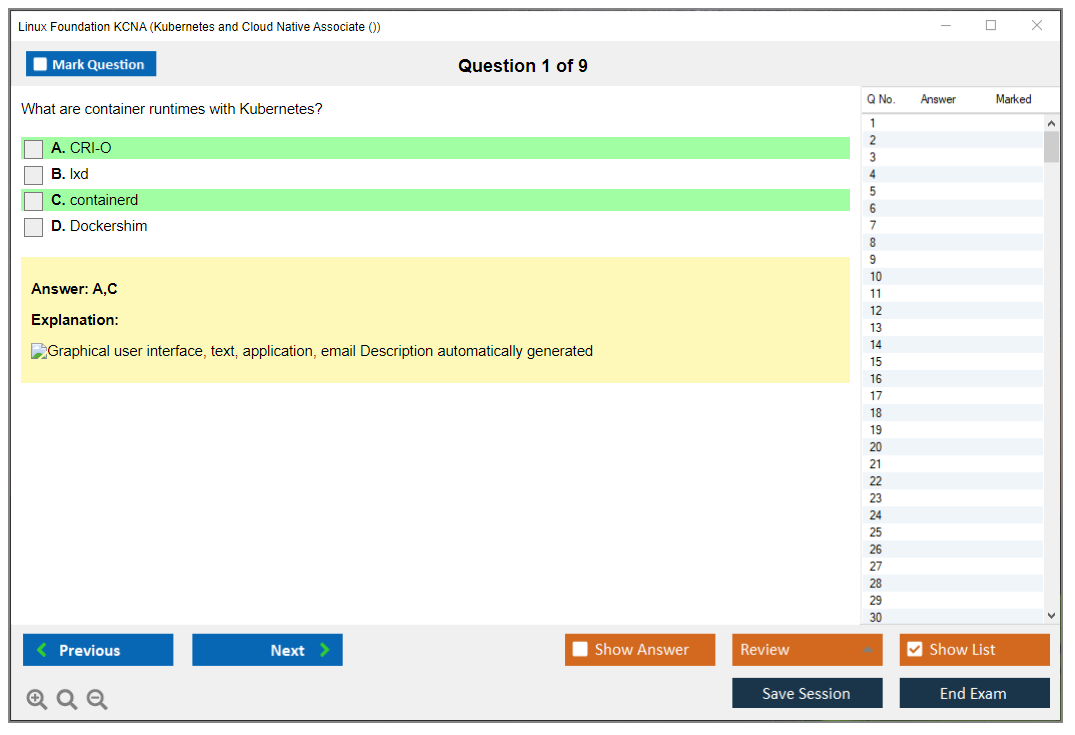
Worker nodes have their own components. Kubelet runs on each node and ensures containers're running in pods. Kube-proxy handles network rules on nodes. Container runtime actually runs your containers. Could be containerd, CRI-O, or others.
If you don't understand how these pieces talk to each other, you'll struggle with scenario-based questions. The exam might describe a problem and you need to know which component's involved. I mean, it's theoretical. This stuff connects in ways that matter when things break.
API primitives you absolutely need to know
Pods are the smallest deployable units in Kubernetes. Not containers. Pods. A pod can contain one or more containers that share networking and storage. This trips up beginners constantly.
ReplicaSets maintain a stable set of replica pods running at any given time, but you rarely create ReplicaSets directly. Deployments are what you actually use. They manage ReplicaSets and provide declarative updates for pods and ReplicaSets. StatefulSets are for applications that need stable network identities or persistent storage, like databases.
The exam expects you to know when to use each object type. Not gonna lie, the distinction between Deployments and StatefulSets has confused many test-takers. I spent an embarrassing amount of time on this myself back when I was studying, kept wanting to use Deployments for everything.
Why orchestration even matters
Container orchestration solves real problems. When you're running containerized applications across multiple machines, someone needs to decide where containers run, restart them when they fail, scale them up during high load, and scale them down when traffic drops. Kubernetes automates all of this. The exam tests whether you understand the "why" behind orchestration, not just the "how."
Service types are another big area.
ClusterIP creates an internal IP for services within the cluster. Great for backend services that don't need external access. NodePort exposes services on each node's IP at a static port, making them accessible from outside. LoadBalancer provisions an external load balancer (in cloud environments) that routes traffic to your service. ExternalName maps a service to a DNS name. You need to know which type fits which scenario.
Configuration and storage basics
ConfigMaps store non-sensitive configuration data as key-value pairs. Secrets store sensitive stuff like passwords and API keys (though they're only base64 encoded, not encrypted at rest by default). Applications consume these through environment variables, command-line arguments, or mounted volumes. The KCNA Practice Exam Questions Pack includes several questions on this pattern because it's fundamental to twelve-factor app methodology.
Volumes are ephemeral storage attached to pods. PersistentVolumes (PV) are cluster resources representing storage that's been provisioned. PersistentVolumeClaims (PVC) are requests for storage by users. StorageClasses define different types of storage with different performance characteristics.
You don't need deep storage backend knowledge, but you need to understand the PV/PVC relationship.
Container fundamentals take up 22%
This domain covers what containers actually are. They're isolated processes that package application code with dependencies, sharing the host OS kernel but isolated from each other. This differs from VMs which include entire operating systems. The benefits? Faster startup, smaller size, better resource utilization, consistent environments from dev to production.
Image layers are key knowledge. Each instruction in a Dockerfile creates a new layer. Layers're cached and reused, which speeds up builds and reduces storage. Images are immutable. Once built, they don't change. If you need different behavior, you build a new image.
Container registries store and distribute images. Docker Hub's the public default, but Quay.io, GitHub Container Registry, and private registries are common in enterprises. Image naming follows patterns like registry/repository:tag. Understanding tagging strategies (semantic versioning, git commit SHAs, latest tag anti-patterns) shows up on the exam.
Cloud native architecture principles
The CNCF defines cloud native as building and running scalable applications in modern, dynamic environments like public, private, and hybrid clouds. Characteristics include containers, dynamically orchestrated, and microservices-oriented.
The twelve-factor app methodology guides cloud native application design. Things like storing config in environment variables, treating backing services as attached resources, and keeping dev/prod parity.
Microservices decompose applications into small, independent services. Each service does one thing well and communicates through well-defined APIs. The exam tests whether you understand why you'd choose microservices (independent scaling, technology diversity, fault isolation) and what challenges they introduce. Distributed system complexity, network latency, data consistency.
Scalability concepts matter here. Horizontal scaling adds more instances, vertical scaling increases resources per instance. Cloud native apps favor horizontal scaling because it's more resilient and works better with orchestration platforms. Auto-scaling adjusts capacity based on actual demand. The exam might ask about when to use horizontal pod autoscaling versus vertical pod autoscaling.
Resilience patterns are tested conceptually. Circuit breakers prevent cascading failures by stopping requests to failing services. Retries with exponential backoff handle transient failures. Timeouts prevent indefinite waiting. Graceful degradation maintains partial functionality when components fail.
Observability gets 8% but it's important
The three pillars (metrics, logs, traces) each provide different insights. Metrics are numeric measurements over time like CPU usage, request rates, error counts. Logs are timestamped records of discrete events. Traces follow requests across multiple services in distributed systems.
Prometheus is the de facto standard for metrics in Kubernetes environments. You need basic understanding of time-series data, scraping endpoints, and common Kubernetes metrics. The exam won't make you write PromQL queries, but you should understand what metrics tell you about system health.
Health checks? Critical for Kubernetes operations. Liveness probes determine if a container's running. If it fails, Kubernetes restarts the container. Readiness probes determine if a container can serve traffic. If it fails, Kubernetes removes the pod from service endpoints. Startup probes give slow-starting containers time to initialize before liveness checks begin.
If you're coming from the CKAD or CKA path, observability might feel light here. KCNA tests concepts, not implementation. The thing is, you still need to grasp the fundamentals. They show up in unexpected ways.
Application delivery rounds out the domains
CI/CD is fundamental to cloud native practices. Continuous Integration means automatically building and testing code changes. Continuous Delivery means code's always in a deployable state. Continuous Deployment goes further. Every change that passes tests automatically deploys to production.
GitOps treats Git as the single source of truth for declarative infrastructure and applications. Changes to Git repositories trigger automated updates to running systems. Tools like Flux and Argo CD watch Git repos and synchronize cluster state. Not gonna lie, GitOps has become hugely popular and the exam reflects this.
Deployment strategies reduce risk. Rolling updates gradually replace old pod versions with new ones. Blue-green deployments run two identical environments, switching traffic from blue to green after validation. Canary deployments route a small percentage of traffic to new versions before full rollout.
Helm packages Kubernetes applications as charts (collections of files describing related Kubernetes resources). Kustomize provides template-free customization of Kubernetes configurations. Operators extend Kubernetes with custom resources and controllers for managing complex applications.
You don't need deep knowledge of these tools, but understanding what problems they solve is necessary.
The KCNA Practice Exam Questions Pack for $36.99 helps you gauge whether you've actually absorbed these domain concepts or just read about them. There's a difference between recognizing terms and understanding how they fit together.
Weight distribution affects your strategy
That 46% Kubernetes Fundamentals weight means you could theoretically miss every observability and application delivery question and still pass if you nail the fundamentals. But that's a risky strategy.
The safer approach? Building strong foundational knowledge, then making sure you're solid on containers and architecture, then covering the smaller domains. The domains aren't isolated. Understanding Kubernetes helps with observability, architecture knowledge informs application delivery approaches.
The exam format's multiple choice, which means you're selecting answers rather than configuring clusters like in CKA or CKAD. This changes how you study. You need to recognize correct concepts and distinguish them from plausible-sounding wrong answers.
KCNA Study Materials and Learning Resources
What the KCNA certification is (and why it exists)
The Linux Foundation KCNA certification is the "concepts-first" Kubernetes credential. Think of it as the cloud native fundamentals certification that proves you understand what Kubernetes is doing, why the CNCF ecosystem exists, and how the pieces fit together.
Not a terminal exam. Not a kubectl speedrun. More like vocabulary plus architecture.
Honestly? That's why it's useful. Lots of people jump straight into CKA/CKAD, memorize commands, and still can't explain what a Service really does, why Ingress exists, or what "desired state" means when a controller's reconciling. KCNA gets your head on straight before you go deeper.
Who should take it (roles and goals)
KCNA fits beginners and switchers. Help desk folks moving into cloud. Junior devs getting pushed toward containers. QA or SRE-adjacent people who keep hearing "Kubernetes" in meetings and want to stop nodding politely.
Also, it's solid for managers who want to ask better questions. I mean, you don't need to write YAML to understand why a cluster needs observability, why RBAC matters, and why "just open NodePort to the internet" is a terrible idea.
KCNA vs CKA vs CKAD (quick reality check)
KCNA vs CKA vs CKAD comes down to one thing: expectation of hands-on skill.
KCNA's conceptual with light practical awareness. CKA is admin-heavy and practical. CKAD focuses on app workloads and developer workflows. The Linux Foundation Kubernetes certification path usually goes KCNA first, then CKAD or CKA depending on your job, then maybe CKS if security becomes your thing. Different muscles. Different stress levels.
Exam cost, vouchers, and what you'll actually pay
People always ask about KCNA exam cost because budgets are real. Pricing changes, discounts happen, and bundles exist, so always check the Linux Foundation site for the current number. What I've seen in practice: you either buy the exam alone, or you buy training that includes an exam voucher, and sometimes a retake option shows up depending on the promo.
If you're cost-sensitive, self-study plus a good question bank's usually cheaper. If you're time-sensitive, the bundle can be worth it because you stop hunting for "the right resource" and just follow the track.
Format, delivery, and what "passing" means
KCNA's typically multiple-choice or multiple-select, delivered online with remote proctoring. No lab environment like CKA. You're tested on understanding, not typing.
KCNA passing score is published by the Linux Foundation (again, check the official page for the current number). The practical takeaway's simpler: don't aim to barely pass. Aim to consistently score well above the line on practice exams, because exam day adds friction you can't simulate perfectly.
Prerequisites and difficulty (who struggles and why)
Officially, KCNA prerequisites aren't strict. No one blocks you from registering because you haven't run a cluster.
But the KCNA exam difficulty spikes for two groups. People who only watched videos and never touched a cluster, so every concept stays fuzzy. Also people who already "do Kubernetes" but only in one narrow way, so they miss the breadth, especially around cloud native architecture and CNCF tooling categories.
Not gonna lie. Beginners can pass. You just need repetition and a plan.
Use the exam outline like a GPS
Before you buy anything, download the KCNA exam objectives document from the Linux Foundation. This is the KCNA exam curriculum document that lists domains, subtopics, and weight distribution.
Print it. Annotate it. Treat it like a checklist.
This one step fixes a lot of wasted study time, because it tells you what matters, what matters less, and what's totally out-of-scope no matter how interesting the rabbit hole is.
What you need to know (the main buckets)
KCNA's broad. You'll see Kubernetes fundamentals like clusters, nodes, pods, deployments, and what controllers do. Container fundamentals like images, registries, and runtime basics. Cloud native architecture topics like microservices, APIs, and scalability patterns.
Observability shows up too: metrics versus logs versus traces, and what they're for. Security basics are conceptual: RBAC, least privilege, and supply chain-ish ideas like image provenance. Networking stays at the "services, ingress basics, DNS" level, but you still need to understand why each abstraction exists, not just memorize definitions.
Official Linux Foundation training (LFS250) and who it's for
If you want the cleanest "one thing covers it all" option, the official Linux Foundation KCNA training course is the LFS250 bundle. It's built to cover all exam objectives with video lectures, hands-on labs, and practice questions.
Look, I've got opinions here. The biggest benefit's alignment. The Linux Foundation training course benefits are real: structured curriculum that maps to the exam, expert instructors, lifetime access to course materials, and sometimes bundled exam voucher options that can soften the sticker shock depending on the deal you catch.
Now the limitations. The Linux Foundation training course limitations are also real: it costs more than self-study, it can go deeper than the exam actually needs, and your pace gets shaped by the course structure. That last one matters if you learn better by bouncing between docs, diagrams, and quick labs.
CNCF and Kubernetes documentation (the "source of truth")
For KCNA, Kubernetes.io's the authoritative reference. CNCF official documentation plus Kubernetes docs is where definitions are consistent, diagrams match reality, and concepts are explained in the same language the exam writers tend to use.
I'm serious. Read the docs.
A documentation-based study strategy that works is to systematically read the Kubernetes Concepts section, then go object by object. Pod, Deployment, ReplicaSet, Service, Ingress, ConfigMap, Secret, Namespace. Take notes aligned to the exam objectives, not random curiosity. Long rambling warning, but this is where people mess up: they read docs like a novel, forget everything a week later, then panic-buy three video courses, when the fix was to read one concept page, write a 5-line summary in their own words, and test themselves with questions tied to that exact domain.
I learned this the hard way after spending two months collecting browser tabs like some kind of documentation hoarder. Had maybe 80 tabs open at one point. My laptop fan sounded like a small aircraft taking off. Turns out you actually have to close the tabs and retain something from them, which is a design flaw in the learning process if you ask me.
Interactive tutorials and zero-install labs
Kubernetes basics for beginners gets easier when you can click around without fighting your laptop.
Kubernetes.io has browser-based interactive tutorials that require no installation, which is perfect for "I just want to see what a pod is" days. Katacoda and Play with Kubernetes also give you free browser-based Kubernetes environments for experimentation without setup drama or cloud bills.
Hands-on isn't required for the exam, but it makes the mental model stick. One short lab can save you an hour of rereading.
Third-party study guides, books, and how to judge them
There're plenty of third-party KCNA study guides and books that consolidate topics into a linear path with review questions. Some are great. Some are recycled blog posts with a pretty cover.
Evaluating study guide quality's boring but important: look for recently published materials (2025-2026 if possible), authors with real Kubernetes community credibility (talks, contributions, practical work), verified reviews that mention the current exam outline, and explicit alignment to current exam objectives. If a guide doesn't mention the objective domains and weights, I get suspicious fast.
Video platforms (what's good and what's fluff)
Udemy, A Cloud Guru, KodeKloud, and Pluralsight all have KCNA-ish content. The quality varies by instructor, not by platform.
KodeKloud deserves a callout because the KCNA course highlights are exactly what many beginners need: hands-on labs in a browser-based environment, practice tests aligned with exam format, and scenario-based explanations that stop you from memorizing buzzwords. That said, don't treat any video course like it's magic. You still need the exam outline and the docs.
YouTube's also packed with free KCNA prep videos, concept explainers, and study tips from certified folks. Some are excellent. Some are a dude reading slides at 1.25x speed. Pick carefully.
Notes, cheat sheets, and making your own (the retention hack)
Community-created KCNA study notes and cheat sheets on GitHub, blogs, and Medium can be great for review. They're also dangerous if you treat them as primary learning, because they can be outdated or oversimplified.
Creating effective personal study notes is where you win. Summarize each exam domain in your own words. Draw a quick architecture diagram of control plane versus worker node components. Make flashcards for terminology that you keep mixing up. Fragments help. "Service chooses pods." "Ingress routes HTTP." "Controller reconciles state." Simple.
Flashcards that actually work
Flashcard platforms for KCNA like Anki and Quizlet are perfect for spaced repetition. Terminology, component roles, relationships, and "which thing's responsible for what" are all flashcard-friendly.
Building custom flashcards is better than downloading random decks. Make cards for each Kubernetes object type, service type, architectural component, and cloud native principle, and include a short use case. Example: "ConfigMap: non-secret config injected into pods, why not bake into image?" That kind of prompt builds understanding, not trivia recall.
Practice tests (and a product that can help)
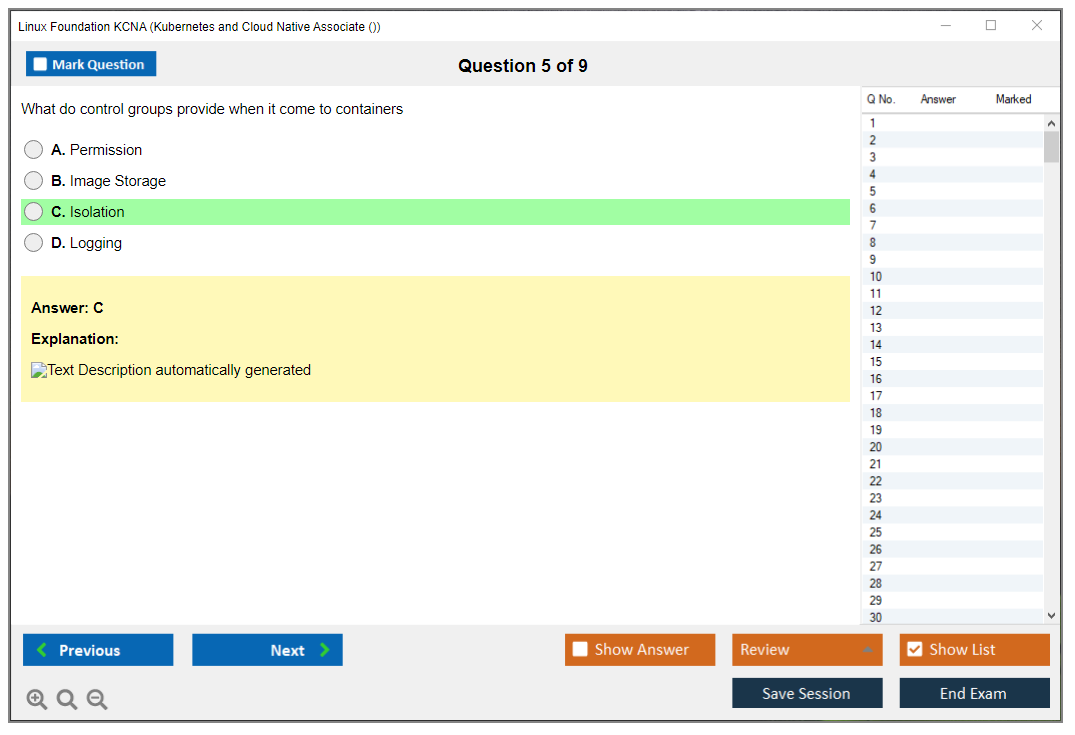
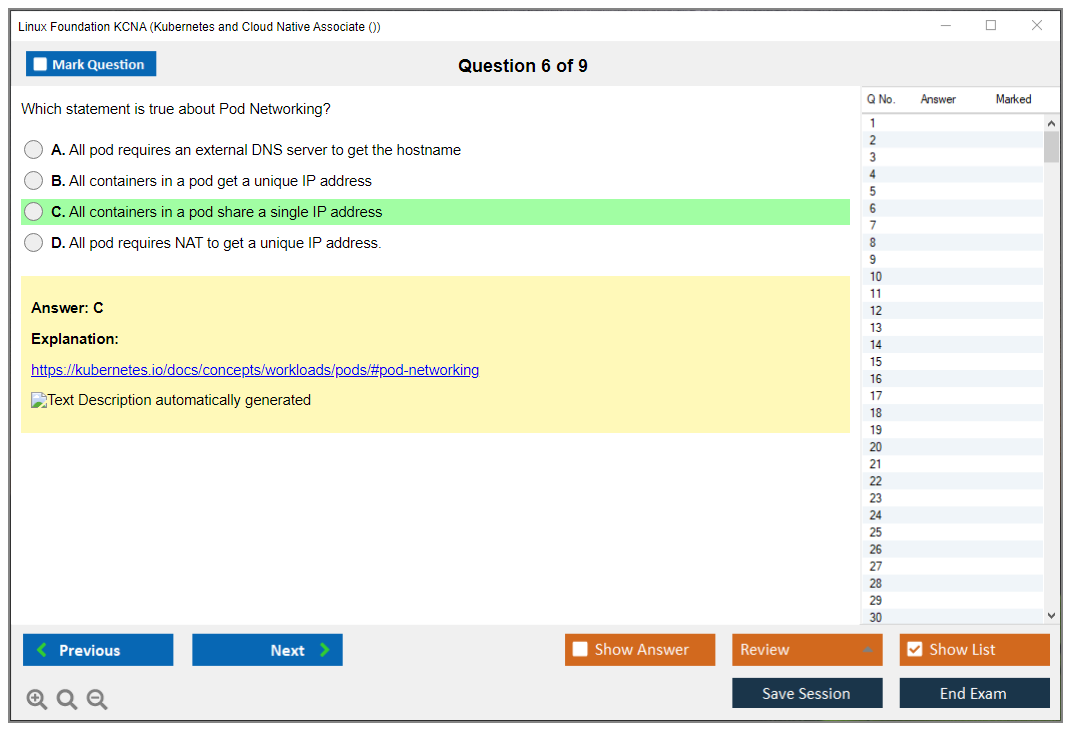
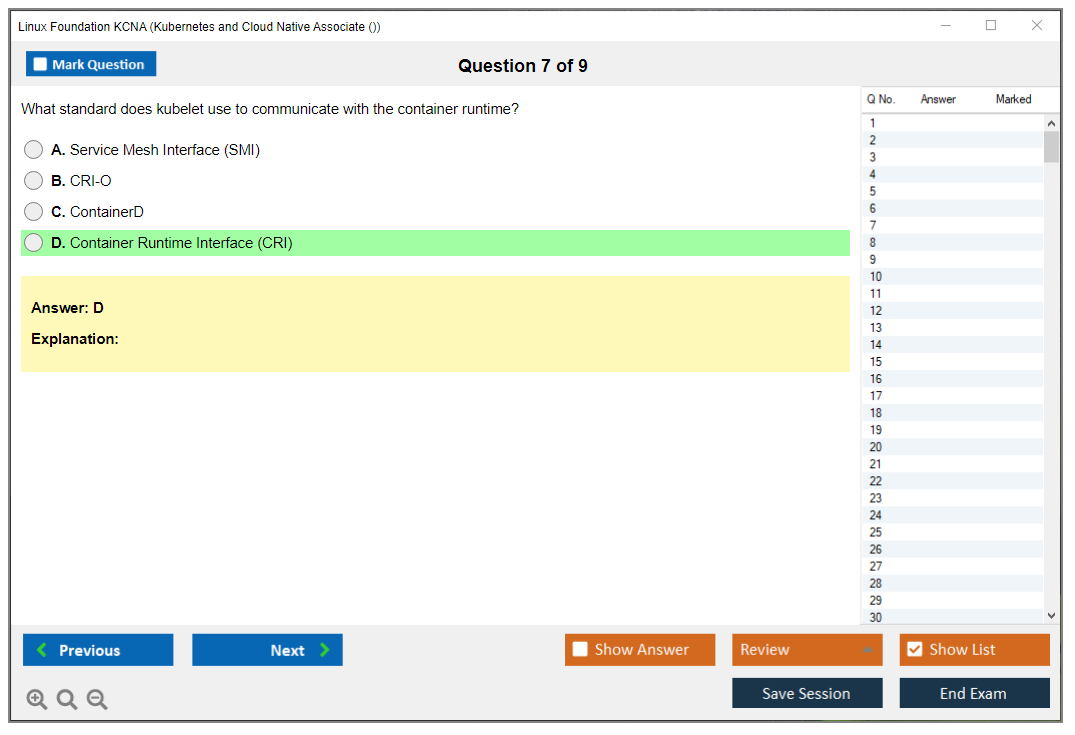
KCNA practice tests are where you find your gaps fast. Good ones feel like the exam: conceptual, sometimes scenario-based, and annoyingly specific about wording.
If you want an extra set of questions to drill, the KCNA Practice Exam Questions Pack is $36.99. I like using something like that after I've done the docs pass, because then every missed question turns into a targeted doc review instead of random guessing. If you're the type who learns by testing, grab the KCNA Practice Exam Questions Pack and track your weak domains against the official objectives.
Hands-on environments (local and cloud)
Even though the exam doesn't demand lab skills, hands-on practice reinforces the concepts.
For local setups, Minikube, Kind, and Docker Desktop can run Kubernetes on your machine. Pick one. Don't bike-shed. If your laptop's ancient, use managed Kubernetes trials instead.
Free cloud provider trials for AWS EKS, Google GKE, and Azure AKS can get you a real cluster experience without much setup complexity, though you still need to watch costs. Create, explore, delete. Keep it tight.
CNCF space, release notes, and staying current
KCNA includes cloud native ecosystem awareness, so the CNCF space's worth browsing. Not to memorize every logo. Just understand categories and why tools exist.
Also, follow Kubernetes release notes and blogs lightly. You're not studying for a version-specific admin exam here, but being aware of deprecations and direction helps you avoid learning stale ideas from old videos.
Study groups and accountability
KCNA-focused study groups on Discord, Slack, and Reddit can help when you're stuck, or when motivation drops. Ask specific questions. Share your objective checklist. Don't just lurk.
And yeah, having one other person to compare practice scores with can keep you honest.
Renewal and validity (don't ignore this)
People forget the KCNA renewal policy until the cert's about to expire. Linux Foundation certifications typically have a validity period and require renewal via retake or recertification rules depending on the program, so confirm the current policy on the official site.
Plan ahead. Budget for it. Or move on to the next cert.
If you pass KCNA and want momentum, the next step's usually CKAD (dev focus) or CKA (ops focus). That's the cleanest way to turn "I understand Kubernetes" into "I can run Kubernetes."
FAQ style answers people search for
How much does the KCNA exam cost? It varies, and discounts are common, so check the Linux Foundation listing and consider voucher bundles with training.
What's the passing score for the KCNA exam? It's defined by the Linux Foundation and shown on the exam page, and you should aim above it by a comfortable margin in practice.
Is the KCNA certification hard for beginners? It's doable, but the breadth is what trips people, so stick to the objectives and do light hands-on to make concepts real.
What're the best KCNA study materials and practice tests? The LFS250 course plus Kubernetes.io docs is the "official" combo, and targeted question sets like the KCNA Practice Exam Questions Pack can sharpen weak areas.
Does the KCNA certification expire and how do you renew it? Yes, it typically expires after a set period, and renewal usually means following the current Linux Foundation policy, often by retaking.
Conclusion
Wrapping up your KCNA path
Okay, real talk.
The Linux Foundation KCNA certification isn't gonna magically turn you into some Kubernetes wizard overnight. Nothing works like that. But here's where it does make sense: it's actually a really solid starting point if you're trying to break into cloud native stuff without your brain completely melting from those hardcore certifications everyone talks about.
The KCNA exam cost? Pretty reasonable compared to other tech certs, and the passing score isn't designed to trick you with gotcha questions or obscure nonsense. It tests whether you actually understand cloud native fundamentals and Kubernetes basics for beginners, not whether you can troubleshoot a production cluster at 3am when everything's on fire. That's what CKA is for. When you're comparing KCNA vs CKA vs CKAD, you're really looking at different stages of your learning path. KCNA is your foundation, the others are your specialization once you've got the basics nailed down.
What makes this Kubernetes and Cloud Native Associate exam worth your time is how it forces you to understand the why behind cloud native architecture. Not just memorizing kubectl commands like some robot. The KCNA exam objectives cover everything from container fundamentals to observability basics, and that breadth matters when you're trying to have intelligent conversations with DevOps teams or make sense of job descriptions that throw around buzzwords.
Study materials matter.
Now about KCNA study materials and practice tests: you need both, period. Reading docs is key. Watching videos helps. But nothing prepares you like working through realistic questions that match the actual exam format and difficulty level. The KCNA exam difficulty isn't about obscure trivia (thank goodness), it's about applying concepts to scenarios, and you can't fake that understanding without practice.
The KCNA prerequisites are technically "none" but realistically you should have some basic Linux comfort and know what containers are before you start. There's a KCNA renewal policy to think about. This cloud native fundamentals certification expires after three years, so you'll need to either retake it or move up the Linux Foundation Kubernetes certification path to stay current. I actually forgot to renew my first cloud cert years ago and had to start over, which was annoying but taught me to set calendar reminders for this stuff.
If you're serious about passing on your first attempt (and not wasting that exam cost on a retake because those fees add up), you need to test yourself repeatedly with quality materials. The KCNA Practice Exam Questions Pack gives you exactly that. Questions that actually reflect what you'll see on test day, with explanations that help you understand the reasoning behind each answer. Not gonna lie, practice exams are what turn "I think I know this" into "I'm confident I can pass."
Don't overthink it. Study the objectives, practice consistently, and you'll be fine.
