

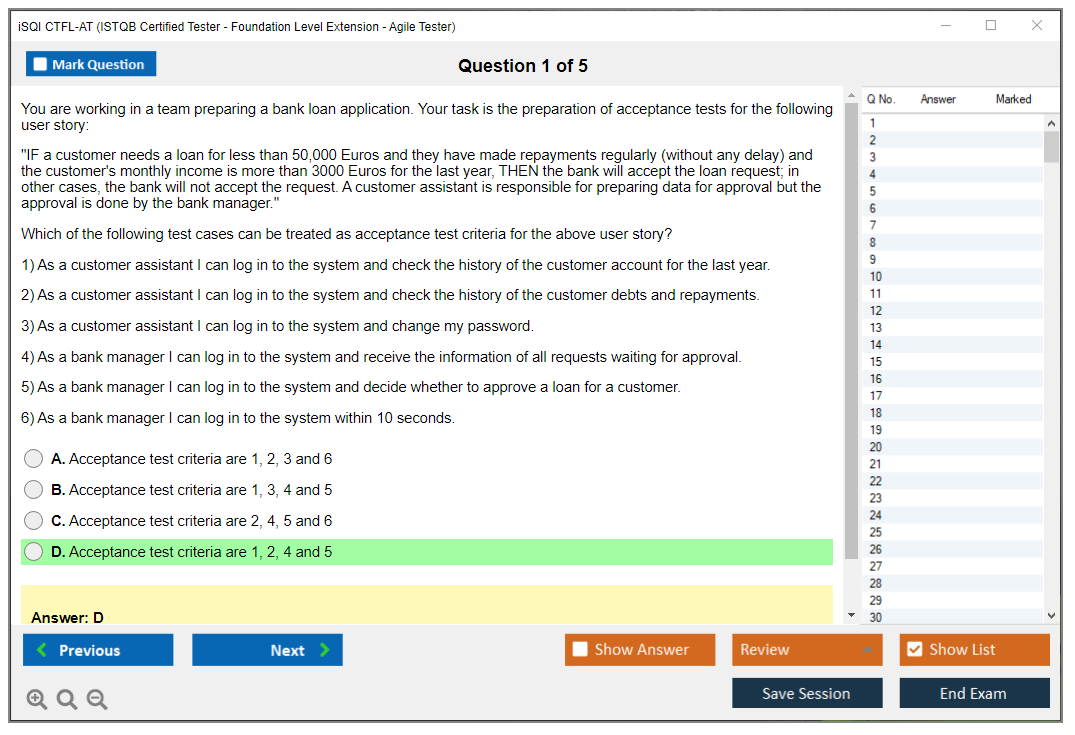
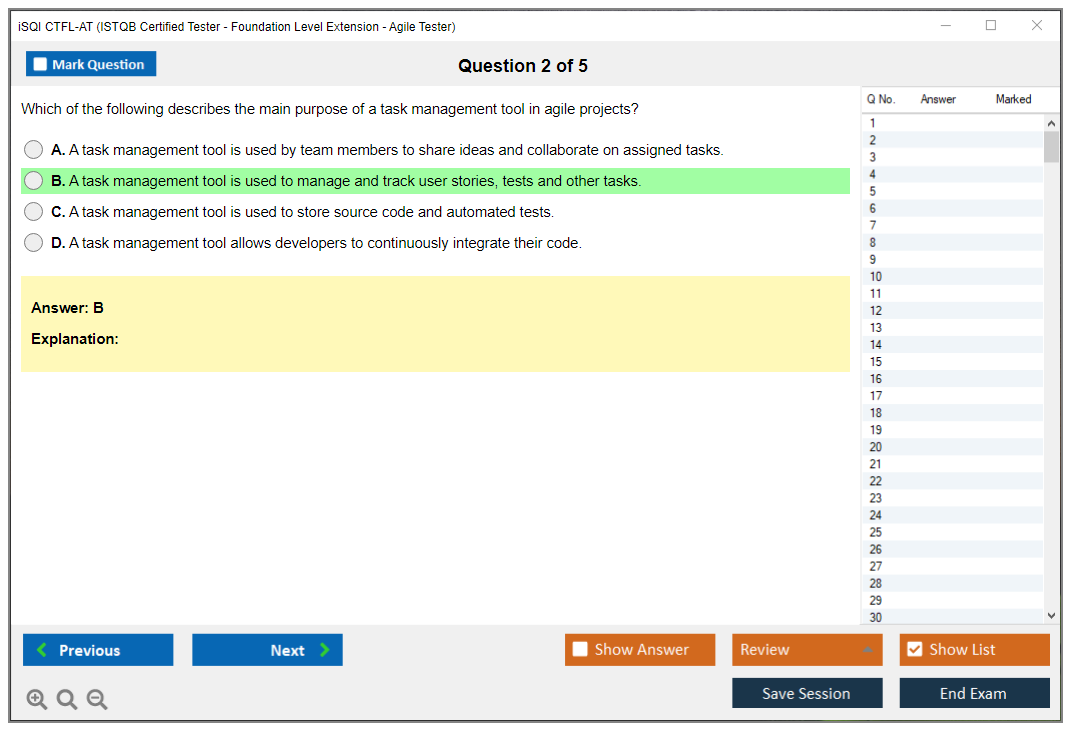
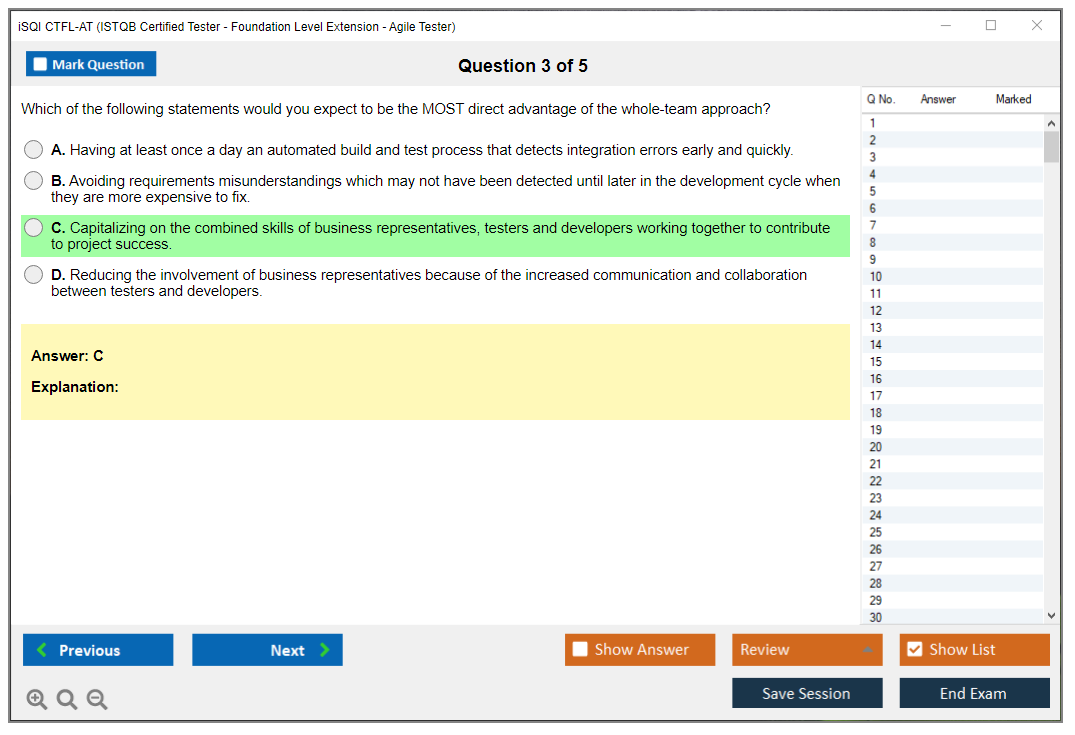
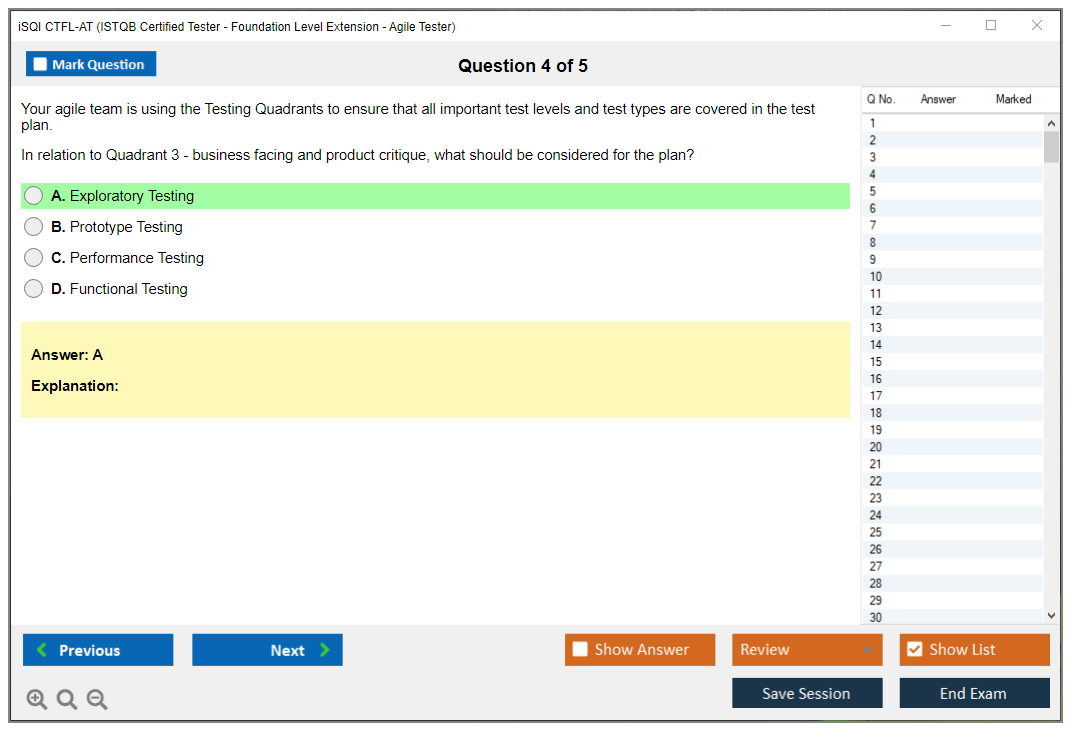
iSQI CTFL-AT (Certified Tester Foundation Level Agile Tester) Overview
The iSQI CTFL-AT certification actually holds weight if you're testing software in Agile environments, and honestly, most teams have at least pretended to embrace Agile for the past decade. This globally recognized credential validates your understanding of how testing functions when you're not trapped in a waterfall methodology where testing occurs after development supposedly reaches "completion." Spoiler alert: it never actually does.
Why this certification exists
Look, traditional testing certifications like the ISTQB Certified Tester Foundation Level teach you extensive material about test design, defect management, foundational concepts. The thing is, those frameworks operate under the assumption you're working in sequential models where requirements remain frozen and testing constitutes its own isolated phase.
In Agile? You're testing constantly. During planning sessions, throughout development cycles, and following deployment. The CTFL-AT Agile Tester exam zeros in specifically on how testing integrates into sprints, how you collaborate with developers literally sitting within arm's reach, and how you deliver value when the product owner inevitably changes direction every Tuesday afternoon.
I mean, it's designed for testing professionals either currently embedded in Agile teams or transitioning from more traditional structured environments. QA engineers, test analysts, test engineers. All the usual suspects. But also developers who've suddenly discovered they're now responsible for testing (welcome to the party, friends), business analysts needing to craft testable acceptance criteria, and Scrum team members wanting to comprehend what the tester actually does all day besides investigating flaky tests and advocating for quality.
What you're actually learning
Starts with Agile fundamentals. Sounds boring, right? But it's necessary groundwork. You'll absorb Agile values, principles, the whole-team approach where everyone owns quality instead of just lobbing defects over the wall to QA. Then it transitions into practical stuff. How testing roles function within cross-functional teams. How you participate in sprint planning without defaulting to "we need substantially more time to test everything." Spoiler: you won't receive it. How feedback loops actually operate when you're deploying every two weeks.
Testing methods and techniques receive Agile-specific treatment too. You'll cover behavior-driven development, exploratory testing within sprint constraints, test-driven development awareness (even if you're not personally writing those unit tests), and working with user stories instead of 200-page requirements documents that nobody reads anyway. The CTFL-AT syllabus also addresses risk-based testing in contexts where you can't invest three weeks conducting full risk analysis because the sprint already started yesterday.
There's coverage of test automation basics too, specifically how automation supports continuous integration and rapid iteration cycles. You won't transform into an automation expert overnight, but you'll understand why everyone keeps chanting "we need automated regression tests" and what that actually means for sprint velocity and team capacity.
On a related note, I once worked with a developer who insisted automated tests were "just extra code to maintain" until a production bug cost the company about forty thousand dollars in lost transactions. Suddenly he became automation's biggest advocate. Funny how that works.
Who benefits most from this
Honestly? Testers transitioning from waterfall or V-model environments into Agile teams extract the most value. I've witnessed QA professionals struggle because they're accustomed to having complete requirements documentation before drafting a single test case, and suddenly they're expected to test half-finished features based on three-sentence user stories and impromptu conversations with the product owner. The certification provides practical frameworks for working through that ambiguity and inherent uncertainty.
It's also valuable if your organization is adopting DevOps practices, continuous delivery pipelines, or shift-left testing philosophies. These approaches all assume you're testing earlier and more frequently throughout development cycles, which is precisely what Agile testing emphasizes. The ISTQB Agile Tester Foundation alignment means the certification follows standardized learning objectives, so you're not just absorbing one trainer's personal opinions about how Agile testing should ideally function.
Real-world application focus
What I really appreciate about the iSQI CTFL-AT certification is its emphasis on practical application over pure theory memorization. The exam includes scenario-based questions where you need to determine what a tester should do in realistic sprint situations that actually happen.
Should you block the story because of that critical defect? How do you estimate testing effort using story points? What metrics actually matter when you're presenting findings at the sprint review?
You learn how to contribute meaningfully to sprint planning sessions, daily stand-ups, retrospectives, and sprint reviews. Not just attend them and mentally check out. How to work with product owners to define acceptance criteria that are actually testable and measurable. How to collaborate with developers so they're not blindsided when you discover bugs in their code thirty minutes after they committed it to the main branch. The certification validates you understand test artifacts in Agile contexts, which translates to user stories, acceptance criteria, and definition of done instead of test plans and test strategies that consume a week to write and nobody ever reads anyway.
Risk management gets covered too, but adapted for Agile environments where you don't have luxury time for formal risk assessment matrices. Same with test estimation. You'll learn techniques suitable for planning poker and sprint capacity planning rather than detailed bottom-up estimates that become instantly obsolete the moment requirements shift.
Career advancement and recognition
Certificate holders gain tangible credibility with employers seeking testers who understand Scrum, Kanban, XP, and other Agile frameworks inside out. It appears increasingly in job descriptions for QA positions at companies really practicing Agile methodologies. The certification provides common vocabulary for discussing testing approaches with team members, which matters more than you'd initially think when half the team believes "Agile" means "no documentation" and the other half interprets it as "organized chaos."
It's also a foundation for more advanced certifications in test automation like the ISTQB Certified Tester Advanced Level, Test Automation Engineering, test management tracks like ISTQB® Certified Tester Advanced Level - Test Manager, or specialized domains such as ISTQB Certified Tester Foundation Level-Performance Testing. Getting CTFL-AT demonstrates commitment to professional development in modern software delivery practices, which is exactly the kind of thing that gets noticed during performance reviews and promotion discussions.
CTFL-AT Exam Objectives and Syllabus Coverage
What the iSQI CTFL-AT certification covers (and why it exists)
The iSQI CTFL-AT certification (Certified Tester Foundation Level Agile Tester) is a syllabus-driven check that you understand how testing actually works inside Agile teams, not in the old "QA phase at the end" fantasy. Agile changes everything. Where testers sit. What they actually do during standups. And what "done" even means when the product owner's rewriting acceptance criteria mid-sprint because stakeholders changed their minds again. Honestly happens more than you'd think.
The CTFL-AT syllabus is organized into major knowledge areas that map to Agile testing competencies modern teams expect, like collaboration, rapid feedback, lightweight documentation, and automation awareness. It's structured to build progressive understanding from Agile fundamentals through practical testing applications. You start with mindset and roles then move into techniques planning risk and finally tooling and CI/CD expectations. Sounds straightforward but the exam loves throwing curveballs at the boundaries between topics.
Agile foundations testers are expected to know
A big chunk is Agile testing principles and practices, and yes that includes the Agile Manifesto values and the twelve principles. You're expected to connect those values to day-to-day testing behavior, like preferring working software and feedback over heavy documentation. Being comfortable with change because the backlog's alive and the product owner's going to reorder things at the worst possible time. Mixed feelings here. Some of the manifesto stuff feels obvious if you've worked sprints, but the exam wants textbook phrasing.
Whole-team quality matters. Period.
The syllabus pushes the whole-team approach where quality's collective responsibility, not testing as a separate function that "accepts" work from developers. That means you need to understand collaboration techniques across testers, developers, product owners, and stakeholders. Testing happens throughout the development lifecycle rather than as a distinct phase, with early and frequent feedback loops as a core strategy. This is where rubber meets road. If your team still throws builds "over the wall," you're not doing Agile testing no matter what your sprint board says.
You also need a baseline understanding of iterative and incremental development models including Scrum, Kanban, and Extreme Programming (XP), plus a comparison of Agile methodologies with traditional sequential approaches. Benefits and challenges show up here too, from a testing perspective. Faster feedback and better alignment to business value, sure, but also fewer "quiet weeks" for test execution and more pressure to keep regression under control. That pressure's real. I've worked sprints where we accumulated regression debt for three months before anyone admitted we had a problem, and by then the automation backlog was impossible.
Team roles, Scrum ceremonies, and where testing fits
The exam expects you to know Agile team roles and responsibilities, including the tester's evolving position in cross-functional teams. This is where Scrum testing roles and responsibilities show up in practical terms: what a tester does during refinement, sprint planning, daily scrum, review, and retrospective, and how test status reporting should look in an Agile team without turning into a weekly PDF nobody reads.
Sprint lifecycle is a core objective. It includes where testing activities fit within each phase, and how you manage test activities within sprint constraints and velocity considerations. Honestly this is where new testers stumble because they still plan like they have a "test week" at the end but Agile expects shift-left testing pairing and continuous validation while stories're being built and frankly that's a mindset flip that takes actual practice not just reading slides.
Documentation's covered too, but in the Agile way: user stories, acceptance criteria, lightweight specifications, and quality gates like definition of ready and definition of done. Fragments everywhere. "DoD includes automated checks." "DoR includes testable acceptance criteria." That kind of thing. Gets repetitive, but it's testable material.
Techniques and practical testing inside a sprint
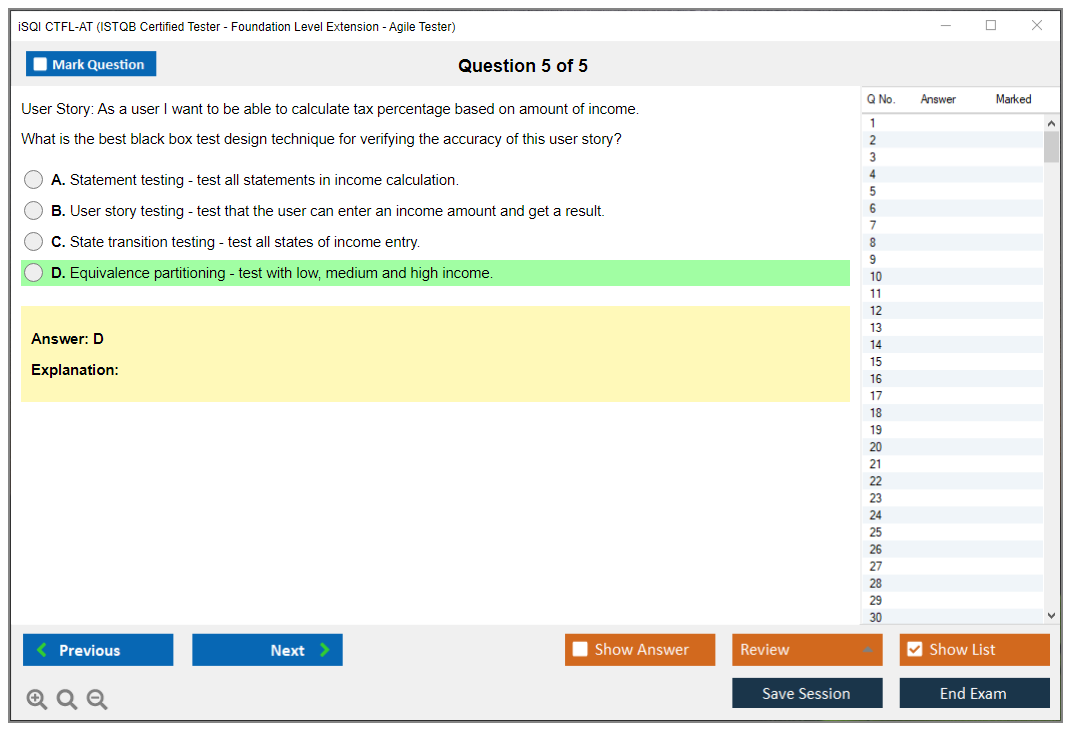
The syllabus doesn't stop at mindset. It expects technique fluency applied to stories. Black-box testing techniques applied to user stories and acceptance criteria are fair game. This includes equivalence partitioning and boundary value analysis for quick coverage, decision table testing for complex business rules, and state transition testing when workflows or user journeys have states that can break. Standard stuff, but context matters.
Exploratory testing matters. A lot.
Exploratory testing in time-boxed sessions aligned with sprint goals, plus session-based test management, is explicitly in scope. It fits Agile because you often don't have time to write perfect scripts before the feature's ready. Experience-based testing and checklist-based testing show up too, basically acknowledging that tester intuition and "common failure patterns" are real assets when used responsibly. Classification tree method's also mentioned for systematic design though most teams only touch it when they're trying to tame combinatorics or someone's feeling fancy.
Risk-based testing and planning without heavy ceremony
Another major objective is risk-based testing in Agile, where formal risk assessment may be lightweight but still intentional. You're expected to understand product risk analysis with simple scoring. Prioritization aligned with business value. Adapting risk assessment to sprint and release planning, including risk-based regression selection when sprint capacity's tight and you can't run everything. Let's be honest nobody's running the full regression suite every sprint unless they've got stellar automation or they're lying.
Test planning's multi-level. Release, iteration, daily. Defect management's covered too, but with the Agile bias toward rapid fixes over formal tracking workflows. Configuration management and version control basics apply to test assets, not just code, and quality risk communication with product owners and stakeholders is treated like a real skill. Because it is. You've gotta translate "flaky tests" into "delivery risk" in language they care about.
Technical debt's part of the story. Not gonna lie, this is a sneaky topic that shows up in scenario questions. Technical debt's often created by skipping tests, delaying automation, or accepting flaky environments. The syllabus connects that directly to testing practices and long-term regression pain. I've seen teams ignore this section then wonder why the exam asks about refactoring test suites.
Automation and CI/CD expectations at foundation level
The continuous integration and test automation basics area isn't asking you to be a SDET wizard, but you do need to understand continuous integration fundamentals and how testing supports rapid feedback cycles. That includes the test pyramid concept balancing unit, integration, and end-to-end checks. Regression testing strategies using automation to enable continuous delivery. Test environment management in CI pipelines, which sounds abstract but it's really about knowing why tests fail when they hit staging versus local and who owns fixing that.
TDD, ATDD, and BDD are included: test-driven development concepts and how testers support developers, acceptance test-driven development fundamentals, and behavior-driven development basics. Pairing and mob programming sessions involving testers are also in scope. Sounds "soft," but the exam frames it as a concrete way to reduce misunderstandings early. Fair point, honestly.
Tooling's broad.
API testing fundamentals for service-oriented architectures, unit testing frameworks awareness, acceptance test automation with tools like Cucumber, SpecFlow, or FitNesse. Test data management for automated suites. Version control systems for test scripts and documentation, plus dashboards and collaboration tools for distributed teams. Performance testing awareness, static testing techniques like reviews and static analysis, and non-functional testing considerations also appear because Agile teams still ship security, accessibility, and usability bugs if nobody owns them. You don't need deep expertise here, just enough to recognize what each tool category does and when you'd use it in a sprint context.
Exam basics people always ask about
CTFL-AT prerequisites usually mean you should already have a foundation-level testing baseline (often a Foundation certificate requirement depending on the provider), plus some exposure to Agile or Scrum helps a lot. The CTFL-AT passing score and exact exam rules depend on the current iSQI offering and exam provider, so check your local registration page. Expect a multiple-choice format with scenario questions and a fixed time limit. Standard certification stuff.
CTFL-AT exam cost varies by country, training bundle, and whether you buy an exam-only voucher or include a course. Same story with retakes and scheduling. For prep, the official syllabus plus good CTFL-AT study materials and a couple rounds of CTFL-AT practice tests usually makes the difference. The exam likes wording traps where two answers feel "kinda Agile" but only one matches the syllabus definition. That's the frustrating part. Real-world Agile's flexible, exam Agile's not.
Quick FAQ hits (because you will google these)
What is the iSQI CTFL-AT certification and who's it for? Testers, QA engineers, devs, BAs. Basically anyone in an Agile team who needs a shared testing vocabulary.
How hard is the CTFL-AT Agile Tester exam? If you've lived Scrum and done real sprint testing, it's manageable. If you only know waterfall testing, the mindset shift's the hard part, not the techniques.
Does CTFL-AT require renewal? Many foundation-level certs don't expire, but always confirm with iSQI or your provider for the current policy. Things change.
CTFL-AT Prerequisites and Recommended Experience
You actually need the Foundation Level first
Okay, here's the deal: iSQI CTFL-AT certification requires you to already have your ISTQB Certified Tester Foundation Level certificate in your pocket before you even think about registering. This isn't some "nice to have" suggestion. It's mandatory, full stop.
You've gotta show proof of that Foundation Level certificate during registration. The thing is, it actually makes sense when you dig into what the CTFL-AT Agile Tester exam actually tests, you know? The exam assumes you already know basic testing terminology like test cases, defect tracking, test execution, and test coverage from that Foundation Level baseline. Without that groundwork, you're gonna struggle with scenario-based questions that reference core test design approaches or software development lifecycle phases without explaining them from scratch.
The CTFL-AT prerequisites don't specify which variant of Foundation Level you need. Could be CTFL_001, could be the UK syllabus version, whatever you've got works. Just needs to be legitimate and verifiable.
Work experience isn't mandatory but you'll want it
Here's where it gets interesting.
No specific work experience is officially required for the CTFL-AT Agile Tester exam. You could theoretically pass it fresh out of school with just your Foundation Level cert and good study materials.
But honestly? That'd be rough.
Most people I know who passed comfortably had at least six months of actual testing experience before attempting this certification. Doesn't have to be Agile specifically. Any testing background helps because you've soaked up concepts like defect tracking systems, test management tools, and how software actually gets built and breaks in real environments. When exam questions describe sprint scenarios or ask how you'd approach testing a user story, that practical context makes things click faster than pure memorization ever could.
I remember talking to someone who tried cramming for this after passing Foundation Level with just theoretical knowledge. She got through it eventually, but said she felt like she was translating everything twice in her head during the exam.
Agile exposure is where the magic happens
The real recommended experience centers around Agile environments. Even if you've just been an observer or participated tangentially in one Agile project, that exposure gives you context the CTFL-AT syllabus can't fully convey through text alone.
Participation in at least one sprint cycle? Wildly helpful.
You've seen how daily stand-ups actually function, not just read about them. You understand why sprint planning matters. What retrospectives accomplish. How backlogs get prioritized. Familiarity with the Scrum framework (sprints, backlogs, ceremonies) turns exam questions from abstract scenarios into "oh yeah, I've dealt with this exact situation."
Understanding user story format and acceptance criteria structure is another area where hands-on beats theoretical every time. Same with knowing the practical distinctions between Product Owner, Scrum Master, and Development Team roles beyond just textbook definitions.
Technical awareness beats deep expertise
You don't need to be a coding wizard for iSQI CTFL-AT certification, but basic technical awareness helps plenty. Understanding iterative development and incremental delivery concepts. Having used collaboration tools like Jira or Azure DevOps. Knowing what continuous integration tools like Jenkins or GitLab CI actually do. These give you vocabulary and mental models for tackling exam scenarios.
Awareness of different application types matters too. Web apps, mobile, desktop applications, APIs.. they all get tested differently in Agile contexts. Basic grasp of test automation concepts helps, though you don't need actual coding skills. The exam might ask about automation strategy or when automation makes sense in a sprint, but it won't make you write test scripts.
Knowledge of version control concepts like Git branches or merge conflicts. Familiarity with different testing levels (unit through acceptance). Understanding functional versus non-functional testing categories. All this stuff from Foundation Level gets applied in Agile contexts throughout the exam.
Educational background is flexible
No specific academic degree is required for eligibility, which I appreciate. Computer science or IT backgrounds obviously help. But I've seen people from business analysis, product management, even project coordination backgrounds do well on this exam because they understood the collaboration and communication aspects of Agile testing.
Self-study works fine as a preparation path. Professional training courses can speed things up if you learn better with structure. English language proficiency is necessary since the exam's typically given in English, though some translations exist depending on your region and testing provider.
The mindset matters more than you'd think
What really matters for CTFL-AT practice tests and the actual exam? Logical thinking and analytical skills.
The exam leans heavily on scenario-based questions where you need to apply concepts to practical situations rather than just regurgitate memorized definitions. Quality assurance versus testing distinctions, risk-based testing approaches in sprints, how to balance testing activities across an iteration. These require understanding principles and adapting them to specific contexts.
Honestly, the biggest gap I see in people who struggle isn't knowledge, it's the Agile mindset shift. Traditional testing approaches don't always translate directly, and if you've only worked in waterfall environments with formal test phases and extensive documentation, well.. Agile's focus on collaboration, working software over thorough documentation, and responding to change over following a plan can feel disorienting at first.
That's why even informal exposure to Agile environments (shadowing a Scrum team, attending a sprint review as a stakeholder, reading through a team's user stories) provides disproportionate value compared to just reading about Agile testing principles and practices in isolation.
CTFL-AT Exam Format, Duration, and Passing Score
Quick overview of the iSQI CTFL-AT certification
The iSQI CTFL-AT certification is basically the Agile add-on to the classic foundation-level testing knowledge, and it's aimed at people working inside Scrum or other Agile setups who need to test without pretending Agile is "no process". Not gonna lie, it's a nice signal for hiring managers because it says you understand Agile testing principles and practices, not just how to write a bug report.
It fits testers. BAs can benefit.
What it validates is your ability to apply the CTFL-AT syllabus ideas in realistic team situations: whole-team quality, fast feedback, and making testing work inside short iterations when everyone's scrambling to meet the sprint goal and nobody's quite sure who's supposed to automate that regression suite. You'll see references that line up with the ISTQB Agile Tester Foundation world, including shared glossary terms and common Agile language. Actually, funny thing is I've seen people pass this exam who couldn't tell you what a user story acceptance criterion was three months earlier, but they worked sprints every day and the scenarios just clicked because the work itself taught them more than any deck of slides ever could.
What the exam is actually testing
The CTFL-AT Agile Tester exam is 40 multiple-choice questions. One correct answer. Typically four options. No trick "pick two" stuff, which I appreciate.
Look, the important part is distribution: questions are spread across the syllabus chapters in proportion to the learning objectives and their K-levels (K1 Knowledge, K2 Comprehension, K3 Application). That matters because K3 is where people get surprised. You're not just recalling a definition, you're reading a scenario and choosing what a good Agile tester would do next when the product owner's breathing down your neck and the build just failed.
The rough weighting usually lands like this: Agile Software Development fundamentals are about 20 to 25% of the exam, Fundamental Agile Testing Principles, Practices, and Processes are the biggest chunk at about 40 to 45%, and Agile Testing Methods, Techniques, and Tools make up around 30 to 35%. Those percentages aren't there to scare you. I mean, they're there so you don't spend three nights memorizing Scrum events while ignoring risk-based testing in Agile and how collaboration actually works when the sprint is on fire.
Some questions combine concepts. A few feel "obvious".
Format and rules on exam day
Exam time is 60 minutes for native English speakers, which is tight but doable if you've practiced pacing yourself. If you're a non-native English speaker, many providers allow +25% time, so 75 minutes total, but you need to confirm this with the exam provider you book through because policies can vary and nobody wants surprises five minutes before login.
No notes. No "I'll just check the glossary real quick".
The exam is designed so a calculator isn't required because it's conceptual and applied reasoning, not math. Expect questions that look like real Agile work: user stories, sprint contexts, collaboration questions, and "what should the tester do" situations. You'll see things tied to Scrum testing roles and responsibilities, continuous integration and test automation basics, and when a technique makes sense versus when it's a bad fit. Distractors are written to punish sloppy reading, so if you skim, you'll pick the option that sounds Agile but is wrong in that context.
Delivery options and environment requirements
Most people take it via computer-based testing at Pearson VUE centers. Online proctored exams are also common now through approved platforms, but you need a webcam, stable internet, and a secure setup, and you'll do identity verification before you start which can feel weirdly intrusive but it's standard.
Private space required. No distractions.
Paper-based exams still exist in some regions or through accredited training providers, but they're less common and kind of a relic at this point. CBT usually gives immediate provisional results when you finish, while paper-based exams can take weeks for scoring and notification, which is annoying if you're trying to line up with a job change or certification deadline.
Passing score and how scoring works
The CTFL-AT passing score is typically 65%, which means 26 correct answers out of 40 questions. Passing thresholds can vary slightly by exam board or administration, but you should treat 26/40 as the target because that's the number you'll see most often and planning for anything less is wishful thinking.
No partial credit. Each question is all-or-nothing.
Your pass or fail is based only on your total score, not on how you did in each syllabus area. There's no minimum required per section, so you can do weak on Agile fundamentals and still pass if you crush the testing principles section, though I mean that's not a plan, that's an accident waiting to happen and you're gambling with your exam fee.
Retakes, attempts, and what changes
If you fail, most jurisdictions don't enforce a mandatory waiting period before a retake, which is both a blessing and a curse depending on your discipline. You do have to register again and pay another fee each time. Unlimited attempts are generally allowed with no lifetime cap, and previous attempts don't affect future scores.
Unless it updates. Then you adjust.
The smart move is to review what you missed and focus your CTFL-AT study materials around those learning objectives, because repeating the same prep and hoping for different results is how people waste money on exam fees and convince themselves "the test was just unfair" when really they didn't study scenarios hard enough.
Exam cost and registration notes
CTFL-AT exam cost varies by country, provider, and whether you buy an exam-only voucher or bundle it with training. If you're booking through a training company, you might pay more but get a class, a voucher, and sometimes a retake option. If you book exam-only, it can be cheaper, but you're on your own for prep.
Pick Pearson VUE often. Remote proctoring is an option.
For practice, the thing is I'm a fan of doing timed mocks early, not at the end, because the clock changes how you read and you discover you're spending 90 seconds on a K1 recall question that should take 20. If you want something focused, a CTFL-AT practice questions pack is an easy way to pressure-test yourself, and for $36.99 it's often less than the cost of "I'll just retake it". I'd use a CTFL-AT practice questions pack after you read the syllabus once, then again a few days before the exam to confirm weak spots are actually fixed and not just "I kinda get it now."
FAQs people ask (and the quick answers)
What is the iSQI CTFL-AT certification and who is it for? It's for testers, QA engineers, devs, and BAs working in Agile teams who want a recognized baseline for Agile testing practices.
How much does the CTFL-AT exam cost? Depends on region and provider, and bundles can change the price, so check your local iSQI-approved provider.
What is the passing score for CTFL-AT? Usually 65%, so 26/40.
How hard is the CTFL-AT exam and how long should I study? If you already work in Scrum and do testing daily, a couple of focused weeks plus CTFL-AT practice tests can be enough. If you're new to Agile, plan longer because the mindset shift is real and scenario questions punish memorization like nobody's business.
Does CTFL-AT require renewal, and how long is it valid? Foundation-style certs like this are typically valid indefinitely, but always verify the current iSQI policy if your employer is strict about compliance.
CTFL-AT Exam Cost and Registration Process
Breaking down what you'll actually pay
Look, CTFL-AT exam cost isn't this one-size-fits-all number everyone wants it to be. You're typically looking at $200-$350 USD for just the exam voucher if you're in North America, but honestly that range shifts pretty dramatically depending on where you live and who you're buying from.
In Europe, expect pricing around €200-€280. VAT considerations make this messier than it should be, not gonna lie. The thing is, different countries apply VAT differently, which means your final cost might be higher than the advertised base price. UK candidates usually pay £180-£250, which fluctuates with currency exchange rates and whatever Brexit-related pricing adjustments happen. Asian markets? Anywhere from $150-$300 USD equivalent based on local authorized providers and their fee structures.
The iSQI Agile Tester Foundation Level certification sits at that sweet spot where it's not cheap enough to impulse-buy but not so expensive that you need corporate approval for a single attempt. Compared to some vendor certs that hit $500+, it's reasonable.
Training bundles versus standalone vouchers
Here's where it gets interesting.
Training packages that include both the course and exam voucher typically run $800-$1,500 USD. Some people look at that price tag and panic, but if you're starting from scratch without much Agile testing experience, bundling might actually save you money compared to buying a $600 course and then a separate $250 exam voucher. Though I've got mixed feelings about whether the training quality always justifies that premium. Sometimes the courses are solid. Other times you're basically paying for glorified slides someone could have emailed you.
Computer-based testing at Pearson VUE centers versus online proctored exams can differ slightly in price depending on your region and provider. Group discounts exist when organizations register multiple candidates, which makes sense if you're trying to upskill an entire QA team. Early bird pricing pops up sometimes for scheduled exam sessions through accredited training providers, though you've gotta be watching for those deals because they don't advertise them loudly.
Corporate accounts can negotiate volume pricing for multiple certifications across the ISTQB portfolio. Think bundling CTFL_Foundation with CTFL-AT and maybe CTFL-PT for performance testing specialists. Retake vouchers occasionally show up at discounted rates from some providers, though that's not universal.
What affects your final price tag
Currency fluctuations matter more than you'd think. I've seen candidates delay registration by a month and end up paying 10% more because their local currency weakened against USD or EUR. Honestly, it's frustrating when macroeconomics mess with your certification plans, but that's the reality of international pricing structures.
Provider policies change too. What costs $225 this quarter might be $245 next quarter.
Membership in professional organizations sometimes provides exam discounts, though student discounts are rare since this certification targets working professionals already in QA or development roles. If you're still in school, you're probably better off starting with the basic CTFL_001 Foundation Level anyway. Build that foundation first before jumping into specialized stuff. I made the mistake of trying to rush through certifications early in my career, and looking back, taking the slower path would have actually saved time because I wouldn't have needed to relearn fundamentals later.
Actually registering for the thing
Registration happens through the iSQI Agile Tester Foundation Level official website or accredited exam providers. You'll need to create a Pearson VUE account if you're doing computer-based testing at a physical center. Online proctored exams might use alternative platforms depending on which provider you choose, which can be confusing when you're trying to figure out where to actually sit for the exam.
Most cases? You've gotta purchase an exam voucher before scheduling. These vouchers are typically valid for 12 months from purchase, which gives you breathing room to study without feeling rushed. Appreciate that flexibility because some certs expire their vouchers way faster. Scheduling flexibility's decent. Exam centers offer multiple time slots weekly, while online proctored options give you evenings and weekends.
You need minimum 24-48 hours advance registration usually. Last-minute cancellations can result in voucher forfeiture depending on provider policy, so don't book until you're confident you'll actually show up. I mean, losing $250 because you overestimated your readiness stings worse than admitting you need another week to prep.
What you're actually getting
Single exam attempt. That's it.
You get immediate scoring for computer-based or online proctored formats. Digital certificate upon successful completion. Verification in the iSQI or ISTQB certification registry so employers can confirm you actually passed. Not that anyone's lying about their certs, but verification matters when you're job hunting. You also get access to candidate resources and exam preparation guidelines, though these vary by provider and honestly aren't always that helpful.
Exam results report showing performance by syllabus area helps you understand where you were strong and where you struggled. That's valuable feedback even if you pass because it highlights knowledge gaps you might want to address. Some providers include a practice exam or sample questions with registration, which is honestly worth asking about before you buy. Those can make a real difference in your confidence level going in. If you want thorough prep materials, the CTFL-AT Practice Exam Questions Pack runs $36.99 and gives you scenario-based questions that mirror the actual exam format.
Retake isn't included. You'll need a separate purchase if you don't pass the first time.
Prerequisites and what you need on exam day
Valid government-issued photo identification required. No exceptions. Your name on the registration must exactly match your ID document. Middle initials, hyphens, all of it. This trips people up more than you'd expect, and I've heard stories of candidates getting turned away because their registration said "John Smith" but their license said "John A. Smith."
You need your ISTQB Foundation Level certificate number during registration, which means you can't skip the basics and jump straight here. The CTFL_UK_Syll2018 or equivalent Foundation cert is mandatory before they'll even let you attempt CTFL-AT. It's a hard requirement, not a suggestion. You'll also need an email address for communication and results delivery, billing information for payment processing, and agreement to exam policies and candidate conduct rules.
Payment methods and policies
Credit card accepted. Debit card works too.
PayPal accepted by most providers, which helps if you'd rather not share card details directly. Purchase orders available for corporate registrations, which helps if you're going through procurement departments that move slower than you'd like but control the budget. Training vouchers from approved courses may cover exam fees entirely, effectively making the exam "free" if you've already paid for bundled training.
Refund policies vary but are typically non-refundable within 48 hours of your scheduled exam. Basically, if you cancel last minute, you're losing that money. Rescheduling fees may apply if you change dates within a certain timeframe, though some providers are more lenient than others about this. Currency conversion fees can add unexpected costs for international transactions, so check your credit card's foreign transaction policies before clicking submit. Those 3% foreign transaction fees add up when you're already paying $250+.
The CTFL-AT Practice Exam Questions Pack costs way less than a retake voucher, just saying.
CTFL-AT Difficulty Level and Study Time Requirements
The iSQI CTFL-AT certification is the Foundation Level Agile Tester add-on that checks whether you can think like a tester inside an Agile team, not just recite definitions. It targets QA folks, testers, developers moving into testing, and business analysts who sit close to delivery and want a shared language for Agile testing principles and practices.
If you've worked in sprints, planning, and reviews, a lot of the "why" will feel familiar. The exam becomes more about picking the best action in a scenario rather than guessing vocabulary.
What it validates day to day
You're being measured on practical Agile testing behavior. Whole-team approach. Fast feedback loops. Testing early in the cycle. Understanding how your role changes when you're not the "gate at the end" anymore. That mindset shift took me forever to internalize when I first moved from traditional QA structures.
One thing I like about iSQI Agile Tester Foundation Level is that it pushes collaboration hard, but you still need enough technical testing brain to translate user stories into test coverage without turning every sprint into a mini-waterfall. That balance isn't easy.
What you'll learn from the CTFL-AT syllabus
The CTFL-AT syllabus basically circles five areas: Agile fundamentals for testers, testing in Agile teams, Agile methods/techniques/tools, risk-based testing in Agile, and supporting delivery with continuous integration and test automation basics.
Some topics are straightforward. Others? Sneaky.
Distinguishing between similar Agile practices and when each applies is where people start dropping points, especially when questions mix Scrum events with Kanban flow or XP engineering ideas and ask what a tester should do next. Context matters way more than memorization here.
Roles, collaboration, and feedback loops
You'll see a lot of "whole-team" framing. That means you need to understand Scrum testing roles and responsibilities without pretending Scrum has an official "tester role" carved in stone, because it doesn't.
The tricky part? Unlearning strict handoffs.
The exam likes practical judgment questions like: what do you do when acceptance criteria are vague, or when a story is "done" but the regression risk is high and the sprint ends tomorrow, and everyone's looking at you for a green light.
Techniques, tools, and automation expectations
No, you don't need to code. Still, you must know what automation is good for, where it fits, and why flaky tests are worse than no tests in a pipeline. I've seen teams waste entire sprints chasing phantom failures. The exam tests whether you get the intent of automation and CI, not whether you can write Selenium.
Read that again.
Also, you'll be asked to apply traditional techniques in Agile contexts with different constraints. Exploratory testing under time pressure. Using equivalence partitioning when the story is thin but the risk is real and you've got maybe two hours before the feature goes live.
Prerequisites and who should not take it
On paper, CTFL-AT prerequisites usually mean you already have Foundation Level (or equivalent eligibility via the provider path). If you recently got Foundation, you have an advantage because the testing fundamentals are fresh, and you won't burn study time remembering terms like test levels, test types, and defect lifecycle all over again.
Complete testing beginners should not attempt it despite meeting prerequisite requirements. You can brute-force memorize terms, but the exam leans on scenario questions requiring synthesis of multiple concepts simultaneously. Beginners don't have the mental models yet. They'll just guess and hope.
Exam format, passing score, and timing pressure
The CTFL-AT Agile Tester exam is 40 questions in 60 minutes, which sounds generous until you hit long scenario stems and two answers that both look "kinda Agile" and you're second-guessing your own experience. Time management matters. Careful reading matters more.
The typical CTFL-AT passing score is 65% (26/40) in most setups, though always confirm with your exam provider because implementations can vary. Pass rates commonly land around 60 to 75% for first-time candidates with adequate prep. That tells you the real story: accessible, but not a free win if you show up cold.
Cost and registration reality check
CTFL-AT exam cost depends on country, training bundle, and whether you buy an exam-only voucher or do a course plus exam. I usually see ranges roughly in the low hundreds of USD/EUR, but the provider sets the final number, so your mileage will vary.
Registration is through iSQI or approved training/exam providers. Some include remote proctoring, some are classroom-based, some toss in a retake option. Read the fine print.
Always.
It matters when you're comparing options and trying to figure out the best value for your situation.
So how hard is it, really?
Difficulty-wise, the CTFL-AT Agile Tester exam is intermediate. More challenging than Foundation, but totally manageable with proper preparation. I've had mixed feelings about the scenario complexity sometimes, though. It requires both conceptual understanding and practical application. That's why people coming from pure waterfall testing sometimes feel like the exam is "arguing" with them. The Agile mindset changes what "good testing" looks like when you have sprint constraints and cross-functional ownership.
Difficulty varies a lot by background. Candidates with Agile team experience find practical scenarios more intuitive, especially around user stories, acceptance criteria, and balancing full testing with sprint time constraints. Experienced testers without Agile exposure need to invest time understanding iterative development and why "test at the end" is a smell, not best practice. I once worked with someone who kept trying to schedule "final test phases" at sprint ends. That didn't go well.
Developers transitioning to testing roles can struggle with formal terminology, even if they understand quality instinctively from writing code. Business analysts often grasp collaboration aspects fast, but may need deeper technical testing knowledge, like test techniques and how to reason about coverage and risk when you're planning a sprint's worth of validation work.
Study time estimates by experience level
If you're already a tester on an Agile team, 10 to 20 hours is often enough. Mostly review and formalizing what you already do. If you're a solid tester but new to Agile, plan 25 to 40 hours because you'll spend time translating old habits into Agile-friendly choices, plus you'll need to get comfortable with terminology overlap between general testing and Agile-specific terms that sound similar but mean different things in different contexts.
If you're coming from waterfall and you've never sat in a backlog refinement or argued about story points versus test coverage, give yourself 40+ hours. Interpreting user stories and acceptance criteria for test coverage is a skill. The exam will poke at it repeatedly in different forms until you demonstrate you actually understand the reasoning, not just the vocab.
Study materials and practice tests that actually help
Start with the official CTFL-AT study materials: syllabus, learning objectives, and any sample questions from the provider. Those are your baseline truth. Then add CTFL-AT practice tests that explain why an answer is right, not just what the answer is. Understanding the "why" builds your judgment muscle.
I'm a fan of focused mocks when you're close to exam day. If you want a quick set for drilling judgment-style questions, the CTFL-AT Practice Exam Questions Pack is priced at $36.99 and fits well as a "last mile" tool after you've read the syllabus and understand the concepts. Use it, review misses, loop back to the syllabus. Then do it again. Repetition with understanding beats passive reading every time. Another mention, because people skip practice and then wonder why they struggled: the CTFL-AT Practice Exam Questions Pack can help you get used to scenario wording and pacing, which are honestly half the battle on exam day.
Renewal and how long it stays valid
CTFL-AT is typically a lifetime certificate with no renewal requirement, like most Foundation-level testing certs, though policies can change by scheme and provider over time. Keep your proof, keep your transcript, and move on to applying what you learned instead of worrying about recertification cycles.
CTFL-AT vs other Agile testing certs
If you're comparing CTFL-AT vs ISTQB Agile Tester Foundation, the content is similar in spirit because they're aligned to Agile testing concepts and share a lot of learning objectives, but recognition depends on region, employer, and who's paying for training in your organization. The real question is whether your org values a standardized Agile testing vocabulary across roles, or if they just want to check a box for "certified" on your resume.
FAQs people ask me
Who is this for?
Testers, QA engineers, devs in test-adjacent roles, and BAs working inside Agile delivery who need to speak the same language about quality.
How hard and how long should I study?
Intermediate difficulty overall. Study time ranges from 10 hours (experienced Agile testers) to 40+ (waterfall-only backgrounds who need the mindset shift).
What score do I need?
Usually 65%, but confirm the official rules with your provider for your specific exam session, because variations exist.
How much does it cost in my country?
Provider-dependent and region-specific. Check your local iSQI partner, and compare exam-only vs training bundles to see what makes financial sense.
Does it expire?
Typically no renewal needed. Keep your records anyway, just in case policies shift or you need proof years later.
Conclusion
Wrapping up your CTFL-AT path
Look, the iSQI CTFL-AT certification isn't just another line on your resume. It's proof you understand how testing actually works in Agile environments, not the old waterfall way where testers sat in the corner waiting for code drops. Most teams today run some flavor of Agile or Scrum, and if you can't collaborate with developers during sprints or explain why continuous integration matters for your test strategy, you're gonna struggle. Honestly, you'll be left behind while everyone else moves forward with delivery cycles that demand tester involvement from day one.
The exam cost varies depending on where you register and whether you bundle it with training. But it's a solid investment. Compared to other certifications that cost way more and teach less practical stuff, this one actually pays off. The CTFL-AT syllabus focuses on real scenarios you'll face: risk-based testing in Agile, handling changing requirements, working with product owners who don't always understand testing debt, and the basics of test automation in CI/CD pipelines. The passing score requirements mean you need to actually know this material, not just memorize dumps.
Here's the thing though.
Studying the official CTFL-AT syllabus is critical, but you need more than that. You need exposure to the question style, the way iSQI phrases scenario-based problems, and practice identifying what they're really asking when they describe a sprint planning session gone wrong or a retrospective where testing wasn't integrated properly.
CTFL-AT practice tests give you that muscle memory. They show you where your understanding of Agile testing principles and practices is shaky versus where you're solid. I've seen people who knew the theory cold but bombed questions about Scrum testing roles and responsibilities because they didn't practice applying concepts to realistic team situations. It's frustrating to watch.
My cousin failed his first attempt because he only read the syllabus twice and figured that was enough. Spent another three months and two hundred bucks retaking it. Could've avoided that whole mess with better prep.
If you're serious about passing the CTFL-AT Agile Tester exam without wasting time on multiple retakes, you need quality CTFL-AT study materials that mirror the actual test. The CTFL-AT Practice Exam Questions Pack gives you that focused practice with detailed explanations, not just right/wrong answers. It covers every objective from the ISTQB Agile Tester Foundation syllabus and helps you identify exactly which topics need more review before exam day.
Get the fundamentals down. Practice until the concepts feel natural. Then schedule your exam and go prove you know how testing works in modern Agile teams.
