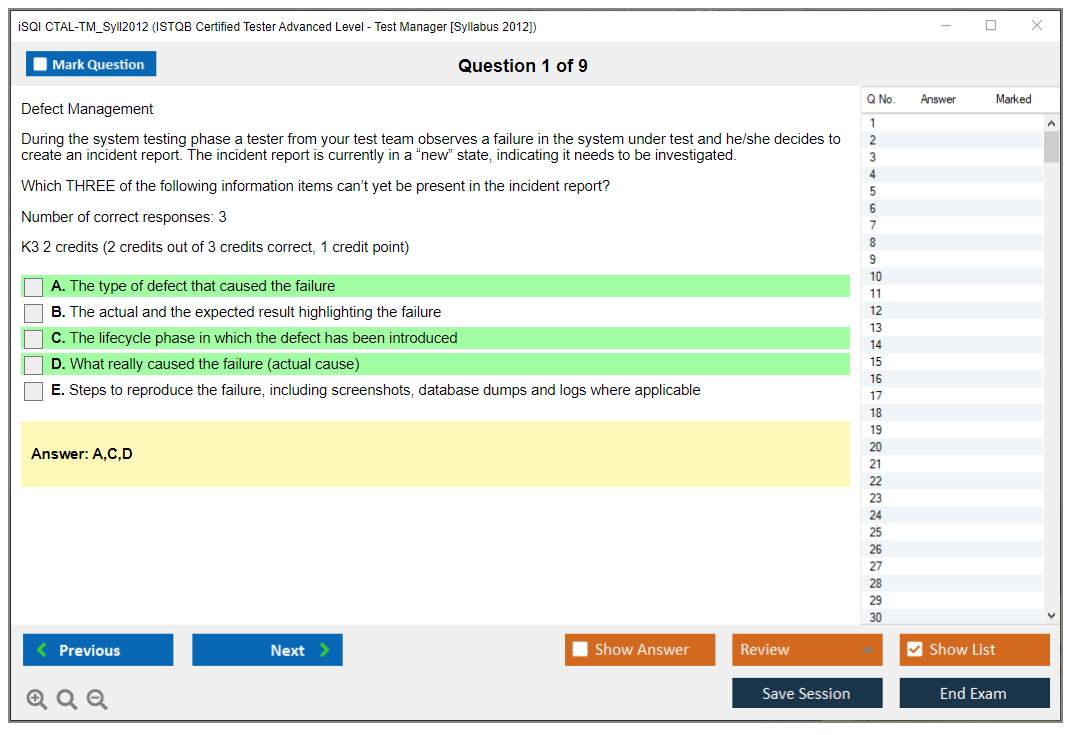
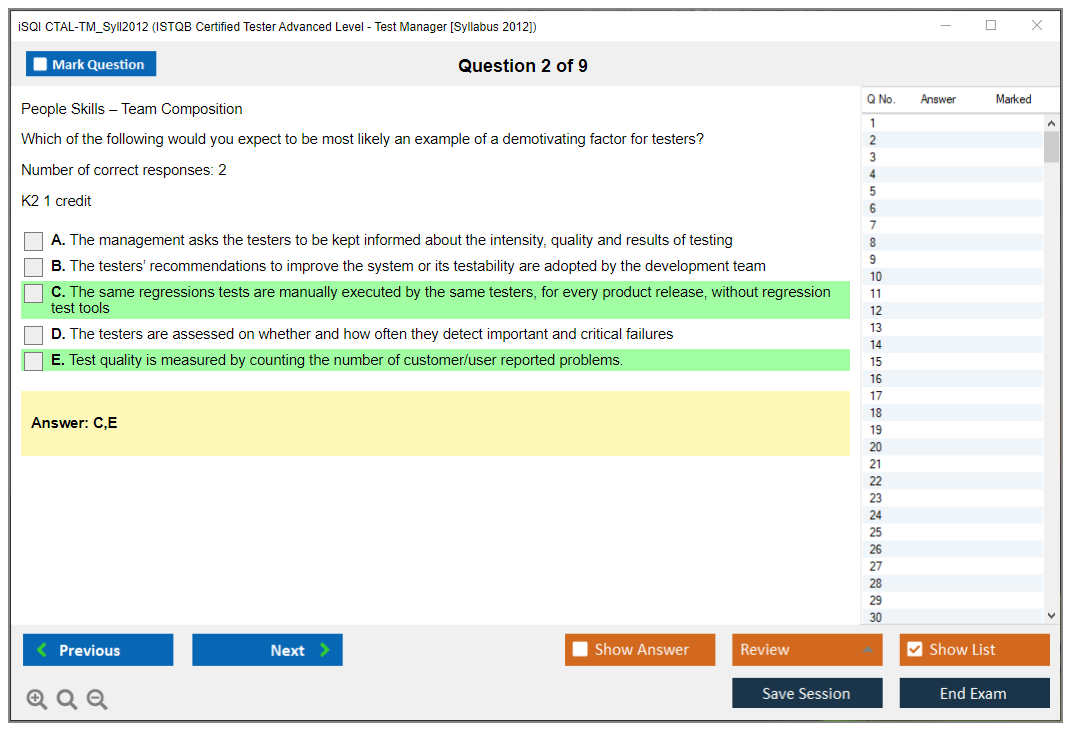
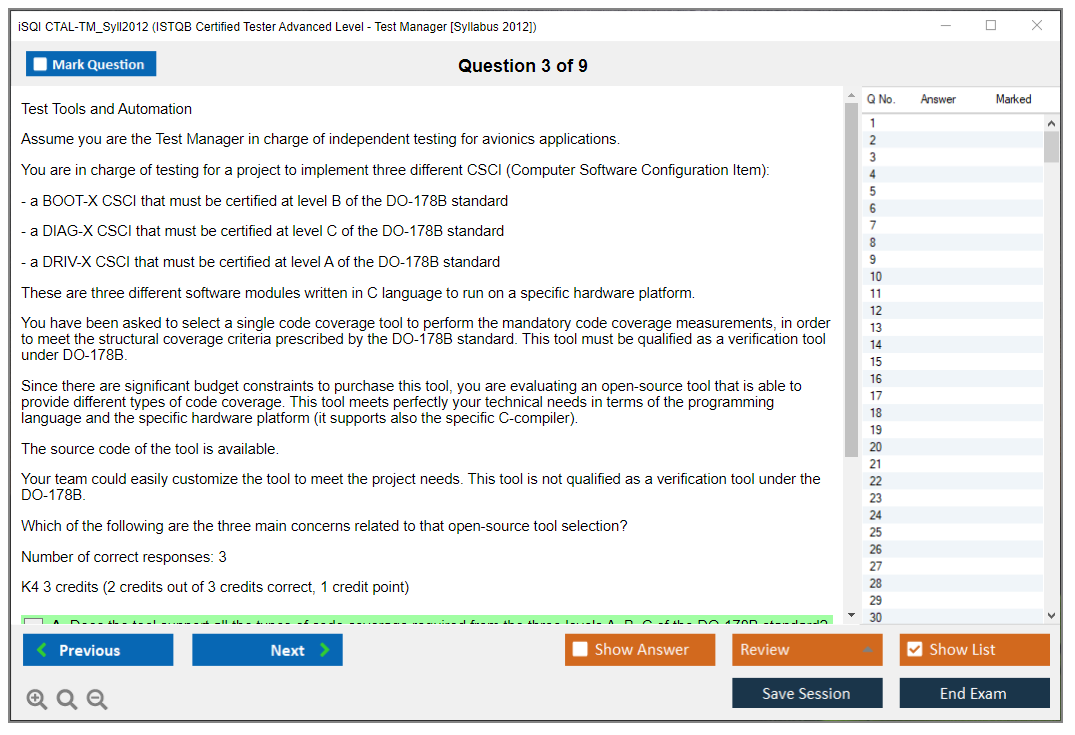
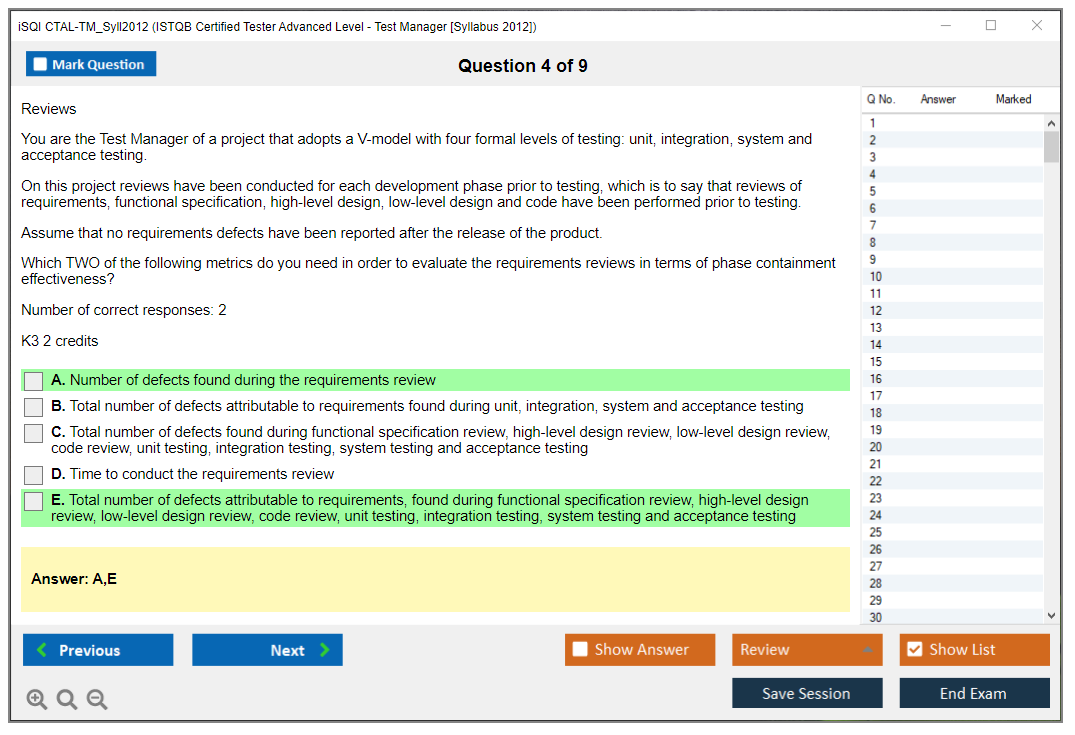
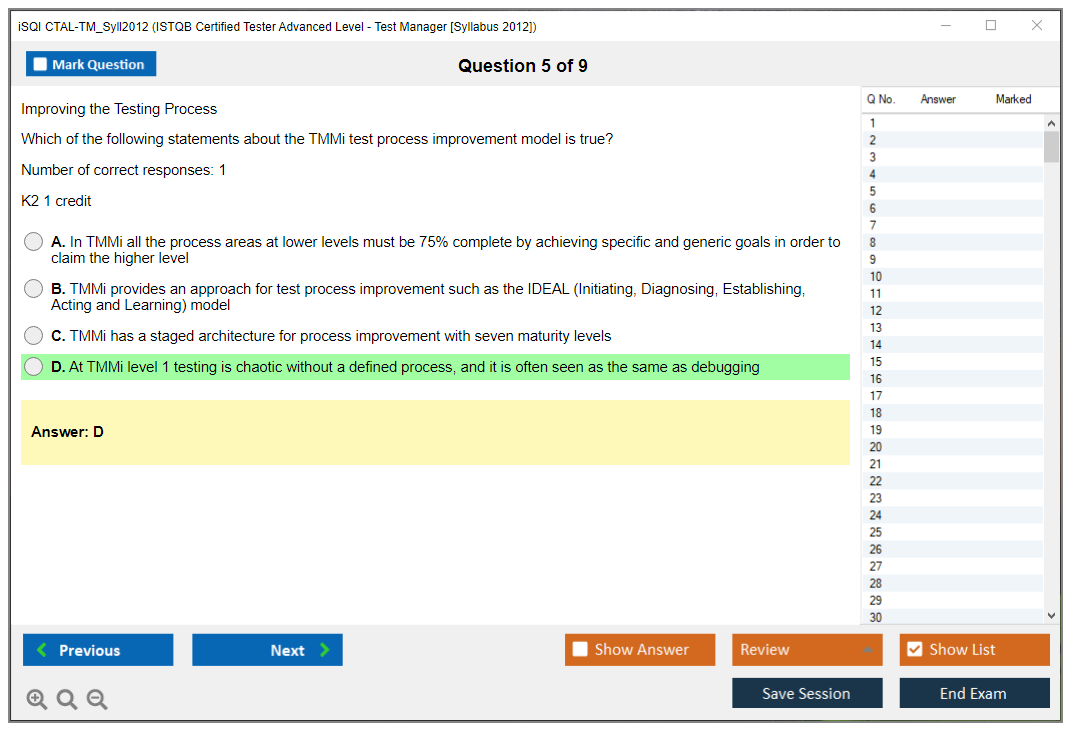
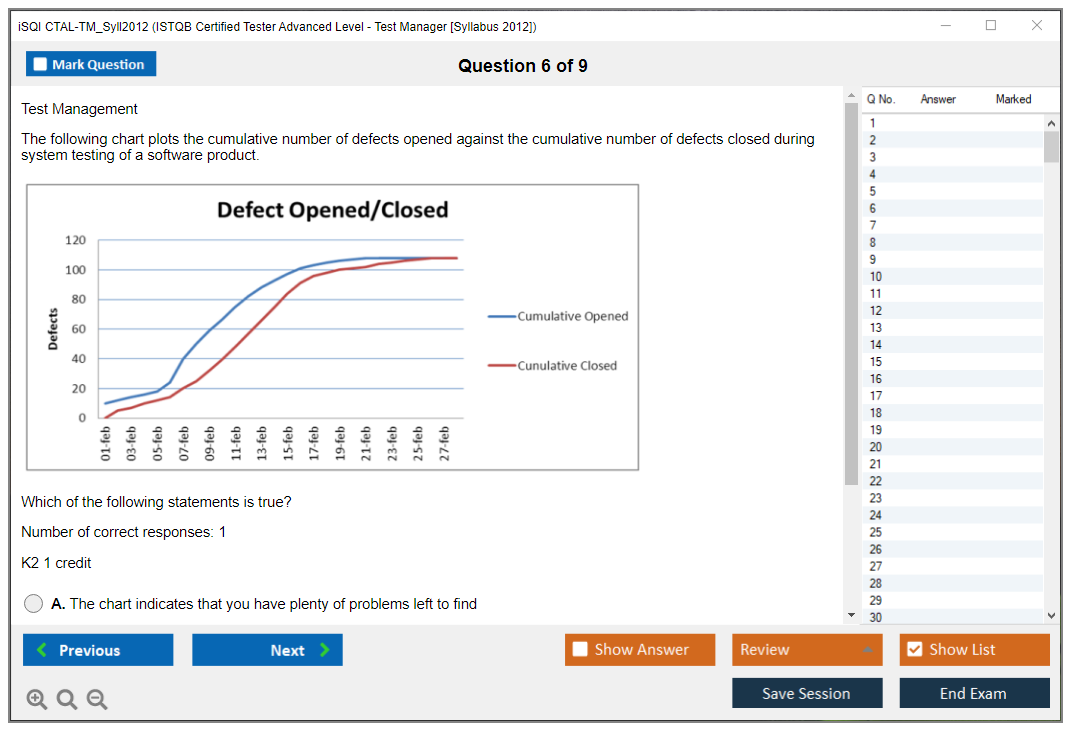
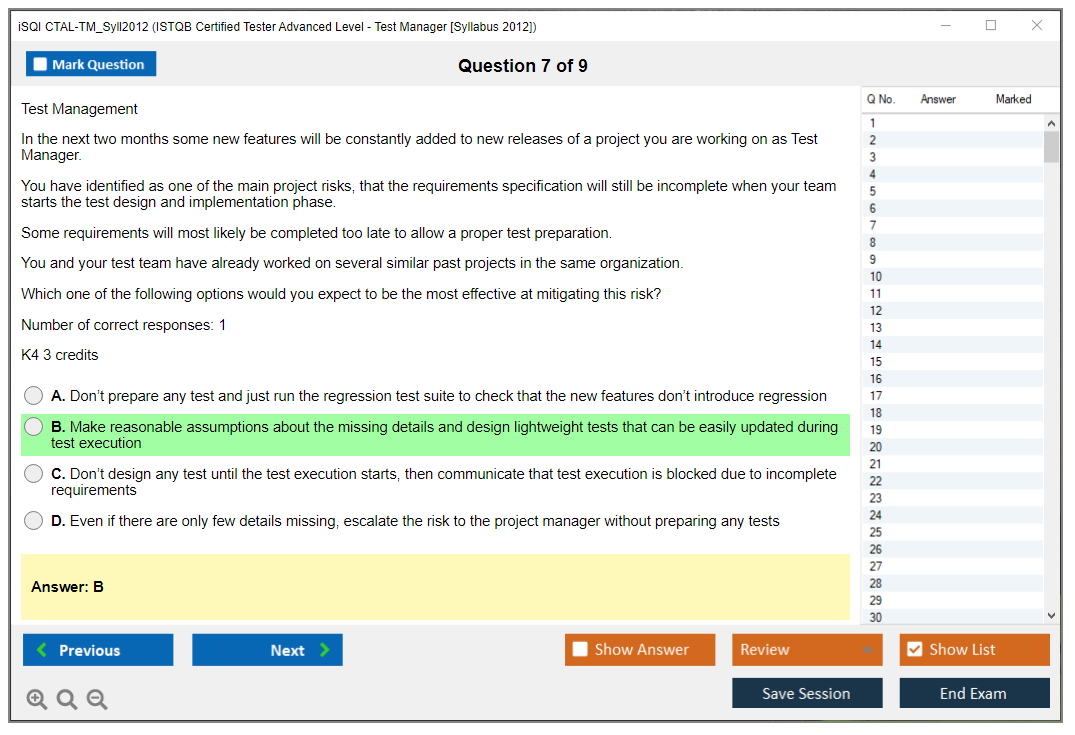
iSQI CTAL-TM_Syll2012 (ISTQB® Certified Tester Advanced Level - Test Manager [Syllabus 2012])
ISTQB Advanced Test Manager CTAL-TM Syllabus 2012, Complete Certification Overview
What CTAL-TM actually does for your career
Real talk? The ISTQB Advanced Test Manager CTAL-TM syllabus 2012 isn't just another cert to slap on LinkedIn. It's literal proof you can wrangle test teams, budgets, and stakeholder chaos without losing your mind. This thing validates you've got the chops to plan testing across wildly different software development lifecycles, manage risks that'll actually bite you, and keep testing aligned with business goals instead of just pumping out test cases nobody'll ever read.
If you're a test manager, QA lead, or test coordinator drowning in real-world chaos, this cert shows you've got actual frameworks backing your decisions. It's also massive for senior test analysts eyeing management or project managers suddenly stuck being responsible for quality. I've watched QA directors deploy this to standardize approaches across teams.
One of those credentials that really opens doors instead of gathering dust.
Why the 2012 syllabus still matters
The 2012 version emphasizes traditional test management frameworks tons of orgs still lean on. We're talking risk-based testing strategies helping you prioritize when literally everything's supposedly critical, defect management going way beyond "log it and forget it," and test process improvement models like TMMi, TPI, and STEP. These give you language to discuss maturity with execs who only care about shipping faster.
The team leadership competencies piece gets slept on. Managing testers differs completely from managing developers. Different motivations, career paths, ways they burn out, all of it. This syllabus actually addresses that, which is rare for certification programs that usually focus on processes and ignore the messy human side.
Global recognition means something substantial here. Organizations in finance, healthcare, automotive, telecom, embedded systems all recognize CTAL-TM. Try snagging a test manager role at a bank without ISTQB credentials. Yeah, good luck with that. The certification proves you speak the same quality language whether you're operating in Munich or Mumbai.
How it fits in the ISTQB scheme
You need the Foundation Level certification before even attempting CTAL-TM. It sits at the Advanced Level tier alongside Technical Test Analyst and Test Analyst. Think of Foundation as proving you know testing basics, Advanced as proving specialization. Expert Level exists but fewer pursue it. That's proving you can design certification schemes yourself or something equally meta.
You can mix Advanced certs. Some folks grab Test Manager for leadership credibility, then add Test Automation Engineering to stay technical. Others combine it with Agile Tester because, shocker, most organizations claim they're agile now anyway.
What you're actually proving you know
Strategic test planning accounting for project constraints, not fantasy scenarios. Risk assessment techniques identifying what'll really bite you versus theoretical risks from textbooks. Test estimation that won't make you look ridiculous when deadlines approach. Wait, scratch that. Estimation always looks ridiculous, but at least defensible estimation.
Metrics definition matters way more than people think. Defining wrong KPIs leads teams optimizing for complete nonsense. Stakeholder communication skills separate test managers who get resources from those who get ignored during budget meetings. Tool evaluation knowledge helps you dodge buying expensive garbage nobody's using six months later.
Process improvement frameworks give you roadmaps instead of guessing. Team management covers hiring, skill development, motivation, conflict resolution. The messy human stuff. The exam validates you understand these through scenario-based questions mirroring actual decisions you'll face, not abstract theory.
The exam itself and what it costs
CTAL-TM exam cost varies by country and provider but expect $200-400 USD typically. Some accredited training bundles include the exam voucher, which can be worth it if structured learning's your thing. Retake fees run about the same, so you really wanna pass first time.
The passing score sits at 65% usually. You need correctly answering enough scenario questions testing judgment, not just memorization. Exam format includes multiple-choice questions based on realistic management situations you'd actually encounter. You get around three hours working through it.
Questions aren't "what's the definition of X" but rather "given this project context, what should the test manager prioritize?" Big difference there.
Available in multiple languages through iSQI and other ISTQB member boards globally. You can take it online or in-person depending on your provider. The content stays standardized across delivery methods because it's all mapped to the official syllabus.
Study time and difficulty
Plan for 150+ hours if you're coming from a testing background with some management exposure. Less if you've been managing test teams for years, more if you're transitioning from purely technical roles where you've never touched budgets or people problems.
The difficulty comes from applying frameworks to nuanced scenarios. Not regurgitating definitions from glossaries.
Common challenging topics? Risk management because you need balancing probability, impact, and mitigation costs simultaneously. Metrics because selecting meaningful measurements requires understanding business context beyond "more tests equals better quality." Process improvement models because TMMi, TPI, and STEP overlap but differ in important ways that'll trip you up. Honestly, the model distinctions get fuzzy fast when you're tired, and the exam loves exploiting that confusion.
Career impact you'll actually see
Salary increases of 15-25% post-certification aren't unusual, especially when moving into senior QA leadership roles at bigger orgs. Opens consulting positions where clients expect credentialed advisors who can justify their billing rates. Test transformation initiatives almost always want someone with formal test management credentials leading the charge because nobody trusts random people to overhaul quality processes.
Organizations increasingly require ISTQB Advanced certifications for test manager postings. Not preferred, required. Regulated industries especially. If you wanna work in pharma, medical devices, aerospace, this cert isn't optional. It's table stakes for even getting interviews.
The certificates don't expire thing
ISTQB certificates remain valid indefinitely. No mandatory renewal nonsense.
That said, some employers prefer recent certification dates as proof you're current with frameworks, even though the frameworks haven't changed dramatically. The 2012 syllabus remains widely recognized even though a 2023 version exists now for some ISTQB modules. Bureaucracy moves slow, I guess.
Keeping skills current matters more than the paper anyway. The Foundation syllabus updates periodically and new specialized modules like Performance Testing emerge regularly. Staying engaged with the testing community beats just relying on a certificate from years ago collecting metaphorical dust on your resume.
CTAL-TM Prerequisites and Eligibility Requirements
CTAL-TM prerequisites and eligibility requirements (iSQI, syllabus 2012)
The ISTQB Advanced Test Manager CTAL-TM syllabus 2012 is weirdly strict about one specific thing while being pretty chill about nearly everything else. One hard gate. A bunch of "you probably should" suggestions. And look, that actually mirrors reality, because test management isn't about reciting textbook definitions. It's about making solid judgment calls when your project's a dumpster fire, everyone's got an agenda, and deadlines are impossible.
Required ISTQB Foundation certificate (CTFL)
The only mandatory prerequisite for CTAL-TM? Valid ISTQB Foundation Level certificate. That's it. If you don't hold CTFL already, you can't sit the Advanced Level Test Manager certification exam, even when you've managed QA teams for a decade. Zero workarounds. No "my experience counts instead." When you register, they'll ask for your Foundation certificate number or similar details, and iSQI (or whichever exam provider you book through) actually uses that information during the eligibility check.
People assume the Foundation cert's optional sometimes because CTAL-TM is "management focused." Wrong. The syllabus presumes you already understand ISTQB-speak: glossary terminology, the fundamental test process, plus those classic techniques everyone memorizes. That foundation explains why CTAL-TM prerequisites invariably begin with CTFL.
Verification process (how your CTFL gets checked)
Providers won't just trust you. There's this verification process where the exam provider confirms your Foundation certification status through ISTQB databases, and when your details don't align, registration stalls or gets outright rejected. Tiny typo. Incorrect issuing board. Name mismatch following a legal name change. I mean, the thing is, it's annoying stuff that shouldn't matter but absolutely does.
Bring receipts. No, seriously.
When registering, have your CTFL certificate number ready, the exact name you were certified under, plus the year. Some providers request a scan, others only need the ID number, and some'll follow up when the database lookup takes forever. If you're scrambling to find that old email from 2017 at midnight before the booking deadline closes, honestly, you're making life harder than it needs to be.
Foundation level preparation (if you're not CTFL yet)
Not certified at Foundation Level yet? Plan to tackle CTFL first and treat it like its own standalone project. The realistic estimate I usually give folks is 40 to 60 hours for CTFL study plus exam prep before you even touch Advanced Test Manager material. More when you're unfamiliar with testing terminology, less when you've tested for years but never bothered with the paperwork.
CTFL isn't "easy." It's just more compact. Short study sessions work better. Doing a couple of CTAL-TM practice tests later also helps, because it'll remind you exactly why the Foundation vocabulary becomes critical when you're working through scenario questions about reporting, estimation, and risk.
Recommended professional experience (not required, but come on)
No formal "must have X years" rules exist, but iSQI and most accredited trainers strongly suggest 2 to 5 years in software testing, with at least 1 year in test coordination or management. Not gonna sugarcoat it: that guidance's completely correct. CTAL-TM questions assume you've survived real trade-offs, like deciding what not to test, negotiating exit criteria with stakeholders who despise hearing bad news, and managing a defect backlog that's basically become a garbage dump.
Three quick truths. Context matters. Scars teach.
If you're brand new, you can still pass through sheer study effort, but you'll feel like you're memorizing somebody else's job description instead of your own.
Experience areas that help (what the exam keeps "secretly" testing)
Hands-on exposure improves performance dramatically because the exam's built around decision-making, not trivia recall. The biggest boosts typically come from test planning and estimation, since you're constantly asked to justify scope, schedule, and effort when requirements keep shifting and the project manager demands a date regardless. Defect tracking and test reporting matter as well. Not because the specific tool's special, but because the exam wants you thinking about workflow design, severity versus priority, and how to communicate quality status without destroying trust.
Other experience areas provide value too, even when you've only touched them lightly: team coordination, stakeholder communication, SDLC participation, plus the daily grind of monitoring and control. That's the core of the CTAL-TM exam objectives, even when questions get framed as "process" or "metrics."
Technical knowledge baseline (what you should already understand)
You don't need developer skills, but you do require a baseline grasp of how software gets built and shipped. That means recognizing Waterfall, V-Model, Agile, and iterative development patterns, plus understanding how testing adapts across them. Basic project management concepts appear frequently too: milestones, dependencies, constraints, reporting structures. Along with general QA principles like prevention versus detection and the expense of late-stage defects.
Also, risk. Always risk.
Risk-based testing management is everywhere in CTAL-TM. If you've never practiced it, you can learn it from scratch, but it's way smoother when you've already debated priorities with a product owner at 4:45 pm on a Friday afternoon.
Management exposure (the stuff nobody teaches in CTFL)
CTAL-TM expects you thinking like a manager, even when your official title is "lead." Familiarity with team leadership, resource allocation, budget considerations, risk management, and organizational dynamics provides the missing context for scenario questions. And those scenarios can be lengthy, messy, and brutally realistic, where the "best" answer balances people, process, and delivery constraints without pretending everything's perfect.
This is also where test process improvement appears. Includes TPI/TPG/STEP context, because improving a test process rarely becomes a purely technical exercise. It's politics. It's understanding incentives. It's timing. Sometimes it's just knowing when to shut up and let bad automation die quietly rather than turning it into someone's hill to defend.
No formal education requirements (degree not needed)
Unlike certain cert tracks, CTAL-TM has no degree requirement whatsoever. No computer science diploma required. No management MBA. The focus stays on demonstrated knowledge and practical application capability, which explains why people transition into ISTQB CTAL Test Management from development, business analysis, project management, and operations backgrounds. Background diversity actually helps, honestly, because test managers spend considerable time translating across different groups.
Language proficiency (it's about reading stamina)
The exam's available in 15+ languages, but you still need strong reading comprehension for complex scenario-based questions. It's not fancy vocabulary. It's dense. If you're taking it in a non-native language, plan extra time for practice questions and glossary review, because one misread "most appropriate" can completely wreck an otherwise solid line of reasoning.
Training course attendance vs self-study (both work)
Training isn't mandatory, but it's recommended. Accredited providers typically run 3 to 5 day courses that walk through the entire syllabus with exercises, which helps tremendously with test strategy and planning, estimation, metrics, plus how to answer like ISTQB wants you answering. Self-study's feasible as well when you're already experienced and your Foundation knowledge is rock-solid, using the official syllabus, CTAL-TM syllabus 2012 PDF, sample exams, and other ISTQB Advanced Test Manager study materials.
One more opinion. Courses help you stop overthinking. Self-study helps you go deeper. Pick based on how you actually learn, not on what LinkedIn influencers claim.
Timeline planning (how long to allow)
For working professionals, I'd plan a minimum of 3 months from starting Foundation prep to taking the CTAL-TM exam. More like 6 to 9 months being realistic when you're juggling a job and life. The "optimal candidate profile" is CTFL plus 3+ years testing experience, 1+ year in a test leadership capacity, and a formal course, because that combination fits with how the syllabus expects you reasoning through scenarios, not just recalling definitions.
Quick notes people ask anyway (cost, score, renewal)
CTAL-TM exam cost varies by country and provider, so there isn't one universal CTAL-TM exam cost figure. The CTAL-TM passing score is defined by the exam rules for your syllabus and provider, and you should confirm it on the booking page before exam day arrives. And CTAL-TM renewal / recertification typically isn't a routine requirement for ISTQB certificates, though some employers or programs may prefer newer versions, so check what your company actually recognizes if that's the real reason you're pursuing it.
CTAL-TM Exam Objectives and Knowledge Domains (Syllabus 2012)
Testing process fundamentals and organizational context
Domain 1's your foundation. Takes up 20% of the exam, and it's honestly where everything clicks into place or doesn't. You need to understand how testing fits into the bigger organizational picture. Not just your project bubble but how test policy actually cascades down from executive levels to your day-to-day grind.
This means developing test strategies that work at both organizational and project levels. Sounds simple, right? Until you're trying to balance corporate mandates with what your team can actually deliver. Meanwhile stakeholders keep adding "just one more thing" to scope.
Test planning activities get deep here. We're talking scope definition where you actually have to say no to stakeholders (good luck with that), approach selection that considers your team's skills and timeline constraints, resource planning that accounts for people constantly being pulled into production support. Schedule development somehow needs to align with development sprints or waterfall phases depending on your lifecycle model.
The monitoring piece uses metrics and dashboards. Defect discovery curves, test execution rates, coverage percentages. The usual suspects. Configuration management becomes critical when you're managing test artifacts across environments and you need to know which test data set matches which build version. This stuff gets messy fast without proper CM discipline.
Incident management covers the full defect lifecycle from "hey this looks weird" through severity assignment (always becomes a negotiation), priority battles with product owners who think everything's critical, and tracking metrics that actually tell you something useful about quality trends. Not just looking impressive in PowerPoint decks.
Test completion activities? They matter more than people think. Test summary reports become your historical record. Lessons learned sessions can prevent the same mistakes next cycle if anyone actually reads them instead of filing them away forever. Testware archiving means you're not rebuilding test cases from scratch six months later when the project resurfaces.
Core test management responsibilities
Domain 2's the heavyweight. Thirty-five percent of exam content. Covering what test managers actually do when they're not trapped in meetings about meetings.
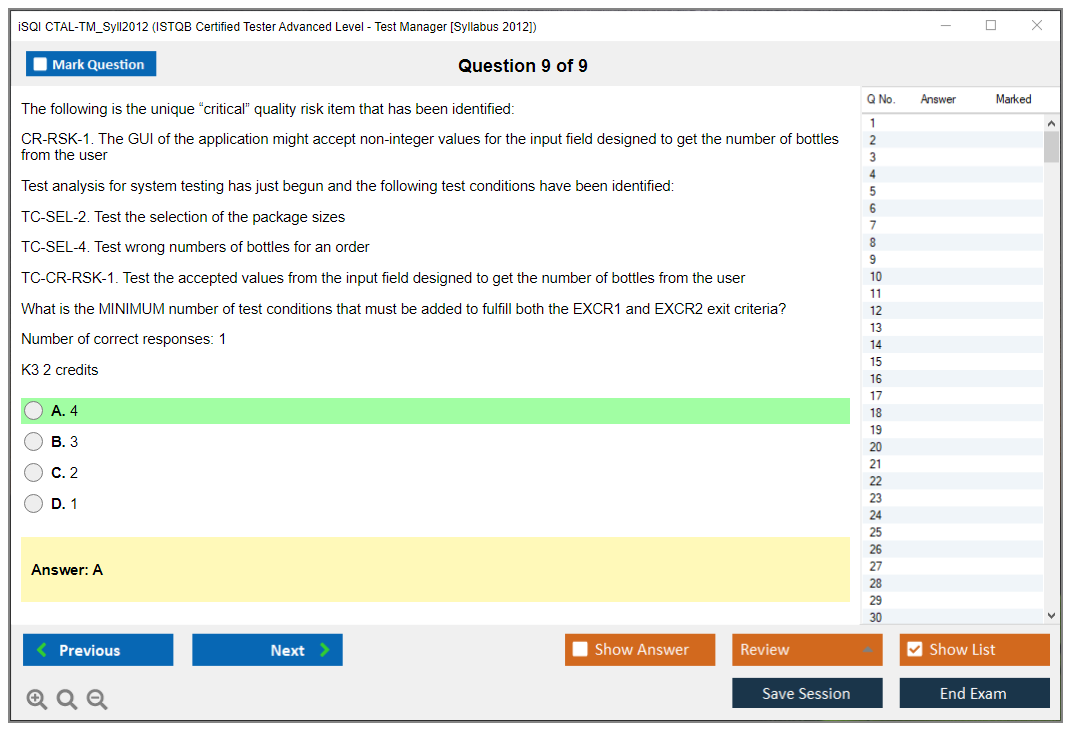
Risk-based testing is huge here. You're identifying risks through workshops or analysis, assessing them with probability and impact matrices, then designing your testing strategy to mitigate the scary stuff first. This is where theory meets reality and you realize you can't test everything so you better test the right things or you're toast.
Test estimation techniques include metrics-based approaches using historical data (assuming you've been tracking it), expert-based estimation where you tap team experience, Delphi technique for building consensus among people who rarely agree. Three-point estimation accounting for best/worst/likely scenarios because projects never go exactly as planned. Function points if you're in that kind of environment. Each has trade-offs. You need to know when to use which depending on what information you've actually got available.
Test planning documentation follows IEEE 829 standards for structure and content, though honestly most organizations customize this heavily. Nobody wants to maintain documents that bloated in real life.
Test progress monitoring uses earned value analysis borrowed from project management, defect discovery curves that show whether you're finding bugs at the expected rate or if something's off. Test execution rates reveal if you're falling behind schedule before it becomes a full-blown crisis requiring weekend work. I once watched a team completely miss their velocity drop until two weeks before release, and then it was all hands on deck through Thanksgiving weekend. Not fun.
Test control actions kick in when monitoring shows problems. Re-planning when estimates were wrong (they usually are), re-prioritization when risks change mid-project, scope adjustment when timelines compress because someone promised an impossible deadline. Distributed testing management adds complexity with teams across locations and time zones. You're dealing with cultural contexts and communication challenges on top of the technical work, and time zone math becomes a daily headache.
The ISTQB Advanced Test Manager certification really emphasizes managing testing in specific lifecycle contexts. Whether that's waterfall, iterative RUP-style approaches, or Agile. Each demands different management approaches and you can't just copy-paste your strategy across them.
Reviews, defects, and process improvement
Domain 3 focuses on formal review processes. Ten percent of the exam. You need to know the difference between informal reviews, walkthroughs, technical reviews, and inspections. Each has specific roles, entry/exit criteria, and metrics that track effectiveness, though honestly the lines blur in practice depending on organizational culture.
Management responsibilities include planning reviews, tracking their outcomes, and using data for process improvement rather than just checking compliance boxes. Review metrics help you calculate ROI, which matters when you're justifying why developers should spend time in review meetings instead of coding new features that stakeholders are screaming for.
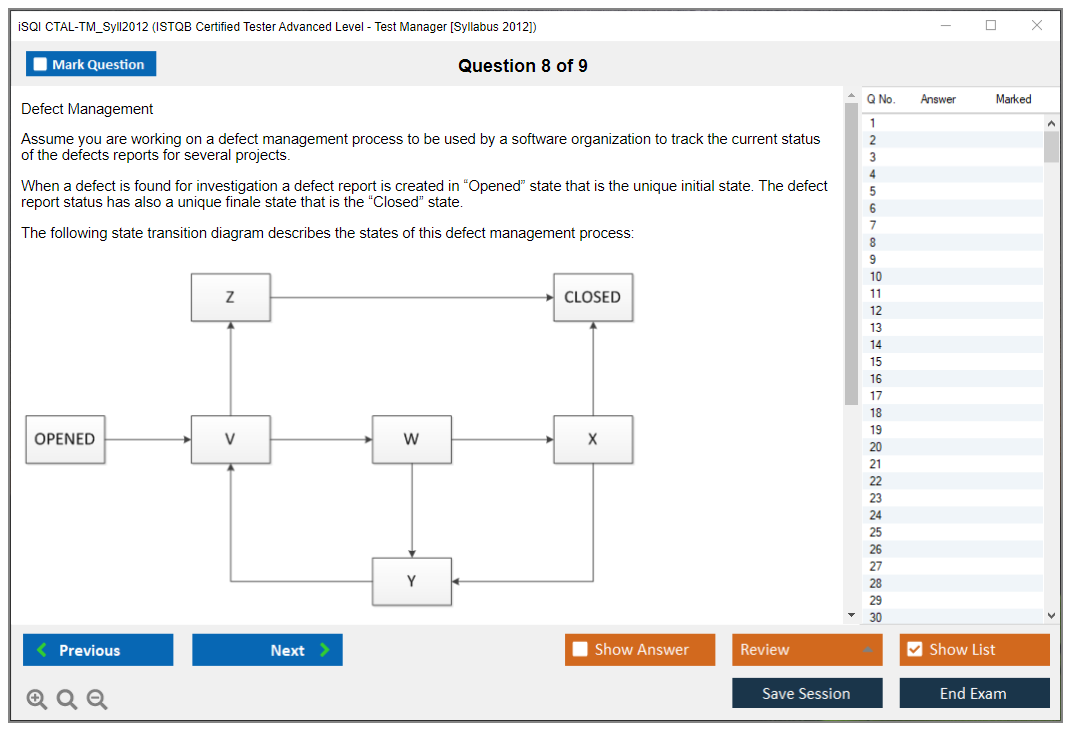
Domain 4 covers defect management. The defect lifecycle has states and transitions that need managing, classification schemes for severity versus priority (always a fun debate where developers say low and testers say high), and metrics like defect density, removal efficiency, and aging reports that show bugs languishing unresolved. Root cause analysis techniques help with defect prevention strategies. Defect triage meetings require facilitation skills to prioritize what gets fixed versus what gets deferred to the mythical "future release."
Domain 5 addresses test process improvement through models like TMMi, TPI, and STEP, which provide structured frameworks for maturity assessment. You conduct assessments, identify gaps between current and desired states, create improvement roadmaps with prioritized actions that won't overwhelm the team. Then actually implement changes and measure whether they helped or just added bureaucracy. Organizational change management becomes critical because people resist process changes, especially when they're already overloaded with project work and view new processes as just more overhead.
Tools, automation, and people management
Domain 6 examines test tools and automation. Ten percent weight. Tool categories span test management platforms, defect tracking systems, test execution tools, performance testing frameworks, and security testing tools. Each serving different purposes in your overall strategy.
Selection criteria include technical fit with your environment (can it actually integrate with your tech stack), vendor stability for long-term support because you don't want tools abandoned mid-project, cost-benefit analysis that accounts for licensing and maintenance not just upfront costs. Integration capability with existing systems since nothing operates in isolation. Pilot projects validate tool choices before full deployment. Implementation planning covers training, data migration from legacy systems, and adoption strategies that actually get teams using the tools rather than working around them.
Managing test automation initiatives means selecting frameworks that match your application architecture and team skills, dealing with maintenance overhead as applications change because automated tests break constantly if not maintained properly. Developing team skills in coding and tool usage through training programs. Metrics measure tool ROI and effectiveness so you can justify continued investment when budget reviews come around.
Domains 7 and 8 cover people skills. K2 level. Team composition involves understanding roles like test analyst, technical test analyst, and test automation engineer with their different skill sets. Building skills matrices to identify gaps. Estimating team size based on project complexity and timelines. Recruiting effectively in competitive job markets.
Team dynamics require applying leadership styles situationally because one approach doesn't fit all personalities or situations. Understanding motivation theories from Maslow and Herzberg so you're not just throwing pizza parties and calling it morale building. Communicating effectively with stakeholders at different organizational levels who each speak different languages. Resolving conflicts between testing and development teams when blame starts flying. Helping with productive meetings that don't waste everyone's time.
The people skills domains? They often get overlooked during study but they represent real challenges in test management roles. Managing geographically distributed teams across cultures requires different approaches than co-located teams where you can just walk over to someone's desk. These soft skills often determine whether your test strategy actually succeeds regardless of how technically sound it is on paper. People execute strategies, not documents.
CTAL-TM Exam Cost, Registration, and Logistics
iSQI CTAL-TM (ISTQB® Advanced Test Manager) overview (syllabus 2012)
The ISTQB Advanced Test Manager CTAL-TM syllabus 2012 is that old-school Advanced Level Test Manager certification employers still respect because it maps cleanly to actual work: test strategy and planning, risk-based testing management, reporting, and test process improvement (TPI/TPG/STEP context). It's less about "do you know definitions" and way more about "can you make the call when the release is literally on fire and everyone's panicking."
Who's it for? Test managers. QA leads.
Delivery managers who suddenly got handed testing responsibilities without warning. Also that senior tester who keeps doing all the management work without getting the title or the raise, which happens constantly in smaller organizations. We've all seen it. Actually, I once worked with someone who basically ran the entire QA function for almost a year before they finally adjusted her title, and even then the salary bump took another six months of negotiating. But that's a whole other conversation about how testing work gets undervalued.
CTAL-TM exam cost (fees) and what's included
The CTAL-TM exam cost usually lands somewhere in the $250 to $450 USD range globally. That spread's annoying. Country, provider, and whether you're taking it online or dragging yourself to a test center all move the number around, and sometimes the "same" exam gets priced differently just because you're paying for proctoring overhead or some local board's admin fees.
Here's what I typically see. United States/Canada: about $350 to $400 through accredited exam providers. United Kingdom/Europe: roughly £250 to £350 (or €290 to €410) via national ISTQB boards. India: around ₹12,000 to ₹18,000 through iSQI and local exam boards. Australia/New Zealand: AUD $400 to $500. Middle East: $300 to $400, depending on provider and delivery method.
Pricing changes constantly, so treat these as "budget range," not a quote.
What you get for the fee's pretty consistent: one exam attempt, a digital certificate if you pass, a listing in the ISTQB Successful Candidates registry, and some kind of results breakdown. What you don't get? Study materials. Any ISTQB Advanced Test Manager study materials bundle. CTAL-TM practice tests. And usually not a printed certificate either, which's wild, but if you want paper it's often $25 to $50 extra.
Training bundle vs exam-only pricing (and why it matters)
Training plus exam bundles are where the money disappears fast. Accredited providers commonly sell a 3 to 5 day instructor-led course plus an exam voucher for $1,800 to $3,500. If your company's paying, cool. If you're paying personally, it can feel like you're buying a conference ticket just to earn the right to sit the exam, which seems backwards.
Exam-only's the cheaper route. Totally allowed.
You register, pay the fee, and self-study the CTAL-TM syllabus 2012 PDF plus glossary, then grind scenario questions until your brain starts automatically answering in "test manager." The catch? Discipline and experience. This's Advanced Level Test Manager certification, so the exam assumes you've already lived through test estimation arguments, stakeholder politics, flaky environments, and those fun "why are defects increasing" conversations with execs.
If you want a cheap middle path, doing the syllabus plus your own notes plus a focused practice pack makes sense. For example, CTAL-TM_Syll2012 Practice Exam Questions Pack is $36.99, and that kind of targeted practice often exposes weak spots in your understanding of CTAL-TM exam objectives like metrics, governance, and prioritization.
Retakes, rescheduling, vouchers, and cancellations
Retakes are simple and painful: if you fail, you usually pay the full exam fee again, which stings. Most providers let you schedule a retake as soon as you've got your results back, which's good because waiting weeks just makes you forget the specific details you missed.
Rescheduling's where people get burned. Many providers charge $50 to $100 if you reschedule within 48 hours of the appointment. Rescheduling 7+ days ahead's often free, though. Provider-dependent, always.
Same story with cancellations: full refund tends to be available if you cancel 14+ days before, partial refund (often 50 to 75%) if you cancel 7 to 14 days prior, and usually no refund inside 7 days.
Vouchers? Typically valid for 12 months from purchase, and you must schedule and sit the exam within that window. Don't buy early "because motivation" and then let it rot in your inbox like some forgotten New Year's resolution.
Group discounts exist too. If an organization registers 5+ candidates at once, you may see 10 to 15% off exam fees. Training bundles can have volume pricing that's way better than the public number. Ask. Always ask, because they won't volunteer it.
Registration process and logistics (online vs test center)
Registration's usually straightforward, but there are a few gotchas that'll trip you up if you're not careful.
1) Pick an accredited provider from the ISTQB site. Not optional. Random sites selling "ISTQB exams" are a mess. 2) Create an account, then verify your CTAL-TM prerequisites. At minimum, you need the ISTQB Foundation Level (CTFL) certificate. Some boards want a certificate number, some want a scan, some cross-check a registry. 3) Pay the fee, get a voucher or booking confirmation. 4) Schedule a slot, either test center or online proctoring. 5) Read the logistics email. Twice. Tiny rules ruin exam days in ways you can't imagine.
Online proctored exams have become way more common post-2020. Convenient but has its own headaches. You'll need stable internet, a webcam, a quiet private room, and you'll usually do a system compatibility check beforehand. If your laptop mic's flaky or your corporate VPN blocks the proctoring app, fix that days before, not 20 minutes before check-in while you're sweating and panicking.
Test center exams are the traditional route, sometimes via Pearson VUE, Prometric, or provider-specific centers. They're more predictable. Bring government-issued ID, arrive early, and expect strict rules. Pockets empty. No notes. Sometimes even "no water bottle," which's annoying but at least you know what you're getting.
Payment methods: most providers take credit card, PayPal, bank transfer, and for companies, purchase orders.
Corporate billing's also common, where an org sets up an account for billing and candidate management together, which's great if you're rolling out ISTQB CTAL Test Management across a QA org.
Special accommodations are available if you have documented needs, like extra time, separate room, or assistive tech. Request it during registration, and expect to upload documentation. They take it seriously, which's good.
Quick answers people ask (cost, passing score, difficulty, renewal)
How much does the exam cost? Usually $250 to $450, with the regional ranges above.
What's the CTAL-TM passing score? Providers publish this with the exam rules, but the common model for Advanced Level's a fixed percentage threshold. You should confirm it with your specific board before exam day because assumptions get people into trouble.
Is CTAL-TM hard and how long should you study? It's scenario-heavy, so if you've managed testing before, 2 to 6 weeks of focused prep can be enough. If you haven't, you'll spend more time learning how decisions actually get made, not just memorizing terms. Practice questions matter a lot. I'd rather you do 200 good scenario questions than reread the syllabus three times and hope something sticks. CTAL-TM_Syll2012 Practice Exam Questions Pack is one option I've seen people use to pressure-test readiness without buying a full course.
Does CTAL-TM require renewal or recertification? ISTQB certificates generally don't expire, which's nice, but some employers or frameworks may prefer newer modules, so keep an eye on what your market expects. Also, your skills still need upkeep. The syllabus won't save you from a bad metric or a sloppy risk call in the real world.
CTAL-TM Passing Score, Exam Format, and Scoring Details
Passing score and what you actually need to clear
The CTAL-TM passing score sits at 65%. That's 44 correct answers out of 65 total questions, same threshold everywhere, no matter the location or language you pick. iSQI, Pearson VUE, whoever's administering your test, they're all holding you to that identical 65% benchmark. Sounds doable, right?
Until you're actually there, staring at scenario questions where two answers both seem legitimate and you're second-guessing everything you studied.
Partial credit doesn't exist. You either nail 44 or you're retaking it. I've seen folks score 43 and have to shell out for the whole exam again, which honestly just stings when you're literally one question away. The scoring's completely binary. Pass or fail. If you're borderline, nobody's rounding up or giving you benefit of the doubt.
Total questions and how they're distributed
You're tackling 65 multiple-choice questions that span the entire ISTQB Advanced Test Manager syllabus. Four options per question (A through D), single correct answer every time. The distribution isn't some random toss, though. It's deliberately weighted based on domain significance and K-level priorities.
Test Management dominates with 22-24 questions. Makes sense, considering that's the entire point of this certification. Testing Process follows at 12-14 questions. Then there's Improving Test Process at 9-11 questions, which trips people up constantly because it's loaded with maturity models and process frameworks like TPI and STEP that feel abstract until you're applying them.
Reviews, Defect Management, and Test Tools each grab 6-7 questions. People Skills (team dynamics, motivation tactics, conflict resolution) only appears in 3-4 questions, but the thing is, those points absolutely matter when you're hovering right around that 65% cutoff.
The CTAL-TM_Syll2012 practice questions at $36.99 actually mirror this distribution pretty closely. Makes them really useful for pinpointing your weak domains before you're sitting in the exam center.
Exam duration and language considerations
Standard duration? 180 minutes. Three full hours. That's actually pretty generous compared to CTFL_001 Foundation, which gives you way less breathing room per question. If you're taking it in English but that's not your native language, you automatically get an extra 25% time. Brings you to 225 minutes total. That extension's universal across all exam providers, no special requests needed.
Native language exams stick to 180 minutes since you're not mentally translating everything. I mean, three hours sounds like plenty of time, but scenario-based questions really eat minutes when you're analyzing competing stakeholder priorities or comparing nuanced risk-based testing strategies. Most candidates finish with maybe 20-30 minutes remaining, which is enough to review flagged questions but not enough to overthink every single answer choice without driving yourself crazy.
Question format and what makes them tricky
Every question's multiple-choice, one correct answer. Straightforward format.
But here's the reality: these aren't Foundation-level recall questions where you're just identifying the textbook definition of exploratory testing. CTAL-TM questions drop you into realistic management scenarios. Budget constraints clashing with quality goals. Schedule conflicts. Stakeholder disagreements. Incomplete or contradictory requirements.
The K-level distribution breaks down roughly as 40% K2 (understanding core concepts), 45% K3 (applying them to practical scenarios), and 15% K4 (analysis and evaluation). Those K4 questions? They demand you distinguish between a "good" answer and the "best" answer based entirely on context clues. You might encounter a question about prioritizing test activities where three options are technically valid approaches, but only one really fits with the scenario's specific risk profile and organizational constraints.
Scenario questions absolutely dominate this exam. You'll read a paragraph describing some project situation, then determine what action the test manager should take. Wait, let me back up. These require actual judgment, not just memorization of syllabus bullet points. That's precisely why pass rates for self-study candidates hover around 40-50%, while people completing accredited training courses see 70-80% pass rates. The training teaches you how to apply those syllabus concepts to messy, ambiguous real-world situations.
I remember spending two weeks just drilling through scenario variations because my first practice attempt absolutely humbled me. Scored maybe 58% and realized I'd been approaching it all wrong.
No negative marking means answer everything
Good news here: wrong answers don't subtract points. If you're uncertain, guess anyway. Leave nothing blank. I've watched candidates waste mental energy agonizing over whether to skip questions they're unsure about, and it makes absolutely zero sense when there's no penalty whatsoever for attempting an answer.
Score reporting and what happens after
Results arrive within 5 business days for paper exams, 1-3 days for computer-based testing. You'll receive a clear pass/fail notification showing your exact percentage and the number of correct answers. The report also breaks down performance by syllabus section, so you can see whether you bombed Defect Management or absolutely crushed Test Process Improvement.
Digital certificates issue within 2-4 weeks of passing. They include your name, certificate number, exam date, and the ISTQB logo. Some employers care about certification recency, but the pass itself doesn't expire. It's permanent. If you're also eyeing CTAL-TA_Syll2012 or CTAL-TTA, your Test Manager cert stays valid regardless of when you originally earned it.
Appeals and language options
Think a question contains an error? There's a formal appeals process through your exam provider. You'll need documentation explaining precisely why you believe the question or answer key is incorrect. It's not common, but it exists.
The exam's available in English, German, French, Spanish, Portuguese, Chinese, Japanese, Korean, and probably a dozen other languages. Content's identical across all languages, just translated. Non-native speakers taking the English version automatically receive that 25% time bonus.
Exam day logistics you should know
No calculators allowed. No reference materials. No personal notes. Test centers provide scratch paper or a digital whiteboard for online proctored exams. You'll need government-issued photo ID matching your registration name exactly. Passport, driver's license, national ID card all work fine.
Look, getting 44 out of 65 sounds achievable on paper, but the question complexity at Advanced Level is really different from Foundation. Using CTAL-TM_Syll2012 practice materials helps you calibrate to that difficulty level before you're burning through your $300+ exam fee on a failed attempt. The scenarios test whether you can actually manage testing in realistic conditions, not just recite memorized definitions.
Best ISTQB Advanced Test Manager Study Materials and Resources
iSQI CTAL-TM (ISTQB® Advanced Test Manager) overview (syllabus 2012)
The ISTQB Advanced Test Manager CTAL-TM syllabus 2012 is what iSQI uses for CTAL-TM_Syll2012, and it's very much a "you're making management calls under constraints" type of exam, not some vocabulary quiz you can cram the night before. Real planning. Real tradeoffs. Real stakeholder pain that'll make you wince.
Who should take it? Test managers, QA leads, delivery managers who keep getting handed the test plan "because you're organized," and anyone expected to define test strategy and planning, report progress, and defend scope when the schedule starts melting like ice cream in July. If you've only ever executed test cases, this cert can feel like jumping off a cliff. It assumes you can think in terms of risk, governance, metrics, and people problems all at once, which is a lot more mental bandwidth than clicking "pass" or "fail" in a test case.
CTAL-TM exam objectives (syllabus 2012) you actually need to map to materials
The CTAL-TM exam objectives cover a wide sweep, but the pattern's consistent: context, decisions, and justification. You'll see ISTQB CTAL Test Management topics like stakeholder management and SDLC alignment, risk-based testing management and prioritization, planning and control, defect workflows and reporting, team management (which can get messy fast), tool support, and test process improvement (TPI/TPG/STEP context). Short list. Big impact. Tricky scenarios.
One opinion. Don't study "by vibes." Study by objective IDs and learning outcomes from the syllabus, because the questions're built from those, and the K-levels tell you whether you must recall, explain, or apply in a scenario where everything feels urgent.
Best study materials for CTAL-TM (syllabus 2012)
This is the core of ISTQB Advanced Test Manager study materials for CTAL-TM_Syll2012. You can waste money fast if you ignore the official docs and just buy random practice exams on sketchy websites.
Official CTAL-TM syllabus 2012 PDF
The CTAL-TM syllabus 2012 PDF is the primary resource, free from istqb.org (or sometimes mirrored on national board sites if you dig around a bit). It's about 72 pages, and it defines the exam: objectives, K-levels, and the learning outcomes that get turned into scenario questions that'll test your sanity. Nothing else is more "on the test" than that document, period.
Download it from istqb.org or your national board site. Then study sequentially, section by section, and don't move on until you can explain the terms and decisions in your own words without sounding like a robot. Highlight the key terms, processes, and techniques that're explicitly named, because the exam loves exact wording, and it'll punish "close enough" management speak like you insulted its mother. Cross-reference every unfamiliar term with the glossary so your definitions match what the exam expects, not what your company slang says. "Smoke testing" means different things to different teams.
Time budget matters. Allocate 40 to 50 hours for a thorough syllabus review and note-taking if you want to feel calm on exam day, especially if you don't do test management full time and you're juggling this with actual work deadlines.
ISTQB glossary of testing terms
The ISTQB Glossary of Testing Terms is the quiet MVP. It's free, updated, and it defines 600+ terms the way ISTQB wants them defined, which is the only definition that counts in this exam context, even if your team uses different language. Some terms include version markers, and you should make sure you're not mixing newer glossary shifts with the 2012 syllabus wording where it matters. That's a trap.
Make flashcards. Not all 600. Pick 100+ high-frequency terms and drill them, especially ones with subtle distinctions like verification vs validation, test approach vs test strategy, and anything around risk, metrics, and review types that sound similar but mean wildly different things. Tiny differences equal big points lost if you confuse them.
Accredited training courses (iSQI and member boards)
Accredited training's expensive, but it can be worth it if you need structure, deadlines, and someone to explain why an answer's "more correct" in an ISTQB scenario even when you're convinced another option makes sense. iSQI offers global options online and in person, and national boards usually list recognized providers too, like ASTQB (US), ISTQB-UK, or GASQ (Germany). Formats vary: 5-day intensive bootcamps, weekend modules, or evening sessions over 2 to 3 weeks if you've got a life outside certification prep.
The real benefit isn't the slides. It's the practice exercises, the exam tips, and the peer discussion where you hear how other teams handle reporting, escalation, and risk calls. The exam's basically asking "what's the best management decision given this context" over and over in different clothes with different stakeholders breathing down your neck. Typical CTAL-TM exam cost when bundled with training lands around $1,500 to $3,000 including course materials and sometimes an exam voucher, and virtual training's common now with interactive sessions, breakout rooms, and recordings you can replay when your brain's fried at 11 PM.
I once sat through a weekend bootcamp where the instructor spent forty minutes on a single risk matrix question because three people in the room kept arguing about how their companies did it differently. That's actually valuable. You learn that your way isn't wrong, just not what ISTQB wants to see.
Recommended textbooks and study guides
Books can help, but only if you keep them tied to the syllabus like a leash on a hyperactive dog. "Software Testing: An ISTQB-ISEB Foundation Guide" by Brian Hambling et al is a solid baseline reference for principles and terminology, even though it's more Foundation-focused, so treat it like support material for concepts that the Advanced syllabus assumes you already know without explaining them again. Manager-focused QA books on estimation, metrics, and team leadership can also help, but always sanity-check against the syllabus learning outcomes so you don't study off into the weeds about Agile ceremonies that aren't on the exam.
CTAL-TM practice tests and sample questions
You need CTAL-TM practice tests because the exam's scenario-heavy, and knowing definitions isn't enough when you have to choose the "best" action with imperfect info and a ticking clock. This is where people panic, because two options can look reasonable until you notice a single constraint buried in the stem that changes everything.
A practical option's the CTAL-TM_Syll2012 Practice Exam Questions Pack at $36.99, especially if you want volume and repetition without paying for a full course that might not fit your schedule. Use it like this: do a timed set, review every wrong answer until you understand why you missed it (not just what the right answer was), then map the miss back to the specific syllabus objective you misunderstood. Do that loop a few times and your score jumps for the right reason, not just memorization. If you want another round later, revisit the CTAL-TM_Syll2012 Practice Exam Questions Pack after you re-read the matching syllabus section, not before, because context matters more than you think.
Passing score and exam format (what to expect)
The CTAL-TM passing score for ISTQB Advanced Level exams is typically 65% (so 26/40) for the classic format, but always confirm with your exam provider because delivery rules and localized policies can vary depending on where you're testing. Questions're mostly multiple choice with scenarios, focused on management decisions, prioritization, monitoring, control, and improvement. Expect time pressure, and expect distractors that're "good ideas" but wrong for that specific context because they ignore a constraint or assumption you're supposed to catch.
Prerequisites, difficulty, and study time
CTAL-TM prerequisites usually include holding the ISTQB Foundation (CTFL) certificate, and you really want some real-world leadership exposure, even informal, because the questions assume you've dealt with planning, reporting, and conflict, not just theory. The exam's hard if you study like it's CTFL. It's manageable if you think like a test manager and practice choosing the least-bad option under constraints that make you sweat a little.
Study time varies. Two weeks can work if you're already doing test management daily and you're disciplined with your hours. Six weeks is normal if you're balancing work and life and maybe kids or other commitments. Either way, the syllabus plus glossary plus targeted practice questions is the combo that tends to win, and that includes something like the CTAL-TM_Syll2012 Practice Exam Questions Pack to sharpen scenario reasoning so you're not guessing blindly when the pressure's on.
Renewal / recertification for CTAL-TM
On CTAL-TM renewal / recertification, ISTQB certificates traditionally don't expire, so there's typically no mandatory renewal cycle breathing down your neck. That said, employers and training providers sometimes prefer newer syllabus versions or want proof of recent learning, so keep an eye on what your market expects, and be ready to explain that your credential maps to the 2012 syllabus if that's the exam you took, which still holds up pretty well for core management principles even though it's not the newest version floating around.
Conclusion
Wrapping this up
Okay, so here's the deal. The ISTQB Advanced Test Manager CTAL-TM syllabus 2012? It's brutal. Really tough. But if you're gunning for test leadership roles, it's one of those credentials that actually opens doors. The exam objectives throw everything at you. Risk-based testing management, test strategy, planning, the whole nine yards. Passing it proves you get the bigger picture, not just running test cases like a robot.
The thing is, between the CTAL-TM exam cost (varies by region, but yeah, it'll sting your wallet), the hours you'll sink into studying, and wrapping your head around test process improvement while juggling team management scenarios that feel impossibly stressful, this certification doesn't mess around. The CTAL-TM passing score? 65%. Sounds doable, right?
Until you're drowning in those nightmare scenario questions about stakeholder communication when everything's on fire during a release crunch. Or defect triage with half your team out sick. The CTAL-TM prerequisites exist for good reason. Foundation certification plus actual field experience, because this exam straight-up assumes you've already been battle-tested.
I remember one manager who scheduled his exam right after a product launch disaster. Bad timing. He was so fried he couldn't think straight during half the questions about incident management. Don't be that person.
Finding decent ISTQB Advanced Test Manager study materials? Honestly, it matters way more than people think. The CTAL-TM syllabus 2012 PDF gives you the roadmap, sure. But you absolutely need practice tests that replicate the real scenario-based format. Just memorizing definitions won't cut it. You've gotta think like a test manager making impossible decisions with incomplete data, shoestring budgets, and priorities that contradict each other every single day.
Whether you're chasing Advanced Level Test Manager certification to climb the career ladder, tick off some job requirement, or maybe just prove to yourself you can handle ISTQB CTAL Test Management at this intensity, preparation makes or breaks you. Don't skip mock exams. Seriously. Work through those exam objectives one by one. Methodically. And the CTAL-TM renewal question pops up constantly. Technically certificates don't expire, but certain employers or contracts expect you to demonstrate current knowledge, so factor that into your long-term game plan.
If you're actually ready to commit? I'd recommend checking out the CTAL-TM_Syll2012 Practice Exam Questions Pack at /isqi-dumps/ctal-tm-syll2012/. It's purpose-built for the 2012 syllabus, mirrors real exam conditions pretty closely, and gets you comfortable with the management scenarios you'll encounter. Practice bridges that gap between understanding the material and actually passing when it counts.
Go crush it.