IBM C9530-519 (IBM API Connect v. 5.0.5 Solution Implementation)
IBM C9530-519 Exam Overview - IBM API Connect v5.0.5 Solution Implementation Certification
What the IBM C9530-519 certification validates and measures
The IBM C9530-519 exam validates your ability to actually implement and manage API Connect v5.0.5 solutions in production environments, not just read about them. You're proving full understanding of IBM API Connect v5.0.5 architecture and core components, which means knowing how the management server, gateway, portal, and analytics components work together. Installing the software is one thing. This cert expects you to configure it correctly for real-world scenarios where things get messy.
Ability to design, implement, and manage complete API lifecycle solutions gets tested heavily here. We're talking about everything from API creation through publishing, versioning, deprecation, and retirement. The whole path that most people don't think about until they're knee-deep in technical debt. You need proficiency in configuring API security policies, OAuth 2.0, JWT, and TLS implementations because security is non-negotiable in modern API management. The exam'll absolutely test your knowledge of different authentication flows and when to use each one. Honestly trips up a lot of candidates.
Skills in DataPower Gateway integration and runtime configuration matter because that's where your APIs actually execute. If you can't configure gateway services properly, your APIs won't perform or scale. Period. Competency in catalog management, product definitions, and subscription models determines whether you can organize APIs in ways that make business sense, not just technical sense that looks good in diagrams but confuses everyone using it.
Developer Portal customization and configuration capabilities show you can create a decent experience for API consumers. Nobody wants to use a portal that's confusing or ugly. I've seen plenty of both in the wild, and trust me, users remember. Analytics, monitoring, and troubleshooting expertise for production environments separates people who can build demos from those who can support real deployments when executives are watching. Something breaks at 2 AM? You better know where to look without googling frantically.
Knowledge of API management best practices and governance frameworks rounds out what IBM expects you to demonstrate. This isn't just about making things work. It's about making them work sustainably with proper controls and documentation that your successor won't curse you for. Speaking of successors, I once inherited an API implementation with zero documentation and custom security policies that nobody understood. Took three weeks just to map what was actually running. Don't be that person.
Who should take this exam (target roles)
API solution architects designing enterprise API management strategies are the primary audience here. These folks need to prove they can translate business requirements into technical API Connect implementations that actually scale beyond the proof-of-concept phase where everything always works perfectly. Integration specialists implementing IBM API Connect in production environments benefit because this cert validates they know the platform deeply enough to deploy it correctly the first time. Saves everyone headaches.
DevOps engineers responsible for API deployment and lifecycle automation should definitely consider this. Automation doesn't work if you don't understand what you're automating. That's just common sense. Security architects configuring API security policies and access controls need this knowledge because APIs are major attack vectors if configured poorly, and breaches aren't exactly career highlights. Technical consultants advising clients on API Connect implementations can use this credential to prove they're not just reading marketing materials and nodding confidently.
Middleware administrators managing API runtime environments will find this aligns perfectly with their day-to-day responsibilities. Application developers building and publishing APIs through API Connect benefit from understanding the platform from the inside rather than treating it like magic. IT professionals transitioning to API management specialization should look at this as a solid entry point into a growing field that's not going anywhere soon.
The IBM Cloud Pak for Integration V2021.2 Administration certification complements this one nicely if you're working in broader integration scenarios. You probably are.
Exam format and key details (what to expect)
You're looking at around 60-65 multiple-choice and scenario-based items spread across 90 minutes. That's not a ton of time per question, especially when you hit those scenario questions that require you to think through multi-step implementation decisions where option B looks tempting but option D is actually correct for reasons that aren't immediately obvious. Delivery format offers proctored online exam or in-person at Pearson VUE testing centers, so pick whatever environment lets you focus best.
Question types include single-answer multiple choice, multiple-response, and scenario analysis. The scenario questions are where people typically struggle because they test whether you can apply knowledge rather than just recall facts from study guides. No reference materials, notes, or external resources permitted during exam. You need to know this stuff cold, which is frustrating but fair.
Computer-based testing with immediate preliminary results upon completion means you'll know right away if you passed. Official score report comes later with breakdown details. Non-adaptive linear format where all candidates receive similar difficulty distribution is actually good news. Everyone gets a fair shake, and the difficulty doesn't ramp up just because you're doing well. I appreciate that compared to those adaptive nightmares.
For related certifications, check out IBM App Connect Enterprise V11 Solution Development if you're working with the broader IBM integration portfolio.
Certification value and industry recognition
IBM professional certification recognized globally by enterprises and partners carries real weight when you're competing for contracts or positions against people with similar experience. Not gonna lie, validates expertise in a specific version (5.0.5) of API Connect platform can be a double-edged sword. It proves deep knowledge but also dates your certification as newer versions release, which happens faster than we'd like.
Demonstrates commitment to API management and integration specialization in a way that generic cloud certifications don't. Real talk. Boosts credibility when consulting on IBM middleware solutions because clients want to know you've passed IBM's own validation process, not just completed some online tutorial. Differentiates professionals in competitive job markets for API architects where everyone claims API experience but few can prove it through rigorous third-party testing.
Required or preferred credential for many IBM partner organizations, so if you're working in the partner ecosystem this might not even be optional for advancement. Supports career growth in cloud integration and digital transformation roles since APIs are fundamental to modern integration strategies that connect everything to everything else.
The IBM Cloud Pak for Integration v2021.4 Solution Architect certification represents the next level up if you're planning a long-term IBM integration career path. Seems smart given where the industry's headed.
Relationship to IBM certification portfolio and career paths
Part of IBM's broader API management and integration certification track, this fits into a clear progression. Complements other IBM certifications in Cloud, DataPower, and Integration Bus. Stack these together and you become seriously valuable to IBM-focused organizations willing to pay for proven expertise. Foundation for advanced IBM Cloud Pak for Integration certifications means you're building toward something bigger rather than collecting random certs.
fits with IBM's professional certification levels and specialization paths in ways that make sense for career planning. Can be combined with developer or architect certifications for wider credentials that cover both implementation and design perspectives. Employers love that. If you're serious about IBM middleware, this is one piece of a larger puzzle you'll want to complete strategically.
IBM C9530-519 Exam Cost, Registration Process, and Administrative Policies
IBM C9530-519 exam overview (IBM API Connect v. 5.0.5 Solution Implementation)
The IBM C9530-519 exam is tied to IBM API Connect v. 5.0.5 solution implementation, and it expects you to know the product the way you'd know it after a real deployment. Not after skimming slides. Not vibes. Actual clicks, real config choices.
What the C9530-519 certification validates: you can implement and operate API Connect v5 in a way that makes sense across the platform pieces, including API lifecycle management in IBM API Connect, the Developer Portal and catalog configuration, and analytics and monitoring in API Connect. It also drifts into gateway realities like IBM DataPower Gateway configuration and security settings, because that's where a lot of candidates get humbled. Really surprised by how deep the security policy stuff goes when you're actually wiring OAuth flows and certificate chains in a production-ish scenario.
Who should take it?
Solution implementers. Platform admins. People doing the "I own the install and the runtime" work. The IBM API Connect v5 solution architect exam label gets thrown around informally, but the practical expectation is closer to "I can set up catalogs, publish products, wire security, and troubleshoot why calls fail at 2 a.m.".
Exam format varies by program updates, so check the listing right before you book. Multiple choice, scenario questions, that general style. Read carefully. Short sentences matter. One word changes everything.
IBM C9530-519 cost, registration, and policies
Exam cost (price range and what affects it)
Standard pricing for the IBM C9530-019 exam is roughly $200 USD, but you should treat that as a base reference, not a promise. IBM pricing shifts by region, local taxes in some countries, and currency conversion. You might see the same exam cost more or less depending on where your Pearson VUE profile is set, and that difference is usually normal regional pricing rather than some sketchy add-on.
A few common variations:
Some countries show the fee in local currency and the exchange rate makes it feel higher. IBM PartnerWorld members sometimes can get discounted vouchers. Corporate training packages occasionally bundle an exam attempt with a class. The rest of the cost stuff's simple. No hidden fees if you register through official IBM channels, and retake fees are the same as the first attempt, so failing doesn't unlock some special "discounted misery" price.
Practice tests are separate.
The IBM C9530-519 practice test cost, if you buy one, isn't part of registration, and it won't reduce your real exam fee. Also, when people ask about IBM API Connect 5.0.5 exam questions, be careful where you source them. More on that later.
Where to register (IBM/authorized testing options)
Registration's basically a two-system dance. Primary entry is IBM's certification site and candidate portal, and delivery runs through Pearson VUE for online proctored and in-person exams. That means you'll create or link an account on IBM's side, then also have a Pearson VUE account where scheduling actually happens.
Look, set aside 15 minutes and do it calmly, because the friction's usually account matching, name formatting, and making sure your profile matches your ID. It sounds trivial until you're locked out because "Robert" versus "Rob" created some validation issue. Once you're in, scheduling's flexible with multiple dates and time slots. You can usually pick either an online proctored session or a physical test center.
Online proctored exams are available in a lot of places globally, but you'll do a system requirements check, and you should actually run it, not just assume your laptop's fine. Physical test centers exist in major cities worldwide, which's nice if your home internet's chaotic or your space isn't quiet. After booking, you'll get a confirmation email with your appointment details and prep instructions.
Save it. Screenshots too. Stuff happens.
Rescheduling, cancellation, and retake policy (what to check)
Rescheduling and cancellation rules are where people lose money. Real money for no reason except they didn't read the fine print or forgot to check the calendar properly before clicking "confirm."
Typical policy is you need 24 to 48 hours notice to change your appointment without a fee. Cancellations inside 24 hours often forfeit the entire exam fee. Not always identical by region, but that's the shape of it.
Time zones are sneaky.
A sneaky problem for online proctored exams, honestly. Pearson VUE displays times in a specific zone based on your profile, and it's easy to think "9 a.m. Saturday" and then realize it's 9 a.m. in the wrong zone because you booked while traveling. Any schedule change needs confirmation, so don't assume a click worked unless you get the updated email.
Retakes work like this: first retake's usually allowed immediately after a failing score, and there's commonly no mandatory wait between the first and second attempt. Third and later attempts may trigger a 14-day waiting period. Every attempt needs a new registration and full payment. Score reports are what you use to adjust, because repeating quickly without fixing gaps is just donating money to the testing program. I've seen people do three attempts in two weeks with identical weak sections. That's not a strategy, that's hope disguised as persistence.
Passing score and scoring details
People ask "What's the passing score for C9530-519?" and the annoying truth is IBM can report scoring in a few ways depending on the exam program, and they can change the details. Your best source's the official exam page right before test day.
You'll usually get a score report after the attempt, sometimes with section-level feedback. It's not a full diagnostic. It's enough to tell you whether you're weak on security, lifecycle, portal, or gateway topics.
Common pitfall?
Partial knowledge. Knowing what OAuth is but not how API security policies (OAuth, JWT, TLS) are applied in API Connect. Or knowing catalogs exist but not how products, plans, and subscriptions actually control access. Like you understand the concept of a subscription but you've never actually traced why a developer's app got a 401 instead of data, which involves understanding the full chain from published product to plan entitlements to runtime gateway enforcement.
I once spent an entire weekend helping someone debug why their perfectly valid API key kept getting rejected, only to discover they'd published the product to the wrong catalog version and the subscription was pointing at the old one. The logs looked fine. The config looked fine. Everything looked fine until you checked which actual artifact the gateway was enforcing against. That kind of gap doesn't show up in multiple choice practice until you've lived it.
C9530-519 difficulty level (and how to gauge readiness)
"How hard's the IBM API Connect v5.0.5 exam?" Intermediate to advanced, depending on your hands-on time. If you've only read an IBM API Connect implementation guide and watched videos, you might feel good until scenarios show up.
If you've configured gateways, published products, dealt with certificates, and debugged why analytics is empty, you're in a better place. Most failures come from real-world gaps: people never touched DataPower policies, never set up the Developer Portal properly, or don't understand how lifecycle states affect what consumers can call.
Accommodation requests for special testing needs
Accommodations exist, but they're not instant. Disability accommodations are handled through a formal request process, and you'll typically need 2 to 4 weeks lead time for approval, sometimes with documentation. Options can include extended time, screen readers, and other assistive tech depending on what Pearson VUE can support at your delivery method.
Language assistance exists in select regions and languages, but it's not universal, so contact IBM certification support with specifics before you schedule. Don't gamble on it being available the week of your exam.
FAQs (quick answers)
What's the cost of the IBM C9530-519 exam? About $200 USD, with regional variation and currency differences.
What's the passing score for C9530-519? Check the official IBM exam listing, since scoring rules can change.
What're the best study materials for IBM C9530-519? IBM docs, hands-on labs, and targeted IBM API Connect 5.0.5 study materials focused on lifecycle, gateway, portal, and security.
Are there reliable practice tests for C9530-519? Some're fine, but avoid braindumps. A legit IBM API management certification IBM prep approach's practice plus real configuration work, not memorizing leaked items.
Passing Score Requirements and Scoring Methodology for IBM C9530-519
Official passing score and how IBM calculates it
IBM doesn't publish it.
You won't find "you need 73.5% to pass" anywhere official. They use scaled scoring instead, which feels weird at first but starts making sense once you dig into it.
The typical range? Somewhere around 65-70% as a passing threshold, but that's not your raw percentage of questions answered correctly. Throws people off constantly. IBM converts your raw score (the actual number you got right) into a scaled score, usually on a 200-800 point scale. The minimum passing scaled score often lands between 500-550 points. IBM keeps the exact conversion formula locked down tight for security reasons, which makes sense since it prevents people from gaming the system.
The scoring methodology adjusts for question difficulty variations across different exam versions. Not all questions carry equal weight. Some are psychometrically harder, some easier, and the algorithm accounts for that. If you get a tougher version of the exam, your raw score might be lower but still convert to a passing scaled score. Every question contributes to your final result regardless of how hard or easy you thought it was. Don't skip anything.
IBM's psychometric analysis means they've tested these questions extensively to understand their difficulty and discrimination power. The weighting isn't arbitrary. It reflects both the complexity of the question and how well it differentiates between candidates who truly know IBM API Connect v5.0.5 implementation versus those who've just memorized surface-level facts. For anyone studying related IBM integration topics, checking out resources like the IBM Cloud Pak for Integration V2021.2 Administration materials can give you broader context on how IBM structures these enterprise exams.
Understanding your score report and performance feedback
You'll get an immediate preliminary pass/fail result the moment you finish. That's the nerve-wracking part. The official score report shows up within 24-48 hours in your IBM certification portal, and that's where the real value lives.
The report breaks down your performance by section. Those major exam objective domains covering API lifecycle management, security policies, catalog configuration, analytics, all that stuff. You'll see percentage performance in each domain, usually categorized as ranges rather than exact numbers. IBM won't tell you which questions you missed. They won't show you the correct answers. That would compromise exam security and defeat the purpose of certification as a knowledge validation tool.
What you do get is actually useful though, if you pay attention to it. Performance indicators show whether you're proficient, moderate, or need improvement in each domain. If you fail, this section-level breakdown becomes your roadmap for a retake. Say you bombed the OAuth 2.0 and security policy sections but crushed the Developer Portal stuff. You know exactly where to focus your study effort next time.
Section-level performance analysis and what it reveals
The C9530-819 exam divides content into 6-8 major knowledge domains, each weighted differently based on job relevance and real-world importance. API lifecycle management and security typically carry heavier weight than basic portal customization, because that's what matters when you're implementing API Connect in production environments.
Your performance report shows how you did in each weighted domain. Some sections might account for 20% of your total score while others just 10%. The weighting reflects what IBM considers critical for someone implementing API Connect v5.0.5 solutions. This helps you understand not just exam gaps but actual skill gaps in your professional toolkit.
When you see "needs improvement" in a domain, that's not just exam feedback. It's telling you where you'd likely struggle in a real implementation project, which matters way more than passing some test. Use that section feedback to build targeted remediation plans instead of just rereading the same material. If you're weak on DataPower Gateway configuration, spend time in a lab environment actually configuring policies and testing them. I once spent a weekend just breaking and fixing OAuth flows until the patterns finally clicked.
Common scoring pitfalls and partial knowledge traps
Here's where candidates typically stumble. Superficial understanding of API lifecycle management leads to inconsistent answers across scenario-based questions. You might know the theory but not recognize how version management actually behaves in edge cases.
Confusion between DataPower and API Gateway configuration contexts? Kills people. These are different components with overlapping but distinct roles, and mixing up where you configure what will cost you points every time. OAuth 2.0 flows and token validation processes trip up tons of candidates. Partial knowledge here is worse than no knowledge because you'll confidently pick wrong answers without even realizing it.
The catalog, product, and plan hierarchy relationships seem straightforward until you hit questions about subscription management and access control inheritance. Wait, which level controls what again? Security policy implementation details require hands-on experience, not just reading about policy types. Analytics and monitoring questions expose whether you've actually used the platform or just studied slides.
Scenario-based questions are the real gotcha since they test end-to-end implementation understanding. You need to connect dots across multiple domains, not just memorize isolated facts. If you're also working with other IBM integration technologies, the IBM Cloud Pak for Integration v2021.4 Solution Architect exam covers some overlapping architectural concepts that might help solidify your understanding.
Score validity and official documentation
Once you pass, that score is valid indefinitely, though the certification itself may have expiration requirements depending on IBM's current policies. Check that before celebrating too hard. Official transcripts live in your IBM certification portal and you can access them anytime you need them.
IBM issues digital badges through Credly (formerly Acclaim) that you can share on LinkedIn or wherever, which helps with recruiters who filter for verified credentials. Employers can verify your certification status through IBM's verification services, pretty important in consulting roles where clients want proof you know what you're doing. Your score reports stay accessible in your account history, which helps if you pursue related certifications later like the IBM App Connect Enterprise V11 Solution Development exam.
No score improvement gets noted if you retake after passing. Your first passing score stands, so there's zero pressure to retake just for a higher number.
C9530-519 Difficulty Level and Readiness Assessment
IBM C9530-519 exam overview (IBM API Connect v. 5.0.5 solution implementation)
The IBM C9530-519 exam is one of those implementation tests where you can't fake it with vocabulary alone. You're being measured on whether you can take IBM API Connect v5.0.5 and make it work in a real environment, with real orgs, real catalogs, real gateways, and the kind of security decisions that bite you later if you guessed.
This certification validates that you can handle API lifecycle management in IBM API Connect from design through publish and retirement, plus the operational side like analytics and monitoring in API Connect and troubleshooting when the runtime doesn't behave. Different roles take it. API Connect implementers, middleware engineers, integration folks, and the occasional "solution architect who still touches keyboards". Not a bad mix, honestly.
Expect 60+ questions in 90 minutes, mostly multiple choice with some scenario flavor. Time matters. A lot. Short questions. Long questions. And a few that read like a ticket someone wrote at 2 a.m. after an outage and now you have to reverse engineer what they meant.
IBM C9530-519 cost, registration, and policies
IBM exam pricing changes by region and program, so don't trust random numbers from old posts. Check the official IBM certification site right before you register, because the cost can swing depending on country, currency, and whether IBM's running promos through partners.
Registration typically goes through IBM's certification portal and their authorized testing provider. Look for remote proctoring rules too. Remote exams are fine until you forget the "no notes" policy and your desk has a sticky note from last week.
Wait, rescheduling and retake policies are also "read the fine print" territory. Waiting periods and retake fees can apply, and that matters if you're using a deadline at work to push yourself.
Passing score and scoring details
IBM doesn't always present scoring the same way across programs, and the passing score for C9530-519 is something you should verify on the official page. Some exams show a scaled score, some show pass/fail plus section feedback, and some give you just enough detail to know you were weak in a domain but not enough to argue about question #47.
The scoring pitfall I see most is "partial knowledge". You know OAuth words, but not OAuth flows in API Connect policy configuration. You know what a catalog is, but not how spaces change governance and promotion behavior. That's how people miss by a small margin, and it's frustrating.
C9530-519 difficulty level (and how to gauge readiness)
Overall difficulty rating: intermediate-to-advanced. It's more challenging than entry-level IBM certifications because it expects you to reason through situations, not just repeat definitions, and the IBM API Connect 5.0.5 exam questions tend to mix product UI behavior with architecture and policy details in ways that'll trip you up if you haven't done real implementations. It's still accessible with preparation, but "prep" here means building and breaking things, not just reading PDFs.
Questions based on real-world situations crank the difficulty up because you'll get "what should you do next" prompts tied to gateways, security, publishing, and troubleshooting, and there can be two answers that sound plausible if you haven't actually implemented the feature. Version specificity also matters. 5.0.5 details aren't the same as later API Connect versions, so confusion across versions is a real trap.
I actually ran into this once on a different IBM test where I kept answering based on the version I was using at work, which was two releases ahead. Muscle memory from your day job can betray you when the exam locks you into older behavior. Anyway, moving on.
Minimum experience? I'd say 6 to 12 months hands-on with v5.0.5. And I mean actual work: at least 2 or 3 complete API lifecycle implementations where you designed an API, published it in a product, applied plans, managed subscriptions, monitored it, and then had to change something without breaking consumers. Real-world configuration of API security policies (OAuth, JWT, TLS) is basically required, plus some familiarity with IBM DataPower Gateway configuration or a similar gateway tech, because enforcement and mediation concepts aren't optional here. Lab-only practice helps, but it won't replace the weird problems you only see in projects, like cert chains, header handling, timeouts, or plan limits that don't behave how you assumed.
Common fail reasons are predictable: weak hands-on with installation, relying on docs alone, mixing up versions, not understanding DataPower policies, shaky product and catalog lifecycle knowledge, gaps in OAuth variations, and bad time management that leads to rushed answers on those multi-part questions. People also underestimate analytics and monitoring. That section isn't "nice to have". It's part of operating the platform, and it shows up more than you'd think.
Technical prerequisites and assumed knowledge
You should already be comfortable with REST and HTTP. Methods, status codes, headers, content negotiation. You need JSON and XML fluency. OAuth 2.0, OpenID Connect, JWT. Basic networking like DNS, load balancing, and SSL/TLS. Some Linux or Unix command-line skills for administration tasks. And you should be able to read and reason about OpenAPI definitions in YAML or JSON, because that's how APIs get defined, reviewed, and versioned in real teams.
Also helpful? General middleware concepts and enterprise integration patterns, plus governance thinking. Who can publish. Who can subscribe. What approvals look like. Boring stuff. Until it breaks your release process and suddenly everyone cares.
Self-assessment indicators of readiness
If you can independently install and configure API Connect v5.0.5 components, you're in the right zone. Same if you can create APIs, products, and plans without constantly checking docs. You should've implemented multiple OAuth 2.0 policies, configured the gateway for enforcement and mediation, and handled Developer Portal and catalog configuration like customizing basics and managing subscriptions.
Troubleshooting matters. If you've never chased runtime errors through logs and analytics dashboards, the exam will feel harsher than it needs to be. You're flying blind without that experience. You should be able to explain org, catalog, and space hierarchy confidently, and you should understand rate limiting, throttling, and quota behavior in practical terms. Practice exams help, but I only trust them when you're scoring 75%+ consistently and can explain why each wrong answer was wrong.
If you want structured practice, I'd rather you use a timed set and review your misses than do endless random questions. The C9530-519 Practice Exam Questions Pack is one option people use to simulate pressure, and at $36.99 it's cheaper than a retake if you treat it like a diagnostic instead of a magic shortcut.
Difficulty comparison to related certifications
Compared to general IBM Cloud certs, this is more specialized and deeper. It's similar difficulty to other IBM middleware implementation exams, and it's less theory-heavy than architect-level credentials, but also more hands-on than associate-level tests. In technical depth, it feels comparable to DataPower certification style questions, just narrower around API Connect specifics.
If this is your first certification and you don't have API management background, honestly, I wouldn't start here. Get some API platform time first, then come back when you've got context.
Quick FAQs (what people ask)
Exam cost: varies by region, verify on IBM's page. Passing score: IBM can change reporting, verify on the official listing. How hard is it: intermediate-to-advanced, heavy on situations, version-specific. Best study materials: IBM docs plus real implementation work, then something like an IBM C9530-519 practice test for timing. Are practice tests worth it: yes, if you review mistakes and don't treat them like braindumps, and if you're using something reputable like the C9530-519 Practice Exam Questions Pack as a feedback loop rather than a shortcut.
Complete C9530-519 Exam Objectives and Knowledge Domains
IBM API Connect v5.0.5 architecture and core components
The C9530-519 exam really hammers you on understanding the five-piece architecture. You need to know this cold. The management server handles your entire API lifecycle including definitions, versioning, publishing workflows, all that governance stuff that gets overwhelming when you're dealing with hundreds of APIs in production. Gateway is where the rubber meets the road for runtime. It enforces security policies and does mediation magic between consumers and backends.
The Developer Portal is basically your API storefront where developers discover APIs, register apps, test calls in the interactive console. Analytics server aggregates all your monitoring data, logs, visualizations for performance tracking. And the OAuth provider? That's your token factory for OAuth 2.0 flows.
Component communication is key here. Management talks to Gateway to push policy configs. Gateway talks back with runtime metrics. Portal queries Management for API catalog data. You'll see questions about high availability setups like clustering the management nodes, running multiple gateway instances behind a load balancer, that kind of thing. Deployment topologies matter too: on-prem DataPower appliances versus cloud gateways versus some hybrid mess that most enterprises actually run.
The Loopback framework integration trips people up. it's a buzzword. You create model-driven APIs using Loopback, then manage them through API Connect. API Designer toolkit and CLI are your primary tools for local development before pushing to the server. The C9530-519 Practice Exam Questions Pack covers architecture scenarios pretty thoroughly if you need to drill these patterns.
One thing I noticed during prep was how much overlap exists between API Connect architecture and message broker topologies. Almost made me wonder if IBM intentionally designs these products to force you into their whole ecosystem. But I digress.
API lifecycle management: design, publish, version, and retire
Creating API definitions using OpenAPI spec is day-one stuff but the exam goes deeper. You need to know importing existing REST services versus SOAP web services because there's different transformation logic involved. Versioning strategies get messy in real implementations. Do you use URL path versioning? Header-based? Query parameter? Each has backward compatibility implications and the exam loves asking about migration planning for consumer apps, which can make or break your API adoption when existing clients suddenly stop working because you changed something minor.
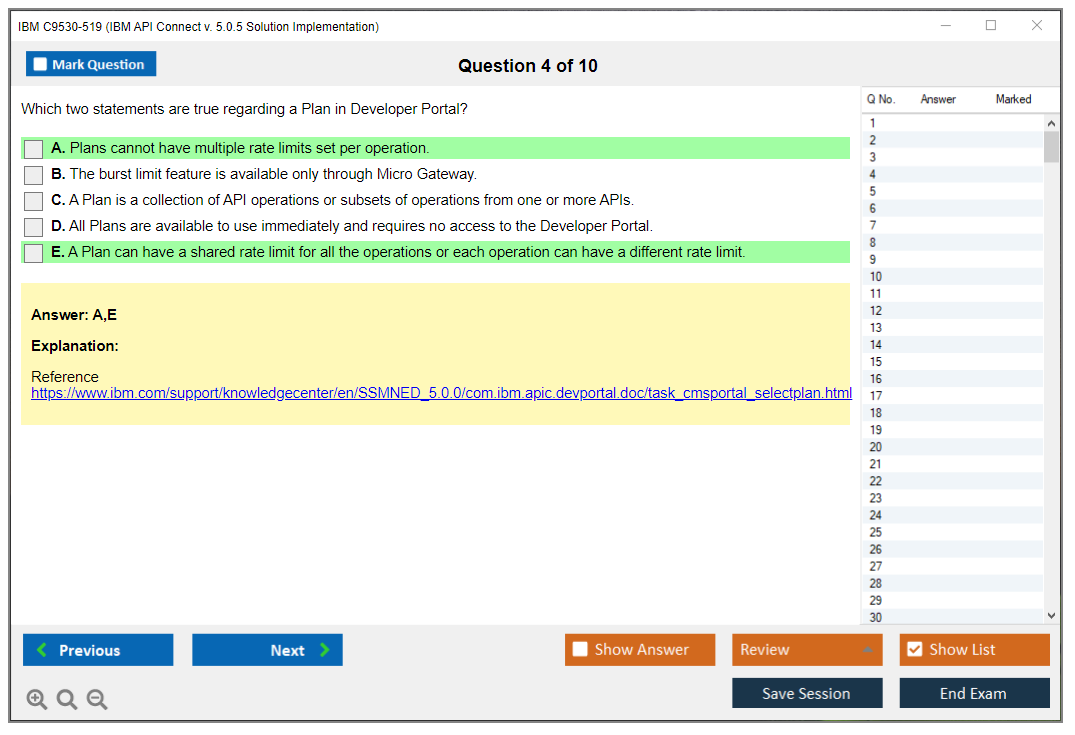
Product bundling is where IBM's approach differs from other API management platforms. You bundle multiple APIs into a Product, then attach Plans with rate limits and quotas. Staging through catalogs (dev, test, prod) involves understanding catalog-level gateway assignments and property overrides.
Publishing workflows can require approvals depending on your governance model. I've seen shops where every prod publish needs three signatures and the exam expects you to configure that. Subscription management is the consumer-facing piece. Developers register applications, get credentials, subscribe to plans.
API deprecation isn't just flipping a switch. You need sunset notifications, version migration windows, maybe running old and new versions at the same time. Rollback procedures for a botched release? Better know how to revert a Product version without breaking existing subscriptions. DevOps pipeline integration means using the CLI to automate promotion, which ties into IBM Cloud Pak for Integration V2021.2 Administration concepts if you're working in that ecosystem.
Security and governance: policies, authentication, authorization, TLS
OAuth 2.0 implementation is massive on this exam. All four grant types: authorization code for web apps, implicit for SPAs (though deprecated now), client credentials for service-to-service, resource owner password for trusted clients. JWT token validation, claims extraction using GatewayScript. You'll write actual policy assembly logic. API key auth is simpler but still needs proper key rotation and revocation handling. Basic auth with LDAP integration requires understanding directory server configs.
TLS certificate management and mutual TLS authentication come up constantly. You're managing certificates on the gateway, configuring trust stores, validating client certs. Security policy assemblies use building blocks like validate-jwt, gatewayscript, set-variable, invoke to chain logic together.
Rate limiting per plan? Table stakes. But you also need application-level throttling and burst handling.
IP filtering and whitelist/blacklist configs protect against unauthorized access. Message validation against JSON Schema or XML Schema catches malformed requests before they hit backends. Encrypting payload data like credit cards or PII requires understanding where decryption happens in the flow, which gets confusing when you're dealing with multiple transformation points. CORS configuration is critical for browser-based API consumers. The exam wants you to know production hardening: disabling unnecessary protocols, setting proper cipher suites, enabling audit logging for compliance. The C1000-147 Cloud Pak for Integration solution architect materials overlap here if you're studying multiple certs.
Gateway configuration and runtime enforcement with DataPower
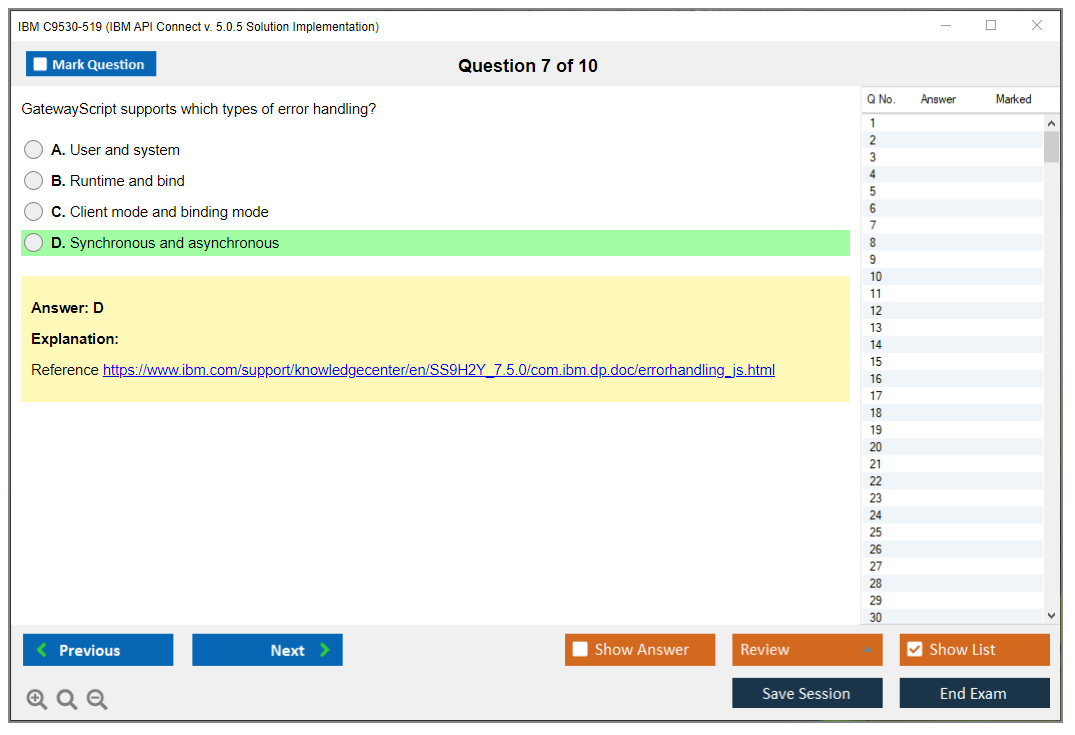
DataPower Gateway service config is where implementation gets hands-on. You're creating application domains, configuring multi-protocol gateways, understanding the difference between API Gateway policies (IBM API Connect constructs) and native DataPower policies. Gateway extension policies let you drop into GatewayScript or XSLT for custom transformation logic that OpenAPI can't express.
Protocol mediation between HTTP/HTTPS and MQ? Common in enterprise integration scenarios. Load balancing across backend endpoints with health checks and failover. Circuit breaker patterns prevent cascading failures when a backend goes down. Caching strategies (response caching at the gateway level versus backend caching) dramatically affect performance. Error handling and custom error response formatting make your APIs look professional instead of exposing raw backend stack traces.
Performance tuning means understanding gateway worker thread pools, connection limits, memory allocation. Monitoring transaction flows through DataPower logs and API Connect Analytics. Troubleshooting connectivity issues involves checking network routes, firewall rules, certificate chains, DNS resolution. Basically everything that can go wrong will go wrong in production.
Catalogs, products, plans, and subscriptions
Catalog hierarchy lets you do multi-environment management within a single API Connect deployment. Spaces within catalogs provide team-based isolation. Marketing APIs versus finance APIs in separate spaces but same catalog. Product definitions bundle related APIs with common lifecycle. Plans define rate limits (calls per minute), quotas (daily caps), approval requirements (auto-approve versus manual review).
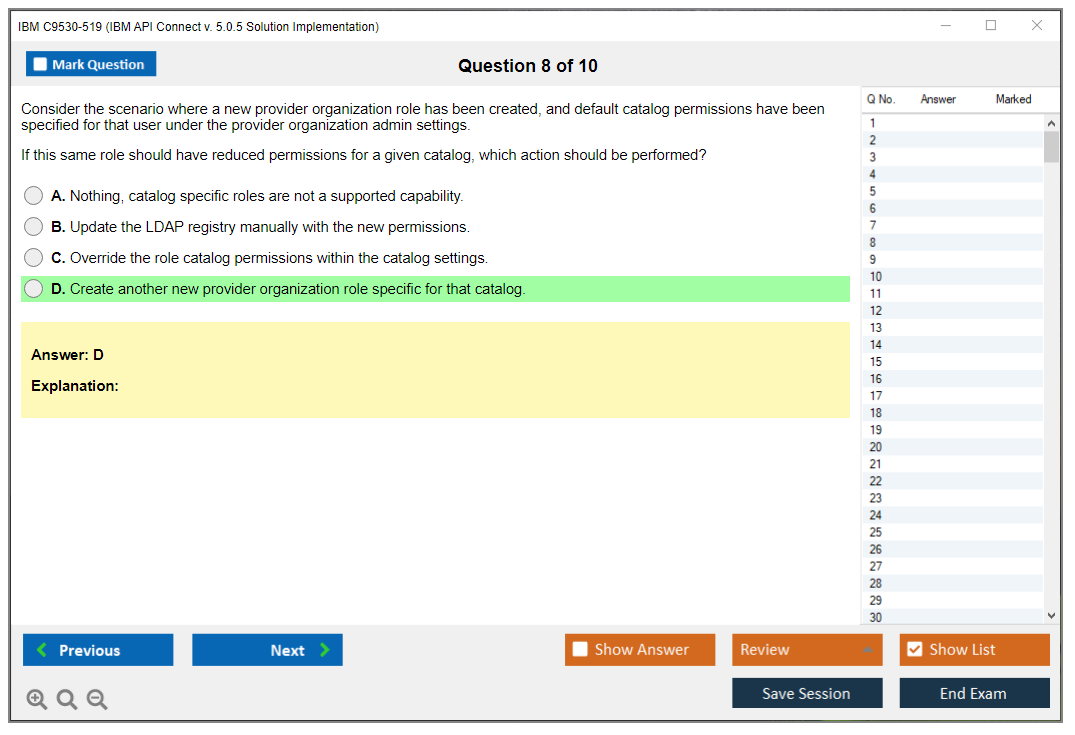
Role-based access control spans multiple levels: provider org admin, API developer, community manager, viewer. API visibility settings control discoverability. Public means anyone can see it, authenticated requires login, custom uses RBAC groups. Application lifecycle management includes credential rotation and revocation when keys leak. Plan migration and subscription transfers happen during plan updates. Moving existing subscribers to new rate limits without service disruption.
Catalog-level properties and gateway configuration override defaults. Syndication between catalogs lets you publish once and replicate across regions. The C9530-519 Practice Exam Questions Pack has solid coverage of catalog/product scenarios with drag-and-drop question formats.
Developer Portal customization and analytics troubleshooting
Developer Portal runs on Drupal so customization uses Drupal theming. Content management for tutorials and getting-started guides. Self-service registration workflows with email verification. The interactive API Explorer lets developers test calls without writing code, which saves so much back-and-forth with support teams when they're just figuring out how your authentication works. Developer community features like forums and blogs drive adoption but require moderation.
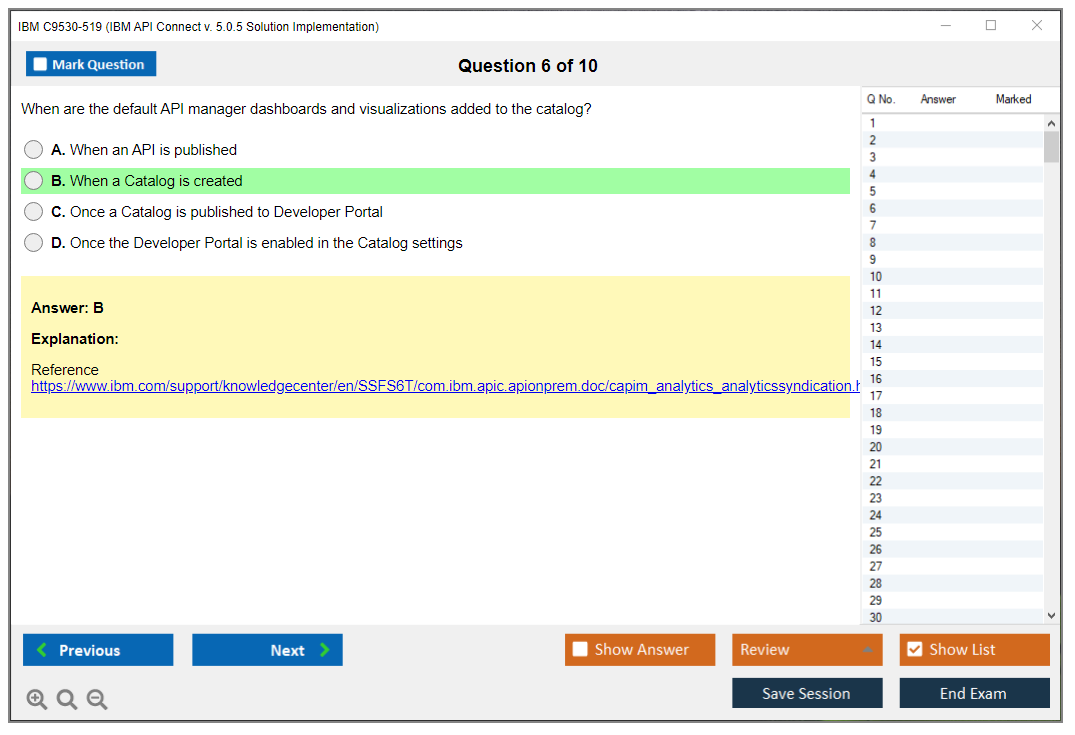
Analytics dashboard configuration involves creating visualizations for different stakeholder needs. Real-time monitoring with alerting on error rate spikes. Historical trend analysis for capacity planning. If traffic grows 20% monthly you need to scale gateways proactively. Log aggregation from distributed gateway nodes into centralized Analytics. Performance metrics show P50/P95/P99 latency, throughput trends, error rates by API.
Troubleshooting failed calls means drilling into transaction logs with correlation IDs. Debug mode in policy assembly shows variable values at each step. Root cause analysis for performance degradation. Is it gateway CPU, backend response time, network latency, database queries? Security event monitoring catches anomaly patterns like sudden traffic spikes from new IPs. If you've worked with IBM App Connect Enterprise the troubleshooting mindset is similar. Trace the message flow, check transformations, validate connectivity at each hop.
Prerequisites and Recommended Background for IBM C9530-519 Success
Prerequisites and recommended background for IBM C9530-519 success
The IBM C9530-519 exam is one of those tests where the "official" entry bar's low, but the real bar? Your hands-on time. Not gonna lie. If you've only watched videos and skimmed docs, you can still register, but you're probably gonna feel the questions poking at gaps you didn't even know existed.
Official IBM prerequisites and certification requirements
Look, IBM doesn't set formal prerequisites for sitting the exam. There's no gatekeeping form, no required course completion checkbox, no "must hold X cert first" rule, and no mandatory work history you need proving to Pearson VUE or whatever authorized testing channel IBM's using for your region.
That also means there's no requirement for prior IBM certifications before attempting C9530-519. You can go straight at it, even if you've never done another IBM badge or exam. This matters for career changers and for folks coming from other API platforms who just need the credential fast for a project.
Training, though? That's where IBM quietly tells you what "prepared" looks like. Recommended completion of IBM API Connect v5.0.5 training courses is the closest thing you'll get to a real prerequisite, and honestly it's a good idea because the exam wording often mirrors how IBM teaches the product, not how you'd casually explain it to a teammate. Self-study's acceptable, sure, but structured training's really suggested if you want fewer surprises. Especially on governance, products/plans, and the portal bits that people skip when they only build APIs.
A suggested prerequisite? Basic understanding of API concepts and REST. Simple stuff. Resources, methods, status codes, idempotency, headers, JSON payloads. If you have to stop and think about what a 401 vs 403 means, you're gonna bleed time on scenario questions, including the style you'll see in IBM API Connect 5.0.5 exam questions.
It's also beneficial to have completed introductory IBM middleware training. Not because the exam's about MQ or IIB or whatever, but because IBM products tend to share patterns: admin roles, certificates, deployment environments, and "where do I click for that setting" muscle memory. This shows up a lot in IBM API management certification IBM tracks, even when the product's different. Random aside: I once spent three hours on a certificate issue that turned out to be a timezone mismatch. IBM logs are.. creative sometimes.
Access to a real environment (the part people ignore)
You need access to an API Connect v5.0.5 environment for hands-on practice. Essential. I mean it. The thing is, reading an IBM API Connect implementation guide or watching a course helps, but you don't really learn the difference between a catalog, a product, and a plan until you publish something, break access, fix it, and then explain to a developer why their subscription doesn't work.
If your company's got a non-prod stack, perfect. If not, try getting a sandbox, a lab image, or internal training environment. The point's repetition. Click paths, exports, imports, certificates. Wait, policies. Logs. That's the stuff the exam tests in a sneaky way, especially for C9530-519 IBM API Connect Solution Implementation.
Practical experience and hands-on skills required
IBM doesn't mandate experience, but the exam behaves like it does. My personal baseline: minimum 6 months working directly with IBM API Connect v5.0.5. Less than that and you can still pass, but you'll be compensating with intense study and a lot of lab hours.
I also like seeing at least 2 to 3 end-to-end API implementation projects. Not "I created an API once." Real projects where you designed, secured, published, versioned, onboarded consumers, and dealt with runtime issues that honestly made you question your career choices at 2 AM. This ties directly to API lifecycle management in IBM API Connect, and the exam loves lifecycle scenarios because they're messy and realistic.
Here are the hands-on capabilities I'd want before you rely on an IBM C9530-519 practice test to tell you you're ready:
- Creating, publishing, and managing APIs in production. Versioning included. Deprecation included. The awkward "we need to change the backend but not break consumers" moments included.
- Configured security policies including OAuth 2.0 and JWT validation. Honestly, you should be able to read a JWT, know what claim matters, and explain where validation happens in the flow, because "API security policies (OAuth, JWT, TLS)" isn't trivia, it's operational reality.
- Implemented DataPower Gateway policies and transformations. This is a big one. If you've never touched IBM DataPower Gateway configuration, you'll struggle with questions that assume you know where transformation fits, what policies do at runtime, and what breaks when headers or payloads don't match expectations.
- Managed catalogs, products, plans, and developer subscriptions. This is where people get humbled. One wrong plan setting, one mis-scoped visibility rule, and your developers can't see the API.
- Customized Developer Portal for specific organizational needs. Not full theme engineering, but at least configuration basics and content tweaks. Also understanding how the portal connects to catalogs. Developer Portal and catalog configuration shows up because onboarding's part of "solution implementation," not an optional extra.
- Troubleshot API runtime issues using logs and analytics. Analytics and monitoring in API Connect isn't just dashboards. You should know what to check when calls fail, where latency shows up, and what data's missing when policies short-circuit a request.
- Performed environment migrations and version upgrades. Even a small migration teaches you what artifacts matter and which settings don't move cleanly.
Worked with cross-functional teams too. Security, networking, app dev, platform ops. Because in the real world you're coordinating certificates, TLS settings, firewall rules, identity providers, and release windows, and the exam questions are written like the person expects you've lived through at least one of those change requests that turns into a two-week thread.
Helpful related knowledge (the "don't skip this" list)
REST and OpenAPI. OAuth2 flows. TLS and certificates. Basic networking and DNS. And a little comfort reading logs. If you're aiming at the IBM API Connect v5 solution architect exam path later, this foundation also carries forward into design decisions, not just implementation steps.
A quick reality check
If you're collecting IBM API Connect 5.0.5 study materials and hoping to brute-force it, you can, but you'll spend more time memorizing than understanding. Mixed feelings here. If you build a small lab project and force yourself to publish products, lock them down, subscribe a test app, and then break auth on purpose and fix it, you'll walk into the IBM API Connect v5.0.5 certification exam calmer, faster, and way less dependent on guesswork.
Conclusion
Wrapping up your C9530-519 path
Look, passing IBM C9530-519? It won't happen by accident.
You need hands-on time with API Connect v5.0.5, not just memorizing terms from study guides. I mean, sure, you can read about catalog structures and OAuth policies all day long, but until you've actually configured a Developer Portal or debugged why your DataPower Gateway won't enforce a rate limit, those exam scenarios just won't click. Real implementation experience matters here way more than most vendor certifications I've seen, honestly.
The exam hits hard on lifecycle management and security policies. Those two domains trip up tons of candidates because they require understanding how components interact, not just what each component does sitting there in isolation. You'll get questions describing a deployment scenario with multiple catalogs, products with different subscription plans, and API versioning headaches, then they ask you to troubleshoot or recommend the right approach. Tricky stuff. If you've only worked in a single-catalog dev environment? You're gonna struggle with those.
The analytics and monitoring section is actually lighter than people expect, but don't skip it entirely because those questions can be easy points if you've spent any time in the actual dashboards.
Study materials? Hit or miss for this one.
IBM's official documentation for API Connect 5.0.5 is thorough but dense. You need to know which sections actually map to exam objectives versus general admin reference stuff. Redbooks help. Hands-on labs are non-negotiable, the thing is. Build APIs, publish them, break things, fix them. That repetition builds the pattern recognition you need when exam questions throw curveballs about gateway behavior or certificate chain issues.
Actually, speaking of certificates, I once spent three hours troubleshooting an API that wouldn't authenticate properly, only to discover the certificate had expired two days earlier. The error messages were completely unhelpful. That kind of real-world debugging teaches you more than any practice test ever will.
Practice tests are how you find your weak spots before it costs you $200 and a failed attempt. Not gonna lie, quality varies wildly. Some question banks are outdated or just plain wrong about API Connect behavior, which is frustrating. You want practice questions that mirror the exam's scenario-based style and cover all the objectives proportionally, especially the heavier-weighted domains like security implementation and product/catalog configuration.
If you're serious about passing on your first try, check out the C9530-519 Practice Exam Questions Pack at /ibm-dumps/c9530-519/. It's built specifically for the v5.0.5 implementation exam, covers the actual exam blueprint, and helps you identify exactly where you need more lab time before you sit for the real thing. Combine that with solid hands-on practice and you're in good shape.