

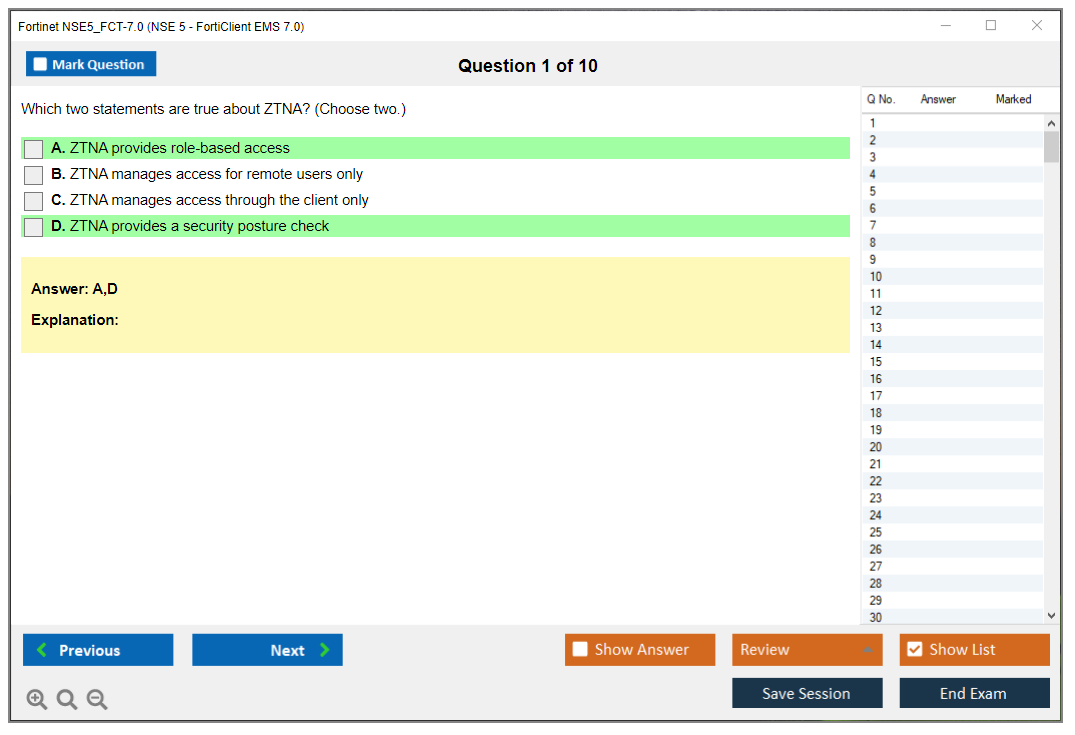
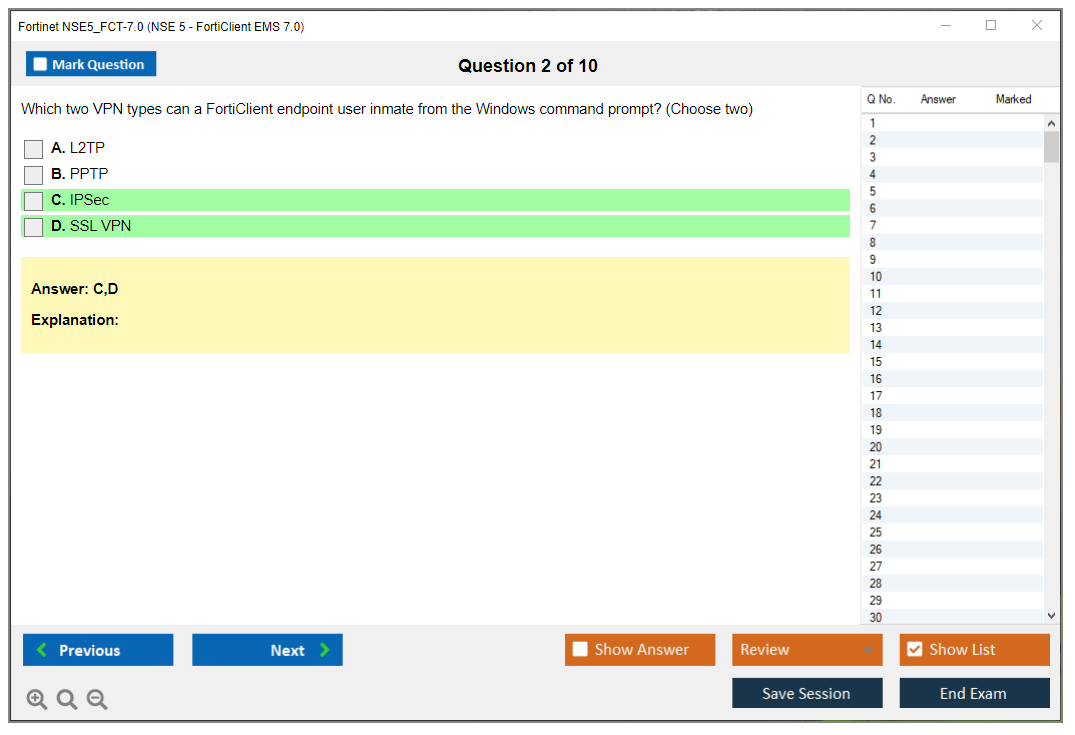
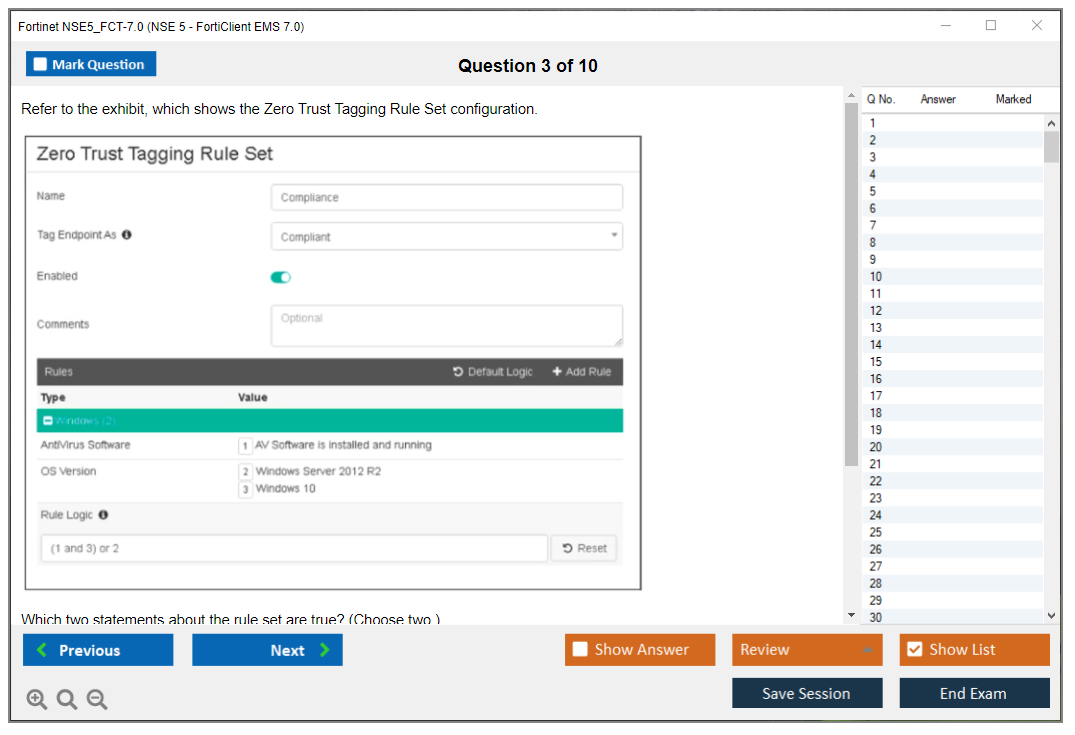
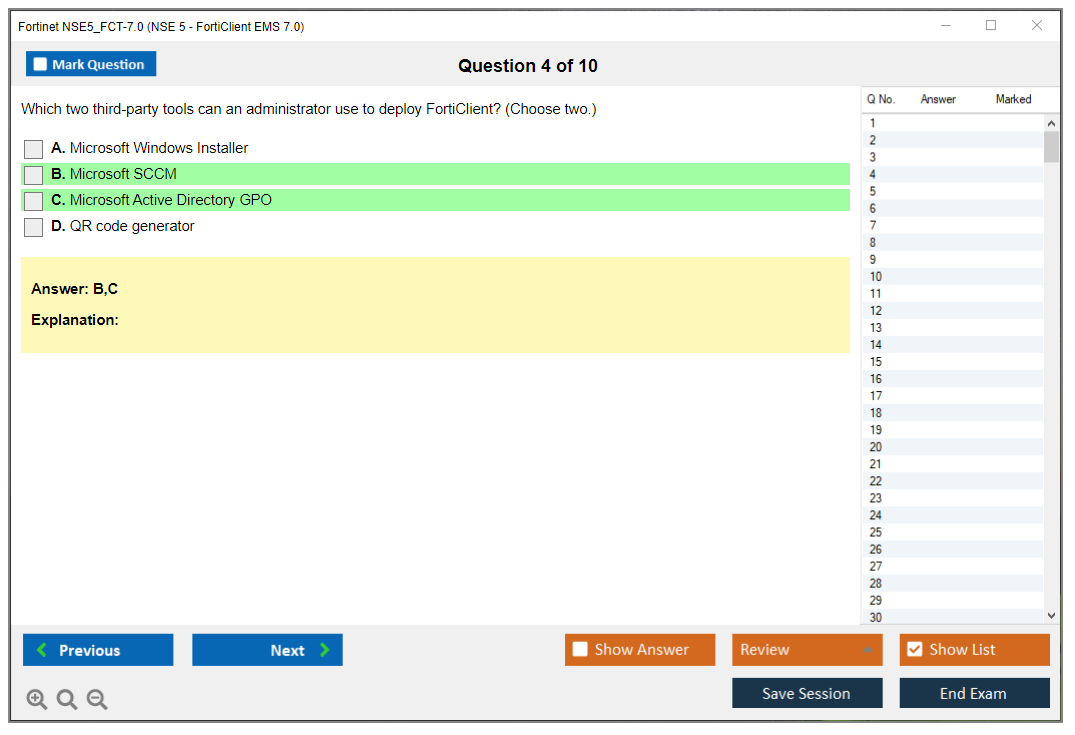
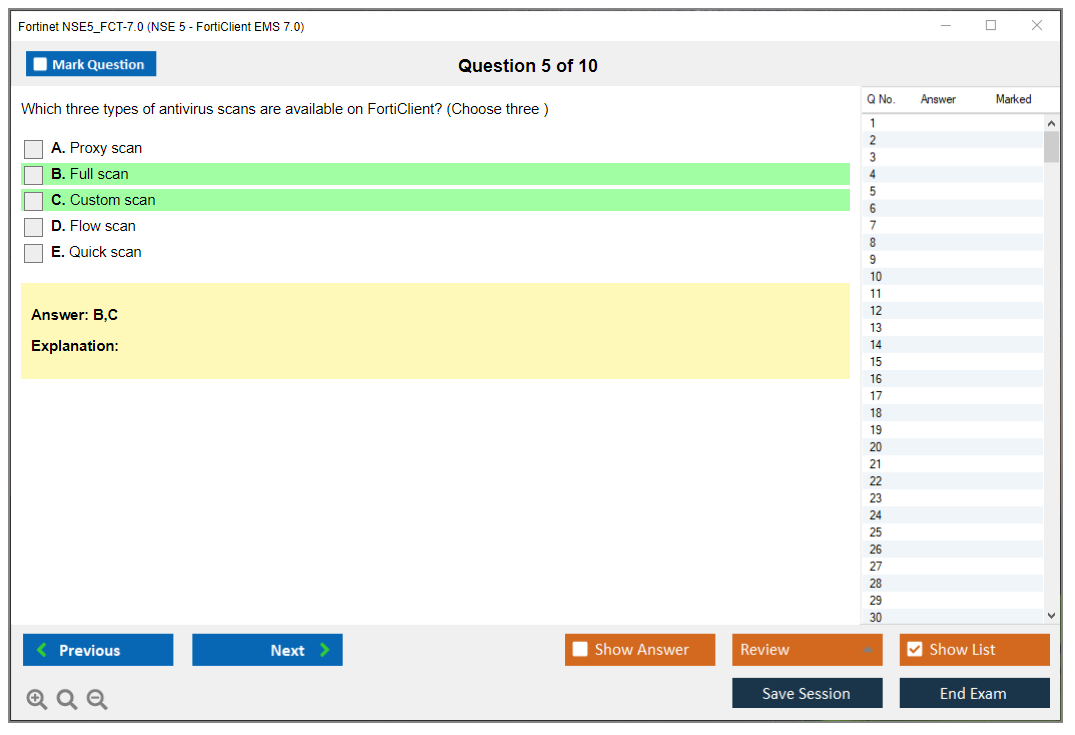
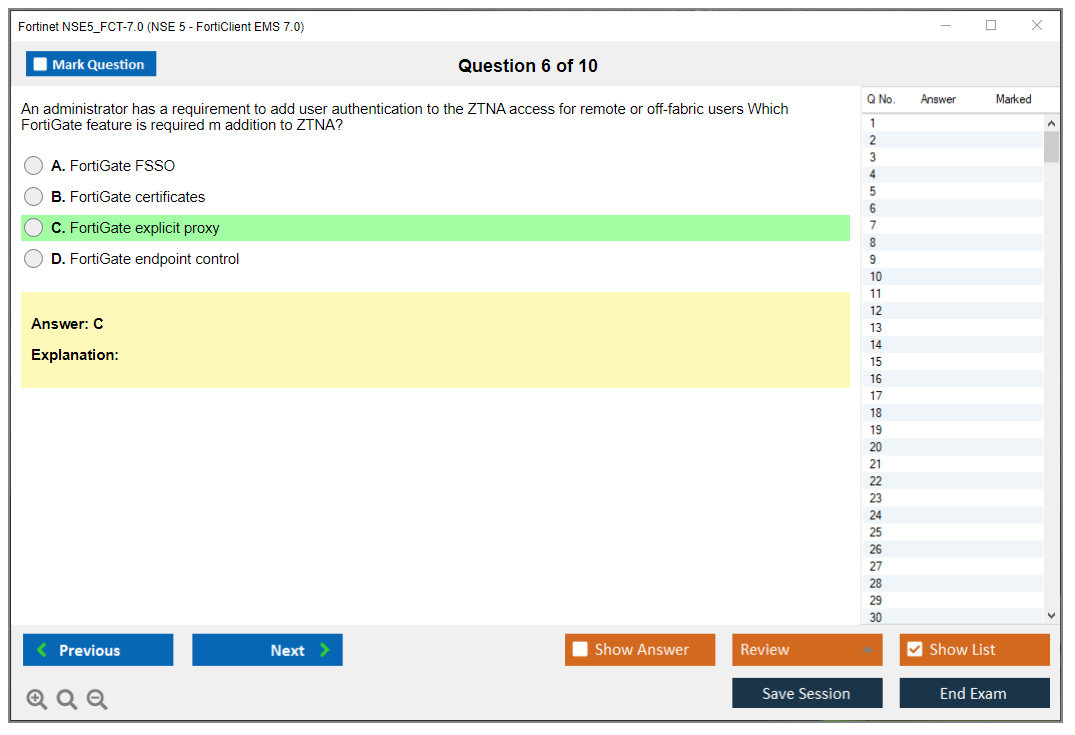
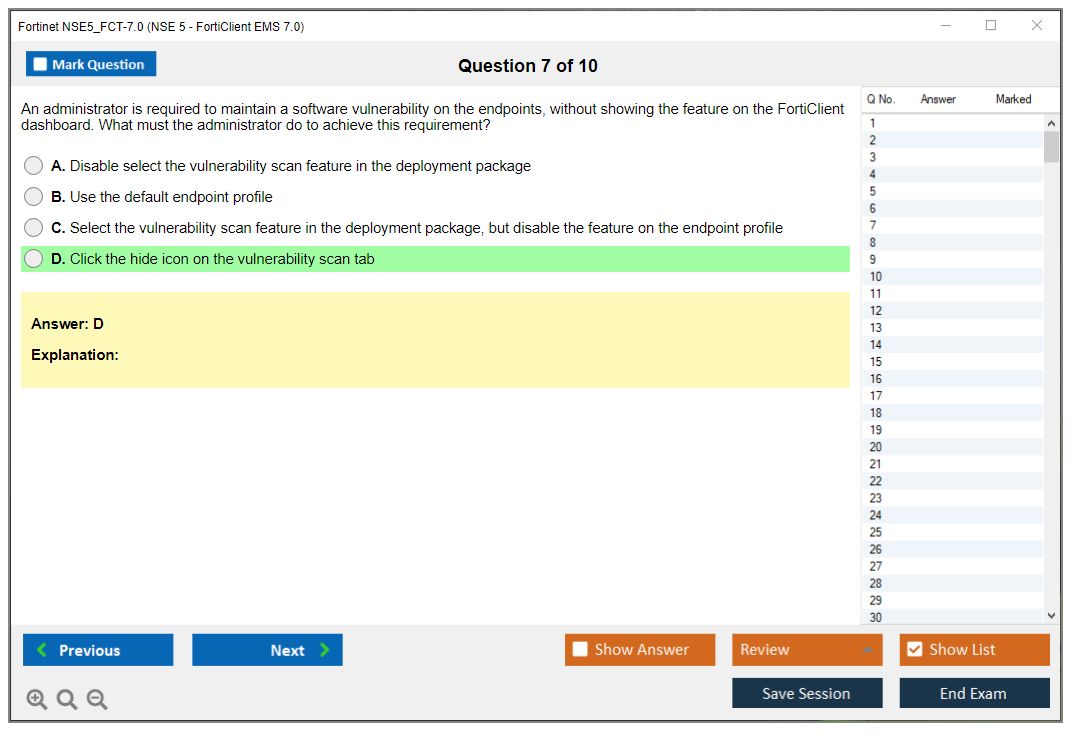
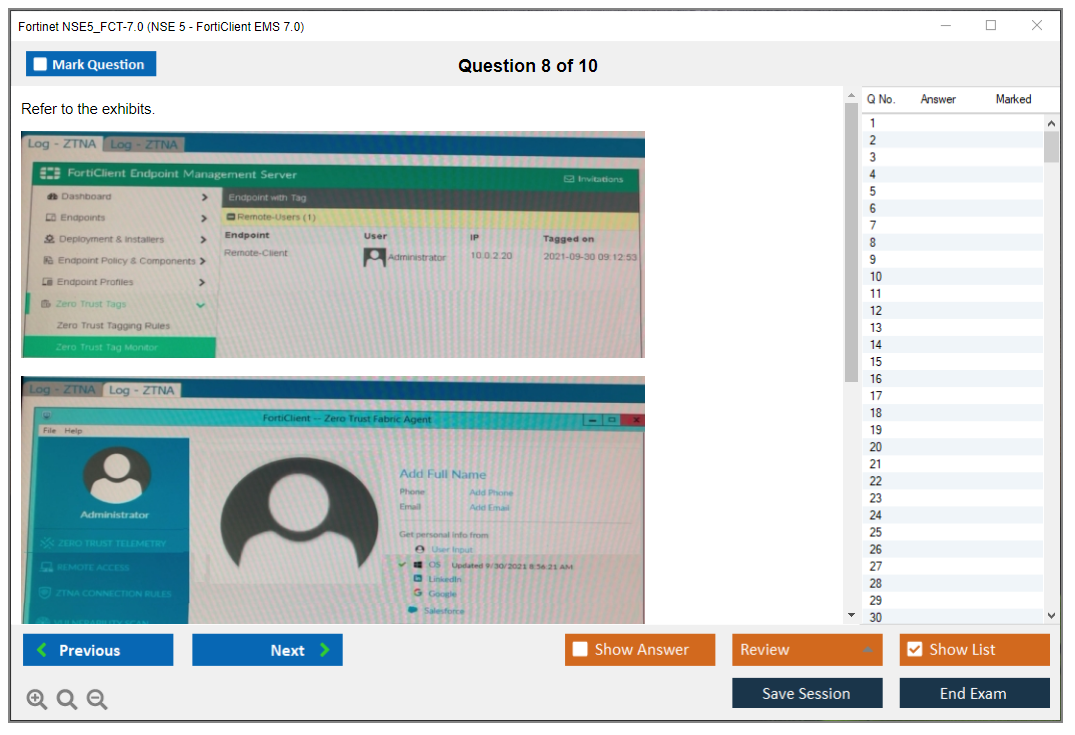
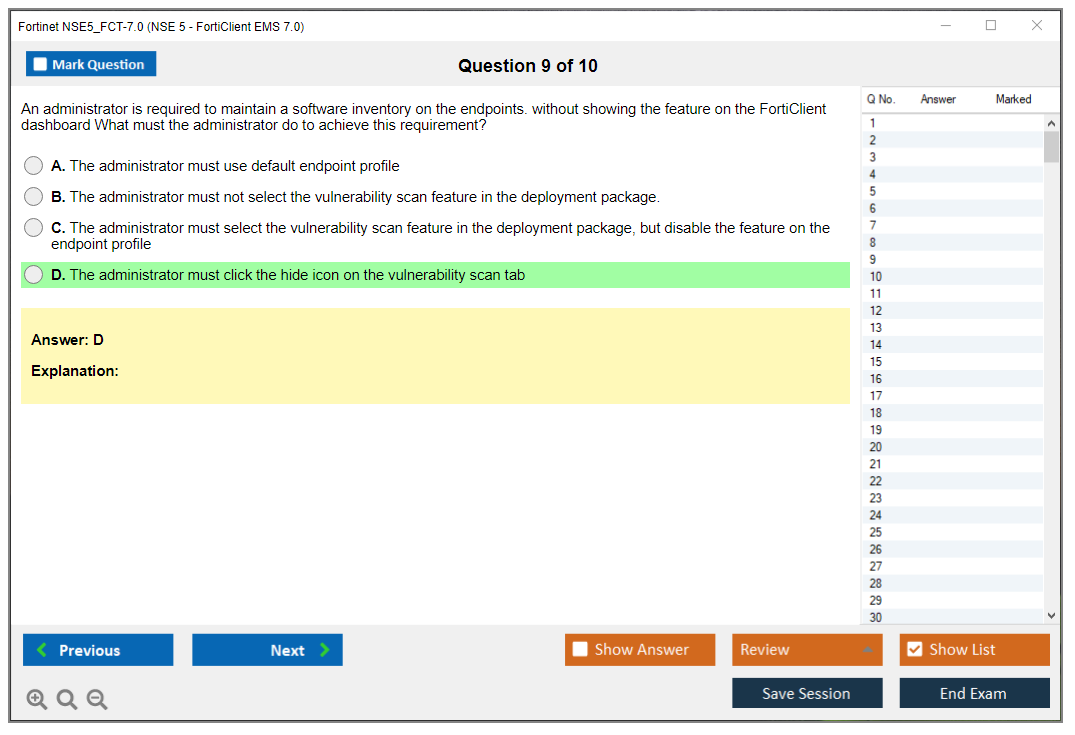
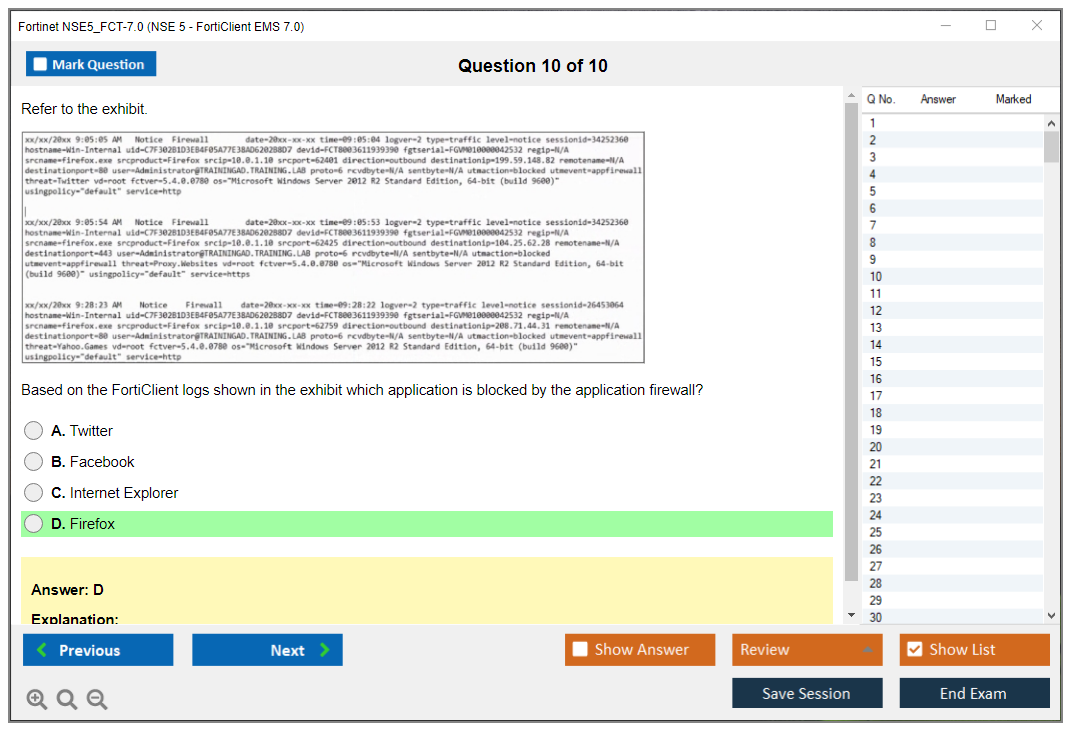
NSE5_FCT-7.0 (NSE 5, FortiClient EMS 7.0) Exam Overview
Why this exam exists and what it actually tests
Fortinet's litmus test. The NSE5_FCT-7.0 exam proves you can manage endpoints at scale using FortiClient EMS 7.0, and honestly, it's way more complex than most folks anticipate when they first dive in. This Endpoint Management Server anchors Fortinet's entire endpoint security philosophy, validating your chops in deploying FortiClient EMS across enterprise environments, configuring endpoint profiles, wrangling telemetry and tags, handling compliance posture checks, and (the thing is) troubleshooting when everything goes sideways. Because it will.
Within Fortinet's NSE certification track? It sits at NSE 5 level. Above the foundational NSE4_FGT-7.2 but below expert-tier NSE 7 certifications like NSE7_EFW-7.0. It's specialized. Really specialized. You're not just proving general Fortinet knowledge here. You're demonstrating hands-on competency with a specific product that many enterprises depend on for endpoint visibility and control across thousands of devices scattered everywhere.
The exam digs into FortiClient EMS deployment models: cloud-based versus on-premises, high-availability configurations, integration with Active Directory and certificate authorities, all that infrastructure jazz. You need to understand endpoint provisioning workflows inside and out. How to build and deploy configuration profiles for VPN, web filtering, vulnerability scanning, plus all the other modules FortiClient offers. Policy administration is absolutely critical here. Defining which endpoints get which policies based on tags, groups, user identity, compliance status. And troubleshooting capabilities? They test that hard because in the real world, endpoints are messy, unpredictable chaos.
Who actually needs this certification
Security administrators managing Fortinet endpoint deployments. Obvious candidates. If you're responsible for rolling out FortiClient to your organization's laptops and mobile devices, this certification proves you know what you're doing beyond just clicking through the GUI hoping for the best. Endpoint management specialists who come from other platforms (think Microsoft Endpoint Manager or Jamf) and need to add Fortinet to their skillset will find this certification validates their cross-platform expertise nicely.
Network security engineers increasingly need endpoint visibility as part of zero trust architecture implementations. FortiClient EMS feeds telemetry into FortiGate firewalls and FortiAnalyzer, creating that unified security fabric Fortinet constantly talks about. SOC analysts benefit too. Understanding how FortiClient EMS collects and tags endpoint data helps massively when investigating security incidents or hunting for threats across the environment.
The certification makes most sense if you've got at least six months of hands-on experience with FortiClient EMS or similar endpoint management platforms. Not saying you can't pass it fresh, but honestly, the scenario-based questions assume you've dealt with real deployment challenges. Not just lab setups.
A quick tangent: I've seen fresh grads try this after breezing through NSE 4, thinking endpoint management is basically "install software and walk away." They usually bounce off it pretty hard. Experience matters here more than raw memorization ability.
What passing this exam does for your career
Smaller pool. The Fortinet NSE 5 FortiClient EMS 7.0 certification puts you in a more specialized pool than the general firewall certifications, which means fewer people pursue endpoint-focused certs, which means less competition for roles that specifically require this knowledge. Enterprise organizations running Fortinet Security Fabric need admins who understand how endpoints integrate with FortiGate policies, how ZTNA access rules depend on endpoint posture checks, how telemetry flows to FortiAnalyzer for correlation.
Employers looking for endpoint security specialists value this because it demonstrates you're not just theory-based or someone who memorized a brain dump. The exam requires understanding of deployment architecture, profile management, troubleshooting. Practical skills that directly translate to day-one productivity without hand-holding. And if you're already managing FortiGate firewalls, adding the NSE5_FCT-7.0 shows you understand the full stack from network edge to endpoint, which is increasingly important.
Salary-wise, endpoint security specialists with vendor certifications typically command higher rates than generalists who claim they "know security." The certification also opens doors to consulting work. Many MSPs need engineers who can deploy and manage FortiClient EMS for multiple clients simultaneously.
Exam structure and what to expect
Multiple choice format. The NSE5_FCT-7.0 exam uses multiple choice and multiple select questions, with a healthy dose of scenario-based items that present a configuration challenge or troubleshooting situation you'll actually encounter. You'll get around 30 to 35 questions (Fortinet doesn't publish exact counts, frustratingly) with 60 minutes to complete them. That's roughly two minutes per question, which sounds generous until you hit a scenario that requires mentally walking through a multi-step policy evaluation process.
Delivery happens through Pearson VUE testing centers or online proctored exams. Your choice. The online option is convenient but requires a clean testing environment and stable internet. No second monitors, no notes, camera on the whole time watching your every move. Testing center feels more controlled if you've got distractions at home or roommates who don't understand "I'm taking a certification exam."
Question types include straightforward knowledge checks (what port does EMS use for telemetry?) but lean heavily toward application questions that test real-world understanding. You might see a network diagram with FortiClient EMS, FortiGate, and endpoints, then need to identify why certain endpoints aren't receiving policies or why telemetry isn't flowing correctly. Multiple select questions are brutal because partial credit doesn't exist. You need all correct answers selected and no incorrect ones.
Costs and scoring realities
Around $400 USD. The NSE5_FCT-7.0 exam cost runs around $400 USD, though regional pricing varies depending on currency and local Pearson VUE fees that seem arbitrary sometimes. Payment happens directly through Pearson VUE when you schedule, or you can purchase exam vouchers through Fortinet partners if your employer has a training agreement set up. Some regions add VAT or other taxes on top of the base price, so factor that in.
Fortinet doesn't publicly disclose the exact passing score for NSE5_FCT-7.0, which is honestly annoying. You get a pass/fail result immediately after finishing. No percentage, no breakdown of which domains you nailed versus struggled with, nothing useful for improvement if you fail. This opaque scoring frustrates people, but it's standard practice for vendor certs unfortunately. Plan to score well above whatever threshold exists by really knowing the material rather than aiming for a bare minimum pass.
The certification stays valid for two years at the NSE 5 level, similar to NSE5_EDR-5.0 and other specialized tracks in Fortinet's portfolio. Fortinet's renewal policy typically requires recertification or taking updated exam versions as new FortiClient EMS releases come out. Technology moves fast in endpoint security, so the two-year validity actually makes sense rather than feeling like a cash grab.
Version specificity matters more than you'd think
The 7.0 designation? Critical. The 7.0 designation in NSE5_FCT-7.0 is absolutely critical and not just marketing fluff. FortiClient EMS 7.0 introduced significant architectural changes from 6.x versions. Cloud deployment options matured substantially, ZTNA integration deepened, telemetry schema evolved in ways that break backward compatibility. If you're studying materials from earlier versions, you'll miss important features and potentially answer questions incorrectly based on outdated information that's no longer relevant.
Current enterprise deployments increasingly run EMS 7.0 or newer, making this version highly relevant for actual job roles. Understanding how FortiClient EMS 7.0 fits within the broader Security Fabric (pushing endpoint tags to FortiGate for dynamic policy enforcement, feeding security events to FortiAnalyzer, coordinating with FortiManager for centralized management) is what separates this exam from just memorizing GUI menus and hoping for the best.
NSE5_FCT-7.0 Prerequisites and Recommended Experience
Fortinet's pretty clear about one thing: the NSE5_FCT-7.0 exam shouldn't be your starting line. There aren't hard gatekeeping rules saying "pass X first or else," but official guidance definitely pushes you toward NSE 4 FortiGate Security (or equivalent fundamentals) before you attempt proving you can run FortiClient EMS in production environments where things actually matter. That "equivalent" part's important since plenty of admins migrate from competing firewall stacks, but you've still gotta speak Fortinet fluently. FortiOS basics, Security Fabric concepts, policy thinking, plus understanding how endpoints and gateways share contextual information in real time.
Start with fundamentals. Seriously, don't skip this.
What Fortinet expects (official prerequisites)
Fortinet's stated prerequisite vibe for NSE5_FCT-7.0 prerequisites basically boils down to: know Fortinet fundamentals, ideally complete NSE 4 FortiGate Security first. EMS doesn't exist in isolation, honestly, and the exam assumes you won't freeze up when someone mentions FortiGate, telemetry streams, dynamic tags, or ZTNA access rules tied directly to endpoint posture assessment. Skip that foundation and sure, you might still pass, but half your study time evaporates learning vocabulary you should've already internalized months ago.
Also, if you're flipping through an NSE5_FCT-7.0 study guide or scanning FortiClient EMS 7.0 exam objectives, you'll notice questions rarely ask "what button do you click." They lean more toward "what happens when X integrates with Y and the endpoint's in state Z while the user roams between networks." That's just how Fortinet rolls.
Networking and system foundation you actually need
TCP/IP. DNS. DHCP. Basic routing.
Non-negotiable, period.
You also need comfort with VPN concepts like split tunnel against full tunnel, authentication flows, client posture checks that happen before connection establishment. Certificate management including trust stores and issuing CAs and certificate templates and common EKU issues that break everything. Active Directory integration covering LDAP against SAML against RADIUS, group mappings, user identity correlation, and why time drift destroys authentication at 2 a.m. when nobody's awake to fix it. The thing is, half of "EMS troubleshooting" ends up being proving name resolution works correctly, proving the cert chain validates properly, and proving the endpoint can actually reach the thing it claims it's trying to reach.
Endpoint OS knowledge matters way more than people admit during prep. Windows services and registry quirks, macOS permissions and configuration profiles, Linux distro differences, how endpoint agents behave during version upgrades. Driver conflicts, unexpected reboots, kernel extensions getting blocked. You don't need desktop engineer-level expertise, but you should instantly recognize the difference between "user error" and "the OS security model blocked the extension and nobody noticed."
I once spent three hours troubleshooting what turned out to be a single GPO someone deployed six months earlier that quietly disabled kernel mode filter drivers on half our Windows fleet. Nobody documented it. Nobody remembered. Just found it buried in the event logs around 11 p.m. while the CIO kept emailing status updates.
FortiClient EMS 7.0 hands-on time (what I recommend)
If you want to feel remotely sane during exam day, get 6 to 12 months of genuine admin time with EMS 7.0. Not just installing it once in a lab and calling it done. I mean installing, upgrading, patching, and living with it while endpoints check in from different networks, fall out of compliance for weird reasons, roam between sites, and generate tickets screaming "VPN broke" even though the actual problem's just the user's Wi-Fi being down.
Hands-on should absolutely include FortiClient EMS deployment and configuration tasks: setting up the server infrastructure, connecting it to identity sources like AD or LDAP, creating endpoint profiles with appropriate security settings, rolling out FortiClient to diverse device populations. Building intelligent policies, and handling day-to-day endpoint management with Fortinet tools instead of generic MDM platforms. Spend real time on boring operational tasks too, because honestly the exam loves that boring stuff. Profile assignment logic, group targeting mechanisms, tag behavior and inheritance, plus the endless "why didn't this specific endpoint get the policy" detective work that eats hours.
One long rambling truth here: if you haven't personally chased a telemetry registration issue from endpoint through EMS logs up to FortiGate and back again while troubleshooting at midnight, just reading documentation won't fully prepare you for the exam's troubleshooting scenarios. The really hard part isn't knowing commands but rather knowing which logs actually matter, what "normal" telemetry flow looks like against broken, and which quick diagnostic checks save you from staring at the wrong admin screen for an hour accomplishing nothing.
FortiGate familiarity (why EMS isn't enough)
Understanding FortiGate integration's a huge deal since EMS often acts as the "brain" for endpoint posture assessment while FortiGate becomes the enforcement point. The exam definitely expects you to understand fabric connector configuration specifics, how telemetry data flows between components, and how ZTNA tag-based policies get evaluated in real time when an endpoint's compliance state changes mid-session without warning.
You should know what endpoint visibility looks like on FortiGate devices from the GUI and CLI, how dynamic tags appear and update, and how policy outcomes shift instantly when endpoint posture flips from compliant to non-compliant during an active session. Telemetry, tags, compliance posture.
That trio appears everywhere.
This includes FortiClient EMS troubleshooting and logs scenarios where the actual "fix" isn't some GUI checkbox but rather a broken trust relationship, an expired certificate, a misconfigured fabric connector, or a subtle version mismatch between components that nobody documented.
Endpoint security concepts that make the exam easier
Have working understanding of EPP against EDR architectures. Vulnerability scanning methodologies. Compliance monitoring frameworks. Patch management workflows. These aren't just industry buzzwords. They map directly to how you design posture rules and how you explain why an endpoint should or shouldn't receive network access based on current state.
Mentioning the rest quickly: malware protection fundamentals, attack surface reduction strategies, what "device control" typically means in enterprise endpoint tools. You don't need incident responder-level threat hunting skills, but you should understand what signals endpoint products can realistically provide against what's marketing fiction.
ZTNA concepts (FortiClient angle)
ZTNA's about identity plus device posture plus application-level access. Not just "VPN with trendy new branding" like some vendors push. EMS supports ZTNA deployments by continuously tracking endpoint posture assessment, attaching dynamic tags based on compliance state, and feeding those tags into access control decisions so applications can be allowed or blocked based on real-time compliance instead of static network location. That means you need solid understanding of application access policies, what posture checks look like in actual production deployments, and how endpoints transition between compliance states without breaking active user sessions and causing help desk chaos.
Another long rambling point worth making: people fail this section because they memorize textbook definitions instead of understanding the actual control loop in practice. The endpoint reports current posture, EMS evaluates against policy and assigns tags, FortiGate enforces based on those tags, the user's access level changes dynamically, and then you troubleshoot the entire chain when one expired certificate or one tiny connector setting quietly ruins the data path without obvious error messages.
Helpful related Fortinet products
Knowing FortiAnalyzer helps significantly with log analysis and compliance reporting, especially when you're correlating endpoint events with gateway activity across distributed environments. FortiManager knowledge proves useful if your organization centralizes firewall policy management and you need consistent enforcement across multiple sites. FortiAuthenticator comes up frequently when authentication services and identity stores become part of the architecture design. FortiSandbox's worth knowing at high level for threat intelligence integration and detonation workflow, even if EMS isn't the primary console you live in daily. I mean, honestly, integration points matter.
Scripting, automation, and APIs (nice to have)
Not mandatory for passing.
Still really helpful.
If you've touched REST APIs, PowerShell, or Python in previous roles, you'll be way more comfortable with advanced admin tasks and automation concepts that appear in FortiClient EMS 7.0 exam objectives, especially around bulk operations, custom reporting, and repeatable configuration deployment. Don't overdo it during prep, but be able to read a sample API call and understand what configuration it's changing without needing a decoder ring.
Cloud and hybrid reality
EMS appears in cloud deployments and hybrid architectures constantly nowadays, so you should understand basic AWS/Azure/GCP networking concepts, remote workforce management patterns, and what changes operationally when EMS is cloud-hosted against traditional on-premises deployment. Connectivity models, identity integration complexity, certificate trust chains. These get more "fun" in hybrid setups, not gonna lie, and exam content tends to assume you've seen at least one mixed environment instead of purely on-prem.
Compliance frameworks (why they show up)
You don't need to recite GDPR articles from memory, but you should be aware of GDPR, HIPAA, and PCI-DSS style requirements and how EMS supports organizational compliance through endpoint visibility, compliance posture monitoring, and audit reporting capabilities. This is where "can you prove device health" meets "can you show auditors evidence," and it matters in real jobs beyond just passing exams.
Study timeline based on your background
For experienced EMS admins with production experience, plan 4 to 6 weeks and focus specifically on knowledge gaps, especially ZTNA flows and advanced troubleshooting scenarios. For folks with general Fortinet knowledge but limited EMS hands-on time, 8 to 12 weeks is way more realistic, and you'll definitely want lab access plus a solid NSE5_FCT-7.0 practice test strategy to identify weak areas before exam day. For networking professionals new to Fortinet's ecosystem, budget 12 to 16 weeks minimum, because you're learning the Fortinet way of handling identity, telemetry, and policy logic while also trying to understand what the exam's even asking in its uniquely Fortinet phrasing. All at once.
Quick notes people always ask anyway: NSE5_FCT-7.0 exam cost varies by region and currency fluctuations, so check Fortinet's official listing before purchasing vouchers. The NSE5_FCT-7.0 passing score isn't always publicly fixed and can vary between exam versions, so again, verify on the official exam page instead of trusting random forums. Same deal with NSE5_FCT-7.0 renewal policy, since Fortinet periodically changes certification program rules and you don't want to study based on some random blog post from 2021 that's now outdated.
NSE5_FCT-7.0 Exam Objectives and Knowledge Domains
Okay, so you're thinking about the NSE5_FCT-7.0 exam. Let me walk you through what you actually need to know here, because this isn't just another endpoint management cert. It's specifically about FortiClient EMS 7.0, which is Fortinet's endpoint management system that ties into their whole Security Fabric ecosystem. If you've been managing endpoints or doing any kind of Fortinet NSE 4 - FortiOS 7.2 work, you already know how critical endpoint visibility is for ZTNA and overall network security posture.
What you're signing up for with FortiClient EMS architecture
The first domain hits you hard with architecture fundamentals. You need to understand how EMS server components fit together. Database requirements like SQL Server or PostgreSQL, server sizing based on endpoint count, and how high availability configurations actually work in production environments. Distributed deployment models aren't just theoretical diagrams. You'll see scenarios where you need to decide between centralized versus regional EMS deployments, and the thing is, these decisions have real consequences for latency and bandwidth. The Security Fabric integration piece? Huge here because EMS doesn't live in isolation. It feeds telemetry data to FortiGate, which then makes access control decisions.
Installation isn't rocket science, but you need hands-on experience. The exam tests whether you know installation procedures across different operating systems. How licensing works (per-endpoint versus concurrent models make a big difference in cost and deployment strategy). Certificate management, which honestly trips people up way more than it should. Service verification steps matter because if your EMS services aren't running correctly from day one, nothing else works downstream.
Endpoint provisioning is where things get real
Creating profiles sounds simple until you're managing 50 different endpoint types across departments with conflicting security requirements that change every quarter based on compliance audits. Profile inheritance and precedence rules determine which settings actually apply when conflicts occur. Configuration templates save time but you need to know when to use them versus custom profiles. I spent way too long once debugging a profile conflict that turned out to be a simple precedence issue that should've taken five minutes.
VPN configuration profiles deserve special attention because this is where most troubleshooting scenarios come from in the real world. SSL VPN versus IPsec. Tunnel mode versus split tunnel. These aren't just checkboxes. They affect user experience and security posture in ways that'll come back to haunt you. Certificate-based authentication and SAML SSO integration show up regularly in exam questions, and always-up VPN with VPN before logon gets tested in scenarios about securing remote endpoints before domain authentication.
Security profiles cover this whole range: web filtering, application firewall rules, vulnerability scanning schedules, and sandbox submission policies. You'll need to know how antivirus settings integrate with FortiGuard services and how endpoint compliance requirements get enforced through profiles. System settings profiles control update schedules, logging levels, quarantine settings, and on-net versus off-net detection, which is critical for applying different policies based on endpoint location.
Telemetry and tags are the secret sauce
Look, this is where FortiClient EMS really shines compared to traditional endpoint management. The telemetry data collected includes OS version, security software status, running processes, detected vulnerabilities, and network information. Basically everything you need to make intelligent access control decisions instead of just guessing. The telemetry connector configuration on FortiGate is what makes this data actionable across your security infrastructure.
Dynamic endpoint tags let you create custom tags based on real-time telemetry data. Tag rules and conditions can get complex. You might tag endpoints based on OS patch level, installed applications, vulnerability scan results, or compliance status. Tag groups organize related tags, and tag precedence determines which tag applies when multiple rules match. The real-time tag updates and synchronization with FortiGate is what makes ZTNA policies actually work in dynamic environments instead of relying on static groups that go stale.
Compliance isn't optional anymore
Defining compliance rules means several things: setting vulnerability severity thresholds, specifying required security software, establishing minimum OS patch levels, and enforcing encryption requirements that management actually cares about. Compliance reporting shows who's meeting standards and who isn't, but automated compliance actions are what actually enforce your policies without needing an army of admins. You can quarantine non-compliant endpoints or restrict network access. Trigger notifications to users or administrators. Integrate compliance status directly into ZTNA policies, which connects back to Fortinet NSE 7 - Enterprise Firewall 7.0 concepts if you've studied that path.
ZTNA integration ties everything together
FortiClient's role in ZTNA architecture is central. It provides endpoint posture verification before granting application access and performs continuous trust assessment during sessions. This isn't one-time authentication. It's ongoing evaluation that adapts to changing conditions. ZTNA tags from EMS influence firewall policies on FortiGate, creating application-level access control based on user and device context.
The EMS and FortiGate integration requires properly configured fabric connectors, correct telemetry flow from EMS to FortiGate, and real-time endpoint status updates. Troubleshooting integration issues is heavily tested because when this breaks, your entire ZTNA implementation fails spectacularly.
User management and monitoring round out the domains
User authentication methods include local database, LDAP, RADIUS, and SAML. Each with specific use cases you'll encounter. Active Directory integration and user group synchronization enable role-based access control for EMS administrators. Endpoint grouping strategies organize devices by department, location, device type, or compliance status, with dynamic groups that automatically update based on tags or attributes.
Monitoring and reporting? The dashboard covers customization options, endpoint status monitoring, real-time alerts, event log analysis, and FortiAnalyzer integration for that centralized visibility everyone keeps asking for. Not gonna lie, troubleshooting scenarios dominate this section. Common issues. Diagnostic tools. Log file interpretation, debug commands, agent connectivity problems, profile application failures, VPN connection issues that users blame on "the network" when it's usually certificates.
Performance optimization topics include database maintenance (which people skip until things get slow), log rotation, server resource monitoring, and scaling EMS for large deployments. Backup and disaster recovery procedures cover configuration backup, database backup strategies, restoration procedures, and high availability failover testing. Production systems need resilience when executives are traveling.
If you're also looking at Fortinet NSE 5 - FortiEDR 5.0, you'll notice some conceptual overlap in endpoint security approaches, though the implementation details differ significantly between EDR and EMS platforms in ways that matter for your study plan.
Best Study Materials and Resources for NSE5_FCT-7.0
What this exam actually proves
The NSE5_FCT-7.0 exam is Fortinet's check on whether you can run FortiClient EMS 7.0 in real life. Not theory. Not vibes. The day-to-day stuff: FortiClient EMS deployment and configuration, profile/policy management, telemetry, tags, compliance rules, and the parts that always break at 4:45 PM.
Who should take it? Endpoint admins. Fortinet firewall folks who got handed EMS. Anyone doing endpoint management with Fortinet and getting pulled into ZTNA conversations. Look, if you've only touched FortiClient on your own laptop once, this exam's gonna feel steep. Honestly, steep doesn't quite cover it.
Format, delivery, and the money questions
Fortinet can change delivery details, so confirm the latest on the official exam page, but expect the usual proctored exam setup with a time limit and a pool of scenario-heavy questions. Read carefully because small wording changes matter.
On NSE5_FCT-7.0 exam cost, it varies by region and currency and sometimes by testing provider. The thing is, don't trust random blog numbers (including mine) when you're about to expense it. Check the listing right before you schedule.
For NSE5_FCT-7.0 passing score, Fortinet often doesn't publish a fixed number, and it can vary. That's annoying, yes. Plan like you need a strong margin, not like you can squeak by.
Difficulty: where people get wrecked
This exam is "NSE 5" hard, meaning it expects you to understand product behavior, not memorize menus. Architecture questions show up. Telemetry logic shows up. The troubleshooting angle shows up.
ZTNA gets people too. Not the marketing version. The "what does the endpoint report, how does posture get evaluated, why did access flip from allowed to blocked" version, which is basically ZTNA and endpoint posture (FortiClient) plus a bunch of practical gotchas.
Hands-on time matters. Two weekends in docs-only mode is rarely enough. A few days of labbing plus targeted reading? Now we're talking.
What to study (mapped to real objectives)
Fortinet publishes the FortiClient EMS 7.0 exam objectives as a blueprint. Use that as your checklist, then map every objective to a lab task and a doc section. My quick "what usually shows up" list looks like:
- EMS architecture, components, and deployment models
- Endpoint provisioning, profiles, and policy management
- telemetry, tags, and endpoint compliance rules and how they evaluate
- Integration concepts with FortiGate for ZTNA posture and fabric connectivity
- FortiClient EMS troubleshooting and logs, plus common connectivity/policy failures
That's not the whole blueprint. It's the stuff I see candidates under-prepare, especially the tagging and compliance logic where one missing condition changes everything.
Prereqs you shouldn't ignore
Fortinet doesn't always enforce hard NSE5_FCT-7.0 prerequisites, but you should. You want basic Fortinet fundamentals, comfort with Windows Server-ish admin tasks, and at least a little FortiGate familiarity if you plan to practice ZTNA flows. Also helpful: knowing how certificates work in enterprise environments. PKI pain is real.
Best study materials and resources (the ones that actually work)
Start with the official stuff. Always.
Official Fortinet NSE Institute training (ILT). The NSE 5 FortiClient EMS 7.0 instructor-led training is usually 2 to 3 days. It covers the course content overview you'd expect: architecture, deployment, profiles, telemetry, tags, compliance, ZTNA posture basics. The real win is the hands-on lab exercises because you get guided reps instead of guessing why a tag never applies. Registration's through the Fortinet Training Institute. Availability depends on calendar and region, so check early if you need a specific date for work.
Self-paced online training. The Fortinet Training Portal has the NSE 5 FortiClient EMS 7.0 self-paced course. Video lectures, interactive labs, knowledge checks. Flexible schedule. I mean, this is the option most working admins pick because you can do 45 minutes at night, then a longer lab block on Saturday, and still keep your job and your sanity. Sometimes I wonder if Fortinet designed this around divorced IT guys with weekend custody schedules, but that's probably just me projecting.
Now the docs. Yes, really.
The FortiClient EMS 7.0 Administration Guide is your main reference. Most complete source for EMS features, configuration examples, best practices, and troubleshooting procedures. It's on the Fortinet Documentation Library. Keep it open while you lab. Bookmark the sections you keep coming back to. Notes help. Screenshots help.
Read the FortiClient EMS 7.0 Release Notes too. New features, bug fixes, known issues, upgrade considerations, compatibility matrices. Release notes are where you learn what breaks in the real world and what Fortinet expects you to know when a feature behaves "weird" because it's a known issue.
Don't skip the FortiClient Administration Guide. That's the endpoint agent side: feature descriptions, configuration parameters, command-line options, registry settings. Advanced customization lives here. It's where you go when an endpoint setting doesn't deploy the way you expected.
Add in Fortinet Knowledge Base articles. Search for EMS-specific deployment issues, certificate errors, telemetry problems, and upgrade failures. Also check Fortinet Community forums because real-world implementation stories are messy. That mess is exactly what makes you better at exam troubleshooting questions.
YouTube and webinars. The Fortinet official channel has product demos and recorded webinars with configuration walkthroughs. Useful when you want to see the click-path once, then repeat it in your lab.
Build a lab (this is non-negotiable)
Set up a personal lab. Download the FortiClient EMS trial (often a 90-day evaluation). Spin VMs in VMware, VirtualBox, or Hyper-V. Create test endpoints.
Minimum topology I recommend: 1 EMS server VM, 1 FortiGate VM, and 2 to 3 endpoint VMs with different OS versions. Give EMS enough CPU and RAM to not crawl. Make sure basic network connectivity's clean, DNS works, and time sync is correct because certs and telemetry hate clock drift.
Include FortiGate VM integration. Practice EMS-FortiGate integration, fabric connector configuration, and test ZTNA scenarios with telemetry data flow. Break it on purpose, then fix it. That's where the learning sticks.
Practice scenarios to run: multi-site EMS deployment, ZTNA policy configuration, compliance rule creation, troubleshooting endpoints that stop reporting telemetry. Generate compliance reports for a fake audit request. Boring? Yes. Also exactly the job.
Practice tests and exam prep (without getting scammed)
You want practice questions to find gaps, not to memorize. Quick quizzes help after each objective. Full practice exams help with pacing and fatigue.
If you need a focused set, use something like a paid pack, but be picky about version coverage. A lot of "NSE5_FCT-7.0 study guide" content online is really older EMS material with a new filename slapped on it. If you do buy, pair it with the official blueprint and your lab notes. Treat every missed question as "go prove it in the GUI/logs."
One option people ask me about is the NSE5_FCT-7.0 Practice Exam Questions Pack ($36.99). Use it like a gap detector, then go back to the Admin Guide and your lab. Same note again because it matters: verify it aligns to EMS 7.0 and your current exam objectives. If you want a last-week refresher, the NSE5_FCT-7.0 Practice Exam Questions Pack can be handy, but only if you already did the labs.
Common pitfalls? Policy scope confusion. Tag logic mistakes. Mixing up what's evaluated on the endpoint vs in EMS. And weak troubleshooting flow where you guess instead of checking logs and status pages first. Wait, let me back up. You should always check logs first.
Renewal policy and staying current
Fortinet's NSE5_FCT-7.0 renewal policy can change as the program evolves, so verify the current validity period and renewal rules on Fortinet's certification site. Keeping skills current usually means tracking newer EMS releases, reading release notes as you upgrade, and re-labbing features that changed behavior.
FAQs people keep asking
Who should take this exam?
Admins who manage EMS, endpoints, telemetry/compliance, and ZTNA posture integrations, or who support those deployments.
How much does NSE5_FCT-7.0 cost?
Region-dependent. Check the official listing right before booking.
What is the passing score?
Often not publicly fixed. Plan to score comfortably above "maybe."
Best study materials and practice tests?
Official Training Portal course, EMS Admin Guide plus Release Notes, a real lab, and optionally the NSE5_FCT-7.0 Practice Exam Questions Pack as a final gap check.
Is it beginner-friendly?
Not really. You can brute-force it, but hands-on EMS time makes it way more reasonable.
NSE5_FCT-7.0 Study Plan and Preparation Strategy
Figuring out where you actually stand
Planning a study route without knowing your starting point is pretty much worthless. That first week needs to be brutal self-assessment. Grab those official NSE5_FCT-7.0 exam objectives straight from Fortinet's certification page and really dig into them. Rate yourself honestly on each topic. Can you actually configure EMS server components without looking stuff up, or are you still fuzzy on what separates telemetry connectors from fabric connectors?
Taking that diagnostic practice test early? Huge move. Yeah, it's gonna sting when you bomb it, but that discomfort is the feedback mechanism you need to actually improve instead of just spinning your wheels. The NSE5_FCT-7.0 Practice Exam Questions Pack gives you that baseline score and exposes which domains are wrecking you right now. Write down every single topic where you scored under 70 percent. That becomes your personalized hit list.
Creating an actual written plan? Don't skip it. I've watched too many people just "start studying" without any real structure and they always end up reviewing the same comfortable topics over and over while conveniently avoiding the hard stuff. Map those weak areas to specific study resources and lab exercises. You want something you can actually follow, not some vague intention to "study more."
Building your foundational knowledge systematically
Weeks 2-4 are for structured learning. Not random Googling at 11 PM. The official Fortinet training course for FortiClient EMS 7.0 exists because it covers exactly what the exam tests, nothing more, nothing less. Whether you go instructor-led or self-paced depends on your learning style and budget, but the self-paced option works fine if you've got the discipline to stay on track.
The FortiClient EMS Administration Guide becomes your bible during this phase. Read it chapter by chapter. Actually read, not that skimming thing we all do. When it explains endpoint compliance profiles, stop and think about real-world use cases. When would you actually use different compliance rules in production? How do telemetry tags interact with FortiGate policies downstream?
Take notes in your own words. Copying documentation verbatim is completely useless. You're not a photocopier, and your brain doesn't learn through copy-paste. Explain concepts like you're teaching your friend who's never touched Fortinet products before. That mental translation from dense technical docs to plain explanation? That's where understanding actually happens. I had a coworker once who would literally talk to his rubber duck about VLAN configurations, and honestly it worked better than any study group he tried.
How much time you actually need to commit
Working full-time? You need realistic daily targets, not fantasy ones. One to two hours on weeknights is sustainable long-term. Less than that and you'll forget stuff between sessions. More than two hours after a full workday? You'll burn out by week three.
Weekend sessions should be longer. Four to six hours lets you do that deep work on complex topics like ZTNA configuration or multi-step troubleshooting scenarios. But mix it up. Don't just read for six hours straight. Do two hours of video training, then two hours of hands-on lab work, then review your notes from the week. Your brain needs that variety to retain information.
Balance matters way more than total hours logged. Reading administration guides builds foundational knowledge. Video courses show you actual workflows and interface navigation. But hands-on practice? That's where everything suddenly clicks. You can't truly understand EMS server high availability until you've configured it yourself and watched failover happen in real-time.
Getting your hands dirty with actual deployments
Weeks 5-7 should be lab-heavy. Set up a FortiClient EMS server in a VM or grab trial licenses directly from Fortinet. Install the server, deploy agents to test endpoints, create your first profiles from scratch. Break things deliberately. Misconfigure a VPN profile on purpose and troubleshoot exactly why agents can't connect.
Deploy FortiClient agents to different OS types because they behave differently. Windows behaves differently from macOS, and you need to experience that firsthand. Test creating web filtering profiles for different user groups. Configure application firewall rules. Set up telemetry connectors and watch the data flow into EMS. This hands-on phase is where those NSE5_FCT-7.0 Practice Exam Questions Pack questions start making actual sense. You'll recognize scenarios directly from your lab disasters and successes.
ZTNA scenarios need specific attention because they're tested heavily. Set up application access with specific endpoint posture requirements. Create tag-based access policies. Test what happens when an endpoint falls out of compliance mid-session. Does access get revoked in real-time or is there lag?
If you've already passed the NSE4_FGT-7.2 exam, you'll understand FortiGate integration way better than beginners. Configure tag synchronization between EMS and FortiGate. Use those dynamic tags in firewall policies. Verify that endpoint compliance status actually affects network access the way documentation claims it should.
Advanced scenarios that separate passing from failing
Don't just do basic setups and call it done. Configure EMS in high availability mode. Set up SAML SSO authentication instead of just using local users. Create complex compliance rules that check for multiple conditions at once. Specific OS version AND antivirus running AND disk encryption enabled AND last update within 48 hours.
Deliberately create misconfigurations. Mess up certificate trust between agent and server. Break telemetry connector settings in creative ways. Then practice your actual troubleshooting workflow: check logs, use debug commands, verify connectivity step by step. The exam loves asking what to check first when X suddenly isn't working.
Performance optimization for large deployments gets tested. How do you tune EMS when managing 10,000 endpoints versus just 500? What database settings actually matter at scale? How does telemetry polling frequency affect server load and network bandwidth?
Week eight is about connecting all the dots
Review every exam objective in order. For each one, can you explain it clearly to someone else and demonstrate it in your lab environment? Create flashcards for configuration parameters you keep forgetting. Make cheat sheets of common CLI commands you always have to look up.
The NSE5_FCT-7.0 Practice Exam Questions Pack becomes key now. Take full-length practice tests under actual timed conditions. No pausing, no looking stuff up. Review every single wrong answer until you understand why the correct answer is correct and why your choice was wrong or incomplete. That review process honestly teaches more than the initial test itself.
If you're also studying for other Fortinet certs like NSE5_EDR-5.0 or NSE7_EFW-7.0, you'll notice overlap in foundational concepts, which helps. Endpoint security principles apply consistently across products. Security Fabric integration works similarly whether you're connecting EMS, EDR, or other components.
When you need more time
Beginners without networking or Fortinet experience? Twelve to sixteen weeks is way more realistic. Spend that entire first month on foundational concepts you can't skip. Learn basic networking principles, understand core security concepts, get familiar with the Fortinet ecosystem through resources like NSE7_EFW-6.2 documentation.
Build skills gradually, not all at once. Master simple agent deployments before tackling complex ZTNA scenarios. Understand basic profiles thoroughly before creating complex compliance rules with multiple conditions. There's zero shame in taking longer. Failing the exam costs way more time and money than just studying properly the first time around.
NSE5_FCT-7.0 Practice Tests and Exam Preparation Tips
What this cert actually proves
The NSE5_FCT-7.0 exam is Fortinet's NSE 5 test focused on FortiClient EMS 7.0, and honestly, it's basically checking whether you can run endpoint management with Fortinet without just guessing at everything. Real skills here. Real admin tasks that matter in production environments where one misconfigured profile can leave hundreds of endpoints vulnerable or, wait, I should back up. Your ability to handle FortiClient EMS deployment and configuration, profiles, telemetry, tags, and endpoint compliance actually determines whether the security posture holds or falls apart during an audit.
You're proving competency with day-to-day stuff. Upgrades, connectivity problems, and those dreaded "why isn't this endpoint compliant" investigations. If you've been touching ZTNA and endpoint posture (FortiClient) features, even at a basic level, that helps a lot.
Who should take it (and who shouldn't)
This is for FortiClient EMS admins, security engineers, and the person who got voluntold to own endpoint policies because "you like Fortinet stuff." Perfect fit. It also fits consultants who need the Fortinet NSE 5 FortiClient EMS 7.0 certification for credibility with customers.
Never opened EMS?
Never built a profile, and the words telemetry, tagging, and compliance sound like marketing? Slow down. Not forever. Just long enough to lab.
Format, cost, and the annoying details
Exam format changes, so confirm the latest on Fortinet's exam page. Look, vendors tweak question counts and timing constantly, and you don't want to prep for 60 questions and walk into something totally different. Expect mixed question types and a time limit that punishes slow readers.
On NSE5_FCT-7.0 exam cost, Fortinet pricing can vary wildly by region and currency, and sometimes by delivery provider. Check the official listing for your country. If you're budgeting, do it like an adult: exam fee, maybe a retake buffer, and maybe paid practice content if your time's worth anything.
For NSE5_FCT-7.0 passing score, Fortinet often doesn't publish a fixed score publicly, and it can vary by exam version. The only correct answer? "Check the official exam page." Annoying, I know. Still true.
How hard it feels in real life
Difficulty comes from how EMS pieces connect. Architecture, policy scope, telemetry flow, tag logic, ZTNA posture signals, and then troubleshooting when any of that goes sideways unexpectedly.
The thing is, people who struggle usually didn't do hands-on work. They read an NSE5_FCT-7.0 study guide, memorized definitions, then got absolutely demolished by scenario analysis questions that require choosing the best approach, not the only possible one. That's where "book smart" gets exposed fast.
FortiClient EMS 7.0 exam objectives can be summarized like this, but still cross-check the official blueprint:
- EMS architecture and deployment models, including components and where things break catastrophically when DNS or certificates are wrong
- Endpoint provisioning, profiles, installers, and policy assignment workflows
- Telemetry, tags, and endpoint compliance, including automation logic that depends entirely on those tags
- ZTNA and endpoint posture (FortiClient) concepts and integrations that trip people up
- FortiClient EMS troubleshooting and logs, like communication failures, registration issues, and policy not applying mysteriously
One tip?
Build a tiny lab. Even a demo environment. Clicking through menus burns the UI into your brain permanently, and the exam loves configuration-based questions that assume you know where a setting lives and what it impacts downstream.
Actually, funny tangent: I once watched someone confidently walk into this exam after spending a weekend with nothing but PDF guides and YouTube videos. They came out looking like they'd been hit by a truck. Turns out reading about where the "compliance rules" tab lives is wildly different from actually setting one up and watching it fail because you forgot the FortiGate integration piece. The exam doesn't care about your theoretical understanding when it shows you a screenshot and asks what's misconfigured.
Prereqs that actually matter
Fortinet lists recommended background, but here's the practical version: you should be comfortable with endpoint security basics and have at least some EMS admin time under your belt. FortiGate familiarity helps, especially when posture and access control come up, plus general PKI knowledge and troubleshooting habits.
NSE5_FCT-7.0 prerequisites aren't usually "must have cert X," but if you're brand new to this ecosystem, give yourself extra time. Not gonna lie, this isn't a great first exam.
Study materials that don't waste your time
Start with official training from the NSE Institute or Fortinet Training Portal. The embedded knowledge checks after each module are closer to the vendor's tone than random internet quizzes, and the final assessment tests tend to align with real exam difficulty better than most third-party stuff floating around.
Then hit documentation hard. FortiClient EMS Admin Guide, release notes for 7.0 specifically, and any deployment guides you can find, because scenario-based questions absolutely love version-specific behavior. You want content that clearly says 7.0, not "EMS generic."
If you want a structured practice option, I mean, a product like NSE5_FCT-7.0 Practice Exam Questions Pack can be useful as long as you treat it like a diagnostic tool, not a magic ticket.
Why practice tests matter more than another reread
The importance of NSE5_FCT-7.0 practice tests is simple. They reveal what you think you know versus what you can actually answer under pressure. They get you used to Fortinet-style wording quirks. They force time management skills you didn't realize you lacked.
Confidence is a side effect. A nice one. When you've already seen your weak spots, you stop spiraling on exam day because you're not discovering them live.
Question types you'll see (and how to train for them)
Expect a mix:
- Multiple-choice questions with one correct answer. Straightforward, but the distractors are often "almost right."
- Multiple-select questions. These are where people lose points because they pick two options when three are required, or they overthink.
- Scenario-based questions about deployment situations, like which EMS setting matches an enterprise requirement.
- Troubleshooting scenarios where you identify root cause from symptoms and logs.
The common exam question types skew toward configuration-based questions (pick the correct EMS settings), troubleshooting questions (what's broken and why), and best practice questions (what should you do first, or what approach makes the most sense).
Practice test strategy that works
Start with topic-based quizzes. One domain at a time. Telemetry and tags today, deployment models tomorrow, troubleshooting later. Then progress to full-length practice exams that simulate the real test conditions. Quiet room, no phone, timed strictly.
Take at least 3 to 5 full practice exams before you schedule the real thing. That sounds like a lot, but it's how you get pacing right, and pacing is half the fight when you're doing 1 to 2 minutes per question and still need brain space for scenario analysis questions.
If you're buying practice content, verify it's truly an NSE5_FCT-7.0 practice test for the 7.0 version specifically, and check that it reflects current exam objectives. Some third-party practice test providers recycle old items shamelessly. That hurts you. If you want a one-stop pack to drill with, NSE5_FCT-7.0 Practice Exam Questions Pack is the kind of thing I'd only recommend if you also commit to reviewing every explanation and validating anything questionable against docs.
Analyze results like an engineer, not a gambler
Review all questions.
Not just the wrong ones. Understand why the correct answer is right, because sometimes you got lucky with elimination and that luck won't scale.
Spot patterns. Do you miss anything involving tag logic? Do you freeze when logs show up? Do you misread "most secure" vs "most efficient"? Create a plan for weak areas, then retest. Boring process. Effective results.
Time management and reading the question properly
Simulate the clock relentlessly. Practice flagging hard questions for review and move on, because spending six minutes on one troubleshooting item is how you fail with "I knew it" regret later.
Read carefully. Identify the key requirement, like version constraints, deployment size, or whether the question asks for best practice versus "what works." Eliminate obviously incorrect answers fast. Then decide.
Renewal notes and staying current
Fortinet's NSE program and the NSE5_FCT-7.0 renewal policy can change without much warning, so verify the current certification validity period and renewal options on the official policy page. Don't assume it's the same as last year.
Also, EMS moves fast. If you pass on 7.0 and your job upgrades, keep up with release notes and new workflows, and consider refreshing with updated practice content like NSE5_FCT-7.0 Practice Exam Questions Pack if you're re-testing or cross-training a teammate.
FAQs
What is the NSE5_FCT-7.0 exam and who should take it?
It's the NSE 5 exam for FortiClient EMS 7.0 admins and security practitioners who manage endpoints, telemetry, policy, and troubleshooting in EMS environments.
What is the cost of the NSE5_FCT-7.0 exam?
Pricing varies by region and currency. Check Fortinet's official exam listing for your location.
What is the passing score for NSE5_FCT-7.0?
Often not publicly fixed. Confirm on the official exam page.
How hard is the FortiClient EMS 7.0 exam?
Moderate to tough if you're theory-only. Manageable if you've done hands-on EMS work and drilled timed practice exams.
What are the best study materials and practice tests for NSE5_FCT-7.0?
Official training and module knowledge checks first, then EMS docs and labs, then verified 7.0-aligned third-party practice exams or a focused pack like NSE5_FCT-7.0 Practice Exam Questions Pack.
Conclusion
Look, I'm not gonna sugarcoat it. The NSE5_FCT-7.0 exam isn't something you can just wing on a weekend. Real talk here. You need genuine hands-on experience with FortiClient EMS deployment and configuration, not just theory from a PDF, because understanding telemetry data flows, tag-based automation, and ZTNA endpoint posture checks requires you to actually break things in a lab and then figure out why policies aren't applying the way you expected them to.
But here's the thing. If you've been managing endpoints with Fortinet gear, troubleshooting connectivity issues between FortiClient and EMS, or dealing with compliance posture enforcement in production environments, you're already halfway there. Honestly, maybe more than halfway depending on your environment. The Fortinet NSE 5 FortiClient EMS 7.0 certification validates skills you're probably using every day. You just need to formalize that knowledge and fill in the gaps where the exam objectives go deeper than your day-to-day tasks.
The exam cost? Time investment? Worth it if you're serious about endpoint management with Fortinet solutions. The credential opens doors. I mean, it really does. Shows you understand the architecture, not just the GUI clicks, which matters more than people think when you're trying to stand out. And with the NSE5_FCT-7.0 renewal policy requiring you to stay current, it forces you to keep learning as new versions drop. Actually a good thing in this field where everything changes every 18 months anyway.
Now about prep materials. The official NSE5_FCT-7.0 study guide from Fortinet is solid but dense. Like, really dense if we're being honest. You'll want hands-on time, real documentation deep-dives into FortiClient EMS troubleshooting and logs, and (this is key) quality practice questions that mirror the actual exam format and difficulty. Not brain dumps. I'm talking about legitimate practice materials that test your understanding of FortiClient EMS 7.0 exam objectives in context. The kind that make you think through scenarios rather than just memorize answers.
Side note: I spent three weeks once chasing down what turned out to be a certificate mismatch between EMS and a handful of remote clients. Taught me more about SSL inspection and FortiClient connectivity than any documentation ever could. Sometimes the frustrating stuff sticks better.
That's where a good NSE5_FCT-7.0 practice test becomes necessary for finding your weak spots before exam day, because walking in blind is just asking for disappointment. If you're looking for practice exam questions that actually cover endpoint compliance scenarios, telemetry configuration, and realistic troubleshooting situations, check out the NSE5_FCT-7.0 Practice Exam Questions Pack. It'll show you exactly where you need more lab time versus where you're already solid. The thing is, the NSE5_FCT-7.0 passing score requirements mean you can't afford knowledge gaps in core areas, so test yourself early and often. Like, way before you schedule that exam date.
