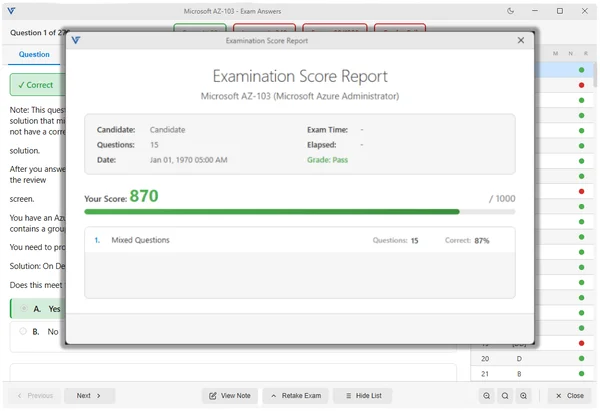
Practice in browser

New Web Test Engine

Experience our brand new Web Test Engine, practice exams directly in your browser!

Pass Cisco 650-032 Exam in First Attempt Guaranteed!

Get 100% Latest Exam Questions, Accurate & Verified Answers to Pass the Actual Exam!
90 Days Free Updates, Instant Download!

Cisco 650-032 Mobile Internet Technology for Account Managers Cisco Specialist
Note: Cisco 650-032 (Mobile Internet Technology for Account Managers) is retired now and will not receive new updates.
Introduction of Cisco 650-032 Exam!
The purpose of 650-032 is to assess knowledge associated with MITAM, Cisco’s “Mobile Internet Technology for Account Managers” exam. The credential or exam title indicates a business-facing focus on mobile internet technology and account-management responsibilities. Cisco’s official list identifies the exam by that name, but the supplied listing does not provide a full current blueprint, certification pathway, or detailed competency statement. Candidates should therefore treat the title as a useful orientation rather than a complete syllabus. Before preparing, check Cisco’s current exam information for the latest description, related credentials, and any official objectives that clarify what the assessment is designed to validate.
What is the Duration of Cisco 650-032 Exam?
The duration for 650-032 is 60 minutes. Cisco’s official exam listing assigns this time limit to MITAM, or Mobile Internet Technology for Account Managers. Use the available time to read each item carefully, identify the requirement being tested, and avoid spending too long on one uncertain response. Because Cisco exam policies and delivery systems can change, confirm the time limit in the current registration or exam information before booking. The published duration is especially useful for planning practice: work through representative questions under timed conditions, then review the reasoning behind incorrect answers rather than focusing only on speed.
What are the Number of Questions Asked in Cisco 650-032 Exam?
The number of questions for 650-032 is listed as 40–50 questions. Cisco’s official exam list gives this range for MITAM rather than publishing one fixed total. That range affects pacing: candidates should be ready for the exam to contain either end of the stated quantity while still working within the published time limit. Practice should include careful reading, efficient elimination of implausible choices, and a review process that does not consume excessive time. Since exam formats can be revised, verify the current question range with Cisco or the registration channel before testing; do not rely on unofficial question banks for an exact count.
What is the Passing Score for Cisco 650-032 Exam?
The passing score for 650-032 is not confirmed in the supplied Cisco research. Cisco’s official listing provides the exam name, duration, language, and question range, but it does not state a pass score or scaled-score rule. Candidates should obtain the current requirement from Cisco’s official exam information or the authorized registration process before treating any number as reliable. In preparation, aim for consistent understanding across the published objectives instead of targeting a guessed percentage. A practice result can show which subjects need review, but it cannot establish an official pass threshold or guarantee an exam outcome.
What is the Competency Level required for Cisco 650-032 Exam?
The expected competency level for 650-032 is not explicitly classified as foundational, intermediate, or advanced in the supplied official listing. Its title, Mobile Internet Technology for Account Managers, suggests that preparation should connect mobile-technology concepts with account-focused business discussions, but the title alone does not define the required proficiency. Review Cisco’s current objectives for the intended knowledge depth and any recommended training. Candidates can then separate terminology review from application practice, such as explaining technical capabilities in customer-relevant terms. Avoid assigning yourself a formal level until Cisco publishes or confirms one for this exam.
What is the Question Format of Cisco 650-032 Exam?
The question format for 650-032 is not specified in the supplied Cisco facts. The official listing confirms the question range but does not identify whether items are multiple-choice, scenario-based, or another type. Candidates should check the current Cisco exam page or registration instructions for the authoritative item-format description. Until that is confirmed, prepare by practicing precise reading, distinguishing similar concepts, and selecting answers based on the stated requirements rather than memorized wording. Unofficial materials may resemble an assessment without accurately representing its real item types, so they should not be treated as evidence of the official format.
How Can You Take Cisco 650-032 Exam?
Online delivery is described by Cisco as accessible with an internet connection and either a credit card or voucher. Cisco also states that this online format does not require the appointment or test-center visit associated with a conventional exam. The supplied research does not establish every current scheduling, identity, equipment, or proctoring rule specifically for 650-032. Check the official registration flow before paying or choosing a date, particularly if the exam listing is older. Confirm your connection, payment or voucher details, and any technical requirements in advance so administrative issues do not disrupt preparation.
What Language Cisco 650-032 Exam is Offered?
The available language for 650-032 is English. Cisco’s official exam listing specifies English delivery, and the supplied research does not confirm translated versions or additional language options. Candidates should therefore study the authoritative terminology in English, including the exam title and technical expressions used in Cisco materials. If you need an accommodation or want to verify whether language options have changed, consult Cisco’s current exam information before registration. Do not assume that third-party translations reflect the wording, scope, or availability of the official assessment.
What is the Cost of Cisco 650-032 Exam?
The cost of 650-032 is not provided in the supplied official research. Cisco’s page mentions access to online exams using a credit card or voucher, but that statement does not establish a current price, regional fee, tax treatment, or voucher value for this exam. Check Cisco’s official registration or exam page for the amount applicable to your location and purchase route. Confirm refund, rescheduling, and voucher conditions at the same time. Treat prices shown on unofficial websites as unverified, particularly because the available Cisco listing is dated February 12, 2020.
What is the Target Audience of Cisco 650-032 Exam?
The intended audience is account managers who need to understand mobile internet technology in a customer or business context. Cisco identifies 650-032 as MITAM, meaning Mobile Internet Technology for Account Managers, which supplies the clearest audience signal in the official material. The listing does not provide a detailed job-role profile, so sales specialists, account teams, and technology-facing business professionals should compare their responsibilities with Cisco’s current objectives. Preparation should combine product and technology literacy with the ability to connect capabilities to customer needs, rather than treating the exam as purely technical implementation training.
What is the Average Salary of Cisco 650-032 Certified in the Market?
Salary connected with 650-032 cannot be stated as a fixed amount. The supplied Cisco source identifies the exam and its account-manager focus but provides no compensation data, job-market survey, geographic assumptions, or salary guarantee. Earnings depend on role, employer, location, experience, sales structure, and broader technology responsibilities; a certification or exam result alone does not determine pay. Use the exam title to research relevant account-management and mobile-technology roles, then compare current job postings and reputable salary surveys. Evaluate the credential for role relevance and skill development, not as a promise of a particular income.
Who are the Testing Providers of Cisco 650-032 Exam?
The testing provider for 650-032 is not named in the supplied official facts. Cisco describes its online exams as accessible through an internet connection with a credit card or voucher and notes that this format avoids the conventional appointment and test-center visit, but those details do not identify a separate delivery vendor. Confirm the provider, registration route, account requirements, and support contact on Cisco’s current official page. This check matters because provider arrangements, scheduling procedures, and technical policies may change independently of the exam title or the older listing.
What is the Recommended Experience for Cisco 650-032 Exam?
Recommended experience for 650-032 is not stated in the supplied Cisco listing. The exam title points toward account-management knowledge related to mobile internet technology, but Cisco does not provide a minimum employment period, product background, or hands-on requirement in the verified facts. Candidates should review the current objectives and compare them with their experience in customer conversations, mobile technologies, and Cisco terminology. If a topic is unfamiliar, build conceptual understanding before attempting practice questions. Do not treat an unofficial experience recommendation as a formal Cisco requirement unless the current official source confirms it.
What are the Prerequisites of Cisco 650-032 Exam?
No formal prerequisite or required certification is confirmed in the supplied research for 650-032. Cisco’s official listing identifies the exam and basic delivery details but does not state that candidates must hold another credential, complete training, or document work experience. “Recommended” preparation may still include familiarity with account-management and mobile-technology concepts, but that is different from an admission requirement. Check Cisco’s current registration page for eligibility rules before purchasing an attempt. Keeping formal requirements separate from sensible preparation helps candidates avoid both unnecessary study and an unexpected registration problem.
What is the Expected Retirement Date of Cisco 650-032 Exam?
The retirement status of 650-032 is not confirmed by the supplied research. Cisco’s page lists the exam and is dated February 12, 2020, but that date does not prove that the exam is still active or that it has been retired or replaced. Candidates should verify the current status directly through Cisco’s official exam catalogue or registration system before investing in preparation. If Cisco identifies a replacement, compare its title, objectives, eligibility, and transition policy rather than assuming that preparation for 650-032 transfers completely. An unavailable booking option is a reason to seek official clarification, not to rely on third-party claims.
What is the Difficulty Level of Cisco 650-032 Exam?
A practical roadmap is to begin with Cisco’s current description and objectives, then organize study around mobile internet concepts and account-manager responsibilities. Next, define unfamiliar terms, connect technical capabilities to customer needs, and use reputable Cisco learning material for clarification. Add practice only after understanding the subject matter; review every missed answer and record why the correct option fits. Finally, rehearse the stated 60-minute duration and the 40–50-question range without relying on recalled exam items. Before booking, verify current language, delivery, cost, prerequisites, and retirement information through Cisco because the available listing is dated February 12, 2020.
What is the Roadmap / Track of Cisco 650-032 Exam?
The topics measured are not fully itemized in the supplied Cisco facts. The official title identifies Mobile Internet Technology for Account Managers, so preparation should begin with mobile internet terminology and the account-management context, while avoiding assumptions about unlisted domains. Cisco’s current objectives should be the controlling study outline if they are available. Map each objective to a reliable learning source, note how technology relates to customer requirements, and distinguish concepts that sound similar. A third-party topic list can suggest areas for review, but it should not override Cisco’s official scope or be presented as a complete blueprint.
What are the Topics Cisco 650-032 Exam Covers?
Official practice guidance for 650-032 is not confirmed in the supplied research, and no verified sample questions are provided. Look first for Cisco-authored objectives, learning resources, or practice materials linked from the current exam information. When using independent practice questions, treat them as study prompts rather than predictions of real items. Analyze why an answer is correct, identify the underlying concept, and revisit the source material when an explanation is weak. Practice should also include timed sets reflecting the published 60-minute duration and 40–50-question range, without using leaked content or claims based on exam dumps as preparation evidence or a guarantee of passing, and confirm the current rules with Cisco before testing so your practice reflects the real delivery conditions as closely as possible without treating unofficial material as authoritative. This makes practice useful even when Cisco does not publish a public sample set, and it keeps preparation focused on transferable knowledge rather than memorizing uncertain wording from third-party sources or recalled items circulated online by others without verification or official approval from Cisco itself or its authorized partners or representatives before you make study or booking decisions for this exam today or later on in your preparation process overall and in relation to your own goals and circumstances as a candidate preparing responsibly for the assessment and its stated account-management context and technical subject matter overall in a measured, evidence-led way that supports informed preparation choices without creating false certainty about exam content, outcome, or availability at any particular time or location in any specific region or delivery channel currently available to candidates through Cisco or another authorized registration route as determined by the latest official information you can verify directly before proceeding with enrollment or payment decisions today or in the future as needed by your own schedule and circumstances as a prospective candidate for this assessment and its associated learning objectives and professional context when making a careful preparation plan based on reliable sources and current official details rather than unsupported claims from unrelated websites or social media posts that may be incomplete, outdated, or inaccurate in ways that affect your understanding of the exam and its current status or requirements or intended audience or topic coverage or delivery process or language availability or cost or eligibility or scheduling arrangements or replacement status or other administrative detail that Cisco may revise over time without notice to third-party publishers or readers who rely on older summaries published elsewhere online without direct confirmation from the official source at the time they intend to register or prepare for the assessment and related professional development decisions in a responsible and practical manner that keeps the candidate informed and avoids unsupported assumptions about what the assessment will contain or how it will be scored or administered on the day of testing or whether a particular unofficial practice resource accurately reflects the current Cisco examination experience or policy requirements for this specific exam and candidate circumstance in the relevant market or region and current registration system used by Cisco or its authorized delivery partners at the time of booking or study planning for this particular assessment and its surrounding professional context as described by the latest official information available from Cisco directly to candidates and organizations evaluating the exam for learning or role development purposes in a careful and evidence-led way without relying on unsupported promises or misleading claims about likely outcomes or content overlap or actual exam similarity or guaranteed preparation value from third-party resources used independently by candidates in their own study plans or professional development activities before attempting the assessment or deciding whether this older exam listing remains suitable for their current goals and intended account-management work context and mobile-technology knowledge needs as they understand them from current role requirements and official Cisco information reviewed before making any final decision about preparation, registration, payment, scheduling, or examination participation at any point in their planning process as circumstances and official policies may change over time and should be checked directly rather than inferred from archived or duplicated material online that may no longer reflect current availability, administration, eligibility, or content details for 650-032 or any related Cisco assessment that could potentially replace it or supersede its role in a current certification pathway or skills-development plan for account managers and adjacent professionals seeking reliable information before proceeding with further study or registration actions based on the information currently available in the official research supplied for this FAQ and the current Cisco source that candidates should consult again for confirmation at the relevant time before relying on any administrative or exam-specific detail in practice or booking decisions, particularly where third-party summaries conflict with Cisco’s own latest information or where the age of the published listing creates uncertainty about present status, availability, or delivery arrangements for this exam and its associated title and audience as identified by Cisco in the supplied official material and in any current update published through the official Cisco learning or certification channels that candidates can independently verify before proceeding with preparation or examination plans in their own circumstances and professional context without assuming that archived facts remain current merely because they continue to appear on unrelated pages or search results or discussion forums or commercial preparation sites that may not have updated their descriptions after Cisco changed a policy or listing or provider arrangement or exam status or registration process or other relevant administrative condition affecting candidates today or later during their preparation journey or decision-making process when evaluating the usefulness and current relevance of this particular assessment for their intended work responsibilities and development objectives and account-management focus as stated in the official title and related Cisco information reviewed carefully before committing resources or time to study or registration for a potentially older exam listing whose present status and availability should be confirmed through Cisco’s current channels rather than assumed from the archived date or repeated summaries found elsewhere online by candidates conducting their own responsible research before making a final decision to proceed or not proceed with the assessment based on current verified information and personal role needs and preparation readiness and practical scheduling considerations as applicable to their situation and location and selected delivery route at the time of registration or inquiry with Cisco or the authorized registration contact provided by Cisco for current candidate support and exam administration questions that are not answered by the older official listing used as the research basis for this FAQ and its surrounding guidance for prospective candidates or organizations considering the assessment for relevant account-management and mobile-technology development needs in a careful, practical, and evidence-led manner that prioritizes current official details over unsupported certainty or commercial claims from unrelated sources that may not reflect Cisco’s current policies or examination environment or available registration options or replacement decisions or other changes introduced after the supplied page was published and before the candidate begins preparation or attempts to schedule the exam in a particular region or through a particular channel or under a particular policy set that should be confirmed directly at the time rather than inferred from historical information presented without a current source check and without assuming that the title alone establishes the full scope, competency level, prerequisites, question format, scoring method, provider, or career outcome associated with the assessment or any future credential that might be related to its subject area or audience in a current Cisco program or professional development route selected by a candidate based on their own informed review of official objectives, role expectations, available learning resources, and current administrative information before making a study or booking commitment or recommending the exam to another person or organization for any purpose connected with account management, mobile internet technology, Cisco learning, or related professional skills development where accurate and current information matters for planning and decision quality and should be obtained from Cisco directly before action is taken in light of the age of the published source and the absence of several time-sensitive facts in the supplied research and the need to avoid presenting uncertain details as established facts to readers relying on this FAQ for independent exam research and preparation decisions and current registration planning or career-development evaluation in their own professional circumstances and intended role direction or learning priorities at the time they consult this information or return to it later for further planning or verification of details that may have changed since publication or since their previous review of Cisco’s official exam catalogue or registration information and related support documentation available from Cisco or its authorized channels as applicable to this assessment and its present status and delivery conditions and candidate requirements or administrative rules that should be checked again before proceeding with any payment, voucher use, scheduling action, or examination attempt and before relying on any unofficial content source to represent the actual exam or current Cisco policy for candidates in any location or language or professional context who need an accurate basis for preparation and informed decision-making rather than unsupported predictions or recycled claims from sites that may not maintain their exam information after official changes or retirement decisions are made or published by Cisco through its own channels for candidates and organizations and learning partners seeking current information about relevant examinations and associated skills and career development considerations or account-management responsibilities as represented by the official exam title and supplied research facts in this FAQ and any later official updates that supersede them or clarify their current application to 650-032 and its status within Cisco’s broader learning or certification catalogue at the time a candidate researches, prepares, registers, or decides whether to pursue the assessment for personal or organizational development purposes with appropriate attention to source quality, date, and direct confirmation of time-sensitive details before taking action or drawing conclusions about current availability or likely examination conditions or professional value beyond what Cisco’s official information supports for this particular exam and audience and subject area and registration context as it exists when checked directly by the candidate or authorized representative before relying on it for preparation or administrative decisions in a responsible and practical way that avoids confusion between historical listing details and current official policy or availability and keeps the FAQ useful without overstating what the supplied evidence can establish about sample materials, scoring, difficulty, prerequisites, provider, retirement, salary, or other matters not confirmed by the official research available here for this exam at the time of publication and subsequent review by readers seeking a careful answer to their specific preparation or registration question and needing to distinguish verified facts from guidance or reasonable study practice or general career context that cannot be treated as an official Cisco statement or guarantee of exam success or future employment outcome or compensation or credential status or continuing availability or replacement relationship for any other Cisco exam or credential that may appear similar by subject area or intended audience but has not been confirmed as directly equivalent or related through current official Cisco information reviewed before making final decisions about this assessment or any associated career or learning pathway and its relevance to the candidate’s current role, goals, experience, resources, schedule, location, and preferred method of preparation or registration at the relevant time as determined by direct consultation of Cisco’s current official sources and authorized support channels rather than by assumptions based on archived pages, copied descriptions, or third-party promotional material that may omit important changes or qualifications or use unsupported claims to encourage purchase of preparation products or exam attempts without establishing their accuracy or current relevance for 650-032 or any related Cisco examination or credential and its intended professional audience or technology context as identified in the official research supplied for this FAQ and subject to confirmation before action because official exam information can change and older listings may not answer every current candidate question or administrative concern or practical preparation issue that arises when a person evaluates the assessment for their own professional development or account-management responsibilities and mobile internet technology knowledge needs in a particular role or organization or market and seeks reliable, independently verifiable information from Cisco before proceeding with any commitment of money or time or study effort or registration activity or examination participation in a way that supports sound planning and avoids false certainty about the assessment, its current availability, or its eventual result for any individual candidate or group preparing for it or considering it as part of a broader learning or career plan and official-source review remains the appropriate next step for any detail not confirmed by the supplied facts or clearly marked here as guidance rather than an official exam rule or promise or current administrative guarantee for the candidate or organization reviewing this information for practical planning purposes in their own circumstances before taking further action or relying on a third-party representation of the exam or its status or content or requirements or delivery conditions or professional implications at any time during preparation or registration or career evaluation related to 650-032 and the MITAM title identified by Cisco in the supplied official exam list and the associated account-manager focus and mobile internet technology context that should guide initial study without being mistaken for a complete published blueprint unless Cisco’s current objectives explicitly provide that detail when consulted directly by the reader before proceeding with their study plan or examination decision and any related registration or payment activity or use of a voucher or selection of a delivery option that may depend on current regional rules, provider arrangements, or exam availability not confirmed in the older source supplied for this FAQ and therefore requiring direct confirmation from Cisco’s current official information or authorized support channel before the candidate makes a final choice or invests further resources in preparation, scheduling, or participation based on assumptions that could be outdated or incomplete or inconsistent with the current Cisco examination catalogue and its current treatment of 650-032 or a potential replacement examination or related learning pathway for account managers and professionals working with mobile internet technologies and customer-facing technology discussions where current role relevance and official scope should be evaluated carefully before deciding that this particular exam remains the appropriate option for the candidate’s intended development goals and professional responsibilities and available preparation time and resources and regional access or language needs or preferred delivery method or current employer requirements or personal learning priorities and the candidate should use Cisco’s latest official page to confirm those practical matters before relying on any answer here that is necessarily limited to the verified research supplied and the date context stated in that research rather than an assurance that every detail remains unchanged after publication or future review or system update by Cisco or its authorized exam administration channels for candidates and organizations seeking accurate information about this assessment and its current status and relevance and preparation expectations and administrative requirements without unsupported claims, guarantees, or invented facts.
What are the Sample Questions of Cisco 650-032 Exam?
The difficulty of 650-032 is not officially rated in the supplied Cisco material. Candidates may find it challenging when they lack either mobile-technology context or account-management experience, but individual difficulty is not evidence of an official level. Use Cisco’s current objectives, if available, to identify unfamiliar terminology and business scenarios, then build understanding in a logical order. Timed practice can expose pacing issues, while explanations and source-based notes reveal knowledge gaps. Avoid judging readiness from a single unofficial mock exam or from claims that the assessment is easy or advanced.

650-032 MITAM Exam Guide: What to Verify, Study, and Schedule

Exam 650-032 is listed by Cisco as MITAM, or Mobile Internet Technology for Account Managers. Its title places the exam in a customer-facing account-management context, but the supplied official listing does not publish a detailed skills blueprint. This guide helps you decide what the available evidence confirms, what must be verified before booking, how to build a focused study plan without inventing coverage, and whether the online format fits your preparation and scheduling needs.

What does exam 650-032 represent?

Exam 650-032 is identified in Cisco’s official exam list as “MITAM,” meaning “Mobile Internet Technology for Account Managers.” The title is the reliable starting point for interpreting the exam: it connects mobile Internet technology with an account-manager audience. The listing does not, by itself, establish a current certification pathway, prerequisite, passing score, or detailed competency model.

Use the title to define your preparation boundary rather than assuming that a general networking syllabus is sufficient. An account manager may need to understand technology well enough to discuss customer needs, solution value, and relevant technical concepts, but those preparation implications are practical recommendations—not published 650-032 requirements.

Before committing study time, confirm the exam’s current status and any associated Cisco program information on the official Cisco source. The supplied page is dated February 12, 2020, so treat its historical listing details as evidence from that page, not as a promise that every policy remains unchanged.

Who is the exam intended to serve?

The official title names account managers, making customer-facing professionals the clearest intended audience in the available evidence. Candidates who work with mobile Internet opportunities, customer conversations, or technology-related account responsibilities can use that audience description to judge relevance. The source does not state an experience prerequisite or require a specific job title.

A sensible candidate profile includes an account manager who must communicate about mobile Internet technology without presenting as a network engineer. It may also include a sales professional or partner representative whose work involves customer discovery and technology discussions. Those are audience-fit recommendations derived from the exam name, not official eligibility rules.

If your role is purely technical, do not assume that the account-manager label makes the exam irrelevant. Instead, ask whether the credential’s subject and audience align with your work objective. If you need a hands-on engineering credential, this listing alone does not establish that 650-032 is the right choice.

What skills does the available blueprint confirm?

The supplied Cisco evidence confirms the exam name, language, question range, duration, and online-access description, but it does not provide domain names, blueprint percentages, objectives, prerequisites, or a list of measured skills. Therefore, no official percentage-weighted study plan can be stated responsibly from this research snapshot.

This limitation matters when choosing study materials. A page or practice product that claims exact 650-032 domains, topic weights, or guaranteed question coverage needs independent verification against a current Cisco source. Do not treat an unofficial topic list as an official blueprint merely because it uses Cisco terminology.

For now, separate preparation into two layers. First, verify any current objectives or candidate information from Cisco. Second, build background knowledge around the exam’s named context: mobile Internet technology and account-management conversations. Label the second layer as preparation judgment, not as a confirmed exam-domain list.

How should I handle missing domain weights?

Do not assign percentages to topics when the official research does not publish them. The available evidence contains no official domain percentages, so there are no defensible blueprint comparisons to make. Allocate study time according to verified objectives once you find them; until then, use broad coverage and note the uncertainty in your plan.

A practical worksheet can contain three columns: confirmed by Cisco, suggested for background study, and awaiting verification. Put the exam title and format facts in the first column. Put concepts you believe an account manager should understand in the second. Put any claimed domains, prerequisites, or scoring details in the third until an official source confirms them.

What are the confirmed exam format details?

The official Cisco listing gives 650-032 a question range of 40–50 questions and a duration of 60 minutes. It also specifies English as the delivery language. These are the concrete planning facts in the supplied source, so use them to practise concise reading and decision-making rather than relying on an assumed longer testing window.

A range of 40–50 questions means the exact number is not represented as one fixed count in the source. The listed duration is 60 minutes. Prepare to work through the complete session without assuming that every candidate receives the same number of questions or that an unofficial practice set mirrors the live format.

The source does not provide question types, scoring rules, passing score, retake policy, review behavior, accessibility arrangements, or whether questions can be revisited. Do not infer those details from other Cisco exams. Confirm them through the official candidate and delivery information available when you schedule.

Is 650-032 available online?

Cisco’s page describes its online exams as accessible with an internet connection and either a credit card or voucher. It also states that this online format does not require the appointment or test-center visit associated with a conventional exam. That supports online scheduling as a planning option, subject to the current Cisco process and eligibility details.

The supplied evidence does not describe the complete technical setup, identity checks, browser requirements, room rules, troubleshooting process, or whether every candidate can use the same delivery route. Verify those operational requirements before paying or redeeming a voucher. A convenient delivery description is not a substitute for checking the current booking workflow.

Treat the format as a scheduling decision. If you have a dependable internet connection and prefer not to attend a test center, the described online route may fit your circumstances. If your connection, workspace, or equipment is uncertain, resolve those issues before selecting an exam date.

What should I verify before booking?

Verify four items before you schedule: that 650-032 is still offered, that the online route applies to you, that English is suitable for your preparation, and that your payment or voucher method is accepted under the current process. The official snapshot supports the English and payment-or-voucher statements, but current booking instructions should control your final decision.

Also check for information absent from the supplied research: eligibility, identification, rescheduling, cancellation, technical requirements, accommodations, score reporting, and retake conditions. Do not fill these gaps with rules from another Cisco exam or a third-party testing provider. Save the official page and any current booking instructions you rely on.

How should you build a study plan when the blueprint is unclear?

Start with verification, then study the subject context, then practise timed decisions. This order prevents you from spending weeks on an invented syllabus. Because the supplied listing does not publish measured domains, the first study task is to locate current official objectives or candidate guidance; only after that should you assign detailed topic weights.

Use a short diagnostic before buying more material. Write down what you can already explain about mobile Internet technology, what you can explain to a customer, and where you confuse technical terms or business outcomes. The diagnostic is not an exam prediction. It is a way to choose between foundational reading, terminology review, and application practice.

Keep an evidence log. For each topic, record its source, the reason it matters to the account-manager context, and the question you still cannot answer. This makes it easier to discard attractive but unsupported material and gives you a clear list for final verification.

A practical four-stage sequence

A useful sequence is: establish scope, build concepts, translate concepts into customer conversations, and rehearse the timed format. Each stage has a different purpose. Scope protects against unsupported coverage; concepts create understanding; conversation practice tests whether you can apply the material; timed rehearsal exposes pacing problems.

In the scope stage, collect only current official objectives and delivery information. In the concept stage, define unfamiliar terms in your own words and connect each term to a customer need. In the application stage, compare possible explanations, identify assumptions, and practise asking clarifying questions. In the rehearsal stage, use original practice prompts rather than copied or purported live questions.

How should an account manager study technical material?

Study each concept at two levels: what it is and why it matters in a customer discussion. A definition alone is fragile. A stronger note explains the business question the concept helps answer, the information still needed from the customer, and the boundary between a useful explanation and an unsupported promise.

For example, when reviewing a mobile Internet concept, write a plain-language definition, list the customer requirement it may relate to, and identify what evidence would be needed before recommending a solution. This approach improves communication without pretending that the example is an official 650-032 objective.

Avoid memorising isolated product names or acronyms without context. If a term appears in your material, ask whether you can distinguish its purpose, limitations, and relationship to the customer’s situation. If you cannot, mark it for review rather than adding more flashcards.

What should I do in the first study week?

Use the first week to confirm scope and establish a baseline, not to race through a large question bank. Read the official listing, record the confirmed format, search Cisco’s current information for objectives, and list the mobile Internet and account-management concepts you need to investigate. Finish the week with a gap list and a booking decision still open.

Create a one-page study charter with three headings: official facts, personal assumptions, and items to verify. Under official facts, record English, 40–50 questions, and 60 minutes exactly as stated by the supplied Cisco listing. Under personal assumptions, record anything you believe the exam may cover but cannot source. Under items to verify, record current status, eligibility, and delivery rules.

Take a diagnostic using questions you create from your notes. Keep the results qualitative: secure, developing, or unknown. Do not convert the result into a predicted score. The purpose is to identify whether your main problem is vocabulary, technical relationships, customer application, or reading speed.

What should I do in the second study week?

Use the second week to turn concepts into explanations and decisions. For each verified objective you locate, prepare a short explanation, a customer-oriented example, a distinction from a nearby concept, and one question that would reveal whether the concept fits a customer need. If no current objective list is available, keep these activities explicitly provisional.

Review notes actively rather than rereading them. Cover the definition and reconstruct it, explain the idea without acronyms, then check your wording against a trusted source. Ask a study partner to challenge vague statements such as “better performance” or “more scalable” and require a specific explanation of what changes and under which conditions.

At the end of the week, remove material that has no clear source or connection to the exam’s named context. More notes do not automatically create better coverage. A smaller, traceable set of concepts is easier to revise and less likely to include unsupported claims.

What should I do in the final study phase?

The final phase should test retrieval, application, and pacing while protecting accuracy. Use mixed, original prompts based on verified objectives and your own notes. Practise answering the question asked, identifying the decisive wording, and eliminating options only when you can explain why they do not fit. Do not seek leaked items or memorised replicas of a live exam.

Because Cisco lists a 60-minute duration and a 40–50 question range, include timed sessions that require steady progress through a full practice set. These sessions are preparation exercises, not evidence that the live exam will use identical question types or behavior. Review every miss and every guess, not just the final result.

In the last review, prioritise unresolved concepts and official process checks. Do not introduce a large new subject area immediately before scheduling. Confirm the current delivery instructions, language, payment or voucher arrangement, and any operational requirements before you commit to the appointment or online session available through Cisco.

How can I improve pacing without guessing?

Pacing improves when you distinguish a knowledge problem from a reading problem. If you know the concept but misread the prompt, practise identifying the requested action and constraints. If the concept is unfamiliar, record it for review. During timed practice, avoid spending disproportionate effort on one uncertain item; use only navigation behavior that the official delivery instructions confirm.

Do not create a false precision target from the question range. The official listing gives 40–50 questions, not a guaranteed fixed count. Use the range to practise maintaining concentration across a full session, while accepting that the actual presentation may require you to follow on-screen instructions rather than a personal timing rule.

Which preparation mistakes are most costly?

The most avoidable mistake is treating an unofficial outline as an official blueprint. The supplied Cisco source does not publish domains or percentages for 650-032, so confident claims about exact coverage are not supported. Other common errors include confusing a title with a prerequisite, assuming another Cisco exam’s rules apply, and spending study time on memorised material that cannot be traced to a reliable source.

A second mistake is studying only technical definitions. The title includes “Account Managers,” so practise explaining relevance, asking for customer context, and recognising when a recommendation requires more information. This is a practical preparation choice, not proof that Cisco uses a particular question style.

A third mistake is postponing delivery checks. The page describes online access with an internet connection and either a credit card or voucher, but it does not supply every current operational rule. Confirm the live process before your planned date instead of discovering a technical or administrative requirement at the last moment.

Why should I avoid dumps and purported live questions?

Dumps and purported live questions are not a sound substitute for learning. They may be inaccurate, outdated, unauthorized, or detached from the current exam scope. Memorising them cannot establish that you understand mobile Internet technology or can apply concepts in an account-management setting, and no source-supported claim guarantees a pass through memorisation.

Use original practice instead. Convert an objective or a trusted concept into a scenario, identify the customer’s stated need, list the missing information, and choose the explanation that best fits the evidence. Then check the underlying concept rather than merely recording a letter. This method builds transferable reasoning without claiming access to live exam content.

How do you decide whether to schedule now?

Schedule only after three decisions are clear: the exam remains relevant to your role, the current Cisco information confirms that you can use the intended delivery route, and your study gaps are narrow enough to address with a defined plan. The supplied listing confirms the exam name, English language, 40–50 questions, 60 minutes, and described online access, but it does not confirm current status or eligibility.

Use a readiness checklist rather than a guessed percentage. You should be able to explain the verified objectives in your own words, connect the main concepts to customer questions, identify the limits of your knowledge, and complete timed original practice without relying on purported exam items. If any of those are weak, keep studying or verify the missing information before booking.

If the exam’s current availability or rules cannot be confirmed from Cisco, pause the purchase decision. The official page in the research snapshot is dated February 12, 2020. That date does not prove that the listing is retired, active, or unchanged; it simply signals why current verification is necessary.

What should I do on the day of an online exam?

Follow the current Cisco delivery instructions rather than relying on general online-testing habits. The official page supports the broad point that online exams can be accessed with an internet connection and either a credit card or voucher, and that the format does not require the conventional appointment or test-center visit described there. It does not specify every day-of-test procedure.

Before the session, complete the checks that Cisco currently requires for your route, including any equipment, identity, browser, workspace, or connection instructions published during booking. Keep your payment or voucher information and confirmation details available as appropriate. Do not assume that a home setup is acceptable merely because the source describes online access in general.

During the exam, read each prompt carefully and follow the interface instructions. The supplied research does not confirm whether you can return to previous questions, flag items, use notes, or change answers. Only use such functions if the live instructions explicitly permit them.

What information is still missing from the official snapshot?

The snapshot does not confirm a passing score, prerequisites, certification relationship, renewal rules, retake policy, fees, scheduling dates, score reporting, question types, accessibility procedures, test-center alternatives, or current retirement status. It also does not publish measured domains or blueprint percentages. These omissions should shape your research plan, not be filled with assumptions.

Make a verification list before using a third-party course or practice product. Ask whether each claim is supported by a current Cisco page, whether it describes 650-032 specifically, and whether it is a stable subject fact or a time-sensitive operational rule. Reject material that presents an unsupported number, date, or policy as certain.

If Cisco provides newer candidate information, use that information for the final booking and preparation decisions. Retain the older listing only as context for the facts supplied here. This distinction protects you from studying to an obsolete format or budgeting around an unverified policy.

A concise action plan for the next seven days

Your next action is verification, followed by a small, evidence-led study cycle. Confirm the current Cisco information, capture the official objectives if available, and then test your understanding with original prompts. Do not purchase a voucher or commit to a date until the exam’s relevance, availability, and delivery requirements are sufficiently clear for your situation.

Day 1: read the official listing and record its confirmed facts. Day 2: search Cisco for current objectives, candidate guidance, and booking information. Day 3: build a glossary of mobile Internet and account-management concepts from traceable sources. Day 4: write customer-focused explanations and identify missing information in sample scenarios. Day 5: complete a timed original practice session. Day 6: review errors, guesses, and unsupported assumptions. Day 7: decide whether to schedule, continue studying, or pause for clarification.

This plan is intentionally adaptable because the supplied research does not include a full blueprint. Once official objectives are available, replace broad background review with objective-by-objective coverage. If they are not available, preserve the evidence log and avoid presenting your provisional study topics as Cisco’s measured domains.

How should you use this guide with other resources?

Use this guide to make preparation and scheduling decisions, then use current Cisco information to establish scope and delivery rules. A course, book, or practice set can support learning, but it should not override the official source on exam identity, language, format, or current administration. Trace every high-impact claim before relying on it.

Choose resources that explain concepts and invite application instead of promising access to real questions. For each resource, record the topics it covers and whether those topics map to a current official objective. If the mapping is unclear, treat the material as general background and keep it separate from your confirmed exam notes.

Return to your evidence log whenever a resource gives an exact score, fee, date, question count, duration, or policy. The supplied official listing supports 40–50 questions and 60 minutes for 650-032, but other numbers or operational claims require their own current source.

Conclusion

650-032 is listed by Cisco as MITAM, “Mobile Internet Technology for Account Managers,” with English delivery, 40–50 questions, and a 60-minute duration in the supplied official snapshot. The page also describes an online route using an internet connection and either a credit card or voucher, without the conventional appointment or test-center visit associated with that format. Because the snapshot does not publish a blueprint or current status, verify Cisco’s latest information first, study the technology in an account-management context, practise with original material, and schedule only when the remaining administrative and knowledge gaps are clear.

Related exams

Official sources

Login to post your comment or review

Log in

Why customers love us?

97%

Questions came word for word from this dump

93%

Career Advancement Reports after certification

92%

Experienced career promotions, avg salary increase of 53%

95%

Mock exams were as beneficial as the real tests

100%

Satisfaction guaranteed with premium support

VTSimu
VTSimu Exam Simulator
How to open .dumpsarena files

Use Free VTSimu Exam Simulator to open .dumpsarena files

VTSimu Exam Simulator

Satisfaction Guaranteed

98.4% DumpsArena users pass

Our team is dedicated to delivering top-quality exam practice questions. We proudly offer a hassle-free satisfaction guarantee.

Why choose DumpsArena?

23,812+

Satisfied Customers Since 2018

  • Always Up-to-Date
  • Accurate and Verified
  • Free Regular Updates
  • 24/7 Customer Support
  • Instant Access to Downloads
Secure Experience

Guaranteed safe checkout.

At DumpsArena, your shopping security is our priority. We utilize high-security SSL encryption, ensuring that every purchase is 100% secure.

SECURED CHECKOUT
Need Help?

Feel free to contact us anytime!

Contact Support