

Overview of Alibaba Cloud ACP-Cloud1 (ACP Cloud Computing Certification)
What makes ACP-Cloud1 different from other Alibaba Cloud credentials
ACP-Cloud1 sits squarely in the middle of Alibaba's certification ladder. It's the Associate-level cloud computing credential that validates you actually know how to work with core Alibaba Cloud services, not just the theory behind them.
If you've already passed the ACA-Cloud1 (ACA Cloud Computing Associate) exam, you know the basics. ACP-Cloud1 takes it several levels deeper, moving you beyond "what is ECS" to actually sizing instances, configuring VPC networks that don't break in production, setting up Server Load Balancer (SLB) configurations that properly distribute traffic, and implementing RAM security policies that keep your infrastructure locked down without blocking legitimate access.
This certification proves you can handle real cloud architecture decisions. That's what separates someone who's just read documentation from someone who can actually deploy production workloads on Alibaba Cloud.
Who actually benefits from getting ACP-Cloud1 certified
Cloud engineers? Obviously. But the target audience goes way beyond that single job title.
Solution architects who need to design multi-tier applications on Alibaba Cloud infrastructure find this cert valuable because it forces you to understand how VPC networking, security groups, and load balancing actually work together rather than treating them as isolated components. System administrators transitioning from on-prem to cloud environments get a structured path that maps their existing skills to Alibaba Cloud equivalents. Your knowledge of networking doesn't disappear, it just needs translation to VPC subnets and route tables.
DevOps professionals supporting deployments in Asia-Pacific markets where Alibaba Cloud dominates need this credential. IT managers evaluating cloud providers benefit from understanding what their teams will actually work with day-to-day. Students and recent graduates entering cloud careers get a vendor-specific qualification that proves hands-on capability, not just theoretical knowledge.
If you're supporting any Alibaba Cloud deployment or considering a role that touches their infrastructure, ACP-Cloud1 should be on your radar. I've seen folks dismiss vendor certs as marketing fluff, but when you're troubleshooting a VPC peering issue at 3 AM, that "fluff" suddenly becomes the difference between knowing where to look and randomly clicking through console menus hoping something works.
Technical competencies the exam actually validates
The certification covers five main technical domains that map directly to what you'll encounter in production environments. it's theoretical knowledge dumps but actual skills you'll use. ECS instance management goes beyond launching VMs because you're dealing with instance families, storage options, snapshot strategies, and image management that affects both performance and cost. VPC network design tests whether you understand subnetting, routing tables, NAT gateways, and how to connect VPCs to on-premises networks or other cloud regions without creating security nightmares.
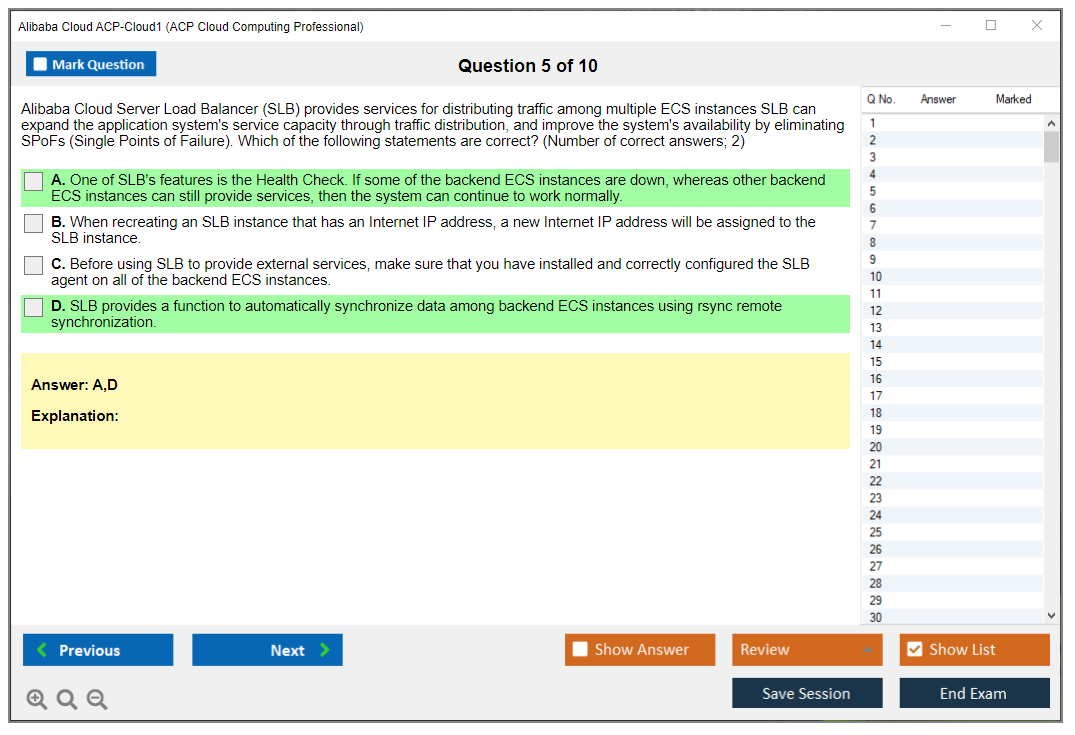
SLB configuration evaluates your ability to distribute traffic across multiple ECS instances, configure health checks that actually detect failures, and choose between Layer 4 and Layer 7 load balancing based on application requirements.
OSS storage solutions cover object storage concepts, bucket policies, lifecycle management, and CDN integration for content delivery. RAM security implementation is where many candidates struggle because it requires understanding identity management, resource access policies, role-based access control, and the principle of least privilege applied to cloud resources. This trips up even experienced folks sometimes.
Cloud architecture basics tie everything together. High availability design, disaster recovery planning, monitoring and alerting setup, and cost optimization strategies all matter here. The exam expects you to know how these services interact, not just how they work in isolation.
Why ACP-Cloud1 matters for your career trajectory
Resume credibility jumps when you add ACP-Cloud1. Recruiters in Asia-Pacific markets specifically search for Alibaba Cloud certifications because AWS and Azure dominance in North America doesn't translate globally. China, Southeast Asia, Middle East markets have massive Alibaba Cloud adoption, and certified professionals are scarce compared to the number of AWS cert holders flooding the market.
Cloud migration projects targeting these regions need people who understand Alibaba's service ecosystem. You can't just apply AWS knowledge and expect it to work. The console layout differs, service names don't match, networking concepts have subtle but important variations. Having ACP-Cloud1 signals you've invested time learning the platform properly.
Vendor-specific expertise opens doors to roles supporting multinational companies operating in China, e-commerce platforms built on Alibaba infrastructure, and startups using Alibaba's competitive pricing in emerging markets. The certification also provides use when negotiating with Alibaba sales teams because you understand their architecture recommendations and can evaluate whether proposed solutions actually fit your requirements or if they're just upselling you.
How ACP-Cloud1 connects to broader certification paths
Think of ACP-Cloud1 as your foundation for specialized tracks. After passing this exam, you can pursue ACP-Sec1 (ACP Cloud Security Professional) if security interests you, ACP-BigData1 (ACP Big Data Professional) for data engineering roles, ACP-CloudNative (ACP Container Service Certification Exam) for Kubernetes and container deployments, or ACP-DevOps (ACP DevOps Engineer Certification) for CI/CD pipeline expertise.
The Associate-level cloud computing knowledge you build here transfers directly to these specialized domains. You can't design secure cloud architectures without understanding the underlying VPC and RAM concepts tested in ACP-Cloud1. Big data solutions require knowing how to provision ECS clusters and configure storage properly, which sounds obvious until you're troubleshooting why your data pipeline keeps failing at 2 AM.
Some people jump straight to professional-level certifications in specialized areas, but they struggle with foundational concepts that ACP-Cloud1 covers systematically. Starting here gives you a complete mental model of Alibaba Cloud's core services before adding complexity.
Time investment and validity considerations
Plan for 4-8 weeks of study depending on your background. If you're coming from AWS or Azure with solid cloud fundamentals, you might compress this to the lower end by focusing on Alibaba-specific implementations rather than relearning core cloud concepts. Complete beginners should budget toward 8 weeks with consistent daily practice in the Alibaba Cloud console.
The certification stays valid for three years, which matters because cloud services shift rapidly. Features you studied might get deprecated, new services launch, and best practices change. Renewal planning should start around the 2.5-year mark so you're not scrambling when expiration approaches.
ACP-Cloud1 Exam Details and Structure
What the ACP-Cloud1 exam looks like on test day
The Alibaba Cloud ACP-Cloud1 certification exam's a fixed-form test, not adaptive, so everyone faces identical question counts and overall structure. No weird "it gets harder if you do well" stuff happening. That matters because your pacing plan stays consistent and you can rehearse it with ACP-Cloud1 practice tests without second-guessing how the engine'll react.
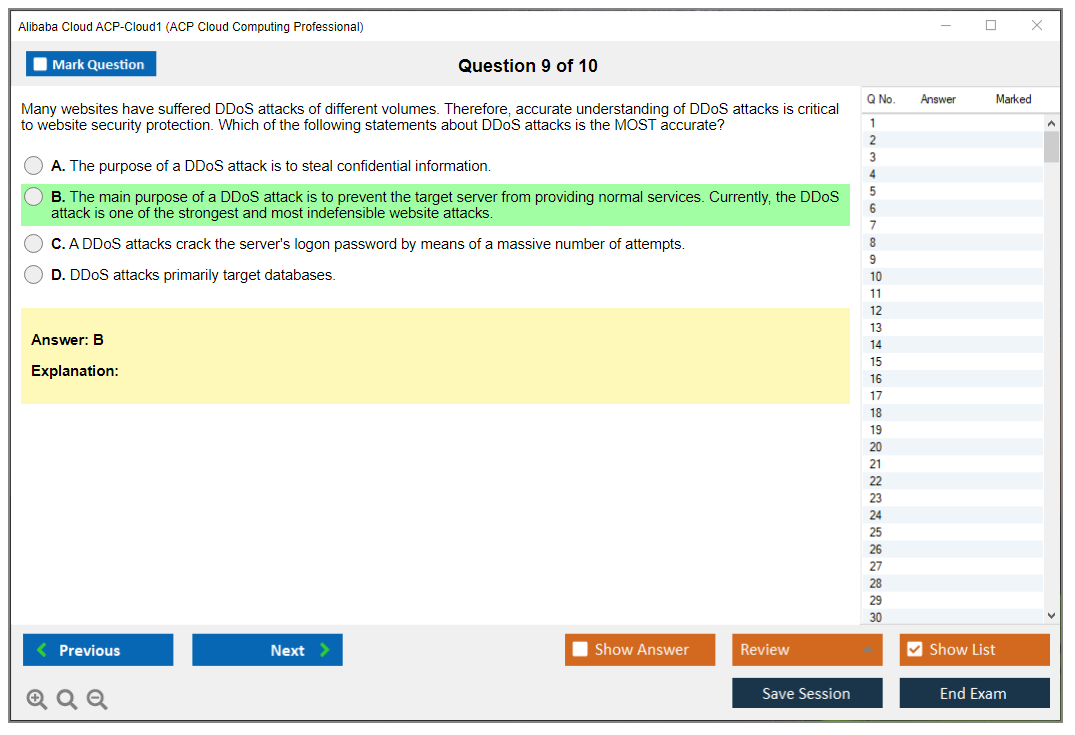
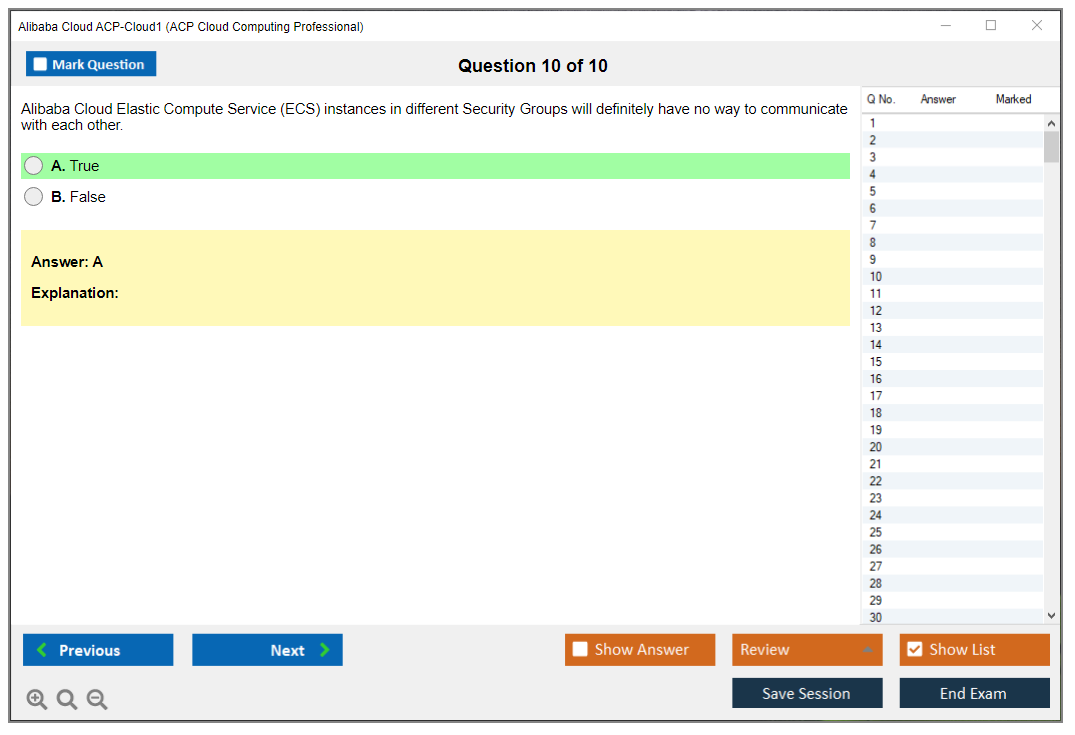
Question types are mixed. You'll encounter standard multiple-choice with single response, plus multiple-response items where two or three answers are correct and you've gotta pick all of them. That's where people get surprised. Scenario-based questions show up constantly: short stories about a small app, a VPC layout, or a workload needing scaling, then you choose the best service combo. Drag-and-drop matching's the other one, usually mapping concepts to services or steps to outcomes, like pairing "static website hosting" with OSS settings, or mapping "internet-facing" versus "internal" to SLB behavior. Practical-ish stuff. Not hands-on lab practical, but theory applied to situations. And expect the scenarios to touch ECS, VPC, SLB, OSS fundamentals, plus RAM basics and billing choices.
Number of questions and time allocation
ACP-Cloud1 typically lands in the 60 to 80 question range with a 120-minute time limit. That's the headline. The real math? What you do with it.
Assuming 75 questions, you get about 1.6 minutes each, but you're not answering each question once. You're answering, marking, coming back, second-guessing, doing quick sanity checks. I tell people to budget about 1.5 minutes per question as your "first pass" pace, then keep 10 to 15 minutes at the end for review, because multi-response and matching items can eat time fast when you start overthinking. Short question, long time sink. Seen it happen repeatedly when candidates freeze on those "select all that apply" monsters.
Exam cost and voucher options
The ACP-Cloud1 exam cost is usually in the USD $120 to $150 range for a standard attempt, with regional variations based on local pricing and taxes. Some countries price slightly lower, some higher, and currency conversion can make it look like it swings more than it really does. Also, the platform you book through can tack on fees that influence the final checkout total.
Discounts are real. Not constant. Alibaba Cloud runs promos during major events and campaign periods, and those can knock the fee down if you time it right. For teams, there're corporate volume options: bulk voucher purchases, occasional enterprise agreements, and training-partner bundles where the exam voucher's packaged with a class. If your employer's paying, ask about corporate vouchers first. Companies love bulk pricing when they're trying to standardize a baseline cert across a group.
Voucher validity's typically 12 months from purchase. Extensions can happen in certain cases, but don't count on it as a plan. Treat the voucher like milk, not like a collector's item. Actually, I once let one expire because I kept thinking I'd "get to it next month," and then suddenly it was January and the thing was worthless. Don't be me.
Passing score and how it's graded
The ACP Cloud Computing passing score is typically around 70%, but the exact cutoff can vary by exam version. And this is where people get tripped up: the score reporting's usually based on a scaled scoring method, not a simple "you got 53 out of 75." So you might pass without hitting a clean 70% raw, or you might miss it even when you feel close, depending on how the version was calibrated. Nobody outside Alibaba Cloud truly understands the formula.
That scaled approach also ties into ACP-Cloud1 exam objectives weighting. Not every domain contributes equally, so bombing networking hurts more than getting a few billing questions wrong. More on weighting below.
Delivery methods and technical requirements
You can take ACP-Cloud1 online with remote proctoring or go to a testing center, depending on availability in your region and what Alibaba Cloud's using there (commonly Pearson VUE or PSI for delivery). In-person's straightforward: show up, lock your stuff away, sit down, test. Done.
Online proctoring's convenient. Not chill. You'll need a stable connection, a supported OS and browser, webcam and mic, and a quiet room where you can do a workspace scan. No second monitor allowed. No random notes on the wall. Continuous monitoring's normal, and yes, they can flag you for looking off-screen too much. Look, if your home setup's chaotic, book a testing center and save yourself the stress.
Scheduling, rescheduling, and cancellations
Booking's done through the candidate portal flow, then you pick a date and time slot. Availability varies: big cities tend to have more testing center slots, while online slots depend on proctor capacity and time zone demand.
Rescheduling usually requires 24 to 48 hours notice. Miss that window and you may forfeit the fee or get hit with a cancellation charge depending on the provider's policy. Stuff happens, but don't gamble with the clock. If you're sick, reschedule early.
Languages offered
Language options commonly include English, Simplified Chinese, and Japanese, with others added over time based on regional demand. Always confirm in the scheduling UI, because the language list can change without much fanfare. Literally saw someone assume Korean was available and it wasn't that testing window.
Testing environment rules and what gets you flagged
Bring valid ID that matches your registration name. That's non-negotiable. Prohibited items include phones, smartwatches, paper, and usually any kind of reference material whatsoever. Break policies vary, but many exams either don't allow breaks or treat breaks as time running, so plan like you'll be seated the full session.
Remote proctoring adds extra rules: workspace scan, desk cleared, no talking, no one else in the room. Expect the "keep your face in frame" requirement. It's annoying. It's also normal. Deal with it.
Score reporting timeline
You typically get a provisional result right after submission, then the official score report's posted to the candidate portal within about 5 business days. If you need proof for HR, wait for the official report, not the screen you see at the end. Learned that one the hard way when my manager didn't accept my screenshot.
Retakes and waiting periods
Retake policy's usually: no waiting period for the first retake, then a 14-day wait after the second attempt. Each attempt requires paying the full exam fee again, even if you used a discount voucher the first time. Plan your retake budget. Also plan your pride. Failing once doesn't mean you're bad at this, but failing three times might suggest you need different ACP-Cloud1 study materials or more hands-on practice.
Updates, weighting by domain, and what to focus on
Alibaba Cloud updates ACP-Cloud1 content periodically, often about annually, to reflect service changes, deprecated features, and current best practices. That's why ACP-Cloud1 study materials from three years ago can feel "kinda right" but still miss key details. Auto Scaling behavior changed, RAM permissions got restructured, and billing dashboards look totally different now.
Domain weighting's roughly: Compute 20 to 25%, Networking 20 to 25%, Storage 15 to 20%, Security 15 to 20%, Operations 10 to 15%, Billing 5 to 10%. If you're short on time, don't camp in billing territory. Touch it, but spend more time in VPC patterns and ECS sizing decisions, plus RAM and security group logic. Cloud architecture basics on Alibaba Cloud matter most. The console matters too, so do Alibaba Cloud console hands-on labs if you can. The thing is, knowing where buttons are saves you mental energy when scenario questions reference console workflows.
Accommodations and corporate training paths
Special accommodations are available for documented needs, but you've gotta request them in advance through the exam provider's process. That can include extra time or other approved adjustments. Don't show up expecting it to be handled on the spot, because it won't be.
For organizations, there're training partner options, voucher programs, and sometimes LMS integration for tracking. If you're mapping an Alibaba Cloud certification path (Associate) across a team, these programs can reduce admin pain, even if the pricing isn't always dramatically cheaper. Sometimes it's about the reporting dashboard, not the discount.
Quick notes on prerequisites, difficulty, and renewal
ACP-Cloud1 prerequisites are usually "no official requirement," but recommended experience's real: basic Linux, networking, and comfort with ECS/VPC/OSS concepts. The ACP-Cloud1 difficulty level is beginner-to-intermediate, and beginners struggle most with networking and scenario questions, not the definitions. Memorizing what VPC stands for's easy, but designing subnet CIDR blocks and routing tables? Different story.
As for ACP-Cloud1 renewal policy, validity periods can vary by program rules over time, so check your portal for your certificate's exact expiration and recert options. If you're actively working in cloud, upgrading to the next cert can be a cleaner move than renewing the same one. I've seen people skip renewal entirely and just jump to Professional level instead.
ACP-Cloud1 Exam Objectives: Core Knowledge Domains
The ACP-Cloud1 exam doesn't mess around with surface-level cloud knowledge. You've gotta understand how Alibaba Cloud's core services actually work, not just what they do. I mean, anyone can read a product description, but this certification wants you to know when to use an ESSD over an ultra disk, or why your security group rules aren't working the way you expected.
Instance types and what actually matters
Domain 1 hits you with ECS fundamentals right away. You're looking at instance families where the differences actually matter for real workloads. General purpose instances work for most stuff, sure, but compute optimized families make sense when you're running CPU-intensive processing. Think data analysis, rendering, scientific simulations where CPU cycles matter more than anything else. Memory optimized? That's your database tier or in-memory caching scenario.
The exam digs into lifecycle management beyond just "start and stop." Image creation becomes critical when you're trying to standardize deployments across environments, and snapshot strategies aren't just about clicking backup. You need to understand how snapshots work incrementally. What happens to data consistency during creation? And honestly the cost implications of keeping 47 snapshots around because nobody bothered to set retention policies.
Network interfaces and the metadata service nobody talks about
ECS networking gets interesting when you start attaching multiple ENIs to instances. Security groups apply at the ENI level, which trips people up constantly. Elastic IP assignment seems straightforward until you're troubleshooting why an instance can't reach the internet after you thought you configured everything correctly.
The thing is, the instance metadata service is one of those features that seems minor until you're writing user data scripts for initialization. Being able to pull instance information programmatically during boot makes automation actually work. You can grab the instance ID, region, zone, all that stuff without hardcoding anything. My first time using it, I spent twenty minutes wondering why localhost:80 wasn't responding before realizing the metadata endpoint uses a different port entirely. Rookie mistake.
Storage decisions that affect performance and cost
Domain 1's storage coverage goes deeper than "here are some disk types." System disks vs data disks matter because you can't just resize a system disk the same way, and the IOPS characteristics differ big time. Ultra disks work fine for development workloads where you're not hammering storage constantly. SSD gives you better performance but costs more. Actually, scratch that. ESSD performance tiers (PL0, PL1, PL2, PL3) let you dial in exactly how much IOPS and throughput you need, but you're paying for that flexibility.
Local vs network-attached storage involves real trade-offs. Local disks offer better latency and throughput but you lose data if the instance fails. Network-attached cloud disks survive instance failures but add network hops. Not gonna lie, most people just default to cloud disks without thinking through their actual requirements.
Scaling and keeping things running
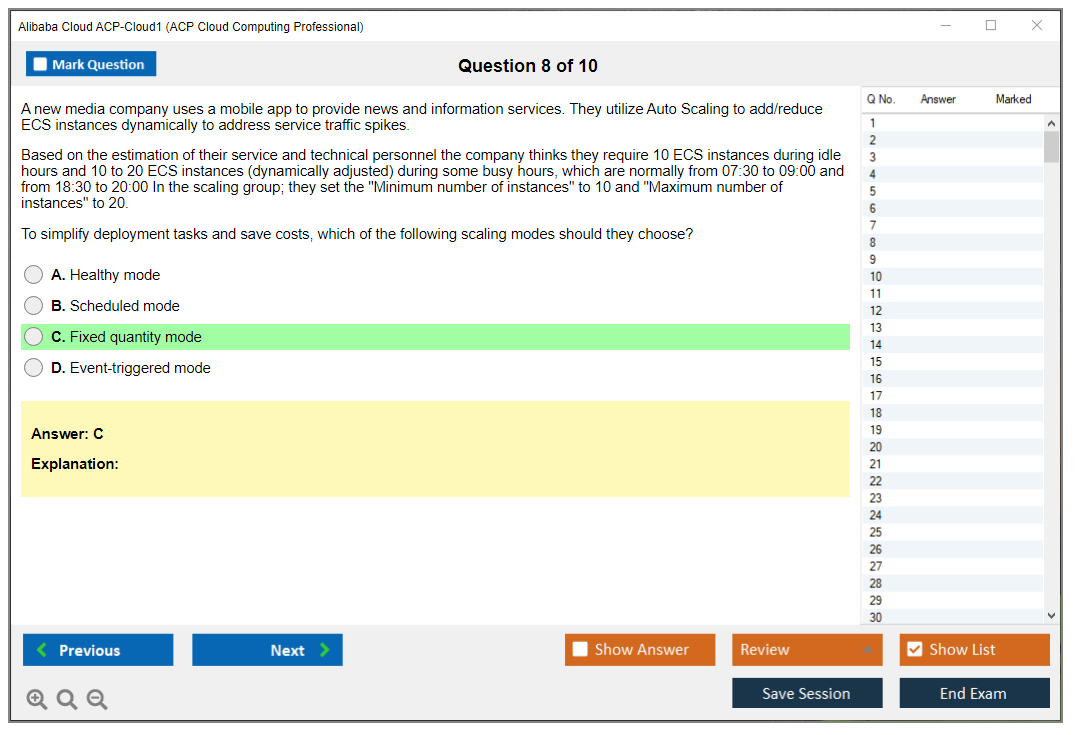
Auto Scaling group configuration shows up heavily. You're setting up launch templates that define instance configuration, then creating scaling policies that actually respond to workload changes. Scheduled scaling works when you know traffic patterns. Monday mornings. End of month processing. Dynamic scaling reacts to metrics like CPU utilization. Target tracking tries to maintain a specific metric value automatically.
Multi-zone deployment for high availability means understanding how Alibaba Cloud zones work within regions and how to distribute instances so a single zone failure doesn't take down your application.
VPC architecture isn't optional knowledge
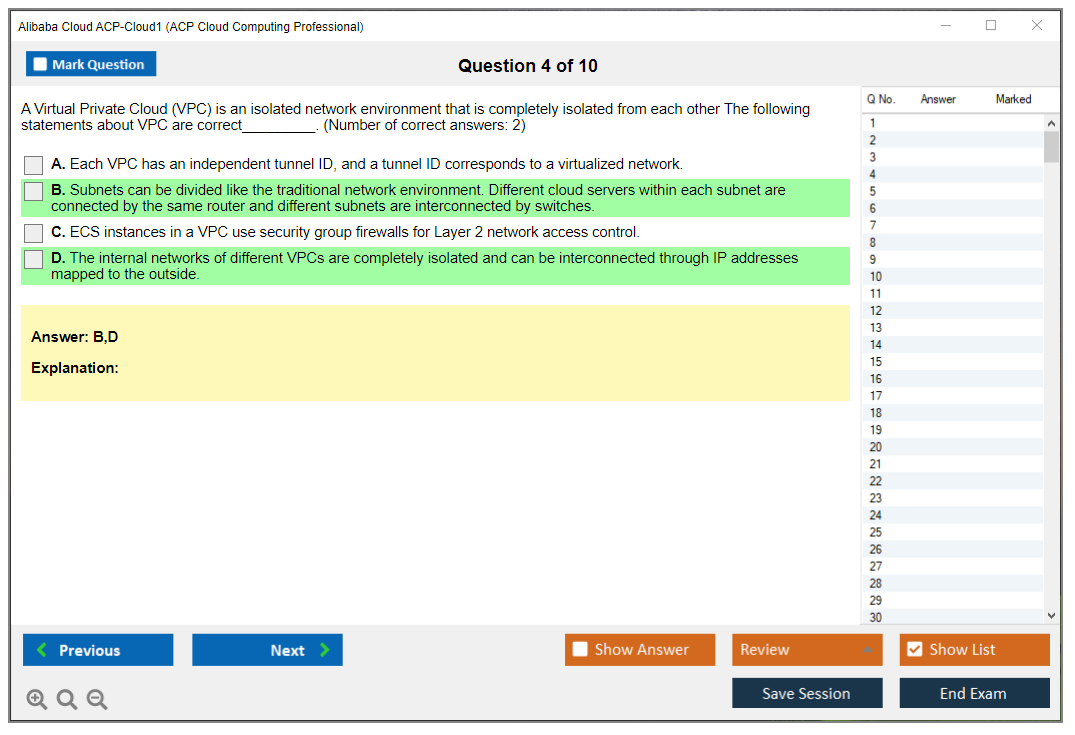
Domain 2 covers VPC networking thoroughly because everything else builds on it. CIDR planning determines how many IP addresses you have available and whether you can peer VPCs later without conflicts. Subnet design across availability zones affects fault tolerance. Route tables control traffic flow between subnets, to internet gateways, through NAT gateways, wherever.
Network isolation principles come up when you're designing multi-tier applications. Web tier in public subnets. Application tier in private subnets with NAT Gateway for outbound access. Database tier locked down completely. The exam wants you to know how to actually implement this, not just draw boxes on a whiteboard.
Connecting your VPC to everything else
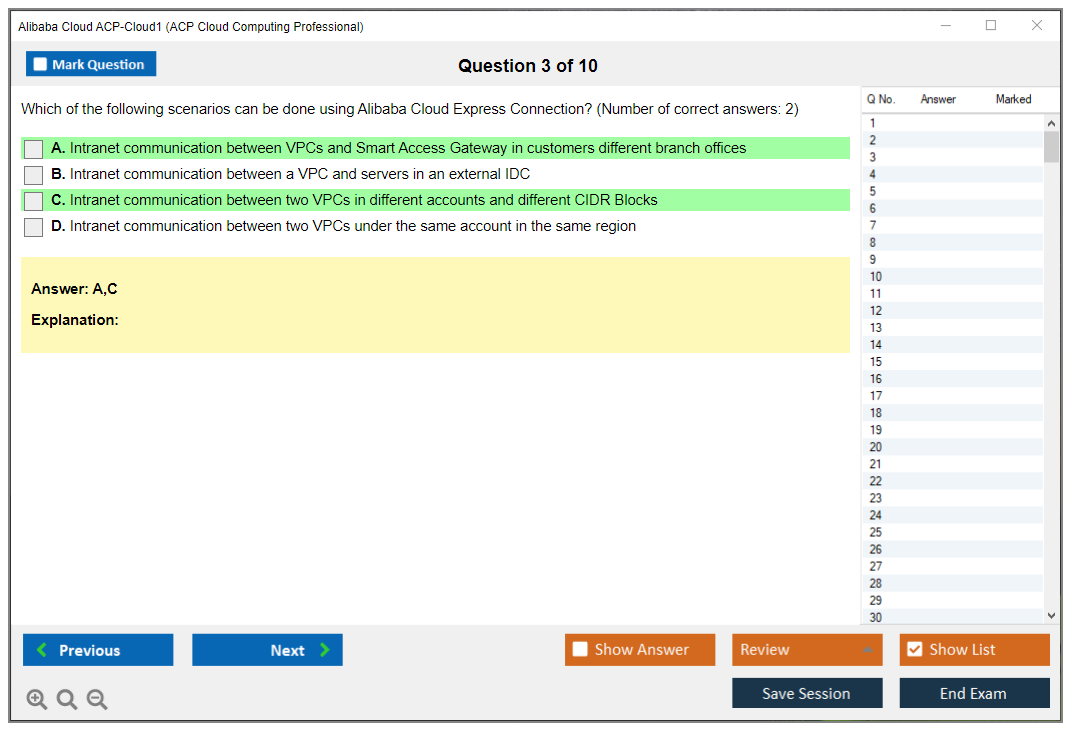
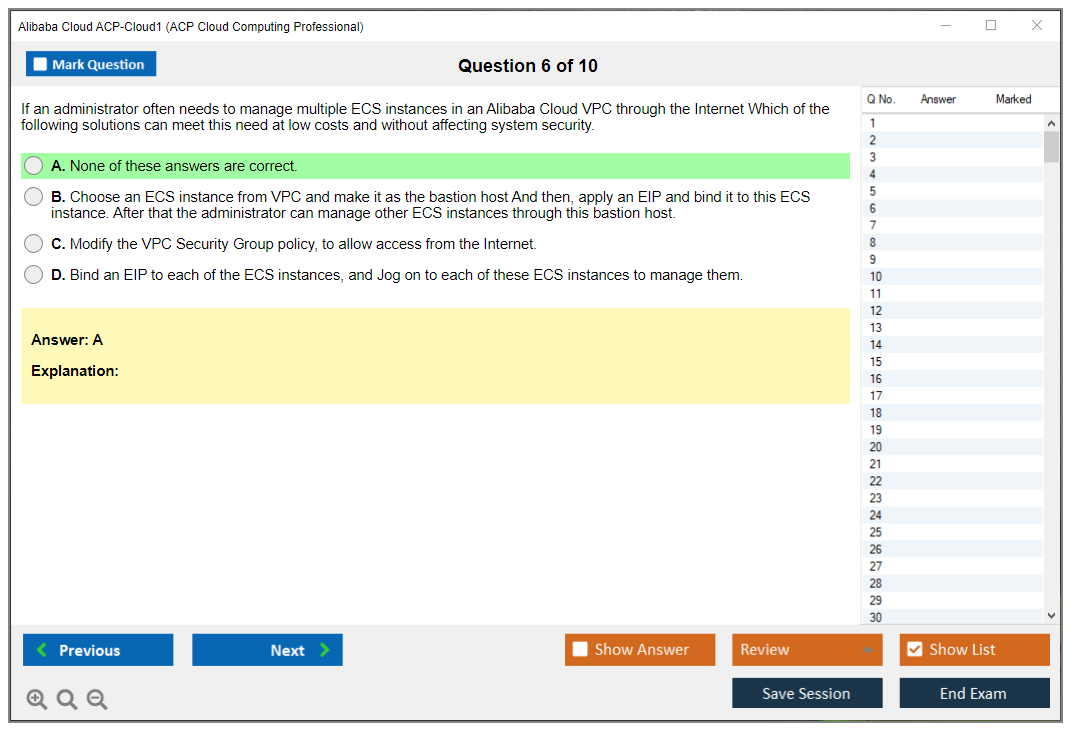
Internet Gateway configuration seems simple but understanding when you need public IPs vs elastic IPs matters. NAT Gateway provides outbound connectivity from private subnets without exposing instances directly. VPN Gateway turns on hybrid cloud connectivity over encrypted tunnels. Express Connect gives you dedicated physical connections when you need consistent latency and higher bandwidth than VPN can provide.
Security groups are stateful and that matters
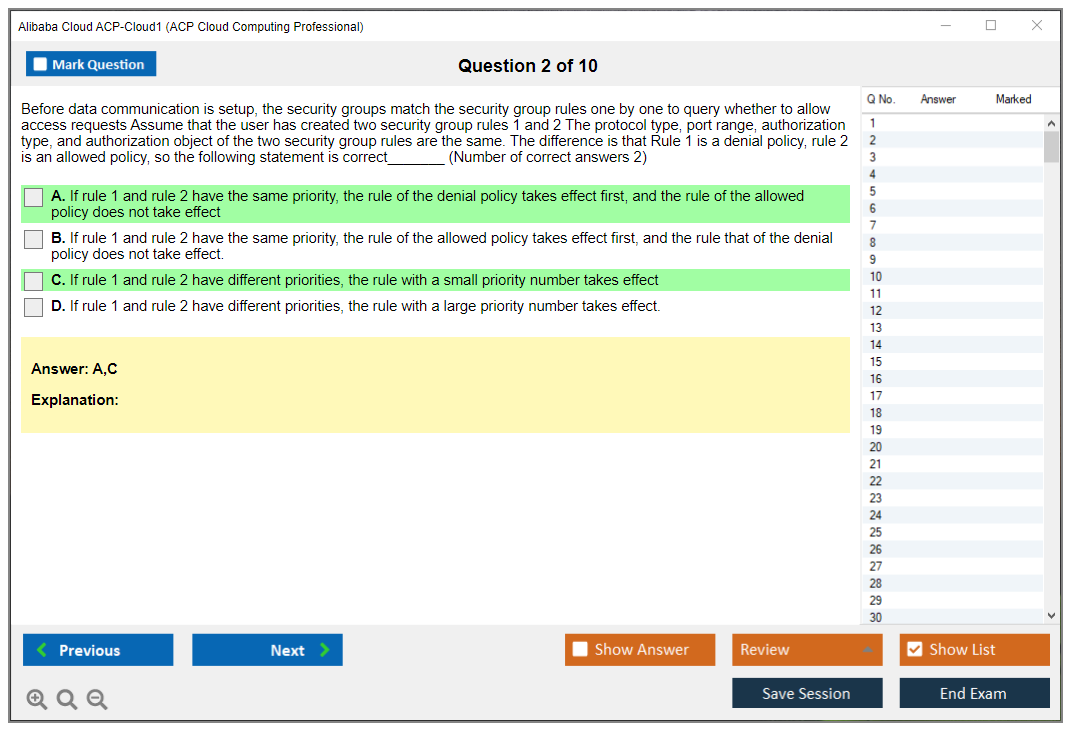
Security groups vs network ACLs trips up people who come from other cloud platforms. Security groups are stateful, meaning return traffic is automatically allowed. Network ACLs are stateless and evaluate every packet. Rule priority and evaluation order affect which rules actually apply. Common patterns like allowing port 443 inbound to web tier, port 8080 from web to app tier, port 3306 from app to database tier need to be second nature.
Storage tiers and lifecycle automation
Domain 3 dives into OSS fundamentals beyond basic object storage. Storage class tiers (Standard, Infrequent Access, Archive, Cold Archive) have different pricing and access characteristics. Lifecycle policies automate transitions between tiers based on object age or access patterns, which directly impacts your storage bill. I've seen organizations cut storage costs 60% just by implementing proper lifecycle rules.
Load balancing and high availability patterns
Domain 4 covers SLB configuration where Layer 4 vs Layer 7 matters. TCP/UDP load balancing at Layer 4 is simpler and faster. HTTP/HTTPS at Layer 7 turns on content-based routing and SSL termination. Health check design determines how quickly failed backends get removed from rotation. Session persistence keeps users connected to the same backend when application state isn't shared.
RAM policies control everything
Domain 5's RAM coverage is critical because access control affects every service. Policy structure with effect, action, resource, and condition elements determines who can do what. The principle of least privilege means granting minimum necessary permissions, but you need to understand policy evaluation logic to implement it correctly. After mastering the basics here, you might explore ACA-Sec1 for deeper security knowledge or ACP-Sec1 for professional-level security concepts.
Monitoring and cost management tie it together
Domains 6 and 7 cover monitoring and billing. CloudMonitor metrics, alarm thresholds, and Log Service integration provide operational visibility. Subscription vs Pay-As-You-Go pricing models affect how you plan capacity. Resource tagging lets you split costs across teams or projects. These domains feel less technical but understanding cost optimization strategies can save real money.
Prerequisites and Recommended Experience for ACP-Cloud1
Look, the Alibaba Cloud ACP-Cloud1 certification is one of those Associate-level badges that sounds scary until you actually dig into the ACP-Cloud1 exam objectives and realize it's mostly core cloud architecture basics on Alibaba Cloud, nothing too wild. It's aimed at people who want to prove they can operate the day-to-day stuff: ECS, VPC, SLB, OSS fundamentals, identity, monitoring, and cost awareness. You know, the bread and butter of keeping systems alive without constantly bothering senior engineers or accidentally spinning up resources that'll bankrupt your department by Thursday.
Not magic. Practical, really.
What it validates (skills and roles)
Think junior cloud engineer, sysadmin moving to cloud, or a developer who keeps getting stuck on networking and permissions and finally wants to understand why things break. You're expected to understand how Alibaba Cloud services fit together, pick sane defaults, and avoid common misconfigurations, especially around VPC routing, security groups, and RAM. The usual suspects when things go sideways.
Also, the exam likes real-world tradeoffs. Like when SLB health checks matter versus when they're overkill, or why OSS access control and bucket policies are not the same thing as "public link, hope for the best." Spoiler: they're very much not the same, and one of those approaches ends badly. I once watched someone leave a bucket completely open for three months because they assumed "access control" meant typing a strong password somewhere. It didn't go well when the audit happened.
Who should take this certification
If you're on the Alibaba Cloud certification path (Associate) and you want a baseline credential before you specialize, this is a decent step that won't eat your entire year. If your employer's in APAC or works with Alibaba Cloud for cost or regional reasons, maybe data sovereignty stuff or just better latency for mainland operations, it can be more relevant than an AWS cert, honestly.
Never touched a cloud console? Still possible. Just slower.
Exam format, cost, and scoring basics
Alibaba updates details sometimes, so check the official page before you schedule because I'm not your calendar. Format's typically multiple-choice and multiple-select, delivered online through a testing provider. Time pressure is real, mostly because the questions can be wordy and packed with product names that blur together if you're not careful.
ACP-Cloud1 exam cost usually lands around $120 to $150 USD depending on region and promos, and that's the number you should plan for in your budget. Not the "oh I'll just wing it with free stuff" budget, the real one. Add optional stuff later if you need it.
On ACP Cloud Computing passing score, the thing is, Alibaba doesn't always publish a simple "X out of 100" in a way that's consistent across versions. So treat it like most vendor exams: you're aiming to be comfortably above the line, not flirting with it like some kind of certification daredevil. I tell people to target 70%+ on practice assessments because test-day stress is a thing, and your brain will absolutely betray you when it counts.
Official prerequisites vs what actually works
Here's the honest part about ACP-Cloud1 prerequisites that nobody puts in the marketing copy. Alibaba Cloud doesn't mandate formal prerequisites. No required course. No required work history. That's great for motivated beginners who want structure and a goal, not gatekeeping.
But experience matters.
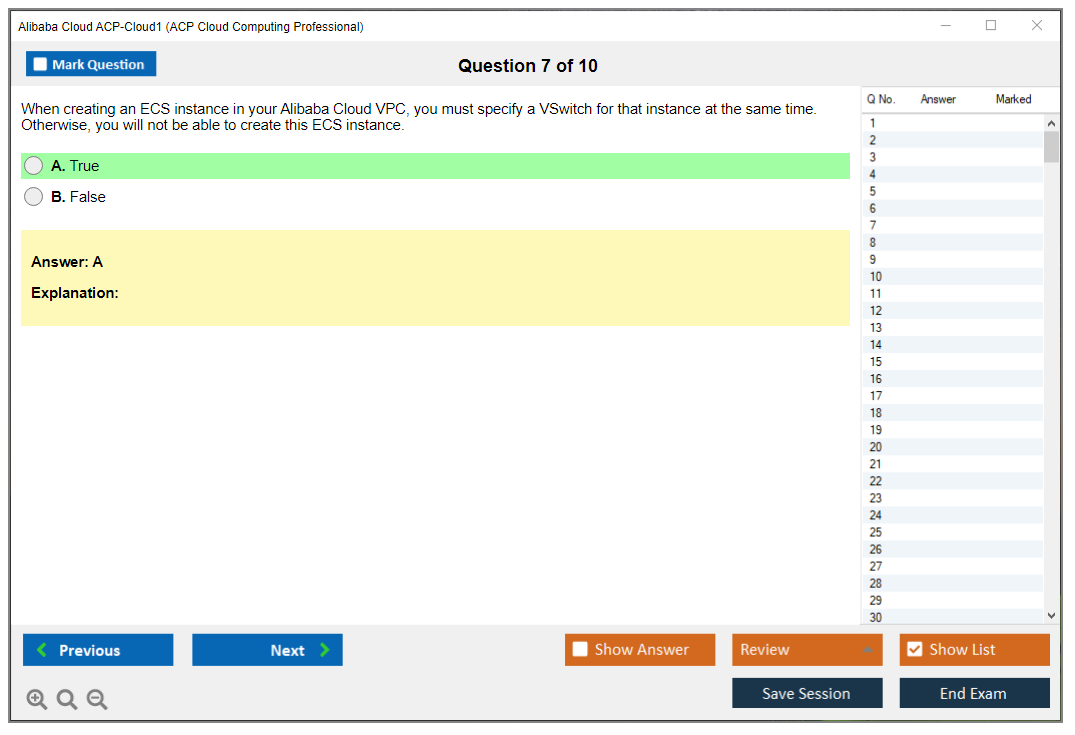
If you go in totally cold, you'll spend half your study time just learning what buttons exist in the console and what Alibaba means by certain terms. Why "vSwitch" isn't just a typo and why "RAM" has nothing to do with memory sticks. If you do even a little hands-on first, your success rate jumps because the exam isn't only definitions, it's "what happens if you set X and then Y breaks" type thinking.
Recommended baseline: 3 to 6 months of hands-on
My recommended cloud experience baseline is 3 to 6 months of messing around in the Alibaba Cloud console hands-on labs, not as a spectator clicking through guided tours while thinking about lunch.
Deploy basic workloads. Break them. Fix them. Repeat until you stop panicking when error messages appear, because they will appear, constantly.
Minimum comfort level I mean:
- Spin up ECS, connect via SSH or RDP without Googling every step, attach disks, snapshot something, and resize an instance without panicking or accidentally deleting your entire environment.
- Build a VPC, make at least one vSwitch, understand route tables at a basic level (not expert, just "traffic goes here, not there"), and know why a security group is not the same as a subnet even though beginners mix them up constantly.
- Store files in OSS. Set permissions correctly, generate an access method, and know when "public read" is a terrible idea. Hint: almost always, unless you're serving cat pictures to the internet and don't care who sees them.
That's the core. Everything else stacks.
Fundamental IT knowledge you need (yes, even for "cloud")
Look, cloud's still IT, not magic pixie dust that makes networking and security principles disappear into the ether. If you don't have basic client-server architecture in your head, like actually understanding what "client" and "server" mean beyond vague hand-waving, you'll memorize your way into confusion and fail questions you should've aced.
You should know IP addressing and subnetting at a practical level. Not CCIE-level, just enough to recognize why 10.0.1.0/24 and 10.0.2.0/24 can't talk without routing. What DNS does (and what it doesn't do, because it's not a miracle cure), and how HTTP/HTTPS behave when something's misconfigured. General operating system administration matters too, Linux or Windows, because ECS isn't abstract, it's a VM you have to manage, patch, and occasionally resurrect.
Short version: ports, routes, names, permissions. Know them.
Linux command line familiarity (not heavily tested, still helpful)
Linux/Unix command line stuff isn't usually the main event on this exam, but being comfortable with SSH, basic shell commands, file permissions, and package management makes troubleshooting scenarios way less painful when they pop up. If a question describes an ECS instance that "can't be reached" or "can't fetch updates," you'll think in the right direction faster instead of staring blankly at the screen wondering where to even start.
Know chmod. Know systemctl. Know where logs live, approximately.
That's enough, honestly.
Networking fundamentals matter more than people expect
Networking fundamentals importance isn't optional if you want ACP-Cloud1 to feel fair instead of like a cruel guessing game designed by sadists. A strong grasp of the OSI model (at least layers 3 and 4, you don't need to memorize all seven like it's 1998), TCP/IP stack, routing concepts, firewall principles, and VPN basics is the foundation for VPC design, security group rules, NAT, and connectivity questions that trip up unprepared candidates every single time.
Most "ACP-Cloud1 difficulty level" complaints I hear come from people who tried to skip networking and just memorize product screenshots like they're studying art history. That works until the exam asks "what path does traffic take from instance A to internet destination B" and you're stuck guessing based on which answer sounds more "cloudy." Which, let me interrupt myself here, is not a strategy, it's a prayer, and prayers don't pass technical exams.
Programming, scripting, and API concepts (nice to have)
Programming and scripting background isn't required, full stop. You can pass without writing a line of code, and plenty of people do.
Still, it helps to recognize JSON because RAM policies show up in JSON-like structures. Basic scripting in Python or Bash makes automation examples click instead of feeling like alien hieroglyphics. API concepts also help because many services behave consistently across console, CLI, and API, and the exam sometimes frames scenarios as "service interactions" rather than button clicks, so understanding request/response patterns gives you an edge.
If you've used AWS/Azure/GCP, you're not starting over
Prior cloud platform experience transfers pretty cleanly, actually. VPC's basically VPC/VNet thinking with different knobs, ECS is EC2/VM thinking with Alibaba-specific instance families, OSS is S3/Blob thinking with slightly different ACL mechanics. But you must learn Alibaba-specific terminology and service details, especially naming conventions, billing options (which can be wildly different from AWS's model), and how RAM is structured compared to IAM.
Same ideas. Different labels. Different defaults. Different gotchas.
Free trial practice and lab minimum targets
Use the Alibaba Cloud Free Trial if you can snag it. New accounts often get around $300 to $450 in credits, and that's enough to practice without sweating every cent during your study window or checking your credit card balance after each lab session like a nervous gambler.
Hands-on lab minimum targets I like:
- Launch 5+ ECS instances with different OS images and instance types, and practice security group variations until you can predict behavior without consulting docs.
- Create 3+ VPC architectures, including at least one with multiple vSwitches and routing tweaks that force you to think about traffic flow beyond "it just works."
- Configure SLB with health checks, then intentionally break a backend and watch what happens. Does traffic reroute? How fast? What logs appear?
- Implement RAM policies for a least-privilege user scenario, and test access failures on purpose so you understand denial messages instead of panicking when you see them.
- Set up CloudMonitor alarms and confirm you can interpret what triggered them, not just acknowledge the notification and move on.
Do two of those deeply. Mention the rest casually. The goal's pattern recognition, not perfection.
Study habits, resources, and readiness checks
Documentation reading habits matter because Alibaba's docs contain the gotchas the exam loves: limits, behaviors, and best practices buried in paragraph seven of some seemingly boring page. If you hate reading docs, you'll need more lab time to compensate, and even then, you'll miss edge cases.
Time management and study discipline's the other gate. If you can't consistently give 5 to 10 hours a week, plan a longer runway because cramming cloud knowledge doesn't work like memorizing history dates. And be real about your learning style. Video-based is fine, reading-heavy is fine, hands-on focused is best for retention, but pick one as your primary instead of bouncing around and absorbing nothing.
English matters too. If you're taking it in English and you're not a native speaker, I'd aim for CEFR B2 reading comfort so you can parse long questions quickly without rereading everything three times and burning your exam clock.
If you've done Microsoft, Cisco, or CompTIA exams before, you'll adapt faster to exam patterns. You know, the "eliminate two obviously wrong answers, then guess between the remaining plausible ones" dance. If you haven't, consider using a focused question pack like the ACP-Cloud1 Practice Exam Questions Pack to learn timing and distractor style, then loop back into labs when you identify knowledge gaps. Budget-wise, plan for the exam fee, maybe $200 to $500 if you want a course (not mandatory, but structured learning helps some people), $30 to $80 for ACP-Cloud1 practice tests, and any lab costs beyond free tier, plus the ACP-Cloud1 Practice Exam Questions Pack at $36.99 if you want something structured that doesn't waste your time.
Recommended learning sequence: basic cloud concepts first, then Linux fundamentals, then networking basics, then go hard on ACP-Cloud1 study materials and service-specific prep. Don't skip around randomly because foundational gaps will haunt you.
Readiness assessment checklist:
- You can explain ECS, VPC, OSS, SLB, RAM, and CloudMonitor to someone else without Googling mid-explanation or using "it's like, you know, the thing that does stuff" as a crutch.
- You can move around the console without guidance or constantly second-guessing where buttons are.
- You score 70%+ consistently on practice sets, including the ACP-Cloud1 Practice Exam Questions Pack, and you can explain why the wrong answers are wrong, not just why the right answer is right.
That's when you book it, not before.
ACP-Cloud1 Difficulty Level: What to Expect
Where ACP-Cloud1 sits in the certification space
Real talk? The ACP-Cloud1 difficulty level positions it squarely in intermediate territory. Not gonna lie, this is where things get real compared to foundational exams. You need more than just "I clicked around the console for a few hours" familiarity with Alibaba Cloud services, but honestly, it's not asking you to architect multi-region disaster recovery solutions with custom VPN configurations either.
Think of it like AWS SAA-C03 or Azure AZ-104 in terms of scope. If you've tackled those, you know what you're getting into. You're expected to understand how services work together, make reasonable architectural decisions, and troubleshoot common issues that pop up in real environments. The exam wants operational depth across multiple service areas rather than expert-level mastery of any single component.
Can complete beginners tackle this exam?
Look, I've seen cloud newcomers pass ACP-Cloud1. Not easy, though.
Is it beginner-friendly? Achievable with dedicated study, yes. Recommended as your very first cloud certification without any prior exposure? Absolutely not.
The reality is you need significant hands-on practice. Video courses alone won't cut it, trust me on this. The exam assumes you've configured VPCs, launched ECS instances, set up load balancers, and wrestled with RAM policies in actual practice environments that sometimes don't cooperate the way documentation suggests they will. Candidates who jump straight into ACP-Cloud1 without touching the console typically struggle hard.
If you're brand new to cloud, honestly consider starting with ACA-Cloud1 instead. It covers similar territory but at a more accessible level, giving you the foundation to approach ACP-Cloud1 with confidence later.
How it compares to other Alibaba certifications
ACP-Cloud1 sits in an interesting middle ground. It's definitely easier than professional-level certs like ACE-Cloud1, which expect you to design complex enterprise architectures. You're not dealing with hybrid cloud integration scenarios or advanced cost optimization strategies that span dozens of services.
Compared to foundational exams, though? Substantially more full. ACA-Cloud1 tests whether you know what services exist and their basic purposes. Pretty straightforward stuff. ACP-Cloud1 tests whether you can actually use them in realistic scenarios. The questions dig deeper into configuration details, service interactions, and troubleshooting approaches that require genuine technical understanding.
Breadth versus depth: what the exam actually covers
The exam emphasizes broad coverage at operational depth. You'll encounter questions spanning ECS compute, VPC networking, SLB load balancing, OSS storage, and RAM security. You're not becoming an expert in any single area, though.
This breadth-first approach means you can't just master ECS and hope for the best. A typical exam might have 10-12 questions on networking, 8-10 on compute, 6-8 on storage, and so on. Miss an entire knowledge area and you're in trouble.
I mean, the good news is you don't need to memorize every API parameter or know obscure service limits. The bad news? You need working knowledge across a lot of ground. Most candidates find this balance reasonable. Challenging but not overwhelming.
Where candidates hit walls
VPC networking concepts consistently trip people up. CIDR planning, route table configurations, connectivity options between VPCs. This stuff requires solid networking fundamentals that not everyone brings to the table. Questions might present a subnet configuration and ask why instances can't communicate, expecting you to spot CIDR overlap issues or missing route entries.
RAM policy syntax and evaluation logic? Causes headaches too. The JSON policy structure looks familiar if you've worked with AWS IAM, but Alibaba Cloud has its own details in how permissions evaluate. You'll see questions presenting policy documents and asking what actions they actually allow, requiring careful analysis of Effect, Action, Resource, and Condition elements.
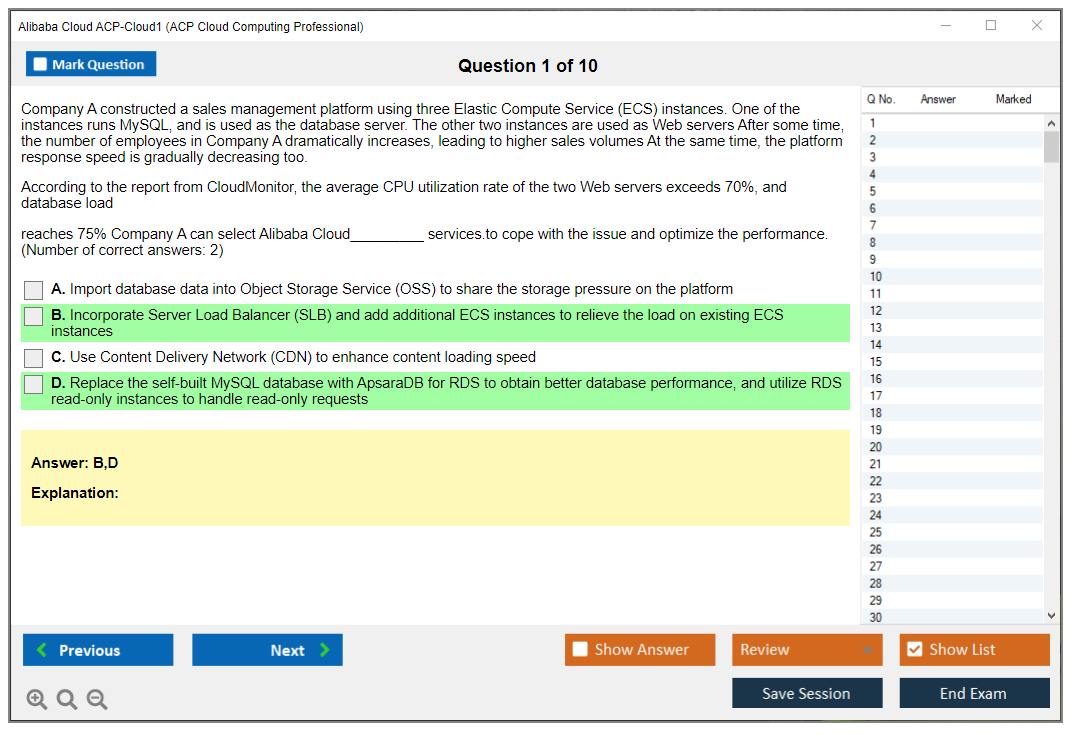
SLB listener configuration questions get detailed. Which health check settings make sense for a given scenario? How do session persistence options affect traffic distribution? These aren't surface-level "what is SLB" questions. They assume you've configured listeners and troubleshot traffic routing issues.
Cost optimization scenarios require knowing service features well enough to recommend appropriate solutions, which honestly feels more practical than most cert exams. When should you use reserved instances versus pay-as-you-go? Which storage class makes sense for archive data? These questions test whether you understand not just what services do but how they're priced and when each option makes financial sense.
I once spent three hours debugging a health check that kept failing because the timeout was too aggressive for the backend response time. Seemed obvious in retrospect, but at the time? Frustrating as hell. That's the kind of practical knowledge this exam rewards.
Scenario-based complexity keeps things interesting
Many questions present multi-component architectures. You might see a diagram showing ECS instances across availability zones, an SLB distributing traffic, OSS buckets for static content, and RAM policies controlling access. Then the question asks you to identify the security gap, recommend a performance improvement, or explain why users in a specific region experience slow load times.
These scenario questions require synthesizing knowledge across service boundaries. It's not enough to understand load balancing in isolation. You need to see how SLB, security groups, VPC routing, and health checks interact in realistic deployments.
Honestly, this is where hands-on experience makes the biggest difference. Candidates who've built similar architectures recognize patterns immediately. Those studying purely from documentation spend precious minutes trying to visualize how components connect.
Terminology differences from AWS and Azure
Careful here. Alibaba Cloud service names and feature terminology require attention. Security Groups work similarly to AWS but with different rule evaluation ordering. Instance families use different naming conventions. The console uses different terms for common operations.
I've seen people miss questions because they assumed an Alibaba Cloud feature worked exactly like its AWS equivalent. The concepts often align, but implementation details differ enough that you need Alibaba-specific knowledge. You can't just translate AWS expertise directly. You need dedicated study time on Alibaba Cloud documentation and hands-on practice.
Time management during the exam
With 60-80 questions in 120 minutes, you've got adequate time for careful reading. Simple fact-recall questions take 30 seconds. But lengthy scenario questions easily consume 3-5 minutes each, especially if you're analyzing architecture diagrams or working through troubleshooting logic.
I recommend flagging complex scenarios on first pass, answering quicker questions first, then circling back with remaining time. Running out of time isn't a common complaint. But candidates who get stuck on difficult questions early sometimes feel rushed toward the end.
The hands-on experience advantage
Massive difference here. Candidates with practical console experience report significantly easier exams compared to theory-only preparation. Questions often reference UI workflows, configuration screens, and real-world troubleshooting approaches that make immediate sense if you've done them before.
For example, a question might describe someone unable to SSH into an ECS instance and ask what to check first. If you've actually troubleshot this scenario (checking security group rules, verifying key pair configuration, confirming public IP assignment), the answer jumps out. If you've only read about ECS in documentation, you're guessing between plausible options.
The ACP-Cloud1 Practice Exam Questions Pack helps here by exposing you to question formats and common scenario patterns. Thing is, it doesn't replace actual hands-on practice in the Alibaba Cloud console.
Documentation-based knowledge requirements
Some questions test specific service limits, supported configurations, or feature availability details found in official documentation. Which instance types support enhanced networking? What's the maximum number of rules per security group? Which regions support a specific service feature?
You can't memorize every limit and specification. But familiarity with documentation structure helps. Knowing where to look during your study builds mental references that surface during the exam when you encounter these detail-oriented questions.
Who finds this exam easiest
Professionals with 6+ months of Alibaba Cloud production experience typically pass without major difficulty. They've encountered most exam topics in real work, making questions feel familiar rather than abstract.
Those with AWS or Azure certification backgrounds who invested time in Alibaba-specific study also do well. The cloud computing concepts transfer. They just need to learn Alibaba Cloud's implementation specifics. Someone with AWS SAA-C03 who spent 30-40 hours on Alibaba Cloud hands-on labs usually passes comfortably.
Candidates with strong networking foundations find VPC and security topics intuitive, giving them a solid foundation even if storage or compute questions prove trickier.
Who struggles most
Complete cloud beginners without hands-on practice? Struggle significantly. The exam assumes too much practical knowledge for pure theory study to work reliably. Candidates relying solely on video courses without lab work frequently report surprise at how specific and detailed questions get.
Those with weak networking fundamentals hit walls on VPC questions, which represent a substantial portion of the exam. If you don't understand subnetting, routing, or basic network security concepts, Alibaba Cloud-specific questions will be nearly impossible.
Exam-takers unfamiliar with scenario-based question formats sometimes panic when facing multi-paragraph questions with architecture diagrams. These aren't simple fact-recall questions. Candidates expecting straightforward "what is X" questions find the complexity jarring.
How background affects difficulty perception
System administrators with networking experience find VPC and security topics straightforward but may struggle with storage optimization questions that require understanding object lifecycle policies, storage classes, and access pattern optimization.
Developers comfortable with APIs grasp RAM policies and SDK integration quickly. But they sometimes find infrastructure design questions challenging. I mean, choosing appropriate instance types, configuring auto-scaling, or designing high-availability architectures requires infrastructure thinking that doesn't always come naturally to application-focused developers.
Passing rate estimates and retake likelihood
While Alibaba Cloud doesn't publish official statistics, community reports suggest 60-75% pass rates for adequately prepared candidates. "Adequately prepared" typically means 40+ study hours including hands-on practice, not just passive video watching.
First-time pass? Absolutely achievable with a structured 4-6 week study plan and consistent lab practice. Candidates attempting with under 20 hours of preparation frequently require retakes. The exam isn't impossibly difficult, but it punishes insufficient preparation.
Using resources like the ACP-Cloud1 Practice Exam Questions Pack helps gauge readiness and identify weak areas before attempting the actual exam, potentially saving the cost and time of a retake.
How difficulty has evolved
Exam complexity has increased slightly as Alibaba Cloud matures. Makes sense if you think about it. Newer exam versions incorporate more recent services and expect deeper understanding of security and cost optimization. Early versions focused heavily on basic service knowledge. Current versions assume that foundation and dig into architectural decisions, troubleshooting, and optimization scenarios.
This trend likely continues as the platform evolves and the certification needs to differentiate between casual users and competent practitioners. The bar for "passing" knowledge keeps rising, though not dramatically year-over-year.
Best ACP-Cloud1 Study Materials and Resources
Quick picture of what ACP-Cloud1 is
The Alibaba Cloud ACP-Cloud1 certification is the associate-level cloud computing badge for people who can actually operate core services in the console and explain why they picked them. Think junior cloud engineer, sysadmin moving to cloud, DevOps-ish folks, and anyone who needs to speak "ECS + VPC + OSS" without guessing.
It validates cloud architecture basics on Alibaba Cloud, not advanced Kubernetes wizardry. You need to know how services fit together, what settings matter, and what breaks when you choose the wrong region, network, or billing mode. Real-world stuff, honestly. Common stuff.
What roles this fits
Some people take it for a checkbox. Others take it because they're on the Alibaba Cloud certification path (Associate) and want something concrete before going deeper. If your day job touches ECS, VPC routing, SLB listeners, or RAM policies, you're basically already studying.
Exam mechanics you should know
Expect a typical associate exam vibe: mostly multiple choice and multiple select, time-boxed, and designed to punish shallow memorization. Scheduling usually happens through Alibaba Cloud's exam portal or partners depending on your region, and you'll pick an available slot plus language options.
Look, the details can shift, so always confirm in the official exam page and the latest exam guide. That said, the workflow is simple. Read the blueprint, map it to docs and labs, then grind weak spots.
Cost and scoring, without the fluff
ACP-Cloud1 exam cost varies by region and promo pricing, but many candidates see it roughly in the same band as other associate certs. If you're budgeting, also factor in optional training. Those official courses often run $200 to $500, and honestly that's where people get surprised.
ACP Cloud Computing passing score is published by Alibaba Cloud for the current version of the exam. Don't play telephone with Reddit. Check the official page the week you book, because scoring models and "what counts as pass" can change between versions.
What the objectives really focus on
Your ACP-Cloud1 exam objectives usually cluster around the services everyone uses: ECS, VPC, SLB, OSS, RAM, and monitoring/ops. The tricky part isn't knowing what ECS is. The tricky part is knowing which option matches Alibaba Cloud's wording and constraints.
Compute is sizing, images, disks, and instance lifecycle. Networking covers VPC basics, security groups, routes, connectivity patterns. Storage means OSS concepts plus access control and lifecycle. Availability deals with SLB fundamentals and how you design for failure. Security focuses on RAM and basic governance. Ops is monitoring, alerts, and logs. Billing shows up too, because cloud bills are where careers go to die.
Prereqs and what "recommended" really means
Officially, ACP-Cloud1 prerequisites are usually light. No one demands a prior cert. Practically though, you want hands-on time in the Alibaba Cloud console, because the exam loves console terminology and service limits.
Helpful background? Basic Linux. Basic TCP/IP. A mental model of subnets, routing, and "public vs private" anything. If you've got that, you're fine. Actually, one thing I noticed while helping a friend prep last year was how much the RAM section trips up people who've only done AWS IAM. The concepts overlap, sure, but the console flow and policy syntax feel just different enough to cause mistakes under time pressure.
Difficulty level, honestly
The ACP-Cloud1 difficulty level is beginner-to-intermediate. Beginners can pass, but only if they stop trying to study like it's vocabulary class. Most failures come from networking details (VPC + security groups), RAM policy confusion, and mixing up similar-sounding product features.
If you've built even one small environment with ECS behind SLB, talking to OSS, with RAM users and a couple of CloudMonitor alarms, the exam feels fair. If you haven't, it feels weirdly specific.
The study materials that actually move the needle
First, the big one: Official Alibaba Cloud documentation on help.aliyun.com. This is the authoritative source for service capabilities, limitations, default behaviors, and best practices across ECS, VPC, SLB, OSS, RAM, and monitoring services. I mean, everything else is downstream from this, including third-party notes that sometimes copy old screenshots and call it "updated." Focus on docs for ECS instance types and storage, VPC routing and security groups, SLB listeners and backend configs, OSS buckets and permissions, plus RAM identities and policies.
Next up? The Alibaba Cloud Learning Path for ACP-Cloud1 on Alibaba Cloud Academy. It's structured to match exam topics, and it mixes video lectures, reading, and knowledge checks. The value here is pacing. You're not guessing what to learn first, and you're less likely to spend three nights reading an edge-case feature you won't be tested on.
Then the ACP-Cloud1 exam guide and blueprint. This is your study plan generator. It tells you weighted domains, specific topics tested, and recommended knowledge areas. Print it. Mark it up. Make it your checklist. If you skip this and just "study Alibaba Cloud," you'll waste time and still miss testable details.
Also worth your time: Alibaba Cloud Getting Started tutorials. Free, step-by-step, and very aligned with the "common tasks" style of associate exams like launching ECS instances, configuring VPC networks, and setting up SLB. Do them with the console open. Break things on purpose. Fix them.
Two more resources I like, but with different intensity. Official ACP-Cloud1 training courses are great if your employer pays, because 16 to 24 hours with labs can compress the learning curve fast. Alibaba Cloud Architecture Center is gold for exam scenarios, because it shows reference architectures and real implementations where multiple services connect, and the exam absolutely loves "which design is correct" questions.
Other stuff to mention quickly: service-specific whitepapers, product FAQs, and release notes. Useful. Not where I would start.
Practice tests and tools that won't waste your time
ACP-Cloud1 practice tests should do two things: mirror the exam style and explain why an answer is wrong. If it's just a letter key, it's trash.
If you want a focused question bank, the ACP-Cloud1 Practice Exam Questions Pack is $36.99 and fits well after you've done the docs and a few labs. The thing is, I would use the ACP-Cloud1 Practice Exam Questions Pack as a diagnostic, not as your only study plan, because memorizing answers without understanding VPC and RAM is how people fail on the first re-take.
My strategy? Timed set first. Review every miss. Write an "error log" with the doc link you should've known. Then do a targeted lab in the console for that topic. Wait, actually before that last week arrives, you should probably revisit weak spots one more time. Last week, do another pass with the ACP-Cloud1 Practice Exam Questions Pack and stop when your misses are mostly careless, not conceptual.
Validity and renewal basics
The ACP-Cloud1 renewal policy depends on Alibaba Cloud's current certification rules, and those rules can change. Usually, associate certs have a validity window and you renew by recertifying (retaking) or upgrading to a higher cert that refreshes your status.
If you're close to expiry, check the portal, confirm dates, and decide: renew it, or move up to the next certification level if your job already demands more.
FAQs people ask nonstop
How much does the Alibaba Cloud ACP-Cloud1 exam cost? It varies by region and promos, so verify at booking time, then budget extra if you want paid training.
What's the passing score for ACP Cloud Computing (ACP-Cloud1)? Alibaba Cloud publishes it for the current exam version. Don't guess.
Is the ACP-Cloud1 certification difficult for beginners? Not impossible, but beginners need hands-on practice, especially VPC, RAM, and SLB basics.
What are the best study materials and practice tests for ACP-Cloud1? Start with the exam blueprint, then help.aliyun.com docs, then Academy learning path and Getting Started tutorials, then add practice questions like the ACP-Cloud1 Practice Exam Questions Pack to pressure-test.
How long is it valid and how do you renew it? Check the current policy in the certification portal, because validity and renewal steps can change over time.
Conclusion
Wrapping this up
Real talk here.
The Alibaba Cloud ACP-Cloud1 certification isn't some magic bullet for your career, but honestly? It's one of the smarter moves you can make if you're getting serious about cloud computing in APAC markets or anywhere Alibaba Cloud's got traction. The ACP-Cloud1 exam cost sits around $150 USD (varies by region), which's reasonable compared to AWS or Azure associate-level exams, and you're getting validated knowledge on ECS, VPC, SLB, OSS fundamentals that actually show up in real production environments. Companies running workloads on Alibaba Cloud want people who know the console hands-on, not just theory.
The ACP Cloud Computing passing score's 80% (240 out of 300 points), which sounds high but the questions are straightforward if you've done the work. That's the thing though. You need proper ACP-Cloud1 study materials and actual hands-on time in the Alibaba Cloud console. Reading docs alone won't cut it. The ACP-Cloud1 difficulty level sits right in that intermediate zone where beginners with some Linux and networking background can pass after 4-6 weeks of focused study, but you can't just wing it either.
Minimal prerequisites.
Prerequisites are minimal officially (none listed), but honestly you should have at least 20-30 hours of console time before booking your exam. Play with ECS instances, set up a VPC from scratch, configure security groups, mess around with OSS buckets. The exam objectives are clear about testing cloud architecture basics on Alibaba Cloud, not vendor-neutral fluff. The renewal policy gives you two years before you need to recertify, which's standard but means you should plan ahead.
For practice tests specifically, don't cheap out here. The Alibaba Cloud Associate cloud computing exam's got its own question patterns and service-specific gotchas that generic cloud practice exams miss completely. You want questions that mirror actual exam scenarios. Multi-service architecture questions, billing optimization, RAM policy configuration, that kind of thing.
I burned through three different practice test providers before finding one that actually matched the exam format, which was annoying but taught me what to avoid. Some of these vendors just recycle AWS questions with "EC2" swapped for "ECS" and call it good enough. It's not.
If you're ready to actually prepare properly, I'd recommend checking out the ACP-Cloud1 Practice Exam Questions Pack at /alibaba-cloud-dumps/acp-cloud1/. It's built specifically for the current exam blueprint and covers all the domains you'll see on test day. Not gonna lie, having realistic practice questions that explain why wrong answers are wrong makes a huge difference in your confidence walking into the testing center.
Get your hands dirty in the console, drill your weak areas with quality practice tests, and you'll pass. Just don't procrastinate on booking. Momentum matters.
